
How to Create the Perfect Sleep Environment for Deep Rest

Create Sleep Environment Deep - Cozy bedroom at golden hour with layered featuring create perfect sleep

Creating the Optimal Sleep Environment at Home

You can create an optimal sleep environment that helps you fall asleep faster and wake up feeling better. Small, affordable changes—blocking light, adding white noise, and choosing the right pillow—add up quickly for deeper rest and better daytime energy. For a bigger reset, see our hypoallergenic mattress guide.

Updated 2025

Key Takeaways

  • Focus on light, temperature, noise, and tactile comfort to improve sleep quality.
  • Simple, budget-friendly fixes—fan for white noise, blackout curtains, eye mask—work fast.
  • Set a cooler room near 65°F to support your natural nightly cooldown.
  • Limit evening screen time to protect melatonin and ease bedtime.
  • At least one change today moves you toward an optimal sleep environment.

An optimal sleep environment with a dark, cool, quiet bedroom setup - featuring create perfect sleep

Why your bedroom setup matters for better sleep

Your room teaches your brain when to wind down. Light, noise, temperature, and touch are the cues that set your clock and shape how deeply you sleep. Even modest evening light can delay melatonin, and unpredictable noises can trigger micro-awakenings you barely notice.

Most adults need at least seven hours of sleep nightly, and about one in three U.S. adults falls short of that goal. See guidance from the CDC and recommended sleep durations from the American Academy of Sleep Medicine (AASM).

Start with the basics: keep nights darker, trim irregular sounds, and let your body cool near 65°F. A few small changes can bring you much closer to an optimal sleep environment.

How to build an optimal sleep environment: master light

Late-night glare from screens and bright bulbs quietly pushes bedtime later. Reducing evening light supports your circadian rhythm so you get sleepy on schedule.

Reduce evening blue light from devices and bright lamps

Stop scrolling an hour before bed when possible. If you must use screens, enable strong blue-light filters and dim brightness. Keep overhead lighting low and indirect after dinner.

Use blackout curtains, dimmers, and a comfy sleep mask

Streetlamps and hallway glow add up. Install blackout curtains, swap to dimmers, and remove charging LEDs from the bedroom. When full blackout isn’t possible, a soft mask blocks stray light without pressure.
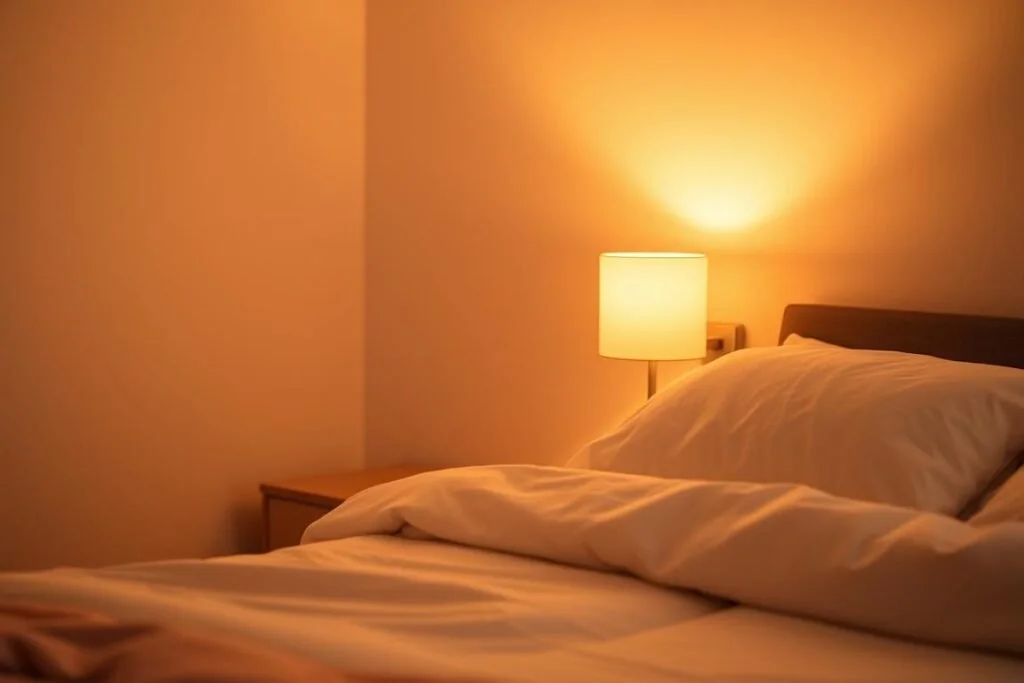
Light control tips for creating an optimal sleep environment - create featuring create perfect sleep

  • Dim lights 60–90 minutes before bed to protect melatonin.
  • Keep the path to the bathroom dark or use a very low, warm night light.
  • Consider blackout solutions if outdoor light leaks onto your bed; see our guide to blackout curtains that actually work.

Dial in temperature and airflow for a cool, cozy night

Cooling slightly at night helps your core temperature drop, which promotes deeper sleep. For many people, ~65°F (18.3°C) is the sweet spot.

Start around 65°F and adjust by a few degrees

A good starting point is around 65°F. If you wake sweaty, lower a degree; if you feel chilled, raise it one. Track how you feel in the morning and adjust slowly until sleep feels easier.

Use layers, breathable fabrics, and a fan for fine-tuning

Layer sheets and blankets so you can change warmth without fully waking. Choose moisture-wicking pajamas if you run hot. A box fan improves airflow and adds gentle white noise.
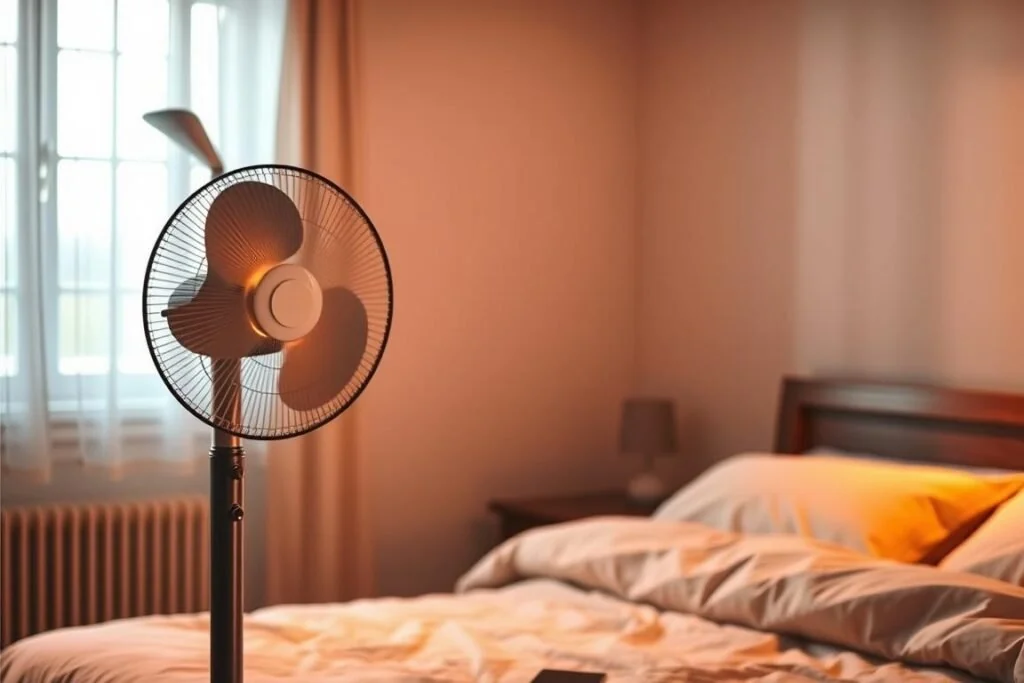
Cooling, airflow, and breathable bedding layers for an optimal sleep e featuring create perfect sleep

  • Target 30–50% relative humidity to avoid stuffiness or dryness.
  • Crack a window briefly in the evening when outdoor air is comfortable.
  • Swap heat-trapping polyester blends for cotton, linen, or bamboo.

Quiet the room: manage noise for uninterrupted sleep

Sudden sounds can nudge you out of deep sleep before you realize it. The fix is to reduce spikes and keep sound steady.

Mask unpredictable noises with white noise or a simple fan

A consistent hum helps your brain stop “scanning” for changes. Place the device across the room so the sound is even, not loud near your head. Compare options in white noise vs. pink noise or explore our white noise and sleep guide.

Wind-down sounds that calm the evening

Try low-tempo music, nature audio, or guided breathing tracks while you dim lights. Experiment with short sessions to find what actually helps you drift off.

  • Use rugs, curtains, and bookshelves to reduce echoes.
  • Log recurring noises for a week; plan masking or timing workarounds.

Design for comfort: mattress, pillows, and sheets that fit your body

Treat your bed like a system. The right mix of mattress firmness, pillow loft, and breathable sheets supports alignment and keeps you comfortable through the night.

Match mattress feel to your sleep position

Medium-firm works well for many. Side sleepers often prefer a touch softer to ease shoulder and hip pressure, while back and stomach sleepers usually need slightly firmer to keep the spine neutral. If your mattress sags or you wake sore, it may be time to replace it—see our how to choose a mattress guide.

Pick pillows that keep your neck aligned

Choose loft by position: thicker for side, medium for back, thinner for stomach. Consider adjustable fill so you can fine-tune height. For side sleepers, start with our best pillows for side sleepers.

Select breathable sheets and layered bedding

Natural fibers like cotton, linen, and bamboo help with airflow. Layer a sheet, light blanket, and comforter so you can nudge warmth up or down without waking fully. If you’re shopping, look for trusted certifications (e.g., CertiPUR-US®, GREENGUARD) and read labels—see this bedding certifications overview and this non-toxic mattress guide.

Optimal sleep environment checklist

Use this quick list to set consistent nighttime cues.

  • Declutter visible surfaces; keep pathways open on both sides of the bed.
  • Face the bed toward the door if it makes you feel safer and calmer.
  • Set a device curfew an hour before bed; charge phones outside the room.
  • Dim lights, close curtains, and lay out sleepwear during your wind-down.
  • Add a few drops of lavender to a diffuser if you enjoy a light scent.
  • Keep a bedside mini-checklist: devices off, lights low, curtains closed.

Low-cost upgrades and quick wins

A few small swaps can elevate comfort tonight. Start with fresh linens, a quick tidy, and one budget gadget.

Budget helpers: fresh sheets, earplugs, eye mask, box fan

Wash or swap pillowcases to reduce allergens. Add a box fan for cooling and masking street noise, or try simple earplugs if outside sounds wake you. An inexpensive eye mask blocks stray light until blackout curtains are installed.

Reset the room’s mood daily

Make the bed each morning to “set” the room for the evening. Crack a window for fresh air when weather allows, then dim lights early. See more tips in our Feng Shui bedroom layout guide or guest bedroom setup on a budget.

FAQ

What is an optimal sleep environment?

It’s a bedroom set up to align with your body’s sleep biology: dark at night, cool (around 65°F), quiet or steadily masked, and comfortable for your spine and skin.

Is 65°F right for everyone?

It’s a strong starting point, but individual needs vary. Adjust by a degree or two based on how you feel overnight and in the morning.

Do blackout curtains really help?

Yes. Even modest light at night can delay melatonin and fragment sleep. Blackout curtains or a good mask are simple, effective fixes.

What pillow height should I choose?

Match loft to your position: higher for side, medium for back, lower for stomach. Adjustable-fill pillows make fine-tuning easy.

Conclusion

When you tune light, temperature, noise, and comfort together, you create an optimal sleep environment that makes great nights more common. Start with one change tonight—dim lights, set the thermostat, or add white noise—and build from there. For more practical ideas, explore Cozy Bed Quarters at cozybedquarters.com.

Related reading from Cozy Bed Quarters

Other reading we found popular

Temperature Regulating Bedding: How to Pick Sheets That Keep You Cool

Temperature-Regulating Bedding: Sleeping Cool and Comfortable - Featured Image

Temperature regulating bedding is any sheet, duvet or protector built to move body heat and sweat away from you instead of holding it against your skin. The fabrics that do this best are linen, percale-woven cotton and lyocell, because they combine an open weave with fibers that absorb moisture. Everything else — thread count, brand names, “cooling” labels — matters far less than fiber, weave and how many layers you pile on top.

Temperature regulating bedding layered on a bed with lightweight cotton sheets

How temperature regulating bedding actually works

Your core temperature has to drop a degree or two for you to fall asleep and stay asleep. Bedding either helps that drop happen or gets in the way. Most sleep specialists suggest a bedroom somewhere around 60 to 67°F, and your sheets have to work with that room, not fight it.

Three things are happening under your covers:

  • Conduction. Dense, smooth, cool-feeling fabric pulls heat off your skin fast. That’s the “cool to the touch” sensation — it fades after a few minutes once the fabric warms up.
  • Airflow. An open weave lets warm, damp air escape and cooler air in. This is the part that keeps working all night.
  • Moisture handling. Sweat has to evaporate. Fibers that absorb moisture into the fiber itself (flax, cotton, lyocell) keep the sheet feeling dry. Polyester doesn’t absorb, so it feels clammy once you sweat.

A sheet can be great at one and bad at another. Silk feels icy for the first ten minutes and then goes damp. Cheap microfiber feels soft and traps everything. The best bedding for hot nights does all three reasonably well.

Fibers compared: what sleeps coolest

Fiber Feel Cooling strength Watch out for
Linen (flax) Textured, dry, gets softer with washes Best airflow, handles heavy sweating Wrinkles; scratchy for the first month; pricier
Cotton percale Crisp, matte, hotel-sheet snap Very good airflow, easy to launder Wrinkles; can feel cool-but-damp in humid rooms
Lyocell / TENCEL Slippery-smooth, drapey Excellent moisture absorption, cool surface Wash gentle and cool or it pills
Viscose from bamboo Silky, heavier drape Good moisture wicking, smooth feel Marketing claims; weaker when wet, so wash gently
Cotton sateen Soft, slight sheen, dense face Moderate — runs warmer Better as a shoulder-season sheet
Silk Cold at first touch, very smooth Low for sweaty sleepers Dry-clean or hand-wash; poor at absorbing sweat volume
Polyester microfiber Fuzzy, cheap, wrinkle-free Poor Holds odor and body heat

If you sweat a lot, start with linen

Linen sheets usually land around 150 to 200 grams per square meter. Lighter than that and they wear thin; heavier and they start acting like a blanket. Flax handles a big volume of moisture before it feels wet, which is why it’s the standard pick for humid summers and night sweats. It also takes a good six to ten washes to soften, so don’t judge it the first week.

The bamboo label question

Nearly all “bamboo” sheets are viscose or lyocell chemically made from bamboo pulp. The FTC requires them to be labeled with the actual fiber name — rayon or viscose made from bamboo — and says unsupported bamboo and antibacterial claims break the Textile Rules. So read the sewn-in content tag, not the packaging. A bamboo lyocell sheet can be genuinely lovely; it just isn’t magic, and “antimicrobial bamboo” is a red flag for the rest of the brand’s claims.

For a fabric-by-fabric breakdown with more feel notes, see our guide to the best bedding material for hot sleepers.

Crisp percale sheets with an open plain weave that lets air move through

Weave and thread count, minus the nonsense

Percale is a simple one-yarn-over, one-yarn-under weave. Lots of tiny gaps, lots of airflow, matte finish. Sateen floats three or four yarns over one, which creates a denser, shinier surface that lies flatter against your skin and holds more heat. If you run hot, percale. If your feet are always cold, sateen.

Thread count is where most money gets wasted. Somewhere between 200 and 400 is the sweet spot for cotton: enough yarns to feel substantial, not so many that the fabric turns into a heat-trapping board. Counts above 600 usually come from multi-ply yarns counted twice. Linen is measured in GSM instead, and lyocell is often sold by weight too — another sign thread count isn’t the universal quality number it’s sold as.

Specs worth checking before you click buy

  • Fiber content on the sewn-in tag, not the hangtag. “100% cotton” or “100% lyocell” beats a blend with 20% polyester.
  • Pocket depth. Measure your mattress plus any topper. Standard pockets fit about 12 inches; deep pockets run 15 to 18. Too deep is as annoying as too shallow — the sheet pops off at 3 a.m.
  • Elastic type. All-around elastic beats corner-only elastic on thick mattresses.
  • OEKO-TEX Standard 100 or GOTS if chemical residue matters to you. GOTS also covers organic fiber content.
  • Trial window. Many bedding sellers allow a return after washing and sleeping on the set. Fabric feel is personal, and a 30-night window is worth more than a marketing claim.

Cooling tech: what “phase change” bedding does

Some sheets and mattress pads use phase-change materials or mineral-treated fibers that absorb a bit of heat as they change state, then release it when you cool down. The effect is real but modest and finite — once that buffer is saturated on a hot, still night, you’re back to relying on airflow. Treat cooling tech as a nice extra on top of a breathable base fabric, not as a rescue for a hot room or a heat-trapping mattress.

Water- or air-cooled mattress pads are a different category. They actively move heat away and they work, but they need power, plumbing-ish setup and regular cleaning, and they cost several times what a good sheet set does.

Your sheets may not be the problem

Plenty of people buy three sets of cooling sheets and still wake up sweating, because the heat is coming from underneath or above.

  • Waterproof mattress protectors. A thick vinyl or laminated film blocks airflow completely. Look for a thin TPU membrane with a cotton terry top, and skip the protector entirely if you don’t need one.
  • Memory foam. Dense foam reflects body heat back at you. A wool or cotton mattress pad between you and the foam helps more than any sheet swap.
  • Your duvet. One all-season duvet is usually the culprit. Down and wool both breathe well; the issue is loft, not fill type.
  • Mattress topper. Gel-infused foam still insulates. Wool and latex breathe better.

Rough duvet warmth by season

Season TOG rating Typical down fill weight, queen
Summer 2.5–4.5 Around 15–20 oz
Spring and fall 7.5–10.5 Around 25–32 oz
Winter 12–13.5 Around 35–45 oz

Buying two duvets — a summer weight and a mid weight you can layer — costs about the same as one “all-season” model and works far better. Our complete guide to bedding layers walks through how to stack them without ending up with a mound of fabric.

Close-up of smooth lyocell sheet fabric used in cooling bed layers

Set the room up too

Bedding can only do so much against a 78°F bedroom. A few cheap moves stack with good sheets:

  1. Close blinds on sun-facing windows during the day so the room isn’t already hot at bedtime.
  2. Run a ceiling fan counterclockwise in summer — it pushes air down and speeds evaporation off your skin.
  3. Watch humidity. Above roughly 60%, sweat evaporates slowly and the same sheets feel clammy. A small dehumidifier often beats a new bedding set.
  4. Try a warm shower an hour before bed. It sends blood to your skin, which helps your core temperature fall afterward.
  5. Sleep with your feet uncovered or out the side of the duvet. Feet dump heat efficiently.

Care that keeps cooling bedding cooling

Fabric softener and dryer sheets coat fibers with a waxy film that blocks moisture absorption. That single habit ruins more cooling sheets than anything else. Use half the detergent you think you need, skip softener, and add half a cup of white vinegar to the rinse if you want softness.

  • Wash in cold to warm water, roughly 30–40°C (86–104°F), on a normal or gentle cycle.
  • Wash lyocell and viscose sets separately from towels and zippers — wet cellulose fibers are weaker and abrade easily.
  • Tumble dry low and pull sheets out slightly damp, or line dry. High heat is what sets in permanent shrinkage and wrecks elastic.
  • Rotate two sets. Sheets that get a rest between uses last noticeably longer.

Most shrinkage happens in the very first wash and dry, so follow the label the first time through. Our guide to washing sheets without shrinking has exact temperatures by fiber.

Bed made with a lightweight summer duvet and linen sheets for cooler sleep

FAQ

Does temperature regulating bedding really work?

Breathable fabrics genuinely reduce heat and moisture buildup, and you’ll feel the difference switching from microfiber or heavy sateen to linen or percale. What no sheet can do is cool you below room temperature. If your bedroom sits in the high 70s, bedding alone won’t fix it.

Are bamboo sheets better than cotton for hot sleepers?

Bamboo-derived lyocell and viscose absorb moisture well and feel smooth and cool, which many hot sleepers prefer. Cotton percale moves more air. Bamboo viscose suits people who want silky; percale suits people who want crisp and dry.

Is linen or percale cooler?

Linen for humid heat and heavy sweating, percale for dry heat and anyone who likes a smooth, crisp bed. Linen also stays comfortable across a wider temperature range, so it works in winter too.

What thread count is best for cooling sheets?

200 to 400 in a percale weave. Above that you’re paying for density that slows airflow, and the count may be inflated by multi-ply yarns.

Can cooling sheets make you too cold in winter?

Rarely. Linen and lyocell regulate rather than chill — they buffer moisture, which helps in both directions. Add a heavier duvet or a wool blanket instead of swapping the sheets.

What if I still wake up soaked?

If drenching night sweats happen regularly despite a cool room and breathable bedding, it’s worth mentioning to a doctor. Medications, menopause, thyroid issues and infections all cause them, and no sheet set addresses those.

A simple starting setup

If you just want a plan: one linen or cotton percale sheet set, a breathable mattress pad if you sleep on foam, a summer-weight duvet plus a folded blanket at the foot of the bed, and no waterproof protector unless you truly need one. That handles most hot-sleeper complaints for less than the cost of a fancy “cooling” mattress topper.

Prefer to shop with a lighter footprint while you’re at it? Our roundup of sustainable bedding brands and the organic bedding materials guide cover certifications worth paying for.

Updated September 2026.