

Wedding bedding ceremonies: history, meanings & modern echoes
Wedding bedding ceremonies once turned a private threshold into a public rite. In this guide, we trace how wedding bedding ceremonies affirmed legitimacy, symbolized fertility, and evolved into modern traditions like threshold carries and honeymoon suites—always balancing celebration with intimacy.
Key Takeaways: wedding bedding ceremonies
- Wedding bedding ceremonies publicly affirmed the union, lineage, and community approval.
- Over centuries, public spectacle receded while private intimacy gained importance.
- Today’s customs—threshold carries, honeymoon suites, and first dances—echo the same transition from public celebration to private life.
- Symbolic spaces, scents, and materials still set the tone for restful connection and long-term well-being.
How to use this guide (answer-first)
Summary: You’ll get a clear, era-by-era look at wedding bedding ceremonies, plus practical links to related bedroom design and sleep resources. Internal links come from Cozy Bed Quarters’ vetted pool, while external links are limited to approved high-authority sources.
Medieval Europe: When community witnessed the threshold
Answer-first: communal endorsement shaped legitimacy
In medieval Europe, wedding bedding ceremonies functioned as communal endorsements that legitimized marriage and safeguarded lineage. After feasting, guests escorted the couple to their bed with songs or playful verses, offering blessings before privacy began. Among nobles, these rituals made political alliances visible and secure. This choreography signaled a shift: public approval at the door, private intimacy within.
Remnants of this communal spirit live on in toasts and first dances. If you’re designing a serene bedroom that honors tradition while optimizing flow, explore Feng Shui principles for bedroom layout for practical placement tips that respect calm and connection.

Behind closed doors: Public approval meets private intimacy
Answer-first: the performance ended; the relationship began
Once the door shut, ceremony gave way to connection. The pageantry of wedding bedding ceremonies affirmed community support, but intimacy belonged to the couple. This boundary—visible threshold, private union—set a template modern couples still follow in quieter ways.
Spiritual blessings and fertility symbols
Answer-first: sacred framing elevated the bedroom
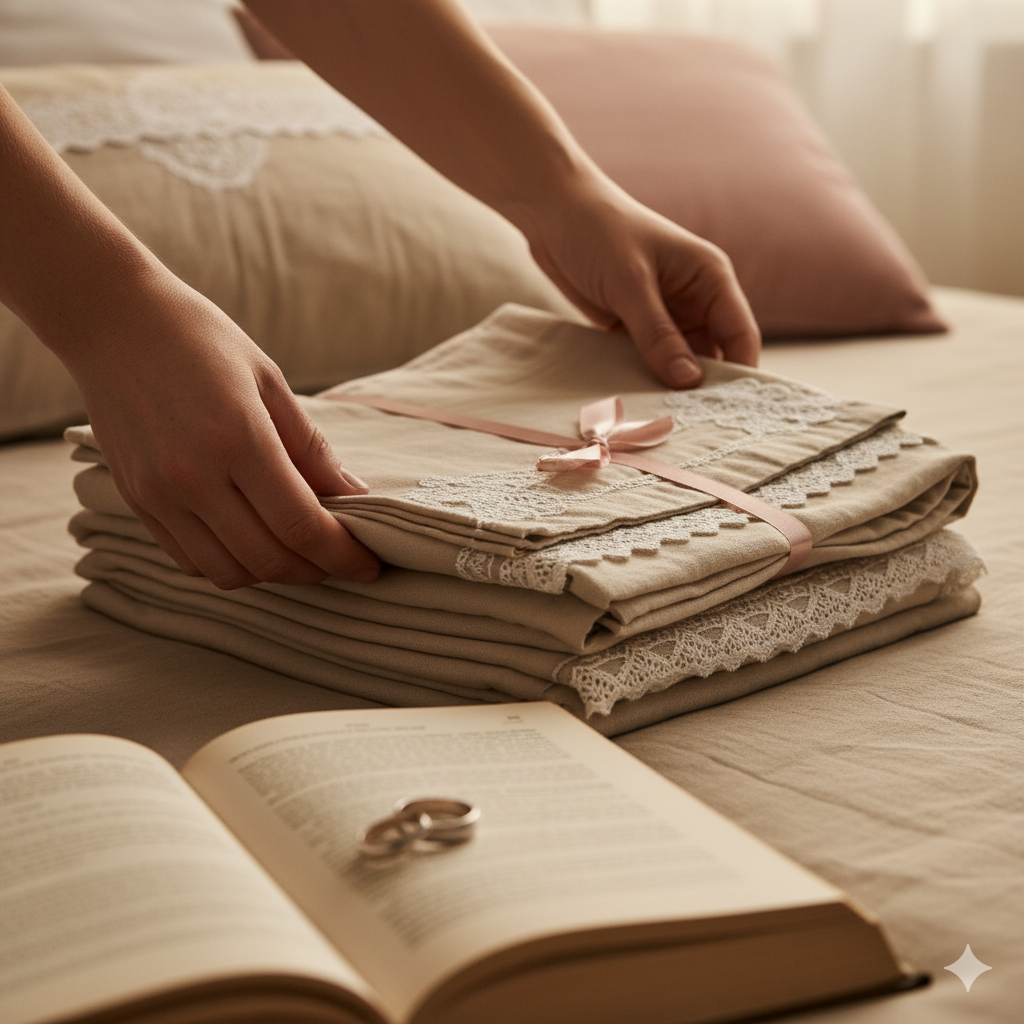
In Catholic regions, priests blessed rooms and beds to sanctify the wedding night. Rosemary, lavender, and floral emblems invited fertility and happiness, turning ordinary rooms into sacred havens. The language of wedding bedding ceremonies fused spiritual meaning with physical union, making the bed a blessed setting rather than a mere furnishing.
Today, scent rituals and calming routines can echo that sense of intention. For gentle, sleep-supportive options, see 7 essential oils for sleep and how aromatherapy enhances rest. If summer heat competes with rest, these temperature-regulating bedding suggestions can help sustain a tranquil mood after the festivities.
Royal houses: When ritual met law
Answer-first: witnesses once secured dynastic continuity
For royals and aristocrats, wedding bedding ceremonies could carry legal weight. Courtiers or designated witnesses sometimes observed entry to the bedchamber, creating public proof that protected heirs and property. It was intrusive by modern standards, yet it anchored succession and diplomacy. Today, prenuptial agreements and civil documentation quietly fulfill those functions without spectacle.
If you’re drawn to the visual drama of historic beds—without the rigid etiquette—browse canopy bed styles, from classic to modern for ideas that bridge ornament and comfort in contemporary rooms.

Renaissance to Victorian: Privacy rises, romance reframes
Answer-first: the private sphere gained dignity and depth
Renaissance art and letters elevated love as a marital foundation, even as custom kept public escorting and blessings. Over time, the inner sanctum grew respected in its own right. By the Victorian era, modesty retired public bedding rituals; discreet customs and home-centered romance took their place. The symbolism endured, but wedding bedding ceremonies shifted from spectacle to story—expressed in keepsake letters, veils, and private vows.
Want textures that fit a refined, restful look? See our bedding materials guide for an at-a-glance primer on percale, sateen, linen, down, and alternatives. It’s a useful complement when pairing heritage-inspired frames with breathable fabrics for restorative nights.
Modern echoes: The ritual remains, the form changes
Answer-first: we still mark the same threshold
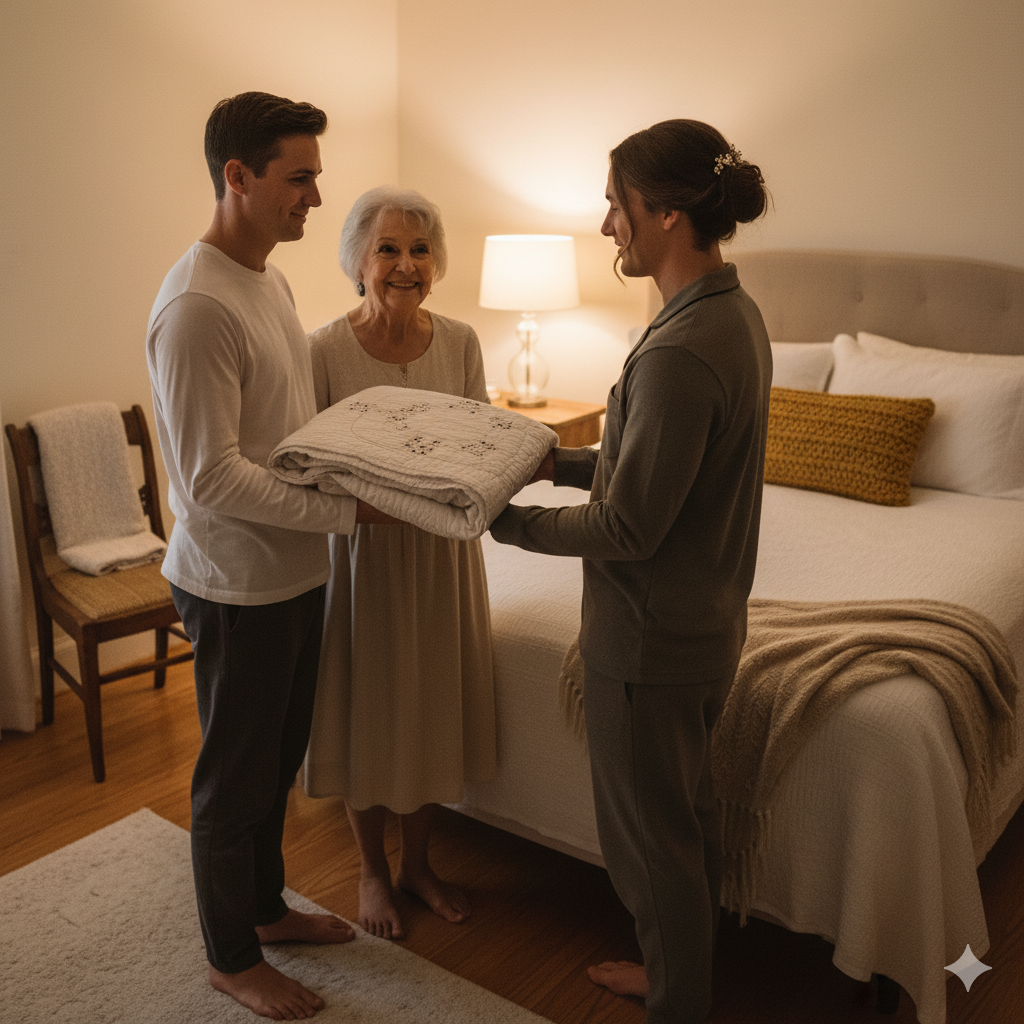
We no longer stage wedding bedding ceremonies, but we still honor that passage from public celebration to private union. Threshold carries, honeymoon suites, and first-night rituals mirror earlier transitions. For historical context on how sleep shapes well-being, see the National Sleep Foundation’s overview of how sleep works (approved external source). For fabric trade-offs that affect comfort on the big night (and every night), Parachute’s concise comparison of weaves—percale vs. sateen vs. linen—is a handy refresher.
Designing the “first-night” bedroom today
Answer-first: intention beats extravagance
A modern “first-night” bedroom succeeds when it’s calm, breathable, and easy to maintain. Think tactile layers, soft lighting, and simple airflow tweaks. Choose fabrics that feel good against skin and manage temperature for both partners. Small choices—like a breathable topper or moisture-wicking sheets—often matter more than ornate décor.
- Breathable layers: Build from a supportive mattress, then add a light quilt or duvet for flexible warmth.
- Fabric know-how: If you sleep warm, percale and linen are typically crisper and cooler; sateen feels silkier and slightly warmer. Better Homes & Gardens’ bedding advice hub offers practical checklists (BHG bedding tips & care).
- Calming scent cues: Lavender and cedarwood nod to historic symbols and can cue wind-down without overwhelming the space.
- Healthy materials: Where possible, look for OEKO-TEX or GOTS labels to reduce unwanted finishes touching skin night after night.
For real-world pairings that blend comfort and aesthetics, see our practical roundups: modern bed types, stylish bed frames, and gold canopy inspirations.
FAQ
- What was the core purpose of wedding bedding ceremonies?
- Wedding bedding ceremonies publicly affirmed the union and invited blessing, often reinforcing legitimacy for inheritance and community standing.
- Do modern weddings have equivalents to wedding bedding ceremonies?
- Yes. Threshold carries, honeymoon suites, and first-night rituals echo the same transition from public celebration to private life embodied by wedding bedding ceremonies.
- Why did public bedding rituals disappear?
- As privacy ideals grew—especially in the Victorian era—public observation faded. Wedding bedding ceremonies gave way to discreet customs and private symbolism.
Final Thoughts
Across centuries, wedding bedding ceremonies mirrored shifting views on intimacy, legitimacy, and privacy. The pageantry changed, but the intention—honoring a shared, restorative life—endures. For more ways to shape a restful sanctuary after the celebration, visit Cozy Bed Quarters.
Related Reading
From Cozy Bed Quarters
- Exploring Modern Bed Types: A Comprehensive Guide
- Stylish Bed Frames to Elevate Your Bedroom Decor
- Gold Canopy Bed: Elegant Luxury