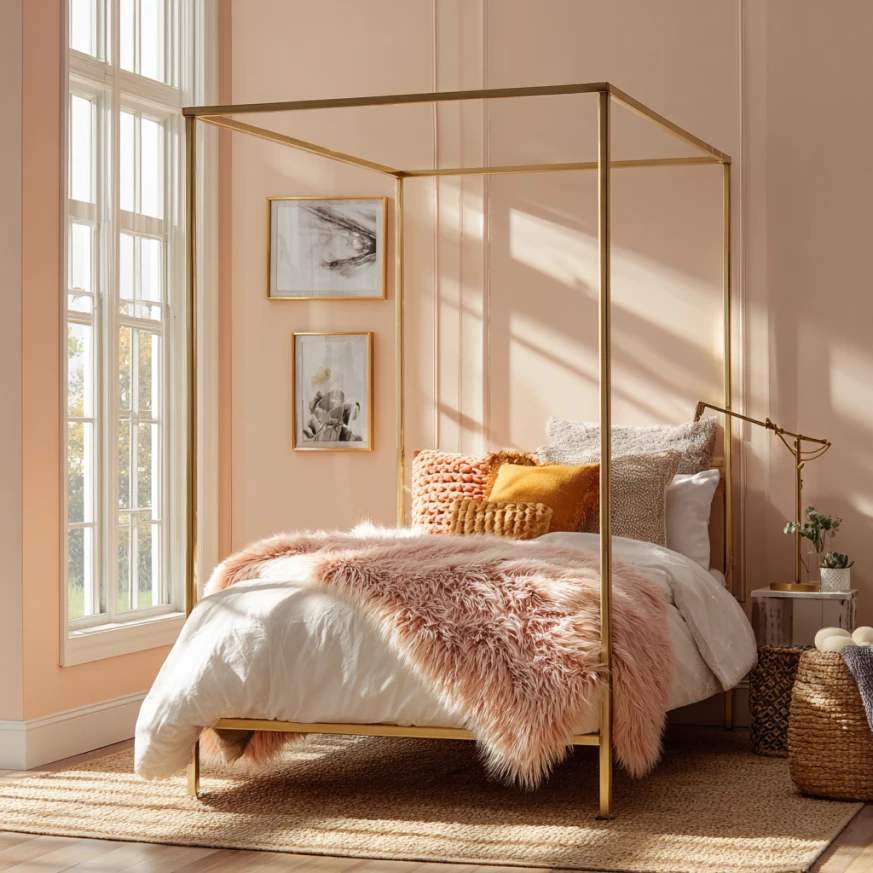
A gold canopy bed is a four-post frame with a metallic gold finish and an open rectangular top rail, and it works as the single focal point of a bedroom — so the rest of the room can stay simple. Before you buy, measure two things: your ceiling height against the frame height, and your floor space against the mattress footprint plus walking room. After that, styling is mostly about picking a palette, deciding whether you want drapes, and keeping the finish dusted.
What you’re actually buying with a gold canopy bed
“Gold” on furniture almost never means gold. Most frames in this category are steel or iron with a brass-toned plating or a gold-colored powder coat. Some are wood with a gilded or gold-leaf finish, and a few are upholstered frames with gold-finished metal posts or trim. The difference matters for care and for how the bed reads in a room.
- Powder-coated metal: the most common and the most forgiving. The color is baked on, so it doesn’t tarnish, though it can chip if you knock it hard.
- Plated or polished brass-look metal: brighter and more reflective, and more likely to show fingerprints and dull over time in humid rooms.
- Gilded or gold-painted wood: heavier, warmer, usually more ornate. Finish touch-ups are harder to match.
- Mixed metal and upholstery: softer look, and the fabric absorbs a little sound. Worth a look if a bare metal frame feels too cold — see the case for upholstered canopy beds.
Ask sellers what the finish actually is. A listing that only says “gold” tells you nothing about whether you’re getting a durable coating or a thin plate over cheap tube steel. For a wider comparison of frame construction, our breakdown of wood vs metal vs upholstered frames covers the trade-offs in more detail.
Will it fit? Measure before you fall in love
This is where canopy beds go wrong. The posts on a full-height canopy typically land somewhere in the 6.5 to 7.5 foot range, and the top rail needs breathing room above it or the bed feels like it’s pressing into the ceiling. The International Residential Code sets a 7-foot minimum ceiling height for habitable rooms, and plenty of older homes and finished basements sit close to that floor. An 8-foot ceiling is common in newer US construction, which usually leaves enough clearance for a standard canopy — but only if you check the listed frame height, not just the bed size.
A few practical checks:
- Measure floor to ceiling in the exact spot the bed will go, and subtract the frame’s total height. Leave at least 6–12 inches of visual space above the rail.
- Watch for ceiling fans, sloped ceilings and low light fixtures. A canopy under a fan is a problem you’ll notice every night.
- Measure your doorway, stair turns and hallway. Canopy beds ship flat-packed, but long post sections still have to get into the room.
- Plan walking room. Designers commonly aim for roughly 24–30 inches of clear floor on each side of the bed. That’s a comfort rule of thumb, not a code requirement, and a small room can work fine with less on one side.
| Mattress size |
Mattress dimensions |
Room width that feels comfortable |
| Full |
54 x 75 in |
About 9.5 ft with 30 in each side |
| Queen |
60 x 80 in |
About 10 ft with 30 in each side |
| King |
76 x 80 in |
About 11.5 ft with 30 in each side |
| California king |
72 x 84 in |
About 11 ft wide, and 4 extra inches of length |
Frames add an inch or two beyond the mattress on each side, so treat these as a starting point and check the manufacturer’s overall dimensions. If you’re shopping the largest sizes, our roundup of canopy bed frames for a king mattress is a useful next stop.
Styles that actually work
Modern and minimal
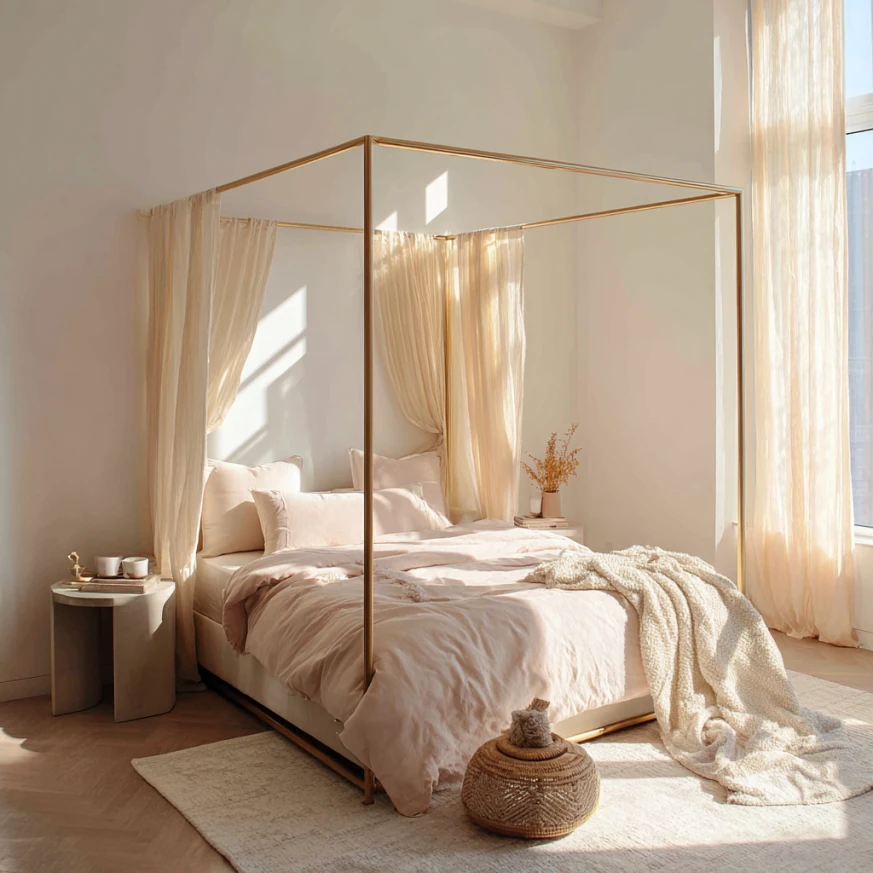
Thin, squared-off posts with no finial and no ornament. This version reads more like sculpture than antique, and it’s the safest choice for a small or low-ceilinged room because you see straight through it. Pair with white or oatmeal bedding, one piece of large-scale art, and very little else.

Traditional and ornate
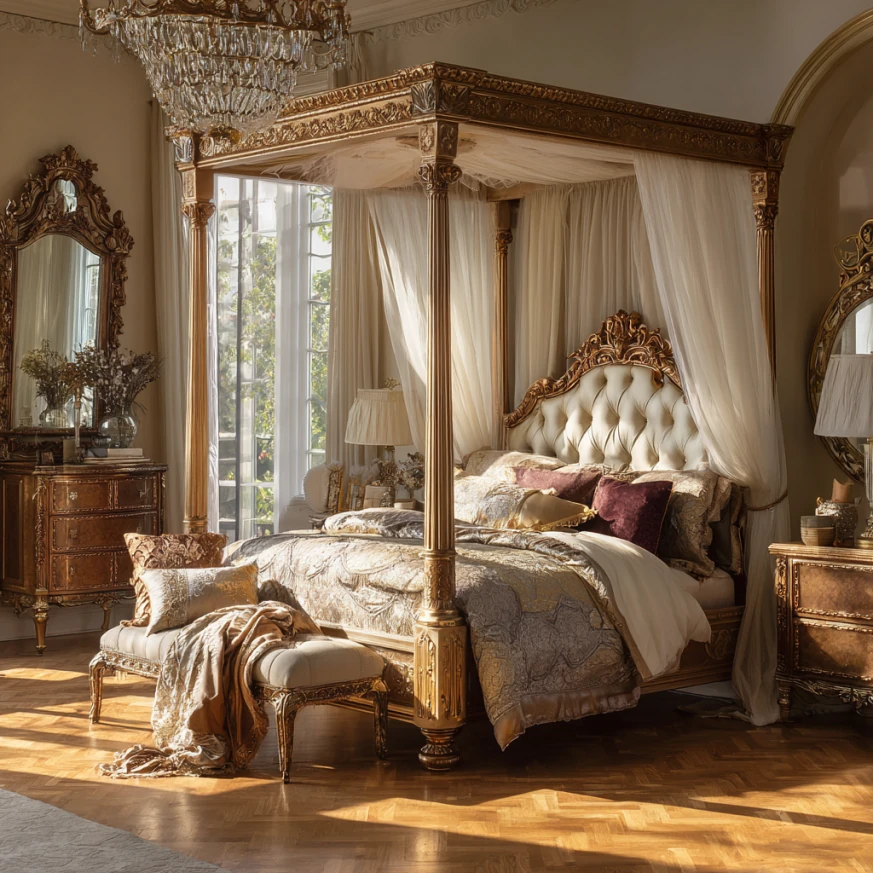
Scrollwork, turned posts, finials, sometimes a carved or upholstered headboard. It needs ceiling height and a bit of room to breathe, and it looks best with heavier textiles — velvet, damask, a real rug. If you like this direction, the history behind four-poster beds explains where the silhouette came from.
Romantic and draped
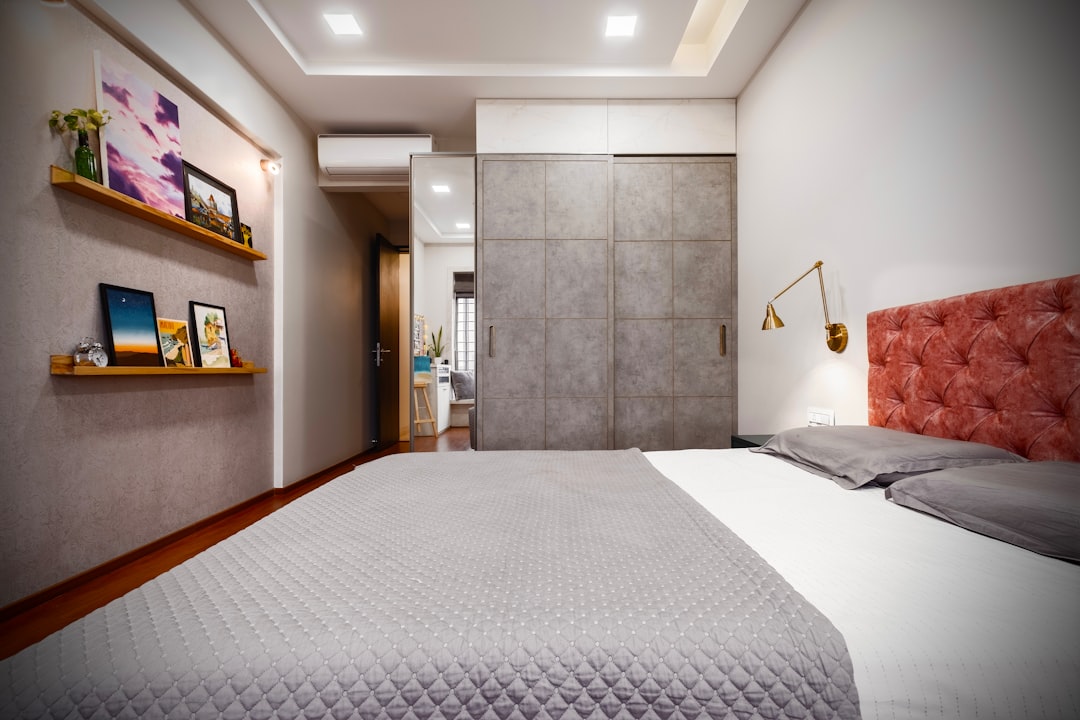
Sheer panels tied at the posts, or fuller curtains you can actually close. Sheers soften the hard lines of a metal frame and make the bed feel like a room within a room. Skip the drapes entirely if you want the frame itself to be the graphic element. There are more layouts in our romantic canopy bed ideas.
Vintage and boho
An older brass-look frame, layered textiles, plants, mismatched pillows. Gold is forgiving here because the patina and slight unevenness read as character rather than damage.
Styling it without overdoing it
Gold is loud. The frame is doing most of the work, so the rest of the room should support it rather than compete.
- Pick a lane with color. Jewel tones — emerald, sapphire, deep plum — make gold look rich and deliberate. Warm neutrals like cream, oatmeal and taupe make it look calm. Both work; mixing them tends to look muddy. Soft green with gold is a gentler middle path.
- Repeat the metal, sparingly. Two or three small gold touches — a mirror frame, lamp base, drawer pulls — tie the bed into the room. More than that and it starts to feel like a showroom.
- Mixing metals is fine. Choose one dominant metal (the bed) and one supporting metal (black, bronze or nickel), and spread the supporting one across at least two objects so it looks intentional.
- Keep the rest of the furniture quiet. Plain nightstands and a simple dresser let the canopy stay the focal point.
- Light it warmly. Warm-toned bulbs bring out the brass tones. Cool white light makes gold finishes look slightly green.

How a gold canopy bed affects sleep, honestly
The frame itself doesn’t make you sleep better — no bed finish does. What can help is the environment you build around it. The Sleep Foundation points to a dark, quiet and comfortably cool bedroom, with less clutter and calming colors, as the setup most likely to support consistent rest. Heavier canopy curtains can genuinely block light from a streetlamp or an early sunrise, and the enclosure makes some people feel more settled. That’s a real benefit, though it’s about the curtains and the room, not the gold.
The flip side is dust. Fabric above your head collects it, and if you have allergies that’s worth taking seriously. Mayo Clinic advises washing bedding weekly in water of at least 130 F and getting rid of dust-collecting items in the bedroom, including curtains that can’t be washed. So if you’re draping the frame, buy machine-washable panels and actually wash them. Or skip the fabric and enjoy the open frame.
The downsides nobody mentions
- Assembly is a two-person job. Long posts and top rails are awkward to hold square while you tighten bolts.
- Dust sits on the top rails. You’ll need a step stool or an extendable duster every few weeks.
- Cheap plating chips. On budget frames, exposed edges and bolt points are where the gold wears off first.
- It’s hard to move and hard to restyle. A canopy commits the room to one layout. More on that in our look at the hidden downsides of luxury bed frames.
- Fingerprints on shiny finishes. Brushed and matte golds hide handling far better than mirror-polished ones.
If the footprint worries you but you still want the height and drama, compare the differences between canopy and four-poster beds — a four-poster without a top rail gives you some of the same presence with less visual weight.
Keeping the finish looking new
- Dust weekly with a dry microfiber cloth, top rails included.
- Clean gently. A barely damp cloth, then dry immediately. Skip abrasive pads, scouring powders and bleach-based cleaners — they scratch coatings and can discolor plating permanently.
- Don’t use brass polish on a coated frame. Polish is designed to remove tarnish from bare metal and will cut straight through a lacquer or powder coat. If you’re not sure which you have, test in a hidden spot or ask the maker.
- Retighten hardware twice a year. Tall frames develop a wobble as bolts loosen, and a wobbling canopy gets worse fast.
- Wash canopy fabrics on a schedule and use felt pads under the feet so you don’t scrape the finish when the bed shifts.

Gold canopy bed questions people ask
Will a gold canopy bed work in a small bedroom?
Usually yes, if you choose a slim, unornamented frame and skip the drapes or use sheers. The open structure lets your eye travel through it, which is why a canopy often feels lighter in a small room than a bulky upholstered headboard. Keep the walls light and the surrounding furniture low.
What ceiling height do I need?
Match it to the frame, not a rule. Check the listed overall height and leave several inches of clear space above the top rail. Under an 8-foot ceiling, look for lower-profile canopy frames rather than full-height ones.
Does the gold finish tarnish?
Powder-coated finishes don’t tarnish, though they can chip. Plated brass-look finishes can dull over time, especially in humid rooms, and polishing them risks removing the plating. Dusting and keeping moisture off does most of the work.
What bedding colors look best?
White, cream, blush and soft gray keep things calm and let the frame stand out. Emerald, navy and deep burgundy push it toward drama. Pure cool-toned grays and stark blue-whites can fight with warm gold.
Can I mix gold with silver or black?
Yes. Let gold dominate, add one secondary metal, and repeat that second metal at least twice in the room so it looks like a choice rather than an accident.
Do I have to hang curtains?
No. An undraped frame is a modern look in its own right, and it’s easier to keep clean. Add fabric only if you want light control, privacy or a softer feel.
Updated September 2026.