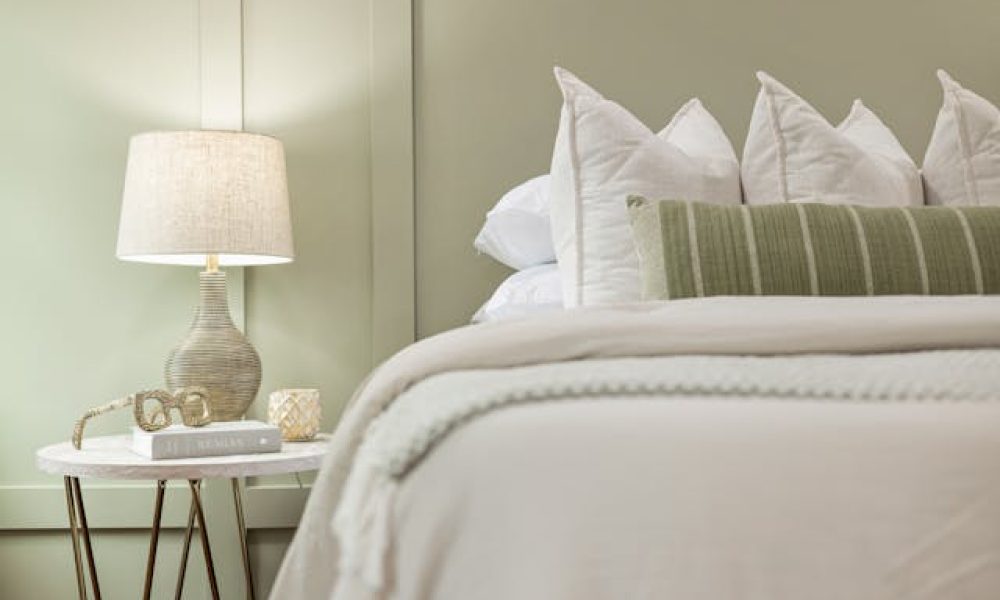
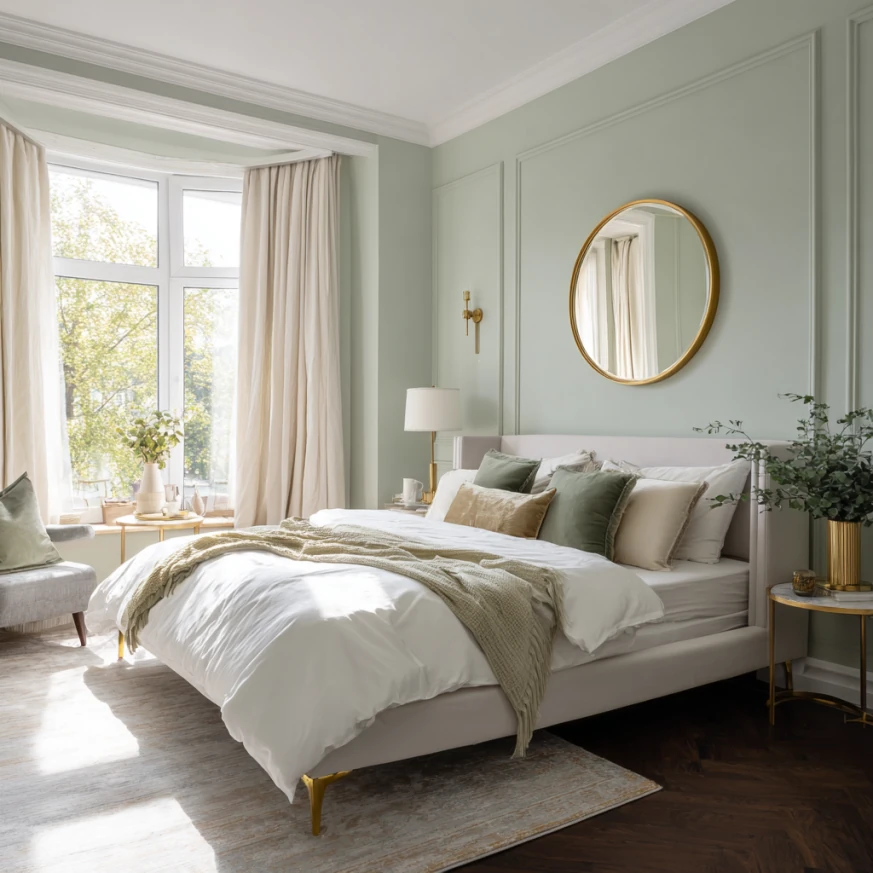
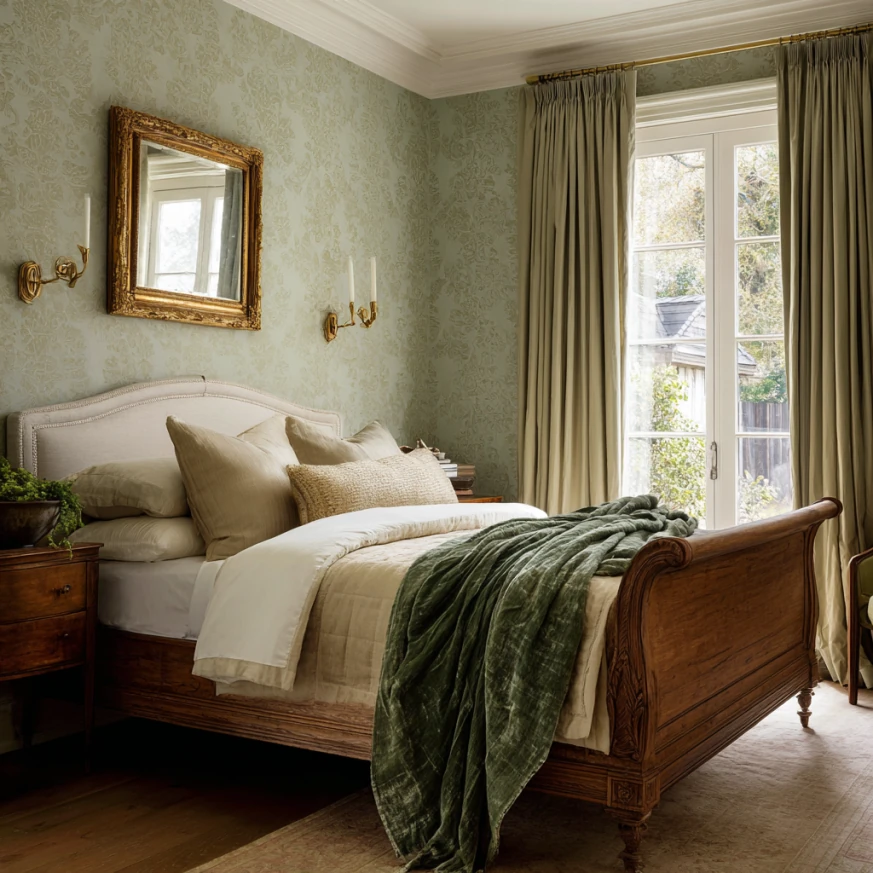
A light green bedroom with gold works because the two colors do opposite jobs: soft green cools the room down and keeps it restful, while gold adds the warmth and sparkle that stops pale green from looking flat. The reliable formula is green on about 60% of the room (walls, bedding), a neutral on 30% (wood, cream, linen), and gold on the last 10% — roughly five to seven metal touches. Get the green undertone and the bulb color right first; the gold is the easy part.
Why light green and gold sit well together
Green sits in the middle of the visible spectrum and reads as the least demanding color in a room — nothing about it shouts. Gold is a warm yellow-orange at heart, nearly opposite the blue-greens on the color wheel. That contrast is what gives the pairing its lift.
The catch: pale green plus a lot of shiny metal tips into hotel-lobby territory fast. Most of the light green bedroom with gold schemes that go wrong went wrong here — too much shine, and three competing metal finishes.
Pick the right light green first
“Light green” covers a huge range, and the undertone decides everything about how gold looks next to it.
- Sage — grey-green, muted, very forgiving. Pairs beautifully with brushed and antique brass.
- Celadon — slightly blue-green and cool. Looks crisp with polished gold, but can go icy in a north-facing room.
- Eucalyptus / sea glass — green with a whisper of blue and grey. The safest choice if your room gets mixed light.
- Pistachio / apple — yellow-green, cheerful, more spring than spa. Gold nearly disappears against it, so add cream or white to create separation.
- Mint — the trickiest. High-chroma mint can read as 1950s bathroom under warm bulbs. Use it on textiles, not on all four walls.
Check the LRV before you buy paint
Every paint chip lists a Light Reflectance Value (LRV) from 0 (black) to 100 (pure white). Most “light” greens land between 55 and 75. Under about 55 the color will feel considerably heavier on four walls than it did on the chip; above 75 it can wash out to near-white in a bright south-facing room and lose the green entirely.
Test it properly — two walls, three times of day
- Paint two coats on a sheet of white poster board, at least 12 x 18 inches, and leave a white margin around the edge so your eye isn’t fooled by neighboring colors.
- Tape one board on the wall that gets the most daylight and one on the darkest wall.
- Look at 9 a.m., 4 p.m. and at night with the lamps on. North-facing rooms get cool, blue-ish light that drags green toward grey; south-facing light warms it and pulls out the yellow.
- Hold your gold candlestick or drawer pull against each board while you look. That comparison tells you more than any online swatch.
For sheen, matte and eggshell hide drywall flaws and keep green soft; satin bounces more light but shows roller marks. Warm off-white trim, not stark white, stops the green from going cold.
How much gold is enough
Count your gold moments. Five to seven in a standard bedroom is plenty, and they should form a loose triangle around the room so your eye travels rather than parks in one corner.
A practical running order, cheapest and easiest first:
- Hardware. Swapping dresser and nightstand knobs for brass is the highest-impact half hour you’ll spend. Measure the existing hole spacing first — 3 inches and 96 mm are common pull centers, and they aren’t interchangeable.
- A mirror. A gold-framed mirror beside or opposite a window doubles your daylight — more placement options in these bedroom mirror and lighting ideas.
- Lamp bases and a pendant. Metal reads strongest when it’s lit from the inside.
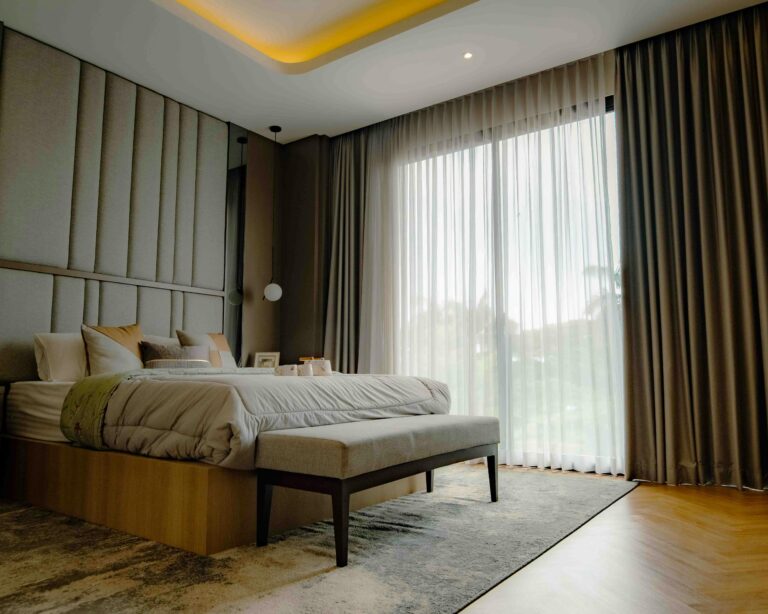
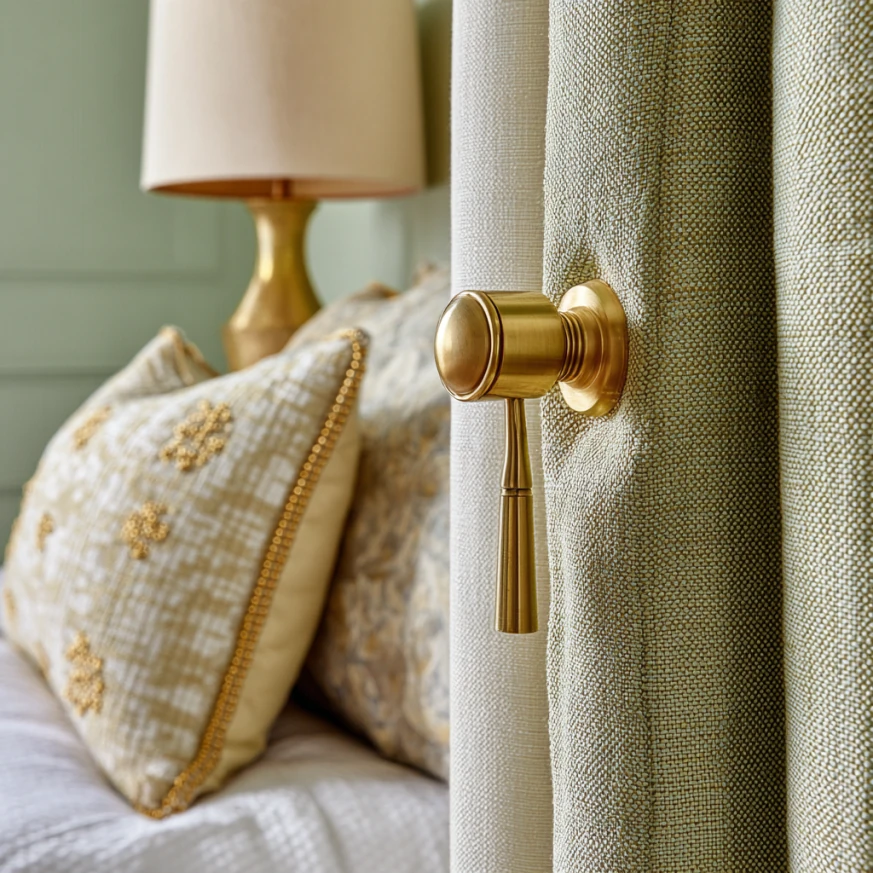
- Curtain rod and rings. Hang it 4 to 6 inches above the frame and 8 to 12 inches past each side so curtains stack off the glass.
- Frames and small objects. A tray, picture frames, dried grasses in a brass vessel.
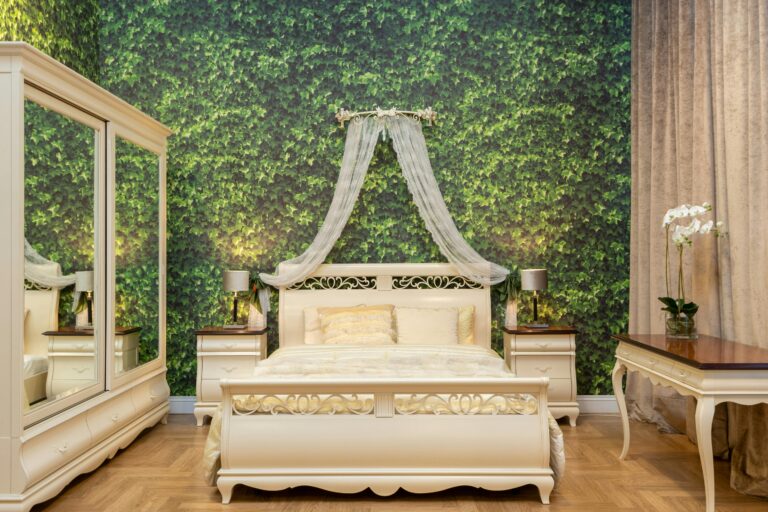
- The bed itself. If you want one big gesture instead of many small ones, a gold canopy bed carries the whole metal story on its own — then keep every other gold touch tiny.
Mixing metals without it looking accidental
Two finishes maximum, with one clearly in charge. Gold plus matte black is the easiest combination in a green room; gold plus chrome usually fights, because chrome is cool and green is already cool. If your door handles and light switches are silver-toned and you can’t change them, that’s fine — they’re background, not accents.
Which gold finish to choose
| Finish |
Looks like |
Best for |
Downside |
| Polished brass |
Mirror-bright, yellow |
Mirrors, pendants, statement pieces |
Shows every fingerprint |
| Brushed / satin brass |
Soft matte gold |
Hardware, lamp bases, rods |
Less sparkle in dim rooms |
| Antique / aged brass |
Darker, slightly brown |
Sage and olive greens, older homes |
Can disappear against deep green |
| Gold-tone plated |
Bright gold over base metal |
Budget accessories, frames |
Plating can wear at touch points |
Lighting that supports the mood
Bulb color makes or breaks a light green bedroom with gold. Light color is measured in Kelvin, and ENERGY STAR notes that lower Kelvin numbers look more yellow while higher numbers look whiter or bluer, with most certified bulbs falling in the 2200K–3000K “warm” range. Stay at 2700K in a green-and-gold room. At 4000K or above, sage turns grey, brass turns brownish, and the whole room goes clinical.
Two more numbers worth checking on the Lighting Facts label:
- CRI 90 or higher. Color rendering index describes how accurately a bulb shows color. Cheap bulbs in the 80s flatten subtle greens.
- Lumens, layered. Around 800 lumens per bedside lamp is enough to read by; put the ceiling fixture on a dimmer.
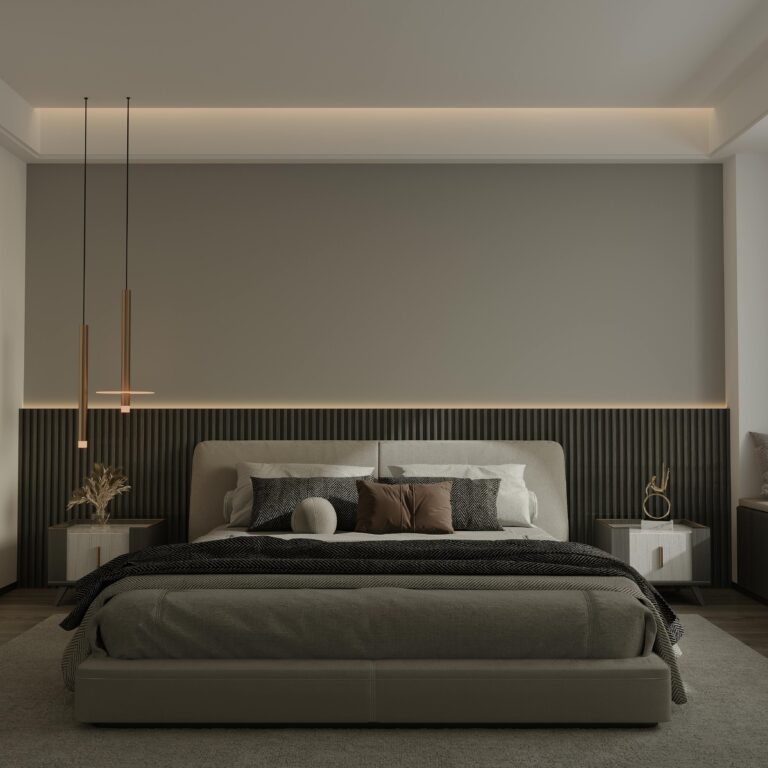
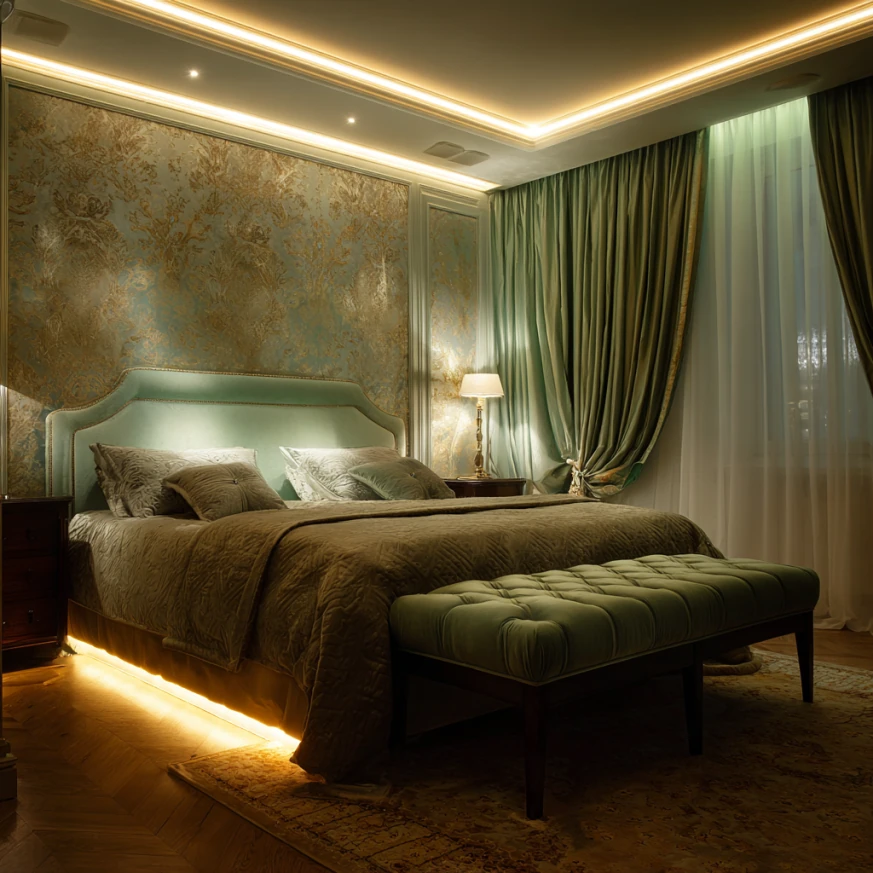
Evening light matters for sleep, not just looks. Harvard Health’s overview of blue light explains that blue wavelengths suppress melatonin and shift circadian rhythm more than other colors, which is a good argument for warm, dimmable lamps rather than a bright overhead as your last light of the day. Hidden warm strips behind a headboard do the same job quietly — there are more options in these LED lighting ideas for an aesthetic bedroom.
Textiles: where the softness comes from
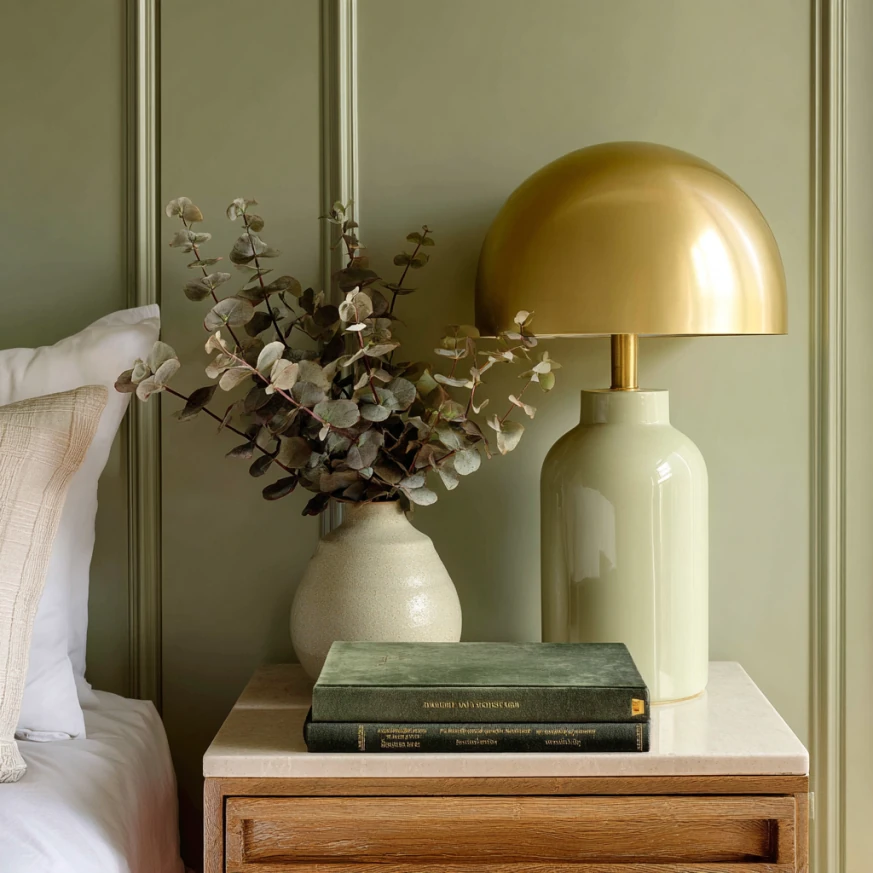
Green and gold can look hard if every surface is smooth. Mix at least three textures on the bed.
- Washed linen or cotton percale in white or oatmeal — a matte base that keeps the green from feeling sweet.
- A velvet lumbar cushion in a deeper green (olive, fern) for weight and shadow.
- One gold-toned element: a silky pillowcase, a fine metallic thread in a throw, or piping. One is plenty.
- A wool or jute rug. Under a queen, an 8 x 10 starting halfway beneath the bed leaves 18 to 24 inches of soft floor each side. Two 2.5 x 8 runners work if a big rug won’t fit — or try layering rugs.
The frame matters too. Cane, rattan and warm oak sit better with sage than dark cherry does — this rundown of bed frame material types covers how each finish behaves.
A light green bedroom with gold in a small room
Pale green is a friend to small rooms — it reflects a decent amount of light without the glare of bright white. A few adjustments help:
- Paint trim and ceiling in the same green at a lighter mix, or a warm white, so the corners blur.
- Choose fewer, larger gold pieces. Six small trinkets read as clutter; one big mirror reads as design.
- Pick leggy furniture. Seeing floor under a nightstand or bench makes the room breathe.
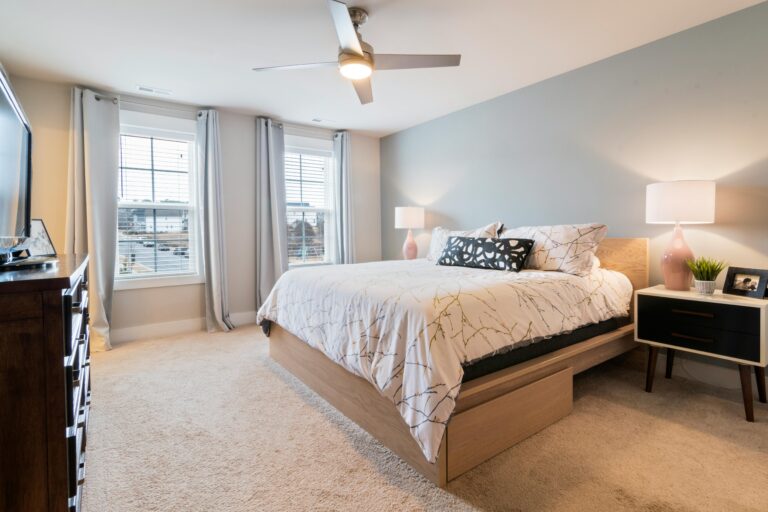
- Keep nightstand tops within about 2 inches of your mattress height so the bedside lamp lands at a comfortable reading angle.
- Hang art 6 to 8 inches above the headboard, not floating near the ceiling.
What to watch out for
- Green flashing off the walls. In a narrow room, light bouncing between green walls tints skin tones. A cream ceiling and pale bedding fix it.
- Too much shine. If three or more items are polished gold, swap some for brushed.
- Mismatched golds. Rose-gold accessories next to yellow brass look like a mistake, because they usually are.
- Tarnish. Unlacquered brass darkens over time, which some people want. Lacquered and plated finishes should only be dusted with a dry microfiber cloth — abrasive polish strips the coating for good.
- Cool daylight. A north-facing room may need a green with a touch more yellow in it than you’d pick from a chip in the store.
Frequently asked questions
What colors go with light green and gold?
Warm neutrals do the heavy lifting: cream, oatmeal, camel, unbleached linen. For contrast in small doses, try terracotta, dusty pink or deep forest green in cushions and art. Want a cooler accent? Pale blue is a natural neighbor — these light blue bedroom accessories show how it behaves in a restful room.
What bulb color is best for a green and gold bedroom?
2700K warm white, CRI 90+, on a dimmer. Anything at 4000K or higher pulls the green toward grey and dulls the gold.
Is green and gold too bold for a bedroom?
Not at these proportions. A light green bedroom with gold accents at roughly a tenth of the room lands closer to a spa than a ballroom.
Does this look date quickly?
Sage and muted greens have been around long enough to behave like neutrals, and the gold lives in swappable pieces — hardware, frames, cushions, a rod. Changing the metal later costs an afternoon, not a renovation.
How do I keep gold accents from looking cheap?
Weight is the tell. Hollow, lightweight items with very bright plating look plastic under lamplight. Solid pieces with a softer brushed finish read as more expensive even when they aren’t — and they hide fingerprints.
What if I can’t paint?
Renting? Put the green in the bedding, curtains and rug, and let a gold mirror plus two brass lamps carry the metal. The palette still reads clearly on white walls.
A weekend plan for a light green bedroom with gold
- Friday: tape up two green sample boards and check them morning, afternoon and night.
- Saturday morning: swap every bulb in the room to 2700K and add a plug-in dimmer if the lamps allow it.
- Saturday afternoon: change the drawer hardware and hang the mirror.
- Sunday: layer the bed — linen base, green velvet cushion, one soft throw — and move the rug so it sits halfway under the frame.
Then stop for a week before buying anything else. Most rooms need one or two more gold pieces at that point, not six.
Updated September 2026.