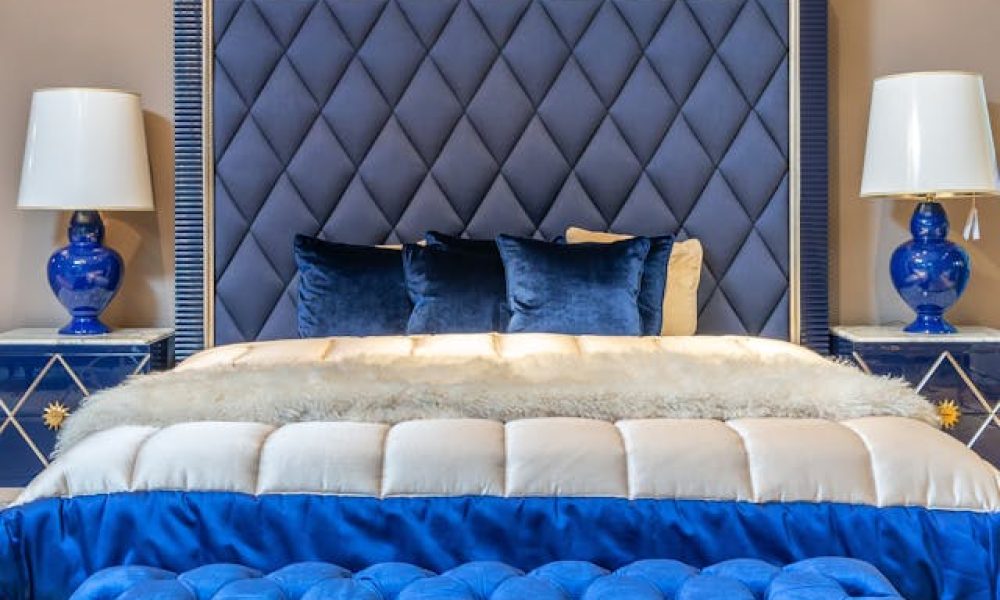
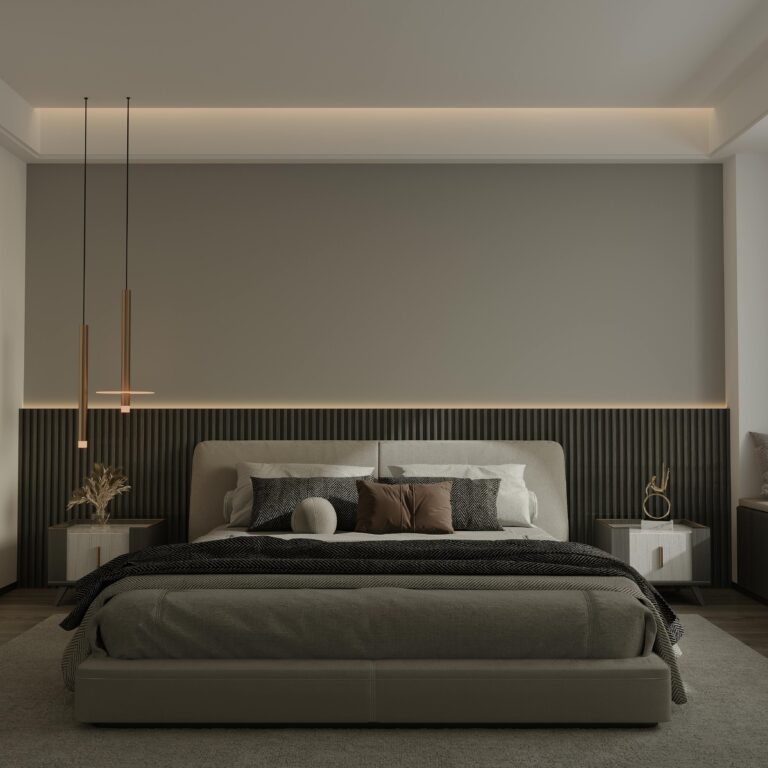
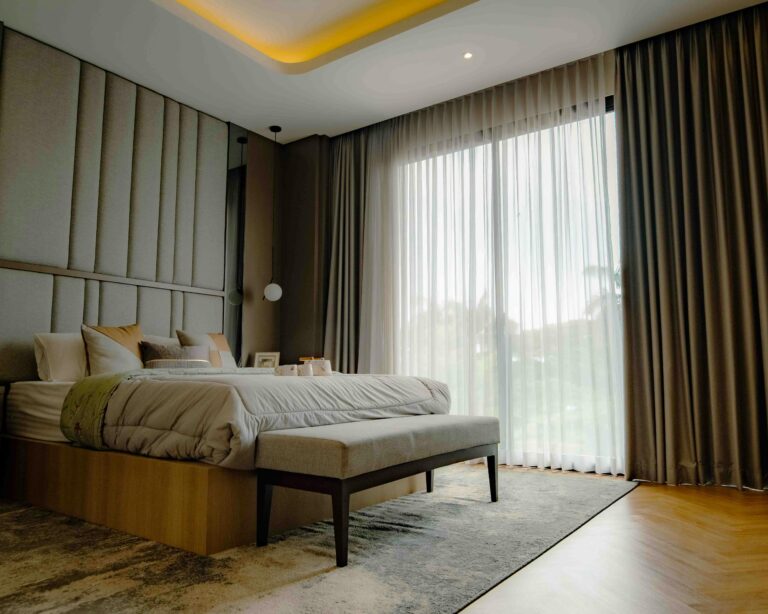
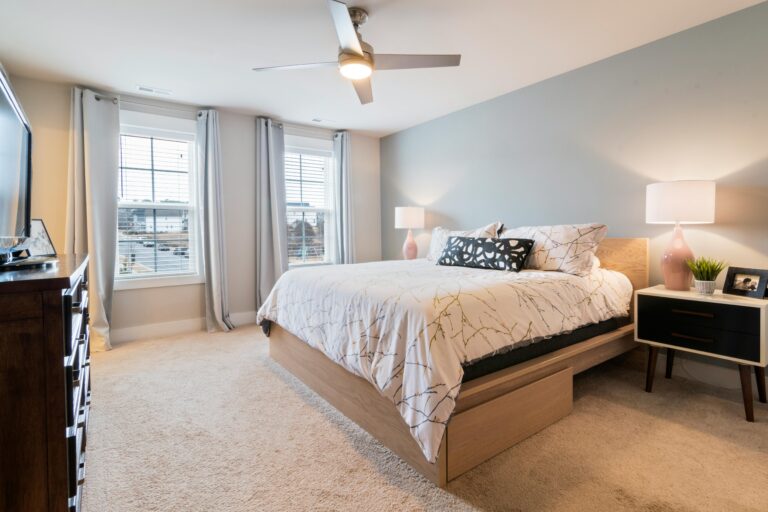
Light blue bedroom accessories — bedding, throw pillows, curtains, rugs, lamps and small ceramics — are the fastest, cheapest way to make a bedroom feel calmer without repainting. Start with the largest soft surfaces (duvet, curtains, rug), keep the blues within two or three related shades, and warm them up with wood, cream and woven textures so the room reads restful rather than chilly. The calm you feel comes mostly from a quieter, less cluttered palette and better light control, not from the colour alone.
What light blue actually does for a bedroom
Pale blue is popular in bedrooms because it borrows from sky and water, recedes visually, and doesn’t compete for attention the way saturated reds and oranges do. It’s worth being honest about the science, though: surveys and lab studies repeatedly find people rate blue rooms as pleasant and relaxing, but there is no solid evidence that a particular wall or bedding colour measurably improves how long or how well you sleep. Claims that blue decor “lowers your blood pressure” or “cuts cortisol” overstate what small, short-term studies can show.
What does have strong evidence behind it is light. A dark bedroom is best for sleep, and if you need light in the evening, warm-coloured light is gentler on your body clock than cool, blue-rich light, according to the Sleep Foundation. So: blue on your pillows, yes. Blue light shining at your face at 11 p.m., no. That single distinction should shape most of the decisions below.
Start with the bedding
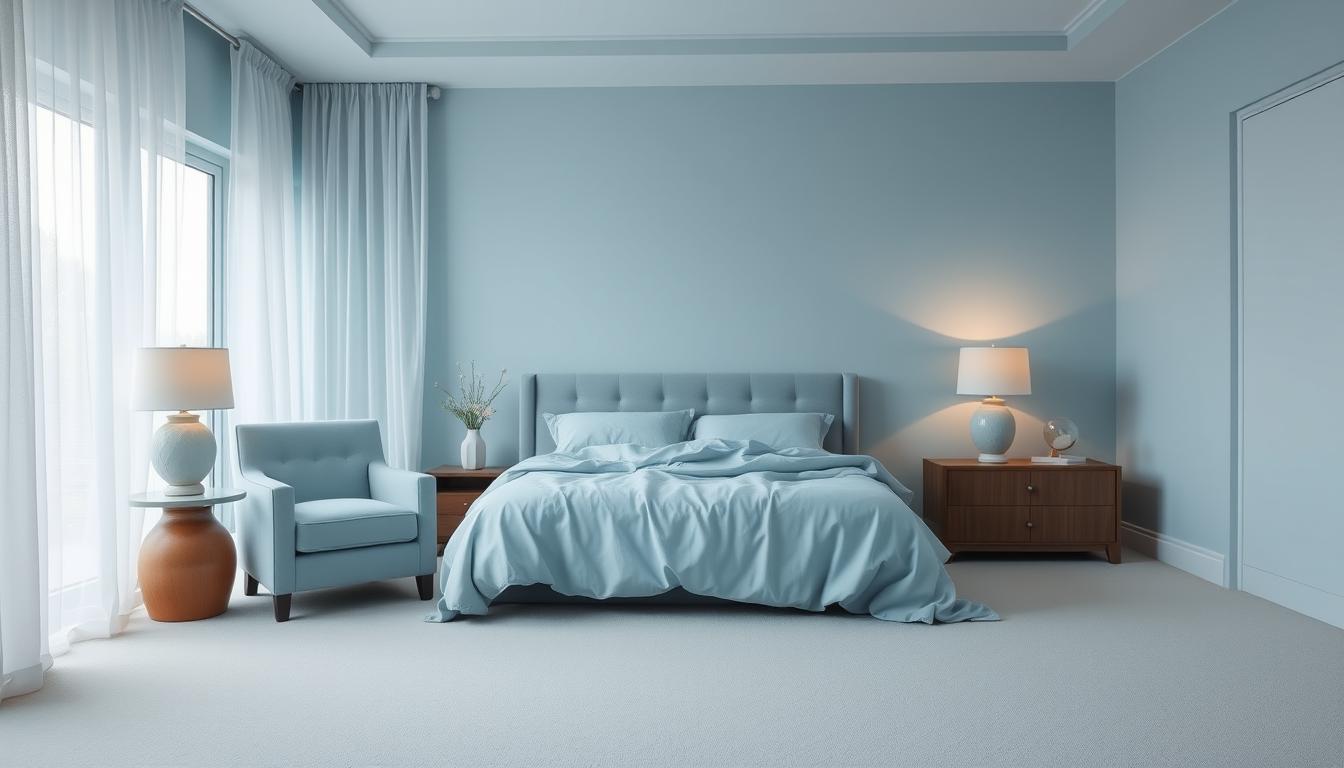
The duvet or quilt is the biggest block of colour in the room, so it sets the temperature of the whole scheme. Light blue sheets, duvet covers and pillowcases in cotton, linen or a cotton–bamboo blend give a clean, airy look, and those fibres are the usual choice for warm sleepers because they breathe and move moisture well.
A few practical pointers:
- Work in two or three tones — a pale sky blue, a slightly greyer misty blue and a soft aqua. More than three and the bed starts to look busy.
- Break up the blue with off-white or oatmeal so the bed doesn’t read as cold. A cream flat sheet folded over a blue duvet does most of the work.
- Buy one shade at a time. Blues vary wildly between dye lots and screens; order a pillowcase first and look at it in your own daylight before committing to a full set.
- Check the care label before you fall in love. Pale blue linen creases beautifully; pale blue sateen shows every crumple.
Throw pillows and throws: the cheapest upgrade
Pillows are the easiest entry point because they’re small, swappable and seasonal. A workable formula for a queen or king bed: two sleeping pillows, two large square pillows behind, two standard-size decorative squares in front, and one lumbar pillow at the centre. Mix a plain velvet, a textured linen or bouclé and one gentle pattern — stripes, a watercolour wash or an understated geometric. Avoid stacking several busy prints; the point of a pale palette is visual quiet.
Throws add the warmth that blue can lack. Use a light cotton or waffle weave in summer and swap to a wool blend or brushed fleece in winter, draped diagonally across the foot of the bed or over a reading chair. One good throw beats three thin ones.
Curtains: where decor meets better sleep
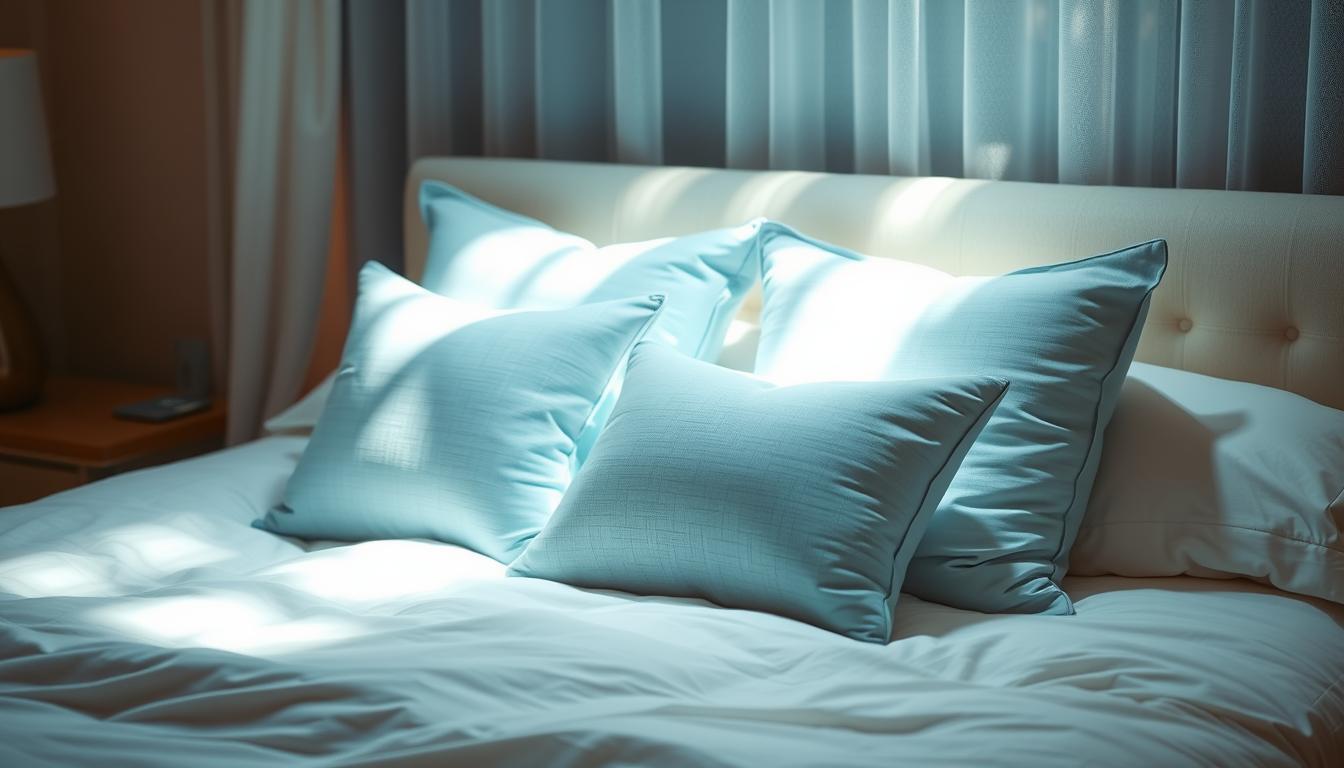
Window treatments are the one “accessory” that genuinely affects rest. Sheer light blue panels soften daytime glare and give the room that washed, coastal quality. But if streetlights or early sun wake you, layer a blackout lining or a separate blackout blind behind the decorative panel — the Sleep Foundation’s guidance on darkening a bedroom notes that light entering through windows is a common culprit and that blackout curtains are a straightforward fix.
Two details that make cheap curtains look expensive: hang the rod close to the ceiling rather than just above the frame, and buy panels wide enough to gather (roughly two times the window width in total fabric). Keep hardware simple — brushed nickel, matte black or natural wood all sit well with pale blue.
Rugs to ground the room
A pale blue rug softens hard floors and pulls the palette down to floor level, where it stops the blue from feeling like it’s floating around the bed. As a rule of thumb, the rug should extend about 18–24 inches beyond the sides and foot of the bed so your feet land on it when you get up; for a queen that usually means an 8’x10′, and for a king a 9’x12′. If a full-size rug is out of budget, two runners along the sides of the bed work almost as well.
- Pick a rug that repeats one shade already in your bedding rather than introducing a fourth blue.
- Faded, washed-out patterns hide wear better than crisp pale solids.
- Always use a non-slip pad — it also stops the pile crushing under the bed legs.
- For more depth, set a smaller patterned rug over a large natural-fibre base; our guide to layering rugs in a bedroom covers the proportions, and the bedroom rug guide walks through sizing and placement in detail.
Wall art and (optional) wall colour
Blue-toned art is the low-risk way to bring the colour to eye level: abstract washes, botanical prints, coastal photography, or a set of three framed pieces in the same tonal family. A gallery arrangement above the headboard should stay within roughly the width of the bed, and the lowest frames should sit far enough above the pillows that no one knocks them. For arrangement ideas and spacing, see our round-up of wall decor ideas for the space above your bed.
If you do want colour on the walls, a single accent wall or a peel-and-stick wallpaper in a soft blue pattern gives you the effect without repainting the room. Test a large sample on the wall that gets the least daylight — north-facing rooms push pale blues towards grey, and a shade that looked gentle in the shop can turn clinical.

One piece of blue furniture
A single painted piece — a nightstand, a small vanity, a bench at the foot of the bed — anchors the scheme and saves you from scattering blue objects everywhere. Dusty aqua and powder blue both sit well against warm wood floors. Keep it to one or two pieces; matching blue nightstands, a blue dresser and a blue chair tips the room into theme-park territory. Our nightstand guide covers scale and height, which matter more than colour.
Lighting: warm bulbs, blue objects
This is where people get light blue bedrooms wrong. A ceramic lamp base in a soft blue glaze is lovely; a strip of blue LED light glowing behind the headboard at bedtime is working against you, because blue-wavelength light suppresses melatonin more than other colours and shifts the body clock later — Harvard Health reports that in one comparison blue light suppressed melatonin for about twice as long as equally bright green light.
Practical approach: keep the colour in the lamp base, shade and accessories, and keep the bulbs warm and dimmable. Layer a ceiling fixture for cleaning, two bedside lamps for reading, and one low accent light for the evening wind-down. If you already have colour-changing LED strips, save the blue setting for daytime and switch to a dim, warm amber after dark. Our guide to cozy bedroom lighting covers placement and layering.
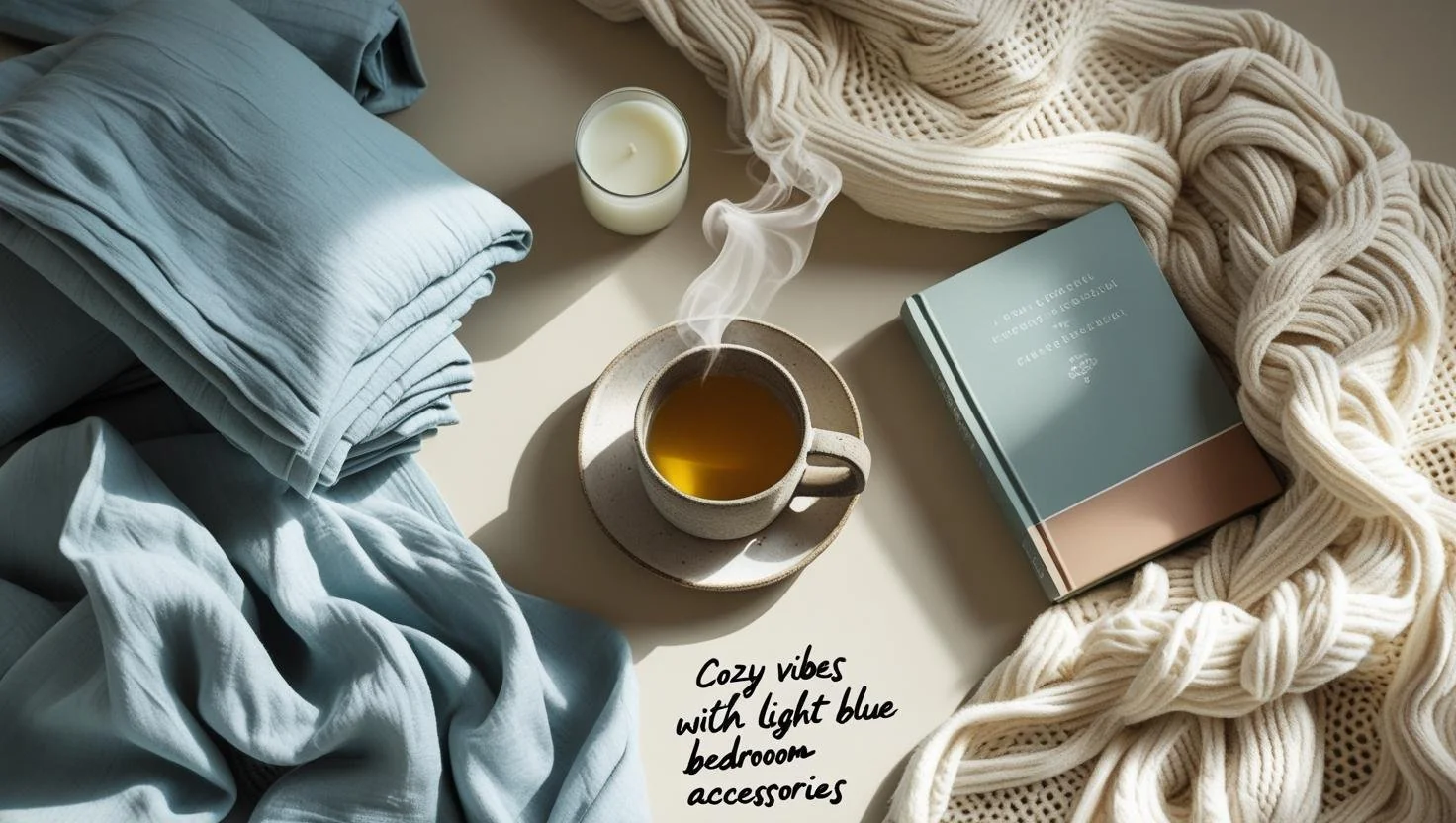
Small accents that tie it together
- Pale blue ceramic vases with eucalyptus, dried grasses or lavender.
- Woven baskets — in natural seagrass or a blue-washed weave — for blankets and clutter. Tidy surfaces do more for a calm mood than any colour choice.
- A tray on the dresser to corral jewellery, glasses and chargers.
- Candles in a soft blue vessel. Burn them briefly and with a trimmed wick; any burning candle releases particles into indoor air, so they’re a styling accent rather than a wellness tool.
- Glass, mirror or brushed brass in small doses to bounce light and stop the palette feeling flat.
Keeping it warm, not cold
The single biggest complaint about blue bedrooms is that they feel chilly. Three fixes solve almost all of it:
- Add warm neutrals. Cream, oatmeal, camel and warm grey beside blue read as cosy; stark white and cool grey amplify the coldness.
- Add natural texture. Wood, rattan, jute, chunky knits and linen give the eye something tactile to land on.
- Add one warm metal or deep contrast. Aged brass, bronze or a touch of navy gives the pale scheme a backbone.
In a small room, pale blue and plenty of light-reflecting surfaces genuinely help the space feel more open — pair the palette with the tricks in our guide to making a small bedroom look bigger, and keep patterns small-scale.
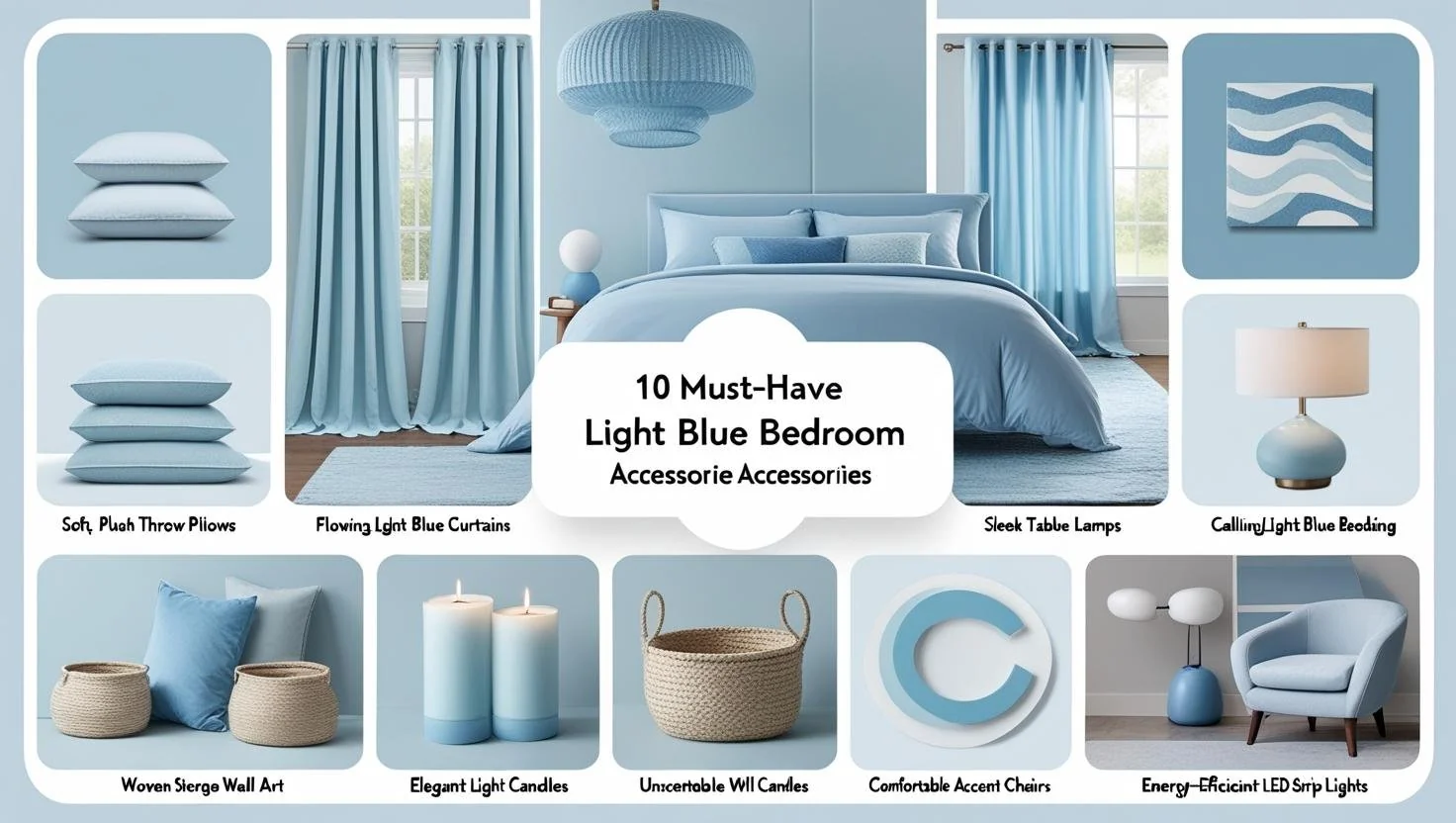
Care: keeping pale blue looking pale blue
- Wash bed linen weekly. If allergies are a concern, the Mayo Clinic advises washing sheets, blankets and pillowcases in hot water of at least 130°F (54.4°C) to kill dust mites. Otherwise, cooler washes with a gentle detergent are kinder to dyed cotton and linen.
- Skip chlorine bleach on coloured bedding — it can turn pale blue patchy or yellow-tinged.
- Dry textiles out of direct sun. Sunlight fades blue dyes faster than most colours; the same applies to curtains, which benefit from a lining.
- Vacuum rugs weekly, rotate them twice a year so wear and fading spread evenly, and deep-clean annually.
- Rotate accessories seasonally. Swapping throws and pillow covers twice a year keeps the room interesting and halves the wear on each set.
Shopping without overspending
Buy in this order: curtains (biggest impact on light and on the look), then bedding, then rug, then pillows and small accents. Take a photo of your room in daylight and in lamplight before you shop, request fabric swatches where they’re offered, and check return policies on colour — screens are unreliable for pale blues. Secondhand and charity shops are good hunting grounds for ceramic lamp bases, vases and small painted furniture, which are the pieces most likely to be discarded barely used.
If you’d rather test a calm palette in a different direction first, the same layering logic applies to soft greens — see our light green and gold bedroom ideas.
FAQ
Does a light blue bedroom really help you sleep better?
There’s no reliable evidence that a specific decor colour improves sleep quality. People do consistently describe blue rooms as calming, and a tidy, low-contrast, well-darkened bedroom supports rest — but the darkness, temperature and routine matter far more than the shade of your pillowcases.
What colours pair best with light blue?
Warm neutrals: ivory, oatmeal, taupe, warm grey and natural wood. For contrast, add navy, soft sage or aged brass. Avoid pairing pale blue only with cool greys and stark white unless you want a deliberately crisp, minimal look.
Do I have to repaint to use this palette?
No. Curtains, bedding, a rug, art and a lamp will carry the colour on their own. Accessories are also reversible, which makes them a sensible way to test a shade before committing to paint.
Is light blue good for a small bedroom?
Yes. Pale, low-contrast colours tend to make walls feel less enclosing, and keeping bedding, curtains and rug in one tonal family reduces visual clutter. Stick to small-scale patterns and leave some plain surfaces.
Is it a problem to use blue LED lighting in a blue bedroom?
In the evening, yes — blue-rich light delays melatonin release more than warmer colours. Use warm, dim bulbs after dark and keep blue tones in the objects rather than the light output.
Does light blue work year-round?
It does, because the fabric does the seasonal work. Linen and cotton in summer, wool, flannel and chunky knits in winter — the palette stays the same while the texture changes.
Updated September 2026.