Cozy Bedroom Lighting: Layers, Warm Bulbs and Dimmers

Jrettig how to create cozy lighting in a bedroom hero.webp a 35d43b62 featuring create lighting bedroom

Cozy Bedroom Lighting: How to Get a Soft, Restful Glow

The short answer: cozy bedroom lighting comes from three layers — a soft ambient base, focused task light at the bed, and a little accent light for depth — all in warm-white bulbs (around 2700K) and all on dimmers or separate switches. Skip the single bright ceiling fixture, diffuse every bulb with fabric or opal glass, and keep evening light low so the room signals wind-down rather than work. Everything below is how to plan that in a real room, whatever its size or budget.
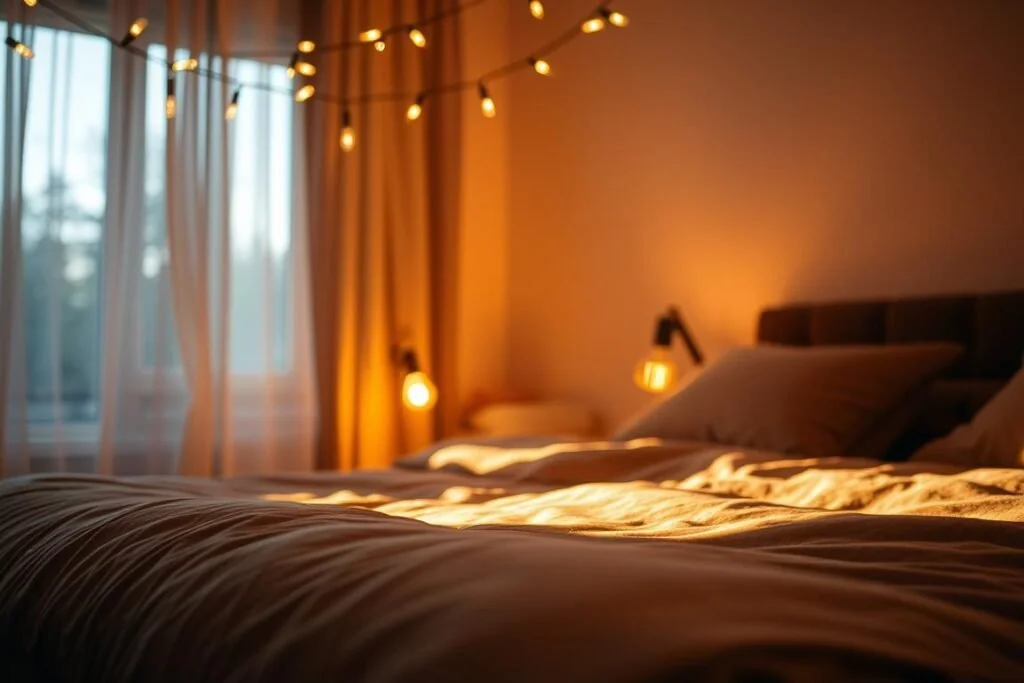
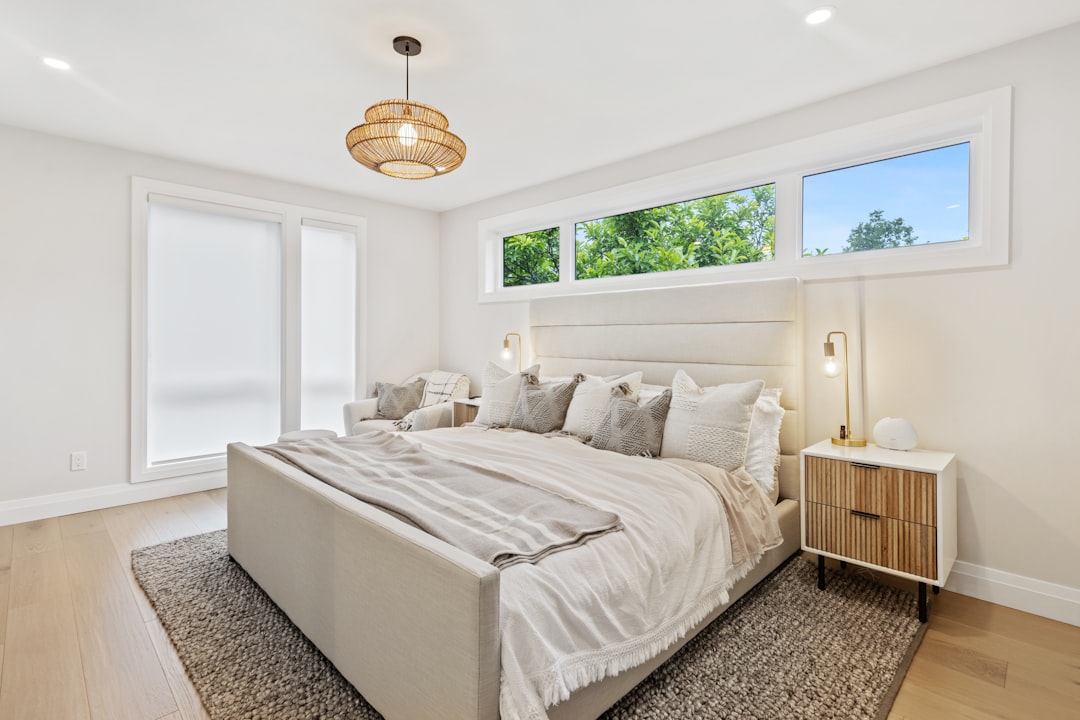
Cozy Bedroom Lighting with warm 2700K glow in a restful space - create lighting bedroom

A 2700K base layer creates a warm, restful glow without glare.

Key Takeaways

  • Layer your light: ambient, task and accent beat one overhead fixture every time.
  • Choose warm-white bulbs (roughly 2700K–3000K) and shades that hide the bulb.
  • Put each layer on its own dimmer or switch so you can move from bright to sleepy in seconds.
  • Dimming the lights in the couple of hours before bed helps you fall asleep more easily.
  • In small rooms, wall sconces and pendants free the nightstand and keep floor paths clear.

Start With the Three Layers

Layering is the whole game. A base layer gives the room an even wash, task lights do the work, and accents add dimension so corners don’t fall into gloom. Together they let you light only what you need, which is what makes a room feel calm instead of flat or glaring.

Layer What it does Typical fixtures
Ambient Overall, even illumination Flush or semi-flush ceiling fixtures, recessed lights, shaded pendants, cove lighting, a shaded floor lamp
Task Focused light for reading, journaling, dressing Bedside table lamps, swing-arm wall sconces, small pendants, desk lamps
Accent Depth, texture and focal points LED strips behind a headboard or under shelves, picture lights, small shelf pucks

A worked example: in a 12×12 room with an 8-foot ceiling, a low-profile semi-flush handles ambient light, two bedside lamps or sconces handle tasks, and a picture light over art adds the accent. Three sources, three controls, done.

Color Temperature: Why Warm Wins at Night

Pick one bulb tone and repeat it across the room so the light reads as intentional. Warm-white bulbs — about 2700K, with 3000K a slightly crisper alternative — feel gentler after dark because they push out less blue-rich light than “daylight” bulbs. Exposure to light suppresses melatonin, the hormone tied to your circadian rhythm, and Harvard Health notes blue wavelengths are particularly potent at doing so in the evening.

Brightness matters as much as color. Public-health guidance from CDC/NIOSH is to avoid bright light in the two hours before bed and dim the lights if you have trouble falling asleep. That single habit does more for sleep than any fixture you can buy — the lighting plan just makes it easy.

Two more bulb details worth checking on the box: a colour rendering index (CRI) of 80 or higher keeps skin tones and fabrics looking natural, and the bulb should say “dimmable” if it’s going on a dimmer. Not every LED is, and a mismatched bulb-and-dimmer pair is the usual cause of flicker or buzz.

How bright should a bedroom be?

There’s no official home standard here, so treat these as working starting points rather than rules, then adjust with a dimmer:

  • Ambient: roughly 1,000–2,000 lumens total in a small bedroom, more in a large one.
  • Bedside task light: around 300–500 lumens per side, always behind a shade.
  • Accent: a low, gentle level per feature — enough to see the glow, not the source.

Buy by lumens rather than watts; wattage only tells you energy use. On that note, LEDs are the cheap layer to run — the U.S. Department of Energy estimates the average household saves about $225 a year by switching to LED lighting, so adding a few extra fixtures costs far less than it used to.
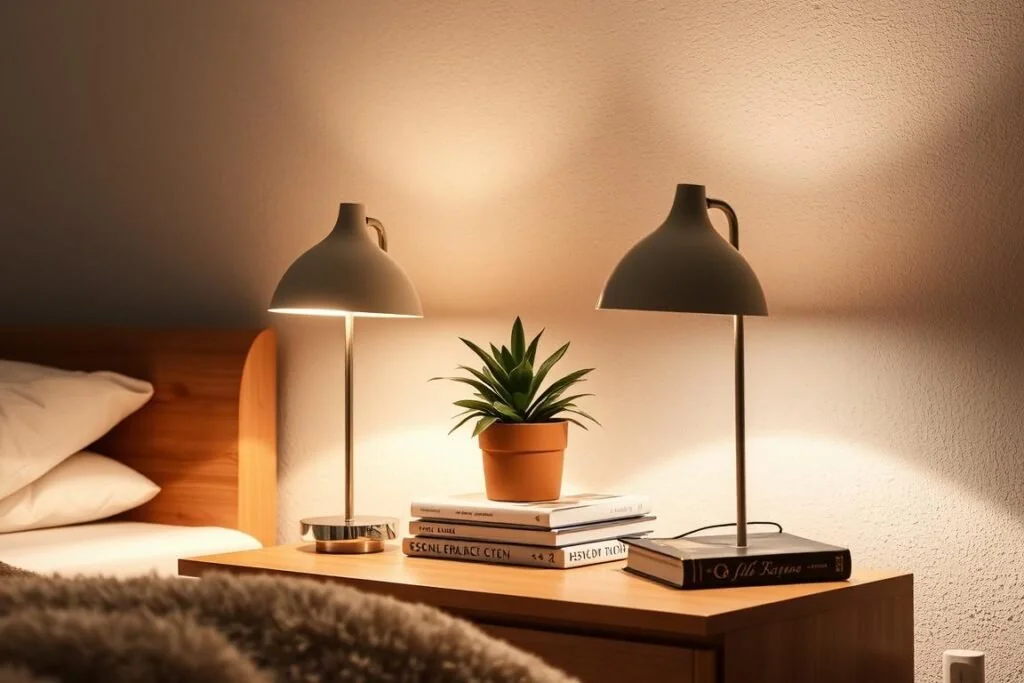
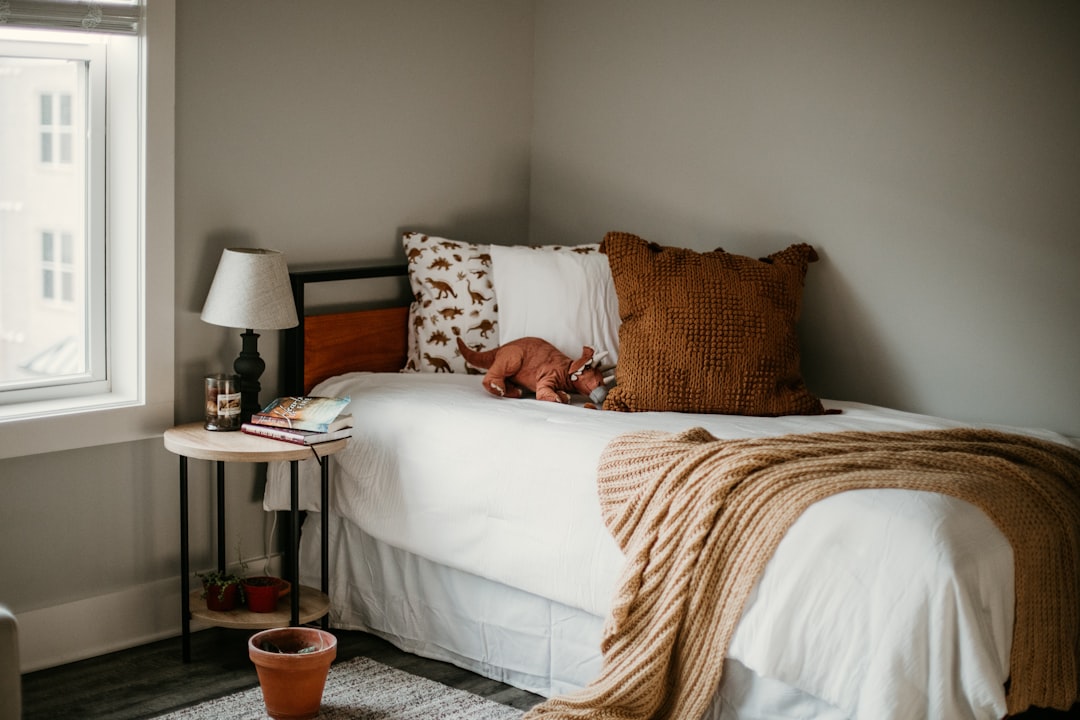
Cozy Bedroom Lighting bedside lamp and wall sconce combination - create lighting bedroom

Diffusing shades and dimmers create reading light without waking your partner.

Bedside Lighting: Lamps, Sconces and Pendants

This is the layer you touch every night, so get it right first.

Table lamps

The common design rule of thumb is a lamp about 25–29 inches tall, so the bottom of the shade sits near eye level when you’re sitting up in bed — light lands on the page, not in your eyes. A shade that fully covers the bulb prevents glare, and a dual-socket base or three-way bulb gives you a bright reading setting plus a low late-night one from the same lamp. Keep the nightstand close to mattress height and within easy reach; our guide to master bedroom nightstands covers sizing in detail.

Wall sconces

Swing-arm sconces clear the tabletop entirely and aim light exactly where you want it. Mount one per side, each on its own switch, so one person can read while the other sleeps. A frequently used starting height is a few inches above the top of the headboard, but adjust for your pillow stack and shade style — sit in bed, hold the fixture up, and check the beam before drilling.

Plug-in pendants and rental-friendly options

Renters aren’t stuck with the builder’s ceiling light. Plug-in pendants and plug-in sconces hang over each nightstand with no rewiring, and a cord cover keeps things tidy. Adjustable drops help under high or vaulted ceilings.

Ceiling Fixtures for Low and High Ceilings

Match the fixture to the ceiling so the room feels open rather than crowded.

  • Low ceilings: flush mounts keep sightlines clear and headroom intact.
  • Standard height: a semi-flush adds a little character without visual bulk.
  • Vaulted or tall: a pendant or compact chandelier with a diffusing shade adds vertical interest and soft light.

Whatever you choose, put it on a dimmer and treat it as background light — not the only light.
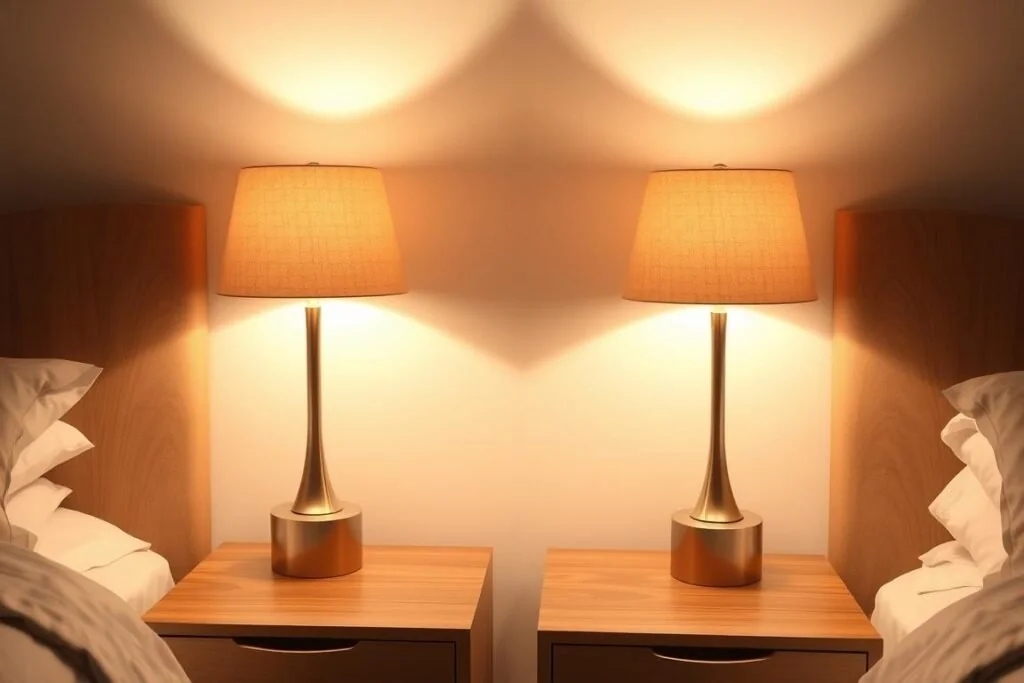
cozy bedroom lighting ideas with low-profile ceiling fixtures

Small Bedrooms: Light That Doesn’t Eat Space

In a tight room, every fixture has to earn its footprint. Swap a bedside lamp for a sconce or pendant to reclaim the nightstand, keep the ceiling low-profile, and add a slim floor lamp only if the layout can spare the base. Coordinating finishes across fixtures also makes the room read as calmer and less cluttered. For more on visual space, see our tricks to make a small bedroom look bigger and the bedroom furniture and layout guide.
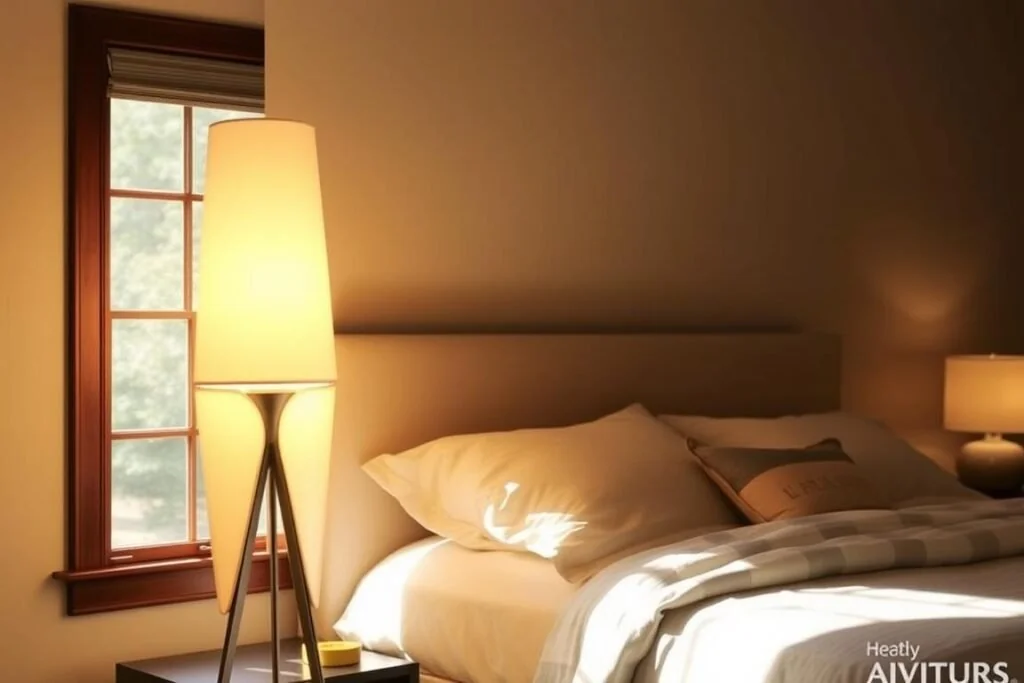
small bedroom lighting ideas with slim floor lamps

Accent and LED Ideas That Add Instant Cosiness
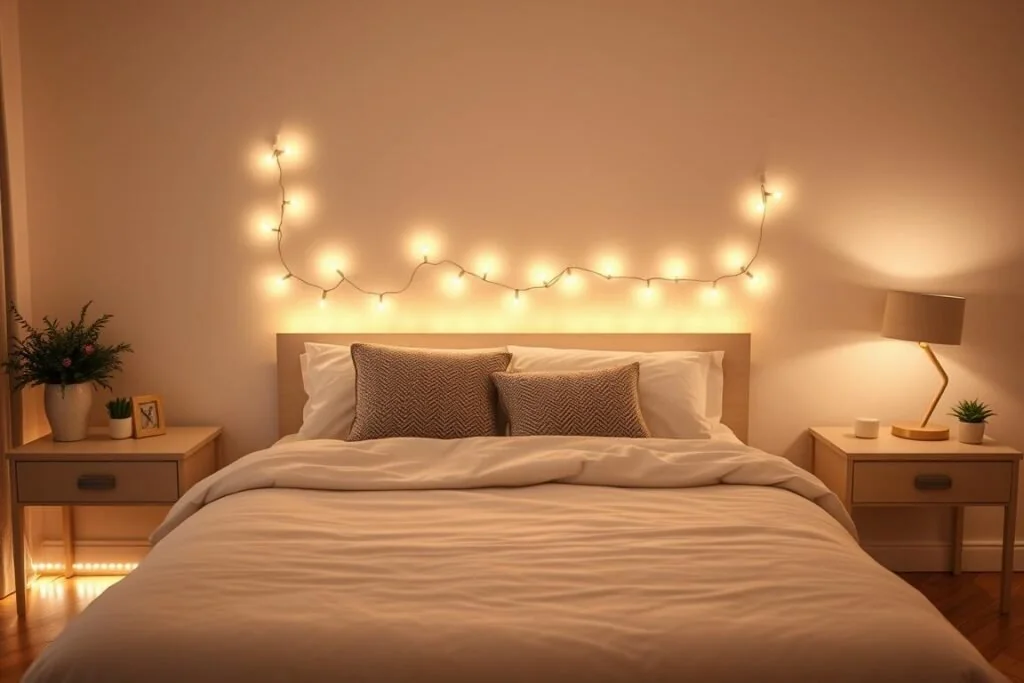
Cozy Bedroom Lighting with LED accents behind headboard and shelves - create lighting bedroom

  • Backlit headboard: a warm strip hidden behind the headboard throws a halo onto the wall and centres the bed.
  • Under-bed strips: a low, motion-activated glow lights night trips to the bathroom without a blast of overhead light.
  • Shelf and nook lighting: small pucks or strips highlight objects and make a reading corner feel deliberate.
  • Mirror lighting: edge-lit or side-mounted lights remove the shadows that a single overhead fixture casts on your face. Our bedroom mirror and lighting ideas go further on this.

Controls, Switch Placement and Smart Lighting

A cozy room is one you don’t have to get out of bed to adjust. Where you can, put a switch at both the doorway and the bed, or add a battery-powered wireless remote next to the pillow. Split the ambient, task and accent layers across separate switches so you can light one zone at a time.

Smart bulbs and switches add scheduling on top of that: a “wind-down” scene that fades warm and low in the evening, a “reading” scene at the bed, and a gradual sunrise-style alarm in the morning. This is convenience and consistency rather than magic — the benefit comes from actually dimming the lights at night, which a schedule makes automatic. If you’re using dimmable smart bulbs, leave them on a plain switch or a compatible smart dimmer; stacking a standard wall dimmer on top of a smart bulb causes flicker.

Shades, Materials and Finishes

Diffusion is what turns a bulb into a glow. Linen, parchment and opal glass spread light evenly and soften shadow edges, while bare bulbs create hotspots that your eyes keep flinching at. Warm metals like brass or patinated bronze reinforce the warm colour temperature; repeating one or two finishes across fixtures, hardware and frames makes the scheme feel considered. Soft textiles elsewhere in the room help too — lamp light lands beautifully on a layered rug or a headboard, and our bedroom rug guide covers sizing those surfaces.

Don’t Forget Daylight

Daylight is the free layer and the one your body clock responds to most strongly. Sheer curtains soften harsh morning sun while still letting light in, and a mirror placed to catch light from a window spreads it deeper into the room — see our notes on bedroom mirror placement. Pair generous daylight with blackout or lined curtains for sleeping, and you’ve covered both ends of the cycle.

Five Upgrades You Can Do This Week

  1. Replace every bulb in the room with warm-white, dimmable LEDs of the same colour temperature.
  2. Add a dimmer to the main circuit (or a smart bulb if you can’t change the switch).
  3. Put a plug-in sconce or small pendant on each side of the bed to clear the nightstands.
  4. Run a warm LED strip behind the headboard or under the bed for a low night-time glow.
  5. Swap a bare-bulb fixture for one with a fabric or opal shade.

Common Mistakes to Avoid

  • One overhead light doing everything. It flattens the room and can only be on or off.
  • Cool, blue-rich bulbs at night. They feel clinical and work against wind-down.
  • No dimmer anywhere. Without adjustability, the room can’t change with the hour.
  • Exposed bulbs at eye level. Glare is the fastest way to make a room feel harsh.
  • Fixtures at the wrong height. Lamps too short, sconces too high, pendants hung into your line of sight.

FAQ

What is the best lighting for a cozy bedroom?

A layered plan: a dimmable ambient source, warm task lights at the bed, and one or two soft accents. Keep all of it warm-toned and diffused.

Is 2700K or 3000K better for a bedroom?

Both are fine. 2700K reads as cosier and more candle-like at night; 3000K is slightly crisper and works well if the room doubles as a dressing or work space. Tunable bulbs let you have both.

How many lumens do I need in a small bedroom?

Around 1,000–2,000 lumens of ambient light plus 300–500 lumens per bedside is a practical starting range. These are rules of thumb, not standards, so dim to what feels comfortable.

Where should bedside sconces go?

To each side of the headboard, positioned so the beam lands on your book at seated height rather than in your eyes. Adjustable arms make this far easier to get right.

Does a red or amber night light help sleep?

Warmer, dimmer light is less likely to disrupt melatonin than bright, blue-rich light, which is why low-level amber night lights are a sensible choice. The strongest evidence is simply for keeping night-time light low overall.

Can lighting really affect how I sleep?

Light is the main signal your body clock uses, and bright evening light suppresses melatonin. Dimming the lights ahead of bedtime is standard sleep-hygiene advice; a good fixture plan just makes it effortless.

Putting It Together

Choose one warm bulb temperature, diffuse every source, split the room into three layers, and give each layer a control you can reach from bed. That’s the entire recipe — the fixtures you hang on top of it are personal style. Start with a dimmer and a pair of bedside lights; you’ll feel the difference the first evening.

Updated September 2026.

Choosing Bedside Table Lamps That Balance Style and Use

Choosing Bedside Table Lamps That Balance Style and Use - Featured Image

Bedside Table Lamps Guide to Size, Style, and Placement

The right bedside table lamps make your bedroom feel calmer, cozier, and more functional. This guide shows you exactly how to pick the perfect height, shade, materials, and bulbs—plus smart features and eco-forward options—so your bedside table lamps look great and work beautifully from day one.

Key Takeaways: bedside table lamps

  • Height matters: Aim for a total lamp height that sits near eye level when you’re seated in bed.
  • Right scale: Choose a lamp base and shade that match your nightstand width for balance.
  • Shade + bulb = vibe: Shade shape and bulb type control glare, softness, and reading comfort.
  • Function first: Dimmers, USB ports, and adjustable heads make bedside table lamps more useful.
  • Style harmony: Coordinate materials and finishes with your bedding and furniture for a cohesive look.
  • 2026 trends: Sculptural designs and organic materials dominate, with a focus on sustainability and wellness.

This serene bedroom shows bedside table lamps that frame the headboard, demonstrating how bedside table lamps create both symmetry and soft, practical light.
Soft, balanced lighting sets the mood.

How tall should bedside table lamps be?

Answer first: Most people find comfort when the bottom of the shade is close to eye level while sitting up in bed. That usually puts total height for bedside table lamps around 24–28 inches, depending on your mattress and nightstand.

Use this quick check: sit up in bed with your pillow arrangement; your eyes should be just below the lampshade rim. If your nightstand is tall (say, 26–28 inches), err toward a shorter lamp. If your nightstand is low (20–24 inches), choose a taller lamp to raise light where you need it.

For deeper sizing examples and diagrams, see Choosing the Right Bedside Table Lamps from Cozy Bed Quarters.

This photo illustrates bedside table lamps at the correct height, showing how bedside table lamps align with eye level when seated in bed for comfortable reading.
Height aligned with eye level reduces glare.

What width and scale should I pick?

Answer first: Keep proportions in check—aim for a lamp base that’s roughly one-third the width of your nightstand, and a shade that doesn’t exceed the tabletop.

A visually balanced setup prevents wobble, leaves space for a glass of water or book, and looks polished. On a slender nightstand, slimmer silhouettes and drum shades maintain balance; on a wider nightstand, larger bases and empire shades can anchor the scene. Explore more scale tips in Bedroom Side Table Lamp Ideas.

This styled vignette shows bedside table lamps sized to the nightstand, proving that bedside table lamps should leave room for essentials and still feel proportionate.
Choose a shade and base that leave space for essentials.

Which lampshade shape and material work best?

Answer first: Shade shape controls light spread; shade material controls glow. Drum shades spread light evenly, while empire shades push more light down for reading.

Linen and cotton diffuse gently, preventing hotspots; paper shades look airy but may show bulb hotspots; opaque or metal shades give strong, directional light that’s great for focused tasks. Ensure your harp height and finial allow the shade to sit low enough to block bare-bulb glare—especially vital for bedside table lamps you’ll use for reading.

How should I choose bulbs for bedside reading and relaxation?

Answer first: Pick warm-white LED bulbs around 2700K–3000K for wind-down hours; higher Kelvins feel cooler and more energizing.

LEDs are efficient, quiet, and long-lasting—ideal for bedside table lamps. Look for a Color Rendering Index (CRI) of 90+ so colors in your bedding and furniture look true. For brightness, many bedrooms feel right between 450–800 lumens per lamp; scale up or down based on shade opacity and your eyesight. For a deeper primer on light color and sleep, the Sleep Foundation discusses how evening light affects rest in their resources on bedroom light and sleep (Sleep Foundation), and Better Homes & Gardens offers a clear overview of bulb color temperatures (BHG Bulb Guide).

This image shows warm bulbs in bedside table lamps casting a gentle glow, ensuring bedside table lamps support restful routines before sleep.
Warm bulbs, calmer nights.

What features make bedside lamps more convenient?

Answer first: Dimmers, 3-way switching, touch controls, and USB/USB-C ports make bedside table lamps easier to live with—especially if outlets are limited.

Adjustable heads and swing arms let you aim light on pages without flooding your partner’s side. If you use smart plugs or smart bulbs, confirm that the lamp’s switch style plays nicely with your smart home routines. Consider a low-profile tray base for rings and earbuds to declutter your surface.

How do I coordinate lamp style with the rest of the room?

Answer first: Echo a finish or texture already present—wood, ceramic, brass, matte black—to pull the look together.

For warm modern rooms, try slender profiles, drum shades, and quiet neutrals. For traditional spaces, look to turned wood, ceramic gourd shapes, and pleated shades. To unify the room, pair your bedside table lamps with other light sources, like a ceiling fixture or floor lamp—see our guide to combining layers in Bedroom Lighting 101: From Ambient to Task and Integrating Floor Lamps and Ceiling Fixtures.

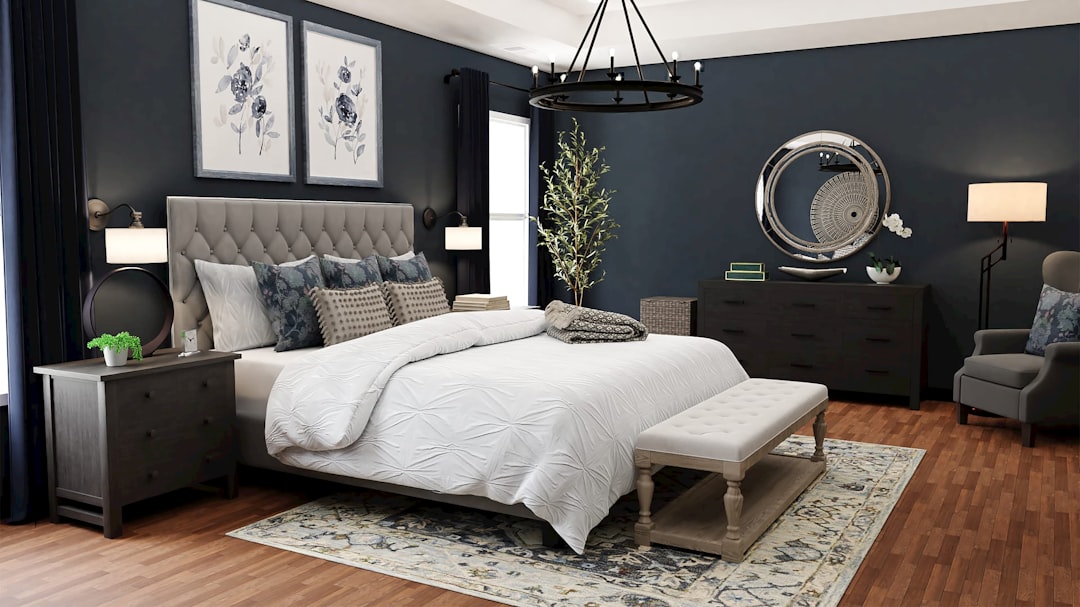
This cozy, layered room uses bedside table lamps alongside a ceiling fixture and floor light, showing how bedside table lamps work in a three-layer lighting plan.
Layered lighting feels intentional and relaxing.

Which lamp materials are durable—and eco-friendly?

Answer first: Ceramic, metal, and solid wood are durable mainstays; recycled glass, FSC-certified wood, and natural-fiber shades add a sustainable edge.

If you prioritize low-impact choices, look for recycled metals, natural linen or jute shades, and durable finishes that age gracefully. When your lighting plan supports calmer sleep routines, your bedding choices matter too—pair the warm glow of bedside table lamps with breathable textiles like organic bedding, sustainable bedding, or eco-conscious sheets to keep your sleep environment comfortable and planet-friendly.

How much light output do I need?

Answer first: Reading comfort typically starts around 450 lumens per lamp, then adjust for shade opacity and distance.

Opaque shades, dark fabrics, and extra-wide nightstands may need more output. If you prefer ultra-soft ambience, keep lumens lower but add a separate task light on the headboard or wall. Parachute Home’s bedroom lighting ideas provide stylistic inspiration while you dial in the right glow (Parachute: Bedroom Lighting Ideas).

How do I ensure base stability and safety?

Answer first: Choose a sturdy, weighted base and keep cords tidy; this prevents tipping and snags.

Heavier bases matter if you have pets or kids. Felt pads protect sensitive nightstands; inline cord switches are convenient when a lamp sits far back. For bedside table lamps with tall, narrow profiles, look for a wider base plate or squared footprint to lower the center of gravity.

Smart extras that make a big difference

Answer first: Small conveniences add up—integrated nightlights, tray bases, and pull chains you can find by feel.

USB ports help charge devices without bulky bricks. If you share a room, two independently dimmable bedside table lamps preserve harmony. A smart bulb routine can warm color temperature near bedtime to encourage relaxation.

Budgeting for quality and longevity

Answer first: Set a budget, then prioritize materials and features you’ll feel every night—shade quality, dimming, and stable construction.

A midrange ceramic or metal lamp with a linen shade often outlasts trendier finishes. If you can, invest slightly more in shades and LED bulbs—they determine most of the day-to-day experience of your bedside table lamps. For more ideas, browse our curated Lamps & Lighting hub.


Eco-Friendly vs. Conventional: What to Know

Answer first: Eco-forward picks focus on sustainable materials and low-energy bulbs; conventional options can be budget-friendly but may rely on finishes or plastics that age faster.

Materials: FSC-certified wood, recycled glass, and powder-coated metals have a lighter footprint than some resin blends. Natural fiber shades (linen, cotton) are durable and recyclable in some regions.

Bulbs: Choose ENERGY STAR–rated LEDs for your bedside table lamps to reduce energy and heat. Warm-white 2700K LEDs are calming for pre-sleep routines.

End of life: Prefer replaceable-bulb designs over sealed, integrated LED heads to extend product life.

Buyer’s Guide: Shade, Switches, and Certification Basics

Answer first: A few spec checks make buying easy—shade fit, switch type, and safety marks determine comfort and reliability.

  • Shade fit: The shade should hide the bulb from a seated eye level. Verify harp size, spider fitter, and finial height.
  • Switching: Rocker, rotary, pull chain, or touch—pick what you’ll use half-asleep. For precise control, pair dimmable LEDs with dimmer-compatible sockets.
  • Safety: Look for UL/ETL listings, sturdy sockets, and quality cord strain relief.
  • Glare control: Add a diffuser if you see the filament or LED dots when reclined.
  • Maintenance: Choose washable linen shades or dust-resistant finishes for bedside table lamps in high-use rooms.

Bedroom Lighting Layers: Make Your Lamps Work Harder

Answer first: Three layers—ambient, task, and accent—create the most comfortable rooms. Your bedside table lamps are the task layer that supports reading and wind-down routines.

Ambient light might come from a pendant or flush mount; accent light highlights art or textures. When all three layers are dimmable, the room shifts from bright and practical to soft and sleepy. Learn the full framework in Bedroom Lighting 101 and explore mood-setting ideas in Bedroom Lighting Mood Tips.

This layered room shows how bedside table lamps complement ceiling and accent lights, demonstrating that bedside table lamps are a key part of a three-layer plan.
Ambient + task + accent = comfort and clarity.

FAQs

What is the ideal height for a bedside table lamp?
Most people prefer bedside table lamps around 24–28 inches tall so the bottom of the shade sits near eye level when you’re seated in bed.
How do I choose a lampshade that complements my base and decor?
Match the silhouette to your style (drum for modern, empire for classic) and use linen or cotton for soft diffusion. Ensure the shade sits low enough to hide the bulb from view.
Which bulbs are best for winding down at night?
Warm-white LEDs (about 2700K) are relaxing in bedside table lamps. Look for dimmable bulbs and a CRI of 90+ so colors look natural.
Are there bedside lamps with extra features?
Yes—dimmers, touch controls, USB ports, adjustable arms, and smart-bulb compatibility make bedside table lamps more comfortable to use daily.

Final Thoughts

When you get height, shade, and bulb choice right, bedside table lamps become the quiet stars of your bedroom. Use the guidance above to build a layered, dimmable setup that feels calm at night and functional by day. For more lighting ideas, browse the Cozy Bed Quarters Lamps & Lighting hub.


From Cozy Bed Quarters

Trusted External Resources


About the Author

Joseph Rett is the founder of Cozy Bed Quarters, a Phoenix-based sleep and bedding resource. With years of experience researching sleep science and bedding products, Joseph helps people create comfortable, sustainable sleep spaces. Living in Arizona’s desert climate has given him unique insights into temperature-regulating bedding and cooling sleep solutions.