

The fastest way to get a christmas bedroom aesthetic is to pick one color direction, layer the bed with texture, and swap your lighting for something warm and low. Everything else — a mini tree, a wreath, a candle — is a finishing touch, not the main event. Three or four well-placed pieces will read as festive; fifteen will read as clutter, and clutter is the enemy of sleep.
How to Build a Christmas Bedroom Aesthetic You Can Still Sleep In
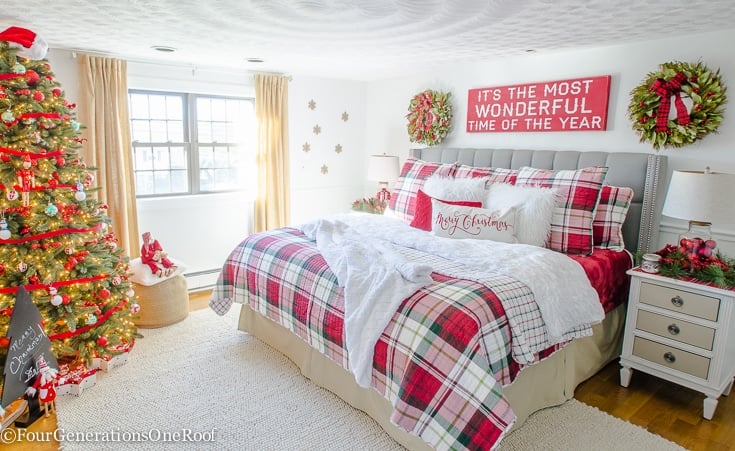
Decide on the mood before you buy anything. That single step prevents the most common holiday decorating mess: a red plaid duvet, a silver tinsel garland, a gold star and a green wreath all fighting each other in one small room. Pick a lane and stick to it.
| Style | Colors | Best for |
|---|---|---|
| Cozy neutral | Cream, beige, warm wood, soft gold | Rooms you want to keep decorated into January |
| Traditional | Red, green, white, buffalo check | Guest rooms and anyone who loves classic Christmas |
| Scandi minimal | White, pale gray, light wood, one sprig of greenery | Small bedrooms and minimalists |
| Winter white | White, silver, icy blue, frosted glass | A festive look without warm-toned color |
| Rustic farmhouse | Natural wood, burlap, pinecones, muted red | Rooms with exposed wood or vintage furniture |
A useful ratio: keep most of the room in your existing neutrals and let the holiday color live in a small share of it. Muted burgundy reads as Christmas just as clearly as fire-engine red, and it is far easier to relax around.
Start With the Bed — It Does Most of the Work
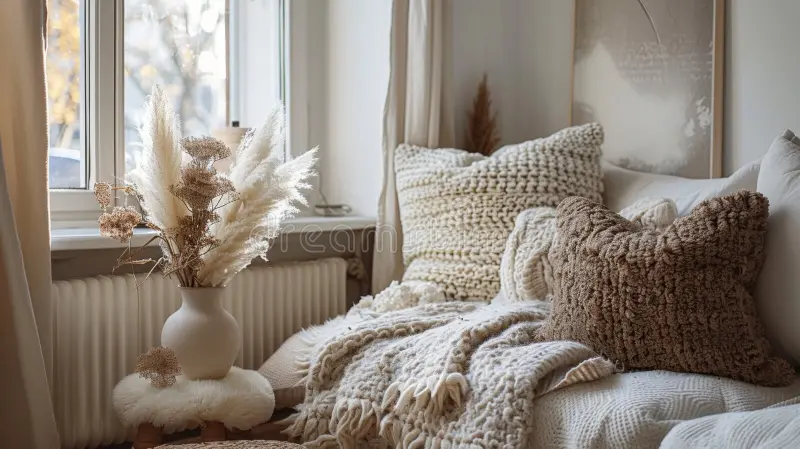
Your bed takes up the most visual space in the room, so changing it changes everything. You do not need a new sheet set. Keep your usual white, cream or gray sheets as the base and layer on top.
- A seasonal duvet cover or quilt. Buffalo check, cable knit, or a simple fir-tree print. A cotton quilt is the safer pick if you sleep hot — heavy flannel plus a heated room is a recipe for kicking everything off at 2 a.m.
- Two to four holiday pillow covers. Covers, not new pillows — they store flat in a shoebox. Mix textures rather than patterns: velvet with knit, plaid with plain.
- One chunky throw. Folded at the foot or draped over a corner. Check the care label before you buy; anything you drape on a bed will need washing.
- A faux fur or sherpa layer if you want plush without weight.
Texture beats pattern every time. Waffle weave, brushed cotton, boucle and knit all catch light and shadow, which is what actually makes a room look warm in photos and in person. If you are shopping for the bed itself, our Christmas bedding ideas and holiday throws and blankets guides go deeper on fabrics and combinations.

Warm Lighting Is the Single Biggest Mood Shift
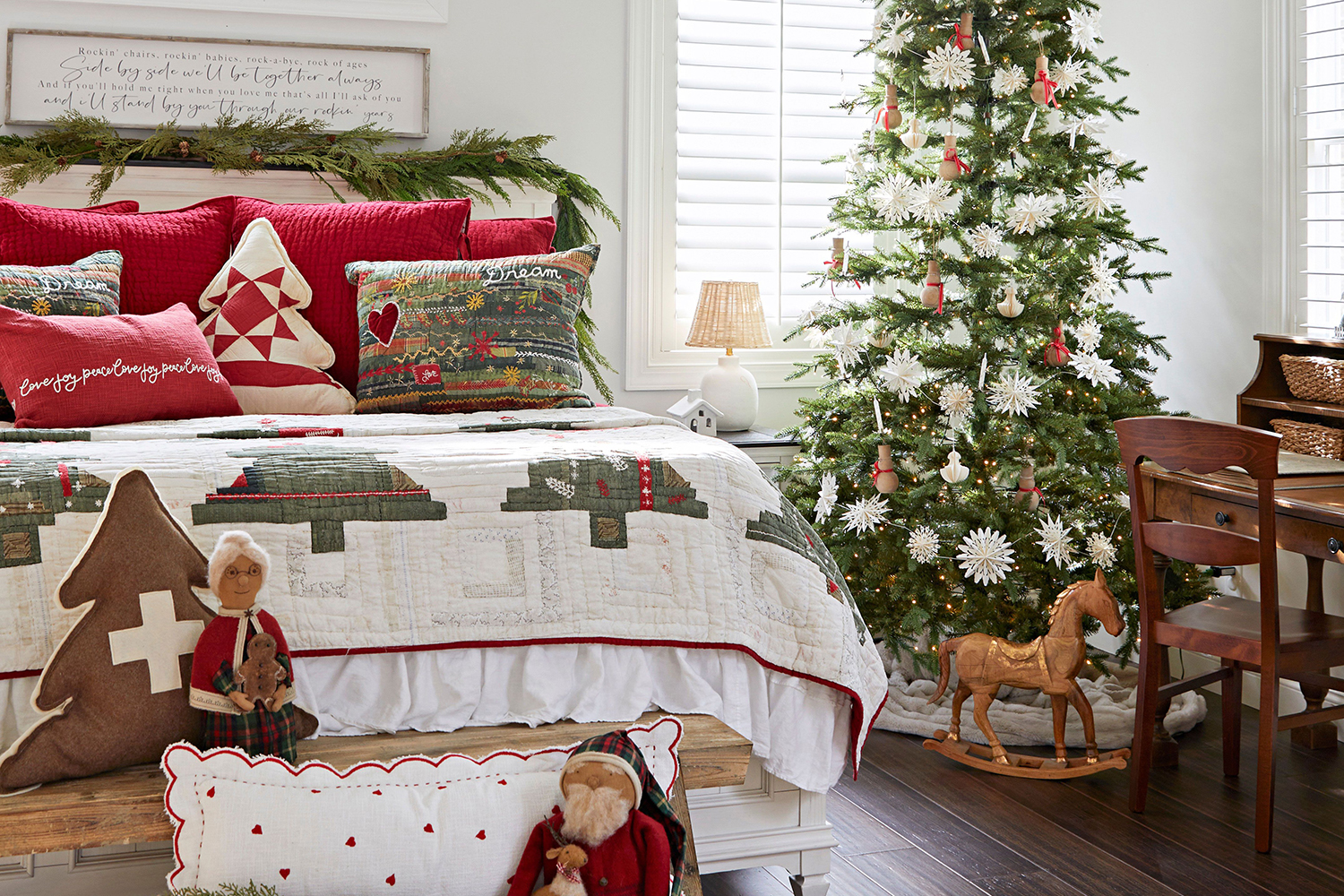
If you only change one thing, change the light. Overhead fixtures flatten a room; low, warm, scattered light does the opposite.
Use warm white bulbs and string lights around 2700K rather than cool white. This is not just an aesthetic preference — the Sleep Foundation notes that warm-colored light in the red, orange and yellow range has less effect on your circadian rhythm and melatonin than cooler light does. Cool white strings in a bedroom look like an office at 10 p.m., and they feel like one too.
Places that work:
- Behind or along the headboard. A single strand draped loosely reads better than a tightly wrapped frame.
- Inside glass. Copper wire fairy lights in a jar, hurricane vase or old apothecary bottle give you a glow instead of visible bulbs.
- Behind sheer curtains. The fabric diffuses the light into a soft wash. Tension rods make it easy to undo in January.
- On the nightstand. Swap your lamp bulb for a warm, dimmable LED and you have year-round bedside lighting, not just a December trick.
Battery-operated sets with built-in timers save you from cord management and from falling asleep with everything blazing. Skip anything that blinks, fades or cycles colors near the bed. For the layering principles behind all of this, see our guide to cozy bedroom lighting.
Walls and Windows: Two Pieces, Maximum
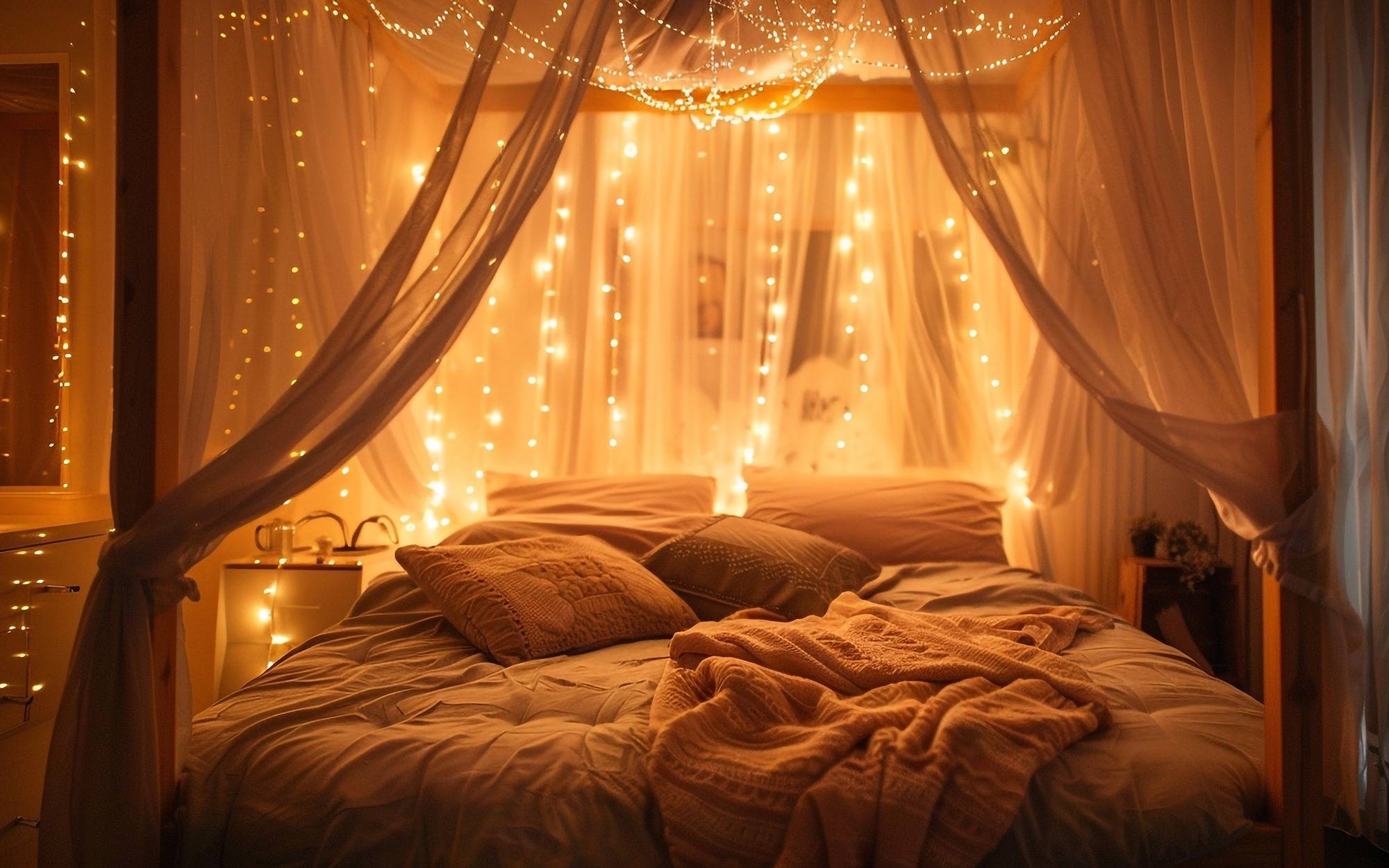
You do not need to cover a wall. One wreath above the headboard, or one garland along a shelf or window frame, is usually the whole job.
A 16- to 20-inch wreath hung roughly a hand’s width above the headboard centers the bed nicely, and removable adhesive hooks keep rental walls intact. Faux eucalyptus and pine hold up all season; real greenery looks better for a couple of weeks, then starts dropping in dry heated air.
The cheapest wall swap is one you already own: pull the art out of an existing frame and drop in a seasonal print. If you want a more permanent plan for that space, our bedroom wall decor ideas cover what works above a bed.

Nightstands: Two or Three Things, Tops
Nightstands still have a job to do. You need room for a glass of water, your phone, glasses and whatever you are reading. Anything beyond two or three decorative items starts to feel stressful.
Good candidates: a small pre-lit tabletop tree, a single ceramic house or wooden figure, a short stack of books tied with ribbon, or one candle. Style one nightstand and leave the other plain — asymmetry looks more designed than a matching pair, and it keeps one surface fully usable.
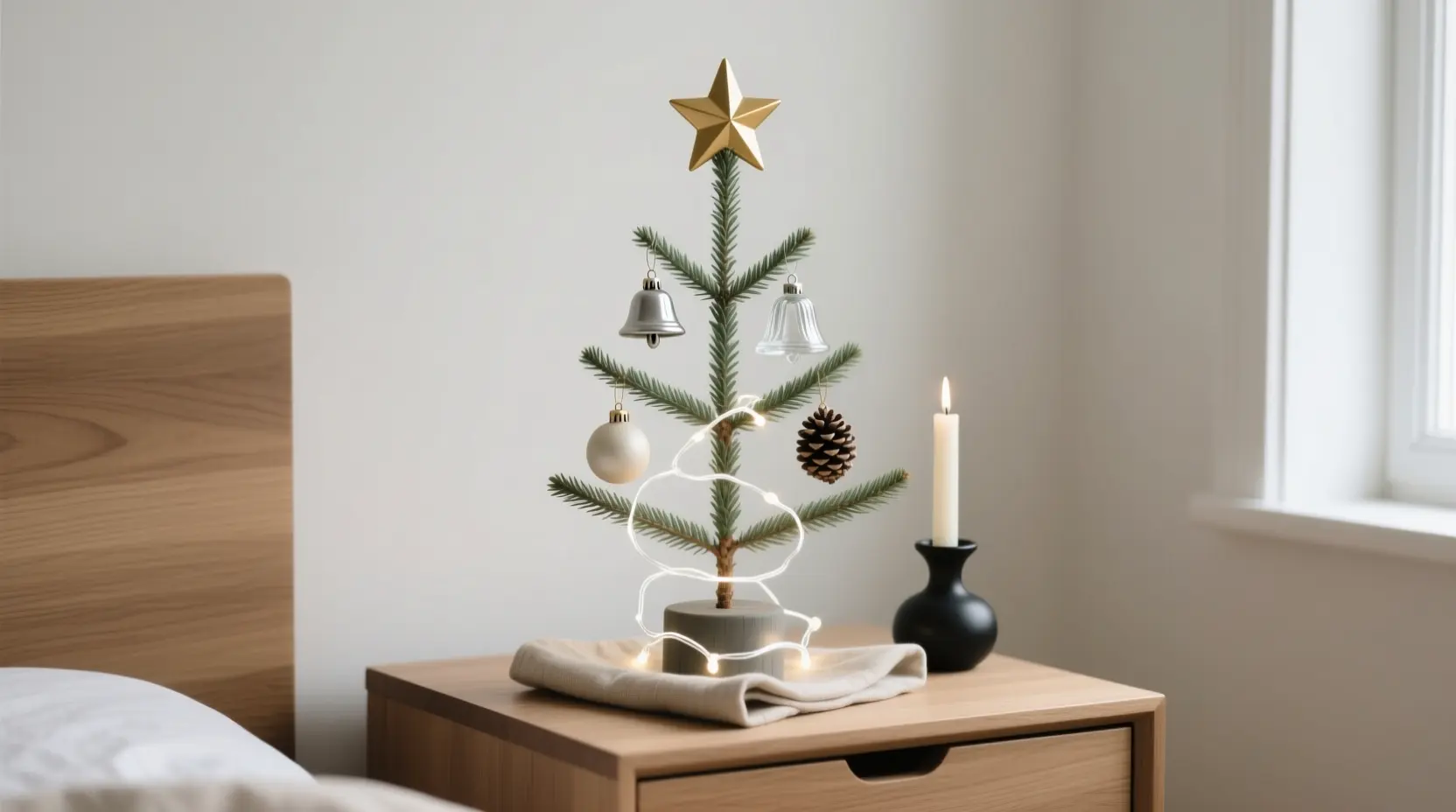
Adding a Small Tree
A tree in the bedroom is charming as long as it fits. Measure the floor space first — a tree that looked slim in a big store will feel enormous in a 10×11 room.
- Tabletop, 12–24 inches: sits on a dresser or nightstand, no floor space needed.
- Small floor tree, 3–4 feet: works tucked into a corner opposite the bed.
- Pencil or slim tree, 4–5 feet: narrow footprint, sits flat against a wall.
Keep the decorating restrained: one or two colors, a modest number of ornaments, warm white lights, and no tinsel. Skip the topper if it pushes the tree awkwardly close to the ceiling.
Safety matters more in a small room than a large one. Fire agencies advise keeping a tree at least three feet from any heat source, including heat vents, radiators, space heaters and candles — NIST summarizes the standard guidance here. Put the tree on a stable surface, never a wobbly nightstand, and use a timer so it is not running while you sleep.

Scent, Sound and the Rest of Your Senses
Scent is half of what makes a room feel like Christmas. Pine, cedar, cinnamon, clove, vanilla and orange all work. Aim for something you notice walking in and forget about five minutes later.
Reed diffusers and essential oil diffusers give you a low, continuous background scent without an open flame. That matters: the National Fire Protection Association reports that more than a third of home candle fires start in the bedroom, and December is the peak month for candle fires. Flameless LED candles with a flicker and a timer get you the same glow with none of that risk. If you do burn a real candle, keep it well away from bedding and curtains, and put it out before you get into bed.
One more sensory layer worth stealing: quiet instrumental holiday music or a winter ambient track in the evening. It sets the mood without the visual clutter of another object on a shelf.
Natural Elements That Cost Almost Nothing
Natural materials suit every palette on the list above, and most of them are free or close to it.
- Pinecones in a wooden bowl or vintage tray, with a short strand of battery lights threaded through.
- Dried orange slices. Cut them about a quarter-inch thick and dry them in a low oven for a few hours, turning once. String them on twine or hang them on a small tree.
- Wood accents: bead garlands, wood-slice ornaments, a crate used as a riser.
- Greenery: eucalyptus or pine stems in a simple vase. Faux lasts the whole season; real looks better but has a shorter run indoors.

Warm Floors and the Anti-Clutter Rule
Stepping onto cold tile or hardwood on a December morning undoes a lot of cozy. A soft rug where you get out of bed fixes it. A neutral base rug with a smaller sheepskin or patterned layer on top adds depth you can take apart in January — our guide to layering rugs in a bedroom covers the proportions.
Then the rule that saves most bedrooms: pick three to five holiday elements and stop. Festive bedding, string lights and a nightstand tree is a complete look. So is a plaid duvet, a wreath and a garland. Before you add anything, clear the non-seasonal stuff out — everyday frames, summer pillows, general dresser-top drift. A room with breathing space always looks more expensive than one with eight small ornaments on every surface. In a tight room, the tricks that make a small bedroom look bigger apply double in December.
A Calmer December Wind-Down
The point of decorating the room you sleep in is that it should help you rest, not compete with it. An hour before bed, kill the overhead light and leave only the strings or a lamp on. Switch from stimulating scents to something softer if strong cinnamon keeps you wired. Set timers so the tree and lights shut off on their own. And keep the room cool — the Sleep Foundation puts the ideal bedroom temperature around 65°F, which is easy to forget when the heat is running and the bed has four layers on it.
Make It Yours
The details people actually remember are rarely from a store display: the ornament you made as a kid, a framed photo from a past Christmas, folded flannel pajamas at the end of the bed, the same holiday book on the nightstand every year. Those are free, and they do more for a room than another set of matching baubles.
Quick Checklist
- One palette, chosen before you shop
- Layered bedding: quilt or duvet, two to four pillow covers, one throw
- Warm white lighting, around 2700K, on a timer
- One wreath or garland — not both, in a small room
- Two or three items on the nightstand, including the useful ones
- A soft rug where your feet land
- One subtle scent source
- Three to five festive elements total, then stop
FAQ
When should I decorate the bedroom for Christmas?
Most people start the weekend after Thanksgiving, which in 2026 falls at the end of November. That leaves about five weeks before New Year’s, or a bit longer if you keep things up through Epiphany on January 6.
What christmas bedroom aesthetic works best in a small room?
Scandi minimal or winter white. Pale bedding, one tabletop tree, string lights, and nothing on the floor. Skip floor trees and busy patterns, which visually eat square footage.
How do I make the room feel festive without overheating?
Get the warmth from color and texture instead of fabric weight. A cotton quilt with a knit throw looks as cozy as a heavy down comforter and sleeps far cooler, and warm-toned lighting adds the illusion of heat without any.
Are real candles safe in a bedroom?
They carry real risk — bedrooms are where the largest share of home candle fires start, per NFPA data. Battery LED candles with timers give you the same look. If you use real ones, never leave them burning unattended or while you drift off.
What light color temperature should I use?
2700K warm white, dimmable if possible. Cool white above 4000K looks harsh in a bedroom, and color-changing or blinking lights are a poor fit next to a bed.
How much does this cost?
It depends on what you already own, and prices move week to week during the season, so we won’t guess at numbers. Pillow covers, string lights and one throw will change the room for very little, and reusing neutral pieces year after year keeps the running cost near zero.
Updated September 2026.