Sustainable sleep products are the bedding, mattresses, frames and bedroom basics made from certified organic, renewable or recycled materials — and built well enough that you are not replacing them in two years. The fastest wins are certified sheets, a natural latex or wool mattress, a solid or reclaimed wood frame, and LED bulbs. You don’t have to redo the whole room at once; swapping one thing at a time as stuff wears out is the greener move anyway.
What makes a sleep product genuinely eco-friendly
Four things, really. What it’s made of, how it was processed, how long it lasts, and what happens to it when you’re done with it. Marketing tends to shout about the first one and stay quiet about the rest.
- Material. Renewable or recycled beats virgin synthetic. Organic cotton, linen, hemp, wool, natural latex and FSC-certified wood all qualify.
- Processing. A “natural” fiber can still be bleached, dyed and finished with nasty chemistry. Certification is how you check.
- Durability. A sheet set that survives years of hot washes beats three cheap sets that pill and tear.
- End of life. Can it be washed and reused as rags, composted, repaired, or recycled through a real program? Glued-together foam and mixed fibers usually can’t.
One honest note before you spend anything: the greenest mattress is often the one you already own. If yours still supports you, keep it.
Certifications worth knowing
Labels do the work your nose and hands can’t. These are the ones that mean something.
| Label |
What it actually tells you |
| GOTS |
The Global Organic Textile Standard covers organic fiber content plus processing, chemical inputs, wastewater and labor conditions. A certified textile must contain at least 70% certified organic fibers. |
| OEKO-TEX STANDARD 100 |
Every component — thread, button, zip — has been lab-tested for harmful substances, with stricter limits the more skin contact a product has. It says nothing about organic farming. |
| GOLS |
The Global Organic Latex Standard, the latex equivalent of GOTS. Look for it on latex cores, not just on the cover fabric. |
| FSC |
Forest Stewardship Council certification traces wood back to responsibly managed forests through the supply chain. Useful for frames, slats and nightstands. |
| TSCA Title VI |
Not a green label, a US legal limit. Composite wood products such as plywood, MDF and particleboard — and finished furniture containing them — must be labeled as TSCA Title VI compliant for formaldehyde emissions. |
| CertiPUR-US |
An industry-run program for flexible polyurethane foam, testing for certain substances and emissions. It doesn’t make foam organic or renewable. |
A certification on the finished product beats a certification on one ingredient. “Made with organic cotton” and “GOTS certified” are not the same sentence.
Sustainable sleep products for the bed itself
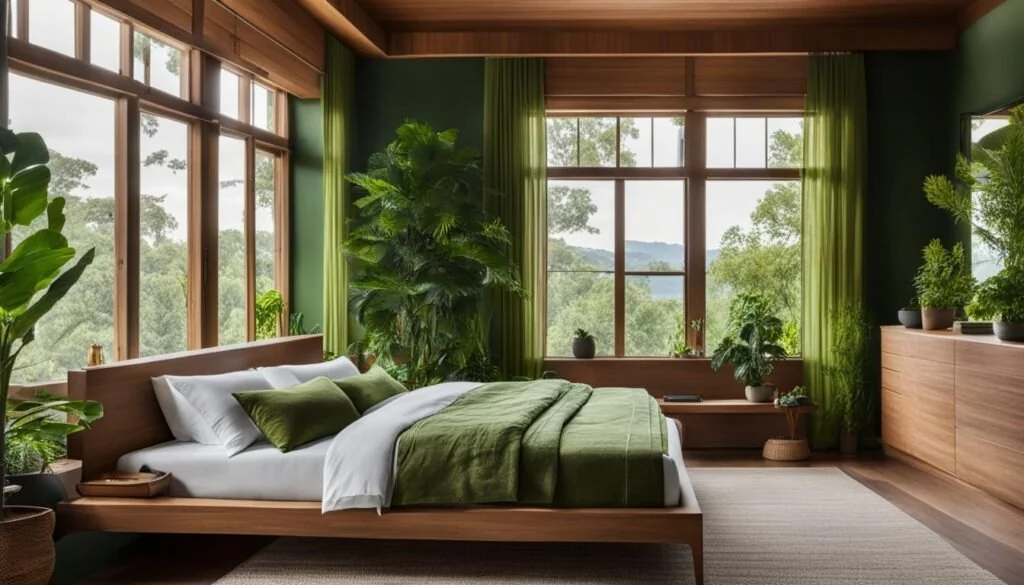
Bedding is where most people start, and it’s the right call: it’s cheap relative to a mattress, it touches your skin all night, and it wears out on a predictable schedule.
Sheets and duvet covers
Organic cotton is the easy default — soft, washable, widely certified. Linen comes from flax, needs less irrigation than cotton in most growing regions, and lasts for years once it softens up. Hemp behaves like a tougher linen and gets better with washing.
Bamboo deserves an asterisk. The plant grows fast with little input, but almost every “bamboo sheet” is viscose or rayon, meaning the pulp has been chemically dissolved and re-spun. A closed-loop process (lyocell) recovers most of the solvent; conventional viscose often doesn’t. If a bamboo sheet set carries no certification and no process detail, treat the green claims as decoration.
Whatever fiber you choose, buy fewer, better sets and rotate them. If you want a starting point, our roundup of sustainable bedding brands goes deeper on what to look for on a label.
Pillows
Pillow fill is where natural materials shine, because you replace pillows more often than anything else in the bed.
- Natural latex — springy, supportive, holds its shape for years. Skip it if you have a latex allergy.
- Buckwheat hulls — firm and adjustable; you add or remove hulls until the loft fits your neck. Noisy at first, and the hulls are compostable at the end.
- Kapok or wool — softer, more traditional feel, both renewable.
- Recycled polyester — not natural, but it keeps bottles out of landfill and washes easily. A reasonable budget pick.
Duvets and blankets
Wool regulates temperature well and is naturally flame resistant, which means the manufacturer needs fewer added flame retardants. Responsibly sourced down lasts decades if you air it and keep it in a washable cover. Cotton or linen throws sit fine in the middle.
Mattresses: the biggest single decision
A mattress is the heaviest, bulkiest thing in the room and the hardest to get rid of. It’s worth slowing down here.
Natural latex, organic wool and organic cotton are the core of most greener mattresses. Latex comes from rubber-tree sap, a renewable crop, and Dunlop latex in particular tends to be dense and durable. Wool adds loft and temperature regulation without synthetic fiber fill. Hybrid builds with a steel coil unit are also worth a look — steel is one of the most widely recycled materials there is, and coil units are easier to separate at end of life than a solid block of glued foam.
You’ll see claims that latex is “hypoallergenic” and “resists dust mites and mold”. Latex foam has a dense, closed structure that’s less hospitable than open fiber fill, but the practical evidence that it prevents allergy symptoms is thin. Washing bedding hot and using a zipped, washable protector does more for dust mites than the mattress material does.
Two questions worth asking before you buy: is the latex GOLS certified, or just “natural”? And can the layers be unzipped and replaced individually? A mattress you can re-layer instead of replace is the sustainable one. Our guide to eco-friendly organic mattress brands covers what different certifications cover on a mattress spec sheet.
Bed frames and bases
Search interest around eco-friendly bed frames is huge, and the answer is simpler than the marketing suggests: buy something solid, jointed and repairable.
Reclaimed and solid wood
Reclaimed wood is the lowest-impact option because the tree was already felled — you’re just extending its life. Solid hardwood with FSC certification is next. Both can be sanded, re-oiled and passed on. Check the finish, too: water-based or plant-oil finishes keep the chemistry mild.
Engineered wood and MDF
Not automatically bad — engineered panels use offcuts and fast-growing species efficiently — but glue is the issue. Look for the TSCA Title VI compliance label, and give any new flat-pack piece a few days of ventilation before you sleep next to it. The EPA notes that concentrations of many VOCs run consistently higher indoors than outdoors, so airing things out and opening a window matter more than any single “low-VOC” label.
Metal
Steel frames are durable and highly recyclable, though production is energy intensive. A frame with recycled steel content that survives three house moves is a perfectly defensible choice. If you want the material trade-offs side by side, see our comparison of eco-friendly bed frame materials.
Cardboard, bamboo and DIY
Engineered cardboard frames are real, genuinely light and fully recyclable, with obvious limits on weight and humidity — we’ve broken down the trade-offs in our look at the cardboard bed frame. Bamboo frames use a fast-growing grass, but check how the pieces are laminated. And a platform built from reclaimed lumber or pallets is still one of the cheapest low-impact beds going, as long as you use heat-treated pallets (stamped HT, not MB) and seal them properly.
Energy, light and air in the bedroom
Products are only half of it. The running costs of the room matter too, and these changes are cheap.
Lighting
If anything in your bedroom still runs on incandescent bulbs, that’s the first swap. ENERGY STAR reports that LED lighting uses at least 75% less energy and lasts 25 times longer than incandescent lighting. Warm bulbs around 2700K feel cozier at night, and a dimmer lets you drop the light level in the last hour before bed. There’s more on layering it properly in our guide to cozy bedroom lighting.
Heating and cooling
Heating and cooling are the biggest energy draw in most homes, so nudging the thermostat down overnight does real work — and a cooler room suits sleep anyway. Thermal or lined curtains hold heat in winter and block afternoon sun in summer, which takes load off both the boiler and the fan. Smart plugs or a switched power strip kill the standby draw from chargers, speakers and TVs.
Air quality, minus the myth
Plants are lovely. They are not an air purifier. A 2019 review of decades of research found that the ventilation in a normal room dilutes VOCs far faster than potted plants absorb them; the American Lung Association points out you’d need an implausible number of plants per square meter to match the lab results people quote. Keep the plants for how they make the room feel, and clean the air the boring way: open windows, change filters, fix damp, and skip synthetic air fresheners.
Cutting the waste your bed creates
This is the part most eco-bedroom articles skip, and it’s where the biggest impact hides.
- Repair before replacing. A split seam, a loose slat or a wobbly bolt is a ten-minute fix.
- Retire sheets into second lives. Worn cotton becomes cleaning rags, dust covers or quilt backing. Animal shelters often take old towels and blankets — call first.
- Donate what’s still usable. Clean bedding in good condition is wanted by shelters and refuges; most won’t take used pillows or mattresses for hygiene reasons.
- Recycle the mattress. Steel, foam, fiber and wood can all be reclaimed. The Mattress Recycling Council runs state programs in California, Connecticut, Oregon and Rhode Island, and its Bye Bye Mattress directory lists drop-off sites. Outside those states, check your city or county waste department, since many run bulky-waste collections that separate mattresses.
- Ask about take-back. Some retailers remove the old mattress when they deliver the new one. Ask whether it’s recycled or landfilled; the answer varies a lot.
Where to spend first on a budget
If you can only do one thing this month, do it in this order:
- Sheets and a pillow protector. Cheapest change, closest to your skin, certified options are easy to find.
- LED bulbs and a dimmer. Pays for itself and improves the room at night.
- Pillows. Natural fill, replaced when they stop holding shape rather than on a schedule.
- Frame. Buy secondhand solid wood if you can. Used furniture is the lowest-impact purchase available, and old frames are often better made.
- Mattress. Last, because it’s the most expensive and the one most worth waiting on until you’ve done the research.
Secondhand is the quiet winner in all of this. A solid oak frame from a resale shop beats a new “eco” frame on every measure that matters.
FAQ
What counts as a sustainable sleep product?
Bedding, mattresses, frames and accessories made from organic, renewable or recycled materials, processed with verified chemical limits, and durable enough to last. Certification and repairability are what separate the real ones from the green-painted ones.
Is eco-friendly bedding more expensive?
Often yes up front, particularly for certified organic cotton and natural latex. Whether it works out cheaper over time depends on how long it lasts and how you care for it — that varies too much by product for anyone to promise you a number.
Does organic bedding help with allergies?
Indirectly at best. Organic certification limits pesticide residues and processing chemicals, which helps if you react to those. For dust mites, the proven moves are hot washing, a zipped mattress and pillow protector, and controlling humidity.
Are bamboo sheets eco-friendly?
It depends entirely on processing. The plant is fast-growing and low-input, but most bamboo fabric is chemically processed viscose. Look for lyocell or closed-loop processing and an OEKO-TEX certificate rather than trusting the word “bamboo” on the pack.
How do I get rid of an old mattress responsibly?
Check for a state or local recycling program first, then ask your retailer about take-back at delivery. Landfill should be the last option, not the default.
What’s the single easiest green swap in a bedroom?
LED bulbs. Low cost, immediate energy saving, and a warm dimmable bulb makes the room better to wind down in.
Updated September 2026.