

The Mattress Firmness Scale Explained: From Plush to Rock-Solid
The mattress firmness scale is a universal guide that measures how soft or firm a mattress feels. Understanding where you fall on this scale can make the difference between tossing all night and waking up refreshed, supported, and ache-free.
When shopping for a mattress, many people focus on brand names or special cooling features but overlook firmness — the single biggest factor influencing comfort. Your mattress should support your spine while cushioning the body’s natural curves. If it’s too soft, you may sink and strain your lower back; if it’s too firm, your shoulders and hips may absorb too much pressure. Finding that “Goldilocks” balance of softness and support starts with decoding the mattress firmness scale.
This guide explains how firmness ratings work, how your sleep position and body weight affect feel, and what materials change perception. You’ll also learn expert-backed ways to test firmness in-store or during a home trial. By the end, you’ll know exactly which level of firmness creates your ideal comfort zone.
The mattress firmness scale ranges from ultra-plush to extra-firm — each offering unique comfort and support.
What the 1–10 Firmness Scale Really Means
The mattress firmness scale runs from 1 (the softest) to 10 (the firmest). While the numbers sound technical, they’re simply a way to compare how much a mattress compresses under weight. Most high-quality mattresses fall between 3 and 8 — a range that covers soft to extra-firm comfort levels.
Lower numbers (1–4) describe plush mattresses that let you sink in for deep contouring. These beds are gentle on pressure points but can feel less supportive for heavier sleepers. Mid-range levels (5–6) strike a comfortable balance between softness and structure, which is why they’re so popular among couples. Higher numbers (7–10) refer to firm and extra-firm surfaces that keep the spine aligned and prevent the hips from sinking.
| Firmness Level | Description | Best For |
|---|---|---|
| 1–2 | Ultra Plush | Side sleepers who like deep contouring and a “cloud-like” hug |
| 3–4 | Soft | Lightweight sleepers or those with joint or shoulder pain |
| 5–6 | Medium | Combination sleepers and couples seeking balance |
| 7–8 | Firm | Back or stomach sleepers who need strong lumbar alignment |
| 9–10 | Extra Firm | Heavier individuals or those preferring minimal sinkage |
Keep in mind that numbers vary slightly between brands. One company’s “medium-firm” may feel softer than another’s due to differences in foam density or coil tension. That’s why physical testing or detailed online reviews are essential before buying.
Matching Firmness to Sleeping Position
How Your Sleep Style Impacts Comfort
Every sleeping position affects pressure points differently, which is why firmness choice should start with how you sleep most of the night. Matching firmness to posture not only improves comfort but also prevents chronic back or shoulder pain.
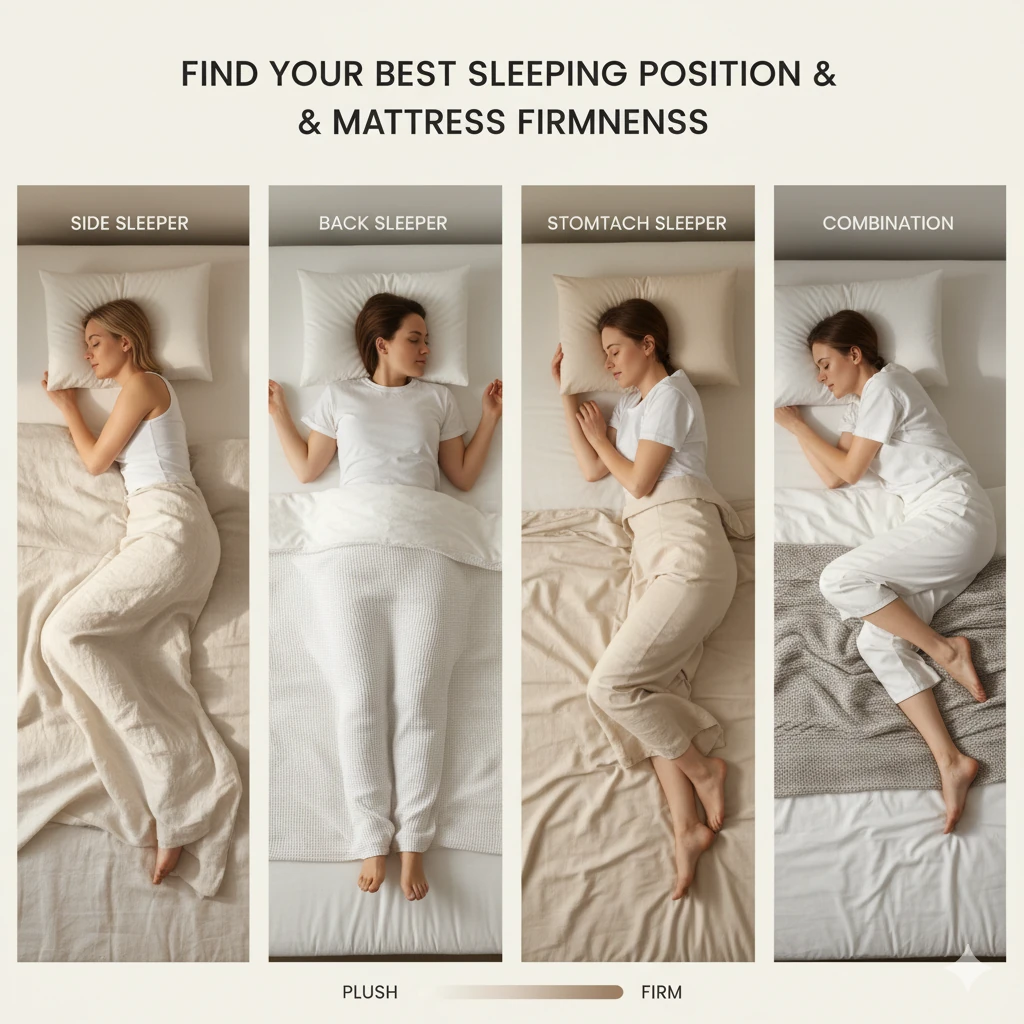
- Side Sleepers: Soft to medium mattresses (3–5) cradle the shoulders and hips, helping reduce pressure buildup along the body’s curves.
- Back Sleepers: Medium-firm options (5–7) maintain the spine’s natural “S” curve and prevent lower-back sagging.
- Stomach Sleepers: Firmer beds (7–8) keep the hips from sinking, which protects the lumbar region from strain.
- Combination Sleepers: A responsive medium mattress (5–6) offers adaptability and ease of movement throughout the night.
Unsure which category fits you? Spend a few nights tracking your dominant sleep position. Even if you start on your side but wake up on your stomach, a medium-firm mattress might still deliver balanced comfort across multiple positions.
Body weight changes how each level on the mattress firmness scale feels and supports your spine.
Body Weight & Materials: How Feel Changes
Weight Distribution Alters Firmness Perception
Two sleepers on the same mattress might describe completely different sensations. That’s because body weight directly affects how much a mattress compresses. Lighter sleepers (under 130 lbs) rest closer to the surface, making most mattresses feel firmer. Average-weight sleepers (130–230 lbs) usually experience the intended feel, while heavier individuals (230 lbs+) sink deeper, perceiving a softer comfort level.
Material matters just as much:
- Memory Foam: Offers a slow, deep “hug” that conforms to curves and minimizes motion transfer. Ideal for pressure relief.
- Latex: Naturally bouncy and breathable, giving a lifted, buoyant feel that prevents overheating.
- Hybrid: Combines foam layers with innerspring coils for balanced contouring and support, suiting a wide range of sleepers.
The right combination of firmness and material ensures that your mattress adapts to you — not the other way around. If you share a bed, hybrid or zoned models often provide the best compromise between plush comfort and edge support.
Testing Firmness In-Store vs. At Home
Practical Steps for Finding the Perfect Feel
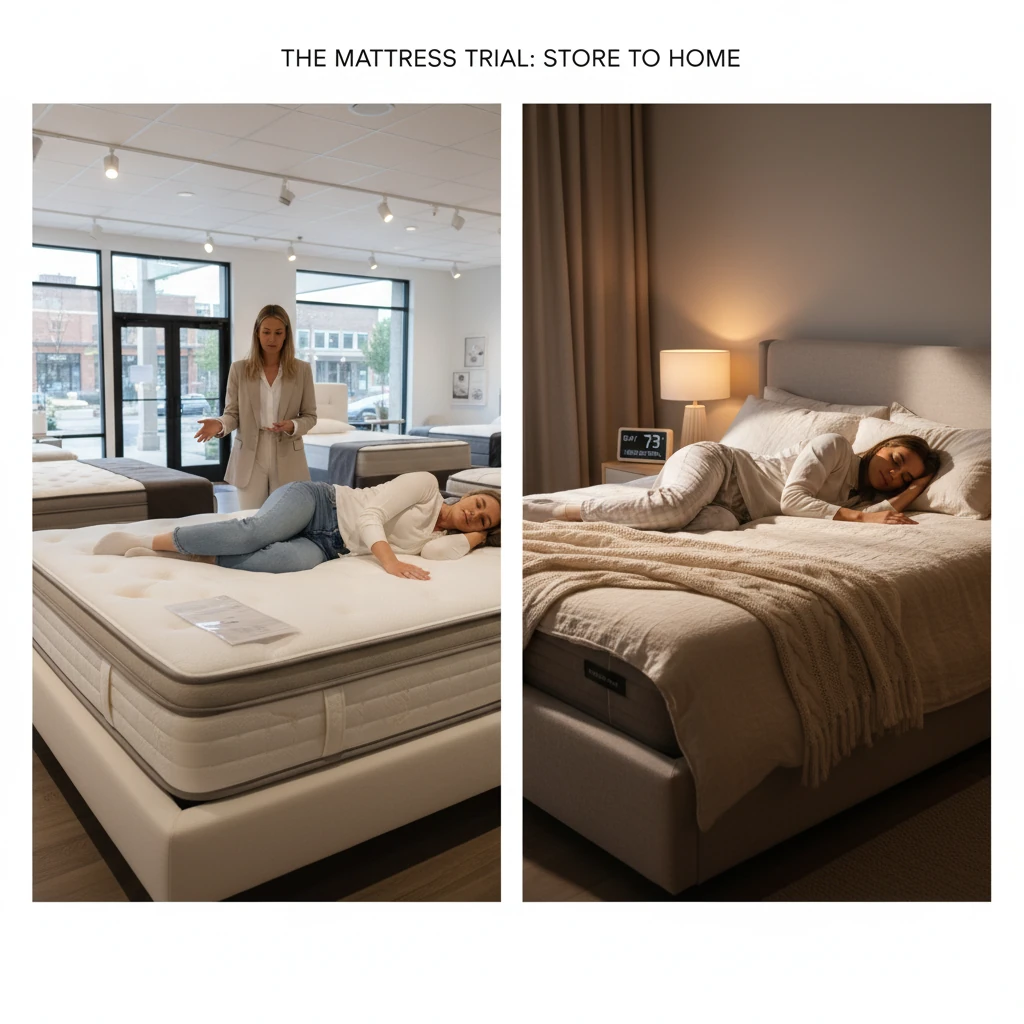
When testing in-store, don’t just press your hand into the surface — lie down in your typical sleep position for at least 10–15 minutes. Pay attention to whether your shoulders, hips, and lower back feel supported. If you notice numbness or tension, the firmness isn’t right for you.
At home, give yourself at least 30 nights to adapt. It’s normal for your body to need a few weeks to adjust to new support levels. Most reputable brands, including those sold at Cozy Bed Quarters, offer generous 100-night trials so you can exchange or return the mattress if it doesn’t feel ideal.
Common Myths About Soft vs. Firm
Separating Mattress Firmness Facts from Fiction
Myth: “A firmer mattress is always better for your back.”
Truth: Excess firmness can increase tension in the shoulders and hips. The ideal level supports your spine’s natural curve, not a rigid straight line.
Myth: “Soft mattresses don’t provide enough support.”
Truth: High-quality foams and hybrids can deliver plush comfort while still maintaining excellent spinal alignment. Support comes from internal structure, not just firmness.
Eco-Friendly vs. Conventional Mattress Materials
Why Sustainable Mattresses Feel Better
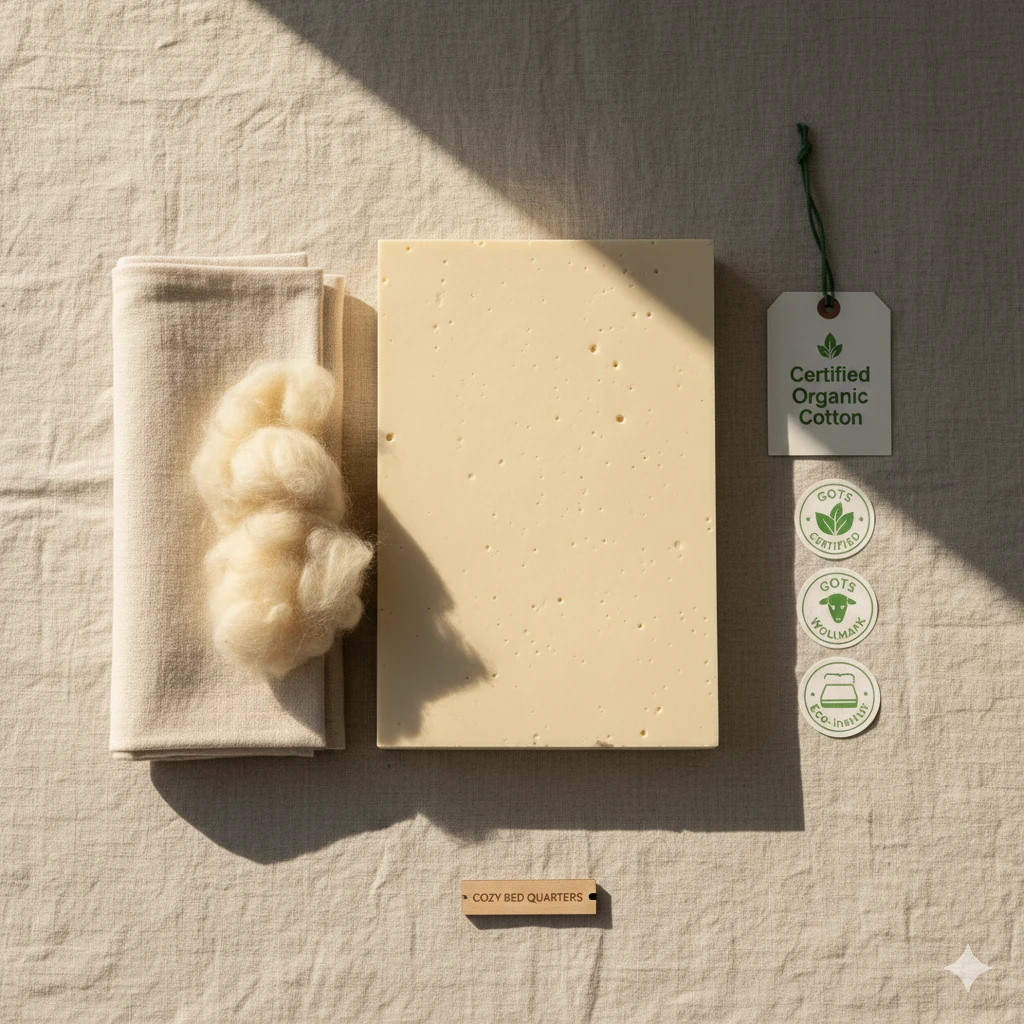
Eco-conscious materials align with comfort and sustainability on the mattress firmness scale spectrum.
Materials not only influence comfort but also your health and environmental impact. Organic latex, cotton, and wool provide breathable comfort and resist allergens without synthetic chemicals. Conventional foam mattresses, while affordable, can trap heat and release volatile organic compounds (VOCs) over time.
Look for trusted certifications like GOLS (Global Organic Latex Standard), GOTS (Global Organic Textile Standard), CertiPUR-US® for safe foams, and OEKO-TEX® for textile purity. These ensure your mattress meets strict standards for safety and sustainability.
For an in-depth guide to creating a healthier sleep sanctuary, explore our article on creating the ideal sleep environment.
Key Takeaways: Mattress Firmness Scale
- The mattress firmness scale runs from 1 (softest) to 10 (firmest).
- Align firmness with your body type and preferred sleeping position.
- Foam, latex, and hybrid materials each affect perceived comfort.
- Test mattresses both in-store and through at-home trial periods.
- Eco-friendly, certified materials promote healthier, longer-lasting comfort.
FAQ: Mattress Firmness Scale
- How do I know which firmness level suits me best?
- Consider your sleep position and weight. Side sleepers need soft to medium, back sleepers medium-firm, and stomach sleepers firm support for proper alignment.
- Does a mattress get firmer or softer over time?
- Yes. Foams may slightly soften with use, while latex and hybrid coils tend to maintain firmness longer.
- What if my partner prefers a different firmness?
- Choose a dual-firmness or split mattress design, or add a topper to one side for personalized comfort.
Final Thoughts
Understanding the mattress firmness scale empowers you to choose comfort with confidence. The right firmness not only supports restful sleep but also promotes spinal health and posture. Whether you prefer a plush, body-hugging feel or a firm, supportive surface, investing in the right mattress pays dividends in daily energy and long-term well-being.
Explore more expert sleep insights, eco-friendly bedding tips, and buyer’s guides at Cozy Bed Quarters.