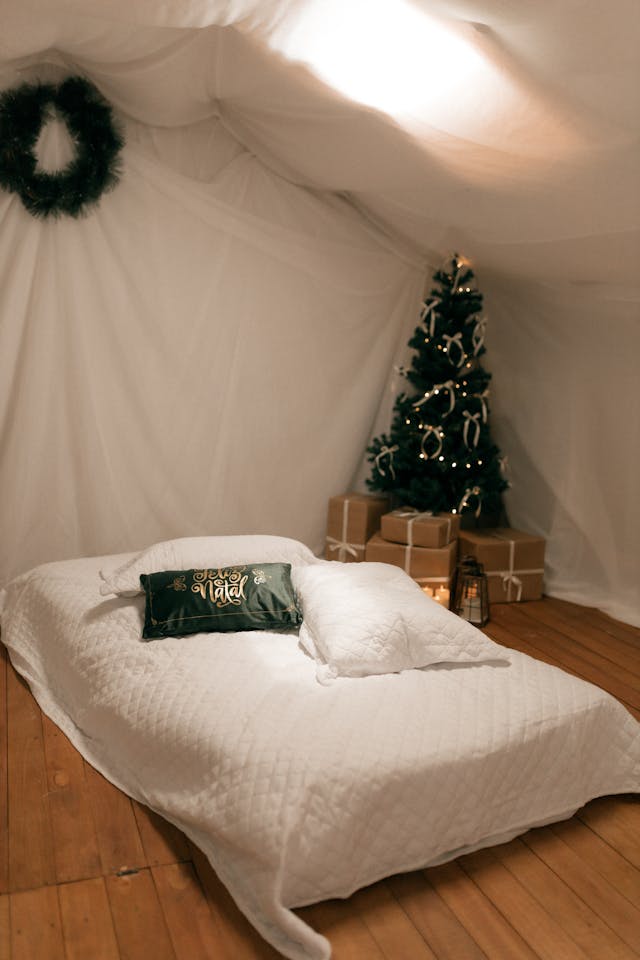
What Is a Sham in Bedding?
A sham is a decorative pillow cover: a fabric case that slips over a bed pillow and is meant to be looked at rather than slept on. Dictionaries define a pillow sham as an ornamental covering laid over or enclosing a pillow on a bed or couch, and the word itself carries the older sense of a false front — Merriam-Webster lists both “hoax” and “something resembling an article of household linen and used in place of or over it” under the same entry. In practice, a sham hides a plain pillow behind a finished, tailored front, closing at the back with an envelope flap, buttons or a hidden zipper so no opening shows.
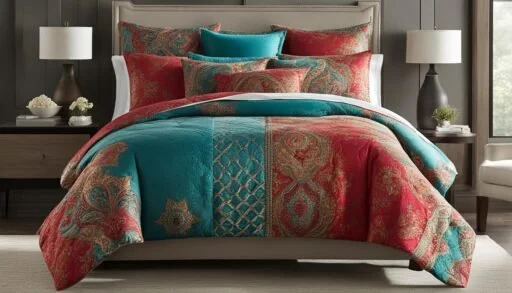
Sham vs. Pillowcase: The Practical Difference
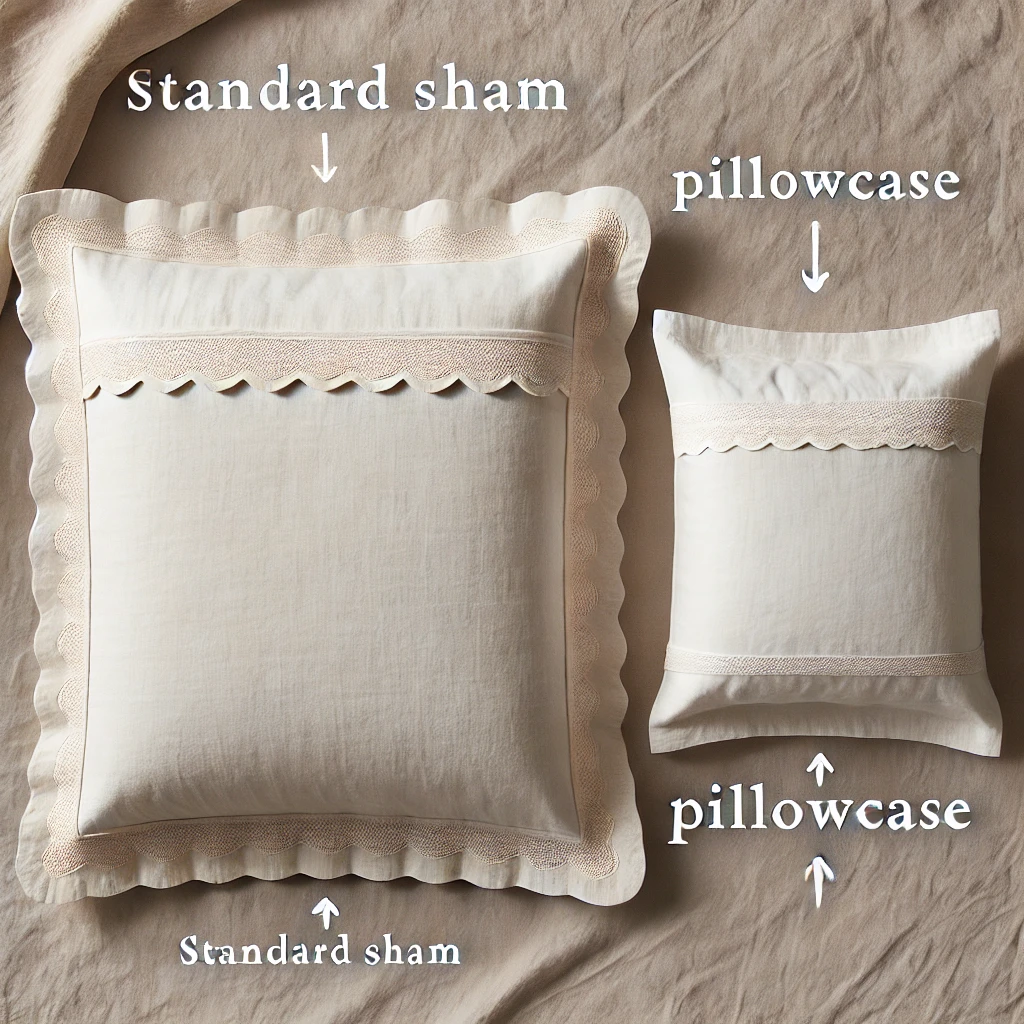
Both cover a pillow, but they are built for different jobs. A pillowcase is soft, plain and open at one end so you can sleep on it every night. A sham is styled: it often has a flat fabric border (a flange), piping, quilting or embroidery, and its closure is hidden at the back. That construction looks crisp on a made bed but can feel bulky or scratchy against your face, which is why shams usually come off (or get pushed aside) at bedtime.
| Feature |
Sham |
Pillowcase |
| Main purpose |
Decorative; finishes a made bed |
Functional; slept on nightly |
| Opening |
Back envelope flap, buttons or hidden zipper |
Open end or simple side tuck |
| Typical details |
Flange, piping, quilting, embroidery |
Plain hem, smooth surface |
| Usually sold |
Separately or with a duvet/comforter set |
With a sheet set |
| Washing |
Less often, since skin contact is limited |
Weekly |
Sham Sizes and What They Fit
Shams are named after the pillow they cover, so if you know your pillow size you know your sham size. Common US pillow and sham dimensions are:
| Sham type |
Approximate size |
Best for |
| Standard |
20″ x 26″ (51 x 66 cm) |
Twin, full and queen beds; the most common size |
| Queen |
20″ x 30″ (51 x 76 cm) |
Queen beds where you want slightly wider coverage |
| King |
20″ x 36″ (51 x 91 cm) |
King and California king beds; two span the width |
| Euro |
26″ x 26″ (66 x 66 cm) |
Square back layer against the headboard; propping up to read |
| Boudoir |
Around 12″ x 16″ |
Small accent in front of everything else |
Sizes vary a little between makers, and some brands cut king pillows shorter than the industry figure, so measure your insert before ordering. The same logic applies to the rest of your bedding: sizing labels are a guide, not a guarantee, whether you’re checking whether queen bedding fits a full bed or working out the difference between king and California king dimensions.
How Many Shams Do You Need?
There is no rule here, only proportion. These combinations are the ones that read as balanced on most beds:
- Twin: one standard sham, or one Euro behind one standard.
- Full or queen: two standard shams, optionally with two Euro shams behind them.
- King or California king: two king shams (or three standard), with two to three Euro shams as a back layer.
Two well-chosen shams almost always look better than a crowded pile. If you have to move six pillows to get into bed, you have too many.
Fabrics and Finishes
Fabric decides how a sham looks, how it drapes and how much work it is to keep tidy.
- Cotton (percale, sateen, quilted): breathable, machine washable, easy to live with.
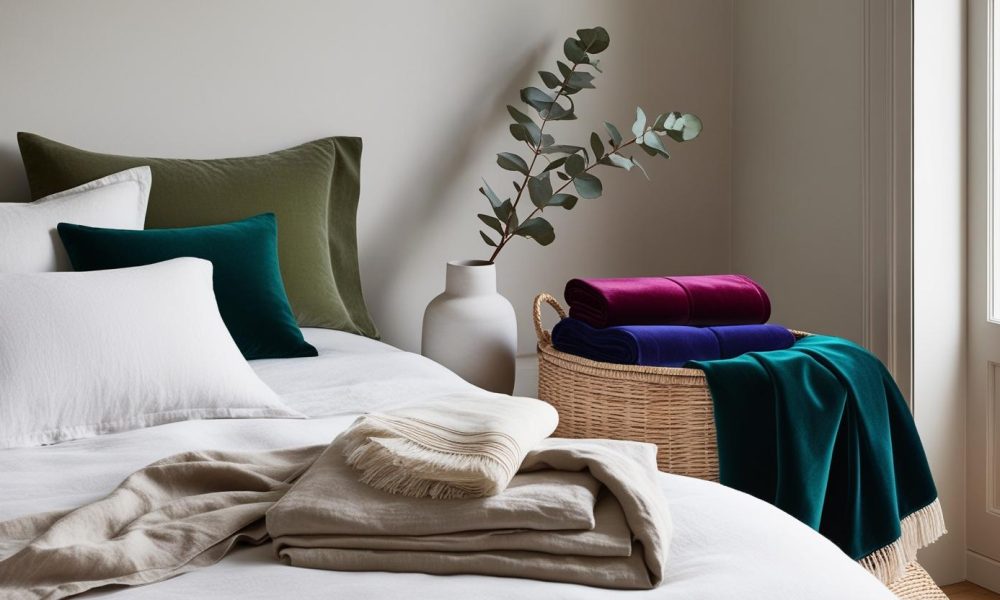
- Linen: textured and relaxed; it creases by nature, which suits a casual bed and skips the ironing.
- Silk: smooth and formal, but usually needs a delicate wash or dry cleaning.
- Velvet and flannel: heavier and warmer-looking, popular for autumn and winter layers.
- Polyester blends: inexpensive and wrinkle-resistant, though less breathable than natural fibres.
If you want to compare fibres in more depth before you commit to a set, our guide to cozy bedding materials covers how each one feels and wears, and sustainable bedding options are worth a look if certified organic or recycled fabrics matter to you.
Edge treatments matter as much as fabric. A flange (flat fabric border) gives a soft, traditional outline; knife-edge shams look sharp and modern; piped or welted edges hold a crisp line; ruffled or scalloped edges lean cottage or romantic. Closure type is mostly about convenience: envelope backs are fastest, zippers hold the insert most securely, and buttons or ties add a visible detail.
How to Style Shams
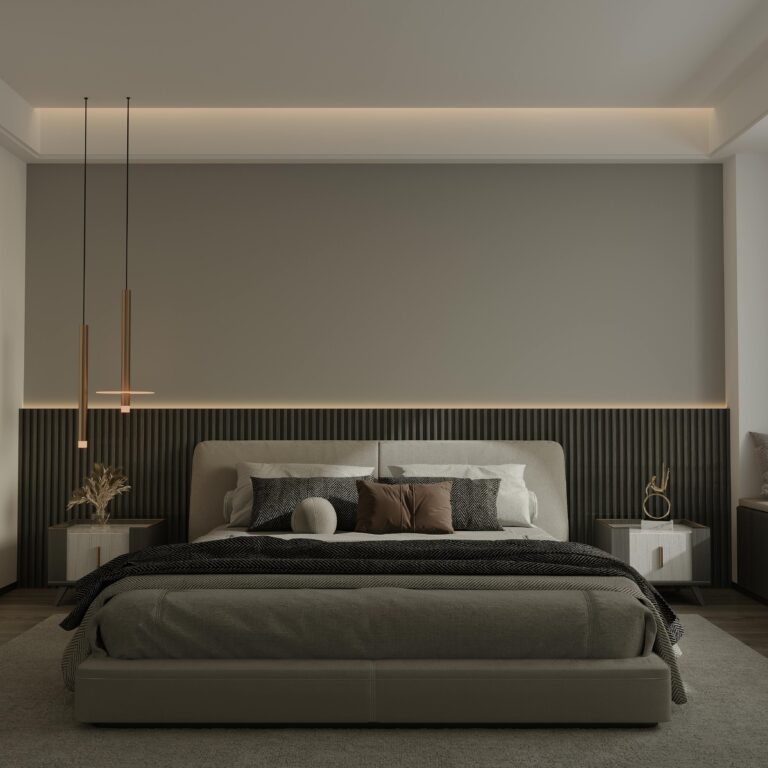
Layer from tall at the back to small at the front, and the bed builds itself:
- Euro shams against the headboard for height and a solid backdrop.
- King or standard shams in front of them, standing upright or lying flat.
- Your sleeping pillows next (or tucked behind the shams during the day).
- A boudoir sham, lumbar pillow or throw as the final accent.
A few habits keep it from looking fussy:
- Anchor the palette. Coordinate shams with the duvet or comforter, then add one contrasting colour rather than three. If you’re deciding what the top layer should be in the first place, see how a sham compares with a duvet cover.
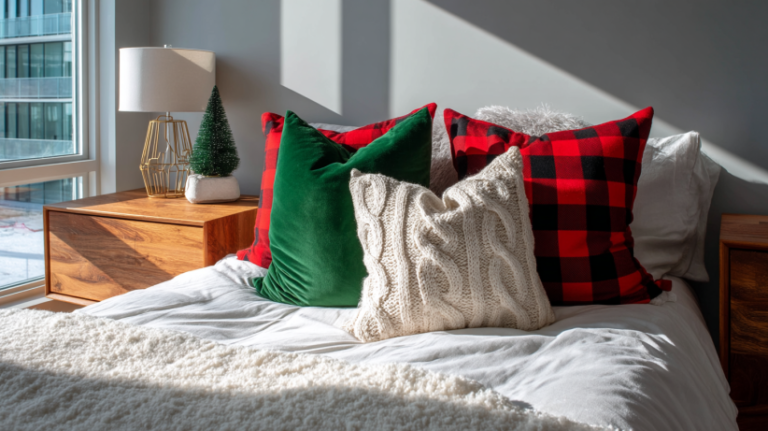
- Vary texture, not just pattern. Matte linen next to velvet or sateen reads as deliberate even in a single colour.
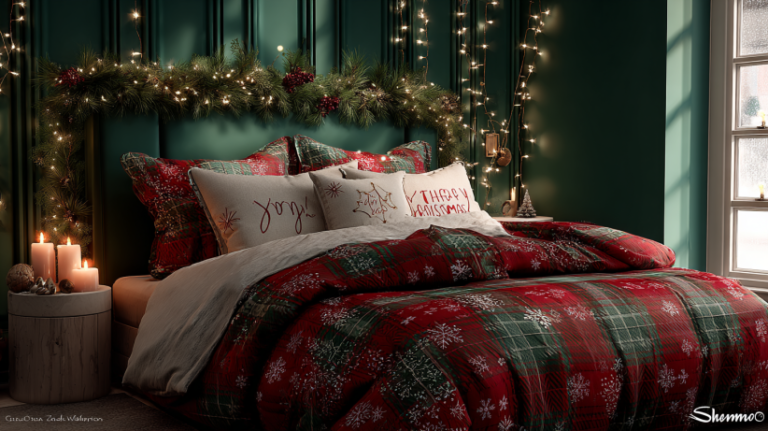
- Limit bold prints. One statement pattern supported by solids is easier to live with than several competing prints.
- Swap by season. Cotton and linen in summer; velvet, flannel or heavier weaves when it gets cold. Changing shams is far cheaper than changing a whole set.
- Fill the corners. Use an insert the same size as the sham, or an inch or two larger, so the cover looks plump instead of limp.
Common patterns and the mood they set: florals read romantic, stripes read crisp and coastal, geometrics read modern, damask reads formal, and folk-art or patchwork motifs read farmhouse.
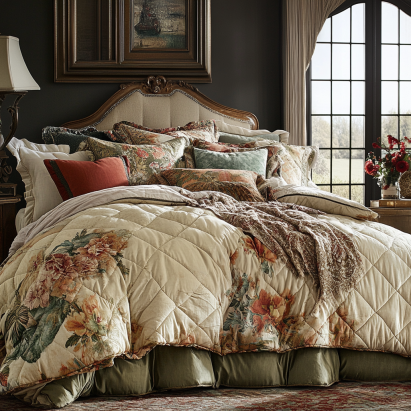
Are Shams Only Decorative?
Mostly, yes — and it’s worth being honest about that. Shams make a bed look finished, they let you change a room’s mood cheaply, and a firm Euro sham is genuinely useful as a backrest for reading or working in bed. They also sit between your pillow and daytime dust, though there’s no good evidence that a sham measurably extends a pillow’s life; treat that as a mild side benefit, not a reason to buy.
Can you sleep on one? If the sham is plain cotton or linen with no hard trim, nothing bad will happen. Embroidery, beading, buttons and heavy piping are another story: they press into skin and hair, so most people take those shams off at night.
One caveat if you have allergies. Extra decorative textiles are extra dust collectors, and Mayo Clinic’s dust mite guidance is to cut clutter in the bedroom and remove items that gather dust. If you’re sensitive, keep the sham count low and choose washable fabrics.
Washing and Care
Because shams rarely touch your face, they don’t need the same schedule as pillowcases. Sheets and pillowcases are the priority: for dust mite control, Mayo Clinic advises washing sheets, pillowcases and blankets at least weekly in water of at least 130°F (54°C). For purely decorative shams, every few weeks is a reasonable rhythm; wash them more often if you lean on them daily, have pets on the bed or suffer from allergies.
- Follow the label first. Note that the FTC’s mandatory Care Labeling Rule applies to wearing apparel and certain piece goods rather than household textiles, so bedding care instructions are provided voluntarily — when they exist, use them.
- Wash gently. A cold or warm gentle cycle with mild detergent suits most cotton and linen shams; skip bleach and fabric softener on embellished fabrics.
- Protect the details. Turn embroidered or beaded shams inside out, or spot-clean instead of washing the whole cover.
- Dry low. Tumble dry on low or line dry to limit shrinkage, then press linen and cotton on a low setting if you want crisp edges.
- Treat stains fast. Blot with cool water and a little mild soap rather than rubbing, then launder.
- Store clean and dry. Breathable cotton bags in a dry cupboard, away from direct sun; plastic bins trap moisture.
Buying Checklist
- Measure the insert, not the bed, and match the size exactly (or size the insert up slightly for loft).
- Decide how it will be used. Daily backrest? Choose washable cotton or linen with no hard trim. Purely visual? Velvet or silk is fine.
- Check whether inserts are included. Usually they are not; shams are typically sold as covers only, often in pairs.
- Look at the closure and the seams — a hidden zipper and neat, reinforced stitching are good signs of quality.
- Buy fewer, better covers. Two shams you like will do more for a room than a pile of mismatched pillows.

FAQ
What is the difference between a sham and a pillowcase?
A pillowcase is plain, soft and meant for sleeping, with an open end. A sham is decorative, usually has a flange or other trim, and closes at the back with a flap, buttons or a hidden zipper so the front stays smooth.
Can you sleep on a sham?
You can if the fabric is soft and free of hard embellishments, but most shams are stiffer than a pillowcase and embroidery or buttons can be uncomfortable. Use a pillowcase for sleeping and keep the sham for daytime.
Do shams come with pillow inserts?
Usually not. Shams are normally sold as covers, so you buy or reuse an insert in the matching size.
How many shams go on a queen bed?
Two standard shams is the standard look; add two Euro shams behind them if you want more height.
How often should shams be washed?
Every few weeks for purely decorative shams, and more often — closer to your weekly sheet wash — if you lean on them daily or have allergies.
Do shams go in front of or behind the sleeping pillows?
Either works. Placing them in front hides your sleeping pillows during the day; placing Euro shams behind everything builds height against the headboard.
The Short Version
A sham is the styled outer layer of a made bed: a decorative cover, sized to your pillow, that closes out of sight at the back. Get the size right, keep the count modest, pick fabrics you’re willing to wash, and swap them when you want a new look. It is one of the cheapest changes you can make to a bedroom and one of the most visible.
Updated September 2026.