

The best small bedroom storage ideas for a room with no closet come down to three moves: build a wardrobe wall where a closet should be, turn the space under your bed into a second dresser, and push everything else up onto the walls and door backs. Do those three and you can usually skip the bulky chest of drawers entirely, which is what frees the floor. Everything below is sorted by how much space it gives you back, with renter-friendly options called out.
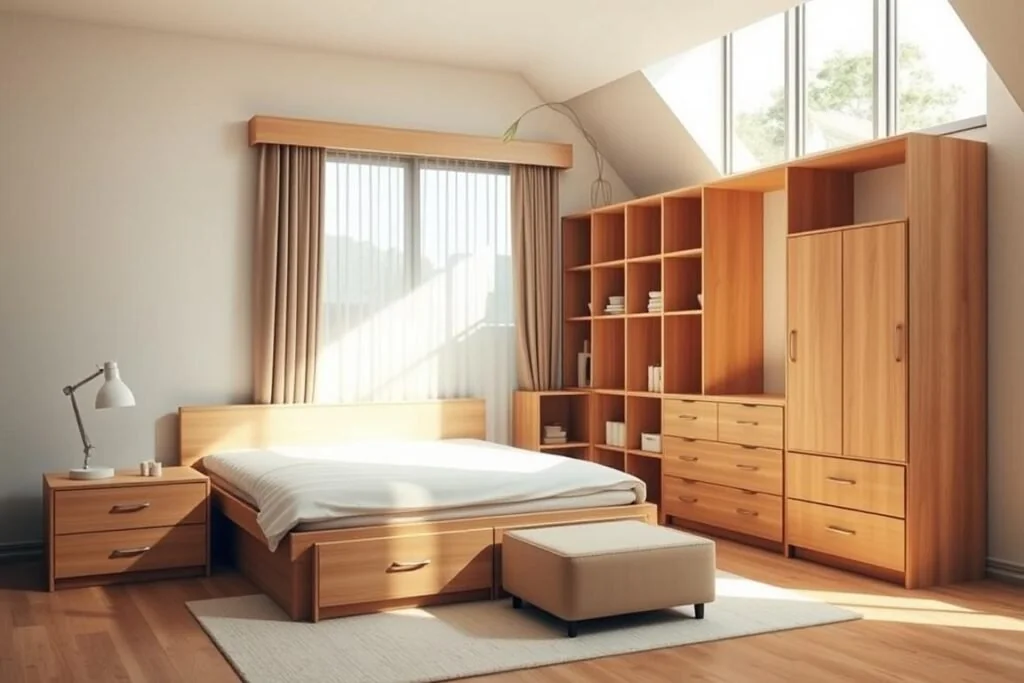
A compact room using mirrored wardrobes, wall sconces and an under-bed drawer so the floor stays clear.
Measure and zone the room before you buy anything
Storage that doesn’t fit is worse than no storage, so spend ten minutes with a tape measure first. Sketch the room and mark three zones: sleep, dress, and work or relax. Every piece you bring in should belong to one of them.
- Measure wall-to-bed gaps, the ceiling height, and the clear depth under your bed frame (including any center rail that blocks a long bin).
- Leave a walkway beside the bed you can actually use. Roughly two feet is the common design rule of thumb; less than that and you’ll shuffle sideways every night.
- Check door and drawer swings. A dresser that can’t open fully is wasted money.
- Keep daily items at arm’s reach and send rarely used things high or deep.
- Photograph the wall you’re planning. Gaps show up in a photo that your eye skips over in person.
If you’re still choosing a frame, a low-profile or storage bed changes the whole plan. Our bedroom furniture and layout guide walks through floor plans for tight rooms.
Small bedroom storage ideas that free up floor space first
Floor area is the thing you’re short on, so the highest-value swaps are the ones that move storage off the ground or into space you already own.
- Wall shelves above the bed and desk. A pair of shelves holds books, baskets and a lamp without eating a single square foot of floor. Find the studs before you drill. In most US homes they sit 16 inches apart on center, and a shelf that’s screwed into framing will hold far more than one hanging on drywall anchors alone.
- A pegboard or rail system. Hooks, cups and small baskets on a grid handle jewelry, headphones, hats and hair tools. It’s the cheapest way to clear a dresser top.
- Over-the-door organizers. The back of the bedroom door is usually the most wasted surface in the room. Shoe pockets, a hook rack, or a slim outfit pole for tomorrow’s clothes all work here.
- Swing-arm sconces instead of table lamps. Losing the lamp base is often enough to make a tiny nightstand workable.
- Corner shelves. Triangle shelves stack into a dead corner and don’t stick out into the walkway.
Build a wardrobe wall when there’s no closet
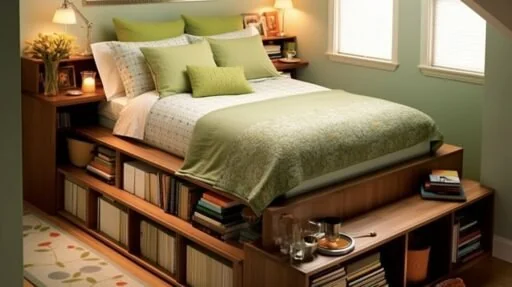
This is the single biggest fix for a closet-free room. Line up two or three full-height wardrobes along one wall, push them tight together, and close the gap at the ceiling with a strip of simple molding or a painted filler panel. Paint the molding the wall color and the units read as built-ins rather than furniture.
- Mix the insides: one hanging bar for shirts and jackets, adjustable shelves for folded knits, and labeled bins up top for luggage and off-season gear.
- Shelf dividers keep sweater stacks from sliding into each other and stop bags toppling.
- Mount a small reading light and a hanging basket on the wardrobe side that faces your bed. That’s your nightstand, and it costs zero floor space.
- Run cords behind the units in a shallow channel and finish the edge with a scribe strip so nothing looks temporary.
- Mirrored or glossy doors bounce daylight back into the room and make the wall feel less like a block.
Renting? Freestanding wardrobes work the same way; skip the molding and use removable anti-tip straps instead of screwed-in brackets where your lease allows.
Under-bed storage: the biggest space you already own
A queen bed sits on roughly 30 square feet of floor. Using that rectangle properly can replace a dresser outright.
- Built-in drawers or a lift-up platform. Drawers suit daily clothes; a hydraulic lift-up base swallows bulky bedding but needs clearance to open, so don’t push it under a sloped ceiling.
- Rolling bins. Wheels matter more than capacity. A bin you can pull out one-handed gets used; one you have to drag doesn’t.
- Zone it. Daily clothes and shoes near the edge, archive boxes toward the wall.
- Vacuum bags, with a caveat. They shrink synthetic duvets, puffer coats and spare blankets dramatically. Down and feather items are a different story: bedding makers generally advise breathable cotton bags instead, because long compression crushes the clusters that give down its loft. Treat that as manufacturer guidance rather than tested fact, but it’s consistent advice across the industry.
- Bed risers add a few inches of clearance, and some models include outlets for bedside charging. Only use them if your frame’s legs sit flat and stable in the cup, and check the riser’s stated weight rating against the bed, mattress and sleepers combined.
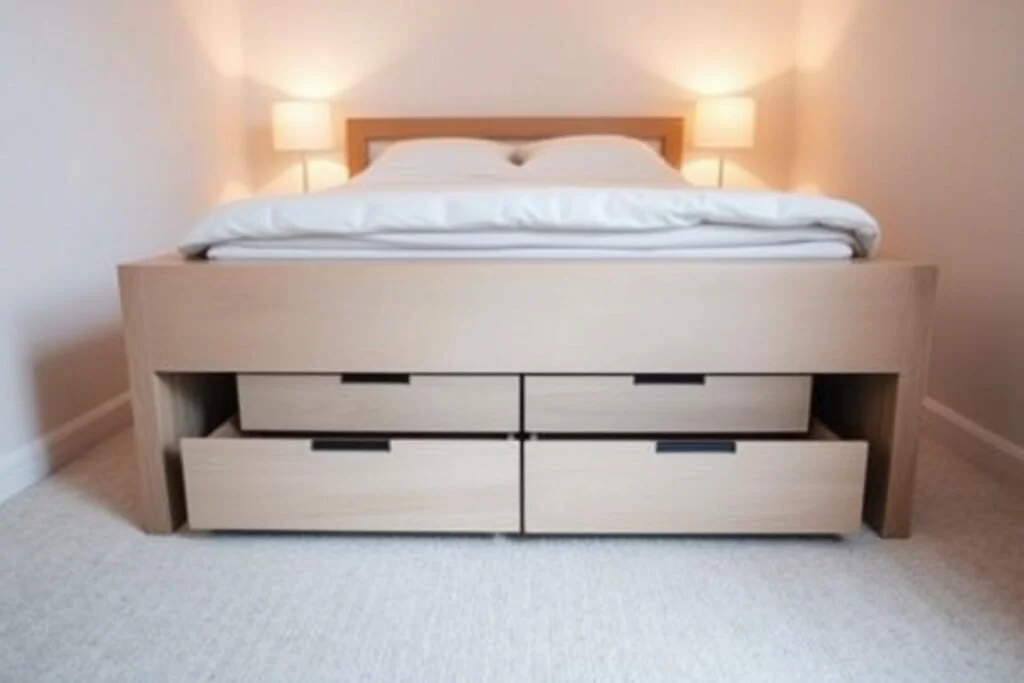
Under-bed drawers take over folded-clothes duty so a whole wall stays open.
More on both approaches in our guides to hidden storage beds and bed risers for storage.
Double-duty furniture and nightstand alternatives
In a small room, every piece should earn its footprint twice.
- Desk as vanity. One narrow desk, a wall mirror above it, drawer dividers inside. Keep a lidded tray on top so you can lift the clutter off and reset the surface in seconds.
- Storage ottoman or flip-top bench. Seating at the foot of the bed that holds blankets and spare pillows.
- Fold-down desk or drop-leaf table. Out for work, flat against the wall the rest of the time.
- Floating shelf nightstand. A shallow ledge at mattress height for your phone and glasses, plus a slightly deeper cubby below for books. No legs, no dust trap, no bumped shins.
- Tall, narrow dressers. Same capacity as a wide one in half the wall length. Anchor it (more on that below).
- Adhesive catchalls. A small acrylic holder stuck to the wall near your pillow keeps the remote and glasses off the bed.
For frames and case goods built around tight rooms, see our roundups of space-saving bedroom furniture and the best beds for small rooms.
Make a small closet hold more
If you do have a closet and it’s tiny, the rod is almost always underused.
- Double-hang. Shirts and folded trousers only need about 40 inches of drop, so a second rod below the first roughly doubles hanging space. Keep one section full-height for dresses and coats.
- Slim velvet hangers. They cut the width of a packed rod noticeably compared with chunky plastic.
- Hanging fabric cubbies for shoes, gym clothes or bags, so the shelf stays clear.
- One drawer stack on the floor plus a narrow shoe tower turns the bottom half into real storage instead of a pile.
- Battery puck lights inside. You can’t wear what you can’t see.
- Label the bins. Boring, but it’s the difference between a system and a graveyard.
Dead zones worth activating
| Spot | What to add | Best for | Renter-friendly |
|---|---|---|---|
| Back of the door | Over-door rack, hooks, outfit pole | Bags, hats, tomorrow’s clothes | Yes |
| Under the bed | Rolling bins, drawers, risers | Off-season clothes, bedding, shoes | Yes |
| Above the door | Single high shelf | Suitcases, storage boxes | Needs drilling |
| Window nook | Bench with hinged lid or bins below | Blankets, books, seating | Yes, if freestanding |
| Awkward corner | Corner shelves or a narrow tower | Plants, books, baskets | Usually |
| Bed headboard wall | Floating shelves, sconces | Bedside items, decor | Needs drilling |
One small habit keeps all of it working: a nightly two-minute reset where everything goes back to its spot, plus a proper declutter each season. Storage only buys you time if you keep editing what goes into it.
Anchor anything tall before you load it
Tall wardrobes and narrow dressers are exactly the shape that tips. The US Consumer Product Safety Commission now enforces a mandatory stability standard for free-standing clothing storage units after the STURDY Act, adopting ASTM F2057-23 as a federal rule, and the agency’s tip-over data covers hundreds of deaths, most of them children. Use the anti-tip hardware in the box, screw it into a stud, and load heavy items in the bottom drawers. This matters most if kids or pets share the room.
The same logic applies to shelves over a bed. Keep heavy objects low, use hardware rated well above what you plan to store, and don’t hang a loaded shelf from drywall anchors alone.
Make the room feel bigger, not just hold more
Storage solves capacity. These moves solve the cramped feeling.
- Hang a large mirror opposite or beside a window so it reflects daylight rather than a wall.
- Keep the palette tight. Fewer colors across walls, bedding and storage reads calmer and less busy.
- Choose legs over plinths where you can. Seeing floor under furniture makes a room feel deeper.
- Style by subtraction: one tray, two objects, done.
- Match storage baskets so open shelving looks intentional instead of accumulated.
There’s some evidence the payoff isn’t only visual. A study presented in the journal SLEEP found that de-cluttering habits predicted better self-reported sleep quality and fewer sleep problems, though the effects were small and based on survey data, not a controlled trial. Treat a tidy bedroom as a likely nudge in the right direction rather than a cure.
More on the visual side in our guides to making a small bedroom look bigger and bedroom mirror placement.
Cheap fixes that punch above their price
- Over-the-door shoe organizer, repurposed for anything small
- Removable adhesive hooks along a blank wall for bags and robes
- Vacuum bags for synthetic bedding and winter coats
- Drawer dividers cut from cardboard or cheap plastic trays
- Uniform bins from one range, so mismatched containers stop looking like clutter
- Slim velvet hangers to reclaim rod space
FAQ
How do I store clothes if I have no closet?
Pair a full-height wardrobe wall with under-bed drawers. Hang what wrinkles, fold what doesn’t, put daily clothes at arm’s reach and archive the rest up high or toward the wall under the bed.
What’s the best nightstand alternative in a tiny room?
A shallow floating shelf at mattress height with a wall-mounted sconce above it. Add a lower cubby if you read in bed.
Are bed risers safe on any frame?
No. They suit frames with flat, stable legs that sit fully inside the riser cup. Check the weight rating, avoid them on frames with casters or splayed legs, and push the bed to test for wobble before loading bins underneath.
Can I vacuum-seal everything?
Synthetic bedding, coats and cotton clothes compress fine. Down and feather duvets and wool are better stored loosely in a breathable cotton bag, since long compression can flatten the fill.
What works if I rent and can’t drill?
Freestanding wardrobes and shelving, over-door racks, removable adhesive hooks, under-bed bins and storage ottomans. Check your lease before adding anti-tip brackets, and ask, because most landlords prefer a small screw hole to a tipped wardrobe.
Should I buy a storage bed or a dresser?
If the room is under roughly 100 square feet, the storage bed usually wins, because the dresser needs both its own footprint and clear space in front of it for open drawers.
Updated September 2026.