

The fastest way to make a bedroom feel like the holidays is to change what’s on the bed. Most christmas bedding ideas come down to five looks — red-and-green plaid, winter white with snowflakes or metallic thread, chunky knit and sherpa texture, playful nostalgic prints, and velvet in jewel tones — and the right one depends on your room’s existing colors and how warm you sleep. Choose the look first, then choose the fabric, because fabric is what decides whether you actually sleep well under all that festive layering.

Five christmas bedding ideas, from classic to barely-there
1. Red and green plaid
Plaid is the shorthand for Christmas. Deep red and forest green tartan on a duvet or flannel sheet set reads festive from the doorway, and it sits happily next to wood furniture, leather, and anything rustic. If your room already has a lot going on, keep the plaid to the duvet and go plain on the pillowcases.
Plaid also stretches past December. A muted buffalo check in charcoal and red still looks right in February, which is a decent argument for buying it over a Santa print. If you want a deeper look at cover styles and closures, our guide to Christmas duvet covers goes through the options.

2. Winter white and silver
Soft white bedding with tonal snowflake embroidery, a faint metallic shimmer, or a simple pintuck texture gives you the season without the color clash. This is the easiest option if your bedroom is already neutral, and it’s the one that can stay on the bed through the whole of winter. Add warmth with a cream sherpa throw and a couple of cable-knit cushions so it doesn’t read as a hotel room.

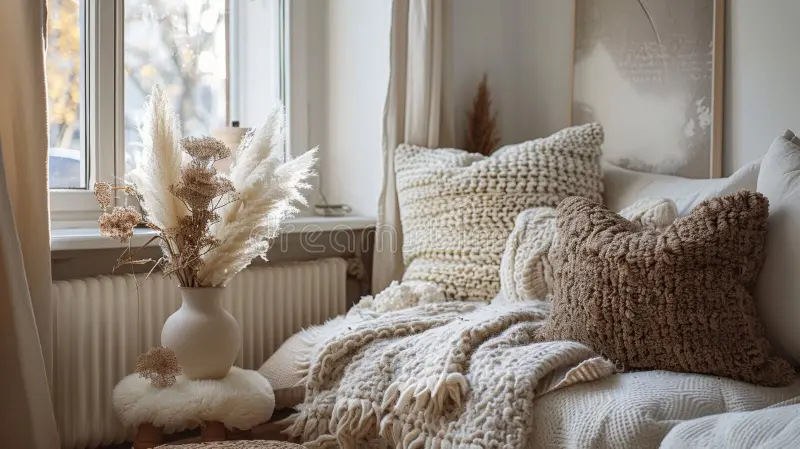
3. Nordic knit and heavy texture
Skip the print entirely and let texture do the work: a cable-knit blanket, a sherpa-backed comforter, chenille or bouclé cushions, a waffle-weave top layer. It’s the cabin look, it photographs beautifully, and it’s completely pattern-free, so it works in a room where a reindeer print would feel out of place.
4. Playful and nostalgic prints
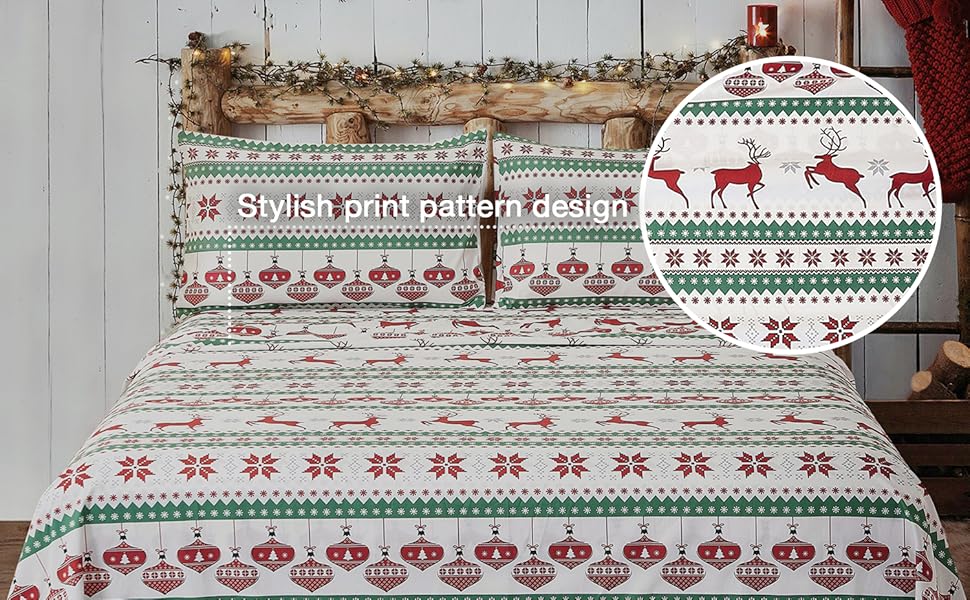
Gingerbread people, retro Santas, candy canes, cartoon reindeer — the loud, slightly kitsch end of holiday bedding has a big following, and it’s the obvious pick for kids’ rooms and guest beds where a bit of silliness is the point. Buy these in cotton or microfiber rather than anything expensive; novelty prints date fast and get washed hard.
5. Velvet and jewel tones
Emerald, burgundy, and deep navy velvet — usually as a quilted coverlet, a duvet, or a pair of shams — is the grown-up version of holiday bedding. Velvet is heavy and traps heat, so it works better as a folded foot-of-bed layer or on cushions than as the thing you sleep directly under.
A low-key option (often searched as men’s holiday bedding)
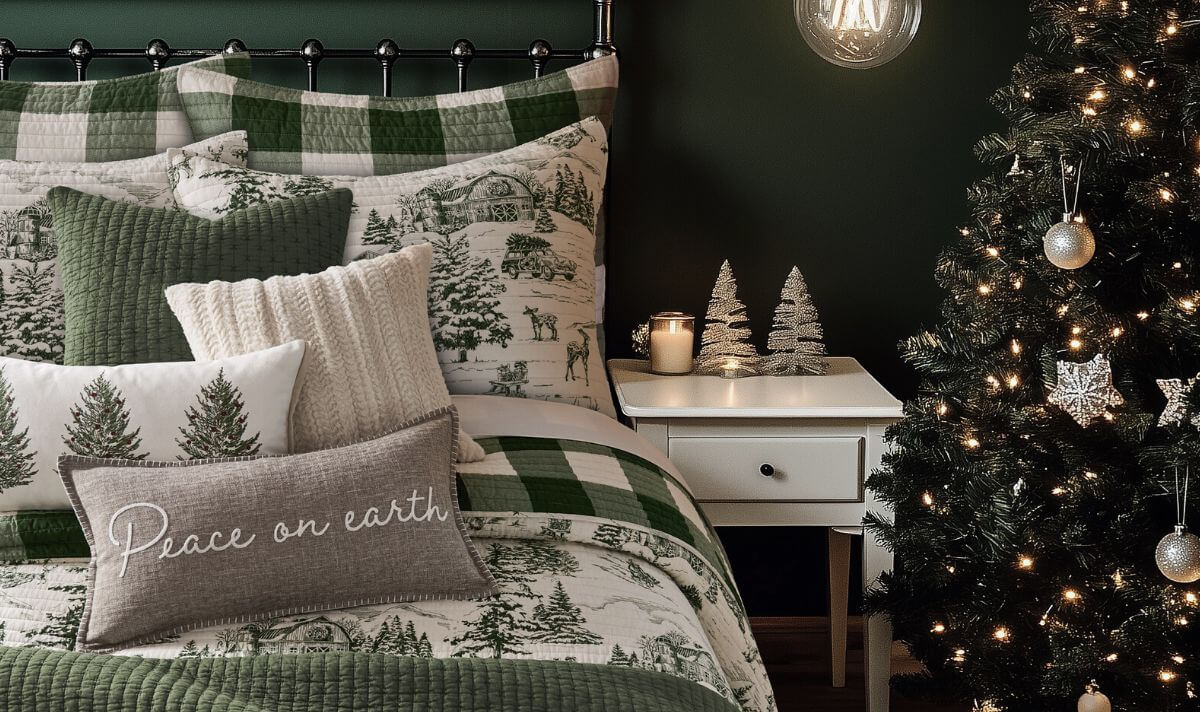
If glitter and gingerbread aren’t the vibe, holiday bedding still works — it just needs to be quieter. Look for dark buffalo check, solid forest green or oxblood, flannel in heathered grey, or a subtle pine-tree silhouette print on a charcoal ground. Matte fabrics, no metallics, one pattern maximum, and two pillows instead of six. It reads seasonal without announcing it.
Fabrics: what to sleep under
This is the part that gets skipped, and it’s the part that matters. A gorgeous duvet cover you sweat under all night isn’t a win.
- Flannel — brushed cotton, the warmest common sheeting. Weight is measured in ounces per square yard or GSM; in CNN Underscored’s flannel sheet testing, most sets landed around 5 ounces and 6 ounces counted as heavy. Look for “double-napped” on the label, which means both sides are brushed.
- Percale cotton — crisp, matte, breathable. The best base layer if you run hot but still want a festive comforter on top.
- Sateen cotton — smoother and slightly warmer-feeling than percale, with a soft sheen that suits the velvet and jewel-tone look.
- Rayon or viscose made from bamboo — silky and good at moving moisture. Worth knowing the labeling rule: the FTC says textiles can only be called bamboo if they’re made directly from bamboo fiber, and the usual soft “bamboo” sheets are rayon, which has to be described that way. Treat “antibacterial bamboo” claims with suspicion.
- Microfiber — cheap, wrinkle-resistant, holds bright print colors well. Less breathable, which is fine for a spare room used four nights a year.
If you want the longer version of how each fiber actually feels and wears, see our guide to cozy bedding materials. And if chemical safety matters to you, look for an OEKO-TEX Standard 100 label, which means the finished item was lab-tested for a long list of harmful substances.

Quick comparison
| Feature | Flannel | Rayon from bamboo | Microfiber | Percale cotton |
|---|---|---|---|---|
| Warmth | High | Medium | Medium | Low to medium |
| Breathability | Moderate | Good | Lower | High |
| Feel | Fuzzy, softens with washing | Silky, drapey | Smooth from day one | Crisp, matte |
| Common gripe | Pilling if washed hot | Wrinkles, needs gentle wash | Can feel clammy | Wrinkles, feels cool at first |
| Best for | Cold rooms and cold sleepers | Year-round use | Kids’ rooms and budgets | Hot sleepers |
Layering a festive bed that you can actually sleep in
Holiday beds look good because of layers, but layers are also how people end up kicking everything off at 2am. Sleep Foundation notes that many experts put the ideal bedroom temperature around 65°F (18.3°C), so build the bed so you can strip a layer without wrecking the look.
- Breathable sheets in a plain color — white, cream, grey, or dark green.
- Your festive duvet or comforter. This is the one loud thing in the room.
- One throw folded across the bottom third, ideally the removable warm layer: knit, sherpa, or faux fur. Our roundup of Christmas throws and blankets covers what works here.
- Pillows: two sleeping pillows, two shams, one or two accents. Mix a large pattern with a solid and a texture rather than three prints.
- Optional: battery fairy lights on the headboard or a small garland. Keep candles and plug-in lights well away from fabric, and turn them off before you sleep.
Then stop. The bed is already the focal point; the rest of the room only needs a wreath or a small tree. If the wall behind the bed looks bare next to all that layering, our bedroom wall decor ideas has low-commitment options.
Choosing by how you sleep
- You run hot. Percale sheets, a lightweight festive duvet cover over a low-fill-power insert, and texture instead of bulk. Our list of bedding materials for hot sleepers goes further into this.
- You run cold. Flannel sheets plus a wool or down-filled duvet. This is where the heavy knit blanket earns its keep.
- Shared bed, different thermostats. Two single-size throws instead of one big blanket over the top. Unromantic, very effective.
- Kids’ rooms. Machine-washable cotton or microfiber, printed, and a spare set — holiday bedding meets hot chocolate eventually.
Getting the size right
Seasonal sets sell out in the popular sizes first, so know your measurements before you shop rather than after. Check the mattress depth too — deep or pillow-top mattresses need fitted sheets with pockets to match, and a standard 12-inch pocket will pop off all night. If you’re between sizes or buying for a guest bed, our queen size bed dimensions guide lays out the numbers and how much floor space each size wants. Duvet covers vary by region, too: European and UK sizing doesn’t map neatly onto US sizes, so read the centimeter measurements rather than trusting the name.
Care and storage, so it survives to next December
- Wash new bedding before the first night. It removes finishing residues and softens the fabric.
- Wash flannel warm or cool, not hot, and skip liquid fabric softener — it coats the brushed fibers and speeds up pilling. Dryer balls do a better job.
- Wash printed sets inside out to protect the design, and tumble on low.
- Store clean and fully dry. Anything packed away damp will smell like a basement in eleven months.
- Use breathable cotton storage bags or a pillowcase rather than sealed plastic bins, which trap moisture.
- Label the bin. You’ll thank yourself when you’re digging through the closet next November.
If storage is the real problem, the same tricks that work year-round apply here — see our storage ideas for small bedrooms.
When to buy for the 2026 season
Festive bedding generally lands in stores from late September and sells through November, with the best sizes and the more popular patterns thinning out first. Buying in the first half of November is the sensible middle ground: full size availability, and you still get to use it for six weeks. The deep discounts come after December 25 — good if you’re happy to buy for next year and store it.
One honest note: there’s no research showing that a printed duvet cover improves your sleep. What does affect sleep is room temperature, fabric breathability, and not overheating under five layers. Buy the plaid because it makes you happy walking into the room, and choose the fabric for how you sleep. If you’d rather your seasonal buy do double duty, certified and sustainably made bedding in a plain jewel tone works in December and in May.
Common questions
How early is too early to put out Christmas bedding?
There’s no rule. Most people swap in late November, after Thanksgiving in the US. A neutral winter-white or knit look can go on the bed in early November and stay until February without feeling out of season.
Comforter set or duvet cover?
Duvet covers if you want to store less — the cover folds down small and slips over the insert you already own. Comforter sets if you want a coordinated look out of the bag and don’t mind storing the bulk.
Can I just use festive pillows instead?
Yes, and it’s the cheapest version of the whole idea. Two plaid or embroidered shams and a knit throw over plain white bedding gets you most of the effect for a fraction of the cost and the storage.
Updated September 2026.