

There are eight types of mattresses you’ll actually meet while shopping, and each has one job it does best: innerspring is bouncy and breathable, memory foam hugs and quiets motion, latex is springy and long-lived, hybrid splits the difference, pillow top adds cushioning, gel foam fights heat, airbeds let you dial firmness, and waterbeds float you. Which one suits you comes down to three things — your sleep position, your body weight, and whether you overheat at night. Everything below is the detail that separates them on a spec sheet, so you can tell a well-built bed from a well-marketed one.
The 8 types of mattresses, one by one
Every bed is two systems stacked: a support core that keeps your spine in line, and a comfort layer that cushions hips and shoulders. Only the materials change. Once you know what’s in each layer, the marketing names stop mattering.

1. Innerspring
A steel coil unit does the work, with an inch or two of foam or fiber quilted on top. Two specs matter. Coil gauge is usually listed somewhere between 12 and 15 — the lower the number, the thicker the wire and the firmer the bed. Coil count in a queen starts around 400 and climbs past 1,000 on pocketed-coil models, though a high count means little if the wire is thin.
The coil type tells you more than the count does:
- Bonnell: hourglass coils laced together. Cheap, durable, and the most likely to transmit your partner’s every roll.
- Continuous: rows formed from one long wire. Sturdy and inexpensive, with similar motion transfer.
- Offset: hinged cylindrical coils that flex more independently, so they contour a little better and stay quieter.
- Pocketed: each spring wrapped in its own fabric sleeve. These move on their own, cut motion transfer sharply, and are the reason modern coil beds feel nothing like your grandmother’s.
Air moves freely through any coil layer, which is why innersprings sleep cool. The thin comfort layer is the weak point — it dents into a body impression years before the springs quit, and aging coils can start to creak.
Best for: back and stomach sleepers, heavier sleepers who need firm pushback, and anyone shopping on a budget.
2. Memory foam
Viscoelastic foam softens with body heat and pressure, so it molds around your shoulder instead of pushing back. Press a hand in and the dent lingers. That slow response is exactly why it wins on pressure relief and motion isolation, and exactly why some people feel stuck in it.
Check density, not just thickness. Memory foam in the 3 to 5 lb per cubic foot range holds its shape far longer than budget 2.5 lb foam, and the polyfoam base underneath should be at least 1.8 lb. Speaking of polyfoam: it’s the cheaper cousin used in comfort layers and cores, with more bounce and faster recovery than memory foam but less body-hugging contour.
Trade-offs are consistent across brands. All-foam beds run warm, they’re hard work to move across, and the perimeter sinks when you sit on the edge to tie your shoes. If that feel appeals to you, our memory foam buying guide walks through what to look for layer by layer.

3. Latex
Latex foam comes from rubber tree sap, petrochemicals, or a blend of both. It springs back instantly rather than slowly, so you get cushioning without the quicksand feeling.
Two processes show up on labels: Dunlop is denser and firmer, usually used as a support core, while Talalay is lighter and more consistent, usually a comfort layer. Firmness is listed as ILD — roughly 19–24 for soft, 28–34 for medium, 36 and up for firm. Latex is pinned with holes for airflow, resists dust mites and mould well, and outlasts most foams. It’s also the heaviest and priciest of the common types.
If “natural” matters to you, read the label closely, because plenty of beds sold as latex are mostly polyfoam with a latex layer on top. GOLS certification covers organically grown latex and tracks it through the supply chain with transaction certificates; GOTS does the same job for cotton and wool.
Best for: combination sleepers, hot sleepers, allergy sufferers, and anyone buying for the long haul.
4. Hybrid
A pocketed-coil core, usually 6 to 8 inches tall, topped with 2 to 4 inches of memory foam, polyfoam, or latex. Total height normally lands between 12 and 14 inches. You get coil airflow and edge support underneath, foam contouring on top — which is why hybrids are the crowd-pleaser category.
Watch the label game: if the comfort layer is under two inches, it’s an innerspring wearing a nicer name. Hybrids are also heavy, and a queen can top 100 pounds, which matters if you rotate the bed yourself. Still torn between the two most popular categories? We compare them directly in memory foam vs. hybrid.

5. Pillow top and Euro top
These are finishing layers, not separate technologies. A pillow top is a cushion sewn above the main cover with a visible gusset; a Euro top is stitched flush with the edges, so it holds its shape better at the perimeter.
Both add 2 to 4 inches of plush feel over a firmer core, and both need deep-pocket sheets — measure your mattress height and buy sheets rated at least two inches deeper. The softer the fill, the sooner you’ll see an impression, so this is the layer that ages fastest on any bed.
Best for: side sleepers who want a firm core with a soft landing. Strict stomach sleepers usually do better without one.
6. Gel-infused and open-cell foam
Gel beads, phase-change covers, copper, graphite, open-cell structures — all of them attack the same problem: foam trapping body heat. They help most in the first hour or two, while you’re falling asleep, so the benefit is real but modest, and it varies a lot between brands.
Don’t expect gel to out-cool coils. If you wake up sweating, a coil-based hybrid with a breathable cover usually beats any all-foam bed. Your room does more than your mattress ever will, too — most sleep guidance points to a cool bedroom, commonly cited as somewhere in the low-to-mid 60s Fahrenheit, though comfortable temperatures differ from person to person.
7. Airbeds
Adjustable air chambers under a foam comfort layer, run by a pump and remote. Most queens and kings use two chambers, so each side sets its own firmness — genuinely useful when one of you weighs 120 pounds and the other 220.
These are permanent beds, not camping gear. The trade-off is machinery: pumps, hoses and controls can fail, and seams can leak over many years. Check whether the warranty covers electronics separately and whether replacement parts are sold on their own.
Best for: couples who can’t agree on firmness, and anyone whose comfort needs shift with pain flare-ups, injury recovery, or pregnancy.
8. Waterbeds
A vinyl bladder of water in a hard frame or a foam box. Water spreads pressure evenly and can be heated, which some people with joint pain like. The catch is logistics: a filled queen weighs well over 1,500 pounds, you drain it to move it, and the water needs conditioner on a schedule. Most showrooms no longer stock one, so treat this as a niche choice rather than a shortlist candidate.
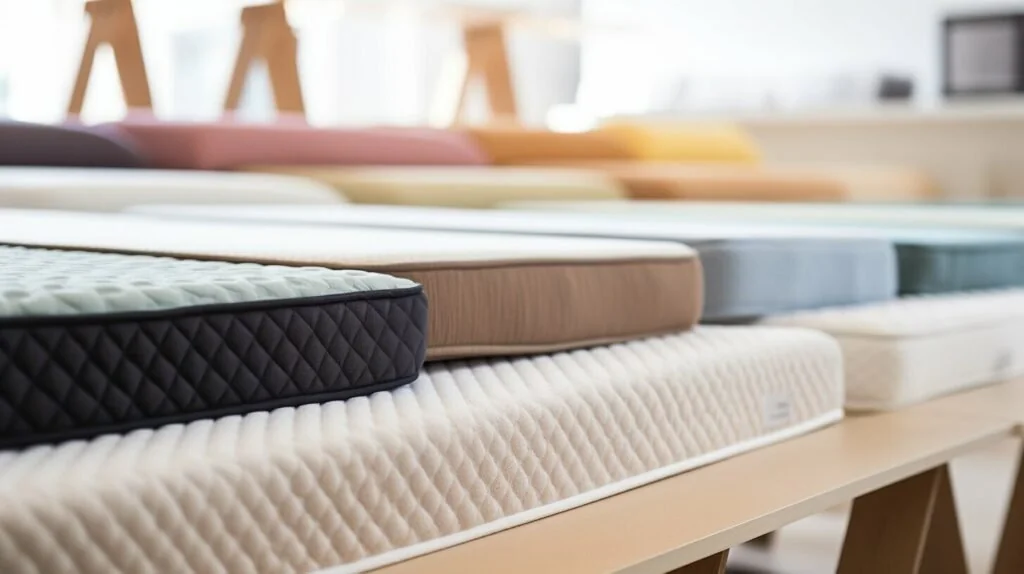
Quick comparison table
| Type | Feel | Cooling | Motion isolation | Best for | Watch out for |
|---|---|---|---|---|---|
| Innerspring | Firm, bouncy | Very good | Weak; better with pocketed coils | Back and stomach sleepers on a budget | Thin comfort layer wears first |
| Memory foam | Slow sink, close hug | Fair | Excellent | Side sleepers, couples | Heat, soft edges, low-density foam |
| Latex | Springy, buoyant | Good | Good | Combination sleepers, longevity | Heavy and expensive; “latex” blends |
| Hybrid | Balanced, supportive | Good | Good | Couples, heavier sleepers | Thin foam layers on a coil base |
| Pillow top | Plush over firm | Depends on core | Depends on core | Side sleepers wanting cushion | Top compresses sooner |
| Gel foam | Foam, less heat build-up | Fair to good | Excellent | Hot sleepers who like foam | Cooling claims vary by brand |
| Airbed | Set it yourself | Good | Good | Couples with different builds | Pumps and parts can fail |
| Waterbed | Floating, even pressure | Adjustable (heated) | Poor to fair | Niche buyers | Weight, draining, upkeep |
Match the type to your sleep position
Side sleepers: your shoulder and hip need somewhere to go, or your spine bends sideways all night. Try medium to medium-soft memory foam, latex, or a hybrid with a thick foam top. Lie down, slide a hand under your waist — a big gap means the bed is too firm for you.
Back sleepers: you want the small of your back supported without your hips dropping, which medium-firm latex or a hybrid usually nails. A large randomised trial published in The Lancet found that people with chronic non-specific low back pain did better on medium-firm mattresses than on firm ones (Kovacs et al., 2003). “Firmest available” is rarely the right answer.
Stomach sleepers: sinking at the hips arches your lower back for hours, so go firm — innerspring, a firm hybrid, or high-ILD latex with a thin comfort layer.
Combination sleepers: latex and hybrids are responsive enough to turn on easily. Deep memory foam makes rolling over feel like a small workout.
Couples and bigger bodies: sleepers over roughly 230 pounds generally do better on hybrids or dense latex with reinforced edges, since all-foam beds give way at the perimeter first. If one of you sets off the other every time you shift, pocketed coils or foam are the two fixes — more in our guide to the best mattresses for couples who toss and turn, and position-by-position picks in side, back and stomach sleeper mattresses.
Firmness and support are not the same thing
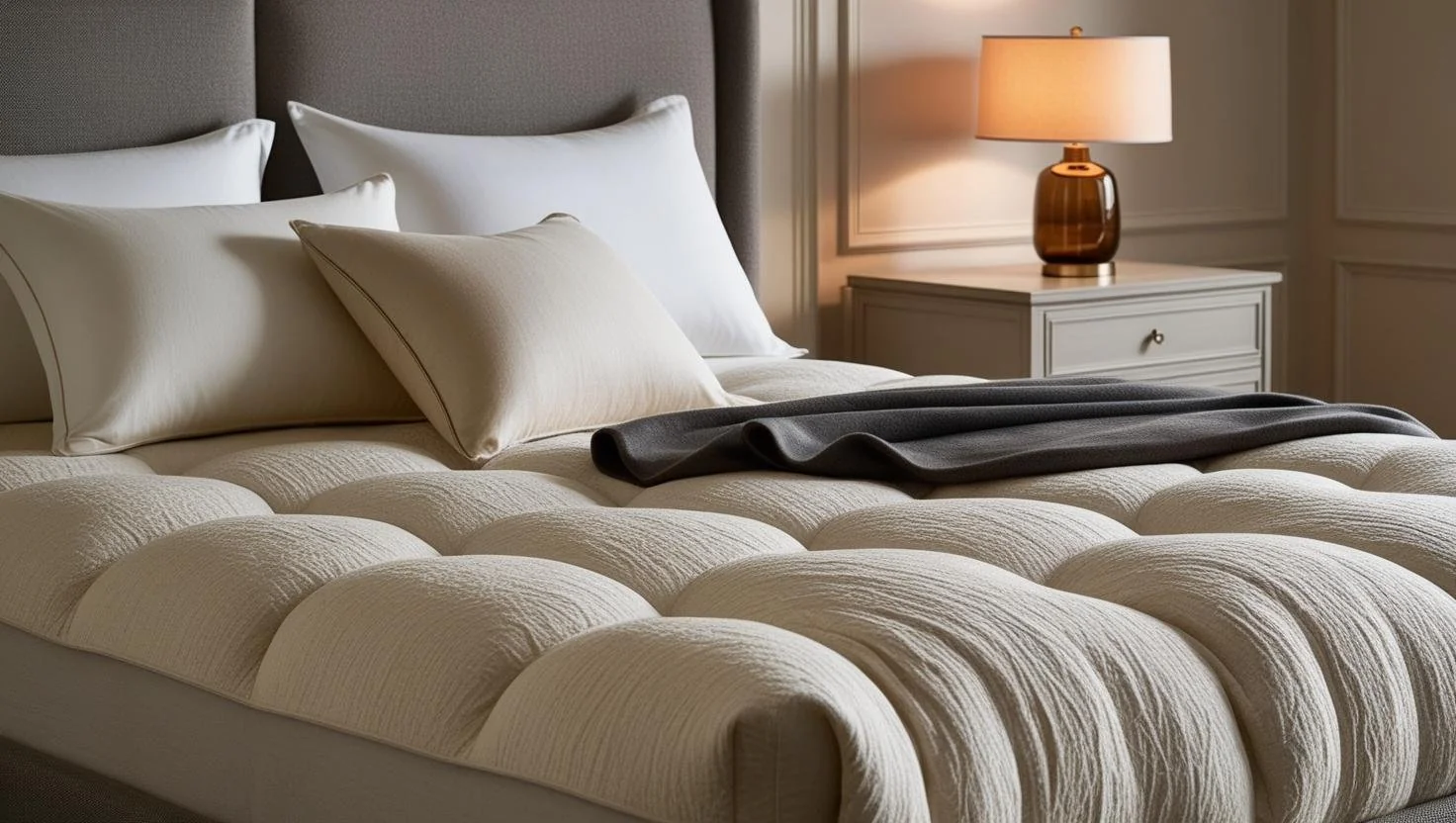
Firmness is how the surface feels in the first few seconds. Support is whether your spine stays neutral for eight hours. A medium-firm bed can feel soft on top and still hold your hips in line; a rock-hard bed can feel supportive and still leave gaps under your waist because it doesn’t distribute weight evenly.
That distinction explains most bad mattress purchases. People with back pain reach for the firmest thing in the store, wake up sore, and blame the mattress type instead of the firmness match. Brand firmness labels also drift — one company’s “medium” is another’s “medium-firm” — which is why a long home trial matters more than a number on a tag. Our mattress firmness scale explained breaks down what 1 to 10 actually feels like.
If you sleep on an adjustable base
Not every mattress bends. Memory foam and latex flex easily and are the safest bets. Most modern hybrids with pocketed coils work too, but confirm it in writing — some manufacturers void coverage if the bed is used on an articulating base. Traditional bonded-coil innersprings and rigid futon-style mattresses usually don’t belong on one at all.
Height is the other thing to check: a 14-inch hybrid on a tall base can sit awkwardly high, and heavy mattresses can strain the motor’s stated weight limit. If you’re still deciding whether the base is worth it, we weigh that up in are adjustable bed bases worth the investment.
Certifications worth knowing
- CertiPUR-US: a voluntary programme for flexible polyurethane foam, with testing for content, emissions and durability. Certified foams are re-tested periodically rather than approved once.
- GOLS: organic latex content plus traceability through the supply chain.
- GOTS: organic cotton and wool, covering fibre content and processing.
- OEKO-TEX Standard 100: textiles tested for a long list of harmful substances, with stricter limits the more the fabric touches skin (OEKO-TEX).
Separately, every mattress sold in the United States has to meet the federal open-flame standard, 16 CFR Part 1633, enforced by the Consumer Product Safety Commission. That one isn’t a selling point — it’s the legal floor.
On the eco question, be realistic. Natural latex, organic cotton and wool cost more up front and tend to sleep cooler and last longer, which narrows the lifetime gap. Conventional foam beds are cheaper and frequently discounted. Both can be supportive; the honest differences are temperature, bounce, materials and price, not comfort itself.
What to check before you pay
- Lie on it for 10 minutes minimum, in your real sleep position, with your usual pillow. Thirty seconds tells you nothing.
- Read the sleep trial. Trials commonly run 90 to 365 nights, and many require a break-in period of 21 to 30 nights before you can return anything. Ask who pays return shipping and whether a protector is mandatory during the trial.
- Find the sag threshold in the warranty. Most long warranties only cover a permanent indentation deeper than a stated figure, typically somewhere between 0.75 and 1.5 inches measured with nothing on the bed. Anything shallower is classed as normal wear.
- Check the foundation rules. Foam and hybrid beds usually need slats no more than 3 to 4 inches apart. The wrong base can void the warranty and wreck the mattress.
- Measure the room and the route. Leave 24 to 30 inches of walking space on each side you use, and check your stairwell turn if the bed doesn’t arrive boxed. Sizing and room fit are covered in our bed size and sleep quality guide.
- Plan for off-gassing. New foam can smell for a few days. Unbox it in a ventilated room and give it 24 to 72 hours before you judge anything.
Mattress sizes at a glance
| Size | Dimensions (inches) | Best suited to |
|---|---|---|
| Twin | 38 x 75 | Kids, guest rooms |
| Twin XL | 38 x 80 | Tall solo sleepers |
| Full | 54 x 75 | One adult |
| Queen | 60 x 80 | Most couples |
| King | 76 x 80 | Couples wanting space |
| California king | 72 x 84 | Sleepers over 6 feet |
Exact measurements can vary an inch or so by brand, so check the spec sheet before buying a fitted frame.
Care that buys you extra years
- Rotate head to foot every three to six months. It evens out wear. Almost no modern one-sided bed should be flipped.
- Use a breathable protector from night one. A single stain voids most warranties, and a thick plastic-backed protector will make a cool mattress sleep hot.
- Replace a tired base. A sagging foundation will pull a brand-new mattress down with it.
- Respect the break-in. Foam and latex soften over two to four weeks, so judge the bed on night 30, not night two.
- Stop judging by thickness. A 14-inch bed built from low-density foam will dent faster than a well-made 11-inch one.
FAQ
How often should I replace a mattress?
Most last somewhere around 7 to 10 years, with latex usually at the long end and cheap all-foam at the short end. Replace sooner if you can see a dip in the empty bed, if you wake stiff at home but sleep fine elsewhere, or if the edges collapse when you sit down.
Which type is best for back pain?
Medium-firm is the usual starting point, in latex, memory foam, or a hybrid, based on the trial evidence linked above. Because firmness labels vary between brands, treat a long sleep trial as part of the product. For larger beds, see our notes on the best king size mattresses for back pain relief.
Do I need a box spring?
Only if the manufacturer says so. Traditional coil beds on a metal frame often need one; foam, latex and most hybrids want a platform or closely spaced slats instead.
Is a hybrid better than memory foam?
Not better, different. Hybrids sleep cooler, have stronger edges and are easier to move on. Memory foam isolates motion better and usually costs less at the same build quality.
Are expensive mattresses always better?
No. Fit and build quality matter far more than price. A well-matched mid-range bed will beat a premium model that’s wrong for your body or sleep position.
Can a topper fix the wrong mattress?
A 2- to 3-inch topper can soften a bed that’s too firm. It can’t rescue a sagging one — the dip comes straight back through, because the failure is in the support core.
Updated September 2026.