
How to Choose a King Bed Frame: Complete Buying Guide (2026)

Large upholstered frame in a styled bedroom showing how to choose a king bed frame

Buying a king bed frame is one of the biggest bedroom upgrades you can make — but choosing the wrong one can lead to wasted space, poor sleep, and an unbalanced bedroom layout.

Most buyers focus only on appearance. The smart buyers focus on size, function, durability, and lifestyle fit.

If you’re still exploring your options, start with our guide to the best king size bed frames to understand the top choices available today.

This guide walks you step-by-step through exactly how to choose the perfect king bed frame.

Step 1: Understand King Bed Frame Dimensions

Before exploring styles or materials, you must confirm your room can properly fit a king bed frame.

Standard King Measurements

A standard king bed frame measures:

  • Width: 76 inches
  • Length: 80 inches

This makes it the widest standard bed size available.

If you’re unsure whether your room can accommodate a king bed, read our full comparison of king vs California king bed frames to understand layout differences.

Room Size Requirements

Minimum recommended bedroom size:

  • Ideal: 12 ft x 12 ft
  • Comfortable: 13 ft x 13 ft or larger

Interior designers recommend 24–36 inches of clearance around the bed for movement and furniture placement.

According to sleep experts, bedroom space strongly affects sleep quality and comfort.


Step 2: Choose the Right Bed Frame Type
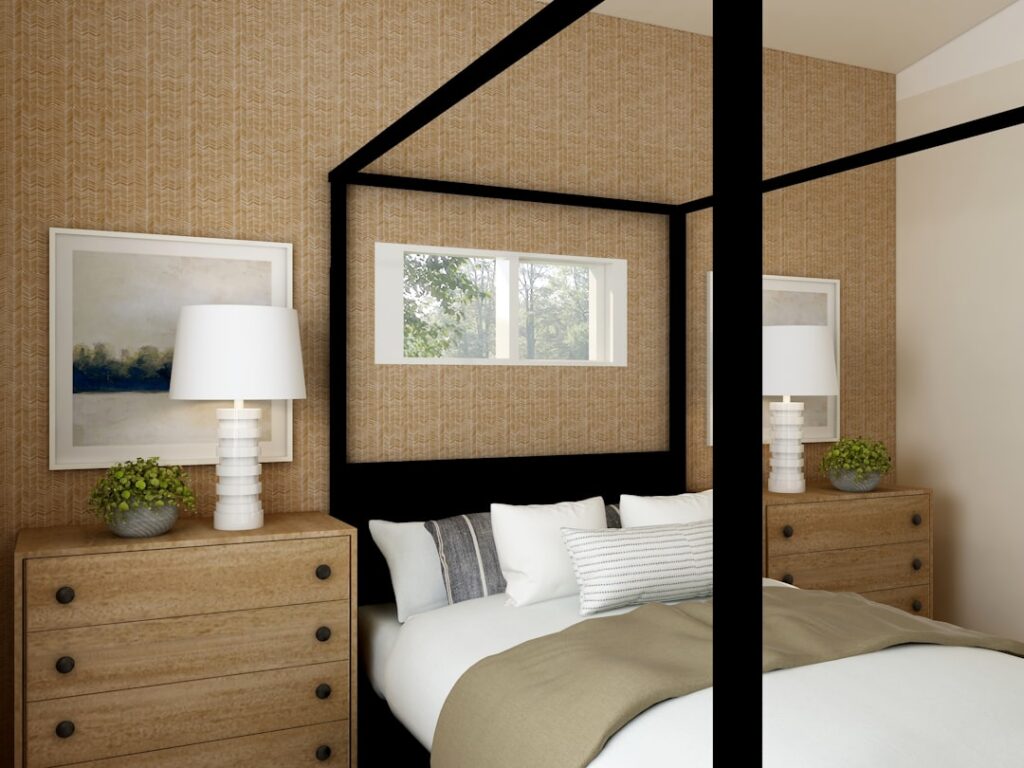
How to choose a king bed frame: black canopy frame in a neutral bedroom

Bed frame type affects comfort, storage, and mattress compatibility.

Platform Bed Frames

The most popular modern choice.

Features:

  • Built-in slats
  • No box spring required
  • Low profile design
  • Minimalist aesthetic

Best for:

  • Memory foam mattresses
  • Modern bedrooms
  • Minimalist style

Many of the best king size bed frames today are platform designs.

Box Spring Bed Frames

Traditional and taller.

Features:

  • Requires box spring
  • Higher sleeping height
  • Classic bedroom look

Best for:

  • Traditional interiors
  • Spring mattresses
  • Taller bed preference

Adjustable Bed Frames

The fastest growing bed frame category.

Features:

  • Head & foot elevation
  • Remote control comfort
  • Ideal for back pain & snoring

Great for:

  • Couples with different sleep needs
  • Luxury bedrooms
  • Health-focused sleepers

Storage Bed Frames

Perfect for maximizing space.

Features:

  • Drawers or lift-up storage
  • Hidden organization
  • Ideal for apartments

If storage matters, explore our guide on king bed frames with storage.

Step 3: Pick the Best Bed Frame Material

Solid wood platform bed frame with rustic timber headboard in a warm bedroom

Material determines durability, noise level, and style.

Wooden Bed Frames

Best for warmth and durability.

Pros:

  • Strong & long lasting
  • Timeless appearance
  • Quiet and stable

Best for:

  • Traditional & farmhouse interiors
  • Long-term investment

Metal Bed Frames

Best for budget and durability.

Pros:

  • Affordable
  • Lightweight
  • Minimalist style

Best for:

  • Guest rooms
  • Budget buyers
  • Industrial style bedrooms

Upholstered Bed Frames

Best for comfort and luxury.

Pros:

  • Soft headboard
  • Cozy aesthetic
  • Hotel-style bedroom feel

Best for:

  • Reading in bed
  • Luxury master bedrooms

Mixed Material Frames

Modern and stylish combination.

Popular combinations:

  • Wood + metal
  • Wood + fabric
  • Metal + upholstery

These offer both durability and design appeal.

Step 4: Decide the Ideal Bed Frame Height

Bed height affects accessibility, storage, and room perception.

Low Profile Frames (8–12 inches)

Best for:

  • Small rooms
  • Modern design
  • Minimalist aesthetics

If space is tight, explore space-saving king bed frames.

Standard Height Frames (16–25 inches)

Most common and comfortable.

Good for:

  • Easy access
  • Balanced room design

Tall Bed Frames (26+ inches)

Best for:

  • Storage underneath
  • Luxury bedroom feel
  • Taller sleepers

Step 5: Consider Bedroom Layout & Lifestyle

Your lifestyle determines the ideal frame more than design.

For Couples

Choose:

  • Strong center support
  • Noise-free construction
  • Durable materials

For Families with Kids or Pets

Look for:

  • Scratch-resistant materials
  • Rounded edges
  • Extra sleeping space

For Small Bedrooms

Choose:

  • Storage bed frames
  • Low profile frames
  • Minimalist designs

For Luxury Master Bedrooms

Choose:

  • Upholstered headboards
  • Statement bed frames
  • Taller bed heights

Bedroom layout planning tips from interior experts:
https://www.architecturaldigest.com/story/bedroom-layout-ideas

Step 6: Storage Needs & Functionality
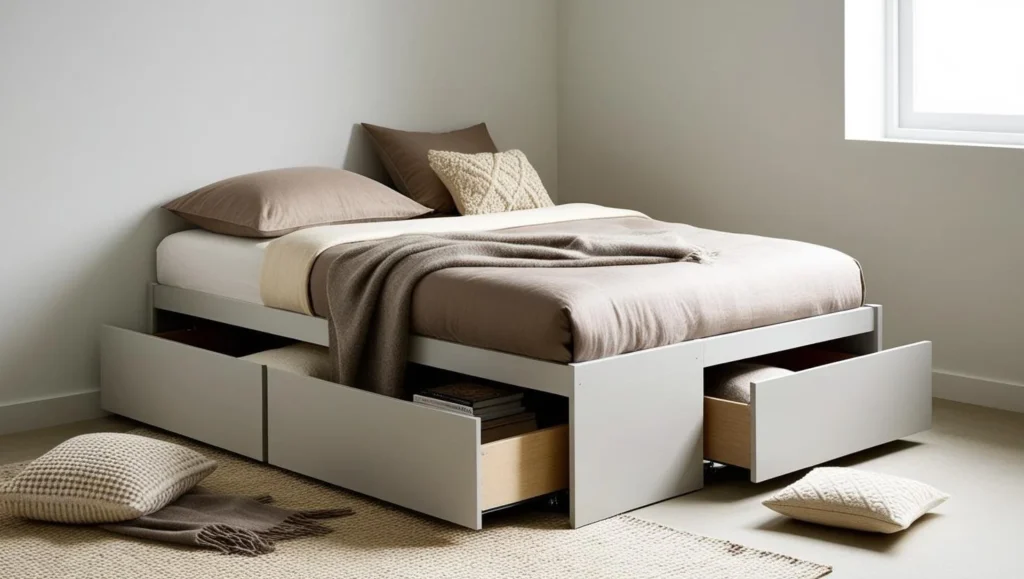
White storage bed frame with open under-bed drawers holding folded linens

A king bed occupies significant space — so smart storage can transform your room.

Types of storage:

  • Drawer storage
  • Lift-up storage
  • Under-bed clearance

For full storage solutions, read king bed frames with storage.

Step 7: King Bed Frame Budget Guide

Budget Range Breakdown

Price Range What You Get
$150–300 Basic metal frames
$300–700 Good quality wood/platform
$700–1500 Premium upholstered/storage
$1500+ Luxury designer frames

Where to Spend vs Save

Spend on:

  • Frame durability
  • Support system
  • Material quality

Save on:

  • Brand markup
  • Decorative extras

Step 8: Style & Bedroom Aesthetics

Choose a frame that matches your bedroom theme.

Popular styles:

  • Modern minimalist
  • Farmhouse rustic
  • Industrial
  • Luxury hotel style
  • Scandinavian

Your bed frame should act as the visual anchor of the room.

Final King Bed Frame Buying Checklist

Before buying a king bed frame, take a moment to make sure your choice truly fits your space and lifestyle. Confirm that your room size can comfortably accommodate a king bed, that the frame is compatible with your mattress type, and that the material matches your daily needs and long-term durability expectations. 

It’s also important to consider whether you need built-in storage, ensure your budget aligns with the level of quality you want, and choose a style that complements your bedroom design. For carefully selected recommendations and inspiration, explore the best king size bed frames from Cozy Bed Quarters.

FAQs

What type of king bed frame is best?
Platform bed frames are the most versatile and popular.

Do king beds need center support?
Yes. Essential for durability and mattress longevity.

Is wood or metal better for bed frames?
Wood is quieter and more durable; metal is more affordable.

What height bed frame is best?
Standard height suits most sleepers.

Are storage bed frames worth it?
Yes, especially for small bedrooms.

King vs California King Bed Frames: Size, Dimensions & How to Choose the Right One

King vs California king bed frames compared in a spacious neutral bedroom setting

King vs California king comes down to a four-inch trade between width and length: a standard king mattress is 76 inches wide by 80 inches long, while a California king is 72 inches wide by 84 inches long. The king gives each sleeper four more inches of elbow room; the California king gives everyone four more inches of legroom. For most couples the standard king is the safer choice, and the California king wins when someone in the bed is close to or over six feet tall.

That is the short answer to king vs California king, but the decision also touches your floor plan, your bedding budget and how easily the frame gets up the stairs. This guide covers the exact dimensions in inches and centimeters, the room size each bed really needs, what changes when you swap sizes, and a simple checklist for picking one.

King vs California King Dimensions (Quick Comparison)

Bed Size Width Length Metric Best For
Standard King (Eastern King) 76 inches 80 inches 193 x 203 cm Couples, co-sleeping families, restless sleepers
California King (Western King) 72 inches 84 inches 183 x 213 cm Tall sleepers and long, narrow bedrooms

Quick summary: in king vs California king terms, the king is wider and shorter, the California king is narrower and longer. Total sleeping surface is almost identical, with the king slightly ahead at 6,080 square inches versus 6,048 for the California king, so neither bed is meaningfully “bigger” overall.

Both sizes are sold as standard U.S. mattress sizes, so exact measurements can vary by an inch or so between brands. The Sleep Foundation’s comparison of the two sizes notes the same thing most shoppers get wrong: a California king is longer than a standard king, but it is not the larger bed.

California King Size Bed Dimensions Explained

King vs california king comparison: upholstered king bed with neutral bedding between two nightstands

A California king mattress measures 72 inches wide by 84 inches long (183 x 213 cm), which makes it the longest standard mattress size sold in the United States. Split down the middle, each sleeper gets 36 inches of personal width.

Those four extra inches of length are the entire reason the size exists. If you are 6 feet tall, an 80-inch king leaves about 8 inches of clearance once your head is on a pillow; at 6 feet 4 inches, that shrinks to roughly 4 inches, which is when heels start hanging over the edge and tucked-in sheets start pulling.

A California king also reads as narrower in a room, so it suits bedrooms that are long rather than square, and layouts where you still want nightstands on both sides without crowding a doorway or closet.

California King Bed Frame Dimensions

The frame is always bigger than the mattress. Depending on the style, a California king bed frame usually runs a few inches wider and up to several inches longer than 72 x 84 inches, because rails, side panels, headboards and footboards all add bulk.

Upholstered frames with thick padded sides and frames with chunky wooden rails add the most. Always shop by the frame’s listed outer dimensions, not by the mattress size, when you are measuring a tight room.

Standard King Size Bed Dimensions Explained

A standard king mattress measures 76 inches wide by 80 inches long (193 x 203 cm) and is the widest standard size available. It is the same length as a queen, just 16 inches wider.

Split between two people, that works out to 38 inches each, which is exactly the width of a twin mattress. That is why a king feels like such a jump from a queen: you are each sleeping on your own twin-width space instead of sharing 60 inches.

It is also why a king is the easier bed to share with a kid who wanders in at 3 a.m. or a dog who sleeps sideways. For more on measurements and room fit, see our detailed guide to king size bed dimensions.

If you are still shortlisting frames, our roundup of the best king size bed frames covers the styles and features worth paying for.

King vs California King: 7 Differences That Actually Matter

1. Width Per Person

A king gives each sleeper 38 inches; a California king gives 36. Two inches per person sounds trivial on paper, but it is the difference you feel first if one of you sprawls, shares with pets, or gets woken by movement.

2. Length for Tall Sleepers

An 84-inch California king is the only standard size longer than 80 inches. If anyone in the bed is over six feet, or sleeps flat on their back with pointed toes, the extra legroom is the one advantage nothing else replicates.

3. Room Shape, Not Just Room Size

A king suits square rooms; a California king suits long, narrow ones. Because the California king pushes four extra inches toward the foot of the bed, it eats into the walkway you use to get around the mattress, which is the exact spot where big beds usually cause problems.

4. Bed Frame Footprint and Getting It Home

Both sizes arrive as large, heavy boxes and usually need two people to assemble. Measure your doorways, hallway turns and stair landings before ordering; a platform frame that ships flat-packed is far easier to get upstairs than a one-piece upholstered frame.

If tight access or apartment living is a concern, king bed frames with storage are worth a look, since they combine the same footprint with drawers that replace a dresser.

5. Bedding Fit and Availability

Fitted sheets are not interchangeable between the two sizes. A king fitted sheet is too wide and too short for a California king, so it bunches at the sides and pops off the corners, and a California king sheet looks stretched and short on a king.

Flat sheets, duvets and blankets are more forgiving because they drape. Standard king bedding is stocked more widely and comes in more patterns and price points, while California king bedding is often limited to premium collections, which is worth budgeting for if you change sheets seasonally.

6. Adjustable Bases and Split Options

A split king is simply two twin XL mattresses side by side, so it lines up perfectly with a 76 x 80 king and works with almost any adjustable base. Split California king options exist too, but there are fewer models to choose from.

If an adjustable base is part of your plan, or might be later, the standard king gives you more freedom.

7. Resale, Guests and Future Moves

Kings are the more common of the two sizes, so replacement mattresses, frames and accessories are easier to find, and your bedding still works if you move and buy a new king. A California king locks you into a size you will need to shop for deliberately.

How Much Room Do You Need for a King or California King?

Spacious modern bedroom showing floor clearance around a large king bed with nightstands

Room size is where king vs California king stops being theoretical. Plan for 24 to 36 inches of walking space on every side you need to use. Twenty-four inches is enough to pass through and make the bed; thirty-six feels comfortable and leaves room for a bench or a wide nightstand.

Bed Workable Minimum Comfortable
Standard King (76 x 80 in) 10 x 12 ft 12 x 12 ft or larger
California King (72 x 84 in) 12 x 12 ft 12 x 14 ft or larger

The math is easy to run yourself. Convert your room to inches, subtract the bed, and see what is left: a 12-foot wall is 144 inches, so a 76-inch king leaves 68 inches to split between the two sides, or 34 inches each before you add nightstands.

Do the same for the length, and remember that a bed frame adds a few inches beyond the mattress on each dimension. Headboards, footboards and door swings are what turn a “fits on paper” layout into a bruised shin.

Layout Tips for Big Beds

  • Center the bed on the longest uninterrupted wall so the walkways stay even.
  • Use wall-mounted or swing-arm lamps to free up nightstand surface in narrow rooms.
  • Choose a low-profile platform frame in small rooms, since a lower silhouette reads as less bulky.
  • Skip the footboard when the foot of the bed sits close to a doorway or dresser.
  • Float a rug so it extends past the sides and foot of the bed instead of tucking underneath it.

How to Choose Between a King and a California King

Run through this king vs California king checklist and the answer usually becomes obvious in under a minute.

Choose a standard king if:

  • Nobody in the bed is taller than about six feet.
  • You share with a partner, kids or pets and want maximum width.
  • You are a restless sleeper or easily disturbed by movement.
  • Your room is square, or wider than it is deep.
  • You want the widest bedding selection and adjustable base compatibility.

Choose a California king if:

  • You or your partner are over six feet and your feet reach the end of your current bed.
  • Your bedroom is long and narrow, or has a closet or door that eats into the width.
  • You sleep mostly flat on your back and value foot clearance over shoulder room.
  • You are fine buying size-specific sheets and protectors.

Whichever size wins, the frame still needs to handle the weight and the width without sagging. Our walkthrough of how to choose a king bed frame covers slat spacing, center support legs and the details that quietly decide how long a bed lasts.

Style and Design Differences

King bed styled with area rug, lamps and wooden nightstands in a warm bedroom

Visually, a standard king reads as generous and symmetrical, which is why it suits hotel-style bedrooms with matching nightstands and a wide upholstered headboard. The extra width gives you a strong horizontal anchor for the wall behind it.

A California king reads as leaner and more elongated, which can flatter a modern or minimalist room and a long floor plan. It also gives you more visual runway at the foot of the bed for a bench or a low chest.

Frame material changes the look as much as the size does: wood feels warm and traditional, metal stays slim in a tight room, and upholstery softens a big headboard wall.

Final Verdict: King vs California King

Most people do not need to agonize over king vs California king. If your priority is personal space, a standard king is the safer default because width is what couples notice night after night, and it is the easier size to shop for afterward.

A California king flips that trade. You gain four inches of length, which genuinely helps tall sleepers and long, narrow rooms, but you give up two inches of width per person and a chunk of your bedding options.

Measure the room, measure the tallest sleeper, and let those two numbers decide. Everything else in the king vs California king debate is secondary.

FAQs

Is a California king bigger than a king?
No. It is four inches longer but four inches narrower, and a standard king actually has slightly more total sleeping surface.

What are California king size bed dimensions in inches and cm?
72 inches wide by 84 inches long, or about 183 by 213 centimeters.

Can king sheets fit a California king?
Fitted sheets, no. They are too wide and too short and will not stay on the corners. Flat sheets, duvets and blankets can sometimes work across both sizes.

How tall do you need to be for a California king?
There is no hard rule, but the extra length matters most above six feet, since an 80-inch king leaves only a few inches of clearance for a 6-foot-4 sleeper.

In king vs California king, which is best for couples?
A standard king, in most cases. At 38 inches each, both sleepers get twin-width space, which is the widest any standard size offers.

Is a king bed good for a small room?
It can work if you keep 24 inches of clear walkway on the sides you use, skip the footboard and choose a low-profile or storage frame.

Do two twin XL mattresses make a king?
Yes. Two twin XLs side by side measure 76 by 80 inches, which is exactly a standard king and the basis of a split king setup.

Explore More Related Guides

Updated September 2026.