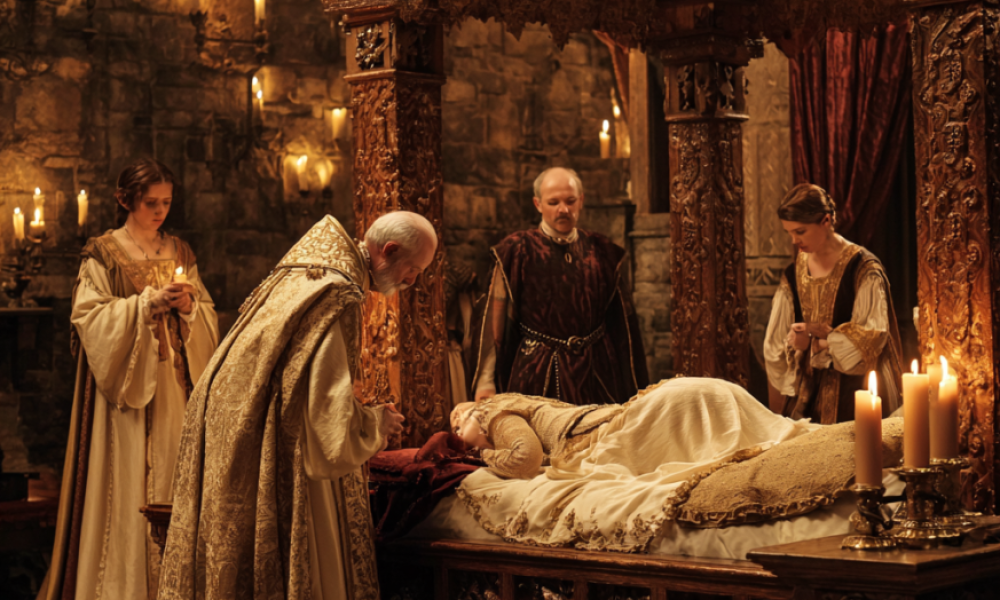
A bedding ceremony was the wedding custom of escorting a newly married couple to their marriage bed in front of witnesses — usually family, friends and neighbours — as the public, remembered close of the wedding day. Its point was to establish that the marriage had been consummated, either by witnessing the couple together in bed or, far more often, symbolically, with the company leaving before anything happened. So the honest answer to the question everyone actually arrives with: witnesses generally saw a couple in bed, blessed and toasted them, and then withdrew.
What Period Are We Talking About?
This page uses “Renaissance Europe” to mean roughly the fifteenth and sixteenth centuries, with some spill into the early seventeenth. That matters, because the bedding ceremony is not a Renaissance invention: it carries straight over from medieval practice and keeps going into the early modern period, which is why you will see it called a medieval custom in one book and an early modern one in the next. If you want the earlier end of the story, see our companion piece on medieval wedding bedding ceremonies.
What Happened at a Bedding, Step by Step
The shape of the ritual was fairly consistent across regions, even where the details differed. In broad outline:
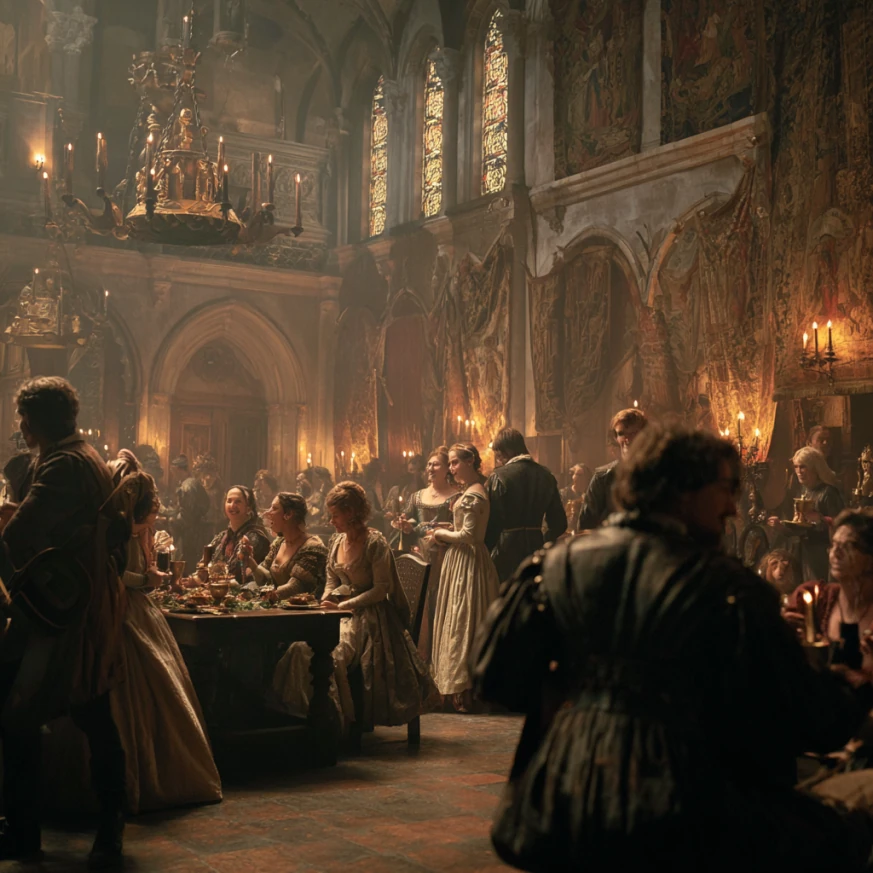
- The wedding feast broke up and the guests escorted the couple to the bedchamber, often by candlelight and with a good deal of noise and joking.
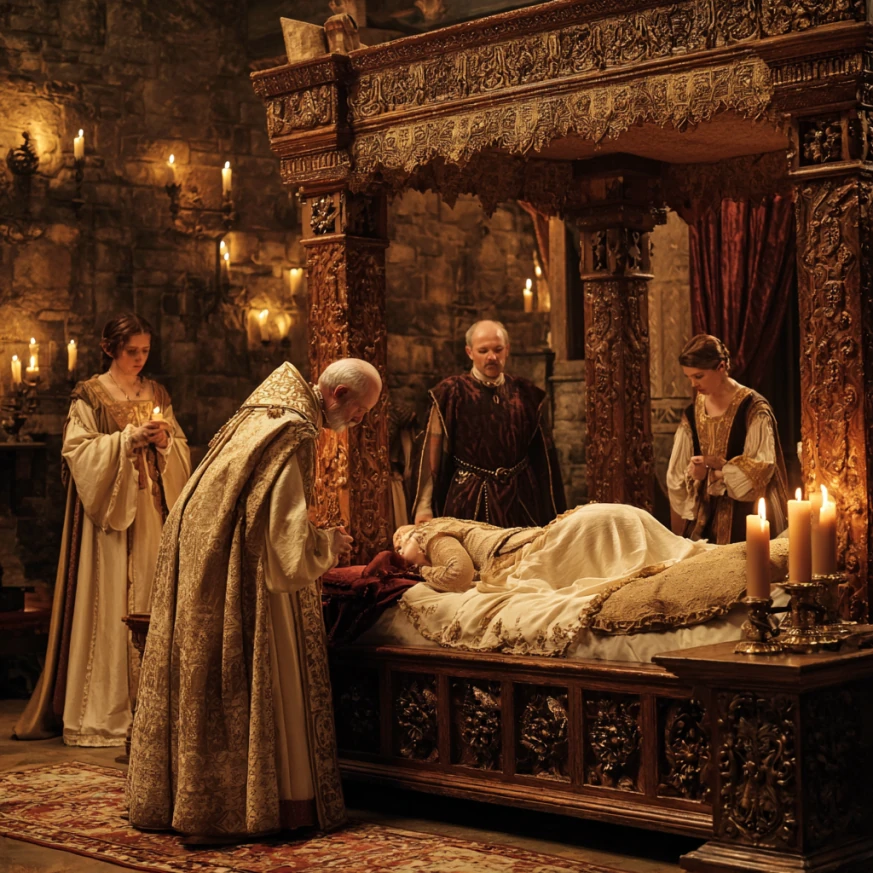
- A priest might bless the bed and the couple. A blessing of the marriage bed was part of the Catholic marriage liturgy in this period, and the shift away from it is one of the changes David Cressy traces in Birth, Marriage, and Death, his study of life-cycle ritual in Tudor and Stuart England.
- The couple were put into the bed, usually in nightclothes or shifts rather than undressed in front of the room.
- There was drinking, ribaldry and small customs of the “who marries next” kind — English accounts often mention a spiced drink and the tossing of stockings at the couple, though that detail gets repeated in popular retellings far more often than it gets sourced to a specific document.
- The curtains were drawn and the company left.
Why Bother? The Legal Logic
Before parish registers and standardised paperwork, a marriage was proved by memory: who saw it, who would swear to it. A bedding gave a roomful of people a vivid, hard-to-forget thing to remember, which mattered if the marriage was later challenged — over inheritance, legitimacy of children, or a rival claim to a bride. Mental Floss notes that the requirements for marriage were codified only gradually, and that the ritual became common enough that some places expected a set number of witnesses for the marriage to be binding. One recent working paper goes further and reads bedding rituals as a rational institutional response to medieval property and guardianship arrangements — an argument worth knowing about, though as an unrefereed SSRN paper it should be treated as a hypothesis rather than settled history.
Think of it as the pre-modern version of a receipt. Not romantic. Extremely practical.
Fact vs. Fiction: The Game of Thrones Bedding Scene
Most people searching for this topic come from television. In the third season of Game of Thrones, at the wedding of Tyrion Lannister and Sansa Stark, King Joffrey calls for the traditional bedding ceremony and is refused. So how does that scene stack up?
What the show got right
- The custom is real. Mental Floss puts it plainly: crude as the on-screen version was, the bedding was a genuine part of medieval weddings for nobility and commoners alike, with versions practised across Europe.
- It was loud and communal. A procession of guests, jokes at the couple’s expense and a crowd at the chamber door are all in keeping with the historical accounts.
- It carried weight. In the show the demand is a power play; historically, insisting on a bedding — or being denied one — really could be about proving or undermining a marriage.
What fiction exaggerates
- The leering, stripping free-for-all. Fiction tends to stage the bedding as humiliation. The surviving descriptions point to something closer to a boisterous but structured ritual with a blessing at its centre, not a spectacle designed to degrade the bride.
- Witnesses watching the consummation. This is the big one, and the answer is: normally no. The usual pattern was witnesses present up to the moment the couple were in bed, then withdrawal.
- Uniformity. Westeros has one bedding custom. Europe had dozens, varying by region, class, confession and century.
Four Myths, Checked
Myth 1: “The whole village watched the consummation.”
Mostly false. Witnessing the act itself was the rare exception, not the rule — the encyclopaedic summary of the custom describes symbolic witnessing, with the company leaving beforehand, as the far more common practice. Where sex was genuinely witnessed or inspected, it was usually because something was already in dispute or at stake dynastically.
Myth 2: “A priest stayed in the room until it was done.”
No evidence for that. Clergy involvement was a blessing of the bed and couple, part of the marriage liturgy, and it ended when the blessing ended.
Myth 3: “It was only for royalty.”
False. The custom ran up and down the social scale; what changed was scale and audience — a handful of neighbours in a village house, a chamber full of courtiers at a royal wedding.
Myth 4: “Royal beddings were always about sex.”
Not always. In the German-speaking lands the Beilager was a formal, legally loaded ceremony in which consent was established before witnesses; fifteenth-century descriptions have the bride and groom placed in the symbolic marriage bed fully clothed, with anything further happening privately. It was, in effect, a public act of law performed on a mattress.
How Customs Varied by Class and Country
| Setting |
Typical shape of the ritual |
| Village and town households |
Neighbours and kin escort the couple, drink, joke, and go home. Witnesses double as future proof of the marriage. |
| Gentry and merchant families |
More formality, better linen, a clergyman’s blessing, an audience chosen for standing as much as affection. |
| Royal and princely courts |
A staged state occasion. In German lands the Beilager combined the bedding with the formal establishment of consent and transfer of guardianship. |
One caution about class claims: the humbler the household, the thinner the documentation. Most of what survives describes the weddings of people whose households kept records, so generalisations about “what commoners did” rest on much less evidence than the royal cases. Our overview of how nuptial bedding ceremonies changed across Europe goes into the regional differences in more depth.
The Bed as Stage Set
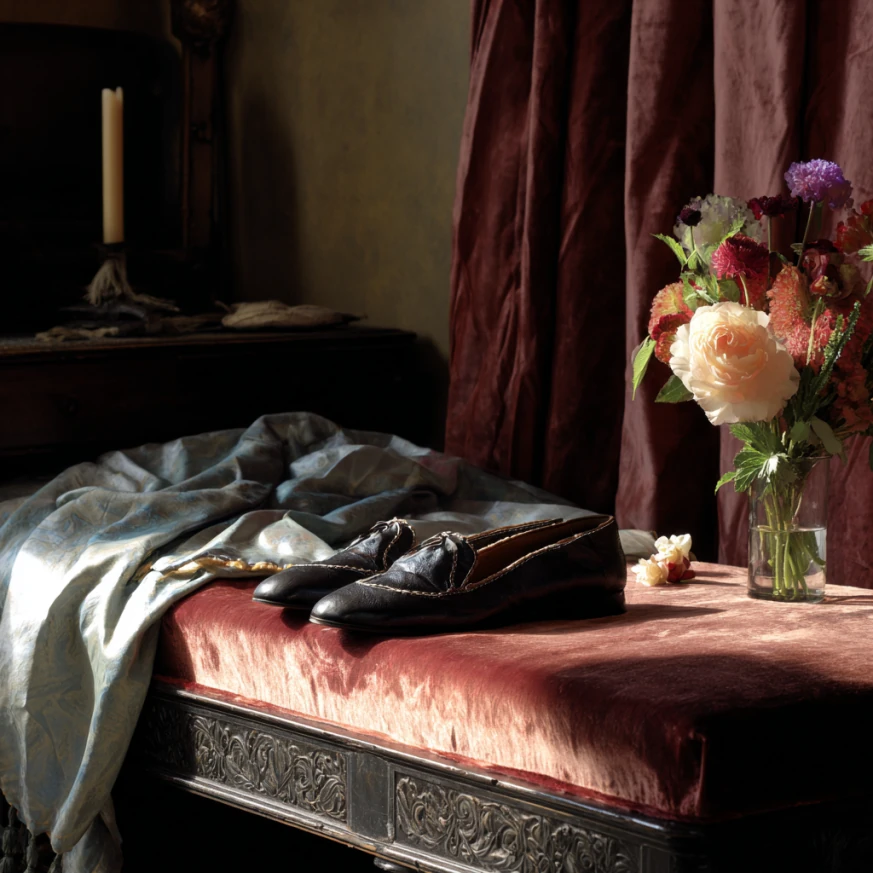
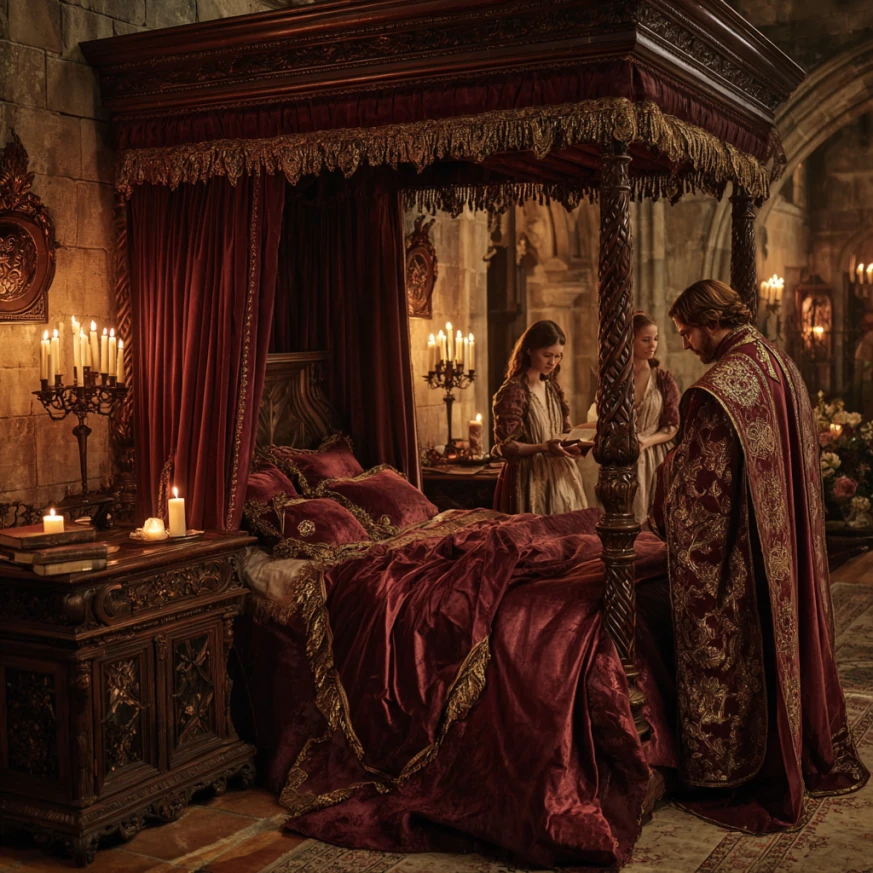
If a bed is going to hold a crowd, a blessing and a legal moment, it had better look the part. Renaissance beds in wealthy households were genuinely significant objects — curtained, carved, hung with the best textiles a family owned, and among the most valuable things in an inventory. It is fair to say the bed functioned as furniture and as display at once. It would be overreaching to claim the bedding ceremony caused the four-poster; the causation runs more plausibly the other way, with an existing status object pressed into ceremonial service.
When Did Bedding Ceremonies End?
There is no clean end date, and anyone who gives you one is rounding. The custom faded at different speeds in different places as marriage record-keeping improved, religious practice changed after the Reformation, and elite ideas about privacy and decorum shifted. Popular accounts often put the end of English beddings in the later seventeenth century, but that figure circulates far more widely than it is sourced, and ceremonial beddings persisted at some courts after the custom had gone from ordinary households. We look at the timing question specifically in when bedding ceremonies ended, and at how the ritual softened into modern wedding-night symbolism in the symbolic meaning behind medieval bedding ceremonies.
How Strong Is the Evidence?
Good enough to say the custom existed widely and to describe its usual shape; not good enough for confident numbers, dates or typical-wedding reconstructions. Much of what circulates online — the stocking-throwing, the spiced posset, the precise witness counts — comes from nineteenth- and twentieth-century retellings rather than documents you can check. Where this article could not verify a detail, it says so rather than smoothing it over. If you want the “was any of this real at all” version of the question, we tackle it directly in were bedding ceremonies real in medieval times.
FAQ
Did witnesses stay for the consummation?
Normally not. The standard pattern was witnesses present until the couple were in bed, then withdrawal; actual witnessing of intercourse is described as the rare exception, typically tied to disputed or dynastically sensitive marriages.
Was the couple naked?
Generally no. Nightclothes or shifts were usual, and in the German Beilager the couple could be placed in the bed fully dressed.
Was the Game of Thrones bedding ceremony real?
The custom it is based on was real; the tone was not. The show plays it as coercive humiliation, while the historical ritual was a blessing-and-blessing-out procession, rowdy but bounded.
Who attended?
Family, friends and neighbours in ordinary households; courtiers, officials and sometimes lawyers at princely weddings, where consent and property arrangements were part of the proceedings.
Updated September 2026.