The best affordable mattress for most people is a medium-firm queen built on a high-density foam core (1.8 PCF or better) or pocketed coils, with a trial of at least 100 nights, free return pickup and a warranty that isn’t pro-rated from year one. Under roughly $400 you’re buying a short-term bed. The stretch from about $400 to $900 is where durability shows up, and past $1,000 you’re mostly paying for feel, cooling materials and thicker comfort layers — not a longer life.
Below: what changes as the price climbs, how to read a spec sheet, and the three traps that sink a cheap mattress purchase — mystery foam, fake list prices and a warranty that never pays out.
What the best affordable mattress gets you at $300, $600 and $1,000
Advertised prices swing weekly, so treat these as bands you’ll see in queen size, not quotes. Check the checkout price the day you buy.
| Queen price band |
What’s usually inside |
Realistic service life |
Who it suits |
| Under $400 |
8–10 in of polyfoam, thin gel or memory foam layer, undisclosed base density, no reinforced edge |
3–5 years of nightly adult use |
Guest beds, dorms, stopgaps, kids |
| $400–$700 |
10–12 in, disclosed foam densities and a transition layer, or a hybrid with 600–1,000 pocketed coils |
6–8 years with rotation and a solid base |
Most single sleepers and average-weight couples — the value sweet spot |
| $700–$1,000 |
12–14 in, 3.0+ PCF comfort foam, zoned coils, reinforced perimeter, washable cover, firmness choices |
8–10 years |
Couples, side sleepers with shoulder pain, sleepers over 230 lb |
| Over $1,000 |
Latex, micro-coils, phase-change covers, longer non-pro-rated warranties |
10+ years if the support core is genuinely better |
Specific needs: back pain, heat, allergies, mismatched partner weights |
The biggest quality jump is first band to second. That’s where brands start publishing foam density and coil counts — the only durability evidence you can actually check, and the reason the best affordable mattress is rarely the cheapest on the page.
Spec-sheet signs a cheap mattress will last
Comfort is personal. Durability isn’t, and it leaves fingerprints on the product page.
Foam density (PCF) is the durability number
Density, in pounds per cubic foot, tells you how much material is packed into the foam. Firmness is a separate measure, ILD, the force needed to compress a sample by 25 percent. The two are independent: soft foam can be dense and long-lived, firm foam can be cheap and crumbly. As a screen, look for memory foam comfort layers around 3.0 PCF or higher and a polyfoam core at 1.8 PCF or higher; cores below about 1.5 PCF develop body impressions early. This single number separates the best affordable mattress options from the ones you replace in three years.
If a listing says only “high-density foam” with no number, ask. A brand that won’t answer is telling you something.
Coils: count, gauge and zoning
In a budget hybrid, a queen with roughly 600–1,000 pocketed coils is normal. Lower gauge numbers mean thicker steel: 13–14 gauge is sturdy, 15–16 softer. Thicker or foam-encased perimeter coils stop the edge collapsing when you sit to put socks on.
Height, weight limits and certifications
Most budget beds are 8–14 in tall (20–36 cm), but thickness alone means nothing: a 14 in mattress that’s 11 in of cheap base foam is worse than a 10 in bed with a dense core. Look for a layer-by-layer diagram with inch thicknesses.
All-foam budget beds are commonly rated around 250 lb (113 kg) per sleeper; hybrids with steel coils usually rate higher. That limit sits in the specs or the warranty, not the marketing copy. If you or your partner are near it, the coil version is the safer buy.
CertiPUR-US is the badge you’ll see most on cheap foam. Independent accredited labs test polyurethane foam for content and emissions — heavy metals, ozone depleters, low VOCs, formaldehyde below 0.1 parts per million — with random sampling at foam plants (CertiPUR-US program details). Two caveats: it doesn’t cover latex, and it certifies chemistry, not how long the bed holds its shape.
The best budget mattress by sleeper type
Match firmness to the position you wake up in, not the one you fall asleep in. The best affordable mattress for a stomach sleeper is the wrong bed for a side sleeper at any price.
- Side sleepers: medium to medium-soft, with at least 3 in (7.6 cm) of comfort layer above the core. Thin cheap beds are the usual cause of a numb arm at 4 a.m.
- Back sleepers: medium-firm, filling the lumbar gap without letting hips sink. A 10–12 in hybrid does this well cheaply.
- Stomach sleepers: firm. Hips dropping even an inch tilt the pelvis and load the low back. This is the position budget beds serve best.
- Combination sleepers: responsive foam or coils rather than slow memory foam, which makes turning over feel like work.
- Sleepers over about 230 lb (104 kg): a hybrid with 13–14 gauge coils, foam-encased edges and a comfort layer no thicker than 4 in. This is where the cheapest tier fails fastest.
- Couples with a weight gap: pocketed coils and edge support beat deep plushness, and coils stop the lighter partner rolling downhill.
Our breakdown of the best mattresses for side, back and stomach sleepers goes deeper on firmness by position, including what to do when partners disagree.
Budget hybrid vs budget all-foam: which survives longer
|
Budget all-foam |
Budget hybrid |
| Usual failure point |
Base foam softens; impressions form at shoulder and hip |
Comfort foam compresses; the coils rarely fail first |
| Edge support |
Usually weak unless foam-encased |
Better; reinforced perimeter coils are common even at low prices |
| Motion transfer |
Excellent — best for restless partners |
Good with pocketed coils, poor with connected innersprings |
| Heat |
Warmer; gel and open-cell foams only help so much |
Airflow through the coil layer is a real advantage |
| Heavier sleepers |
Struggles above roughly 230 lb per person |
Better; steel doesn’t soften the way cheap foam does |
| Best for |
Guest rooms, lighter sleepers, anyone who hates bounce |
Couples, hot sleepers, heavier and stomach sleepers |
At the same price, a hybrid usually keeps its support longer because the coils carry the load. The trade-off: cheap hybrids spend the budget on steel, so comfort layers are thin — the wrong compromise for a side sleeper with shoulder pain.
Cheap mattress red flags: mystery foam, fake prices, dead warranties
- Foam with no numbers. “Premium high-density” without a PCF figure is marketing, not a spec.
- A list price nobody ever paid. The FTC’s Guides Against Deceptive Pricing say a former price used in a comparison should be one the product was “openly and actively offered” at, in the recent, regular course of business (16 CFR Part 233). A bed that’s been “60% off” every week for a year isn’t discounted — that’s just the price. Judge it by what you pay.
- Trials with a fee attached. Restocking charges and return shipping are common, legal and usually buried.
- A warranty that only covers deep sagging. Most require a permanent impression of roughly 1 to 1.5 in (2.5–3.8 cm), measured with nothing on the bed. A 1 in dip can wreck your sleep and still fail the threshold.
- Pro-rated early. If years 6–10 of a 10-year warranty are pro-rated, you pay a rising share of any replacement — and some brands pro-rate from year two. The count of non-pro-rated years matters more than the word “lifetime”.
- Stain and base exclusions. One stain typically voids coverage outright, as does an unapproved base. Photograph the bed on its frame in month one, keep the law tag, and use a protector from night one.
- Reviews that all arrived the same week. Sort by most recent and read the one- and two-star reviews from owners past 12 months. Those are the durability ones.
Trials, returns and the hidden costs that eat your savings
A trial is only worth what its return terms say. Find these five in writing:
- Break-in rule. Many brands refuse returns for the first 21–30 nights.
- Who collects it. Free pickup or donation coordination is standard from bigger bed-in-a-box brands; marketplace sellers often make it your problem, and you can’t re-compress a mattress at home.
- Restocking or return fee. A three-figure fee turns a bargain into a non-bargain.
- Old mattress removal. Sometimes free, sometimes an add-on charge, sometimes unavailable — and many cities charge for bulky-waste pickup.
- One return per household. Most trials allow one exchange or refund, not unlimited swapping.
Give any new bed two to four weeks before judging it — week one on a firmer mattress usually feels worse than week three.
When is the best time to buy a mattress?
The deepest, most reliable discounts cluster on US holiday weekends: Presidents’ Day, Memorial Day, Independence Day, Labor Day and Black Friday/Cyber Monday. New ranges tend to land in spring at full price, and older stock is cleared around those holidays — so that’s when the best affordable mattress deals are easiest to find.
Two caveats. On budget beds the gap between a holiday price and a random Tuesday price is smaller than it looks, because low-priced online brands discount near-continuously. And the real best time to buy is when your current mattress has stopped supporting you — waiting five months for Black Friday while your back hurts is a bad trade.
What size is a king mattress — and does sizing up beat spending up?
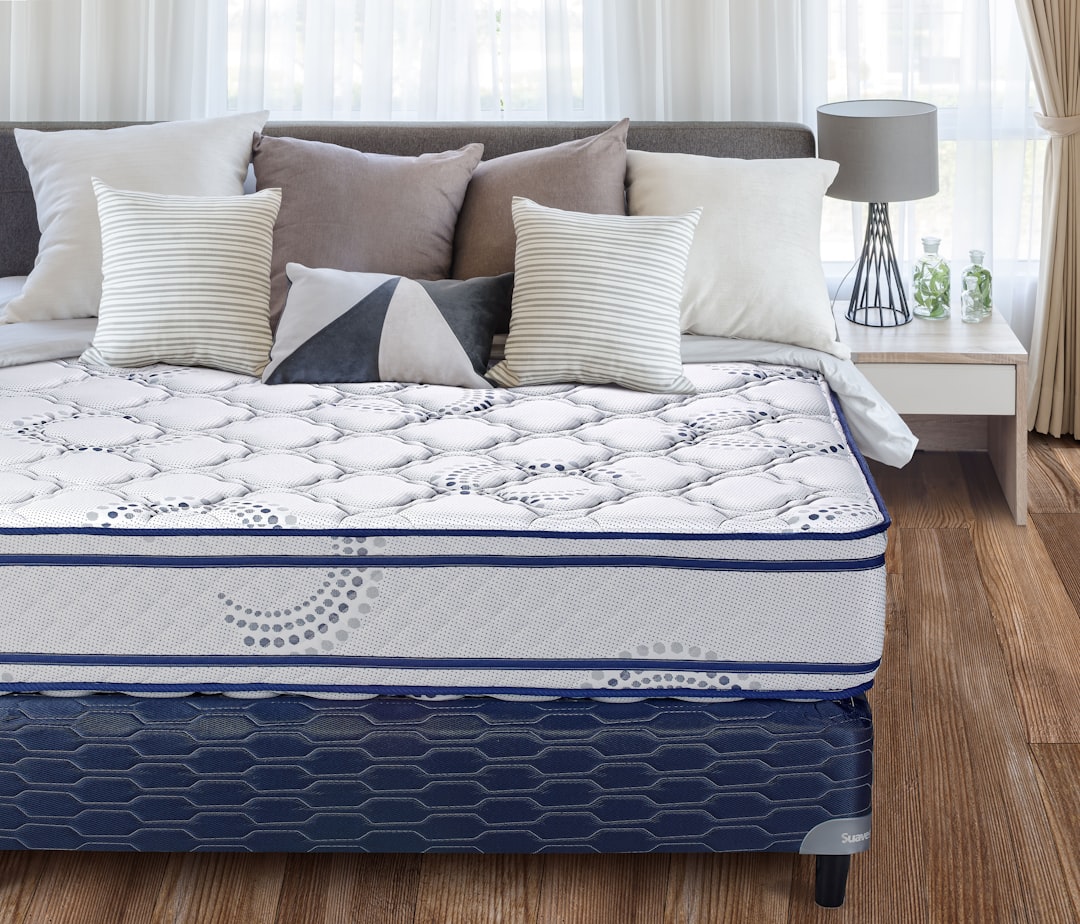
A standard US king is 76 in wide by 80 in long (193 × 203 cm) — 38 in per person, a twin’s width each. A California king is narrower and longer at 72 × 84 in (183 × 213 cm), so it suits tall sleepers, not broad ones. Sizing up is often the cheapest real sleep upgrade there is, which is why the best affordable mattress for a couple is sometimes a budget king rather than a mid-price queen.
| Size |
Inches (W × L) |
Centimeters |
Smallest room that works |
Best for |
| Twin |
38 × 75 |
96.5 × 190.5 |
7 × 10 ft |
Kids, bunks, box rooms |
| Twin XL |
38 × 80 |
96.5 × 203 |
7 × 10 ft |
Tall teens, dorms, split bases |
| Full / Double |
54 × 75 |
137 × 190.5 |
10 × 10 ft |
One adult who sprawls; tight for two |
| Queen |
60 × 80 |
152 × 203 |
10 × 10 ft; 10 × 12 is comfortable |
Most couples; the most common size sold |
| King |
76 × 80 |
193 × 203 |
12 × 12 ft |
Couples with kids or dogs in the bed |
| California King |
72 × 84 |
183 × 213 |
12 × 12 ft |
Sleepers over 6 ft 2 in |
Leave about 24 in (61 cm) of walkway on each side you use, 30 in (76 cm) if a wardrobe opens there. A door swinging inward needs its own clearance — measure the arc, not just the doorway.
What to measure before you order
- Doorway width: interior doors are typically 30–32 in (76–81 cm). The box fits anywhere; the expanded mattress may not, which matters for returns.
- Stairwell turns: tight 90-degree landings are the real obstacle, not stair width.
- Frame interior: measure inside the rails. Budget frames vary by an inch or more.
- Mattress height vs sheet pockets: a 14 in (36 cm) mattress plus a protector needs deep-pocket sheets rated to 15–18 in (38–46 cm), or corners pop off nightly.
- Total bed height: around 25 in (63 cm) floor to mattress top lets most adults sit on the edge with feet flat.
- Hallway pivot: if the bed must turn a corner, check the mattress diagonal, not its width.
Bedding matches the mattress, not the frame, and king sheets won’t fit a California king because the sizes differ by 4 in in both directions. Duvets run generous, so a king duvet on a queen bed means fewer 3 a.m. cover tug-of-wars.
Bed frames and bases for a budget mattress
The best affordable mattress can be ruined by a bad frame, and most warranties exclude damage from an inadequate base. Three rules cover it:
- Slat spacing of 3 in (7.6 cm) or less. Wider gaps let foam bulge through and dip. A bunkie board or slat kit fixes it cheaply.
- Center support with legs to the floor on queen and larger. A center rail that stops short of the floor isn’t support; kings often need two legs.
- Check the frame’s weight rating against mattress plus sleepers. Budget metal frames commonly list 500–800 lb (227–363 kg) total, and a heavy hybrid plus two adults gets closer to that than you’d think.
An old sagging box spring under a new foam mattress reproduces that sag within months. Foam wants a flat, firm, evenly supported surface. Floor sleeping works short-term but traps moisture underneath, so stand the mattress up weekly to air it.
How to make an inexpensive mattress sleep better
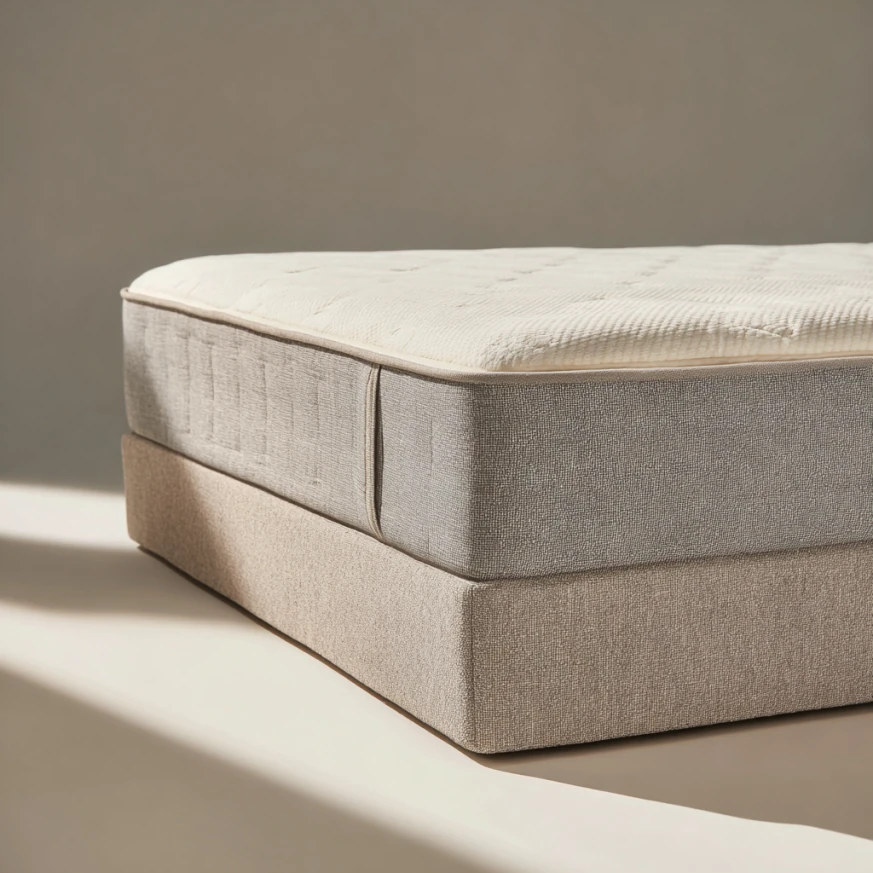
Most complaints about a budget bed trace back to the setup around it.
- Let it finish expanding. Give a compressed bed 24–72 hours before judging firmness; ventilate the room if it off-gasses.
- Rotate head-to-foot every three months. Don’t flip: one-sided construction puts the comfort layers on top only.
- Fix the base first, then consider a topper. A 2–3 in (5–7.6 cm) topper softens a too-firm bed but adds no support to a sagging one.
- Use a breathable protector, not plastic. It guards against the stain exclusion without turning the bed into a sauna.
- Change the pillow before blaming the mattress. On a firmer bed your shoulder sits higher, so yesterday’s pillow height is suddenly wrong.
When to skip the best value mattress and spend more
Even the best affordable mattress is the wrong call in four situations.
Diagnosed back or hip pain — targeted zoned support and a thicker, denser comfort layer genuinely help, and our guide to the best king mattresses for back pain explains what to look for. Two people with a large weight difference, where cheap foam compresses unevenly and you end up rolling together. Either partner over about 250 lb (113 kg), where entry-level cores fail in a couple of years and you buy twice. Severe allergies, where a washable cover and tight construction matter more than price; see our hypoallergenic mattress guide.
Otherwise, the honest position: the difference between a well-specced $700 bed and a $2,500 one is mostly feel, finish and cooling tech. We compared luxury vs budget king mattresses in detail if you want both sides.
FAQ
Is a $300 mattress ever worth buying?
For the right job, yes: a guest room used a dozen nights a year, a kid’s bed, a six-month rental. For nightly adult sleep it’s usually false economy — you replace it in three to five years and spend more than one mid-band bed would have cost.
How long should the best affordable mattress last?
Six to eight years for a mid-band bed with a disclosed high-density core on a proper base; three to five for the cheapest tier under nightly adult use. Signs it’s done: a dip you can see with the bedding off, waking stiff and loosening within an hour, or sleeping better in hotels.
What size is a king size mattress?
A standard US king is 76 × 80 in (193 × 203 cm). A California king is 72 × 84 in (183 × 213 cm) — 4 in narrower, 4 in longer. UK and European “king” sizes differ again, so buy bedding to measured dimensions, not the label.
Does a cheap mattress cause back pain?
Price isn’t the cause; wrong or worn-out support is. A firm budget bed suits a stomach sleeper and wrecks a side sleeper’s shoulder. Medium-firm is the usual starting point for adults, but the evidence is mixed and individual — which is why a long home trial beats any spec sheet.
Is the best mattress under $1,000 cheaper online or in store?
Online brands usually list lower, include shipping and run longer trials. Stores can beat them on clearance and floor models, often haul the old bed away, and let you lie down first. If you buy in store, get the trial terms in writing — they’re often shorter and can carry a restocking fee.
What’s the best affordable mattress for a guest room?
An 8–10 in all-foam queen from the lowest tier is fine, because occasional use barely touches the foam. Put the saved money into a protector and a good mattress pad — guests notice bedding more than coil counts. See our picks for budget comfort mattresses under $500.
A five-point checklist before you click buy
- Foam density (PCF) or coil count confirmed in writing.
- Trial length, break-in period and free return pickup confirmed.
- Non-pro-rated warranty years and the sag depth that triggers a claim.
- Doorway, frame interior size and slat spacing measured.
- A breathable protector ordered at the same time.
Do those five and the best affordable mattress you buy will outlast a pricier bed picked on impulse.
Updated September 2026.