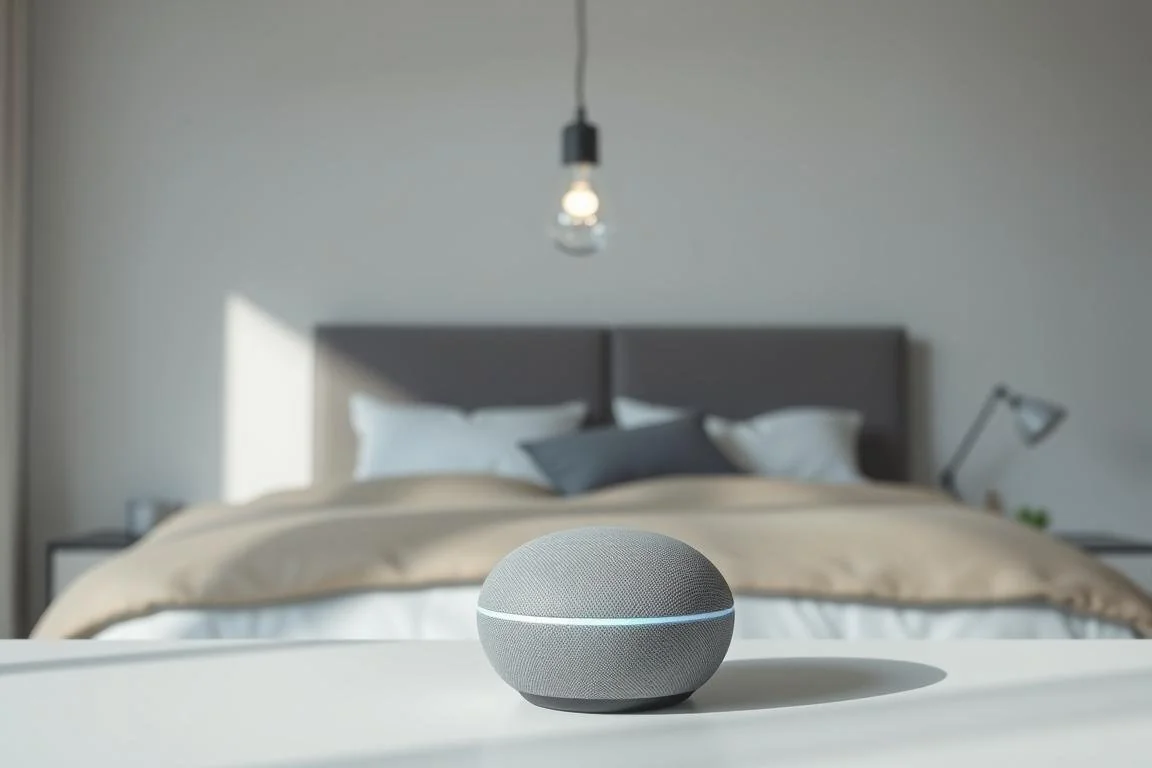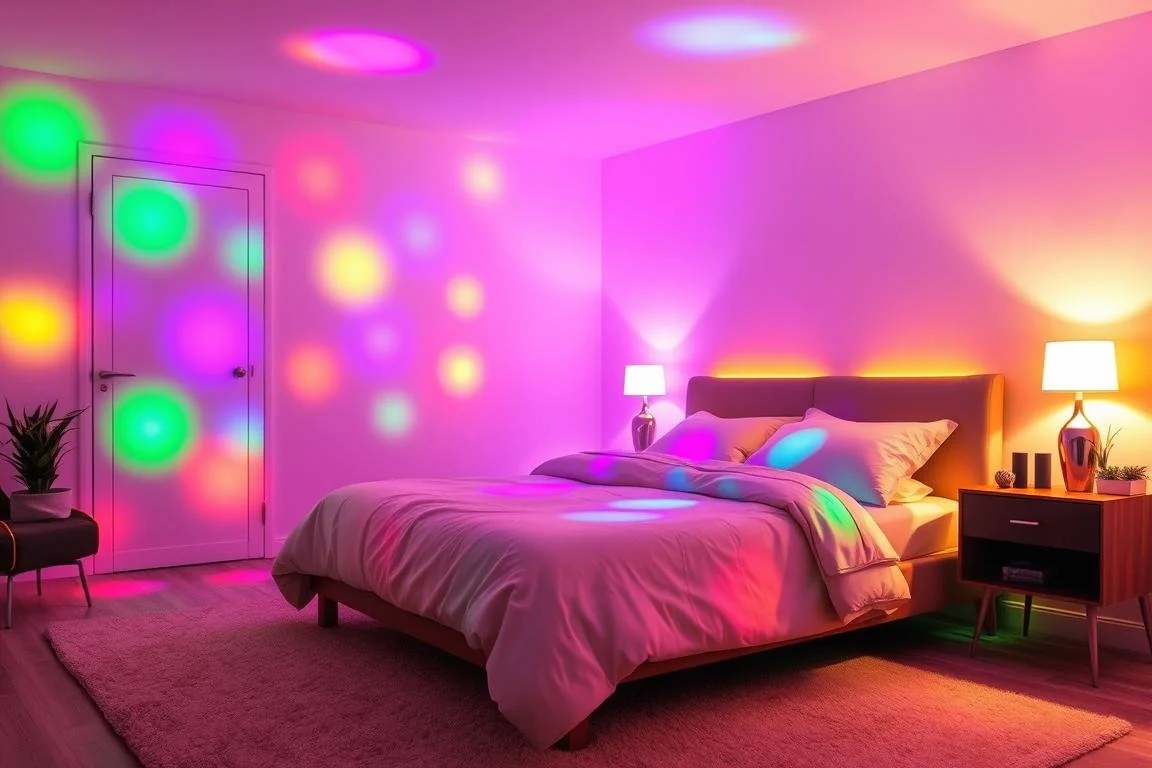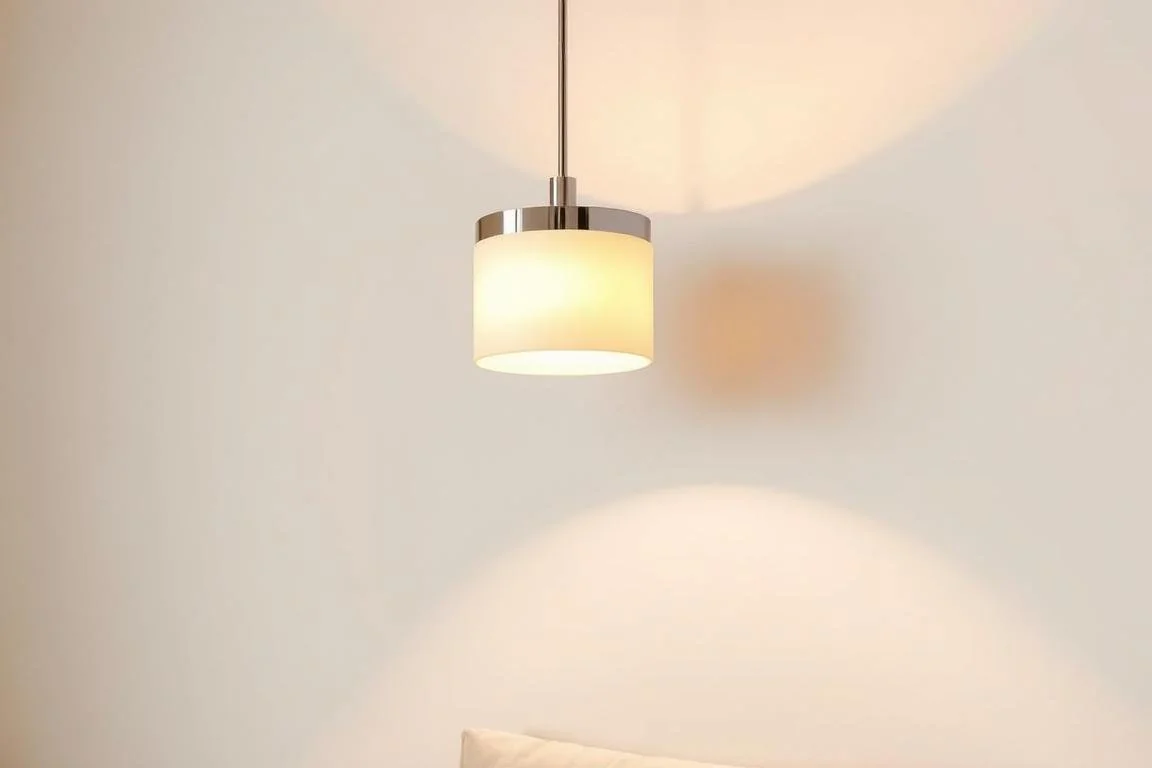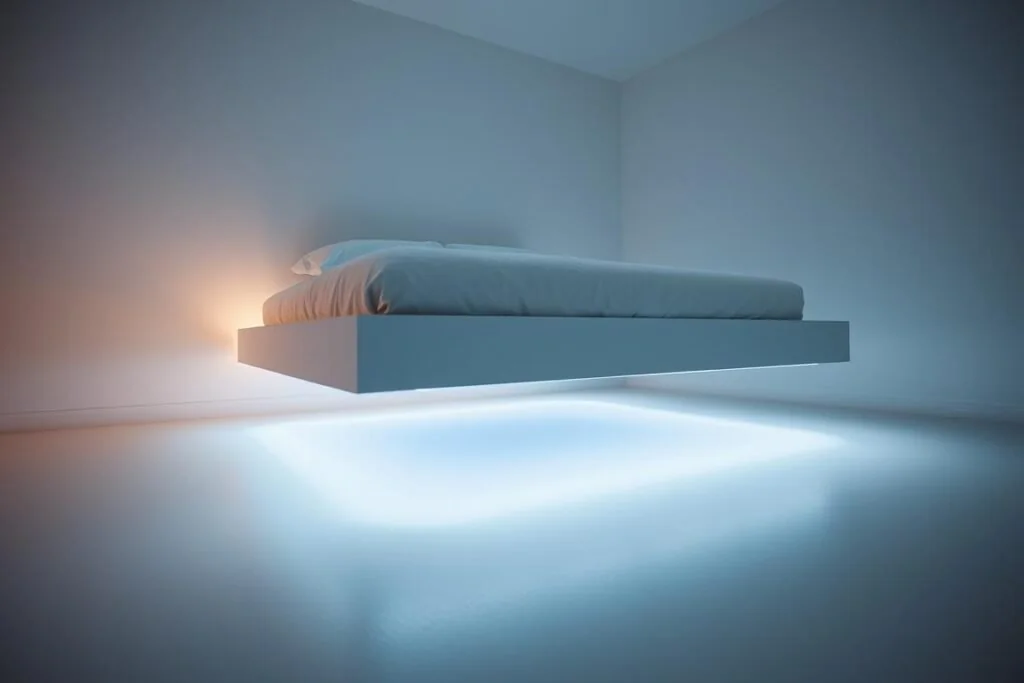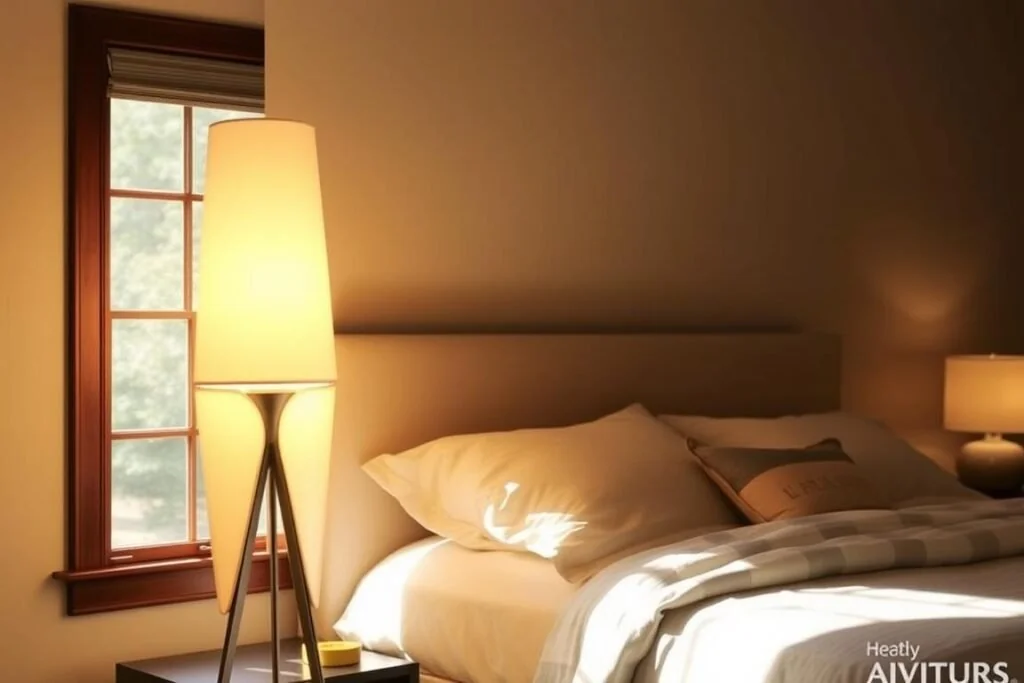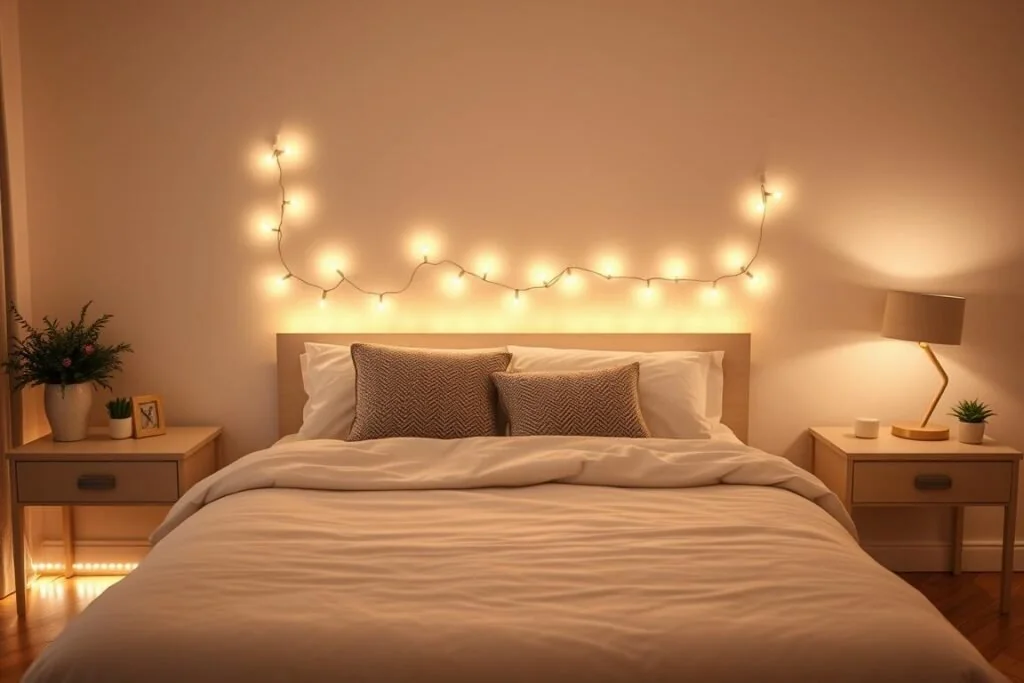
10 Bedside Lighting Ideas That Are Better Than a Table Lamp

bedside lighting ideas - bedside lighting better table

Meta description: Discover bedside lighting ideas that truly improve sleep—warm dimmable bulbs, sconces, pendants, and smart controls to create a calm, clutter-free bedroom.

Bedside Lighting Ideas for Relaxed Evenings

(Updated 2025)

Bedside lighting ideas that actually support sleep start with warm, dimmable light and simple, space-saving fixtures. Swap harsh table lamps for sconces, pendants, or slim floor lamps you can aim precisely—then keep brightness and color consistent so your wind-down feels calm every night. These bedside lighting ideas are practical, renter-friendly, and easy to layer into any room.

Key Takeaways

  • Layer ambient, task, and accent light so the room feels balanced and relaxing.
  • Use dimmers and warm 2700K–3000K bulbs to support healthy sleep timing.
  • Sconces, pendants, and charging-shelf lights free up nightstand space.
  • Flush or semi-flush fixtures preserve headroom in small rooms.
  • For best results, bedside lighting ideas should let each sleeper control brightness independently.

Bedside lighting ideas that actually work

Start with a soft ambient layer so the room feels safe at night. Add focused task fixtures—like a swivel sconce or pendant—for reading or journaling. Then use one or two low-level accents for depth. Keep each layer on its own switch so you can shift from bright morning prep to a restful evening scene in seconds. For a whole-room plan, see our guide to bedroom lighting ideas.

According to the CDC, minimizing bright light in the hour before bed helps your brain prepare for sleep. The American Academy of Sleep Medicine also recommends keeping evening light warm and lower in intensity—great news for gentle bedside lighting ideas built around dimmers and warm bulbs.
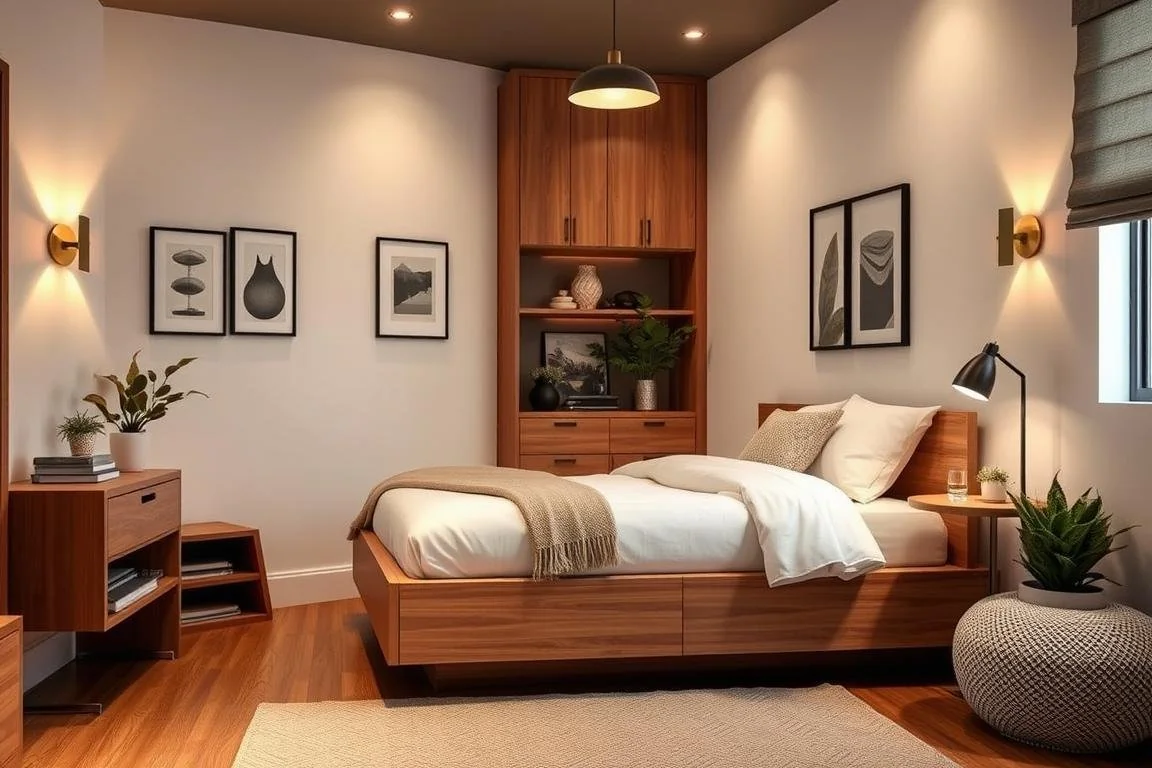
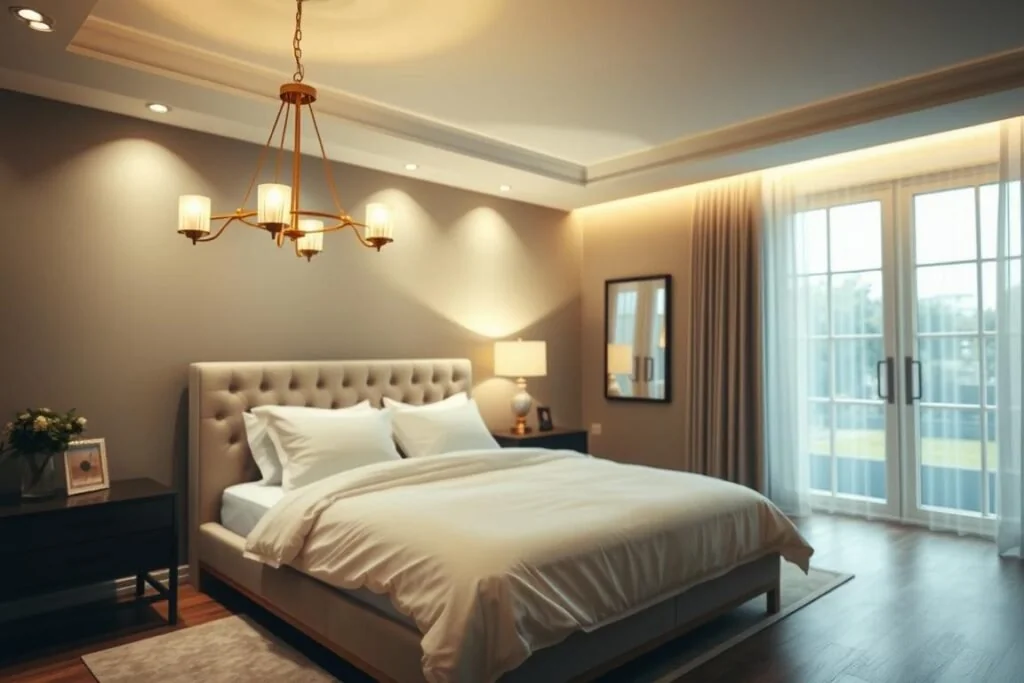
bedside lighting ideas using pendants and slim floor lamps in small bedrooms - bedside lighting better table

A calm, layered scheme puts gentle light exactly where you need it while keeping glare low.

Sconces & adjustable reading lights

Wall sconces free your nightstand and put switches right where you need them. Mount near eye level when seated, and choose swing-arm or swivel heads so the beam lands on the page, not your partner. Opaque or directional shades keep spill light down and the room cozy—ideal bedside lighting ideas for couples.

  • Hardwired models look built-in; plug-ins are renter-friendly and easy to move.
  • Pick step-dimming or high/low controls to avoid dazzling a sleeping partner.
  • Coordinate finishes with nearby hardware for a clean, intentional look.

Want app control or voice dimming? Pair your sconces with simple tips in our smart lighting for bedroom guide.

Pendants & slim floor lamps as bedside alternatives

Hang a single pendant or a matched pair just in from the mattress edge to light your book, not your eyes. Adjustable drops fit both vaulted and standard ceilings, and linen or opal glass shades soften glare for a warm halo. These bedside lighting ideas also declutter small rooms.

  • Pendants clear surfaces and visually simplify small nightstands.
  • Arc and slim floor lamps reach over the shoulder like a pendant—no drilling required.
  • Use separate dimmers so each side of the bed sets a comfortable level.

bedside lighting ideas using pendants and slim floor lamps in small bedrooms - bedside lighting better table

Pendants and slim arc lamps free up your nightstand while focusing light where you need it.

Flush mounts & small-room solutions

In compact bedrooms, overhead fixtures should hug the ceiling and keep sightlines clear. Choose flush or semi-flush mounts with diffusers or fabric shades to reduce hotspots when you recline. Then add one focused bedside source per sleeper for reading comfort—simple, effective bedside lighting ideas that keep rooms feeling open.

  • Flush mounts maximize vertical clearance; semi-flush styles add a hint of drop without bulk.
  • Keep shades soft (linen, opal glass) to avoid glare near the bed.
  • Run overheads and bedsides on separate controls for fast scene changes.
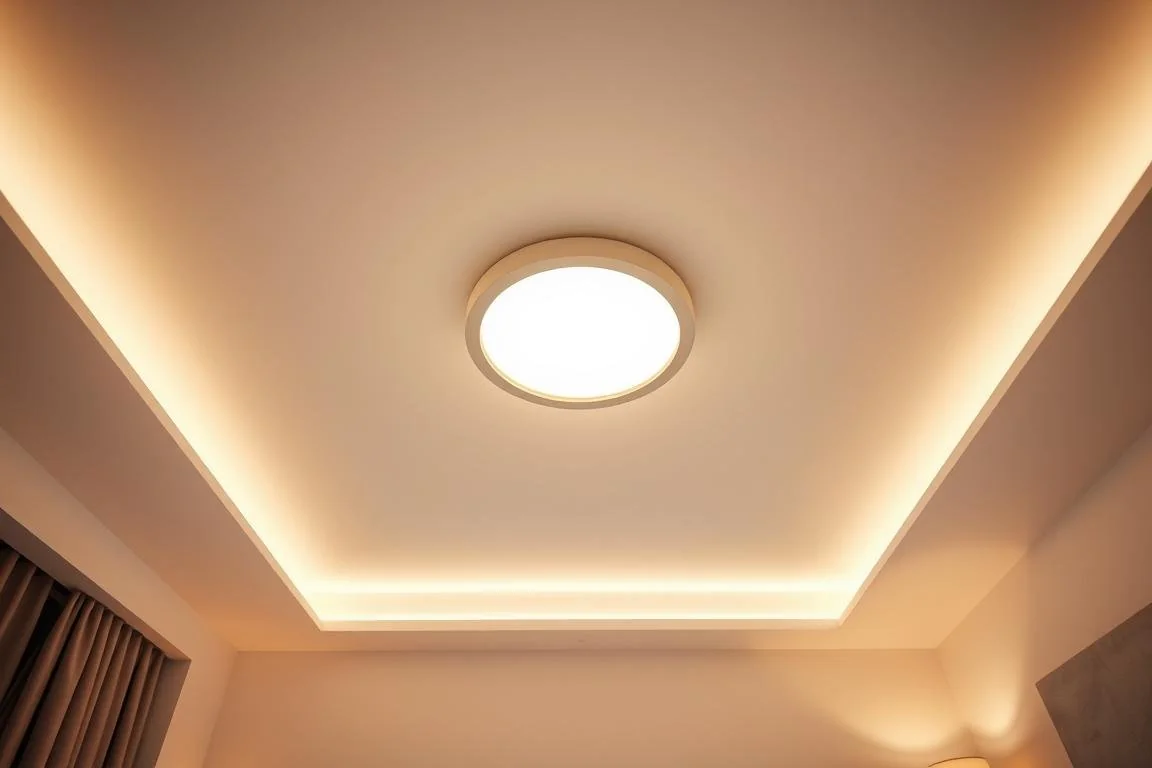
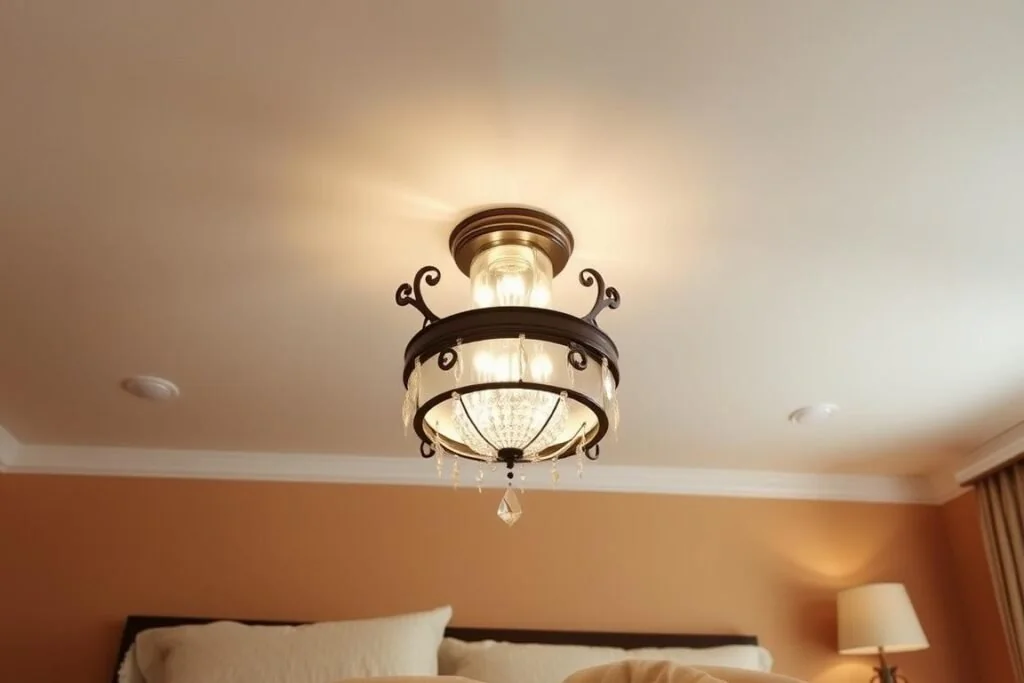
bedside lighting ideas with warm flush mount ceiling light and diffuser - bedside lighting better table

Low-profile ceiling lights preserve headroom and set a calm base layer at night.

Bulbs, brightness & dimmers

Warm white lamps in the 2700K–3000K range keep evenings cozy and reduce blue tones that can delay sleep. Add a fabric or opal shade to diffuse the bulb, and keep color temperature consistent across your bedside pair so the room reads calm and unified. These bulb-forward bedside lighting ideas make a big difference with minimal cost.

  • Target about 400–800 lumens per bedside light; fine-tune with high/low or step-dimming.
  • Look for high CRI to flatter wood tones, fabrics, and wall color.
  • Group lights into simple routines: “Read,” “Unwind,” and “Lights Out.”

Refreshing bedding or mattresses nearby? Check CertiPUR-US® for foam safety guidance and the Non-Toxic Mattress Guide 2025 for material choices that complement your serene lighting plan.

Small upgrades that make a big difference

Sometimes the best bedside lighting ideas are tiny tweaks: a backlit rocker switch you can find in the dark, a charging-shelf light with built-in USB/USB-C, or a narrow shade that keeps fixtures from intruding into tight walkways. These details add convenience without clutter.

  • Place controls within easy reach of the pillow to avoid sitting up fully.
  • Use consistent finishes (matte black, brass, or wood tones) to tie pieces together.
  • Label dimmer presets—brighter for reading, lower for winding down.
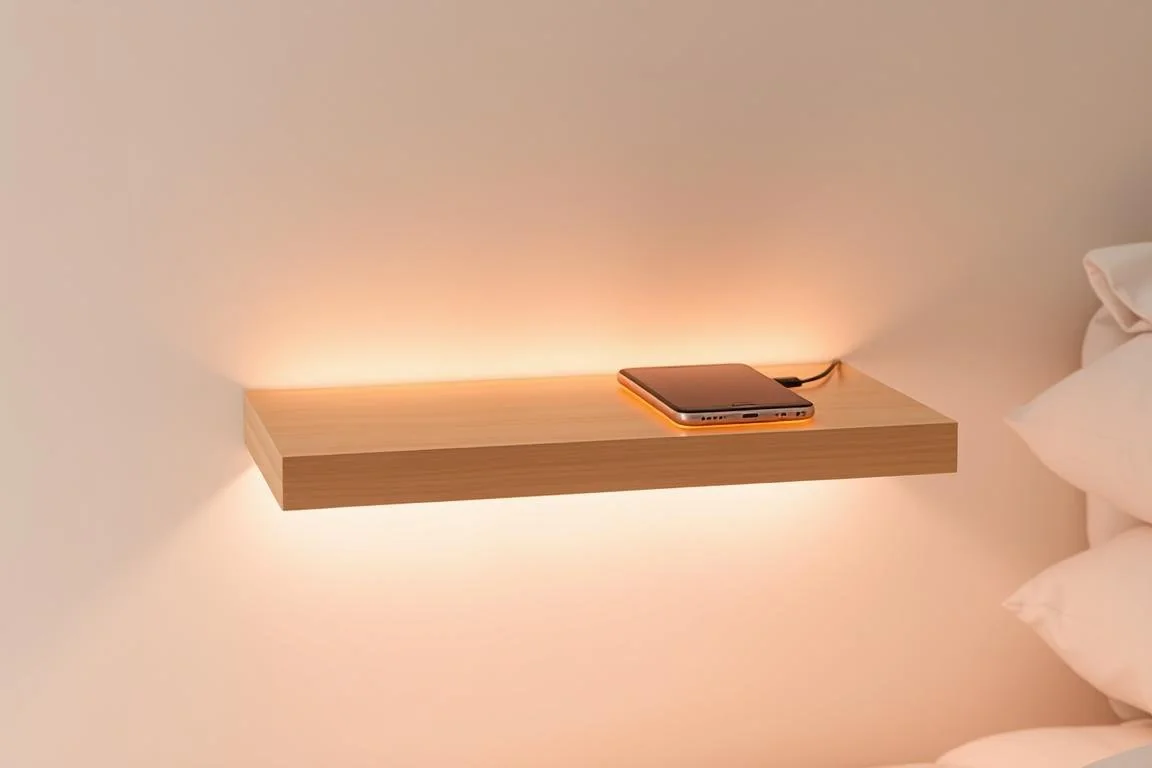
bedside lighting ideas with charging shelf light and built-in USB - bedside lighting better table

A compact charging shelf light saves space and keeps cables off your nightstand.

FAQ

What Kelvin is best for bedside lighting at night?

Stick to warm 2700K–3000K. It feels relaxing and helps you wind down, aligning with guidance from sleep experts.

How bright should each bedside light be?

Aim for 400–800 lumens with a diffuser, then fine-tune using high/low or a dimmer so each side stays comfortable.

Are pendants a good replacement for table lamps?

Yes—hang them slightly in from the mattress edge so the beam hits your book, not your eyes. They also free up surface space.

What height should I mount bedroom sconces?

About eye level when seated in bed, with an adjustable arm to steer the beam onto the page and away from your partner.

Do I need smart controls?

No, but simple scenes make life easier. Start with a wall dimmer and add a smart plug or switch later if you want voice control.

Conclusion

Bedside lighting ideas that boost sleep are simple: warm bulbs, dimmers, and fixtures that put light exactly where you need it. Mix sconces, pendants, or a slim floor lamp with a glare-softening shade, and keep controls within reach so winding down feels effortless. For whole-room planning, explore our complete guide to bedroom lighting ideas on Cozy Bed Quarters.

Related Reading

How to Choose the Right Chandelier or Ceiling Fan for Your Bedroom

bedroom ceiling light fixtures - chandelier ceiling fan bedroom - right chandelier ceiling

Choosing Ceiling Light Fixtures for Bedrooms

Wondering which bedroom ceiling light fixtures will feel both cozy and practical? Start with a layered plan, then decide if a chandelier’s sparkle or a fan’s quiet airflow suits your sleep and climate. Updated 2025.

Plan first: combine an overhead ambient source with bedside and task lighting so you can read, relax, and get ready without fuss. Choose warm-to-neutral bulbs (2700K–3500K) and add dimming so the glow shifts from bright morning energy to soft evening calm. For standard 8′ heights, use flush or semi-flush mounts; taller rooms welcome pendants or chandeliers. If airflow matters, size a ceiling fan correctly and keep blades safely high.

Key Takeaways

Skimmable highlights for quick decisions.

  • Layer ambient, bedside, and task lighting for comfort and control.
  • Use 2700K–3500K LEDs with dimmers to match mood and time of day.
  • Bedroom ceiling light fixtures for 8′ ceilings: flush or semi-flush; tall rooms: pendants or chandeliers.
  • Pick a fan when steady airflow improves sleep; pick a chandelier for visual drama.
  • Match finishes to hardware and repeat each metal at least twice for cohesion.

Start with a layered plan that fits how you live

Layering creates soft, even light and fewer hotspots.

Balance ambient, task, and accent light. Begin with an overhead source, then add bedside lamps or wall-mounted swing arms for focused reading. Decorative accents—like a petite pendant or sconce—bring personality without glare. According to the CDC, most adults need at least seven hours of sleep; a calm, dimmable bedroom helps you wind down consistently.

Keep controls close. Place switches or smart buttons within arm’s reach of the bed to avoid harsh overhead light when you first wake. For deeper ideas, see our pillar guide: Bedroom Lighting Ideas.

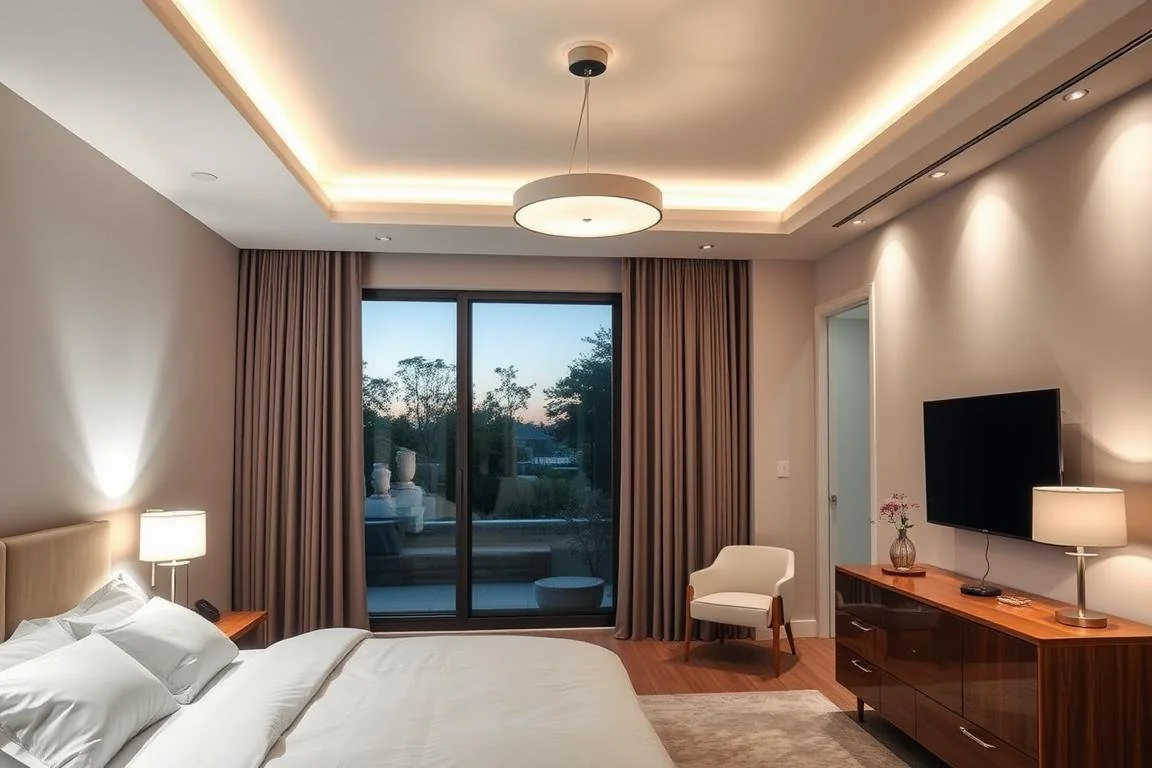
A guide to bedroom ceiling light fixtures for cozy and practical lighting featuring right chandelier ceiling

Bedroom ceiling light fixtures: flush, semi-flush, chandeliers, and pendants

Let ceiling height and room size guide your selection.

Standard 8′ ceilings: choose flush or semi-flush mounts for broad, comfortable light with safe head clearance. Semi-flush offers a bit more presence without dropping too low.

Taller rooms or over-bed spots: pendants and chandeliers bring light closer to where you need it, especially above the bed where no one walks. Look for adjustable downrods to fine-tune height and brightness.

  • Scale matters—undersized fixtures disappear; oversized pieces can cast uneven light.
  • Materials set mood: fabric drums soften; glass or capiz add sparkle; rattan and beads add texture.
  • Confirm drop length and cleaning access before you buy.

Different types of bedroom lighting including ceiling fixtures - featuring right chandelier ceiling

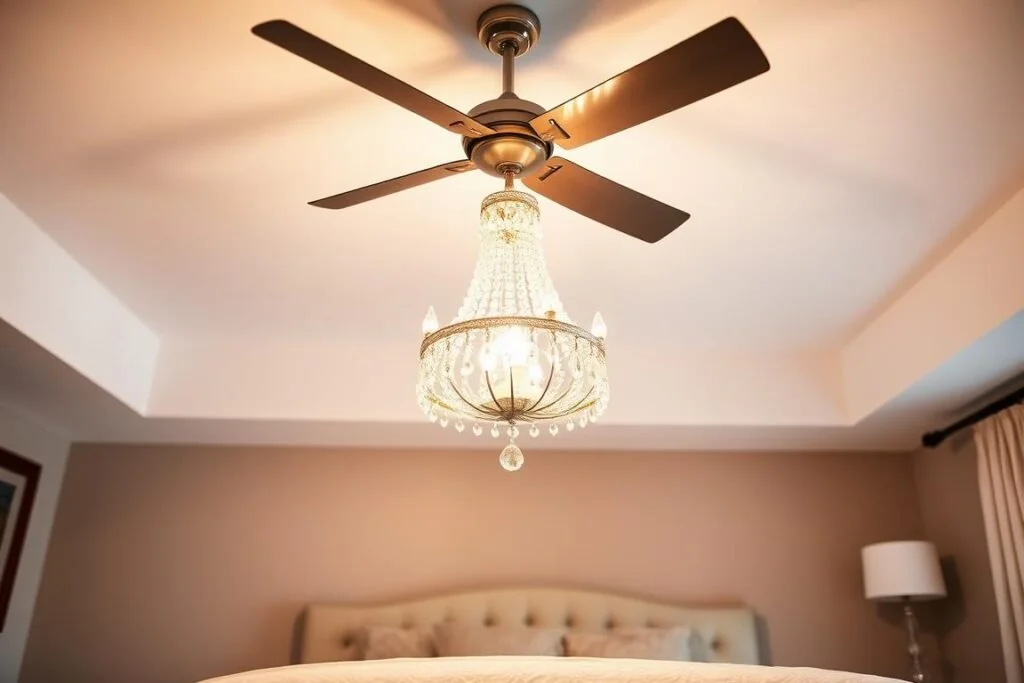
Chandelier or ceiling fan? How to choose for your bedroom

Comfort vs. drama—pick the one that supports your sleep and climate first.

Comfort first: if steady air movement helps you sleep or nights run warm, a ceiling fan with an integrated light often outperforms a chandelier for daily comfort. If you crave a focal point, a chandelier delivers sparkle and style.

Ceiling fan vs. chandelier: quick compare

  • Best for: Fan = airflow & comfort; Chandelier = style & drama.
  • Rooms: Fan suits warm climates and larger spaces; chandelier shines in cooler climates and tall ceilings.
  • Light quality: Fan lights are even and practical; chandeliers add directional sparkle.
  • Maintenance: Fan needs blade dusting/balancing; chandelier needs shade/crystal cleaning.
  • Noise: Choose DC-motor fans for quiet; chandeliers are silent but don’t cool.

Quick sizing for fans by room area

  • Up to 75 sq ft: 29–36″ diameter (nursery or small room).
  • 76–144 sq ft: 36–42″ (typical bedrooms).
  • 145–225 sq ft: 44–48″ (larger rooms).
  • 225–400+ sq ft: 48–54″+ (consider two fans in very large spaces).

Mounting basics that improve performance

Use a hugger/low-profile model for 8–9′ ceilings. Higher ceilings need a downrod to place blades at the airflow “sweet spot.” For vaulted surfaces, add a slope adapter so the motor hangs straight.

Safety and efficiency tips

Keep blades at least 7′ above the floor and balance them for quiet operation. For healthier bedrooms overall, consider low-VOC materials and safer soft goods; here’s a clear overview of common bedding certifications to use as a general shopping benchmark.

Related how-to: Ceiling Fan Size Guide.

Choosing between a chandelier or ceiling fan in the bedroom - chandelier featuring right chandelier ceiling

Don’t forget bedside lamps, wall lights, and smart controls

Small moves make nightly routines easier.

One lamp per side for shared beds; a single lamp works for solo sleepers. Position the shade’s bottom just below eye level when you sit up to reduce glare. Tight on space? Swap table lamps for wall-mounted swing arms or a slim pendant to free your nightstand. A floor lamp can add a reading nook without new wiring.

  • Pick bulbs by lumens, not old “watt” rules, and choose models that dim smoothly.
  • Smart switches and lamps let you control scenes from bed—dim overheads while keeping bedside light bright.
  • Repeat finishes intentionally: limit to one or two metals and show each at least twice.

More tips: Best Bedside Lamp Heights and Smart Bedroom Lighting. Prefer video? Watch this quick primer: Bedroom Lighting Tips.

Simple buying checks: sizes, finishes, and color temperature

A few measurements prevent returns and headaches.

  • Fast diameter estimate: add room length + width (in feet) to get fixture diameter (in inches). Example: 12′ + 13′ → ~25″.
  • Walk paths need 7′ clearance; over the bed you can hang lower because no one walks underneath.
  • Choose 2700K–3000K for wind-down; 3000K–3500K for tasks earlier in the evening.
  • Confirm dimmer compatibility for LEDs and verify mounting type (hugger, downrod, slope adapter).

For clinical sleep questions, consult the American Academy of Sleep Medicine.

How to size a chandelier or fan for bedroom ceilings - chandelier ceiling featuring right chandelier ceiling

FAQ

What’s the best color temperature for bedrooms?

Warm light feels relaxing. Use 2700K–3000K for wind-down, and up to 3500K when you need a bit more energy to tidy or get ready.

How high should a chandelier hang in a bedroom?

Keep at least 7′ of clearance wherever people walk. Above the bed, hang lower and use an adjustable downrod to fine-tune for reading and cleaning.

Should I choose a ceiling fan or a chandelier?

Pick a fan if airflow helps you sleep or your climate runs warm; pick a chandelier if cooling is handled and you want a strong decorative focal point.

Do I need a dimmer for bedroom ceiling light fixtures?

Yes—dimming reduces glare at night and boosts brightness for chores. Check that your LED bulbs and the switch are compatible.

Conclusion

Confirm size, placement, and control so your bedroom ceiling light fixtures work day and night. Measure first, match fixture type to ceiling height, and use dimmers to shift from chores to wind-down with one tap. If you go with a fan, size it to the room and keep blades at least 7′ above the floor. For more inspiration, visit Cozy Bed Quarters – Bedroom Lighting Ideas. Thanks for reading—sleep well and shine softly!

Related reading from Cozy Bed Quarters

Other reading we found popular

How to Set Up Smart Lighting in Your Bedroom

smart lighting for bedroom - set lighting bedroom

Smart Bedroom Lighting for Cozy Modern Spaces

Smart lighting for the bedroom can quickly improve how your room feels each morning and night with a few bulbs and simple automations.

Can a few bulbs and a simple app change how your room feels each morning and night?

You’ll get a clear plan to pick, install, and automate the right light so your room looks great and works reliably every day. We’ll walk you through control options—app or voice—and explain why Matter makes cross-brand setup easier in your home. Brands like Philips Hue, Wiz, Govee, Wyze, Tapo, Lifx, GE Cync, and Ring offer choices that match budget and design.

Learn how to match brightness and color temperature to mood and sleep, and when simple dimmable white bulbs beat full-color setups. You’ll also see quick reasons to choose top picks, plus tips to avoid common install mistakes with strips, panels, and bulbs.

Smart lighting for bedroom cozy bedside lamp with warm glow - set lighting bedroom

Key Takeaways

  • Choose a platform (Amazon Alexa, Google Assistant, Siri) and check Matter support first.
  • Match lumens and color temperature to your room’s size and purpose.
  • Budget choices like Wiz and Wyze can offer great value without hubs.
  • Use routines to automate wake and wind-down scenes with voice or app control.
  • For SEO, include the phrase smart lighting for bedroom in at least one subheading and image alt.

Why Smart Lighting Helps Your Bedroom Now

Control and customize your bedroom ambiance from anywhere, whether with an app or a quick voice command.

Connected bulbs and strips give instant mood upgrades without leaving the bed. Set schedules after sunset, dim before sleep, or trigger scenes for reading and relaxing. Most bulbs are long-lasting LEDs that cut energy use and reduce replacements. Bluetooth works well locally, while Wi-Fi and Matter enable reliable remote control when you’re away.

  • Hands-free control: Voice and app options help when your hands are full.
  • Useful automations: Schedules, motion triggers, and sunset rules keep pathways lit when you need them.
  • Consistent scenes: Colors and presets give repeatable looks for every night.
  • Easy to scale: Start with one lamp, add strips or bulbs as you explore features.

Smart Lighting for Bedroom: Start Small for Big Gains

One bedside bulb can turn evenings into calm and mornings into gentle wake-ups.

Begin with a single smart light in your bedside lamp to add cozy ambiance and reliable dimming in minutes. Wiz bulbs work well here—they support Matter and play nicely with Alexa, Google Home, and Siri. That gives you robust schedules and millions of colors without a big install. For broader design ideas, see our pillar guide bedroom lighting ideas.

Quick scenario: Save a gentle “Wake” scene that raises brightness slowly before your alarm, a warm “Relax” scene for wind-down, and a cooler “Focus” scene for reading. Use short names so voice control never confuses them.

Choose Your Platform and Matter Compatibility

Pick the voice ecosystem you already use to make setup painless.

Matter makes cross-brand setup far easier. Matter-enabled bulbs like Wiz and Tapo work with Amazon Alexa, Google Home, and Siri from one platform. That means you can mix brands and still control everything in the apps you already use.

Set Lighting Bedroom - Matter smart lighting setup with Google Home control

When you still need a bridge: Philips Hue works via Bluetooth, but the Hue Bridge unlocks Apple Home support, remote control, and advanced automations. Ring Pathlights need a Ring Bridge to enable motion reactions and Alexa routines.

Voice vs app control: Voice is perfect in bed; the app is best for setting schedules and fine-tuning brightness or color. Save scenes in the app, then trigger by voice.

Key Specs That Actually Matter: Lumens, Color Temperature, Dimming

Pick the right numbers and a simple bulb swap can change your room all day long.

Lumens first: choose about 800 lumens for a bedside lamp or cozy ambient use. Step up to 1,100 lumens for brighter fixtures or task lighting. Consider 1,600 lumens if one ceiling fixture must light a larger room.

Whites and color: warm whites (~2700K) help you relax at night; cooler whites (up to 6500K) boost focus in the morning. Many bulbs support smooth dimming from 1–100%.

  • Balance brightness with low dim levels to wind down gently.
  • Pick LEDs with reliable dim curves to prevent flicker.
  • Match bulb base and shape (A19, BR30) to place light where you need it.

Best Bedroom Bulbs: Quick Picks and Comparisons

Pick the right bulbs and you can change how your room looks and feels with almost no fuss.

Wiz Color — budget all-rounder: Matter support, works with Alexa, Google Home, and Siri, about 800 lumens, 16 million colors, no hub, often $10–$13. Ideal as a bedside bulb.

Tapo Color — bright performer: around 1,100 lumens for larger shades and darker rooms; Matter-certified for smooth cross-platform control.

Wyze White — simple and cheap: warm-to-cool tunable whites with excellent group control across multiple lamps at a very low price.

  • Pick Wiz for inexpensive color and wide compatibility.
  • Choose Tapo when you need extra lumens in overheads.
  • Go Wyze if you want budget white bulbs and easy group control.
  • Mix and match: bright Tapo overheads plus cozy Wiz bedside bulbs works well.
Bulb Lumens Color Options Hub Needed Price Range
Wiz Color 800 16M Colors No $10–$13
Tapo Color 1,100 16M Colors No $15–$18
Wyze White 800 Tunable White No $8–$10
Philips Hue 800–1,100 16M Colors Bridge for full features $40+

Want lamp ideas to pair with these bulbs? Check our guide to best bedside lamps.

Strips, Panels, and Sync Features

Add flexible LEDs to redefine edges and set a calm mood with color and motion.

LED strips for glow: Govee ceiling strips offer long runs, many scenes, mic-based music sync, strong adhesive, and safety certifications. Plan runs carefully; many strips aren’t cut-to-length after mounting. Mount under the bed or behind a headboard for a relaxing floating effect.

Panels and neon rope: Govee panels scale for bigger layouts; keep evening scenes dim and warm. Linkind smart neon rope bends into curves or text and delivers diffuse, neon-like glow with many presets.

Sync options: HDMI sync boxes (such as Linkind ET6) mirror on-screen color with low latency for TV-driven ambiance. Mic-based modes are cheaper and easier for music.

Color changing smart lighting for bedroom with mood scenes - set lighting bedroom

  • Use perimeter strips to create an even glow that makes ceilings feel higher.
  • Pair panels with under-bed strips to layer depth.
  • Place bias light behind the display to reduce eye strain.

Setup, Routines, and Reliability

Simple automations make wake-ups gentler and evenings calmer.

Wake and sleep: create a sunrise routine that ramps from 1% to your preferred brightness 15–30 minutes before your alarm. Add a wind-down routine that shifts to warm tones and dims gradually. Hue enables ultra-low dimming; Wiz and Tapo handle reliable schedules.

Practical tips: name devices clearly so voice and groups behave as expected—“Bedside,” “Ceiling,” “Accent.” Check your Wi-Fi band; many devices prefer 2.4 GHz. Measure twice before mounting strips, clean surfaces, and follow bend limits. Update firmware on day one and place bridges centrally.

Adding smart lighting for bedroom routines ensures both comfort and consistency, especially when mixing strips, panels, and bulbs.

  • Set motion sensors to trigger a low nightlight for safe paths.
  • Use timers so accent lights turn off automatically.
  • Export device names and scene lists before changing phones or routers.

Bedroom Lighting Design and Price Tiers

Layer sources so the same room handles getting ready, relaxing, and sleeping—without a remodel.

Ambient: even glow from ceiling strips or soft perimeter fixtures. Task: brighter lamps with cooler whites for reading or grooming. Accent: panels, neon rope, or under-bed strips for depth and mood. Explore more layering tips in bedroom lighting ideas.

Entry-level value: Wiz color bulbs often sell near $10–$13, no hub, Matter support; Wyze is excellent for tunable white at the lowest price.

Mid-range: Tapo’s 1,100-lumen Matter bulb brings extra output for shades and overheads at a still-low price.

Premium: Philips Hue with a Bridge, Govee panels, and HDMI sync boxes add smoother dimming, richer scenes, and accurate media sync.

Philips Hue for Bedroom Purists

Hue starts simple with Bluetooth, then grows into a full home system with a Bridge.

Set Lighting Bedroom - Philips Hue smart light bulb for bedroom automation

Start simple: add a Hue bulb to test ultra-low dimming and one-touch sleep automations. You’ll notice soft low levels that won’t wake a partner and excellent color consistency. Add a Hue Bridge for remote control, Apple Home support, and richer scenes.

  • Use sunrise routines to ramp brightness gently before your alarm.
  • Save reading and relax scenes; trigger them by voice or a quick tap.
  • Preview placements with the Hue app’s AR tool on iOS.

Privacy, Sleep, and Safer Materials

Protect data and keep lights working even if the internet drops.

Favor Matter devices where possible for local control and cross-ecosystem support. Review each vendor’s privacy settings and opt out of data sharing you don’t need. Keep firmware updated to patch vulnerabilities and improve stability.

According to the CDC Sleep Resources, most adults need at least seven hours of sleep each night—use schedules and occupancy routines so lights support healthy wind-down. The World Sleep Society notes that limiting bright blue light before bed improves sleep quality, reinforcing the value of warm tones in smart lighting for bedroom setups. If you prefer safer materials in lamps or bedding, check this overview of common bedding certifications.

Gaming and Child-Friendly Options

Make entertainment colorful and bedtime soothing without overthinking it.

Entertainment: HDMI sync delivers high color accuracy and low perceived latency for fast games and films, while mic-based modes react to room audio for parties or playlists.

Kids’ rooms: choose warm, low-brightness LEDs with a 30-minute auto-off timer and memory. Keep controls simple and place lights low and indirect to cut glare.

FAQ

Do I need Matter for bedroom smart lights?

Matter isn’t required, but it simplifies cross-brand setup and keeps more control local.

Are color bulbs necessary for better sleep?

Warm white around 2700K is usually enough for wind-down. Add color if you enjoy mood scenes.

What brightness is best for bedside lamps?

About 800 lumens is a sweet spot for reading and cozy ambient use.

Do I still need a hub or bridge?

Some ecosystems like Philips Hue unlock remote control and advanced automations with a bridge; many Wi-Fi/Matter bulbs don’t need one.

Can I mix brands?

Yes—Matter support lets you mix Wiz, Tapo, and others while keeping control in your preferred app.

Conclusion

Start small: add one capable bulb, save a scene, and let automation do the rest.

Smart lighting for bedroom doesn’t have to be complicated—test a pair of bulbs, choose Matter-ready options when you can, and layer strips or panels as you go. For more cozy bedroom ideas, visit Cozy Bed Quarters.

Related Reading

15 Cool LED Lighting Ideas for an Aesthetic Bedroom

led lighting bedroom ideas - cool led lighting aesthetic

LED Bedroom Lighting Ideas for Modern Homes

Updated 2025

Want fast results? led lighting bedroom ideas can transform your space overnight without a remodel. This guide shows you how to layer light, save energy, and turn your room into a calm retreat. For a deeper design framework, explore our bedroom lighting ideas guide.

You’ll see how strips and smart bulbs work together for ambient glow, task control, and playful accents. Motion-activated under-bed strips add safe path light, while a backlit headboard and illuminated wall art give soft halos that elevate any decor.

With tunable color and the right lumen targets, these led lighting bedroom ideas deliver a polished, practical setup that fits your style and routine.

Key Takeaways

  • Layer ambient, task, and accent sources for balance.
  • Use smart controls and tunable warmth to match your day.
  • Under-bed motion strips add safety and a floating look.
  • Cove and backlighting create high-end, diffused glow.
  • Set the right lumens by zone to keep led lighting bedroom ideas intentional.

Plan Your Layers: Ambient, Task, Accent

Map the room so every fixture has a job. Use ceiling strips or a flush fixture for ambient fill, bedside lamps for tasks, and a few accents that add depth along shelves or baseboards.

Strips are ideal for coves and furniture edges. Smart bulbs and addressable RGB strips create scenes you can automate. For deeper dives, see our cluster guides on bedroom lighting ideas, bedside lighting ideas, and smart lighting for bedroom.

led lighting bedroom ideas for beginners

Start with one high-impact zone—under-bed glow or a simple headboard halo—then expand as you learn what you like.

Under-Bed LED Strips for a Floating Effect

These led lighting bedroom ideas make the bed appear to float and guide late-night steps without glare. Mount the strip along the inner frame so it washes the floor and hides the hardware.

Choose warm white for hotel-calm or RGB for mood scenes you can control by app or voice. Motion sensors switch on as your feet hit the floor and off when you return to bed.

Example of led lighting bedroom ideas with under-bed strip glow - cool led lighting aesthetic

Tip: Use diffuser channels to soften dots and protect the tape; hide power blocks neatly under the bed.

Smart Bulbs: Brightness & Color for Every Mood

Swap standard bulbs for LEDs you can dim, tune, and automate. Many offer 1800K–6500K white plus millions of colors, and Matter support for easy control with Apple Home, Alexa, or Google Home.

Use 2700–3000K to wind down and 3500–4100K for focused tasks. Create scenes for mornings, reading, and sleep; schedule gentle brightening at wake-up and dimming before bed.

Backlit Headboard & Wall Art Halos

A soft halo behind the headboard becomes your room’s focal point and keeps light indirect. The same approach behind artwork adds gallery depth and doubles as a low-glare night light.

led lighting bedroom ideas with a backlit headboard halo - cool led lighting aesthetic

Warm white feels cozy; cool white reads crisp and modern. Tunable white lets you read in neutral light then wind down warmer. Use diffuser channels for a smooth, uniform glow.

Vanity & Closet Lighting That Works

Even, shadow-free light speeds up grooming and keeps colors true. Frame mirrors with a continuous strip for face-even light, or backlight with frosted diffusers for a soft halo that minimizes glare.

In closets, motion-activated strips turn on with the door and off when you close it—great for quick mornings and low energy use. Pick 2700–3500K near skin for natural tones.

According to the CDC, consistent, dimmer evening light supports wind-down before bed. If you’re choosing safer components, consult bedding certification references while you plan your setup.

Fairy curtain lights as part of led lighting bedroom ideas - cool led lighting aesthetic

Bonus idea: A soft curtain of fairy lights behind sheer drapes adds twinkle without tools—perfect for renters.

Controls, Color Temperature & Safety Tips

Balance color, brightness, and control so each scene fits the moment. Use dimmable drivers and bulbs to protect sleep rhythms and avoid glare at night.

  • Color: 2700–3000K for restful evenings; 3500–4100K for focus.
  • Lumens: Plan ~1,500–3,000 total for ambient; 400–800 per task bulb; 200–400 for accents.
  • Power: Match voltage and wattage; size power supplies with 10–20% headroom; avoid long daisy chains.
  • Install: Clean surfaces, test placement with painter’s tape, and use aluminum channels with diffusers.
  • Learn more: Watch a quick cove-lighting walkthrough.

Automation makes these systems even more powerful. Set wake-up routines that brighten gradually like sunrise, or evening schedules that fade lights slowly as bedtime nears. Many smart platforms also track energy use, showing you monthly savings compared to old bulbs. Over time, efficient led lighting bedroom ideas can cut your electric bill while keeping your room comfortable and safe.

FAQ

How many lumens do I need for a bedroom?

Plan 1,500–3,000 lumens for ambient light, then add 400–800 lumens per task area and 200–400 for accents. Adjust for room size, wall color, and ceiling height.

Are LED strips safe to leave on overnight?

Quality LEDs run cool and are efficient. Use UL-listed strips, matched drivers, and diffuser channels for heat management. Keep fabric and soft goods away from the tape.

What color temperature is best before bed?

Warmer tones around 2700–3000K help you relax; cooler tones feel energizing. Program evening scenes to warm and dim an hour before sleep.

Conclusion

Start with one high-impact upgrade, then build layers that suit your routine. With these led lighting bedroom ideas, you’ll get flexible control, long life, and energy savings—from warm whites to playful color scenes.

Keep installs tidy with channels, diffusers, and clean cable paths. Aim lumens by zone, pick warm tones for cozy moments, and add one fun accent to make the space yours. For more inspiration across the home, visit Cozy Bed Quarters.

Related reading from Cozy Bed Quarters

Other reading we found popular


Cozy Bedroom Lighting: Layers, Warm Bulbs and Dimmers

Jrettig how to create cozy lighting in a bedroom hero.webp a 35d43b62 featuring create lighting bedroom

Cozy Bedroom Lighting: How to Get a Soft, Restful Glow

The short answer: cozy bedroom lighting comes from three layers — a soft ambient base, focused task light at the bed, and a little accent light for depth — all in warm-white bulbs (around 2700K) and all on dimmers or separate switches. Skip the single bright ceiling fixture, diffuse every bulb with fabric or opal glass, and keep evening light low so the room signals wind-down rather than work. Everything below is how to plan that in a real room, whatever its size or budget.

Cozy Bedroom Lighting with warm 2700K glow in a restful space - create lighting bedroom

A 2700K base layer creates a warm, restful glow without glare.

Key Takeaways

  • Layer your light: ambient, task and accent beat one overhead fixture every time.
  • Choose warm-white bulbs (roughly 2700K–3000K) and shades that hide the bulb.
  • Put each layer on its own dimmer or switch so you can move from bright to sleepy in seconds.
  • Dimming the lights in the couple of hours before bed helps you fall asleep more easily.
  • In small rooms, wall sconces and pendants free the nightstand and keep floor paths clear.

Start With the Three Layers

Layering is the whole game. A base layer gives the room an even wash, task lights do the work, and accents add dimension so corners don’t fall into gloom. Together they let you light only what you need, which is what makes a room feel calm instead of flat or glaring.

Layer What it does Typical fixtures
Ambient Overall, even illumination Flush or semi-flush ceiling fixtures, recessed lights, shaded pendants, cove lighting, a shaded floor lamp
Task Focused light for reading, journaling, dressing Bedside table lamps, swing-arm wall sconces, small pendants, desk lamps
Accent Depth, texture and focal points LED strips behind a headboard or under shelves, picture lights, small shelf pucks

A worked example: in a 12×12 room with an 8-foot ceiling, a low-profile semi-flush handles ambient light, two bedside lamps or sconces handle tasks, and a picture light over art adds the accent. Three sources, three controls, done.

Color Temperature: Why Warm Wins at Night

Pick one bulb tone and repeat it across the room so the light reads as intentional. Warm-white bulbs — about 2700K, with 3000K a slightly crisper alternative — feel gentler after dark because they push out less blue-rich light than “daylight” bulbs. Exposure to light suppresses melatonin, the hormone tied to your circadian rhythm, and Harvard Health notes blue wavelengths are particularly potent at doing so in the evening.

Brightness matters as much as color. Public-health guidance from CDC/NIOSH is to avoid bright light in the two hours before bed and dim the lights if you have trouble falling asleep. That single habit does more for sleep than any fixture you can buy — the lighting plan just makes it easy.

Two more bulb details worth checking on the box: a colour rendering index (CRI) of 80 or higher keeps skin tones and fabrics looking natural, and the bulb should say “dimmable” if it’s going on a dimmer. Not every LED is, and a mismatched bulb-and-dimmer pair is the usual cause of flicker or buzz.

How bright should a bedroom be?

There’s no official home standard here, so treat these as working starting points rather than rules, then adjust with a dimmer:

  • Ambient: roughly 1,000–2,000 lumens total in a small bedroom, more in a large one.
  • Bedside task light: around 300–500 lumens per side, always behind a shade.
  • Accent: a low, gentle level per feature — enough to see the glow, not the source.

Buy by lumens rather than watts; wattage only tells you energy use. On that note, LEDs are the cheap layer to run — the U.S. Department of Energy estimates the average household saves about $225 a year by switching to LED lighting, so adding a few extra fixtures costs far less than it used to.

Cozy Bedroom Lighting bedside lamp and wall sconce combination - create lighting bedroom

Diffusing shades and dimmers create reading light without waking your partner.

Bedside Lighting: Lamps, Sconces and Pendants

This is the layer you touch every night, so get it right first.

Table lamps

The common design rule of thumb is a lamp about 25–29 inches tall, so the bottom of the shade sits near eye level when you’re sitting up in bed — light lands on the page, not in your eyes. A shade that fully covers the bulb prevents glare, and a dual-socket base or three-way bulb gives you a bright reading setting plus a low late-night one from the same lamp. Keep the nightstand close to mattress height and within easy reach; our guide to master bedroom nightstands covers sizing in detail.

Wall sconces

Swing-arm sconces clear the tabletop entirely and aim light exactly where you want it. Mount one per side, each on its own switch, so one person can read while the other sleeps. A frequently used starting height is a few inches above the top of the headboard, but adjust for your pillow stack and shade style — sit in bed, hold the fixture up, and check the beam before drilling.

Plug-in pendants and rental-friendly options

Renters aren’t stuck with the builder’s ceiling light. Plug-in pendants and plug-in sconces hang over each nightstand with no rewiring, and a cord cover keeps things tidy. Adjustable drops help under high or vaulted ceilings.

Ceiling Fixtures for Low and High Ceilings

Match the fixture to the ceiling so the room feels open rather than crowded.

  • Low ceilings: flush mounts keep sightlines clear and headroom intact.
  • Standard height: a semi-flush adds a little character without visual bulk.
  • Vaulted or tall: a pendant or compact chandelier with a diffusing shade adds vertical interest and soft light.

Whatever you choose, put it on a dimmer and treat it as background light — not the only light.

cozy bedroom lighting ideas with low-profile ceiling fixtures

Small Bedrooms: Light That Doesn’t Eat Space

In a tight room, every fixture has to earn its footprint. Swap a bedside lamp for a sconce or pendant to reclaim the nightstand, keep the ceiling low-profile, and add a slim floor lamp only if the layout can spare the base. Coordinating finishes across fixtures also makes the room read as calmer and less cluttered. For more on visual space, see our tricks to make a small bedroom look bigger and the bedroom furniture and layout guide.

small bedroom lighting ideas with slim floor lamps

Accent and LED Ideas That Add Instant Cosiness

Cozy Bedroom Lighting with LED accents behind headboard and shelves - create lighting bedroom

  • Backlit headboard: a warm strip hidden behind the headboard throws a halo onto the wall and centres the bed.
  • Under-bed strips: a low, motion-activated glow lights night trips to the bathroom without a blast of overhead light.
  • Shelf and nook lighting: small pucks or strips highlight objects and make a reading corner feel deliberate.
  • Mirror lighting: edge-lit or side-mounted lights remove the shadows that a single overhead fixture casts on your face. Our bedroom mirror and lighting ideas go further on this.

Controls, Switch Placement and Smart Lighting

A cozy room is one you don’t have to get out of bed to adjust. Where you can, put a switch at both the doorway and the bed, or add a battery-powered wireless remote next to the pillow. Split the ambient, task and accent layers across separate switches so you can light one zone at a time.

Smart bulbs and switches add scheduling on top of that: a “wind-down” scene that fades warm and low in the evening, a “reading” scene at the bed, and a gradual sunrise-style alarm in the morning. This is convenience and consistency rather than magic — the benefit comes from actually dimming the lights at night, which a schedule makes automatic. If you’re using dimmable smart bulbs, leave them on a plain switch or a compatible smart dimmer; stacking a standard wall dimmer on top of a smart bulb causes flicker.

Shades, Materials and Finishes

Diffusion is what turns a bulb into a glow. Linen, parchment and opal glass spread light evenly and soften shadow edges, while bare bulbs create hotspots that your eyes keep flinching at. Warm metals like brass or patinated bronze reinforce the warm colour temperature; repeating one or two finishes across fixtures, hardware and frames makes the scheme feel considered. Soft textiles elsewhere in the room help too — lamp light lands beautifully on a layered rug or a headboard, and our bedroom rug guide covers sizing those surfaces.

Don’t Forget Daylight

Daylight is the free layer and the one your body clock responds to most strongly. Sheer curtains soften harsh morning sun while still letting light in, and a mirror placed to catch light from a window spreads it deeper into the room — see our notes on bedroom mirror placement. Pair generous daylight with blackout or lined curtains for sleeping, and you’ve covered both ends of the cycle.

Five Upgrades You Can Do This Week

  1. Replace every bulb in the room with warm-white, dimmable LEDs of the same colour temperature.
  2. Add a dimmer to the main circuit (or a smart bulb if you can’t change the switch).
  3. Put a plug-in sconce or small pendant on each side of the bed to clear the nightstands.
  4. Run a warm LED strip behind the headboard or under the bed for a low night-time glow.
  5. Swap a bare-bulb fixture for one with a fabric or opal shade.

Common Mistakes to Avoid

  • One overhead light doing everything. It flattens the room and can only be on or off.
  • Cool, blue-rich bulbs at night. They feel clinical and work against wind-down.
  • No dimmer anywhere. Without adjustability, the room can’t change with the hour.
  • Exposed bulbs at eye level. Glare is the fastest way to make a room feel harsh.
  • Fixtures at the wrong height. Lamps too short, sconces too high, pendants hung into your line of sight.

FAQ

What is the best lighting for a cozy bedroom?

A layered plan: a dimmable ambient source, warm task lights at the bed, and one or two soft accents. Keep all of it warm-toned and diffused.

Is 2700K or 3000K better for a bedroom?

Both are fine. 2700K reads as cosier and more candle-like at night; 3000K is slightly crisper and works well if the room doubles as a dressing or work space. Tunable bulbs let you have both.

How many lumens do I need in a small bedroom?

Around 1,000–2,000 lumens of ambient light plus 300–500 lumens per bedside is a practical starting range. These are rules of thumb, not standards, so dim to what feels comfortable.

Where should bedside sconces go?

To each side of the headboard, positioned so the beam lands on your book at seated height rather than in your eyes. Adjustable arms make this far easier to get right.

Does a red or amber night light help sleep?

Warmer, dimmer light is less likely to disrupt melatonin than bright, blue-rich light, which is why low-level amber night lights are a sensible choice. The strongest evidence is simply for keeping night-time light low overall.

Can lighting really affect how I sleep?

Light is the main signal your body clock uses, and bright evening light suppresses melatonin. Dimming the lights ahead of bedtime is standard sleep-hygiene advice; a good fixture plan just makes it effortless.

Putting It Together

Choose one warm bulb temperature, diffuse every source, split the room into three layers, and give each layer a control you can reach from bed. That’s the entire recipe — the fixtures you hang on top of it are personal style. Start with a dimmer and a pair of bedside lights; you’ll feel the difference the first evening.

Updated September 2026.