The dulane upholstered sleigh bed is a low-profile, fabric-covered sleigh bed sold under Wayfair’s Willa Arlo Interiors label, with a scroll wingback headboard, deep diamond button tufting, and an engineered wood frame. It ships with wooden slats and center support legs, so you don’t need a box spring — just a mattress. If you want the curvy, old-world sleigh shape without heavy carved wood, this is the softer, more modern take on it.
Below is what the bed actually is, how the fabric choices differ, how much room it needs, and the honest limits of what anyone can tell you about it without having one in the house.
What the Dulane upholstered sleigh bed actually is
Strip away the marketing and the spec sheet is simple. The retailer’s listing describes an engineered wood frame wrapped in chenille or velvet upholstery, a curved wingback headboard filled with dense foam, and 12 wooden slats plus center support legs that make a box spring unnecessary. Neutral colorways — think cream, grey and black — are what you’ll usually see in stock.
Engineered wood matters here. It’s not solid oak or walnut; it’s a manufactured panel core under fabric. That keeps the price and the weight down, and it’s perfectly normal for upholstered beds in this range, but it also means the joints and bolts are doing real work. Snug hardware is what keeps this kind of frame quiet. If long-term rigidity is your top priority, read our guide on how to choose a sturdy bed frame before you commit.
Why the sleigh shape still works
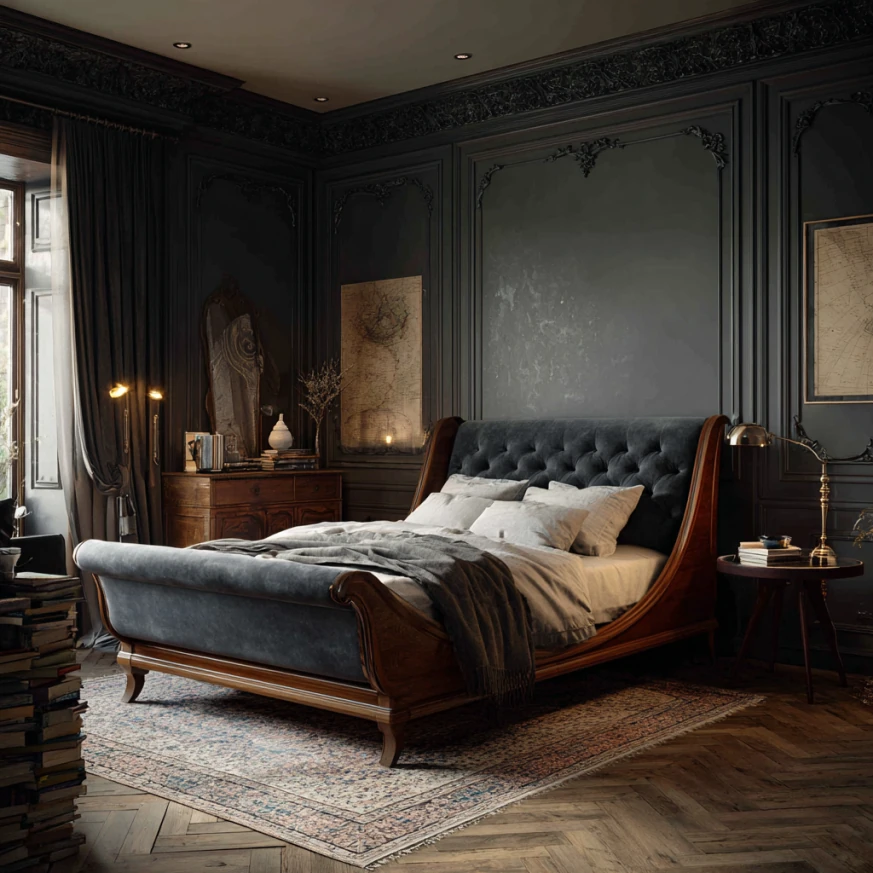
A sleigh bed is defined by its curved or scrolled headboard and footboard, a silhouette that came out of the French and American Empire period of the early 19th century and looks like the sled it’s named after. Traditionally that meant thick, dark, heavy wood — beautiful, but it can swallow a small room.
The Dulane keeps the curve and drops the bulk. The headboard scrolls outward into wingback sides, the footboard stays low, and the whole thing sits closer to the floor than a classic wooden sleigh. You get the shape and the sense of enclosure without a wall of timber at the foot of the bed. If you want the full background on the style and how it’s evolved, see what is a sleigh bed.

Chenille vs velvet: which fabric to pick
This bed is offered in more than one fabric, and the choice changes how the room feels and how much upkeep you sign up for. Neither is “better” — they age differently.
| Fabric |
Looks like |
Living with it |
| Chenille |
Soft, matte, slightly nubby; reads casual and warm |
Cozy underhand and forgiving about light. The looped pile can snag on claws and zippers, so vacuum gently |
| Velvet |
Short dense pile with a sheen that shifts as you walk past; reads dressy |
Shows pile marks and pressure lines. Brushing the nap back into place is part of the deal |
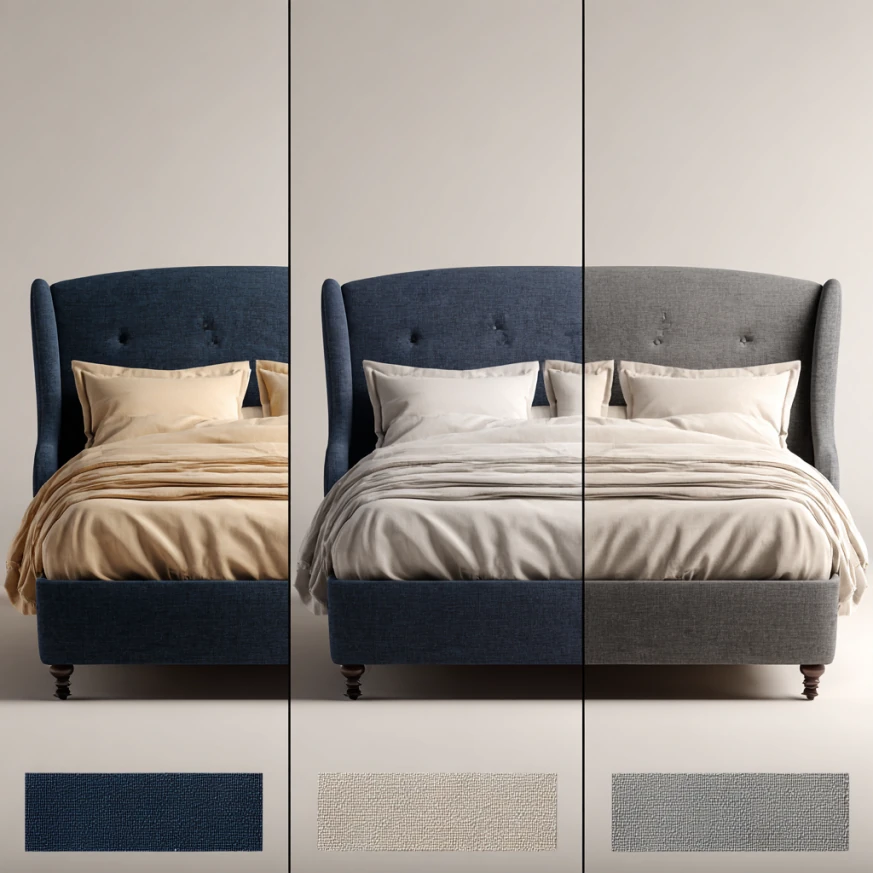
Colour does as much work as texture. Cream lifts a dark room but shows every scuff near the footboard. Charcoal or black grounds a bright room and hides marks, though it collects lint and pet hair in plain sight. Our comparison of velvet vs upholstered bed frames walks through the trade-offs in more detail.
No box spring needed — and what that means for you
The slat-and-centre-leg system carries the mattress directly, so skip the box spring. A few practical knock-ons:
- Your mattress height sets the look. A low-profile frame plus a thin mattress can sit lower than you expect. If you like sliding off the edge at hip height, choose a taller mattress.
- Foam and hybrid mattresses are happy on slats as long as the gaps are close together. Twelve slats across a queen is a reasonable spread.
- Adjustable bases are usually a no. Beds with attached side rails and a fixed slat deck rarely accept one unless the base is sized to drop inside the frame. Ask the seller before you assume it fits.
- Under-bed storage is limited. Low profile plus centre legs means shallow bins at best. If you need real storage, a different frame style will serve you better.
Sizing and room fit
Size availability shifts with stock, so confirm on the listing rather than trusting any blog — queen is the size most commonly shown. Whatever size you land on, measure the room before you buy, not after delivery.
For a queen, planning references suggest about 30 inches of clearance around the bed, with 36 inches being more comfortable. Run painter’s tape on the floor at the bed’s full outer dimensions — remember the sleigh curves push the footprint past the mattress size — then open every door and drawer in the room and see what collides. If you’re weighing a bigger frame, our breakdown of king vs California king dimensions covers the extra floor space each one demands.
One more thing people forget: getting the headboard up a narrow staircase or around a tight landing. Check the box dimensions, not just the assembled ones.
Comfort: the headboard does the heavy lifting
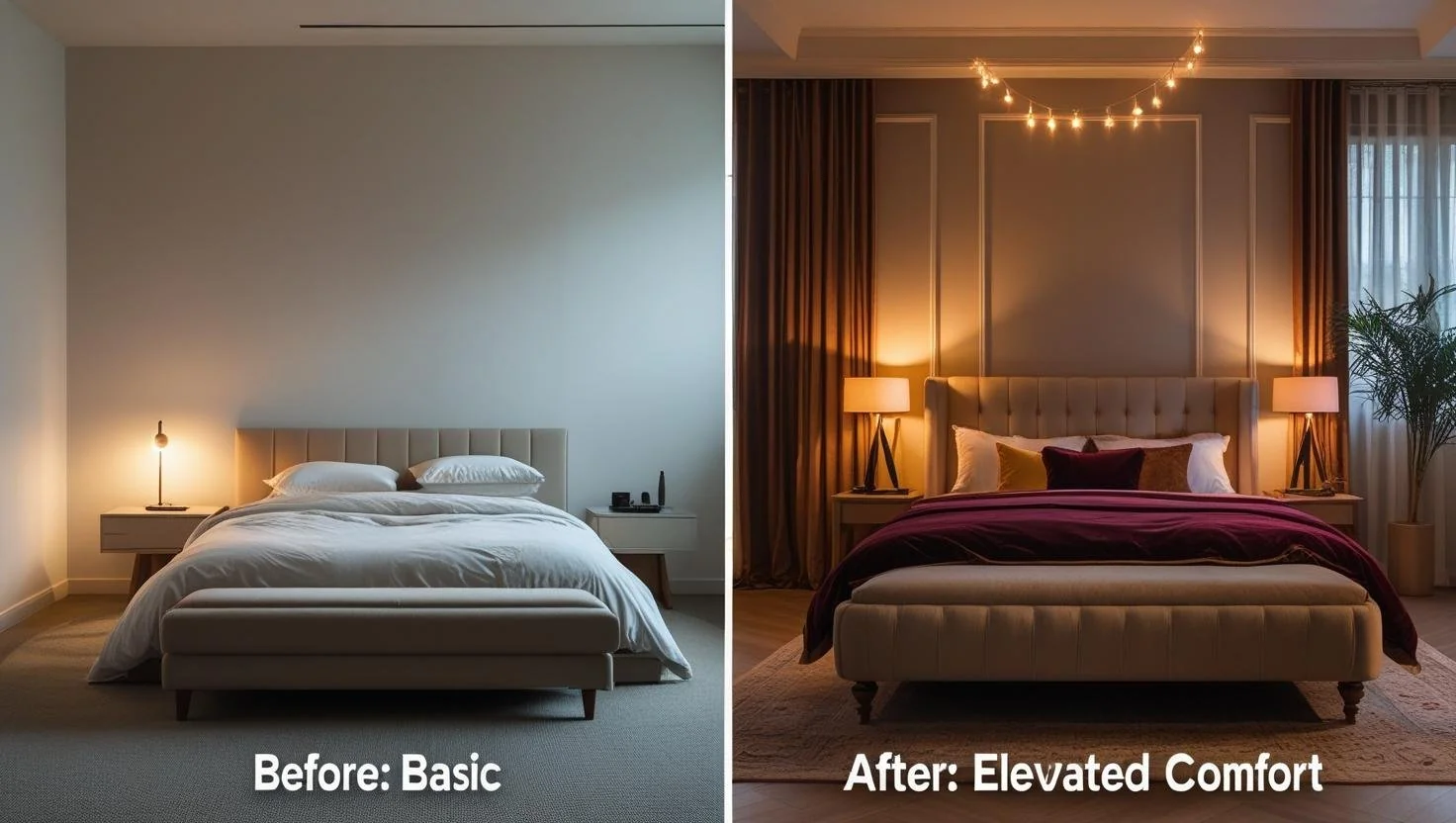
The reason people buy padded beds over wooden ones is the sit-up position. A foam-filled wingback headboard gives you something to lean back into for reading, laptop work or a late episode, and the wings block a little draught and light from the sides. Against a plain wooden headboard, it’s a genuine difference you feel every night.
The footboard is a different story. Sleigh footboards curve up and inward, so tall sleepers who like to stretch a foot over the end don’t get that option. If you’re over about six feet, sit on a sleigh bed in person before ordering one online.
Styling it without making the room feel heavy
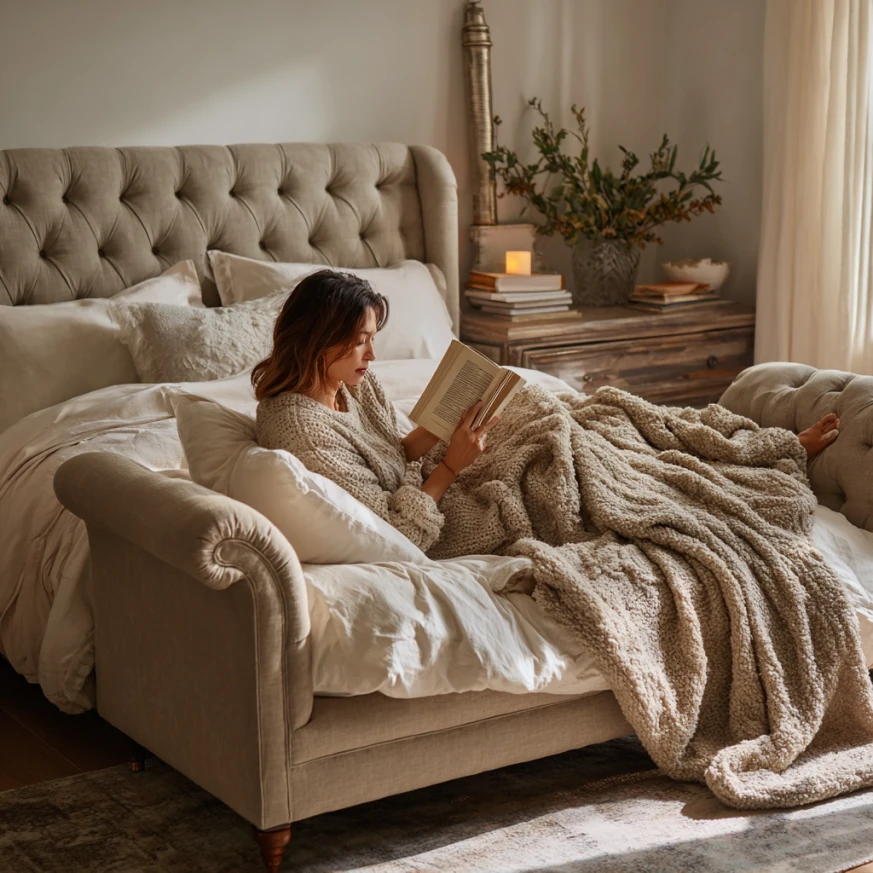
A tufted, curvy bed is already doing a lot visually. Let it lead and keep everything else calm.
- Bedding: one texture contrast is plenty — crisp cotton percale against velvet, or a chunky knit throw over smooth chenille. If you’re deciding between a duvet setup and an all-in-one, our guide to duvets vs comforters lays out the differences.
- Pillows: two sleeping pillows, two euro squares, one lumbar. More than that and you’re moving furniture every morning.
- Nightstands: because the frame sits low, tall nightstands look off. Aim for a top roughly level with the mattress.
- Rug: run it under the bed and out past the sides by 18 to 24 inches so the curves have room to breathe.
- Seasonal swap: heavier quilts and warm tones in winter, light cotton or linen in summer. It’s the cheapest way to make the room feel new.
Keeping the fabric looking new
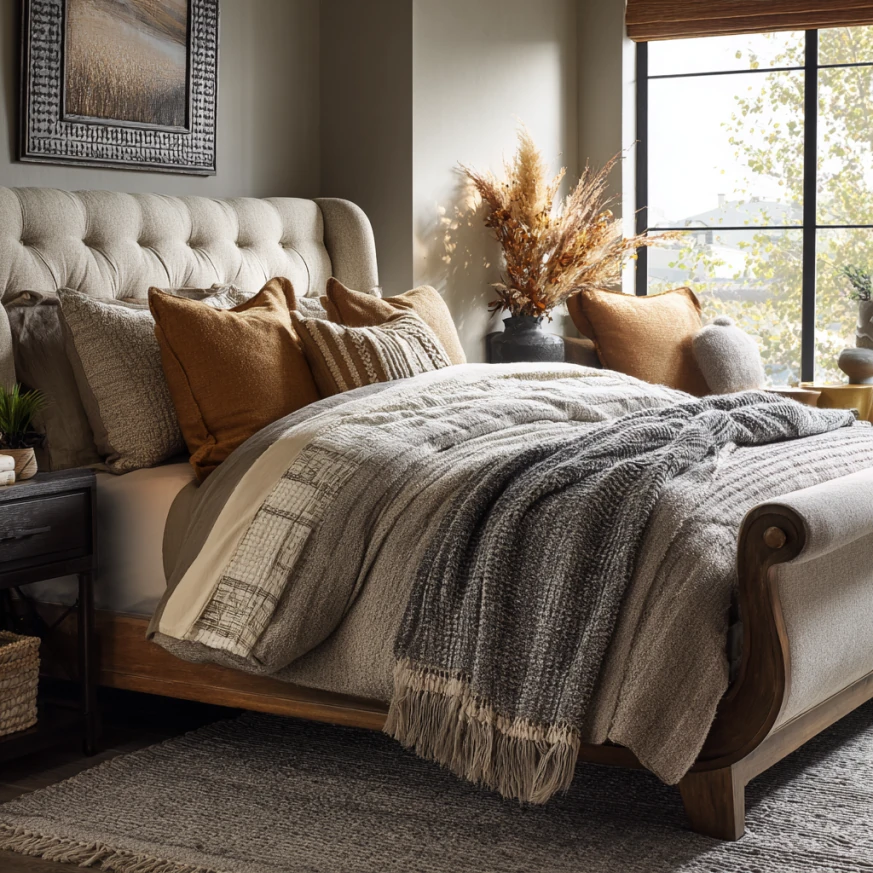
Upholstered frames need a bit more attention than wood or metal, but it’s five minutes of work, not a project.
- Find the care code first. Upholstery tags carry a letter: W means water-based cleaners are fine, S means solvent only, WS means either, and X means vacuum or brush only, no liquid. Using water on an S-code fabric can leave rings you can’t remove.
- Vacuum weekly with a soft brush attachment, paying attention to the tufted buttons and the crease where the headboard meets the mattress — dust and hair collect there.
- Blot spills, never rub. Rubbing pushes the stain deeper and roughs up the pile. Test any cleaner on a hidden spot near the base first.
- Keep it out of direct sun. Strong afternoon light fades dyed fabric unevenly, and you’ll notice it first on the headboard wing that faces the window.
- Retighten the bolts a few weeks after assembly and then once or twice a year. Almost every “my bed creaks” complaint about engineered wood frames starts with a loose fastener.
- Rotate the mattress. Guidance varies by mattress type — roughly every six months for most modern mattresses and more often for older innersprings. Follow your mattress maker’s instructions over any general rule.
- Use a mattress protector so spills stop at the mattress instead of soaking into the rails.
Who it suits — and who should skip it
Good fit if you want a soft, traditional-leaning focal point, you read or work in bed, you’re furnishing a guest room or primary bedroom in a neutral palette, and you’d rather not buy a box spring.
Look elsewhere if you need serious under-bed storage, you want an adjustable base, you’re tall and hate a footboard, or you have a cat who treats fabric as a scratching post. In those cases a painted wooden sleigh frame is worth comparing — see choosing a painted sleigh bed for that route.
Honest caveat: we haven’t tested this bed in person, and the only feedback available is customer reviews on the seller’s own listing. Treat those as directional, not proof, and check the return window before ordering.
FAQ
Does the Dulane sleigh bed need a box spring?
No. It comes with 12 wooden slats and centre support legs, which take the mattress directly.
What sizes does it come in?
Availability changes over time. Queen is the size most consistently listed; confirm current options on the retailer’s page rather than relying on a third-party list.
What tools do I need to assemble it?
Flat-pack upholstered beds like this normally need only a screwdriver or the supplied Allen key, with hardware and instructions in the box. Two people make the headboard far easier to handle.
Is it pet-friendly?
Fabric beds and claws are an uneasy mix. Chenille in particular can pull into loops. A washable throw over your pet’s favourite corner is cheap insurance.
Can I reupholster it later?
It’s not designed for that. The fabric is fixed at the factory, so choose the colour you can live with for years.
What décor styles does it match?
The curved shape plus neutral fabric lands in transitional territory, so it sits comfortably with modern, classic, farmhouse or softly glam rooms. It fights hard-edged industrial and strict mid-century schemes.
Updated September 2026.