The best sleep hacks for deep sleep are mostly timing fixes, not gadgets: one wake-up time you never move, a cool dark room, caffeine finished by early afternoon, and no alcohol in the last three hours before bed. Deep sleep (the slow-wave stage) mostly happens in the first half of the night, so anything that delays sleep onset quietly steals it. Fix the front end of your night and the deep stuff usually takes care of itself.
What “deep sleep” actually is
Sleep runs in cycles of roughly 90 minutes. Deep sleep is stage N3 — the slow-wave stage where you’re hardest to wake, growth hormone is released, and tissue repair and memory consolidation do their heavy lifting.
Two things are worth knowing. Most of your N3 is front-loaded — the early cycles carry big chunks of it, and later cycles shift toward REM. And the amount you get, typically around 15–20% of total sleep time for adults, drops steadily with age. That decline is normal; a 55-year-old will not match their 20-year-old numbers.
That’s also why chasing a wearable’s number is a bad idea. Trackers estimate stages from movement and heart rate, not brain waves — watch the trend over weeks, not last night’s score.

Best sleep hacks for deep sleep, ranked by payoff
Start at the top. The first three sleep hacks for deep sleep do more than the other six combined, and they cost nothing.
1. Pick one wake time and defend it
Your body clock anchors to when you get up, not when you go to bed. Set one alarm time for all seven days and let bedtime land wherever sleepiness puts it. Weekend lie-ins longer than an hour shove your clock later, and Sunday night insomnia is the bill.
If your current schedule is a mess, don’t yank it back three hours at once. Move in 15–20 minute steps every two or three days — the slow version in our step-by-step plan for fixing your sleep schedule sticks far better than a single heroic early night.
2. Get light in your eyes early, and kill it late
Ten to twenty minutes of outdoor light within an hour of waking sets the timer for melatonin release that evening. Cloudy day? Still worth it — an overcast morning outdoors is far brighter than your kitchen ceiling.
Then flip it at night. Ninety minutes before bed, switch to lamps instead of overheads, drop screen brightness, and skip the bathroom’s full light array at tooth-brushing time. Total brightness matters more than the blue-light-glasses debate.
3. Run the room cold
Your core temperature has to fall roughly 1–2°F for sleep to start and hold. A warm room blocks that. Sleep clinicians generally point to around 60–67°F (15.5–19.5°C) for the bedroom, and most people who sleep badly in summer are simply too warm.
What to check, cheapest first:
- Thermostat — drop it 2–3 degrees and give it three nights before judging.
- Duvet weight — a 13.5 tog winter duvet in June is a sweat trap. Keep a 4.5 tog or a cotton blanket for warm months.
- Fabric — cotton percale, linen, or bamboo viscose breathe. Microfiber and satin polyester hold heat.
- Mattress — dense all-foam beds sleep hot; a fan aimed across the bed fixes most of that.
- Feet — warm feet (socks, or just out from under the covers) help you dump heat through the skin faster.
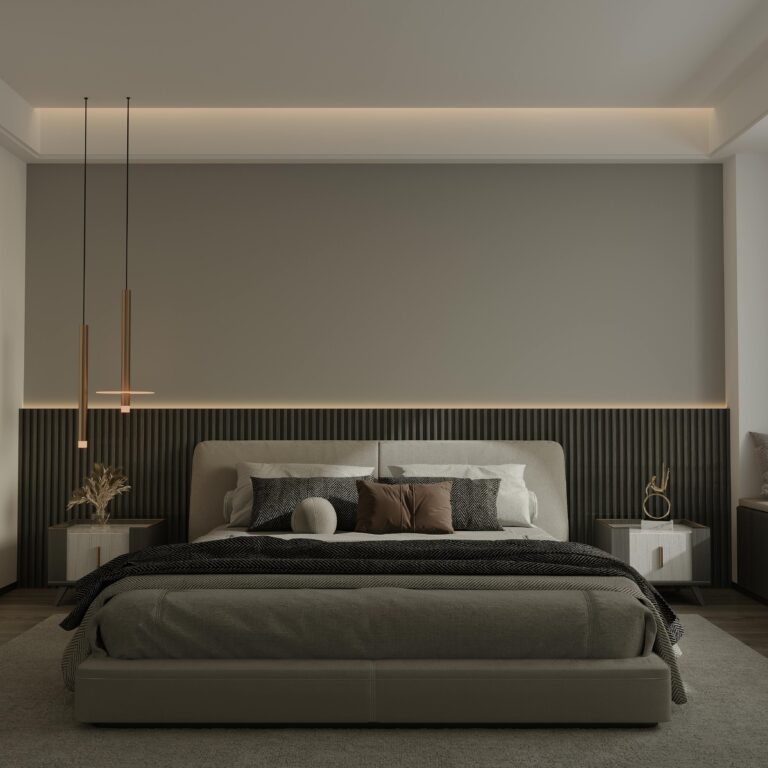
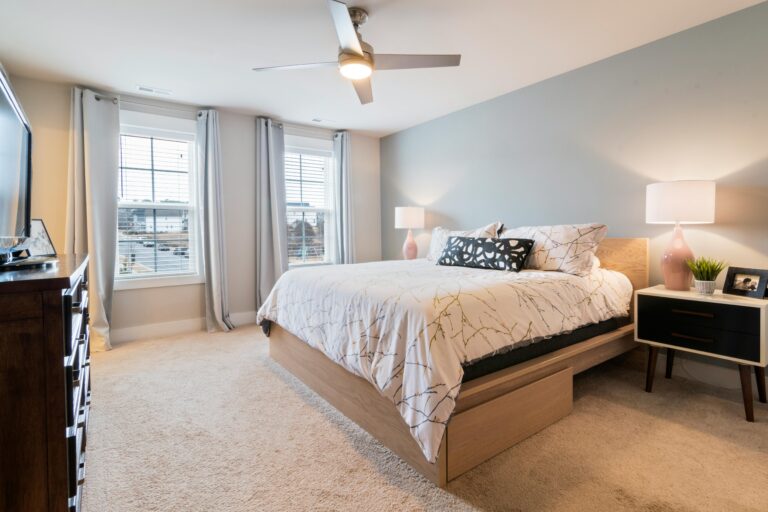
Our full guide to building the right sleep environment covers noise and darkness in more depth.
4. Set a caffeine curfew you can actually hit
Caffeine’s half-life sits around five hours for most adults, so half of a 3 p.m. coffee is still circulating at 8 p.m. In a controlled crossover trial, 400 mg of caffeine — roughly four cups of brewed coffee — taken six hours before bedtime measurably reduced total sleep time, even though participants didn’t always notice it.
Simple rule: last caffeinated drink 8–10 hours before lights out. For an 11 p.m. bedtime, that’s 1–3 p.m. Watch hidden sources — green tea, dark chocolate, pre-workout, some painkillers.
5. Skip the nightcap
Alcohol is the classic trap. It knocks you out faster and can bump slow-wave sleep early on, then rebounds: fragmented second half, suppressed REM, more 3 a.m. wake-ups, elevated heart rate all night. Wide awake in the small hours? Start here — why you keep waking at 3 a.m.
If you drink, finish at least three hours before bed and match each glass with water.
6. Build a 30-minute wind-down that’s the same every night
Your brain needs a runway. Thirty minutes, same order, boring on purpose: lights down, phone on a charger across the room, shower, teeth, five pages of a paper book. Repetition is the active ingredient — the sequence starts to trigger sleepiness on its own. Longer version: our nighttime routine guide.
A warm shower or bath 60–120 minutes before bed fits nicely here: skin warms, blood vessels dilate, and core temperature then falls faster than it otherwise would.
7. Move your body earlier in the day
Regular exercise deepens sleep; timing matters at the margins. Hard intervals or heavy lifting within about an hour of bed leave core temperature and adrenaline high. Moderate evening exercise finished 90 minutes out is fine for most people, and a 20-minute walk after dinner helps sleep and blood sugar both.
Morning or early-afternoon workouts stack two of the best sleep hacks for deep sleep at once: the exercise and the daylight.
8. Eat for the night, not against it
Finish big meals three hours before bed. Lying down on a full stomach invites reflux, which fragments deep sleep even when you don’t fully wake.
Still hungry at 10 p.m.? A small carb-plus-protein snack is fine — oatmeal, yogurt and berries, banana with nut butter, a handful of almonds. Kiwi and tart cherry juice get a lot of attention on thin, early research, so treat them as experiments rather than sure things. More in our list of foods worth eating before bed.
Front-load fluids, too. Most of your water before 7 p.m. means fewer bathroom trips carving up those early, deep-sleep-heavy cycles.

9. Give your brain somewhere to put the noise
If you lie down and your to-do list starts talking, write it out. Five minutes with paper before you brush your teeth — tomorrow’s tasks, anything unresolved — parks the loop on the page instead of in your head.
Then pick one physical off-ramp and stick with it:
- Slow breathing — in for four, out for six or eight; the long exhale does the work.
- Body scan — attention from toes to scalp, releasing each area, about ten minutes.
- Cognitive shuffle — picture unrelated objects in random order (apple, ladder, dog) to block storytelling.
Still awake after about 20 minutes? Get up. Another room, low light, something dull to read, back to bed when you’re heavy-eyed. Lying there frustrated teaches your brain that bed is where you stay awake.
Common deep sleep killers and what to change
| Symptom |
Likely cause |
What to try first |
| Wake at 2–4 a.m. most nights |
Evening alcohol, late meal, or a too-warm room |
Cut alcohol for a week; drop the thermostat 3 degrees |
| Take 45+ minutes to fall asleep |
Bedtime too early for your clock, or bright evenings |
Later bedtime, same wake time; lamps only after 9 p.m. |
| Eight hours in bed, still wrecked |
Fragmented sleep — noise, pets, snoring, reflux |
Earplugs or white noise; pets off the bed for two weeks |
| Sunday nights are always bad |
Weekend schedule drift |
Keep weekend wake time within one hour of weekdays |
| Hip or shoulder pain at 5 a.m. |
Mattress too firm or sagging |
Check for sag with a straightedge; try a topper first |

Can you catch up on deep sleep at the weekend?
Partly, and not cleanly. After a short night your body does prioritise slow-wave sleep the next night — that rebound is real. What doesn’t come back neatly is the rest of it: lost REM, the attention and mood costs, and the clock disruption from sleeping until noon.
Better repair is small and boring: an extra 30–60 minutes a night for a week or two, plus a short early-afternoon nap if you need one. Chip away at the debt instead of trying to clear it in one go.
How long until any of this shows up?
Give any of these sleep hacks for deep sleep 10–14 nights before you rule on it. One night proves nothing — slow-wave sleep bounces around with exercise, stress, illness, and how early you got up.
Change one thing at a time. Move your caffeine curfew, cool the room, and buy a new pillow in the same week and you’ll never know which one helped.
When it isn’t a habits problem
Some deep sleep loss won’t respond to routine tweaks. See a doctor if you snore loudly, gasp or stop breathing in your sleep, wake unrefreshed for months despite full nights, fall asleep during the day, or get restless, crawling sensations in your legs at night. Untreated sleep apnea wrecks slow-wave sleep no matter how tidy your bedtime routine is — and it’s very treatable once diagnosed.
FAQ
How much deep sleep do I need?
There’s no single target. For most adults it lands around 15–20% of total sleep, and it sorts itself out once you get enough total hours. Sleeping seven to nine hours and waking clear-headed? Your deep sleep is doing its job.
Does magnesium help?
Magnesium supports muscle relaxation and normal nerve function, and some small studies suggest a modest benefit for older adults with insomnia. Evidence for boosting deep sleep in healthy people is thin, though, so it belongs well below the basic sleep hacks for deep sleep above. If you try it, glycinate is gentler on the stomach than oxide — and check with your doctor or pharmacist first if you take other medications.
Do naps reduce deep sleep at night?
Long or late naps do. A 20-minute nap before about 3 p.m. is usually harmless; 90 minutes at 6 p.m. burns off the sleep pressure you need for a solid night.
Does a weighted blanket increase deep sleep?
Evidence is limited, and it’s mostly about feeling calmer and falling asleep more easily rather than measurable extra slow-wave sleep. If it helps you settle, fine — just go lighter than the old “10% of body weight” rule if you sleep warm, since the extra layer traps heat.
What about melatonin?
Melatonin is a timing signal, not a sedative. It helps most with jet lag or a shifted body clock, in a small dose a few hours before target bedtime — not for deepening sleep you already get. Over-the-counter doses are often far higher than needed.
Updated September 2026.