A trundle sofa bed is a sofa with a second sleeping platform hidden underneath, so it works as seating by day and a one- or two-person bed at night. The lower frame either rolls out and sits low to the floor, or lifts on a scissor mechanism to meet the seat and form one larger surface. Before you buy, measure three things: the open bed footprint, the clearance under the frame, and the path from your front door to the room.
How a trundle sofa bed works (and how it differs from a pull-out)
The word “trundle” gets stuck on several different pieces of furniture, and a trundle sofa bed is not one single thing. These four show up most often, and our overview of trundle beds covers the bedroom versions in more depth.
- Trundle sleeper sofa. The seat is the top half of the bed. A wheeled frame slides out from underneath and lifts up level with the seat, giving you one continuous full or queen surface with no folding metal bar in the middle. West Elm’s Whitman Trundle Sleeper Sofa is the version most people have seen in a showroom.
- Daybed with a roll-out trundle. The daybed mattress stays put; a second twin mattress rolls out beside it at a lower height. Two separate beds, two separate sleepers, no lifting. Monte Design’s Dorma daybed sofa is built this way, with the seat itself being a real mattress.
- Pop-up trundle. Same roll-out drawer, but the frame rises to match the main bed and locks, so two twins become one king-ish surface.
- Classic pull-out sleeper. A folding steel frame and a thin mattress tucked inside the sofa body. Nothing rolls; it unfolds. Usually the thinnest mattress of the bunch.
The practical difference: a trundle mattress never folds, so it can be thicker. A pull-out has to fold in thirds, which caps the mattress around 4 to 5 inches and puts a support bar where your hips land.
Trundle sofa bed vs. the other space-saving options
| Type |
Sleeps |
Mattress thickness |
Best for |
| Trundle sleeper sofa |
1–2 on one surface (full or queen) |
Usually 5–8 in., unfolded |
Couples and regular overnight guests |
| Daybed with roll-out trundle |
2 on separate twins |
6–8 in. on the trundle |
Kids, sleepovers, siblings sharing |
| Pop-up trundle |
1–2, or one king-size surface |
6–8 in. |
Rooms that flex between one and two sleepers |
| Pull-out sleeper sofa |
1–2 |
4–5 in., folded in thirds |
Occasional guests, tight living rooms |
| Futon |
1–2 |
6–8 in., folds at the hinge |
Budget setups and first apartments |
If you are still deciding between formats, our breakdown of space-saving bed types puts Murphy beds, daybeds and trundles side by side.
Measure before you buy: the numbers that matter
1. The open footprint
Standard mattress sizes tell you most of it: twin is 38 by 75 inches, twin XL 38 by 80, full 54 by 75, queen 60 by 80. A queen trundle sleeper on an 82-inch sofa needs roughly 40 to 45 inches of clear floor once the frame is out, plus another 20 inches to walk past without shin-barking. Mark the outline on the floor with painter’s tape before you order.
A daybed trundle is different: the second mattress comes out the long side, so you need about 40 inches clear along the front, not at one end.
2. Under-frame clearance
Measure from the floor to the underside of the sofa deck, then subtract an inch for the trundle frame and casters. That number is your mattress ceiling. Most roll-under trundles are built around a 6- to 8-inch mattress, and a plush 10-inch foam mattress simply will not slide back in. Pop-up frames often allow a bit more because the mattress rides on top.
3. The delivery path
A steel trundle frame makes the sofa heavier and stiffer than a same-size couch, and it will not flex through a turn. Measure the narrowest doorway (interior doors are usually 30 to 32 inches), the tightest hallway corner, and any stair turn, then measure the sofa’s height and depth with the legs off. If it is close, look for a knock-down back or bolt-on arms.
4. Seat height and bed height
A 17- to 19-inch seat is comfortable to sit on and easy to get off of as a bed. A rolled-out trundle sitting 8 inches off the floor is fine for a child or a weekend guest and rough on anyone with cranky knees. Check the pull-out side too: a radiator or a low shelf right there turns a 30-second conversion into a two-person job.
Judging the sleeping comfort honestly
Firmness that feels great to sit on can feel like a plank at 2 a.m. A few things separate a trundle sofa bed you can sleep on from one you apologize for:
- No bar across the middle. Trundle frames use a flat deck or slats, which is the whole point. Press down in the center of the open bed; you should not feel a ridge.
- Slat spacing under 3 inches. Wide gaps let a foam mattress sag between slats and it shows up as back ache within a few nights.
- A real mattress, not a pad. On daybed models, ask what the seat actually is. Some are genuine mattresses; some are cushions with a mattress name.
- Mind the gap. Two twins pushed together leave a seam you can feel. A foam bed bridge or a king fitted sheet pulled tight over both handles it.
- Two standard twins do not make a king. Twin XL pairs (38 by 80 each) match a king’s 76 by 80. Two regular twins land at 76 by 75, so you lose 5 inches of length.
Our guide to picking a trundle bed mattress goes deeper on foam density and low-profile options that still feel like a bed.
Frame, mechanism and safety checks
Roll the trundle out and back a few times in the store, or read the manual before you unbox. What to check:
- Casters. Nylon or rubber wheels are kinder to hardwood than bare metal, and they climb a low-pile rug instead of stalling at the edge.
- Locking legs. Pop-up frames should lock at full height and not drop when someone sits on the edge.
- A stated weight rating per sleeping surface. If nobody will tell you, that is information too.
- Pinch points. Scissor mechanisms and small hands are a bad mix; run the lift-and-lock step yourself.
- Flammability labeling. A detachable sofa bed mattress is treated as a mattress by federal rules, so it should carry the standard flammability label; the CPSC explains how that applies to futons and sofa beds in its mattress labeling FAQ.
New foam smells. That is off-gassing, and the EPA notes that indoor concentrations of volatile organic compounds run consistently higher than outdoor levels. Unwrap the mattress, leave it uncovered in a ventilated room for a day or two, and the smell fades before your first guest arrives.
Upholstery: what each fabric is actually good at
| Fabric |
Why people pick it |
Watch out for |
| Performance weave |
Solution-dyed fibers shrug off spills; easiest with kids and pets |
Can read a little synthetic up close |
| Recycled poly weave |
Durable, holds color, post-consumer content |
Warmer than linen in summer |
| Cotton-linen blend |
Breathable, relaxed, gets softer with use |
Wrinkles and shows water rings |
| Wool |
Resilient, breathable, temperature-steady |
Price, and moths if you store cushions |
| Faux sheepskin |
Soft, warm, great in a nursery corner |
Mats down in high-traffic seats |
| Leather or vegan leather |
Wipes clean, ages well |
Sticky against skin on a hot night |
If a maker publishes a double-rub abrasion number, higher means more wear resistance; figures quoted for heavy residential use commonly start around 15,000 double rubs. Removable zip-off covers matter more than the fiber name, though, because the one thing guaranteed to happen to a guest bed is coffee.
Where a trundle sofa bed earns its keep
In a home office, you keep the desk and still host your in-laws. Leave the pull-out side clear so you are not dragging the chair every time.
In a kids’ room, the roll-out twin handles sleepovers without a permanent second bed eating the floor. Keep the trundle sheets folded inside the frame so setup is 90 seconds.
In a studio, a daybed version can be both the main bed and the sofa. That is a real trade-off: you sit on your mattress daily, so buy firmer than you think. If guests are rare, compare it with the fold-and-store option in our roundup of the best rollaway beds.
In a rental or vacation place, simplicity wins. A single-motion trundle survives guests; a fussy multi-step mechanism does not.
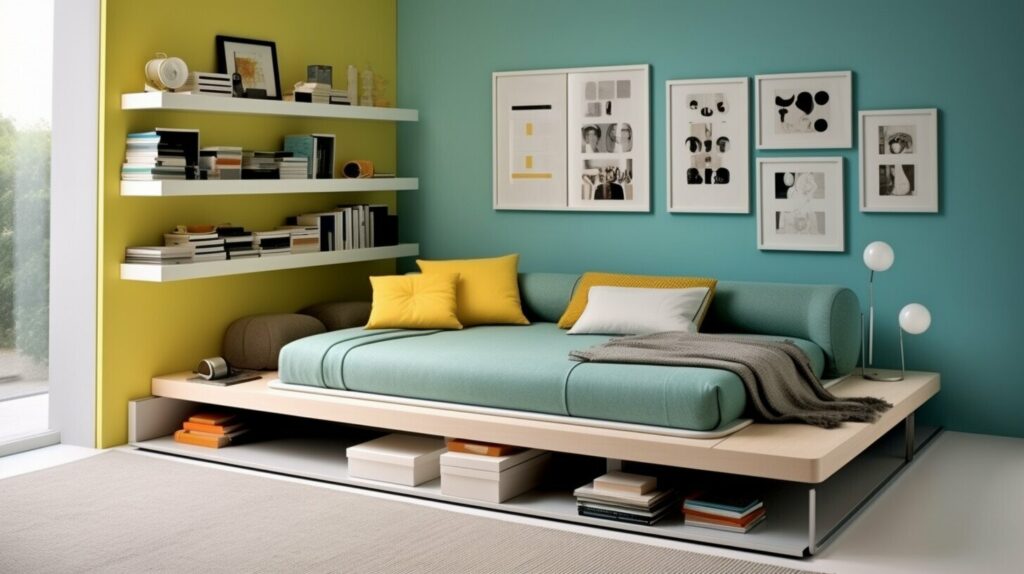
Bedding and storage that actually fit
Skip deep-pocket sheets. A 6-inch trundle mattress swims in a 15-inch pocket and the corners pop off all night, so look for pockets in the 6- to 9-inch range or use a set with elastic all the way around. Two twin sets plus one king set covers a pop-up trundle in both configurations.
The trundle cavity is the obvious home for guest linens; a flat zip bag keeps them dust-free while the bed sits closed. If you are comparing formats on footprint alone, our wider look at sofa beds for small spaces runs through the measuring math for each one.
FAQ
Can you sleep on a trundle sofa bed every night?
On the better trundle and daybed models, yes, because the mattress does not fold and can be 6 to 8 inches thick. Rotate it head to foot every few months and use a protector. A thin folding pull-out mattress is a different story, and is best kept for occasional nights.
What size mattress goes in a trundle?
Most roll-out trundles take a standard twin, 38 by 75 inches, with thickness capped by the clearance under the frame, usually 6 to 8 inches. Measure floor-to-deck and subtract about an inch before you shop.
Does a trundle need a special mattress?
It needs a low-profile one. Foam and hybrid mattresses in the 6- to 8-inch range work well; thick pillow-tops do not fit, and very soft foam sags on a slatted deck.
Is a trundle the same as a sofa to trundle bed conversion?
People use “sofa to trundle bed” to describe any sofa that converts using a trundle frame underneath. It is the same idea: the seat stays where it is and a second frame comes out from below, instead of a mattress folding out of the sofa’s belly.
How much space do I need in front of it?
Plan on 40 to 45 inches for the part that swings out, plus roughly 20 inches to walk past it. Tape the footprint on the floor and live with it for a day before you order.
Updated September 2026.