
Choosing a Mattress for Side Sleepers
If shoulder or hip pain keeps you up, this guide to the best mattress for side sleepers shows exactly how to get deep pressure relief, better spinal alignment, and cooler sleep—without guesswork. You’ll learn which materials work, how to test a mattress in minutes, and how to keep your bed performing like new.
Key Takeaways
- The best mattress for side sleepers pairs plush surface contouring with stable support beneath to protect shoulders and hips.
- Memory foam and plush hybrids typically deliver the most pressure relief; latex adds bounce and durability.
- Target a medium to medium-soft feel (with zoning if possible) for alignment and comfort.
- Prioritize breathable foams, coils, and covers for temperature control.
- Use in-store or at-home tests to verify relief, then maintain the mattress to extend its life.
Why Side Sleepers Need Specialized Support
Answer first: Side sleeping concentrates weight at the shoulder and hip, so you need plush contouring on top with steadier support underneath to keep your spine neutral.
When you sleep on your side, your shoulders and hips become high-pressure zones. A mattress that’s too firm compresses these areas and can pinch nerves, while one that’s too soft lets your midsection sink and strain your lower back. The sweet spot is plush contouring at the surface with steadier support below so your spine stays neutral from neck to tailbone.
If you often wake up with sore shoulders, choosing a mattress for shoulder pain can make a major difference in keeping pressure off your joints.
What that feels like: your shoulder should sink just enough to keep your neck level on the pillow, your hip should be cradled without tilting your pelvis, and your waist should be gently supported to avoid side-bend sagging.
Best Mattress Types for Side Sleepers (Memory Foam, Hybrid, Latex)
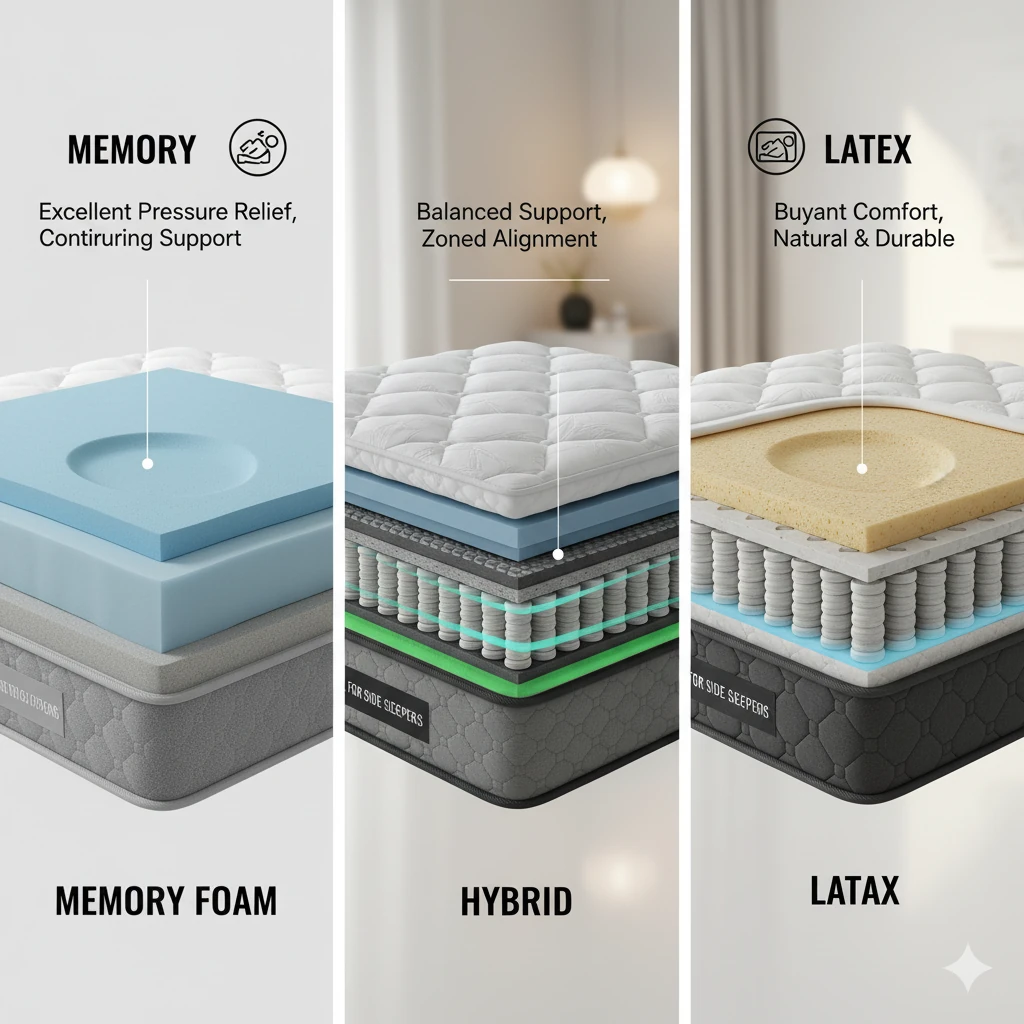
Answer first: Memory foam offers the deepest contouring, hybrids blend relief with bounce and airflow, and latex provides responsive cushioning with standout durability.
Memory Foam
Foam’s slow-hug feel conforms closely to curves, reducing peak pressure at the shoulder and hip. Look for comfort foams in the 3–4 lb/ft³ range for plush relief, with denser transition foam beneath to prevent bottoming out. If you also sleep warm, consider open-cell foams or phase-change covers for better airflow.
Hybrid
A hybrid pairs foam comfort layers with a pocketed coil core. For side sleepers, this combo can be ideal: deep contouring on top with springy, zoned coils that keep your lumbar from sinking. Choose coils with edge reinforcement if you sit on the side of the bed frequently, and aim for a medium or medium-soft feel.
Latex
Latex has a buoyant, responsive cradle—great if you want pressure relief without the “stuck-in-foam” sensation. Talalay latex tends to feel plusher, while Dunlop feels denser and more supportive. Latex is naturally breathable and durable, making it a solid long-term investment.
Not sure which direction to go? This comparison of materials can help you decide between a plush foam hug and a bouncier, breathable feel found in coil-assisted designs—see our guide to hybrid mattress benefits for practical pros and cons.
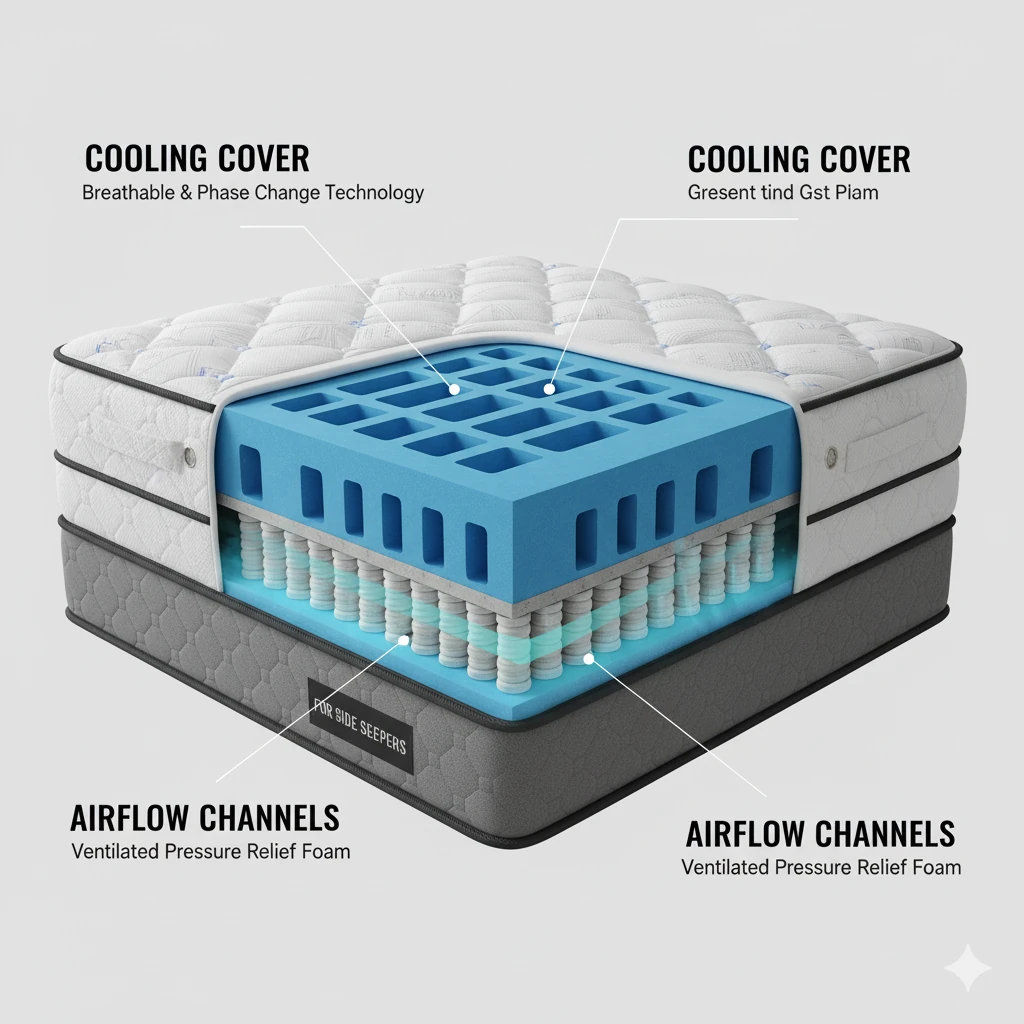
Key Features: Pressure Relief, Zoned Support, Cooling
Answer first: Aim for 2–4 inches of plush comfort material, targeted zoning for shoulders and lumbar, and breathable construction to manage heat.
The best mattress for side sleepers with breathable covers and airflow-friendly coils, perforated latex, or ventilated foam channels will keep you more comfortable through the night. Moisture-wicking covers also help reduce clammy wake-ups. Learn more about temperature control in this Sleep Foundation guide on sleep temperature regulation.
Look for a pressure relief mattress that balances softness and structure, helping your body relax into alignment.
Top Picks by Budget and Body Type
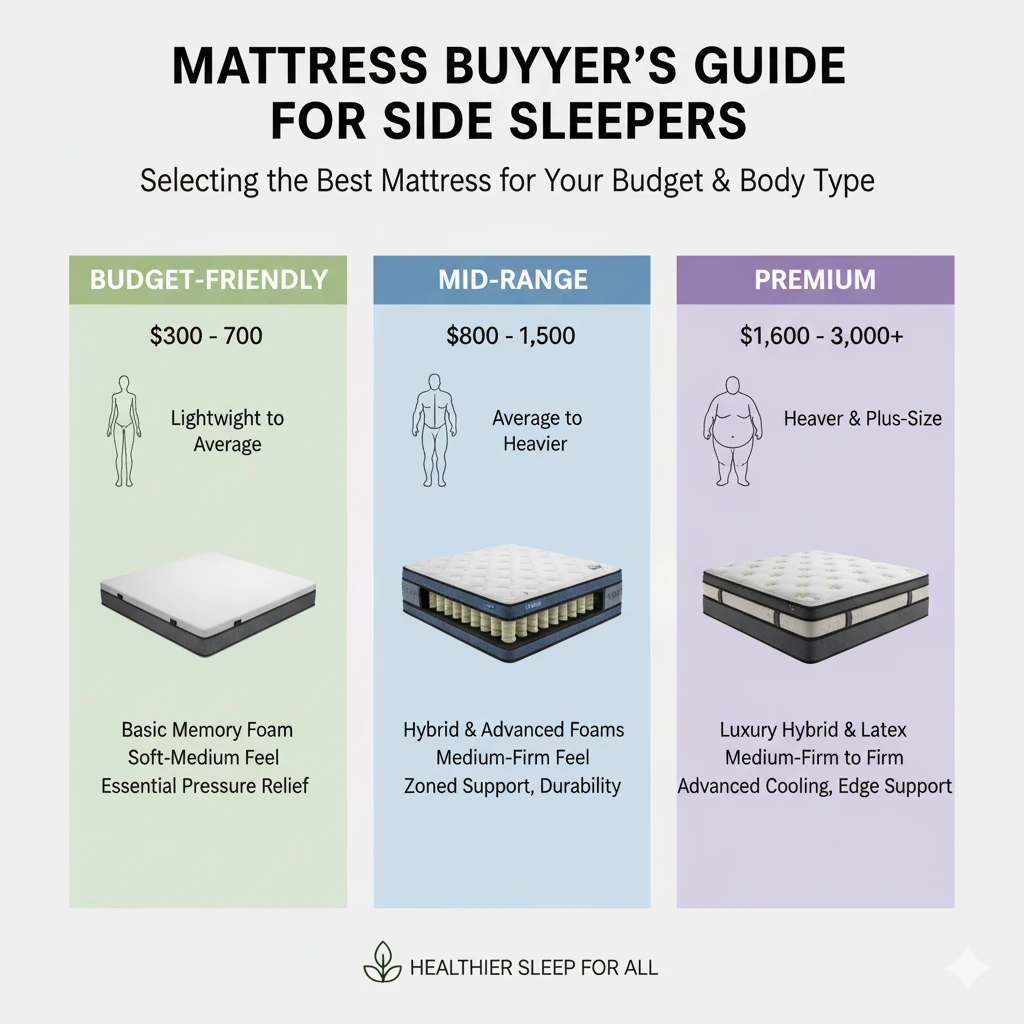
Answer first: When comparing options, the best mattress for side sleepers should feel medium to medium-soft across budgets; lighter bodies benefit from plusher tops, while heavier bodies need thicker comfort layers and sturdier cores.
A slightly soft mattress for side sleepers allows natural shoulder and hip cushioning without losing support.
Budget-Friendly (Under $800–$1,000 for Queen)
Look for medium to medium-soft memory foam models with at least two comfort layers and a dense base foam. Prioritize reputable warranties and real trial periods to test pressure relief at home.
Mid-Range ($1,000–$1,700)
Plush hybrids shine here: zoned pocketed coils for alignment, plus gel-infused or open-cell foam for pressure relief. If you’re under 150 lbs, a slightly softer top helps you sink enough at the shoulder; 150–230 lbs. often prefer classic medium; above 230 lbs. may need a medium-firm with thicker comfort layers.
Premium ($1,700+)
Consider latex hybrids or advanced foams with targeted zoning and breathable covers. These options often last longer and keep support consistent across years of use. If you want something that still feels brand new five years from now, a latex hybrid could be your forever mattress.
If you experience both side sleeping and back issues, our strategies in the back pain mattress guide (king-size focus) can help you choose a feel that balances contouring with lumbar stability.
How to Test a Mattress for Shoulder & Hip Relief
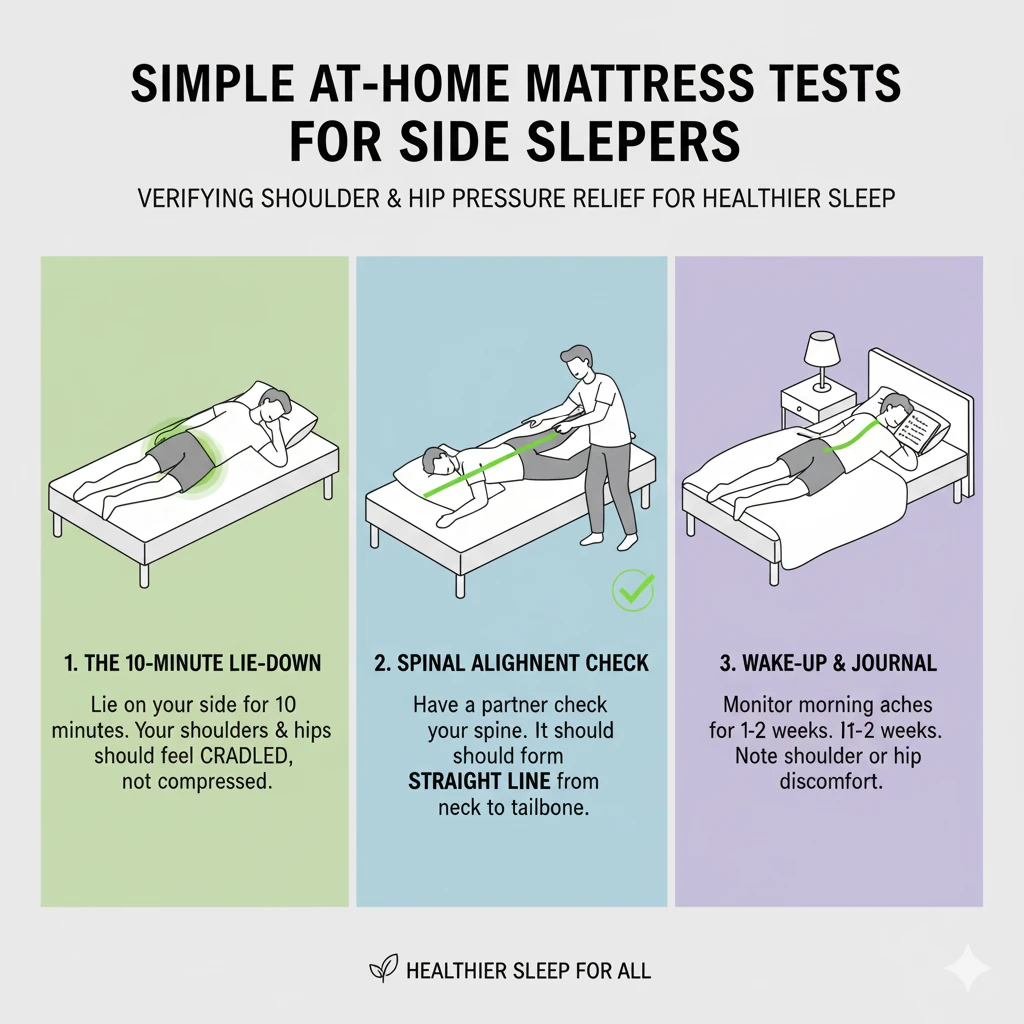
Answer first: Run quick checks for shoulder nestling, pillow height, and hip support, then validate over the full trial period.
- Side-Hug Check (2–3 minutes): Lie on your regular side. Your shoulder should nestle without numbness; your waist should feel gently filled, not arched.
- Pillow Alignment: With your head on your usual pillow, your nose should align with your sternum. If not, adjust pillow height before blaming the mattress.
- Hip Sink Test: Place a hand at your low back; there should be light contact. A gap means too firm; a deep sag means too soft.
- Roll & Reset: Roll to your back and return to side. If you feel stuck, consider a bouncier hybrid or latex.
- At-Home Trial: Use the full trial window. Note pressure or soreness patterns in the morning—improvements should appear within 1–2 weeks. Don’t worry if it takes a few nights to adjust—your body often needs a short “break-in” period before the mattress truly supports you.
Care, Rotation & Longevity Tips
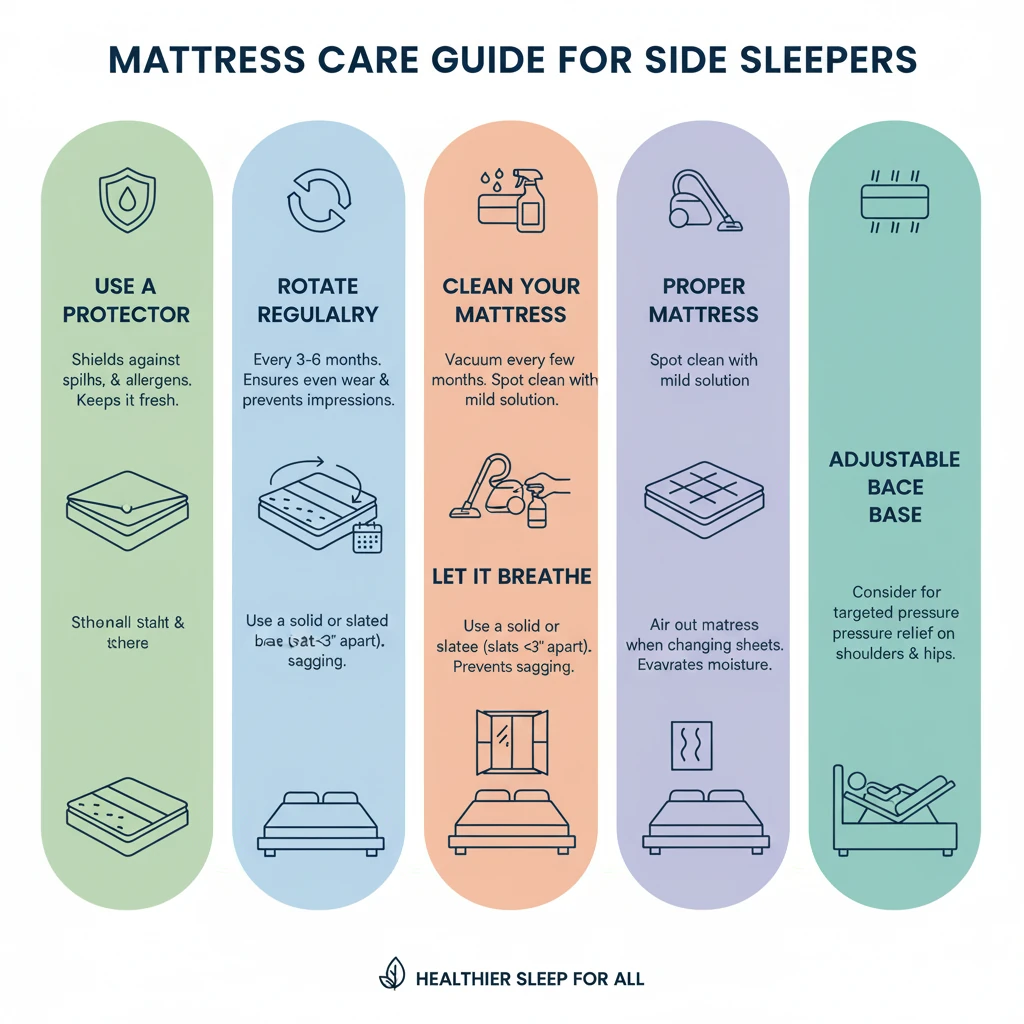
Answer first: Protect, rotate, and keep the surface clean to preserve support and comfort for years.
Protect your best mattress for side sleepers investment with a breathable protector and rotate it every 2–3 months for the first year (then seasonally). Keep the surface clean to prevent allergens and premature wear—our step-by-step guide on how to clean a mattress covers safe stain removal, deodorizing, and drying. Check your base: a solid foundation or correctly slatted platform preserves alignment and warranty coverage. For more eco-aligned tips, see mattress longevity advice from Ethical Bedding.
Final Thoughts on Finding the Best Mattress for Side Sleepers
The best mattress for side sleepers balances deep pressure relief with stable support to keep your spine aligned and shoulders pain-free. Whether you lean toward plush foam or hybrid bounce, focus on breathable layers, consistent comfort, and durability. At Cozy Bed Quarters, we test and review every mattress type to help you rest easier, night after night. The best mattress for side sleepers isn’t just about pressure relief—it’s about waking up without pain and actually looking forward to bedtime again.
Related Reading
Hybrid Mattress Benefits: Cooling, Bounce, and Support
Best Memory Foam Mattresses 2024: Top Picks
Best Memory Foam Mattress for Side Sleepers (2024)
Expert-tested side sleeper mattresses (Sleep Foundation)
Pro mattress buying guide (Architectural Digest)
More Expert Insights
At Cozy Bed Quarters, we’ve helped hundreds of local side sleepers finally get the rest they deserve. This 2026 guide covers everything you need: key features, our top-tested recommendations, and practical tips tailored to hot, dry environments like ours.
Gel-infused foam, breathable covers, phase-change materials, or open coil systems help in Arizona’s warm nights.
Euro-top plushness with strong coil support. Great airflow for hot sleepers. Highly rated by NapLab.
Advanced zoned coils + cooling cover. Great for combination sleepers. Praised by Forbes Vetted.
Quick Buying Guide: Find Your Perfect Match
- Budget under $1,000 → Nectar Premier
- Hot sleeper in Phoenix → Leesa Sapira Chill or DreamCloud
- Back or shoulder pain → Helix Midnight Luxe or Nolah Evolution
- Eco-conscious → Birch Luxe Natural
- Share the bed → Casper Dream Hybrid or WinkBed
Mattress Care Tips for Arizona’s Dry Climate
- Rotate every 3–6 months
- Use a breathable, waterproof protector
- Keep bedroom well-ventilated
- Spot clean spills immediately
- Avoid constant edge sitting
Ready to wake up pain-free and refreshed?
Rather than focusing on brand names, it’s more important to understand the features that contribute to healthy spinal support when selecting the best mattress for back pain.
Many modern mattresses include firmer support through the lumbar area and softer zones near the shoulders. This helps maintain natural posture throughout the night, especially for side sleepers seeking the best mattress for back pain.
Overheating can increase discomfort and disrupt restorative sleep. Breathable covers, gel-infused foams, and coil systems help maintain a cooler sleep surface.
Often recommended for: Side sleepers and those seeking pressure relief around the hips and shoulders.
Often recommended for: Hot sleepers or those with mild to moderate back sensitivity.
These mattresses are designed with spinal support in mind and often feature firmer constructions with targeted reinforcement.
Even high-quality mattresses wear out over time. Signs it may be time for a replacement include:
According to the Sleep Foundation’s 2026 guide, maintaining neutral spinal alignment during sleep is one of the most important factors in reducing back strain. Recent expert testing highlights hybrids like the WinkBed, Helix Midnight Luxe with ErgoAlign, and others as top performers for the best mattress for back pain.
Medical guidance from the Mayo Clinic and the Cleveland Clinic also supports medium-firm sleep surfaces for many individuals experiencing back discomfort.
At Cozy Bed Quarters, we aim to provide clear, research-backed guidance so you can make confident decisions and enjoy more restful, comfortable sleep.
Many sleep specialists recommend medium to medium-firm surfaces for maintaining spinal alignment.
Why it helps: Individually wrapped coils provide targeted lift under the lumbar while allowing the shoulders and hips to settle. Foam on top eases pressure. Pros: great airflow, edge support, easy movement. Cons: quality varies; look for sturdy coil counts and meaningful zoning.
Why it helps: Deep contouring fills gaps under the lower back and distributes load evenly. Pros: excellent pressure relief, motion isolation. Cons: can sleep warmer and feel slow to respond; ventilated or open-cell designs improve comfort.
Why it helps: Naturally resilient and buoyant, latex keeps you “on” the bed, not “in” it, while still cushioning pressure points. Pros: durable, breathable, easy to move. Cons: typically pricier; feel is springier than memory foam.
Why it helps: Classic coil systems with a lumbar band or alternating-gauge rows resist midsection sag. Pros: responsive, cool. Cons: less contouring on top—pair with a quality pillow-top or foam layer to avoid pressure points.
Why it helps: Softer shoulder zones and firmer midsection zones guide the spine into alignment. Pros: precise fit for mixed sleepers. Cons: zoning must match your body; test for shoulder comfort and lumbar lift.
Foam: best pure contouring and pressure relief; choose denser bases to resist long-term sag. Hybrid: balanced feel with pushback from coils plus cushioned tops—often the most versatile for couples and combination sleepers. Innerspring: responsive and breathable; select models with true lumbar reinforcement and a substantial comfort layer to avoid pressure points.
Debating materials? Our deeper comparison of memory foam vs hybrid designs explains feel, cooling, motion isolation, and durability so you can pick with confidence.
Strong support today won’t matter if the mattress sags tomorrow. Rotate new beds every 2–3 months in year one (then seasonally), use a breathable protector, and ensure your foundation meets manufacturer specs to keep warranties valid. When spills or odors happen, follow our step-by-step guide on how to clean a mattress to refresh the surface without damaging foams or fibers. Most quality mattresses last 7–10 years; replace sooner if you notice dips, new pain, or if your body or sleep position has changed significantly.