Canopy bed frames are four-post beds with rails connecting the tops of the posts, so you can leave the frame bare for a graphic, architectural look or hang fabric for privacy and softness. The right one comes down to three things: enough ceiling clearance above the top rails, a frame that doesn’t wobble once curtains are added, and a material you’re happy to live with and dust. Measure your room and ceiling before you fall in love with a style.
Below you’ll find the styles worth knowing, what actually matters in the build, and how to dress a canopy without making the room feel closed in.

What to Look For in Canopy Bed Frames
Start with height. A canopy frame is tall — often close to seven feet at the top rail — so find the manufacturer’s listed overall height and subtract it from your ceiling. If you’re left with only an inch or two, the bed will read as crammed against the ceiling, and you’ll have nowhere to hang drapery rings. A hand’s width of clearance is the bare minimum; six inches or more looks better.
Then think footprint. A canopy doesn’t take up much more floor space than a standard frame, but the posts sit at the outer corners, so add a few inches to the mattress dimensions and check your walkways. Our king size bed dimensions guide has the exact measurements, and the bedroom layout guide covers clearance around nightstands and doors.
| What to check |
What good looks like |
Why it matters |
| Ceiling clearance |
At least 6 inches above the top rails |
Keeps the frame from visually crowding the room and leaves space for curtain hardware |
| Material |
Solid hardwood, powder-coated steel, or a sturdy upholstered box frame |
Drives weight capacity, maintenance and how the bed ages |
| Joinery and brackets |
Metal-to-metal connections, corner brackets, bolts rather than cam locks |
Canopies sway more than low frames, especially once fabric is hung |
| Slats and support |
Closely spaced slats plus a centre rail and legs on queen and larger |
Protects the mattress and stops sagging in the middle |
| Finish |
Water-based or low-emission finishes; certified composite panels |
Less off-gassing in a room you breathe in for eight hours a night |
| Assembly |
Labelled parts, pre-drilled holes, hex or Torx hardware |
Upper rails are awkward; clear instructions and a second pair of hands save an evening |
Canopy Bed Styles, From Four-Poster to Minimalist
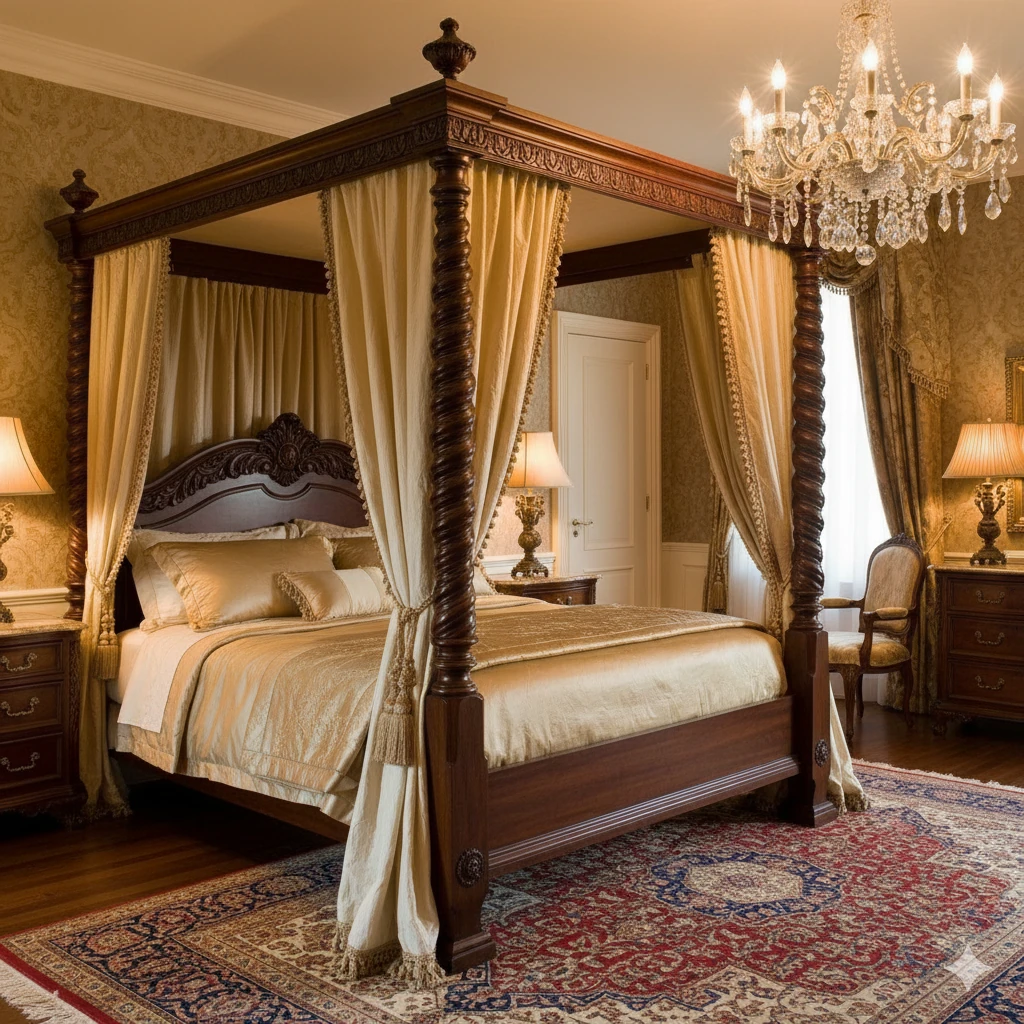
Classic four-poster
Four tall posts, four connecting rails, and a symmetry that anchors a room. Carved or turned wood suits traditional and farmhouse rooms; a squared-off profile in walnut or oak leans transitional. If you’re weighing the two silhouettes against each other, we break it down in canopy bed vs four-poster bed.

Half-tester and suspended canopies
Instead of four posts, a half-tester hangs a partial canopy over the head of the bed from the wall or ceiling. It’s an old idea — the Metropolitan Museum of Art describes an 18th-century French lit à la duchesse whose canopy is suspended from the ceiling rather than supported on posts. In a modern bedroom that translates to a ceiling-mounted rod and two fabric panels: drama at the headboard, no bulk at the foot of the bed. Good option for narrow rooms.
Crown and domed canopies
The curvy, theatrical cousin. The Getty’s collection includes a French lit à la polonaise from about 1775–1780, where curved iron arcs meet in a small crown above the bed. Today you can get the effect with a ceiling-mounted corona and two long panels, without committing to a gilded antique.
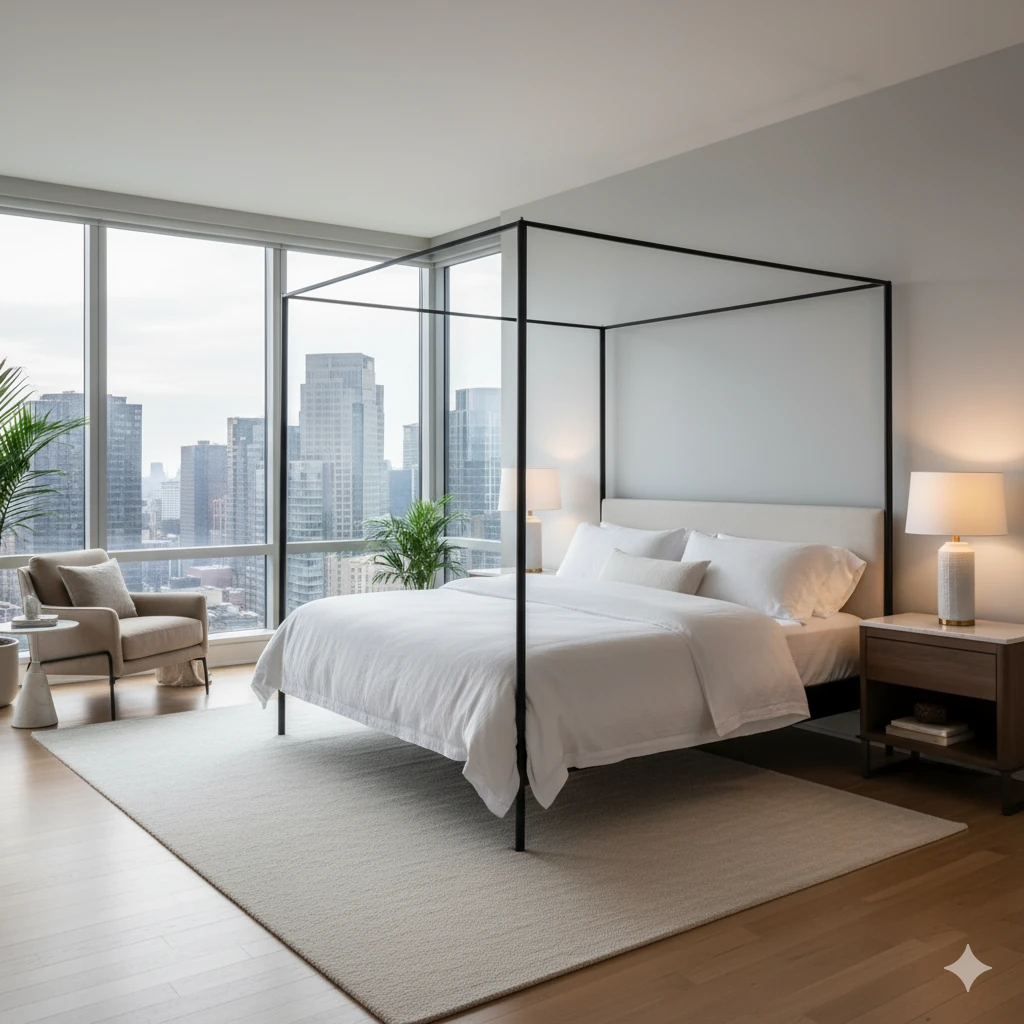
Modern minimalist
Slim metal or wood posts, matte black or bone-white, nothing carved, nothing draped. This is the most forgiving style in a small or low-ceilinged room because the frame draws your eye upward without adding visual weight.
Upholstered canopy
A padded headboard makes reading in bed genuinely comfortable, and fabric posts soften a room full of hard surfaces. The trade-off is cleaning — upholstery holds dust and is harder to spot-clean than a wiped-down wood post.
Industrial and mixed-material
Steel posts with wood rails, or a blackened metal frame with a reclaimed-look headboard. Works well in rooms with exposed brick, big windows or high ceilings, where a delicate frame would disappear.
Rustic, bohemian and convertible
Distressed finishes and rounded posts suit farmhouse rooms; lightweight frames are the natural home for gauzy panels, macramé and rattan. Some frames are convertible — the top rails unbolt so you can run the bed as a plain four-poster and add the canopy back later. If you like changing your mind, that’s worth looking for.
Wood, Metal or Upholstered?
Wood gives you warmth, weight and repairability — you can sand and refinish a solid frame years later. Metal is the low-fuss pick: slim posts, powder-coated finishes that resist scuffs, and usually the easiest to move. Upholstered frames are the most comfortable to lean against and the fussiest to keep clean. None of the three is objectively best; it’s a question of how the room is used and how much maintenance you’ll actually do. Our wood vs metal vs upholstered comparison goes deeper on durability and noise.
Stability: The Part People Skip
A canopy is a tall, rectangular structure with a lot of leverage at the top. Anything that adds load or movement up there — curtains, string lights, a cat with ambitions — shows up as sway. Look for bolted metal-to-metal joints at the post tops rather than pegs or plastic connectors, check that the frame ships with corner brackets, and re-tighten every bolt a few weeks after assembly once the wood has settled. If the room is carpeted, felt pads or thin coasters under the posts keep the frame from rocking in soft pile.
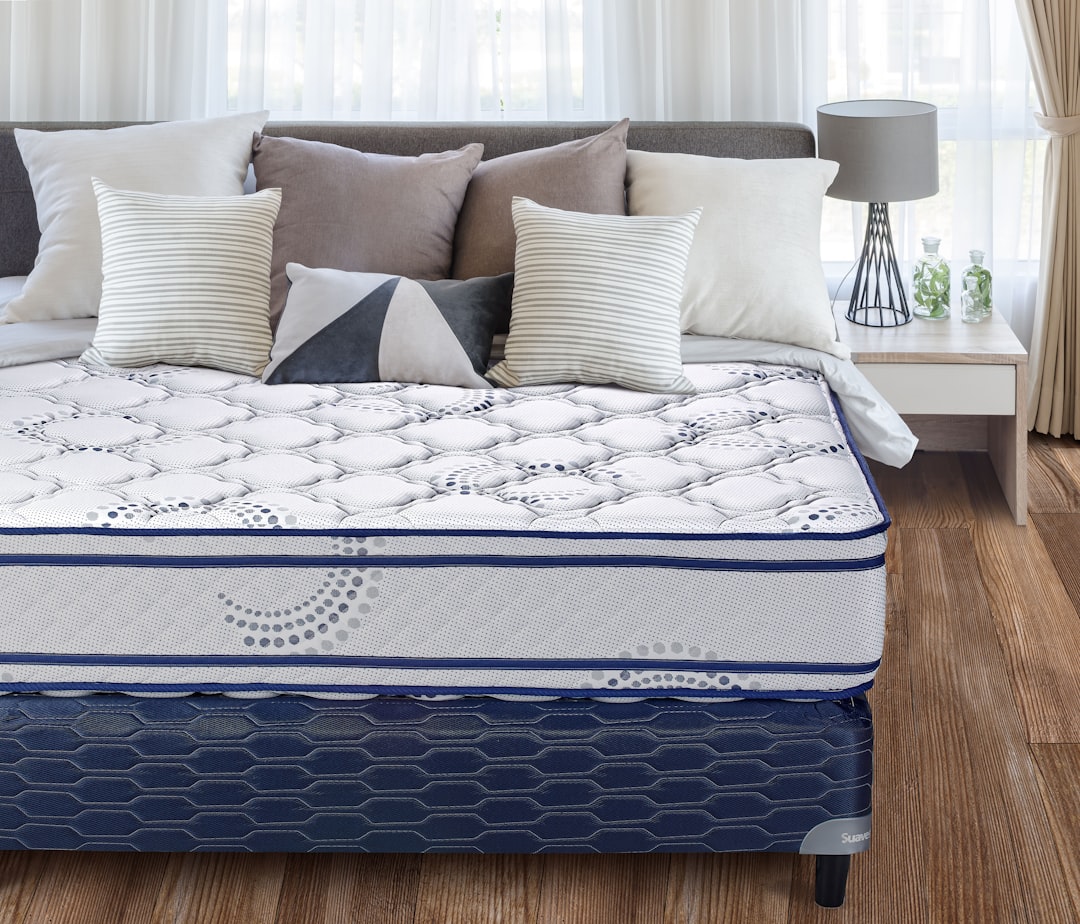
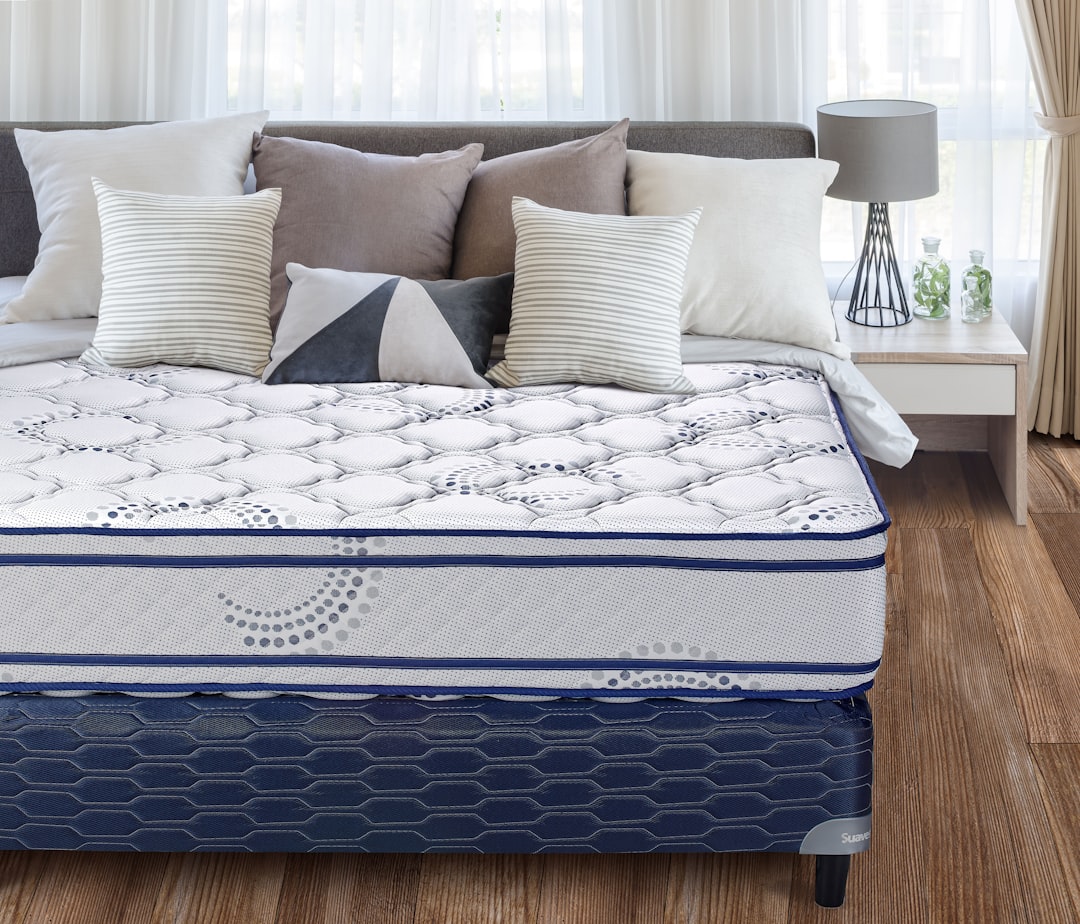
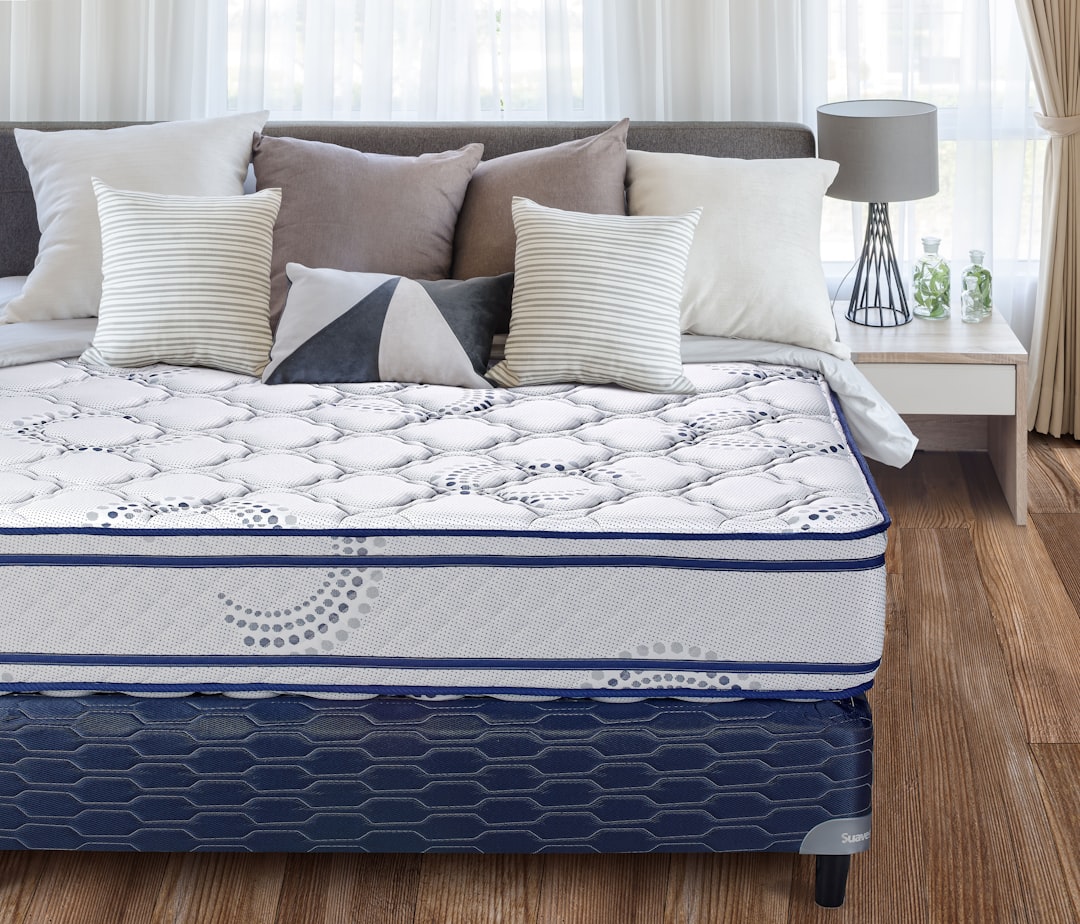
Under the mattress, spacing matters too: most foam and hybrid mattresses need closely spaced slats or a solid platform plus centre support, and manufacturers often set a maximum slat gap in the warranty. Check your mattress paperwork before you buy the frame, not after.
Certifications Worth Knowing
Marketing words like “non-toxic” and “eco” mean nothing on their own. Independent labels are more useful:
One honest caveat: certifications tell you about sourcing and emissions. They don’t promise a frame will last longer, and there’s no reliable public testing that ranks canopy frames by lifespan. Joinery quality and solid material tell you more about durability than any label does.
Draping, Lighting and Styling
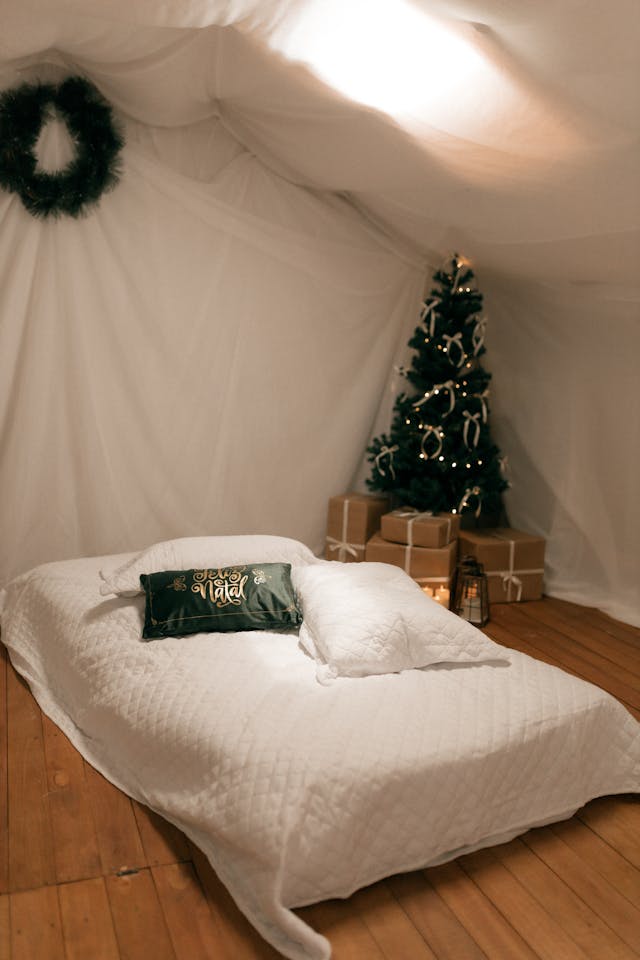
Fabric is what turns a frame into a room within a room, and it’s the cheapest way to change the whole mood later.
- Sheers filter daylight and keep the bed feeling open. Linen and cotton voile hang better than stiff synthetics.
- Heavier panels — velvet, lined cotton — block more light and make the bed feel enclosed. They also absorb a little sound, though don’t expect a noticeable difference in how quiet the room is.
- Clip rings on a slim rod let you take panels down for washing in a couple of minutes. Fabric tied permanently to the rails never gets cleaned.
- Lighting works best low and warm: a string of small LEDs along the top rail, or wall sconces either side. Anything heavy should hang from a ceiling joist, not from the frame.
- Bedding does the rest. Mix a crisp weave with something textured — a waffle throw, a knit blanket — so the bed reads layered rather than flat.
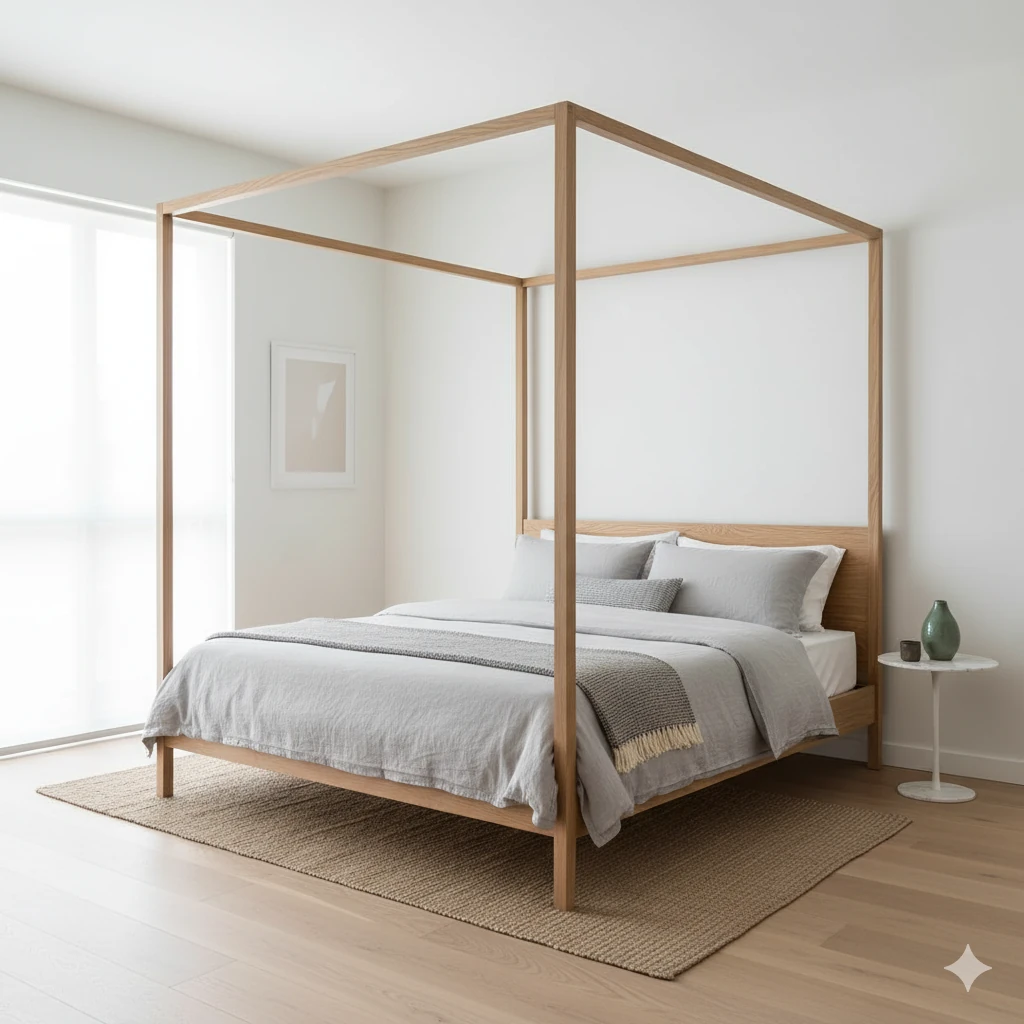

Canopy Beds in Small or Low-Ceilinged Rooms
A canopy can work in a small room, but the frame has to stay visually light. Choose slim posts in a colour close to your walls, skip the side panels and hang fabric only at the head of the bed, and keep the bedding palette tight so the eye isn’t stopped at every layer. Keeping the space under the bed clear helps too — if you need storage down there, a storage bed frame may serve you better than a canopy. And if the bed is the last big decision left, our king size canopy bed guide covers scale in bigger rooms.

Keeping It Clean
Dust settles on top rails faster than anywhere else in the room, so run a microfibre cloth or an extendable duster along them when you change the sheets. Wash cotton and linen panels on a cool cycle and rehang them slightly damp to drop the creases; send velvet and silk to a dry cleaner. Wipe wood posts with a barely damp cloth and dry them straight away, and vacuum upholstered posts and headboards with a brush attachment.
FAQ
What ceiling height do I need for a canopy bed?
Eight feet is comfortable for most frames. Compare the frame’s listed overall height to your ceiling and aim for at least six inches of clearance — more if you want curtain hardware above the rails.
Are canopy beds hard to put together?
The base goes together like any bed frame; the upper rails are the awkward part because you’re lifting long pieces overhead and lining up bolt holes. Plan for two people and an hour or two.
Can I use any mattress with a canopy frame?
Yes, as long as the sizes match and the slat spacing suits your mattress type. Foam and hybrid mattresses generally want closely spaced slats or a solid platform with centre support.
Do canopy beds make a room feel smaller?
An undraped frame usually makes a room feel taller, not smaller, because it leads your eye upward. Heavy, dark, floor-length curtains on all four sides are what shrink a space.
Can I fake a canopy without buying a new bed?
You can. Ceiling-mounted tracks or a corona above the headboard give you the draped effect over the bed you already own. Fix the hardware into joists, not just drywall.
Are canopy beds still in style?
They keep reappearing in current interiors, usually in slimmer, less ornate forms than the antique versions. Style trends move, though, and nobody can promise where they’ll be in five years — the practical case for a canopy is privacy, focal point and the ability to restyle with fabric.
Updated September 2026.