

A Euro sham is a large square decorative pillow cover — most commonly 26 x 26 inches — that stands behind your sleeping pillows to add height, structure and symmetry to the bed. It isn’t a pillowcase you sleep on nightly; it’s a styling layer that fills the gap between the mattress and the headboard and gives an ordinary bedding stack that boutique-hotel look. Buy the cover and the insert separately, size the insert slightly larger than the cover, and use one to three per bed depending on width.

What a Euro Sham Is (and Isn’t)
“Sham” simply means a decorative cover with a finished opening — usually a hidden zipper, a button placket or an overlapping envelope back — rather than the open end of a pillowcase. A Euro sham is the square version, named after the large square pillows traditionally used on European beds. If you want the broader picture of how shams work across all sizes, start with our guide to what a sham is in bedding; this article stays focused on the square ones.
Two things separate a Euro sham from the pillowcase you sleep on:
- Purpose. Sleeping pillowcases are laundered constantly and chosen for comfort against the skin. Euro shams are chosen for shape, texture and how they read from across the room. You can lean on one to read, but they’re not made for a night’s sleep.
- Construction. Shams frequently add a flange (a flat fabric border), piping, hemstitching or embroidery. Those details are what make the back row look deliberate instead of accidental.
Euro Sham Size: Why 26 x 26 Is the Standard
The default Euro sham and Euro pillow size is 26 x 26 inches (roughly 65 x 65 cm), and because it’s so widely used, a cover labelled “Euro” will usually fit an insert labelled “Euro.” It’s the only common square in the bed-pillow line-up — everything else you sleep on is rectangular.
Some brands do sell 24 x 24, 28 x 28 or even rectangular “Euro” shapes, so read the dimensions on the listing rather than trusting the word alone. Watch for one more label trap: a “Euro sham” and a “Euro pillowcase” may have different closures and silhouettes (envelope back versus zipper, flange versus knife edge) even at the same size.
How Euro Shams Compare to Other Bed Pillow Covers
| Type | Shape | Typical size | Best for |
|---|---|---|---|
| Euro sham | Square | 26 x 26 in | Back row; height and symmetry |
| Standard sham | Rectangular | 20 x 26 in | Middle layer over sleeping pillows |
| King sham | Rectangular | 20 x 36 in | King and Cal King beds |
| Accent square | Square | 18 x 18 or 20 x 20 in | Front accent in front of sleeping pillows |
| Lumbar pillow | Rectangular | about 12 x 20 in | Finishing the front of the stack |
Inserts: How to Stuff a Euro Sham So the Corners Stay Crisp
Most Euro shams are sold as covers only. The insert does all the visual work, and a limp insert is the single most common reason a styled bed looks deflated by lunchtime.
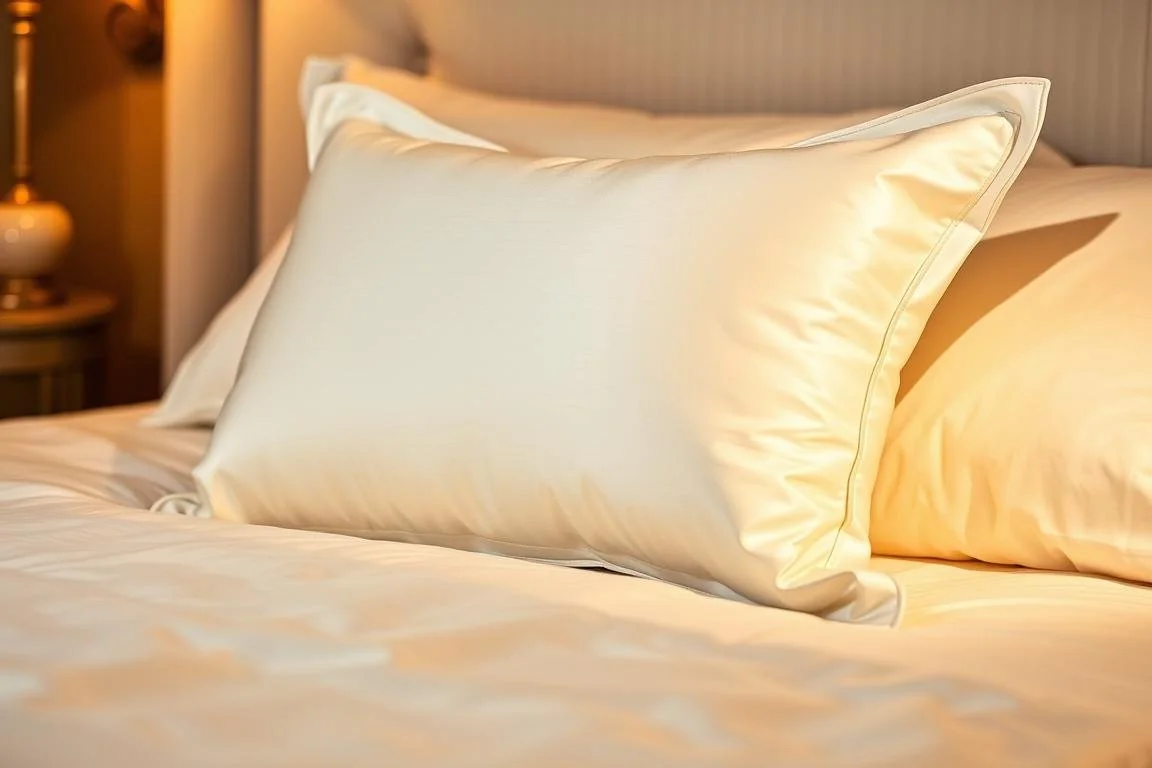
- Size up 1–2 inches. A 27 x 27 or 28 x 28 insert inside a 26 x 26 cover pushes the corners out and keeps the edges square. This is a widely used stylist and linen-shop convention rather than an official standard, so if a maker publishes its own insert recommendation, follow that.
- Match the fill to the job. Down and high-loft down-alternative give the plushest, most collapsible look. A firmer down-alternative or a feather-and-down blend holds shape better if you actually lean back against the sham to read.
- Check loft, not just size. With down, fill power describes how much volume a given weight of down produces — higher numbers loft more for the same weight. A cheap, low-loft insert in the right dimensions will still look flat.
- Quick fixes. If corners sag, add a thin flat cushion behind the insert, or karate-chop the top edge to give the pillow a defined crease. If the sham bulges and the zipper strains, you’ve gone too big.
The same loft-versus-support logic applies to the pillows you sleep on — see what pillow loft means and how to choose the right height.
How Many Euro Shams Per Bed Size
- Twin / Twin XL: one. A single 26-inch square reads as intentional on a narrow bed and leaves room for the sleeping pillow in front.
- Full / Double: one or two. Two side by side nearly span the width, so keep the front stack lean.
- Queen: two. This is the classic arrangement — two squares almost exactly cover a 60-inch width, with a lumbar or accent pair in front.
- King / Cal King: three. Three 26-inch squares run across the back with no visible gaps. Use identical inserts so one doesn’t sag next to the others.
In a tight room, be honest about scale: a deep stack eats floor-to-headboard space visually and can make a small bedroom feel more crowded. Our notes on decorating tricks to make a small bedroom look bigger apply here — fewer, better-filled pillows usually beat a tall pile.
Fabrics and What They Do
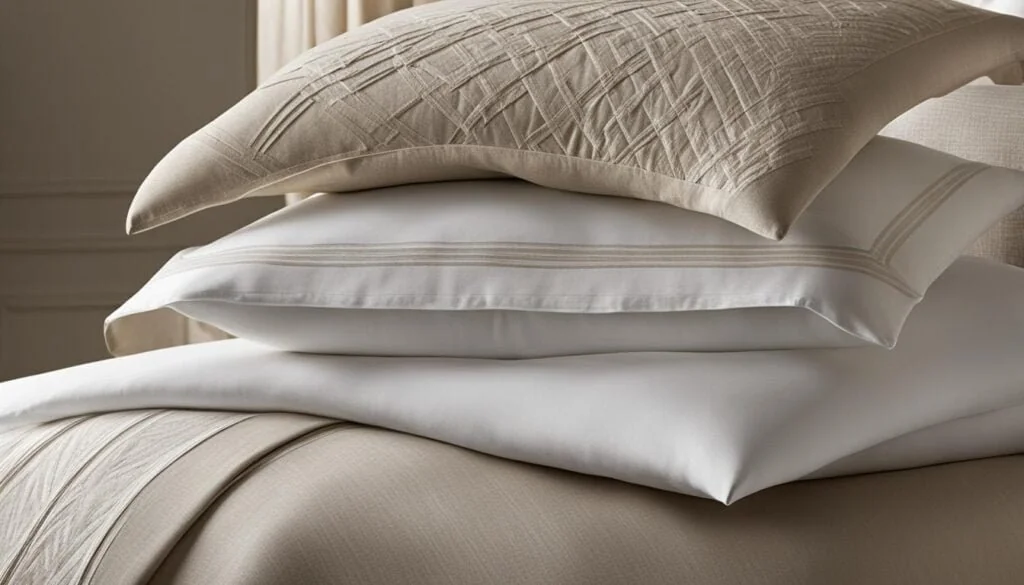
- Cotton percale. A plain weave with a matte finish and a crisp hand — it holds a sharp flange and a square corner better than almost anything else, which is why hotel-style back rows so often use it.
- Cotton sateen. A weave with a soft sheen that falls more heavily and resists wrinkling more than percale. Sleep Foundation’s comparison puts it plainly: percale is light, crisp and durable while sateen is silky and heavier. Sateen photographs beautifully but rounds off corners slightly.
- Linen. Textured, breathable and naturally rumpled. Linen shams never look perfectly sharp — that’s the point, and it suits relaxed, farmhouse and coastal rooms.
- Velvet. Heavy, light-absorbing and strongly seasonal. One pair of velvet Euros can carry a whole winter bed.
- Silk and silk blends. Luminous and formal, with the highest care requirements of the group.
If low-irritation materials matter to you, look for a testing mark rather than vague wording. OEKO-TEX STANDARD 100 is one of the best-known labels for textiles tested for harmful substances, and it applies to components as well as the finished item.
Styling: Three Reliable Directions

Pick one story and stay with it. A calm palette of two or three colours does more for the finished look than any single expensive pillow.
Minimalist
Solid fields, narrow flanges, tight piping, all in one family of whites, ivories or soft greys. This is the version that makes a textured quilt or matelassé coverlet look expensive, because nothing competes with it.
Modern
Contrast borders and colour-blocking. A charcoal-bordered white sham echoing a black metal frame gives clean geometry without pattern. Works well alongside a strong architectural bed — see our canopy bed ideas for how frame lines and pillow lines interact.
Romantic or layered-colour
Embroidery, ajour stitching, fringe or printed linen, in a soft accent you repeat elsewhere in the room — a throw, a lumbar pillow, a lampshade. If you’re building around a specific scheme, our light green and gold bedroom ideas show how one accent colour can be repeated without going overboard.
The Hotel Stack, Back to Front
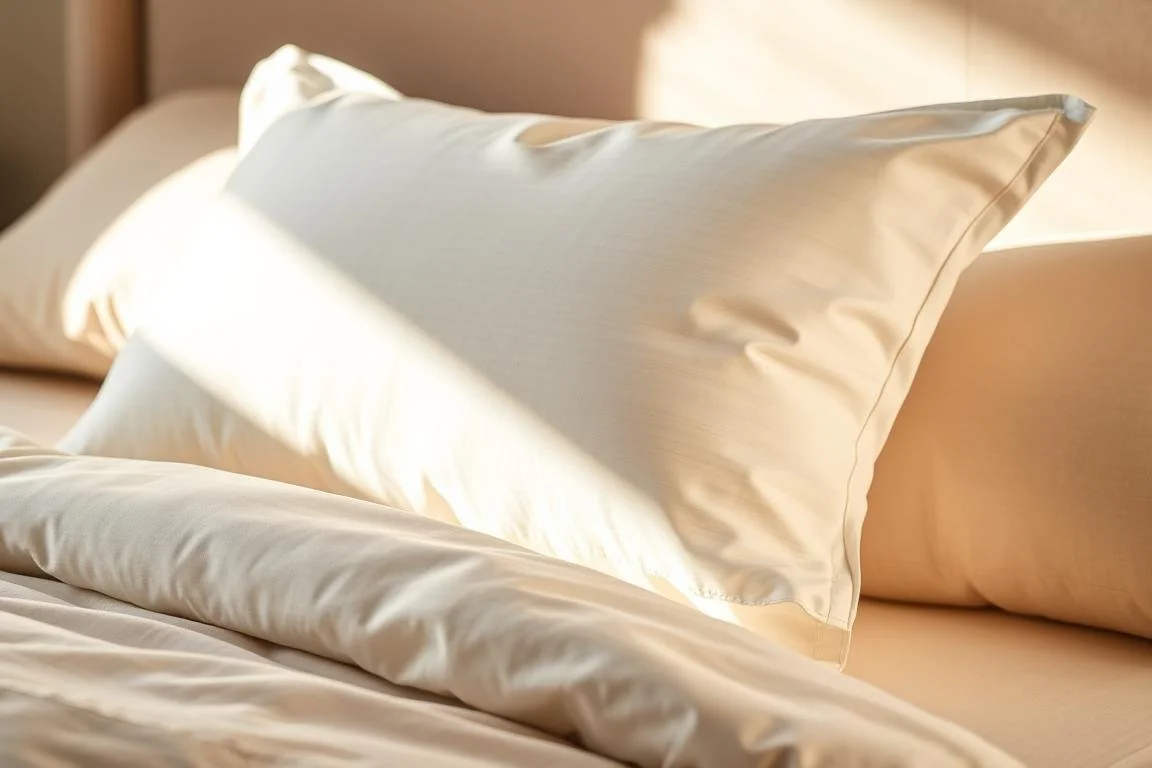
- Euro shams flat against the headboard, matching each other.
- Sleeping pillows in pillowcases or standard shams, propped against them.
- One accent layer — a lumbar pillow, a bolster or a single square — in front.
Two practical tips: mix texture rather than colour (crisp percale at the back, something softer in front) so the stack has depth in photographs, and keep the front layer to a single piece if you have to move it every night. A tailored base layer helps too — a dust ruffle finishes the bottom of the bed the way Euro shams finish the top.
What to Check Before You Buy
- Exact dimensions, and whether they’re measured including or excluding the flange.
- Closure type. Hidden zippers hold a fuller insert and look cleanest; envelope backs are easiest to launder; buttons are decorative but can gap under pressure.
- Whether an insert is included. Usually it isn’t. Budget for inserts separately.
- Seam and trim quality. Double-stitched seams and evenly attached piping are what separate a sham that survives twenty washes from one that puckers after three.
- Flange width versus bed scale. A wide flange looks generous on a king and fussy on a twin.
Prices for Euro shams range from a few dollars for basic polyester to well over a hundred for embroidered linen or silk, and they move constantly with sales, so we don’t publish price bands here — compare current listings for the fabric and construction you’ve decided on instead.
Care and Cleaning
Because you don’t sleep on them, Euro shams need washing far less often than pillowcases. Cleveland Clinic advises washing sheets every week or two and pillows and comforters roughly every six months; decorative covers sit somewhere in between — every few weeks is reasonable, sooner if pets are on the bed.
- Cotton and linen: cold or warm gentle cycle, mild detergent, tumble low or line dry. Iron or steam while slightly damp for a crisp flange.
- Sateen: wash inside out on a delicate cycle and remove promptly to limit wrinkling.
- Velvet and silk blends: delicate cycle at most, often dry-clean only. Press with a cloth barrier and low heat, never directly on the pile or the silk.
- Embroidery and trims: wash inside out, skip the high-speed spin, and don’t bleach.
- Inserts: shake and fluff them when you make the bed; that alone keeps corners full. Down and down-alternative inserts generally need washing only once or twice a year — check the label, and dry them completely.
If dust mites are a problem for you, note that Mayo Clinic recommends washing bedding weekly in hot water of at least 130 F (54.4 C), or tumbling items that can’t take hot water in the dryer. Most decorative sham fabrics won’t tolerate that temperature, so allergy-prone sleepers may prefer plain washable cotton Euro shams — or fewer decorative layers on the bed altogether.
Euro Sham FAQ
What size is a Euro sham?
Normally 26 x 26 inches (about 65 x 65 cm). A handful of brands sell 24 x 24 or 28 x 28 versions, so check the listed dimensions.
What size insert goes in a 26 x 26 Euro sham?
A 26 x 26 insert fits, but a 27 x 27 or 28 x 28 fills the corners better. Follow the maker’s guidance if it gives one.
Do Euro shams come with pillows?
Usually no — the cover is sold on its own. Assume you’ll buy inserts separately.
Can you sleep on a Euro sham?
You can lean on one, and many people use them for reading in bed. They’re not designed as sleeping pillows, and the decorative trims and closures can be uncomfortable against the face.
How many Euro shams do I need?
One for a twin, one or two for a full, two for a queen, three for a king or Cal King.
Are Euro shams worth it?
If you want the layered hotel look or back support for sitting up, yes — they’re the cheapest way to change the scale of a bed without buying new bedding. If you strip the bed to sleep every night, two covers plus two inserts may be more upkeep than you want.
Updated September 2026.