

A cardboard bed frame is a flat-pack sleeping base made from layered corrugated or honeycomb board that supports a mattress without screws or tools. Engineered properly, it is genuinely strong — the recycled-cardboard frames used in the Tokyo 2020 Olympic Village were rated to hold about 200 kg (440 lb) — but it is also light, cheap and completely intolerant of moisture. It suits students, renters, guest rooms and temporary setups; it is not the frame to buy if your room is damp or you want furniture that lasts a decade.
What a cardboard bed frame actually is
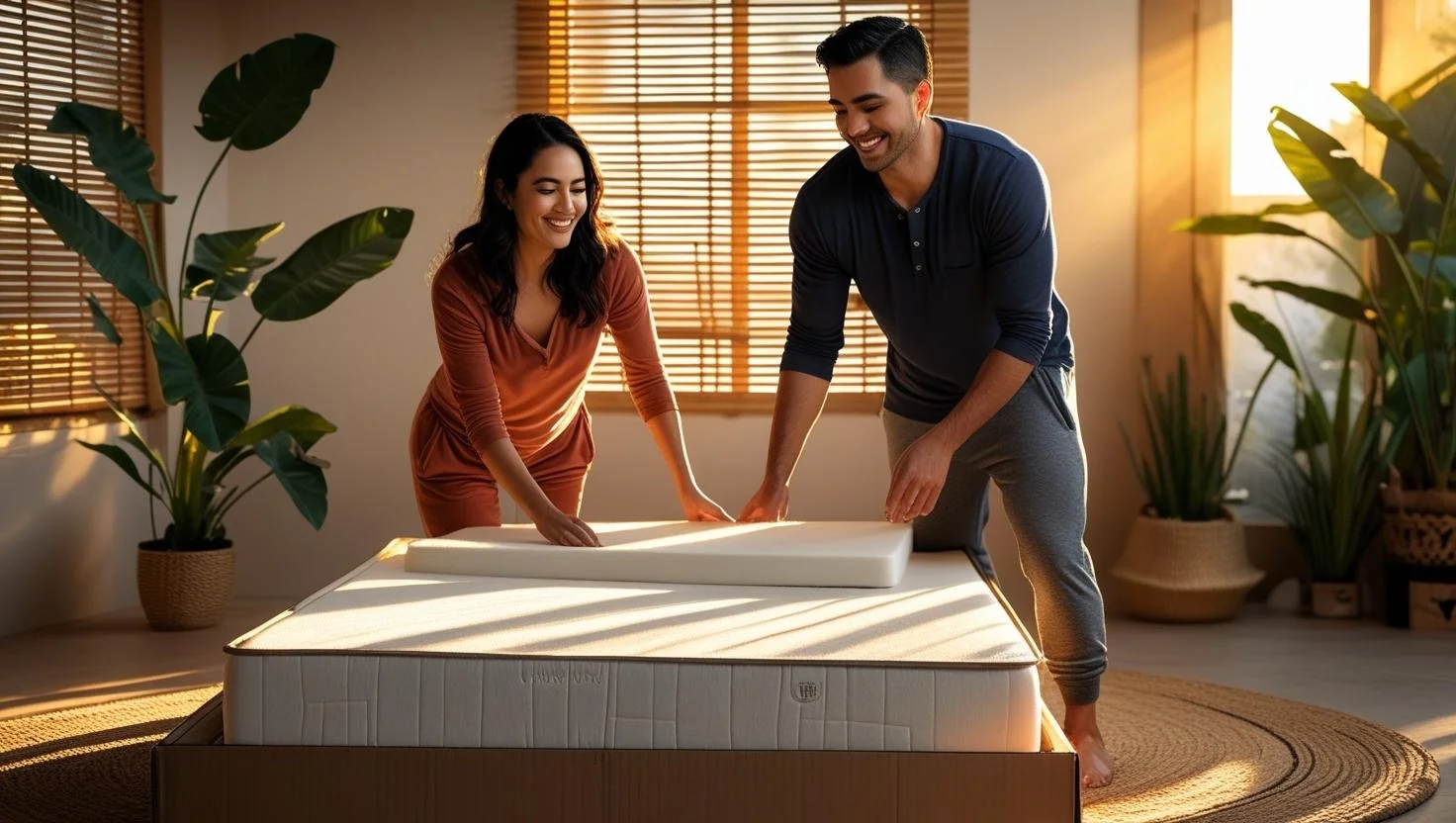
Cardboard beds are built from thick corrugated panels, usually double-walled or stacked into a honeycomb core, then folded or slotted into interlocking boxes. The strength does not come from the paper itself but from the geometry: vertical flutes and closed cells carry compression along their edges, which is the same principle that lets a stack of shipping boxes hold a pallet load. Most commercial designs assemble in roughly 10–20 minutes with no hardware, and they flat-pack again when you move.
Some models add a water-resistant coating or a printed finish (white, kraft, or wood-grain). Plain uncoated board is the easiest to recycle at end of life; coatings, heavy tape and glue make that harder, so treat “100% recyclable” claims as conditional on how the frame was built and finished.
How strong are they, really?
Strong enough for adult use, when the design is right. The clearest documented example is the Olympic Village: Japanese bedding maker Airweave supplied 18,000 recycled-cardboard bed frames for the Tokyo Games, designed to be extremely light and fast to assemble, and press coverage at the time reported a rated capacity of 200 kg (440 lb). Cardboard beds have also been used seriously in disaster response: architect Shigeru Ban developed a cardboard bed for evacuation centres whose shipping box doubles as under-bed storage.
Be sceptical of eye-catching load figures, though. Capacity claims vary widely between sellers, are rarely tied to a published test method, and apply only to the assembled frame in dry indoor conditions with the load spread across the whole base. Treat any number you see as a manufacturer claim rather than an independent test result, and check what it assumes about static versus dynamic (sitting, bouncing) loads.
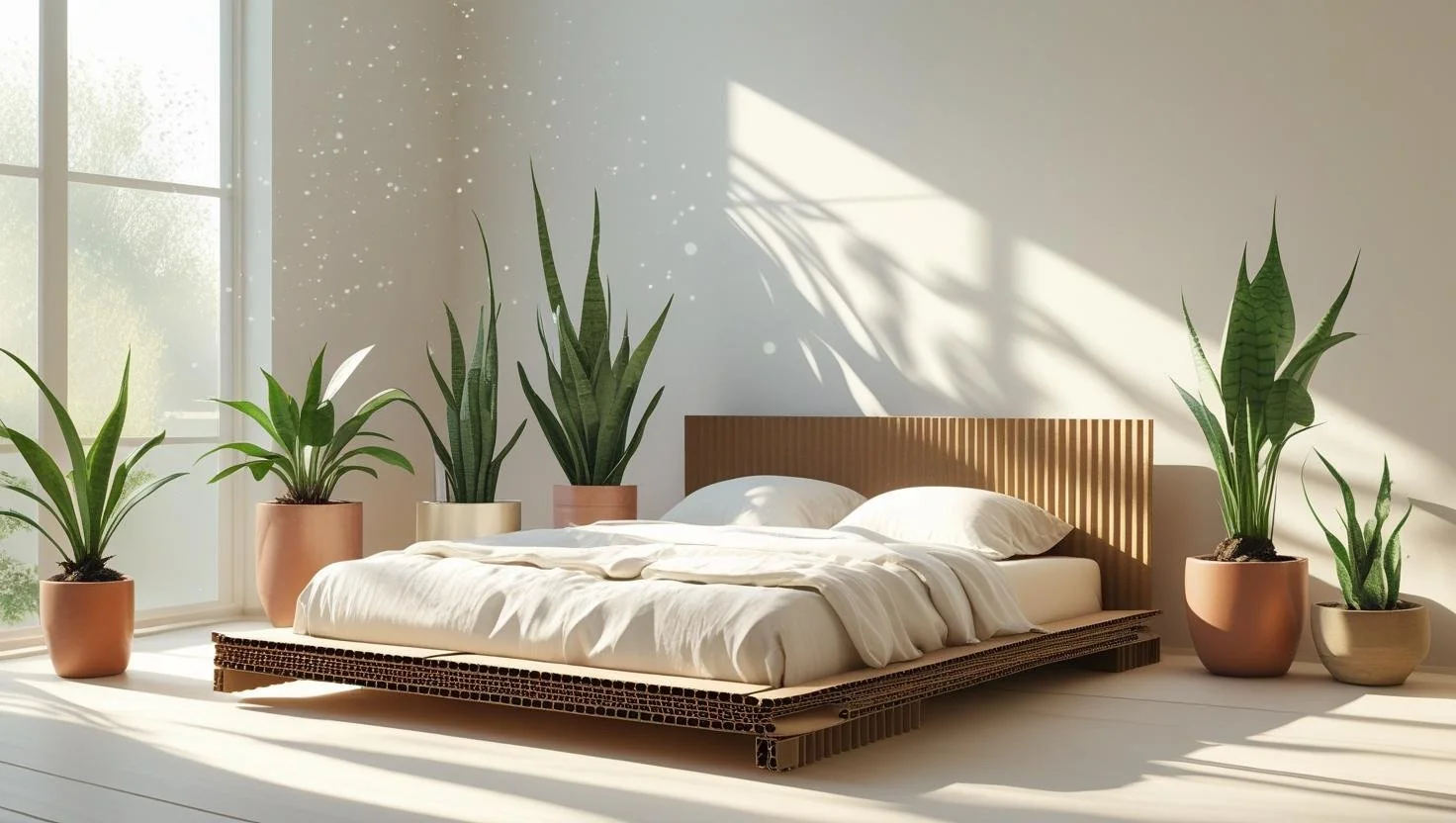
A creative, lightweight frame pairs well with minimalist decor.
Cost, weight and portability
Cardboard is the cheapest category of bed frame you can realistically sleep on. Commercial flat-pack models are typically priced well below comparable solid-wood or steel frames, partly because a light box costs far less to ship. Prices move constantly, so check current listings rather than trusting any figure quoted in an article — including ours.
A DIY build can cost close to nothing if you collect clean, dry double-walled boxes from appliance or furniture retailers; your real spend is glue, tape and paint. The practical payoff is weight: one person can lift and reposition the frame, and dismantling for a move takes minutes instead of an afternoon with an Allen key. If portability is the main reason you are shopping, compare against a foldable bed frame, which packs down similarly but tolerates damp and rough handling far better.

Sizes, height and mattress fit
Cardboard frames are sold and built to standard US mattress dimensions, so fit is a measuring exercise, not a compromise.
| Size | Mattress (inches) | Notes |
| Twin | 38 x 75 | Easiest DIY build; least span to support |
| Twin XL | 38 x 80 | Common in dorms |
| Full | 54 x 75 | Needs a centre support line |
| Queen | 60 x 80 | Most popular size; centre support essential |
| King | 76 x 80 | Best as two linked modules, not one span |
For room-planning clearances and bedding fit, our queen size bed dimensions guide covers the numbers in detail. Most cardboard designs sit somewhere around 12–18 inches tall, which usually leaves usable under-bed clearance — handy in small rooms, and the reason shelter designs put the packing box underneath as storage. Because the deck is a continuous flat surface rather than widely spaced slats, foam and hybrid mattresses sit evenly on it; check your mattress warranty, as some require slat gaps under a set width or a solid base.
The real limits: moisture, pests and heat
This is where honesty matters more than enthusiasm. Paperboard loses mechanical strength as it takes up moisture from the air: research on box compression shows substantial strength loss at high relative humidity — on the order of roughly a third at 80% RH — and the effect is continuous, not a cliff edge. In practice that means a cardboard frame belongs in a dry, heated, well-ventilated room. Basements, damp ground-floor rentals, humid climates without air conditioning and anywhere prone to condensation are poor candidates.
Two more caveats worth stating plainly:
- Combustibility. Corrugated board burns readily. Keep the frame away from heaters, candles, and draped extension leads. We could not find a flammability standard written specifically for bed frames, so there is no test mark to look for here.
- Pests and clutter. Corrugated board has voids that insects can shelter in, and it cannot be wiped or sprayed like metal. If you have had bed bug problems, a sealed metal or solid-wood frame is the easier surface to inspect and treat.
Cardboard also cannot be repaired the way wood can. A crushed corner stays crushed, so plan on replacing panels rather than fixing them.
How to build your own cardboard bed frame
A DIY build is a realistic weekend project with no carpentry experience, provided you respect the structure.
- Collect the right board. Double-walled boxes from appliance or furniture shops; clean, dry, uncrushed. Thin single-wall grocery boxes are not adequate for a sleeping load.
- Measure to your mattress. Build the deck to the mattress footprint, adding an inch or so of tolerance so bedding tucks without forcing the panels apart.
- Design in modules. Several linked boxes beat one large open span. For anything Full-size or wider, run a continuous support line down the centre.
- Orient the flutes vertically. In every support column, the corrugations should run top-to-bottom so load travels along the flutes. This single detail makes the largest difference to capacity.
- Build honeycomb or triangular cores. Rolled cardboard tubes, or interlocking cross-slotted panels, fill the load-bearing boxes. Triangles and closed cells resist racking; open rectangles do not.
- Glue, clamp, cure. Use a strong PVA-type adhesive across full faces rather than tape alone, weight the assembly while it dries, and leave it overnight before loading.
- Cap the deck. Finish with one or two full-width top sheets so point loads spread across all the supports underneath.
Making it last longer
- Lift it off the floor. Feet, pads or thin blocks stop wicking from cold or occasionally wet floors.
- Add a barrier layer. A breathable mat or thin foam sheet between mattress and deck reduces abrasion and condensation contact.
- Seal exposed edges. Taped or coated cut edges resist fraying, which is where cardboard usually starts to fail.
- Keep humidity moderate. Ventilate the room, and do not push the bed tight against an exterior wall that gets cold.
- Do not sit on one edge. Concentrated loads on a rail crush the flutes. Sit toward the middle, over a support.
- Inspect twice a year. Look for sagging deck panels, soft corners and separated glue lines; swap the panel before it collapses.
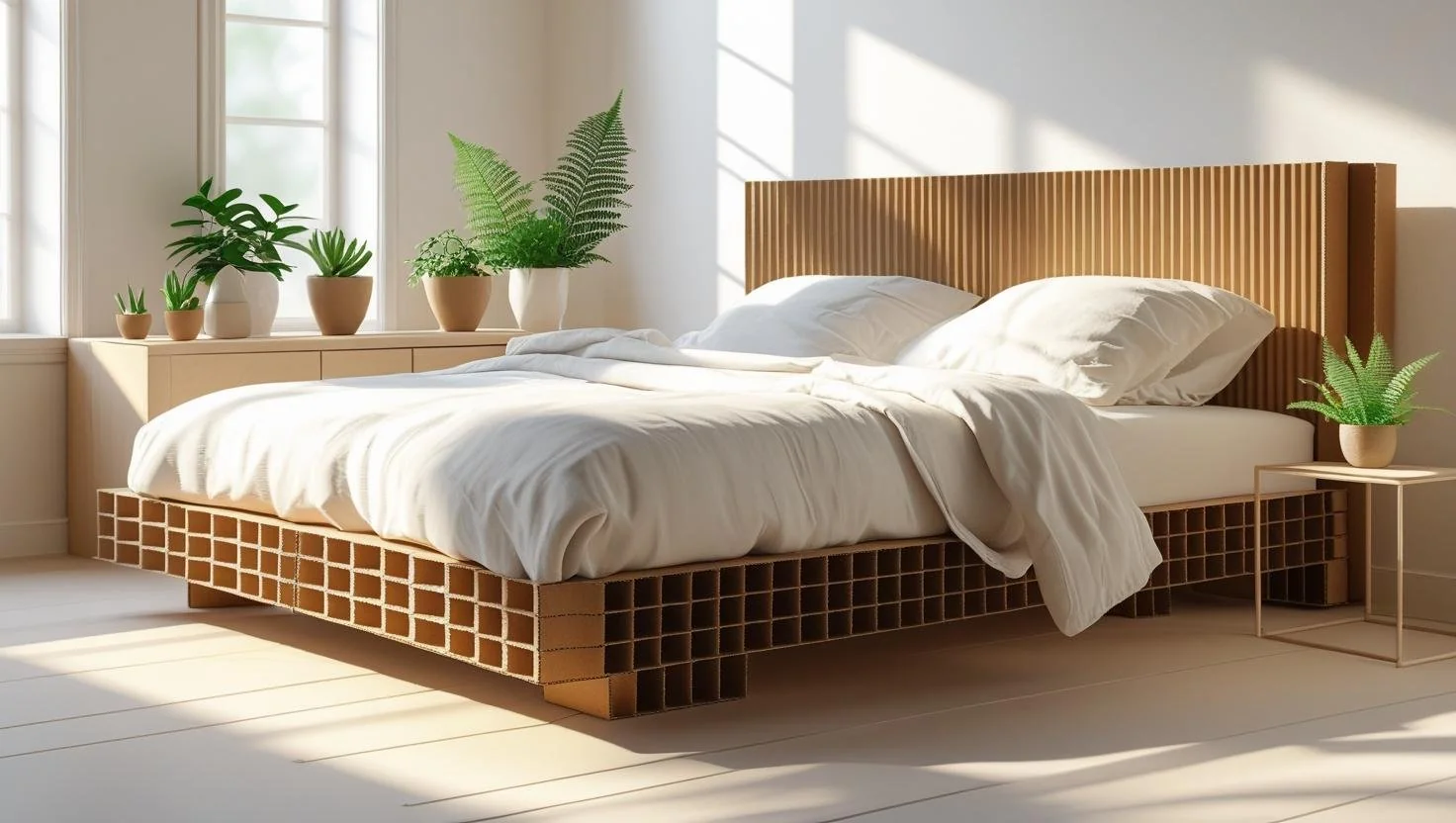
Simple risers and sealed edges help your frame last longer.
Is the eco case solid?
Mostly, yes — with nuance. Corrugated packaging is among the most recycled materials in the waste stream: the US EPA has reported a recycling rate of 80.9% for paper and paperboard packaging in 2018, though later estimates using revised methods are lower, so the headline number depends on who is counting. A cardboard frame is light to ship, made largely from recovered fibre, and can re-enter that recycling stream at the end of its life — the Olympic frames, for instance, were donated and recycled rather than landfilled.
The honest counterpoint is lifespan. A frame that lasts two years and is replaced repeatedly is not automatically greener than a solid hardwood or steel frame that lasts twenty. Cardboard wins clearly for short-term needs — study years, sublets, guest rooms, staging a home — and for avoiding new hardwood and steel demand in those cases. For a permanent bedroom, compare it honestly against the options in our eco-friendly bed frame materials comparison, and see our sustainable bed frames guide for longer-lived picks.
Style without extra waste
Cardboard takes decoration well, which is half the appeal for DIY builders.
- Staggered panels for a layered, sculptural edge profile.
- Water-based, low-VOC paint — light coats only, since soaking the board weakens it.
- Low-heat LED strips tucked under the deck lip for ambient light.
- Cut-out cubbies in the plinth for books, shoes or bedding.
- A slot-in headboard with geometric cut-outs, braced to the wall side rather than cantilevered.
If you like the low, clean look it produces, a platform bed or a Japanese futon setup achieves something similar with more durable materials. To extend the sustainability theme to the rest of the room, see our overview of sustainable sleep products for an eco-friendly bedroom.
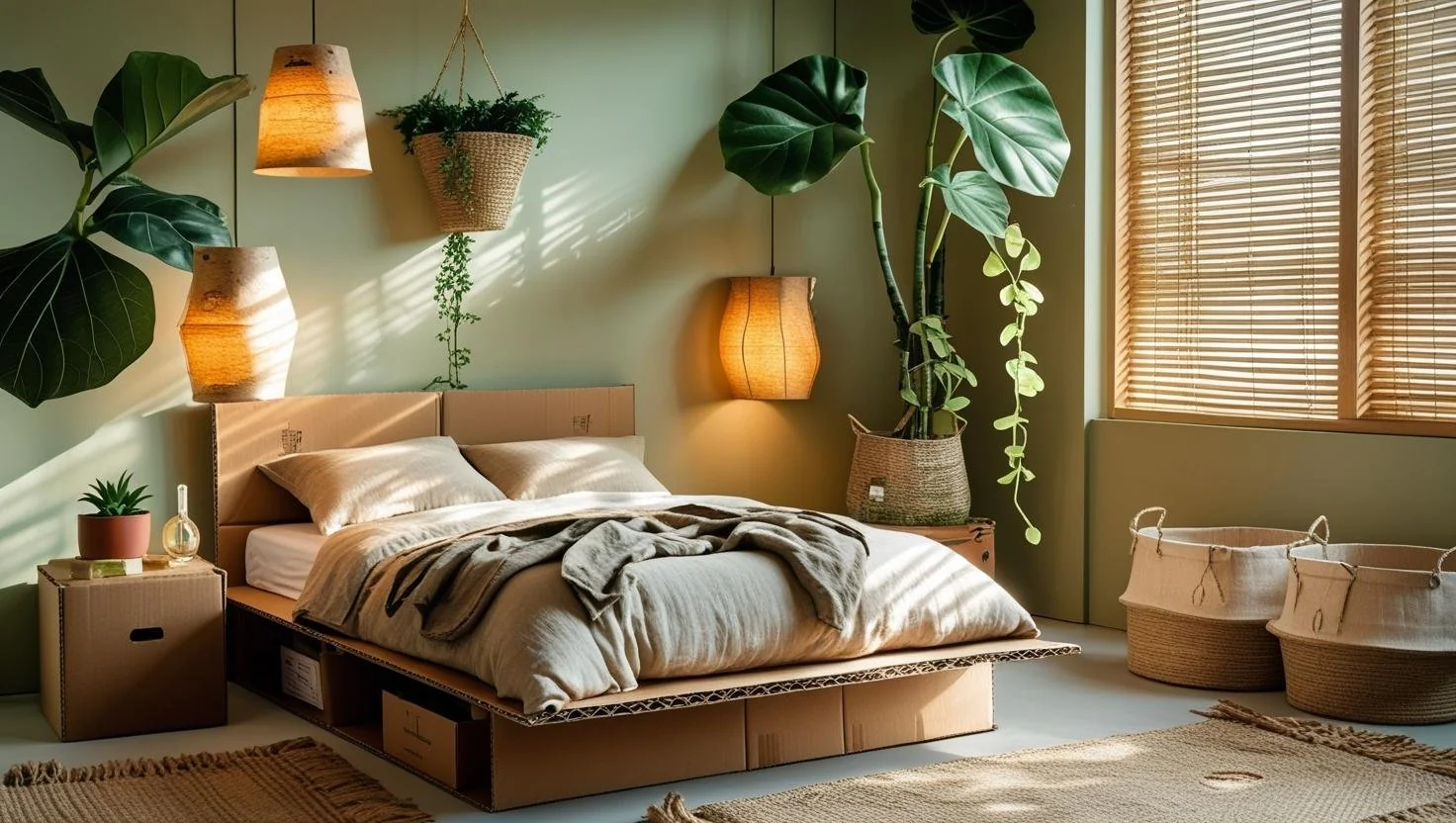
Stencil art, LEDs, and storage cubbies add personality—without adding waste.
Who should buy one — and who shouldn’t
- Good fit: students and dorms, short leases, guest rooms used occasionally, tiny homes, temporary or emergency accommodation, anyone who moves often.
- Poor fit: damp or unheated rooms, heavy or very active sleepers who want generous margin, households with pets that chew or scratch, anyone wanting a single frame for the next decade.
If you land in the second group but still want a light, quiet, low-impact setup, a reinforced steel frame is a durable middle ground — our guide to quieting a metal bed frame covers the noise issue that usually puts people off them.
FAQ
Are cardboard bed frames strong enough for adults?
Yes, when the design uses vertically oriented flutes, honeycomb cores and a centre support. Documented examples include the Tokyo 2020 Olympic frames rated to around 440 lb. Homemade frames vary enormously, so build conservatively and test with weight before sleeping on one.
How long does a cardboard bed frame last?
There is no reliable published lifespan data. In a dry, heated room with a barrier layer and periodic inspection, owners commonly report a few years of service; in humid conditions it can be months. Expect to replace panels rather than the whole frame.
Can a cardboard frame get wet?
No. Moisture is the main failure mode — compression strength drops measurably as humidity rises. Wipe spills immediately, avoid damp rooms, and never let the base sit on a wet floor.
Do cardboard frames help with back pain?
Only indirectly. A flat, non-sagging base keeps a mattress performing as designed, which matters for comfort — but there is no evidence that cardboard does this better than wood or metal, and no frame treats back pain on its own.
Are they safe for children or guests?
For a stable, reinforced, dry frame at low height, yes for normal sleeping. They are not built for jumping or for bunk-style use, and children should not be left to climb on them.
Can I recycle it afterwards?
Usually, if the board is uncoated. Strip tape, remove glued-on plastic and check local kerbside rules; coated or heavily painted panels may need to go in general waste.
The bottom line
A cardboard bed frame is a legitimate, low-cost, low-impact way to get a mattress off the floor — proven at scale in Olympic villages and emergency shelters, and easy to build at home from free boxes. Judge it on the two things that actually decide success: honest load design and a dry room. Meet those, and it is one of the smartest temporary beds available; miss them, and no amount of tape will save it.
Updated September 2026.