Sustainable Bed Frames Guide: 7 Eco-Friendly Picks You’ll Love

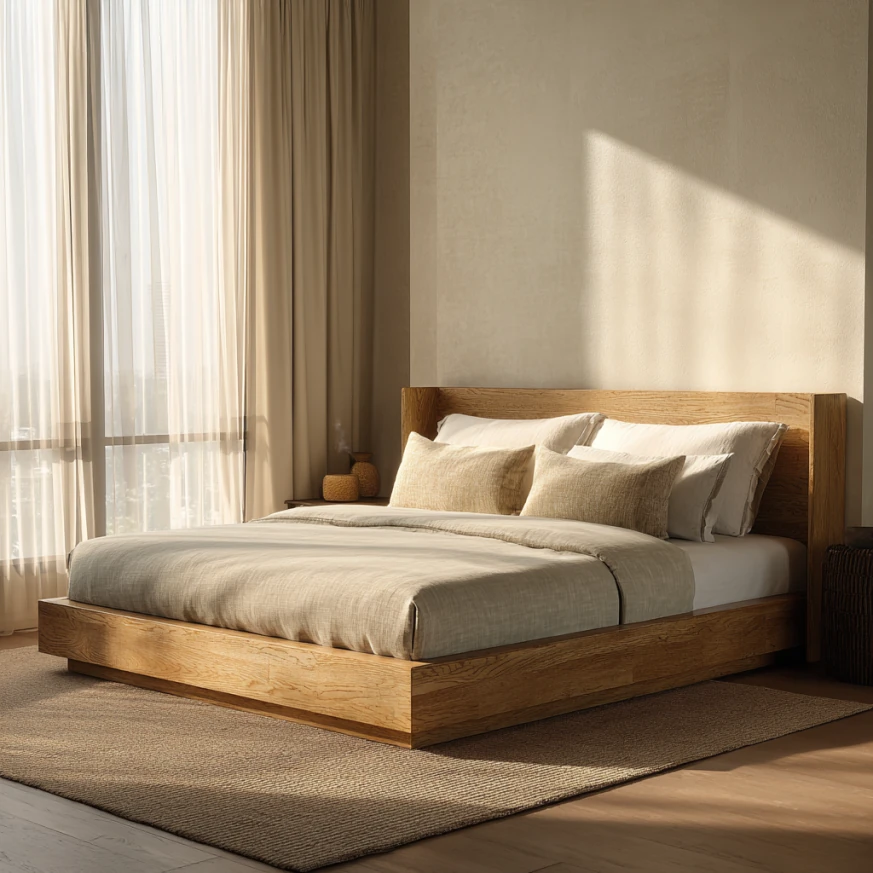
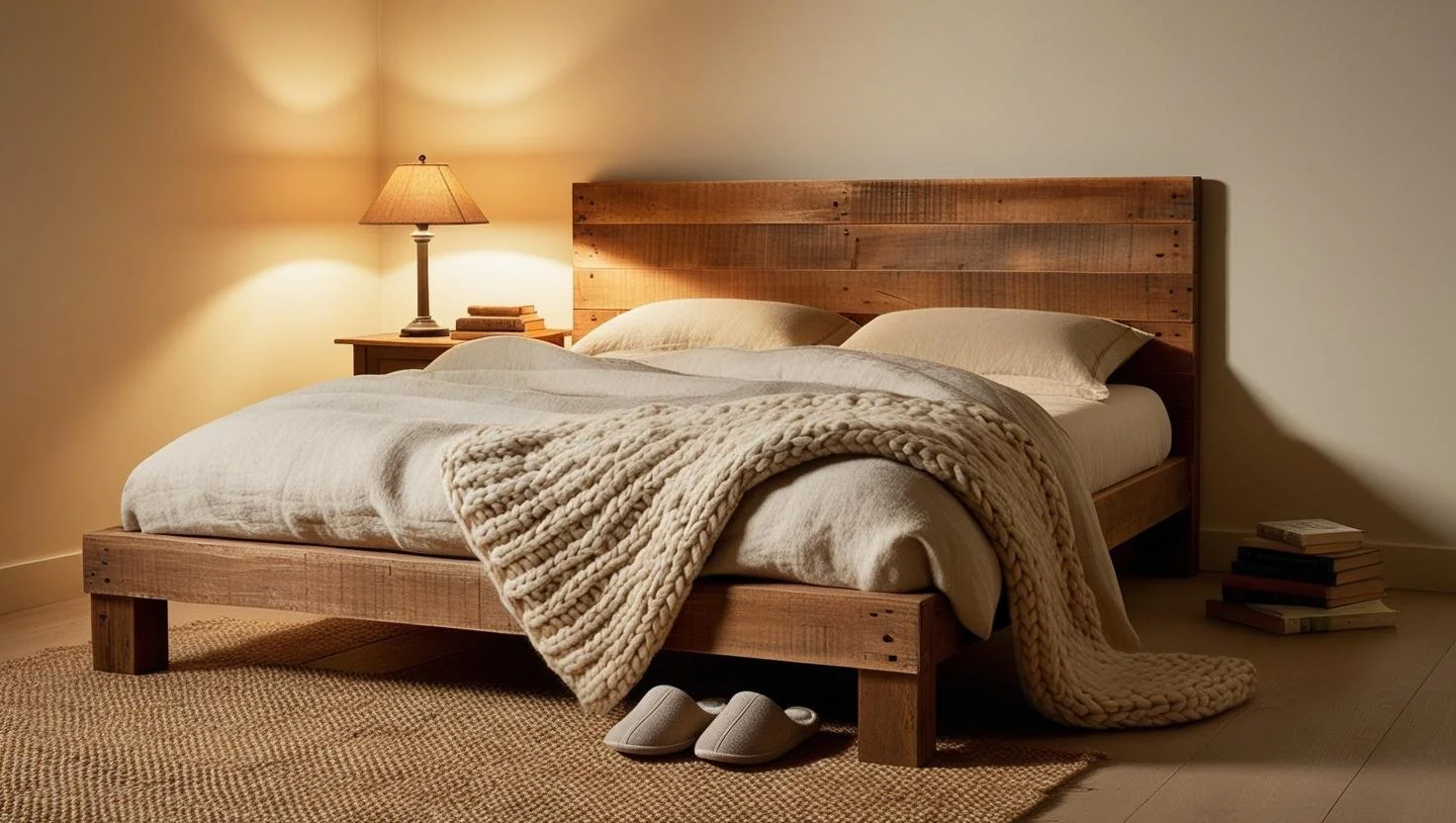
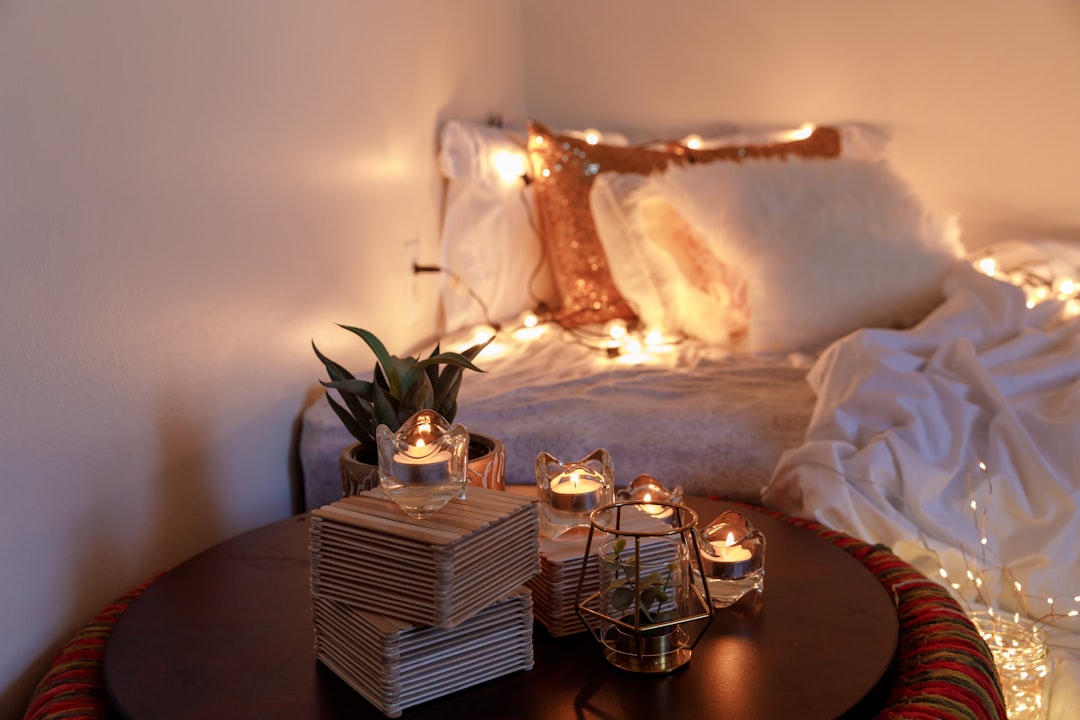
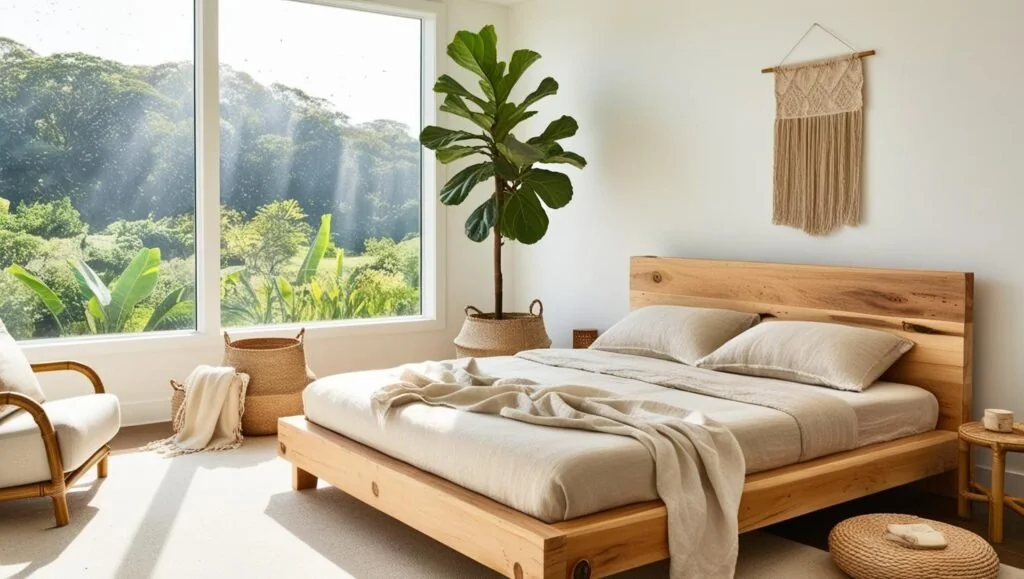
Cozy bedroom corner with reclaimed wood sustainable bed frame and soft warm lighting

Complete Guide to Sustainable Bed Frame Choices

A sustainable bed frame is made from eco-friendly materials and built to last. In this sustainable bed frames guide, you’ll discover how to choose stylish, quiet, and planet-friendly options that support healthier sleep and greener living.

Key Takeaways

  • Sustainable bed frames use eco-friendly materials and non-toxic finishes
  • Durability and smart design reduce waste and increase longevity
  • Eco-conscious frames can be stylish, affordable, and easy to assemble

Why a Sustainable Bed Frames Guide Matters

Your bed should be a sanctuary. But if it’s built from questionable materials and coated in toxic finishes, it can silently disrupt your health. This guide to sustainable bed frames helps you choose options that support restful sleep and a cleaner planet. Beyond comfort, it’s about making choices that reflect your values—helping reduce pollution and promote better manufacturing practices for a brighter future.

Sustainable Bed Frames Guide

What Makes a Bed Frame Sustainable?

🌿 Eco-Friendly Materials

Look for FSC-certified wood, reclaimed timber, or recycled metals. Bamboo is a standout—fast-growing, strong, and sustainable. Visit World Bamboo to learn more about bamboo’s benefits. These materials not only reduce your carbon footprint but also support responsible sourcing and forest preservation efforts worldwide, promoting harmony between your home and the earth.


🛡️ Non-Toxic Finishes

Traditional frames may release VOCs, impacting indoor air quality. Sustainable options use zero-VOC finishes. See how the EPA explains VOC risks. Choosing non-toxic finishes means you’re breathing easier, avoiding harmful chemical exposure while creating a safe, nurturing space for rest and relaxation every night.

🛠️ Built to Last

Durability is essential. Brands like Thuma use repurposed rubberwood for frames that last years. Explore their design in our sleep hacks guide. A well-constructed bed frame won’t just save money over time—it reduces waste, minimizes resource consumption, and becomes a dependable foundation in your nightly routine.

Top Picks: Sustainable Bed Frames Guide Favorites

1. Avocado’s City Bed Frame

  • Materials: 100% FSC-certified timber
  • Features: Tool-free setup, GREENGUARD certified, non-toxic finishes
  • Why It Shines: Minimalist and mindful craftsmanship

This bed frame is a beautiful marriage of sustainability and style. Its clean lines and eco-conscious design make it ideal for those wanting to minimize their environmental impact without sacrificing aesthetics. It’s a top pick for anyone embracing simplicity and substance in their sleep sanctuary.

2. Thuma’s The Bed

  • Materials: Repurposed rubberwood
  • Features: Quiet, easy assembly, eco-fi felt
  • Why It Shines: Modern, sustainable, and super solid

Thuma’s design shines for its sleek silhouette and thoughtful construction. With noise-reducing touches and sustainable components, it’s built to support every stretch, snooze, and Sunday morning. Plus, the minimalist aesthetic means it fits effortlessly into any modern bedroom setup.

3. Silk & Snow’s Wooden Bed Frame

  • Materials: Acacia and rubberwood
  • Features: Tool-free Japanese joinery
  • Why It Shines: Clean lines and conscious design

Combining traditional joinery with sustainable materials, Silk & Snow offers a frame that’s easy to love and easier to assemble. It’s ideal for anyone looking to add elegance and eco-conscious integrity to their sleep space without the need for tools or frustration.

Busting a Bed Frame Myth

Myth: Sustainable bed frames are pricey luxuries.
Truth: Brands like Quagga Designs offer affordable, eco-conscious frames, showing that sustainability can be budget-friendly too. In fact, investing in a frame made to last and crafted responsibly can save you from frequent replacements—making it a smarter, long-term decision for your wallet and the world.

Sustainable Bed Frames Guide

Tips for Picking Your Perfect Sustainable Frame

  1. Certifications Matter: Look for FSC, GREENGUARD, OEKO-TEX labels. These certifications give peace of mind that your bed frame meets high environmental and safety standards, ensuring every night’s sleep is supported by clean, green values.
  2. Smart Materials: Choose solid wood, bamboo, recycled metals. These materials are not only environmentally responsible but also contribute to the strength and character of your furniture—adding beauty that lasts.
  3. Think Long-Term: A quality frame avoids frequent replacements. Fewer replacements mean fewer trees cut, less manufacturing energy used, and less landfill waste—big wins for your conscience and comfort.
  4. Simple Setup: Tool-free assembly = low stress and eco wins. Less hassle in setup usually means better design, easier moves, and a product that’s thoughtfully engineered for your convenience and sustainability goals.

Choosing a sustainable bed frame isn’t just about what’s under your mattress—it’s about aligning your sleep space with your values. With so many beautiful, durable, and eco-friendly options, it’s easier than ever to rest easy knowing your bed is part of a better future.

FAQ

What materials should I look for in a sustainable bed frame?
FSC-certified wood, bamboo, reclaimed timber, and recycled metals are all eco-conscious choices.
Are non-toxic finishes really that important?
Yes—non-toxic, zero-VOC finishes reduce your exposure to harmful chemicals and improve indoor air quality.
Do sustainable bed frames cost more?
Not necessarily. Many brands now offer affordable options that balance sustainability with budget-friendliness and durability.

Standard Bed Size Chart: Mattress Dimensions & Guide

Wide bedroom scene with a queen bed, sage throw, and woman sipping tea, illustrating standard bed size dimensions.

In the United States there are six standard mattress sizes: Twin (38″ × 75″), Twin XL (38″ × 80″), Full/Double (54″ × 75″), Queen (60″ × 80″), King (76″ × 80″) and California King (72″ × 84″). A king is the widest standard size at 76 inches; a California King is four inches narrower but four inches longer. Use the chart below to compare every size in inches and centimetres, then check the room-fit and bedding notes before you buy.

Standard bed size chart (inches and centimetres)

These are the dimensions the mattress industry uses for standard sizes. Expect small differences of up to about an inch between brands and models, so always confirm the exact specs on the product page before ordering a frame or fitted sheets.

Size Dimensions (inches) Dimensions (cm) Best for
Crib (full-size) At least 27¼ × 51⅝ 69 × 131 Infants and toddlers
Twin (Single) 38 × 75 96.5 × 190.5 Children, bunk beds, small rooms
Twin XL 38 × 80 96.5 × 203 Tall teens, dorms, split-king halves
Full (Double) 54 × 75 137 × 190.5 Solo adults, guest rooms
Queen 60 × 80 152 × 203 Most couples, standard primary bedrooms
Olympic Queen 66 × 80 168 × 203 Extra width without a king footprint
King (Eastern King) 76 × 80 193 × 203 Couples who want maximum width
California King 72 × 84 183 × 213 Tall sleepers, long narrow rooms
Wyoming King 84 × 84 213 × 213 Oversized square bed, co-sleeping
Texas King 80 × 98 203 × 249 Very tall sleepers, large rooms
Alaskan King 108 × 108 274 × 274 Maximum space, whole-family sleeping

The crib figure is a safety requirement rather than a marketing size: under the federal crib mattress standard, a full-size crib mattress must measure at least 27¼ inches wide and 51⅝ inches long so there is no dangerous gap at the sides (CPSC final rule, Federal Register). Crib mattress thickness is also capped at six inches.

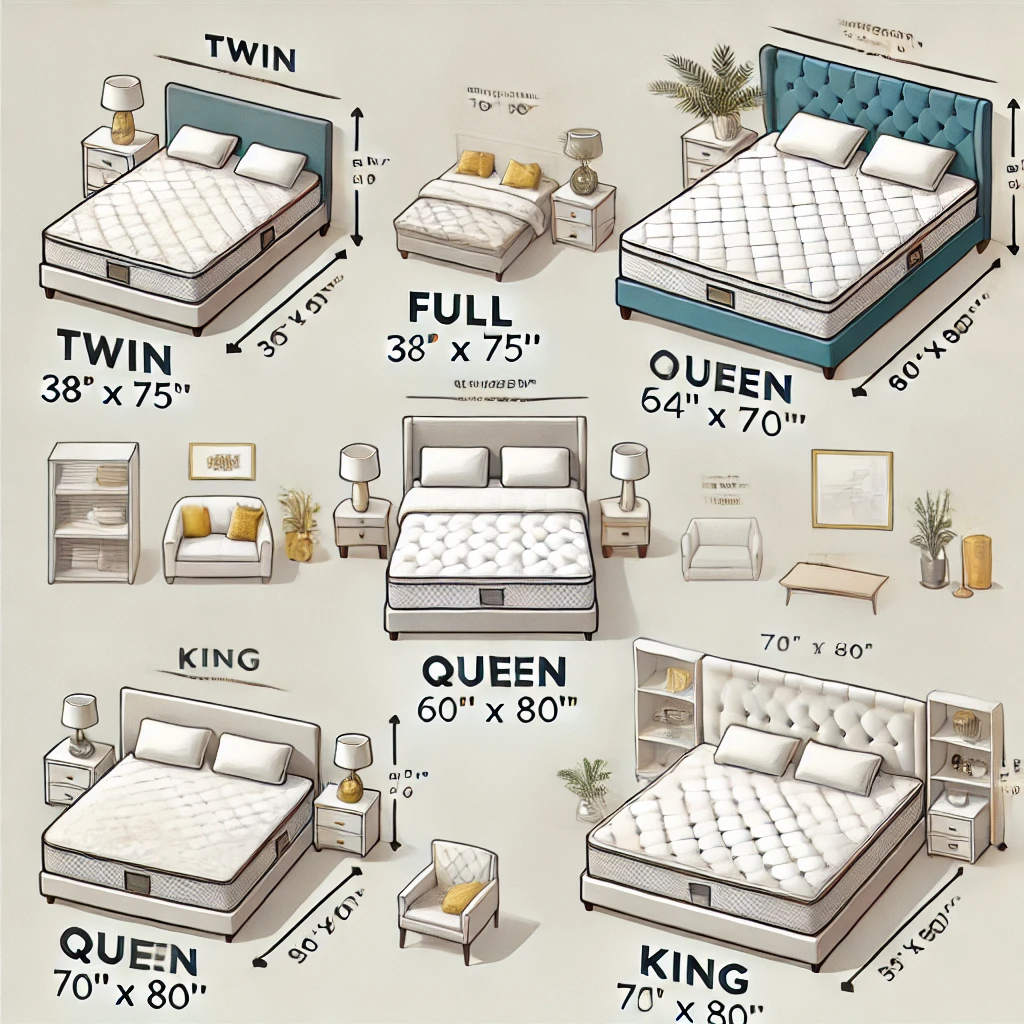
Standard Bed Size Chart visual of Twin, Full, Queen, and King in bedroom layouts

How much room does each bed size need?

Mattress dimensions only tell half the story. Interior designers commonly suggest leaving roughly 24 to 30 inches of clear walkway on the sides you actually use, plus room for nightstands, drawers and door swings. These room sizes are practical rules of thumb, not standards — a slightly smaller room can still work if the bed sits against the long wall and only one side is used as a walkway.

Mattress Comfortable room size (rule of thumb) Notes
Twin About 7′ × 10′ Leaves space for a desk or dresser
Twin XL About 8′ × 10′ Same width as Twin, five inches longer
Full About 9′ × 10′ One nightstand fits more easily than two
Queen About 10′ × 10′ Fits most standard bedrooms with two nightstands
King About 12′ × 12′ Roughly two feet of clearance per side
California King About 12′ × 14′ Extra length eats into foot-of-bed space
Oversized (Wyoming, Texas, Alaskan) 14′ × 14′ or larger Check doorways, stairs and delivery path first

Remember that the frame adds to the footprint. Platform, storage and upholstered beds typically add a couple of inches on each side, and a headboard adds several inches of length — see our guide to choosing a bed frame for your mattress and style if you are shopping for both at once.

What size is a king mattress?

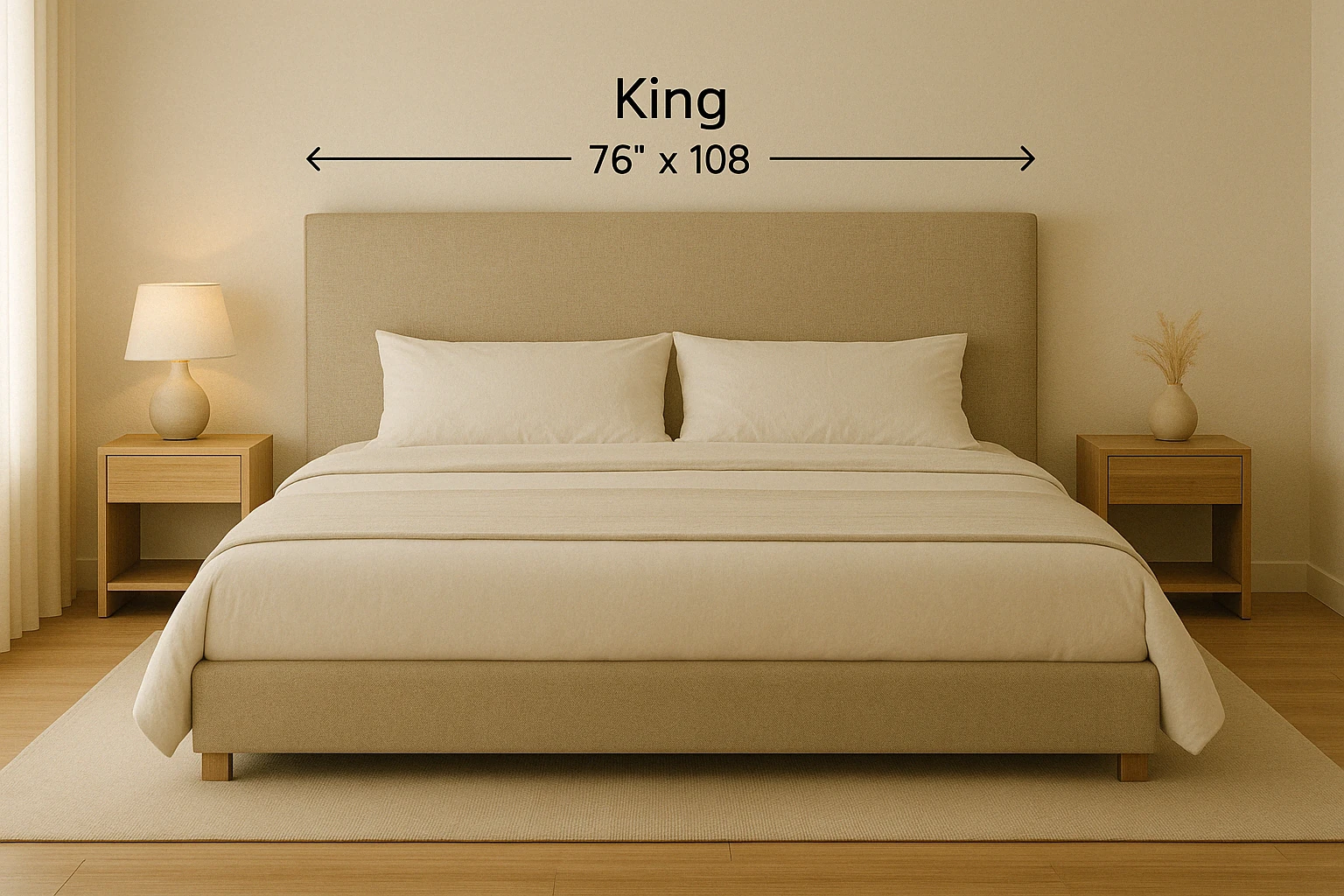
A standard king (sometimes called an Eastern King) is 76 inches wide by 80 inches long — 193 × 203 cm. It is the same length as a queen but 16 inches wider, which works out to about 38 inches of width per person for a couple: the same width each sleeper would get on a Twin XL. That is also why two Twin XL mattresses side by side add up to a king footprint and form the basis of split-king setups.

A king is the best standard choice if you want maximum elbow room, share the bed with children in the morning, or sleep with a pet at your side. The trade-offs are a larger room requirement, heavier mattresses that are harder to move up stairs, and higher costs for sheets, duvets and frames. For a full breakdown of clearances, frame sizes and layout tips, see our king size mattress dimensions guide.

King vs California King

Choose width or length — you cannot have both in a standard size. A King is wider, a California King is longer.

  • King — 76″ × 80″: four inches wider per couple, better for side-by-side space, easiest of the two to find bedding for.
  • California King — 72″ × 84″: four inches longer, which suits sleepers around 6’2″ and taller, and fits long, narrow rooms more gracefully.

If you are torn between the two, our King vs California King comparison walks through frame sizes and room layouts for each.

Standard Bed Size Chart reference with mattress sizes in inches and centimeters

The best bed size for couples

For two adults, a Queen is the usual starting point and a King is the upgrade. The simple maths helps: a Full gives each person about 27 inches of width, a Queen 30 inches, and a King 38 inches. Queen has long been the most-purchased size in the US — survey data put it at roughly half of mattress purchases (Statista), largely because it fits a typical 10′ × 10′ bedroom while still sleeping two.

Size Width per sleeper Who it suits
Full 27″ Short-term or small-room solution for two; tight for most couples
Queen 30″ Most couples in average bedrooms; widest bedding selection
King 38″ Restless sleepers, co-sleeping with kids or pets
California King 36″ Couples where one partner is very tall
Split King (two Twin XL) 38″ Partners who want different firmness or adjustable bases

Does a bigger bed actually improve sleep? The direct evidence is thin — there is no large study comparing queens with kings. Research on bed sharing does show that couples move more and wake more often when sleeping together than alone, even though they tend to rate their sleep as better, and one polysomnography study found bed sharing was associated with more and more stable REM sleep (Frontiers in Psychiatry). Extra width is a reasonable response to that extra movement, but so is a mattress with good motion isolation and separate blankets. If you want to go deeper on the comfort side, see our guide to bed size and sleep quality.

mattress size comparison chart showing all standard dimensions

Sizes for kids, teens and guest rooms

  • Twin (38″ × 75″): the default for children’s rooms, bunk beds and daybeds. Too short for most adults over about six feet.
  • Twin XL (38″ × 80″): the same width with five extra inches of length, standard in many college dorms, and a size a growing teen will not outgrow.
  • Full (54″ × 75″): a good single-sleeper upgrade and the most space-efficient choice for a guest room that sees occasional couples. See our full size bed dimensions guide for layout ideas.
  • Queen (60″ × 80″): the most flexible guest-room size if the room can take it, and the easiest to dress with off-the-shelf bedding. Details in our queen size bed dimensions guide.

Split, oversized and custom sizes

Beyond the standards, a handful of specialty sizes solve specific problems. All of them come with the same caveats: fewer frame options, longer lead times and bedding that may have to be ordered to size.

Size Dimensions Why choose it
Split King Two mattresses, 38″ × 80″ each Independent firmness and adjustable-base positions
Split California King Two mattresses, 36″ × 84″ each Same benefits with extra length
Olympic Queen 66″ × 80″ Six inches more width than a Queen; a specialty size, so bedding is limited
Wyoming King 84″ × 84″ Square bed with king-plus width, Cal King length
Texas King 80″ × 98″ The longest of the oversized options
Alaskan King 108″ × 108″ Nine-foot square for families sleeping together

Fully custom mattresses are also available for lofts, RVs, boat cabins and rooms with angled walls, usually in custom widths and lengths and occasionally in round or cut-to-fit shapes. Before committing, confirm three things: that a frame or foundation exists in that size, that you can buy sheets and a duvet for it, and that the mattress will physically make it through your doorways and stairwell.

A split king adjustable bed with dual-firmness mattresses, ideal for couples exploring custom bed sizes.

How to measure your room before you buy

  1. Measure wall to wall — length, width and ceiling height if you want a tall headboard.
  2. Mark the obstacles — doors, closet and drawer swings, radiators, windows and outlets.
  3. Tape the footprint — outline the mattress plus two to six inches for the frame with painter’s tape and live with it for a day.
  4. Walk the walkways — you want about 24 to 30 inches on the sides you use, and enough space at the foot to pass or open a drawer.
  5. Check the delivery path — hallway width, stair turns and door frames. Split configurations and mattresses in a box solve most access problems.

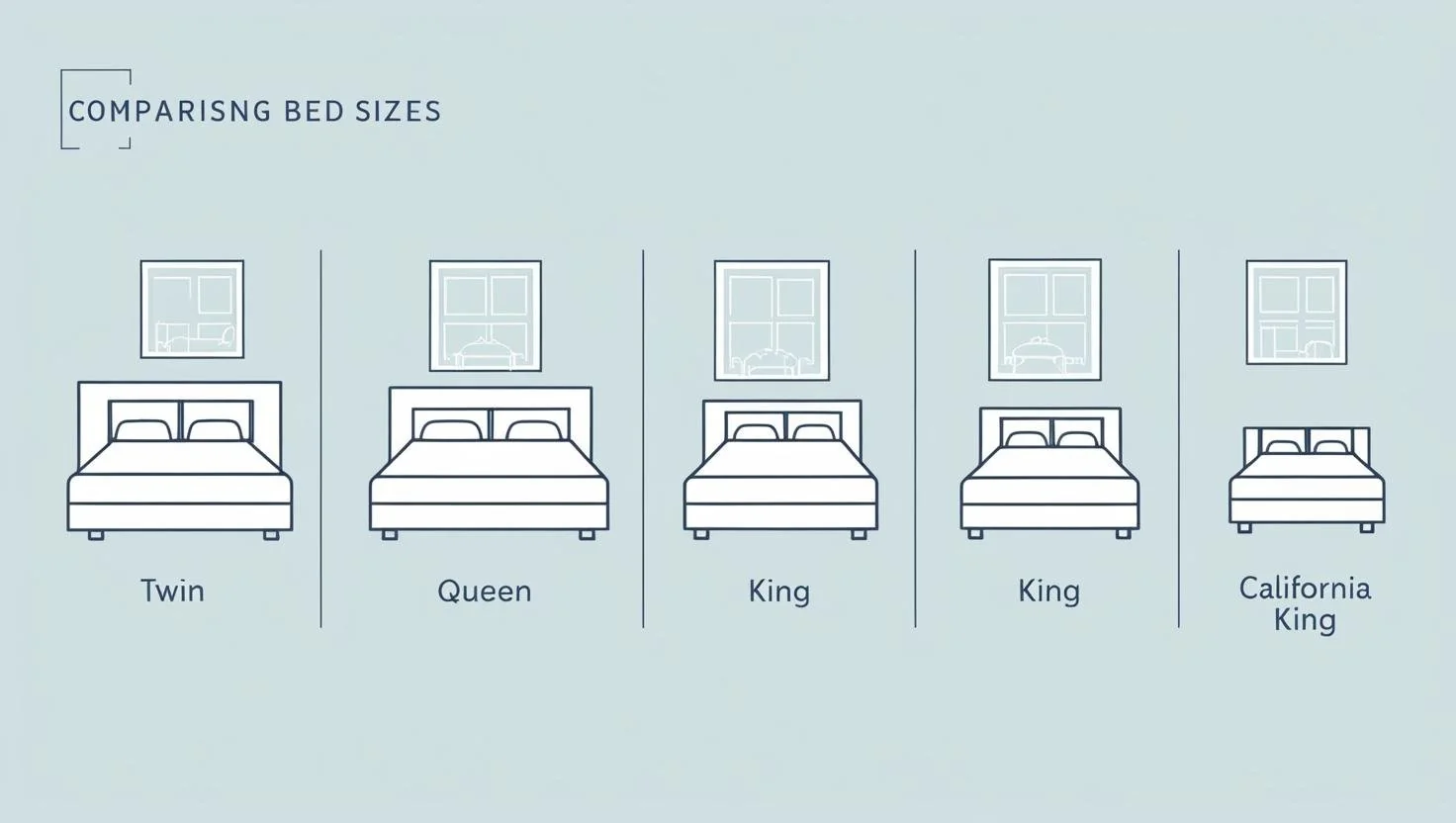
Standard Bed Size Chart infographic comparing mattress dimensions visually

Bedding fit: the detail most charts leave out

Length and width determine your sheet size, but mattress height determines whether a fitted sheet stays on. Modern mattresses vary widely in depth, and a pillow-top plus a topper can easily exceed a standard sheet pocket — check the pocket depth listed on the packaging against your mattress height plus any topper. A few more practical notes:

  • Queen and King have the widest choice of sheets, duvets, protectors and frames; California King and specialty sizes have fewer options and often cost more.
  • Split setups need either two Twin XL sheet sets or purpose-made split-top sheets.
  • Duvet sizing is generous by design — many people size up one step so the cover drapes over the sides of a taller mattress.

Common bed-size mistakes

  • Measuring the mattress but not the walkway. A king can technically fit a 10′ × 10′ room and still make the room unusable.
  • Choosing width when you need length. If your feet hang off an 80-inch mattress, a California King or Twin XL solves the problem that a wider bed will not.
  • Forgetting the frame and headboard. Add two to six inches in each direction to the mattress footprint.
  • Ignoring bedding availability. Specialty and oversized sizes can mean custom-order sheets for the life of the bed.
  • Buying for today only. A mattress is typically a several-year purchase; factor in growing children, pets and future guests.
  • Skipping the trial policy. Comfort and support are hard to judge in a showroom, so read the return and trial terms before ordering. Consumer Reports’ mattress buying guide is a useful neutral starting point for types and firmness.

FAQ

What are the dimensions of a king size mattress?

76 inches wide by 80 inches long (193 × 203 cm). That is 16 inches wider than a queen and the same length.

How wide is a king size mattress compared with a California King?

A king is 76 inches wide; a California King is 72 inches wide but 84 inches long. King wins on width, Cal King on length.

What is the most popular bed size?

The Queen (60″ × 80″). Survey data has put it at close to half of US mattress purchases, thanks to its balance of sleeping space, room fit and bedding availability.

Is a Full big enough for two people?

It can work short term, but each person gets only about 27 inches of width — narrower than a crib mattress. Most couples are more comfortable on a Queen or larger.

Will a king fit in a 12′ × 12′ room?

Yes. A 76-inch-wide bed leaves roughly two feet of clearance on each side, which is workable, though you will need to plan nightstands and dressers carefully.

Do mattress sizes vary by country?

Yes. UK, European and Australian sizes use different dimensions and naming, so check local specifications if you are buying or moving abroad — bedding bought overseas often will not fit a US mattress.

Do mattress dimensions vary between brands?

Slightly. Standard sizes are consistent within about an inch, but always read the listed dimensions before ordering a frame, headboard or fitted sheets.

Once you have settled on a size, the next decisions are construction and firmness. Our guide to the mattress firmness scale explains how plush-to-firm ratings translate to real support.

Updated September 2026.
Cardboard Bed Frame: Strength, Cost and Eco Pros & Cons

Cardboard Bed Frame Eco-Friendly: 7 Benefits of Sustainable Sleep - Featured Image

A cardboard bed frame is a flat-pack sleeping base made from layered corrugated or honeycomb board that supports a mattress without screws or tools. Engineered properly, it is genuinely strong — the recycled-cardboard frames used in the Tokyo 2020 Olympic Village were rated to hold about 200 kg (440 lb) — but it is also light, cheap and completely intolerant of moisture. It suits students, renters, guest rooms and temporary setups; it is not the frame to buy if your room is damp or you want furniture that lasts a decade.

What a cardboard bed frame actually is

Cardboard beds are built from thick corrugated panels, usually double-walled or stacked into a honeycomb core, then folded or slotted into interlocking boxes. The strength does not come from the paper itself but from the geometry: vertical flutes and closed cells carry compression along their edges, which is the same principle that lets a stack of shipping boxes hold a pallet load. Most commercial designs assemble in roughly 10–20 minutes with no hardware, and they flat-pack again when you move.

Some models add a water-resistant coating or a printed finish (white, kraft, or wood-grain). Plain uncoated board is the easiest to recycle at end of life; coatings, heavy tape and glue make that harder, so treat “100% recyclable” claims as conditional on how the frame was built and finished.

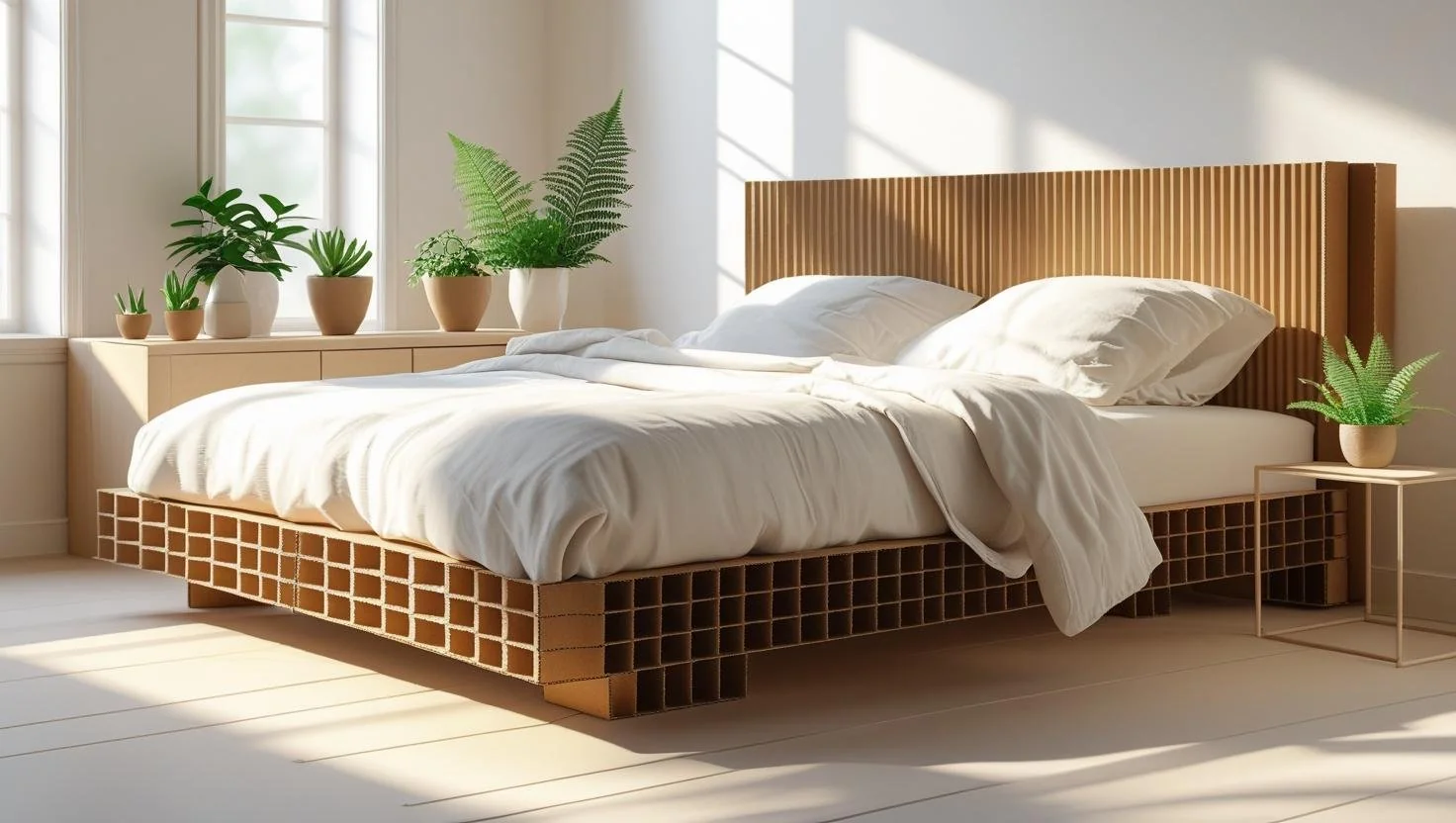
Cardboard bed frame eco-friendly design

How strong are they, really?

Strong enough for adult use, when the design is right. The clearest documented example is the Olympic Village: Japanese bedding maker Airweave supplied 18,000 recycled-cardboard bed frames for the Tokyo Games, designed to be extremely light and fast to assemble, and press coverage at the time reported a rated capacity of 200 kg (440 lb). Cardboard beds have also been used seriously in disaster response: architect Shigeru Ban developed a cardboard bed for evacuation centres whose shipping box doubles as under-bed storage.

Be sceptical of eye-catching load figures, though. Capacity claims vary widely between sellers, are rarely tied to a published test method, and apply only to the assembled frame in dry indoor conditions with the load spread across the whole base. Treat any number you see as a manufacturer claim rather than an independent test result, and check what it assumes about static versus dynamic (sitting, bouncing) loads.

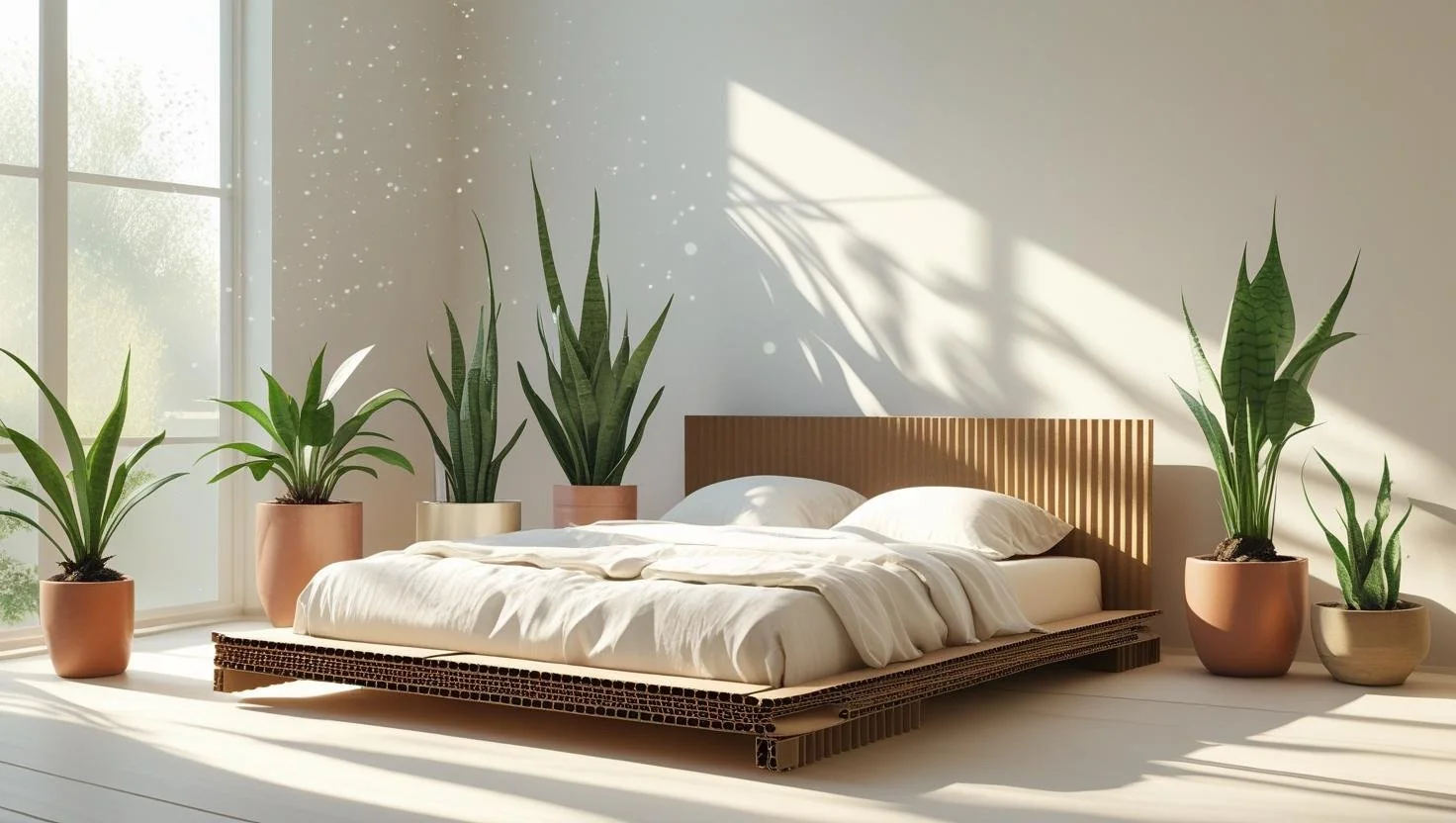
Creative cardboard bed frame eco-friendly in a modern bedroom setup

A creative, lightweight frame pairs well with minimalist decor.

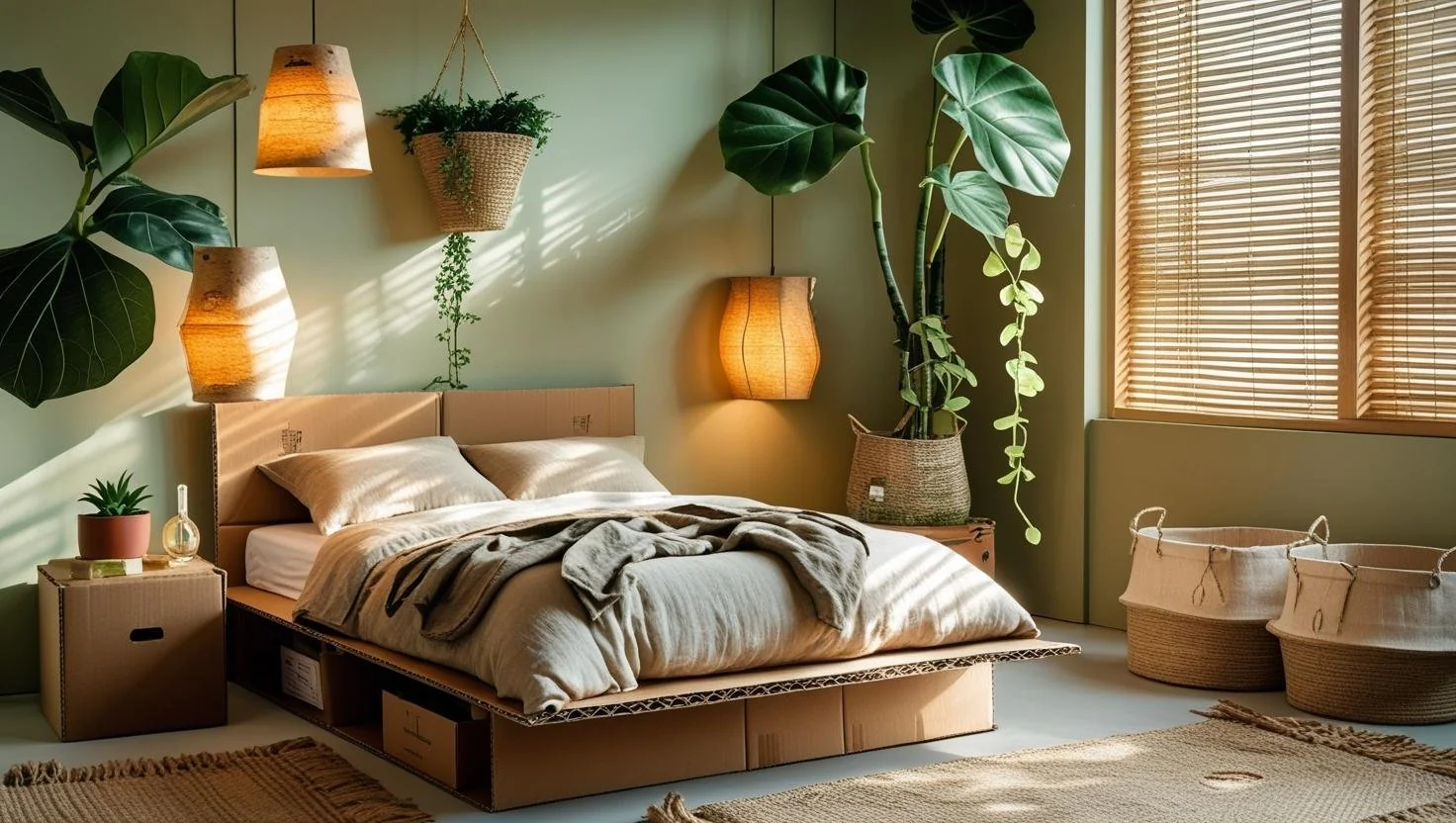
DIY cardboard bed frame eco-friendly project with layered structure

Cost, weight and portability

Cardboard is the cheapest category of bed frame you can realistically sleep on. Commercial flat-pack models are typically priced well below comparable solid-wood or steel frames, partly because a light box costs far less to ship. Prices move constantly, so check current listings rather than trusting any figure quoted in an article — including ours.

A DIY build can cost close to nothing if you collect clean, dry double-walled boxes from appliance or furniture retailers; your real spend is glue, tape and paint. The practical payoff is weight: one person can lift and reposition the frame, and dismantling for a move takes minutes instead of an afternoon with an Allen key. If portability is the main reason you are shopping, compare against a foldable bed frame, which packs down similarly but tolerates damp and rough handling far better.

Lightweight and easy to move cardboard bed frame

Sizes, height and mattress fit

Cardboard frames are sold and built to standard US mattress dimensions, so fit is a measuring exercise, not a compromise.

Size Mattress (inches) Notes
Twin 38 x 75 Easiest DIY build; least span to support
Twin XL 38 x 80 Common in dorms
Full 54 x 75 Needs a centre support line
Queen 60 x 80 Most popular size; centre support essential
King 76 x 80 Best as two linked modules, not one span

For room-planning clearances and bedding fit, our queen size bed dimensions guide covers the numbers in detail. Most cardboard designs sit somewhere around 12–18 inches tall, which usually leaves usable under-bed clearance — handy in small rooms, and the reason shelter designs put the packing box underneath as storage. Because the deck is a continuous flat surface rather than widely spaced slats, foam and hybrid mattresses sit evenly on it; check your mattress warranty, as some require slat gaps under a set width or a solid base.

The real limits: moisture, pests and heat

This is where honesty matters more than enthusiasm. Paperboard loses mechanical strength as it takes up moisture from the air: research on box compression shows substantial strength loss at high relative humidity — on the order of roughly a third at 80% RH — and the effect is continuous, not a cliff edge. In practice that means a cardboard frame belongs in a dry, heated, well-ventilated room. Basements, damp ground-floor rentals, humid climates without air conditioning and anywhere prone to condensation are poor candidates.

Two more caveats worth stating plainly:

  • Combustibility. Corrugated board burns readily. Keep the frame away from heaters, candles, and draped extension leads. We could not find a flammability standard written specifically for bed frames, so there is no test mark to look for here.
  • Pests and clutter. Corrugated board has voids that insects can shelter in, and it cannot be wiped or sprayed like metal. If you have had bed bug problems, a sealed metal or solid-wood frame is the easier surface to inspect and treat.

Cardboard also cannot be repaired the way wood can. A crushed corner stays crushed, so plan on replacing panels rather than fixing them.

How to build your own cardboard bed frame

A DIY build is a realistic weekend project with no carpentry experience, provided you respect the structure.

  1. Collect the right board. Double-walled boxes from appliance or furniture shops; clean, dry, uncrushed. Thin single-wall grocery boxes are not adequate for a sleeping load.
  2. Measure to your mattress. Build the deck to the mattress footprint, adding an inch or so of tolerance so bedding tucks without forcing the panels apart.
  3. Design in modules. Several linked boxes beat one large open span. For anything Full-size or wider, run a continuous support line down the centre.
  4. Orient the flutes vertically. In every support column, the corrugations should run top-to-bottom so load travels along the flutes. This single detail makes the largest difference to capacity.
  5. Build honeycomb or triangular cores. Rolled cardboard tubes, or interlocking cross-slotted panels, fill the load-bearing boxes. Triangles and closed cells resist racking; open rectangles do not.
  6. Glue, clamp, cure. Use a strong PVA-type adhesive across full faces rather than tape alone, weight the assembly while it dries, and leave it overnight before loading.
  7. Cap the deck. Finish with one or two full-width top sheets so point loads spread across all the supports underneath.

Making it last longer

  • Lift it off the floor. Feet, pads or thin blocks stop wicking from cold or occasionally wet floors.
  • Add a barrier layer. A breathable mat or thin foam sheet between mattress and deck reduces abrasion and condensation contact.
  • Seal exposed edges. Taped or coated cut edges resist fraying, which is where cardboard usually starts to fail.
  • Keep humidity moderate. Ventilate the room, and do not push the bed tight against an exterior wall that gets cold.
  • Do not sit on one edge. Concentrated loads on a rail crush the flutes. Sit toward the middle, over a support.
  • Inspect twice a year. Look for sagging deck panels, soft corners and separated glue lines; swap the panel before it collapses.

Reinforced cardboard bed frame eco-friendly design with moisture protection

Simple risers and sealed edges help your frame last longer.

Is the eco case solid?

Mostly, yes — with nuance. Corrugated packaging is among the most recycled materials in the waste stream: the US EPA has reported a recycling rate of 80.9% for paper and paperboard packaging in 2018, though later estimates using revised methods are lower, so the headline number depends on who is counting. A cardboard frame is light to ship, made largely from recovered fibre, and can re-enter that recycling stream at the end of its life — the Olympic frames, for instance, were donated and recycled rather than landfilled.

The honest counterpoint is lifespan. A frame that lasts two years and is replaced repeatedly is not automatically greener than a solid hardwood or steel frame that lasts twenty. Cardboard wins clearly for short-term needs — study years, sublets, guest rooms, staging a home — and for avoiding new hardwood and steel demand in those cases. For a permanent bedroom, compare it honestly against the options in our eco-friendly bed frame materials comparison, and see our sustainable bed frames guide for longer-lived picks.

Style without extra waste

Cardboard takes decoration well, which is half the appeal for DIY builders.

  • Staggered panels for a layered, sculptural edge profile.
  • Water-based, low-VOC paint — light coats only, since soaking the board weakens it.
  • Low-heat LED strips tucked under the deck lip for ambient light.
  • Cut-out cubbies in the plinth for books, shoes or bedding.
  • A slot-in headboard with geometric cut-outs, braced to the wall side rather than cantilevered.

If you like the low, clean look it produces, a platform bed or a Japanese futon setup achieves something similar with more durable materials. To extend the sustainability theme to the rest of the room, see our overview of sustainable sleep products for an eco-friendly bedroom.

Decorated cardboard bed frame eco-friendly with artistic headboard design

Stencil art, LEDs, and storage cubbies add personality—without adding waste.

Who should buy one — and who shouldn’t

  • Good fit: students and dorms, short leases, guest rooms used occasionally, tiny homes, temporary or emergency accommodation, anyone who moves often.
  • Poor fit: damp or unheated rooms, heavy or very active sleepers who want generous margin, households with pets that chew or scratch, anyone wanting a single frame for the next decade.

If you land in the second group but still want a light, quiet, low-impact setup, a reinforced steel frame is a durable middle ground — our guide to quieting a metal bed frame covers the noise issue that usually puts people off them.

FAQ

Are cardboard bed frames strong enough for adults?

Yes, when the design uses vertically oriented flutes, honeycomb cores and a centre support. Documented examples include the Tokyo 2020 Olympic frames rated to around 440 lb. Homemade frames vary enormously, so build conservatively and test with weight before sleeping on one.

How long does a cardboard bed frame last?

There is no reliable published lifespan data. In a dry, heated room with a barrier layer and periodic inspection, owners commonly report a few years of service; in humid conditions it can be months. Expect to replace panels rather than the whole frame.

Can a cardboard frame get wet?

No. Moisture is the main failure mode — compression strength drops measurably as humidity rises. Wipe spills immediately, avoid damp rooms, and never let the base sit on a wet floor.

Do cardboard frames help with back pain?

Only indirectly. A flat, non-sagging base keeps a mattress performing as designed, which matters for comfort — but there is no evidence that cardboard does this better than wood or metal, and no frame treats back pain on its own.

Are they safe for children or guests?

For a stable, reinforced, dry frame at low height, yes for normal sleeping. They are not built for jumping or for bunk-style use, and children should not be left to climb on them.

Can I recycle it afterwards?

Usually, if the board is uncoated. Strip tape, remove glued-on plastic and check local kerbside rules; coated or heavily painted panels may need to go in general waste.

The bottom line

A cardboard bed frame is a legitimate, low-cost, low-impact way to get a mattress off the floor — proven at scale in Olympic villages and emergency shelters, and easy to build at home from free boxes. Judge it on the two things that actually decide success: honest load design and a dry room. Meet those, and it is one of the smartest temporary beds available; miss them, and no amount of tape will save it.

Updated September 2026.
Eco Friendly Bed Frame Materials Compared Wood vs Metal

Eco friendly bed frame made of reclaimed wood in a cozy, sunlit bedroom with sustainable decor.

Eco-Friendly Bed Frames and Material Options

Looking to transform your bedroom into a sustainable sanctuary? The best eco friendly bed frames in 2025 offer the perfect blend of style, durability, and environmental responsibility. Designed to support both restful sleep and the planet, these frames use responsibly sourced materials and chemical-free finishes that are safe for your home and the Earth. (Updated 2025)

Key Takeaways

  • The best eco friendly bed frames are crafted from FSC-certified wood, reclaimed materials, or recycled metal for sustainable construction.
  • Non-toxic finishes such as water-based stains or plant-based oils help maintain healthier indoor air quality.
  • Trusted brands like Avocado, Thuma, and Medley offer stylish, sustainable options for every home aesthetic.

Choosing a sustainable bed frame supports long-term environmental goals while enhancing your bedroom with clean design and quality materials. For a deeper dive, explore our sustainable bed frames guide.


Best eco friendly bed frame made of reclaimed wood in a sunlit, sustainable bedroom

Featured eco friendly bed frame made with FSC-certified wood and non-toxic finishes.

Why Choose an Eco Friendly Bed Frame?

Traditional bed frames are often constructed using synthetic composites, plastic veneers, and chemically treated wood. These may release volatile organic compounds (VOCs), which harm indoor air quality and may cause headaches, allergic reactions, and respiratory discomfort (CDC Sleep Resources). Production often involves deforestation, energy use, and waste.

Eco friendly bed frames are designed with sustainability and health in mind. Whether crafted from FSC-certified hardwoods, bamboo, or recycled metals, these frames reduce environmental harm and promote longevity. Many also feature low-VOC or zero-VOC finishes, ensuring they don’t emit harmful toxins in your home.

  • Environmental Impact: Reclaimed or responsibly sourced materials conserve forests and reduce emissions.
  • Healthier Homes: Non-toxic glues and finishes protect indoor air quality.
  • Long-Term Value: Handcrafted frames are built to last decades.
  • Unique Design: Reclaimed wood adds rustic character and one-of-a-kind charm.

Imagine comparing a particle board frame with formaldehyde-laced adhesives to a solid oak frame finished with plant-based oils. One degrades quickly and releases toxins; the other lasts decades while supporting a healthy sleep space.

Switching to an eco friendly bed frame is about aligning your lifestyle with your values. For more ideas, explore our eco friendly bed frames guide.

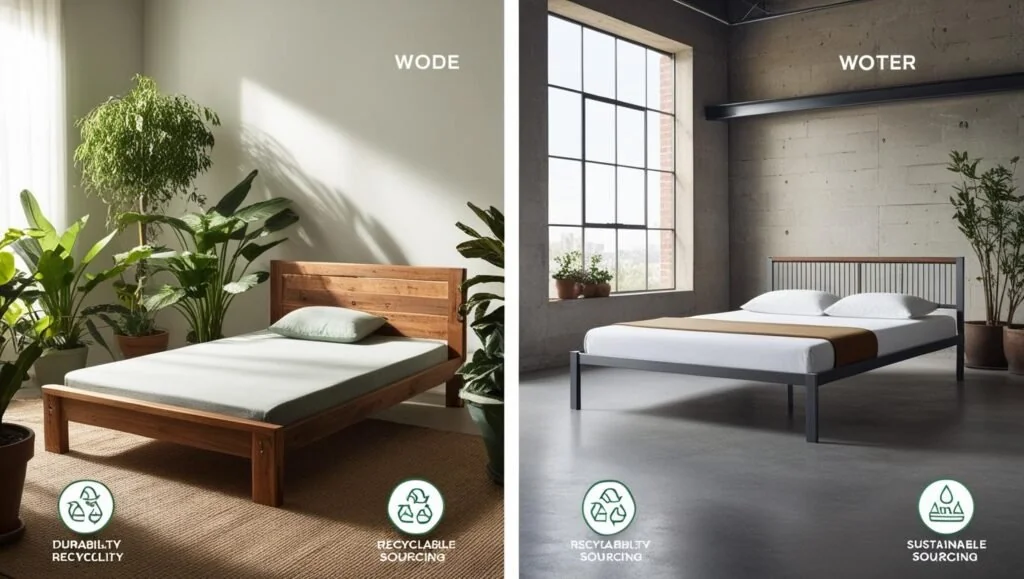
Materials Matter: Wood vs. Metal

Choosing between a wooden or metal eco friendly bed frame depends on style and sustainability preferences. Each offers unique benefits for your home.

Wooden Bed Frames

Wooden frames provide timeless beauty and natural warmth. FSC-certified or reclaimed wood ensures sustainability, while bamboo is an ultra-renewable choice.

  • FSC-Certified Wood: Ensures responsible forestry practices.
  • Reclaimed Wood: Reduces waste and offers rustic uniqueness.
  • Bamboo: Fast-growing, pesticide-free, and durable.

Eco friendly wooden bed frame built from reclaimed wood with rich grain patterns

A reclaimed wood bed frame with natural grain patterns for rustic charm.

Metal Bed Frames

Metal frames made from recycled steel or aluminum are sleek, strong, and long-lasting.

  • Recycled Steel: Uses less energy to produce than new steel (National Sleep Foundation).
  • Durability: Often last 20+ years.
  • Recyclability: Can be melted and reused at end of life.

For broader sourcing tips on responsible materials, see our sustainable bed frames guide.

Quick Comparison

Use this at-a-glance guide to pick the best eco friendly bed frame for your space:

  • Wood (FSC/Reclaimed): Biodegradable, renewable, natural look; lifespan 20–30 years; great for rustic, minimalist, or Scandinavian styles.
  • Bamboo: Rapidly renewable, low pesticide use; lifespan 15–20 years; pairs with eco-modern, light aesthetics.
  • Recycled Metal: Fully recyclable, strong, low maintenance; lifespan 20+ years; ideal for industrial or modern rooms and heavy-duty needs.

Top Brands Offering Eco Friendly Bed Frames

Avocado

Handcrafted in California from reclaimed wood, Avocado’s frames feature non-toxic finishes and GREENGUARD Gold certification. A Certified B Corporation, they’re leaders in transparency. Explore Avocado bed frames.

Thuma

Thuma uses upcycled rubberwood and Japanese joinery for tool-free assembly. Their minimalist, recyclable packaging reduces waste. Discover Thuma designs.

Medley

Medley offers customizable frames made from FSC-certified hardwoods and plant-based oils. Made in Los Angeles, they reduce shipping emissions. Shop Medley sustainable frames.

Certifications to Look For

  • FSC: Guarantees responsibly managed forests.
  • GREENGUARD Gold: Tests for low emissions across thousands of chemicals.
  • OEKO-TEX: Ensures textiles and finishes are safe for humans.

Want to dig deeper into third-party standards? See this overview of common bedding and furniture certifications.

To compare frame materials beyond certifications, read our wood vs. metal bed frame guide.

Tips for Choosing the Right Eco Friendly Bed Frame

  • Material: Choose FSC wood, reclaimed timber, bamboo, or recycled metal.
  • Size: Measure carefully before buying.
  • Assembly: Tool-free options save hardware and reduce waste.
  • Style: Match rustic, modern, or minimalist aesthetics.
  • Budget: Invest in durability to save long-term.

Comparison of wood and metal eco friendly bed frame styles and sustainability features

Innovative cardboard eco friendly bed frame for lightweight, sustainable living.

Conclusion

The best eco friendly bed frame blends sustainability, style, and health. From reclaimed wood to recycled metal, these frames help reduce your carbon footprint while creating a serene sleep space. For a full green makeover, visit Cozy Bed Quarters for more inspiration.

FAQ

What makes a bed frame eco friendly?

Eco friendly frames use FSC wood or recycled metal with non-toxic finishes for minimal environmental impact and safer indoor air quality.

Are eco friendly bed frames more expensive?

Some cost more upfront, but their durability reduces long-term replacements, saving money.

Can I find stylish eco friendly bed frames?

Yes. Brands like Thuma and Medley offer modern, minimalist designs that look great while being sustainable.

Do eco friendly bed frames require special maintenance?

No—just dust regularly and avoid harsh cleaners to keep your frame looking new.

Related reading from Cozy Bed Quarters

Other reading we found popular