Choosing the Perfect Painted Sleigh Bed for Your Home

painted sleigh bed


Painted Sleigh Bed: Choosing the Perfect Style for Your Bedroom

Shopping for a painted sleigh bed? This warm, practical guide covers styles, sizes, materials, finishes, prices, and styling ideas so you can pick a bed that looks beautiful and sleeps comfortably—without guesswork.

Key Takeaways: Painted Sleigh Bed

  • A painted sleigh bed pairs timeless curves with color options that fit classic or modern rooms.
  • Measure floor space and ceiling height; choose king or queen based on room size and sleep preferences.
  • High-quality paints (satin or matte) hide wear; wood frames are durable while upholstered options add softness.
  • Plan the look: neutral beds blend in; bold colors become a focal point—style with organic bedding or eco-conscious sheets.
  • Budget $300–$700 for entry level, $700–$1,500 for solid wood mid-range, and $1,500+ for designer or custom builds.

Understanding Painted Sleigh Beds

Answer first: A painted sleigh bed is defined by its curved headboard and footboard, then finished in color to suit your style. It brings heritage lines into today’s bedrooms with an easy, refreshable finish.

What Is a Painted Sleigh Bed?

A painted sleigh bed keeps the signature “sleigh” silhouette—curved headboard and footboard—while swapping stain for paint. That finish lets you match trim, coordinate with your palette, or create contrast.

Why Choose One?

Answer first: You get a statement shape and a finish that’s easy to touch up. A painted sleigh bed brightens dark wood rooms or adds color to minimalist spaces.

  • Aesthetic appeal: From soft white to navy, the painted surface becomes part of your color story.
  • Versatility: Works with cottage, traditional, transitional, and modern looks.
  • Customization: Repaint over time to refresh the mood without replacing the frame.

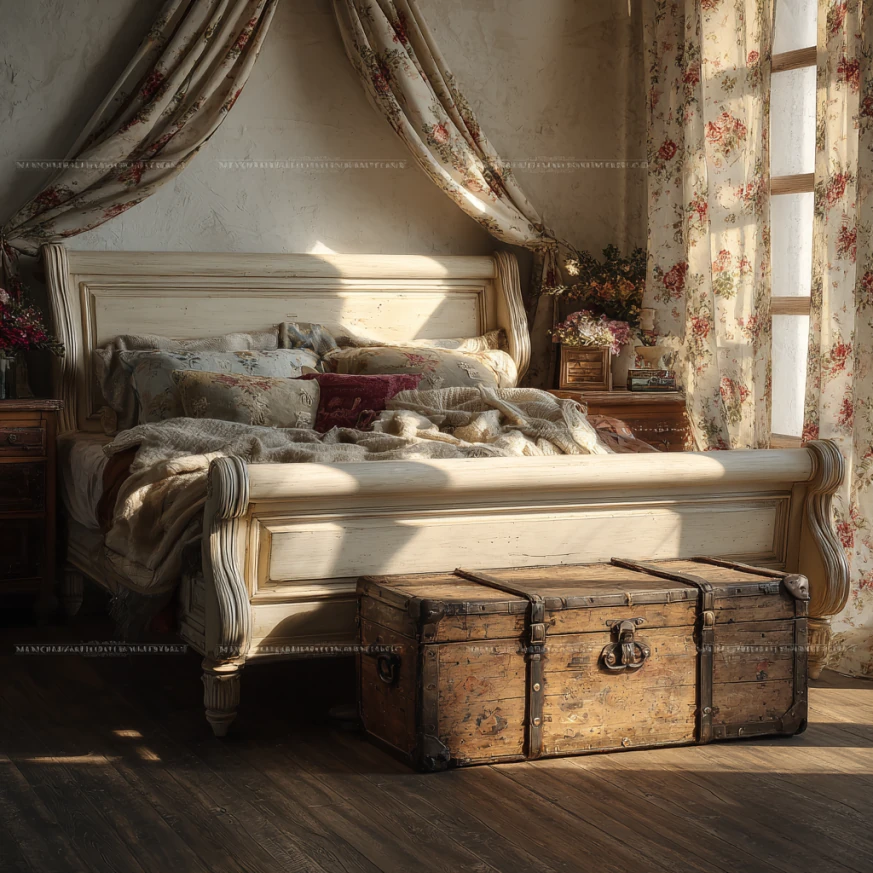
This image shows a white painted sleigh bed styled in a calm bedroom to illustrate how a painted sleigh bed anchors the space with its graceful curves.

Choosing the Right Size

Answer first: Size is the biggest comfort and layout decision. Pick a painted sleigh bed that leaves 24–36 inches of walkway around the frame and matches your mattress size.

King Sleigh Beds

Answer first: Choose king if you have a larger primary bedroom or need more personal space.

  • Spacious comfort: Ideal for couples who sprawl or co-sleep with pets.
  • Room proportions: Ensure door swing and dresser access still work after placing a king painted sleigh bed.
  • Measurement help: Compare clearances to standard mattress sizes from the Sleep Foundation’s guide to mattress dimensions. See standard sizes. :

Other Sizes

Answer first: Queens fit most rooms; full and twin sizes save floor space in guest and kids’ rooms.

  • Queen: Balanced comfort for most couples; works well with a queen painted sleigh bed in medium rooms.
  • Full and Twin: Smart for smaller rooms; check frame curvature so the footboard doesn’t crowd circulation paths.
  • More planning tips: See Sleep Foundation’s overview of bed frame types and sizing. Bed frame types & sizing.
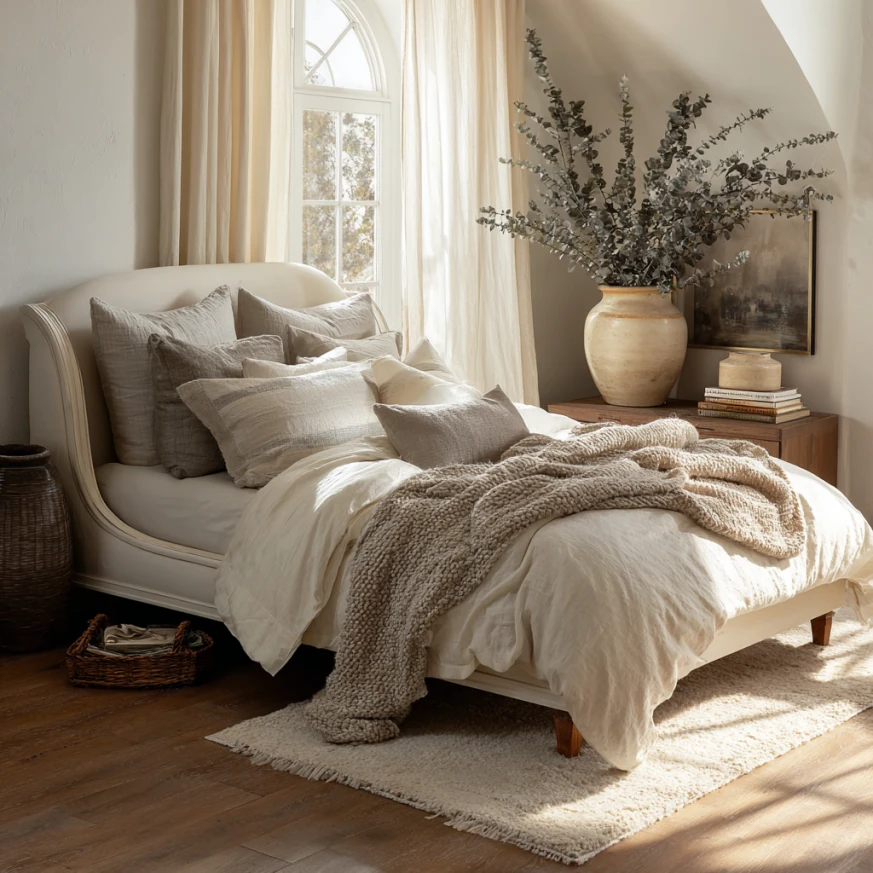
This photo features a gray painted sleigh bed in a bright modern room to show how a painted sleigh bed can feel airy even in contemporary spaces.

Material and Finish

Answer first: Wood frames last longest; upholstered versions add softness. Finish sheen affects maintenance and touch-ups on a painted sleigh bed.

Wood vs. Upholstered

Answer first: Pick wood for durability or upholstered for a plush look and feel.

  • Wood: Solid hardwoods resist dings and hold paint well on a painted sleigh bed.
  • Upholstered: Adds texture and comfort; clean fabric regularly and spot-treat promptly.

Paint Quality & Sheen

Answer first: High-quality paint hides wear and makes cleaning simple. Satin and matte are most forgiving.

  • Durability: Look for low-VOC, furniture-rated paints that resist chipping on your painted sleigh bed.
  • Finish options: Matte softens curves; satin balances cleanability and elegance; gloss is bold but shows imperfections.
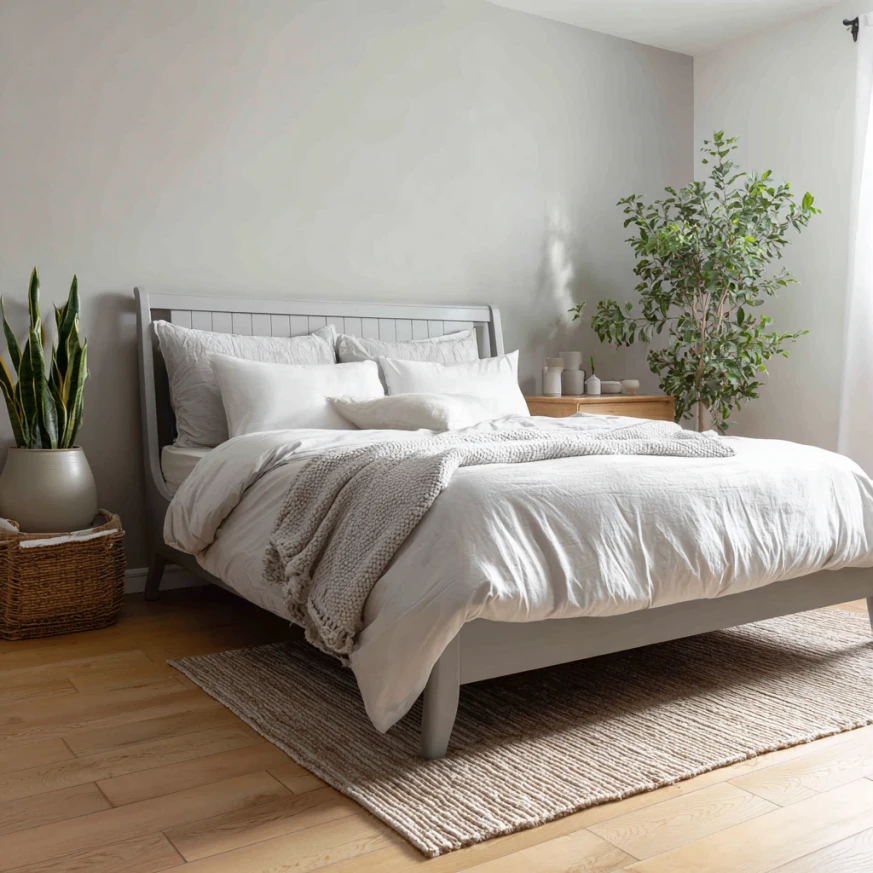
This image displays a blue painted sleigh bed with colorful pillows to demonstrate how a painted sleigh bed becomes a vibrant focal point with accent textiles.

Style Considerations

Answer first: Decide whether your painted sleigh bed should blend in or make a statement, then echo that choice in bedding and decor.

Traditional vs. Modern

Answer first: Traditional sleighs feature richer curves; modern versions streamline lines and reduce ornamentation.

  • Traditional: Deeper headboard curves and decorative rails suit vintage dressers and brass lighting.
  • Modern: Slimmer profiles in soft neutrals pair with simple nightstands and clean hardware.

Color Choices

Answer first: Neutrals are timeless; saturated hues can be the star. Choose the painted sleigh bed finish that supports your room’s mood.

  • Neutrals: White, cream, or gray keep rooms calm and make layering easy. Explore soothing bedroom paint colors from Better Homes & Gardens for palette ideas. See soothing colors.
  • Bold: Navy, forest green, or black turn the bed into a focal point—balance with lighter linens and art.
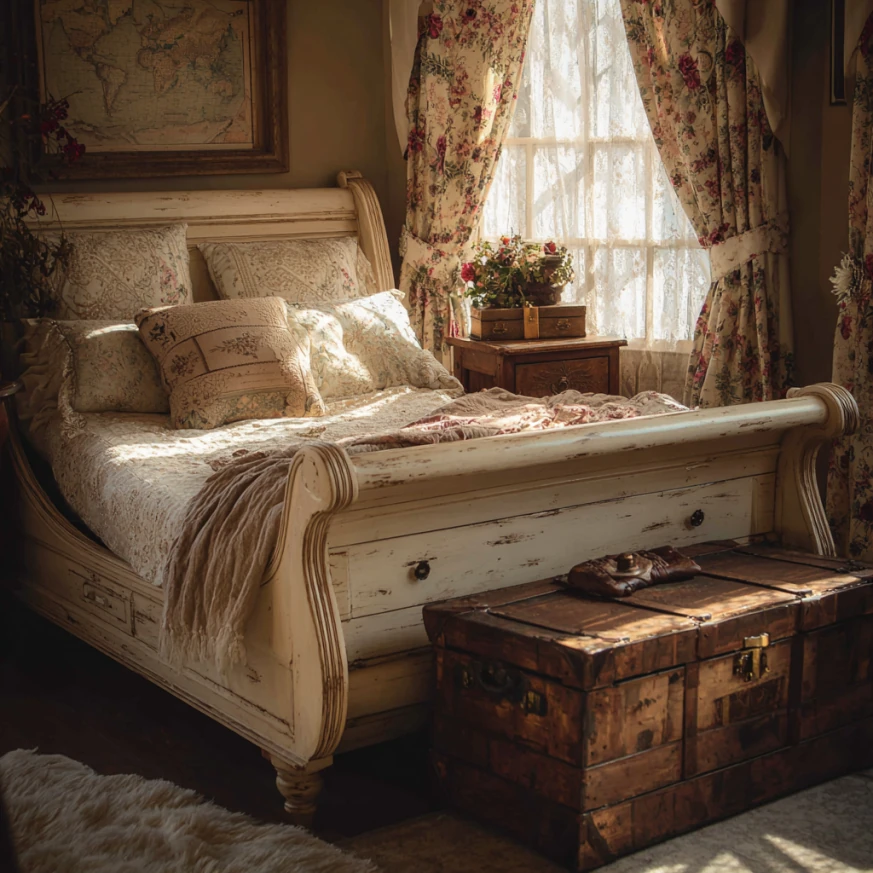
This photo shows a cream painted sleigh bed in a traditional room to highlight how a painted sleigh bed complements classic furniture and warm lighting.

Buying Guide & Price Range

Answer first: Expect entry-level options from $300–$700, solid-wood mid-range from $700–$1,500, and designer builds at $1,500+ for premium woods or custom finishes on a painted sleigh bed.

  • Budget ($300–$700): Veneered or MDF frames; confirm weight limits and joinery.
  • Mid-Range ($700–$1,500): Solid wood, stronger slats, and better hardware—often the sweet spot.
  • Luxury ($1,500+): Hardwood construction, custom paint, artisan details, or upholstered rails.

For mattress/frame alignment and room planning, the Sleep Foundation’s mattress size guide is a handy reference. Mattress sizes.

Wood vs. Upholstered Comparison

Feature Wood Painted Sleigh Bed Upholstered Painted Sleigh Bed
Durability Highly durable, long-lasting Durable frame; fabric needs more care
Style Classic, traditional look Soft, modern appearance
Maintenance Easy to dust; touch-up paint as needed Vacuum/spot-clean upholstery as needed
Price Generally affordable to mid-range Often higher due to fabric and padding

This image captures a minimalist gray painted sleigh bed to show how a painted sleigh bed can read understated and elegant with soft lighting.

Eco-Friendly Finishes & Bedding

Answer first: If sustainability matters, choose low-VOC paint for your painted sleigh bed and pair it with eco-conscious textiles.

  • Low-VOC paints: Reduce odors and emissions; ideal for bedrooms.
  • Textiles: Balance the traditional frame with organic bedding, sustainable bedding, and eco-conscious sheets for healthier sleep and a cohesive design.
  • Fabric picks: Linen, percale, or sateen each changes the look and feel; learn differences in Parachute’s guide. Percale vs sateen vs linen.

Matching with Existing Decor

Answer first: Treat your painted sleigh bed as the anchor. Then repeat its color or contrast it thoughtfully with textiles and accents.

Complement Your Furniture

Answer first: Keep styles cousins, not strangers. Curvier beds like a painted sleigh bed pair well with rounded mirrors and classic pulls.

  • Coordinate colors: Pull a tone from your rug or drapery onto the bed frame.
  • Harmonize styles: If you love flow, reference Feng Shui layout basics for better balance. Feng Shui layout principles (internal).

Bedding & Accessories

Answer first: Layer texture to soften the frame. Choose breathable linens for comfort and add pattern through throws or shams.

  • Bedding: Crisp percale cools; linen adds relaxed texture over a painted sleigh bed.
  • Color therapy: For a calming palette that flatters painted furniture, try light blues. Light blue bedroom accessories (internal).
  • Kids’ rooms: Save space with smart storage near a petite painted sleigh bed. Bookcase storage beds for kids (internal).
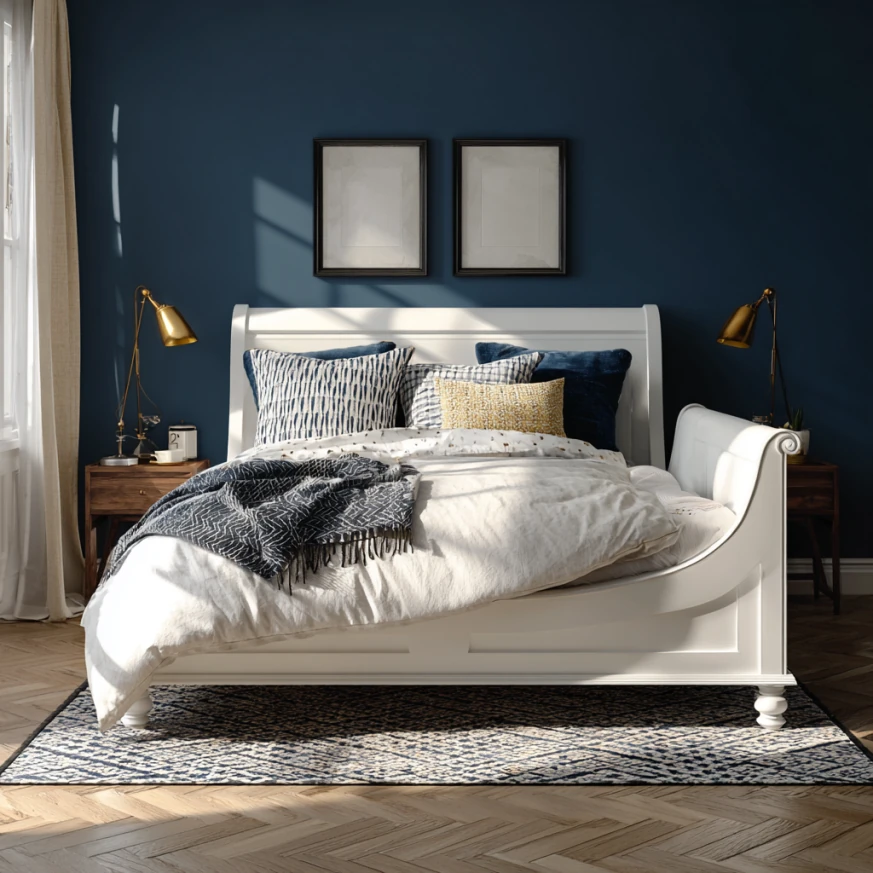
This photo shows a crisp white painted sleigh bed layered with neutral bedding to demonstrate how a painted sleigh bed becomes the room’s calm focal point.

Maintenance Tips

Answer first: Gentle, regular care keeps a painted sleigh bed looking new for years.

Cleaning & Care

Answer first: Dust weekly; spot-clean promptly. Avoid harsh chemicals that may dull paint.

  • Weekly dusting: Use a soft microfiber cloth on rails and headboard.
  • Monthly wipe-down: Lightly damp cloth; dry immediately to protect the painted sleigh bed finish.
  • Extra tips: See Parachute’s care guide for bed frames and wood surfaces. Bed frame care and cleaning wood furniture.

Repairing Paint Dings

Answer first: Keep a small pot of matching paint for quick touch-ups on your painted sleigh bed.

  • Spot fixes: Lightly sand, wipe dust, then dab paint.
  • Larger repairs: Consider a professional refinisher to color-match and re-topcoat.

FAQ

What color works best for a painted sleigh bed?
Neutrals like white, cream, or soft gray are timeless; bold hues make the bed a statement. For palette ideas, browse soothing bedroom paint colors. Color inspiration.
Are painted sleigh beds durable?
Yes—quality wood, sturdy slats, and furniture-rated paint stand up well with regular care.
What bedding pairs well with a painted sleigh bed?
Balance the curves with crisp percale or relaxed linen; consider organic bedding, sustainable bedding, or eco-conscious sheets for healthier sleep.
Can I repaint a painted sleigh bed later?
Absolutely. Lightly sand, prime if needed, and repaint to refresh the color.
Which size fits a small room?
Full or twin saves space; verify clearances using standard bed/mattress measurements. Size guide.

Final Thoughts on Painted Sleigh Beds

A painted sleigh bed blends classic lines with color-forward design, making it an easy upgrade for many styles and budgets. If you’re refining layout, color, or sleep routines, browse more tips from Cozy Bed Quarters to create a bedroom you love every night.

Related Readings


What Is a Sleigh Bed? Design, History, Sizing and Buying Tips

Sleigh bed with curved wood design and cozy bedding in a warmly lit, elegant bedroom.

What is a sleigh bed? It’s a bed frame with a headboard and footboard that curve or scroll outward, so the profile looks a bit like an old horse-drawn sleigh. The style came out of early 1800s French and American Empire furniture, and today it shows up in solid wood, upholstered and storage-drawer versions that fit standard mattress sizes.

What makes a bed a sleigh bed

Three things, really, and they’re what separate a sleigh bed from any other wooden frame. The headboard curves back away from the mattress instead of standing straight up. The footboard mirrors it, curving out toward the room. And the side rails are usually solid panels rather than thin metal angle iron, which is why these frames feel heavy and look grounded.

Everything else varies. Some sleigh beds have a dramatic C-shaped scroll at both ends; others only hint at the curve with a gentle rake. Upholstered versions round the shape with padding and a wing-like flare instead of bent wood.

A few numbers that help you picture it:

  • Headboard height: commonly 45 to 58 inches from the floor on traditional wood models.
  • Footboard height: roughly 20 to 35 inches on classic designs, 14 to 22 inches on low-profile ones.
  • Wall gap: because the headboard leans back, the frame usually sits 2 to 5 inches off the wall.
  • Weight: a solid hardwood queen frame can easily top 100 pounds, which matters if you move often.

What is a sleigh bed: traditional mahogany frame with scrolled headboard and footboard

Sleigh bed vs. panel bed vs. platform bed

Feature Sleigh bed Panel bed Platform bed
Headboard shape Curved or scrolled, leans back Flat, vertical Often low or none
Footboard Tall and curved, standard Usually present, flat Often skipped
Foundation needed Depends on model; many take slats only Often needs a box spring Built-in slat deck
Floor footprint Largest for the same mattress Medium Smallest

Where the sleigh bed came from

The shape traces back to the Neoclassical wave that swept France after the digs at Pompeii and Herculaneum sent designers hunting through ancient Greek and Roman couch forms. Under Napoleon that taste hardened into the Empire style, full of classical scrolls and mahogany veneer. The Metropolitan Museum of Art’s overview of Empire style, 1800–1815 notes how Napoleon’s architects, Percier and Fontaine, spread that vocabulary through published pattern books.

In France the form was the lit en bateau, or boat bed: two scrolled ends of equal height, built to sit sideways against a wall in an alcove. Surviving 19th-century examples are usually figured mahogany with moulded front panels and bracket feet.

American cabinetmakers picked up the shape during the American Empire period, roughly 1810 to 1840, and that’s where the name stuck: the scrolled ends echoed the runners and dashboard of a winter sleigh. Early versions were massive, with thick veneered panels and carved paw feet. Victorian makers slimmed them down, and by the late 20th century a sleigh bed could be pine, metal or padded fabric.

If old bed forms interest you, the history of the four-poster bed covers a parallel story from a different century.

What is a sleigh bed made of today?

  • Solid wood: oak, acacia, rubberwood, mahogany or cherry. Heaviest, longest-lasting, most expensive. Curves are made by steam bending or by laminating thin plies over a form.
  • Veneered engineered wood: MDF or particleboard with a wood or paper-foil face. Cheaper, lighter, likelier to chip at the corners.
  • Upholstered: velvet, linen-look polyester, faux leather or boucle over foam. Softer against your back for reading, but it collects dust and shows pet claws. Our look at the Dulane upholstered sleigh bed covers what that style is like to live with.
  • Metal: curved tube frames with a scroll silhouette. Lightest and usually cheapest, though they squeak more as joints loosen.
  • Storage sleigh beds: two to four drawers built into the side rails or a lift-up deck underneath.

Modern low-profile sleigh bed with a gently curved headboard in a minimalist bedroom

Will a sleigh bed fit your room?

So what is a sleigh bed going to cost you in floor space? More than you’d guess, and this is the part people skip and then regret. The outside footprint is bigger than the mattress inside it, because the ends flare out — so you lose floor space you didn’t budget for.

Start with mattress sizes: twin 38 x 75 inches, full 54 x 75, queen 60 x 80, king 76 x 80, California king 72 x 84. A sleigh frame typically adds 4 to 10 inches of width and 6 to 14 inches of length on top, depending on how far the scrolls project, so a queen can occupy roughly 68 x 92 inches of floor.

Then add walkways. Aim for about 30 inches of clear space on each side you use and 30 to 36 inches at the foot. Run the math before you order:

  1. Measure the room wall to wall, noting where doors swing or slide.
  2. Find the frame’s overall dimensions on the spec sheet, not the mattress size.
  3. Add 60 inches of width if you want to walk both sides, or 30 if one side goes against a wall.
  4. Add the headboard’s lean-back gap, often 2 to 5 inches.
  5. Tape the outline on the floor and live with it for a day.

Rooms under about 10 x 10 feet usually do better with a low-profile sleigh bed, or one with no footboard at all. Sizing a full instead? Our full size bed dimensions guide has layout diagrams, and if space is really tight, the space-saving bed frames roundup is a better starting point.

Sleigh bed with built-in under-bed storage drawers open along the side rail

Storage drawers need pull-out room

A side drawer needs 20 to 24 inches to open, so a storage sleigh bed jammed against a narrow wall ends up with a drawer you can never fully use. Check which side the drawers sit on; many models assemble left or right.

What to check before you buy a sleigh bed

Buying a sleigh bed comes down to joinery and support. Run this checklist:

  • Slat spacing. Most foam and hybrid mattress warranties want gaps of about 3 inches or less plus a center support with legs to the floor. Read the mattress warranty, not the bed listing.
  • Center rail legs. Queen and larger frames should have at least two, ideally three, legs down the middle. One flimsy plastic foot is a sag waiting to happen.
  • Rail-to-post hardware. Steel hook plates or bolt-and-barrel-nut joints outlast dowels and cam locks. Retighten every bolt after a month, then yearly — that’s what stops the midnight creak.
  • Mattress thickness. Sleigh rails often sit 10 to 14 inches off the floor. Stack a 14-inch mattress on top and the curved footboard shrinks to a nub while your pillows slide over the headboard. Match mattress height to the rail height in the specs.
  • The curve itself. Tap it. Bent solid wood or laminated ply sounds dense; a hollow molded shell sounds like a drum.
  • Formaldehyde. If the frame uses MDF, plywood or particleboard, look for a TSCA Title VI or CARB Phase 2 compliance label. The EPA’s composite wood emission standards cover panels made in or imported into the US, and the label should name the panel producer and a third-party certifier number.
  • Delivery. Measure stairwell turns and doorway widths — sleigh headboards are wide, rigid pieces that won’t flex around a tight landing.

Curious how the curves are actually produced in different woods? Our wooden bed design guide goes deeper on species and finishes.

Living with the footboard

The tall footboard is the whole look, and the main complaint. If you’re over about 6 feet, stretch out on the mattress before buying: a footboard that curves inward at the top crowds your feet on a 75-inch twin or full. An 80-inch queen or king usually fixes it.

Bedding behaves differently too. Duvets can’t drape over the end, so they bunch against the footboard. Either size down one step on the duvet or skip the tucked look and fold a throw across the foot. Deep-pocket fitted sheets help when the mattress sits low between high rails.

Styling a sleigh bed without making the room feel heavy

A sleigh bed already carries a lot of visual mass, so let it be the loud thing in the room.

  • Keep nightstands slim and leggy so light passes under them.
  • Size the rug to the footprint: an 8 x 10 under a queen leaves rug showing on three sides, so the bed doesn’t look marooned.
  • Hang art higher than feels natural; the headboard eats 45-plus inches of wall.
  • Pale walls balance a dark mahogany or walnut frame; with light oak or fabric, you can go darker around it.
  • Limit the pillow pile to three or four. Curved headboards push pillows forward anyway.

Styled sleigh bed with layered neutral bedding, a throw folded at the footboard and slim nightstands

Care and repair

Dust wood frames with a dry or barely damp cloth and skip silicone sprays, which build up on curves and go cloudy. Wipe spills off veneer fast, since water creeping into a seam lifts the edge. On upholstered frames, vacuum the crevice where the deck meets the headboard monthly and check the tag’s cleaning code before using water. Felt pads under the feet protect hardwood floors.

Squeaks almost always come from loose rail bolts or slats rubbing their ledger. Tighten the bolts first; if it keeps going, stick adhesive felt strips where the slats rest, and work through a full guide to tracking down a squeaky bed frame.

Sleigh bed FAQ

Are sleigh beds out of style?

No, but the look has shifted. Heavy high-gloss mahogany sets read dated to a lot of people now, while low-profile wood and upholstered versions fit current bedrooms fine. For the shape without the formality, pick a matte finish and a footboard under about 22 inches.

Do sleigh beds need a box spring?

Depends on the model. Many modern ones ship with a full slat deck and need nothing else. Traditional frames have rails cut for a box spring, which adds 5 to 9 inches of height. The listing should say “foundation required” or “no box spring needed.”

Can you use an adjustable base with a sleigh bed?

Sometimes. The base has to fit inside the side rails, and the headboard curve has to clear the raised head section, so frames with removable slat decks work best. Measure inside rail width and height, then check the base specs.

Do sleigh beds work in small bedrooms?

Yes, with edits. Choose a footboard-free or low-profile version, a lighter finish, and storage drawers only if you have pull-out room. Losing the tall footboard gives back a foot or more of usable floor.

Why are sleigh beds more expensive?

Curved parts cost more to make than flat ones, since steam bending or laminating over a form takes tooling and time. Solid side rails also use more material than a metal-railed panel bed, and upholstery adds foam, fabric and hand labor.

Updated September 2026.