Bedding Rituals: History, Culture & Modern Sleep Routines

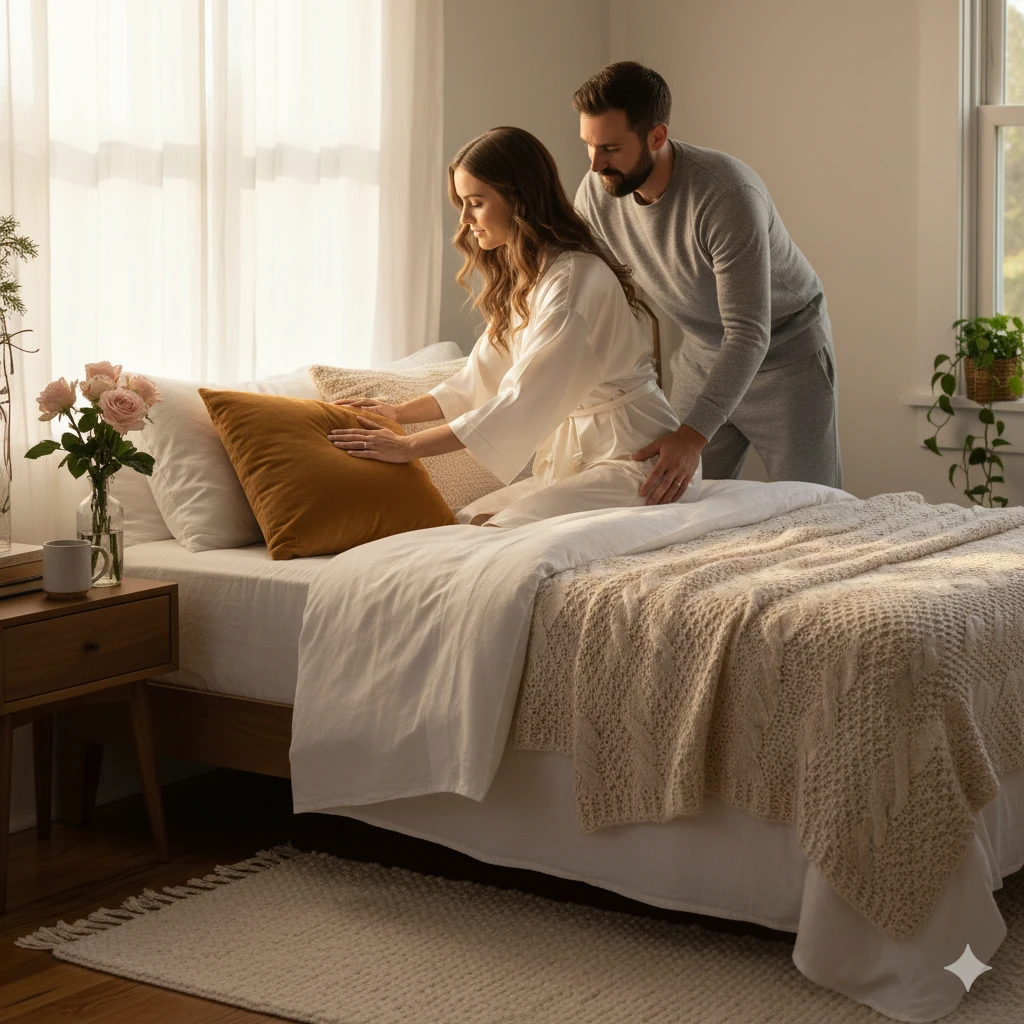
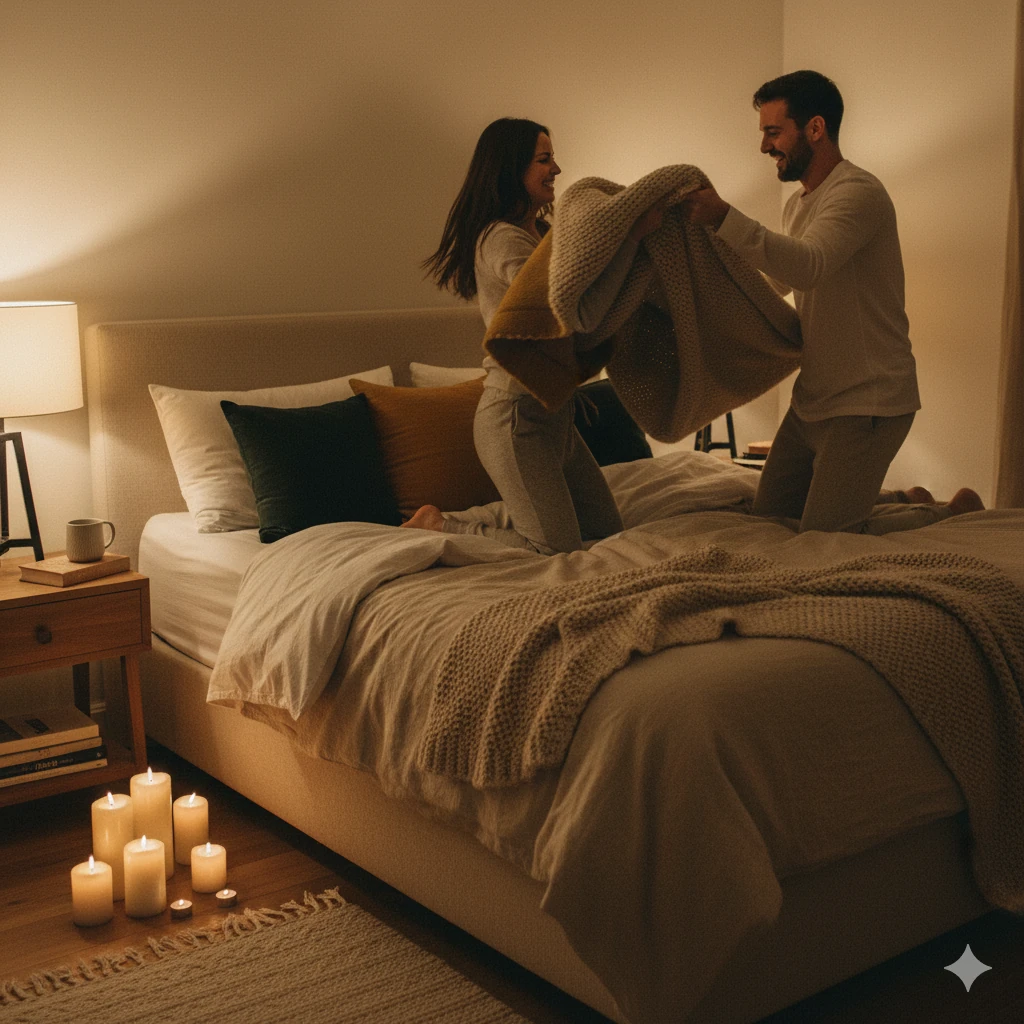
Peaceful evening setup for modern bedding rituals with candles and cozy bedding.

The Cultural History of Bedding Rituals

Bedding rituals have transformed from communal medieval ceremonies to personal sleep routines. Understanding their origins helps us reclaim bedtime as a nourishing, intentional part of daily life. Updated 2025.

Key Takeaways

  • Historical Significance: Bedding rituals once marked marriages, affirmed community bonds, and offered spiritual protection.
  • Cultural Diversity: From Japanese futons to Indian Ayurvedic oils, every culture shapes the way we wind down.
  • Modern Edge: Science-backed bedding rituals improve sleep quality when paired with mindful design and consistent routines.
  • Actionable: A simple, repeatable flow—lights down, screens off, gentle scent, and quiet reflection—trains the body to rest.

What Are Bedding Rituals?

Bedding rituals are the patterns, gestures, and preparations we repeat before sleep. In earlier eras, they were public and ceremonial; today they are intimate and personal. Yet the aim is unchanged: calm the nervous system, signal safety, and invite deep rest. Think of your ritual as a bridge—moving you from the bright bustle of day to the quiet of night.

Ancient Bedding Traditions

  • Ancient Egypt: Elevated beds protected sleepers from pests and drafts; linen—associated with purity—was perfumed with myrrh or lotus. Carved headrests weren’t just ergonomic supports; they symbolized the head’s passage into dream and renewal.
  • Mesopotamia: Clay tablets describe nocturnal prayers and protective charms against “night spirits,” plus simple mats that could be rolled and stored—early evidence of flexible sleep spaces.
  • Classical China: Early Feng Shui emphasized bed placement for harmony and safety—head supported by a solid wall, clear view of the entrance, and minimal clutter to keep qi flowing.
  • Greece & Rome: Wealthy homes displayed sleeping quarters as status: painted walls, textiles, and amulets against bad dreams. Evening bathing and light oils prepared the body for rest.

Medieval Bedding Ceremonies: A Communal Affair

In medieval Europe, bedding ceremonies were integral to weddings. After the vows, kin escorted the couple to the marriage bed, offering blessings (and, in some regions, witnessing the consummation). The ritual was less about voyeurism than public legitimacy: marriage forged alliances, transferred property, and anchored families within the wider community. To separate myth from documentation, see Bedding Ceremony Stories: Separating Myth from Reality.

Bedding as a Status Symbol

During the Middle Ages, the quality and ornateness of one’s bed signaled wealth and rank. Massive frames, embroidered hangings, and heavy curtains created warmth, privacy, and theatrical presence. Beds were heirlooms—sometimes inventoried like jewels—showing that the space of sleep carried real economic value.

Historical bedding rituals and ornate canopied beds used as status symbols.

Superstitions and Spiritual Practices

Before sleep science, nighttime felt liminal. People sought protection with ritual objects and plant lore:

  • Herbs like rosemary and lavender under the pillow to soften nightmares.
  • Iron implements at the bedside to repel ill fortune.
  • Directional sleeping for luck, energy flow, or spiritual alignment.

These practices reveal a deep intuition: the mind opens at night. Explore more lore in bedroom superstitions for better sleep.

Spiritual and superstitious bedding rituals for restful sleep, including herbs and charms.

Victorian Bedtime Etiquette

The Victorian bedroom was theater. Evening tea, designated “nightdress,” and scripted reading underscored propriety and composure. Heavy drapery and layered bedding held warmth in drafty homes. Etiquette manuals advised quiet routines and tidy rooms—early versions of “sleep hygiene.” Though ornate, the era championed order: a predictable sequence to usher in rest.

Industrial Age to Early 20th Century

Electric light lengthened workdays, pushing bedtimes later while reducing sleep time. Magazines popularized “sanitary” bedding—washable linens, sunning mattresses—and promoted fixed schedules for children. Boarding houses and tenements normalized compact sleep spaces and emphasized the practicality of folding beds and pullouts—rituals adapted to smaller, busier lives.

Global Bedding Rituals

  • Japan: Tatami floors and futons folded each morning promote cleanliness and mindfulness. Evening baths (ofuro) relax muscles; minimal rooms keep the sleep environment quiet and purposeful.
  • India: Ayurveda pairs warm oil foot massages with herbs like ashwagandha and tulsi. Spices in warm milk and pre-sleep prayer or meditation ground the mind before lights out.
  • Scandinavia: Fresh air is prized: babies nap outdoors in prams, and adults favor breathable bedding and cool rooms. Rituals focus on “hygge”—soft light, simple textiles, and slow wind-downs.
  • Indigenous North America: Dreamcatchers, smudging, and storytelling around the hearth embed sleep in community and meaning.
  • Middle East: Incense (oud, frankincense) and sweet night teas scent the home. Textiles—light in summer, layered in winter—follow the seasons.
  • West Africa: Woven mats and mosquito nets balance airflow and protection. Evening communal time—music, conversation—eases transition into night.
  • Mediterranean: Late dinners are countered by calm evenings with low lighting and linen bedding; afternoon rests (where cultural) help regulate overall sleep pressure.
  • Pacific Islands: Open-air sleeping and natural fibers (pandanus, cotton) align with climate; quiet conversation and moonlit walks mark the shift to night.

Modern Bedding Rituals: A Simple Reset Plan

Today’s rituals focus on consistency and sensory cues that tell your brain it’s time for rest. Instead of overcomplicating things, start small and let rhythm do the work.

  1. Power down: Set devices aside or use night mode. Aim for a firm “screens-off” cutoff.
  2. Set the scene: Dim lights, clear surfaces, and create visual calm.
  3. Scent cue: Use lavender, chamomile, or cedar with a diffuser or linen spray. Keep it consistent.
  4. Light movement: Gentle stretches or a short walk—enough to release tension without raising your heart rate.
  5. Mind quiet: Journal briefly (wins, worries, gratitude) followed by 3–5 slow breaths.
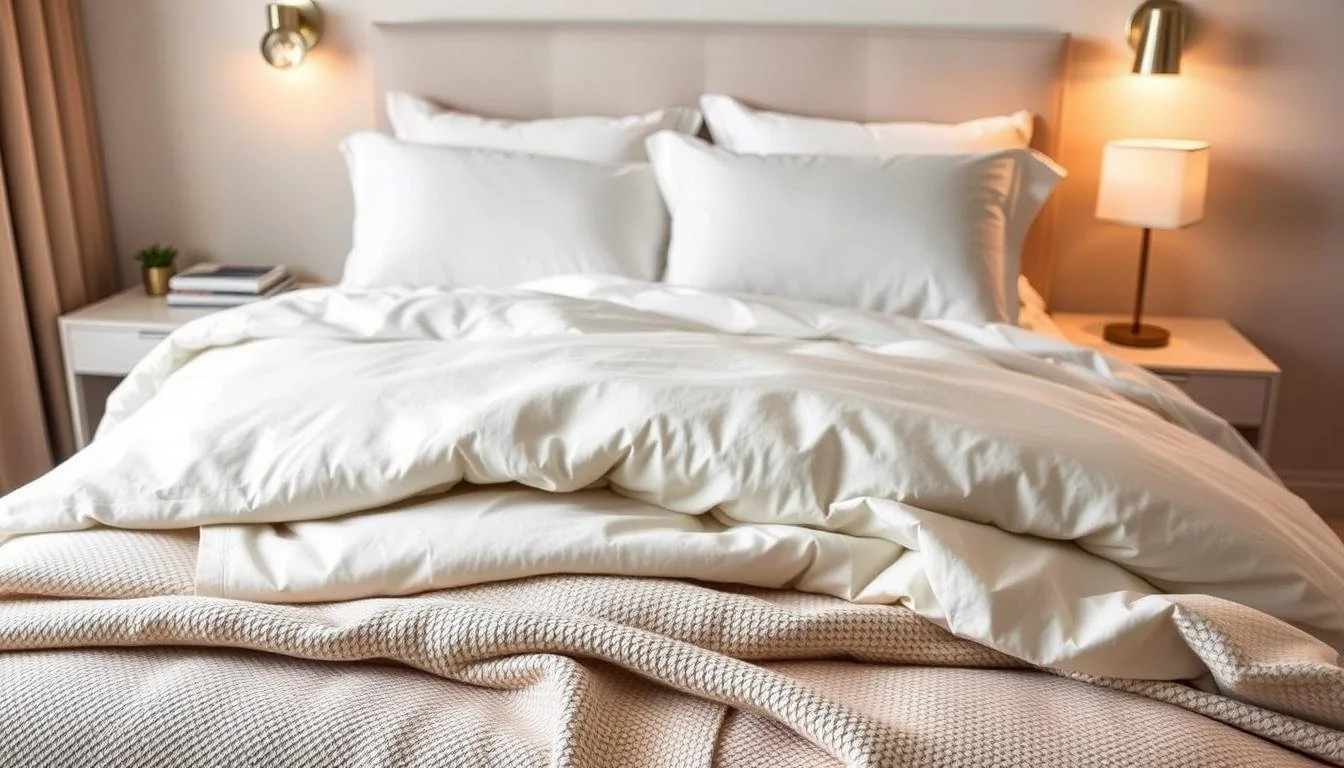
  6. Comfort layers: Smooth sheets, fluff pillows, and pull on a favorite throw for a tucked-in signal.
  7. Wind-down activity: Paper reading, soothing audio, or a guided body scan. Lights out at the same time nightly.

Pro tip: Try this for one week. Days 1–2: choose your bedtime window and prep your space. Days 3–4: add scent + journaling. Days 5–6: introduce light stretches. Day 7: keep only what feels natural. Consistency beats perfection.
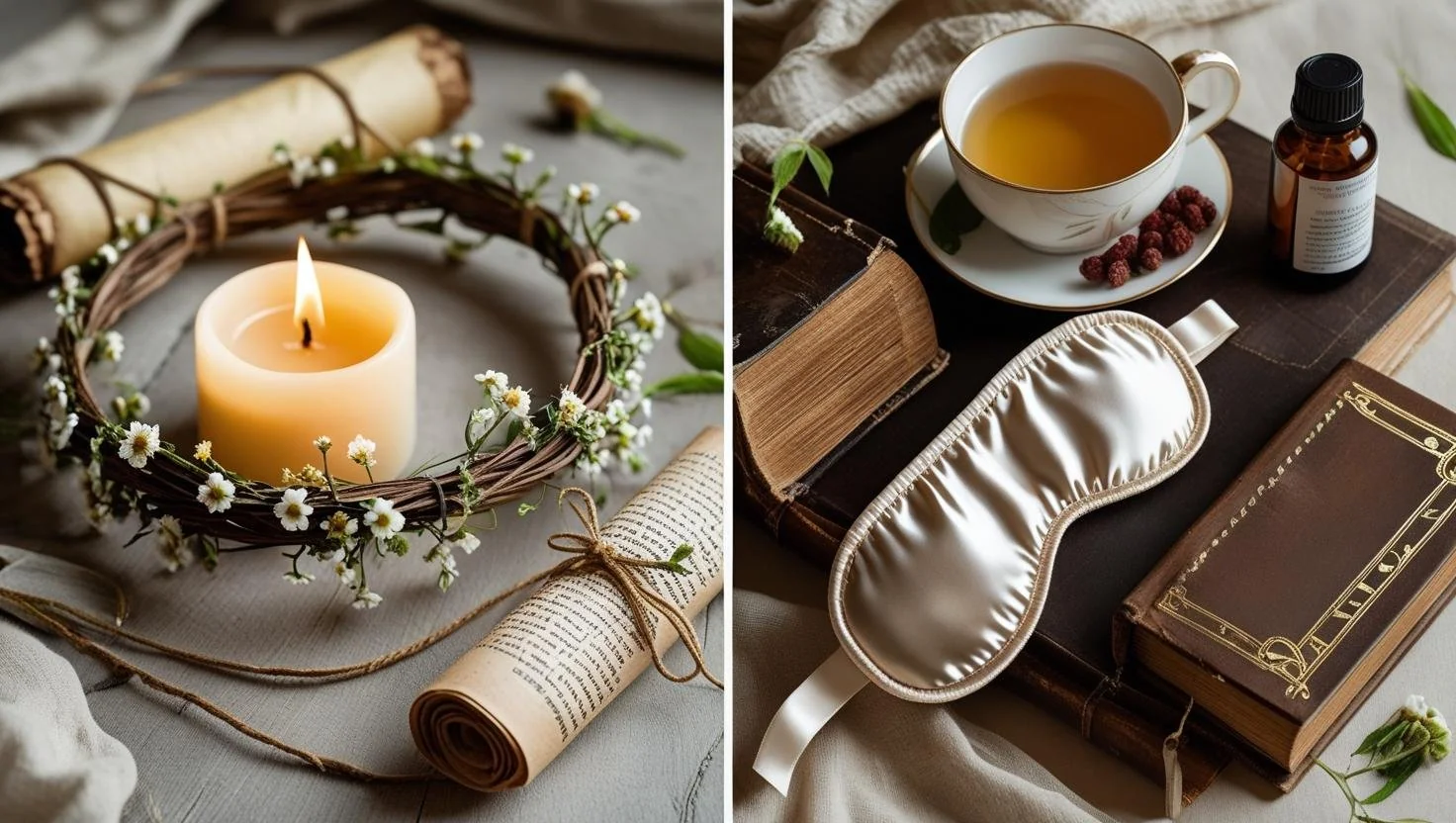
Modern bedding rituals with dim lights, journaling, and soothing scents.

Science-Backed Habits Behind Better Sleep

  • Circadian rhythm: Light exposure is the main time cue; dimming lights in the hour before bed helps melatonin rise.
  • Sleep pressure: Caffeine timing and late heavy meals disrupt the natural build-up of sleep drive; gentle routines reduce physiological “noise.”
  • Blue light: Screens close to bedtime can delay melatonin and fragment sleep; swap for analog activities.
  • Temperature: Cooler rooms (generally mid-60s°F) support thermoregulation and deeper stages of sleep.

For public-health guidance on sleep hygiene and light, see the CDC’s sleep hygiene overview, the American Academy of Sleep Medicine’s guidance on tech and sleep, and the Sleep Foundation’s bedtime routine guide. For practical steps, see our walkthrough for creating a calming bedroom routine.

Designing Your Bedroom as a Sleep Sanctuary

Environment shapes behavior. Aim for clutter-free surfaces, breathable layers, and tactile variety (percale + knit throws). Noise-proof with soft rugs and curtains; mask stray sound with a fan. The bed is the star: supportive mattress, smooth sheets, and a weight that feels secure. Explore upgrades and textiles in our guide to a quality bedding upgrade.

Common Mistakes (and Easy Fixes)

  • Too many steps: Overbuilt routines collapse. Start with two cues (dim light + scent).
  • Inconsistent timing: Your brain loves rhythms. Hold the same wind-down window, even on weekends.
  • Stimulating “relaxation”: Thrillers, intense workouts, or doom-scrolling sabotage calm. Pick soothing inputs only.
  • Overheating: Layer breathable fabrics and lower the thermostat to support deep sleep.

Reviving the Magic of Bedding Rituals

Across eras, people shaped sleep with symbols, textiles, scents, and shared moments. Today we keep the spirit—intentional, rhythmic, soothing—while leaning on evidence and design. A few well-chosen cues, repeated nightly, can make your bedroom feel like a sanctuary again.

Final Thoughts

When you treat bedtime as ceremony, rest becomes reliable. Start small, repeat nightly, and refine your bedding rituals until they feel like second nature. For gentle upgrades—from breathable sheets to calming routines—explore our guides at Cozy Bed Quarters.

FAQ

What’s the quickest way to start a bedding ritual?

Pick two cues you’ll actually repeat—dim lights and a consistent scent—then add one calming activity like journaling or paper reading.

How long should a wind-down take?

Most people do well with 60–90 minutes. Even 30 minutes helps if you’re consistent with the same steps and timing.

Which scents are best for sleep?

Lavender, chamomile, cedar, and sandalwood are common choices. Use a light, repeatable dose; consistency matters more than the exact fragrance.

Do I need to avoid screens entirely?

Ideally, yes in the last hour. If you must use devices, enable night mode and switch to low-stimulation tasks like a simple podcast or guided breathwork.

What if my schedule is irregular?

Anchor your ritual to the hour before intended sleep, even if bedtime shifts. Keep the steps the same so your brain recognizes the pattern.


Related reading from Cozy Bed Quarters

Other reading we found popular

Bedding Ceremony Today: How This Tradition Lives On in Modern Weddings

A medieval painting vividly portrays how marriages once included public rituals, visually answering the question Is the Bedding Ceremony Still Practiced Today.


Is the Bedding Ceremony Still Practiced Today? Modern Rituals (2025)

The bedding ceremony sounds like a scene from a romance epic, but it was once a very real part of wedding customs across Europe and beyond. So, is the bedding ceremony still practiced today? Not as a public spectacle—yet its meaning lives on through private thresholds, quiet blessings, and historical reenactments. In this guide, we’ll explain where the ritual came from, why it faded, and how couples can honor its spirit with modern, comfortable, and value-aligned choices for their first night together.

Key Takeaways: bedding ceremony

  • The bedding ceremony historically involved escorting newlyweds to bed as a communal affirmation of their union.
  • Public versions are rare today; symbolic, private gestures carry forward the meaning instead of the spectacle.
  • Is the Bedding Ceremony Still Practiced Today? Symbolically, yes—through threshold rituals, blessings, and reenactments at festivals.
  • Changing privacy norms, religious reforms, and urban living led to the ritual’s decline by the 19th century.
  • Couples now personalize the moment with restful spaces, mindful materials, and comfort-forward bedding choices.

What Was the Bedding Ceremony? (Answer-first)

Short answer: It was a public escort of the newlyweds to their marital bed, witnessed by community members who offered songs, jokes, or prayers. The ritual marked the transition from contract to lived union.

Across medieval and early modern Europe, families and friends sometimes accompanied the couple right to the bedchamber. Among nobility, the ceremony could be theatrical—marriages often sealed alliances. In villages, it reinforced ties and values in a world where marriage wove social, economic, and spiritual life together.

A medieval procession illustrates how the bedding ceremony affirmed a marriage in front of witnesses, and this full-sentence alt text includes the exact focus keyword bedding ceremony.
A stylized depiction of a European ritual escort.

How Did Different Cultures Interpret It? (Answer-first)

Bottom line: The details changed by region, but the core remained communal blessing. In practice, some regions emphasized humor and music; others leaned spiritual and formal.

  • Nordic regions: Processions, songs, and symbolic gestures—like removing the bride’s shoes—to mark joining a household.
  • Germanic villages: Lively escorts with lanterns and music underscored community witness.
  • East Asia: Bridal-chamber preparations with auspicious items intended for harmony and fertility.
  • African contexts: Multi-day weddings with elders’ blessings and guidance for the couple at the doorway.

Today, many couples prefer private echoes: a quiet exchange of vows, a toast, or a restful bedroom setup. If you’re choosing materials and weaves for comfort, explore CBQ guides on bedding materials and selecting bed linens from our internal library.

A playful reenactment shows how the bedding ceremony survives as education and entertainment, and this full-sentence alt text includes the exact focus keyword bedding ceremony.
Reenactments keep the story alive without the old public pressure.

Is the Bedding Ceremony Still Practiced Today? (Answer-first)

Mostly no in its original public form, but yes symbolically in certain communities and events. Elements surface in some faith traditions and cultural contexts, and reenactments appear at festivals and fairs. In mainstream Western weddings, the meaning is preserved by private gestures instead of public witnesses.

Think of it as a shift from spectacle to significance: couples craft a small threshold moment that is intimate, consensual, and aligned with their values. Comfort-forward bedding choices also express care—because how you rest that first night sets the tone for many nights to come.

A modern bedroom vignette shows how the bedding ceremony lives on through private thresholds and quiet blessings, and this full-sentence alt text includes the exact focus keyword bedding ceremony.
Private, personal, and meaningful has replaced public and performative.

Why Did the Tradition Decline? (Answer-first)

Privacy, reform, and urban life changed expectations. As ideas about intimacy evolved, public rituals around the wedding night felt inappropriate. Religious reforms reshaped what counted as proper celebration. Cities made homes smaller and more private, and family structures shifted. By the 19th century, public bedding ceremonies had largely disappeared in Western Europe.

Yet what mattered most—the threshold from single to married life—did not vanish. It simply moved behind closed doors, where couples could define meaning on their own terms.

A timeline graphic symbolizes how the bedding ceremony declined with evolving privacy norms, and this full-sentence alt text includes the exact focus keyword bedding ceremony.
Changing norms moved the moment from public to personal.

A Modern Guide: Honor the Tradition, Skip the Spectacle (Answer-first)

Keep the meaning; craft comfort. You can nod to history with small, dignified choices that feel like you—no audience required.

  • Create a private threshold: Exchange a short vow, blessing, or gratitude list together—just the two of you.
  • Prioritize restorative bedding: Match weave to climate and feel. Percale is crisp and cool; sateen is smooth and drapey. See Sleep Foundation’s comparison of sateen vs. percale.
  • Go beyond thread count: Quality yarns and construction matter more than chasing a number. Learn the basics in Sleep Foundation’s thread-count guide.
  • Top layers with flexibility: A duvet + cover makes seasonal tweaks easier. Parachute explains what a duvet is, and Better Homes & Gardens breaks down duvet vs. comforter.
  • Design for the senses: Lighting, a favorite scent, and a tidy space say “welcome home” after a big day. For comfort tactics, explore CBQ’s temperature-regulating bedding.

Eco-Friendly vs. Conventional Bedding: What Matters Now (Answer-first)

Eco choices focus on materials, processing, and lifecycle. They can deepen the symbolism of care—toward each other and the planet.

  • Materials: Organic cotton, linen, and lyocell are breathable and durable, reducing pesticide use versus conventional cotton. See CBQ’s materials guide for trade-offs.
  • Certifications: Look for trusted labels (e.g., GOTS for organics; OEKO-TEX for harmful-substance testing) to align purchases with health and sustainability goals.
  • Comfort synergy: Breathable fibers plus the right weave support cooler, deeper sleep—ideal after the wedding whirlwind. Our guide to selecting bed linens helps match fabric to climate.
  • Longevity: Choose durable construction, then follow care labels. A better-built set supports nightly rest long after the big day.

Buyer’s Mini-Guide: Weave, Warmth, and Longevity (Answer-first)

Match fabric to feel and season. These quick rules prevent regret and maximize comfort.

  • Weave & feel: Percale = crisp and airy; sateen = smoother drape. Compare with Sleep Foundation’s sateen vs. percale.
  • Thread count, decoded: A useful range depends on fiber and weave—not an arms race. See the thread-count basics.
  • Top layer choice: Want flexibility and easy cleaning? Consider a duvet insert with a cover (learn what a duvet is) or compare duvet vs. comforter.
  • Care & storage: Wash on gentle cycles, rotate by season, and store in breathable bags to extend lifespan.
  • Value picks vs. heirlooms: Balance budget with durability. Choose the set you’ll love nightly, not just on day one.

FAQ: Bedding Ceremony Today

Is the bedding ceremony still practiced today?
Not publicly in its medieval form, but symbolic versions persist: private thresholds, blessings, and festival reenactments.
Where is it observed symbolically?
Elements appear in certain religious and cultural contexts and at historical fairs, where the vibe is educational and theatrical rather than literal.
Why did the ritual decline?
Shifting norms around privacy and intimacy, religious reforms, and urban living made public wedding-night customs unacceptable.
Did crowds witness consummation?
Typically no. Public presence was symbolic; the private act remained private.
How do couples honor the meaning today?
By creating a small, consensual ritual—letters, blessings, a toast—and designing a restful space with well-chosen materials.

Final Thoughts

The public theater has faded, but the bedding ceremony endures as a quiet passage—one you can shape with warmth, respect, and care. Whether you choose crisp percale or smooth sateen, organic cotton or linen, the point is comfort and intention. For deeper dives, explore CBQ’s guides to choosing bed linens, understanding materials, and sleeping cool year-round.

Related Readings

Sleep Foundation: Sateen vs. Percale Sheets
Sleep Foundation: Best Thread Count for Sheets
Parachute Home: What Is a Duvet?

Were Bedding Ceremonies Real in Medieval Times

Cozy medieval-inspired bedroom with sage blanket, rustic wood accents, and woman opening curtains in morning glow.

Were Bedding Ceremonies Real?
Updated 2025: Were bedding ceremonies real? Yes—these elaborate rituals once marked the final step of a marriage, especially among medieval European nobility. They validated unions in the eyes of the church and society, cemented political alliances, and showcased family honor. While the tradition faded, its echoes remain in today’s customs and bedroom design.

Key Takeaways on Bedding Ceremonies

  • Bedding ceremonies were real—well-documented from the Middle Ages through the early modern era.
  • They served legal, political, and cultural functions that went far beyond romance.
  • Modern wedding gestures (threshold carry, bed blessings) preserve the ritual’s symbolic meaning.

A historic bedding ceremony reenactment showing that bedding ceremonies were real
A historical reenactment of a nuptial bedding escort.

Were Bedding Ceremonies Real in Medieval Society?
Answer first: Yes—bedding ceremonies were standard fixtures of elite weddings. Family and court witnesses escorted the couple to the chamber, offered blessings, and formally “delivered” them to bed. This public act made the union socially and legally undeniable.

In noble households across France, England, and the German states, music and pageantry often accompanied the procession. The bedchamber was staged like a set: torches for spectacle, ciels de lit (canopies) for grandeur, and textiles embroidered with heraldic motifs. For deeper context, see Behind Closed Doors: The Changing Face of Nuptial Bedding Ceremonies.

Historical Evidence: Were Bedding Ceremonies Real or Myth?

Answer first: They are amply evidenced in chronicles, letters, and household records. Royal accounts from 12th-century France through Tudor England describe ceremonial escorts, prayers, and the observance that the pair retired together—even if consummation remained private. Among commoners, the ritual was pared down to a cup of wine or a priestly blessing, revealing how class shaped custom.

For curated case studies, read Bedding Ceremony Stories: Separating Myth from Reality and Medieval Wedding Bedding Ceremonies: Rituals of Legitimacy.

Bedding Ceremonies Across Europe
France

French courts used bedding to publicly seal diplomatic marriages. Gift-giving for the chamber—fine linens, silver basins, spice boxes—reinforced alliances. Witnesses, sometimes including clergy, offered blessings at the bed’s edge.

England

In Tudor England, witnesses could be charged with verifying that the couple retired together, providing legal protection against later annulment claims. Learn how practice shifted in Medieval Wedding Bedding Ceremonies: Rituals of Legitimacy.

German Lands

Germanic customs blended pageantry with folk beliefs: greenery for fertility, herbal sachets under pillows, and musicians outside the door. Household account books recorded special linens purchased for the event.

Scandinavia

Some Scandinavian weddings paired the bedding with the morgengabe (morning gift): land, jewelry, or livestock bestowed to secure the bride’s status.

Opulent linens and canopies in bedding ceremonies prove they were real traditions
Opulent linens and canopies signaled status and legitimacy.

Notable Historical Examples That Prove Bedding Ceremonies Were Real

  • James IV of Scotland & Margaret Tudor (1503): A formally witnessed bedding cemented Anglo-Scottish ties.
  • Mary, Queen of Scots & Francis II (1558): A courtly escort emphasized Franco-Scottish alliance.
  • Henry VIII & Anne of Cleves (1540): Bedding recorded despite annulment—showing ritual’s political weight.
  • Philip II of Spain & Mary I of England (1554): A staged public bedding underscored a controversial union.
  • Charles I & Henrietta Maria (1625): Ceremonial display soothed confessional and diplomatic tensions.

Symbolism of Bedding in Medieval Culture

Answer first: The bed was the family’s power stage. Canopies projected authority; embroidered curtains and counterpanes told a lineage story; featherbeds and bolster stacks hinted at prosperity. The display reassured witnesses that the household could support heirs.

Curious how these motifs translate into modern interiors? Explore Exploring the Fascination of Medieval Bedding and 7 Dynamic Decor Themes for Canopy Beds.

Myth-Busting: What Movies Get Wrong

Answer first: Films exaggerate the spectacle. Historically, guests escorted the couple; they did not gather to watch intimacy. The goal was acknowledgment and legal clarity, not voyeurism.

Why Bedding Ceremonies Declined

Answer first: Changing ideas about privacy, consent, and companionate marriage eroded the need for public validation. Urban living and smaller households made pageantry impractical.

For a narrative of this transition, see Behind Closed Doors: The Changing Face of Nuptial Bedding Ceremonies.

Global Traditions with Similar Roots

Eastern Europe

In parts of Poland and Ukraine, elders bless the bed with embroidered cloths and prayers—quiet echoes of medieval practice.

Middle East

Families sometimes prepare the bridal room with symbolic foods and fragrances to invite prosperity and joy.

South & East Asia

Chinese customs may include a designated “good-fortune” woman making the bed with red textiles and placing auspicious tokens beneath pillows.

Africa

Some communities present special cloths or a marriage bed as part of the celebration, linking union to household lineage.

Modern wedding customs echo bedding ceremonies showing they were real traditions
Modern customs echo the spirit of the old ritual.

Design Inspiration: Bring Historic Elegance Home

Answer first: You can channel the look without the medieval draft. Aim for layered textiles, a statement canopy, and heirloom-style details.

  • Start with the frame: A canopy or four-poster instantly evokes ceremony. Short on ceiling height? Choose a slim silhouette; see Best Canopy Bed Frames for a King Size Mattress.
  • Layer textiles: Mix matelassé, sateen, velvet, and fringe for depth. Keep a calm palette so textures take the spotlight.
  • Add heraldic hints: Embroidered pillows, crested motifs, or tapestry-inspired throws nod to lineage symbolism.
  • Frame the bed: Curtains or a simple crown canopy create that “stage” effect without heavy drapery.

Medieval vs Modern Wedding Customs

Medieval Bedding CeremonyModern Equivalents
Escorted to bed by family/courtCarrying bride over threshold
Blessings at bed’s edgePriest or officiant blessing
Canopies, embroidered linensDecorated honeymoon suite
Witnesses confirmed unionMarriage certificate signing

So, Were Bedding Ceremonies Real Today?

Answer first: The historical form is rare, but the spirit survives. Carrying the bride over the threshold, preparing a honeymoon suite, or sharing a ceremonial first drink all echo the medieval idea of publicly acknowledging a private union.

FAQ

Were bedding ceremonies public events?

Partly. The escort and blessings were public; intimacy was private.

Did all social classes observe them?

No. Nobility staged elaborate rituals; commoners kept it simple or skipped them.

Why were they important?

They affirmed legitimacy, deterred annulment claims, and celebrated alliances.

Are there modern equivalents?

Yes—threshold carries, bed blessings, and honeymoon-suite rituals.

Where can I find historically inspired bedding?

Explore collections at Cozy Bed Quarters and our editorial on heritage textiles.

Final Thoughts

So, were bedding ceremonies real? Absolutely. They once defined how elite marriages were recognized and remembered. While the spectacle has faded, the symbolism still shapes how we celebrate unions—and how we design intimate spaces. At Cozy Bed Quarters, we channel that timeless elegance into welcoming, modern bedrooms.
Sources & Further Reading

Related reading from Cozy Bed Quarters

Other reading we found popular

Final reflection on whether bedding ceremonies were real and how they inspire modern traditions
Modern bedrooms can still reflect echoes of historic rituals.

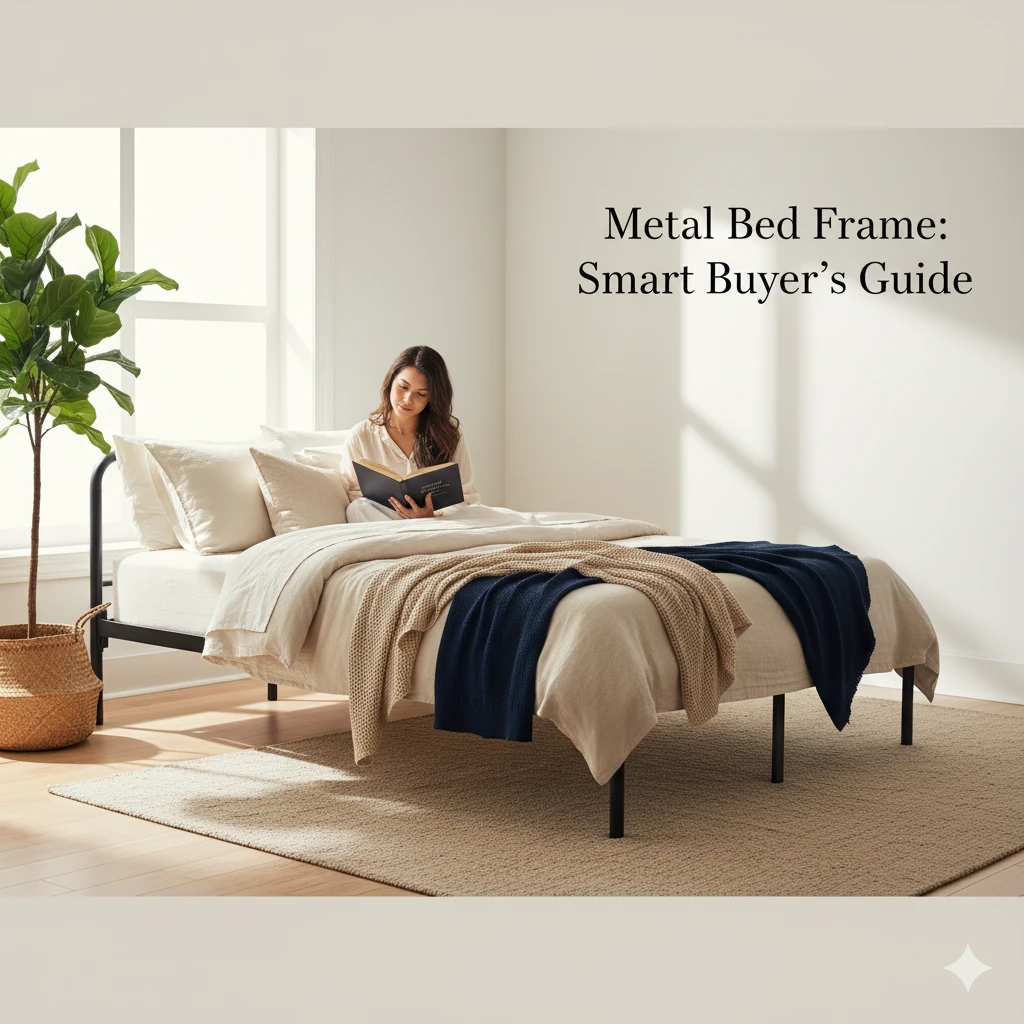
The Pros and Cons of a Metal Bed Frame: A Smart Buyer’s Guide

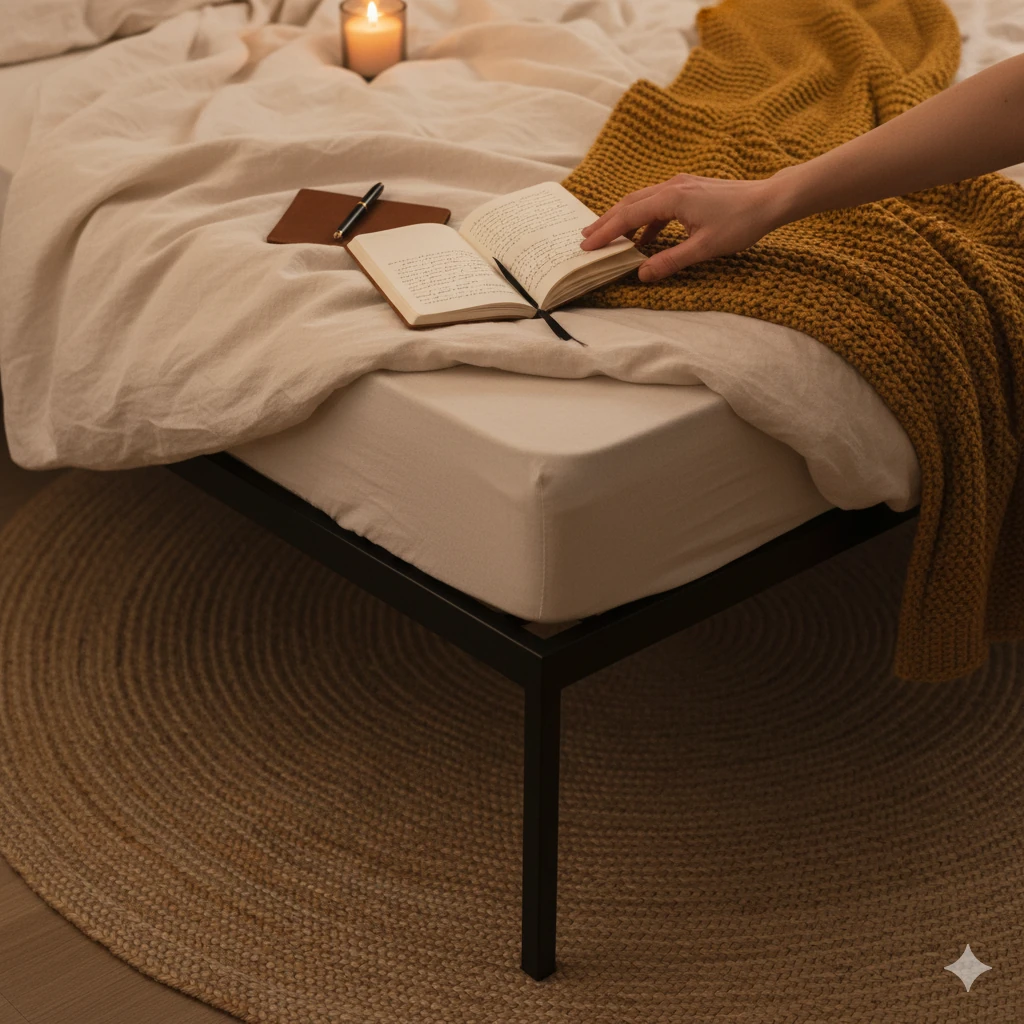
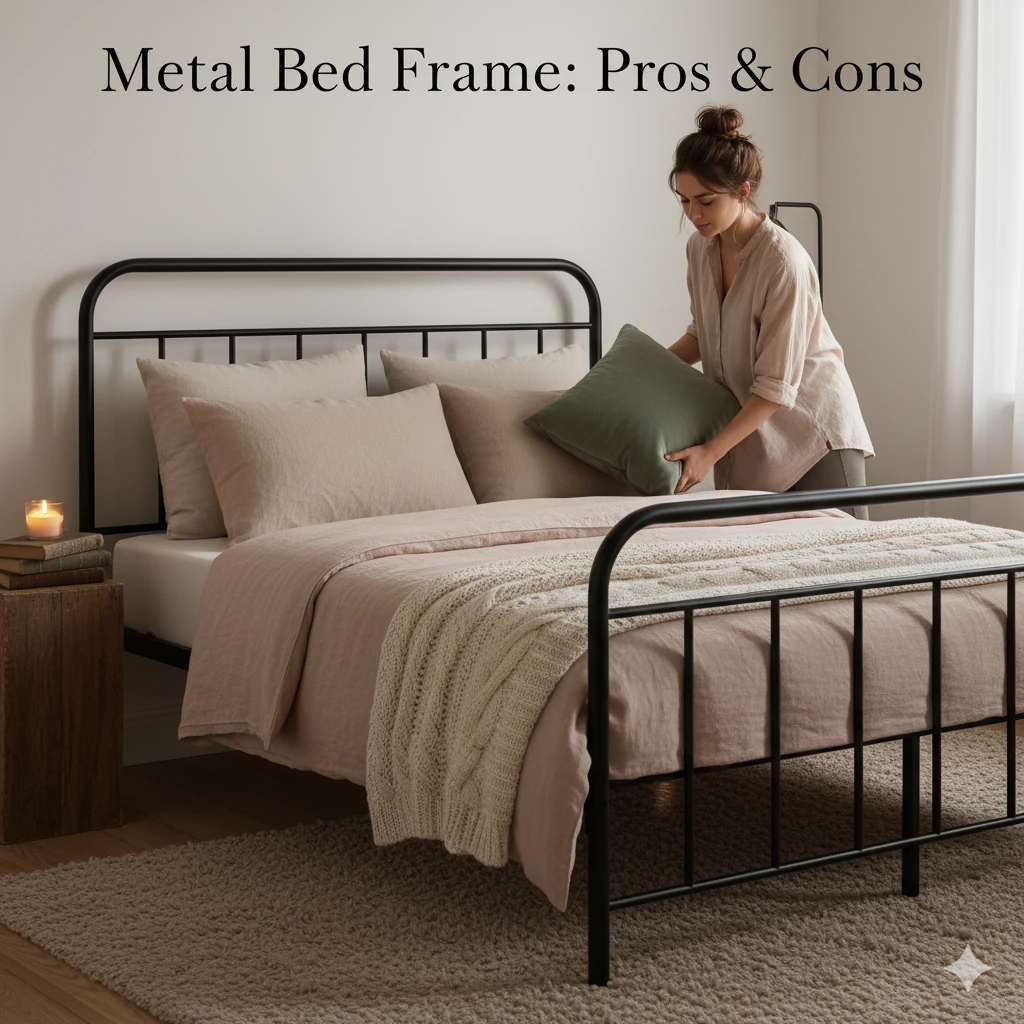
Close-up of metal bed frame corner with mustard throw, journal, and cozy candlelight.

Pros and Cons of a Metal Bed Frame

Understanding the pros and cons of a metal bed frame helps you choose a sturdy, stylish foundation that fits your budget and sleep needs. Below, we give quick answers first, then dive deep. For a broader look at frame types, see our modern bed types guide.

Key Takeaways on the Pros and Cons of a Metal Bed Frame

In one scan: metal frames are durable, affordable, and versatile—but can squeak and may rust without simple maintenance.

  • Durable & budget-friendly: Great lifespan and value, especially for guest rooms and everyday use.
  • Style range: Minimalist to vintage—easy to match with wood nightstands or upholstered headboards.
  • Potential downsides: Noise over time, cold-to-the-touch feel, and rust risk in humid rooms.
  • Fixes are easy: Tighten joints and add pads to stop squeaks; choose powder-coated frames to resist rust.
  • Pros and cons of a metal bed frame: Best pick when you want strength, storage space, and simple care.

Advantages of Metal Bed Frames

Short version: metal frames win on strength, price, and flexibility. Here’s what that means at home and over the years.

1) Durability & Longevity

At their best, metal frames stay square and supportive for years, resisting warping and cracks that can plague wood. Heavier gauges and welded joints add stability, while powder coats protect from moisture. If you need a frame for everyday use or heavier sleepers, metal’s structural strength is a clear plus in the pros and cons of a metal bed frame. According to the American Academy of Sleep Medicine, strong support structures help extend mattress performance and longevity.

Durable frame detail showing the pros and cons of a metal bed frame in a modern bedroom

2) Pest Resistance

Metal isn’t a food source for termites and provides fewer hiding spots for bed bugs. That makes it a smart pick in warm or humid climates. Keep the whole sleep setup fresh with our mattress hygiene guide.

3) Affordability

Lower-cost manufacturing and flat-pack shipping keep prices down. Even entry-level frames often include noise-reduction pads, headboard brackets, and high clearances for storage—strong value in the overall pros and cons of a metal bed frame.

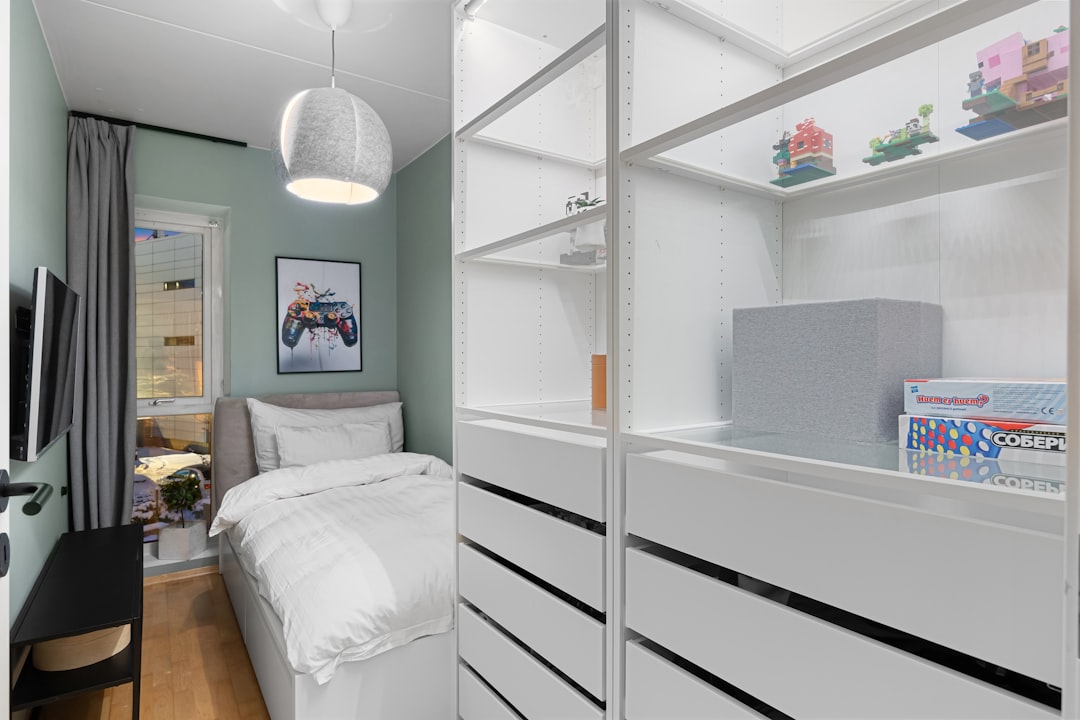
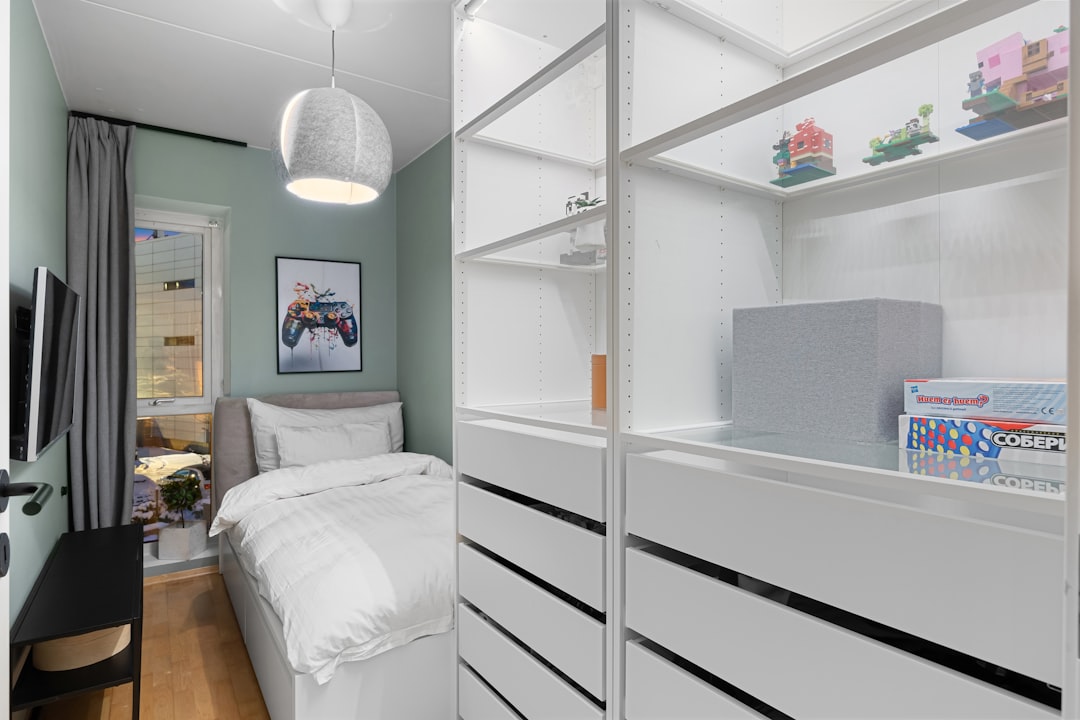
Affordable setup highlighting pros and cons of a metal bed frame in a small bedroom

4) Stylish Versatility

From matte black minimalism to ornate vintage scrollwork, metal works across aesthetics. It’s easy to blend with wood nightstands, woven baskets, and plush textiles for warmth. Want inspiration? See the best queen-size bed frames for styles that mix metal with modern design.

5) Low Maintenance

A soft cloth and mild soap usually do the trick—no waxing or deep cleaning required. That simplicity is a quiet advantage in the pros and cons of a metal bed frame, especially for busy households.

6) Space Optimization

Many metal frames offer generous under-bed clearance for bins, bags, or drawers—ideal in apartments and small rooms. Pair your frame with smart storage from our under-bed storage guide to reclaim square footage.

7) Portability & Easy Assembly

Metal frames are typically lighter than solid wood and assemble with basic tools. Foldable or modular designs pack down for moves and small stairwells. If you relocate often, this can be the deciding factor among the pros and cons of a metal bed frame.

Portable, easy-to-assemble option showing pros and cons of a metal bed frame

Disadvantages of Metal Bed Frames

Short version: noise and rust are the usual complaints—but they’re preventable with quick, low-cost fixes.

1) Noise Potential (Squeaks & Creaks)

Metal joints can loosen with movement, causing squeaks. The easy remedy: tighten hardware quarterly, insert felt or rubber washers, and add anti-slip pads on slats. Follow our step-by-step squeak-stopping guide to keep nights quiet.

2) Rust Risk in Humid Spaces

Powder coatings and galvanized finishes help, but chips and scratches can invite corrosion. Wipe spills, avoid placing frames directly against open windows, and touch up exposed metal. The National Sleep Foundation notes that regular inspection of sleep furniture supports long-term sleep quality.

3) Cooler to the Touch

Metal doesn’t retain heat like wood or fabric. It won’t affect mattress performance, but it can feel cool in winter. A padded headboard, quilts, and textured throws warm the look and feel.

4) Limited Personalization

Compared with wood (which can be carved or stained), metal is less DIY-friendly. You can repaint with enamel or rust-proof spray, but intricate changes are tricky. If deep customization matters, you may prefer wood—compare options in wood vs. metal frames.

Close-up showing pros and cons of a metal bed frame with potential rust spots and finish wear

Metal vs. Wood: A Quick Comparison

Answer first: choose metal for value, strength, and low maintenance; choose wood for warmth, customization, and a quieter feel.

FeatureMetal Bed FramesWood Bed Frames
DurabilityExcellent structural strength; resists warpingStrong, but can warp/crack if humidity fluctuates
NoiseCan squeak if hardware loosens; easy to fixTypically quieter under movement
MaintenanceLow: wipe down, tighten bolts, touch-up paintModerate: dusting, polish, occasional re-finishing
Style/FinishMinimalist, industrial, vintage, hotel-styleWarm, natural grain; highly customizable
CostOften lower for similar strengthVaries; solid hardwood is pricier
Pest/MoldNot a food source; minimal mold riskVulnerable to termites and trapped moisture

Quick Pros & Cons Chart

Skim this if you’re deciding today—fast clarity on the pros and cons of a metal bed frame.

ProsCons
High strength for the priceCan squeak if joints loosen
Pest- and mold-resistantSurface can feel cool
Low maintenance; easy cleaningLimited DIY personalization
Great storage clearanceRust risk in humid rooms

Care & Maintenance Checklist

Do these quick tasks and most cons disappear—keeping the pros and cons of a metal bed frame firmly in your favor.

  • Quarterly: Tighten all bolts; add felt/rubber washers where metal meets metal.
  • Biannually: Inspect the coating for chips; touch up with rust-inhibiting enamel.
  • Anytime: Wipe spills immediately; avoid placing frames against open windows.
  • Storage: If disassembling, label parts, bag hardware, and wrap rails to prevent scratches.
  • Mattress support: Use closely spaced slats or a bunkie board for foam and hybrids.

For deeper preventive tips, see metal bed frame maintenance and our mattress hygiene checklist.

Popular Metal Frame Styles (and How to Use Them)

Pick a finish and silhouette that supports the look you already love—here’s how to dial it in.

Minimalist & Modern

Slim rails, low profiles, and matte finishes blend with uncluttered rooms. Add plush textiles to warm the cool metal and soften edges.

Industrial Loft

Heavier gauges, visible joints, and darker finishes pair well with brick, concrete, and reclaimed wood. Balance grit with linen bedding and warm table lamps.

Vintage & Cottage

Curved headboards and lighter finishes (cream, brushed brass) deliver charm. Layer quilts and floral duvets for texture.

Hotel-Style Luxe

Crisp lines and higher headboards make a statement. Keep the palette simple: white sheets, tailored duvet, two Euro pillows, one lumbar.

For more style direction—and to weigh warmth versus structure—compare wood vs. metal bed frames and browse queen-size favorites.

Editor’s note: Because the pros and cons of a metal bed frame depend on your climate, room size, and style, start with noise prevention and storage needs—then choose the finish you’ll love for years.

FAQ

Do metal bed frames cause mattresses to sag?

Not if the support is right. Foam and hybrid mattresses need closely spaced slats (generally 3″ or less) or a solid base. Add a bunkie board if gaps are wide.

Are metal bed frames good for heavy people?

Yes—look for higher weight ratings, welded joints, center support bars, and thicker gauge rails. These features keep the frame square and quiet over time.

What’s the best paint for a metal bed frame?

Use rust-inhibiting enamel or spray designed for metal. Lightly sand glossy areas, clean, prime bare spots, then apply thin coats for an even finish.

Can I attach a headboard to any metal bed frame?

Most modern frames include universal brackets. If yours doesn’t, add an adapter kit. Confirm hole spacing and height before ordering.

How do I stop squeaks quickly?

Tighten hardware, add felt/rubber washers, and place anti-slip pads between slats and the mattress base. See our full guide to a quiet metal frame.

Is a wood frame better than metal?

It depends. Wood is warmer and often quieter; metal is stronger for the price and easier to maintain. Compare details in our head-to-head guide.

What about eco-friendly options?

Choose durable, repairable frames and avoid disposable designs. If you lean wood, see our eco-friendly bed frame guide for sustainable materials.

Final Thoughts

The pros and cons of a metal bed frame come down to priorities: choose metal for strength, value, storage, and simple care; choose wood for warmth and customization. Ready to compare specific models? Start with editor-vetted favorites and use our maintenance checklist to keep any frame quiet for years.

Related reading from Cozy Bed Quarters

Other reading we found popular

Top Bed Frame Designs for Small Spaces and Cozy Rooms

Sturdy metal Bed Frames perfect for small cozy spaces.

Top Bed Frame Designs for Small Bedrooms

Bed frames aren’t just the foundation of your sleep—they’re the secret weapon in maximizing comfort, style, and space, especially in small bedrooms. From clever storage options to designs that disappear when not in use, today’s bed frames can completely transform the way you live and rest in a limited area. Investing in the right bed frame is one of the smartest decisions you can make for a small space.

Key Takeaways

  • Foldable twin bed frames are ideal for flexible, compact spaces and guest accommodations.
  • Sturdy bed frames offer durability and strong support without taking up visual or physical bulk.
  • Big Lots bed frames combine affordability with compact, stylish functionality—great for small homes or apartments.
  • Multi-functional and platform bed frames provide hidden or under-bed storage, freeing up room for other furniture.
  • Daybeds and Murphy beds are the champions of dual-purpose living, offering form and function in one.

Top Bed Frames Designs for Small Spaces

Why Choosing the Right Bed Frame Matters

When you’re furnishing a small bedroom, every piece of furniture needs to justify its footprint—and that starts with the bed frame. A thoughtfully chosen bed frame does more than just support your mattress; it adds storage, style, and serenity to your space. Whether you’re outfitting a compact apartment, a guest bedroom, or your teen’s room, the frame you choose sets the tone for how the room looks and functions.

For example, opt for a platform frame with built-in drawers and suddenly you’ve got extra storage for off-season clothes, spare bedding, or even board games. These small changes make a big difference in how tidy and peaceful your space feels. Minimalist metal frames keep visual clutter at bay, while those with headboards and shelving add personality and functionality. Think of the frame as both furniture and architecture—defining space in style.

When your bed frame complements the room’s layout and color palette, it becomes a visual anchor, making your space feel complete and cohesive. You don’t need to sacrifice comfort or design just because the room is small.

For more inspiration, dive into our small bedroom makeover guide filled with creative layouts and smart styling ideas.

In short, the right bed frame can give you more space, more storage, and more peace of mind. It’s a win-win-win for cozy living.

Top Bed Frames Designs for Small Spaces

Smart Space-Saving Bed Frame Ideas

Multi-Functional Bed Frames: Do More with Less

Multi-functional bed frames are like the Swiss Army knife of bedroom furniture. They offer more than just a spot to sleep—they give you drawers, desks, shelving, or even a second sleeping space. This type of design is ideal for urban living, tiny apartments, or homes where every room needs to be multi-purpose.

  • Built-in Storage: Drawers or lift-up platforms eliminate the need for bulky dressers, which frees up floor space and helps keep things neat.
  • Convertible Designs: Great for flexible use. A daybed that becomes a desk, or a twin that folds into a couch, can make your space feel much larger than it is.
  • Loft Beds: Elevate your mattress to gain usable square footage below. You can set up a home office, reading nook, or even a second bed underneath.

Many of these frames are modular or customizable, so you can build around your lifestyle needs. A college student might love the loft bed with a study desk beneath, while a parent might prefer a storage frame with easy-access drawers for toys or extra linens.

Multi-functional bed frames with built-in storage for small bedrooms

Ready to rethink your bedroom? Check out our guide to multi-purpose bedroom layouts that maximize your square footage.

These multi-functional options do more than save space—they transform how your bedroom works for you.

Murphy Beds: The Ultimate Small-Space Hack

No list of space-saving bed frames is complete without the Murphy bed. Known for their disappearing act, Murphy beds are built into walls, cabinets, or shelving systems, allowing you to literally hide your bed away when it’s not in use. This flexibility is invaluable in studio apartments, guest rooms, and even home offices that double as sleeping quarters.

  • Wall Storage: Seamlessly tucks into the wall, instantly converting your room into a different function—be it a yoga studio, workspace, or playroom.
  • Custom Features: Today’s Murphy beds often come with add-ons like bookshelves, nightstands, overhead lights, or pull-out desks to increase their utility.
  • Reliable Comfort: Modern designs support memory foam and hybrid mattresses, offering the same comfort as traditional beds with none of the footprint.

Murphy bed transforming small space into multifunctional room

Explore curated Murphy bed systems at Resource Furniture, a leader in transforming small-space interiors.

If you need to switch from office mode to sleep mode in seconds, Murphy beds are your space-saving superhero—practical, stylish, and surprisingly comfortable.

Innovative Bed Frames with Storage: Options for Every Home

Innovative Bed Frames with Storage: Options for Every Home - Featured Image

Innovative Bed Frames With Built-In Storage

Bed frames with storage are the perfect solution for maximizing space in small bedrooms while keeping things stylish and organized. These multifunctional pieces blend comfort with practicality to help declutter your sleep sanctuary.

Key Takeaways

  • Bed frames with storage eliminate the need for bulky dressers and additional storage furniture.
  • Options like double bed storage beds and bookcase storage beds cater to various needs and room sizes.
  • Organizing and maintaining bed storage efficiently enhances its usability.
  • Even if you don’t upgrade your bed, alternative bedroom storage ideas abound.

space-saving bedroom with bed frames with storage

The Need for Bed Frames with Storage in Modern Homes

With urban living spaces becoming more compact, every inch counts. Bed frames with storage provide a stylish solution by integrating drawers, shelves, or hidden compartments into your bed—no need for extra furniture. According to Apartment Therapy, under-bed and vertical storage are key strategies for optimizing small spaces. For more creative examples, explore clever bed storage designs from Homedit.

Types of Bed Frames with Storage

1. Double Bed Storage Beds

Double bed storage beds are ideal for couples or space-savvy individuals. These models feature built-in drawers or lift-up compartments, perfect for storing off-season clothing or spare linens. See more options in our guide to upholstered bed frames with storage.

Why You’ll Love Double Bed Storage Beds:

  • Maximize Your Room: No more bulky furniture—storage is part of the frame.
  • Easy to Use: Smooth-gliding drawers and lift-up designs for hassle-free access.
  • Stay Tidy: Designated places for your belongings keep your space uncluttered.

Popular Storage Types:

  • Drawer Storage: Located on sides or footboard, great for frequent-use items.
  • Lift-Up Storage: Spacious hidden compartments for seasonal storage.
  • Footboard Storage: Ideal for extra pillows, shoes, or books.

2. Bookcase Storage Beds

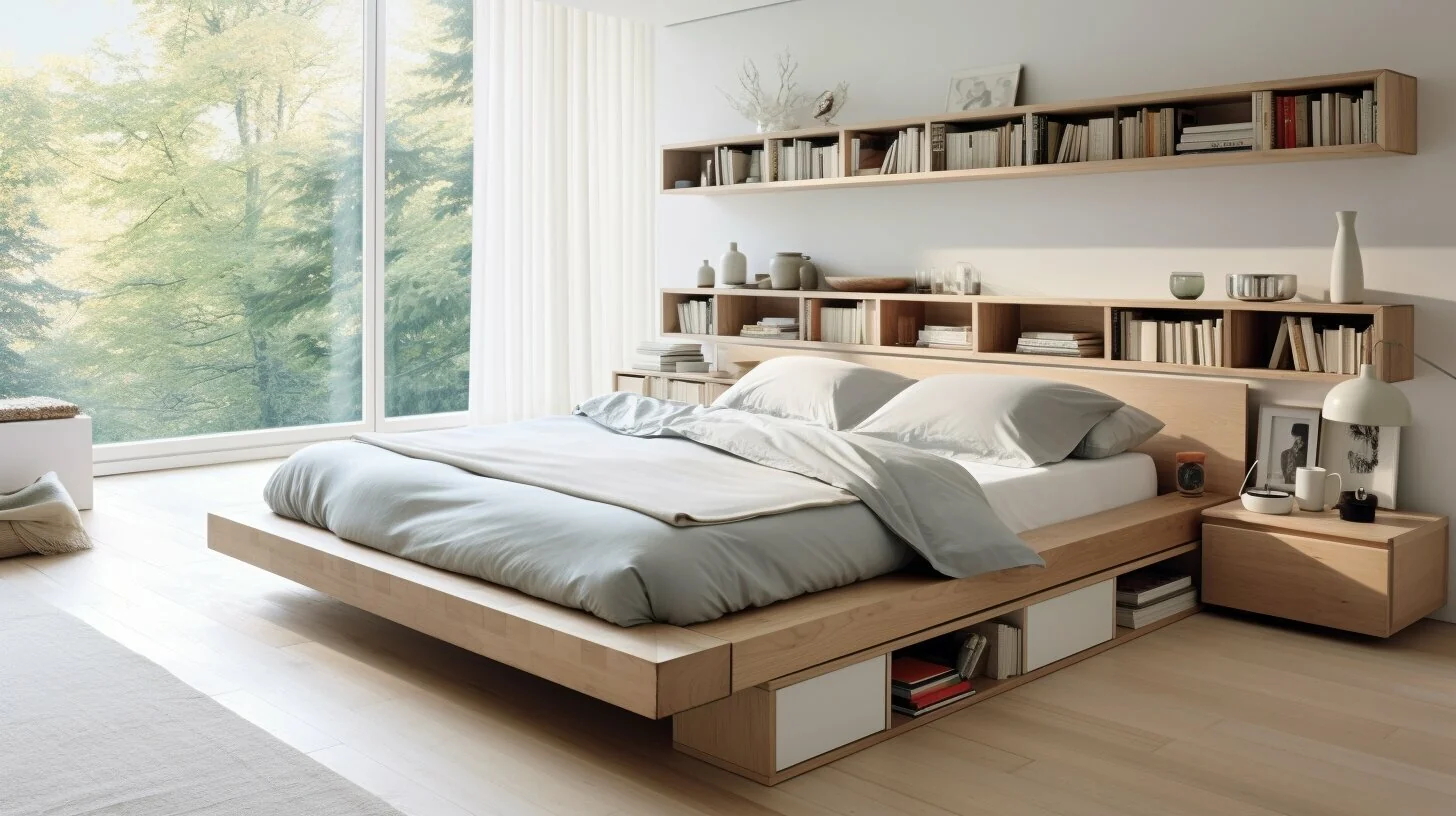
Bookcase storage beds add personality and functionality. Whether in the headboard, footboard, or side panels, these shelves keep essentials and decor within arm’s reach. Get inspired by these bedroom storage ideas from Real Homes.

Perks of Bookcase Storage Beds:

  • Double Duty: It’s a bed and a mini library or display case in one.
  • Stylish Displays: Show off décor, books, or plants in an organized way.
  • Space-Saving: Reduce the need for nightstands or shelving units.

Storage Features Include:

  • Headboard Shelves: Great for books and nighttime items.
  • Footboard Cubbies: Neatly hold smaller essentials.
  • Side Panels: Provide added shelving without consuming floor space.

modern bedroom featuring bed frames with storage

Choosing the Right Bed Frame with Storage

Choosing a bed frame with storage is about aligning function with style. Here’s how to narrow your options:

  1. Evaluate Storage Needs: Go with lift-up or drawers for bulky items; bookcase beds for daily-use essentials. Learn more in our modern storage bed guide.
  2. Measure Your Room: In smaller rooms, minimize additional furniture by opting for storage beds.
  3. Match Your Aesthetic: Prefer minimalism? Choose sleek storage frames. Love rustic charm? Opt for a wooden bed with storage.

Need guidance? Our bed frame buying guide has expert tips tailored to your needs.

Organizing Your Bed Frame Storage

Once you have a storage bed, optimizing it is key. Use these organizing hacks to keep things neat:

  • Bins & Baskets: Group similar items together—perfect for socks, gadgets, or kids’ toys. Check out The Container Store for top-rated options.
  • Label Clearly: Especially useful for drawers or under-bed bins.
  • Seasonal Rotation: Keep only current season items within easy reach.
  • Declutter Often: Keep only what you need to avoid overstuffing. See our tips for under-bed shoe storage.

Other Clever Bedroom Storage Ideas

If a new bed isn’t in the cards yet, there are still clever ways to improve bedroom storage:

  1. Under-Bed Storage Containers: Utilize the space beneath even a regular frame. Explore small bedroom storage ideas from The Spruce.
  2. Wall-Mounted Shelves: Elevate décor and functionality.
  3. Over-the-Door Organizers: Great for shoes, accessories, or toiletries.
  4. Storage Ottomans: Provide seating and hidden storage simultaneously.

Explore our tips on small bedroom storage for even more solutions. Or check our recommendations for top bed frames for small spaces.

Final Thoughts

Bed frames with storage aren’t just practical—they’re transformative. Whether you’re maximizing a studio apartment or organizing a family bedroom, these multifunctional pieces elevate comfort, style, and utility. For more ideas, check out the latest at our homepage or browse the best wooden bed frames with storage.

FAQ

What is the best type of bed frame with storage?
It depends on your space and needs. Drawer storage beds work well for everyday access, while lift-up frames offer deep storage for bulkier items.
Are bed frames with storage durable?
Yes, especially models with solid wood or metal construction. Read reviews and check warranties for best results.
Can I convert my existing bed frame into a storage bed?
You can add under-bed containers or DIY drawer units, but true storage frames offer better integration and aesthetics.
Do storage beds cost more?
Generally, yes, due to added materials and features—but the space saved often offsets the investment.
Where can I buy bed frames with storage?
Browse curated picks on our Cozy Bed Quarters homepage or check quality retailers like Wayfair, IKEA, and West Elm.

Modern Storage Beds: Stylish Solutions for Space Maximization

Modern storage beds in a minimalist bedroom with soft lighting and neutral tones

Modern Storage Beds That Combine Style and Function

Discover how modern storage beds blend style and smart design—helping you reclaim space, stay organized, and elevate your cozy sanctuary with ease. For even more smart bedroom storage solutions, check our dedicated guide.

Key Takeaways

  • Modern Storage Beds combine sleep surface + hidden compartments to save up to 25 sq ft of floor space.
  • They come in smart configurations like drawers, ottomans, lift-up platforms, bookcase headboards, and loft designs.
  • Choosing the right type depends on what you’ll store, room layout, and your decor preferences.
  • Built-in storage enhances aesthetics, reduces clutter, and replaces extra furniture.
  • Proper setup, measurement, and quality matter—consider features like soft-close, ventilation, and durability.
Modern storage beds in a minimalist bedroom with soft lighting

What Are Modern Storage Beds?

Modern storage beds are multifunctional bed frames that integrate storage—such as drawers, lift-up platforms, or shelving—directly into the design. They turn underused space into smart storage areas, keeping your belongings organized and out of sight.

Why Choose a Modern Storage Bed?

1. Maximize Space Efficiently

Storage beds can free up to 20–25 sq ft by replacing dressers or boxes. For even more ideas, explore our guide to space-saving bed frame solutions.

2. Improve Sleep & Health

A clean, decluttered bedroom promotes relaxation and reduces stress, which can improve sleep quality. According to Sleep.com, a tidy environment contributes to better rest.

3. Stay Organized and Clutter-Free

With compartments for clothes, linens, books, and seasonal gear, you eliminate piles and maintain a calm, intentional space.

4. Enhance Aesthetic Appeal & Save Money

These beds add modern elegance and can replace additional furniture. Vermont Woods Studios highlights how wooden options are also stylish and space-efficient.

Types of Modern Storage Beds

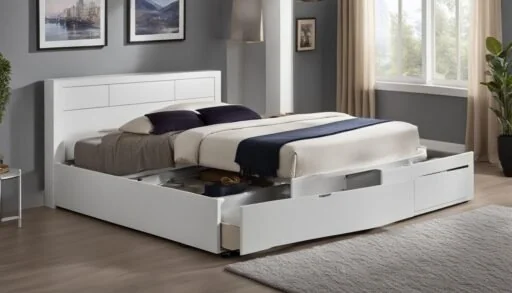
Modern storage beds with built-in drawers and neutral decor

Platform Beds with Drawers

Low-profile beds with pull-out drawers—great for sheets, clothes, or shoes, with soft-close tracks common in many models. Learn more about platform bed benefits and styles to see if this type is right for you.

Lift-Up Ottoman Beds

Bed platforms lift via hydraulics to reveal deep storage—ideal for bulky items, roughly 8–10 cu ft of space. Discover more hidden storage bed ideas that fit small apartments and multi-use rooms.

Drawer-Only Storage Beds

Beds with multiple side or foot-end drawers—offer accessible storage and flexibility.

Bookcase Headboard Beds

Headboards with built-in shelving—perfect for bedside storage. Some even feature lighting and hidden cable routes.

Modern storage beds with lift-up compartment and bedding

Loft & Captain’s Beds

Raised beds with under-bed desks or shelves are great for small spaces. You might also like our breakdown of fold-away beds with mattresses for temporary setups.

How to Choose the Perfect Modern Storage Bed

1. What Will You Store?

  • Large items? Choose an ottoman for spacious storage.
  • Everyday items? Drawer beds offer quick access.
  • Reading stuff? A bookcase bedhead keeps essentials at hand.

2. Measure Carefully

Plan for 24″ clearance for drawers and vertical space for ottomans. Rest Relax suggests measuring twice before buying.

3. Know Your Style & Material

Choose finishes—upholstery, wood, or metal—that align with your decor. Solid wood frames add warmth and longevity.

4. Focus on Quality & Mechanism

Look for hardwood or metal frames, smooth-glide tracks, strong hydraulics, and moisture control to avoid mildew.

5. Compare Costs

Prices range from $500 for drawer beds to $3,000+ for luxury ottomans. Factor in long-term savings versus buying separate furniture—and don’t miss our foldable bed frame guide if portability matters to you.

Smart Tips to Maximize Your Storage Bed

  1. Use bins & dividers for clear organization.
  2. Rotate seasonally: store off-season items to make room. For more ways to maximize bedroom space with storage bed design, check our guide.
  3. Keep essentials accessible: place frequently used items near the top or outer drawers.
  4. Label interior bins for fast retrieval.
  5. Maintain mechanisms by checking and lubricating hinges annually.
  6. Ensure ventilation with breathable bedding and storage liners.

Potential Drawbacks & Considerations

➜ Higher Cost & Complex Assembly

Storage beds can cost 40–60% more and often require two people and 2–4 hours to assemble.

➜ Heavy & Hard to Move

They are bulkier—always empty compartments before attempting to relocate.

➜ Ventilation & Moisture Risks

Poor ventilation can lead to mildew. Use moisture absorbers and air out stored items regularly. Pillow App also emphasizes the role of air quality in good sleep.

FAQ

Do I need a box spring?
No. Most modern storage beds are designed to support a mattress directly.
How long do storage beds last?
Typically 10–15 years with proper care and depending on frame material.
What not to store in the bed?
Avoid damp items, food, or anything valuable or temperature-sensitive.
Are they suitable for families?
Yes—many families use them for toy storage, extra linens, or off-season clothing. If you’re furnishing a multi-use room, check out the benefits of a foldable couch bed as an alternative or complement to modern storage beds.

A Modern Storage Bed seamlessly merges style and storage—perfect for decluttering and designing your dream bedroom. Choose the type that matches your needs, measure wisely, invest in quality, and maintain proper care. You’ll enjoy a tidy, organized sleep space that looks and feels thoughtfully curated.

Related reading from Cozy Bed Quarters

Other reading we found popular


The Advantages of Wooden Bed Frames with Storage

wooden Bed Frames


Advantages of Wooden Bed Frames: Style and Durability for Your Home

Wooden bed frames are a smart choice for homeowners seeking the perfect combination of beauty, resilience, and practical storage. In this guide, you’ll learn how these beds maximize small spaces, create a cleaner and more organized bedroom, and provide long-lasting value. Whether for a child’s room, a guest bedroom, or a master suite, a well-designed wooden storage bed can transform your space both functionally and visually.

Key Takeaways on Wooden Bed Frames

  • Wooden bed frames combine timeless style with robust functionality, making them suitable for any bedroom.
  • Built-in storage solutions like drawers, shelves, and lift-up compartments reduce clutter.
  • Available in a wide range of styles and finishes to match modern, rustic, or traditional decor.
  • Using sustainably sourced wood makes them an eco-conscious, long-term investment.
  • Offer excellent value by combining comfort, durability, and storage efficiency in one piece.

1. Maximizing Space Efficiency

A wooden bed frame with storage is perfect for compact homes and apartments. Instead of cluttering your bedroom with bulky dressers and cabinets, you can utilize hidden storage beneath the bed. This is especially useful in studio apartments, student housing, and tiny homes, where every inch counts.

For example, a twin bed with storage underneath in a guest room can store extra blankets, bedding, and seasonal clothes, freeing up closet space for other essentials. In a master bedroom, a queen or king-sized storage bed can hold everything from suitcases to spare pillows without crowding the room.


2. Aesthetic Appeal

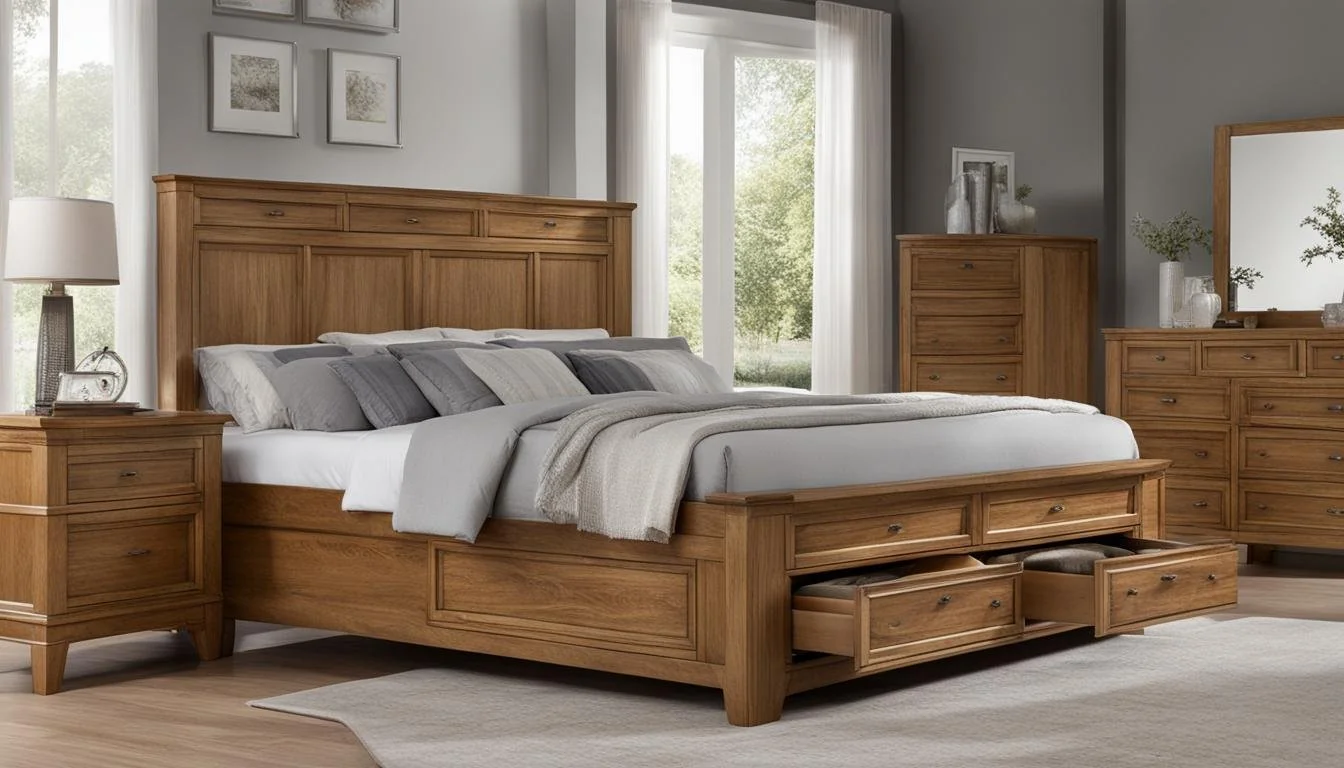
Wooden bed frames bring unmatched warmth and character to your space. The natural wood grain, subtle variations in tone, and choice of finishes—from light oak to deep walnut—allow you to match any interior style. Modern designs often incorporate sleek lines and minimalist headboards, while rustic versions may feature distressed finishes and thicker frames.

With a wooden storage bed, you can choose between contemporary styles with hidden compartments or more traditional designs with visible drawers. This flexibility makes it easy to integrate your bed into your overall bedroom theme while still enjoying practical storage features.


3. Durability and Longevity

One of the biggest advantages of wooden bed frames is their exceptional lifespan. Unlike metal frames that can squeak over time or particleboard that can warp, solid wood remains stable for years. Oak, maple, and walnut are particularly prized for their strength and resilience.

When paired with storage, these beds become an all-in-one solution that you won’t need to replace often. Many are made from sustainably sourced timber, giving you a durable product that also supports responsible forestry practices.

4. Practical Storage Solutions

Wooden storage beds are masters of organization. Options include under-bed drawers for extra linens, headboard shelves for books and decor, and lift-up storage compartments for larger items like luggage. This versatility means you can tailor your bed’s storage to match your lifestyle.

Lift-up storage beds, in particular, are popular in urban apartments. They provide a full under-bed compartment that’s hidden yet easily accessible, making it perfect for storing rarely used or bulky items without sacrificing bedroom aesthetics.


5. Wooden Bed Frames Enhancing Bedroom Organization

Nothing makes a bedroom feel more peaceful than order and minimal clutter. Built-in storage keeps surfaces clear and floors open, contributing to a calmer environment. Instead of adding more storage units, you make the most of the space you already have.

For more design inspiration, check out different bed designs from around the world, many of which showcase clever storage integration.

6. Customization Options

Wooden storage beds can be built to your exact needs. You can choose the number of drawers, add shelves to the headboard, or select finishes that match your bedroom’s palette. Whether you want a painted finish for a coastal look or a natural stain for a rustic vibe, customization makes it possible.

7. Cost-Effectiveness

While the upfront investment can be higher, wooden storage beds save money in the long run. The built-in storage reduces the need for extra furniture, and the durability means fewer replacements over the years. Over time, this makes them one of the most cost-efficient choices for a bedroom centerpiece.

8. Environmentally Friendly Choice

Choosing wooden bed frames supports eco-friendly living. Many models are built from certified sustainable wood sources, ensuring your purchase helps maintain healthy forests. Wood is also biodegradable, meaning it won’t sit in a landfill for centuries when it reaches the end of its life cycle.

9. Versatility Across Different Room Types

From children’s rooms to luxury master suites, wooden storage beds adapt easily. In kids’ rooms, under-bed drawers can store toys, clothes, and school supplies. In guest rooms, they free up closet space for your visitors. In master bedrooms, they can hold everything from seasonal wardrobes to bedding sets without compromising style.

FAQ

Are wooden bed frames durable?
Yes, high-quality wooden bed frames can last for decades with proper care. Hardwoods like oak, maple, and walnut are especially long-lasting.
Do wooden storage beds take up more space?
No, they actually save space by combining sleeping and storage in one piece, reducing the need for extra furniture.
Can I customize a wooden storage bed?
Absolutely. Many manufacturers offer customization in size, storage configuration, and finish to match your specific needs and decor.
Are wooden beds eco-friendly?
Yes, when made from sustainably sourced timber, they’re a renewable, biodegradable, and environmentally responsible choice.

Related reading from Cozy Bed Quarters

Other reading we found popular


Twin Beds with Storage Ideas for Small Bedrooms

Twin Bed with Storage

Maximizing Space With a Twin Bed Featuring Storage

Looking to make the most of every inch in a small bedroom? A Twin Bed with Storage combines comfort, practicality, and modern design—perfect for optimizing your space without sacrificing style.

This bed type not only optimises storage but also enhances the overall aesthetic of your space, providing a clean and modern look that fits seamlessly into various interior designs. By integrating storage solutions directly into the bed’s structure, you can achieve an uncluttered environment that promotes relaxation and efficiency.

Key Takeaways

  • Combines sleep comfort with built-in storage solutions
  • Perfect for children’s rooms, guest rooms, or compact spaces
  • Available in a variety of styles and configurations
  • Reduces clutter and maximizes floor space

Why Choose a Twin Bed with Storage?

The versatility of the Twin Bed with Storage makes it suitable for various lifestyles, whether you are a student living in tight quarters, a parent managing children’s belongings, or simply someone looking to declutter your home. This type of bed allows for personalisation in how you store and organise your items.

The Twin Bed with Storage is an excellent space-saving option, especially in urban apartments, shared rooms, or small bedrooms. According to The Home Depot, functional furniture like beds with built-in storage help reduce clutter in tight spaces.

In addition to its practicality, these beds can also be stylish. Many manufacturers now offer a range of designs, from sleek and contemporary to warm and rustic, allowing you to select a bed that reflects your personal style while meeting your functional needs.

What makes these beds especially versatile is their ability to transform a cramped room into an efficient, welcoming space. They’re ideal for multipurpose rooms, where one piece of furniture must fulfill several roles. Whether you’re storing seasonal blankets, spare linens, or a growing collection of kids’ toys, a twin bed with built-in drawers or compartments ensures everything stays tidy yet within reach.

Modern design showing a twin bed with storage features

Types of Storage in Twin Beds

Understanding the different types of storage mechanisms can significantly impact your decision-making process. Each type serves its unique purpose and comes with its advantages, making it crucial to evaluate what suits your needs best.

There are multiple storage mechanisms integrated into twin beds that suit different needs:

    • Underbed Drawers: Slide-out compartments ideal for linens and toys.

For example, underbed drawers can be used to store bed linens, winter clothes, or even toys, keeping them out of sight but easily accessible when needed. Lift-up platforms can be a game-changer for those with limited closet space, providing ample room for larger items such as blankets, suitcases, or shoes.

  • Lift-Up Platforms: Great for storing bulkier seasonal items.
  • Trundle Beds: Include a hidden roll-out mattress, ideal for guests.
  • Loft Beds with Desk: Perfect for teens or dorm rooms, maximizing vertical space.
  • Headboard Storage: Built-in shelves for books and accessories.

Different types of twin bed with storage options

Material & Style Considerations

Furthermore, the materials used in constructing a Twin Bed with Storage can affect not just the aesthetic appeal but also the durability and maintenance requirements. Solid wood options, while often pricier, can last for decades if cared for properly.

When choosing a Twin Bed with Storage, consider your style and durability needs. Solid wood frames offer a timeless, sturdy design. Plywood or MDF is lightweight and affordable. Metal options are modern and often trundle-compatible. Match your bed’s aesthetic with your room’s theme for a cohesive look. For inspiration, you can explore different bed frame materials and styles.

If your design leans toward rustic, consider reclaimed wood options that offer both charm and sustainability. For minimalists, a monochromatic frame with hidden drawers can blend seamlessly into modern or Scandinavian aesthetics. Upholstered twin beds with storage add a soft, luxurious touch and are especially cozy in guest rooms or teen bedrooms. No matter the material, ensure the storage components function smoothly and align with your everyday needs.

When considering upholstered options, it’s important to factor in the ease of cleaning, particularly in homes with children or pets. Choosing fabrics that are stain-resistant or easy to wipe down can save you time and effort in the long run.

Stylish twin bed with storage in small bedroom

How to Organize Your Bed Storage

Organising the storage in your twin bed can transform your bedroom into a more functional space. Start by categorising items based on frequency of use; keep everyday items at the top or easiest access points, while seasonal or seldom-used items can be stored deeper.

Keep your Twin Bed with Storage clutter-free with vacuum-seal bags, labeled containers, and seasonal rotations. Store off-season clothes, tech gear, bedding, or kids’ toys in categorized sections to ensure everything remains accessible and clean. Our guide to mattress hygiene can help you keep the entire sleep area fresh.

Organizing storage under twin bed with drawers

Final Thoughts

If you’re struggling with small space limitations, a Twin Bed with Storage can be the game-changer. With smart compartments, elegant styles, and practical designs, it’s a win-win for both functionality and aesthetics. You might also consider checking out our space-saving bed frame solutions to complement your layout.

Not only is the Twin Bed with Storage practical in terms of organisation, but it also allows for a more streamlined look in your bedroom, eliminating the need for bulky dressers or additional furniture that can overwhelm the space.

FAQ

Having a dedicated space for everything fosters a sense of calm and order, essential components for a restful night’s sleep. With everything in its designated place, you can focus on relaxation and rejuvenation rather than clutter.

What are the best uses for a Twin Bed with Storage?

Twin beds with storage are ideal for kids’ rooms, guest spaces, or apartments where extra closet space is limited.

Can I find a Twin Bed with Storage in modern styles?

Yes! Modern styles include metal frames, minimalist wooden beds, and upholstered frames with hidden compartments.

Are Twin Beds with Storage easy to assemble?

Most models come with clear instructions and can be assembled at home with basic tools. Some stores offer assembly services too.

Ultimately, investing in a Twin Bed with Storage is not just a decision about where to sleep; it’s about creating an environment that promotes peace of mind and enhances your living experience. The right bed can serve as a foundation for your space, providing comfort, style, and function.

Learn more in hidden storage bed ideas and our guide to the best mattress accessories to enhance your bedroom setup.

The Benefits of an Upholstered Canopy Bed for Comfort and Style

Upholstered Canopy Bed


Upholstered canopy bed: explore the comfort and elegance

An upholstered canopy bed blends the drama of a four‑poster frame with the plush feel of fabric‑wrapped rails and headboard, giving you a quiet, cozy, and visually striking centerpiece. This guide explains what it is, the benefits, how it compares to modern and four‑poster styles, practical sizing and care tips, and ways to add a canopy to an existing bed—so you can choose confidently and style your bedroom with comfort and sophistication.

Benefits of Upholstered Canopy Beds Explained

  • Instant focal point: An upholstered canopy bed adds height, texture, and softness for a luxurious feel.
  • Quieter & cozier sleep: Upholstery dampens noise and feels inviting against pillows and bedding.
  • Measure twice: Check room length, width, and ceiling height to fit the canopy frame comfortably.
  • Easy to style: Works with modern minimalism or traditional charm; drape fabric for added privacy.
  • Care matters: Vacuum regularly; spot‑clean or use pro cleaning based on the fabric type.
  • No new bed? No problem: Use DIY canopy kits or custom projects to retrofit the look.

What is an Upholstered Canopy Bed?

An upholstered canopy bed is a classic canopy frame wrapped in fabric—adding softness, texture, and a tailored look compared with bare wood or metal.

An upholstered canopy bed combines the classic design of a canopy bed with the soft, plush comfort of upholstery. Unlike traditional canopy beds that may feature wooden or metal frames, an upholstered canopy bed is encased in fabric, often adding a luxurious texture and cozy feel to the bedroom.

Key Features of an Upholstered Canopy Bed

Expect a fabric‑wrapped frame, four posts with top rails for draping, and broad customization in textiles, colors, and silhouettes.

  • Fabric Frame: The bed’s frame is covered in fabric, which can range from velvet and linen to faux leather and more.
  • Canopy Structure: Typically features four posts extending from each corner, with fabric or drapes that can be added for a full canopy effect.
  • Customization: Upholstered beds come in various colors and patterns, allowing you to customize the look to fit your bedroom’s decor.

Key features of an upholstered canopy bed: fabric frame, canopy rails, and customizable textiles.

Benefits of Choosing an Upholstered Canopy Bed

The main benefits are comfort, quieter sleep, and elevated style—an upholstered canopy bed softens the room while doubling as a statement piece.

Enhanced Comfort

One of the primary advantages of an upholstered canopy bed is the added comfort it provides. The fabric covering the frame can create a softer, more inviting feel compared to harder materials like wood or metal.

  • Soft Touch: Upholstered beds offer a plush, soft surface that feels comfortable to the touch, making them more inviting.
  • Reduced Noise: Upholstered frames tend to be quieter, absorbing sounds rather than echoing them. This can contribute to a more peaceful sleeping environment.

Stylish Elegance

An upholstered canopy bed adds a touch of elegance and sophistication to any bedroom. Its unique design makes it a focal point in the room, enhancing the overall aesthetic.

  • Luxurious Appearance: The fabric upholstery often adds a rich, luxurious look to the bed, making it a standout piece in your bedroom.
  • Versatile Design: Upholstered canopy beds come in a variety of styles, from classic to modern, allowing you to choose one that complements your room’s decor.
Comfort and elegance: upholstery softens the frame and elevates the room’s design.

Modern Canopy Bed vs. Four Poster Canopy Bed

Choose modern for clean lines and minimal draping; pick a four‑poster for traditional charm—both pair beautifully with an upholstered canopy bed aesthetic.

When considering an upholstered canopy bed, it’s important to understand how it compares to other styles like the modern canopy bed and the four-poster canopy bed.

Modern Canopy Bed

  • Sleek and Minimalist: Modern canopy beds often feature clean lines and a minimalist design. They are ideal for contemporary spaces looking to blend luxury with simplicity.
  • Fabric Choices: Modern versions might use sleek, high-quality fabrics that enhance the bed’s minimalist appeal while adding a touch of modern elegance.

Four Poster Canopy Bed

  • Traditional Charm: The four-poster canopy bed is a classic design that includes four vertical posts at each corner. This style often has a more traditional or colonial look.
  • Versatile Use: This design can be found in both upholstered and non-upholstered versions, offering flexibility in style while maintaining its characteristic look.
Modern vs. four‑poster: pick the silhouette that fits your architecture and decor.

Practical Considerations

Measure room dimensions and ceiling height, plan clearance around the frame, and choose upholstery you can realistically clean and maintain.

Space and Size

  • Room Dimensions: Upholstered canopy beds can be quite large, so ensure that your bedroom has enough space to accommodate the bed comfortably without overwhelming the room.
  • Height Considerations: These beds often come with a tall canopy structure, which may not be suitable for rooms with low ceilings.

Maintenance and Care

  • Fabric Care: Upholstered beds require regular maintenance to keep the fabric looking its best. This might include vacuuming, spot cleaning, or professional cleaning depending on the type of fabric.
  • Durability: While upholstery can add elegance, it’s important to choose high-quality materials that will stand up to wear and tear.
Confirm length, width, and ceiling height; maintain fabric with routine care.

Adding a Canopy to Your Bed

You can recreate the look with DIY canopy kits or commission a bespoke frame—great options if you already love your current bed.

DIY Canopy Kits

  • Easy Installation: DIY canopy kits can be a cost-effective way to achieve the look of an upholstered canopy bed. These kits often include everything you need to add a canopy to your existing bed.
  • Customizable Options: Kits come in various styles and materials, allowing you to customize the look according to your preferences.

Professional Customization

  • Bespoke Solutions: For a truly unique look, consider hiring a professional to create a custom canopy for your bed. This option ensures that the canopy perfectly matches your style and dimensions.
Retrofit the look with DIY kits or a tailor‑made canopy solution.

FAQ

Quick answers to common questions about sizing, fabric choices, draping, and care for an upholstered canopy bed.

Will an upholstered canopy bed work in a small room?
Yes, as long as ceiling height and walkways are adequate. Choose a slimmer frame and light fabrics to keep the look airy.
What fabrics are best for durability and easy care?
Performance linen, microfiber, and tightly woven polyester blends resist stains and are simpler to spot‑clean than natural velvets.
Do I need to add drapes to the canopy?
No—drapes are optional. Use them for softness, privacy, or light diffusion; skip them for a cleaner, modern silhouette.
How do I clean an upholstered canopy bed?
Vacuum upholstery weekly with a brush attachment; spot‑clean per the fabric care tag. Consider annual professional cleaning for delicate textiles.
How high should my ceilings be?
Ideally 8 feet or higher. For lower ceilings, look for “low‑profile” canopy designs that maintain proportion.

Conclusion

An upholstered canopy bed delivers plush comfort and show‑stopping style—choose the right size, fabric, and silhouette to transform your bedroom into a refined retreat.

An upholstered canopy bed offers a perfect blend of comfort and style, making it a fantastic choice for anyone looking to enhance their bedroom. With its luxurious fabric, elegant design, and various customization options, it can transform any space into a sophisticated retreat. Whether you prefer the sleek lines of a modern canopy bed or the classic charm of a four-poster canopy bed, an upholstered version can provide both comfort and a stylish focal point for your bedroom.

At Cozy Bed Quarters, we understand the importance of a great night’s sleep and stylish decor. An upholstered canopy bed can be the perfect addition to achieve both, ensuring your bedroom is as comfortable as it is beautiful.

The Benefits of an Upholstered Canopy Bed for Comfort and Style
A plush, elegant focal point that elevates comfort and design.


Related reading from Cozy Bed Quarters

Other reading we found popular