What Is Pillow Loft and How to Choose the Right Height

pillow loft hero alignment illustration for side and back sleepers - featuring pillow loft choose

What Is Pillow Loft

What Is Pillow Loft: A Practical Guide to the Right Height

If your pillow feels “off,” you’re not imagining it. what is pillow loft matters because the height your pillow holds under your head directly shapes neck alignment, muscle tension, and how you feel at sunrise. This guide gives you clear height targets by sleep position, easy tweaks for shoulder width and mattress firmness, a quick at-home fit test, and care tips so your perfect height actually lasts.
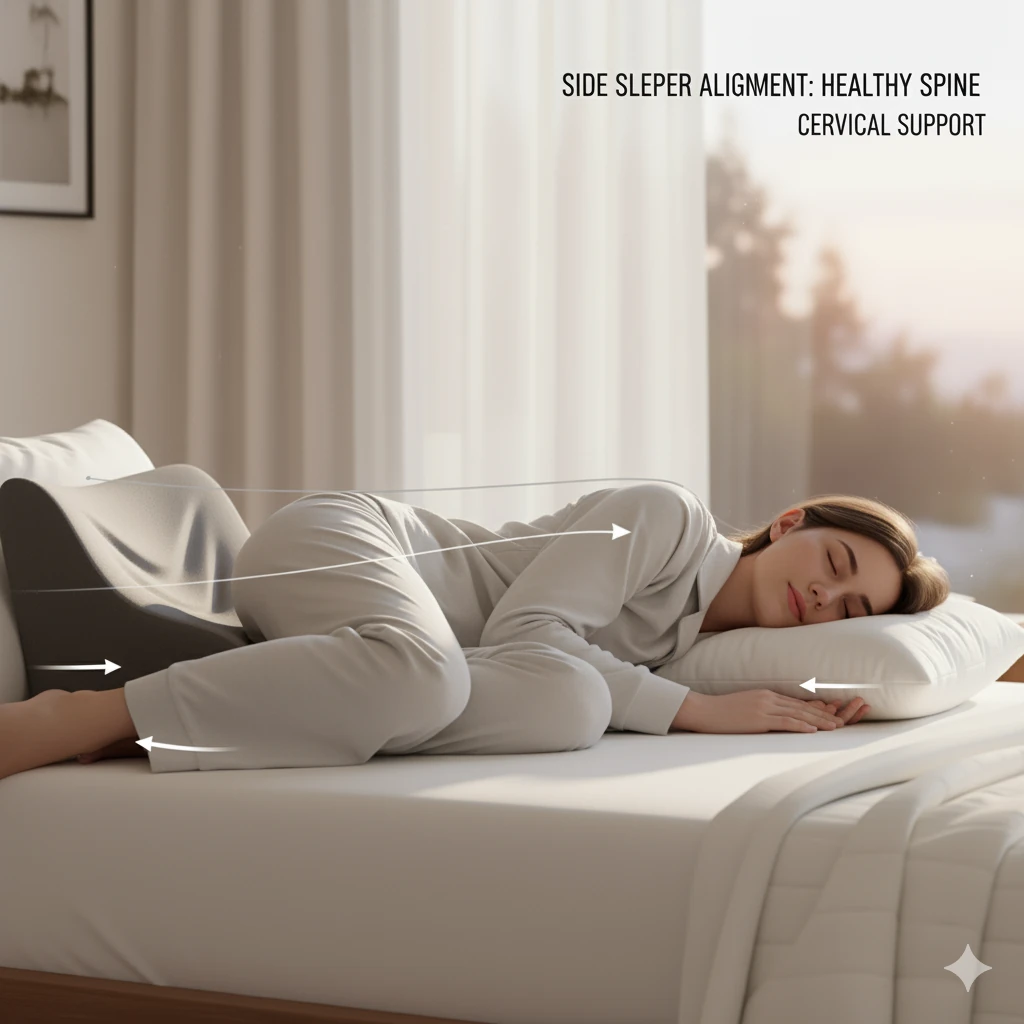
what is pillow loft — hero alignment illustration for side and back featuring pillow loft choose
Loft = the pillow’s working height under your head. Match it to how you sleep to keep your neck neutral.

Loft Defined: How Pillow Height Affects Alignment

Quick answer: What is pillow loft? It’s your pillow’s effective height once it compresses. The right height keeps your head, neck, and spine lined up—no tilting, no tucking.

Key takeaways:

  • “Effective” height is what you feel after the pillow settles.
  • Too low → head dips; too high → chin tucks; both strain your neck.
  • Foam/latex compress less; down/shredded fills compress more.
  • Match what is pillow loft to sleep position, shoulder width, and mattress firmness.

Think of loft as the height you actually experience, not what’s printed on the box. Two “5-inch” pillows can sleep totally differently—memory foam tends to hold height; down usually sinks lower.

Neutral alignment is the goal. Your face points at the ceiling, ears stack over shoulders, and your neck feels… quiet. If mornings hurt, start by checking pillow height.

Materials matter. Dense foam and latex keep more height under load. Down, feather, and shredded blends compress more, so you may need a taller pillow to land at the same effective height.
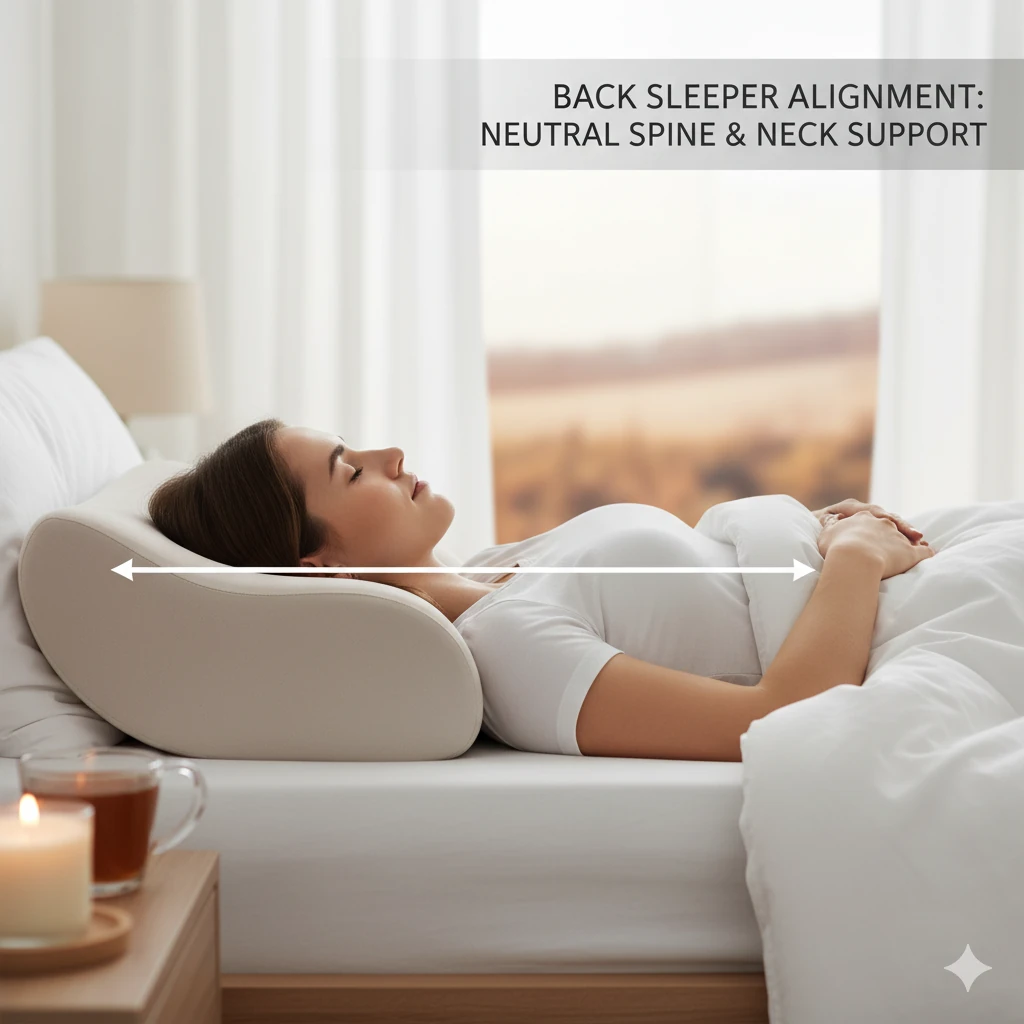
what is pillow loft — neutral spine alignment with correct pillow height - featuring pillow loft choose
Check the side profile: ears over shoulders, nose pointing straight up.

Low, Medium, High Loft: Pros & Cons

Quick answer: Low loft (2–3″) usually suits stomach sleepers, medium (3–5″) fits many back sleepers, and high (5–7″+) supports most side sleepers—then fine-tune for shoulders and mattress feel.

Key takeaways:

  • Low: great for stomach sleepers; some smaller-framed back sleepers.
  • Medium: a safe bet for most back sleepers and narrow-shouldered side sleepers.
  • High: best for side sleepers, especially with broader shoulders or firm beds.
  • At the same listed height, different materials “sleep” taller or flatter.

Low loft (2–3″): Helps keep stomach sleepers from cranking the neck. Compressible fills may need more fluffing and can flatten over time.

Medium loft (3–5″): A comfy middle ground for lots of back sleepers and some side sleepers with narrower shoulders. Broader shoulders or firm beds may still need more height.

High loft (5–7″+): Fills the ear-to-shoulder gap for side sleepers. Can be too tall for back or stomach sleeping, pushing the head forward.

Want a bigger decision framework? Peek at Choosing Pillows for Comfort: 7 Expert Tips.
what is pillow loft — low, medium, and high comparison - pillow loft featuring pillow loft choose
Loft tiers at a glance: match height to position and shoulder width.

Choosing Loft by Sleep Position & Shoulder Width

Quick answer: Side sleepers usually need high loft (≈4.5–6.5″ effective), back sleepers medium (≈3.5–5″), stomach sleepers low (≈2–3″). Go higher for broader shoulders and firmer mattresses; go lower for softer beds.

Key takeaways:

  • Side: ~4.5–6.5″ effective; adjust for shoulders and bed firmness.
  • Back: ~3.5–5″ effective; a gentle neck contour can help.
  • Stomach: ~2–3″ effective; some do best with no head pillow.
  • Firmer beds often need more loft; softer beds, a touch less.

Side sleepers: Your pillow should fill the ear-to-shoulder space so your neck stays level. Narrow shoulders often land around 4.5–5.5″; broader shoulders, ~5.5–6.5″+. Firmer mattress? Add a little height. Softer mattress? You can subtract a bit.

Back sleepers: Aim for 3.5–5″ effective loft so your head’s supported without nudging your chin toward your chest. A subtle contour under the neck can feel great.

Stomach sleepers: Keep it as low as possible (2–3″). Some people do best without a head pillow and use a thin pillow under the hips to ease the lower back.

Round out your setup with our primers: Cozy Bedding Materials and Thread Count Explained.
what is pillow loft — choosing the right height for side sleepers - pillow featuring pillow loft choose
Side sleepers: fill the ear-to-shoulder gap to keep the neck level.

Adjustable Fill & Customization Tips

Quick answer: Adjustable pillows make dialing in height simple. Start a bit tall, remove fill in small handfuls, test on your own bed, and save the extra for future top-ups.

Key takeaways:

  • Begin slightly taller than you think, then subtract slowly.
  • Measure height while lying down—it’s the only number that matters.
  • Keep spare fill in a labeled bag for later refreshes.
  • Record your final setting so you can recreate the same what is pillow loft result.

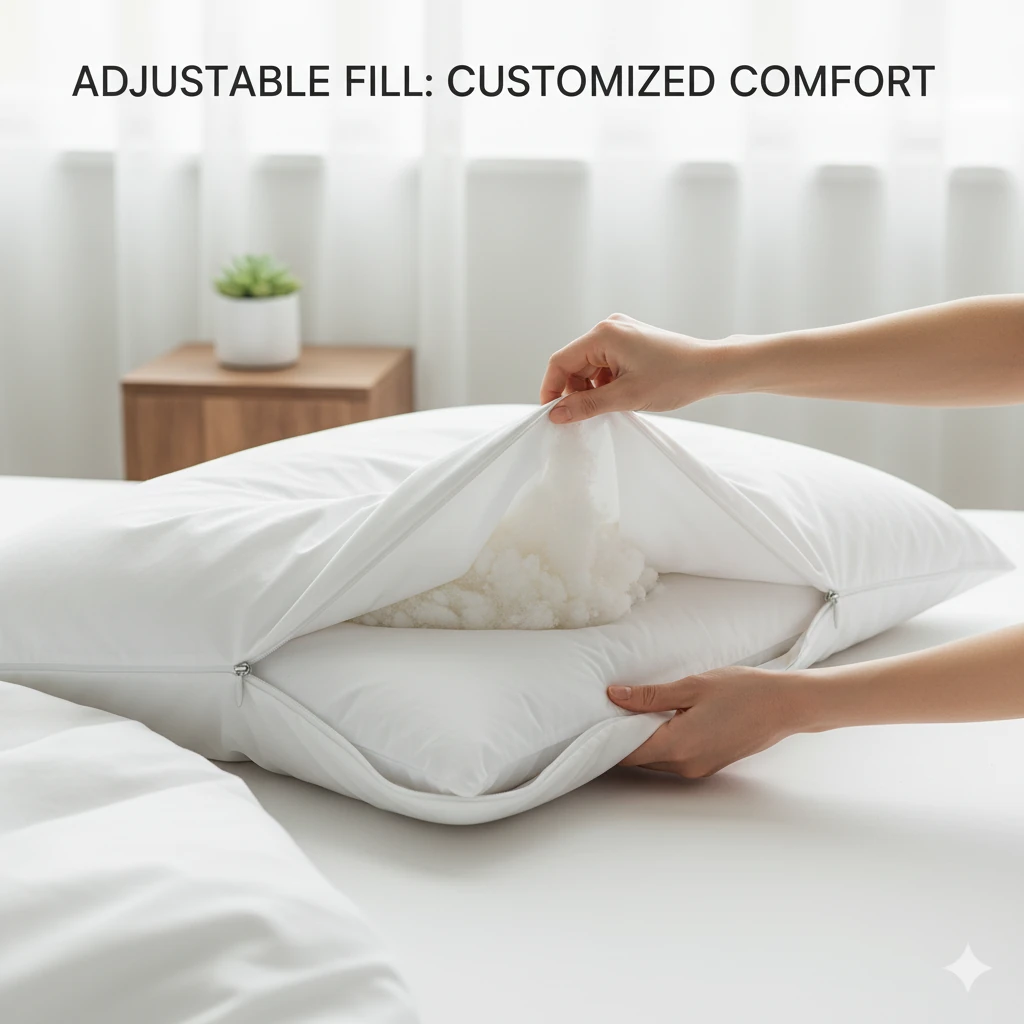
With shredded foam or down/feather, open the inner zipper and remove a handful at a time. After each tweak, lie down in your usual position on your actual mattress and reassess.

Judge with alignment, not just feel. Nose points up, no chin tuck, no head droop. If you switch positions, set loft for the way you sleep most of the night.

Over months, compressible fills settle. That saved bag of fill? It’s your easy refresh when support starts slipping.
what is pillow loft — adjustable-fill pillows to fine-tune height - pillow featuring pillow loft choose
Adjustable-fill pillows help you lock in your best height—and keep it there.

Try-At-Home Fit Test

Quick answer: Record a 10-second side profile at mattress height. Side/back sleepers: face parallel to the ceiling. Stomach sleepers: as flat as possible. Adjust until the line from neck to upper spine looks straight.

Key takeaways:

  • Phone at mattress level, filming your side profile.
  • Side: nose up, ears over shoulders.
  • Back: chin neutral—not tucked.
  • Stomach: keep the head as flat as you comfortably can.

Set the camera at bed height, relax onto your pillow, and hit record. Pause the video and mentally trace a line from the base of your skull down through your upper spine. Straight line? You’re there.

Small changes matter. A half-inch of fill can flip the result from “meh” to “perfect.” Re-test after each adjustment.

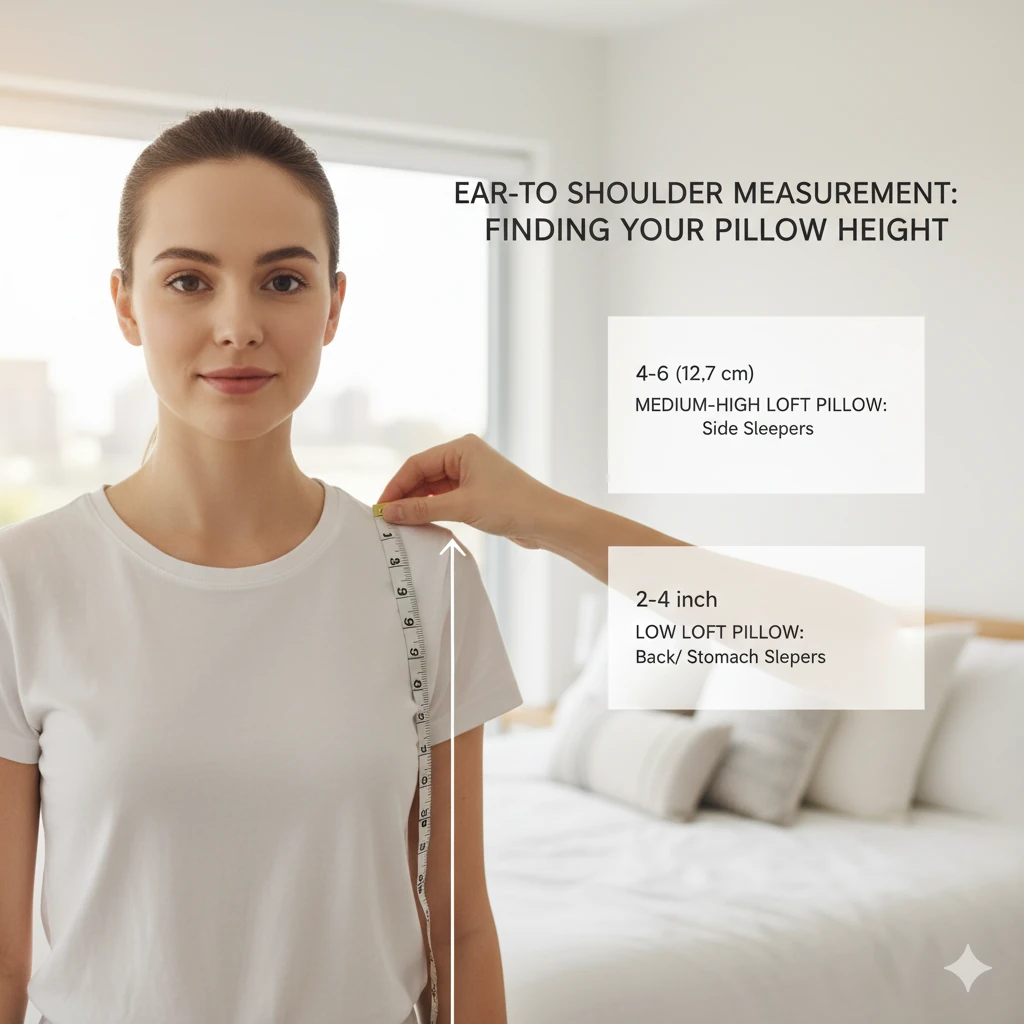
what is pillow loft — ear-to-shoulder measurement to estimate height - featuring pillow loft choose
Measure ear-to-shoulder gap as a quick starting estimate for side-sleeping loft.

Care & Replacement Intervals

Quick answer: Refresh pillows every few months (material-dependent), fluff weekly if they’re compressible, and replace most pillows every 1–3 years—or sooner if support won’t bounce back.

Key takeaways:

  • Down/feather & shredded fills: fluff and top up as needed.
  • Solid foam/latex: spot clean, air out—no typical machine wash.
  • Use a breathable protector to slow wear and odors.
  • Replace when your what is pillow loft target no longer holds and alignment drifts.

Follow the care tag. Down/feather often tolerates gentle washing and thorough drying with dryer balls. Shredded fills perk up with sunning and manual fluffing.

Solid foam and latex don’t love washers—spot clean and air them out. A good protector keeps oils and dust at bay without changing the feel.

Upgrading the whole setup? Try our Comprehensive Mattress Selection Guide to sync mattress firmness with pillow height.

Quick Size Guide (Ear-to-Shoulder Estimate)

Quick answer: Measure a straight line from your ear canal to the tip of your shoulder while standing relaxed. That number approximates a side-sleeping effective loft on a medium-firm mattress.

Key takeaways:

  • Firm bed? Add ~0.25–0.5″. Soft bed? Subtract ~0.25–0.5″.
  • Foam/latex compress less—start close to the raw number.
  • Down/shredded compress more—start ~0.5–1″ taller.
  • Use this as a starting point, then refine with the fit test.

Have someone measure ear to shoulder tip. That’s the gap your pillow must fill on your side. It’s a quick way to get in range before you fine-tune.

Remember: softer beds let your shoulder sink (need less loft). Firmer beds keep you higher (need more loft).

Eco-Friendly vs Conventional Pillow Materials

Quick answer: Natural latex, organic cotton, and responsibly sourced down can keep loft steady with a lighter footprint. Conventional foams can feel great too—just look for credible certifications.

Key takeaways:

  • Seek GOLS/GOTS and OEKO-TEX® where applicable.
  • Natural latex often holds height longer than many down blends.
  • Organic bedding and eco-conscious sheets round out a healthier setup.
  • Certifications help cut through greenwashing and protect your ideal height for what is pillow loft.

If sustainability is your priority, natural latex offers springy, long-lasting support. Prefer a softer sink? Try responsibly sourced down with an organic cotton shell.

Look for GOLS (latex), GOTS (organic fibers), and OEKO-TEX® (chemical safety). Pair your pick with organic bedding benefits and smart sheet choices for a cleaner sleep space.

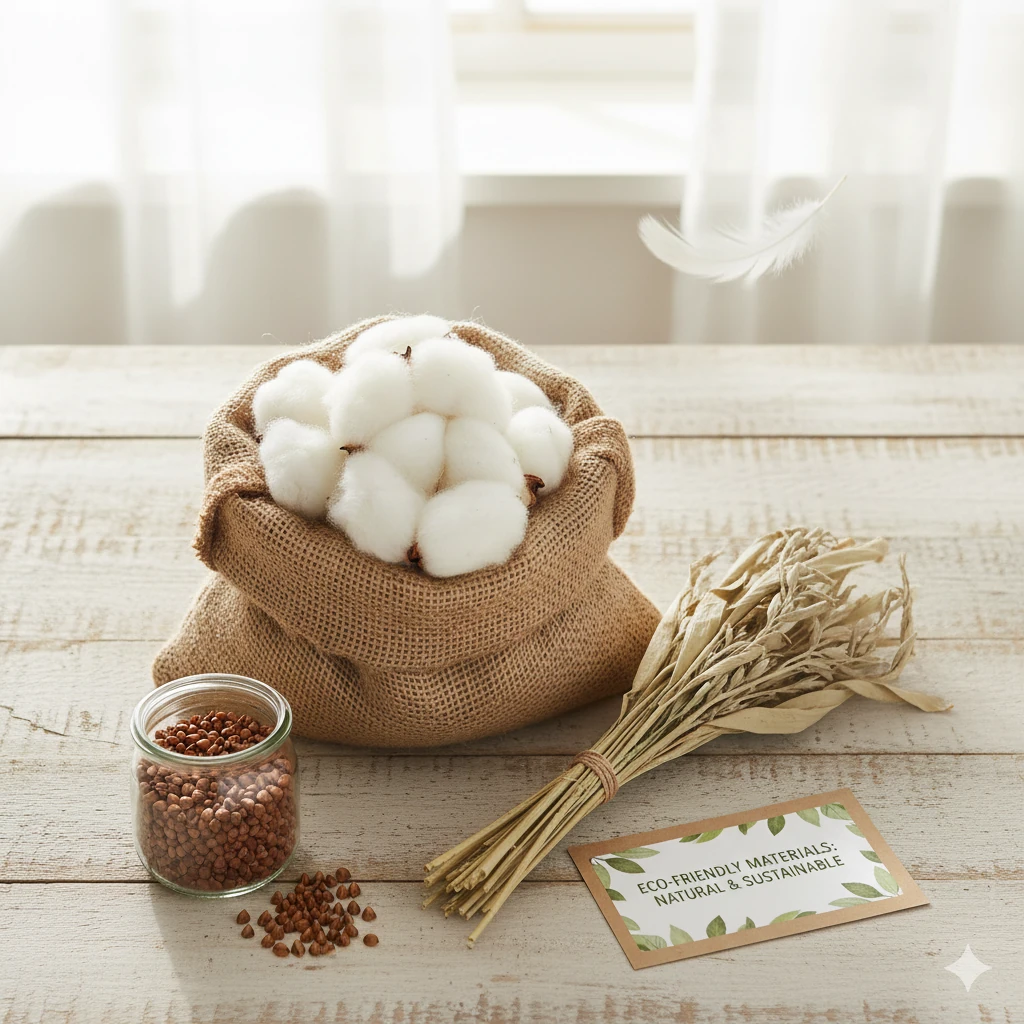
what is pillow loft — eco-friendly materials and certifications overview - featuring pillow loft choose
Natural latex, organic cotton, and trusted certifications support lasting loft.

The Bottom Line

Quick answer: Start with position-based targets, adjust for shoulders and mattress feel, then confirm with the quick video test. The best pillow is the one that keeps your neck neutral—period.

Key takeaways:

  • Side ≈ 4.5–6.5″; Back ≈ 3.5–5″; Stomach ≈ 2–3″ (effective loft).
  • Firmer bed → add a bit; softer bed → subtract a bit.
  • Adjustable fill makes precision easy.
  • Re-check whenever your what is pillow loft setup or mattress changes.

When the pillow fits, sleep feels effortless. You fall asleep faster, wake up looser, and stop wrestling your bed. Re-measure if your body or mattress changes—great sleep is adjustable.

what is pillow loft — quick checklist for position, shoulders, mattres featuring pillow loft choose
Quick checklist: position target → adjust for shoulders/bed → confirm with fit test.

Key Takeaways: what is pillow loft

  • Match what is pillow loft guidance to your position: side (higher), back (medium), stomach (low).
  • Tweak for shoulder width and mattress firmness to hit true effective height.
  • Use the video fit test to double-check neutral alignment.
  • Maintain loft with smart care; replace when support won’t rebound.
  • Certified, sustainable materials can keep loft steady for longer.

FAQ

What’s the difference between pillow loft and firmness?
Loft is height under your head after compression. Firmness is how soft or hard it feels. You can have a soft high-loft pillow or a firm low-loft pillow—they’re separate dials.
How do I know if my pillow is too high?
Watch for a tucked chin, tight upper back, or morning stiffness. In a side-profile photo, your face points slightly down instead of straight up.
Can one pillow work for multiple positions?
Sometimes. Adjustable-fill pillows can hit a compromise, but strict side-plus-stomach sleepers often do best with two pillows.
How often should I replace a pillow?
About every 1–3 years for most types. Replace sooner if loft won’t rebound, odors hang on, or your alignment slips.
Do pillow protectors change loft?
Not much if they’re breathable and well-fitted. They actually help preserve loft by blocking oils and dust.

More resources from Cozy Bed Quarters:
Choosing Pillows for Comfort
Bedding Accessories: Pillows & Toppers
Comprehensive Mattress Selection Guide
Bedding Materials Guide
Organic Bedding Benefits

Trusted references:
Sleep Foundation
Parachute Home
Better Homes & Gardens

Final Thoughts

Dialing in what is pillow loft for your body and mattress pays off fast: fewer morning aches, easier sleep onset, and steadier comfort through the night. Re-test your setup whenever your mattress or routine changes to stay in the sweet spot.



Related Reading

Sustainable Bedding Brands: How to Spot the Real Ones

Organic cotton sustainable bedding set in a minimalist, eco-conscious bedroom.

The honest short answer: sustainable bedding brands are the ones that show their work — third-party certifications on the exact product you’re buying, named materials, and a supply chain they’ll actually describe. The two labels worth memorising are GOTS (organic fibre content and processing rules) and OEKO-TEX STANDARD 100 (tested for harmful substances). Everything else — the earthy photography, the leaf icons, the word “eco” — is decoration until you see one of those.

Organic cotton sheets and folded linen throw from sustainable bedding brands in natural daylight

How to judge sustainable bedding brands in about 30 seconds

You don’t need to research a company’s entire history. Open the product page — not the homepage — and look for four things.

1. A certification tied to that product. Certification is awarded per product and per facility, not handed to a company forever. A brand can sell one GOTS-certified sheet set and ten that aren’t. The GOTS label has two grades: “organic” means at least 95% of the fibres are certified organic, while “made with organic materials” means at least 70%. OEKO-TEX STANDARD 100 is a different promise entirely — it doesn’t mean organic, it means the article has been tested against limits for harmful substances, right down to the thread and the label.

2. The actual fibre name. “Eucalyptus-derived fibre” should say lyocell. “Bamboo” should say rayon or lyocell (more on that below). Vagueness here is a tell.

3. Where it was made. Real transparency looks boring: mill locations, factory partners, audit names. If a sustainability page is all adjectives and no nouns, that’s your answer.

4. Whether it’s built to last. A sheet set you replace every eighteen months isn’t sustainable at any certification level. Look for replaceable-part thinking — repair programmes, takeback schemes, sold-separately pillowcases.

Sustainable bedding brands people actually recognise

A quick caution before the list: we haven’t lab-tested any of these, and we don’t take payment to name them. Product lines and certifications change constantly, so treat this as a starting shortlist and verify the label on the specific set in your cart.

Brand Known for What to check on the product page
Coyuchi Organic cotton sheets, blankets and towels; one of the older names in the category GOTS grade; whether the item is part of their takeback/renewal programme
Boll & Branch Organic cotton sheet sets sold direct GOTS and Fair Trade certification on that specific collection
Parachute European flax linen and cotton bedding OEKO-TEX status; linen origin
Quince Lower-priced linen and cotton basics Which certification applies — it varies a lot by item
Naturepedic Organic mattresses and bedding aimed at chemically sensitive sleepers GOTS/GOLS certification documents, which they publish
Avocado Organic wool, cotton and latex sleep products Certification list per item; wool sourcing
Pact Organic cotton bedding in percale, sateen and jersey Fair Trade factory claim and GOTS grade

Smaller regional makers often beat the big names on transparency, simply because they have one mill and one story to tell. If you’re in Europe, local flax linen is usually the shortest supply chain available to you. The test is the same everywhere: certification, fibre name, factory, durability.

The materials, compared honestly

Organic cotton

Grown without synthetic pesticides or fertilisers, and the fibre most likely to carry a GOTS label. Percale feels crisp and cool; sateen feels smooth and slightly warmer. It’s the safe default — familiar, washable, widely certified. Be sceptical of dramatic water-savings figures attached to it; the research is genuinely contested and depends heavily on where the cotton is grown.

Linen (flax)

Durable, breathable, and it gets better with age instead of worse. Flax grows well in cool, damp climates like northern France and Belgium, often with little irrigation. The trade-off is texture: linen is cool and slightly rough at first, and it wrinkles on purpose. If you iron your sheets, you’ll hate it. If you don’t, it’s probably the longest-lasting option here.

Hemp

Strong, coarse at first, softens over years of washing. Hemp needs little in the way of pesticides and produces a lot of fibre per acre. It’s still a niche in bedding, so selection is thin and sizing can be odd. Skip the “naturally antibacterial” marketing — that claim gets thrown at nearly every plant fibre and rarely comes with evidence for a finished, washed textile.

TENCEL lyocell

Made from wood pulp using a solvent process that the manufacturer says recovers and reuses the great majority of its solvent and water. It’s cool to the touch, very good at moving moisture, and drapes silkily — a strong pick if you sleep hot. Worth knowing: the sustainability case rests on the specific producer’s process, so the brand name on the fibre matters as much as the fibre type.

Wool

Underrated for duvets and toppers. Wool buffers temperature and humidity swings, which is why it works year-round rather than seasonally. Look for certified non-mulesed wool and check care instructions before you buy — most wool bedding is not machine washable.

Recycled fibres

Post-consumer cotton and recycled PET keep material out of landfill and work well in blankets, throws and mattress covers. Two caveats: recycled polyester still sheds microplastics in the wash, and recycling doesn’t automatically mean the dyeing and finishing were clean. OEKO-TEX certification is especially useful here.

Eco-friendly bedding in a cozy bedroom: a plush organic cotton comforter in natural hues, soft lamp light, potted plants and natural wood accents.

The bamboo question, settled

This is the biggest source of confusion in the category, so here it is plainly. Bamboo the plant grows fast with few inputs. Bamboo the bedsheet is almost always rayon — the plant is dissolved in chemicals and regenerated as fibre, and the US Federal Trade Commission’s guidance states that most “bamboo” textiles really are rayon, typically made using toxic chemicals, with no trace of the original plant left in the finished product. The FTC has warned and fined sellers over this labelling, including companies that advertised rayon products as “bamboo”, and it has treated “antimicrobial because bamboo” claims as unsupported.

What that means for you: bamboo viscose or rayon can still be a lovely, cool, cheap sheet — just don’t buy it for environmental reasons alone. Bamboo lyocell, processed in a recovered-solvent system, is the better version. Either way, the label should name the fibre, and any “kills bacteria” or “repels dust mites” claim on a sheet deserves a raised eyebrow.

What eco bedding does — and doesn’t do — for your health

The realistic benefits are comfort-related. Breathable natural fibres manage heat and moisture better than tightly woven synthetics, which matters if you wake up damp at 3am. Certified-tested fabric also means fewer residual chemicals against your skin, which is meaningful if you react to dyes or to the formaldehyde-based resins historically used in wrinkle-free finishes.

What it doesn’t do is make your bed hypoallergenic. No fibre repels dust mites; mites feed on skin flakes and live in whatever you sleep on. The measures with actual clinical backing are unglamorous — Mayo Clinic advises washing bedding weekly in hot water of at least 130 F (54.4 C) and using tightly woven allergen-proof covers on mattresses and pillows. You’ll also see claims that synthetic bedding off-gasses VOCs into your bedroom air; that’s plausible in principle, but we couldn’t find solid measurements specific to sheets and duvet covers, so treat it as a maybe, not a reason to buy.

If you’re chasing cooler sleep specifically, fibre and weave matter more than the eco label — our guide to the best bedding material for hot sleepers breaks down which fabrics actually move heat.

A serene, well-lit bedroom with a king-size bed dressed in hypoallergenic organic cotton sheets, sheer linen curtains and simple wooden nightstands.

Is it worth the money?

Certified organic and linen bedding usually costs more than supermarket sheets, and we’re not going to quote prices that will be wrong by next season. The cost argument that holds up is durability: a set that survives 300 washes beats three sets that pill after a year, both financially and environmentally. The argument that doesn’t hold up is “it pays for itself” — sometimes it just costs more, and that’s a values decision, not a maths one.

Two ways to spend less without buying junk:

  • Start with pillowcases. They touch your face, they’re cheap, and they tell you within a week whether you like the fabric.
  • Own two sets, not five. Fewer, better sets is the whole sustainability argument in one sentence.

Making it last: washing and care

  • Wash cool (30 C / 85 F) for everyday loads to save energy and protect fibres. The exception is allergies — if dust mites are the problem, follow the hot-wash advice above and accept the energy cost.
  • Skip fabric softener. It coats fibres, kills absorbency in cotton and linen, and does nothing good for lyocell.
  • Skip chlorine bleach. It weakens natural fibres and yellows them over time.
  • Don’t overload the machine — sheets need room to move or they don’t actually get clean.
  • Line dry where you can, or pull items out of the dryer slightly damp. Heat is what wears bedding out fastest.
  • Rotate between two sets so each one rests. It measurably extends the life of both.

Kids’ rooms

Same rules, stricter shortlist. Children’s skin contact is constant and washing is frequent, so prioritise OEKO-TEX STANDARD 100 (harmful-substance testing) over aesthetics, and pick fibres that tolerate hot washes — organic cotton is the workhorse here. Avoid flame-retardant-treated textiles unless a regulation requires them, and check that any printed design uses low-impact dyes. For cots and toddler beds, the frame and mattress matter more than the sheets; start with eco-friendly organic mattress brands.

Where sheets fit in a greener bedroom

Bedding is the easiest swap, but it’s the smallest piece by weight and by carbon. A solid-wood or metal frame you keep for twenty years, a mattress you can actually take apart, curtains that insulate — those move the needle harder. If you’re doing a whole room, look at sustainable bed frame options, then work through the rest with our roundup of sustainable sleep products for an eco-friendly bedroom. And if you’re still deciding between percale, sateen, flannel and jersey, the cozy bedding materials guide covers how each one feels in practice.

Neutral-toned organic cotton duvet cover and pillowcases layered on a simple wooden bed

Frequently asked questions

What’s the best material for sustainable bedding?

There isn’t one winner. Linen lasts longest and needs the least from the land; organic cotton is the easiest to find certified; lyocell is the best for hot sleepers; wool is the best for temperature swings. Pick for how you sleep, then check the certification.

Does GOTS mean the same thing as OEKO-TEX?

No. GOTS covers organic fibre content plus environmental and social criteria through processing. OEKO-TEX STANDARD 100 is a harmful-substance test on the finished article. A product can carry one, both, or neither.

Is bamboo bedding sustainable?

Only sometimes. Most bamboo bedding is rayon or viscose made with heavy chemical processing. Bamboo lyocell made in a solvent-recovery system is the better option, and the label should say so in those words.

Will eco bedding help my allergies?

Indirectly at best. Cleaner, tested fabric reduces chemical irritants, but dust mites are the usual allergy culprit and no fibre repels them. Hot washes and allergen-barrier encasements do the real work.

How can I tell if a brand is greenwashing?

Count the specifics. Certification numbers, fibre names, mill locations and audit partners are specifics. “Earth-conscious,” “clean,” and “natural” are not regulated terms and mean nothing on their own.

How often should I replace my sheets?

When they thin, pill or tear — not on a schedule. Good cotton and linen sets commonly run five to ten years with gentle washing, and the most sustainable sheet is the one already on your bed.

Neatly folded certified organic cotton and linen sheet sets stacked on a bedroom bench

Updated September 2026.

Sustainable Bed Frames: What to Check Before You Buy (and What to Skip)

Cozy bedroom with sustainable wooden bed frame, organic bedding, and woman sipping tea in morning light.

Sustainable bed frames are built from responsibly harvested or reclaimed wood, recycled metal, or fast-growing bamboo, finished with low-emission coatings, and put together so you can repair them instead of replacing them. The greenest frame is almost always the one that outlives three cheap ones, so joinery and hardware matter as much as the material label. Look for a real certification code, solid slats no more than about three inches apart, and bolts you can tighten with a wrench.

What actually makes a bed frame sustainable

Four things, in rough order of importance:

  • Where the material came from. Certified or reclaimed wood, recycled steel, or bamboo instead of virgin timber of unknown origin.
  • What’s holding it together. Panel products bonded with formaldehyde resins off-gas; solid wood joined with mechanical fasteners doesn’t have much to release.
  • What’s on the surface. Water-based or hardwax-oil finishes release far less than conventional solvent-heavy lacquers.
  • How long it survives. A frame you can take apart, move, tighten and refinish keeps working for decades. A frame with stripped cam locks and swollen fiberboard is landfill in five years.

Packaging and shipping distance count too, but they’re rounding errors next to a frame that has to be replaced twice.

Bedroom with a solid wood platform bed showing how sustainable bed frames use low-emission finishes

Materials compared: wood, bamboo, metal and the stuff to avoid

Material Why it works Watch out for
Solid hardwood (oak, maple, ash, walnut) Heavy, stiff, takes screws repeatedly, can be sanded and refinished many times Price; unverified sourcing; “hardwood solids” that turn out to be thin rails with panel infill
Reclaimed wood No new trees felled, dense old-growth timber, character you can’t fake Old lead paint or wood preservatives on salvage from pre-1978 buildings; ask what was stripped and sealed
Bamboo (grass, not timber) Regrows in a few years, strong laminated panels, light to move Adhesive-heavy laminations; check the glue and finish, and whether it’s bamboo throughout or a veneer
Recycled or recyclable steel Very long service life, no off-gassing, fully recyclable at end of life Powder coating quality; thin tube gauge that flexes and squeaks; welds vs. bolted joints
Plywood (marine or Baltic-style, thick ply) Dimensionally stable, strong for slats and panels, efficient use of a log Resin type; ask for a low-emission spec, not just “eco plywood”
Particleboard and MDF Cheap, flat, easy to ship Swells permanently if it ever gets damp, fasteners strip, rarely worth repairing

Engineered panels aren’t automatically toxic. Composite wood sold in the US has to meet federal formaldehyde limits under TSCA Title VI: EPA sets caps of 0.05 ppm for hardwood plywood, 0.09 ppm for particleboard and 0.11 ppm for MDF (0.13 ppm for thin MDF), the same limits California adopted. The durability argument against fiberboard is stronger than the chemistry one.

Certifications worth checking on sustainable bed frames

FSC labels aren’t all the same

The Forest Stewardship Council uses three on-product labels, and the difference matters when you’re comparing sustainable bed frames. FSC 100% means every fiber came from FSC-certified forests, FSC Recycled means 100% recycled fiber, and FSC Mix blends certified, recycled and “controlled” wood. A legitimate claim comes with a licence code that looks like FSC-C123456. If a listing just says “FSC wood” with no code, email and ask for it.

GREENGUARD Gold

This one is about what the finished piece emits into your bedroom air. The Gold tier applies stricter limits than standard GREENGUARD and is built around sensitive users like children and the elderly, which is why it shows up on nursery furniture. It’s a chamber test of the product, not a claim about forests, so it answers a different question than FSC does.

Certifications that don’t apply

CertiPUR-US and GOTS get quoted on bed frame pages constantly, and neither covers frames. CertiPUR-US is a foam program; GOTS is for textiles. If a frame page leans on those badges, it’s borrowing credibility from the mattress aisle.

Close-up of FSC-certified solid wood joinery and slats on a bed frame

The 10-minute pre-purchase check

Run through this before you click buy. It filters out most disappointments.

  1. Joinery. Mortise-and-tenon, dowelled, or bolted metal-to-metal beats staples and cam locks. Bed rails should attach with steel hardware (barrel nuts, hook plates or through-bolts), not particleboard dowels.
  2. Slat spacing and thickness. Plenty of foam, latex and hybrid warranties require gaps of roughly three inches or less. Slats under about half an inch thick bow; look for solid wood or thick plywood slats that are screwed or webbed in place, not loose.
  3. Centre support. Any queen or king frame needs a centre rail with at least one, usually two, legs to the floor. No centre leg on a king is a sagging mattress waiting to happen.
  4. Stated weight capacity. Look for a number that covers two sleepers plus the mattress. A latex or thick hybrid queen mattress alone can run well over 100 lb.
  5. Replacement parts. Can you buy a single slat, one bolt kit, one rail? Brands that sell spares expect the frame to last.
  6. Finish disclosure. “Natural finish” means nothing. You want water-based lacquer, hardwax oil, plant oil/wax, or bare wood.
  7. Real dimensions. Outside footprint, not mattress size. US mattresses run twin 38×75 in, full 54×75, queen 60×80, king 76×80, California king 72×84 — a frame usually adds 2 to 5 inches per side, more with a thick headboard.
  8. Under-bed clearance. Measure your storage bins before you fall for a low platform. Around 11 to 13 inches of clearance fits most rolling underbed boxes; 7 inches fits almost nothing.
  9. Assembly method. Flat-pack isn’t the enemy — flat-pack that can only be assembled once is. Frames designed to be taken apart repeatedly survive moves.
  10. Warranty length and what it covers. Frame structure for 10+ years is a signal. One year is a signal too.

Cost: what you actually pay over time

Most sustainable bed frames cost more on day one, especially solid hardwood and recycled steel. The maths only works out if you keep it, so the honest comparison is cost per year of use, not sticker price. A frame you keep for 20 years at a higher upfront price beats four flat-pack replacements plus four trips to the kerb.

Cheaper routes to the same outcome:

  • Secondhand solid wood. Estate sales, restore shops and marketplace listings are full of hardwood frames. Check rails and hardware, then sand and oil.
  • Unfinished furniture. Buying raw and applying your own hardwax oil skips factory coatings entirely and costs less.
  • Platform instead of bed plus box spring. One purchase, less material, and most modern mattresses are designed for a slatted platform anyway.
  • Repair first. A wobbly frame is usually loose bolts, a missing slat, or a stripped hole that a dowel and glue will fix in an afternoon.

If storage is driving the upgrade, compare designs before you commit — our roundup of king-size bed frames with storage covers drawer and lift-up layouts and the clearance each one needs.

Greenwashing red flags

  • “Eco wood,” “sustainable materials,” or “responsibly sourced” with no certification code or species named.
  • Bamboo or walnut described as a “finish” — that’s veneer over a core, and the core is what matters.
  • Carbon claims with no scope or verifier attached.
  • “Non-toxic” with no emissions testing named.
  • A five-year frame sold as the planet-friendly option. Longevity is the whole argument for sustainable bed frames.

When the frame arrives

Even the low-emission finishes used on sustainable bed frames have a smell for the first few days. Unbox in a garage or spare room if you can, wipe surfaces with a damp cloth, and run a window open with cross ventilation for two or three days. Any smell that’s still strong after a couple of weeks is worth raising with the seller. The same airing-out approach applies to whatever you put on top of it — see how to reduce mattress off-gassing.

Then tighten every bolt after a week, and again after a month. Wood moves as it acclimatises, and most “this frame squeaks” complaints are loose hardware.

Building the rest of the bed around it

A frame is the part you’ll keep longest, so it’s a sensible starting point. After that, the two choices with the biggest effect on air quality and comfort are the mattress and the bedding. Organic cotton, linen and hemp sheets are the straightforward swaps — the trade-offs between them are covered in our guide to sustainable bedding materials, and there’s a wider list of swaps in sustainable sleep products for an eco-friendly bedroom.

Want specific frame styles rather than criteria? Our sustainable bed frames guide walks through eco-friendly picks by design.

FAQ

What’s the most sustainable bed frame material?

Reclaimed solid wood, because no new tree is cut and the timber is usually denser than what’s harvested today. Certified solid hardwood and recycled steel come next. Bamboo is renewable and fine, but check the adhesives in laminated panels.

Do sustainable bed frames off-gas?

Solid wood with an oil or water-based finish releases very little, and mostly in the first few days. Frames built from composite panels release more, though panels sold in the US have to meet federal formaldehyde limits. Ventilation for the first week handles most of it.

How long should a good frame last?

Solid wood and steel frames with bolted joints routinely stay in service for decades and can be repaired when something loosens. Fiberboard frames with cam-lock hardware usually don’t survive more than a move or two.

Is a platform bed better than a bed frame with a box spring?

For most modern foam, latex and hybrid mattresses, yes — less material, one purchase instead of two, and the slatted deck gives the airflow those mattresses want. Traditional innersprings are the exception and may still want a foundation. Our overview of mattress types explains which pairs with what.

Can I use my old mattress on a new slatted frame?

Usually, as long as slat gaps meet your mattress warranty (commonly three inches or less) and the frame has centre support in queen and king sizes. A sagging older mattress won’t be rescued by a new frame, though.

Is metal or wood greener?

Steel takes a lot of energy to make but is endlessly recyclable and effectively never wears out; certified or reclaimed wood stores carbon and is renewable. Either beats a frame you throw away in five years, which is the real comparison.

Updated September 2026.