What Is Pillow Loft and How to Choose the Right Height

pillow loft hero alignment illustration for side and back sleepers - featuring pillow loft choose

What Is Pillow Loft

What Is Pillow Loft: A Practical Guide to the Right Height

If your pillow feels “off,” you’re not imagining it. what is pillow loft matters because the height your pillow holds under your head directly shapes neck alignment, muscle tension, and how you feel at sunrise. This guide gives you clear height targets by sleep position, easy tweaks for shoulder width and mattress firmness, a quick at-home fit test, and care tips so your perfect height actually lasts.
what is pillow loft — hero alignment illustration for side and back featuring pillow loft choose
Loft = the pillow’s working height under your head. Match it to how you sleep to keep your neck neutral.

Loft Defined: How Pillow Height Affects Alignment

Quick answer: What is pillow loft? It’s your pillow’s effective height once it compresses. The right height keeps your head, neck, and spine lined up—no tilting, no tucking.

Key takeaways:

  • “Effective” height is what you feel after the pillow settles.
  • Too low → head dips; too high → chin tucks; both strain your neck.
  • Foam/latex compress less; down/shredded fills compress more.
  • Match what is pillow loft to sleep position, shoulder width, and mattress firmness.

Think of loft as the height you actually experience, not what’s printed on the box. Two “5-inch” pillows can sleep totally differently—memory foam tends to hold height; down usually sinks lower.

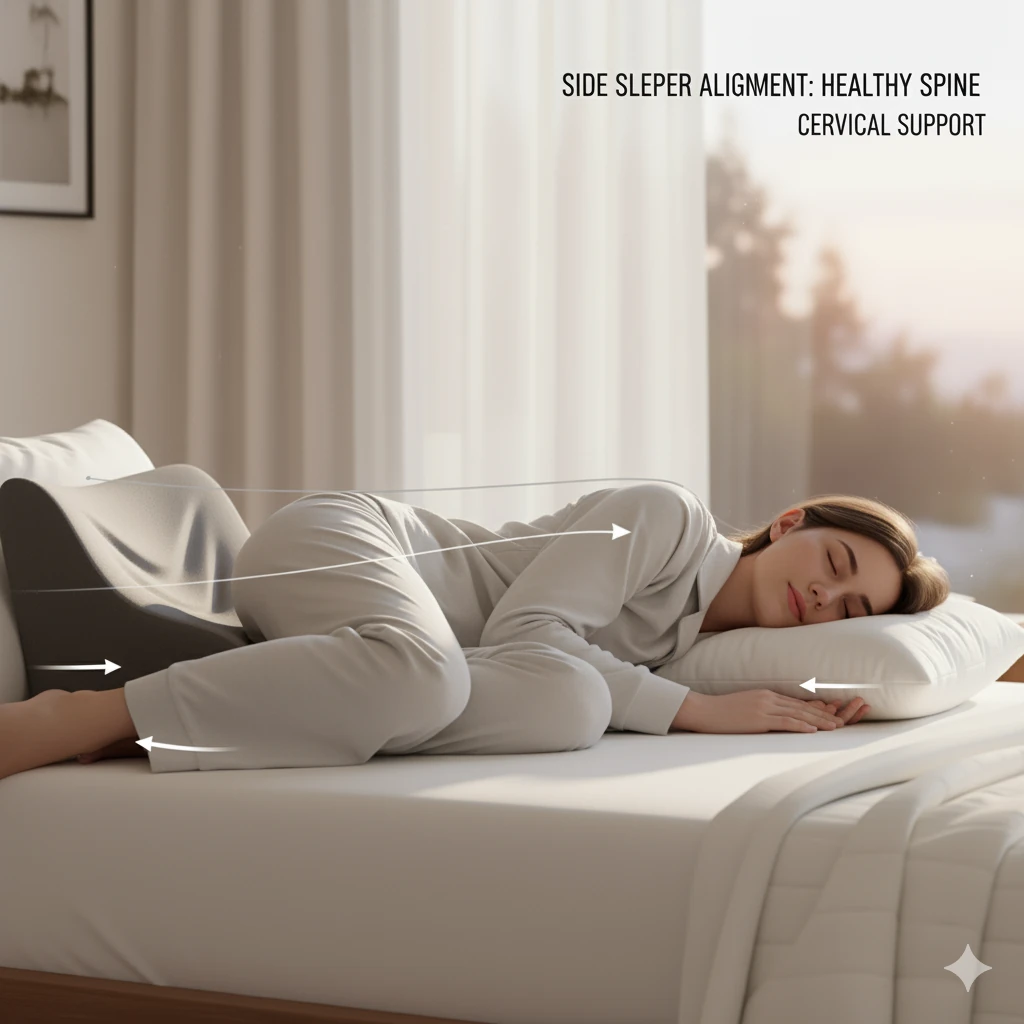
Neutral alignment is the goal. Your face points at the ceiling, ears stack over shoulders, and your neck feels… quiet. If mornings hurt, start by checking pillow height.

Materials matter. Dense foam and latex keep more height under load. Down, feather, and shredded blends compress more, so you may need a taller pillow to land at the same effective height.
what is pillow loft — neutral spine alignment with correct pillow height - featuring pillow loft choose
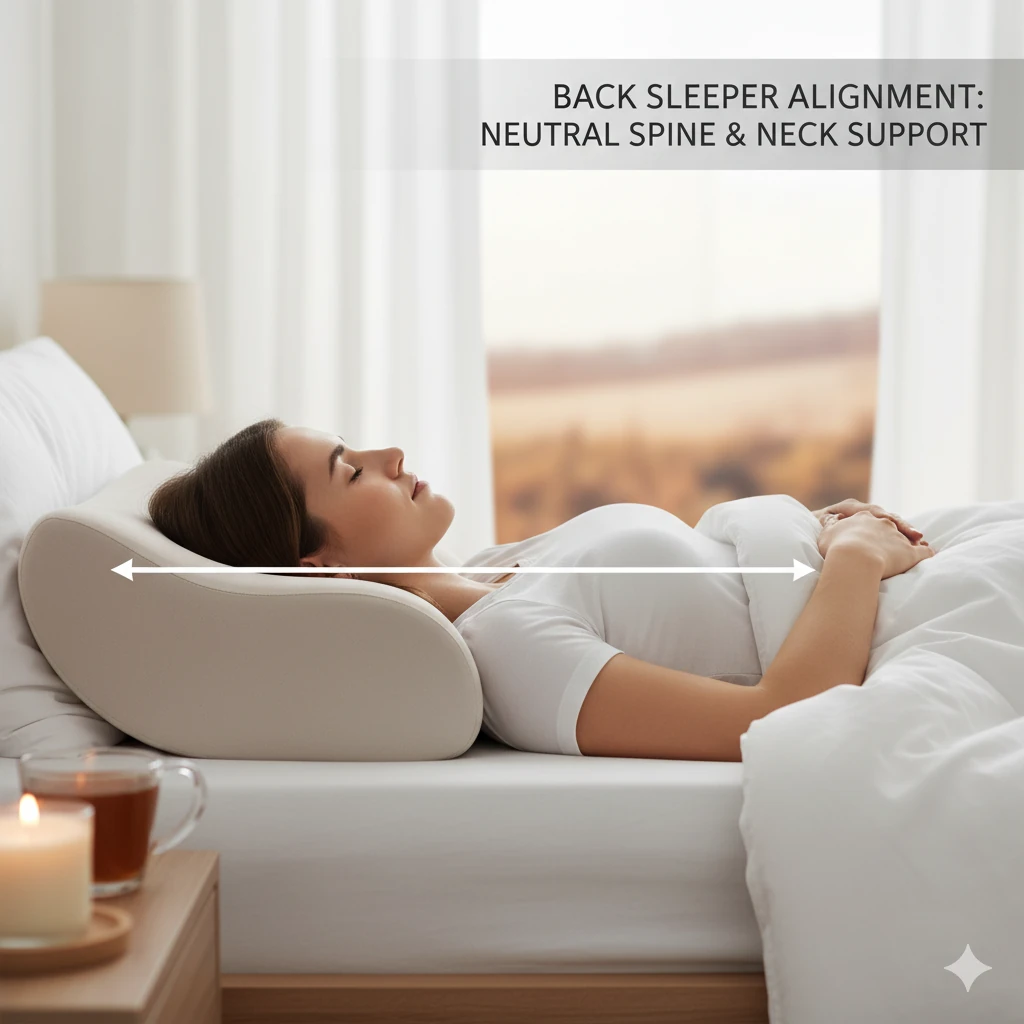
Check the side profile: ears over shoulders, nose pointing straight up.

Low, Medium, High Loft: Pros & Cons

Quick answer: Low loft (2–3″) usually suits stomach sleepers, medium (3–5″) fits many back sleepers, and high (5–7″+) supports most side sleepers—then fine-tune for shoulders and mattress feel.

Key takeaways:

  • Low: great for stomach sleepers; some smaller-framed back sleepers.
  • Medium: a safe bet for most back sleepers and narrow-shouldered side sleepers.
  • High: best for side sleepers, especially with broader shoulders or firm beds.
  • At the same listed height, different materials “sleep” taller or flatter.

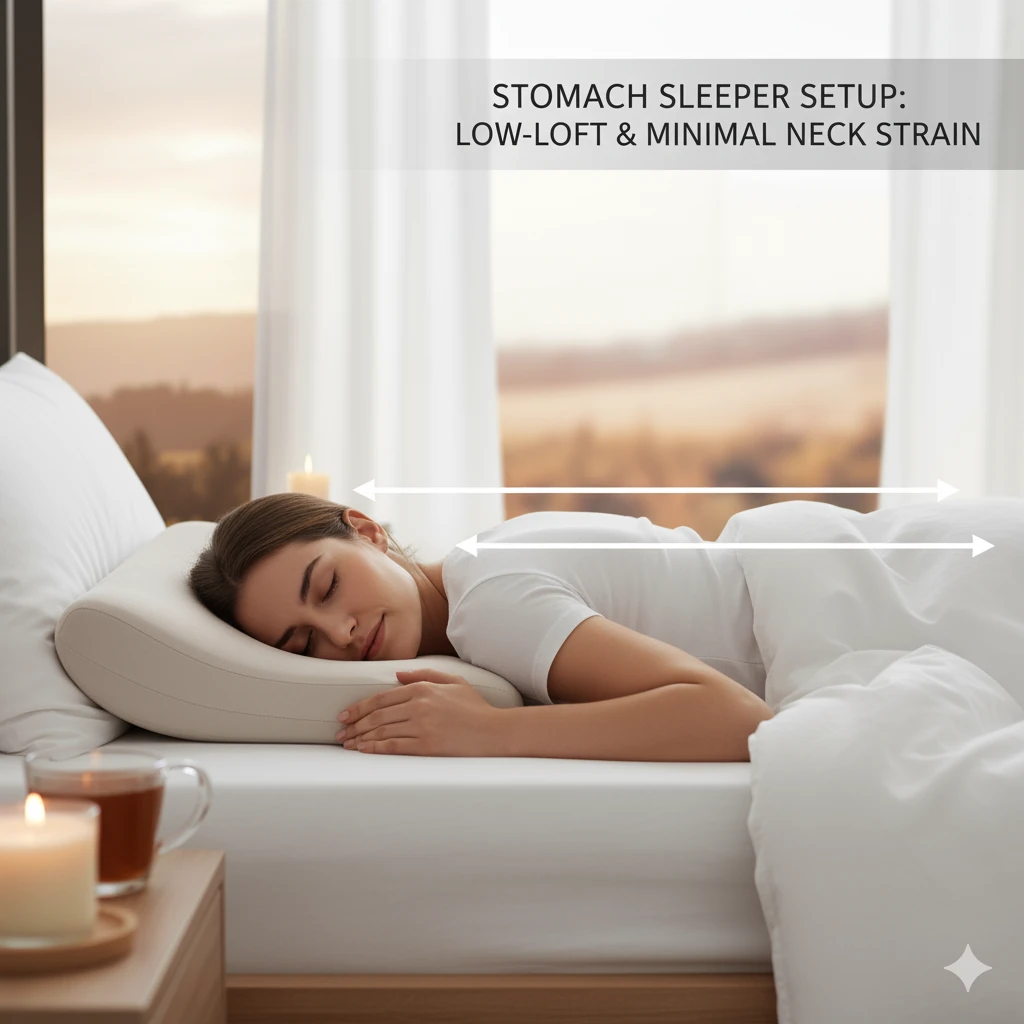
Low loft (2–3″): Helps keep stomach sleepers from cranking the neck. Compressible fills may need more fluffing and can flatten over time.

Medium loft (3–5″): A comfy middle ground for lots of back sleepers and some side sleepers with narrower shoulders. Broader shoulders or firm beds may still need more height.

High loft (5–7″+): Fills the ear-to-shoulder gap for side sleepers. Can be too tall for back or stomach sleeping, pushing the head forward.

Want a bigger decision framework? Peek at Choosing Pillows for Comfort: 7 Expert Tips.
what is pillow loft — low, medium, and high comparison - pillow loft featuring pillow loft choose
Loft tiers at a glance: match height to position and shoulder width.

Choosing Loft by Sleep Position & Shoulder Width

Quick answer: Side sleepers usually need high loft (≈4.5–6.5″ effective), back sleepers medium (≈3.5–5″), stomach sleepers low (≈2–3″). Go higher for broader shoulders and firmer mattresses; go lower for softer beds.

Key takeaways:

  • Side: ~4.5–6.5″ effective; adjust for shoulders and bed firmness.
  • Back: ~3.5–5″ effective; a gentle neck contour can help.
  • Stomach: ~2–3″ effective; some do best with no head pillow.
  • Firmer beds often need more loft; softer beds, a touch less.

Side sleepers: Your pillow should fill the ear-to-shoulder space so your neck stays level. Narrow shoulders often land around 4.5–5.5″; broader shoulders, ~5.5–6.5″+. Firmer mattress? Add a little height. Softer mattress? You can subtract a bit.

Back sleepers: Aim for 3.5–5″ effective loft so your head’s supported without nudging your chin toward your chest. A subtle contour under the neck can feel great.

Stomach sleepers: Keep it as low as possible (2–3″). Some people do best without a head pillow and use a thin pillow under the hips to ease the lower back.

Round out your setup with our primers: Cozy Bedding Materials and Thread Count Explained.

what is pillow loft — choosing the right height for side sleepers - pillow featuring pillow loft choose
Side sleepers: fill the ear-to-shoulder gap to keep the neck level.

Adjustable Fill & Customization Tips

Quick answer: Adjustable pillows make dialing in height simple. Start a bit tall, remove fill in small handfuls, test on your own bed, and save the extra for future top-ups.

Key takeaways:

  • Begin slightly taller than you think, then subtract slowly.
  • Measure height while lying down—it’s the only number that matters.
  • Keep spare fill in a labeled bag for later refreshes.
  • Record your final setting so you can recreate the same what is pillow loft result.

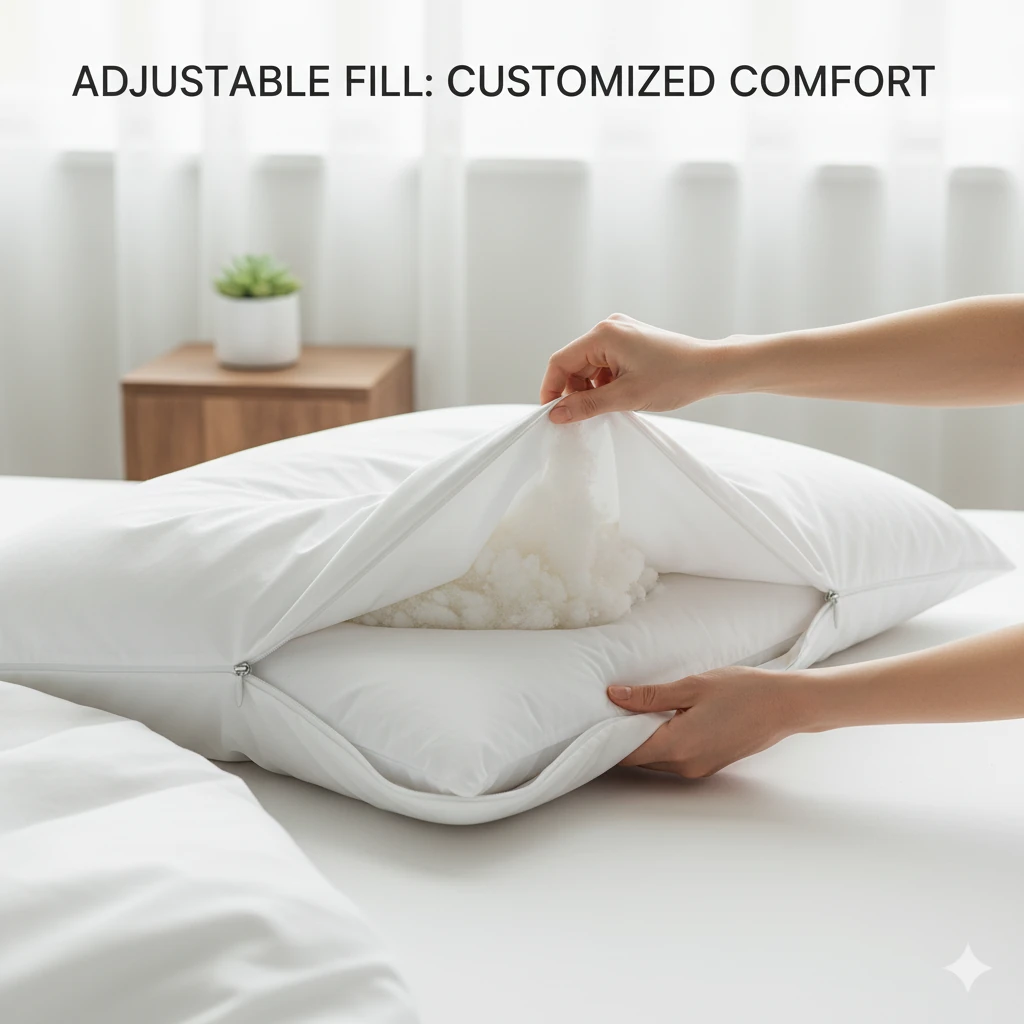
With shredded foam or down/feather, open the inner zipper and remove a handful at a time. After each tweak, lie down in your usual position on your actual mattress and reassess.

Judge with alignment, not just feel. Nose points up, no chin tuck, no head droop. If you switch positions, set loft for the way you sleep most of the night.

Over months, compressible fills settle. That saved bag of fill? It’s your easy refresh when support starts slipping.
what is pillow loft — adjustable-fill pillows to fine-tune height - pillow featuring pillow loft choose
Adjustable-fill pillows help you lock in your best height—and keep it there.

Try-At-Home Fit Test

Quick answer: Record a 10-second side profile at mattress height. Side/back sleepers: face parallel to the ceiling. Stomach sleepers: as flat as possible. Adjust until the line from neck to upper spine looks straight.

Key takeaways:

  • Phone at mattress level, filming your side profile.
  • Side: nose up, ears over shoulders.
  • Back: chin neutral—not tucked.
  • Stomach: keep the head as flat as you comfortably can.

Set the camera at bed height, relax onto your pillow, and hit record. Pause the video and mentally trace a line from the base of your skull down through your upper spine. Straight line? You’re there.

Small changes matter. A half-inch of fill can flip the result from “meh” to “perfect.” Re-test after each adjustment.
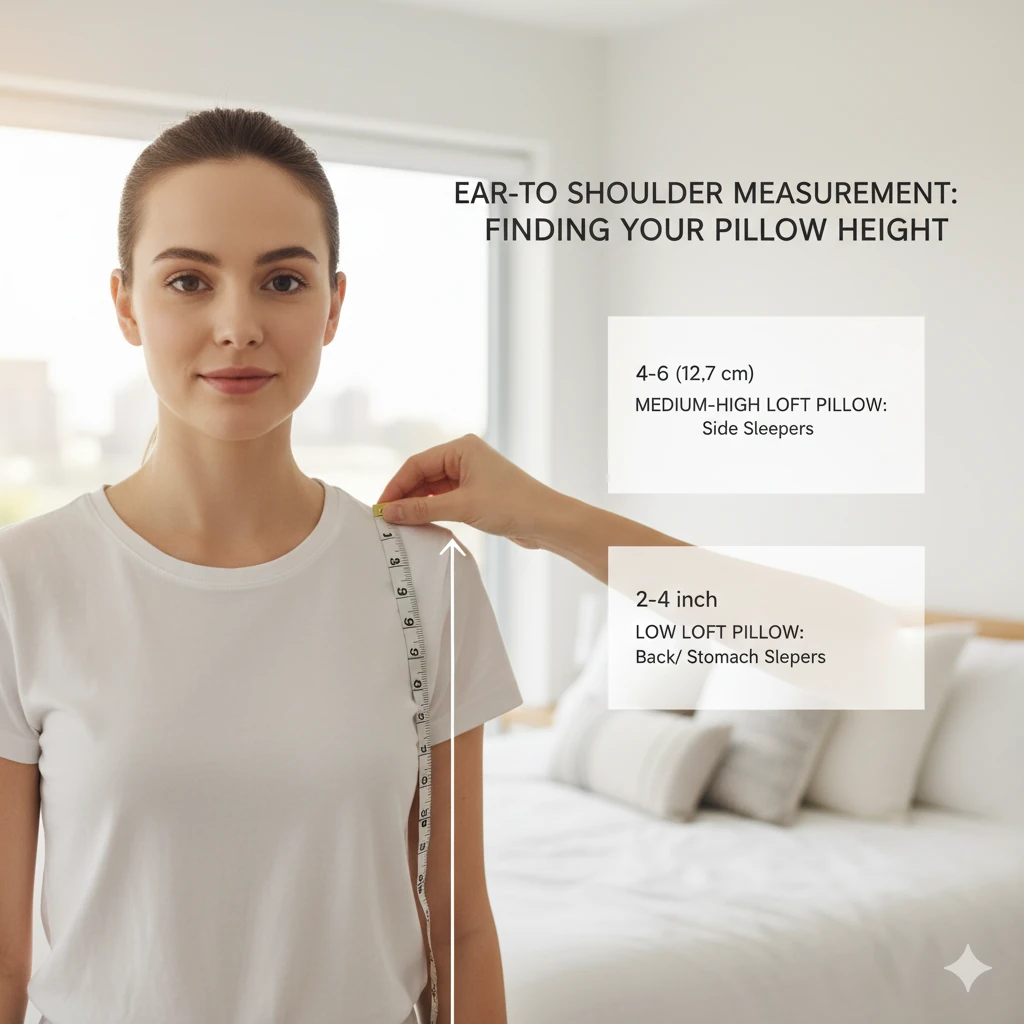
what is pillow loft — ear-to-shoulder measurement to estimate height - featuring pillow loft choose
Measure ear-to-shoulder gap as a quick starting estimate for side-sleeping loft.

Care & Replacement Intervals

Quick answer: Refresh pillows every few months (material-dependent), fluff weekly if they’re compressible, and replace most pillows every 1–3 years—or sooner if support won’t bounce back.

Key takeaways:

  • Down/feather & shredded fills: fluff and top up as needed.
  • Solid foam/latex: spot clean, air out—no typical machine wash.
  • Use a breathable protector to slow wear and odors.
  • Replace when your what is pillow loft target no longer holds and alignment drifts.

Follow the care tag. Down/feather often tolerates gentle washing and thorough drying with dryer balls. Shredded fills perk up with sunning and manual fluffing.

Solid foam and latex don’t love washers—spot clean and air them out. A good protector keeps oils and dust at bay without changing the feel.

Upgrading the whole setup? Try our Comprehensive Mattress Selection Guide to sync mattress firmness with pillow height.

Quick Size Guide (Ear-to-Shoulder Estimate)

Quick answer: Measure a straight line from your ear canal to the tip of your shoulder while standing relaxed. That number approximates a side-sleeping effective loft on a medium-firm mattress.

Key takeaways:

  • Firm bed? Add ~0.25–0.5″. Soft bed? Subtract ~0.25–0.5″.
  • Foam/latex compress less—start close to the raw number.
  • Down/shredded compress more—start ~0.5–1″ taller.
  • Use this as a starting point, then refine with the fit test.

Have someone measure ear to shoulder tip. That’s the gap your pillow must fill on your side. It’s a quick way to get in range before you fine-tune.

Remember: softer beds let your shoulder sink (need less loft). Firmer beds keep you higher (need more loft).

Eco-Friendly vs Conventional Pillow Materials

Quick answer: Natural latex, organic cotton, and responsibly sourced down can keep loft steady with a lighter footprint. Conventional foams can feel great too—just look for credible certifications.

Key takeaways:

  • Seek GOLS/GOTS and OEKO-TEX® where applicable.
  • Natural latex often holds height longer than many down blends.
  • Organic bedding and eco-conscious sheets round out a healthier setup.
  • Certifications help cut through greenwashing and protect your ideal height for what is pillow loft.

If sustainability is your priority, natural latex offers springy, long-lasting support. Prefer a softer sink? Try responsibly sourced down with an organic cotton shell.

Look for GOLS (latex), GOTS (organic fibers), and OEKO-TEX® (chemical safety). Pair your pick with organic bedding benefits and smart sheet choices for a cleaner sleep space.

what is pillow loft — eco-friendly materials and certifications overview - featuring pillow loft choose
Natural latex, organic cotton, and trusted certifications support lasting loft.

The Bottom Line

Quick answer: Start with position-based targets, adjust for shoulders and mattress feel, then confirm with the quick video test. The best pillow is the one that keeps your neck neutral—period.

Key takeaways:

  • Side ≈ 4.5–6.5″; Back ≈ 3.5–5″; Stomach ≈ 2–3″ (effective loft).
  • Firmer bed → add a bit; softer bed → subtract a bit.
  • Adjustable fill makes precision easy.
  • Re-check whenever your what is pillow loft setup or mattress changes.

When the pillow fits, sleep feels effortless. You fall asleep faster, wake up looser, and stop wrestling your bed. Re-measure if your body or mattress changes—great sleep is adjustable.

what is pillow loft — quick checklist for position, shoulders, mattres featuring pillow loft choose
Quick checklist: position target → adjust for shoulders/bed → confirm with fit test.

Key Takeaways: what is pillow loft

  • Match what is pillow loft guidance to your position: side (higher), back (medium), stomach (low).
  • Tweak for shoulder width and mattress firmness to hit true effective height.
  • Use the video fit test to double-check neutral alignment.
  • Maintain loft with smart care; replace when support won’t rebound.
  • Certified, sustainable materials can keep loft steady for longer.

FAQ

What’s the difference between pillow loft and firmness?
Loft is height under your head after compression. Firmness is how soft or hard it feels. You can have a soft high-loft pillow or a firm low-loft pillow—they’re separate dials.
How do I know if my pillow is too high?
Watch for a tucked chin, tight upper back, or morning stiffness. In a side-profile photo, your face points slightly down instead of straight up.
Can one pillow work for multiple positions?
Sometimes. Adjustable-fill pillows can hit a compromise, but strict side-plus-stomach sleepers often do best with two pillows.
How often should I replace a pillow?
About every 1–3 years for most types. Replace sooner if loft won’t rebound, odors hang on, or your alignment slips.
Do pillow protectors change loft?
Not much if they’re breathable and well-fitted. They actually help preserve loft by blocking oils and dust.

More resources from Cozy Bed Quarters:
Choosing Pillows for Comfort •
Bedding Accessories: Pillows & Toppers •
Comprehensive Mattress Selection Guide •
Bedding Materials Guide •
Organic Bedding Benefits

Trusted references:
Sleep Foundation •
Parachute Home •
Better Homes & Gardens

Final Thoughts

Dialing in what is pillow loft for your body and mattress pays off fast: fewer morning aches, easier sleep onset, and steadier comfort through the night. Re-test your setup whenever your mattress or routine changes to stay in the sweet spot.


Related Reading

How to Choose the Perfect Mattress for Your Sleep Style

How to choose a right Mattress

How to Choose the Perfect Mattress

Choosing the perfect mattress can transform your sleep quality, support your health, and enhance your well-being. This guide explains how to choose the ideal mattress based on your sleep style, budget, and more.

Key Takeaways on How to Choose the Perfect Mattress

  • Understand your sleep position and personal needs before mattress shopping.
  • Compare memory foam, latex, hybrid, and innerspring types for pros and cons.
  • Firmness levels matter—side sleepers need soft, back sleepers may need firm.
  • Choose the right size for your room and sleeping arrangements.
  • Invest in good materials and features like edge support or cooling tech.
  • Use trial periods and return policies to find the best fit.

Understanding Your Sleep Needs

Before mattress shopping, it’s important to understand your sleep style. Are you a back, side, or stomach sleeper? Each position needs different support to keep your spine aligned and reduce discomfort. Consider your weight, sleeping habits, and any chronic pain. The right mattress can significantly improve your rest.

Mattress styled for back and side sleepers, illustrating how to choose the perfect mattress

Types of Mattresses: Pros and Cons

Here’s a breakdown of common mattress types to help you choose the perfect mattress:

Memory Foam

Memory foam mattresses contour closely to your body, offering excellent pressure relief and spinal alignment. They’re especially beneficial for side sleepers or those with joint pain. However, they can retain heat, so look for models with cooling gel or breathable covers. They typically fall into the mid-price range and last 7–10 years.

Innerspring

Innerspring mattresses feature a coil-based support core, offering a bouncy and responsive feel. They’re great for stomach sleepers or people who prefer a firmer, more traditional bed. However, they may lack contouring and motion isolation. These are generally more affordable and have a shorter lifespan of 5–8 years.

Hybrid

Hybrid mattresses combine coils with foam or latex layers, blending support with pressure relief. They suit a wide range of sleepers, especially couples with different sleep preferences. Most hybrids include cooling features and solid edge support. They tend to be in the higher price range but often offer enhanced durability and performance.

Latex

Latex mattresses are naturally breathable, hypoallergenic, and very durable—lasting up to 15 years. They offer buoyant support without the sink-in feel of memory foam. Ideal for eco-conscious buyers, they’re often made from organic or sustainable materials. However, they tend to be pricier and heavier to move.

Airbeds

Airbeds use air chambers to let you adjust firmness levels on each side—ideal for couples with different needs. High-end models offer remote or app-based customization and advanced features. However, they can be expensive, require maintenance, and may be less durable over time due to mechanical components.

perfect mattress hybrid with cooling technology

Decoding Mattress Firmness Levels

Firmness levels range from soft to extra firm:

  • Soft: Best for side sleepers needing cushion for hips and shoulders.
  • Medium: Versatile option for combo sleepers.
  • Firm: Ideal for back and stomach sleepers who need more support.

Size Matters: Choosing the Right Mattress Dimensions

Select the right mattress size for your space and sleeping needs:

  • Twin: Perfect for children or small rooms.
  • Full: Good for solo sleepers needing more room.
  • Queen: Most popular for couples.
  • King/California King: Ideal for families or luxury sleepers.

perfect mattress for children room twin size

Material Matters: What’s Inside Your Mattress

Your mattress’s construction impacts both comfort and durability:

  • Comfort Layers: Memory foam, latex, or gel add cushioning.
  • Support Core: Coils or dense foam provide structure.
  • Cover: Made from breathable fabrics like cotton or Tencel.

Budget Considerations: Getting the Best Value for Your Money

Mattress prices range from $300 to over $3,000. Set a budget and watch for sales. Prioritize quality over cheap deals—a good mattress is a smart investment in your well-being.

The Importance of Proper Support and Pressure Relief

A good mattress should:

  • Keep your spine aligned.
  • Reduce pressure points on sensitive areas.
  • Minimize motion transfer—especially important for couples.

Testing Your Mattress: Making the Most of Trial Periods

Most mattresses come with a 30–365 day trial. Use this time to test for comfort and fit:

  1. Try different sleep positions.
  2. Check for discomfort or pain.
  3. Test heat regulation and motion isolation.
Pro Tip: Set a reminder before your trial ends so you can return or exchange if needed.

perfect mattress testing during trial

Additional Features to Consider

If you’re still wondering how to choose the perfect mattress, look into these extras:

  • Cooling Technology: Gel-infused foam or breathable fabrics.
  • Edge Support: Helps maintain shape and structure.
  • Adjustable Bases: Customize your sleep angle.
  • Eco-Friendly Options: Organic or sustainably made materials.

FAQ

What is the best type of mattress for side sleepers?
Memory foam or hybrid mattresses with soft to medium firmness offer optimal pressure relief for side sleepers.
How long does a mattress last?
Most mattresses last 7–10 years, depending on materials and usage.
Can I return a mattress if I don’t like it?
Yes, most companies offer trial periods with easy return options.

Conclusion

We’ve covered everything from mattress types and firmness to trial periods and budget tips. By understanding your sleep needs and exploring your options, you can confidently choose the perfect mattress and sleep better for years to come. Sweet dreams!


Best King Size Mattress: Size, Firmness and How to Buy

A luxurious king size mattress in a modern minimalist bedroom with soft natural light, featured in the ultimate guide to choosing the best king size mattress.

A standard king mattress measures 76 inches wide by 80 inches long (roughly 193 x 203 cm), which gives two people 38 inches each — the same personal width as a twin XL. For most couples, the best king size mattress is a medium-firm hybrid or a dense foam bed with strong motion isolation, reinforced edges and a trial of at least 100 nights. Before you buy, measure your room: a king works best with about 12 x 12 feet of floor space so you can still walk around the bed and open drawers.

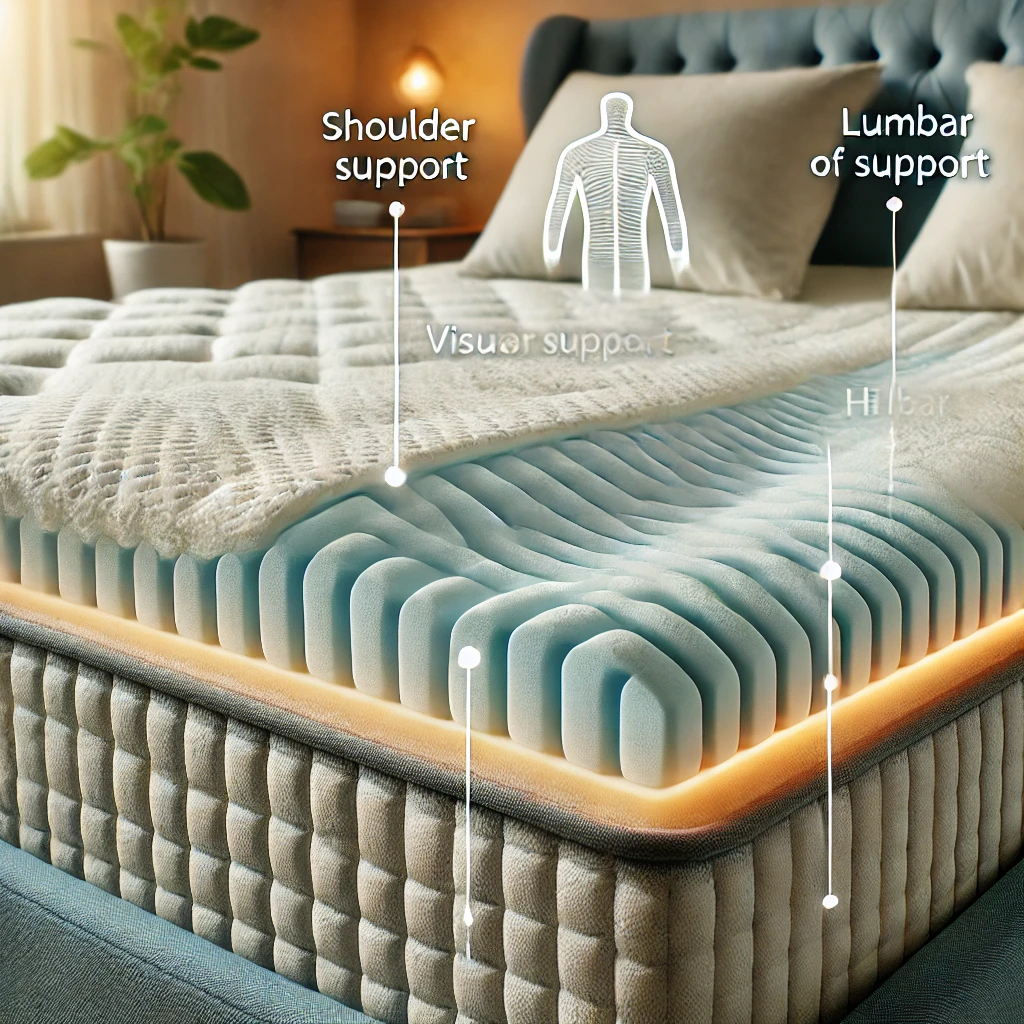
Cutaway view of a king mattress showing comfort foam layers over pocketed support coils

King size mattress dimensions in inches, feet and cm

Every king mattress sold as a “standard” or “eastern” king in the US uses the same footprint. Depth is the part that varies — most beds run 10 to 14 inches thick, which matters for your sheets and for how high the bed sits once it’s on a frame.

Size Inches Feet Centimetres
Full (double) 54 x 75 4’6″ x 6’3″ 137 x 191
Queen 60 x 80 5′ x 6’8″ 152 x 203
King 76 x 80 6’4″ x 6’8″ 193 x 203
California king 72 x 84 6′ x 7′ 183 x 213
Split king (two twin XL) 2 x (38 x 80) 2 x (3’2″ x 6’8″) 2 x (97 x 203)

A few things people get wrong here. A king is 16 inches wider than a queen but exactly the same length, so it does nothing extra for tall sleepers. A California king trades four inches of width for four inches of length, which is the better pick if anyone in the bed is over about 6’2″. And a split king isn’t a separate size — it’s two twin XL mattresses side by side, which is how most adjustable bases in king size are actually built. Our full breakdown of measurements lives in the king size bed dimensions guide, and the king vs California king comparison covers which one suits which room shape.

Will a king fit your bedroom?

A king takes up about 42 square feet before you add a frame, and frames usually add two to five inches on each side. Aim for at least 24 to 30 inches of walking space on the sides and foot of the bed — less than that and you’ll be shuffling sideways past the corners every night. In a 10 x 10 foot room, a king technically fits but leaves almost nowhere for nightstands; 12 x 12 feet is the comfortable minimum, and anything larger gives you room for a bench or dresser.

Check the delivery path too, not just the bedroom. Boxed foam and most boxed hybrids arrive compressed and roll through tight stairwells easily. A traditional innerspring or a two-sided luxury bed arrives flat and won’t bend, so measure doorway widths, stair turns and any low ceiling on the landing. Split foundations (two halves instead of one 76-inch slab) solve almost every awkward staircase.

Person sitting on the reinforced edge of a king mattress without the side collapsing

How to pick the best king size mattress for your sleep style

Mattress marketing is noisy, but the decision comes down to four things: the build, the firmness, how well it handles two bodies, and how hot it runs. Start with the build.

Type How it feels Strong points Watch-outs
Memory foam Slow, sinking hug Best motion isolation; pressure relief for side sleepers Can trap heat; harder to move around on
Latex Buoyant, springy, floats you on top Durable, breathable, natural options Heavy and usually the priciest build
Innerspring Bouncy and traditional Airflow, edge strength, lower cost Thin comfort layers; motion travels across the bed
Hybrid Coils underneath, foam or latex on top Balanced support and contouring; the safest default Quality varies wildly at the cheap end

If you can’t decide, a medium-firm pocket-coil hybrid is the least risky choice for a shared king — it supports heavier hips, allows enough give for shoulders, and the individually wrapped coils cut down on partner disturbance. Our memory foam vs spring comparison goes deeper if you’re torn between a hug and a bounce.

Firmness by sleeping position and body weight

  • Side sleepers: medium to medium-soft, with enough comfort layer for the shoulder and hip to sink in while the waist stays supported.
  • Back sleepers: medium-firm, ideally with a reinforced or zoned lumbar area so your lower back doesn’t hollow out.
  • Stomach sleepers: firmer, because any deep sinkage at the hips arches the lower back.
  • Combination sleepers: medium-firm with some bounce — deep foam makes rolling over feel like work.
  • Body weight: heavier sleepers generally need a firmer, thicker build to avoid bottoming out; lighter sleepers often find the same bed feels like a board.

Firmness labels aren’t standardised between brands, so one company’s “medium” can feel like another’s “firm.” Treat the number on the box as a rough guide and lean on the trial period. There’s more detail in our guide to the best mattress firmness for a king bed.

Best king size mattress for back pain: what the research actually says

This is the most searched follow-up question, and the honest answer is that the evidence is thinner than most buying guides admit. A randomised, double-blind trial published in The Lancet found that people with chronic non-specific low back pain did better on a medium-firm mattress than on a firm one, for both pain and disability. A later evidence review hosted by the National Library of Medicine reached a similar conclusion — medium-firm mattresses may mean less pain and better sleep quality than firmer ones — while flagging real limitations in the underlying studies.

Harvard Health points to a survey of 268 people with low back pain in which those on very hard mattresses reported the poorest sleep quality, with no clear difference between medium-firm and firm.

So: skip the rock-hard “orthopedic” beds, start at medium-firm, and pay attention to support rather than plushness. Practical features that tend to help:

  • Zoned support — firmer coils or foam under the hips and lumbar area, softer at the shoulders.
  • Enough comfort layer that your shoulder can sink if you sleep on your side.
  • A supportive base. A sagging foundation or a king frame without a centre support rail will undo a good mattress fast.
  • The right pillow. Neck angle affects the whole spine, and no mattress fixes a pillow that’s too tall.

Nobody can promise a mattress will cure back pain, and persistent pain deserves a proper medical opinion rather than a shopping decision.

Couple lying comfortably on a king mattress in a bright bedroom

Sharing a king: motion, edges and split setups

The reason people move up to a king is space, but space alone won’t stop you waking up when your partner rolls over. Two features do most of that work.

Motion isolation is best in all-foam beds and in hybrids with individually pocketed coils. Interconnected innerspring units transmit movement across the whole 76 inches. Edge support matters more on a king than any other size, because when two people drift apart, you’re both sleeping near the perimeter. Reinforced perimeter coils or high-density foam rails keep the usable surface close to the full width and make sitting on the side to put shoes on far less precarious.

If you and your partner want different firmness levels, a split king lets each side be its own mattress — handy with an adjustable base, though you’ll want a mattress pad or bridging strip so the gap in the middle doesn’t become a feature. Our guide to the best mattress for couples who toss and turn covers the trade-offs.

Two sleepers on a king mattress, one turning over without disturbing the other

If you sleep hot

Heat complaints are mostly a foam problem. Dense memory foam holds body heat against you; coils, latex and open-cell or gel-infused foams let more air move. Features worth looking for, in rough order of how much difference they tend to make:

  • A coil support core (airflow beats any surface gimmick).
  • Thinner or perforated memory foam layers rather than a thick slab.
  • Breathable covers — cotton, Tencel or phase-change fabrics that feel cool to the touch.
  • A breathable foundation. A solid platform with no slat gaps traps heat under the bed.

Cooling covers feel impressive in a showroom for a few minutes and matter less over a full night, so don’t pay a big premium for the fabric alone. Bedding and room temperature do a lot of the work too, and our cooling mattress guide has the full rundown.

Close-up of gel-infused cooling foam layer in a king mattress for hot sleepers

Materials, certifications and “eco-friendly” claims

“Natural,” “green” and “non-toxic” aren’t regulated terms on a mattress label. Certifications are the only way to check that a claim means something:

  • CertiPUR-US — applies to the polyurethane foams inside a bed, covering restricted substances and low VOC emissions. The program’s own site lists what’s tested and what isn’t.
  • GOTS — organic content and processing standards for textiles such as cotton and wool.
  • GOLS — organic content standard for natural latex.
  • OEKO-TEX Standard 100 — tests finished textiles for harmful substances.
  • GREENGUARD Gold — chemical emissions testing for indoor air quality.

A certified mattress isn’t automatically comfortable, and an uncertified one isn’t automatically harmful — all mattresses sold in the US also have to meet federal flammability rules. Where natural materials genuinely earn their price is durability: quality latex and wool tend to hold up longer than cheap polyfoam, and they’re easier to break down at the end of life. If that side of the decision matters to you, start with our roundup of eco-friendly organic mattress brands.

Price, trials, warranties and delivery

King is the most expensive standard size, usually a few hundred dollars above the same model in queen. Prices move constantly with sales cycles, so we don’t publish figures that will be stale next month. What’s worth knowing before you spend:

  • Sleep trials: 90 to 365 nights is the normal range online. Check whether returns are free, whether there’s a minimum break-in period (often 21 to 30 nights), and who hauls the mattress away.
  • Warranties: ten years is standard. Read the sagging threshold — most only cover permanent impressions past a set depth, and many are voided by an unsupported frame.
  • Frame requirements: a king needs centre support with legs to the floor, and slats spaced close together for foam beds. Ignoring this is the fastest way to lose a warranty claim.
  • Delivery: boxed beds are cheap or free but you handle the unboxing, which is a two-person job in king. White-glove delivery with old mattress removal costs more and is worth it for heavy innersprings.
  • Timing: mattress prices swing with holiday sale events, so a little patience pays — see our notes on the best time of year to buy a mattress.

A note on specific models: we don’t run a test lab, and brand lineups change faster than most “best of” lists are updated — models named in older roundups are regularly discontinued or quietly reformulated. Before you buy anything you read about anywhere, confirm the exact model is still sold on the manufacturer’s own site, and cross-check hands-on impressions with independent testers rather than retailer copy.

King bed made up with layered bedding in a calm, warmly lit bedroom

Quick buying checklist

  1. Measure the room, the doorway and the stairs. Confirm 76 x 80 inches plus frame will leave you walking space.
  2. Decide king vs California king based on height, not habit.
  3. Pick a build: hybrid for balance, foam for motion isolation, latex for bounce and longevity, innerspring for budget and airflow.
  4. Start at medium-firm unless you’re a dedicated side or stomach sleeper.
  5. Check edge support and motion isolation if you share the bed.
  6. Confirm your frame has centre support before delivery day.
  7. Buy from somewhere with a real trial and a readable warranty.

FAQ

What size is a king size mattress?

76 inches wide by 80 inches long — about 6’4″ x 6’8″, or 193 x 203 cm. That’s 16 inches wider than a queen with identical length.

How wide is a king size bed with the frame?

Usually 78 to 86 inches, depending on the frame. Metal platforms add the least; upholstered and wooden frames with thick side rails add the most.

Is a king or California king bigger?

A standard king has slightly more surface area and more width. A California king is narrower but four inches longer, which suits taller sleepers and narrow rooms.

How long does a king mattress last?

Around seven to ten years for most builds, with well-made latex and high-density foam often lasting longer. Rotating it a couple of times a year and using proper centre support helps — more on that in our guide to how long a king size mattress lasts.

Can I use my old king frame with a new mattress?

Yes, if it’s a king frame in good shape with centre support and slats spaced to the new mattress’s requirements. Check the warranty wording — foam beds usually want gaps of no more than about three inches.

Do I need a box spring for a king mattress?

Only if the frame needs one. Platform beds and slatted frames support a modern foam or hybrid mattress on their own; a traditional bed frame with just side rails still needs a foundation.

Is a king mattress too big for a 10 x 12 room?

It fits, but tightly. You’ll get a walkway on one side and the foot of the bed, with little room for nightstands. A queen usually makes that room feel better to live in.

King mattress with a supportive medium-firm surface shown from the side

Updated September 2026.