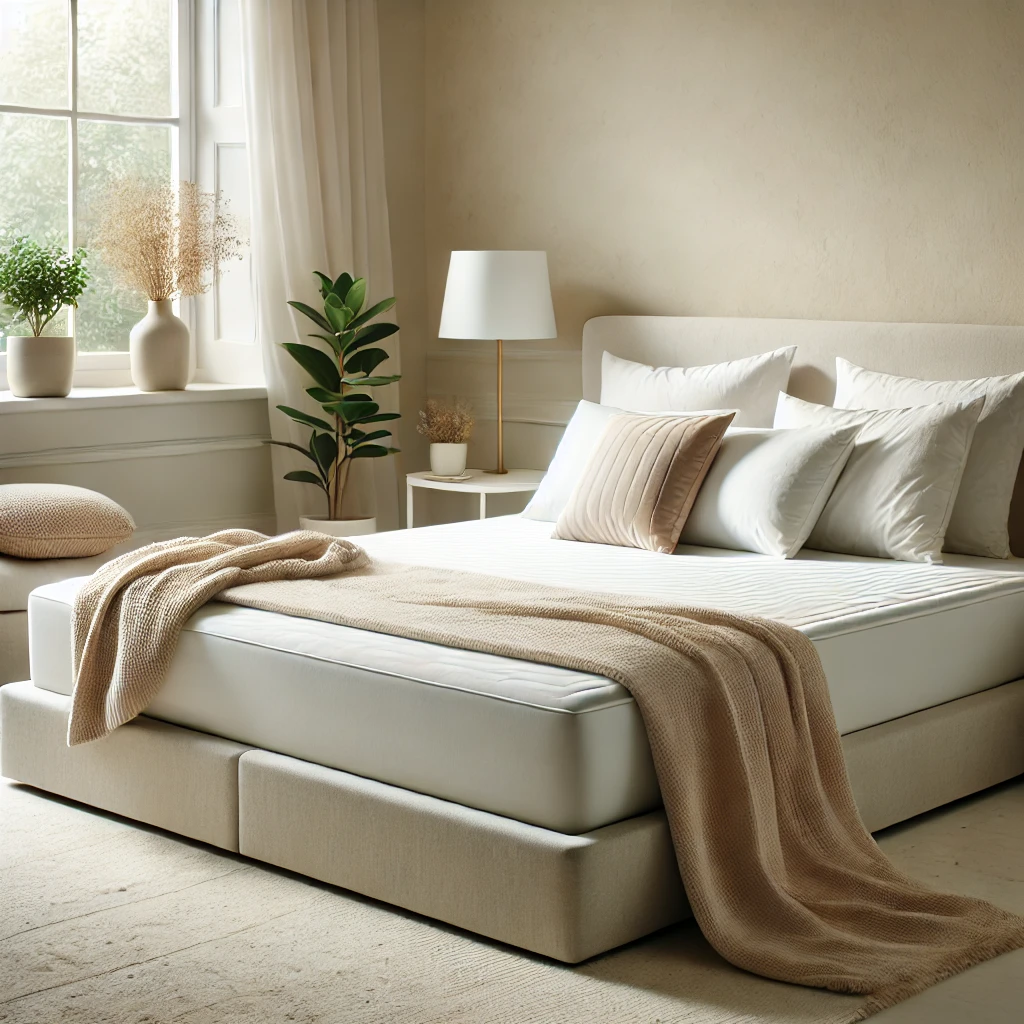
Memory Foam vs. Hybrid Mattresses: Which Is Right for You?

memory foam vs hybrid comparison cutaway showing foam and hybrid coil layers - memory foam vs. hybrid

Memory foam gives you deeper contouring and the best motion isolation, while a hybrid adds a pocketed-coil core for more bounce, stronger edges and better airflow. If your priority is pressure relief on shoulders and hips, or a quiet bed you share with a restless partner, foam is the safer bet. If you sleep hot, change positions often, weigh more, or sit on the edge of the bed, a hybrid usually suits you better.

Key takeaways

  • Feel: Memory foam hugs and responds slowly; hybrids feel lifted and springy, so moving around is easier.
  • Cooling: Coil cores let air move under your body, so hybrids generally sleep cooler; foam needs ventilation, open-cell structure or cooling covers to keep up.
  • Motion and noise: All-foam beds absorb movement best and stay silent; good hybrids come close but rarely beat foam.
  • Edges and support: Hybrids usually have firmer perimeters and hold up better under heavier bodies.
  • Durability and price: Build quality matters far more than category. Foam typically starts cheaper; hybrids cost more because of the coil unit.

What each mattress type actually is

Memory foam

Memory foam is viscoelastic polyurethane foam: it softens with body heat and pressure, then slowly returns to shape. A typical all-foam mattress stacks a plush comfort layer over a firmer transition foam and a dense base foam, with no springs anywhere in the build. That layered foam stack is what produces the signature slow-sinking “hug” and the near-total absence of bounce.
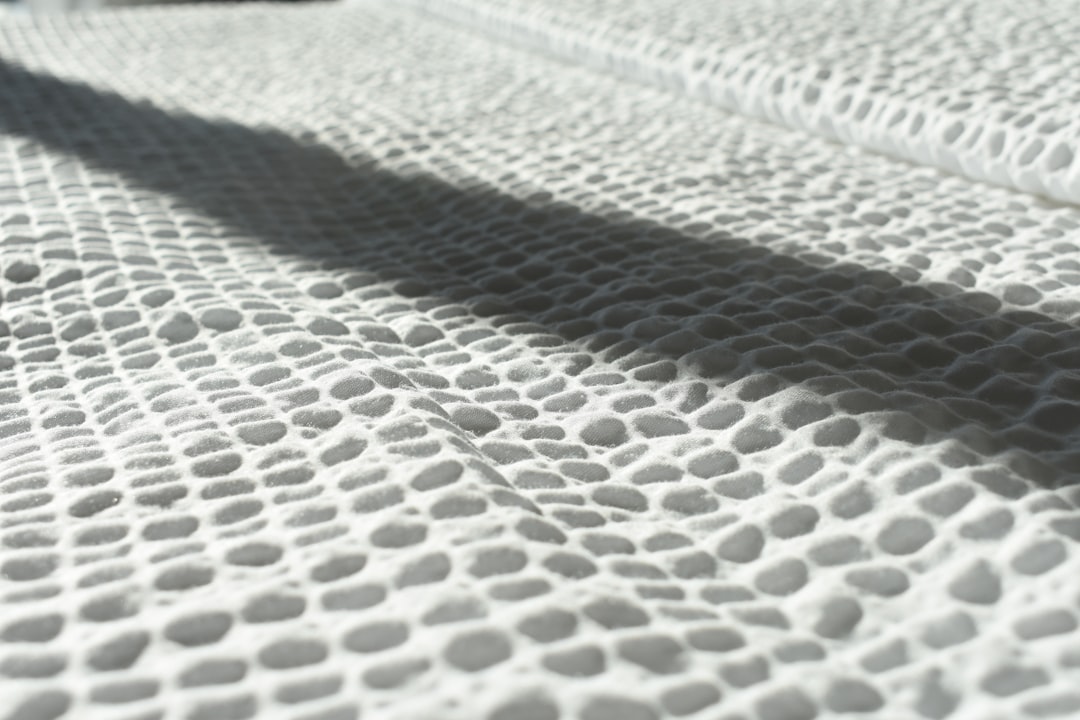
Memory foam mattress cross-section showing deep contouring and body-hu featuring hybrid memory foam

Hybrid

A hybrid pairs a pocketed-coil support core with meaningful foam or latex comfort layers on top — usually a couple of inches or more, not just a thin quilted pad. Individually wrapped coils flex independently, which helps contouring and reduces motion spread compared with older connected-coil innerspring units. The gaps between coils also create open space for air to circulate, which is the main reason hybrids tend to run cooler.
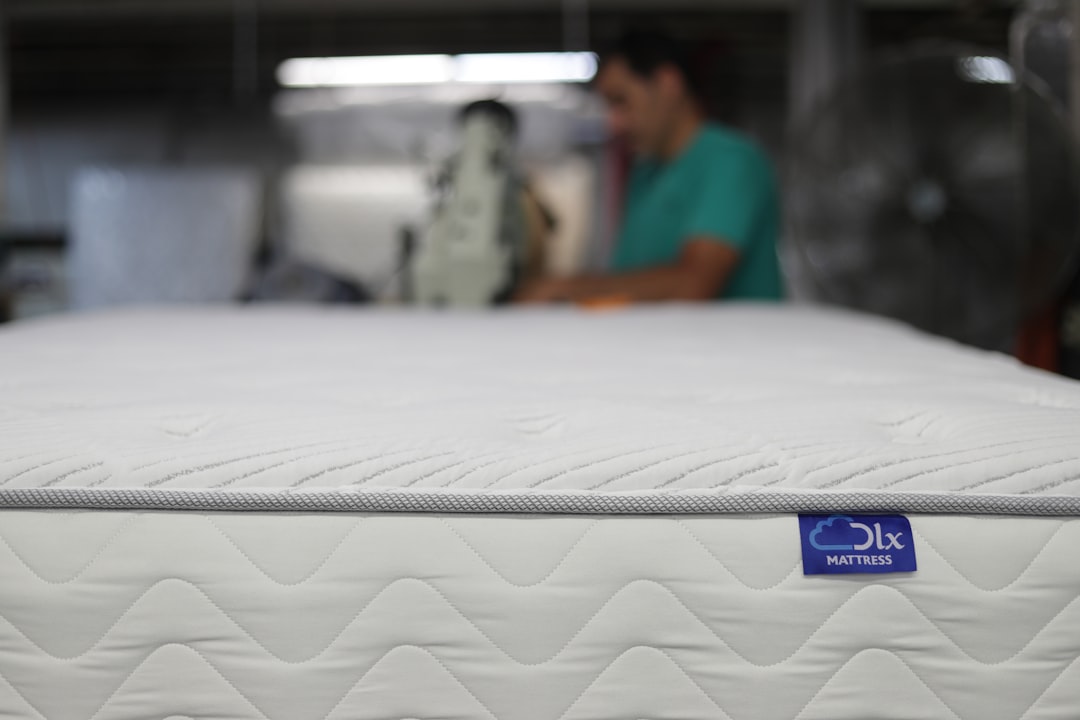
Hybrid mattress cutaway showing pocket coils and foam comfort layers f featuring hybrid memory foam

If you want the wider landscape first — latex, innerspring, airbeds and more — start with our overview of mattress types explained, then come back to this head-to-head.

Memory foam vs hybrid at a glance

Category Memory foam Hybrid
Feel Deep, slow-sinking contour; “in the bed” Balanced cradle with coil lift; “on the bed”
Pressure relief Excellent at shoulders and hips Very good; depends on comfort-layer thickness
Motion isolation Best in class; silent Good to very good; slight bounce
Temperature Can trap heat unless engineered for airflow Usually cooler thanks to airflow through coils
Edge support Often softer, less stable to sit on Usually firmer via edge coils or foam encasement
Ease of moving Slower; combination sleepers may feel stuck Responsive; easy position changes
Weight and handling Heavy but simpler to move and compress Heaviest; awkward for one person
Typical price Lower entry point Higher for comparable quality
Best suited to Side sleepers, light sleepers, couples wanting stillness Hot sleepers, combination sleepers, heavier bodies, edge sitters

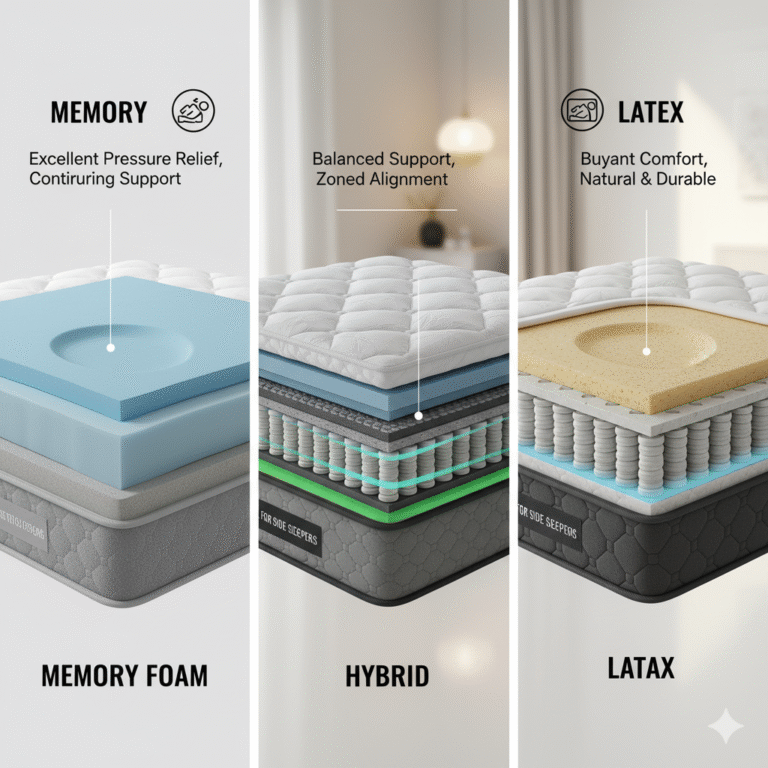
Cutaway comparison of memory foam, hybrid and latex mattress construction layers

Feel and pressure relief

Memory foam contours more deeply, so it fills the gap at your waist and takes load off the points that press hardest into the mattress. That is why side sleepers with sore shoulders or hips so often prefer it. The trade-off is response speed: foam releases slowly, and if you shift position a lot you may feel like you have to climb out of the impression you just made.

Hybrids cushion through their foam layers but push back from below, so you sit slightly more on top of the surface. Zoned coil units — firmer under the hips and lumbar area, softer under the shoulders — narrow the pressure-relief gap considerably. If your position varies night to night, our guide to the best mattresses for side, back and stomach sleepers covers how much cushioning each position realistically needs.

Cooling and airflow

This is the clearest practical difference. Solid foam is a closed environment: heat and moisture sit between your body and a material that responds to warmth by getting softer. A coil core, by contrast, is mostly air. Hybrids therefore tend to feel more temperature-neutral over a full night.

Modern foam has closed much of the gap with perforations, open-cell structures, gel or graphite infusions and phase-change covers. Sleep Foundation’s rundown on making a memory foam mattress sleep cooler is a useful reference if you already own one and want to fix the heat rather than replace the bed. Be sceptical of unquantified “cooling” marketing on either type — there is no standard consumer test behind those claims, so treat them as design intent, not proof. If heat is your main complaint, read our dedicated roundup of the best cooling mattresses for hot sleepers, which covers covers, toppers and bedding as well as the mattress itself.

Motion isolation and sharing a bed

All-foam mattresses absorb movement better than almost anything else and make no noise, which matters if one of you gets up early or works shifts. Hybrids transmit a little more movement because coils flex, though a thick foam comfort layer and well-isolated pockets reduce it to a level most couples never notice.

The other half of the equation is edge support. Hybrids generally hold the perimeter better, so two people can sleep closer to the sides without feeling like they are rolling off — genuinely useful on a queen. For more on balancing stillness against ease of movement, see our picks for couples who toss and turn.

Support, alignment and back pain

Neither category is automatically better for your back. What matters is whether the mattress keeps your spine in a neutral line while relieving pressure — and that depends on firmness, comfort-layer thickness and your body weight far more than on whether the core is foam or steel.

Independent evidence here is thinner than most buying guides admit. A randomised, double-blind trial published in The Lancet tested mattress firmness in adults with chronic non-specific low back pain, and orthopaedic researchers have since revisited the question in literature reviews, but the research looks at firmness and support rather than foam versus coil. Practical implication: do not buy a category hoping it cures pain. Match firmness to your weight and position, use the sleep trial, and speak to a clinician about persistent pain. If back comfort is the main driver, our guide to mattresses for back pain relief goes into support layers in more detail.

As a rough rule: lighter bodies and dedicated side sleepers usually do better on medium to medium-soft; average and heavier bodies, plus back and stomach sleepers, usually want medium-firm with a genuinely supportive core. Heavier sleepers on all-foam beds are the most likely to feel the comfort layers compress fully — “bottoming out” — which is a common reason people move to hybrids.

Durability, warranty and value

Category tells you less about lifespan than construction does. Coils resist permanent body impressions well, and a hybrid’s failure point is usually the foam above them; an all-foam bed’s failure point is usually a soft, low-density comfort layer. Either way, the comfort layer is what wears out first.

  • Foam density: spec sheets list comfort-foam density in lb/ft³, and higher density is widely treated as a durability signal. Independent long-term testing is scarce, so use density as one clue rather than a guarantee.
  • Coil quality: look for tempered steel, individually pocketed coils and zoning — and remember that a high coil count on its own means little.
  • Comfort-layer depth: a hybrid needs enough foam above the springs that you never feel them.
  • Warranty and trial: ten-year warranties are the industry norm rather than a tested service life, and they usually only cover defects such as sagging beyond a stated depth. Read what depth counts, and whether a valid foundation is required.

On price, memory foam generally starts lower because there is no coil unit to build, ship and reinforce. Comparable hybrids cost more, and very cheap hybrids often economise on the foam above the coils — which is exactly where you feel it. If budget is the constraint, compare options in our mattresses in a box under $1,000 guide before stretching for a category you do not need.

Who should choose which

Choose memory foam if…

  • You sleep mainly on your side and want pressure taken off shoulders and hips.
  • You or your partner wake easily to movement, and you want a silent bed.
  • You like the enveloping, slow-sinking feel and do not overheat easily.
  • You want the lowest entry price for a given level of comfort.

Choose a hybrid if…

  • You sleep hot or live somewhere warm without much cooling.
  • You change position frequently or find foam hard to move on.
  • You are a heavier sleeper, or you sit on the edge of the bed regularly.
  • You want a more traditional, buoyant feel with modern pressure relief.

Still torn between foam and springs generally? Our memory foam vs spring mattress comparison covers the classic innerspring option, which is a different animal from a hybrid.

Two mattresses side by side comparing memory foam and spring surfaces

Firmness, foundation and the things people forget

Firmness is your first impression; support is what you feel at 4 a.m. A soft mattress can still be supportive if the core holds your hips level, and a firm one can still cause pain if it leaves gaps under your lumbar curve.

Your base matters too. All-foam mattresses need a solid platform or slats spaced closely — widely spaced slats let foam sag between them and can void a warranty. Hybrids are more forgiving but still specify a maximum slat gap. Check the manufacturer’s requirement before ordering a frame, especially with storage or adjustable bases.

Pillow choice changes perceived firmness as well. A mattress that contours deeply drops your head further, so you may need a lower-loft pillow than you used on a firmer bed; the reverse applies when you switch to a hybrid.

Eco-friendly considerations

Neither type is inherently green, but you can shop more carefully.

  • Material transparency: prefer brands that publish foam densities, coil specs and cover fibres, and that list recognised third-party certifications for foam emissions and textiles.
  • Natural textiles: cotton and wool covers or quilting are alternatives to fully synthetic surfaces, and wool helps buffer moisture and temperature.
  • End of life: steel coils are readily recyclable, and hybrids can often be separated into components more easily than glued multi-foam stacks. Check whether your council or retailer offers mattress collection or recycling before disposal.
  • Longevity beats everything: the lowest-impact mattress is the one you keep. Use a breathable protector, rotate as the maker advises, and buy the feel you will still like in year five.
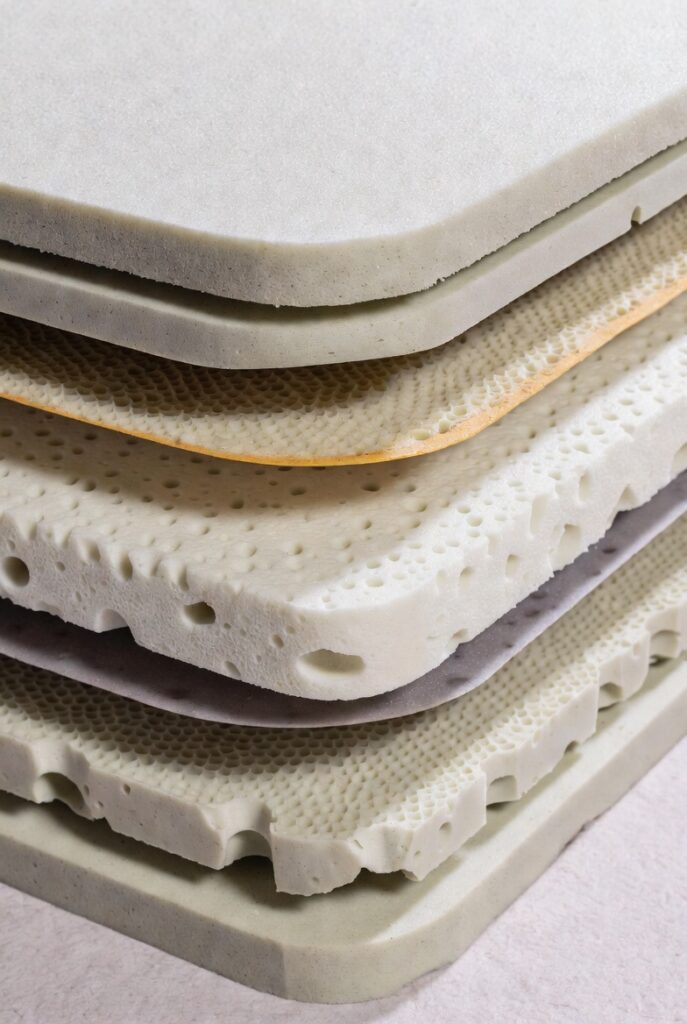
Stacked eco-friendly latex and foam mattress layers showing natural materials

Buying checklist

  1. Name your priority: deepest pressure relief and stillness (foam) or cooler, springier support with strong edges (hybrid)?
  2. Match firmness to body and position, not to reviews written by people built differently from you.
  3. Check the specs that predict wear: comfort-foam density, coil type and zoning, comfort-layer depth.
  4. Read the trial and warranty terms: length, return fees, sag depth covered, foundation requirements.
  5. Confirm your base and bedding: slat spacing, and a pillow loft that suits how far you now sink.
  6. Use the whole trial period. Most bodies need two to four weeks to adjust to a new surface before a fair verdict.
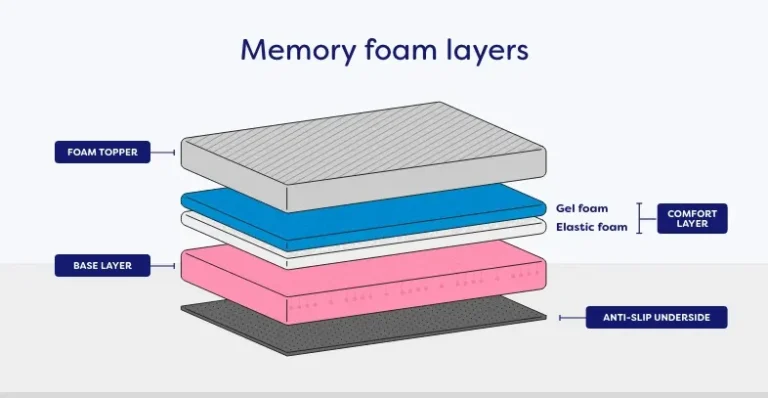
Diagram labeling memory foam mattress layers from foam topper to base

Frequently asked questions

Is memory foam or hybrid better for couples?

Memory foam wins on motion isolation and silence; hybrids win on edge support and temperature. If one partner sleeps hot and the other is a light sleeper, a hybrid with a thick foam comfort layer is the usual compromise.

Which lasts longer?

A well-built example of either type can serve for many years, and coils do resist impressions well — but the soft comfort layer fails first in both designs. Density, foam quality and warranty terms tell you more than the category label does.

Do hybrids really sleep cooler?

Generally, yes, because air moves through the coil layer. A well-ventilated foam mattress with a breathable cover can still sleep comfortably; a sealed, dense foam build is the most likely to feel warm.

Is a hybrid the same as an innerspring?

No. An innerspring has a thin comfort layer over coils, often interconnected. A hybrid uses pocketed coils plus substantial foam or latex on top, so it feels much closer to a foam bed.

Can I fix a foam mattress that sleeps hot instead of replacing it?

Often, partly. A breathable protector, cotton or linen sheets, a cooler room and a ventilated topper all help. They will not turn a heat-trapping build into a cool one, but they can make it liveable.

Which is better for heavier sleepers?

Usually a hybrid, or a foam bed with a high-density core and thicker comfort layers. Coils provide more pushback and reduce the chance of compressing straight through to the base.

The bottom line

Memory foam and hybrid mattresses are both good beds aimed at different problems. Buy foam for contouring, quiet and value; buy a hybrid for airflow, bounce, edges and support under more weight. Then let firmness, comfort-layer quality and a real sleep trial make the final call — those three decide whether you like the mattress far more than the category on the label does.

Updated September 2026.

Mattress Off-Gassing: How Long It Lasts and How to Clear It Faster

Mattress Off-Gassing

Most mattress off-gassing fades in three to seven days, and you can speed it up by unwrapping the bed in a well-ventilated room, pointing a fan across it, and leaving it bare and unslept-on for the first 24 to 48 hours. That “new mattress smell” comes from volatile organic compounds (VOCs) released by foams, glues and the plastic shipping wrap. It’s strongest with memory foam in a box and mildest with innersprings, wool and untreated cotton.

What causes mattress off-gassing

Polyurethane and memory foam are petrochemical products. Traces of leftover solvents, blowing agents and adhesives stay trapped in the foam cells, then drift out as gas once the mattress is unwrapped and expands. Compression-packing makes it worse: months of pressure inside an airtight bag means everything escapes at once when you cut the plastic.

VOCs aren’t unique to beds. Paint, new carpet, particleboard furniture and cleaning sprays all release them, which is why the EPA puts indoor VOC levels at up to ten times higher than outdoors. A new mattress just adds one more source to a room you spend eight hours a night in.

Sunlit minimalist bedroom with a bare mattress airing out by an open window

Which materials smell the most

Material What the smell is like Typical fade time
Memory foam (boxed) Sharp, chemical, plasticky 3–7 days, faint traces up to 2 weeks
Polyfoam comfort layers Milder chemical smell 2–5 days
Synthetic (Dunlop/Talalay blend) latex Rubbery, slightly sweet 2–7 days
Natural latex Vanilla-ish rubber, less harsh A few days, often lingers faintly
Innerspring with cotton or wool Faint, often just “packaging” 1–2 days

Hybrids land wherever their foam layers put them. Four inches of memory foam on top smells much like an all-foam bed; an inch of latex under a wool pad barely registers. The comfort layer matters far more than the coils underneath, and our rundown of the seven main mattress types shows what’s inside each build.

How long does mattress off-gassing last?

The strong phase is short: sharpest in the first 24 hours after unwrapping, way down by day three, close to nothing by the end of week one. A faint smell you notice only with your face against the bare foam can hang on for a month, and that’s normal.

Three things stretch it out:

  • A sealed room. With no airflow the gases just sit there, and a closed bedroom can still smell strong on day five.
  • Thick foam. A 12-inch all-foam bed holds more material than a 10-inch hybrid and takes longer to clear.
  • Early covers. A vinyl-backed protector on day one traps the gases inside the foam.

One useful detail from research: emissions climb as a mattress warms. University of Toronto researchers testing children’s mattresses in 2025 simulated a sleeping child’s body heat and weight and saw chemical emissions rise substantially. Heat is a lever you can pull either way — warm the room to flush the smell out while the bed is empty, or keep it cool if you must sleep on it tonight.

Is mattress off-gassing dangerous?

For most healthy adults it’s an annoyance, not a hazard. Short-term VOC exposure at household levels is linked to headaches, watery eyes, throat irritation, nausea and dizziness — symptoms that fade once the source is gone or the room is aired out.

Take it more seriously if:

  • Someone has asthma, chemical sensitivity or bad seasonal allergies.
  • The bed is for an infant, toddler or pregnant sleeper.
  • The bedroom is small, has one window or no real ventilation.

That same University of Toronto work, published in Environmental Science & Technology, matters most for kids’ beds: the team detected phthalates, organophosphate flame retardants and UV filters in new children’s mattresses and in bedroom air. Those are semi-volatile compounds. They don’t evaporate off like the new-foam smell, so airing out won’t fix them — that’s a materials and certification question.

New mattress unwrapped on a bed frame with windows open and a fan reducing mattress off-gassing

How to clear the smell faster, step by step

1. Pick the unboxing room before the truck arrives

A garage, spare room or covered porch beats the bedroom when the weather is dry and mild. Keep the mattress off damp concrete and out of direct sun. If the bedroom is your only option, strip the bedding first so sheets and pillows don’t soak up the odor.

2. Unwrap immediately and give it room

Cut the plastic the day it arrives and pull off every scrap, inner sleeve included. Leave a foot of clearance on all sides, and stand a boxed foam mattress on its edge for the first hour so both faces breathe. No protector, no sheets yet.

3. Set up real cross-ventilation, not just an open window

One open window moves almost no air. Open a second window or the door opposite it, then put a box fan in one window facing out to pull air through. Run it four to six hours at a stretch over the first two days. If it’s raining or freezing, aim a fan at the mattress and crack a window for 15 minutes every couple of hours.

4. Warm the room while you’re not in it

VOCs come out faster in heat. If the mattress is in an empty spare room, let it get warm — 75 to 80°F — with a fan running and a window cracked, so you’re driving the release and venting it at the same time. Don’t do this in a sealed room you’ll sleep in that night.

5. Use baking soda for odor, and know its limits

Baking soda absorbs surface odor. It won’t pull gases from the middle of a 12-inch foam core, so treat it as a finishing step, not the main fix.

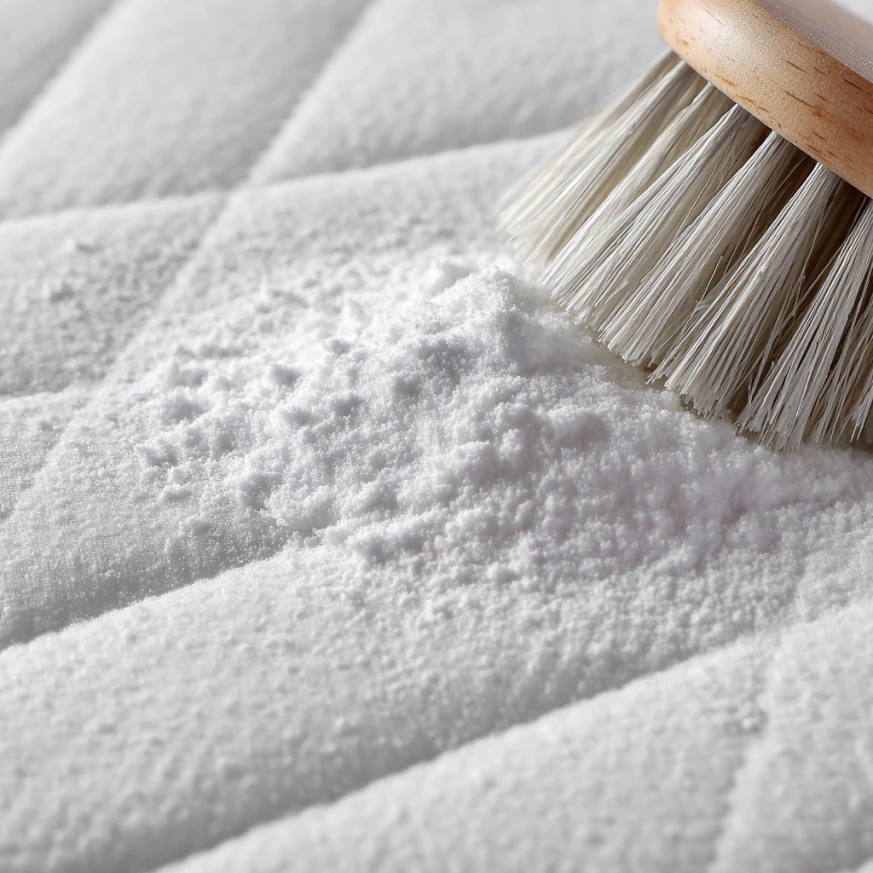
  • Sift a thin, even layer over the bare top surface — about a cup for a queen.
  • Leave it 4 to 8 hours, longer if the room is dry.
  • Vacuum it all off with an upholstery attachment, going slowly in overlapping passes.
  • Repeat once if needed. Never add water, vinegar or essential oils — moisture in foam invites mildew and can void a warranty.

Thin layer of baking soda sprinkled across a bare mattress surface before vacuuming

6. Filter the air with the right kind of filter

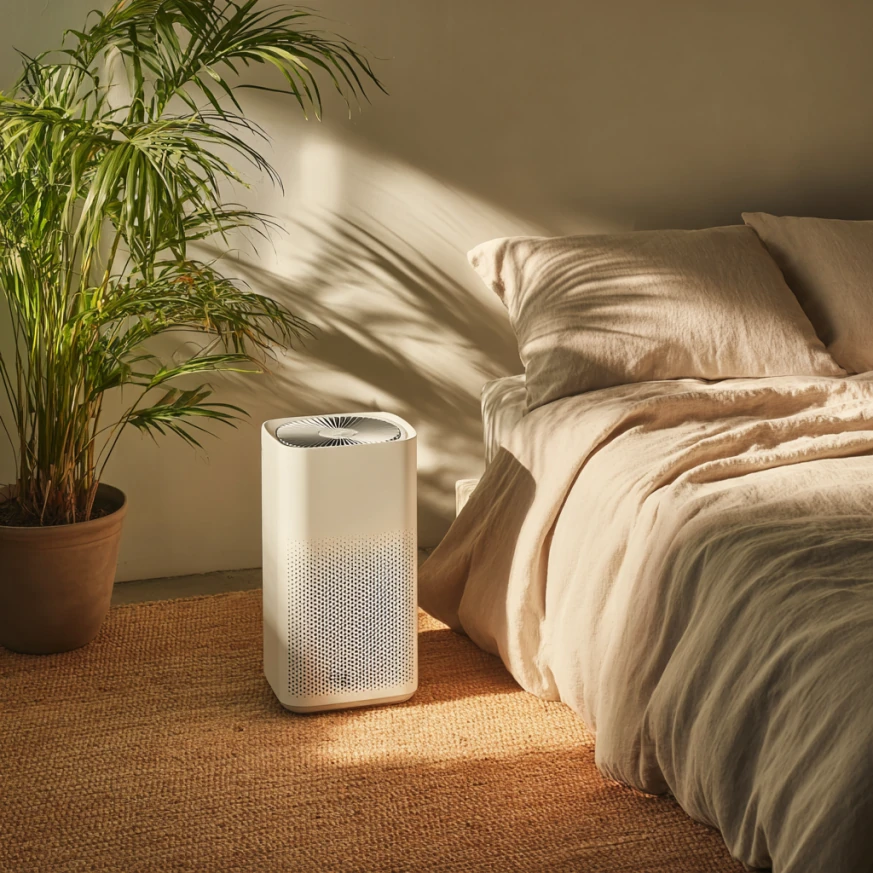
Here’s where a lot of advice goes wrong. HEPA catches particles — dust, dander, pollen. VOCs are gases and sail straight through. To capture them you need a real bed of activated carbon, not a thin carbon-dusted pre-filter. Look for a unit that lists carbon weight in pounds and covers your room size.

Houseplants don’t replace ventilation either. A 2019 Drexel University review of decades of studies found normal air exchange clears VOCs far faster than potted plants can. Keep the peace lily because you like it, not as an air-quality plan.

Air purifier with activated carbon filter running beside a new mattress in a bedroom

7. Wait to dress the bed

Sheets go on after 48 hours, once the smell is mostly gone. Only wash the mattress cover if the maker says it’s removable and washable — many aren’t. Pick a breathable cotton or Tencel protector over a vinyl one; it still handles spills without sealing the foam in plastic.

What to check before you buy a low-odor mattress

Prevention beats airing out, and certifications are the only practical way to compare — no brand will volunteer that its foam stinks.

Certification What it covers Worth knowing
CertiPUR-US Polyurethane foam only Foam is chamber-tested to ISO methods after 72 hours of conditioning, must come in under 0.5 ppm total VOCs, and is screened for certain flame retardants and heavy metals.
UL GREENGUARD Gold The finished product’s emissions Limits more than 360 VOCs and requires compliance with California Section 01350 — the stricter tier, aimed at nurseries and schools.
GOTS Organic cotton and wool content A fiber and processing standard, not an emissions test.
GOLS Organic latex content Same idea for latex; says nothing about covers or adhesives.
OEKO-TEX Standard 100 Textiles and components Screens fabrics for harmful substances; check which parts are listed.

Read the scope. “Made with CertiPUR-US certified foam” covers the foam, not the cover, adhesives or fire barrier. GREENGUARD Gold tests what the assembled mattress emits into a room.

Beyond labels, a few buying habits cut odor down:

  • Ask how it ships. Flat-packed, or roll-packed and shipped within a week of manufacture, usually smells less than one compressed in a warehouse for months.
  • Ask what the fire barrier is. Wool or a fiberglass-free rayon/silica barrier avoids sprayed treatments, and it’s worth asking about fiberglass anyway — it’s a separate headache if the cover gets unzipped.
  • Favor wool, cotton and natural latex comfort layers if anyone at home is sensitive.
  • Smell the floor model in a store when you can, especially with latex.

If you’re still narrowing down builds, our guides to choosing a mattress for your sleep style and eco-friendly sleep setups both cover material trade-offs in more detail, and timing matters too — see the best time of year to buy a mattress if you can wait for a sale window.

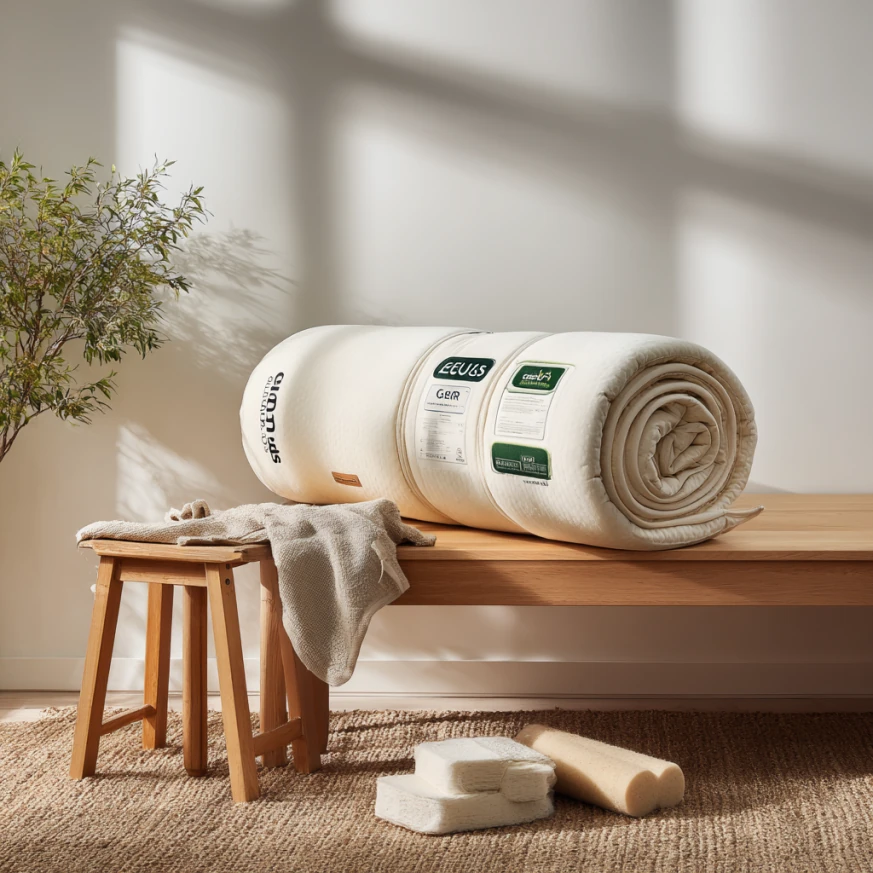
Mattress law tag and certification labels shown beside natural latex and organic cotton layers

When the smell isn’t normal off-gassing

Call the company if any of this shows up:

  • A strong odor still there after four weeks of a ventilated room.
  • A musty or sour smell rather than a chemical one, which points to moisture in the foam.
  • A fishy or burnt-plastic smell, which isn’t typical of new foam.
  • Headaches, coughing or a scratchy throat that clear when you sleep elsewhere.

Many boxed brands run sleep trials of 100 nights or more, and odor complaints inside that window are usually handled as a return or replacement. Document it early: note the delivery date, photograph the law tag, and email instead of calling so there’s a record. Persistent symptoms deserve a word with your doctor, and a strange smell in a bed you’ve had for years may just mean it’s worn out — how your mattress affects sleep quality covers the other warning signs.

Cool dark bedroom at night with a quiet fan keeping air moving over the bed

Mattress off-gassing FAQ

Can I sleep on a new mattress the same night?

Usually yes, and most people do. Give it 24 hours with a fan and an open window and that first night is far more pleasant. Anyone with asthma or a strong reaction to smells should wait the full 48 to 72 hours.

Do all mattresses off-gas?

Everything emits something, wool and cotton included. The difference is how much and how harsh: foam-heavy beds emit the most, innersprings with natural fiber padding the least.

Does an organic mattress skip this entirely?

No. Natural latex and wool smell milder and different, and organic-fiber standards limit chemical treatments, but a latex bed can still smell rubbery for a week.

Will spraying fabric refresher help?

It masks the odor and adds VOCs of its own. Skip it — airflow, time and a baking soda pass do more.

Does sunlight help?

Fresh air does the work, not UV. Direct sun yellows and degrades foam, so air it out in bright shade or indoors with a fan rather than dragging it onto the lawn.

Updated September 2026.
Best King Size Mattress: Size, Firmness and How to Buy

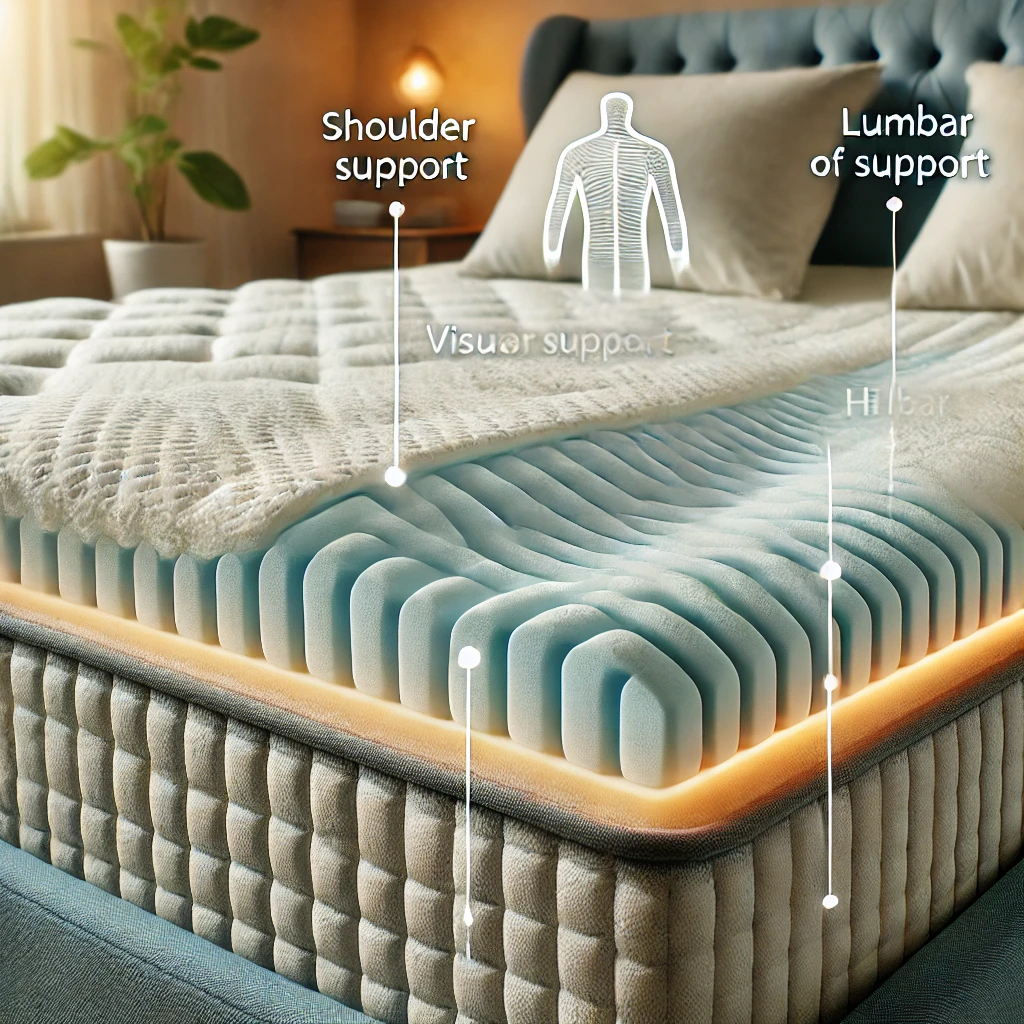
A luxurious king size mattress in a modern minimalist bedroom with soft natural light, featured in the ultimate guide to choosing the best king size mattress.

A standard king mattress measures 76 inches wide by 80 inches long (roughly 193 x 203 cm), which gives two people 38 inches each — the same personal width as a twin XL. For most couples, the best king size mattress is a medium-firm hybrid or a dense foam bed with strong motion isolation, reinforced edges and a trial of at least 100 nights. Before you buy, measure your room: a king works best with about 12 x 12 feet of floor space so you can still walk around the bed and open drawers.

Cutaway view of a king mattress showing comfort foam layers over pocketed support coils

King size mattress dimensions in inches, feet and cm

Every king mattress sold as a “standard” or “eastern” king in the US uses the same footprint. Depth is the part that varies — most beds run 10 to 14 inches thick, which matters for your sheets and for how high the bed sits once it’s on a frame.

Size Inches Feet Centimetres
Full (double) 54 x 75 4’6″ x 6’3″ 137 x 191
Queen 60 x 80 5′ x 6’8″ 152 x 203
King 76 x 80 6’4″ x 6’8″ 193 x 203
California king 72 x 84 6′ x 7′ 183 x 213
Split king (two twin XL) 2 x (38 x 80) 2 x (3’2″ x 6’8″) 2 x (97 x 203)

A few things people get wrong here. A king is 16 inches wider than a queen but exactly the same length, so it does nothing extra for tall sleepers. A California king trades four inches of width for four inches of length, which is the better pick if anyone in the bed is over about 6’2″. And a split king isn’t a separate size — it’s two twin XL mattresses side by side, which is how most adjustable bases in king size are actually built. Our full breakdown of measurements lives in the king size bed dimensions guide, and the king vs California king comparison covers which one suits which room shape.

Will a king fit your bedroom?

A king takes up about 42 square feet before you add a frame, and frames usually add two to five inches on each side. Aim for at least 24 to 30 inches of walking space on the sides and foot of the bed — less than that and you’ll be shuffling sideways past the corners every night. In a 10 x 10 foot room, a king technically fits but leaves almost nowhere for nightstands; 12 x 12 feet is the comfortable minimum, and anything larger gives you room for a bench or dresser.

Check the delivery path too, not just the bedroom. Boxed foam and most boxed hybrids arrive compressed and roll through tight stairwells easily. A traditional innerspring or a two-sided luxury bed arrives flat and won’t bend, so measure doorway widths, stair turns and any low ceiling on the landing. Split foundations (two halves instead of one 76-inch slab) solve almost every awkward staircase.

Person sitting on the reinforced edge of a king mattress without the side collapsing

How to pick the best king size mattress for your sleep style

Mattress marketing is noisy, but the decision comes down to four things: the build, the firmness, how well it handles two bodies, and how hot it runs. Start with the build.

Type How it feels Strong points Watch-outs
Memory foam Slow, sinking hug Best motion isolation; pressure relief for side sleepers Can trap heat; harder to move around on
Latex Buoyant, springy, floats you on top Durable, breathable, natural options Heavy and usually the priciest build
Innerspring Bouncy and traditional Airflow, edge strength, lower cost Thin comfort layers; motion travels across the bed
Hybrid Coils underneath, foam or latex on top Balanced support and contouring; the safest default Quality varies wildly at the cheap end

If you can’t decide, a medium-firm pocket-coil hybrid is the least risky choice for a shared king — it supports heavier hips, allows enough give for shoulders, and the individually wrapped coils cut down on partner disturbance. Our memory foam vs spring comparison goes deeper if you’re torn between a hug and a bounce.

Firmness by sleeping position and body weight

  • Side sleepers: medium to medium-soft, with enough comfort layer for the shoulder and hip to sink in while the waist stays supported.
  • Back sleepers: medium-firm, ideally with a reinforced or zoned lumbar area so your lower back doesn’t hollow out.
  • Stomach sleepers: firmer, because any deep sinkage at the hips arches the lower back.
  • Combination sleepers: medium-firm with some bounce — deep foam makes rolling over feel like work.
  • Body weight: heavier sleepers generally need a firmer, thicker build to avoid bottoming out; lighter sleepers often find the same bed feels like a board.

Firmness labels aren’t standardised between brands, so one company’s “medium” can feel like another’s “firm.” Treat the number on the box as a rough guide and lean on the trial period. There’s more detail in our guide to the best mattress firmness for a king bed.

Best king size mattress for back pain: what the research actually says

This is the most searched follow-up question, and the honest answer is that the evidence is thinner than most buying guides admit. A randomised, double-blind trial published in The Lancet found that people with chronic non-specific low back pain did better on a medium-firm mattress than on a firm one, for both pain and disability. A later evidence review hosted by the National Library of Medicine reached a similar conclusion — medium-firm mattresses may mean less pain and better sleep quality than firmer ones — while flagging real limitations in the underlying studies.

Harvard Health points to a survey of 268 people with low back pain in which those on very hard mattresses reported the poorest sleep quality, with no clear difference between medium-firm and firm.

So: skip the rock-hard “orthopedic” beds, start at medium-firm, and pay attention to support rather than plushness. Practical features that tend to help:

  • Zoned support — firmer coils or foam under the hips and lumbar area, softer at the shoulders.
  • Enough comfort layer that your shoulder can sink if you sleep on your side.
  • A supportive base. A sagging foundation or a king frame without a centre support rail will undo a good mattress fast.
  • The right pillow. Neck angle affects the whole spine, and no mattress fixes a pillow that’s too tall.

Nobody can promise a mattress will cure back pain, and persistent pain deserves a proper medical opinion rather than a shopping decision.

Couple lying comfortably on a king mattress in a bright bedroom

Sharing a king: motion, edges and split setups

The reason people move up to a king is space, but space alone won’t stop you waking up when your partner rolls over. Two features do most of that work.

Motion isolation is best in all-foam beds and in hybrids with individually pocketed coils. Interconnected innerspring units transmit movement across the whole 76 inches. Edge support matters more on a king than any other size, because when two people drift apart, you’re both sleeping near the perimeter. Reinforced perimeter coils or high-density foam rails keep the usable surface close to the full width and make sitting on the side to put shoes on far less precarious.

If you and your partner want different firmness levels, a split king lets each side be its own mattress — handy with an adjustable base, though you’ll want a mattress pad or bridging strip so the gap in the middle doesn’t become a feature. Our guide to the best mattress for couples who toss and turn covers the trade-offs.

Two sleepers on a king mattress, one turning over without disturbing the other

If you sleep hot

Heat complaints are mostly a foam problem. Dense memory foam holds body heat against you; coils, latex and open-cell or gel-infused foams let more air move. Features worth looking for, in rough order of how much difference they tend to make:

  • A coil support core (airflow beats any surface gimmick).
  • Thinner or perforated memory foam layers rather than a thick slab.
  • Breathable covers — cotton, Tencel or phase-change fabrics that feel cool to the touch.
  • A breathable foundation. A solid platform with no slat gaps traps heat under the bed.

Cooling covers feel impressive in a showroom for a few minutes and matter less over a full night, so don’t pay a big premium for the fabric alone. Bedding and room temperature do a lot of the work too, and our cooling mattress guide has the full rundown.

Close-up of gel-infused cooling foam layer in a king mattress for hot sleepers

Materials, certifications and “eco-friendly” claims

“Natural,” “green” and “non-toxic” aren’t regulated terms on a mattress label. Certifications are the only way to check that a claim means something:

  • CertiPUR-US — applies to the polyurethane foams inside a bed, covering restricted substances and low VOC emissions. The program’s own site lists what’s tested and what isn’t.
  • GOTS — organic content and processing standards for textiles such as cotton and wool.
  • GOLS — organic content standard for natural latex.
  • OEKO-TEX Standard 100 — tests finished textiles for harmful substances.
  • GREENGUARD Gold — chemical emissions testing for indoor air quality.

A certified mattress isn’t automatically comfortable, and an uncertified one isn’t automatically harmful — all mattresses sold in the US also have to meet federal flammability rules. Where natural materials genuinely earn their price is durability: quality latex and wool tend to hold up longer than cheap polyfoam, and they’re easier to break down at the end of life. If that side of the decision matters to you, start with our roundup of eco-friendly organic mattress brands.

Price, trials, warranties and delivery

King is the most expensive standard size, usually a few hundred dollars above the same model in queen. Prices move constantly with sales cycles, so we don’t publish figures that will be stale next month. What’s worth knowing before you spend:

  • Sleep trials: 90 to 365 nights is the normal range online. Check whether returns are free, whether there’s a minimum break-in period (often 21 to 30 nights), and who hauls the mattress away.
  • Warranties: ten years is standard. Read the sagging threshold — most only cover permanent impressions past a set depth, and many are voided by an unsupported frame.
  • Frame requirements: a king needs centre support with legs to the floor, and slats spaced close together for foam beds. Ignoring this is the fastest way to lose a warranty claim.
  • Delivery: boxed beds are cheap or free but you handle the unboxing, which is a two-person job in king. White-glove delivery with old mattress removal costs more and is worth it for heavy innersprings.
  • Timing: mattress prices swing with holiday sale events, so a little patience pays — see our notes on the best time of year to buy a mattress.

A note on specific models: we don’t run a test lab, and brand lineups change faster than most “best of” lists are updated — models named in older roundups are regularly discontinued or quietly reformulated. Before you buy anything you read about anywhere, confirm the exact model is still sold on the manufacturer’s own site, and cross-check hands-on impressions with independent testers rather than retailer copy.

King bed made up with layered bedding in a calm, warmly lit bedroom

Quick buying checklist

  1. Measure the room, the doorway and the stairs. Confirm 76 x 80 inches plus frame will leave you walking space.
  2. Decide king vs California king based on height, not habit.
  3. Pick a build: hybrid for balance, foam for motion isolation, latex for bounce and longevity, innerspring for budget and airflow.
  4. Start at medium-firm unless you’re a dedicated side or stomach sleeper.
  5. Check edge support and motion isolation if you share the bed.
  6. Confirm your frame has centre support before delivery day.
  7. Buy from somewhere with a real trial and a readable warranty.

FAQ

What size is a king size mattress?

76 inches wide by 80 inches long — about 6’4″ x 6’8″, or 193 x 203 cm. That’s 16 inches wider than a queen with identical length.

How wide is a king size bed with the frame?

Usually 78 to 86 inches, depending on the frame. Metal platforms add the least; upholstered and wooden frames with thick side rails add the most.

Is a king or California king bigger?

A standard king has slightly more surface area and more width. A California king is narrower but four inches longer, which suits taller sleepers and narrow rooms.

How long does a king mattress last?

Around seven to ten years for most builds, with well-made latex and high-density foam often lasting longer. Rotating it a couple of times a year and using proper centre support helps — more on that in our guide to how long a king size mattress lasts.

Can I use my old king frame with a new mattress?

Yes, if it’s a king frame in good shape with centre support and slats spaced to the new mattress’s requirements. Check the warranty wording — foam beds usually want gaps of no more than about three inches.

Do I need a box spring for a king mattress?

Only if the frame needs one. Platform beds and slatted frames support a modern foam or hybrid mattress on their own; a traditional bed frame with just side rails still needs a foundation.

Is a king mattress too big for a 10 x 12 room?

It fits, but tightly. You’ll get a walkway on one side and the foot of the bed, with little room for nightstands. A queen usually makes that room feel better to live in.

King mattress with a supportive medium-firm surface shown from the side

Updated September 2026.