Four Poster Bed History: How a Draft Shield Became a Status Symbol

he Great Bed of Ware, a historic four-poster bed displayed in a museum.

Four poster bed history begins with cold rooms and zero privacy: by the 1400s, joiners were building beds with four corner posts so curtains could hang from the frame itself instead of dangling from the ceiling. Those hangings trapped body heat, blocked drafts and dust, and screened the sleeper from the servants and relatives who often shared the chamber. The posts survived long after chimneys and central heating made them unnecessary, because by then they had become a way to show off.

Four poster bed history at a glance

Before about 1400 Curtains and a flat canopy (the tester) hang from ceiling ropes or a wall bracket. The bedstead underneath is a simple frame.
1400s Posts rise from the bed itself and carry the tester. The four-poster as we know it takes shape in wealthy European households.
1500s Massive joined oak beds with carved headboards, bulbous posts and inlay. Hangings often cost more than the woodwork.
1600s State beds go tall and fully upholstered. Posts disappear under silk, velvet and fringe.
1700s Mahogany, slim reeded or fluted posts, and plain American pencil-post beds. Lighter, cleaner lines.
1800s Iron and brass bedsteads spread, half-testers get popular, and hygiene reformers attack heavy hangings as dust traps.
1900s Central heating and fitted bedrooms push curtains out. The style fades to country houses and hotels.
Now Skinny wood or powder-coated steel frames, usually with no fabric at all. The posts are there to draw the eye.

The tester came first, the posts came second

Medieval inventories describe a “bed” as the textiles, not the woodwork. The valuable part was the set of curtains, the tester overhead, the dorsar hung behind the head, and the coverlet. Early canopies were suspended from the ceiling joists or cantilevered off the wall, which meant they could be taken down and moved with the household.

The switch to posts is the hinge point in four poster bed history, and it solved a practical problem. A frame that carried its own canopy could be set anywhere in the room, hold heavier fabric, and be assembled and knocked down with pegs and bolts. Once carpenters started making the posts decorative, the arms race was on.
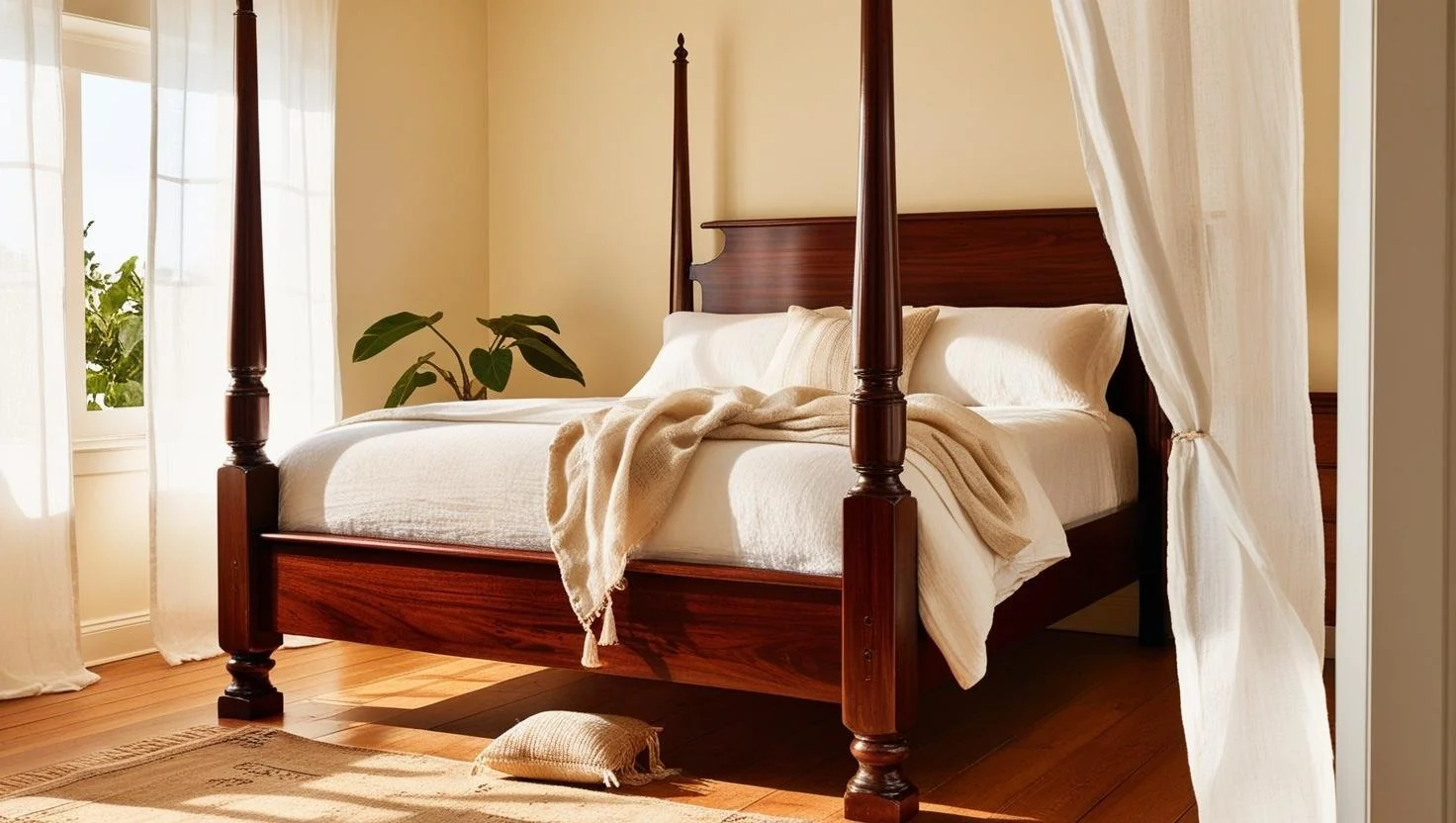
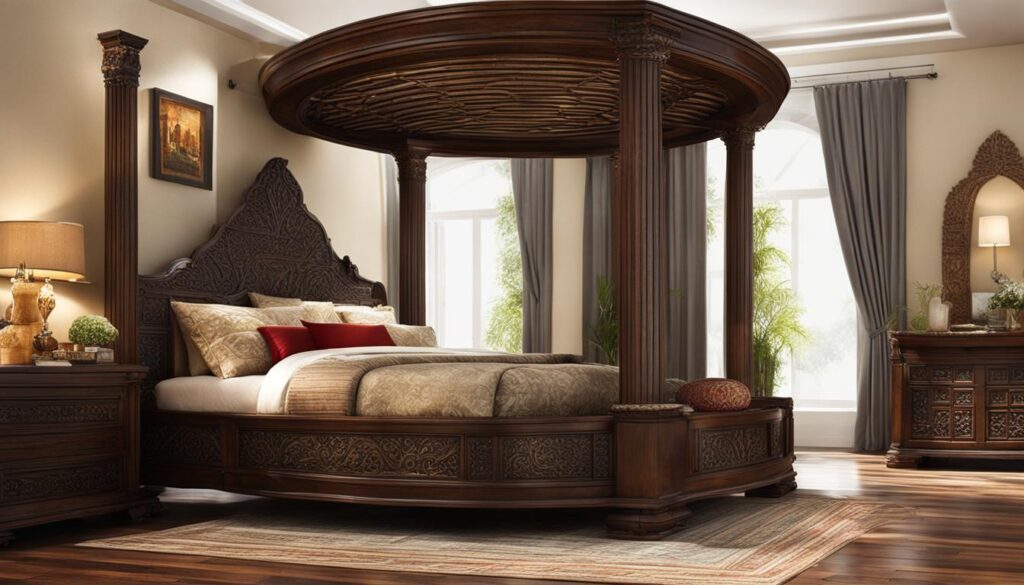
Carved oak bed with heavy drapes illustrating early four poster bed history

The Tudor showpiece years

Sixteenth-century oak beds are the ones people picture: melon-shaped posts, arcaded headboards, inlaid panels in light and dark wood. The most famous survivor is the Great Bed of Ware, an oak four-poster carved, inlaid and originally painted, made in England around 1590–1600 and now in the Victoria and Albert Museum collection. It measures about 3.26 metres (10 feet 8 inches) across, near enough twice the width of a modern king mattress, and it sleeps four couples if you believe the old stories.

It was almost certainly a marketing stunt for a Hertfordshire inn, and it worked: Shakespeare name-checked it in Twelfth Night, and playwrights kept the joke running for a century.

Beds were also serious property. Shakespeare’s 1616 will left his wife the “second best bed,” a line scholars still argue over, and the fact that a bed merited a clause at all tells you where it sat in the household inventory.

Why the curtains mattered

  • Heat. An unheated stone or timber chamber loses warmth fast. Closed wool or serge hangings turn the bed into a small insulated room.
  • Privacy. Beds sat in rooms people walked through, and servants often slept on a truckle bed underneath.
  • Dust and soot. Open fires, rush lights and thatched or beamed ceilings dropped debris. The tester caught it.
  • Status. Silk damask cost a fortune. Everyone who entered the chamber could price it at a glance.

The Victorian backlash

By the mid-1800s, cheap rolled-iron and brass bedsteads were being sold as the sanitary alternative to carved wood, on the argument that metal gave bedbugs nowhere to hide and could be scrubbed. Sanitary writers of the period pushed the same line about hangings: heavy curtains held dust and stale air, so half-testers and bare frames gained ground. That shift, plus better heating, is the reason four poster bed history has a gap in it: the full tester bed nearly disappeared from ordinary bedrooms by 1920.

What the modern four-poster kept, and what it dropped

The modern chapter of four poster bed history keeps the silhouette and throws out almost everything else. Posts are thinner, often 2 to 3 inches square instead of a carved 6-inch column. Frames come in oak, ash, walnut, rubberwood and tubular or square-section steel. Most ship with a flat top rail on all four sides and no fabric.

The old warmth argument is mostly gone, but the light argument holds up. Darkness is one of the main signals your body clock reads, and the National Institute of General Medical Sciences notes that light and dark have the biggest influence on circadian rhythms. Lined curtains on a four-poster give you a pocket of dark inside a room you can’t fully black out, which is genuinely useful in a studio, a bright city flat, or a summer bedroom with thin blinds.

If you’re weighing a canopy against an open frame, our canopy bed vs four-poster comparison lays out the structural differences in detail.
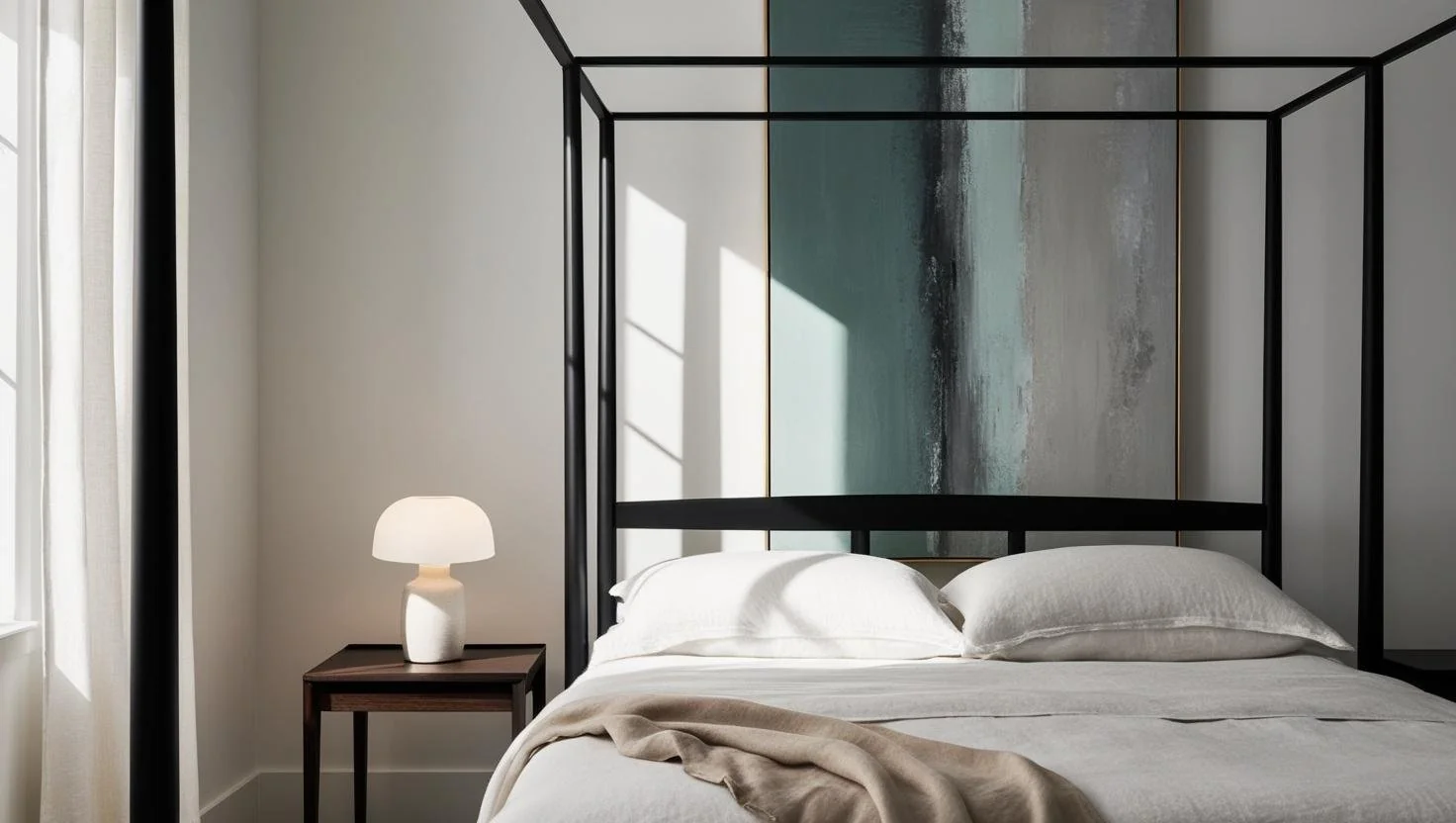
Slim modern four-poster bed frame with clean square posts and no canopy fabric

How to tell an old four-poster from a reproduction

Plenty of “antique” four-posters are Victorian or early 20th-century frames assembled from older panelling, or straight reproductions. Things worth checking before you pay antique money:

  • Saw marks. Straight, irregular pit-saw marks suggest hand sawing. Regular arcs mean a circular saw, so the timber was cut no earlier than the 1830s.
  • Shrinkage. Turned posts and pegs on genuinely old wood dry out across the grain and go slightly oval. Perfectly round sections are a flag.
  • Pegs and bolts. Hand-cut pegs usually stand slightly proud. Original bed bolts are often hand-threaded and mismatched, with a bolt cover on the outer rail.
  • Patina mismatch. Compare the colour inside the joints with the outside faces. A “marriage” of parts from different beds shows up here first.
  • Carving depth. Machine carving is uniform and shallow; hand carving wanders and undercuts.
  • Mattress size. Many pre-1900 frames were built for a mattress narrower and shorter than today’s standards. Measure the inside of the rails before you plan any bedding.

None of this is proof on its own. Two or three matching signs, plus a dealer who will put the date in writing on the receipt, is what you want.

Will one fit your room? Measure these five things

  1. Ceiling height. Modern posts usually run 70 to 90 inches tall. On a standard 96-inch ceiling, aim for at least 8 to 12 inches of air above the top rail so the bed doesn’t look jammed in.
  2. Walkway clearance. Leave 24 inches minimum on any side you use, and 30 inches if you want to make the bed comfortably. Posts eat into that space visually more than a headboard does.
  3. Mattress and rail size. A queen mattress is 60 by 80 inches and a king is 76 by 80. Check the frame’s external footprint too; posts and rails can add 3 to 6 inches on each side.
  4. Delivery route. Ask whether the posts split into two sections with a threaded dowel. A one-piece 84-inch post will not turn a tight stair landing.
  5. Light fittings. Pendant lights, ceiling fans and sloped ceilings decide the whole thing. Tape the post height on the wall and live with it for a day.

Small rooms are not automatically out. A pale, slim-posted frame with no top rail reads lighter than a bulky upholstered headboard, because you can see the wall through it. Dark, heavy posts in a small room do the opposite.
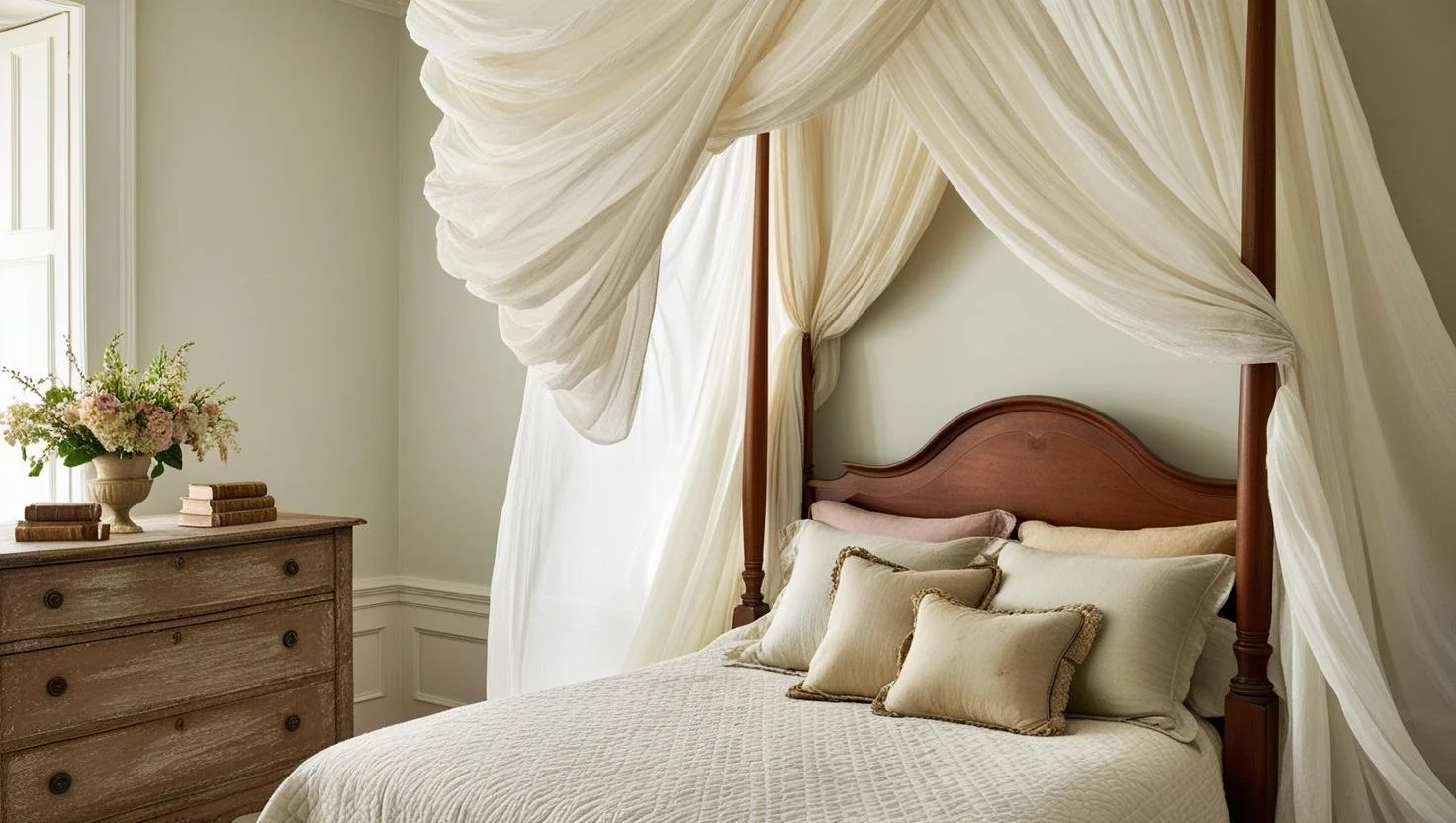
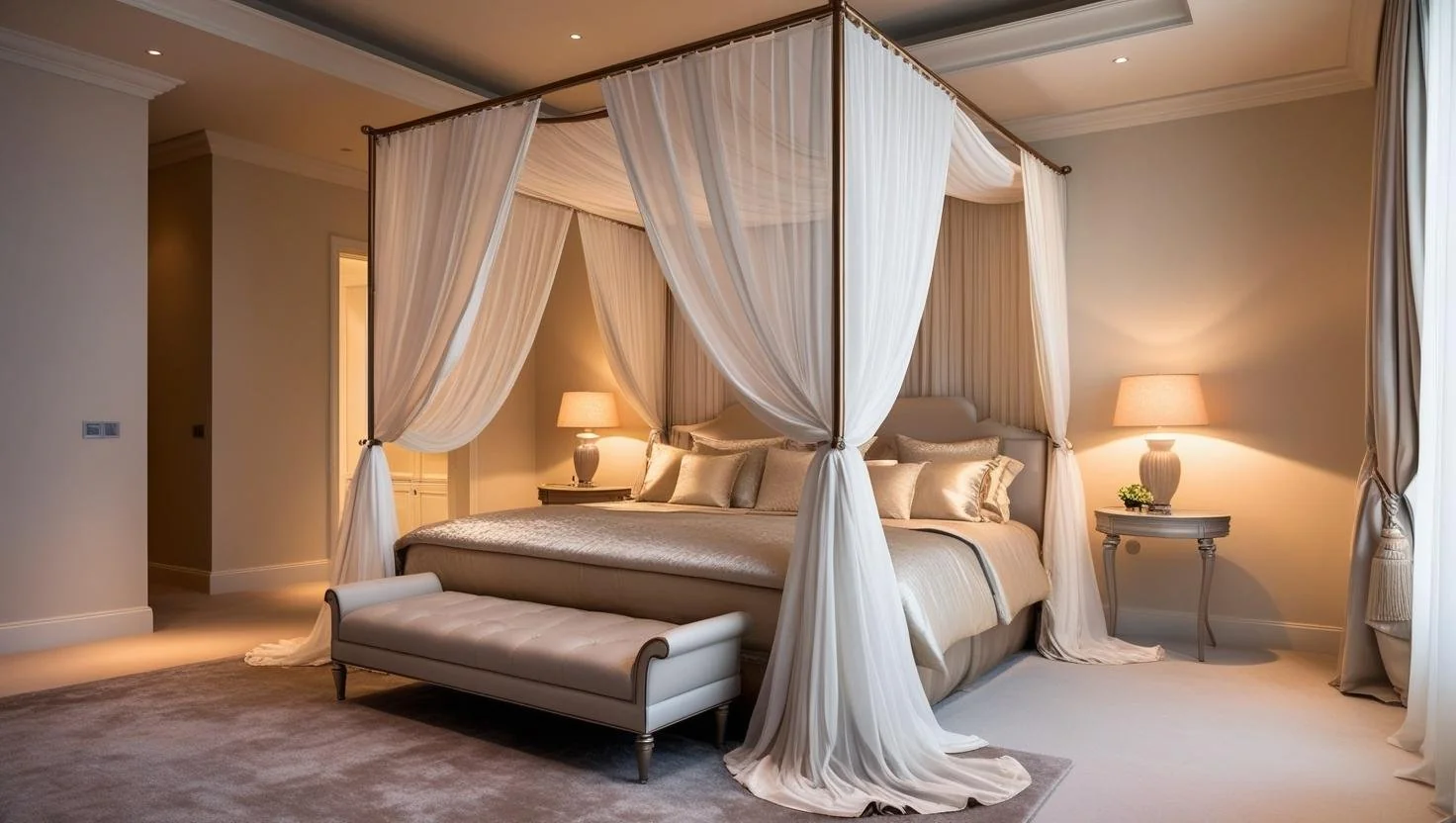
Four-poster bed dressed with light linen curtains tied back at the posts

Dressing it without going full Tudor

Fabric is where this style goes wrong fastest. A few rules that keep it wearable:

  • Sheer linen or cotton voile at the head corners only. You get the softness without the cave.
  • If you want real blackout, line just the two curtains facing the window and leave the rest sheer.
  • For gathered curtains, allow about twice the rail length in fabric width so they hang in folds rather than flat panels.
  • Wash hangings on a schedule. They collect dust exactly as the Victorians complained.

For style-by-style options and canopy hardware, see our guide to choosing a four-poster canopy bed. If you’re drawn to the period look, the longer read on four-poster beds through history goes deeper on the decorative eras.

Keeping an old frame sound

Bed bolts loosen. Check and snug them every six months, and every time you move the bed; a wobbling four-poster is almost always four loose bolts, not a broken joint. Keep indoor humidity somewhere around 40 to 50 percent if you can, since swinging humidity is what splits old rails and pops inlay.

Use paste wax on waxed antique wood, not silicone spray polish, and never oil a shellacked surface. Felt pads under the posts stop them chewing floorboards and let you slide the bed out to clean.
Traditional wooden four-poster bed with turned posts and a flat tester frame

Frequently asked questions

When was the four-poster bed invented?

Four poster bed history has no single inventor or date. Curtained beds with ceiling-hung canopies existed well before 1400; beds with four corner posts carrying their own tester became common in wealthy European homes during the 1400s and were standard for the well-off by the 1500s.

Why do antique four-poster beds look so short?

Partly because of how they were used. People slept propped on bolsters and pillows rather than flat, and the piled bedding and high side rails make the sleeping area look shorter than it is. Average adult heights were modestly lower than today, but the “everyone was tiny” explanation is overstated. Measure the rails rather than guessing.

Do four-poster beds need curtains?

No. Most modern frames are sold bare and work fine as pure architecture. Add fabric only if you want the darkness, the warmth or the enclosed feeling.

Are four-poster beds bad for small bedrooms?

Not if you keep the posts slim, the finish light and the top rails open. What kills a small room is a heavy canopy plus full-length curtains, which cuts the floor plan into a box.

Is a four-poster bed a sustainable choice?

It can be. A solid hardwood frame with bolted joints is repairable and often outlives several mattresses, which is the whole argument for buying well once. Our guide to sustainable bed frames covers certifications, glues and finishes to look for.

What happened to bed curtains?

Chimneys, then stoves, then central heating removed the reason for them, and 19th-century hygiene campaigns finished the job by branding them dust traps. The ritual side of the bedroom shifted too, as our piece on bedding rituals through history explains.

Updated September 2026.

Traditional Bed Designs Around the World by Culture

Bed Designs from Around the World

Bed Designs From Around the World Explained

Key Takeaways

  • 2026 design trends focus on cocoon-like sanctuaries with sculptural bed frames.
  • Modern canopy beds with lush drapery are making a comeback as cozy retreat spaces.
  • Storage-integrated and custom designs offer practical solutions for urban living.
  • Wellness-driven materials and designs enhance comfort and reduce allergens.
  • Incorporating global influences offers unique, personalized sleeping environments.

Carved wooden bed with draped canopy showing traditional bed designs from different cultures

Discover the fascinating world of bed designs from around the globe. Each country offers its unique take on the art of sleeping and bedroom design. From traditional to modern, cultural influences shine through in the diverse range of bed designs found internationally. Let’s delve into the world of global bed designs and explore the beauty and functionality they bring to our sleeping spaces.

The Influence of Sleep Cultures on Bed Design

Sleep cultures have a profound impact on the design of beds, reflecting the unique sleep practices, traditions, and beliefs of different societies. Understanding the cultural influences behind bed design provides valuable insights into creating an optimal sleep environment that promotes rest and well-being.

In many cultures, sleep is considered essential to overall health and balance. Traditional Chinese medicine, for example, views sleep as a means to harmonize the yin and yang energies within the body. This belief is reflected in the design of Chinese beds, which focus on providing a supportive and comfortable sleeping surface that enhances these balancing energies.

Korean culture, on the other hand, regards sleep as the best medicine for rejuvenation and healing. This emphasis on the healing power of sleep is reflected in the design of Korean beds, which prioritize comfort and relaxation to ensure a restorative sleep experience.

Sleep Culture Beliefs Influences on Bed Design
Traditional Chinese Sleep balances yin and yang energies Firm and supportive sleeping surface
Korean Sleep is the best medicine Comfortable and relaxing bed designs

Sleep cultures offer unique perspectives on the importance of rest and its impact on overall well-being. By incorporating these cultural influences into bed design, we can create sleep environments that honor and support the diverse sleep traditions and beliefs of different societies.

Japanese culture values dedication and commitment to work, even to the point where sleeping on the job is seen as a sign of hard work. This cultural belief is reflected in the design of Japanese beds, such as the traditional futon beds, which are easily foldable and storable, allowing individuals to optimize their living spaces and demonstrate their commitment to their responsibilities.

The Influence of Sleep Cultures on Bed Design

By studying and appreciating the cultural influences on bed design, we gain valuable insights into sleep practices and traditions from around the world. These insights can inspire us to create sleep environments that align with our individual needs and cultural values, promoting restful sleep and overall well-being.

The Influence of Sleep Cultures on Bed Design

Sleeping Space vs. Living Space

When it comes to bedroom design, there is a wide range of approaches when it comes to sleeping space and living space. Different cultures have their own unique perspectives on how these two areas of the home should be integrated or separated. In some countries, like Japan, sleeping and living spaces are seamlessly combined, with people sleeping on futons in the same room where they eat and entertain guests. This integrated approach allows for a more communal living experience and maximizes the use of space.

On the other hand, many Western cultures tend to separate sleeping and living spaces. In these cultures, bedrooms are seen as private sanctuaries, spaces solely dedicated to rest and relaxation. This separation provides a sense of privacy and allows individuals to create a tranquil environment away from the activities of daily life. Such division also ensures that individuals can maintain a clear distinction between work and rest, promoting a healthier work-life balance.

Ultimately, the decision between integrated sleeping and living spaces or separate areas depends on individual preferences and cultural norms. Some may prefer the social aspect of having both functions in one room, while others may prioritize creating a peaceful and dedicated space for sleep. Regardless of the approach chosen, it is important to design a space that promotes comfort, relaxation, and a good night’s sleep.

bedroom design

Bed Designs from Japan

Japan is renowned for its unique and traditional bed designs that have stood the test of time. Two of the most popular bed designs from Japan are tatami mats and futon beds. These designs offer not only a comfortable sleeping experience but also several health benefits.

tatami mats and futon beds

Tatami Mats

Tatami mats are a staple in Japanese homes and are made from rice straw. These mats are used as flooring and provide a firm and supportive sleeping surface. The natural material of tatami mats allows for good air circulation, keeping the sleeping area cool and preventing the growth of mold and mites. The texture and scent of tatami mats add a pleasant sensory experience to the sleeping environment.

Futon Beds

Futon beds, on the other hand, are roll-up mattresses that are placed directly on the tatami mats. They are made from natural fibers such as cotton or wool and provide a soft and comfortable sleeping surface. Futons are designed to be easily stored away during the day, making them ideal for small living spaces. The ability to roll up and store the futon allows for versatility in the use of the room.

Tatami Mats Futon Beds
Material Rice straw Natural fibers (cotton or wool)
Support Firm Soft
Air Circulation Good –
Storage – Roll-up and store

Both tatami mats and futon beds offer a unique sleeping experience that promotes relaxation and a connection with nature. In addition to the physical benefits, these traditional Japanese sleeping arrangements add an element of cultural authenticity and aesthetic appeal to any bedroom.

Bed Designs from China

China has a rich history of unique bed designs, and one of the most notable is the Kang stove bed. The Kang bed is a traditional Chinese bed design that incorporates a built-in fireplace, providing warmth and comfort during cold weather. It is a common feature in northern China, where winters can be harsh and temperatures plummet.

The Kang bed holds significant cultural significance in Chinese daily life. It is not just a place to sleep but also serves as a multifunctional space for work and leisure activities. Families gather around the Kang bed to bond, share meals, and engage in various traditional activities. It evokes nostalgic feelings and creates a sense of warmth and family.

Kang stove bed

The Cultural Significance of the Kang Bed

The Kang bed is more than just a piece of furniture; it represents the Chinese way of life. It symbolizes the importance of warmth, family, and togetherness in Chinese culture. The Kang bed is a testament to the resourcefulness and ingenuity of the Chinese people, who have adapted their living spaces to suit their unique needs and climate.

The Kang bed design reflects the traditional lifestyle of the Chinese people and their emphasis on warmth and comfort. It is a testament to their ingenuity in creating practical solutions that enhance their quality of life. The Kang bed is not only a functional piece of furniture but also a cultural symbol that embodies the essence of the Chinese way of life.

In the next section, we will explore another fascinating bed design from a different part of the world.

Bed Designs from India

India has a rich tradition of bed design, and one of the most popular and versatile options is the charpai bed. The charpai bed consists of a simple wooden or bamboo frame, often intricately carved, and is strung with ropes or cloth to create a comfortable sleeping surface. This traditional Indian bed design offers several benefits.

Firstly, the charpai bed is known for its versatility. It can be easily moved from indoors to outdoors, allowing individuals to enjoy the fresh air while lounging or sleeping. Additionally, the charpai bed can serve multiple purposes. During the day, it can be used as a seating area or a daybed, and at night it transforms into a comfortable sleeping space.

Another advantage of the charpai bed is its cooling effects. The design allows for excellent ventilation, keeping the user cool during hot weather. The ropes or cloth that form the sleeping surface promote airflow, preventing the buildup of heat and moisture. This makes the charpai bed a popular choice in regions with high temperatures.

“The charpai bed is not just a piece of furniture; it is a symbol of Indian culture and craftsmanship.”

The Versatility of Charpai Beds

Charpai beds are not only functional but also showcase the artistry and creativity of Indian craftsmen. The frames are often intricately carved and decorated, adding a touch of elegance to any space. The ropes or cloth can be woven in different patterns and colors, allowing for customization and personalization. With their versatility and aesthetic appeal, charpai beds have become a popular choice for those seeking a traditional Indian touch in their homes.

Advantages of Charpai Beds Disadvantages of Charpai Beds
  • Versatile, can be used as a seating area or a daybed
  • Easily movable from indoors to outdoors
  • Provides excellent ventilation and cooling effects
  • Offers a traditional and cultural touch to the bedroom
  • May not provide the same level of support as modern mattresses
  • Requires occasional maintenance and restringing
  • Not suitable for individuals with back or joint issues

Despite its advantages, it is important to note that the charpai bed may not provide the same level of support as modern mattresses. It is ideal for those who prefer a firmer sleeping surface. Additionally, the ropes or cloth may require occasional maintenance and restringing to ensure the bed remains in good condition.

In conclusion, charpai beds offer a traditional Indian bed design that is both versatile and aesthetically pleasing. Their ability to serve multiple purposes, provide ventilation and cooling, and showcase Indian craftsmanship makes them a unique and popular choice. Whether used indoors or outdoors, the charpai bed adds a touch of cultural heritage and comfort to any sleeping space.

charpai beds

Bed Designs from Latin America

Latin America is renowned for its unique and culturally significant bed designs, with hammocks being a prime example. Hammocks have a long-standing tradition in the region and are valued for their comfort, cooling properties, and cultural symbolism.

hammocks

Hammocks are not just a simple sleeping option but have deep cultural significance in Latin American countries. They are often associated with relaxation, leisure, and a sense of privacy. Hammocks offer a perfect retreat from the hot weather, providing a cool and breezy sleeping experience. The open, suspended design allows for optimal airflow, ensuring a comfortable night’s sleep.

The use of hammocks in Latin America dates back centuries, with the Maya people in Central America believed to be the originators. Throughout history, hammocks have become an integral part of everyday life in many Latin American communities, representing a connection to nature and a way of embracing simplicity.

Benefits of Hammocks in Latin American Bed Design

Hammocks offer several benefits that contribute to their popularity in Latin American bed design:

  • Comfort and Cooling: The gentle rocking motion of a hammock provides a soothing sensation, promoting relaxation and deeper sleep. The open design allows for optimal air circulation, keeping the body cool in hot climates.
  • Cultural Significance: Hammocks hold important cultural value and symbolize a laid-back lifestyle and connection with nature. They evoke a sense of tranquility and are often associated with leisure and relaxation.
  • Space-Saving Solution: Hammocks are an excellent choice for small living spaces, as they can be easily hung and stored, saving valuable floor space. They offer a versatile alternative to traditional bed frames and can be used both indoors and outdoors.

Embracing Latin American bed designs, such as hammocks, can bring a touch of cultural richness and uniqueness to your sleep environment. Whether hung indoors or outdoors, a hammock provides a comfortable and refreshing sleeping experience, allowing you to enjoy the benefits of Latin American sleep culture right in your own home.

Exploring Unique and Unconventional Bed Designs

When it comes to bed designs, there are countless options beyond the traditional. If you’re looking to make a bold statement or create a truly one-of-a-kind sleeping space, consider exploring unique and unconventional bed designs. These creative options not only offer functionality but also add a touch of personality to your bedroom.

“The only limit to creativity is your imagination.”

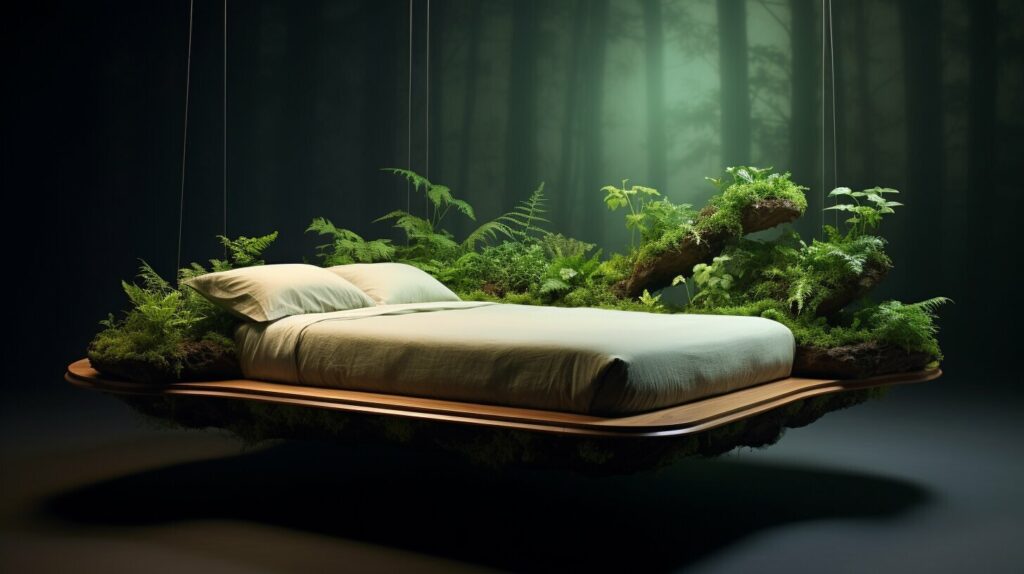
One example of an unconventional bed design is the floating bed. Suspended from the ceiling, these beds create a visually stunning illusion of floating in mid-air. Not only do they make a striking centerpiece, but they also maximize floor space and give your room a modern and sleek look.

If you’re a music lover, you might consider a sonic bed. These innovative beds come with built-in speakers that allow you to enjoy music or even experience surround sound while you sleep. Whether you’re listening to soothing melodies or your favorite playlist, a sonic bed adds an extra layer of relaxation and entertainment to your nighttime routine.

For those who crave a touch of luxury, there are bed designs that incorporate unique materials such as leather or velvet. These sumptuous materials not only create a stylish and opulent look but also provide a luxurious feel and comfort for a restful night’s sleep.

From unconventional shapes to surprising materials, the world of bed design offers a diverse range of options for those seeking something truly different. Whether you’re drawn to the sleekness of a floating bed, the immersive experience of a sonic bed, or the elegance of a leather or velvet design, there’s a unique bed out there to suit your style and preferences.

unique bed designs

Bed Design Description
Floating Bed A suspended bed that creates the illusion of floating in mid-air, maximizing floor space and providing a sleek and modern look.
Sonic Bed A bed with built-in speakers for a surround sound experience, allowing you to listen to music or enjoy soothing sounds while you sleep.
Luxury Bed A bed made from unique materials such as leather or velvet, providing a stylish and opulent look for a touch of luxury.

Benefits of Unique Bed Designs

  • Personalize Your Space: Unique bed designs allow you to express your personality and create a space that reflects your individual style.
  • Create a Focal Point: Unconventional beds make a bold statement and serve as a centerpiece in your bedroom, adding visual interest to the space.
  • Add Functionality: Some unique bed designs, like floating beds, maximize floor space and provide additional storage options, making them both stylish and practical.

Whether you’re looking for a conversation starter or a design that fits your specific needs, exploring unique and unconventional bed designs opens up a world of possibilities. Let your imagination run wild and discover the perfect bed that goes beyond the ordinary.

Conclusion

In conclusion, exploring bed designs from around the world offers a unique opportunity to incorporate global influences into your own sleeping space. By embracing different traditions and styles, you can create a personalized and culturally diverse environment that enhances your comfort and well-being.

From the traditional tatami mats and futon beds of Japan to the warmth and comfort of Kang stove beds in China, each culture’s bed designs bring their own unique benefits and cultural significance. By incorporating these designs into your own home, you can experience the practicality, versatility, and comfort that they offer.

However, don’t limit yourself to just traditional designs. The world of bed design is filled with creative and unconventional options, such as floating beds and sonic beds, that allow you to express your own personality and preferences. These unique bed designs provide a blend of functionality and style, making your sleeping space truly one-of-a-kind.

So, whether you choose to embrace the traditional or explore the unconventional, the key is to find inspiration from different sleep cultures and bed designs. By doing so, you can create a sleeping space that not only reflects your individuality but also enhances your comfort and well-being night after night.

FAQ

What are some examples of traditional bed designs from around the world?

Some examples of traditional bed designs include tatami mats and futon beds from Japan, Kang stove beds from China, charpai beds from India, and hammocks from Latin America.

What cultural influences shape bed design?

Sleep cultures play a significant role in shaping bed design. Different cultures have unique beliefs and practices surrounding sleep, which influence the design and functionality of beds.

How do sleep cultures vary across different countries?

Sleep cultures vary across countries in terms of the integration of sleeping and living spaces, the importance placed on rest, and the design elements that prioritize comfort and well-being.

What are the health benefits of traditional Japanese bed designs?

Tatami mats provide a firm and supportive sleeping surface, while futon beds offer flexibility and are ideal for small spaces. Both designs are known for their unique health benefits.

What is the significance of Kang beds in Chinese culture?

Kang beds are deeply rooted in Chinese daily life, symbolizing both work and leisure activities. They evoke a sense of nostalgia, warmth, and family connections.

How versatile are charpai beds from India?

Charpai beds are simple wooden frames strung with ropes or cloth. They can be moved from indoors to outdoors and used as daybeds or lounge chairs, showcasing their versatility.

What is the cultural significance of hammocks in Latin America?

Hammocks have a long history in Latin American culture and are associated with comfort and cooling. They provide a sense of privacy and relaxation and continue to be an important part of sleep culture in many Latin American countries.

What are some unique and unconventional bed designs to explore?

Some unique and unconventional bed designs include floating beds, magnetic floating beds, and sonic beds with built-in speakers. These designs offer a blend of functionality and style, allowing individuals to express their personality and preferences through their choice of bed design.

How can incorporating global bed designs enhance our sleeping spaces?

Incorporating global bed designs into our own homes allows us to embrace different traditions and create unique, personalized sleeping spaces. By learning from various sleep cultures and exploring unconventional bed designs, we can find inspiration to enhance our comfort and well-being.

Source Links

About the Author

Joseph Rett is the founder of Cozy Bed Quarters, a Phoenix-based sleep and bedding resource. With years of experience researching sleep science and bedding products, Joseph helps people create comfortable, sustainable sleep spaces. Living in Arizona’s desert climate has given him unique insights into temperature-regulating bedding and cooling sleep solutions.