A bookcase storage bed is a bed frame with shelving built into the headboard, usually combined with storage in the base — drawers, cubbies, or a lift-up platform. It works best when you need a nightstand, a bookshelf, and extra drawer space but only have room for one piece of furniture. The trade-offs are a longer overall footprint (the shelf headboard adds depth), heavier assembly, and the need to measure clearances carefully before you buy.
Key takeaways
- The headboard holds books, lamps, glasses, and chargers, so you can usually skip nightstands entirely.
- Base storage comes in three main forms: side drawers, a captain’s-style bank of drawers, or a gas-lift platform that opens to one large compartment.
- Measure twice: shelf headboards add roughly 8–14 inches to total bed length, and drawers need floor clearance to open fully.
- Tall shelf units and loft versions carry real safety requirements — anchoring and guardrails — especially in kids’ rooms.
- Most models are platform beds, so you use the mattress alone without a box spring. Always confirm the frame’s weight rating.
What a bookcase storage bed actually is
Think of it as two ideas bolted together. The first is the bookcase headboard: open shelves, sometimes cubbies or small cabinet doors, built into the vertical panel behind your pillows. The second is storage underneath the mattress, which is where the designs diverge most.
Because both halves are structural, the bed usually replaces two or three other pieces of furniture — a nightstand or two, a small bookcase, and sometimes a dresser. That consolidation is the entire point, and it matters most in rooms under about 120 square feet, studios, dorms, and shared kids’ rooms. If your storage problem is mainly closet space rather than surface clutter, a simple frame plus our guide to bed risers for under-bed storage may solve it for far less money.
The main types, compared
Match the base storage to how you actually use things: drawers for items you touch weekly, lift-up compartments for bulk you touch twice a year, open shelves for what you want visible.
| Type |
Storage style |
Best for |
Watch out for |
| Classic bookcase headboard + slat base |
Headboard shelves only |
Readers, small rooms, rentals |
No hidden storage; shelves show clutter |
| Bookcase bed with side drawers |
Two to four pull-out drawers |
Clothes, linens, everyday items |
Needs open floor beside the bed |
| Captain’s bed |
Deep drawer bank across the base |
Rooms with no dresser space |
Heavy, hard to move, higher sleep surface |
| Gas-lift (ottoman) platform |
One large compartment under the mattress |
Duvets, luggage, seasonal bedding |
Needs headroom and foot clearance to open |
| Loft bed with bookcase |
Shelves plus a desk or bins below |
Dorms, teens, home-office corners |
Guardrail and ceiling-height rules apply |
| Wall bed with flanking bookcases |
Shelving towers each side, bed folds away |
Studios and multipurpose rooms |
Usually wall-anchored; often pro installation |
Prices swing widely by material, size, and retailer, so we don’t publish figures here that would be out of date within a season. As a rule of thumb, mechanisms cost money: gas-lift and fold-away wall beds sit at the top of the range, plain slat-base models at the bottom. For the fold-away route specifically, see our guide to a bed that folds into the wall, and for a broader look at base options, our overview of platform and storage beds.
Measure before you fall in love with a photo
This is where bookcase beds go wrong most often. A shelf headboard is not a flat panel — it has depth, and that depth is added to the mattress length.
- Total length. Take the mattress length and add the headboard depth (commonly 8–14 inches) plus any footboard. Check the result against your wall, not the mattress size alone.
- Drawer pull-out. Allow roughly 24–30 inches of clear floor on the drawer side so the drawer opens fully and you can stand in front of it. Thick rugs, radiators, and door swings are the usual culprits.
- Gas-lift clearance. The mattress pivots upward, so you need headroom above the bed and space at the foot or side, depending on which way the platform hinges.
- Delivery route. These frames arrive in large, heavy cartons. Measure stairwells, landings, and doorways.
- Room layout. Keep a walkway of at least a couple of feet on the side you get in and out. Our full size bed dimensions guide has worked examples of how mattress sizes sit in small rooms.
Safety: the part most buying guides skip
A bookcase headboard is a tall, loaded storage unit sitting in a room where children often play. The U.S. Consumer Product Safety Commission’s Anchor It! campaign urges households to anchor furniture such as bookcases and dressers securely to the wall. If your bed’s headboard is a freestanding tall shelf unit, or if you pair the bed with matching bookcase towers, use the supplied anti-tip hardware and fix them to wall studs.
Loft versions fall under a federal standard. Under 16 CFR Part 1213, a bed counts as a bunk bed when the underside of the foundation sits more than 30 inches from the floor, and such beds must have at least two guardrails, one on each side. That rule exists because children can become trapped between the bunk and the wall or in gaps below guardrails. If you’re buying a loft-style bookcase bed for a child, treat guardrails and gap sizes as non-negotiable rather than optional extras.
For gas-lift frames, follow the manufacturer’s instructions for the first lift, keep hands clear of the hinge path, and never let children operate the mechanism. Gas struts weaken over time; if the platform stops holding itself open, stop using it until the struts are replaced.
Sturdy wood plus practical storage — ideal for high-traffic family bedrooms.
Materials and build quality
Most beds in this category are built from engineered panels with a veneer or laminate, not solid timber, and that’s not automatically a problem — panel products are dimensionally stable and keep the price down. What matters is where the manufacturer spends the money.
- Drawer hardware. Full-extension metal slides beat plastic runners or bare wood channels by a wide margin. If the listing doesn’t mention slides at all, assume they’re basic.
- Drawer construction. Solid sides and a captured bottom panel outlast stapled boxes with a thin hardboard base, especially when the drawer holds heavy folded clothes.
- Base support. Wide, closely spaced slats or a solid deck protect the mattress and the warranty. Many mattress warranties specify a maximum slat gap.
- Shelf depth and adjustability. Shelves under about 7 inches deep won’t hold most hardbacks upright. Adjustable shelves are worth paying for.
- Emissions. Composite wood products sold in the U.S. — including finished goods containing hardwood plywood, MDF, or particleboard — must be labeled as compliant with the EPA’s formaldehyde standard. The agency explains the requirement on its TSCA Title VI page. Look for that label, and ventilate the room well for the first few days after assembly.
We don’t run product tests, so we don’t publish “best model” rankings. Check current retailer listings for weight ratings, slat spacing, and warranty length — those three specs tell you more than any star rating.
Mattress compatibility
Nearly all bookcase storage beds are platform designs: the mattress sits directly on slats or a deck, with no box spring. That’s fine for foam, hybrid, and most innerspring mattresses, but three details deserve a check \u2014 loose slats are also a common cause of a squeaky bed frame.
First, weight rating — a heavy hybrid plus two adults can approach the limit on lightweight frames. Second, mattress height on loft and captain’s models: a thick mattress reduces the effective guardrail height, which matters for children. Third, airflow — foam mattresses on a fully enclosed drawer deck get less ventilation than on open slats, so air the bed out periodically and avoid storing damp items underneath. If you’re sizing up, our guide to the best king-size bed frames with storage covers the support issues that come with larger frames.
Storing things well once it’s in
The bed only helps if the storage stays usable. A few habits do most of the work.
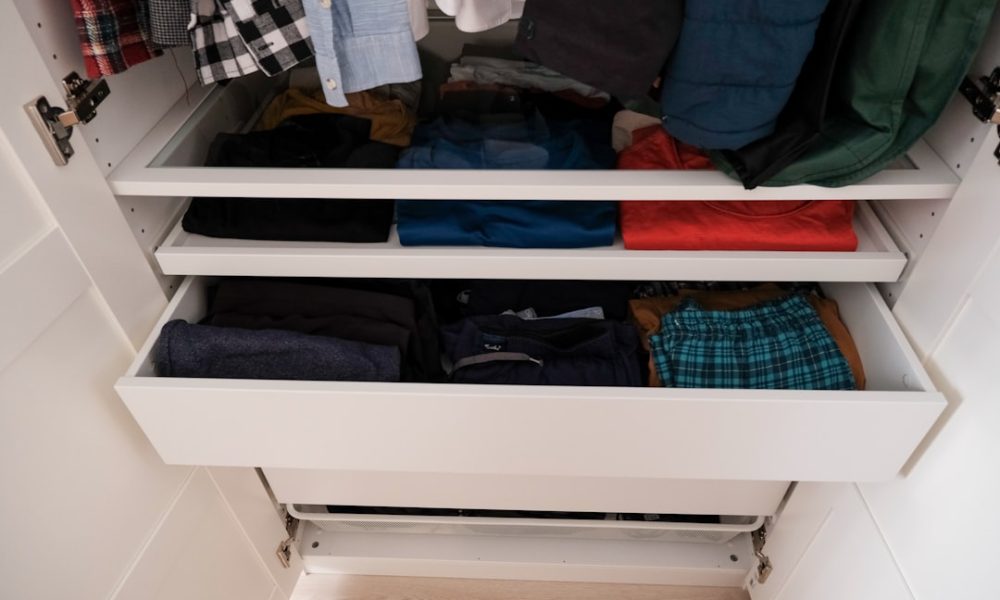
- Put daily items in the top or nearest drawer, seasonal bulk in the lift-up compartment or the deepest drawer.
- Use shallow bins or fabric boxes inside deep compartments so things don’t migrate to the back and disappear.
- Limit each headboard cubby to a few objects. Open shelves read as clutter fast, and a bookcase headboard is at eye level from the doorway.
- Avoid storing anything damp, and don’t use under-bed compartments for items that need airflow.
- Vacuum drawer tracks and tighten bolts once or twice a year; loose hardware is the main reason storage beds start to creak.
For ideas that pair well with a storage bed — vertical wall storage, door-back systems, closet substitutes — see our storage ideas for small bedrooms with no closets and our roundup of hidden storage bed ideas.
Who each version suits
- Readers and students: a classic shelf headboard with a slat base. Cheapest, lightest, easiest to move.
- Families with limited closets: a captain’s bed, which can genuinely replace a dresser.
- Couples storing bulky bedding: a gas-lift platform, provided you have the headroom and don’t mind lifting the mattress to reach anything.
- Studio dwellers: a wall bed with bookcase towers, or a loft with a desk below.
- Kids’ rooms: low-profile frames with rounded edges, anchored shelving, and — if elevated — proper guardrails.

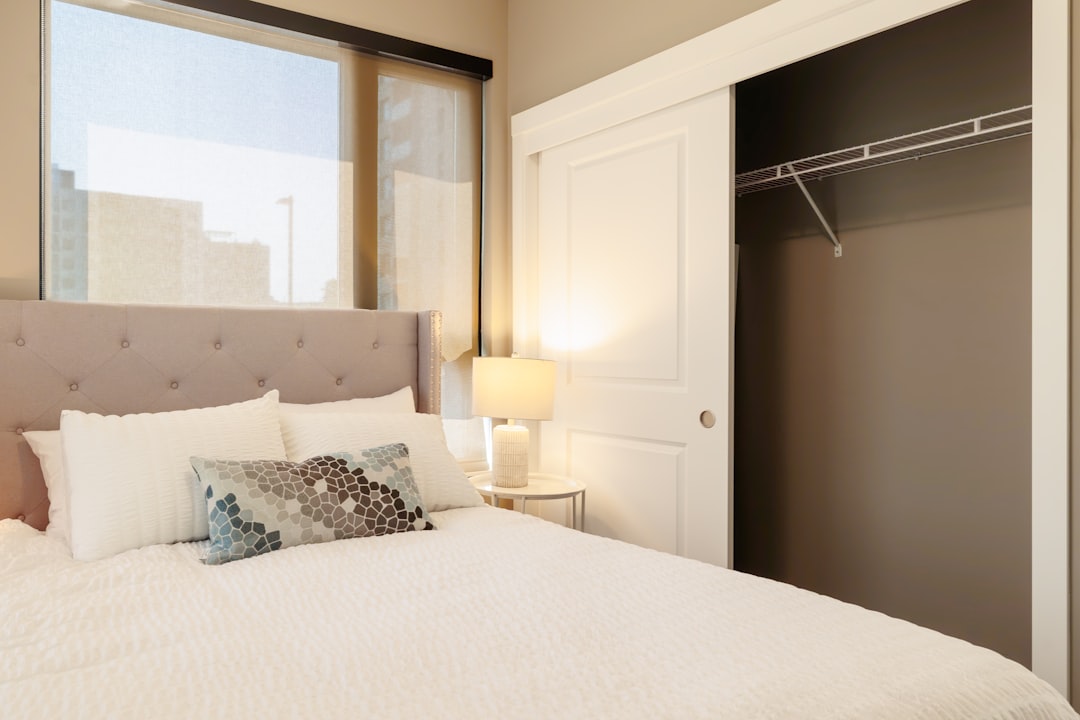
Make a mini office under the loft and keep the floor clear.
Drawbacks worth knowing
Bookcase storage beds are heavier and slower to assemble than plain frames, which makes them awkward for renters who move often. The headboard pushes the bed further into the room. Drawer models can’t sit flush against a wall on the drawer side. Gas-lift models make everything underneath an all-or-nothing retrieval job. And on cheaper builds, the mechanism or the drawer slides — not the frame — are usually what fails first.
FAQ
Do I still need nightstands?
Usually not. The headboard shelves hold books, a glass of water, glasses, and a charger. Some people add a small floating shelf on the wall if the headboard cubbies are shallow.
Does a bookcase storage bed need a box spring?
Almost never. These are platform beds designed for a mattress placed directly on slats or a deck. Check the manual, since adding a box spring can raise the sleep surface uncomfortably high and may void the frame warranty.
Drawers or a gas lift — which holds more?
A gas-lift platform holds more total volume because it’s one uninterrupted compartment. Drawers hold less but are far easier to access daily. If you want both, look at frames that combine side drawers with a lift-up centre section.
Is engineered wood strong enough?
Well-made engineered wood frames hold up fine for normal use. Judge by the slat spacing, the stated weight rating, and the drawer hardware rather than by the material name alone.
Are these beds safe for young children?
They can be, with precautions: anchor tall shelving to the wall, keep heavy objects off high shelves, and if the sleep surface is elevated more than 30 inches, make sure the bed meets the federal bunk bed guardrail requirements.
Can I fit one in a very small room?
Often yes, but choose headboard-only storage or a lift-up base rather than side drawers, since drawers need clear floor space to open. Measuring the walkway is the deciding factor, not the mattress size.
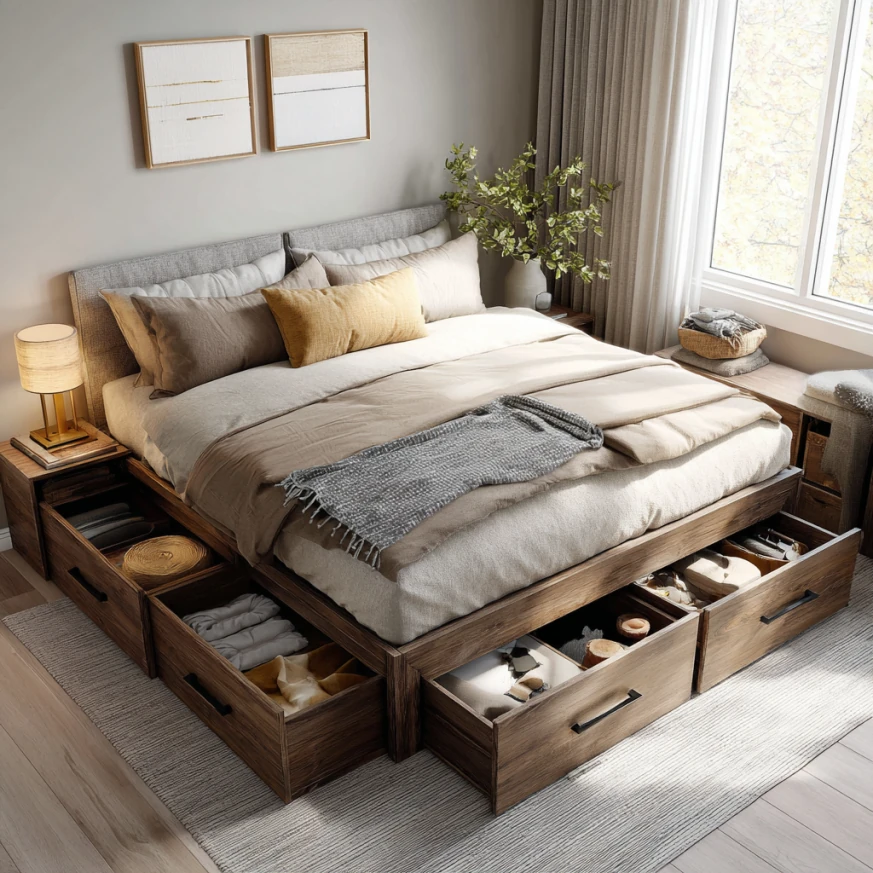
At-a-glance: drawers for daily items, gas lift for bulk storage, bookcase headboards for display.
The short version
Buy a bookcase storage bed when you want one piece of furniture to do the job of three, and when you’ve confirmed the room can take the extra length and the drawer clearance. Prioritise slat quality, drawer slides, weight rating, and anti-tip hardware over finishes and built-in lighting. Everything else is styling.
Updated September 2026.