Bed That Folds Into the Wall: Sizes, Clearances and Safe Installation

Modern studio with a Bed That Folds Into the Wall, featuring a minimalist setup and space-saving furniture.

A bed that folds into the wall — the Murphy bed — stores a full mattress upright inside a cabinet so you get your floor back during the day. Plan on about 83 inches of ceiling height for a twin or full and roughly 88 to 91 inches for a queen if the bed folds down vertically, a mattress no thicker than 12 inches, and a cabinet that sits 16 to 18 inches proud of the wall when closed. The part people skip is anchoring: these units have to be screwed into framing, not drywall plugs.

What a bed that folds into the wall actually is

The bed frame is hinged at the head (vertical) or along one side (horizontal), counterbalanced by springs or gas pistons, and hidden in a cabinet when it’s up. The mattress stays strapped to the frame. You don’t strip the bed every morning — you tuck the duvet in, lift, and walk away.

Three broad types are sold:

  • Hardware kit only. You buy the lift mechanism and frame and build the surrounding cabinet yourself from plywood or a flat-pack carcass. Cheapest route, most work.
  • Freestanding cabinet unit. Arrives as panels, assembles in the room, still gets anchored to the wall. Most common for renters and DIYers.
  • Built-in / custom millwork. Fitted into an alcove or wall of cabinetry, often with side towers, shelving or a fold-down desk. Priciest, best fit.

The concept is over a century old. William Lawrence Murphy worked on counterbalanced fold-away beds in San Francisco in the early 1900s and received patents including a “Disappearing Bed” in 1912. The mechanism hasn’t changed in principle; the cabinetry and lift hardware have.

How much room you need for a bed that folds into the wall

Measure three things before you fall in love with a unit: ceiling height, wall width, and how far the bed projects into the room when open.

Measurement Vertical (folds down from head) Horizontal (folds down sideways)
Ceiling height needed About 83 in. for twin/full; 88–91 in. for queen Works under 7-ft ceilings and sloped attic rooms
Wall width needed Roughly mattress width plus cabinet sides (about 47 in. for a twin) Roughly mattress length plus sides — about 80 in. or more
Floor projection when open Close to mattress length (75–80 in.) Close to mattress width (about 54–60 in.)
Closed cabinet depth Typically 16–18 in., deeper with a thick mattress or integrated shelving

Those are typical ranges — every maker publishes its own spec sheet, and a 2-inch difference decides whether the door clears the ceiling fan. Add at least 24 inches of walking room along one long side so the open bed doesn’t trap you in a corner.

Mark it out on the floor first

Painter’s tape is free. Tape the open footprint on the floor, then live with it for a couple of days. Open the closet door. Pull out the desk chair. Walk to the window. If you’re stepping over the tape line ten times a day, size down or go horizontal.

Check what’s inside and around the wall

  • Studs. Find them before you buy. A stud finder plus a small test screw tells you spacing (usually 16 in. on center).
  • Outlets and switches. The cabinet will bury anything behind it. Plan a surface-mounted outlet in a side tower or have an electrician relocate the box.
  • Baseboard. Most units want the baseboard cut back or a filler strip added so the cabinet sits flush.
  • Floor type. Thick carpet and pile can stop a bed leg from closing flat. Some kits are floor-mounted instead of wall-mounted; that shifts the load to the floor plate and still needs anti-tip hardware.
  • Radiators, vents, sloped ceilings. All decide vertical versus horizontal faster than aesthetics will.

Lift mechanisms: springs vs gas pistons

Spring systems use steel tension springs and have been around since the original patents. They’re adjustable — you add or subtract springs to match your mattress weight, and a tired spring is a cheap replacement part.

Gas piston systems work like a hatchback strut: sealed nitrogen cylinders that make the bed feel weightless and quiet. They’re tidier and need no tuning, but pistons lose pressure eventually and come as a matched pair to replace.

Either is fine. What matters more is whether you can buy replacement hardware in five years, and whether the mechanism has a safety catch that holds the bed closed. Ask that question before you ask about finishes.

The mattress rules nobody mentions until it’s too late

  • Thickness cap. Most wall beds are built around a 12-inch maximum. Some DIY kits cap at 11 inches. A pillow-top that’s 15 inches won’t let the cabinet close.
  • No box spring. The platform is the foundation. You buy the mattress alone.
  • Weight matters. The lift is balanced for a weight range. A dense latex queen can exceed it and make the bed hard to lift or prone to sagging open.
  • Some types are excluded. Adjustable bases, air beds and certain latex mattresses aren’t compatible with most wall bed frames — check the maker’s list.
  • Straps are not optional. The supplied straps hold the mattress to the frame during the lift. Use them every time.

Foam and hybrid mattresses in the 8–11 inch range are the sweet spot. If you’re still narrowing it down, our guide to choosing a mattress covers firmness and materials in more depth.

Installation and safety: the part that deserves your attention

A wall bed is a heavy cabinet that swings. Done right, it’s stable for decades. Done wrong, it’s genuinely dangerous — in April 2022 the U.S. Consumer Product Safety Commission announced a recall of roughly 129,000 Bestar wall beds because the beds could detach from the wall and fall on people; one adult death and dozens of injuries were reported (CPSC recall notice).

Practical takeaways:

  1. Hit real studs. Drywall anchors are weakest against a straight pull-out force, which is exactly what a wall bed applies. CPSC’s furniture anchoring guidance is the standard to follow (Anchor It!). Plaster or masonry walls need the right fastener for that substrate — ask an installer.
  2. Use the supplied hardware. Not “similar” screws from the garage. Length and gauge are specified for a reason.
  3. Two people, minimum. Springs and pistons are under load during assembly. Several makers require professional install to keep the warranty valid.
  4. Register the product. It’s how you hear about a recall. Also worth checking the CPSC recall database for any unit you buy secondhand.
  5. Re-check the fasteners. Once a year, put a screwdriver on every mounting screw and confirm the safety latch still catches.
  6. Kids and pets. Teach the rule that only adults operate it, and keep the area clear when lowering.

What drives the price

Costs vary too much by region and material to quote a number that stays true, but the levers are consistent: hardware-kit-plus-your-own-cabinet sits at the bottom, flat-pack laminate units in the middle, and solid wood or custom built-ins with side towers, LED strips and a desk fold at the top. Add delivery for a heavy, oversized carton and professional installation if the warranty requires it. Electrical work and baseboard modification are separate line items people forget.

Wall bed vs the alternatives

Option Best for Trade-off
Bed that folds into the wall Nightly use in a dual-purpose room Permanent install, wall damage on removal, highest cost
Sofa bed Rooms that need seating all day Thinner mattress, bulky frame, heavier to open
Folding cot or portable frame Occasional guests, storage in a closet Narrow, less supportive, not a nightly bed
Storage platform bed When the bed can stay up permanently Keeps the full footprint all day

If a permanent cabinet feels like too much commitment, compare it with a foldable bed frame or the lower-cost picks in our roundup of space-saving bed frames.

Living with one day to day

The honest annoyances: you can’t pile books and a laptop on the bed and walk away, because the bed has to be clear to close. Fitted sheets with deep pockets and a lightweight duvet work best — heavy quilts bunch at the fold. Bedside surfaces have to be wall-mounted or on the side towers, since the open bed covers the floor where a nightstand would go.

The upside is real, though. A guest room becomes a working office five days a week. A studio stops feeling like a bedroom with a sofa in it. Pair it with vertical storage instead of floor furniture — our small bedroom storage solutions cover the shelving and closet tricks that keep the reclaimed floor space clear.

Common questions

Is it comfortable enough for every night? Yes, because comfort comes from the mattress, and you’re choosing a normal one within the thickness limit. The frame is a flat slat or platform deck.

Will it wreck the wall? Removal leaves screw holes and possibly cut baseboard. Patchable, but not zero-trace — get a landlord’s written okay before drilling.

Can you leave the bedding made? Straps hold the mattress, sheets and duvet in place. Pillows usually go on a shelf or inside a side cabinet.

Does it add resale value? It can make a small room read as flexible to buyers, but it’s a taste-specific built-in. Treat it as a livability upgrade for you, not a guaranteed return.

For a broader look at how other countries solve the small-space sleeping problem — tatami, box beds, alcove sleeping — see bed designs from around the world.

Neutral living room with a sofa in front of a closed cabinet holding a bed that folds into the wall

Updated September 2026.

Best Rollaway Bed Picks: Sizes, Mattress Thickness and What Holds Up for Guests

Best rollaway bed set up with folding frame and mattress in a guest space

A rollaway bed is a folding steel frame on casters with a thin mattress attached, and it comes in three practical widths: cot width at about 30–31 in (76–79 cm), twin width at 38–39 in (97–99 cm), and true full at 54 in (137 cm) — nearly all of them 74–75 in (188–191 cm) long. Folded, a typical one parks upright in a footprint around 40 in wide by 17 in deep (102 × 43 cm) and roughly 49 in tall (125 cm), or lies flat at about 33 × 31 × 13 in (84 × 79 × 33 cm) on cot-width models. Weight capacity is the number that separates a bed your brother-in-law can sleep on from one that folds in the middle: budget frames are often rated near 265 lb (120 kg), while commercial-grade steel models list 440–500 lb (200–227 kg).

If you only remember one thing: measure the closet or gap where it will live before you shop, not after the box arrives.

Rollaway bed sizes and folded dimensions

Tidy guest bedroom with white bedding and folded blankets where a rollaway bed can be set up for visitors

Manufacturers publish two sets of numbers and people buy the wrong bed by reading only one. Open dimensions tell you whether it fits the floor. Folded dimensions tell you whether you can live with it the other 51 weeks of the year.

Type Sleep surface (in) Sleep surface (cm) Open height Typical folded size Best for
Cot width (hotel style) 30–31 × 74–75 76–79 × 188–191 15–18 in (38–46 cm) About 49 H × 40 W × 17 D in (125 × 102 × 43 cm) upright One adult, narrow rooms, hallway storage
Twin width 38–39 × 75 97–99 × 191 10–18 in (25–46 cm) About 44 × 39 × 12 in (112 × 99 × 30 cm) folded flat Most guests; takes standard twin sheets
Full width 54 × 75 137 × 191 15–18 in (38–46 cm) Roughly 54 in (137 cm) wide folded — needs a deep closet Two adults on short stays
Extra-long / adjustable-back 30–32 × 75 76–81 × 191 15 in (38 cm) typical Similar to cot width but taller when upright, around 52 in (132 cm) Reading, recovery, sitting up in bed

Two real examples. A common import model lists an open size of 79 × 31.5 × 18 in, folded 33 × 31 × 13 in, net weight 37 lb (17 kg), capacity 265 lb (120 kg). A hotel-style commercial unit lists a 31.5 × 78.7 × 15.25 in frame with a 31 × 74 × 5.25 in mattress. Notice the frame runs several inches longer than the sleeping surface — that overhang is why the bed won’t fit the closet you measured for a mattress.

Will it fit your closet, door and stairs?

Take five measurements before you buy anything:

  • Closet depth and width where it will be stored, plus the clear height under the shelf.
  • Narrowest doorway on the route, measured between the stops with the door open — interior doors vary more than people expect, so measure rather than assume.
  • Stair landing turn: the diagonal of the folded bed has to swing through it. A 49 in (125 cm) folded height is the number that gets stuck on a half-landing.
  • Open floor area plus a walkway. Design guidance commonly puts a comfortable walkway at 30–36 in (76–91 cm), and you need that on at least one long side so nobody climbs over the foot of the bed at 2 a.m.
  • Sloped ceilings in attic rooms — an 18 in (46 cm) deck sits far higher than a floor mattress.

Bed size chart: how a rollaway compares with standard beds

Anyone shopping fold-away beds ends up asking a second question: how does this compare with a standard bed? Here are the U.S. standard sizes, consistent across most brands within an inch.

Size Inches (W × L) Centimetres Room size that works
Cot / rollaway 30–31 × 75 76–79 × 191 Fits where nothing else will; needs about 7 × 5 ft of floor
Twin 38 × 75 96.5 × 190.5 7 × 10 ft and up
Twin XL 38 × 80 96.5 × 203 Dorms, sleepers over 6 ft
Full (double) 54 × 75 137 × 190.5 9 × 10 ft and up
Queen 60 × 80 152 × 203 10 × 10 ft and up
King 76 × 80 193 × 203 12 × 10 ft and up
California King 72 × 84 183 × 213 12 × 12 ft; longest standard size

The comparison that surprises people: a king and a California king have almost the same surface area. Sleep Foundation’s king size breakdown notes the Cal king is narrower and longer — four inches traded in each direction, so it’s a different shape rather than a bigger bed. A useful planning rule from mattress-size guides is to leave roughly 24 in (61 cm) of clearance on each side of a permanent bed.

Against that, a cot-width rollaway gives a single adult about 30 in (76 cm) of width — the same shoulder room a child gets on a twin, minus eight inches. That’s fine for two nights. It’s cramped for two weeks.

Mattress thickness and type: what’s comfortable past one night

Thickness on these beds runs 3 to 5.25 in (7.5–13 cm), and the difference between the bottom and top of that range is the whole experience.

  • 3 in (7.5 cm) foam: emergency use. Side sleepers will feel the deck through it by morning because hips and shoulders bottom out.
  • 4 in (10 cm) foam: the common middle. Acceptable for a weekend if the sleeper is under about 180 lb (82 kg) and sleeps on their back.
  • 5–5.25 in (13 cm) foam or innerspring: what commercial suppliers ship to hotels. This is the minimum for a side sleeper or anyone staying a week.

Type matters less than density. Cheap open-cell foam compresses into a permanent dish within a season of regular use; denser foam and small-coil innersprings hold shape longer. Innersprings feel more like a real bed and breathe better in humid rooms; foam is quieter and packs flatter. Neither will match the mattress you sleep on nightly.

One cheap upgrade beats the rest: a 2 in (5 cm) topper plus a protector. That takes a 4 in pad to a usable 6 in and gives you something washable between guests. Weighing firmness for a guest with back trouble? Our mattress firmness scale guide explains what the numbers mean.

Frame and weight capacity: tubular steel, hinges and the sag line

Every rollaway bed folds at the middle, which is exactly where your hips go. That hinge is what fails. What to read on the spec sheet:

  • Tube gauge. Commercial frames are often described as 1 in tubing in 16-gauge steel; lighter consumer models use 20-gauge. Lower gauge number means thicker wall and less flex.
  • Deck type. Woven link spring, polypropylene mesh deck, or wooden slats. Polypropylene decks are marketed as snag-, squeak- and rust-resistant, which matters in a damp basement. Slats feel firmer but can crack at the centre joint.
  • Centre support. A cross brace or an extra pair of legs at the hinge is the single best predictor of whether the bed sags. If the photos show only four corner legs on a 75 in frame, expect a dip.
  • Rated capacity. Published figures run from about 265 lb (120 kg) on light import frames to 440–500 lb (200–227 kg) on reinforced steel models, with full-size folding beds around 450 lb (204 kg). Treat the rating as a static limit, not a target — leave headroom for someone sitting down hard on the edge.

Edge support is the unlisted spec. Sitting on the side rail puts the whole load on one tube, which is how legs bend — give guests a chair.

Best rollaway beds by use: occasional guests, caregivers, dorms and rentals

Two or three guests a year

A cot- or twin-width frame with a 4–5 in foam pad and a 265 lb+ rating is enough. Prioritise folded size and weight — under 40 lb (18 kg) means one person can wrestle it out of a closet alone. Skip the adjustable backrest; you won’t use it.

A guest who stays for weeks, or a caregiver sleeping over

Move up to a 5 in innerspring on a reinforced frame with centre support, and add a topper. Honestly, at this point look hard at alternatives: a trundle bed or a wall bed gives a real mattress for similar money. Our guide to Murphy bed mattresses covers the thickness limits those frames impose.

Dorms, bunkhouses and short-term rentals

Buy commercial grade: zinc-plated or powder-coated tubing that won’t pit, a mattress stating compliance with U.S. and California flammability rules, replaceable casters. Rental hosts, check your listing rules too — a fold-away bed doesn’t change a unit’s legal sleeping capacity.

Tall sleepers

The honest limitation: almost every rollaway bed is 74–75 in (188–191 cm) long, and models sold as “extra long” are usually taller folded rather than longer open. Anyone over about 6 ft 1 in (185 cm) hangs off the end. Twin XL at 38 × 80 in fixes it — and it isn’t a fold-away format.

Wheels, locks and floor protection on hardwood

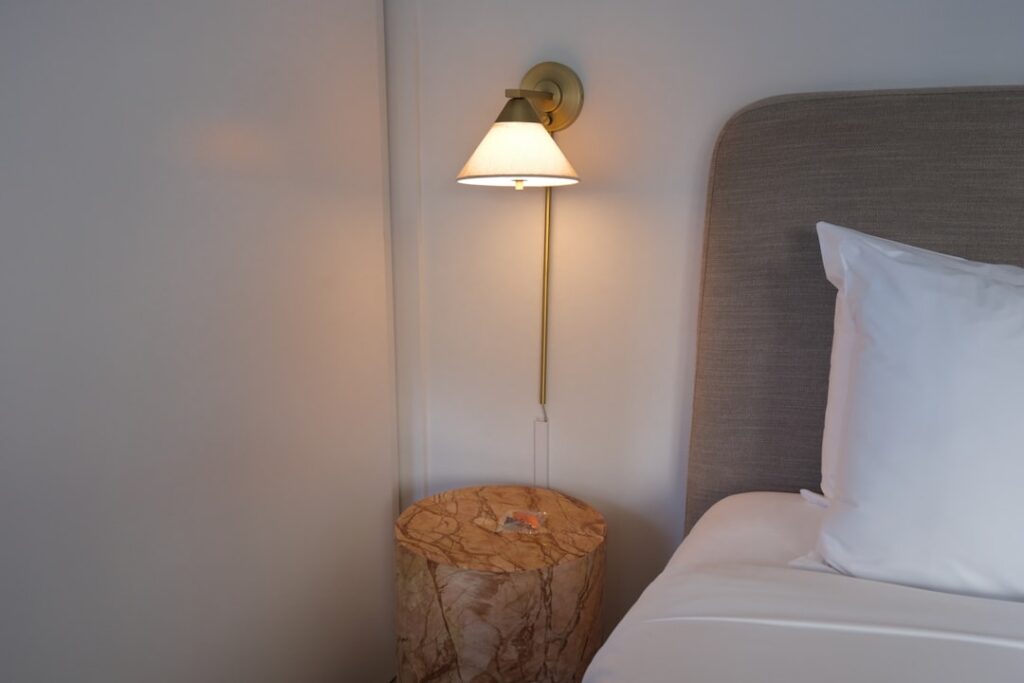
Bedside nook with wall lamp, rustic stump table and crisp white pillows in a small guest space

Casters come two ways. Four 360° swivel casters steer easily through a hallway one-handed. Commercial units often mix sizes — large 8 in fixed wheels at one end, 5 in casters at the other — which tracks straighter over thresholds and carpet edges.

Three things to check:

  • At least two locking casters. Without them the bed drifts every time someone rolls over. If yours has none, wedge the legs against a wall or baseboard.
  • Wheel material. Hard nylon and steel casters mark hardwood and vinyl plank; rubber or polyurethane wheels are gentler, and felt caster cups are the cheap retrofit.
  • Grit. A caster that picks up grit becomes a sanding tool — wipe the wheels after garage storage.

Rollaway vs folding cot vs air mattress vs sofa bed

Option Setup time Comfort for 3+ nights Stored footprint Main weakness
Rollaway bed 1–2 minutes, no tools Fair to good with a 5 in mattress plus topper Bulky but thin: about 40 × 17 in (102 × 43 cm) upright Hinge sag at the hips; short 75 in length
Folding camp cot 2–5 minutes, can be stiff Poor to fair; narrow and taut Smallest — often bag-sized Fabric deck, low width, no real mattress
Air mattress 3–5 minutes with a pump Poor over time; pressure drops overnight as air cools Tiny when deflated Seam failures, cold from below, noisy
Sofa bed Under a minute Good on quality models with a proper mattress None extra — it’s furniture Cost, weight, and the classic bar across the back

Choose by frequency. Under five guest-nights a year, an air mattress plus good bedding is the rational buy. Five to thirty nights, a rollaway bed earns its closet space. Over thirty, or any nightly use, buy furniture — a sofa bed or a trundle. If the room doubles as living space, our roundup of small-living-room sofas is worth reading first.

Bedding that actually fits a rollaway bed

This trips up almost everyone, because a rollaway mattress is standard in length and odd in width and depth.

  • Cot width (30–31 in / 76–79 cm): twin fitted sheets are 7–8 in too wide and will billow. Look for cot-size or “roll-away” sheets, or use a twin flat sheet tucked hospital-style.
  • Twin width (38–39 in / 97–99 cm): standard twin sheets fit the footprint. Because the mattress is only 4–5 in (10–13 cm) deep and most fitted sheets are cut for 10–14 in, you’ll have slack — sheet suspenders solve it for a few dollars.
  • Full width (54 in / 137 cm): full/double sheets work, same depth caveat.
  • Mattress protector: get the thin waterproof kind. It also keeps the foam from absorbing humidity in storage.
  • Duvets and pillows: a twin duvet on a cot-width bed drags on the floor. A twin-size quilt or a large throw looks better and washes easier. For how pillow covers are sized, see our guide to shams.

Setup, storage and keeping the mattress from going musty

Foam stored folded in a closed closet is a moisture trap. The EPA’s guidance on mold and moisture in homes is to keep indoor relative humidity below 60%, ideally between 30% and 50%. Damp basements and unheated garages routinely sit above that, which is how a bed comes out smelling like a cellar.

What works:

  1. Air it out after every use. Leave the bed open a few hours before folding.
  2. Store upright, not flat under boxes. Compressed foam dries slowly and holds creases.
  3. Leave a gap from the wall. Airflow on both faces beats a sealed plastic bag, which traps moisture inside.
  4. Use a breathable cover — cotton, not plastic sheeting.
  5. Skip the bare basement floor. If that’s the only option, raise it on a pallet.

Deal with spills the same day — a thin foam pad soaks through to the deck fast. Our walkthrough on getting urine out of a mattress covers foam specifically.

Care and lifespan: what fails first

In rough order: the mattress goes soft in the middle, then the casters crack or seize, then the hinge hardware loosens, then a leg bends because someone sat on the rail. The steel frame outlasts all of it.

Three habits that add years:

  • Tighten the bolts once a year. Folding stress backs fasteners out. Five minutes with a wrench.
  • Rotate the mattress pad end-to-end each time you store it, so the same section isn’t always under the heaviest load.
  • Silicone spray on the hinge, not oil — oil attracts grit and stains bedding.

Realistic lifespan: two to four years for a light consumer model used a dozen nights a year, closer to a decade for a commercial steel frame with a replaceable mattress. Foam ages on a clock as well as under load — the same reason your main mattress has a replacement window.

A note on prices

No dollar figures here — folding-bed pricing swings with import costs and promotions, so any number printed today is wrong by spring. The tiering holds, though: light import frames with a 3–4 in pad at the bottom, reinforced twin-width frames with 5 in mattresses in the middle, commercial 16-gauge steel with innersprings at the top.

Before you buy: the short checklist

  • Folded dimensions vs your closet, door and stair landing — all three.
  • Rated weight capacity with headroom above your heaviest likely guest.
  • Mattress thickness of 5 in (13 cm) if anyone will sleep on it more than two nights.
  • Centre support at the hinge, and at least two locking casters.
  • Frame weight under about 45 lb (20 kg) if one person will move it alone.
  • Whether replacement mattresses and casters are sold separately.

FAQ

What size is a standard rollaway bed?

Most are 30–31 in wide by 74–75 in long (76–79 × 188–191 cm), with twin-width versions at 38–39 in (97–99 cm) and true full versions at 54 in (137 cm). Length is almost always 75 in, regardless of width.

Can you sleep on a rollaway bed every night?

You can, but the mattress is the limit, not the frame — a 4 in pad compresses at the hips within months of nightly use. If it’s your main bed, a folding frame with a proper 6–8 in mattress, a trundle or a wall bed serves you far better. Our trundle bed mattress guide covers thickness limits on low-clearance frames.

Do rollaway beds fit through a normal doorway?

Folded upright, a standard unit is roughly 40 in wide and 17 in deep (102 × 43 cm), so it clears most doors sideways. Stair landings and narrow casings are the tight spots. Measure between the door stops, not the outside of the frame.

What sheets fit a rollaway bed?

Twin-width models take standard twin sheets with some slack, since the mattress is only 4–5 in deep. Cot-width models need cot-size sheets or a tucked flat sheet; a twin fitted sheet will be several inches too wide.

Rollaway bed or air mattress for a weekend guest?

For a night or two a year, an air mattress costs less and stores smaller. For several guest weekends, the rollaway wins on setup speed, warmth and not deflating at 4 a.m. — and it gets sleepers off the floor, which older guests appreciate.

How much weight can a folding guest bed hold?

Published ratings range from about 265 lb (120 kg) on light consumer frames to 440–500 lb (200–227 kg) on reinforced commercial ones. Those are static ratings for a person lying down; sitting hard on the side rail concentrates the load and is the usual cause of a bent leg.

Updated September 2026.