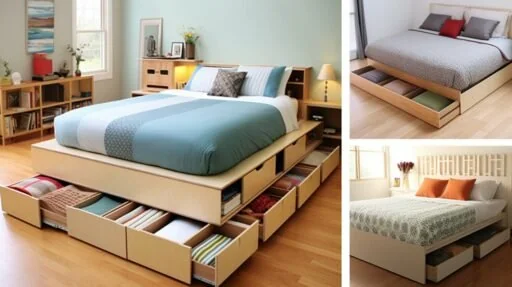
Space Saving Bedroom Furniture: Smart Picks for Small Rooms

bedroom furniture space saving ideas

The best space saving bedroom furniture does two jobs at once and keeps your walking paths open: a bed with drawers or a lift-up base, a tall shallow wardrobe, a floating nightstand, and wall storage instead of another floor-standing unit. Measure your clearances before you buy anything, because a drawer that can’t open is worse than no drawer at all. Below is how to choose each piece, what to measure, and the safety rules that actually matter.

Measure before you shop (this is the step people skip)

Grab a tape measure and painter’s tape. Outline the bed’s footprint on the floor, then mark how far the drawers or doors swing out. You’ll learn in five minutes what a return policy would otherwise teach you in two weeks.

Write down these numbers:

  • Bed length and width, including the headboard and any footboard.
  • Under-bed height from floor to the underside of the frame or slats.
  • Distance from the bed sides to walls, radiators and nightstands.
  • Door swing for the bedroom door, closet doors and the wardrobe you’re eyeing.
  • Ceiling height, if a loft bed, bunk or lift-up base is on your list.

Designers generally aim for roughly 30 to 36 inches of walking space beside a queen bed, more for a king. In a genuinely tiny room you may not get that on both sides, and that’s fine — pick one generous side for daily traffic and push the other side closer to the wall. If you go that route, a lift-up base beats side drawers, since side drawers need clear floor to open.

For a full walkthrough of fitting pieces into an awkward footprint, our bedroom furniture and layout guide covers floor plans in more detail.

Space saving bedroom furniture that earns its footprint

A piece deserves floor space if it stores something, supports something, or does both. Here’s the short list worth your money in a small room.

Storage beds and under-bed drawers

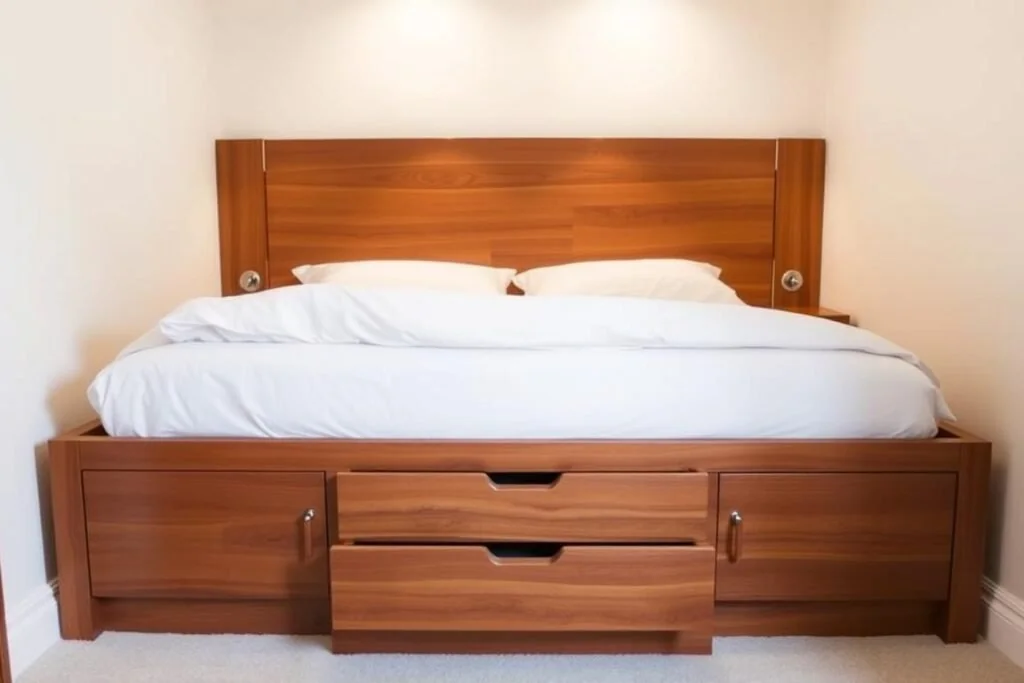
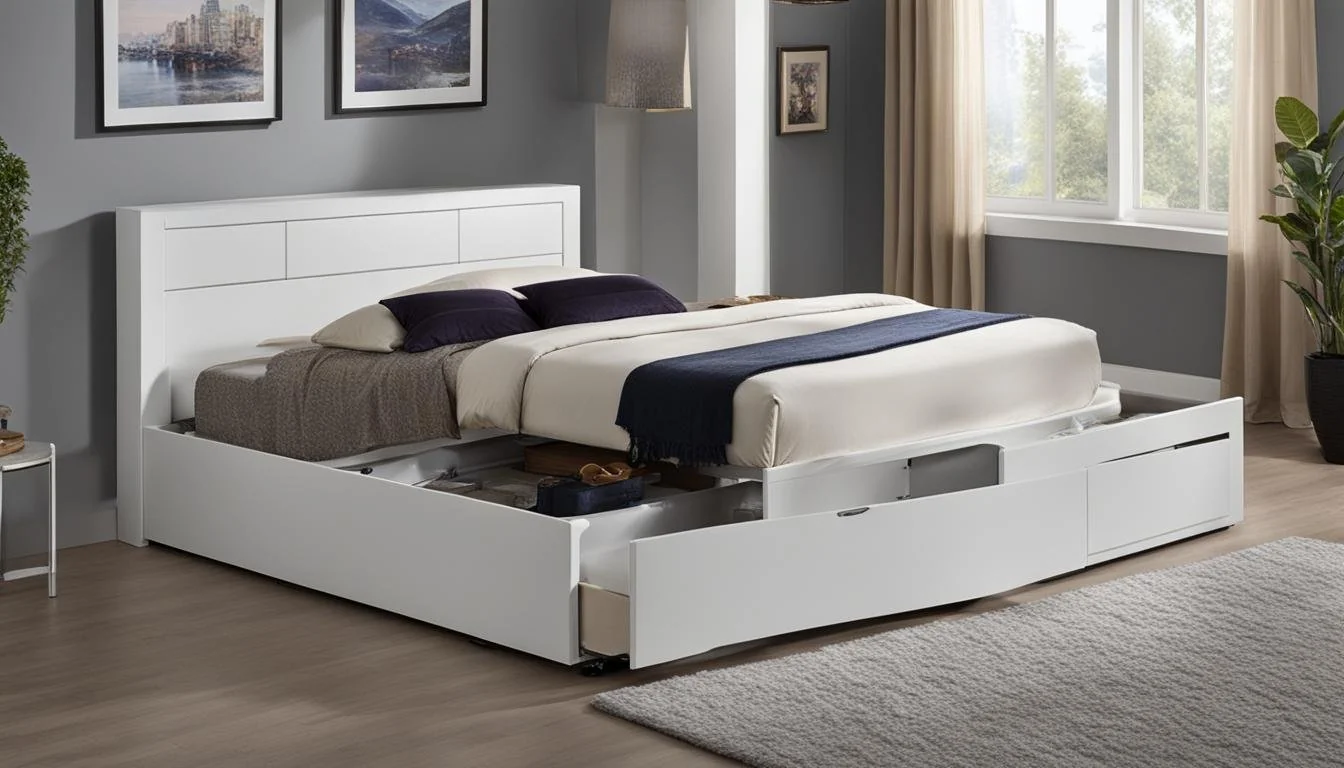
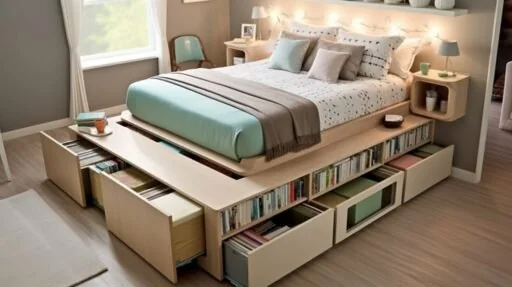
The area under your mattress is the cheapest storage in the house, and most people waste it. A bed with built-in drawers or a lift-up platform can replace a whole dresser, which is usually the bulkiest thing in a small bedroom.

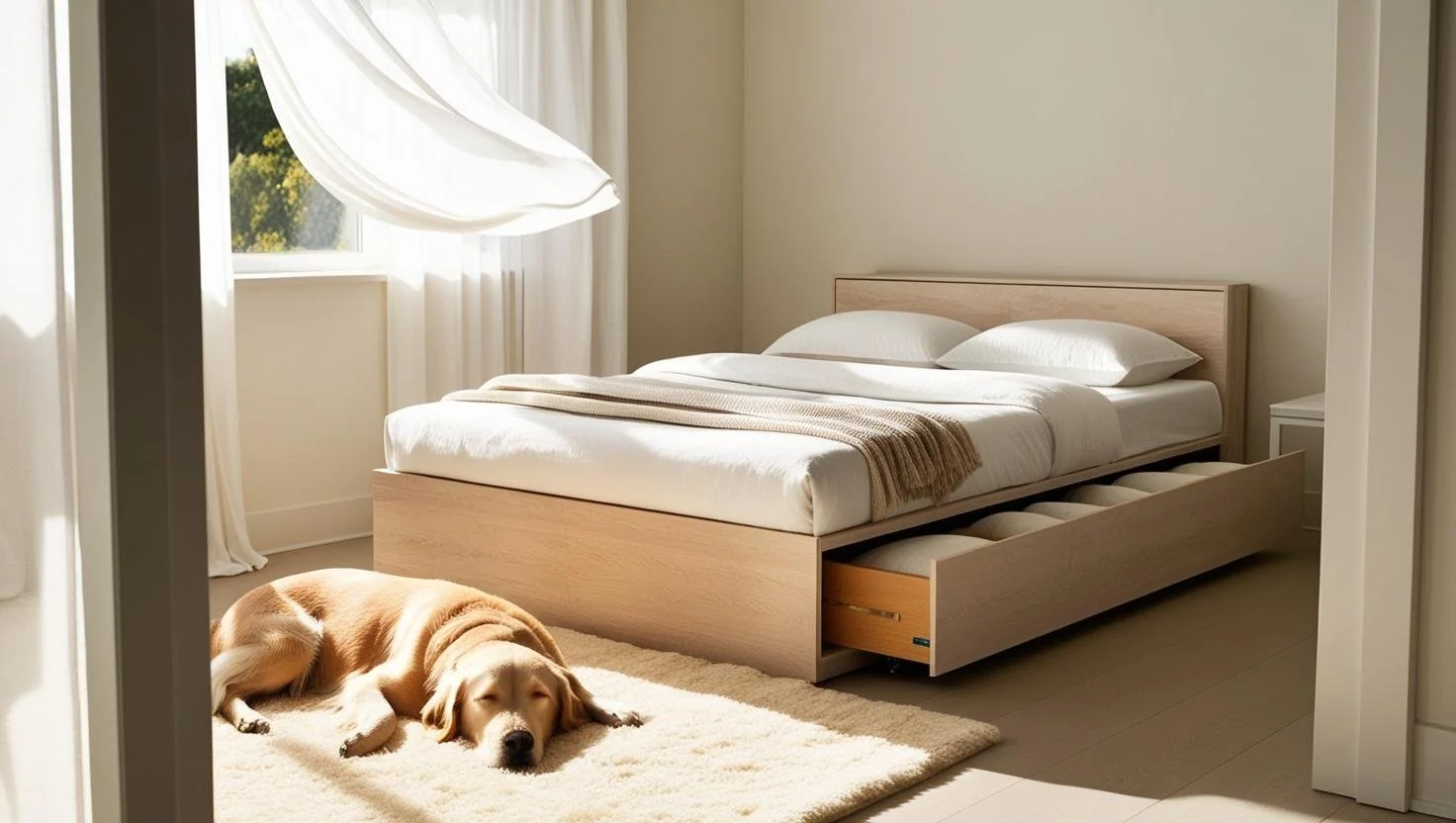
  • Built-in drawer beds: best for clothes you reach for daily. You need side clearance for the drawers to clear fully.
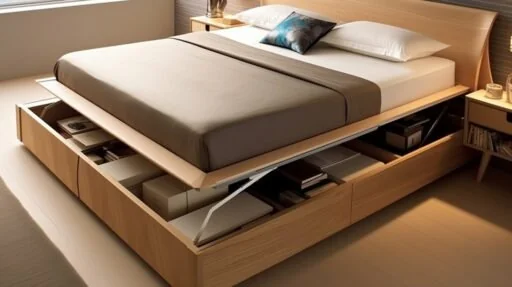
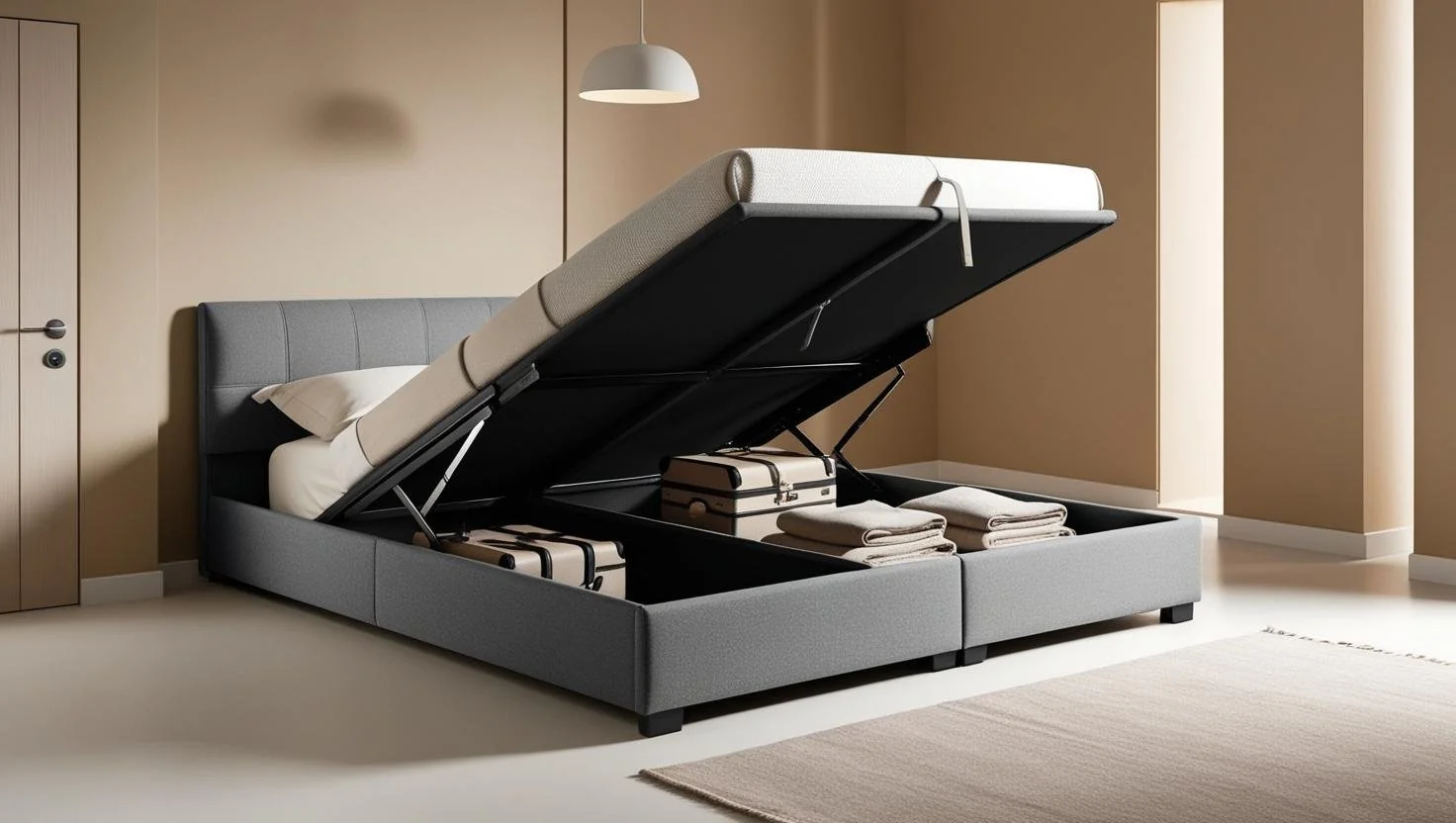
  • Lift-up (hinge-top) bases: the mattress platform raises on gas struts to reveal one big cavity. Ideal when the bed sits tight to a wall. Load it evenly and check that the lid clears any sloped ceiling, shelf or wall light when open.
  • Add-on drawer modules: rolling units that slide under a standard frame. Cheapest option, and you can move them.
  • Low-profile bins: if your frame sits close to the floor, split-lid or shallow bins still work. Measure the gap first and subtract an inch so nothing drags.

Match the container to how often you reach in. Hard drawers for daily wear, soft fabric bins for bulky quilts and off-season clothes. Skip storing anything fragile, liquid or moisture-sensitive down there; textiles do better in sealed bags, especially in a damp room.
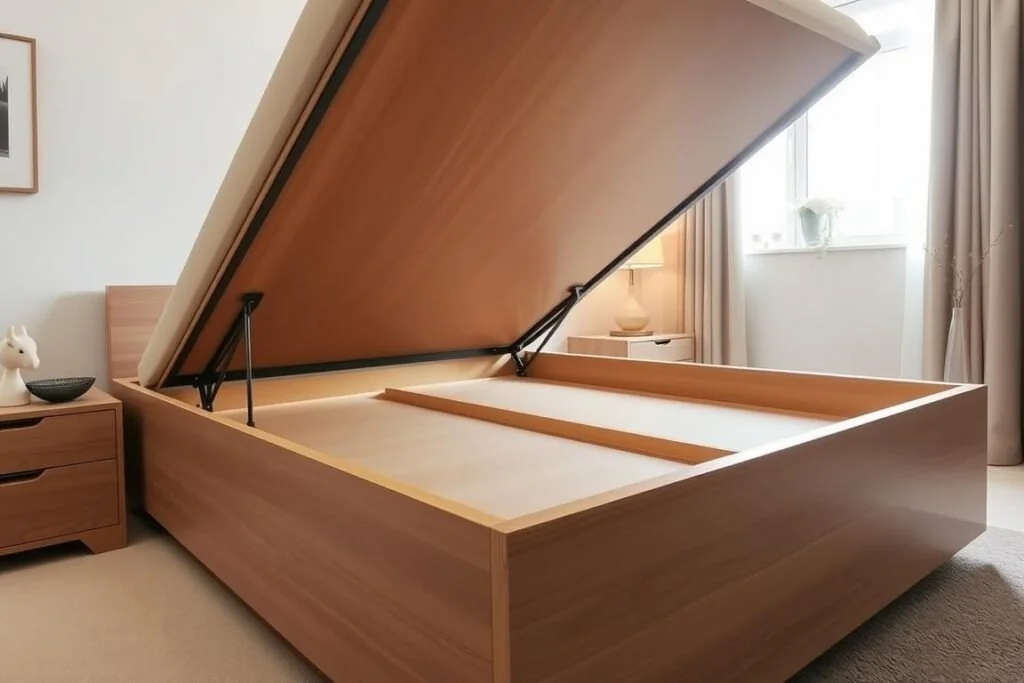
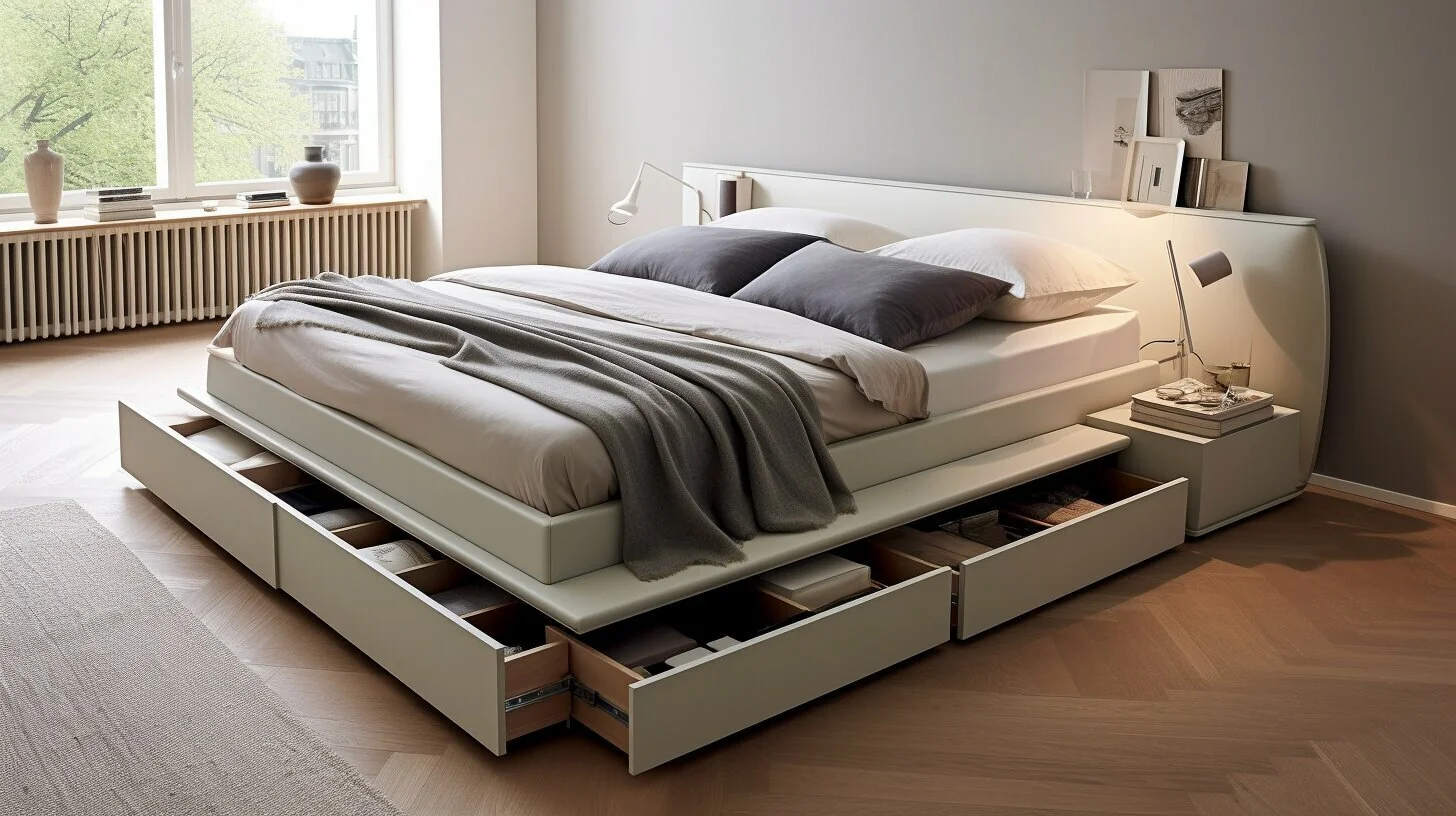
Hinge-top storage bed, space saving bedroom furniture with bedding tucked under the lifted mattress

Shopping for a frame? Compare styles in our roundups of platform and storage beds and space-saving bed frames.

Wall beds and loft beds

These free up the biggest chunk of floor area in the room, because the bed simply isn’t there during the day.

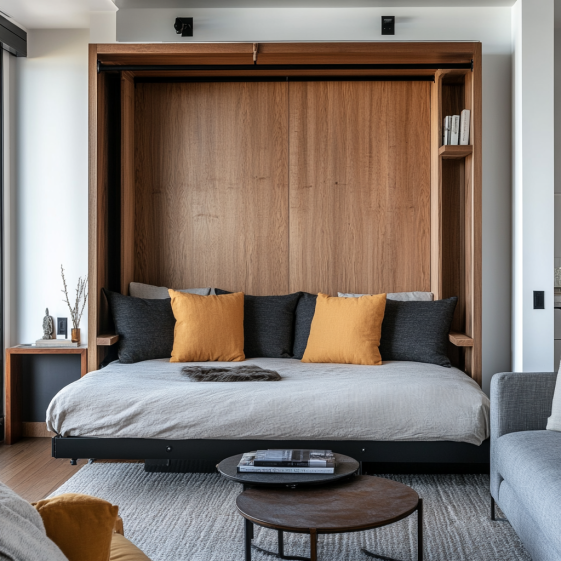
A wall bed with a desk turns a studio or spare room into a real workspace. Manual mechanisms cost less and hold up well; motorized ones cost more and mostly buy convenience. Either way, confirm the unit is fixed into studs, check the manufacturer’s mattress weight and thickness limits, and use the locking hardware every time.

A loft bed raises the mattress so a desk, dresser or small sofa fits underneath. Ceiling height decides whether it’s comfortable or claustrophobic. A common rule of thumb is around 30 inches between the top of the mattress and the ceiling so you can sit up without ducking — that’s guidance from furniture makers and universities rather than a federal requirement, so treat it as a comfort target and test it with a tape measure against your own ceiling.

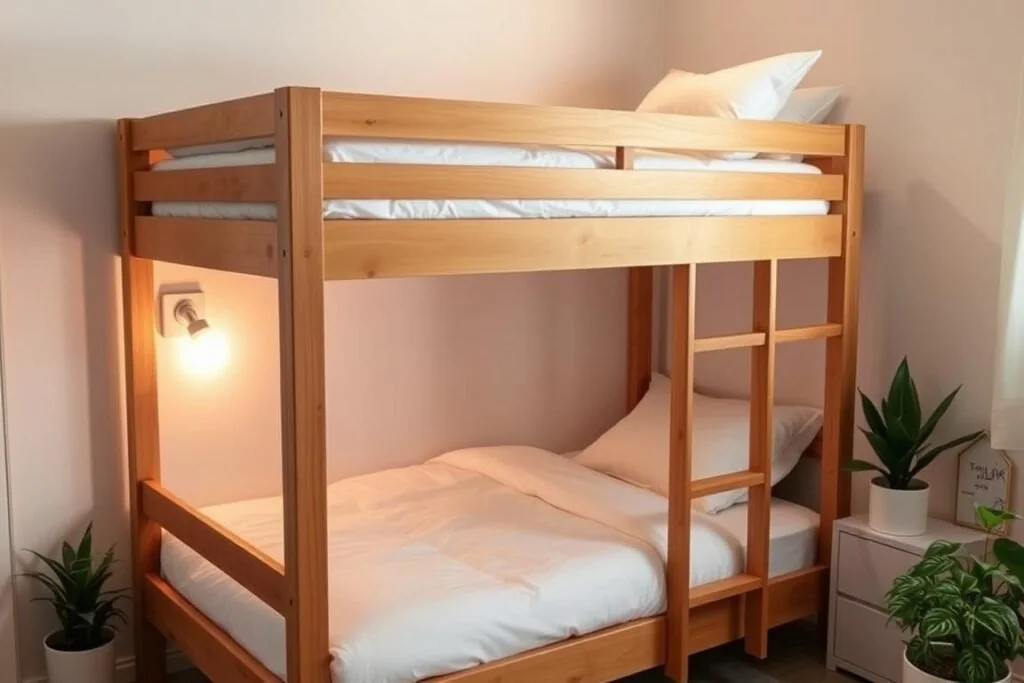
If it’s a bunk rather than a loft, the safety rules are real. The U.S. Consumer Product Safety Commission defines a bunk bed as one whose mattress foundation sits more than 30 inches above the floor, and upper bunks need guardrails on both sides with the tops of the rails no less than 5 inches above the mattress. Lower bunks 30 inches or less from the floor don’t need them.

Fold-down wall bed beside a built-in desk showing how one unit serves as both office and bedroom

Not sure which bed type suits your room? Our guide to the best beds for small rooms compares Murphy beds, daybeds and low platforms side by side.

Slim wardrobes and smarter closet insides

Tall and shallow beats short and deep. A wardrobe that’s 20 to 24 inches deep holds hanging clothes fine and steals far less floor than a chunky armoire. Sliding doors remove the swing clearance problem entirely, which can be the difference between a wardrobe fitting and not fitting.

Inside, small changes add capacity fast:

  • Modular drawers — shallow for socks and underwear, deeper for folded tees.
  • Shelf dividers to stop stacks from toppling into each other.
  • A second hanging rail under shirts and jackets, since that lower half is usually dead air.
  • Labelled baskets on the top shelf for things you touch twice a year.

Nightstands, benches and desks that pull double duty

A floating nightstand or a wall-mounted cubby keeps the floor visible, which makes the room read as bigger. Set the top roughly level with your mattress so you can reach a glass of water without sitting up. If you’d rather have drawers, look at slim vertical designs — see our nightstand ideas for shapes that work in tight corners.

Other pieces worth the space:

  • Lift-top bench at the foot of the bed: seat, blanket storage, and a place to put a suitcase. Keep a clear path past it.
  • Fold-down wall desk: a real work surface that disappears at 6 p.m. Anchor it to studs.
  • C-table: slides over the mattress edge for a lamp and a book, then tucks away.
  • Storage stool or ottoman: seating plus a hidden box for chargers, hair tools or kids’ toys.

Go vertical: shelves, ledges and door-back storage

Walls are the storage you already own. Using them clears low surfaces and protects walking lanes.

  • Wall shelves: choose a shallow depth so nothing juts into the path beside the bed.
  • Picture ledges: current book, glasses, phone — no bulk.
  • Over-the-door racks: shoes, bags, hats, caught on the way out. Check the door still closes.
  • Pegboard: reconfigurable hooks and trays, good above a desk or inside a closet door.
  • Corner shelves: corners are almost always wasted and are fine for light storage or plants.
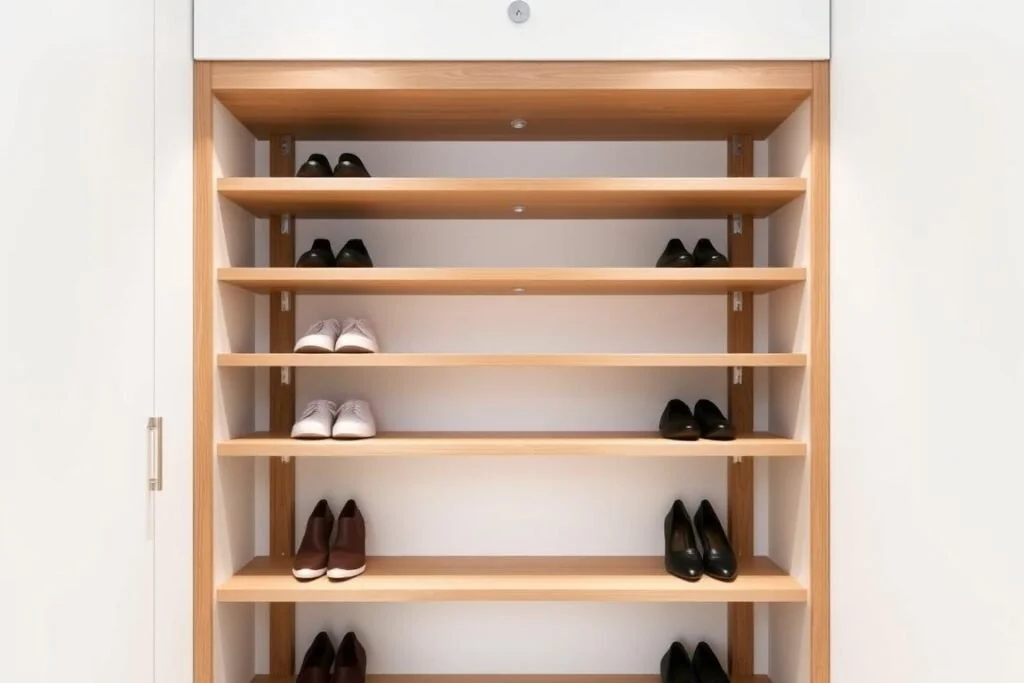
Slim wall-mounted shelving holding shoes and baskets, keeping the bedroom floor clear

If your room has no closet at all, our list of storage ideas for small bedrooms with no closets goes further on wall systems and freestanding rails.

Layout choices that make the room feel bigger

Furniture placement changes how big a room feels as much as the furniture itself does.

  • Keep one uninterrupted walking path from door to bed.
  • Put the tallest pieces against walls, ideally the wall you see last when you walk in.
  • Don’t block windows — daylight does more for perceived space than any paint colour.
  • Group by function: sleeping zone, work zone, storage zone. Fewer trips across the room.
  • Leave a little breathing room between pieces instead of lining them up wall to wall.
  • Lift things off the floor. Legs on a bed or dresser let you see floor underneath, and that reads as space.

A tall mirror opposite or beside a window bounces light deeper into the room; a full-length mirror on the back of the door costs zero floor space. More of these visual tricks are in our post on decorating tricks to make a small bedroom look bigger.

Small bedroom laid out with a low storage bed, floating nightstand and clear walking path to the door

Safety: anchor it, and check the labels

Tall storage in a small room means tip-over risk, especially with kids around. Anchoring is quick and cheap, and the CPSC’s Anchor It! campaign is blunt about it: anchor anything with drawers, doors or shelves to the wall.

Two things worth knowing before you buy a dresser or wardrobe:

Also check weight limits on wall shelves and floating nightstands, and use the fixings rated for your wall type — plasterboard, plaster-and-lath and masonry all behave differently.

Five changes you can make this week

  • Swap a bulky nightstand for a floating one so the bed drawers open fully and the floor stays visible.
  • Put flexible bins under the bed for off-season bedding, labelled by season so you don’t rummage.
  • Add hooks near the door for robes and bags, so the chair stops being a clothes pile.
  • Clip the cables along the bed frame or use a slim raceway. Visible cords make a room look messy for no reason.
  • Empty one drawer completely and re-sort with dividers. You’ll usually free up more room than you expected.

Small resets help more than they sound like they should. A room you can tidy in three minutes tends to stay tidy, and a calm room is easier to wind down in — useful given that adults aged 18 to 60 are advised to get at least seven hours of sleep a night.

Pros and cons at a glance

Piece Pros Cons
Storage bed with drawers Can replace a dresser; easy daily access Heavy to move; needs side clearance
Lift-up (hinge-top) base Huge single cavity; works tight to a wall Awkward for daily items; needs headroom to open
Loft bed Frees a whole desk or lounge zone below Needs ceiling height; climbing in and out
Wall bed with desk Two rooms in one footprint Higher cost; must be fixed to studs
Floating shelves and nightstands Clear floor, light look Weight limits; needs secure fixings
Slim sliding-door wardrobe No swing clearance; lots of vertical capacity Shallow depth; top shelf hard to reach
Over-the-door organizer Zero floor space used Can look cluttered; may block the door

FAQ

How much clearance do I need for an under-bed drawer?

At least the drawer’s height plus about an inch of breathing room underneath, and enough floor in front for the drawer to pull out fully. Watch for bed skirts and footboard rails that quietly eat the opening.

Are lift-up storage beds safe for everyday use?

Yes, when assembled to the instructions and used within the stated weight limit. Look for gas struts or counterbalance hardware, keep hands clear of the hinge line, and don’t let small children open or close the lid on their own.

Can I make a small bedroom feel bigger without buying anything?

Often, yes. Declutter, move the tallest piece against a wall, clear the window, and add a mirror you already own. Rearranging costs nothing and tells you what you actually need to buy.

Do I need a matching furniture set?

No. In a small room, sets usually include a piece that doesn’t fit. Buy a bed and one storage piece that suit the space, then match by colour or finish instead of by collection.

Drawers or rolling bins for a kid’s room?

Rolling bins are lighter and easier for young children to handle on their own; built-in drawers make cleanup faster once they’re bigger. Label the fronts either way.

What’s the single highest-impact swap?

For most small bedrooms, replacing a standard frame plus a dresser with one storage bed. It removes a large floor-standing object and keeps the same amount of storage.

Updated September 2026.

Best Bed for a Small Room: Murphy, Sofa Bed or Storage

Beds Small Rooms - best bed for small room

The best bed for small room layouts is the one that gives you back floor space during the day without costing you sleep at night. For most tight bedrooms that means a wall (Murphy) bed if the room does double duty, a storage platform bed if you’re short on drawers, a sofa bed or daybed in a guest room or office, and a loft or bunk in a kids’ room. Everything else is a measuring problem: get your walkways and door swings right first, then pick the style.

Pick Your Bed by How the Room Is Used

Start with what happens in the room between 8 a.m. and 10 p.m., not just how you sleep. A bed that vanishes is worth a lot in a studio and almost nothing in a bedroom you only walk into at bedtime.

Your situation Strongest option Why it works
Studio or one-room apartment Murphy / wall bed Clears the middle of the floor every morning for a table, a mat or a desk
Home office that hosts guests Sofa bed or daybed with trundle Seating all week, a real bed a few nights a month
Small primary bedroom, no closet space Storage platform bed (drawers or lift-up) Replaces a dresser, so you buy back a wall
Kids’ or shared room Bunk or loft Stacks sleeping and frees the footprint below for desk or play
Occasional overnight guests only Rollaway or folding frame Stores flat in a closet the other 360 nights

If you want the full rundown of mechanisms and shapes before you commit, our guide to space-saving bed types walks through each one side by side.

Measure the Room Before You Shop

This is the step that prevents returns. Measure wall to wall at floor level, then note baseboards, radiators, window sills, vents and the arc of every door — including closet doors, which are the usual casualty of a bed that’s one size too big.

  • Walkways: aim for roughly 24–30 inches on any side you actually use. It’s a rule of thumb, not a code, but less than about two feet starts to feel like squeezing past furniture.
  • Foot of the bed: leave room for the drawer or the lift-up lid to open, plus space to stand while you open it.
  • Ceiling height: matters for wall beds, lofts and bunks. Measure to the ceiling, then again to the lowest thing hanging from it (a fan or light fixture).
  • Delivery path: doorways, stair turns, elevator depth. Flat-pack solves most of this; a one-piece wall bed cabinet does not.

Then do the tape test. Put painter’s tape on the floor in the exact footprint of the bed you’re considering, and live with it for a day — walk in from the door, pretend to make it, pretend to open the drawers. If you keep clipping a corner, size down.

Don’t trade away sleep quality to win a few inches. The CDC notes that adults aged 18–60 are recommended to get at least seven hours of sleep a night, and a thin, undersized mattress on a clever frame is still a thin, undersized mattress.

Murphy and Wall Beds: The Biggest Daytime Win

A wall bed folds vertically or horizontally into a cabinet, so the room resets to empty floor every morning. In a small studio that single change can be the difference between a bedroom with a desk shoved in the corner and a proper living space.

Murphy bed folded into a cabinet, the best bed for a small room that doubles as living space

Two broad types:

  • Freestanding cabinet units. The whole assembly stands on the floor, so there’s little or no drilling into the wall. Easier for renters, easier to take with you.
  • Wall-mounted units. Slimmer and tidier, but they have to be anchored into studs or solid masonry. If you aren’t confident finding structure behind the drywall, pay for installation — this is not the corner to cut.

What to check before buying: the lift mechanism (gas piston or spring, and how heavy the pull-down feels), the maximum mattress thickness and weight, the wall width including trim, and how much the closed cabinet projects into the room — usually 16 to 20 inches, which eats real floor space even when it’s shut. Side cabinets, fold-out desks and integrated shelving are common add-ons, and modern units generally handle foam and hybrid mattresses within the stated limits. More detail in our guide to a bed that folds into the wall.

The honest downside: you have to strip or strap the bedding daily, and you’ll fold it up more than you expect to. If you know you won’t bother, a storage bed is the better buy.

Sofa Beds and Daybeds: A Couch Bed for a Small Room

If the room needs seating more than it needs a permanent bed, a convertible sofa or a daybed earns its footprint twice a day. A sofa bed hides the mattress inside the frame; a daybed is a twin mattress with a back and sides, dressed with bolsters so it reads as a sofa.

  • Sofa beds suit guest rooms and offices used by adults a few nights at a time. Check the open length — a sleeper needs far more clearance in front than the closed sofa suggests. Thicker foam or a hybrid insert hides the support bars better than a thin innerspring pad.
  • Daybeds are better for nightly sleeping, because you’re using an ordinary twin mattress. Add a trundle and you get a second bed that rolls out from underneath.
  • Fabric matters in a room that doubles as a living space. A tight-weave performance fabric survives daily sitting far better than loose velvet.

Sizing and mechanism comparisons live in our guide to sofa beds for small spaces.

Storage Beds: Drawers or Lift-Up Platform?

Under a standard bed sits 25 to 35 square feet of dead space. A storage bed claims it, and in a small room that often means you can skip the dresser entirely — which is both a space win and one less piece of furniture to worry about, since CPSC’s mandatory stability standard for dressers and other clothing storage units, backed by the STURDY Act, took effect in September 2023 and any dresser you keep should be anchored to the wall.

Platform storage bed with under-bed drawers in a small bedroom

Side drawers win for daily items — socks, tees, workout clothes. Look for full-extension glides and check which side they open on, because a drawer that needs 24 inches of pull-out space on the wall side is a drawer you’ll never use.

Lift-up (ottoman) platforms win for bulk: luggage, bedding, seasonal coats. The whole deck hinges up on gas struts. Confirm the struts are rated for your mattress weight, and leave clearance at the head or foot for the deck to swing.

Either way, the trade-off is the same: storage beds are heavy, harder to move, and you can’t sweep under them. If you’d rather keep a normal frame, bins on risers do a cheaper version of the same job. See our roundup of hidden storage beds for layouts that suit narrow rooms.

Lofts and Bunks: Build Upward

Stacking is the only way to truly double a floor plan. A loft puts a desk, dresser or reading nook under the mattress; a bunk puts a second sleeper there.

loft style space-saving bed frame with under-bed workstation

Safety rules here are not optional. Federal regulations require that a bunk bed provide at least two guardrails on the upper bunk, one on each side; lower bunks whose foundation sits 30 inches or less off the floor don’t need them. Bunk beds also carry a warning label about which children should use the top bunk — read it and follow it.

Practical clearances to plan for:

  • Enough headroom above the top mattress to sit up without hitting the ceiling. Manufacturers usually specify a minimum; check yours before you buy, and measure to the ceiling fan, not just the ceiling.
  • Roughly 34–36 inches of desk-sitting height under a loft, plus space for a chair to push back.
  • A ladder that’s fixed to the frame, not hooked on, with steps wide enough for bare feet.
  • Thicker mattresses reduce the guardrail height above the sleeping surface — stick to the maximum thickness printed on the label.

Twin-over-twin bunk bed with guardrails in a small shared kids room

Size and Frame Height: Fit First, Then Feel

US mattress sizes are standard: twin 38 by 75 inches, twin XL 38 by 80, full 54 by 75, queen 60 by 80. In a small room the jump from twin to full costs 16 inches of width — often exactly the walkway you were counting on.

  • Twin: narrowest footprint, easiest to place along a long wall, works as a daybed with bolsters.
  • Twin XL: same width, five more inches of length for taller sleepers.
  • Full: real shoulder room for one adult, tight for two. Check it against your room before you fall in love with it — our full size bed dimensions guide has layout diagrams.

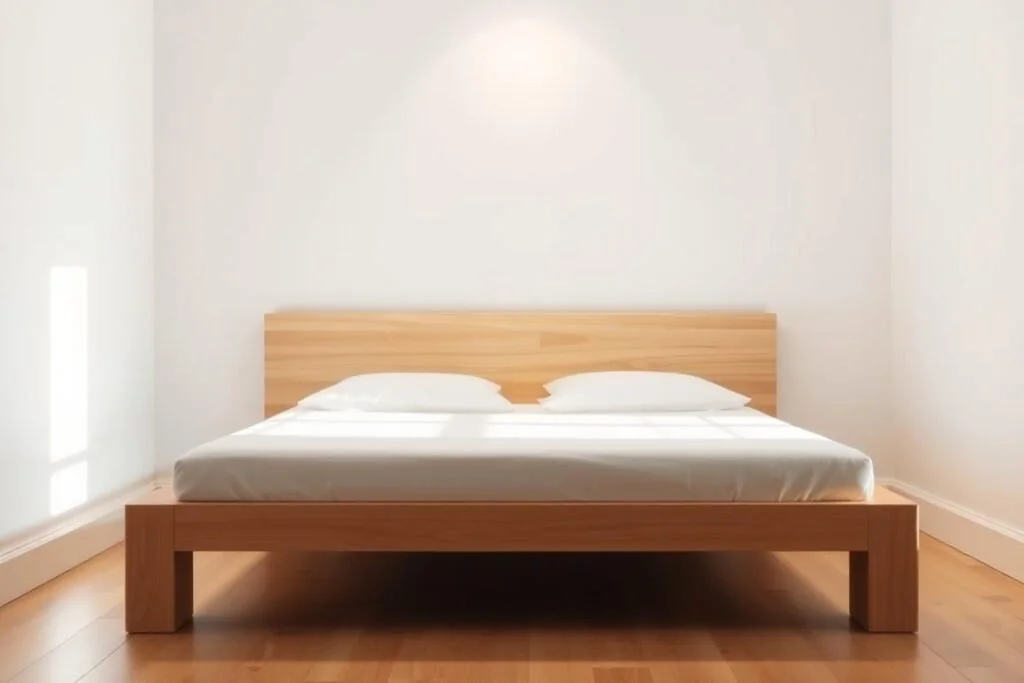
Frame height changes how big the room feels. A low-profile platform frame with built-in slats skips the box spring, drops total height by several inches and keeps sightlines open. Just remember that lower frames leave less under-bed clearance for bins, so pick one or the other: low and airy, or higher with storage.

Low-profile platform bed frame in a compact bedroom with a clear walkway

Two more details worth checking on any frame: slat spacing (most foam mattress warranties want slats no more than about three inches apart) and a center support leg on anything full-size or larger. Those two things decide whether the bed squeaks in a year.

Materials and Air Quality in a Small Room

A tiny bedroom has less air in it, so off-gassing is more noticeable. Most budget storage beds and wall bed cabinets are built from particleboard or MDF. That’s fine — but since March 2019, composite wood products such as hardwood plywood, MDF and particleboard, along with finished goods made from them, must be labeled as TSCA Title VI compliant for formaldehyde emissions. Look for that label, air new furniture out for a few days with a window cracked, and vacuum out storage cavities before you fill them.

Beyond that, claims about “non-toxic” frames vary a lot in what they actually mean, and independent evidence comparing brands is thin. Judge what you can verify: the emissions label, solid joinery, and a finish that doesn’t smell strongly in the showroom.

Shopping Checklist

  • Room measurements, door swings, window and radiator positions.
  • Delivery path: doorway widths, stair turns, elevator depth.
  • Walkways of about 24–30 inches on the sides you use.
  • Daily access versus seasonal storage — drawers or lift-up.
  • Mattress thickness and weight limits for wall beds, sofa beds, bunks and lofts.
  • Slat spacing, center support, total frame height.
  • Assembly: who’s building it, and can it be taken apart when you move?

Once the bed is settled, the rest of the room follows. Light paint, one big mirror and wall-mounted lighting instead of table lamps will do more than any furniture swap — there’s a full list of tricks in our guide to making a small bedroom look bigger.

FAQ

What’s the single best bed for a small room?

There isn’t one. A wall bed gives the biggest daytime gain, a storage bed gives the biggest organisational gain, and a daybed or sofa bed is best in a room that needs seating. Pick by how the room is used, then check the bed leaves a 24–30 inch path where you walk.

Is a full-size bed too big for a tiny bedroom?

Not automatically. Tape out 54 by 75 inches on the floor. If you still have a walkway on one long side and the door and closet open freely, a full works. If the tape hits the closet door, drop to a twin XL.

Can you sleep on a daybed or sofa bed every night?

On a daybed, yes — it takes a regular twin mattress. On a sofa bed it depends on the mechanism; pull-out mattresses are usually thin, and a topper or a foam-mattress model makes a real difference for nightly use.

Do Murphy beds have to be attached to the wall?

Wall-mounted models do, into structural framing. Freestanding cabinet models are designed to stand on their own, though many still include an anti-tip anchor. Follow the manufacturer’s instructions exactly, and hire an installer if you’re unsure what’s behind your drywall.

Is a lift-up storage bed hard to open?

Not if the gas struts are matched to your mattress weight. A heavy hybrid on a frame rated for a light foam mattress is what makes these feel stiff, so check the rating against your mattress before you order.

Can a storage bed really replace a dresser?

Often, yes. Four deep drawers hold roughly what a small dresser does. Keep folded items in the bed and hang the rest, and you free up a whole wall.

Updated September 2026.

Foldable Bed Frames: How to Choose the Right One for Your Space

Foldable Bed Frames: How to Choose the Right One for Your Space - Featured Image

A foldable bed frame is a sleeping base that collapses, rolls away or lifts into a cabinet so the floor space can be used for something else during the day. The best choice depends on how often you sleep on it: a folding metal platform suits everyday use in a small room, a wheeled rollaway suits occasional guests, and a Murphy or cabinet bed suits studios where the bed needs to disappear completely. Before buying, check three numbers: the open footprint, the folded storage size, and the maximum mattress thickness the frame allows.

Quick summary

  • Folding platform frames are the cheapest, lightest way to get a real mattress off the floor and store the base flat.
  • Rollaway beds arrive with a thin foam mattress and fold upright on casters — best for short stays.
  • Murphy (wall) and cabinet beds cost the most and cap mattress thickness, but they free the most floor space.
  • Measure the unfolded footprint and the folded dimensions, then confirm the weight rating and mattress limits in the manual.
  • Wall-mounted beds must be installed into structural framing exactly as the manufacturer specifies.
Modern guest room with the best foldable bed frames in use
Foldable frames help small rooms double as offices, gyms, and guest suites.

What counts as a foldable bed frame?

The category covers anything that supports a sleeper at night and shrinks or hides by day. That includes hinged metal platforms that fold in half, rollaway cots with built-in mattresses, tri-fold mattresses used on the floor or a low platform, ottoman and cabinet beds, wall-mounted Murphy beds, trundles that slide under a main bed, and convertible sofa beds.

The practical difference between them is who sleeps on it and how often. Frames built for nightly sleep use rigid steel or hardwood, closely spaced slats and a standard mattress. Guest-focused designs prioritise light weight, quick setup and a slim built-in foam pad, which is comfortable enough for a few nights but not a substitute for a full mattress.

Types compared

Type How it stores Best for Watch out for
Folding platform frame (metal or wood) Folds flat; slides under a bed or stands in a closet Daily sleep in small rooms; renters and frequent movers Slat spacing and centre support; wide gaps sag foam mattresses
Rollaway / folding guest bed Folds in the middle, stands upright on casters Occasional overnight guests Thin mattress, modest weight rating, noisy joints over time
Tri-fold or quad-fold mattress Folds into a cube for a closet or under-bed bin Kids, sleepovers, travel, floor sleeping Firm feel; fold lines can be noticeable
Ottoman / bench sleeper Stays out as seating, unfolds into a bed Studios and living rooms with no storage to spare Usually single-size and short; check length
Cabinet (chest) bed Freestanding chest holding a tri-fold mattress Renters who cannot drill into walls Heavy; fixed mattress thickness
Murphy / wall bed Lifts vertically into a wall cabinet Studios, home offices, long-term daily use Permanent installation, strict mattress limits, safety hardware
Trundle Rolls under a main bed Shared kids’ rooms Low height; needs clear floor to pull out
Convertible sofa bed Stays as a sofa Dual-purpose living rooms Least supportive for regular sleep

Prices span a very wide range — a basic folding platform is one of the cheapest bed bases you can buy, while installed wall beds are furniture-level purchases. Because model lineups and prices change constantly, compare categories first and current listings second; this guide deliberately does not name “winning” models, since we do not test folding beds in a lab.

Scandinavian living room with a folding sofa bed for small spaces
Neutral decor and a compact foldable base keep the room airy.

Sizes: what actually fits

Most folding frames and rollaways are sold in twin and full; queen versions exist mainly in platform frames, cabinet beds and Murphy beds. Standard US mattress sizes are twin 38 x 75 inches, full 54 x 75 inches and queen 60 x 80 inches, so the frame’s inner measurements should match those figures — see our full size bed dimensions guide for room-planning clearances.

Two measurements matter as much as mattress size:

  • Folded dimensions. Manufacturers publish them; check against closet depth, door width and under-bed clearance before ordering.
  • Swing and clearance. A wall bed needs floor depth for the open mattress plus room to walk past it. A trundle needs the same clearance on the pull-out side. Leave heaters, radiators and doors clear of the open footprint.

How to choose

1. Match the frame to the frequency of use

For nightly sleep, choose a rigid platform, cabinet bed or wall bed with a full-depth mattress. For a handful of guest nights a year, a rollaway or tri-fold is sufficient and far easier to store.

2. Check the published weight rating

Ratings vary enormously between a lightweight cot and a reinforced steel platform, and manufacturers state them for a reason. Treat any listing without a rating as a red flag, and remember the rating covers sleeper plus mattress. Our guide to choosing a sturdy bed frame covers the construction details that prevent flex and wobble.

3. Respect the mattress thickness limit

Folding mechanisms, cabinet beds and Murphy beds only close and latch correctly within a stated thickness range — tri-fold mattresses in cabinet beds are typically shallow, while wall beds often allow a deeper mattress but also set a maximum. The number is in the manual; do not guess.

4. Look at slats and support

Closely spaced slats and a centre leg keep foam and hybrid mattresses from sagging into the gaps. If the mattress brand specifies maximum slat spacing, follow it or add a bunkie board — otherwise you may void the mattress warranty.

5. Test the mechanism if you can

Smooth hinges, gas or spring-assisted lifts, locking casters and positive safety latches decide whether you actually fold the bed each day or leave it open. One-handed operation is a genuine advantage in a room you use daily.

Folding sofa bed partially extended in a stylish living room
Plan your clearances so unfolding the frame is effortless.

Mattress matching

On a rigid folding platform, almost any standard mattress works within the size and weight limits — memory foam and hybrids both perform well on close-set slats. On hinged frames, cabinet beds and rollaways, flexible foam is the safer choice because it recovers its shape after being folded; a pocket-coil mattress generally should not be folded unless the maker says so. If you are weighing constructions, our comparison of memory foam versus hybrid mattresses breaks down the trade-offs.

Firmer edges help on narrow rollaways, where roll-off is more likely than on a full-width bed. If certifications matter to you, CertiPUR-US applies to flexible polyurethane foam content and emissions, while OEKO-TEX STANDARD 100 covers textiles tested for harmful substances. Both are material-level labels, not verdicts on comfort.

Safety: the part worth slowing down for

Wall beds carry real mechanical risk. The US Consumer Product Safety Commission has issued recalls of Murphy beds that could break or detach from the wall and fall on people, causing impact and crush injuries — see the agency’s recall database and check a model before you buy or if you already own one.

  • Install into structure. Wall beds must be fixed into studs or approved anchors using the supplied hardware, following the torque and fastener specification in the manual. Two people — or a professional installer — is the sensible approach.
  • Never bypass latches. Store the bed closed and latched, and never leave a partially closed wall bed unattended around children or pets.
  • Lock the casters. Rollaways should have all wheels locked before anyone sits or sleeps on them.
  • Keep hands clear of hinges. Folding platforms and tri-fold frames have pinch points; teach children not to operate them.
  • Anchor tall companion furniture too. The CPSC’s Anchor It! campaign covers wardrobes and chests that often sit beside a wall bed.
Murphy Foldable Bed Frames folded up into wall cabinet, revealing extra living space in modern bedroom
A wall bed closed for the day — only safe when anchored as specified.

Setup, storage and noise control

Clear a path before you unfold, open the frame slowly, and confirm every leg brace and latch has clicked home before adding the mattress. When storing, gather straps so they cannot snag, and stand the frame upright against a wall rather than leaning it at an angle where it can slide.

  • Every few months: retighten hinge pins, bolts and wingnuts, and check casters for grit or damage.
  • Squeaks: felt pads under the feet, thin foam between metal contact points and a rug underneath usually solve them; use a lubricant the manufacturer approves rather than household oil on painted joints.
  • Airflow: store frames and folded mattresses somewhere dry. Sealing a foam mattress in a damp cupboard invites mould and odour.
  • Linens: keep a dedicated guest set — two sheet sets, a light blanket, a warmer layer, mattress and pillow protectors — in a labelled zip bag beside the bed so setup takes minutes.
Rollaway Foldable Bed Frames neatly stored away in a closet, compact and portable design
A folded rollaway stored upright takes up little more than closet depth.

Small-space layout tips

  • Zone the room. A rug under the open bed and a pair of wall sconces define “bed mode”; a task lamp takes over when the frame is folded.
  • Go vertical. Shallow shelving or a narrow wardrobe beside a cabinet or wall bed keeps bedding within reach without crowding the floor.
  • Use the clearance. On raised folding platforms, low rolling bins sized to the frame height turn dead air into seasonal storage.
  • Keep circulation clear. Plan a walking path around the open bed before you commit to a position; more ideas in our round-up of space-saving bed frames and space-saving bedroom furniture.

If a permanent hidden bed is the goal rather than a portable one, read our dedicated guide to a bed that folds into the wall before you compare folding frames.

FAQ

Are foldable bed frames comfortable?

Comfort comes almost entirely from the mattress. A rigid folding platform with a good mattress feels like any other bed base; a rollaway with a thin built-in foam pad is fine for occasional nights but firmer and thinner than a standard mattress.

Can a foldable frame be used every night?

Yes, if it is rated for it — look for steel or hardwood construction, a centre support, close slat spacing and a clearly stated weight capacity. Cots and ultra-light travel frames are not designed for continuous nightly use, and they tend to develop creaks you will need to track down and silence.

Can I use a regular mattress on a folding frame?

On a folding platform, yes, within the size and weight limits. On hinged, cabinet and wall beds, the mattress must fall inside the stated thickness range and generally needs to tolerate being folded or compressed, which rules out many innerspring models.

How much space does a folded bed take up?

It varies by design: tri-fold mattresses compress to a cube that fits a closet shelf, folding platforms store flat like a large board, and rollaways stand upright roughly at closet depth. Always compare published folded dimensions with your storage space.

How do I stop it squeaking?

Tighten every bolt and hinge pin, add felt or foam at contact points, level the frame on uneven floors, and place a rug underneath to stop the legs shifting.

Do wall beds need professional installation?

Not always, but they do need correct anchoring into structural framing with the supplied hardware. If you are unsure about your wall type or the fastener specification, hire an installer — the failure mode is a heavy cabinet coming off the wall.

The bottom line

Choose by use pattern first: platform frames for everyday sleep, rollaways and tri-folds for guests, cabinet beds for renters, wall beds for studios where the bed has to vanish. Then verify the three numbers — open footprint, folded size and mattress thickness limit — and check the weight rating and any recall history before you buy. Do that and a folding bed genuinely adds a room’s worth of flexibility without adding a room.

Updated September 2026.

Foldable Couch Beds: Why They’re the Perfect Multipurpose Furniture

Foldable couch bed opened flat with cozy bedding and pillows in a living room


Why a Foldable Couch Bed Is the Smartest Upgrade for Small Spaces

Foldable couch bed styled in a bright, compact living room with plants and rug

Ever hosted a guest and realized halfway through the evening that your only extra sleeping option is an air mattress with a slow leak? Or maybe you’ve stared at your studio apartment and wished your sofa could magically turn into a bed without the back pain?

If that sounds familiar, then let’s talk about the quiet hero of multifunctional furniture: the foldable couch bed.

More Than Just a Couch — Why It Matters

These clever pieces aren’t just about saving space — though they do that brilliantly. A foldable couch bed helps you get more out of your space, without sacrificing comfort or style. It means saying yes to overnight guests, no to clutter, and hello to a room that works harder for you.

Think of it as your home’s cozy little secret: a stylish sofa by day, a comfy bed by night — always ready, never in the way.


The Top Benefits of a Foldable Couch Bed

1. The Ultimate Space-Saving Hero

In small apartments or multipurpose rooms, every square foot matters. A foldable couch bed replaces two bulky pieces of furniture — sofa and bed — with one sleek, convertible option.

Whether you’re in a studio apartment or trying to turn your home office into a part-time guest room, this is your go-to solution.

Imagine: a sunny living room by day, and a snug sleeping nook by night — no extra furniture required.

2. Always Ready for Guests

You never know when your best friend might need to crash after a late night — or when grandma decides to stay an extra day. With a foldable couch bed, you’re covered.

No more dragging out dusty futons or inflating air mattresses. In just a few seconds, you’ve got a cozy bed that actually feels good to sleep on.

Need inspiration? Check out these fold-out couch bed ideas that balance comfort, design, and practicality.

3. Style That Doesn’t Scream “Convertible”

Gone are the days of lumpy dorm-room sofa beds. Today’s foldable couch beds are available in clean, modern silhouettes and cozy upholstery options — think boucle, velvet, or timeless linen.

Some even come in popular sizes like a double bed fold out or queen bed frame, perfect for two.

According to NYT Wirecutter, modern sleeper sofas have come a long way in both looks and sleep quality — so you don’t have to choose between style and substance.

4. A Budget-Smart Choice

Let’s be honest: furniture is expensive. But when one piece serves multiple purposes, it saves you cash and floor space.

Instead of buying a separate sofa, bed, and mattress setup, invest in a foldable couch bed that does it all.

Smart, right? Especially when it turns your space into a cozy, clutter-free retreat.


Choosing the Right Foldable Couch Bed for Your Home

Light blue upholstered sofa positioned at the foot of a made bed

Before you fall in love with the first pretty option you see, let’s go over a few space-savvy pointers:

Size Matters (Even When It Folds)

Will the bed fully extend without bumping into your coffee table or closet door? Measure your space both for its folded sofa mode and full bed layout.

If you’ve got the room, a foldable queen bed frame offers cozy sleeping for two and folds up beautifully when not in use.

Don’t Compromise on Comfort

Look for plush cushions, memory foam mattresses, or hybrid designs that rival real beds. You’ll want your guests — or yourself — to wake up refreshed, not sore.

Curious about what makes a mattress comfy? This guide to sleep materials breaks it all down.

Ease of Use Is Everything

Avoid anything that takes an instruction manual to unfold. The best designs let you go from sofa to bed in seconds — no sweat, no pinched fingers.


Room-by-Room Ideas for Foldable Couch Beds

Modern guest bedroom with upholstered bed, bench seat, and large potted plant

In the Living Room

Make your main hangout space double as a guest room without sacrificing aesthetics. Choose a model that blends with your décor and keeps things cozy.

Pair it with soft throws, warm lighting, and maybe a little nook for bedtime essentials to make guests feel at home.

In the Home Office

Need a guest bed that doesn’t interfere with your Zoom calls? A sleek foldable couch bed tucks neatly into a corner and unfolds only when needed.

Opt for lighter fabrics and low profiles to keep things airy and productive.

In the Kid or Teen Room

Teenagers love having friends over, and you’ll love having a spot that easily switches from hangout to sleepover. A fold out double bed or a trendy trundle-sofa combo can free up precious space for schoolwork or lounging.


The Foldable Queen Bed Frame — A Luxe-Smart Pick

If you’ve got the room, a foldable queen bed frame is worth serious consideration. It sleeps two comfortably, folds away smoothly, and comes in elevated designs that look just as good as a real bed.

Brands like Koala and Mercury Row are known for creating chic, sturdy options that deliver both luxury and practicality.


The Cozy Takeaway

A foldable couch bed isn’t just another piece of furniture — it’s a lifestyle upgrade. It says yes to flexibility, yes to comfort, and yes to style — without crowding your space.

Whether you’re furnishing a tiny apartment, prepping for guests, or just want more from your furniture, this might just be the smartest purchase you ever make.

So go ahead, find the perfect one for your space — and get ready to fall in love with your home all over again.


Best Rollaway Bed Picks: Sizes, Mattress Thickness and What Holds Up for Guests

Best rollaway bed set up with folding frame and mattress in a guest space

A rollaway bed is a folding steel frame on casters with a thin mattress attached, and it comes in three practical widths: cot width at about 30–31 in (76–79 cm), twin width at 38–39 in (97–99 cm), and true full at 54 in (137 cm) — nearly all of them 74–75 in (188–191 cm) long. Folded, a typical one parks upright in a footprint around 40 in wide by 17 in deep (102 × 43 cm) and roughly 49 in tall (125 cm), or lies flat at about 33 × 31 × 13 in (84 × 79 × 33 cm) on cot-width models. Weight capacity is the number that separates a bed your brother-in-law can sleep on from one that folds in the middle: budget frames are often rated near 265 lb (120 kg), while commercial-grade steel models list 440–500 lb (200–227 kg).

If you only remember one thing: measure the closet or gap where it will live before you shop, not after the box arrives.

Rollaway bed sizes and folded dimensions

Tidy guest bedroom with white bedding and folded blankets where a rollaway bed can be set up for visitors

Manufacturers publish two sets of numbers and people buy the wrong bed by reading only one. Open dimensions tell you whether it fits the floor. Folded dimensions tell you whether you can live with it the other 51 weeks of the year.

Type Sleep surface (in) Sleep surface (cm) Open height Typical folded size Best for
Cot width (hotel style) 30–31 × 74–75 76–79 × 188–191 15–18 in (38–46 cm) About 49 H × 40 W × 17 D in (125 × 102 × 43 cm) upright One adult, narrow rooms, hallway storage
Twin width 38–39 × 75 97–99 × 191 10–18 in (25–46 cm) About 44 × 39 × 12 in (112 × 99 × 30 cm) folded flat Most guests; takes standard twin sheets
Full width 54 × 75 137 × 191 15–18 in (38–46 cm) Roughly 54 in (137 cm) wide folded — needs a deep closet Two adults on short stays
Extra-long / adjustable-back 30–32 × 75 76–81 × 191 15 in (38 cm) typical Similar to cot width but taller when upright, around 52 in (132 cm) Reading, recovery, sitting up in bed

Two real examples. A common import model lists an open size of 79 × 31.5 × 18 in, folded 33 × 31 × 13 in, net weight 37 lb (17 kg), capacity 265 lb (120 kg). A hotel-style commercial unit lists a 31.5 × 78.7 × 15.25 in frame with a 31 × 74 × 5.25 in mattress. Notice the frame runs several inches longer than the sleeping surface — that overhang is why the bed won’t fit the closet you measured for a mattress.

Will it fit your closet, door and stairs?

Take five measurements before you buy anything:

  • Closet depth and width where it will be stored, plus the clear height under the shelf.
  • Narrowest doorway on the route, measured between the stops with the door open — interior doors vary more than people expect, so measure rather than assume.
  • Stair landing turn: the diagonal of the folded bed has to swing through it. A 49 in (125 cm) folded height is the number that gets stuck on a half-landing.
  • Open floor area plus a walkway. Design guidance commonly puts a comfortable walkway at 30–36 in (76–91 cm), and you need that on at least one long side so nobody climbs over the foot of the bed at 2 a.m.
  • Sloped ceilings in attic rooms — an 18 in (46 cm) deck sits far higher than a floor mattress.

Bed size chart: how a rollaway compares with standard beds

Anyone shopping fold-away beds ends up asking a second question: how does this compare with a standard bed? Here are the U.S. standard sizes, consistent across most brands within an inch.

Size Inches (W × L) Centimetres Room size that works
Cot / rollaway 30–31 × 75 76–79 × 191 Fits where nothing else will; needs about 7 × 5 ft of floor
Twin 38 × 75 96.5 × 190.5 7 × 10 ft and up
Twin XL 38 × 80 96.5 × 203 Dorms, sleepers over 6 ft
Full (double) 54 × 75 137 × 190.5 9 × 10 ft and up
Queen 60 × 80 152 × 203 10 × 10 ft and up
King 76 × 80 193 × 203 12 × 10 ft and up
California King 72 × 84 183 × 213 12 × 12 ft; longest standard size

The comparison that surprises people: a king and a California king have almost the same surface area. Sleep Foundation’s king size breakdown notes the Cal king is narrower and longer — four inches traded in each direction, so it’s a different shape rather than a bigger bed. A useful planning rule from mattress-size guides is to leave roughly 24 in (61 cm) of clearance on each side of a permanent bed.

Against that, a cot-width rollaway gives a single adult about 30 in (76 cm) of width — the same shoulder room a child gets on a twin, minus eight inches. That’s fine for two nights. It’s cramped for two weeks.

Mattress thickness and type: what’s comfortable past one night

Thickness on these beds runs 3 to 5.25 in (7.5–13 cm), and the difference between the bottom and top of that range is the whole experience.

  • 3 in (7.5 cm) foam: emergency use. Side sleepers will feel the deck through it by morning because hips and shoulders bottom out.
  • 4 in (10 cm) foam: the common middle. Acceptable for a weekend if the sleeper is under about 180 lb (82 kg) and sleeps on their back.
  • 5–5.25 in (13 cm) foam or innerspring: what commercial suppliers ship to hotels. This is the minimum for a side sleeper or anyone staying a week.

Type matters less than density. Cheap open-cell foam compresses into a permanent dish within a season of regular use; denser foam and small-coil innersprings hold shape longer. Innersprings feel more like a real bed and breathe better in humid rooms; foam is quieter and packs flatter. Neither will match the mattress you sleep on nightly.

One cheap upgrade beats the rest: a 2 in (5 cm) topper plus a protector. That takes a 4 in pad to a usable 6 in and gives you something washable between guests. Weighing firmness for a guest with back trouble? Our mattress firmness scale guide explains what the numbers mean.

Frame and weight capacity: tubular steel, hinges and the sag line

Every rollaway bed folds at the middle, which is exactly where your hips go. That hinge is what fails. What to read on the spec sheet:

  • Tube gauge. Commercial frames are often described as 1 in tubing in 16-gauge steel; lighter consumer models use 20-gauge. Lower gauge number means thicker wall and less flex.
  • Deck type. Woven link spring, polypropylene mesh deck, or wooden slats. Polypropylene decks are marketed as snag-, squeak- and rust-resistant, which matters in a damp basement. Slats feel firmer but can crack at the centre joint.
  • Centre support. A cross brace or an extra pair of legs at the hinge is the single best predictor of whether the bed sags. If the photos show only four corner legs on a 75 in frame, expect a dip.
  • Rated capacity. Published figures run from about 265 lb (120 kg) on light import frames to 440–500 lb (200–227 kg) on reinforced steel models, with full-size folding beds around 450 lb (204 kg). Treat the rating as a static limit, not a target — leave headroom for someone sitting down hard on the edge.

Edge support is the unlisted spec. Sitting on the side rail puts the whole load on one tube, which is how legs bend — give guests a chair.

Best rollaway beds by use: occasional guests, caregivers, dorms and rentals

Two or three guests a year

A cot- or twin-width frame with a 4–5 in foam pad and a 265 lb+ rating is enough. Prioritise folded size and weight — under 40 lb (18 kg) means one person can wrestle it out of a closet alone. Skip the adjustable backrest; you won’t use it.

A guest who stays for weeks, or a caregiver sleeping over

Move up to a 5 in innerspring on a reinforced frame with centre support, and add a topper. Honestly, at this point look hard at alternatives: a trundle bed or a wall bed gives a real mattress for similar money. Our guide to Murphy bed mattresses covers the thickness limits those frames impose.

Dorms, bunkhouses and short-term rentals

Buy commercial grade: zinc-plated or powder-coated tubing that won’t pit, a mattress stating compliance with U.S. and California flammability rules, replaceable casters. Rental hosts, check your listing rules too — a fold-away bed doesn’t change a unit’s legal sleeping capacity.

Tall sleepers

The honest limitation: almost every rollaway bed is 74–75 in (188–191 cm) long, and models sold as “extra long” are usually taller folded rather than longer open. Anyone over about 6 ft 1 in (185 cm) hangs off the end. Twin XL at 38 × 80 in fixes it — and it isn’t a fold-away format.

Wheels, locks and floor protection on hardwood

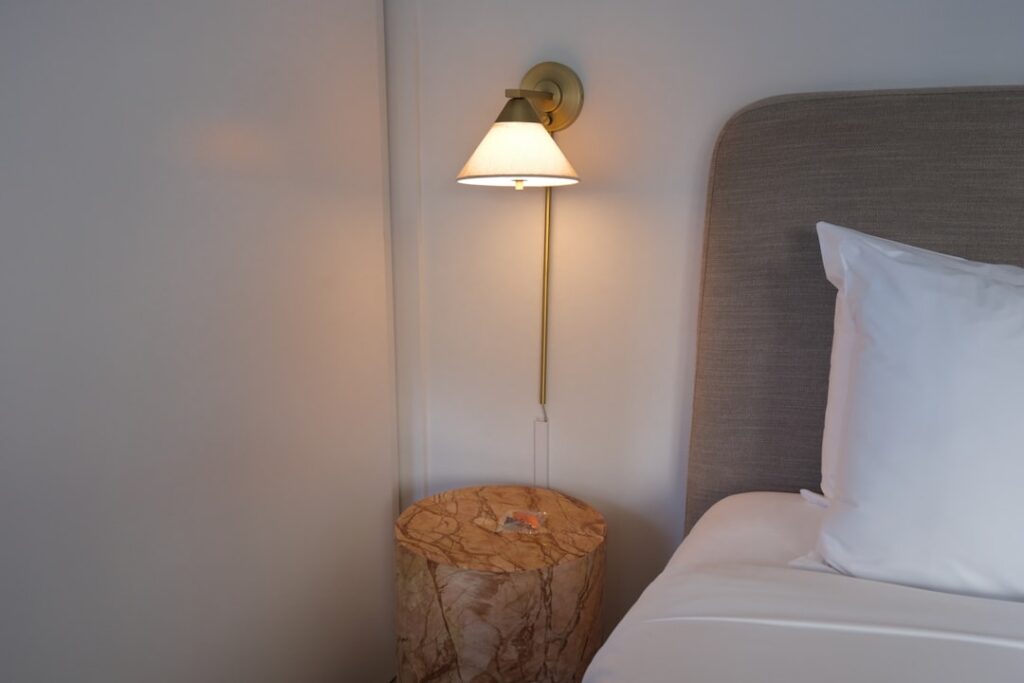
Bedside nook with wall lamp, rustic stump table and crisp white pillows in a small guest space

Casters come two ways. Four 360° swivel casters steer easily through a hallway one-handed. Commercial units often mix sizes — large 8 in fixed wheels at one end, 5 in casters at the other — which tracks straighter over thresholds and carpet edges.

Three things to check:

  • At least two locking casters. Without them the bed drifts every time someone rolls over. If yours has none, wedge the legs against a wall or baseboard.
  • Wheel material. Hard nylon and steel casters mark hardwood and vinyl plank; rubber or polyurethane wheels are gentler, and felt caster cups are the cheap retrofit.
  • Grit. A caster that picks up grit becomes a sanding tool — wipe the wheels after garage storage.

Rollaway vs folding cot vs air mattress vs sofa bed

Option Setup time Comfort for 3+ nights Stored footprint Main weakness
Rollaway bed 1–2 minutes, no tools Fair to good with a 5 in mattress plus topper Bulky but thin: about 40 × 17 in (102 × 43 cm) upright Hinge sag at the hips; short 75 in length
Folding camp cot 2–5 minutes, can be stiff Poor to fair; narrow and taut Smallest — often bag-sized Fabric deck, low width, no real mattress
Air mattress 3–5 minutes with a pump Poor over time; pressure drops overnight as air cools Tiny when deflated Seam failures, cold from below, noisy
Sofa bed Under a minute Good on quality models with a proper mattress None extra — it’s furniture Cost, weight, and the classic bar across the back

Choose by frequency. Under five guest-nights a year, an air mattress plus good bedding is the rational buy. Five to thirty nights, a rollaway bed earns its closet space. Over thirty, or any nightly use, buy furniture — a sofa bed or a trundle. If the room doubles as living space, our roundup of small-living-room sofas is worth reading first.

Bedding that actually fits a rollaway bed

This trips up almost everyone, because a rollaway mattress is standard in length and odd in width and depth.

  • Cot width (30–31 in / 76–79 cm): twin fitted sheets are 7–8 in too wide and will billow. Look for cot-size or “roll-away” sheets, or use a twin flat sheet tucked hospital-style.
  • Twin width (38–39 in / 97–99 cm): standard twin sheets fit the footprint. Because the mattress is only 4–5 in (10–13 cm) deep and most fitted sheets are cut for 10–14 in, you’ll have slack — sheet suspenders solve it for a few dollars.
  • Full width (54 in / 137 cm): full/double sheets work, same depth caveat.
  • Mattress protector: get the thin waterproof kind. It also keeps the foam from absorbing humidity in storage.
  • Duvets and pillows: a twin duvet on a cot-width bed drags on the floor. A twin-size quilt or a large throw looks better and washes easier. For how pillow covers are sized, see our guide to shams.

Setup, storage and keeping the mattress from going musty

Foam stored folded in a closed closet is a moisture trap. The EPA’s guidance on mold and moisture in homes is to keep indoor relative humidity below 60%, ideally between 30% and 50%. Damp basements and unheated garages routinely sit above that, which is how a bed comes out smelling like a cellar.

What works:

  1. Air it out after every use. Leave the bed open a few hours before folding.
  2. Store upright, not flat under boxes. Compressed foam dries slowly and holds creases.
  3. Leave a gap from the wall. Airflow on both faces beats a sealed plastic bag, which traps moisture inside.
  4. Use a breathable cover — cotton, not plastic sheeting.
  5. Skip the bare basement floor. If that’s the only option, raise it on a pallet.

Deal with spills the same day — a thin foam pad soaks through to the deck fast. Our walkthrough on getting urine out of a mattress covers foam specifically.

Care and lifespan: what fails first

In rough order: the mattress goes soft in the middle, then the casters crack or seize, then the hinge hardware loosens, then a leg bends because someone sat on the rail. The steel frame outlasts all of it.

Three habits that add years:

  • Tighten the bolts once a year. Folding stress backs fasteners out. Five minutes with a wrench.
  • Rotate the mattress pad end-to-end each time you store it, so the same section isn’t always under the heaviest load.
  • Silicone spray on the hinge, not oil — oil attracts grit and stains bedding.

Realistic lifespan: two to four years for a light consumer model used a dozen nights a year, closer to a decade for a commercial steel frame with a replaceable mattress. Foam ages on a clock as well as under load — the same reason your main mattress has a replacement window.

A note on prices

No dollar figures here — folding-bed pricing swings with import costs and promotions, so any number printed today is wrong by spring. The tiering holds, though: light import frames with a 3–4 in pad at the bottom, reinforced twin-width frames with 5 in mattresses in the middle, commercial 16-gauge steel with innersprings at the top.

Before you buy: the short checklist

  • Folded dimensions vs your closet, door and stair landing — all three.
  • Rated weight capacity with headroom above your heaviest likely guest.
  • Mattress thickness of 5 in (13 cm) if anyone will sleep on it more than two nights.
  • Centre support at the hinge, and at least two locking casters.
  • Frame weight under about 45 lb (20 kg) if one person will move it alone.
  • Whether replacement mattresses and casters are sold separately.

FAQ

What size is a standard rollaway bed?

Most are 30–31 in wide by 74–75 in long (76–79 × 188–191 cm), with twin-width versions at 38–39 in (97–99 cm) and true full versions at 54 in (137 cm). Length is almost always 75 in, regardless of width.

Can you sleep on a rollaway bed every night?

You can, but the mattress is the limit, not the frame — a 4 in pad compresses at the hips within months of nightly use. If it’s your main bed, a folding frame with a proper 6–8 in mattress, a trundle or a wall bed serves you far better. Our trundle bed mattress guide covers thickness limits on low-clearance frames.

Do rollaway beds fit through a normal doorway?

Folded upright, a standard unit is roughly 40 in wide and 17 in deep (102 × 43 cm), so it clears most doors sideways. Stair landings and narrow casings are the tight spots. Measure between the door stops, not the outside of the frame.

What sheets fit a rollaway bed?

Twin-width models take standard twin sheets with some slack, since the mattress is only 4–5 in deep. Cot-width models need cot-size sheets or a tucked flat sheet; a twin fitted sheet will be several inches too wide.

Rollaway bed or air mattress for a weekend guest?

For a night or two a year, an air mattress costs less and stores smaller. For several guest weekends, the rollaway wins on setup speed, warmth and not deflating at 4 a.m. — and it gets sleepers off the floor, which older guests appreciate.

How much weight can a folding guest bed hold?

Published ratings range from about 265 lb (120 kg) on light consumer frames to 440–500 lb (200–227 kg) on reinforced commercial ones. Those are static ratings for a person lying down; sitting hard on the side rail concentrates the load and is the usual cause of a bent leg.

Updated September 2026.

Under Bed Storage Frames That Maximize Bedroom Space

Beds with Built-In Storage


Beds With Built-In Storage for Organized Living

If your bedroom feels cluttered or you’re looking to make the most of every square foot, Beds with Built-In Storage offer the perfect solution. These smart designs integrate drawers, shelves, or hidden compartments directly into the bed frame, combining comfort with practicality. For more ideas, explore Hidden Storage Beds: Smart Space Savers.

Serene modern bedroom featuring Beds with Built-In Storage to maximize floor space and organization

Key Takeaways

  • Beds with Built-In Storage help maximize bedroom space while maintaining a stylish design.
  • Popular choices include platform beds, ottoman beds, captain’s beds, and Murphy beds.
  • These designs are ideal for small apartments, guest rooms, or multipurpose spaces.
  • Choosing the right storage bed depends on accessibility, storage needs, and room layout.

Why Choose Beds with Built-In Storage?

Bedrooms often double as storage areas, leaving closets overstuffed and under-bed bins in disarray. That’s where Beds with Built-In Storage stand out. By integrating storage into the frame itself, they eliminate clutter and free up valuable floor space. Whether in a city apartment or a compact guest room, these beds make organization effortless. For further ideas, check out Better Homes & Gardens’ bedroom storage solutions.

Types of Beds with Built-In Storage

There are multiple types of Beds with Built-In Storage, each offering a different balance of convenience, accessibility, and storage capacity. From sleek drawers to hidden lift-up compartments, the right choice depends on your space and lifestyle. For guidance, see How to Choose the Right Platform Bed with Storage.

Type of Storage Bed Best For Storage Capacity Key Advantage
Platform Beds with Drawers Minimalist bedrooms, daily essentials Moderate Accessible drawers without visible clutter
Ottoman Beds Small spaces, bulky seasonal storage High Gas-lift design reveals full under-bed space
Captain’s Beds Kids’ rooms, multipurpose layouts Moderate Mix of drawers and shelving
Murphy Beds with Storage Studios, guest rooms, tiny homes Moderate to High Saves floor space while adding hidden compartments

Each of these Beds with Built-In Storage caters to different needs. The best option depends on how much space you need and how you prefer to access it.

Platform Beds with Drawers

Answer first: choose platform beds if you want simple, everyday storage that blends into a minimalist design. Platform beds integrate two to four drawers into the frame, ideal for linens, shoes, or clothing. They’re especially useful in rooms with enough clearance for drawer access. Explore IKEA’s storage bed collection for affordable options.

Buyer’s tip: Opt for full-extension drawers to reach the back easily; felt-lined bottoms protect delicates. If your rug is thick, confirm the drawer height clears the pile.

Wood platform storage bed with drawers keeping a small bedroom organized and clutter-free

Ottoman Beds

Answer first: pick an ottoman base when you need maximum capacity in the same footprint as a standard bed. The mattress lifts on gas struts to reveal a single large compartment—ideal for winter duvets and gear. For complementary ideas, read Under-Bed Drawers for Small Bedroom Storage.

Buyer’s tip: Side-lift models are easier to open in tight rooms. Always match the gas-lift rating to your mattress weight, and add bins or cubes so the big cavity doesn’t become a jumble.

Space-saving ottoman bed raised to show under-bed compartment for seasonal storage

Captain’s Beds

Answer first: choose a captain’s bed for kid-friendly organization and multi-zone storage. These ship-inspired frames combine side drawers with headboard shelves, corralling toys, clothes, and books without extra furniture. See this Sleep Foundation guide to the best storage beds for inspiration.

Buyer’s tip: Prioritize soft-close drawers to protect little fingers, and look for adjustable shelving in the headboard to handle everything from picture books to baskets.

Captain’s storage bed with drawers and headboard shelves organizing a busy kids’ room

Murphy Beds with Storage

Answer first: select a Murphy bed when you need daytime floor space plus cabinetry for linens and gear. Wall-mounted designs fold away and often include side closets, cubbies, or hidden compartments. Explore more ideas in Space-Saving Bed Frame Solutions.

Buyer’s tip: Verify ceiling height, wall studs, and swing clearance before purchase. Many systems need professional installation; plan for lead times and anchoring hardware.

Murphy bed with side storage cabinets folded into a compact studio for flexible floor space

How to Choose the Right Storage Bed

Answer first: match access (drawers vs. lift) to how often you’ll use items, then confirm clearance and mattress compatibility. A quick checklist below narrows the field.

  • Measure movement: Map drawer swing, lift height, and door clearances; tape the footprint to test flow.
  • Match mattress weight: Dense foam/hybrids are heavy—verify gas-lift ratings or choose drawers instead. See Innovative Bed Frames with Storage Options.
  • Plan ventilation: Use breathable bags, cedar inserts, and avoid storing damp textiles.
  • Hardware quality: Full-extension slides, soft-close action, and reinforced corners extend lifespan.
  • Assembly needs: Murphy systems and heavy ottomans may need pros; check delivery path and stairwells.
  • Warranty & returns: Longer warranties signal durability; review weight limits and trial windows.
Style Access Best Use Capacity Room Fit
Platform Drawers Side pull-out drawers Daily linens, clothing Moderate Needs 24–36″ side clearance
Ottoman Lift Top lift on gas struts Bulky/seasonal items High Great for tight rooms; plan top clearance
Captain’s Bed Drawers + headboard shelves Kids’ rooms, multi-use Moderate Compact footprint replaces extra furniture
Murphy + Cabinets Folds into wall unit Studios/guest rooms Moderate–High Requires wall anchoring and ceiling clearance

FAQ

Are beds with built-in storage worth it?
Yes, they maximize space, reduce clutter, and add convenience, especially in smaller bedrooms.
Which storage bed offers the most capacity?
Ottoman beds typically provide the most storage, as they use the full under-bed space.
Can storage beds support heavy mattresses?
Many can, but always check manufacturer specifications. Reinforced frames and gas-lift systems work best with dense foam or hybrid mattresses.
Do storage beds require special care?
Keep drawer tracks clean, inspect gas-lift hardware annually, and avoid overloading compartments to preserve performance.

Final Thoughts

A thoughtfully chosen Bed with Built-In Storage transforms your bedroom into an organized, clutter-free retreat. From platform drawers to wall-mounted Murphy beds, these designs enhance both function and comfort. For even more inspiration, explore the full range of ideas at Cozy Bed Quarters.

Related Reading from Cozy Bed Quarters

Other Reading We Found Popular


More Expert Insights

Before discovering under-bed storage bags, my bedroom floor felt like a dumping ground. I unearthed forgotten treasures like a concert ticket from 2010, entire dust colonies, and, of course, the infamous odd sock graveyard. These discoveries were my wake-up call to start organizing smartly with proper storage solutions.

For expert recommendations, explore Real Simple’s under-bed storage solutions or browse Better Homes & Gardens’ best picks. You can also find budget-friendly yet stylish options at IKEA.

Organization starts with categorizing items—seasonal clothing, spare bedding, and those “just in case” items. For bulky items, vacuum-sealed bags work wonders, reducing volume significantly. Rolling clothes instead of folding makes packing more efficient and even satisfying, like completing a perfect game of Tetris.

To maximize space, I place rarely used items toward the back and stack bags in an even layer. I even created a quick “storage map” to remember where everything is—no more pulling out three bags just to find a scarf!

Every season, I rotate my under-bed storage bags to keep my wardrobe fresh and relevant. I follow a one-in-one-out rule to prevent unnecessary buildup and toss a dryer sheet inside each bag to maintain a pleasant scent. Regular checks ensure bags stay in good condition, protecting my belongings from damage.

Besides saving space, under-bed storage bags protect items from dust, moisture, and pests. No more finding sweaters with moth holes or bedding that smells musty. According to The Spruce, vacuum-sealed bags also help reduce allergens by keeping dust mites at bay.

For real-world user insights, see discussions on Reddit’s organization tips or trusted reviews on Consumer Reports.

From overstuffing bags (and sitting on them to zip them shut!) to crushing fragile ornaments, I’ve made all the rookie mistakes. Labeling fragile items and not overpacking has helped me refine my storage strategy.

Under-Bed Storage Bags are more than just convenient—they transform cluttered bedrooms into functional, tidy spaces. With a little effort, you can reclaim your under-bed area and make it work smarter for you.

Under-bed storage is more than just a place to stash random items. When used strategically, it frees up valuable closet and drawer space, reduces clutter, and creates a serene, minimalist atmosphere in your bedroom. By organizing this hidden zone, you can store seasonal clothes, linens, keepsakes, and occasional gear without sacrificing accessibility.

The golden rule of under-bed storage is simplicity. Start by sorting your belongings into key categories such as seasonal clothing, bedding, shoes, memorabilia, and occasional gear. Avoid placing daily-use items under the bed to prevent constant digging. For example, winter coats and comforters are perfect for storage during summer months, while flip-flops and summer hats can be stored in winter.
For more insights on bedding care, visit the Bedding Guide from Jabbour Linens.

The right storage tools can make all the difference. Use clear containers to instantly see what’s inside. Vacuum-seal bags are ideal for compressing bulky bedding. Rolling storage bins offer smooth accessibility, especially for heavier items. Lastly, dust-proof covers protect items from dirt and allergens.

Label each bin or container with both its contents and storage date. This prevents confusion and keeps your under-bed storage system organized. A quick glance at the labels means no more wasting time rummaging for that extra sheet or holiday decoration.

Even with limited clearance, you can optimize vertical space. Stackable containers and multi-compartment organizers work like a charm, creating layers of storage that function like a game of Tetris—every inch counts!

Place frequently used items near the front for quick access, while less-used items like holiday decorations or camping gear can be pushed to the back. This approach keeps your storage system functional and hassle-free.

Sketching a simple map of your under-bed layout might sound excessive, but it’s a huge time-saver. Tape this map inside your closet door, marking exactly where each category lives—no more searching in the dark abyss!

A clutter-free under-bed space requires periodic maintenance. Every 3–6 months, rotate seasonal items, remove things you no longer need, and ensure everything is stored properly. This keeps the space efficient and prevents buildup.

An organized under-bed storage system gives you more space in your bedroom, improves accessibility to your items, and maintains a tidy, clutter-free environment that promotes relaxation and better sleep. For deeper insights into bedding essentials, see the Sleep Foundation’s guide on bed shams or explore Crane & Canopy’s explanation of shams.

Organizing your under-bed storage is a simple yet powerful way to reclaim hidden space. By decluttering, using smart tools, and maintaining the system, you’ll enjoy a more functional and serene bedroom. Start small today, and soon you’ll wonder how you ever lived without this storage hack!

Twin Bed with Storage Underneath: Maximize Space and Style

Twin Bed with Storage Underneath: Maximize Space and Style - Featured Image

Twin Beds With Storage Underneath for Small Rooms

A Twin Bed with Storage Underneath is your secret weapon for transforming cluttered spaces into calm, organized havens—all without sacrificing style.

Key Takeaways

  • Maximize floor space with hidden storage compartments
  • Perfect solution for kids’ rooms, guest rooms, or small bedrooms
  • Multiple storage styles suit different organizing needs
  • Combines functionality with a variety of stylish designs

Why It’s a Space-Saver

A Twin Bed with Storage Underneath turns often-wasted under-bed space into a neat storage solution. Whether it’s drawers or bins, you can neatly organize toys, clothes, or bedding and instantly declutter your room. It’s a must-have for small spaces where every square foot counts. Explore more bedroom storage solutions. This approach not only frees up your floors but also encourages better use of vertical and hidden spaces throughout the room. For further inspiration, check out Apartment Therapy. Think of it as reclaiming territory you already have, making your home more livable without adding square footage.

Twin Bed with Storage Underneath maximizing space

Feels Like a Breath of Fresh Air

There’s a calming effect when you walk into a tidy bedroom. With a Twin Bed with Storage Underneath, everything has its place. This sense of order can make bedtime more peaceful—especially for kids. Clean space, calm mind. Try these under-bed organization hacks for even better results. A clutter-free space reduces visual stress, improves sleep quality, and helps create a restful sanctuary that promotes relaxation. Explore more design tips from The Spruce. It also makes daily cleaning easier, and your bedroom begins to feel like a true retreat from the world.

Twin Bed with Storage Underneath with hidden drawers

Different Storage Styles for Different Needs

No two rooms are the same, and that’s why Twin Beds with Storage Underneath come in versatile formats:

  • Built-In Drawers: Integrated into the bed frame, they offer easy access to everyday essentials like linens and pajamas. Learn more about custom under-bed drawers. Built-in drawers typically slide smoothly and blend seamlessly with the frame, keeping your space streamlined and stylish. They’re ideal for those who value convenience and a permanent storage fixture.
  • Storage Bins: Flexible and movable, ideal for storing seasonal decor or rarely-used items. These bins are perfect for those who want to change their layout frequently or use them in other parts of the home when needed. Choose stackable or lidded options for added protection from dust and dirt.
Twin Bed with Storage Underneath with built-in drawers

Perfect for Kids’ Rooms

Kids’ rooms tend to overflow with toys and school supplies. A Twin Bed with Storage Underneath creates dedicated homes for their treasures. Plus, it helps instill tidy habits early—making cleanup a fun and easy routine. When children know where their items go, they’re more likely to take responsibility and engage in maintaining their environment, which builds long-term organizational skills and independence. It also frees up floor space for play and learning activities, creating a more functional, inviting room they’ll enjoy.

Twin Bed with Storage Underneath for kids room

Fits Your Style Too

Functional can be fashionable. These beds come in a range of styles to match your decor:

  • Modern: Minimalist with clean lines, perfect for contemporary interiors. Smooth surfaces and neutral tones keep the look cohesive and polished.
  • Classic Wooden: Rich wood tones offer a timeless charm. See how this complements a rustic bedroom aesthetic. Wooden styles can also add warmth and a natural feel to your space. These are especially suited to cottage or farmhouse themes.
  • Custom Options: Choose finishes and materials to suit your personal style. From bold colors to unique handles, you can make the bed truly yours, ensuring it fits seamlessly into your home’s existing design. For inspiration, check Real Homes. Many retailers now offer 3D previews so you can design before you buy.
Modern Twin Bed with Storage Underneath design

Easy to Keep Clean

Low-maintenance and long-lasting, these beds simplify your cleaning routine:

  1. Dust regularly to keep the frame and drawers tidy
  2. Declutter monthly to avoid buildup
  3. Inspect hardware occasionally to ensure safety and stability

In addition, using drawer liners and organizing inserts can keep items neatly arranged and make cleanup faster. You’ll also extend the lifespan of both your bed and belongings by preventing wear and tear through thoughtful upkeep.

A Twin Bed with Storage Underneath offers more than just sleep—it brings organization, style, and serenity to small rooms. This simple upgrade can revolutionize how you use your space and simplify daily life. Make sure you’re also choosing the right twin mattress to complete your setup.

FAQ

What can I store under a Twin Bed with Storage Underneath?

You can store clothes, toys, books, seasonal items, shoes, or extra linens—whatever helps keep your room clutter-free.

Is a Twin Bed with Storage Underneath suitable for adults?

Yes, many styles are designed for adults and come in elegant finishes that suit grown-up bedrooms.

Do storage beds require special assembly?

Most Twin Beds with Storage Underneath come with standard assembly instructions. Some may require tools, but many are designed for quick setup. Always follow the manufacturer’s guide.

Are these beds compatible with standard twin mattresses?

Yes, they are built to accommodate standard twin mattresses. Just double-check dimensions if you’re using a thick or specialty mattress.

How do I keep items dust-free under the bed?

Using storage bins with lids or zippered organizers is the best way to keep stored items dust-free. Regular cleaning also helps maintain freshness.

Learn more in our guide on hidden storage beds and explore how to use vertical space with loft beds. For kids’ room ideas, don’t miss these space-saving kid bed options. More ideas are also available in our bedroom storage guide.

External resources like Sleep Foundation, Home Storage Solutions, The Spruce, Apartment Therapy, and Real Homes offer even more space-saving inspiration.