
Beds With Built-In Storage for Organized Living
If your bedroom feels cluttered or you’re looking to make the most of every square foot, Beds with Built-In Storage offer the perfect solution. These smart designs integrate drawers, shelves, or hidden compartments directly into the bed frame, combining comfort with practicality. For more ideas, explore Hidden Storage Beds: Smart Space Savers.

Key Takeaways
- Beds with Built-In Storage help maximize bedroom space while maintaining a stylish design.
- Popular choices include platform beds, ottoman beds, captain’s beds, and Murphy beds.
- These designs are ideal for small apartments, guest rooms, or multipurpose spaces.
- Choosing the right storage bed depends on accessibility, storage needs, and room layout.
Why Choose Beds with Built-In Storage?
Bedrooms often double as storage areas, leaving closets overstuffed and under-bed bins in disarray. That’s where Beds with Built-In Storage stand out. By integrating storage into the frame itself, they eliminate clutter and free up valuable floor space. Whether in a city apartment or a compact guest room, these beds make organization effortless. For further ideas, check out Better Homes & Gardens’ bedroom storage solutions.
Types of Beds with Built-In Storage
There are multiple types of Beds with Built-In Storage, each offering a different balance of convenience, accessibility, and storage capacity. From sleek drawers to hidden lift-up compartments, the right choice depends on your space and lifestyle. For guidance, see How to Choose the Right Platform Bed with Storage.
| Type of Storage Bed | Best For | Storage Capacity | Key Advantage |
|---|---|---|---|
| Platform Beds with Drawers | Minimalist bedrooms, daily essentials | Moderate | Accessible drawers without visible clutter |
| Ottoman Beds | Small spaces, bulky seasonal storage | High | Gas-lift design reveals full under-bed space |
| Captain’s Beds | Kids’ rooms, multipurpose layouts | Moderate | Mix of drawers and shelving |
| Murphy Beds with Storage | Studios, guest rooms, tiny homes | Moderate to High | Saves floor space while adding hidden compartments |
Each of these Beds with Built-In Storage caters to different needs. The best option depends on how much space you need and how you prefer to access it.
Platform Beds with Drawers
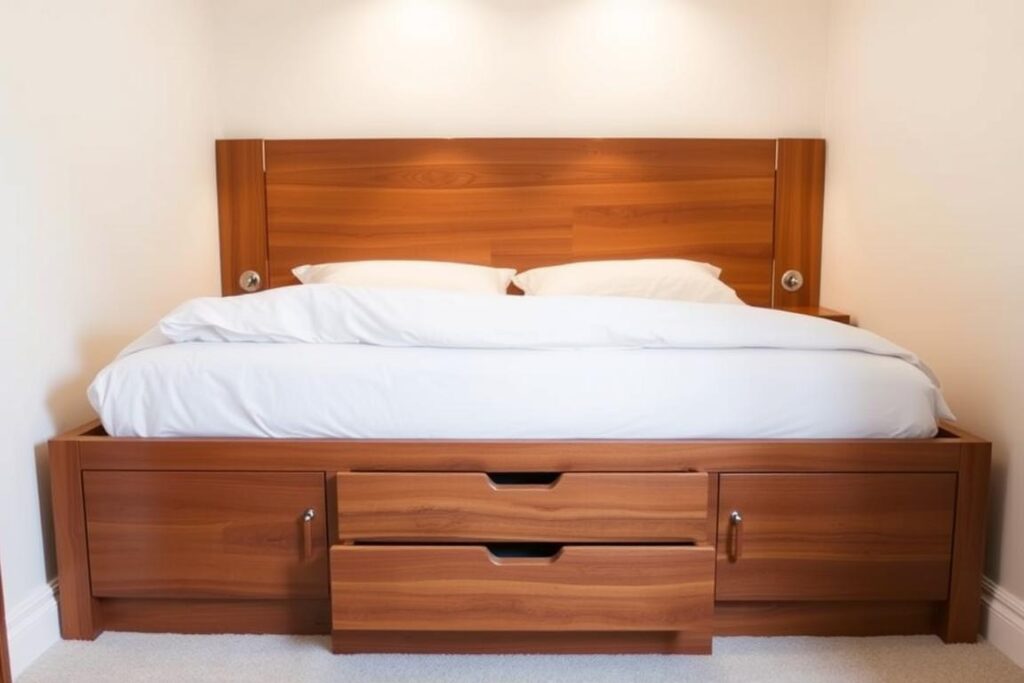
Answer first: choose platform beds if you want simple, everyday storage that blends into a minimalist design. Platform beds integrate two to four drawers into the frame, ideal for linens, shoes, or clothing. They’re especially useful in rooms with enough clearance for drawer access. Explore IKEA’s storage bed collection for affordable options.
Buyer’s tip: Opt for full-extension drawers to reach the back easily; felt-lined bottoms protect delicates. If your rug is thick, confirm the drawer height clears the pile.

Ottoman Beds
Answer first: pick an ottoman base when you need maximum capacity in the same footprint as a standard bed. The mattress lifts on gas struts to reveal a single large compartment—ideal for winter duvets and gear. For complementary ideas, read Under-Bed Drawers for Small Bedroom Storage.
Buyer’s tip: Side-lift models are easier to open in tight rooms. Always match the gas-lift rating to your mattress weight, and add bins or cubes so the big cavity doesn’t become a jumble.
Captain’s Beds
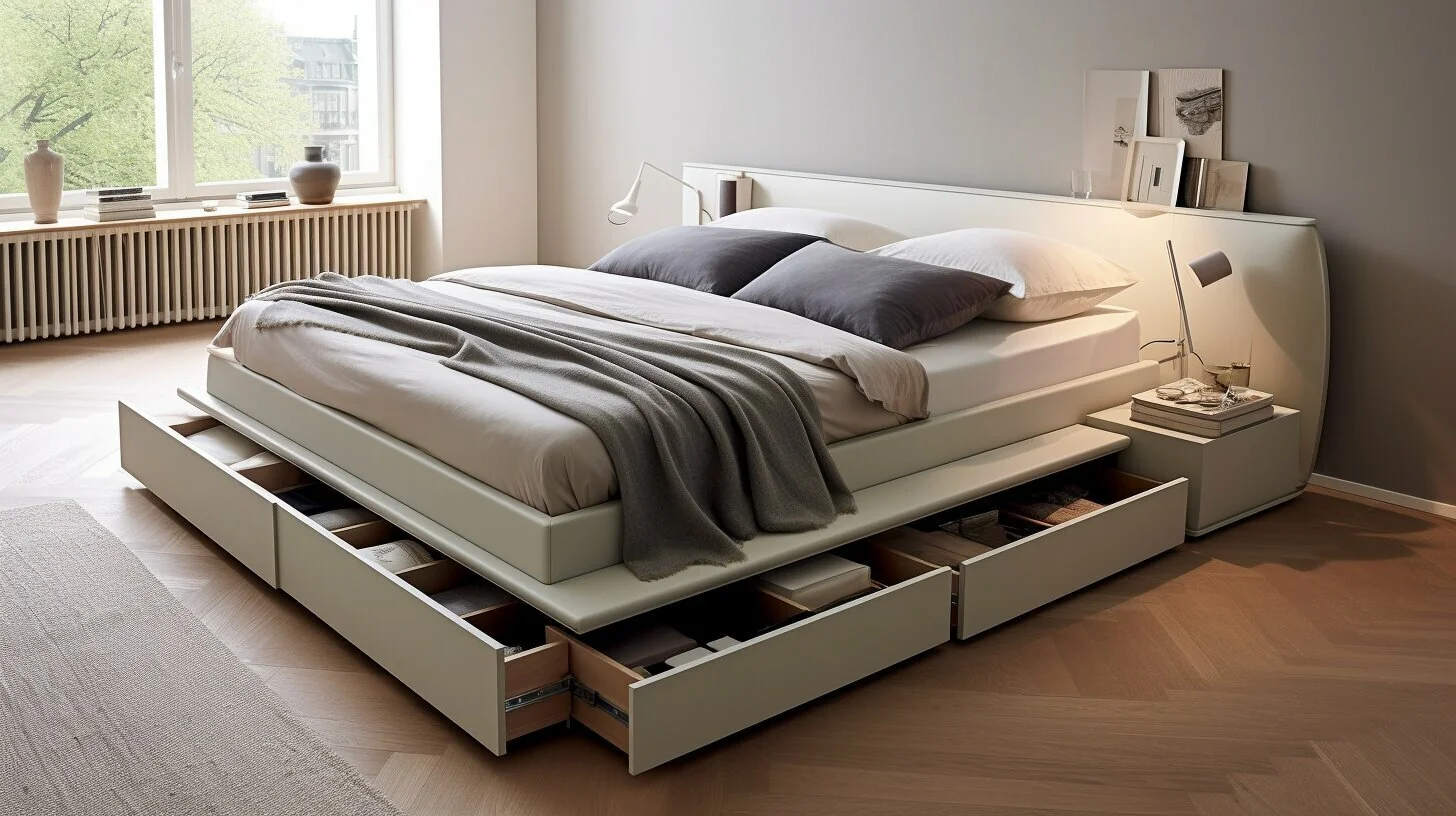
Answer first: choose a captain’s bed for kid-friendly organization and multi-zone storage. These ship-inspired frames combine side drawers with headboard shelves, corralling toys, clothes, and books without extra furniture. See this Sleep Foundation guide to the best storage beds for inspiration.
Buyer’s tip: Prioritize soft-close drawers to protect little fingers, and look for adjustable shelving in the headboard to handle everything from picture books to baskets.
Murphy Beds with Storage
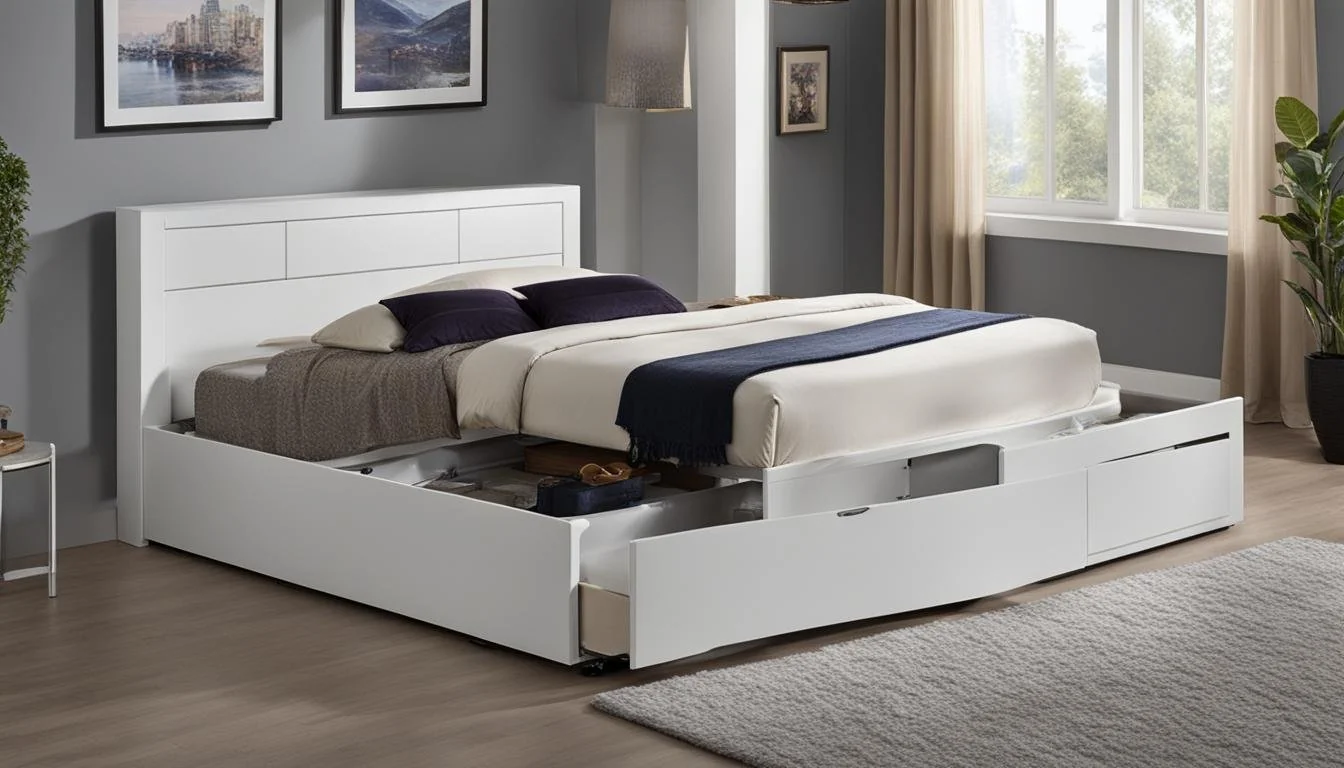
Answer first: select a Murphy bed when you need daytime floor space plus cabinetry for linens and gear. Wall-mounted designs fold away and often include side closets, cubbies, or hidden compartments. Explore more ideas in Space-Saving Bed Frame Solutions.
Buyer’s tip: Verify ceiling height, wall studs, and swing clearance before purchase. Many systems need professional installation; plan for lead times and anchoring hardware.

How to Choose the Right Storage Bed
Answer first: match access (drawers vs. lift) to how often you’ll use items, then confirm clearance and mattress compatibility. A quick checklist below narrows the field.
- Measure movement: Map drawer swing, lift height, and door clearances; tape the footprint to test flow.
- Match mattress weight: Dense foam/hybrids are heavy—verify gas-lift ratings or choose drawers instead. See Innovative Bed Frames with Storage Options.
- Plan ventilation: Use breathable bags, cedar inserts, and avoid storing damp textiles.
- Hardware quality: Full-extension slides, soft-close action, and reinforced corners extend lifespan.
- Assembly needs: Murphy systems and heavy ottomans may need pros; check delivery path and stairwells.
- Warranty & returns: Longer warranties signal durability; review weight limits and trial windows.
| Style | Access | Best Use | Capacity | Room Fit |
|---|---|---|---|---|
| Platform Drawers | Side pull-out drawers | Daily linens, clothing | Moderate | Needs 24–36″ side clearance |
| Ottoman Lift | Top lift on gas struts | Bulky/seasonal items | High | Great for tight rooms; plan top clearance |
| Captain’s Bed | Drawers + headboard shelves | Kids’ rooms, multi-use | Moderate | Compact footprint replaces extra furniture |
| Murphy + Cabinets | Folds into wall unit | Studios/guest rooms | Moderate–High | Requires wall anchoring and ceiling clearance |
FAQ
- Are beds with built-in storage worth it?
- Yes, they maximize space, reduce clutter, and add convenience, especially in smaller bedrooms.
- Which storage bed offers the most capacity?
- Ottoman beds typically provide the most storage, as they use the full under-bed space.
- Can storage beds support heavy mattresses?
- Many can, but always check manufacturer specifications. Reinforced frames and gas-lift systems work best with dense foam or hybrid mattresses.
- Do storage beds require special care?
- Keep drawer tracks clean, inspect gas-lift hardware annually, and avoid overloading compartments to preserve performance.
Final Thoughts
A thoughtfully chosen Bed with Built-In Storage transforms your bedroom into an organized, clutter-free retreat. From platform drawers to wall-mounted Murphy beds, these designs enhance both function and comfort. For even more inspiration, explore the full range of ideas at Cozy Bed Quarters.
Related Reading from Cozy Bed Quarters
Other Reading We Found Popular
- Best Storage Beds – Sleep Foundation
- Architectural Digest: 23 Genius Storage Ideas for Small Spaces
- Parachute Home: 19 Bedroom Organizing Tips That’ll Elevate Your Room
More Expert Insights
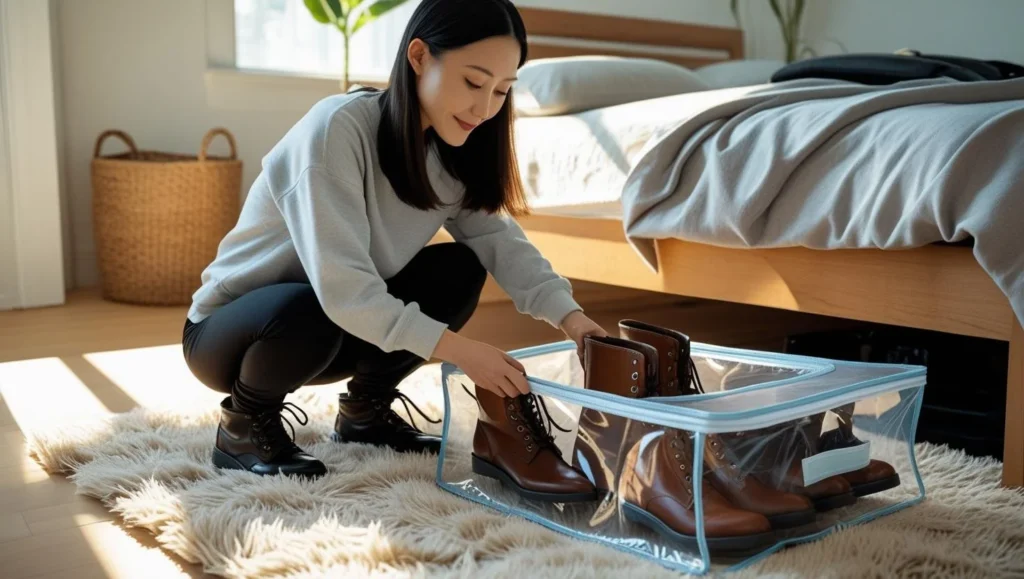
Before discovering under-bed storage bags, my bedroom floor felt like a dumping ground. I unearthed forgotten treasures like a concert ticket from 2010, entire dust colonies, and, of course, the infamous odd sock graveyard. These discoveries were my wake-up call to start organizing smartly with proper storage solutions.
For expert recommendations, explore Real Simple’s under-bed storage solutions or browse Better Homes & Gardens’ best picks. You can also find budget-friendly yet stylish options at IKEA.
Organization starts with categorizing items—seasonal clothing, spare bedding, and those “just in case” items. For bulky items, vacuum-sealed bags work wonders, reducing volume significantly. Rolling clothes instead of folding makes packing more efficient and even satisfying, like completing a perfect game of Tetris.
To maximize space, I place rarely used items toward the back and stack bags in an even layer. I even created a quick “storage map” to remember where everything is—no more pulling out three bags just to find a scarf!
Every season, I rotate my under-bed storage bags to keep my wardrobe fresh and relevant. I follow a one-in-one-out rule to prevent unnecessary buildup and toss a dryer sheet inside each bag to maintain a pleasant scent. Regular checks ensure bags stay in good condition, protecting my belongings from damage.
Besides saving space, under-bed storage bags protect items from dust, moisture, and pests. No more finding sweaters with moth holes or bedding that smells musty. According to The Spruce, vacuum-sealed bags also help reduce allergens by keeping dust mites at bay.
For real-world user insights, see discussions on Reddit’s organization tips or trusted reviews on Consumer Reports.
From overstuffing bags (and sitting on them to zip them shut!) to crushing fragile ornaments, I’ve made all the rookie mistakes. Labeling fragile items and not overpacking has helped me refine my storage strategy.
Under-Bed Storage Bags are more than just convenient—they transform cluttered bedrooms into functional, tidy spaces. With a little effort, you can reclaim your under-bed area and make it work smarter for you.
Under-bed storage is more than just a place to stash random items. When used strategically, it frees up valuable closet and drawer space, reduces clutter, and creates a serene, minimalist atmosphere in your bedroom. By organizing this hidden zone, you can store seasonal clothes, linens, keepsakes, and occasional gear without sacrificing accessibility.
The golden rule of under-bed storage is simplicity. Start by sorting your belongings into key categories such as seasonal clothing, bedding, shoes, memorabilia, and occasional gear. Avoid placing daily-use items under the bed to prevent constant digging. For example, winter coats and comforters are perfect for storage during summer months, while flip-flops and summer hats can be stored in winter.
For more insights on bedding care, visit the Bedding Guide from Jabbour Linens.
The right storage tools can make all the difference. Use clear containers to instantly see what’s inside. Vacuum-seal bags are ideal for compressing bulky bedding. Rolling storage bins offer smooth accessibility, especially for heavier items. Lastly, dust-proof covers protect items from dirt and allergens.
Label each bin or container with both its contents and storage date. This prevents confusion and keeps your under-bed storage system organized. A quick glance at the labels means no more wasting time rummaging for that extra sheet or holiday decoration.
Even with limited clearance, you can optimize vertical space. Stackable containers and multi-compartment organizers work like a charm, creating layers of storage that function like a game of Tetris—every inch counts!
Place frequently used items near the front for quick access, while less-used items like holiday decorations or camping gear can be pushed to the back. This approach keeps your storage system functional and hassle-free.
Sketching a simple map of your under-bed layout might sound excessive, but it’s a huge time-saver. Tape this map inside your closet door, marking exactly where each category lives—no more searching in the dark abyss!
A clutter-free under-bed space requires periodic maintenance. Every 3–6 months, rotate seasonal items, remove things you no longer need, and ensure everything is stored properly. This keeps the space efficient and prevents buildup.
An organized under-bed storage system gives you more space in your bedroom, improves accessibility to your items, and maintains a tidy, clutter-free environment that promotes relaxation and better sleep. For deeper insights into bedding essentials, see the Sleep Foundation’s guide on bed shams or explore Crane & Canopy’s explanation of shams.
Organizing your under-bed storage is a simple yet powerful way to reclaim hidden space. By decluttering, using smart tools, and maintaining the system, you’ll enjoy a more functional and serene bedroom. Start small today, and soon you’ll wonder how you ever lived without this storage hack!