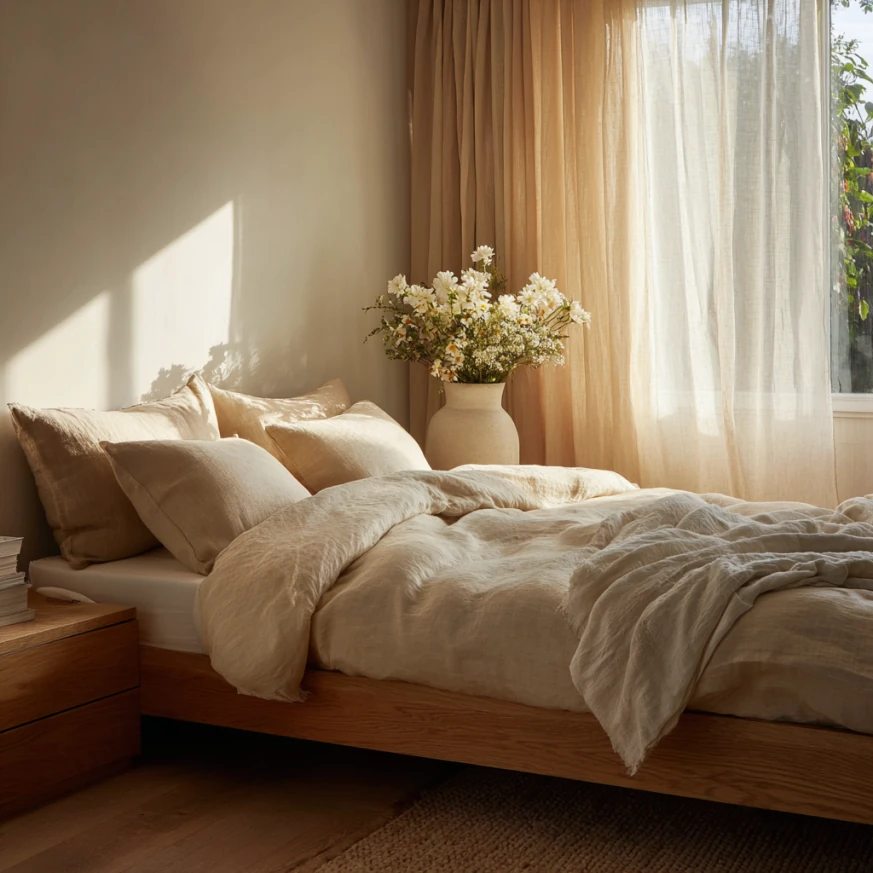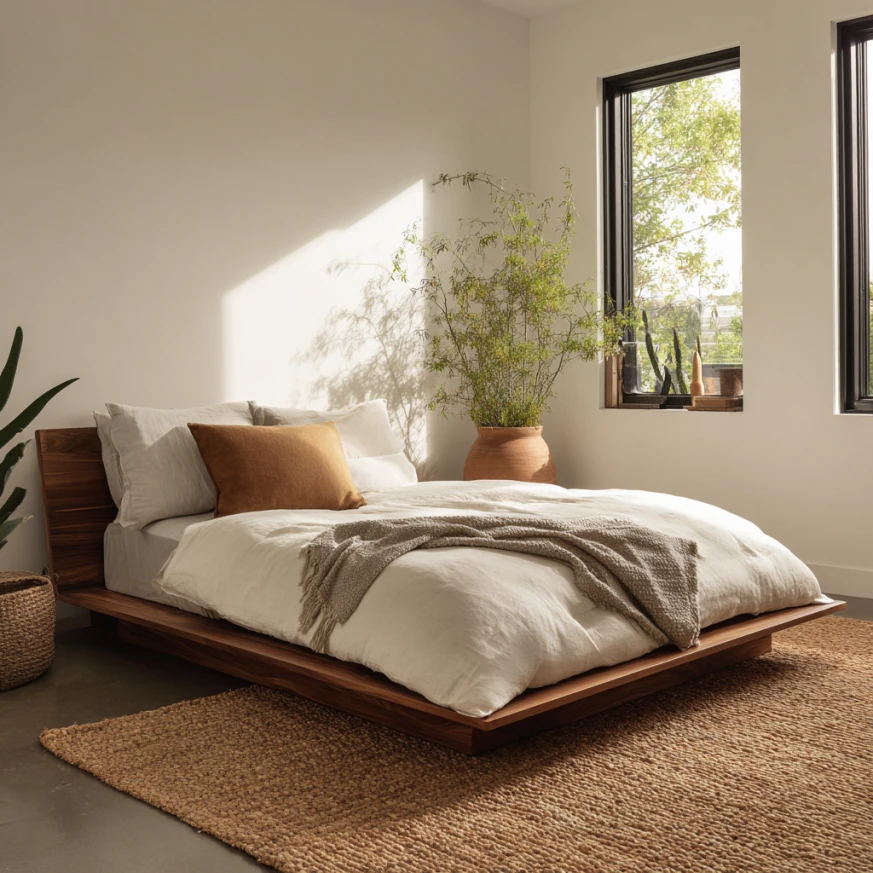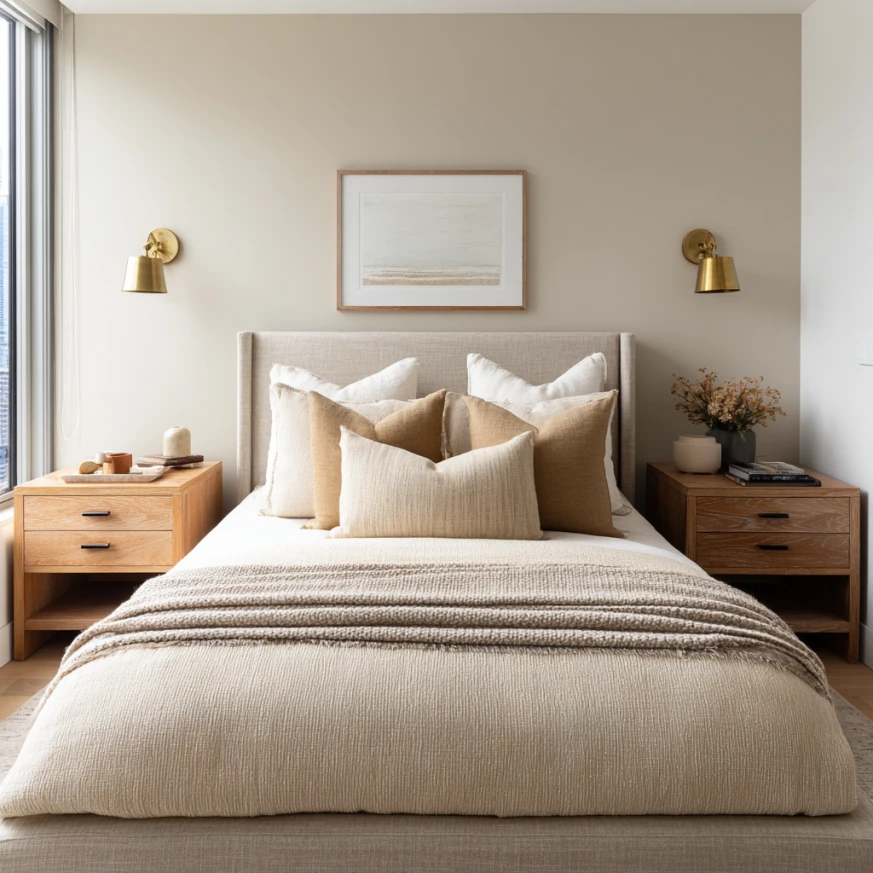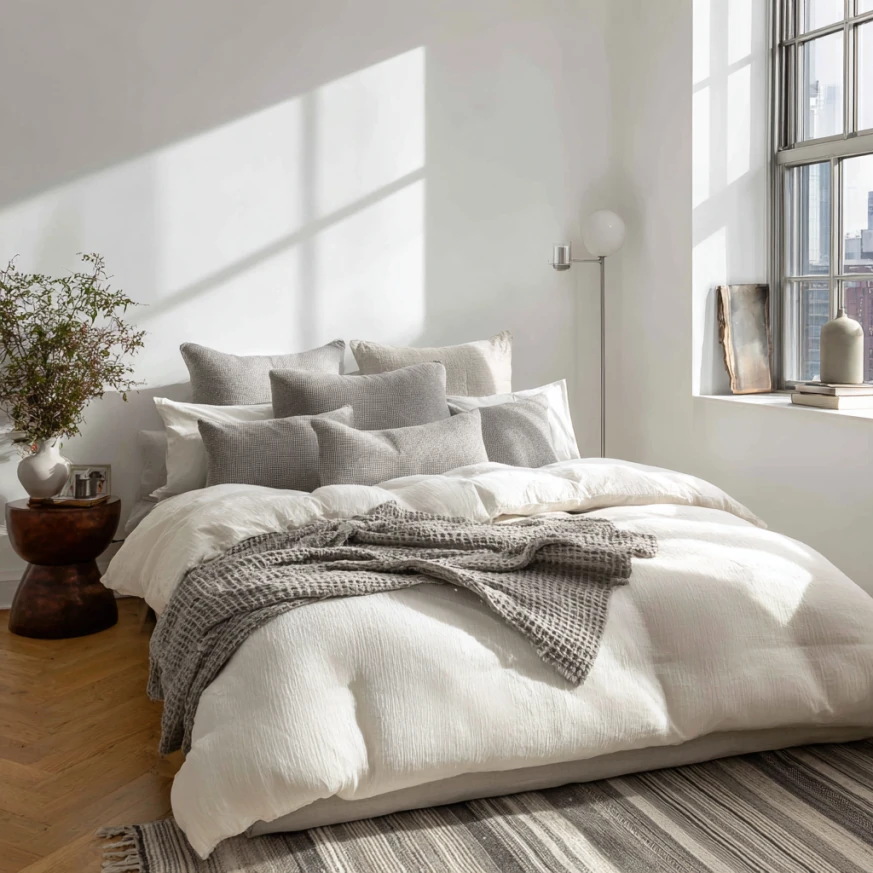
Choosing a Rug for a Small Bedroom: Rules to Follow (and Break)

rug for small bedroom - rug small bedroom

Choosing the Right Rug for Small Bedroom Spaces

Rug for Small Bedroom decisions get easy when you plan around the bed. A right-size piece anchors the layout, smooths traffic, and adds cozy underfoot comfort without crowding precious floor.

Use this friendly guide to pick the best size, shape, and material. You’ll learn simple reveals that make a tiny room feel larger, when to slide a rug under the bed, and how light colors or small patterns widen the view. For sleep-health context, adults need at least seven hours a night; a soft landing can make mornings gentler (CDC – Sleep Resources).

A calm, balanced layout starts with consistent floor reveal around the bed.

Key Takeaways

  • Plan placement around the bed to anchor the room fast.
  • Reveal 12–18 inches of floor on all sides for balance.
  • Rug for Small Bedroom rule of thumb: when unsure, size up.
  • Use runners to add visual length and keep walkways clear.
  • Match pile and materials to your cleaning habits and budget.

Start with sizing: simple rules that make small rooms feel bigger

Measure first, then decide. Leave about 12–18 inches of visible floor on the long and short sides of your bed. This reveal calms the eye and prevents a cramped look.

Mini-scenario: you have a full bed tight to one wall. A 6×9 centered from the free wall creates even reveal, while a 5×7 can float at the foot if doors need clearance.
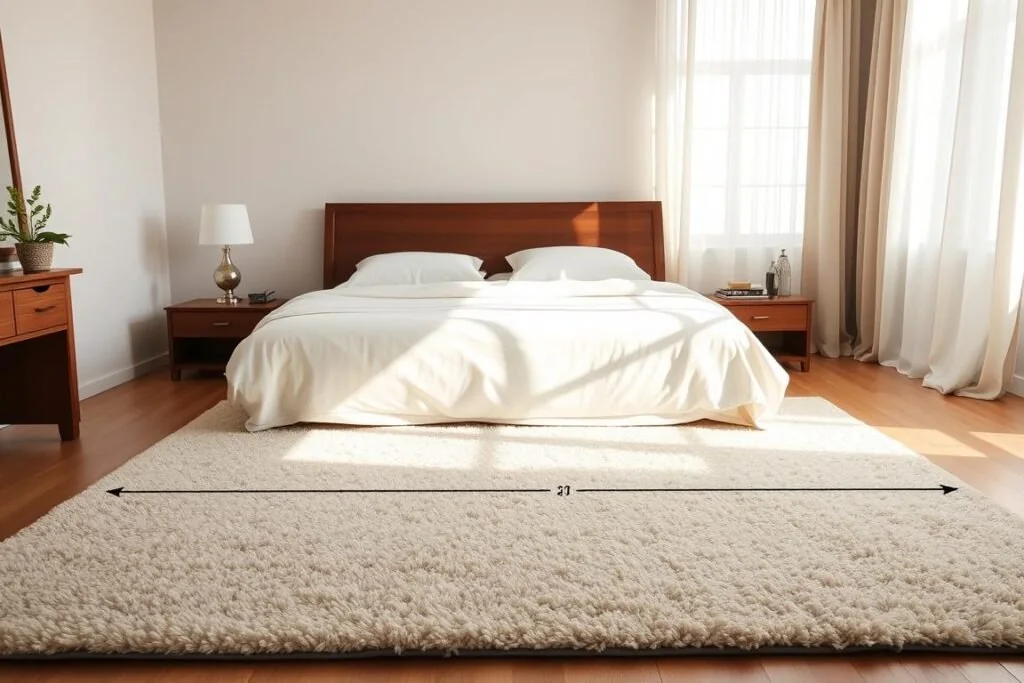
Rug for Small Bedroom sizing diagram showing 12–18 inch floor reveal - rug small bedroom

Check door swings and drawers at the side so edges never block openings.

  • 5×7: Accent at the foot or peeking at sides for full/queen in tight rooms.
  • 6×9: Neat center under a full or queen with modest reveal.
  • 8×10: Two-thirds under most queen/king for generous coverage.
  • 9×12: All four legs on when the room still shows perimeter floor.

Want the full decision tree? See our pillar guide: Bedroom Rug Size & Placement Guide.

Smart placement ideas for a Rug for Small Bedroom

Use layout to stretch your square footage. Slide partway under the bed for a layered look, or use narrow pieces at the sides to keep the center aisle open.

Mini-scenario: small queen room with two doors. An 8×10 starts near the nightstand line so the headboard stays on floor, not textile. Doors clear cleanly and you keep soft landings.
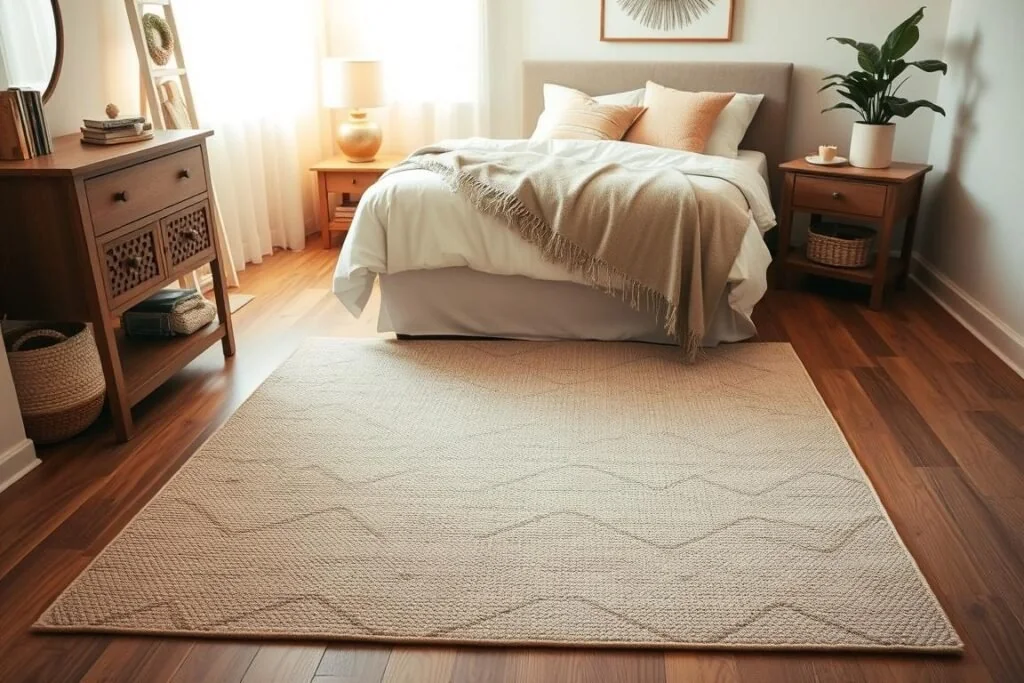
Rug for Small Bedroom using side runners to keep the center aisle clear - rug small bedroom

Two-thirds under the bed: Slide 8×10 so the rug begins near the nightstands. All four legs on: Choose 9×12 if you still see floor around the edges. For tight rooms, matching side runners give warmth without a giant footprint.

Choose materials and pile that match your lifestyle

Pick comfort you’ll enjoy every morning, then match care to your routine. Bedrooms are low traffic, so plush feels great, while flatweaves keep doors moving freely.

Mini-scenario: light-sleeper household with pets. A low-pile, washable rug plus a thin pad helps cleaning while keeping the door glide smooth.

For safer buying, look for recognized labels when choosing bedding and textiles. Learn what common labels mean here: Bedding & Mattress Certifications. If you prefer low-tox home goods, this roundup can help you compare materials and finishes: Non-Toxic Mattress Guide.

  • Plush or shag: Cozy under bare feet; pair with a thin pad to prevent slipping.
  • Flatweave: Door-friendly and easy to vacuum in tight rooms.
  • Wool: Warm, resilient, and naturally soil-resistant.
  • Synthetics (polyester/PP): Stain-resistant and often washable.
  • Jute/sisal: Earthy texture that layers well at the sides of the bed.

Prefer video? Try this short how-to: How to choose the right bedroom rug.

Color, pattern, and shape: easy ways to “stretch” a tiny room

Light, low-contrast rugs bounce light and make the footprint read wider. Small patterns hide lint without visual busyness.

Mini-scenario: narrow room with a queen bed. A pale, small-scale pattern plus a runner along the long wall pulls the eye forward for more “length.” A round rug can soften sharp corners near a dresser.

  • Light neutrals: Open the space; great under mid-tone bedding.
  • Small pattern: Hides daily dust but stays calm.
  • Runner along the long axis: Adds visual length and flow.
  • Round accent: Softens corners and offsets boxy layouts.
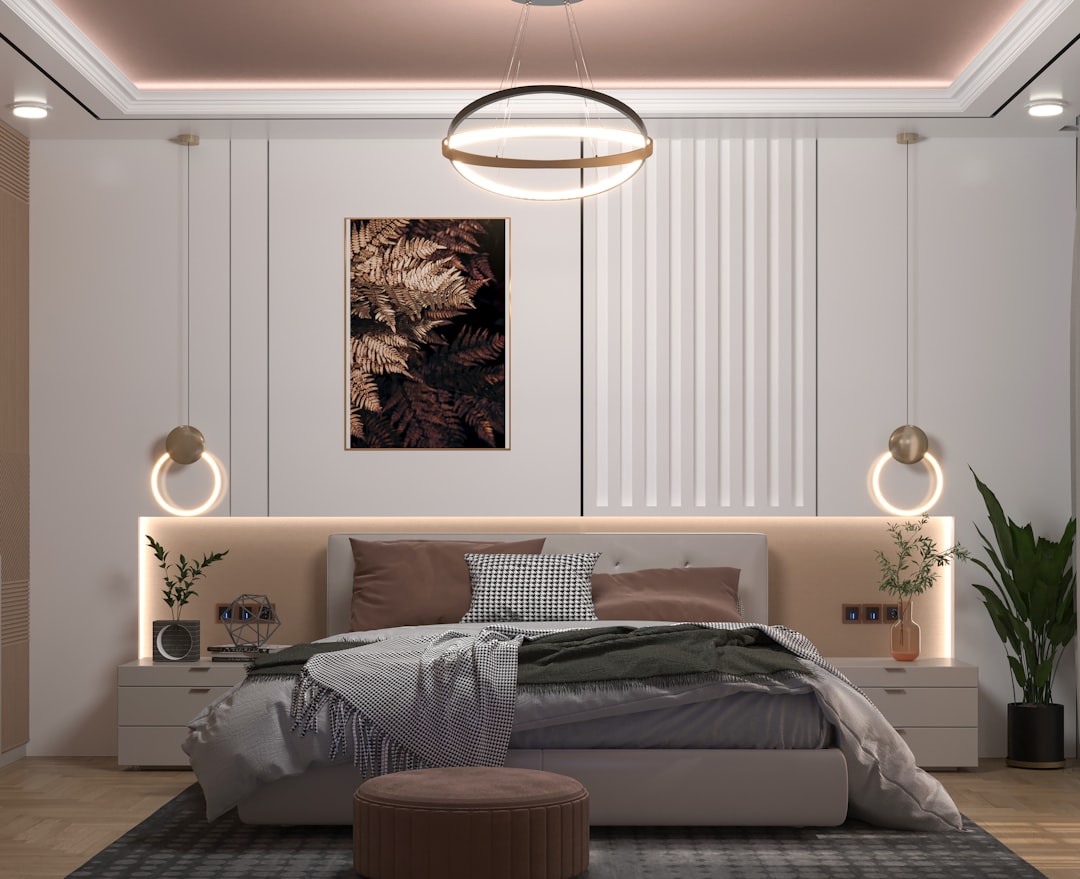
Choosing a Rug for a Small Bedroom: Rules to Follow (and Break) - rug small bedroom

Keep edges aligned with furniture lines so the layout feels intentional, not random.

Budget and care: practical wins that still feel polished

Set the budget by size first. It keeps choices focused and prevents overbuying. Washable constructions offer stress-free care in kid- or pet-friendly rooms.

Mini-scenario: you want plush comfort on a budget. Start with an 8×10 synthetic blend and add a quality pad for cushion—often cheaper than stepping up to a pricier dense pile.

  • Use a pad for grip and comfort (thin under doors, cushier in open spaces). See our picks: Best Rug Pads for Bedrooms.
  • Spot clean weekly; rotate seasonally for even wear. Learn more: How to Clean an Area Rug.
  • Map walkways before you buy to avoid curled edges in high-traffic lanes. Layout ideas: Small Bedroom Layout Ideas.

FAQ

What size rug works for a small bedroom with a queen bed?

An 8×10 usually covers two-thirds under the bed with nightstands off the rug. If the room allows a floor perimeter, a 9×12 puts all four legs on for a seamless look.

Should I put the rug under the bed or beside it?

Both work. Two-thirds under is great for coverage without crowding. Side runners give warm landings and keep the center aisle open in very tight rooms.

What material is best if I have allergies?

Low-pile wool or tightly woven synthetics are easy to vacuum. Pair with regular cleaning and a thin pad. Check labels and care notes before buying.

Do I need a rug pad in a small room?

Yes. A pad adds grip and comfort, and it helps rugs lie flat. Choose a thinner pad if doors skim the floor.

Conclusion

Rug for Small Bedroom choices come down to scale, placement, and care. Measure your bed, aim for a 12–18 inch reveal, and choose 8×10 for two-thirds under a queen or 9×12 to place all legs on the textile. Match pile to daily habits, use runners to guide sightlines, and keep tones light to “open” the space. For deeper sizing charts and room layouts, start with our pillar: Bedroom Rug Size & Placement Guide. Thanks for reading Cozy Bed Quarters—sleep cozier, live better.

Other reading we found popular

Best Bed for a Small Room: Murphy, Sofa Bed or Storage

Beds Small Rooms - best bed for small room

The best bed for small room layouts is the one that gives you back floor space during the day without costing you sleep at night. For most tight bedrooms that means a wall (Murphy) bed if the room does double duty, a storage platform bed if you’re short on drawers, a sofa bed or daybed in a guest room or office, and a loft or bunk in a kids’ room. Everything else is a measuring problem: get your walkways and door swings right first, then pick the style.

Pick Your Bed by How the Room Is Used

Start with what happens in the room between 8 a.m. and 10 p.m., not just how you sleep. A bed that vanishes is worth a lot in a studio and almost nothing in a bedroom you only walk into at bedtime.

Your situation Strongest option Why it works
Studio or one-room apartment Murphy / wall bed Clears the middle of the floor every morning for a table, a mat or a desk
Home office that hosts guests Sofa bed or daybed with trundle Seating all week, a real bed a few nights a month
Small primary bedroom, no closet space Storage platform bed (drawers or lift-up) Replaces a dresser, so you buy back a wall
Kids’ or shared room Bunk or loft Stacks sleeping and frees the footprint below for desk or play
Occasional overnight guests only Rollaway or folding frame Stores flat in a closet the other 360 nights

If you want the full rundown of mechanisms and shapes before you commit, our guide to space-saving bed types walks through each one side by side.

Measure the Room Before You Shop

This is the step that prevents returns. Measure wall to wall at floor level, then note baseboards, radiators, window sills, vents and the arc of every door — including closet doors, which are the usual casualty of a bed that’s one size too big.

  • Walkways: aim for roughly 24–30 inches on any side you actually use. It’s a rule of thumb, not a code, but less than about two feet starts to feel like squeezing past furniture.
  • Foot of the bed: leave room for the drawer or the lift-up lid to open, plus space to stand while you open it.
  • Ceiling height: matters for wall beds, lofts and bunks. Measure to the ceiling, then again to the lowest thing hanging from it (a fan or light fixture).
  • Delivery path: doorways, stair turns, elevator depth. Flat-pack solves most of this; a one-piece wall bed cabinet does not.

Then do the tape test. Put painter’s tape on the floor in the exact footprint of the bed you’re considering, and live with it for a day — walk in from the door, pretend to make it, pretend to open the drawers. If you keep clipping a corner, size down.

Don’t trade away sleep quality to win a few inches. The CDC notes that adults aged 18–60 are recommended to get at least seven hours of sleep a night, and a thin, undersized mattress on a clever frame is still a thin, undersized mattress.

Murphy and Wall Beds: The Biggest Daytime Win

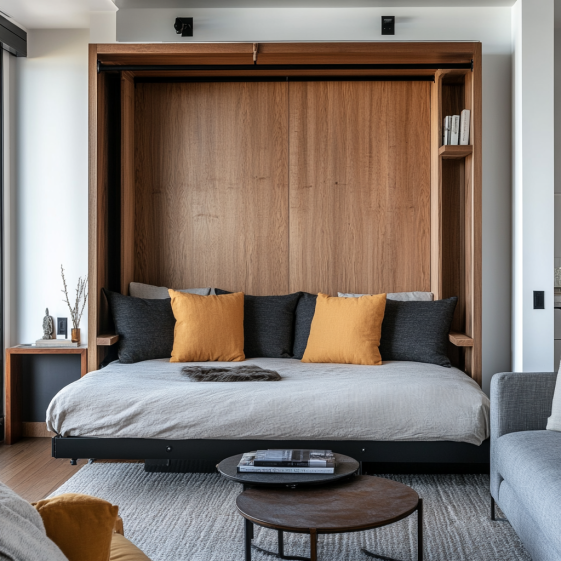
A wall bed folds vertically or horizontally into a cabinet, so the room resets to empty floor every morning. In a small studio that single change can be the difference between a bedroom with a desk shoved in the corner and a proper living space.

Murphy bed folded into a cabinet, the best bed for a small room that doubles as living space

Two broad types:

  • Freestanding cabinet units. The whole assembly stands on the floor, so there’s little or no drilling into the wall. Easier for renters, easier to take with you.
  • Wall-mounted units. Slimmer and tidier, but they have to be anchored into studs or solid masonry. If you aren’t confident finding structure behind the drywall, pay for installation — this is not the corner to cut.

What to check before buying: the lift mechanism (gas piston or spring, and how heavy the pull-down feels), the maximum mattress thickness and weight, the wall width including trim, and how much the closed cabinet projects into the room — usually 16 to 20 inches, which eats real floor space even when it’s shut. Side cabinets, fold-out desks and integrated shelving are common add-ons, and modern units generally handle foam and hybrid mattresses within the stated limits. More detail in our guide to a bed that folds into the wall.

The honest downside: you have to strip or strap the bedding daily, and you’ll fold it up more than you expect to. If you know you won’t bother, a storage bed is the better buy.

Sofa Beds and Daybeds: A Couch Bed for a Small Room

If the room needs seating more than it needs a permanent bed, a convertible sofa or a daybed earns its footprint twice a day. A sofa bed hides the mattress inside the frame; a daybed is a twin mattress with a back and sides, dressed with bolsters so it reads as a sofa.

  • Sofa beds suit guest rooms and offices used by adults a few nights at a time. Check the open length — a sleeper needs far more clearance in front than the closed sofa suggests. Thicker foam or a hybrid insert hides the support bars better than a thin innerspring pad.
  • Daybeds are better for nightly sleeping, because you’re using an ordinary twin mattress. Add a trundle and you get a second bed that rolls out from underneath.
  • Fabric matters in a room that doubles as a living space. A tight-weave performance fabric survives daily sitting far better than loose velvet.

Sizing and mechanism comparisons live in our guide to sofa beds for small spaces.

Storage Beds: Drawers or Lift-Up Platform?

Under a standard bed sits 25 to 35 square feet of dead space. A storage bed claims it, and in a small room that often means you can skip the dresser entirely — which is both a space win and one less piece of furniture to worry about, since CPSC’s mandatory stability standard for dressers and other clothing storage units, backed by the STURDY Act, took effect in September 2023 and any dresser you keep should be anchored to the wall.

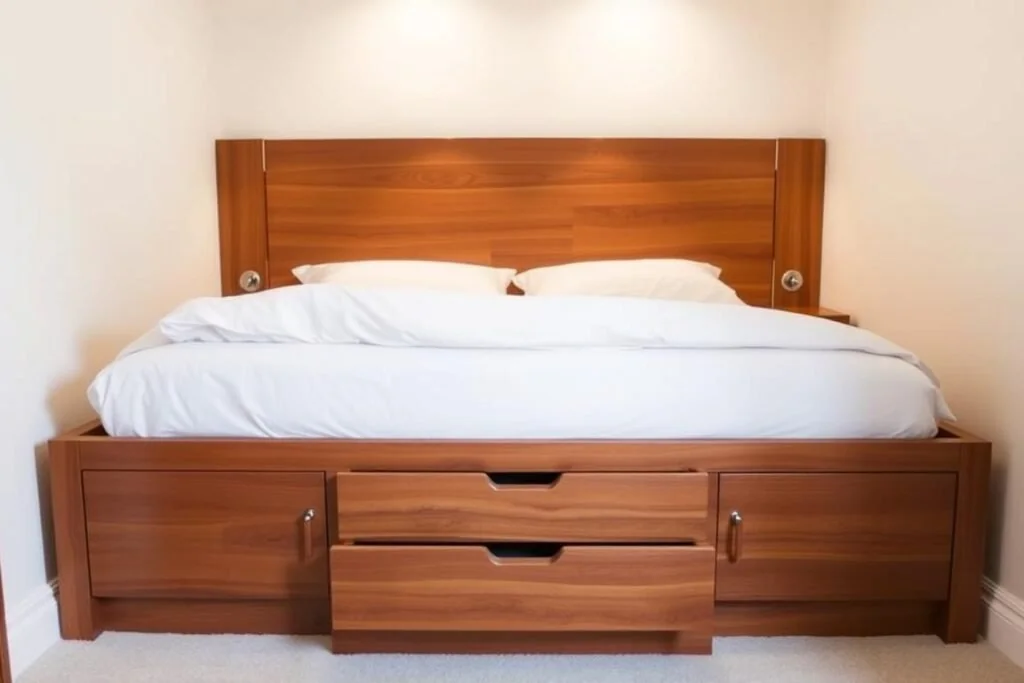
Platform storage bed with under-bed drawers in a small bedroom

Side drawers win for daily items — socks, tees, workout clothes. Look for full-extension glides and check which side they open on, because a drawer that needs 24 inches of pull-out space on the wall side is a drawer you’ll never use.

Lift-up (ottoman) platforms win for bulk: luggage, bedding, seasonal coats. The whole deck hinges up on gas struts. Confirm the struts are rated for your mattress weight, and leave clearance at the head or foot for the deck to swing.

Either way, the trade-off is the same: storage beds are heavy, harder to move, and you can’t sweep under them. If you’d rather keep a normal frame, bins on risers do a cheaper version of the same job. See our roundup of hidden storage beds for layouts that suit narrow rooms.

Lofts and Bunks: Build Upward

Stacking is the only way to truly double a floor plan. A loft puts a desk, dresser or reading nook under the mattress; a bunk puts a second sleeper there.

loft style space-saving bed frame with under-bed workstation

Safety rules here are not optional. Federal regulations require that a bunk bed provide at least two guardrails on the upper bunk, one on each side; lower bunks whose foundation sits 30 inches or less off the floor don’t need them. Bunk beds also carry a warning label about which children should use the top bunk — read it and follow it.

Practical clearances to plan for:

  • Enough headroom above the top mattress to sit up without hitting the ceiling. Manufacturers usually specify a minimum; check yours before you buy, and measure to the ceiling fan, not just the ceiling.
  • Roughly 34–36 inches of desk-sitting height under a loft, plus space for a chair to push back.
  • A ladder that’s fixed to the frame, not hooked on, with steps wide enough for bare feet.
  • Thicker mattresses reduce the guardrail height above the sleeping surface — stick to the maximum thickness printed on the label.

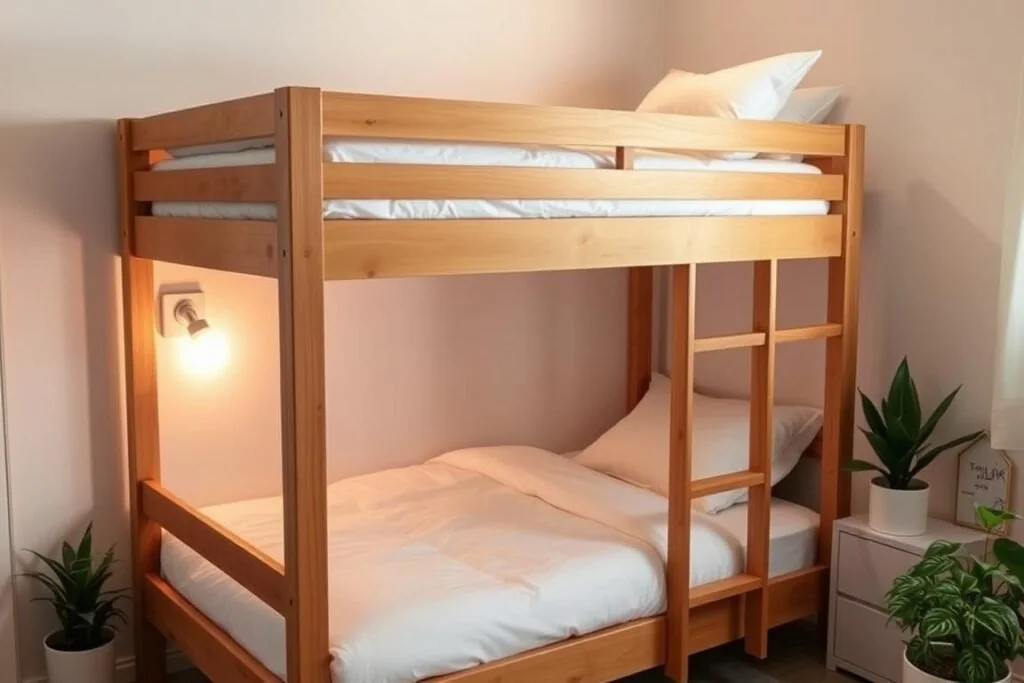
Twin-over-twin bunk bed with guardrails in a small shared kids room

Size and Frame Height: Fit First, Then Feel

US mattress sizes are standard: twin 38 by 75 inches, twin XL 38 by 80, full 54 by 75, queen 60 by 80. In a small room the jump from twin to full costs 16 inches of width — often exactly the walkway you were counting on.

  • Twin: narrowest footprint, easiest to place along a long wall, works as a daybed with bolsters.
  • Twin XL: same width, five more inches of length for taller sleepers.
  • Full: real shoulder room for one adult, tight for two. Check it against your room before you fall in love with it — our full size bed dimensions guide has layout diagrams.

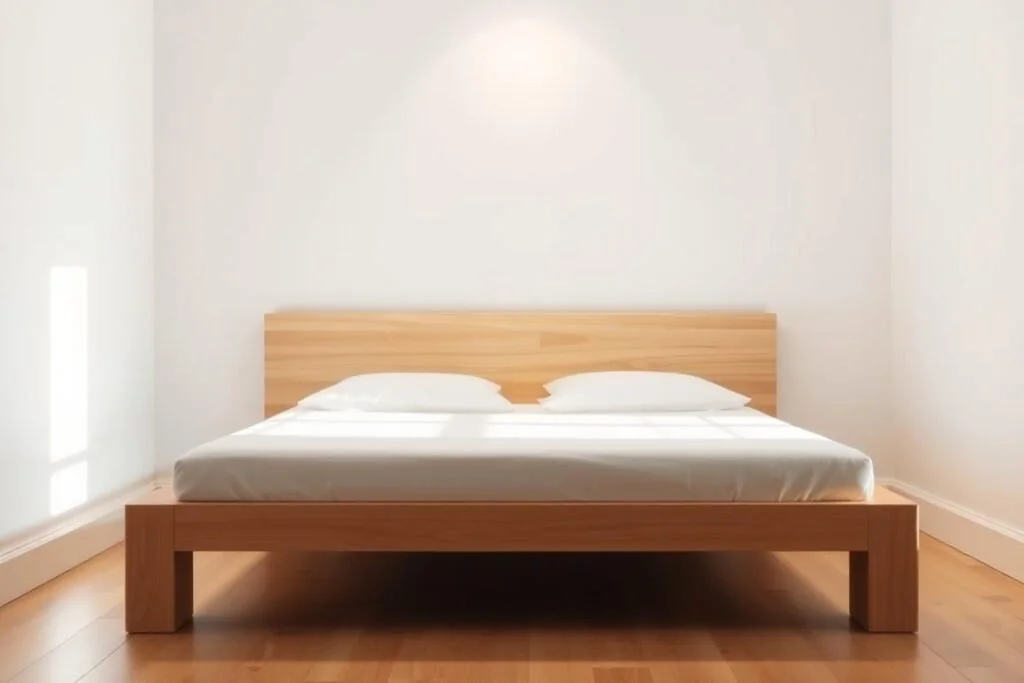
Frame height changes how big the room feels. A low-profile platform frame with built-in slats skips the box spring, drops total height by several inches and keeps sightlines open. Just remember that lower frames leave less under-bed clearance for bins, so pick one or the other: low and airy, or higher with storage.

Low-profile platform bed frame in a compact bedroom with a clear walkway

Two more details worth checking on any frame: slat spacing (most foam mattress warranties want slats no more than about three inches apart) and a center support leg on anything full-size or larger. Those two things decide whether the bed squeaks in a year.

Materials and Air Quality in a Small Room

A tiny bedroom has less air in it, so off-gassing is more noticeable. Most budget storage beds and wall bed cabinets are built from particleboard or MDF. That’s fine — but since March 2019, composite wood products such as hardwood plywood, MDF and particleboard, along with finished goods made from them, must be labeled as TSCA Title VI compliant for formaldehyde emissions. Look for that label, air new furniture out for a few days with a window cracked, and vacuum out storage cavities before you fill them.

Beyond that, claims about “non-toxic” frames vary a lot in what they actually mean, and independent evidence comparing brands is thin. Judge what you can verify: the emissions label, solid joinery, and a finish that doesn’t smell strongly in the showroom.

Shopping Checklist

  • Room measurements, door swings, window and radiator positions.
  • Delivery path: doorway widths, stair turns, elevator depth.
  • Walkways of about 24–30 inches on the sides you use.
  • Daily access versus seasonal storage — drawers or lift-up.
  • Mattress thickness and weight limits for wall beds, sofa beds, bunks and lofts.
  • Slat spacing, center support, total frame height.
  • Assembly: who’s building it, and can it be taken apart when you move?

Once the bed is settled, the rest of the room follows. Light paint, one big mirror and wall-mounted lighting instead of table lamps will do more than any furniture swap — there’s a full list of tricks in our guide to making a small bedroom look bigger.

FAQ

What’s the single best bed for a small room?

There isn’t one. A wall bed gives the biggest daytime gain, a storage bed gives the biggest organisational gain, and a daybed or sofa bed is best in a room that needs seating. Pick by how the room is used, then check the bed leaves a 24–30 inch path where you walk.

Is a full-size bed too big for a tiny bedroom?

Not automatically. Tape out 54 by 75 inches on the floor. If you still have a walkway on one long side and the door and closet open freely, a full works. If the tape hits the closet door, drop to a twin XL.

Can you sleep on a daybed or sofa bed every night?

On a daybed, yes — it takes a regular twin mattress. On a sofa bed it depends on the mechanism; pull-out mattresses are usually thin, and a topper or a foam-mattress model makes a real difference for nightly use.

Do Murphy beds have to be attached to the wall?

Wall-mounted models do, into structural framing. Freestanding cabinet models are designed to stand on their own, though many still include an anti-tip anchor. Follow the manufacturer’s instructions exactly, and hire an installer if you’re unsure what’s behind your drywall.

Is a lift-up storage bed hard to open?

Not if the gas struts are matched to your mattress weight. A heavy hybrid on a frame rated for a light foam mattress is what makes these feel stiff, so check the rating against your mattress before you order.

Can a storage bed really replace a dresser?

Often, yes. Four deep drawers hold roughly what a small dresser does. Keep folded items in the bed and hang the rest, and you free up a whole wall.

Updated September 2026.

7 Small Bed Space Tips to Make Your Bed Feel Bigger

7 Small Bed Space Tips to Make Your Bed Feel Bigger - Featured Image


Small Bed Space Tips: 7 Ways to Make Your Bed Feel Bigger

Feeling cramped in a small bed? These small bed space tips will help you make the most of your mattress with simple, effective changes—so your sleep setup feels bigger, brighter, and more comfortable right away.

Key Takeaways on Small Bed Space Tips

  • Light, breathable bedding makes beds feel airier and more spacious
  • Decluttering and vertical storage free up visual and physical space
  • Smart furniture and mirrors enhance both function and perception of room size

1. Use Light, Airy Bedding

Answer first: Choose light fabrics and pale colors to visually expand the bed and improve breathability.

Light bedding can visually expand your sleeping area. It’s not just about looks — lighter fabrics tend to breathe better, improving comfort and enhancing the sense of openness in your room. Start with neutral or pastel tones, which naturally reflect more light and help the room appear brighter and more spacious. Heavy patterns and dark colors can visually shrink the bed, making the space feel more confined.

  • Choose soft shades like ivory, pale gray, or sky blue
  • Use layered textures — think waffle weave or gauze cotton — for dimension without weight
  • Keep the number of layers minimal: a fitted sheet, a light duvet, and a decorative throw are often enough

For more guidance, check out our
bed width planning guide
to ensure your bedding choices align with room size.

Light bedding makes the entire setup feel fresher and roomier — a small change with big impact.

light airy bedding — small bed space tips to make a bed feel bigger

2. Minimize Clutter

Answer first: Clear surfaces and hide essentials so the bed reads as larger and the room feels calmer.

Visual clutter can make even a
king-sized bed
feel tight. When every surface is crowded with accessories or stray items, your room naturally feels smaller and more chaotic. Streamlining your space makes your bed appear larger and your sleep sanctuary more serene. Start by limiting bedside accessories and using intentional decor.

  • Choose multifunctional decor like a stylish lamp with built-in USB ports
  • Use decorative storage boxes to keep remotes, books, or charging cords hidden
  • Invest in under-bed organizers — some even have wheels and dividers for easy access

Less clutter equals less distraction, helping you mentally wind down for sleep while making your small bed feel more open.

3. Choose the Right Bed Frame

Answer first: Pick a slim, low-profile frame (skip the footboard) to reduce visual bulk around the bed.

The frame you select sets the tone for your bed’s footprint. Bulky frames with large headboards or footboards tend to dominate a room. A sleek frame — especially one that’s low to the ground — gives the illusion of higher ceilings and more space around the bed. Consider materials and lines too:
metal frames
with slim rails or platform beds with built-in storage can visually lighten your setup.

  • Choose open-frame or leggy designs that allow light to flow beneath the bed
  • Skip the footboard if possible — it visually chops up the room
  • Wall-mounted or floating headboards save square footage and add style

Need inspiration? Browse our
bed frame dimension guide
to ensure your frame complements your room’s layout.

The right bed frame does more than support your mattress — it transforms the look and feel of your entire room.

minimalist bed frame — small bed space tips for a bigger-looking bed

4. Add Mirrors Strategically

Answer first: Place a mirror opposite or adjacent to a window to bounce light and double perceived space.

Mirrors can double the perceived space in a room. Their reflective properties bounce light around the room, making everything feel more open and inviting. They’re especially effective when placed near or opposite windows, allowing natural light to amplify the sense of airiness. You don’t need a wall of mirrors — one well-placed mirror can do wonders.

  • Mount a circular mirror above your headboard to create a focal point
  • Place a tall mirror near a corner to extend the visual depth
  • Try mirrored side tables for a glam touch that doesn’t overwhelm

mirrors and cohesive color palette — small bed space tips

5. Use Vertical Space

Answer first: Shift lighting and storage to the walls to free floors and make the bed area feel larger.

When floor space is tight, go up! Vertical storage and decor options draw the eye upward and help create a sense of spaciousness. Instead of crowding your bed with furniture at floor level, utilize the wall above and around it. This can also help keep your floor clear, which adds to the feeling of openness.

  • Install wall sconces instead of table lamps to free up nightstand space
  • Hang a tall piece of artwork or a gallery of frames aligned vertically
  • Use over-the-door organizers for shoes, accessories, or extra linens

Learn more about balancing furniture placement in our article on bed width mistakes to avoid.

Vertical elements add drama and structure — two essentials when styling a small bedroom to feel larger.

vertical interest — small bed space tips for a taller-looking room

6. Opt for Multi-Functional Furniture

Answer first: Use pieces with hidden storage or foldaway features so fewer items crowd the bed zone.

Every piece of furniture should earn its keep in a small bedroom. Look for beds with built-in drawers or benches that open up for hidden storage. These dual-purpose items let you keep necessities nearby without adding clutter. Furniture that folds away when not in use is a bonus for anyone looking to maintain a minimalist footprint.

  • Consider a Murphy bed with shelving for ultimate space efficiency
  • Use a lift-up storage bed for bulky seasonal items
  • Look for headboards with built-in shelves for books or decor

Smart furniture choices reduce the need for excess furniture, allowing your bed to shine as the room’s centerpiece.

7. Play with Scale and Proportion

Answer first: Anchor with one or two larger accents and balance with slimmer pieces to make a small bed read as intentional.

Just like in fashion, proportions matter in bedroom design. A
small bed
with appropriately scaled decor can look intentional and chic. Use large-scale items sparingly to anchor the space and smaller pieces to add contrast and flow. For instance, an oversized pillow setup can make the bed appear plusher and more inviting.

  • Layer euro shams with standard pillows and a lumbar pillow for depth
  • Drape a king-size throw blanket sideways for a hotel-style look
  • Place a large rug under the bed to define the zone — it should extend at least 24″ beyond the bed

Balancing scale avoids visual chaos and gives your small bed big impact.

oversized pillows used sparingly — small bed space tips

Additional Resources

Expert-Recommended Reading

With the right adjustments, even the smallest bed can feel grand. Use these small bed space tips to create a restful, spacious atmosphere that’s both functional and stylish.

FAQ

What bedding color makes a bed feel bigger?
Light colors like white, ivory, and pastels reflect more light and make beds appear larger and airier.
Can mirrors really make a small room feel bigger?
Yes, mirrors reflect both natural and artificial light, creating the illusion of depth and doubling perceived space.
What type of bed frame is best for a small room?
Low-profile, platform, or minimalist metal frames with open legs are ideal for making small beds feel more spacious.