Bed Frame Dimensions Guide: Find the Perfect Fit for Your Room

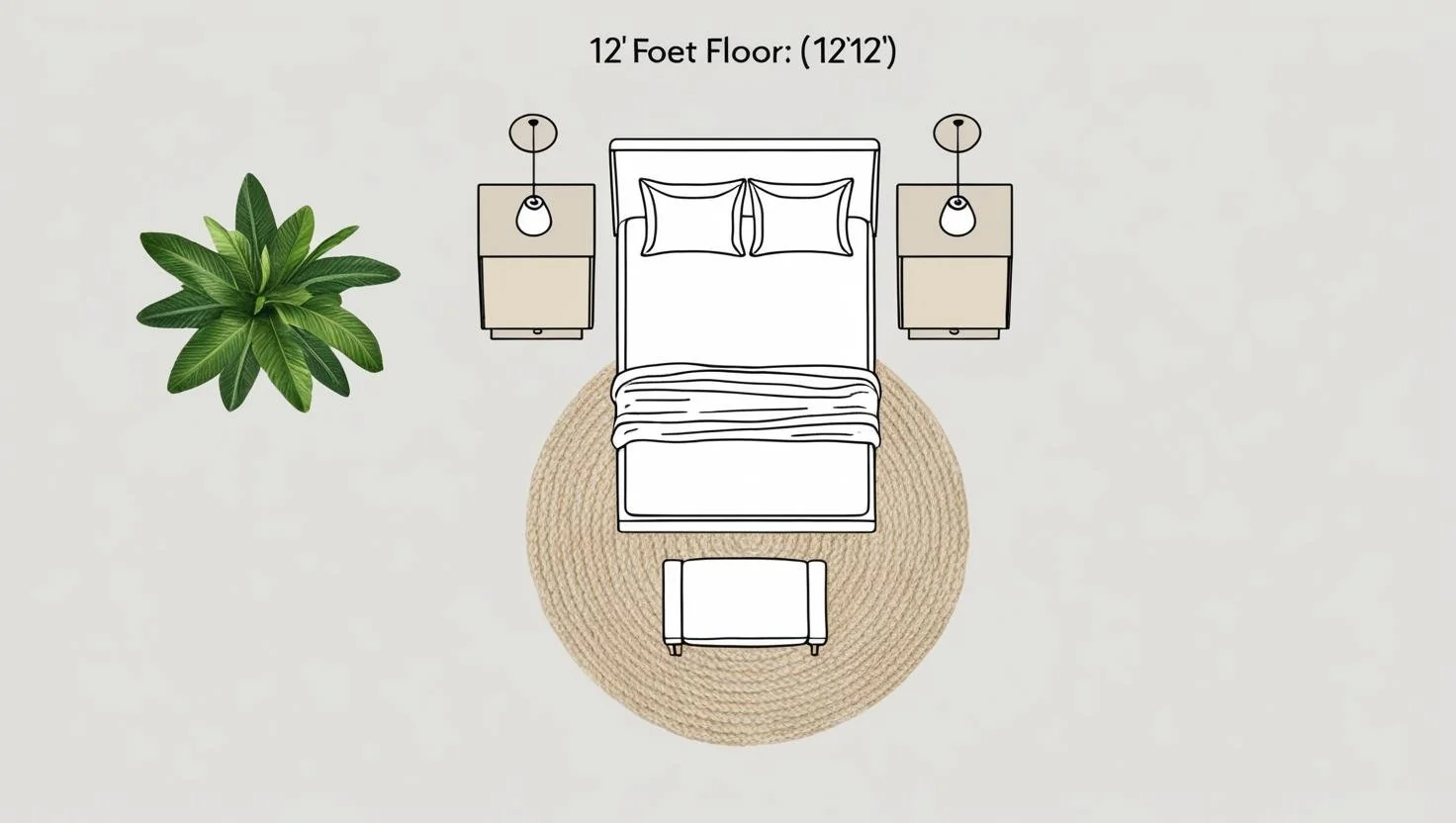
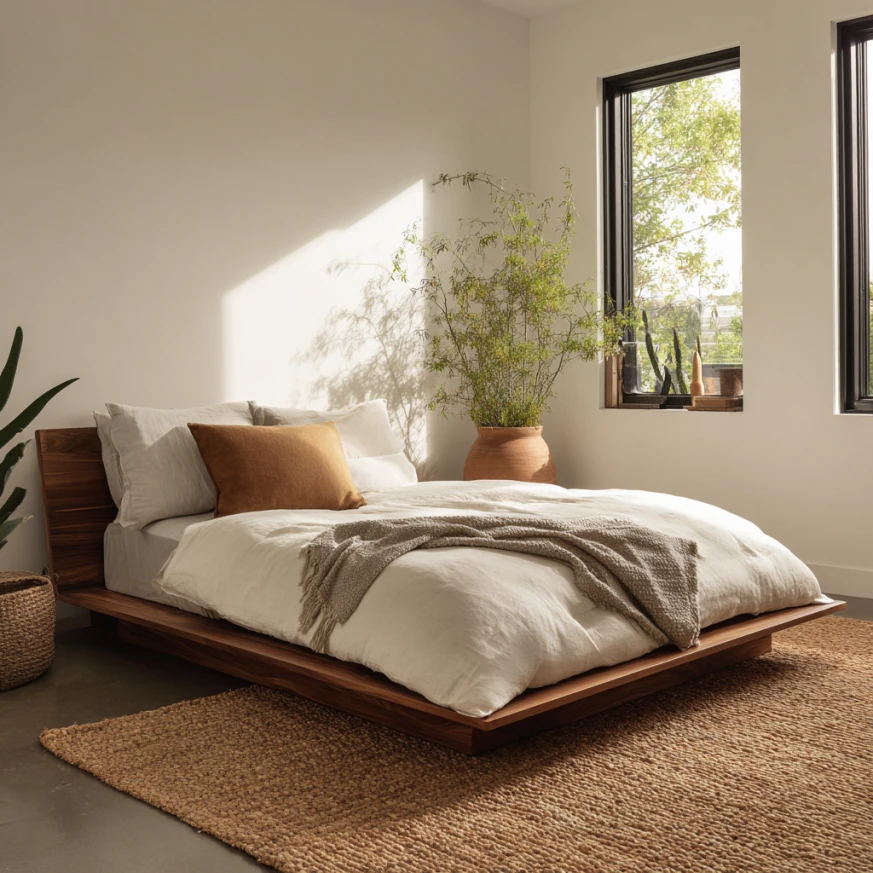
Modern bedroom with a queen-size bed frame and optimal bed frame dimensions.

Standard Bed Frame Dimensions and Size Guidelines

Choosing the right bed frame dimensions is crucial for comfort, functionality, and enhancing your bedroom’s aesthetics. Whether you’re outfitting a cozy guest room or a spacious master suite, understanding bed frame sizes ensures a harmonious and restful environment.

Key Takeaways

  • Optimal comfort: Prevents cramped sleeping spaces and ensures restful nights.
  • Efficient use of space: Essential for maximizing room functionality, especially in smaller areas.
  • Enhanced room aesthetics: A well-proportioned bed frame complements your bedroom design.
  • Better planning: Choosing the right bed frame dimensions avoids costly mistakes in room setup.

Why Bed Frame Dimensions Matter

A bed frame does more than support your mattress; it defines the room’s layout and flow. Selecting the appropriate size ensures:

  • Comfortable movement: Avoids stubbed toes and cramped pathways.
  • Balanced design: Harmonizes with other furniture pieces and room proportions.
  • Functional space: Allows for additional furnishings like nightstands and dressers.

Nothing disrupts relaxation like navigating around an oversized bed. A correctly sized frame makes your room feel open and inviting, enhancing your overall comfort.

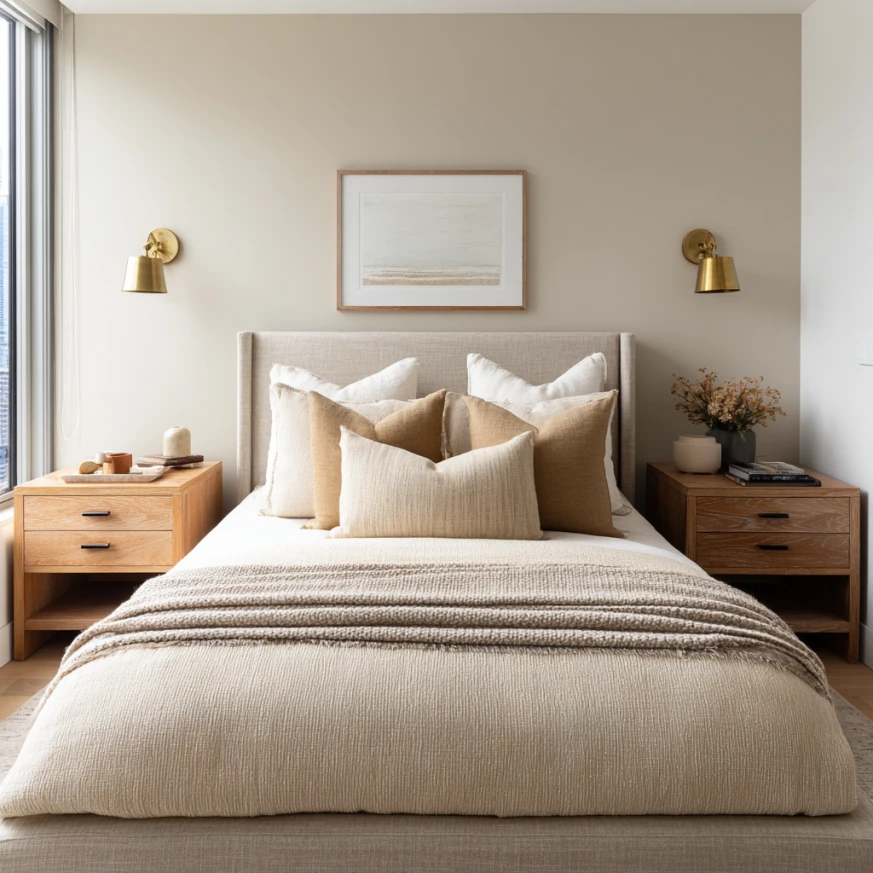
Visual reference of bed frame dimensions in modern bedroom

Understanding Bed Frame Dimensions

While mattress sizes are standardized, bed frame dimensions can vary based on design and style. Here’s a comprehensive guide:

Mattress Size Mattress Dimensions (inches) Typical Bed Frame Dimensions (inches)
Twin 38″ x 75″ 40″–43″ x 77″–80″
Twin XL 38″ x 80″ 40″–43″ x 82″–85″
Full 54″ x 75″ 56″–59″ x 77″–80″
Queen 60″ x 80″ 62″–65″ x 82″–85″
King 76″ x 80″ 78″–81″ x 82″–85″
California King 72″ x 84″ 74″–77″ x 86″–89″

Note: Bed frames often add 2–5 inches to mattress dimensions due to design elements like headboards or footboards.

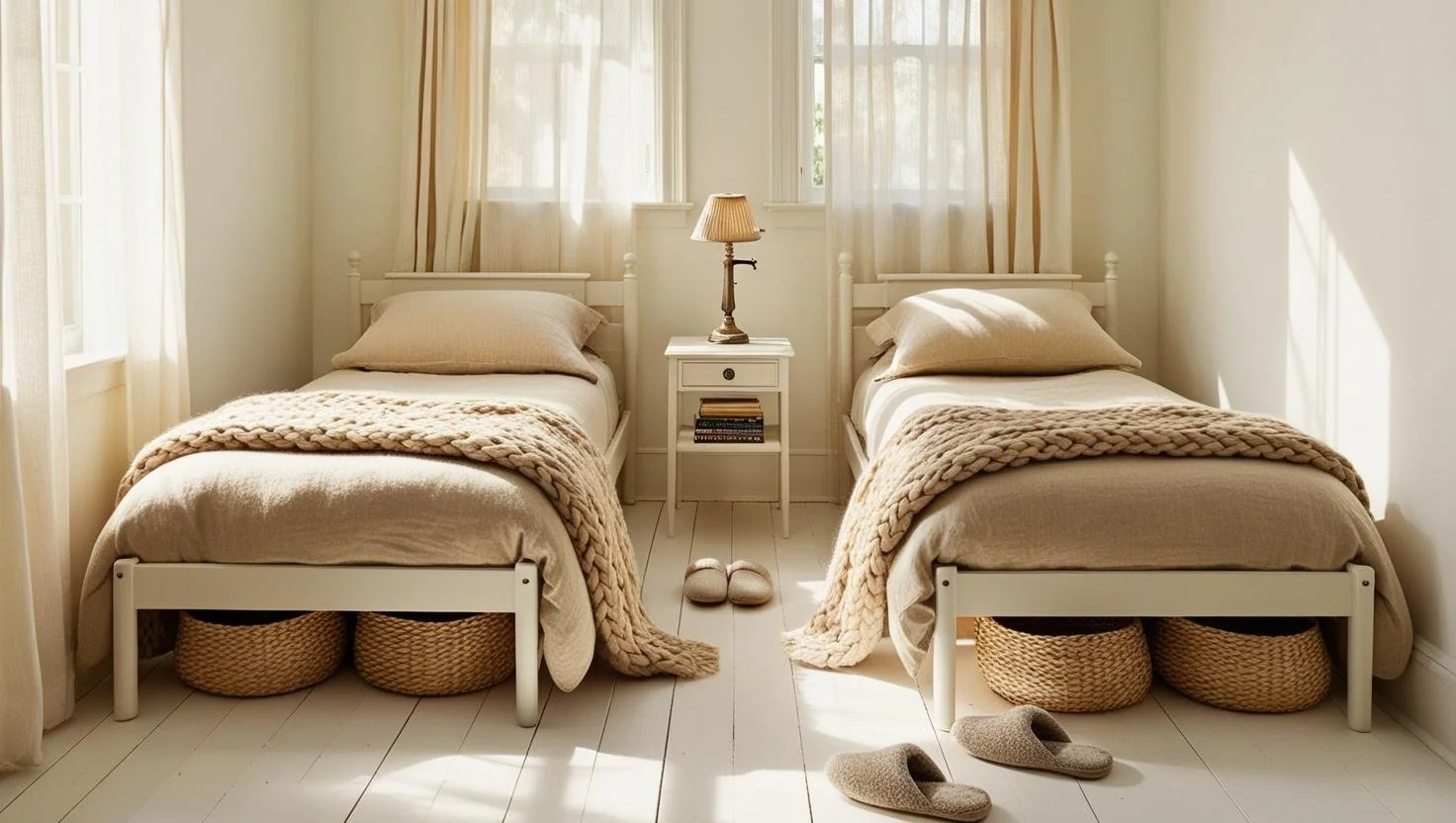
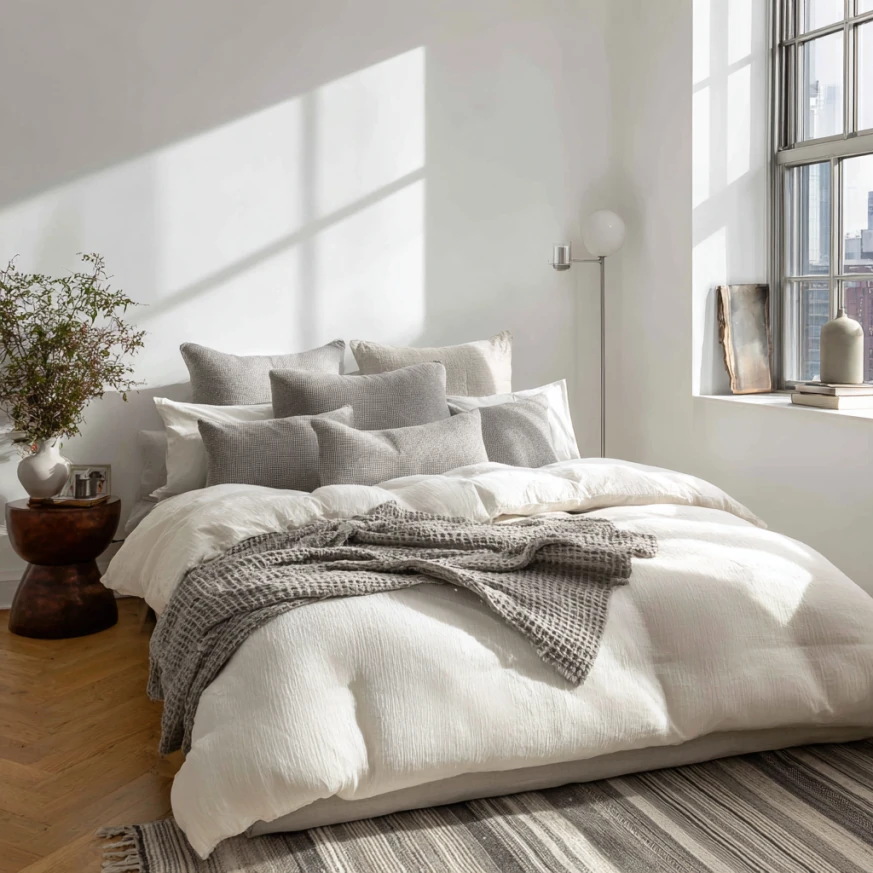
Bed frame size comparison with mattress dimensions

Choosing the Right Bed Frame for Your Room

Room Size Recommendations

Room Size (sq. ft.) Recommended Bed Size
Up to 100 Twin or Twin XL
100–200 Full or Queen
200+ King or California King

Considerations:

  • Walking space: Aim for at least 2 feet of clearance around the bed.
  • Ceiling height: Important for canopy or four-poster beds.
  • Additional furniture: Account for nightstands, dressers, and seating.

Planning a bedroom makeover? Combining smart frame sizing with layout strategies can transform your space. Explore how ancient wisdom meets modern design in our post on Feng Shui principles for bedroom layout.

Types of Bed Frames and Their Impact on Dimensions

Platform Beds

Sleek and modern, platform beds sit low to the ground and often match mattress dimensions closely, making them ideal for smaller rooms.

Sleigh Beds

With their curved headboards and footboards, sleigh beds add elegance but require more space due to their design.

Canopy Beds

Featuring posts at each corner, canopy beds make a statement but need rooms with higher ceilings and ample space.

Storage Beds

Equipped with drawers or compartments, storage beds are functional but add bulk, requiring more room for accessibility.

Common Misconceptions About Bed Frame Sizes

Myth: All bed frames are the same size as their corresponding mattresses.

Reality: While mattress sizes are standardized, bed frame dimensions can vary based on design, material, and additional features. Always check the specific measurements before purchasing.

It’s easy to assume that buying a “queen frame” means it’ll fit your queen mattress perfectly. But differences in construction—like thick upholstery, built-in storage, or decorative headboards—can change the footprint significantly.

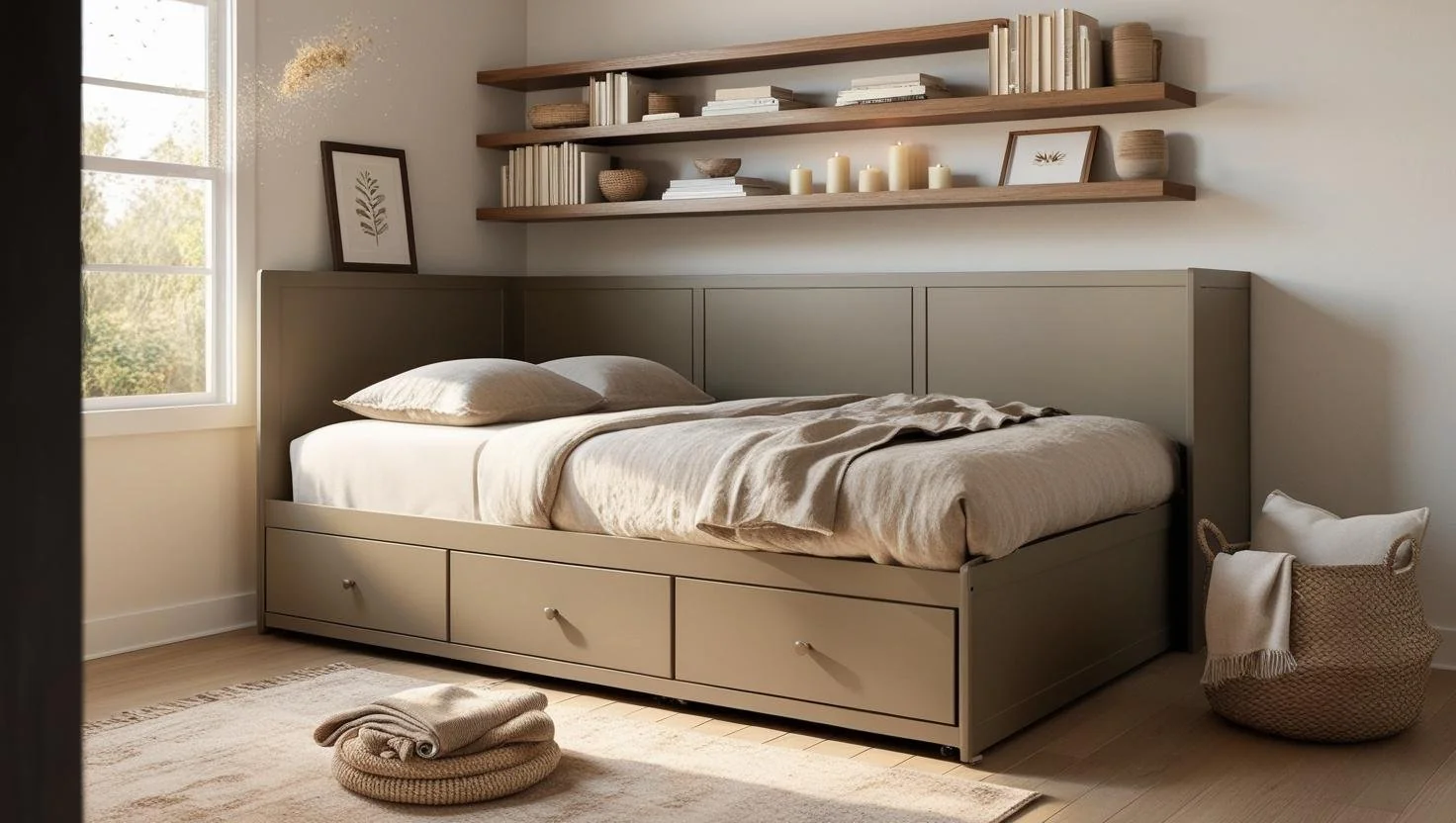
Full bed frame dimensions with storage drawers

Final Thoughts

Selecting the right bed frame dimensions is a blend of understanding your space, needs, and style preferences. By considering room size, frame type, and additional features, you can ensure a comfortable and aesthetically pleasing bedroom setup.

For more insights on optimizing your bedroom space, check out our Ultimate Guide to Bedroom Layouts and Top 10 Space-Saving Furniture Ideas.

FAQ

What is the standard height of a bed frame?
Most bed frames are between 8 to 18 inches tall. Combined with the height of your mattress, your total bed height can be between 16 to 30 inches tall. Ideally, your bed should be just tall enough so when you’re sitting at the edge of it, your feet are flat on the floor. This is for ease of use, particularly for individuals with limited mobility and the elderly. Source
Do bed frames come in standard sizes?
Yes, bed frames are typically designed to match standard mattress sizes: Twin, Twin XL, Full, Queen, King, and California King. However, the actual dimensions of bed frames can vary slightly based on design and style. Source
Can I use a queen mattress on a full-size bed frame?
No, a queen mattress (60″ x 80″) is larger than a full-size bed frame (typically 56″–59″ x 77″–80″). Using a mismatched frame can lead to inadequate support and potential damage to the mattress.
How much space should I leave around my bed?
It’s recommended to have at least 2 feet of clearance on all sides of the bed to allow for easy movement and access to other furniture.
Are there bed frames larger than a California King?
Yes, there are oversized bed frames like the Alaskan King (108″ x 108″), Wyoming King (84″ x 84″), and Texas King (80″ x 98″). These are less common and require spacious rooms. Source

Related Reading from Cozy Bed Quarters

Other Reading We Found Popular


7 Small Bed Space Tips to Make Your Bed Feel Bigger

7 Small Bed Space Tips to Make Your Bed Feel Bigger - Featured Image


Small Bed Space Tips: 7 Ways to Make Your Bed Feel Bigger

Feeling cramped in a small bed? These small bed space tips will help you make the most of your mattress with simple, effective changes—so your sleep setup feels bigger, brighter, and more comfortable right away.

Key Takeaways on Small Bed Space Tips

  • Light, breathable bedding makes beds feel airier and more spacious
  • Decluttering and vertical storage free up visual and physical space
  • Smart furniture and mirrors enhance both function and perception of room size

1. Use Light, Airy Bedding

Answer first: Choose light fabrics and pale colors to visually expand the bed and improve breathability.

Light bedding can visually expand your sleeping area. It’s not just about looks — lighter fabrics tend to breathe better, improving comfort and enhancing the sense of openness in your room. Start with neutral or pastel tones, which naturally reflect more light and help the room appear brighter and more spacious. Heavy patterns and dark colors can visually shrink the bed, making the space feel more confined.

  • Choose soft shades like ivory, pale gray, or sky blue
  • Use layered textures — think waffle weave or gauze cotton — for dimension without weight
  • Keep the number of layers minimal: a fitted sheet, a light duvet, and a decorative throw are often enough

For more guidance, check out our
bed width planning guide
to ensure your bedding choices align with room size.

Light bedding makes the entire setup feel fresher and roomier — a small change with big impact.

light airy bedding — small bed space tips to make a bed feel bigger

2. Minimize Clutter

Answer first: Clear surfaces and hide essentials so the bed reads as larger and the room feels calmer.

Visual clutter can make even a
king-sized bed
feel tight. When every surface is crowded with accessories or stray items, your room naturally feels smaller and more chaotic. Streamlining your space makes your bed appear larger and your sleep sanctuary more serene. Start by limiting bedside accessories and using intentional decor.

  • Choose multifunctional decor like a stylish lamp with built-in USB ports
  • Use decorative storage boxes to keep remotes, books, or charging cords hidden
  • Invest in under-bed organizers — some even have wheels and dividers for easy access

Less clutter equals less distraction, helping you mentally wind down for sleep while making your small bed feel more open.

3. Choose the Right Bed Frame

Answer first: Pick a slim, low-profile frame (skip the footboard) to reduce visual bulk around the bed.

The frame you select sets the tone for your bed’s footprint. Bulky frames with large headboards or footboards tend to dominate a room. A sleek frame — especially one that’s low to the ground — gives the illusion of higher ceilings and more space around the bed. Consider materials and lines too:
metal frames
with slim rails or platform beds with built-in storage can visually lighten your setup.

  • Choose open-frame or leggy designs that allow light to flow beneath the bed
  • Skip the footboard if possible — it visually chops up the room
  • Wall-mounted or floating headboards save square footage and add style

Need inspiration? Browse our
bed frame dimension guide
to ensure your frame complements your room’s layout.

The right bed frame does more than support your mattress — it transforms the look and feel of your entire room.

minimalist bed frame — small bed space tips for a bigger-looking bed

4. Add Mirrors Strategically

Answer first: Place a mirror opposite or adjacent to a window to bounce light and double perceived space.

Mirrors can double the perceived space in a room. Their reflective properties bounce light around the room, making everything feel more open and inviting. They’re especially effective when placed near or opposite windows, allowing natural light to amplify the sense of airiness. You don’t need a wall of mirrors — one well-placed mirror can do wonders.

  • Mount a circular mirror above your headboard to create a focal point
  • Place a tall mirror near a corner to extend the visual depth
  • Try mirrored side tables for a glam touch that doesn’t overwhelm

mirrors and cohesive color palette — small bed space tips

5. Use Vertical Space

Answer first: Shift lighting and storage to the walls to free floors and make the bed area feel larger.

When floor space is tight, go up! Vertical storage and decor options draw the eye upward and help create a sense of spaciousness. Instead of crowding your bed with furniture at floor level, utilize the wall above and around it. This can also help keep your floor clear, which adds to the feeling of openness.

  • Install wall sconces instead of table lamps to free up nightstand space
  • Hang a tall piece of artwork or a gallery of frames aligned vertically
  • Use over-the-door organizers for shoes, accessories, or extra linens

Learn more about balancing furniture placement in our article on bed width mistakes to avoid.

Vertical elements add drama and structure — two essentials when styling a small bedroom to feel larger.

vertical interest — small bed space tips for a taller-looking room

6. Opt for Multi-Functional Furniture

Answer first: Use pieces with hidden storage or foldaway features so fewer items crowd the bed zone.

Every piece of furniture should earn its keep in a small bedroom. Look for beds with built-in drawers or benches that open up for hidden storage. These dual-purpose items let you keep necessities nearby without adding clutter. Furniture that folds away when not in use is a bonus for anyone looking to maintain a minimalist footprint.

  • Consider a Murphy bed with shelving for ultimate space efficiency
  • Use a lift-up storage bed for bulky seasonal items
  • Look for headboards with built-in shelves for books or decor

Smart furniture choices reduce the need for excess furniture, allowing your bed to shine as the room’s centerpiece.

7. Play with Scale and Proportion

Answer first: Anchor with one or two larger accents and balance with slimmer pieces to make a small bed read as intentional.

Just like in fashion, proportions matter in bedroom design. A
small bed
with appropriately scaled decor can look intentional and chic. Use large-scale items sparingly to anchor the space and smaller pieces to add contrast and flow. For instance, an oversized pillow setup can make the bed appear plusher and more inviting.

  • Layer euro shams with standard pillows and a lumbar pillow for depth
  • Drape a king-size throw blanket sideways for a hotel-style look
  • Place a large rug under the bed to define the zone — it should extend at least 24″ beyond the bed

Balancing scale avoids visual chaos and gives your small bed big impact.

oversized pillows used sparingly — small bed space tips

Additional Resources

Expert-Recommended Reading

With the right adjustments, even the smallest bed can feel grand. Use these small bed space tips to create a restful, spacious atmosphere that’s both functional and stylish.

FAQ

What bedding color makes a bed feel bigger?
Light colors like white, ivory, and pastels reflect more light and make beds appear larger and airier.
Can mirrors really make a small room feel bigger?
Yes, mirrors reflect both natural and artificial light, creating the illusion of depth and doubling perceived space.
What type of bed frame is best for a small room?
Low-profile, platform, or minimalist metal frames with open legs are ideal for making small beds feel more spacious.


Quieter Sleep Environment: Block and Mask Noise at Night

Sleep Environment

To make a bedroom quieter, work in two directions at once: block sound with mass and airtight seals (heavy curtains, sealed gaps, a solid door), then mask whatever still gets through with a steady background sound such as white noise, a fan, or a soundscape app. Blocking is the only thing that actually lowers the decibel level in the room; masking simply makes leftover noise less noticeable by smoothing out the sudden jumps in volume that wake you. Start with the cheap fixes — sealing gaps, rugs, curtains, silencing noisemakers inside the room — and add sound masking last.

Why night noise is worth fixing

Noise does not have to wake you fully to cost you sleep. Sudden changes in sound level can pull you into lighter stages or trigger brief arousals you never remember. The World Health Organization’s guidance for Europe recommends less than 30 A-weighted decibels inside bedrooms at night for good-quality sleep, and less than 40 dB(A) as an annual night-time average outside bedrooms to avoid adverse health effects. Most city bedrooms sit well above that, which is why a two-layer approach — block, then mask — works better than either step alone.

Step 1: Block what you can

Sound behaves a lot like water: it travels through the easiest opening. Three things reduce how much of it reaches your bed — mass (heavy, dense materials), airtightness (no gaps for sound to leak through), and decoupling (separating surfaces so vibration cannot pass straight through). Everything below is a version of one of those three.

Seal the gaps first

  • Fit weatherstripping around the bedroom door and a sweep or draft stopper along the bottom — the gap under a typical door is the single biggest leak in most rooms.
  • Caulk gaps around window frames, trim and where pipes or cables enter the wall.
  • Check the quiet leaks: mail slots, air vents, and back-to-back electrical outlets on a shared wall.

Sealing is cheap, reversible and helps with drafts too. What it will not give you is a precise decibel drop: figures quoted online for weatherstripping vary wildly and depend on the door, wall and noise source, so treat any specific number with suspicion.

Add mass at windows and walls

  • Heavy curtains: floor-to-ceiling, dense, and wider than the opening so they overlap the frame. They mostly soften high-frequency street noise and reflections; they will not stop a bass-heavy truck. They also help with light and heat, which is why they are usually the best value upgrade.
  • Secondary glazing: double-pane replacement windows or removable acrylic inserts and magnetic panels for renters. Adding a second pane with an air gap is far more effective against traffic than any fabric.
  • Solid-core doors: hollow interior doors are essentially drumskins. Replacing one, or hanging a dense acoustic blanket over it, makes a noticeable difference for hallway noise.
  • Mass-loaded vinyl or a second layer of drywall: effective but expensive and usually a job for a contractor. Worth considering only in a remodel or a genuinely loud building.
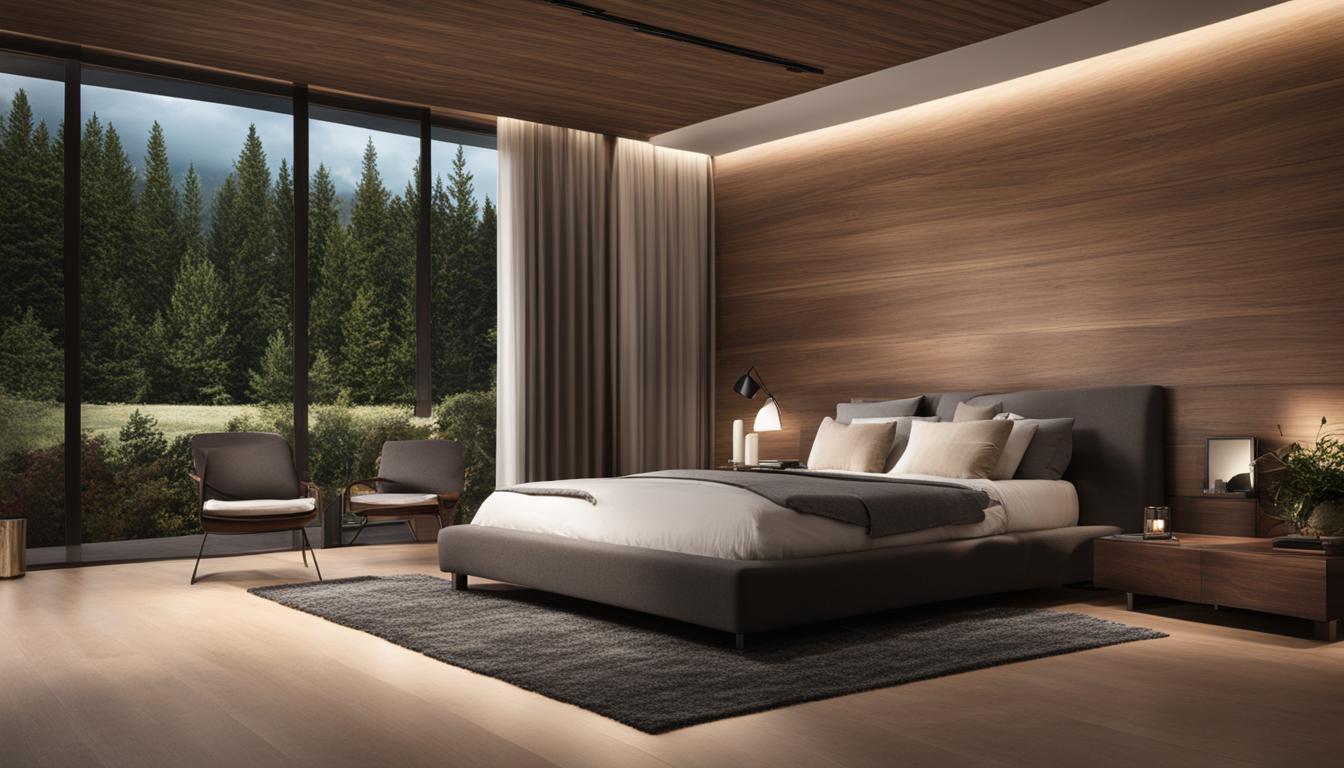
Acoustic wall panels behind a bed creating a quieter sleep environment against street noise

Soften the floor and the room

Thick rugs with a dense pad cut footfall noise and reduce echo, which makes whatever sound does arrive feel less harsh. Bookcases, a padded headboard or a wardrobe against a shared wall add mass and break up reflections. This is comfort-level improvement, not isolation — useful, but it will not solve a neighbor’s subwoofer.

Absorption is not the same as blocking

Foam and fabric acoustic panels absorb sound inside a room, reducing echo and reverberation. They do very little to stop sound passing through a wall, because they add almost no mass. Panels are a reasonable finishing touch, and they can help if your room sounds hard and echoey, but if the goal is keeping the street out, spend the money on sealing and glazing first.

Step 2: Silence the noise you are making

Before blaming the street, audit your own room with the lights off:

  • Ticking clocks, humming chargers, buzzing LED drivers and appliances on standby.
  • A squeaky or rattling bed — often a loose joint or a slat shifting rather than the mattress. See our guide to reinforcing a metal bed frame for quieter sleep if yours creaks with every turn.
  • Rattling vents, loose window sashes, and radiator pipes that tick as they cool.
  • Phones set to vibrate on a hard nightstand — a felt pad or “do not disturb” schedule fixes this in seconds.
  • Household timing: dishwashers, laundry and robot vacuums are easy to reschedule outside your sleep window.

Step 3: Mask what is left

Masking raises the room’s baseline sound so intermittent noises — a door, a car, a snore — stand out less. The common options:

Sound What it is Who tends to like it
White noise Equal energy across all frequencies; sounds like static or a hiss People masking sharp, high-pitched noise such as voices or beeping
Pink noise More energy in the lower frequencies; resembles steady rain or wind in trees Those who find white noise too harsh
Brown noise Deeper still, bass-heavy; like distant surf or a waterfall People bothered by treble hiss, or masking low rumbles
Fan or air purifier Broadband mechanical noise with no loop or repeat Anyone who wants masking plus airflow, and hates recorded loops
Nature tracks, music, sleep stories Varied, non-steady audio People who need help winding down rather than constant masking

What the evidence actually shows

Masking is cheap and low-risk, but the research base is thinner than the marketing implies. A 2021 systematic review of noise as a sleep aid examined 38 studies and judged the evidence for white noise to be very weak — a conclusion restated in a recent randomized trial in older adults, which notes that some studies even reported white noise disrupting sleep. Trials since then continue to report benefits in some groups, especially in noisy settings such as hospital wards, but study sizes are small and designs vary.

One nuance worth knowing: the striking findings about pink noise and deep sleep come from research in which short pink-noise pulses were timed to a sleeper’s own slow brain waves, which increased slow-wave activity and memory scores in older adults. That is a lab technique, not the same thing as playing a pink noise track all night from a phone. Claims that any color of noise reliably improves memory, or that one color ruins REM sleep, go beyond what the published evidence supports.

The practical takeaway: if steady sound helps you, use it — it is drug-free and easy to stop. If it does not, or if it makes you more alert, there is no evidence-based reason to persist.
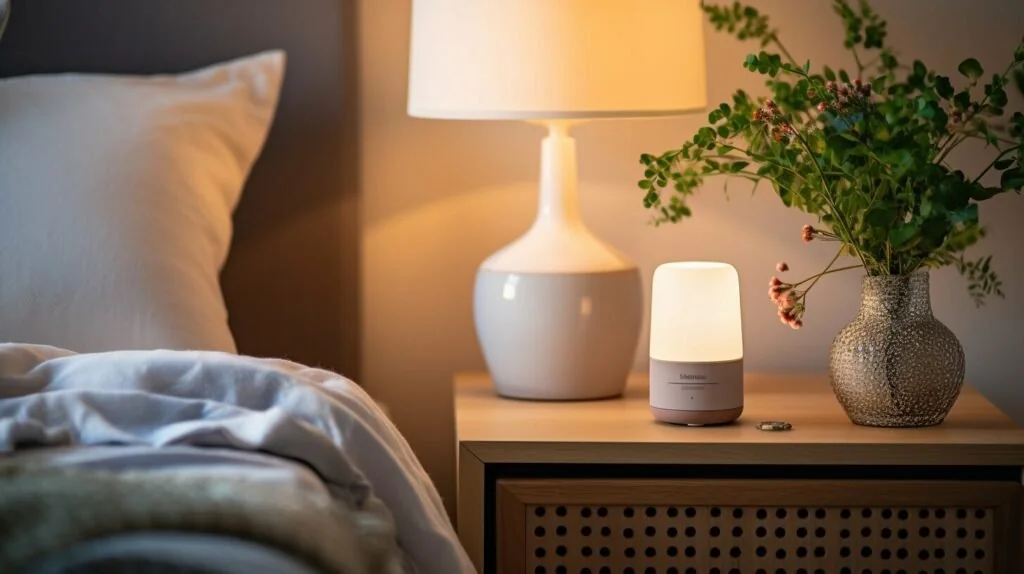
Sleep Sound Solutions white noise machine on nightstand

How to set it up

  1. Volume: just loud enough to blur the noise you are trying to cover, no louder. If you have to raise your voice over it, it is too loud.
  2. Placement: a few feet away, ideally between you and the noise source (the window or door), never pointed directly at your head.
  3. Consistency: use the same sound every night so it becomes a cue for sleep rather than a novelty. Pair it with a predictable wind-down; our nighttime routine guide covers the sequence.
  4. All night or timer? If your problem is falling asleep, a 30–60 minute timer is enough. If you wake at 3 a.m. to a garbage truck, run it continuously — masking only helps while it is playing. Frequent early-hours waking has other causes too, covered in our guide to waking up at 3 a.m.
  5. Device or app? A machine or fan avoids notifications and battery drain; an app is free, portable and lets you test sound types before buying — our roundup of sleep apps with soundscapes is a good place to start.

Looping is the main thing to check in any recorded sound: cheap tracks and machines repeat a short sample, and an audible seam every 30 seconds defeats the purpose.

Earplugs: the other option

Soft foam or silicone earplugs are the cheapest way to cut noise at the ear, and next to a busy road they often beat any room treatment. The trade-offs are comfort, ear hygiene with nightly use, and not hearing alarms, a crying child or a smoke detector. Many people alternate: earplugs on bad nights, masking on ordinary ones. No strong evidence favours one approach over the other, despite confident claims in both directions.

White noise and babies: keep it quiet and far away

Sound machines are widely used in nurseries, and the main concern is not whether they work but how loudly they are played. In a study published in Pediatrics, researchers tested 14 infant sleep machines and found that at maximum volume every machine produced more than 50 A-weighted decibels measured 30 cm away, above the level recommended for hospital nurseries. The authors recommended placing machines as far from the infant as possible, keeping the volume low, and limiting how long they run.

Two more safety points: never put a sound machine, monitor or any corded device in or on the crib. The US Consumer Product Safety Commission and the American Academy of Pediatrics advise keeping cords at least three feet away from any part of a crib, bassinet or play yard because of strangulation deaths involving monitor cords. For anything about ages, sleep training or how long to use a device with your own child, ask your pediatrician rather than the internet.

Common mistakes

  • Buying foam panels to stop street noise. They absorb, they do not block.
  • Ignoring the door gap while spending on curtains. Air paths beat materials every time.
  • Turning masking up to drown out noise completely. That just replaces one loud sound with another.
  • Expecting a decibel miracle from soft furnishings. Cushions and light drapes change the room’s character, not its isolation.
  • Treating sound as the whole problem. If you are still waking at the same time nightly, the issue may be timing or routine rather than noise — our step-by-step plan for fixing a sleep schedule tackles that side.

Round out the room

Noise control works best alongside the other basics: darkness and a cool room. Block streetlight with room-darkening blinds, cover bright LEDs, and keep the bedroom cool — the commonly cited comfortable range is roughly 60–68°F (15.5–20°C), though the “ideal” number is individual and often quoted with more precision than the evidence deserves.

Quiet sleep environment with noise reduction strategies

Soothing sleep environment with dark, quiet bedroom

Quick comparison

Fix What it does Cost and effort
Weatherstripping and caulk Closes the air paths sound leaks through Low; an afternoon, renter-friendly
Heavy floor-to-ceiling curtains Adds mass at the window; also blocks light Low to moderate; no installation damage with tension rods
Rugs and dense rug pads Cuts footfall and echo Low to moderate
Secondary glazing or window inserts Real reduction in traffic noise Moderate to high; inserts are renter-friendly
Solid-core door or acoustic blanket on the door Stops the weakest link in most bedrooms Moderate; blanket is the cheap version
Extra drywall or mass-loaded vinyl Genuine isolation on a shared wall High; usually professional work
White noise machine, fan or app Masks what remains; no reduction in actual noise Low; instant
Earplugs Cuts noise at the ear, wherever you sleep Very low; comfort varies

FAQ

Does white noise actually work?

For some people, clearly. Across the research as a whole the evidence is weak and inconsistent, so treat it as a cheap experiment rather than a guaranteed fix, and give it one to two weeks.

White, pink or brown noise — which is best?

There is no reliable evidence that one color beats the others for sleep. Choose by ear: brown and pink are softer and lower-pitched, white is hissier and better at covering high-pitched sounds.

Can I soundproof a rented bedroom?

You can improve it a lot without construction: removable weatherstripping and a door sweep, heavy curtains, acrylic window inserts, thick rugs, acoustic blankets on a door, and furniture against the shared wall. True isolation needs structural work, so set expectations accordingly.

Is it safe to run a sound machine all night?

For adults, the main issue is volume — keep it at a level where normal conversation is still easy. For infants, the tested machines all exceeded nursery-recommended levels at full volume, so keep it low, place it far from the crib, and keep cords well away from the sleep space.

Do sound machines block noise?

No. They add sound rather than removing it. Only mass, sealing and decoupling lower the noise level in the room; masking changes how noticeable the remainder is.

What is the cheapest thing that actually helps?

Sealing the door gap, then a rug and heavy curtains. Earplugs if you can sleep in them. Together those cost less than most sound machines.

Updated September 2026.