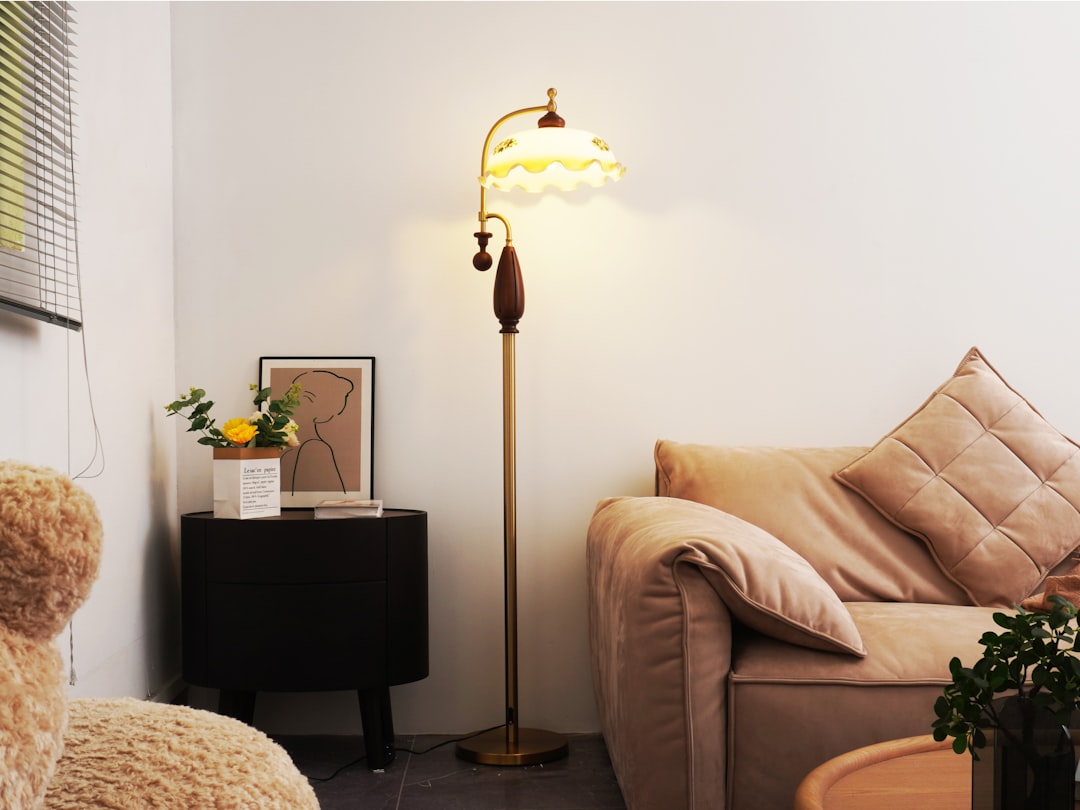
Space Saving Bedroom Furniture: Smart Picks for Small Rooms

bedroom furniture space saving ideas

The best space saving bedroom furniture does two jobs at once and keeps your walking paths open: a bed with drawers or a lift-up base, a tall shallow wardrobe, a floating nightstand, and wall storage instead of another floor-standing unit. Measure your clearances before you buy anything, because a drawer that can’t open is worse than no drawer at all. Below is how to choose each piece, what to measure, and the safety rules that actually matter.

Measure before you shop (this is the step people skip)

Grab a tape measure and painter’s tape. Outline the bed’s footprint on the floor, then mark how far the drawers or doors swing out. You’ll learn in five minutes what a return policy would otherwise teach you in two weeks.

Write down these numbers:

  • Bed length and width, including the headboard and any footboard.
  • Under-bed height from floor to the underside of the frame or slats.
  • Distance from the bed sides to walls, radiators and nightstands.
  • Door swing for the bedroom door, closet doors and the wardrobe you’re eyeing.
  • Ceiling height, if a loft bed, bunk or lift-up base is on your list.

Designers generally aim for roughly 30 to 36 inches of walking space beside a queen bed, more for a king. In a genuinely tiny room you may not get that on both sides, and that’s fine — pick one generous side for daily traffic and push the other side closer to the wall. If you go that route, a lift-up base beats side drawers, since side drawers need clear floor to open.

For a full walkthrough of fitting pieces into an awkward footprint, our bedroom furniture and layout guide covers floor plans in more detail.

Space saving bedroom furniture that earns its footprint

A piece deserves floor space if it stores something, supports something, or does both. Here’s the short list worth your money in a small room.

Storage beds and under-bed drawers

The area under your mattress is the cheapest storage in the house, and most people waste it. A bed with built-in drawers or a lift-up platform can replace a whole dresser, which is usually the bulkiest thing in a small bedroom.

  • Built-in drawer beds: best for clothes you reach for daily. You need side clearance for the drawers to clear fully.
  • Lift-up (hinge-top) bases: the mattress platform raises on gas struts to reveal one big cavity. Ideal when the bed sits tight to a wall. Load it evenly and check that the lid clears any sloped ceiling, shelf or wall light when open.
  • Add-on drawer modules: rolling units that slide under a standard frame. Cheapest option, and you can move them.
  • Low-profile bins: if your frame sits close to the floor, split-lid or shallow bins still work. Measure the gap first and subtract an inch so nothing drags.

Match the container to how often you reach in. Hard drawers for daily wear, soft fabric bins for bulky quilts and off-season clothes. Skip storing anything fragile, liquid or moisture-sensitive down there; textiles do better in sealed bags, especially in a damp room.
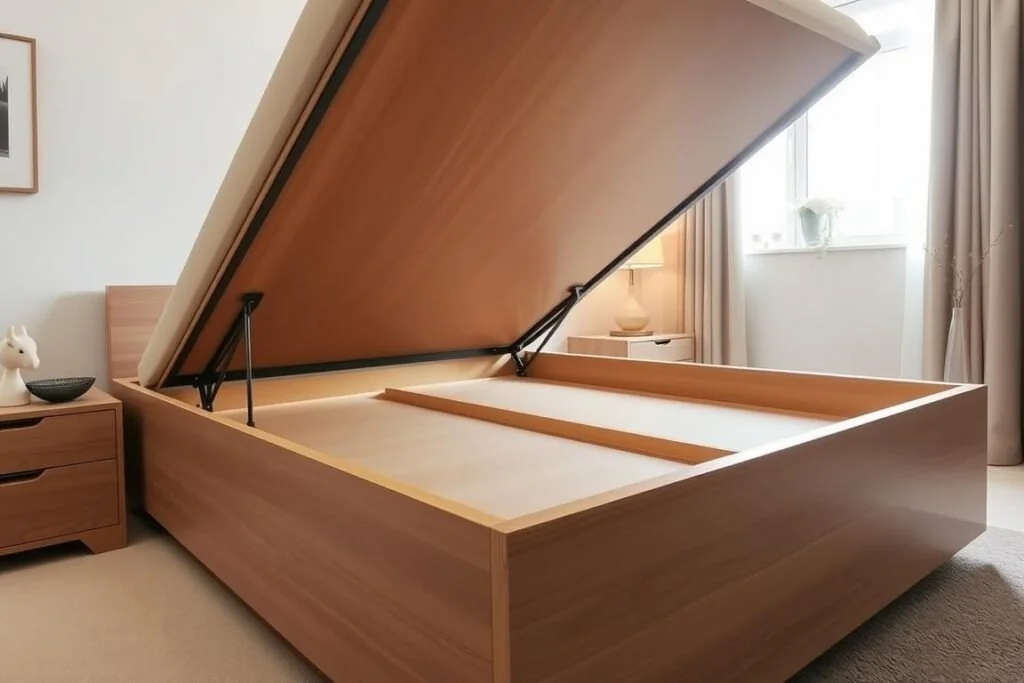
Hinge-top storage bed, space saving bedroom furniture with bedding tucked under the lifted mattress

Shopping for a frame? Compare styles in our roundups of platform and storage beds and space-saving bed frames.

Wall beds and loft beds

These free up the biggest chunk of floor area in the room, because the bed simply isn’t there during the day.

A wall bed with a desk turns a studio or spare room into a real workspace. Manual mechanisms cost less and hold up well; motorized ones cost more and mostly buy convenience. Either way, confirm the unit is fixed into studs, check the manufacturer’s mattress weight and thickness limits, and use the locking hardware every time.

A loft bed raises the mattress so a desk, dresser or small sofa fits underneath. Ceiling height decides whether it’s comfortable or claustrophobic. A common rule of thumb is around 30 inches between the top of the mattress and the ceiling so you can sit up without ducking — that’s guidance from furniture makers and universities rather than a federal requirement, so treat it as a comfort target and test it with a tape measure against your own ceiling.

If it’s a bunk rather than a loft, the safety rules are real. The U.S. Consumer Product Safety Commission defines a bunk bed as one whose mattress foundation sits more than 30 inches above the floor, and upper bunks need guardrails on both sides with the tops of the rails no less than 5 inches above the mattress. Lower bunks 30 inches or less from the floor don’t need them.

Fold-down wall bed beside a built-in desk showing how one unit serves as both office and bedroom

Not sure which bed type suits your room? Our guide to the best beds for small rooms compares Murphy beds, daybeds and low platforms side by side.

Slim wardrobes and smarter closet insides

Tall and shallow beats short and deep. A wardrobe that’s 20 to 24 inches deep holds hanging clothes fine and steals far less floor than a chunky armoire. Sliding doors remove the swing clearance problem entirely, which can be the difference between a wardrobe fitting and not fitting.

Inside, small changes add capacity fast:

  • Modular drawers — shallow for socks and underwear, deeper for folded tees.
  • Shelf dividers to stop stacks from toppling into each other.
  • A second hanging rail under shirts and jackets, since that lower half is usually dead air.
  • Labelled baskets on the top shelf for things you touch twice a year.

Nightstands, benches and desks that pull double duty

A floating nightstand or a wall-mounted cubby keeps the floor visible, which makes the room read as bigger. Set the top roughly level with your mattress so you can reach a glass of water without sitting up. If you’d rather have drawers, look at slim vertical designs — see our nightstand ideas for shapes that work in tight corners.

Other pieces worth the space:

  • Lift-top bench at the foot of the bed: seat, blanket storage, and a place to put a suitcase. Keep a clear path past it.
  • Fold-down wall desk: a real work surface that disappears at 6 p.m. Anchor it to studs.
  • C-table: slides over the mattress edge for a lamp and a book, then tucks away.
  • Storage stool or ottoman: seating plus a hidden box for chargers, hair tools or kids’ toys.

Go vertical: shelves, ledges and door-back storage

Walls are the storage you already own. Using them clears low surfaces and protects walking lanes.

  • Wall shelves: choose a shallow depth so nothing juts into the path beside the bed.
  • Picture ledges: current book, glasses, phone — no bulk.
  • Over-the-door racks: shoes, bags, hats, caught on the way out. Check the door still closes.
  • Pegboard: reconfigurable hooks and trays, good above a desk or inside a closet door.
  • Corner shelves: corners are almost always wasted and are fine for light storage or plants.
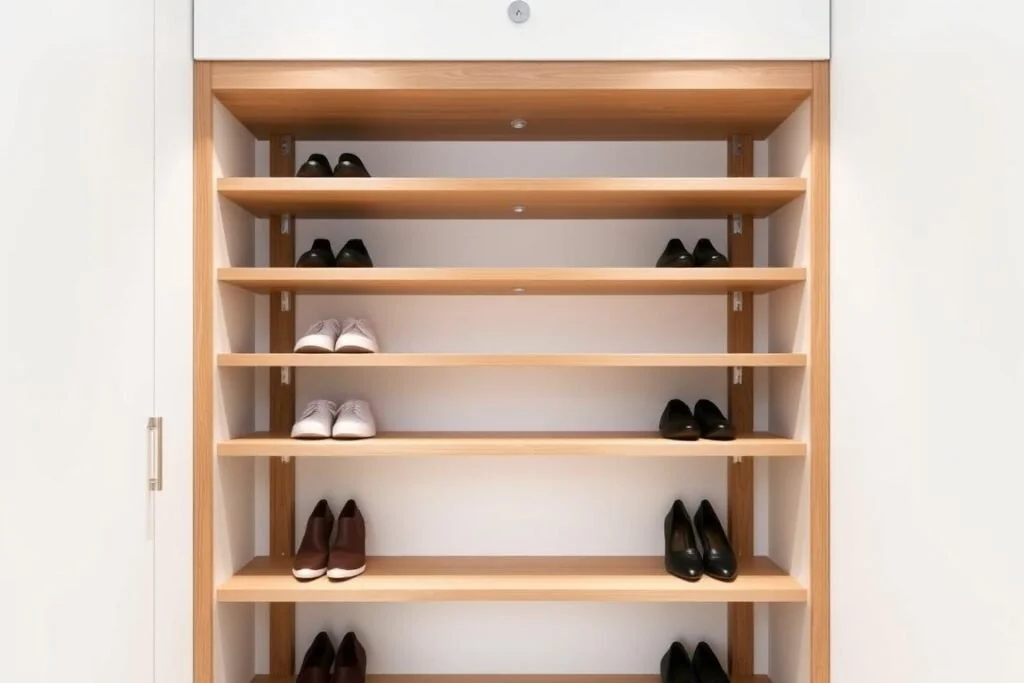
Slim wall-mounted shelving holding shoes and baskets, keeping the bedroom floor clear

If your room has no closet at all, our list of storage ideas for small bedrooms with no closets goes further on wall systems and freestanding rails.

Layout choices that make the room feel bigger

Furniture placement changes how big a room feels as much as the furniture itself does.

  • Keep one uninterrupted walking path from door to bed.
  • Put the tallest pieces against walls, ideally the wall you see last when you walk in.
  • Don’t block windows — daylight does more for perceived space than any paint colour.
  • Group by function: sleeping zone, work zone, storage zone. Fewer trips across the room.
  • Leave a little breathing room between pieces instead of lining them up wall to wall.
  • Lift things off the floor. Legs on a bed or dresser let you see floor underneath, and that reads as space.

A tall mirror opposite or beside a window bounces light deeper into the room; a full-length mirror on the back of the door costs zero floor space. More of these visual tricks are in our post on decorating tricks to make a small bedroom look bigger.

Small bedroom laid out with a low storage bed, floating nightstand and clear walking path to the door

Safety: anchor it, and check the labels

Tall storage in a small room means tip-over risk, especially with kids around. Anchoring is quick and cheap, and the CPSC’s Anchor It! campaign is blunt about it: anchor anything with drawers, doors or shelves to the wall.

Two things worth knowing before you buy a dresser or wardrobe:

Also check weight limits on wall shelves and floating nightstands, and use the fixings rated for your wall type — plasterboard, plaster-and-lath and masonry all behave differently.

Five changes you can make this week

  • Swap a bulky nightstand for a floating one so the bed drawers open fully and the floor stays visible.
  • Put flexible bins under the bed for off-season bedding, labelled by season so you don’t rummage.
  • Add hooks near the door for robes and bags, so the chair stops being a clothes pile.
  • Clip the cables along the bed frame or use a slim raceway. Visible cords make a room look messy for no reason.
  • Empty one drawer completely and re-sort with dividers. You’ll usually free up more room than you expected.

Small resets help more than they sound like they should. A room you can tidy in three minutes tends to stay tidy, and a calm room is easier to wind down in — useful given that adults aged 18 to 60 are advised to get at least seven hours of sleep a night.

Pros and cons at a glance

Piece Pros Cons
Storage bed with drawers Can replace a dresser; easy daily access Heavy to move; needs side clearance
Lift-up (hinge-top) base Huge single cavity; works tight to a wall Awkward for daily items; needs headroom to open
Loft bed Frees a whole desk or lounge zone below Needs ceiling height; climbing in and out
Wall bed with desk Two rooms in one footprint Higher cost; must be fixed to studs
Floating shelves and nightstands Clear floor, light look Weight limits; needs secure fixings
Slim sliding-door wardrobe No swing clearance; lots of vertical capacity Shallow depth; top shelf hard to reach
Over-the-door organizer Zero floor space used Can look cluttered; may block the door

FAQ

How much clearance do I need for an under-bed drawer?

At least the drawer’s height plus about an inch of breathing room underneath, and enough floor in front for the drawer to pull out fully. Watch for bed skirts and footboard rails that quietly eat the opening.

Are lift-up storage beds safe for everyday use?

Yes, when assembled to the instructions and used within the stated weight limit. Look for gas struts or counterbalance hardware, keep hands clear of the hinge line, and don’t let small children open or close the lid on their own.

Can I make a small bedroom feel bigger without buying anything?

Often, yes. Declutter, move the tallest piece against a wall, clear the window, and add a mirror you already own. Rearranging costs nothing and tells you what you actually need to buy.

Do I need a matching furniture set?

No. In a small room, sets usually include a piece that doesn’t fit. Buy a bed and one storage piece that suit the space, then match by colour or finish instead of by collection.

Drawers or rolling bins for a kid’s room?

Rolling bins are lighter and easier for young children to handle on their own; built-in drawers make cleanup faster once they’re bigger. Label the fronts either way.

What’s the single highest-impact swap?

For most small bedrooms, replacing a standard frame plus a dresser with one storage bed. It removes a large floor-standing object and keeps the same amount of storage.

Updated September 2026.

Foldable Bed Frames: How to Choose the Right One for Your Space

Foldable Bed Frames: How to Choose the Right One for Your Space - Featured Image

A foldable bed frame is a sleeping base that collapses, rolls away or lifts into a cabinet so the floor space can be used for something else during the day. The best choice depends on how often you sleep on it: a folding metal platform suits everyday use in a small room, a wheeled rollaway suits occasional guests, and a Murphy or cabinet bed suits studios where the bed needs to disappear completely. Before buying, check three numbers: the open footprint, the folded storage size, and the maximum mattress thickness the frame allows.

Quick summary

  • Folding platform frames are the cheapest, lightest way to get a real mattress off the floor and store the base flat.
  • Rollaway beds arrive with a thin foam mattress and fold upright on casters — best for short stays.
  • Murphy (wall) and cabinet beds cost the most and cap mattress thickness, but they free the most floor space.
  • Measure the unfolded footprint and the folded dimensions, then confirm the weight rating and mattress limits in the manual.
  • Wall-mounted beds must be installed into structural framing exactly as the manufacturer specifies.
Modern guest room with the best foldable bed frames in use
Foldable frames help small rooms double as offices, gyms, and guest suites.

What counts as a foldable bed frame?

The category covers anything that supports a sleeper at night and shrinks or hides by day. That includes hinged metal platforms that fold in half, rollaway cots with built-in mattresses, tri-fold mattresses used on the floor or a low platform, ottoman and cabinet beds, wall-mounted Murphy beds, trundles that slide under a main bed, and convertible sofa beds.

The practical difference between them is who sleeps on it and how often. Frames built for nightly sleep use rigid steel or hardwood, closely spaced slats and a standard mattress. Guest-focused designs prioritise light weight, quick setup and a slim built-in foam pad, which is comfortable enough for a few nights but not a substitute for a full mattress.

Types compared

Type How it stores Best for Watch out for
Folding platform frame (metal or wood) Folds flat; slides under a bed or stands in a closet Daily sleep in small rooms; renters and frequent movers Slat spacing and centre support; wide gaps sag foam mattresses
Rollaway / folding guest bed Folds in the middle, stands upright on casters Occasional overnight guests Thin mattress, modest weight rating, noisy joints over time
Tri-fold or quad-fold mattress Folds into a cube for a closet or under-bed bin Kids, sleepovers, travel, floor sleeping Firm feel; fold lines can be noticeable
Ottoman / bench sleeper Stays out as seating, unfolds into a bed Studios and living rooms with no storage to spare Usually single-size and short; check length
Cabinet (chest) bed Freestanding chest holding a tri-fold mattress Renters who cannot drill into walls Heavy; fixed mattress thickness
Murphy / wall bed Lifts vertically into a wall cabinet Studios, home offices, long-term daily use Permanent installation, strict mattress limits, safety hardware
Trundle Rolls under a main bed Shared kids’ rooms Low height; needs clear floor to pull out
Convertible sofa bed Stays as a sofa Dual-purpose living rooms Least supportive for regular sleep

Prices span a very wide range — a basic folding platform is one of the cheapest bed bases you can buy, while installed wall beds are furniture-level purchases. Because model lineups and prices change constantly, compare categories first and current listings second; this guide deliberately does not name “winning” models, since we do not test folding beds in a lab.

Scandinavian living room with a folding sofa bed for small spaces
Neutral decor and a compact foldable base keep the room airy.

Sizes: what actually fits

Most folding frames and rollaways are sold in twin and full; queen versions exist mainly in platform frames, cabinet beds and Murphy beds. Standard US mattress sizes are twin 38 x 75 inches, full 54 x 75 inches and queen 60 x 80 inches, so the frame’s inner measurements should match those figures — see our full size bed dimensions guide for room-planning clearances.

Two measurements matter as much as mattress size:

  • Folded dimensions. Manufacturers publish them; check against closet depth, door width and under-bed clearance before ordering.
  • Swing and clearance. A wall bed needs floor depth for the open mattress plus room to walk past it. A trundle needs the same clearance on the pull-out side. Leave heaters, radiators and doors clear of the open footprint.

How to choose

1. Match the frame to the frequency of use

For nightly sleep, choose a rigid platform, cabinet bed or wall bed with a full-depth mattress. For a handful of guest nights a year, a rollaway or tri-fold is sufficient and far easier to store.

2. Check the published weight rating

Ratings vary enormously between a lightweight cot and a reinforced steel platform, and manufacturers state them for a reason. Treat any listing without a rating as a red flag, and remember the rating covers sleeper plus mattress. Our guide to choosing a sturdy bed frame covers the construction details that prevent flex and wobble.

3. Respect the mattress thickness limit

Folding mechanisms, cabinet beds and Murphy beds only close and latch correctly within a stated thickness range — tri-fold mattresses in cabinet beds are typically shallow, while wall beds often allow a deeper mattress but also set a maximum. The number is in the manual; do not guess.

4. Look at slats and support

Closely spaced slats and a centre leg keep foam and hybrid mattresses from sagging into the gaps. If the mattress brand specifies maximum slat spacing, follow it or add a bunkie board — otherwise you may void the mattress warranty.

5. Test the mechanism if you can

Smooth hinges, gas or spring-assisted lifts, locking casters and positive safety latches decide whether you actually fold the bed each day or leave it open. One-handed operation is a genuine advantage in a room you use daily.

Folding sofa bed partially extended in a stylish living room
Plan your clearances so unfolding the frame is effortless.

Mattress matching

On a rigid folding platform, almost any standard mattress works within the size and weight limits — memory foam and hybrids both perform well on close-set slats. On hinged frames, cabinet beds and rollaways, flexible foam is the safer choice because it recovers its shape after being folded; a pocket-coil mattress generally should not be folded unless the maker says so. If you are weighing constructions, our comparison of memory foam versus hybrid mattresses breaks down the trade-offs.

Firmer edges help on narrow rollaways, where roll-off is more likely than on a full-width bed. If certifications matter to you, CertiPUR-US applies to flexible polyurethane foam content and emissions, while OEKO-TEX STANDARD 100 covers textiles tested for harmful substances. Both are material-level labels, not verdicts on comfort.

Safety: the part worth slowing down for

Wall beds carry real mechanical risk. The US Consumer Product Safety Commission has issued recalls of Murphy beds that could break or detach from the wall and fall on people, causing impact and crush injuries — see the agency’s recall database and check a model before you buy or if you already own one.

  • Install into structure. Wall beds must be fixed into studs or approved anchors using the supplied hardware, following the torque and fastener specification in the manual. Two people — or a professional installer — is the sensible approach.
  • Never bypass latches. Store the bed closed and latched, and never leave a partially closed wall bed unattended around children or pets.
  • Lock the casters. Rollaways should have all wheels locked before anyone sits or sleeps on them.
  • Keep hands clear of hinges. Folding platforms and tri-fold frames have pinch points; teach children not to operate them.
  • Anchor tall companion furniture too. The CPSC’s Anchor It! campaign covers wardrobes and chests that often sit beside a wall bed.
Murphy Foldable Bed Frames folded up into wall cabinet, revealing extra living space in modern bedroom
A wall bed closed for the day — only safe when anchored as specified.

Setup, storage and noise control

Clear a path before you unfold, open the frame slowly, and confirm every leg brace and latch has clicked home before adding the mattress. When storing, gather straps so they cannot snag, and stand the frame upright against a wall rather than leaning it at an angle where it can slide.

  • Every few months: retighten hinge pins, bolts and wingnuts, and check casters for grit or damage.
  • Squeaks: felt pads under the feet, thin foam between metal contact points and a rug underneath usually solve them; use a lubricant the manufacturer approves rather than household oil on painted joints.
  • Airflow: store frames and folded mattresses somewhere dry. Sealing a foam mattress in a damp cupboard invites mould and odour.
  • Linens: keep a dedicated guest set — two sheet sets, a light blanket, a warmer layer, mattress and pillow protectors — in a labelled zip bag beside the bed so setup takes minutes.
Rollaway Foldable Bed Frames neatly stored away in a closet, compact and portable design
A folded rollaway stored upright takes up little more than closet depth.

Small-space layout tips

  • Zone the room. A rug under the open bed and a pair of wall sconces define “bed mode”; a task lamp takes over when the frame is folded.
  • Go vertical. Shallow shelving or a narrow wardrobe beside a cabinet or wall bed keeps bedding within reach without crowding the floor.
  • Use the clearance. On raised folding platforms, low rolling bins sized to the frame height turn dead air into seasonal storage.
  • Keep circulation clear. Plan a walking path around the open bed before you commit to a position; more ideas in our round-up of space-saving bed frames and space-saving bedroom furniture.

If a permanent hidden bed is the goal rather than a portable one, read our dedicated guide to a bed that folds into the wall before you compare folding frames.

FAQ

Are foldable bed frames comfortable?

Comfort comes almost entirely from the mattress. A rigid folding platform with a good mattress feels like any other bed base; a rollaway with a thin built-in foam pad is fine for occasional nights but firmer and thinner than a standard mattress.

Can a foldable frame be used every night?

Yes, if it is rated for it — look for steel or hardwood construction, a centre support, close slat spacing and a clearly stated weight capacity. Cots and ultra-light travel frames are not designed for continuous nightly use, and they tend to develop creaks you will need to track down and silence.

Can I use a regular mattress on a folding frame?

On a folding platform, yes, within the size and weight limits. On hinged, cabinet and wall beds, the mattress must fall inside the stated thickness range and generally needs to tolerate being folded or compressed, which rules out many innerspring models.

How much space does a folded bed take up?

It varies by design: tri-fold mattresses compress to a cube that fits a closet shelf, folding platforms store flat like a large board, and rollaways stand upright roughly at closet depth. Always compare published folded dimensions with your storage space.

How do I stop it squeaking?

Tighten every bolt and hinge pin, add felt or foam at contact points, level the frame on uneven floors, and place a rug underneath to stop the legs shifting.

Do wall beds need professional installation?

Not always, but they do need correct anchoring into structural framing with the supplied hardware. If you are unsure about your wall type or the fastener specification, hire an installer — the failure mode is a heavy cabinet coming off the wall.

The bottom line

Choose by use pattern first: platform frames for everyday sleep, rollaways and tri-folds for guests, cabinet beds for renters, wall beds for studios where the bed has to vanish. Then verify the three numbers — open footprint, folded size and mattress thickness limit — and check the weight rating and any recall history before you buy. Do that and a folding bed genuinely adds a room’s worth of flexibility without adding a room.

Updated September 2026.