The Mattress Firmness Scale Explained: From Plush to Rock-Solid

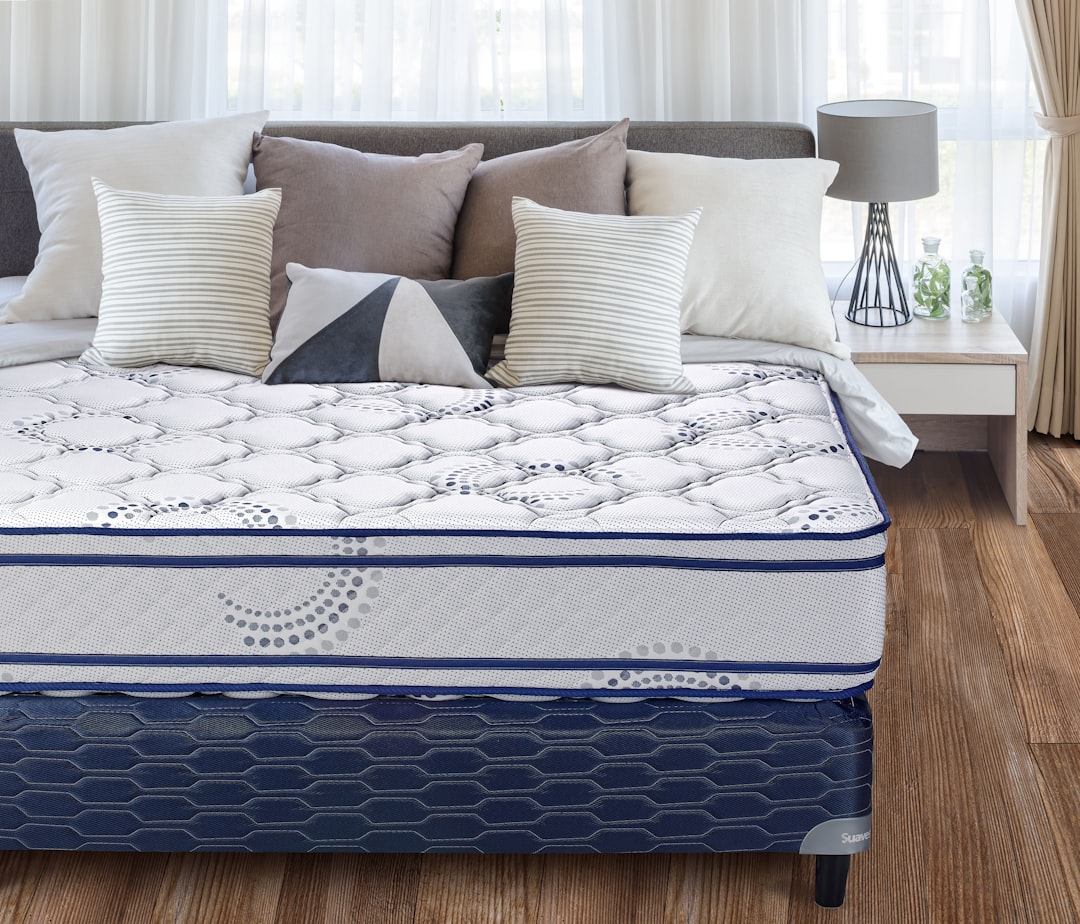
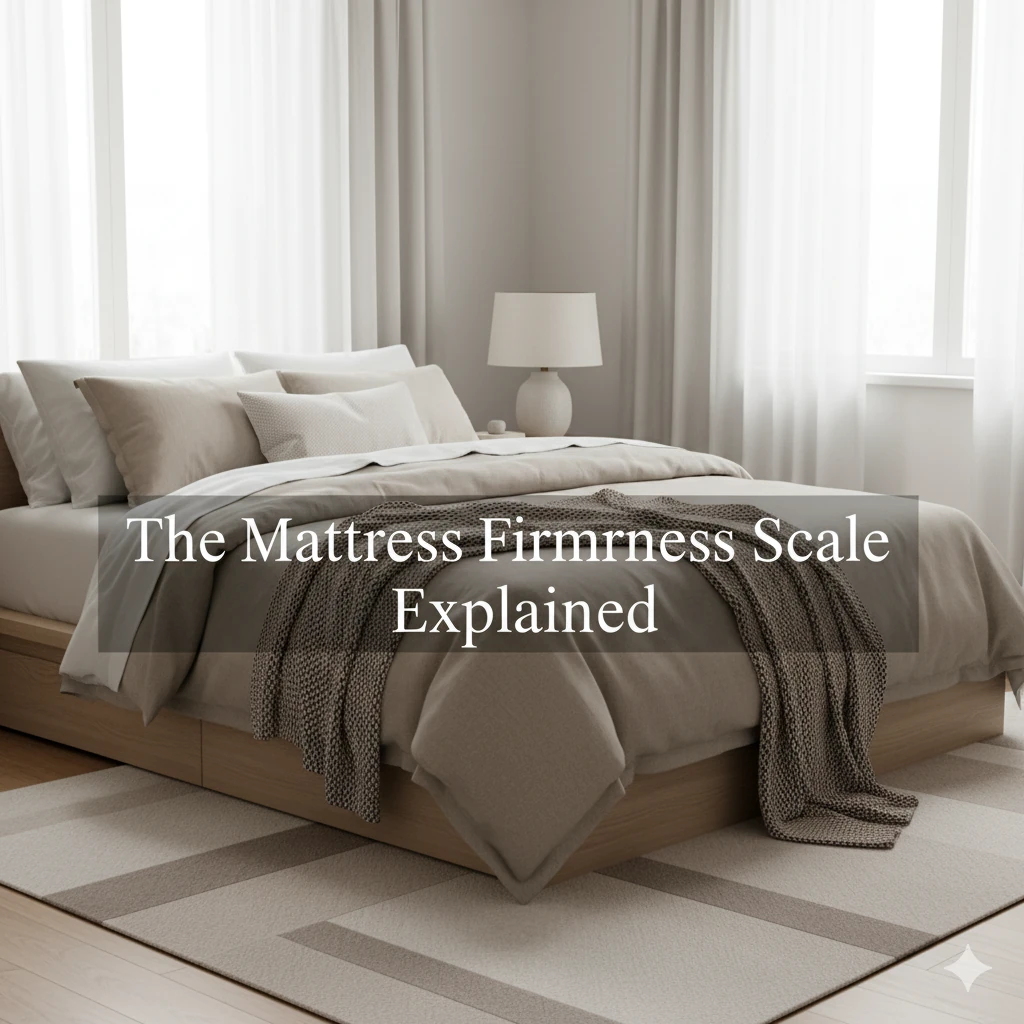
cozy modern bedroom illustrating the mattress firmness scale concept f featuring mattress firmness scale explained

The Mattress Firmness Scale Explained: From Plush to Rock-Solid

The right mattress firmness scale helps create a cozy and restful sleep space.

The mattress firmness scale is a universal guide that measures how soft or firm a mattress feels. Understanding where you fall on this scale can make the difference between tossing all night and waking up refreshed, supported, and ache-free.

When shopping for a mattress, many people focus on brand names or special cooling features but overlook firmness — the single biggest factor influencing comfort. Your mattress should support your spine while cushioning the body’s natural curves. If it’s too soft, you may sink and strain your lower back; if it’s too firm, your shoulders and hips may absorb too much pressure. Finding that “Goldilocks” balance of softness and support starts with decoding the mattress firmness scale.

This guide explains how firmness ratings work, how your sleep position and body weight affect feel, and what materials change perception. You’ll also learn expert-backed ways to test firmness in-store or during a home trial. By the end, you’ll know exactly which level of firmness creates your ideal comfort zone.
mattress firmness scale chart from plush to firm showing comfort level featuring mattress firmness scale explained
The mattress firmness scale ranges from ultra-plush to extra-firm — each offering unique comfort and support.

What the 1–10 Firmness Scale Really Means

The mattress firmness scale runs from 1 (the softest) to 10 (the firmest). While the numbers sound technical, they’re simply a way to compare how much a mattress compresses under weight. Most high-quality mattresses fall between 3 and 8 — a range that covers soft to extra-firm comfort levels.

Lower numbers (1–4) describe plush mattresses that let you sink in for deep contouring. These beds are gentle on pressure points but can feel less supportive for heavier sleepers. Mid-range levels (5–6) strike a comfortable balance between softness and structure, which is why they’re so popular among couples. Higher numbers (7–10) refer to firm and extra-firm surfaces that keep the spine aligned and prevent the hips from sinking.

Firmness Level Description Best For
1–2 Ultra Plush Side sleepers who like deep contouring and a “cloud-like” hug
3–4 Soft Lightweight sleepers or those with joint or shoulder pain
5–6 Medium Combination sleepers and couples seeking balance
7–8 Firm Back or stomach sleepers who need strong lumbar alignment
9–10 Extra Firm Heavier individuals or those preferring minimal sinkage

Keep in mind that numbers vary slightly between brands. One company’s “medium-firm” may feel softer than another’s due to differences in foam density or coil tension. That’s why physical testing or detailed online reviews are essential before buying.

Matching Firmness to Sleeping Position

How Your Sleep Style Impacts Comfort

Every sleeping position affects pressure points differently, which is why firmness choice should start with how you sleep most of the night. Matching firmness to posture not only improves comfort but also prevents chronic back or shoulder pain.

  • Side Sleepers: Soft to medium mattresses (3–5) cradle the shoulders and hips, helping reduce pressure buildup along the body’s curves.
  • Back Sleepers: Medium-firm options (5–7) maintain the spine’s natural “S” curve and prevent lower-back sagging.
  • Stomach Sleepers: Firmer beds (7–8) keep the hips from sinking, which protects the lumbar region from strain.
  • Combination Sleepers: A responsive medium mattress (5–6) offers adaptability and ease of movement throughout the night.

Unsure which category fits you? Spend a few nights tracking your dominant sleep position. Even if you start on your side but wake up on your stomach, a medium-firm mattress might still deliver balanced comfort across multiple positions.
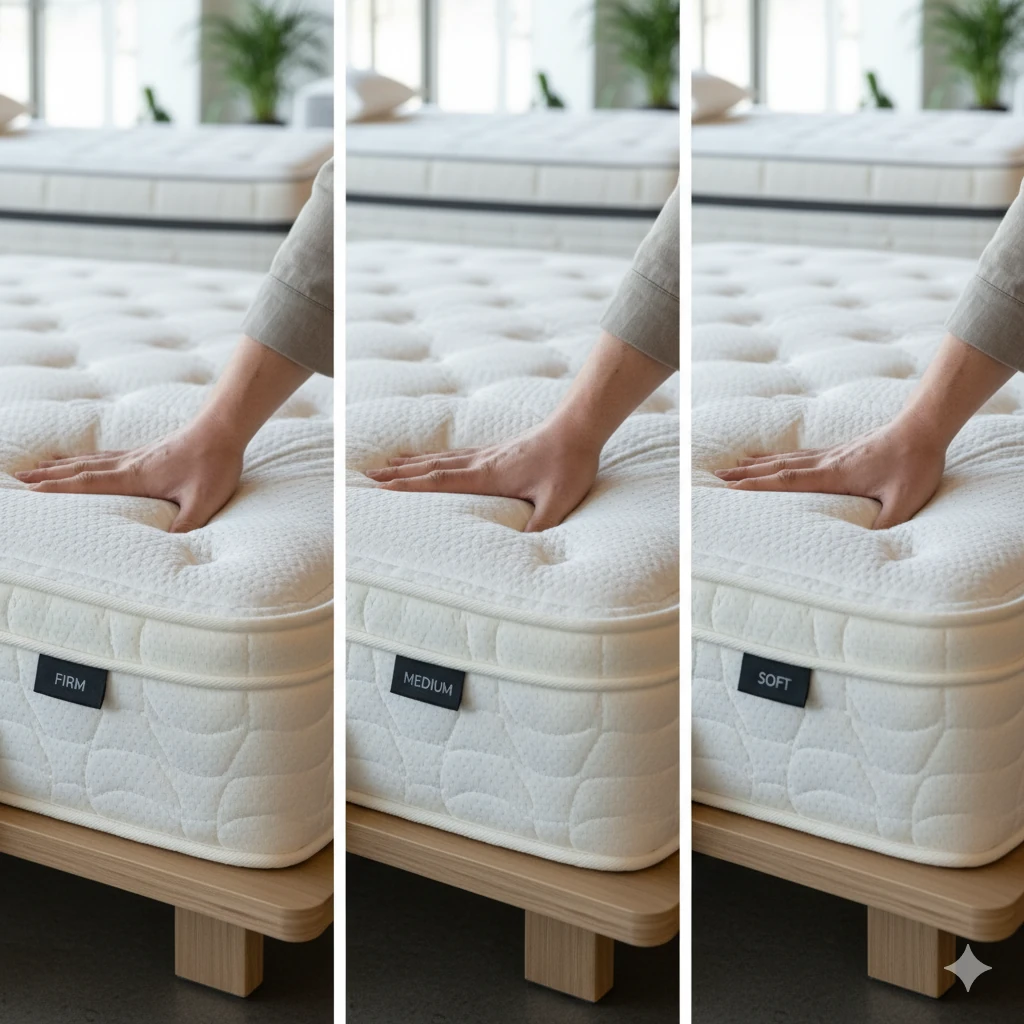
Split image comparing mattress trial in showroom and sleeper resting at home
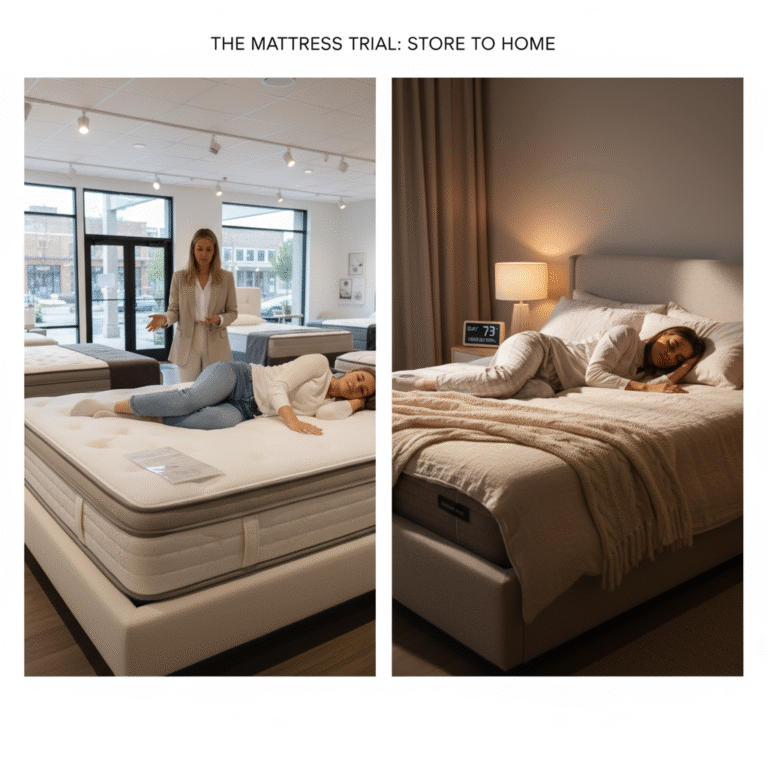
Body weight changes how each level on the mattress firmness scale feels and supports your spine.

Body Weight & Materials: How Feel Changes

Weight Distribution Alters Firmness Perception

Two sleepers on the same mattress might describe completely different sensations. That’s because body weight directly affects how much a mattress compresses. Lighter sleepers (under 130 lbs) rest closer to the surface, making most mattresses feel firmer. Average-weight sleepers (130–230 lbs) usually experience the intended feel, while heavier individuals (230 lbs+) sink deeper, perceiving a softer comfort level.

Material matters just as much:

  • Memory Foam: Offers a slow, deep “hug” that conforms to curves and minimizes motion transfer. Ideal for pressure relief.
  • Latex: Naturally bouncy and breathable, giving a lifted, buoyant feel that prevents overheating.
  • Hybrid: Combines foam layers with innerspring coils for balanced contouring and support, suiting a wide range of sleepers.

The right combination of firmness and material ensures that your mattress adapts to you — not the other way around. If you share a bed, hybrid or zoned models often provide the best compromise between plush comfort and edge support.

Testing Firmness In-Store vs. At Home

Practical Steps for Finding the Perfect Feel

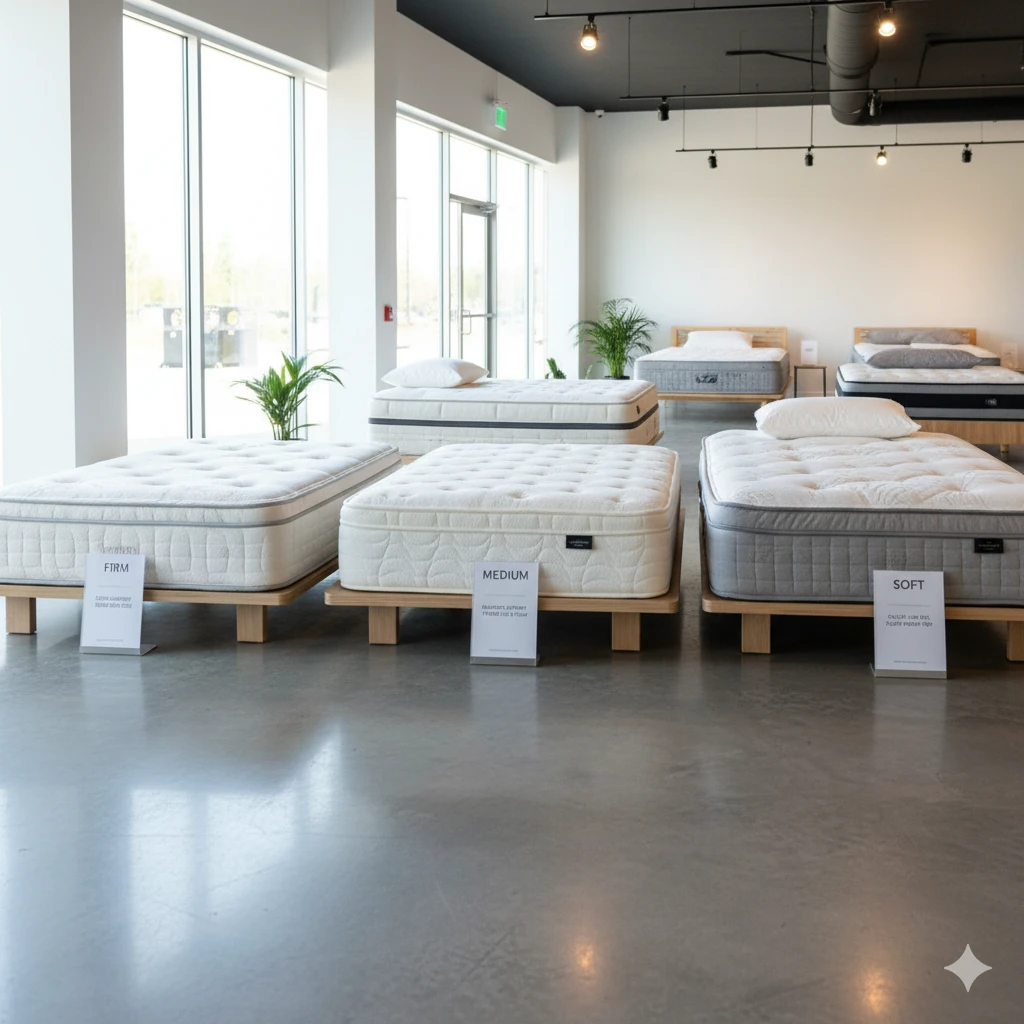
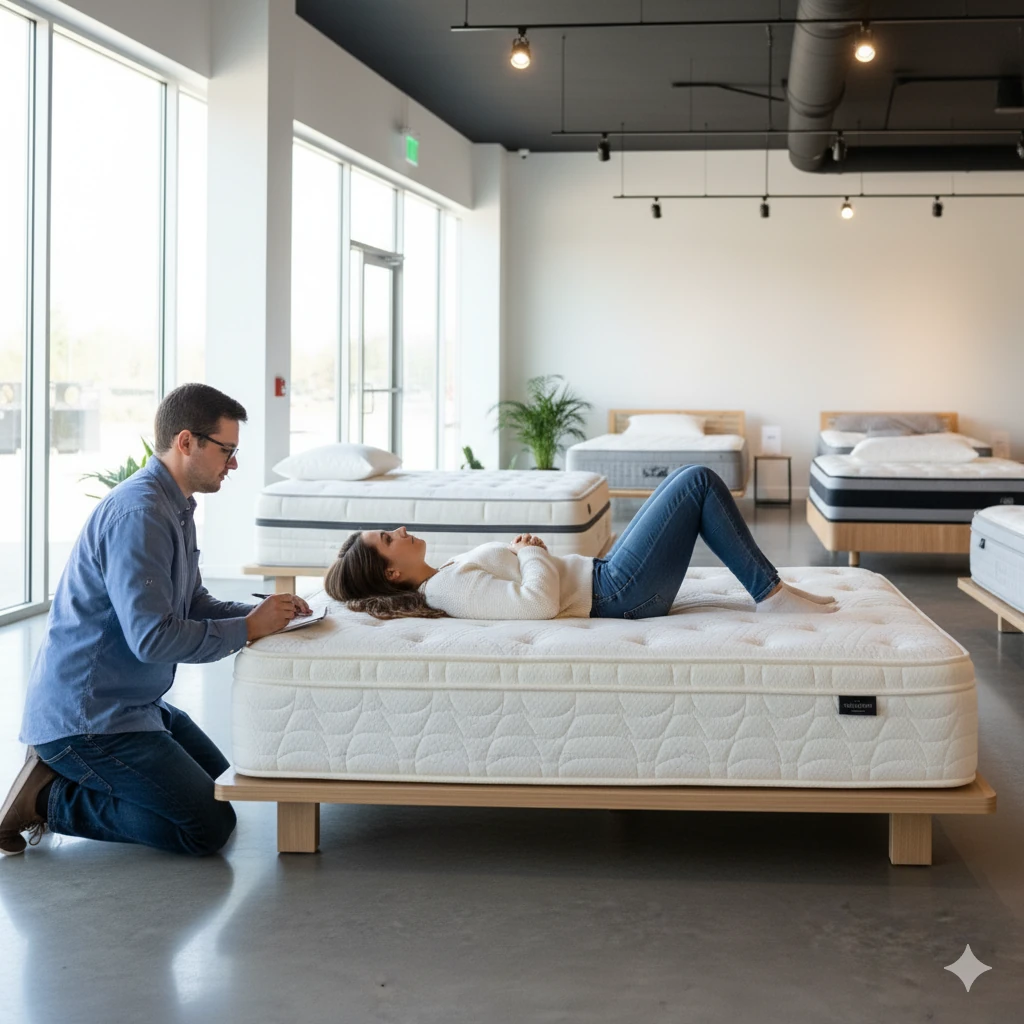
When testing in-store, don’t just press your hand into the surface — lie down in your typical sleep position for at least 10–15 minutes. Pay attention to whether your shoulders, hips, and lower back feel supported. If you notice numbness or tension, the firmness isn’t right for you.

At home, give yourself at least 30 nights to adapt. It’s normal for your body to need a few weeks to adjust to new support levels. Most reputable brands, including those sold at Cozy Bed Quarters, offer generous 100-night trials so you can exchange or return the mattress if it doesn’t feel ideal.

Common Myths About Soft vs. Firm

Separating Mattress Firmness Facts from Fiction

Myth: “A firmer mattress is always better for your back.”

Truth: Excess firmness can increase tension in the shoulders and hips. The ideal level supports your spine’s natural curve, not a rigid straight line.

Myth: “Soft mattresses don’t provide enough support.”

Truth: High-quality foams and hybrids can deliver plush comfort while still maintaining excellent spinal alignment. Support comes from internal structure, not just firmness.

Eco-Friendly vs. Conventional Mattress Materials

Why Sustainable Mattresses Feel Better
eco-friendly mattress materials organic latex and cotton shown in matt featuring mattress firmness scale explained
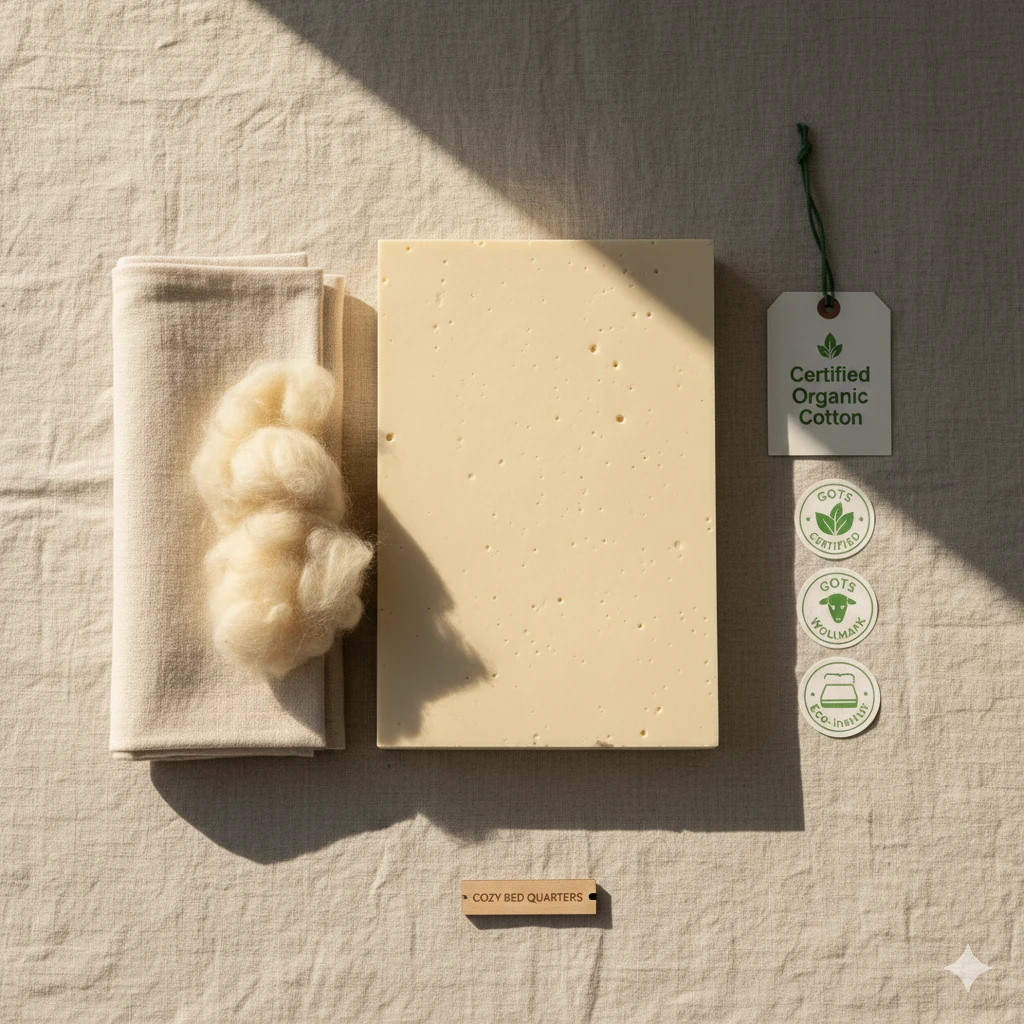
Eco-conscious materials align with comfort and sustainability on the mattress firmness scale spectrum.

Materials not only influence comfort but also your health and environmental impact. Organic latex, cotton, and wool provide breathable comfort and resist allergens without synthetic chemicals. Conventional foam mattresses, while affordable, can trap heat and release volatile organic compounds (VOCs) over time.

Look for trusted certifications like GOLS (Global Organic Latex Standard), GOTS (Global Organic Textile Standard), CertiPUR-US® for safe foams, and OEKO-TEX® for textile purity. These ensure your mattress meets strict standards for safety and sustainability.

For an in-depth guide to creating a healthier sleep sanctuary, explore our article on creating the ideal sleep environment.

Key Takeaways: Mattress Firmness Scale
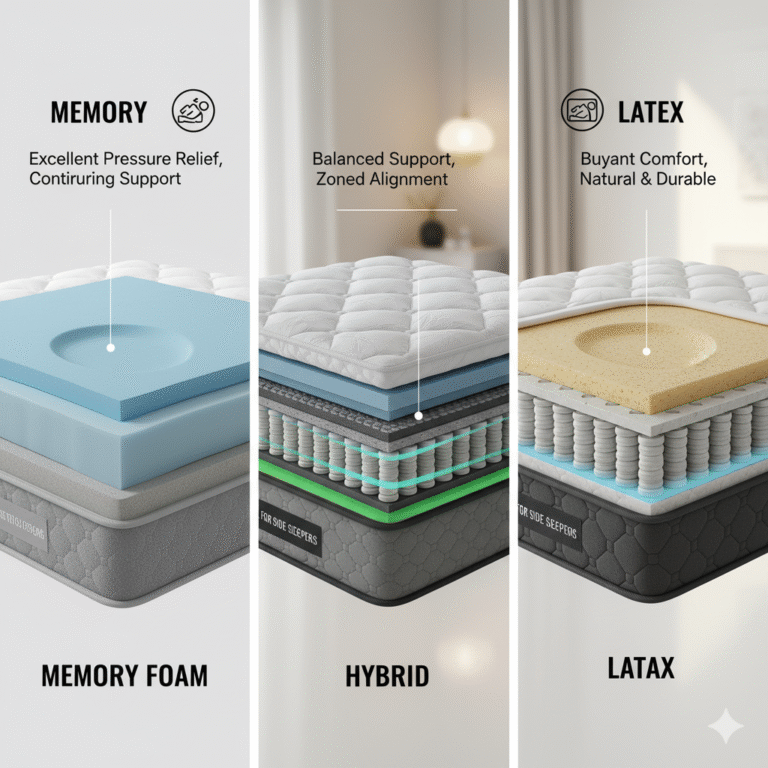
Cutaway comparison of memory foam, hybrid and latex mattress layers showing firmness support
  • The mattress firmness scale runs from 1 (softest) to 10 (firmest).
  • Align firmness with your body type and preferred sleeping position.
  • Foam, latex, and hybrid materials each affect perceived comfort.
  • Test mattresses both in-store and through at-home trial periods.
  • Eco-friendly, certified materials promote healthier, longer-lasting comfort.

FAQ: Mattress Firmness Scale

How do I know which firmness level suits me best?
Consider your sleep position and weight. Side sleepers need soft to medium, back sleepers medium-firm, and stomach sleepers firm support for proper alignment.
Does a mattress get firmer or softer over time?
Yes. Foams may slightly soften with use, while latex and hybrid coils tend to maintain firmness longer.
What if my partner prefers a different firmness?
Choose a dual-firmness or split mattress design, or add a topper to one side for personalized comfort.

Final Thoughts

Understanding the mattress firmness scale empowers you to choose comfort with confidence. The right firmness not only supports restful sleep but also promotes spinal health and posture. Whether you prefer a plush, body-hugging feel or a firm, supportive surface, investing in the right mattress pays dividends in daily energy and long-term well-being.

Explore more expert sleep insights, eco-friendly bedding tips, and buyer’s guides at Cozy Bed Quarters.

Related Reading

The Best Mattresses for Side, Back, and Stomach Sleepers

Mattresses Side, Back, Stomach in a cozy bedroom setting - mattresses side stomach


Best Mattress for Side Back and Stomach Sleepers

The best mattress for side back stomach sleepers combines pressure relief at shoulders and hips, steady midsection support, and firmness levels that keep your spine aligned no matter how you sleep.

Updated August 2025.

Key Takeaways

  • Firmness guide: Medium-soft for side, medium-firm for back, and firm for stomach sleepers.
  • Materials matter: Memory foam contours deeply, coils add bounce and airflow, hybrids balance both.
  • Hot sleepers: Latex or hybrid builds improve breathability and cooling.
  • Couples: Motion-isolating foams and pocketed coils reduce sleep disruptions.
  • The phrase best mattress for side back stomach sleepers anchors your checklist when comparing options.

If you’re not sure where to start, use our mattress buying guide. To compare materials, see memory foam vs spring mattress, or explore best cooling mattress if you overheat at night.

Why multi-position sleepers need tailored support

Switching between side, back, and stomach sleep puts pressure on different body zones. Too soft, and your hips sink (tough on back/stomach sleepers). Too firm, and your shoulders feel jammed (hard on side sleepers). The best mattress balances cushioning and lift—especially for combination sleepers who move all night.

Mattress cutaway showing support layers, the best mattress for side and stomach sleepers

A quick firmness map for each sleeping position.

Best mattress for side sleepers

Side sleepers press weight into the shoulders and hips, so pressure relief is essential. The best mattress for side back stomach sleepers cushions these areas while preventing midsection sagging. For more tailored picks, see our guide to the best mattress for side sleepers.

Firmness: Medium-soft to medium. Heavier side sleepers may prefer medium-firm with thicker comfort layers.

Materials: Memory foam for contouring, hybrids for pressure relief + airflow, or latex for buoyant comfort that avoids a “stuck” feel.

Best mattress for back sleepers

Back sleepers need consistent lumbar support to maintain a healthy spinal curve. A bed that’s too soft lets the hips sink; too firm can push the shoulders upward.

Firmness: Medium to medium-firm.

Materials: Zoned coils with supportive foams, or medium-firm memory foam. Hybrids are excellent for couples with different needs.

Best mattress for stomach sleepers

Stomach sleepers put the most stress on the lower back. A sagging mattress lets hips drop too low, which strains the spine. Firmer support is the key.

Firmness: Firm to medium-firm.

Materials: Hybrids and latex for cooling lift, or dense foams with reinforced cores for support.

The Best Mattresses for Side, Back, and Stomach Sleepers - mattresses featuring mattresses side stomach

Proper spinal alignment prevents morning aches and keeps your core supported.

Body type and mattress choice

  • Lighter sleepers (under 150 lbs): Softer mattresses prevent pressure buildup.
  • Average-weight sleepers (150–230 lbs): Medium firmness works across all positions.
  • Heavier sleepers (230+ lbs): Firmer beds with thick coils or high-density foam provide lasting support.

Comparison: best mattress for side back stomach sleepers by body type

Position Ideal Firmness Best Materials Body Type Tips
Side Sleepers Medium-soft to medium Memory foam, hybrid, latex Lighter bodies prefer plush foam; heavier bodies benefit from thicker hybrids.
Back Sleepers Medium to medium-firm Hybrid, zoned coils, firm foam Average-weight thrive on hybrids; heavier need reinforced lumbar zones.
Stomach Sleepers Firm to medium-firm Latex, hybrid, dense foam Lighter sleepers can tolerate medium-firm; heavier need firm latex or hybrid.
Combination Sleepers Medium (balanced) Responsive hybrid, latex Latex suits restless sleepers; hybrids fit couples. See Casper vs Purple.

Best mattress types for side, back, and stomach sleepers

  • Memory foam: Deep contouring, excellent for side sleepers, but may trap heat.
  • Latex: Naturally breathable and bouncy, great for combo sleepers.
  • Hybrids: Best all-around for side, back, and stomach sleepers.
  • Innerspring: Cool and supportive, but often needs a pillow top for pressure relief.

The Best Mattresses for Side, Back, and Stomach Sleepers - mattresses featuring mattresses side stomach

How materials feel: foam (hug), latex (lift), hybrid (a bit of both).

Testing at home, cost, and buying tips

A showroom test lasts minutes—real comfort shows up after weeks. Use the trial period to judge pressure relief, lumbar support, and cooling. Rotate your mattress if the brand recommends it, and add a breathable protector for longevity.

  • Budget-friendly: Foam under $600—great for lighter sleepers or guest rooms.
  • Mid-range: $800–$1,200 hybrids hit the sweet spot for most households.
  • Premium: $1,500–$2,500 with zoned coils, latex, and cooling fabrics.

According to the CDC, adults need at least seven hours of quality rest per night. If you’re choosing an eco-conscious mattress, look for recognized bedding certifications to ensure safe materials.

FAQ

What firmness is best for side back stomach sleepers?

Medium-soft for side, medium-firm for back, and firm for stomach. Combination sleepers often choose medium hybrids for balance.

What mattress works for couples with different sleep positions?

Hybrids with zoned coils or foam beds with dual firmness. These combine motion isolation with responsiveness.

How do I avoid back pain as a stomach sleeper?

Choose a firmer mattress that keeps hips supported. Use a thin pillow—or none at all—to prevent neck strain.

Do multi-position sleepers need special mattresses?

Not always. Hybrids and latex beds are naturally flexible, making them ideal for changing positions at night.

How long does a mattress last?

On average, 7–10 years. Latex and hybrids last longest, while foam beds depend on density and core quality.

Conclusion

The best mattress for side back stomach sleepers balances cushioning, support, and airflow across sleep positions. Match firmness to your primary position, choose materials that fit your comfort style, and use trial periods to test at home. For cozy comparisons and expert guides, explore Cozy Bed Quarters.

Related Reading


Best Mattress Firmness for a King Bed: Soft, Medium, or Firm?

Firmness scale chart for best mattress firmness for a king bed

For most people, the best mattress firmness for a king bed sits between 5 and 7 on the 10-point scale — medium to medium-firm. That range keeps your spine roughly level whether you sleep on your back or your side, and it’s the safest compromise when two people with different preferences share the bed. Go softer (3–5) if you’re a side sleeper under about 130 pounds, and firmer (7–8) if you sleep on your stomach or weigh more than roughly 230 pounds.

The firmness scale, in plain numbers

Firmness is how a mattress feels in the first few seconds — plush and sinking, or solid and pushing back. Brands rate it 1 to 10, but there’s no industry rulebook behind those numbers, so one company’s “medium” can feel like another’s “firm.” Treat the number as a starting point, not a spec.

Here’s roughly how the scale breaks down:

  • 1–3 (soft): deep contouring, noticeable sink at hips and shoulders
  • 4–6 (medium): some cradle, but you still feel like you’re on the bed, not in it
  • 6.5–7.5 (medium-firm): the most common “universal comfort” zone brands ship
  • 8–10 (firm): very little give, you sleep mostly on top of the surface

Most mattresses sold online cluster around 6 to 7 because that range annoys the fewest people. If you want the full breakdown of what each level feels like, our mattress firmness scale guide walks through it level by level.

Best mattress firmness for a king bed by sleeping position

Your default position does more to determine firmness than anything else, because it decides where your body needs room to sink and where it needs to be held up.

Sleeping position Target firmness Why
Side 4–6 Shoulders and hips need to sink in an inch or two, or you get numb arms and sore hips
Back 5–7 Enough give for the lumbar curve, enough push-back to stop the hips dropping
Stomach 6.5–8 A soft surface lets the pelvis sag, which arches the lower back all night
Combination 5.5–6.5 You need to roll over easily; deep-sinking foam makes turning feel like work

If you have ongoing back pain, the research leans medium-firm rather than rock hard. A U.S. National Institutes of Health evidence review notes that medium-firm mattresses may lead to less back pain and better sleep quality than firmer ones, and a randomized, double-blind trial in The Lancet comparing medium-firm with firm mattresses in adults with chronic low back pain found better pain and disability outcomes on the medium-firm beds. That doesn’t mean medium-firm fixes a bad back — it means “firmer is better for your back” is a myth worth dropping. For more on that, see our roundup of king mattresses for back pain relief.

How your body weight shifts the number

Two people can lie on the same mattress and honestly describe it differently, because firmness is felt through pressure. The more weight pressing down, the further you compress the comfort layers, and the softer the bed feels.

  • Under 130 lbs: aim one step softer than the position chart says. A 7 will often feel like an 8.5 to you.
  • 130–230 lbs: the chart numbers usually land as advertised.
  • Over 230 lbs: aim one step firmer, and pay more attention to what’s under the comfort layers than the firmness label. Look for a thicker coil gauge or high-density foam support core, and a total height of 12 inches or more so you don’t bottom out.

Chart matching body weight ranges to the best mattress firmness for a king bed

Firmness and support are two different things

Firmness is surface feel. Support is whether the mattress keeps your spine in a straight line. A soft mattress with a strong support core can be perfectly supportive; a firm one with a sagging core is not. When you’re comparing beds, ask about the support layer — coil count and gauge on a hybrid, foam density in pounds per cubic foot on an all-foam bed — instead of just the firmness rating.

Couples: one firmness or a split king?

A standard king is 76 by 80 inches, which gives each person 38 inches of width — the same as a twin XL. That’s the quiet advantage of this size: you can genuinely have different preferences and not elbow each other. Room-fit measurements are in our king size bed dimensions guide.

Your options, ranked by how well they usually work:

  1. Meet in the middle at 6–6.5. If your ideal numbers are within two points of each other (say a 5 and a 7), one medium-firm mattress usually satisfies both of you. Cheapest and simplest.
  2. Buy to the softer partner’s number, then firm up one side with nothing. Sounds backwards, but it’s easier to add firmness perception with a thin dense topper than to soften a too-firm bed without ruining support.
  3. Split king: two twin XL mattresses, each 38 by 80 inches. Each person picks their own firmness, and it’s the only setup that works with split adjustable bases. Downside: a seam down the middle, two sets of fitted sheets (or one split-king sheet set), and two mattresses to move.
  4. Dual-firmness single king. Some brands build one mattress with different comfort layers per side. Fewer options, and you can’t re-split it later if one of you changes your mind.

One more couples factor: motion transfer. If one of you gets up at 5 a.m., foam and pocketed-coil hybrids isolate movement far better than a connected innerspring. Our memory foam vs. spring comparison covers how each one behaves on a king.

Soft, medium, and firm: honest trade-offs

Firmness scale chart showing soft, medium, and firm mattress levels for king beds

Soft (1–5)

Good for: side sleepers, lighter bodies, people with shoulder or hip pressure pain.
Watch out for: heat, since deep foam contouring wraps around you and cuts airflow; harder repositioning; hips dropping if you also sleep on your stomach some of the night.

Medium to medium-firm (5.5–7)

Good for: back sleepers, combination sleepers, couples with mismatched preferences, anyone who genuinely isn’t sure.
Watch out for: it can feel like a compromise rather than a perfect fit — strict side sleepers sometimes still need a topper.

Firm (7.5–10)

Good for: stomach sleepers, heavier sleepers who bottom out on softer beds, people who like sleeping “on top of” the bed and run hot.
Watch out for: pressure points at the shoulder and hip if you ever roll onto your side, and a hard edge feel when you sit to put shoes on.

Mattress types and how the same number feels

Type Common firmness range Feel at the same rating
Memory foam 4–8 Slow sink; feels softer the longer you lie there, and warmer in a room above about 70°F
Hybrid (foam over pocketed coils) 5–8 Springier, easier to move on, better edge support — usually the best bet on a king
Latex 5–8 Buoyant push-back rather than hug; sleeps cooler and holds its feel for years
Innerspring 6–9 Firmest surface per rating, most bounce, most motion transfer across a wide bed

Comparison chart of memory foam, hybrid, latex, and innerspring mattress firmness ranges

Firmness also drifts over time. Comfort foams soften during the first month or two, then slowly keep softening. That’s normal — it’s why a bed that felt slightly too firm in the showroom often settles into the right zone. It’s also why an eight-year-old mattress can feel wrong even though nothing visibly changed; see how long a king mattress lasts for the signs it’s past saving.

King-specific details that change how firm your bed feels

A king is wide enough that the frame underneath matters as much as the mattress.

  • Center support. A 76-inch-wide mattress needs a center rail with legs to the floor. Without it, the middle dips, the bed feels softer in the center than at the edges, and most manufacturers will void the warranty.
  • Slat spacing. For foam and hybrid beds, slats more than about 3 inches apart let foam bulge between them. Add a bunkie board or plywood if your frame is gappier than that.
  • Edge support. On a wide bed, couples often sleep closer to the edges. Reinforced perimeter coils keep you from feeling like you’re rolling off, and they make the bed easier to sit on.
  • Warranty sag threshold. Coverage usually kicks in only after an indentation of about an inch or more with no weight on the bed. Read the exact figure before you buy, and photograph the bed when it’s new.

How to tell within a month if the firmness is right

  1. Do the hand test. Lie on your back and slide a hand under the small of your back. If there’s a big gap, the bed is too firm. If you can’t slide your hand in at all, it’s too soft.
  2. Have someone photograph you from behind while you side-sleep. Your spine should run roughly parallel to the mattress. A dip at the hip means too soft; a hump means too firm.
  3. Track your first 15 minutes awake. Lower back stiffness that fades in ten minutes usually points to a bed that’s too soft. Sore shoulders, hips, or a numb arm points to too firm.
  4. Give it 21 to 30 nights. Your body adapts and the foams break in. Many sleep trials require that minimum wait before you can exchange or return anyway — check the policy before you buy.

If it’s close but not quite right

Too firm is the easier problem. A 2- to 3-inch topper in foam or latex softens the surface by roughly one to two points on the scale, for a fraction of the cost of a new king. Too soft is harder: a firm topper sits on top of the sag and rarely fixes it. In that case check your foundation first, since a failing slat or missing center leg can masquerade as a worn-out mattress. Our look at luxury vs. budget king mattresses covers where extra money actually buys better support layers.

Certifications worth a look

  • CertiPUR-US: a voluntary program for flexible polyurethane foam that tests for certain restricted substances and low VOC emissions.
  • OEKO-TEX Standard 100: tests textiles for harmful substances, with stricter limits for items in close skin contact.
  • GOLS: latex certified to this standard must contain at least 95% certified organic raw material by weight.
  • GREENGUARD Gold: chemical-emissions testing aimed at indoor air quality.

None of these tell you a thing about firmness or durability — they’re about materials and emissions. Don’t let a badge talk you into the wrong feel.

FAQ

What firmness is best for a king size mattress?

Medium to medium-firm, around 5 to 7 out of 10, suits the widest range of sleepers and is the usual choice for couples who disagree. Adjust from there based on position and body weight.

Is soft or firm better for couples?

Medium-firm tends to work best because it supports back and stomach sleeping without punishing a side sleeper. If your preferences are more than two points apart, a split king with two twin XL mattresses is the cleaner fix.

How do I know my mattress is too firm?

Numb or tingling arms, sore shoulders and hips, tossing to find a comfortable spot, and pain that’s worse right when you wake up. Also check for a visible gap under your waist when you lie on your back.

Can a mattress be broken in to feel softer?

Some. Comfort foams soften over the first few weeks of regular use, usually by less than a full point on the scale. If you’re two or more points off, break-in won’t rescue it.

Does a king need a firmer mattress than a queen?

No. Firmness is about the person, not the size. What a king does need is proper center support underneath, or the middle will sag no matter how firm the mattress started.

Updated September 2026.