Best Sleeping Positions: Back, Side and Stomach Guide

Person showing the best sleeping positions for stomach sleepers with thin pillow and pelvic support

For most people, the best sleeping position is the one that keeps your head, neck and spine in a straight, neutral line while leaving your airway open — and side sleeping achieves that most easily for the widest range of sleepers. Back sleeping is excellent for spinal alignment and pressure relief but tends to make snoring worse, while stomach sleeping is the hardest position on the neck and lower back. The good news: you rarely need to change positions entirely, because pillow height, a knee or pelvis pillow, and the right mattress feel fix most of the problems people blame on their posture.

Key Takeaways

  • Side sleeping suits the most people: it keeps the airway open, helps nighttime reflux (especially on the left), and works in pregnancy. Use a pillow tall enough to fill the gap at your shoulder, plus one between your knees.
  • Back sleeping distributes weight evenly and keeps the spine neutral. Add a pillow under the knees and use a thin or contoured pillow — but expect more snoring.
  • Stomach sleeping is the least spine-friendly. If you can’t give it up, use an ultra-thin pillow (or none) and a pillow under your hips.
  • Combination sleepers do best with an adjustable-loft pillow, a medium-firm mattress and a body pillow to steady the hips.
  • Snorers should avoid lying flat on the back; side sleeping and modest head-of-bed elevation are the two simplest changes to try.

Why Your Sleeping Position Matters

You spend roughly a third of your life in one posture, held there for hours without the micro-adjustments you make when awake. That makes sleep position one of the few “free” levers you can pull for comfort. Position influences:

  • Spinal alignment — whether your neck and lower back rest in a neutral curve or are held at an angle all night.
  • Breathing and snoring — gravity can let the tongue and soft palate fall back into the throat when you lie flat on your back.
  • Reflux and heartburn — the position of the stomach relative to the esophagus changes how easily acid travels upward.
  • Pressure points — shoulders and hips carry most of the load when you’re on your side; the ribs and pelvis do when you’re face down.
  • Sleep continuity — pain and breathing interruptions cause awakenings you may not remember, which is often why you wake up unrefreshed.

One honest caveat: most position advice is based on anatomy, clinical experience and relatively small studies rather than large trials. Pain and comfort are highly individual, so treat the guidance below as a starting point and let your own mornings be the tiebreaker.

Back, Side and Stomach Sleeping Compared

Position Best for Watch out for Key fix
Side (especially left) Snoring, reflux, pregnancy, lower-back pressure Shoulder and hip pain, arm numbness Pillow between knees; loft matched to shoulder width
Back Neutral spine, even weight distribution, sore joints Snoring and sleep apnea; lumbar aching Pillow under knees; thin or contoured head pillow
Stomach Habitual comfort; keeps airway clear for some snorers Neck rotation, lumbar extension, tingling arms Ultra-thin or no pillow; pillow under the pelvis
Combination Natural pressure relief from movement Gear that only works in one position Adjustable-loft pillow; medium-firm surface

Best Sleeping Positions: Back, Side & Stomach Compared - sleep quality

Side Sleeping: The Most Broadly Useful Position

Side sleeping keeps the tongue and soft palate from collapsing backward, which is why it’s the first thing recommended for snorers and for people with mild, position-dependent sleep apnea. Johns Hopkins Medicine notes that side sleeping supports healthy airflow while keeping the spine in reasonable alignment.

The trade-off is pressure: your shoulder and hip carry your body weight on a small contact area, so a surface that’s too firm creates soreness, and one that’s too soft lets the hips sink and twist the lower back.

  • Choose a pillow tall and firm enough to fill the space between your ear and the mattress — your nose should line up with your breastbone, not tilt down toward the bed.
  • Put a pillow between your knees so the top hip doesn’t rotate forward.
  • Keep the legs only gently bent. A tightly curled fetal position limits chest expansion and can aggravate stiff hips and lower backs.
  • If your shoulder aches, try a softer comfort layer or topper — see our guide to memory foam mattresses for different sleepers for pressure-relief options.
  • Avoid tucking your arm under your head or pillow; that’s the usual cause of a numb, tingling hand at 3 a.m.

side sleeping best sleep positions to reduce snoring

Back Sleeping: Best for Neutral Alignment

Lying on your back spreads your weight across the largest possible area and keeps your head, neck and spine naturally stacked, with no twisting. It’s often the most comfortable choice for painful joints and for anyone recovering from shoulder problems.

Two things spoil it. First, snoring and obstructive sleep apnea are usually worst flat on the back. Second, if the mattress doesn’t support the lumbar curve, the lower back arches and aches by morning.

  • Slide a pillow under your knees to flatten the lumbar arch slightly and release tension in the low back.
  • Use a thin or contoured pillow. A tall pillow pushes your chin toward your chest, which strains the neck and narrows the airway.
  • A medium-firm feel is the usual sweet spot; our overview of mattress types and how they support the body explains the differences.
  • If you snore on your back, raise the whole upper body rather than just the head — see the elevation section below.

Stomach Sleeping: Manageable, Not Ideal

Face-down sleeping forces the neck to rotate nearly 90 degrees for hours and pushes the lower back into extension, which is why it’s the position most often linked to morning neck and lumbar soreness. It does keep some people’s airway clear, and plenty of lifelong stomach sleepers sleep soundly — so the practical goal is damage control rather than a total ban.

  • Use an ultra-thin pillow or none at all, so the neck isn’t extended on top of being rotated.
  • Place a flat pillow under your pelvis and lower abdomen to reduce the arch in your lower back.
  • Alternate which way you turn your head rather than always favouring one side.
  • Try a “three-quarter” transition: hug a body pillow and roll most of your weight onto one side while one leg stays forward. It feels similar to stomach sleeping but spares the neck.
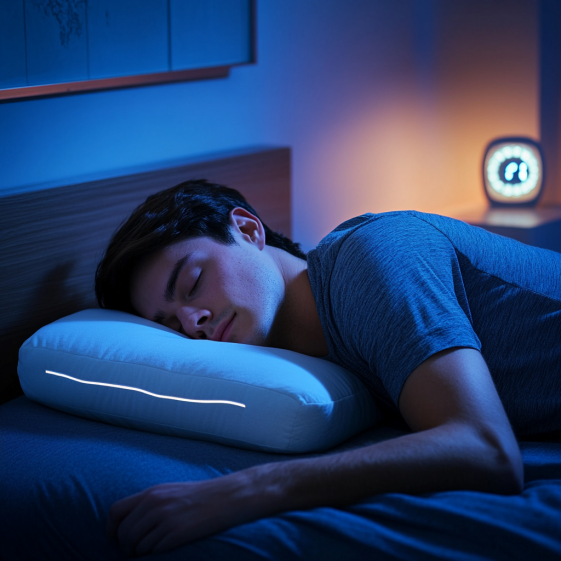
Person showing the best sleeping positions for stomach sleepers with thin pillow and pelvic support

Combination Sleeping

Shifting positions is normal and even useful — it’s how your body relieves pressure. The problem is gear tuned to a single posture. An adjustable-loft pillow (one you can add or remove fill from), a medium-firm mattress with enough surface give for the shoulder, and a body pillow to stop the hips from rolling too far will cover most transitions. Use morning soreness as your diagnostic: a stiff neck points to pillow height, a sore low back points to support, and aching shoulders point to the comfort layer.

Best Sleeping Positions to Stop Snoring

Snoring happens when relaxed tissue in the throat and nose vibrates in a narrowed airway. Position matters because gravity decides where that tissue falls.

  • Sleep on your side. Positional therapy — deliberately keeping people off their backs — has been studied as a treatment for position-dependent snoring and mild sleep apnea, with research published in the sleep medicine literature reporting reduced snoring when patients stayed off their backs. Effects vary a lot between individuals.
  • Make rolling over harder. The classic home version is the “tennis ball trick” (a ball or firm object attached to the back of a sleep shirt); purpose-made positional trainers and firm body pillows do the same job more comfortably.
  • Raise your upper body. Elevating the head and torso a few inches reduces the tendency for the airway to collapse and helps reflux-related throat irritation. A wedge that supports the shoulders, an adjustable base, or risers under the head of the bed all work; stacking pillows under the head alone just kinks the neck. We cover the practical methods in sleeping on an incline, and an adjustable bed lets partners elevate independently.
  • Don’t stay flat on your back if you snore heavily, and avoid a tightly curled posture that restricts chest expansion.

Lifestyle factors work alongside position: alcohol and sedatives before bed relax throat muscles, nasal congestion forces mouth breathing, dry air irritates the throat, and excess weight around the neck narrows the airway. Nasal strips and a humidifier are cheap, low-risk things to try, though evidence that they help snoring is modest.

elevated sleeping best sleep positions to reduce snoring

Best Position for Acid Reflux and Heartburn

If heartburn wakes you, position is one of the more evidence-backed adjustments available. A systematic review and meta-analysis found that sleeping in the left lateral (left-side) position was associated with improved gastroesophageal reflux symptoms compared with other positions. Raising the head of the bed has also been reviewed as a reflux measure, with a systematic review of head-of-bed elevation finding symptom benefit, though the underlying studies are small. Combining the two — left side plus a gentle incline — is a reasonable, low-cost experiment; our notes on inclined bed setups cover how to do it without sliding down the bed.

Special Situations

Pregnancy

Sleeping on the side is the standard recommendation in later pregnancy, and many people find the left side most comfortable for circulation and reflux. A wedge under the bump and a pillow between the knees help. Follow the advice of your own midwife or doctor, since individual circumstances differ.

Neck and shoulder pain

Pain on waking that fades within an hour usually points to pillow height or mattress feel rather than the position itself. Change one variable at a time and give each change several nights.

Infants

Adult position advice does not transfer to babies. Safe-sleep guidance for infants is specific — on the back, on a firm flat surface — so check current recommendations with your pediatrician rather than applying anything from this guide.


Woman demonstrating the best sleeping positions for back sleepers with proper neck and knee supportWoman demonstrating the best sleeping positions for back sleepers with proper neck and knee support

How to Actually Change Your Sleep Position

  1. Set the stage first. Fix pillow loft and add the knee or hip pillow before trying to switch positions; often the discomfort that keeps pushing you back to an old habit disappears.
  2. Use a physical barrier. A body pillow behind your back, or pillows either side of you, makes rolling less automatic.
  3. Start at lights-out. You control only the position you fall asleep in, and that’s enough to shift a good share of the night.
  4. Give it two weeks. New positions feel wrong for several nights before they feel normal.
  5. Keep the room cool. Overheating causes tossing that undoes positional work; breathable bedding helps you hold a position longer.

When to See a Doctor

Position changes are for ordinary snoring and everyday aches. Seek medical advice if you have witnessed pauses in breathing, gasping or choking at night, heavy daytime sleepiness, morning headaches, reflux most nights, or pain that wakes you or persists through the day. These can indicate sleep apnea or another condition that no pillow arrangement will fix.

FAQ

What is the single best sleeping position?
Side sleeping suits the largest number of people because it balances spinal alignment with an open airway. Back sleeping is the best choice for neutral alignment if you don’t snore.
Left side or right side?
The left side has the better evidence for reducing nighttime reflux symptoms. Otherwise, choose the side that leaves your shoulder and hip comfortable, and switch when one gets sore.
Is stomach sleeping ever OK?
It’s the least spine-friendly position, but it’s workable with a very thin pillow (or none) and a pillow under the pelvis. If you wake with neck or back pain, move toward a side position.
What pillow height should I use?
Back: thin or contoured. Side: firmer and tall enough to match your shoulder width. Stomach: ultra-thin or none. The test is whether your nose stays in line with your breastbone.
Does sleeping with the head raised really help snoring?
Elevating the upper body helps some people, and it’s well supported for reflux. Evidence specific to snoring is thinner, so treat it as a cheap experiment rather than a guaranteed fix — and raise the torso, not just the head.
How do I stop shoulder pain from side sleeping?
Soften the surface under the shoulder with a topper or a more conforming comfort layer, keep the head properly supported so the shoulder isn’t crushed, and add a knee pillow so the hips stay level.
Does my mattress matter more than my position?
They interact. A medium-firm surface works for most positions, but side sleepers usually need more surface give and stomach sleepers need firmer support to stop the hips from sinking.

Updated September 2026.

Ivory Night Stand: How to Choose the Right Size, Finish and Style

Ivory night stand with books and lamp next to a luxury wooden bed frame

Pick an ivory night stand whose top lands within about 2 inches of your mattress surface — usually 24 to 28 inches tall — and leave a 2 to 6 inch gap between it and the bed so you can reach a glass of water without knocking it over. Width of 18 to 24 inches suits most bedrooms, and a warm ivory finish (a white with a yellow or beige base) reads softer next to wood tones than a bright, blue-based white. Everything else — drawers versus open shelf, solid wood versus veneer, knobs versus pulls — follows from those numbers.

Ivory, white or cream: what the color actually does

Ivory is white with a drop of yellow in it. That tiny shift changes how the piece behaves in a room.

Next to warm woods — walnut, cherry, oak, pine — a cool bright white can look chalky, almost like a primer coat. Ivory picks up the same yellow undertone as the wood, so the two stop fighting. Against a crisp white wall or white trim, though, an ivory piece can look slightly dingy if the contrast is strong. Hold a paint chip or a fabric swatch against your trim before you commit.

Quick way to tell what you’re looking at: put the finish beside a sheet of printer paper in daylight. Printer paper is brutally cool white. If your sample looks warm and buttery, it’s ivory or cream. If it disappears, it’s a true white and will sit differently in the room than you expect.

One more thing about photos online: white furniture is notoriously hard to photograph accurately. Listings shot under warm studio lights make true white look ivory. Look at customer photos taken in real bedrooms, or order a sample door or finish chip if the maker offers one.

Ivory night stand styled with a lamp, books and a small tray beside a bed

How to size an ivory night stand to your bed

Height: measure the mattress, not the bed frame

Grab a tape measure and measure from the floor to the top of your mattress — with the sheets on, since a thick mattress pad adds an inch or two. That number is your target.

  • Ideal: nightstand top within 2 inches above or below the mattress top.
  • Typical range sold: 24 to 28 inches tall.
  • Platform beds and low frames: mattress tops often sit 18 to 24 inches up, so a 28-inch nightstand looms. Look for 22 to 24 inches.
  • Tall beds, pillow-tops, adjustable bases: mattress tops can reach 30 inches or more. An adjustable base that lifts the head section also changes what you can reach, so measure with the base flat.

A nightstand that’s too low means fumbling downward for the lamp switch in the dark. Too high, and the top edge cuts into the bed’s profile and blocks light from a table lamp.

Width, depth and the walkway

Width is mostly about balance. A 16-inch pedestal beside a king bed looks like an afterthought; a 30-inch chest beside a twin swallows the wall. Rough guide:

Bed size Nightstand width that looks right
Twin / full 16-20 inches
Queen 20-24 inches
King / California king 24-30 inches

Depth of 15 to 20 inches covers most designs. Deeper than 20 and the front edge starts sticking past the mattress into the walkway.

Speaking of walkways: keep at least 24 inches of clear floor between the bed and any wall or dresser, and 30 to 36 inches if two people pass on the same side or you need room to make the bed. Measure your wall before you shop — bed width plus two nightstands plus a couple of inches of breathing room has to fit, and king beds are the ones that blow the budget. If you’re still deciding on the frame, our king vs. California king comparison lays out the footprint difference.

Two ivory night stand sizes compared next to a queen bed

When you can’t fit a pair

Tight room? A single nightstand on the side you sleep on, plus a wall-mounted shelf or a swing-arm sconce on the other, reads intentional rather than cramped. Floating nightstands free up the floor and make vacuuming easy. Asymmetry works as long as the two sides have similar visual weight — a nightstand on one side and a chair or narrow plant stand on the other, say.

Finishes and materials: what holds up in ivory

Light painted finishes show every ding, so construction matters more here than with a dark stain.

  • Painted solid wood: heaviest and most repairable. A chipped corner can be touched up with matching paint. Poplar and rubberwood are common under paint; both are fine.
  • MDF or particleboard with a painted or laminate finish: smoother and cheaper, and paint sits beautifully on MDF. But chipped edges expose brown core that you can’t sand out, and water damage swells the board permanently.
  • Veneer over engineered core: a middle ground. Check the edges — a thin veneer wrapped around a corner is the first place to peel.
  • Distressed or “antique ivory” finishes: rubbed-through edges hide future scuffs, which is genuinely practical in a kid’s room or a busy household.

If the piece uses MDF or particleboard, look for the compliance label. Composite wood products and the finished furniture made from them that are sold in the US must be labeled as TSCA Title VI compliant under EPA rules, which cap formaldehyde emissions. It’s a sticker or stamp, often inside a drawer or on the back panel. Airing a new piece out in a ventilated room for a few days before it goes next to your pillow isn’t a bad habit either.

Ask about the topcoat, too. A catalyzed lacquer or conversion varnish resists the oils and lotions that end up on a bedside surface; a thin water-based paint with no clear coat will pick up marks from a moisturizer bottle within months. Strong, direct sun can also yellow some white and ivory finishes over time, so if your nightstand sits in a sunny window, a sheer shade helps.

Drawers, doors or open shelf

Decide by what actually lives on your bedside table tonight.

Style Best for Trade-off
Two drawers Medication, chargers, reading glasses, small clutter Less vertical space; cheap glides stick
One drawer + open shelf Books and a stack of magazines plus hidden bits The shelf gets messy fast
Cabinet door Bulky items, a tissue box, a CPAP or humidifier Door swing needs clearance beside the bed
Open pedestal or table Small rooms, minimal setups Nowhere to hide anything

Drawer hardware is where budget pieces give themselves away. Full-extension ball-bearing slides let you reach the back of the drawer and usually carry 75 to 100 pounds; soft-close versions stop the 2 a.m. slam. Plain wood-on-wood runners swell in humid rooms. Pull a drawer all the way out in the store if you can — if it tips forward when it’s three-quarters open, it has no stop.

Also check for a cord notch in the back panel. A nightstand that hides a charging brick inside a drawer, with the cable running out a grommet, keeps the top clear.

Ivory night stand with drawers in a modern bedroom with wood bed frame

What to check before you buy

  1. Weight. Shipping weight tells you a lot. A 24-inch two-drawer piece at 25 pounds is thin board; 45 to 60 pounds suggests solid parts.
  2. Back panel. A stapled cardboard back racks and wobbles. A fitted plywood back keeps the box square.
  3. Top surface. Run your hand across it. Bumps under the paint mean filler that will telegraph more as it ages.
  4. Leg joints. Screw-in legs on a painted piece loosen; corner blocks or a solid apron hold up.
  5. Finish match. If you’re buying two, confirm they ship from the same batch. Ivory varies between production runs.
  6. Return window and parts. Painted furniture arrives chipped more often than stained. Check whether the maker ships a touch-up pen and replacement drawer slides.
  7. Stability. The federal tip-over rule for clothing storage units applies to pieces 27 inches and taller, which leaves most nightstands outside its scope. If kids climb, follow the CPSC’s Anchor It! guidance and strap it to a stud anyway.

Pairing an ivory night stand with wood, metal and paint

Ivory gets along with almost everything, which is why it’s easy to overdo. Two guidelines keep it from looking flat:

  • Don’t match everything. Two ivory nightstands plus an ivory dresser plus an ivory bed is a lot of one note. Let one piece be wood or upholstered. Our guide to choosing a dresser for your room size and style covers how to balance the bigger piece.
  • Pick a hardware metal and stick to it. Aged brass and antique bronze pull out ivory’s warmth; polished chrome or nickel pushes it cooler and more modern. Swapping knobs is the cheapest upgrade there is — just measure the existing hole spacing (3 inches and 96 mm are the usual centers, and they’re close but not interchangeable).

Specific pairings that tend to work:

  • Walnut or cherry frame: ivory lightens the room without the hard contrast of true white.
  • White oak or weathered pine: both sit in the same warm family, so the look stays calm and coastal.
  • Black or dark-stained bed: ivory breaks up the mass. Repeat the black somewhere else — a lamp base, a picture frame — so the nightstands don’t look orphaned.
  • Upholstered or tufted headboard: a curved or fluted ivory nightstand echoes the soft lines better than a hard-edged box.

Flooring matters too. Over a dark floor, ivory pops; over honey-toned wood or beige carpet, it can vanish. That’s where a rug earns its keep — see our notes on rug size for a king bed for the placement that actually anchors the nightstands too.

Distressed ivory night stand with open shelf storage and books

Styling the top without burying it

Leave at least a third of the surface empty. You need somewhere to set a phone and a glass.

  • Lamp: aim for the bottom of the shade to sit near eye level when you’re sitting up reading — on a 26-inch nightstand, that usually means a lamp 24 to 27 inches tall overall. Too tall and the bulb glares straight into your eyes.
  • One tall, one short, one flat: lamp, small plant or candle, stacked books or a tray. Odd numbers look less staged.
  • A small tray corrals jewelry, lip balm and earplugs and makes dusting a two-second job.
  • Warm, dimmable light. A bulb around 2700K with a dimmer or a low-lumen setting is friendlier at bedtime than an overhead fixture at full blast. If overheads are the bigger issue in your room, our take on bedroom ceiling fixtures gets into layering.

Cleaning and keeping ivory looking ivory

Dust weekly with a dry microfiber cloth — grit is what scratches painted tops. For marks, a barely damp cloth with a drop of mild dish soap, then dry immediately. Skip bleach wipes and ammonia glass cleaners on painted finishes; they dull the sheen and can leave lighter patches you can’t blend back.

For scuffs on a satin finish, a melamine foam eraser works but also abrades the topcoat, so use it lightly and only on the mark. Coasters under water glasses and a felt pad under a lamp base prevent the two most common rings.

FAQ

What height should an ivory night stand be?

Within about 2 inches of your mattress top, which puts most people in the 24 to 28 inch range. Measure with bedding on, since a mattress topper can add 2 to 4 inches.

Do both nightstands have to match?

No. Matching pairs look tidy and traditional; two different pieces of similar height and visual weight look collected. Keeping the heights within an inch or two is what makes mismatched pairs read deliberate.

Is ivory better than white?

It depends on your wood tones and trim. Ivory is more forgiving beside warm woods and warm-toned walls, hides dust slightly better, and won’t compete with cream bedding. Next to bright white trim, a true white often looks cleaner.

Will an ivory finish yellow over time?

Some painted finishes shift with long, direct UV exposure, especially oil-based topcoats. Sheers or blinds on a sunny window help, and rotating a pair of nightstands occasionally evens out any change.

How far should the nightstand sit from the bed?

Two to six inches. Any farther and you’re leaning out of bed to reach the lamp; flush against the frame and you’ll scrape the finish every time the bed shifts.

Can a nightstand double as storage in a small room?

Yes — a two-drawer model with a cabinet base holds more than it looks like it should. If floor space is the real problem, built-in headboard storage may beat a freestanding piece entirely; see our guide to the bookcase storage bed.

Updated September 2026.

Best Rollaway Bed Picks: Sizes, Mattress Thickness and What Holds Up for Guests

Best rollaway bed set up with folding frame and mattress in a guest space

A rollaway bed is a folding steel frame on casters with a thin mattress attached, and it comes in three practical widths: cot width at about 30–31 in (76–79 cm), twin width at 38–39 in (97–99 cm), and true full at 54 in (137 cm) — nearly all of them 74–75 in (188–191 cm) long. Folded, a typical one parks upright in a footprint around 40 in wide by 17 in deep (102 × 43 cm) and roughly 49 in tall (125 cm), or lies flat at about 33 × 31 × 13 in (84 × 79 × 33 cm) on cot-width models. Weight capacity is the number that separates a bed your brother-in-law can sleep on from one that folds in the middle: budget frames are often rated near 265 lb (120 kg), while commercial-grade steel models list 440–500 lb (200–227 kg).

If you only remember one thing: measure the closet or gap where it will live before you shop, not after the box arrives.

Rollaway bed sizes and folded dimensions

Tidy guest bedroom with white bedding and folded blankets where a rollaway bed can be set up for visitors

Manufacturers publish two sets of numbers and people buy the wrong bed by reading only one. Open dimensions tell you whether it fits the floor. Folded dimensions tell you whether you can live with it the other 51 weeks of the year.

Type Sleep surface (in) Sleep surface (cm) Open height Typical folded size Best for
Cot width (hotel style) 30–31 × 74–75 76–79 × 188–191 15–18 in (38–46 cm) About 49 H × 40 W × 17 D in (125 × 102 × 43 cm) upright One adult, narrow rooms, hallway storage
Twin width 38–39 × 75 97–99 × 191 10–18 in (25–46 cm) About 44 × 39 × 12 in (112 × 99 × 30 cm) folded flat Most guests; takes standard twin sheets
Full width 54 × 75 137 × 191 15–18 in (38–46 cm) Roughly 54 in (137 cm) wide folded — needs a deep closet Two adults on short stays
Extra-long / adjustable-back 30–32 × 75 76–81 × 191 15 in (38 cm) typical Similar to cot width but taller when upright, around 52 in (132 cm) Reading, recovery, sitting up in bed

Two real examples. A common import model lists an open size of 79 × 31.5 × 18 in, folded 33 × 31 × 13 in, net weight 37 lb (17 kg), capacity 265 lb (120 kg). A hotel-style commercial unit lists a 31.5 × 78.7 × 15.25 in frame with a 31 × 74 × 5.25 in mattress. Notice the frame runs several inches longer than the sleeping surface — that overhang is why the bed won’t fit the closet you measured for a mattress.

Will it fit your closet, door and stairs?

Take five measurements before you buy anything:

  • Closet depth and width where it will be stored, plus the clear height under the shelf.
  • Narrowest doorway on the route, measured between the stops with the door open — interior doors vary more than people expect, so measure rather than assume.
  • Stair landing turn: the diagonal of the folded bed has to swing through it. A 49 in (125 cm) folded height is the number that gets stuck on a half-landing.
  • Open floor area plus a walkway. Design guidance commonly puts a comfortable walkway at 30–36 in (76–91 cm), and you need that on at least one long side so nobody climbs over the foot of the bed at 2 a.m.
  • Sloped ceilings in attic rooms — an 18 in (46 cm) deck sits far higher than a floor mattress.

Bed size chart: how a rollaway compares with standard beds

Anyone shopping fold-away beds ends up asking a second question: how does this compare with a standard bed? Here are the U.S. standard sizes, consistent across most brands within an inch.

Size Inches (W × L) Centimetres Room size that works
Cot / rollaway 30–31 × 75 76–79 × 191 Fits where nothing else will; needs about 7 × 5 ft of floor
Twin 38 × 75 96.5 × 190.5 7 × 10 ft and up
Twin XL 38 × 80 96.5 × 203 Dorms, sleepers over 6 ft
Full (double) 54 × 75 137 × 190.5 9 × 10 ft and up
Queen 60 × 80 152 × 203 10 × 10 ft and up
King 76 × 80 193 × 203 12 × 10 ft and up
California King 72 × 84 183 × 213 12 × 12 ft; longest standard size

The comparison that surprises people: a king and a California king have almost the same surface area. Sleep Foundation’s king size breakdown notes the Cal king is narrower and longer — four inches traded in each direction, so it’s a different shape rather than a bigger bed. A useful planning rule from mattress-size guides is to leave roughly 24 in (61 cm) of clearance on each side of a permanent bed.

Against that, a cot-width rollaway gives a single adult about 30 in (76 cm) of width — the same shoulder room a child gets on a twin, minus eight inches. That’s fine for two nights. It’s cramped for two weeks.

Mattress thickness and type: what’s comfortable past one night

Thickness on these beds runs 3 to 5.25 in (7.5–13 cm), and the difference between the bottom and top of that range is the whole experience.

  • 3 in (7.5 cm) foam: emergency use. Side sleepers will feel the deck through it by morning because hips and shoulders bottom out.
  • 4 in (10 cm) foam: the common middle. Acceptable for a weekend if the sleeper is under about 180 lb (82 kg) and sleeps on their back.
  • 5–5.25 in (13 cm) foam or innerspring: what commercial suppliers ship to hotels. This is the minimum for a side sleeper or anyone staying a week.

Type matters less than density. Cheap open-cell foam compresses into a permanent dish within a season of regular use; denser foam and small-coil innersprings hold shape longer. Innersprings feel more like a real bed and breathe better in humid rooms; foam is quieter and packs flatter. Neither will match the mattress you sleep on nightly.

One cheap upgrade beats the rest: a 2 in (5 cm) topper plus a protector. That takes a 4 in pad to a usable 6 in and gives you something washable between guests. Weighing firmness for a guest with back trouble? Our mattress firmness scale guide explains what the numbers mean.

Frame and weight capacity: tubular steel, hinges and the sag line

Every rollaway bed folds at the middle, which is exactly where your hips go. That hinge is what fails. What to read on the spec sheet:

  • Tube gauge. Commercial frames are often described as 1 in tubing in 16-gauge steel; lighter consumer models use 20-gauge. Lower gauge number means thicker wall and less flex.
  • Deck type. Woven link spring, polypropylene mesh deck, or wooden slats. Polypropylene decks are marketed as snag-, squeak- and rust-resistant, which matters in a damp basement. Slats feel firmer but can crack at the centre joint.
  • Centre support. A cross brace or an extra pair of legs at the hinge is the single best predictor of whether the bed sags. If the photos show only four corner legs on a 75 in frame, expect a dip.
  • Rated capacity. Published figures run from about 265 lb (120 kg) on light import frames to 440–500 lb (200–227 kg) on reinforced steel models, with full-size folding beds around 450 lb (204 kg). Treat the rating as a static limit, not a target — leave headroom for someone sitting down hard on the edge.

Edge support is the unlisted spec. Sitting on the side rail puts the whole load on one tube, which is how legs bend — give guests a chair.

Best rollaway beds by use: occasional guests, caregivers, dorms and rentals

Two or three guests a year

A cot- or twin-width frame with a 4–5 in foam pad and a 265 lb+ rating is enough. Prioritise folded size and weight — under 40 lb (18 kg) means one person can wrestle it out of a closet alone. Skip the adjustable backrest; you won’t use it.

A guest who stays for weeks, or a caregiver sleeping over

Move up to a 5 in innerspring on a reinforced frame with centre support, and add a topper. Honestly, at this point look hard at alternatives: a trundle bed or a wall bed gives a real mattress for similar money. Our guide to Murphy bed mattresses covers the thickness limits those frames impose.

Dorms, bunkhouses and short-term rentals

Buy commercial grade: zinc-plated or powder-coated tubing that won’t pit, a mattress stating compliance with U.S. and California flammability rules, replaceable casters. Rental hosts, check your listing rules too — a fold-away bed doesn’t change a unit’s legal sleeping capacity.

Tall sleepers

The honest limitation: almost every rollaway bed is 74–75 in (188–191 cm) long, and models sold as “extra long” are usually taller folded rather than longer open. Anyone over about 6 ft 1 in (185 cm) hangs off the end. Twin XL at 38 × 80 in fixes it — and it isn’t a fold-away format.

Wheels, locks and floor protection on hardwood

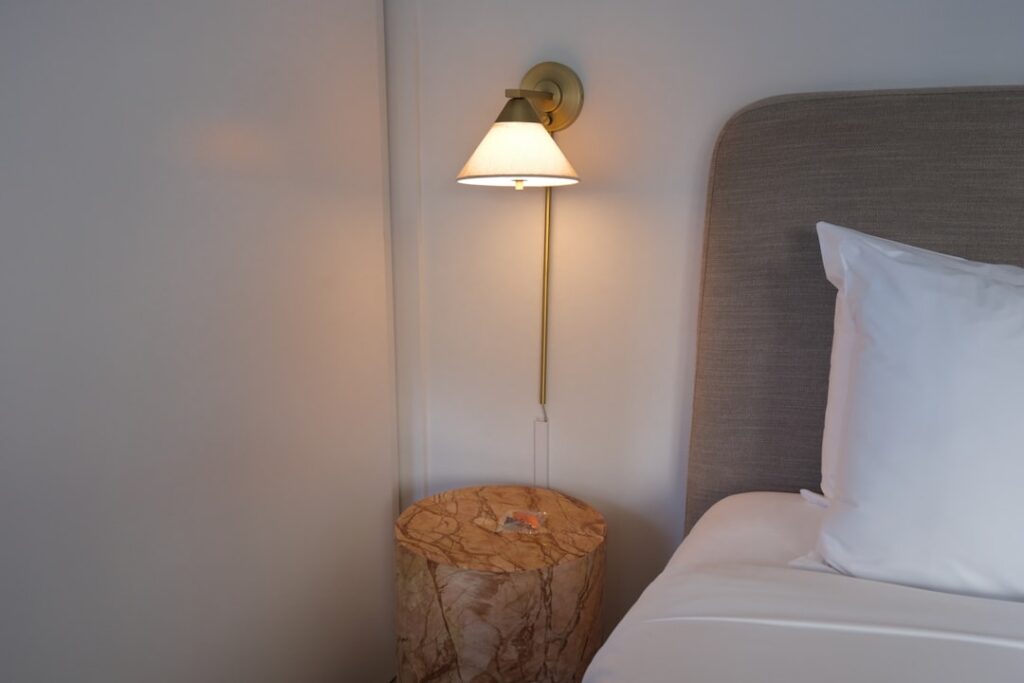
Bedside nook with wall lamp, rustic stump table and crisp white pillows in a small guest space

Casters come two ways. Four 360° swivel casters steer easily through a hallway one-handed. Commercial units often mix sizes — large 8 in fixed wheels at one end, 5 in casters at the other — which tracks straighter over thresholds and carpet edges.

Three things to check:

  • At least two locking casters. Without them the bed drifts every time someone rolls over. If yours has none, wedge the legs against a wall or baseboard.
  • Wheel material. Hard nylon and steel casters mark hardwood and vinyl plank; rubber or polyurethane wheels are gentler, and felt caster cups are the cheap retrofit.
  • Grit. A caster that picks up grit becomes a sanding tool — wipe the wheels after garage storage.

Rollaway vs folding cot vs air mattress vs sofa bed

Option Setup time Comfort for 3+ nights Stored footprint Main weakness
Rollaway bed 1–2 minutes, no tools Fair to good with a 5 in mattress plus topper Bulky but thin: about 40 × 17 in (102 × 43 cm) upright Hinge sag at the hips; short 75 in length
Folding camp cot 2–5 minutes, can be stiff Poor to fair; narrow and taut Smallest — often bag-sized Fabric deck, low width, no real mattress
Air mattress 3–5 minutes with a pump Poor over time; pressure drops overnight as air cools Tiny when deflated Seam failures, cold from below, noisy
Sofa bed Under a minute Good on quality models with a proper mattress None extra — it’s furniture Cost, weight, and the classic bar across the back

Choose by frequency. Under five guest-nights a year, an air mattress plus good bedding is the rational buy. Five to thirty nights, a rollaway bed earns its closet space. Over thirty, or any nightly use, buy furniture — a sofa bed or a trundle. If the room doubles as living space, our roundup of small-living-room sofas is worth reading first.

Bedding that actually fits a rollaway bed

This trips up almost everyone, because a rollaway mattress is standard in length and odd in width and depth.

  • Cot width (30–31 in / 76–79 cm): twin fitted sheets are 7–8 in too wide and will billow. Look for cot-size or “roll-away” sheets, or use a twin flat sheet tucked hospital-style.
  • Twin width (38–39 in / 97–99 cm): standard twin sheets fit the footprint. Because the mattress is only 4–5 in (10–13 cm) deep and most fitted sheets are cut for 10–14 in, you’ll have slack — sheet suspenders solve it for a few dollars.
  • Full width (54 in / 137 cm): full/double sheets work, same depth caveat.
  • Mattress protector: get the thin waterproof kind. It also keeps the foam from absorbing humidity in storage.
  • Duvets and pillows: a twin duvet on a cot-width bed drags on the floor. A twin-size quilt or a large throw looks better and washes easier. For how pillow covers are sized, see our guide to shams.

Setup, storage and keeping the mattress from going musty

Foam stored folded in a closed closet is a moisture trap. The EPA’s guidance on mold and moisture in homes is to keep indoor relative humidity below 60%, ideally between 30% and 50%. Damp basements and unheated garages routinely sit above that, which is how a bed comes out smelling like a cellar.

What works:

  1. Air it out after every use. Leave the bed open a few hours before folding.
  2. Store upright, not flat under boxes. Compressed foam dries slowly and holds creases.
  3. Leave a gap from the wall. Airflow on both faces beats a sealed plastic bag, which traps moisture inside.
  4. Use a breathable cover — cotton, not plastic sheeting.
  5. Skip the bare basement floor. If that’s the only option, raise it on a pallet.

Deal with spills the same day — a thin foam pad soaks through to the deck fast. Our walkthrough on getting urine out of a mattress covers foam specifically.

Care and lifespan: what fails first

In rough order: the mattress goes soft in the middle, then the casters crack or seize, then the hinge hardware loosens, then a leg bends because someone sat on the rail. The steel frame outlasts all of it.

Three habits that add years:

  • Tighten the bolts once a year. Folding stress backs fasteners out. Five minutes with a wrench.
  • Rotate the mattress pad end-to-end each time you store it, so the same section isn’t always under the heaviest load.
  • Silicone spray on the hinge, not oil — oil attracts grit and stains bedding.

Realistic lifespan: two to four years for a light consumer model used a dozen nights a year, closer to a decade for a commercial steel frame with a replaceable mattress. Foam ages on a clock as well as under load — the same reason your main mattress has a replacement window.

A note on prices

No dollar figures here — folding-bed pricing swings with import costs and promotions, so any number printed today is wrong by spring. The tiering holds, though: light import frames with a 3–4 in pad at the bottom, reinforced twin-width frames with 5 in mattresses in the middle, commercial 16-gauge steel with innersprings at the top.

Before you buy: the short checklist

  • Folded dimensions vs your closet, door and stair landing — all three.
  • Rated weight capacity with headroom above your heaviest likely guest.
  • Mattress thickness of 5 in (13 cm) if anyone will sleep on it more than two nights.
  • Centre support at the hinge, and at least two locking casters.
  • Frame weight under about 45 lb (20 kg) if one person will move it alone.
  • Whether replacement mattresses and casters are sold separately.

FAQ

What size is a standard rollaway bed?

Most are 30–31 in wide by 74–75 in long (76–79 × 188–191 cm), with twin-width versions at 38–39 in (97–99 cm) and true full versions at 54 in (137 cm). Length is almost always 75 in, regardless of width.

Can you sleep on a rollaway bed every night?

You can, but the mattress is the limit, not the frame — a 4 in pad compresses at the hips within months of nightly use. If it’s your main bed, a folding frame with a proper 6–8 in mattress, a trundle or a wall bed serves you far better. Our trundle bed mattress guide covers thickness limits on low-clearance frames.

Do rollaway beds fit through a normal doorway?

Folded upright, a standard unit is roughly 40 in wide and 17 in deep (102 × 43 cm), so it clears most doors sideways. Stair landings and narrow casings are the tight spots. Measure between the door stops, not the outside of the frame.

What sheets fit a rollaway bed?

Twin-width models take standard twin sheets with some slack, since the mattress is only 4–5 in deep. Cot-width models need cot-size sheets or a tucked flat sheet; a twin fitted sheet will be several inches too wide.

Rollaway bed or air mattress for a weekend guest?

For a night or two a year, an air mattress costs less and stores smaller. For several guest weekends, the rollaway wins on setup speed, warmth and not deflating at 4 a.m. — and it gets sleepers off the floor, which older guests appreciate.

How much weight can a folding guest bed hold?

Published ratings range from about 265 lb (120 kg) on light consumer frames to 440–500 lb (200–227 kg) on reinforced commercial ones. Those are static ratings for a person lying down; sitting hard on the side rail concentrates the load and is the usual cause of a bent leg.

Updated September 2026.