How Your Mattress Affects Sleep Quality & How to Choose the Best One

How Mattress Quality Directly Impacts Sleep and Energy

How Mattress Quality Directly Impacts Sleep and Energy

Struggling with poor sleep? It might not be stress or screen time—it could be your mattress. Learn how your mattress affects sleep quality and what to do about it.

Ever wake up more tired than when you went to bed? Tossing and turning all night, wondering why you just can’t seem to get good sleep? The culprit might not be your stress levels or late-night snacks—it could be your mattress. In fact, understanding how your mattress affects sleep quality is essential to better rest and overall health. To dive deeper into temperature’s role, see our guide on sleep temperature regulation.

A mattress isn’t just a big rectangle you crash on at night. It’s the foundation of your sleep—and let’s face it, your sleep affects everything. If your bed isn’t doing its job, your whole day can feel like it’s stuck in first gear.

In this guide, we’ll break down how your mattress affects sleep quality, signs it’s time for an upgrade, and how to choose a better one.

How your mattress affects sleep quality with proper bedding


Key Takeaways on How Your Mattress Affects Sleep Quality

  • A mattress directly impacts spinal alignment, pressure relief, and temperature regulation.
  • Common red flags include aches, dips, overheating, and better sleep elsewhere.
  • Choosing a mattress should match your sleep position and personal preferences.
  • Material matters—memory foam, hybrid, latex, and air-adjustable options all perform differently.
  • Caring for your mattress properly extends its comfort and longevity.
  • Understanding how your mattress affects sleep quality helps you make smarter sleep investments.

Why Your Mattress Matters for Sleep Quality

If you’re getting the recommended 7–9 hours a night, that’s about a third of your life. Shouldn’t that time be comfortable, supportive, and, well… dreamy? Let’s explore how your mattress affects sleep quality and why it’s more than just a place to crash.

What Makes a Mattress Sleep-Friendly?

  • Spinal Alignment – A good mattress keeps your back and neck in a neutral position.
  • Motion Isolation – If your partner tosses like a pizza, you shouldn’t feel every flip.
  • Pressure Relief – Your shoulders and hips will thank you when they’re gently cradled.
  • Temperature Control – If you’re waking up in a sweat, it might be the mattress.

Impact of bed and mattress on sleep quality

🛏️ Explore more bed materials and their durability to find the right support and feel for your sleep style.


Signs Your Mattress is Hurting Your Sleep

If you’re not waking up refreshed, it might be time to reassess how your mattress affects sleep quality. Your body sends signals when something’s off.

Red Flags to Watch For

  • You wake up stiff or achy.
  • You notice dips or lumps.
  • You wake up hot and sweaty.
  • You’re constantly tossing and turning.
  • You sleep better anywhere else—even at the in-laws’!

According to WebMD, waking up with soreness or allergies could point to a mattress issue.


How to Choose the Right Mattress for Your Body

Picking the right mattress isn’t just about firmness. It’s about you. Your sleep style, body type, and temperature preferences all play a role.

Best Fit by Sleeping Position

  • Back Sleepers → A medium-firm bed keeps things supported but comfy.
  • Side Sleepers → You want some give to cushion your shoulders and hips.
  • Stomach Sleepers → Go firm to keep your spine in line.
  • Combo Sleepers → A hybrid mattress adapts to movement and changing positions.

Firmness Scale Breakdown

  • Soft (3–4/10) – Plush and cushiony; ideal for smaller bodies or side sleepers.
  • Medium (5–6/10) – The “Goldilocks” zone for most sleepers.
  • Firm (7–9/10) – Great for support and alignment, especially for stomach sleepers.

💤 Discover the Best Bedding Types and Purchasing Guide for You

How mattress selection affects improved sleep quality


What Mattress Materials Make the Biggest Difference?

Ever laid on a mattress that felt like a warm cloud—or a sweaty rock? That’s the material talking.

Popular Mattress Types

  • Memory Foam – Excellent pressure relief, great for motion isolation, but can sleep warm.
  • Innerspring – Classic bounce and airflow, but not always the softest.
  • Hybrid – The best of both worlds: foam comfort + spring support.
  • Latex – Breathable, natural, and eco-friendly with a bit more bounce.
  • Air Adjustable – Ideal if you and your partner need different firmness levels.

Sleep Foundation reports that upgrading to a better mattress improves sleep satisfaction and reduces back pain.

🌡️ Check out the best bedding materials for hot sleepers to complement your mattress choice.


Smart Shopping Tips: What to Look for in a Mattress

  • Try Before You Buy – Look for 100-night trials and in-store testing if possible.
  • Check the Warranty – A good mattress should come with at least a 10-year promise.
  • Look for Cooling Features – Gel-infused foam, open coils, and breathable covers help hot sleepers.
  • Think About Motion Transfer – Minimize sleep disruption from partner movement.
  • Budget Wisely – Great mattresses can be found between $500–$2,500.

Consumer Reports mattress buying guide


How to Make Your Mattress Last (and Stay Cozy for Years)

Mattress TLC Tips

  • Use a Mattress Protector – Keeps sweat, dust, and stains at bay. Learn how to clean your mattress properly.
  • Rotate Regularly – Every 3–6 months to avoid dips.
  • Let It Air Out – Don’t make the bed right away; let it breathe.
  • Vacuum Occasionally – Keep it clean and allergen-free.

How your mattress affects sleep quality with mindful habits


FAQ

How do I know if my mattress is the cause of poor sleep?

If you experience aches, overheating, or sleep better in other beds, your mattress may be the issue.

How often should I replace my mattress?

On average, every 7–10 years depending on material and condition.

What’s the best mattress for back pain?

A medium-firm hybrid or memory foam mattress often provides the best support and relief.


Final Thoughts: Sleep Better, Live Better

When you sleep better, everything feels better—your mood, your energy, your ability to take on the day. And it all starts with what you’re sleeping on.

If your mattress is sagging, hot, or just not cutting it anymore, don’t wait. You deserve sleep that leaves you refreshed, not frustrated. Knowing how your mattress affects sleep quality can be a game changer.

🌙 Upgrade your mattress—and wake up to better mornings.


Related reading from Cozy Bed Quarters

Other reading we found popular


Science of Power Naps for Energy and Productivity

Pastel infographic on nap durations and effects explaining the science of power naps

Science of Power Naps for Energy and Productivity

The science of power naps is clear: a short, intentional 10–20 minute nap boosts alertness, memory, mood, and productivity—without a caffeine crash. Below you’ll find the optimal nap lengths, best time of day, and pro tips so you wake up refreshed (not groggy).

Key Takeaways on the Science of Power Naps

  • 10–20 minutes is golden: Quick restoration without deep-sleep grogginess.
  • Time your nap: Aim for 1–3 PM to align with your circadian dip.
  • Set the scene: Dark, quiet, and cool space; set an alarm.
  • Coffee-nap hack: Drink coffee, nap immediately; caffeine kicks in as you wake.
  • Skip naps if they hurt night sleep: Insomnia or late-day naps can backfire.

Why Power Naps Matter

Power naps act like a mini reboot—reducing stress, sharpening focus, and lifting energy so you can do more in less time.

Power naps are like a tiny reboot for your brain. They help reduce stress, improve memory, and give your energy levels a serious boost. Think of it like restarting your phone when it gets sluggish—except it’s your mind getting that refresh.

Benefits of Power Naps

Expect sharper focus, better memory, a calmer mood, and a noticeable productivity lift.

  • Sharper focus: A quick nap improves alertness and concentration for hours afterward.
  • Better memory: Napping helps your brain store and recall information.
  • Mood boost: A nap can help regulate emotions and lower stress.
  • Increased productivity: You might get more done after 20 minutes of rest than an hour of struggling through brain fog.

And science backs it up! According to the Harvard Health blog, even a short nap can improve performance by 34% and alertness by 54%.

Check out how poor sleep affects your mental health →


The Best Nap Lengths for Maximum Energy

Choose your length by goal: 10–20 minutes for energy, 60 minutes for memory (with some grogginess), or 90 minutes for a full-cycle reset.

Nap Duration Breakdown

Most people feel best after 10–20 minutes; longer naps can trigger sleep inertia unless you complete a full cycle.

  • 10–20 minutes: The ideal power nap. You get the benefits of rest without falling into deep sleep.
  • 30 minutes: Can lead to sleep inertia—that fuzzy, heavy feeling when you wake up.
  • 60 minutes: Good for memory and deep thinking, but some grogginess is likely.
  • 90 minutes: A full sleep cycle. Great for creativity and emotional reset.

It might seem odd that a longer nap could make you feel worse, but it’s all about where you are in the sleep cycle when you wake up. Wake up during deep sleep? Hello, grogginess. That’s why 10–20 minutes is the sweet spot.

Pro tip: If you only have a few minutes, stick with the 10–20 minute nap. It’s surprisingly effective! Learn more about timing naps in this helpful guide from Healium.

Struggling with your body clock? Here’s how to reset your circadian rhythm


Best Time of Day for a Power Nap

Nap during your natural energy dip—most people feel best napping between 1 PM and 3 PM; avoid napping after 4 PM.

Ideal Nap Timing

Align with your circadian rhythm for the smoothest wake-up and best nighttime sleep.

  • Best window: Between 1 PM and 3 PM.
  • Avoid: Napping after 4 PM can mess with your nighttime sleep.
  • Night owls or shift workers: Early morning naps can help after a long night.

This midday dip isn’t just in your head—it’s part of your body’s circadian rhythm. If you can sneak away for a nap during this window, your body will thank you.

Learn why you’re waking up at 3 AM →

Bedroom with person napping at 1:30 PM showing the science of power naps
Nap during your early-afternoon circadian dip for best results.

How to Power Nap Like a Pro

Control your environment and timebox your nap—dark, quiet, 20 minutes, same window daily; try a coffee nap for an extra lift.

Nap-Boosting Tips

Simple tweaks make naps faster to start and easier to wake from.

  • Find a dark, quiet space: Use blackout curtains, eye masks, or white noise.
  • Set an alarm: Keep your nap to 20 minutes to avoid grogginess.
  • Try a coffee nap: Drink a cup of coffee, then nap immediately. The caffeine kicks in just as you wake up.
  • Be consistent: Try napping around the same time every day to train your body.

Bonus tip: Some people love using calming scents like lavender or playing soft nature sounds to help ease into nap mode. Find what helps you relax the quickest.

Need better sleep at night? Try a bedtime routine that works →

Person sipping coffee with eyes closed illustrating the science of power naps
The coffee-nap: sip, snooze 20 minutes, wake energized.

Napping Mistakes to Avoid

Don’t nap too long or too late, and avoid bright, noisy spaces that make it hard to switch off.

What Not to Do

Keep naps short, early, and in a restful environment.

  • Don’t nap too long: Unless it’s a full 90-minute cycle, aim for 20 minutes.
  • Don’t nap too late: Save your snoozing for early afternoons.
  • Don’t skip naps when overtired: A short nap can help you reset.
  • Don’t nap in bright or noisy places: It’s harder to relax when your senses are overstimulated.

Common sense, right? But we’ve all been there—thinking, “I’ll just rest my eyes for a second…” and waking up two hours later wondering what year it is.

Hit snooze a lot? Here’s why you might want to stop →


When to Avoid Napping

If you have insomnia, a sleep disorder, or you’re resetting your schedule, skip naps to protect nighttime sleep.

Skip Naps If…

Prioritize consistent nighttime sleep in these situations.

  • You have insomnia and struggle to fall asleep at night.
  • You have a sleep disorder like sleep apnea.
  • You’re trying to reset your sleep schedule after jet lag or an all-nighter.

In these cases, napping might do more harm than good. Instead, focus on improving your nighttime routine and sleep hygiene. Try these 10 sleep hacks for falling asleep faster →

Learn how food affects your sleep quality →


FAQ

Quick answers to common power-nap questions.

How long should a power nap be?
Most people feel best after 10–20 minutes to avoid sleep inertia and wake refreshed.
What’s the best time to take a power nap?
Typically between 1 PM and 3 PM—your natural circadian dip—for easy falling asleep and smoother wake-ups.
Do coffee naps really work?
Yes—drink coffee, nap immediately for ~20 minutes; caffeine takes effect as you wake, enhancing alertness.
Will napping ruin my nighttime sleep?
Not if you keep it short and early. Napping after 4 PM or too long can make falling asleep at night harder.
Is a 90-minute nap okay?
It can be—90 minutes completes a full sleep cycle and may boost creativity and mood, but it’s not always practical mid-day.

Final Thoughts: Recharge the Right Way

Treat naps as a tool: short, early, and intentional for a reliable afternoon boost.

Napping isn’t just a luxury—it’s a tool. The science of power naps shows us that short, intentional rest can seriously level up your energy, focus, and mood. Just remember:

  • Keep it short and sweet (10–20 minutes is golden).
  • Nap early in the afternoon.
  • Make your nap space cozy and quiet.

Want to upgrade all your sleep habits, not just naps? Don’t miss our Ultimate Sleep Guide →

Start with a nap today. Seriously. Find a comfy chair, pop on an eye mask, set your alarm for 20 minutes, and see how you feel. You might just power through your afternoon like a champ!

Related reading from Cozy Bed Quarters

Other reading we found popular

Best Sleep Hacks for Deep Sleep: Wake Up Refreshed and Recharged

best sleep hacks for deep sleep bedroom setup

Effective Sleep Hacks for Deeper Rest

Best sleep hacks for deep sleep can change how you feel every morning. With these simple, proven tips, you can wake up energized, improve recovery, and enjoy nights of uninterrupted rest.

Key Takeaways

  • Deep sleep is essential for muscle repair, memory consolidation, and strong immunity.
  • Healthy routines, a cozy environment, and mindful habits make deep sleep easier to achieve.
  • Combining natural remedies and smart tech can upgrade your nightly rest.

Why Deep Sleep Is a Game-Changer

Deep sleep is the stage where your brain clears toxins, repairs tissue, and strengthens your immune defenses. Without it, you’ll feel foggy, irritable, and drained. By applying the best sleep hacks for deep sleep and following these science-backed insights, you can wake up feeling sharp and fully recharged.

cozy bedroom setup for best sleep hacks for deep sleep

Best Sleep Hacks for Deep Sleep & Recovery

These proven strategies combine natural rhythms, nutrition, and relaxation techniques to help your body enter deep, restorative sleep every night. Discover more ideas from this Sleep Foundation guide.

1. Stick to a Sleep Schedule (Yes, Even on Weekends)

Your circadian rhythm thrives on consistency. Going to bed and waking up at the same time—even on weekends—helps your brain know when it’s time to rest. It’s one of the most powerful best sleep hacks for deep sleep and requires zero effort beyond discipline.

2. Build a Wind-Down Routine

Dimming lights, reading, or drinking herbal tea signals to your body that bedtime is near. Avoid screens and blue light, which trick your brain into staying alert. A 30-minute wind-down ritual can dramatically improve how quickly you drift off. Learn more from Healthline’s expert tips.

bedtime tea and book for best sleep hacks for deep sleep

3. Make Your Bedroom a Sleep Sanctuary

A sleep-friendly bedroom should be cool, dark, and quiet. Use blackout curtains, white noise machines, or a sleep mask to create a serene environment. Check out our genius sleep fixes for simple room upgrades that boost your deep sleep.

sleep-friendly bedroom for best sleep hacks for deep sleep

4. Cut Out Caffeine and Alcohol in the Evening

Caffeine can stay in your system for 6–8 hours, disrupting deep sleep cycles. Alcohol may make you drowsy, but it fragments sleep later in the night. Swap your late-night coffee or wine for soothing chamomile or tart cherry juice.

5. Move Your Body (Just Not Right Before Bed)

Exercise improves sleep quality, but intense workouts too close to bedtime can rev you up instead of calming you down. Aim for afternoon walks, yoga, or light stretching to help your body naturally prepare for rest.

6. Snack Smart for Sleep

Foods rich in magnesium and tryptophan, like almonds or bananas, help your brain produce melatonin. Avoid heavy meals, spicy foods, or sugar before bed—they can spike energy and prevent deep sleep.

sleep-promoting snacks for best sleep hacks for deep sleep

7. Use Relaxation Tools That Actually Work

Meditation, deep breathing, or gentle journaling clears mental clutter. Try guided sleep meditations or white noise apps for a calming effect. Explore how sleep science technology can enhance relaxation techniques.

8. Keep the Lights Low

Exposure to blue light disrupts melatonin production, delaying deep sleep onset. Lowering light levels an hour before bed encourages your body’s natural sleep cycle. Read more on the benefits of deep sleep.

soft lighting for best sleep hacks for deep sleep

Busting the Sleep-In Myth

Myth: You can catch up on deep sleep over the weekend.
Truth: Sleep debt isn’t fully reversible with one long night. Maintaining a consistent schedule throughout the week is key for lasting energy.

Cozy Wrap-Up

Mastering deep sleep isn’t complicated. Start with these 8 best sleep hacks for deep sleep: commit to a bedtime routine, lower the lights, and create a calm environment. By making these small changes, you’ll wake up more refreshed and ready for anything.

FAQ

What is the fastest way to get into deep sleep?
Stick to a regular schedule, keep your room cool and dark, and avoid screens before bed. These simple steps signal your brain it’s time for deep rest.
Does magnesium help with deep sleep?
Yes, magnesium helps muscles relax and promotes melatonin production, which is essential for deep sleep.
Can naps replace deep sleep at night?
While naps can help reduce fatigue, they can’t fully replicate the benefits of nighttime deep sleep cycles.

Learn more in how to create a sleep-friendly bedroom, or explore genius sleep fixes and 10 proven hacks for deep sleep optimization.


Sleep and Heart Health Benefits of Quality Nightly Rest

Cool dark bedroom with blackout curtains for sleep and heart health

Sleep and Heart Health Benefits of Quality Nightly Rest

Sleep and heart health are deeply connected — quality rest can lower blood pressure, balance cholesterol, and reduce your risk of heart disease. In this guide, you’ll learn exactly how better sleep protects your heart and practical steps to start today.

Key Takeaways on Sleep and Heart Health

  • ✅ Sleep and heart health go hand in hand — better sleep means better heart function.
  • ✅ Aim for 7–9 hours of quality sleep to lower blood pressure and cholesterol.
  • ✅ Manage stress and avoid late-night caffeine to protect your heart.
  • ✅ Keep your bedroom cool, dark, and quiet for deeper sleep.
  • ✅ See a doctor if you have persistent sleep issues or symptoms like loud snoring.

Ever wonder if catching a few extra Zzz’s could actually save your life?

Turns out, getting good sleep isn’t just about feeling rested — it’s one of the best things you can do to protect your heart. Yep, sleep and heart health go hand in hand, just like diet and exercise.

Studies show that poor sleep cranks up your risk for heart disease, high blood pressure, and even stroke. Meanwhile, deep, restorative sleep helps regulate your blood pressure, cholesterol, and inflammation. Your heart’s working 24/7, but it needs quality rest to keep ticking happily. Let’s dive into exactly how sleep and heart health are connected — and how you can snooze your way to a longer, healthier life.

How Sleep and Heart Health Are Connected

Your heart isn’t just pumping away without a care — it’s closely tied to how well you sleep. During deep sleep, your heart rate slows down, your blood pressure dips, and your stress hormones take a breather. It’s like giving your heart its own nightly spa session.

Key Ways Sleep Supports Heart Health:

  • Lowers Blood Pressure – Good sleep keeps your blood pressure in check.
  • Reduces Inflammation – Poor sleep leads to chronic inflammation, a heart disease risk factor.
  • Balances Blood Sugar Levels – Sleep helps control insulin, reducing diabetes risk.
  • Regulates Heart Rate – Restful sleep keeps your heart beating steadily and strong.

(Curious how sleep affects more than just your heart? Check out How Sleep Affects Hormone Balance & Overall Health.)

You can also explore more on the importance of sleep for heart health at St. John’s Health: The Link Between Heart Health and Sleep.

Sleep Deprivation and Its Impact on Heart Health

Think pulling an all-nighter is no big deal? Your heart would disagree. Chronic sleep deprivation stresses your body out, pushing your heart to work overtime.

How Poor Sleep Damages the Heart:

  • Raises Blood Pressure – Less sleep puts extra strain on your arteries.
  • Increases Bad Cholesterol (LDL) – Poor sleep means more artery-clogging plaque.
  • Elevates Stress Hormones – High cortisol isn’t just bad for your mood; it’s bad for your heart.
  • Raises Risk of Heart Attack & Stroke – Yep, sleep deprivation is a major risk factor.

(Learn how sleep deprivation messes with your brain too: How Sleep Deprivation Affects Your Brain & Mental Health.)

For more expert advice, check out University Hospitals: Why Sleep Is Essential for Heart Health.

Sleep and Blood Pressure: The Nighttime Connection

During healthy sleep, your blood pressure naturally dips. This “nocturnal dipping” gives your heart a much-needed break. But if you’re tossing and turning or skimping on sleep, that dip doesn’t happen — and over time, that means higher blood pressure.

How to Lower Blood Pressure with Better Sleep:

  • Stick to a Regular Sleep Schedule – Same bedtime, same wake-up time, even on weekends.
  • Cut Back on Evening Caffeine & Alcohol – Both mess with nighttime blood pressure.
  • Create a Dark, Cool Sleep Sanctuary – Darkness boosts melatonin, and melatonin relaxes blood vessels.

Sleep and Cholesterol: The Hidden Link

Did you know your sleep habits could be quietly messing with your cholesterol? Less sleep often means more bad cholesterol (LDL) and less good cholesterol (HDL).

How to Improve Cholesterol with Better Sleep:

  • Shoot for 7-9 Hours a Night – Consistent sleep supports healthy cholesterol levels.
  • Eat Heart-Healthy Snacks – Omega-3s before bed can work wonders.
  • De-Stress Before Sleep – Lowering nighttime stress means better cholesterol management.

(Want to fuel your sleep naturally? Check out The Best Foods for Deep Sleep: What to Eat Before Bed.)

How to Improve Sleep and Protect Your Heart

Maintain a Consistent Sleep Schedule

Irregular sleep patterns confuse your body — and your heart pays the price. Try going to bed and waking up at the same time every day.

Get Morning Sunlight for a Natural Sleep-Wake Cycle

A little sunlight in the morning helps your body know when it’s time to be awake and when it’s time to wind down.

(Learn how to protect your sleep from tech too: How Blue Light Affects Your Sleep & How to Block It Naturally.)

Reduce Stress and Anxiety Before Bed

Chronic stress isn’t just in your head — it floods your body with cortisol, making sleep harder and stressing your heart. Try deep breathing, journaling, or a little gentle stretching.

Avoid Heavy Dinners and Late-Night Snacking

Late meals make your blood sugar spike and crash, messing with your sleep (and your heart). Aim to finish eating 2-3 hours before bedtime.

(Struggling to fall asleep fast? Try these tips: How a Nighttime Routine Helps You Sleep Faster.)

Keep Your Bedroom Cool and Dark

Set your thermostat between 60-67°F and grab some blackout curtains. It’s the simplest way to invite deeper, heart-protecting sleep.

(Want to upgrade your bedroom vibe? How Your Sleep Environment Affects Sleep Quality has easy tips.)

When to See a Doctor for Sleep and Heart Health Issues

If you’re doing all the right things and still struggling, it might be time to talk to a pro.

  • Loud snoring or gasping for air at night
  • Waking up constantly during the night
  • High blood pressure that doesn’t budge
  • Feeling exhausted even after 7+ hours of sleep

A sleep specialist or cardiologist can help you figure out if something like sleep apnea or chronic stress is hurting your heart.

Morning sunlight in bedroom to support sleep rhythm and heart health

FAQ

How does sleep improve heart health?
Quality sleep lowers blood pressure, reduces inflammation, and supports healthy cholesterol levels, all of which protect your heart.
How many hours of sleep are best for heart health?
Most adults should aim for 7–9 hours of quality sleep each night for optimal heart protection.
Can poor sleep cause heart problems?
Yes. Sleep deprivation raises the risk of high blood pressure, heart disease, stroke, and irregular heart rhythms.

Final Thoughts: Sleep and Heart Health Go Hand in Hand

A strong, healthy heart starts with great sleep. By making simple changes to your sleep habits, you can lower your blood pressure, balance your cholesterol, and add years to your life.

Your heart works hard for you — isn’t it time to return the favor? 🌟❤️


Related reading from Cozy Bed Quarters

Other reading we found popular


Sleep and Inflammation How Poor Rest Affects Your Health

Cozy bedroom with soft lighting showing sleep and inflammation comfort tips.

Sleep and Inflammation How Poor Rest Affects Your Health

Sleep and inflammation are deeply connected—miss out on rest, and your body’s inflammation levels can spike. This guide explains how sleep impacts inflammation, the health risks involved, and practical steps to improve your rest for better long-term health.

Key Takeaways on Sleep and Inflammation

  • Prioritizing 7–9 hours of sleep helps reduce inflammation and protect against chronic diseases.
  • Deep sleep regulates cortisol and immune responses, lowering inflammation naturally.
  • Anti-inflammatory foods, stress management, and a cozy sleep environment all enhance rest quality.
  • Improving sleep can yield benefits in as little as 1–2 nights, with major health changes after a month.
  • Seek medical advice if inflammation symptoms persist despite healthy sleep habits.

Ever wake up feeling achy, foggy, or just plain “off”? It’s not just a bad night’s sleep—it could be a sign of something deeper. Sleep and inflammation are tightly connected, and when you miss out on rest, your body’s inflammation levels can spike. And that’s bad news for your heart, joints, mood, and overall health.

Let’s cozy up and explore how sleep and inflammation impact your well-being—and what you can do to stay healthy and energized!

sleep and inflammation effects on the body

Why Sleep and Inflammation Matter More Than You Think

Think of your body like a small town. When you get hurt or sick, inflammation acts like the fire department—jumping in to help. But when the alarms keep blaring (chronic inflammation), things start breaking down.

Good sleep is the town’s nightly repair crew. Without it, inflammation sticks around longer than it should, raising the risk of heart disease, diabetes, and even depression.

Research from Harvard Health confirms that sleep deprivation can elevate inflammation levels, increasing the risk for chronic illnesses like heart disease and even Alzheimer’s disease.

  • Reduces Pro-Inflammatory Cytokines: Sleep keeps harmful immune responses under control.
  • Regulates Cortisol Levels: Poor sleep raises cortisol, a stress hormone that stirs up inflammation.
  • Boosts Cellular Repair: Deep sleep heals tissues and supports your immune system.
  • Protects Against Autoimmune Diseases: Sleep teaches your immune system not to attack your own body.

Need more details? Check out How Sleep Affects Your Immune System & Overall Health.

How Poor Sleep Triggers Chronic Inflammation

how sleep and inflammation are linked

Ever noticed you catch colds more easily when you’re sleep-deprived? That’s your body’s inflammation warning bell.

When you get less than 6 hours of sleep a night, here’s what happens:

1. Raised C-Reactive Protein (CRP)

High CRP levels signal increased inflammation, often linked to heart problems.

2. Overproduction of Cytokines

Too many of these can leave you feeling stiff, sore, and fatigued.

3. Elevated Cortisol

Poor sleep keeps cortisol high, preventing your body from calming down.

4. Leaky Gut Syndrome

Weakened gut walls let harmful substances escape into your bloodstream, triggering more inflammation.

According to insights from The Sleep Doctor, even short periods of sleep loss can create inflammatory responses that contribute to chronic conditions and overall fatigue.

Want to know how this affects your mental health too? Check out How Sleep Deprivation Affects Your Brain & Mental Health.

Health Conditions Linked to Sleep and Inflammation

When chronic inflammation moves in, it doesn’t come quietly. Here are some conditions closely tied to poor sleep and inflammation:

1. Heart Disease

Less sleep means higher blood pressure and inflammation, a bad combo for your heart.

2. Diabetes

Inflammation interferes with insulin, making it harder to regulate blood sugar.

3. Arthritis & Joint Pain

Lack of sleep boosts inflammatory pain signals, making joints ache more.

4. Depression & Anxiety

Inflammation messes with your brain’s happy chemicals, raising the risk of mood issues.

5. Autoimmune Disorders

Poor sleep can confuse your immune system into attacking healthy tissues.

Learn more at The Impact of Sleep on Heart Health & Longevity.

How to Improve Sleep and Reduce Inflammation Naturally

The good news? Small changes can make a big difference! Here’s how to get better sleep and calm inflammation:

Prioritize Deep Sleep & Stay Consistent

  • Why? Deep sleep restores immune balance.
  • Fix: Aim for 7-9 hours a night, and stick to the same bedtime every day.

Eat Anti-Inflammatory Foods Before Bed

  • Why? Certain foods help your body heal and lower inflammation.
  • Fix: Snack on walnuts, berries, or sip a calming herbal tea.

Learn more at The Best Foods for Deep Sleep: What to Eat Before Bed.

Manage Stress Before Bed

  • Why? Lowering stress helps lower nighttime inflammation.
  • Fix: Try simple habits like meditation, deep breathing, or journaling.

Skip Late-Night Sugar

  • Why? Sugar can keep your body inflamed and restless.
  • Fix: Swap sweet treats for healthy nuts or a banana.

Create a Cozy Sleep Environment

  • Why? A cool, dark, and peaceful space helps you sleep deeper.
  • Fix: Keep your room around 60-67°F and use blackout curtains.

See more tips at How Your Sleep Environment Affects Sleep Quality.

How Fast Can Sleep Help Lower Inflammation?

natural recovery from sleep and inflammation

Getting back on track with sleep and inflammation can bring quick results:

  • 1-2 Nights: Feel less stressed and sleep more deeply.
  • 1-2 Weeks: Enjoy less joint pain and better energy.
  • 1 Month+: Major health improvements, including lower inflammation markers.

Boost your progress with How to Reset Your Circadian Rhythm for Better Sleep.

When to Seek Help

If your symptoms stick around despite your best efforts, it might be time for professional help.

  • Ongoing joint pain or swelling
  • Extreme fatigue, even after sleeping well
  • Frequent infections
  • High blood pressure or blood sugar issues

A sleep doctor or functional medicine provider can help you pinpoint underlying problems linked to sleep and inflammation.

FAQ

Can one bad night of sleep cause inflammation?
Yes, even one night of poor sleep can temporarily increase inflammatory markers, though chronic lack of sleep poses greater risks.
What foods help reduce inflammation at night?
Walnuts, berries, herbal teas, and fatty fish can promote better sleep and reduce inflammation.
How quickly can improved sleep lower inflammation?
Many people notice improvements in stress and pain within a few nights, with major health benefits after several weeks.

Related reading from Cozy Bed Quarters

Other reading we found popular


How to Optimize Your Sleep Cycle Naturally

Warm bedroom with chamomile tea and soft lighting to optimize sleep cycle

Optimize Your Sleep Cycle to Wake Up Refreshed

Want to feel clear-headed at sunrise? Optimize Your Sleep Cycle by aligning your bedtime and wake-up with 90‑minute sleep cycles, minimizing disruptors (blue light, caffeine, alcohol), and getting morning light. Do this, and you’ll wake closer to light sleep—aka your refreshed, ready-to-roll moment.

Key Takeaways on Optimizing Your Sleep Cycle

  • Plan sleep in 90‑minute blocks (4.5, 6, 7.5, or 9 hours) to optimize your sleep cycle and wake during lighter stages.
  • Keep a consistent sleep/wake schedule—even on weekends—for steadier energy.
  • Limit caffeine 6+ hours before bed; stop alcohol ~3 hours before lights out.
  • Protect melatonin: use night mode/blue‑light filters and dim lights 1–2 hours pre‑bed.
  • Morning routine: light exposure within 30 minutes, hydrate, and move gently.
  • Tweak bedtime by ±15 minutes if you still feel groggy to better sync your rhythm.

What Is a Sleep Cycle? (And Why It Matters)

Summary: Your sleep runs in ~90‑minute cycles across light, deep, and REM stages; waking near the end of a cycle makes mornings feel easier.

A sleep cycle is like your body’s overnight playlist. Each cycle lasts about 90 minutes and includes four unique stages:

  1. Stage 1 – Light Sleep: That gentle drift into rest where your muscles relax and your heartbeat slows.
  2. Stage 2 – Deeper Light Sleep: Your temperature drops and your body preps for deeper recovery.
  3. Stage 3 – Deep Sleep (Slow-Wave Sleep): This is the magic zone for healing, memory building, and immune support.
  4. Stage 4 – REM Sleep: The dream zone. Your brain gets busy while your body rests, helping with emotional balance and creativity.

We cycle through these stages 4 to 6 times a night. When those cycles are disrupted, that’s when you get groggy mornings and daytime yawns.

Related read: The Science of Sleep: 10 Proven Ways to Fall Asleep Faster & Wake Up Energized

Woman stretching in bed to optimize your sleep cycle

Why Your Energy Depends on Sleep Timing

Summary: Timing matters because waking during deep sleep or REM leaves you foggy; waking near the end of a cycle leaves you clear and energized.

Here’s what happens depending on when you wake up during a sleep cycle:

  • Wake up during Deep Sleep: You feel foggy and slow.
  • Wake up during REM: Disoriented, moody, and off-balance.
  • Wake up at the End of a Cycle: Ahh… this is your refreshed, ready-to-roll moment.

To Optimize Your Sleep Cycle, try to wake up at the end of a 90-minute cycle. That’s when your brain is naturally closer to wakefulness—and it makes mornings feel a lot better.

Pro tip: Sleep Like a Pro: 10 Proven Hacks for the Deepest Sleep of Your Life

Person journaling in morning sunlight to optimize your sleep cycle

How to Time Your Sleep for the Best Wake-Up

Summary: Count backward from your wake-up in 90‑minute blocks; if you still feel groggy, nudge bedtime by 15 minutes to better sync your cycle.

Here’s a simple sleep math trick: A full sleep cycle is about 90 minutes. So aim to get 4.5, 6, 7.5, or 9 hours of sleep. Plan your bedtime based on when you need to wake up.

Need to get up by 6:30 AM?

  • 6 cycles = Go to bed by 9:00 PM
  • 5 cycles = Go to bed by 10:30 PM
  • 4 cycles = Go to bed by 12:00 AM

If mornings still feel rough, try adjusting your bedtime by 15 minutes either way to better optimize your sleep cycle and sync with your body’s rhythm.

More cozy insights: 10 Sleep Hacks That Actually Work – #7 Will Surprise You!

Bedtime planning chart to optimize your sleep cycle

What Interrupts Your Sleep Cycles

Summary: Common disruptors—caffeine, blue light, irregular schedules, alcohol, and stress—fragment deep sleep; set simple cutoffs and wind‑down cues.

You may be doing all the right things and still wake up exhausted. Here are a few common cycle disruptors and quick cozy fixes:

  • Caffeine: Cut it off at least six hours before bed. That afternoon latte can sneak up on you.
  • Blue light: Screen time before bed tricks your brain into thinking it’s daytime. Use night mode or blue-light glasses.
  • Inconsistent bedtimes: Try to go to bed and wake up at the same time, even on weekends.
  • Alcohol: It may make you sleepy but actually fragments deep sleep. Stop drinking at least three hours before lights out.
  • Stress: Try deep breathing, gentle yoga, or jotting down your thoughts to calm your mind before bed.

Read more: Say Goodbye to Insomnia: 10 Sleep Secrets for Instant Deep Sleep

Woman avoiding screens before bed to optimize your sleep cycle

Make Mornings Easier with the 90-Minute Rule

Summary: Pair 90‑minute sleep planning with a gentle wake strategy and sunlight to lock in alertness.

  • Plan your sleep in 90-minute cycles: 6 or 7.5 hours works well for most people.
  • Try a smart alarm that gently wakes you during light sleep.
  • Get sunlight within 30 minutes of waking—step outside or sit by a window.
  • Hydrate with a glass of water.
  • Stretch or move your body to kickstart circulation.

Bonus tip: How Morning Sunlight Exposure Resets Your Circadian Rhythm

Final Thoughts: Cozy Up and Optimize Your Sleep Cycle

Sleep isn’t just about quantity—it’s about timing and quality. When you Optimize Your Sleep Cycle and align with your body’s natural rhythm, you unlock deeper rest and brighter mornings.

So tonight, skip the doom-scrolling. Set your sleep for a 90-minute cycle, light a lavender candle, and cozy up under your favorite blanket. Let your body do what it was designed to do—restore, reset, and rise strong.

Ever wake up feeling like a zombie, even after a full night’s sleep? Or maybe some mornings you spring out of bed, and others feel like you’re wading through molasses. Sound familiar? The real trick to waking up refreshed may not be the number of hours you’re sleeping—it’s how well you’re syncing with your body’s natural rhythm.

✧ For more cozy bedtime wisdom, visit our Cozy Bed Quarters blog.

FAQ

What is the best sleep cycle length to aim for?
About 90 minutes. Plan for 4.5, 6, 7.5, or 9 hours so you wake closer to light sleep and feel more refreshed.
Should I use a smart alarm to optimize my sleep cycle?
It can help by waking you during lighter sleep, but consistent bed/wake times and morning light matter more long term.
How do I quickly fix a disrupted sleep cycle?
Go to bed and wake at the same time for a week, get morning sunlight, avoid caffeine after mid‑afternoon, and shift bedtime by ±15 minutes if you still feel groggy.
Is 6 hours enough if I time it right?
Some people feel fine at 6 hours (four cycles), but most thrive at 7.5 hours. Track your energy and adjust.

&
Related reading from Cozy Bed Quarters

Other reading we found popular


How Sleep Improves Productivity Focus and Daily Energy

Peaceful bedroom at night showing how sleep affects productivity and focus with cozy lighting and a book on the nightstand.

How Sleep Affects Productivity and Focus: 7 Proven Tips

Struggling to concentrate or keep up at work? Discover how sleep affects productivity and focus, and learn practical strategies to rest smarter and perform better—starting tonight.

Key Takeaways on How Sleep Affects Productivity and Focus

  • ✅ Quality sleep enhances memory, decision-making, and concentration.
  • ✅ Sleep deprivation lowers performance, focus, and energy levels.
  • ✅ A consistent sleep routine and habits can boost daily productivity.
  • ✅ Addressing sleep disorders may significantly improve work outcomes.

Ever find yourself staring at your screen, struggling to concentrate, or making simple mistakes? You’re not alone. The connection between sleep and productivity is profound. Quality rest isn’t just about feeling refreshed—it’s about empowering your brain to perform at its best. In this guide, we’ll explore how sleep affects productivity and focus, the pitfalls of sleep deprivation, and practical strategies to enhance your rest for peak performance. For more in-depth science, see our pillar guide on sleep and the brain.
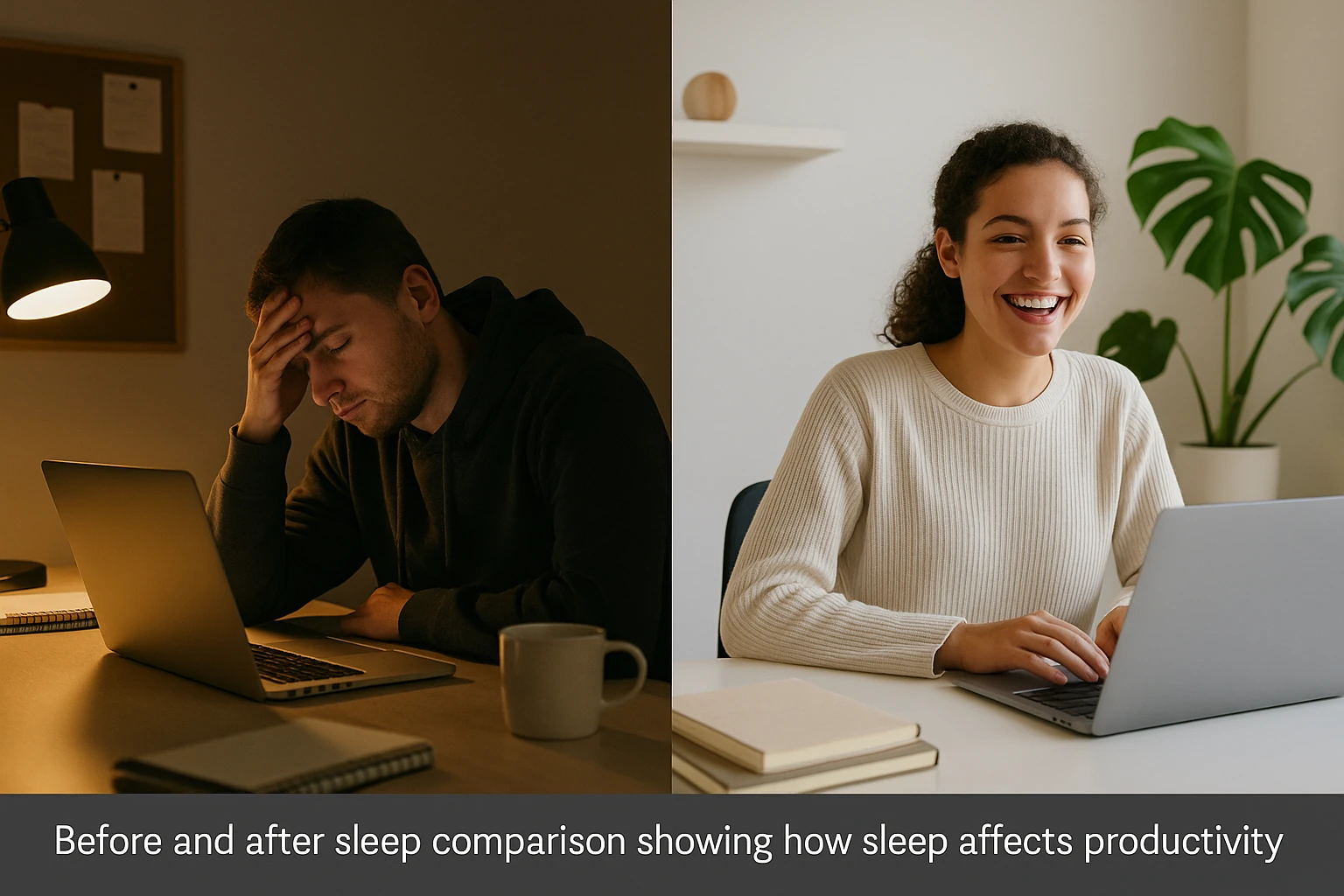
How sleep affects productivity and focus by showing tired and energized workers


Why Sleep Matters in Daily Life

Think of your brain as a high-performance engine—it requires regular maintenance to function optimally. Sleep is that essential tune-up. Without it, tasks become more challenging, moods fluctuate, and energy dwindles. Prioritizing sleep isn’t merely about rest; it’s about unlocking your full potential.


🧠 The Brain Connection: How Sleep Affects Productivity and Focus

During sleep, your brain consolidates information, clears toxins, and enhances problem-solving abilities. Here’s how adequate sleep boosts cognitive performance:

  • Enhances Memory Retention – Deep sleep aids in storing and recalling new information.
  • Improves Concentration & Focus – Well-rested individuals process tasks more efficiently.
  • Boosts Problem-Solving Skills – Quality sleep sharpens creativity and critical thinking.
  • Regulates Mood & Motivation – Sleep deprivation can lead to irritability and decreased motivation.

🚫 The Impact of Sleep Deprivation on Productivity

Skimping on sleep can make even simple tasks feel like uphill battles. Here’s what lack of sleep can do:

  • Slows Reaction Time – Increases the likelihood of mistakes and poor decision-making.
  • Reduces Attention Span – Makes it harder to stay focused on tasks.
  • Decreases Work Efficiency – Sleep-deprived individuals take longer to complete tasks.
  • Elevates Stress & Burnout – Chronic fatigue can lead to frustration and quick burnout.

According to the Sleep Foundation, insufficient sleep significantly impairs cognitive function, making daily activities more challenging.
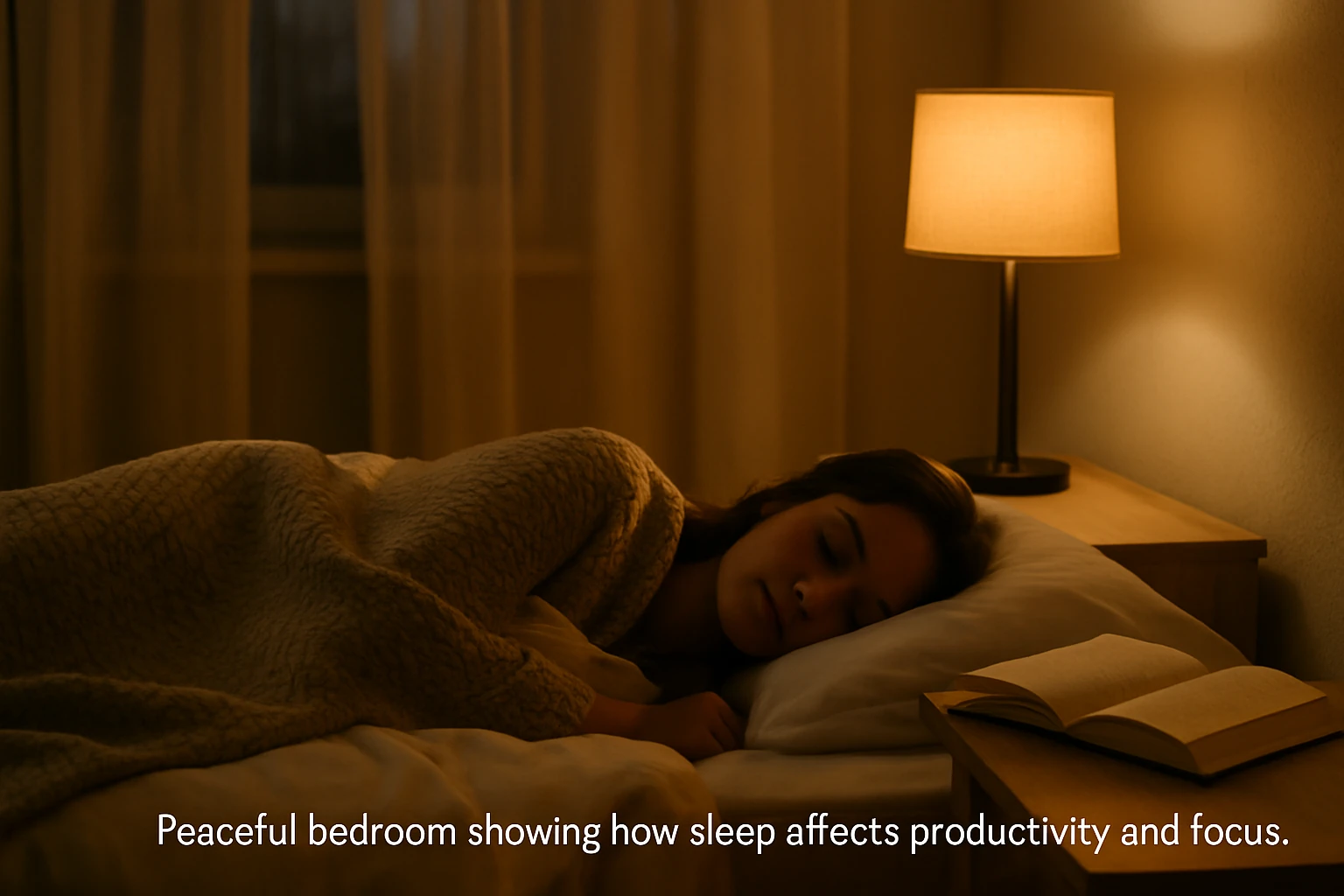
How sleep affects productivity and focus by showing sleep deprivation effects


💼 Sleep & Work Performance: The Rest-Productivity Link

A well-rested brain isn’t just sharper—it’s a powerhouse of creativity, leadership, and resilience.

A Timely study found that employees who prioritize sleep are not only more productive but also experience better physical health and mental clarity at work.

How sleep affects productivity and focus with a chart on sleep and productivity


🛌 Sleep Hacks to Enhance Productivity & Focus

Looking to supercharge your workday? Implement these simple habits:

Maintain a Consistent Sleep Schedule

  • Why? Irregular sleep disrupts your brain’s ability to stay focused.
  • How? Set a consistent bedtime and wake-up time—even on weekends.

Follow the 90-Minute Sleep Cycle Rule

  • Why? Waking during a light sleep phase helps you feel alert.
  • How? Aim for about 7.5 or 9 hours of sleep (five or six 90-minute cycles).

Limit Blue Light Exposure Before Bed

  • Why? Blue light suppresses melatonin, your natural sleep hormone.
  • How? Avoid screens an hour before bed or use blue-light-blocking glasses.

Incorporate Power Naps

  • Why? Short naps can reset your brain without causing grogginess.
  • How? Keep naps to just 10–20 minutes.

Establish Morning Habits

  • Why? A strong start sets the tone for a productive day.
  • How? Get morning sunlight, hydrate, and avoid immediate screen time.

🌙 Crafting a Sleep Routine for Maximum Productivity

Creating a cozy nighttime ritual can significantly improve sleep quality:

Sample Productivity-Boosting Night Routine:

  • 8:30 PM – Dim the lights and turn off major screens.
  • 9:00 PM – Take a warm, relaxing shower.
  • 9:30 PM – Engage in calming activities like reading or journaling.
  • 10:00 PM – Use soothing scents like lavender.
  • 10:30 PM – Ensure your room is cool, quiet, and dark for sleep.

For more ideas, check out how a nighttime routine helps you sleep faster.
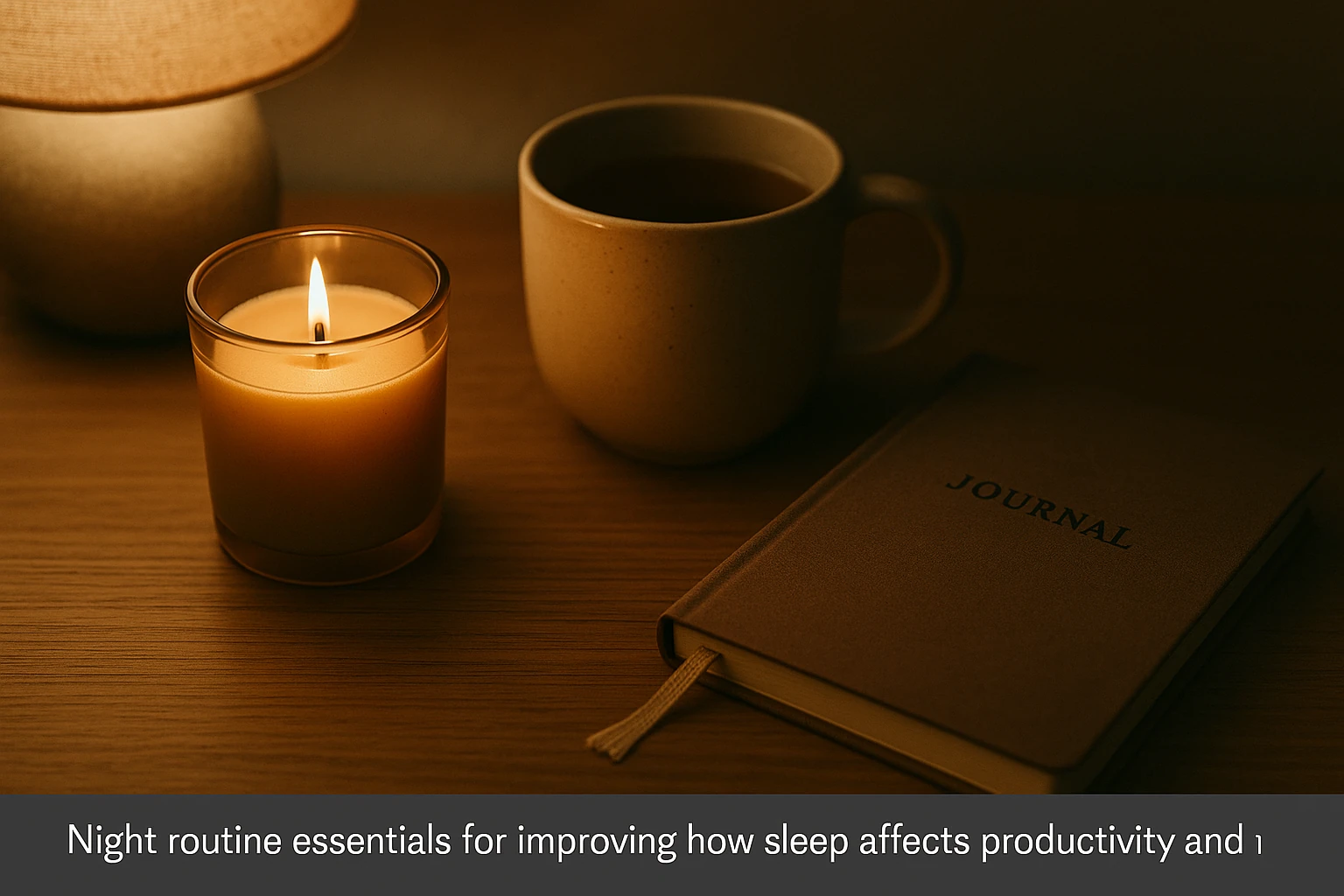
How sleep affects productivity and focus with a night routine illustration


🧪 When to Seek Professional Help

If you’re consistently feeling fatigued despite good sleep habits, it might be time to consult a specialist.

Signs You May Need a Sleep Specialist:

  • Difficulty staying asleep or waking up feeling unrefreshed.
  • Persistent concentration issues despite adequate rest.
  • Frequent memory lapses or brain fog.
  • Excessive daytime sleepiness.

FAQ

How many hours of sleep do I need to stay productive?
Most adults function best with 7–9 hours of quality sleep per night.
Can napping improve focus and productivity?
Yes, power naps of 10–20 minutes can boost alertness without disrupting nighttime sleep.
What’s the best time to go to bed for productivity?
Going to bed between 9:30 PM and 10:30 PM aligns with natural circadian rhythms for optimal rest.

Final Thoughts: Sleep Your Way to Higher Productivity

Your productivity, focus, and mental sharpness are deeply intertwined with the quality of your sleep. By prioritizing rest, you can enhance work performance, memory, creativity, and decision-making skills.

  • ✅ Aim for 7–9 hours of quality sleep.
  • ✅ Maintain healthy bedtime and morning routines.
  • ✅ Observe the positive changes in your daily performance.

🌙 Start prioritizing your sleep tonight and watch your productivity soar tomorrow. You’ve got this!


Related reading from Cozy Bed Quarters

Other reading we found popular


How to Stop Waking Up at 3 AM Every Night & Get Uninterrupted Sleep

Person awake at 3 AM in bed with soft lighting and calming tea.

Why You Wake Up at 3 AM and What It Means

Waking up at 3 AM isn’t just frustrating—it’s your body sending signals. Here’s how to decode them and reclaim your rest.

Key Takeaways

  • Waking up at 3 AM often stems from stress, blood sugar dips, or disrupted sleep rhythms.
  • Simple changes in routine can significantly reduce nighttime wake-ups.
  • Consistency and a cozy sleep environment are your best allies.
  • Most people see results within a few weeks by following a targeted plan.

Why Waking Up at 3 AM Happens So Often

Waking up at 3 AM is more common than you think, and it’s not random. Your body may be responding to cortisol spikes, blood sugar imbalances, or even environmental triggers. By identifying the root causes, it becomes much easier to prevent future disruptions. Learn more in these detailed resources from Healthline, the Cleveland Clinic, and Psychology Today.

Morning routine to prevent waking up at 3 AM

Common Causes of Waking Up at 3 AM

  • Stress or Anxiety: High cortisol levels can jar you awake. Relaxing evening rituals help regulate this.
  • Blood Sugar Fluctuations: Eating sugary or high-carb foods too close to bedtime may cause 3 AM wake-ups.
  • Circadian Rhythm Confusion: Irregular sleep schedules confuse your internal clock.
  • Hydration Imbalances: Both drinking too much and too little water can interfere with sleep.
  • Overactive Mind: Mental overload and racing thoughts can keep you up once you’re awake.

Disrupted sleep patterns and waking up at 3 AM

Your 4-Step Plan to Stop Waking Up at 3 AM

1. Calm Cortisol with Nighttime Rituals

Unwinding properly at night is crucial if you’re consistently waking up at 3 AM. Try breathing exercises, journaling, and guided meditations with apps like Calm or Insight Timer.

2. Stabilize Blood Sugar Before Bed

Balance your evening snacks to avoid the blood sugar crashes that often lead to 3 AM interruptions. Avoid alcohol and sugar, and choose protein-rich snacks like cottage cheese or nuts. Teas like valerian root can support deeper rest.

3. Reset Your Body Clock

Your circadian rhythm needs consistent reinforcement. Get sunlight early in the day, keep regular sleep hours, and reduce screen time before bed to avoid melatonin suppression.

Sunlight exposure to reset body clock and stop waking up at 3 AM

4. Create the Perfect Sleep Environment

Your bedroom should be a sleep sanctuary. Use blackout curtains, keep the temperature between 60–67°F, try white noise or calming sounds, and consider essential oils like lavender to promote a restful atmosphere.

For more, check out 10 genius ways to improve your sleep setup.

If You’re Still Waking Up at 3 AM

Despite your efforts, the occasional 3 AM wake-up might still happen. Here’s what to do in the moment:

Middle of the night solutions for waking up at 3 AM

  • Skip the phone: The light and stimulation will make it harder to fall back asleep.
  • Use muscle relaxation techniques: Tense and relax muscles from your toes upward.
  • Try the military sleep method: Relax your body one part at a time for fast results.
  • Leave the bed if needed: If 20 minutes pass, get up and do a calming activity like reading.
  • Herbal support: Sip on lemon balm or chamomile tea to ease into sleep again.

How Long to Break the 3 AM Wake-Up Habit

Many people notice changes within just a few nights. But if you’ve been waking at 3 AM regularly, full improvement may take 2–3 weeks of consistent bedtime habits.

Track Your Progress

  • Keep a sleep journal: Document your wake-up times, evening habits, and morning energy levels.
  • Use sleep apps: Tools like Sleep Cycle can reveal patterns over time.
  • Stick to your routine: Especially your morning sunlight and bedtime wind-downs.

Final Thoughts: Say Goodbye to Waking Up at 3 AM

Waking up at 3 AM is your body’s subtle way of asking for balance. Small shifts in your nighttime routine, combined with thoughtful nutrition and mindful habits, can transform your sleep. Tonight, dim the lights, breathe deeply, and take that first step toward truly restorative rest.

FAQ

Why do I always wake up at 3 AM?
Common reasons include stress, blood sugar crashes, circadian rhythm disruption, or hydration issues. Identifying the cause can help resolve it.
How can I stop waking up at 3 AM every night?
Create a calming bedtime routine, balance your blood sugar, reinforce your circadian rhythm with sunlight, and improve your sleep environment.
Is waking up at 3 AM unhealthy?
Occasional wake-ups are normal, but frequent disruptions may indicate underlying stress, anxiety, or health issues worth addressing.
What does it mean spiritually to wake up at 3 AM?
Some traditions see 3 AM as a “spiritual hour,” but medically, it’s linked to cortisol cycles or other physiological patterns.
How long does it take to stop waking up at 3 AM?
With consistent routines and habit changes, most people see results within 2–3 weeks.

Learn more in this calming nighttime routine guide, a list of foods that support sleep, and ways to naturally reset your circadian rhythm.

How Your Sleep Environment Affects Sleep Quality & How to Optimize It

How Your Sleep Environment Affects Sleep Quality

How Your Sleep Environment Affects Rest

How your sleep environment affects sleep quality is essential to understand if you’re aiming for deeper, more restful sleep. This guide breaks down the key elements that influence how well you rest each night—from mattress size to room layout. For more foundational insights, see our Ultimate Guide to Better Sleep Habits.

Key Takeaways

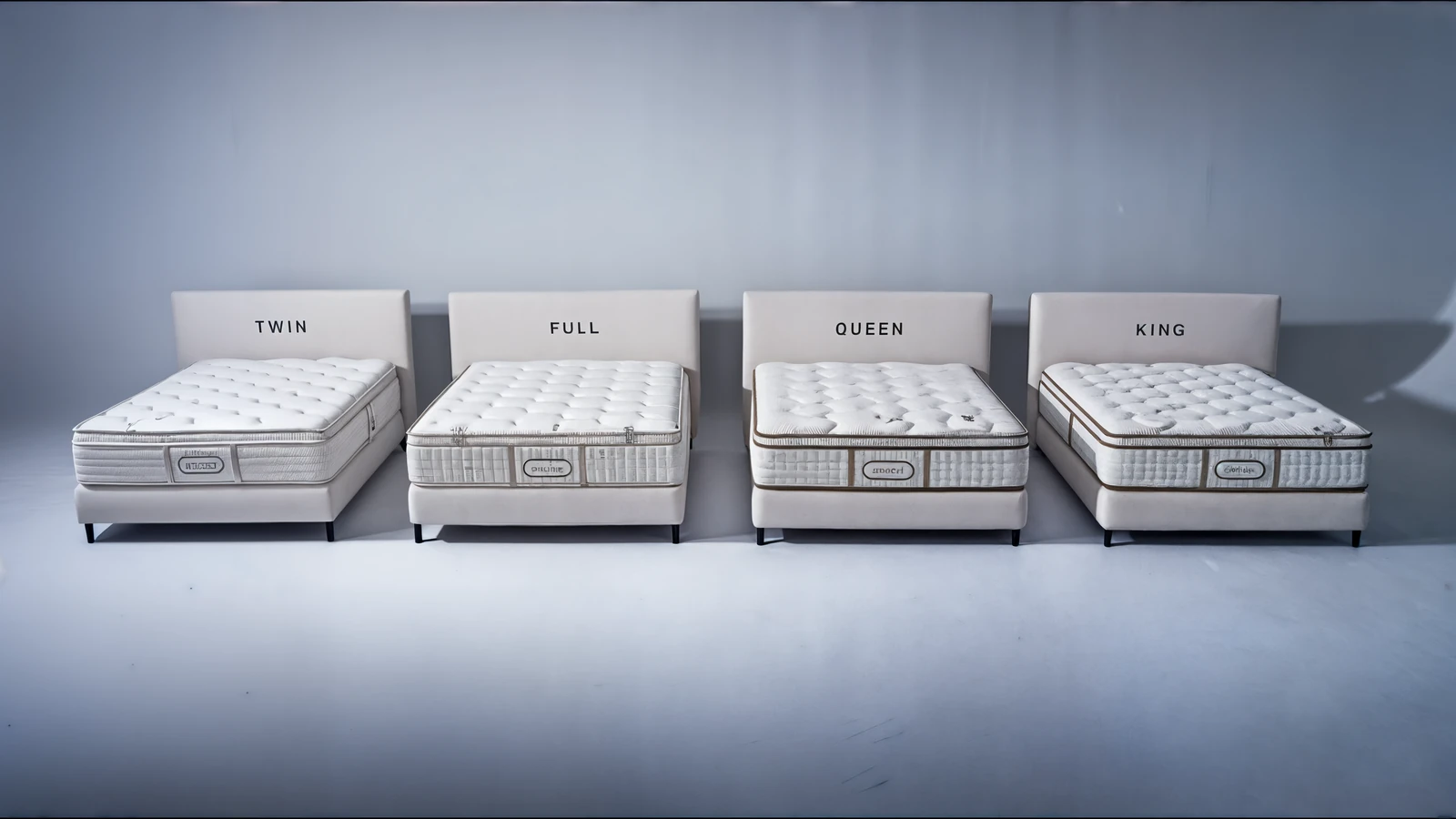
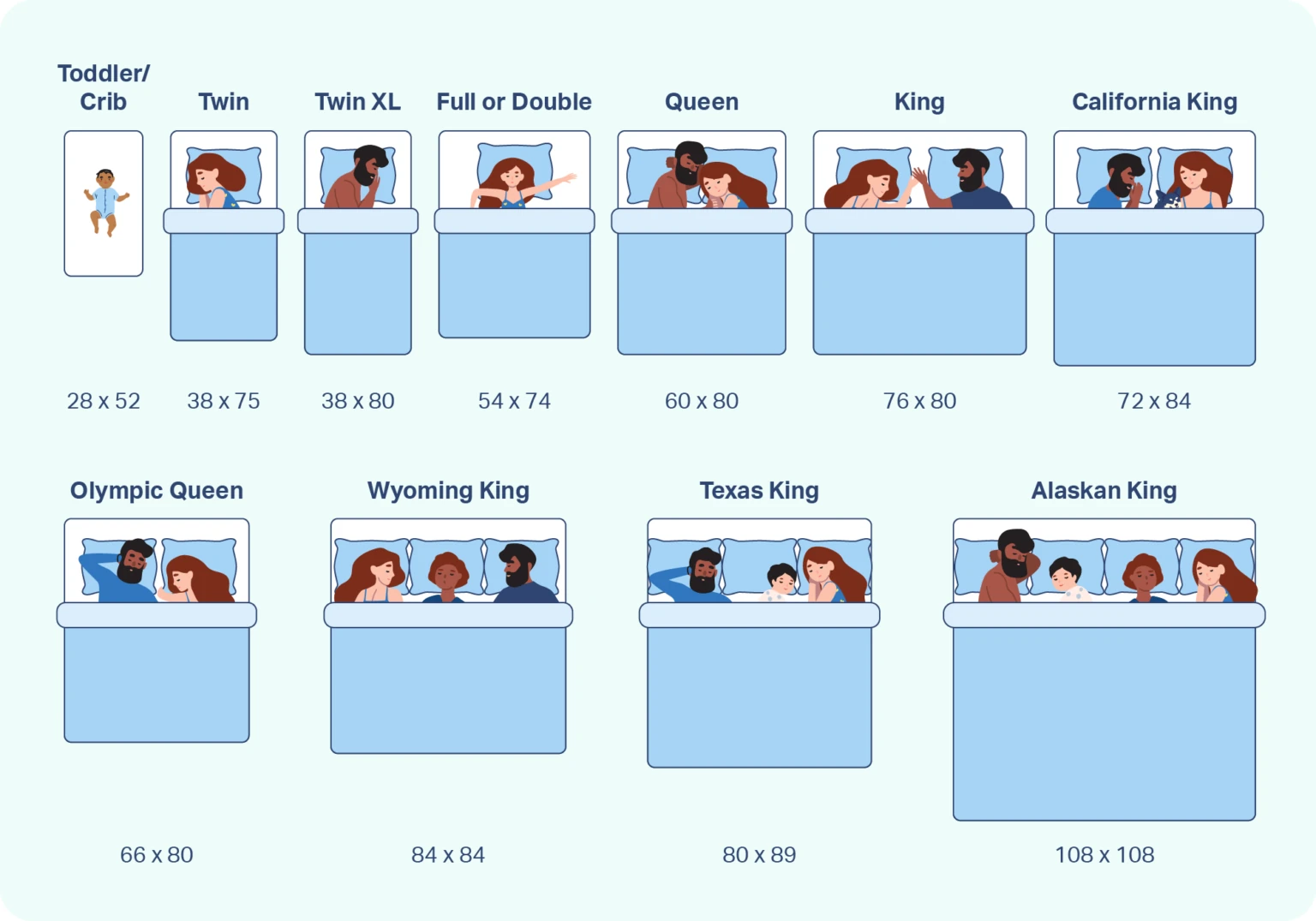
  • Mattress sizes range from Twin to California King to fit any space and sleeper.
  • Consider room dimensions, sleep style, and number of sleepers before choosing.
  • Popular sizes like Queen and King offer broad bedding and accessory availability.

Mattress Sizes Explained: Best Matches for Every Sleeper

Understanding how your sleep environment affects sleep quality begins with selecting the right mattress size. The size of your mattress impacts not only your comfort but also the overall feel and flow of your bedroom. For instance, a cramped room with an oversized bed can create tension and disrupt your sense of relaxation.

Each mattress size caters to a different lifestyle and need:

  • Twin: Compact and ideal for children’s rooms, bunk beds, or small studio apartments.
  • Twin XL: Popular in college dorms and for teens who need a little extra legroom.
  • Full: Great for single adults or guest rooms with limited space.
  • Queen: A versatile favorite for couples and small master bedrooms alike.
  • King: Best suited for couples who need maximum personal space or share the bed with pets or children.
  • California King: Ideal for tall individuals and large master bedrooms, offering generous length without overwhelming width.

Explore our bed size comparison guide and mattress type breakdown to get the full picture.

SizeDimensionsBest For
Twin38″ x 75″Kids, single sleepers, small rooms
Twin XL38″ x 80″Taller teens, dorms
Full54″ x 75″Single adults, guest rooms
Queen60″ x 80″Couples, compact master bedrooms
King76″ x 80″Couples who need extra space
California King72″ x 84″Very tall sleepers, large rooms

Still not sure where to start? Use our comprehensive mattress selection guide to help identify the best match for your needs.

How your sleep environment affects sleep quality with different mattress sizes

Summary: Picking the right mattress size is foundational to creating a restful sleep environment. It influences comfort, movement, and even the aesthetic of your room.

How to Choose the Right Mattress Size

Room Size & Layout

Your bed should complement—not crowd—your room. When evaluating how your sleep environment affects sleep quality, don’t overlook spacing. A bed that’s too large can limit movement and increase clutter, both of which raise stress and disrupt rest. Stick to the 24-inch clearance rule to allow for easy bed access and furniture flow.

Consider these layout tips:

  • Use nightstands and underbed storage to make the most of small spaces.
  • Avoid placing large beds directly in front of doors or windows—it can disturb energy flow and sleep patterns.
  • Use rugs to visually anchor the bed and reduce echo or cold flooring.

Room layout and how your sleep environment affects sleep quality

Summary: A balanced layout with the right bed size improves both function and calm, contributing to deeper, more restorative sleep.

Number of Sleepers

The number of people (or pets) sharing your bed directly affects the quality of your sleep. Cramped conditions can lead to disturbed rest, especially for light sleepers. A Queen bed is often sufficient for two, but a King or California King gives extra breathing room.

Want more options? See our top luxury mattress picks to find models designed with couples and comfort in mind. And for a breakdown of materials and support levels, explore this mattress technology guide from Sleep Foundation.

Summary: Choosing the right size for your household improves sleep harmony—no more tug-of-war with the covers!

Your Sleep Style

Are you a sprawler or a snuggler? Do you shift positions at night or sleep like a rock? Your preferred sleep style plays a huge role in what size bed you need. Here’s what to consider:

  • Side sleepers: Benefit from room to stretch and reposition.
  • Back or stomach sleepers: Need space for full body alignment without sagging support.
  • Combo sleepers: Do best with wider beds to accommodate frequent movement.

Your sleep style and how your sleep environment affects sleep quality

Summary: Matching your mattress size to your sleep style helps ensure uninterrupted rest and fewer midnight wakeups.

Budget & Accessories

It’s easy to underestimate how much your mattress size affects your sleep environment and budget. Larger beds often come with higher costs—not just for the mattress itself, but for frames, sheets, duvets, and pillows.

For value without compromising comfort, a Queen-size mattress is often the sweet spot. It’s budget-friendly and compatible with a wide range of bedding. Need help comparing materials and price points? Visit our mattress materials guide and this budgeting resource from TIME.

Summary: Choosing the right size helps you stay cozy and financially smart—because a good night’s sleep shouldn’t break the bank.

Height & Body Type

When it comes to how your sleep environment affects sleep quality, comfort begins with feeling physically supported. Taller sleepers may find their feet dangling off a Full or Queen mattress, while larger body types need extra space to move without feeling confined.

Recommendations:

  • 6 feet tall or more? Try a Twin XL or California King.
  • Plus-size sleepers: King beds provide more comfort and reduce partner disturbance.

Summary: Choosing a bed that suits your body ensures personalized comfort and less tossing and turning.

Bedding Compatibility

Your mattress size also determines your options when it comes to bedding and accessories. Queen and King sizes are the most common, making it easier to find a range of stylish and affordable options for sheets, comforters, mattress protectors, and more.

Looking to upgrade your whole setup? Our Bedding Sets Guide offers inspiration for building a beautiful, restful bedscape. You can also explore design advice from Apartment Therapy.

Summary: Don’t just pick a size—pick a size that lets you outfit your bed effortlessly, for looks and comfort.

Choosing from the wide range of mattress sizes doesn’t need to be overwhelming. Focus on your space, sleep style, and lifestyle needs. A well-matched mattress size leads to better sleep and a more functional bedroom. It’s just one part of how your sleep environment affects sleep quality overall—but it’s a crucial foundation you build everything else around.

FAQ

What’s the most popular mattress size?
The Queen size is most popular due to its balance of space, comfort, and versatility.
Can two people sleep on a Full-size bed?
It’s possible but not ideal. A Queen or larger provides more comfort for couples.
What’s the difference between King and California King?
King is wider; California King is longer—ideal for tall sleepers.
Do mattress sizes vary by country?
Yes, always check local standards if purchasing or moving internationally.
Is it easy to find bedding for all sizes?
Queen and King sizes offer the broadest selection of bedding and accessories.

Related reading from Cozy Bed Quarters

Other reading we found popular

What is Sleep Debt and How to Recover From It

Morning sunlight and movement to recover from sleep debt.

Understanding Sleep Debt and How to Recover

Sleep debt is real, and it’s more than just feeling groggy—it impacts your mood, memory, and health. But the good news? You can fix it.

Key Takeaways

  • Sleep debt accumulates when you consistently miss out on quality rest.
  • You can recover by gradually increasing sleep time and improving habits.
  • Quick fixes don’t work for chronic sleep debt—consistency is key.
  • Better sleep hygiene can prevent future debt and boost daily energy.

What is Sleep Debt? (And Why It’s a Big Deal)

Think of sleep like a bank account: if you “withdraw” too much by staying up late or waking early, you accumulate sleep debt. This is the gap between the sleep your body needs and what you actually get. Resources like the National Sleep Foundation confirm its health impact.

Missing just 2 hours per night during the week leaves you with a 10-hour debt by Friday. Left unpaid, it affects your entire body.

Illustration showing how sleep debt builds up over time

Why Sleep Debt Wrecks Your Energy

  • Constant tiredness: Even after sleeping in, you still feel off.
  • Stress and mood issues: Poor sleep increases cortisol, leading to irritability.
  • Weakened immunity: Chronic sleep loss leaves you vulnerable to illness.
  • Food cravings: Hormonal imbalances from sleep loss make you crave sugar and carbs.
  • Mental fog: Focus and memory get blurry when you’re running low on rest.

Understanding your sleep debt helps you recognize the need for recovery before it snowballs into health issues.

Can You Catch Up on Sleep Debt?

Yes—but how depends on the severity. According to experts at Sleep Education, short-term sleep debt is easy to reverse, while long-term debt needs a dedicated approach.

Relaxed person waking up naturally after recovering from sleep debt

How Long Does It Take?

  • 1–2 nights lost? A couple of full nights of rest should reset your energy.
  • A full week missed? Plan for several nights with an extra hour or two.
  • Chronic deprivation? Think gradual change—consistency is your best friend here.

Catching up on sleep debt isn’t about sleeping all weekend—it’s about creating long-term, restful habits.

How to Pay Off Sleep Debt & Restore Energy

Ready to catch up without throwing your routine into chaos? Here’s how to recover smartly and sustainably.

Step 1: Be Consistent (No More Weekend Sleep Binges)

  • Stick to regular bedtimes and wake-up times—even on weekends.
  • Sudden changes confuse your circadian rhythm and prolong fatigue.
  • Use a journal or tracker to build accountability.

Step 2: Use Smart Naps (The 20-Minute Trick)

  • Short naps of 20–30 minutes are ideal for alertness.
  • Avoid late-afternoon naps to prevent disrupting your bedtime.
  • Skip marathon naps—they often cause grogginess and disrupt your rhythm.

Step 3: Add Sleep Time Gradually

  • Increase your nightly rest by 15–30 minutes until you feel restored.
  • Don’t aim to “make it all up” in one go—slow progress sticks.

Peaceful evening routine helping reduce sleep debt

Your body responds best to small, repeatable changes. Start with tonight—and keep going.

Lifestyle Tweaks That Help You Catch Up on Sleep

Reversing sleep debt isn’t just about hours—it’s about quality. Let’s make your bedroom and routine more sleep-friendly.

Improve Your Sleep Environment

  • Create a wind-down routine: Think reading, soft music, or light stretching.
  • Cool the room: 60–67°F is ideal for deeper sleep.
  • Cut screen time: Block blue light an hour before bed.
  • Use calming sounds: White noise or nature audio can ease the mind.

Boost Energy Without More Coffee

  • Morning sunlight: Natural light jumpstarts your internal clock.
  • Gentle movement: Stretching or a walk boosts energy naturally.
  • Hydrate: Fatigue is often dehydration in disguise.
  • Eat smart: Focus on whole foods with steady energy, not sugar spikes.

Healthy habits to prevent sleep debt in daily life

Create a sleep sanctuary and energizing habits that naturally reduce your need to “catch up.”

How to Prevent Sleep Debt in the Future

The easiest way to beat sleep debt? Don’t build it up. These simple strategies help you stay rested and energized long-term.

Simple Habits That Keep You Rested

  • Sleep 7–9 hours every night—no exceptions.
  • Stick to a routine—even on weekends or holidays.
  • Avoid screens and bright lights close to bedtime.
  • Say no to heavy meals and late caffeine.
  • Listen to your body—rest when it tells you to.

Explore the science of sleep and how to wake up refreshed every day.

Final Thoughts: Wake Up Rested & Ready

Sleep debt doesn’t have to drag you down. With gentle routines, smarter habits, and consistency, you can reverse its effects and reclaim your mornings. Tonight, try turning in just a bit earlier—you’ll feel the difference.

FAQ

Can you ever fully repay sleep debt?

Yes, most short-term sleep debt can be repaid with consistent, quality sleep over several days. Chronic debt takes longer but is still reversible.

Is it bad to oversleep on weekends?
Yes—oversleeping can disrupt your circadian rhythm and make it harder to sleep on Sunday night. It’s better to keep a steady sleep schedule.
How much extra sleep do I need to recover?
Aim for 15–60 minutes extra per night, gradually. Your body needs time to restore its balance, not a single “makeup” session.

Aim for 15–60 minutes extra per night, gradually. Your body needs time to restore its balance, not a single “makeup” session.

Learn more in how sleep affects memory and focus, or explore science-backed ways to fall asleep faster. Need a better sleep setup? Discover the best cooling mattresses to keep you comfy.