Modern Bedroom Decor Trends Shaping Today’s Interiors

Modern bedroom decor with cozy accessories including velvet pillows and a knit throw

Modern Bedroom Decor: Trends and Must-Have Accessories

Modern bedroom decor means clean lines, calming neutrals, and thoughtfully chosen accessories that add warmth without clutter. To nail the look in 2025: start with streamlined bedroom furniture sets, mix in natural textures, and finish with statement lighting and smart tech—so your space feels stylish, functional, and truly relaxing.

Key Takeaways on Modern Bedroom Decor

  • Lead with simplicity: choose low-profile furniture and limit visual noise for an instantly modern look.
  • Warm up neutrals with natural textures (wood, linen, rattan) to keep modern bedroom decor inviting.
  • Use statement lighting and mirrors to add dimension and brighten the room.
  • Prioritize function—hidden storage, soft-close drawers, and multi-use pieces keep things tidy.
  • Add personality with art, textiles, and plants so “modern” never feels sterile.

Modern bedroom decor with cozy accessories including velvet pillows and a knit throw

Trending Styles in Modern Bedroom Decor

Answer first: 2025 modern bedrooms lean minimalist but cozy—neutral palettes, matte metals, and organic textures keep spaces calm yet characterful.

In 2025, modern bedroom decor is leaning into clean lines, muted palettes, and natural textures. Neutral tones like beige, greige, and off-white dominate, often paired with matte black or brass accents for a contemporary edge. Organic materials—think rattan light fixtures or oak nightstands—bring warmth to an otherwise streamlined space.

Another popular trend is biophilic design—integrating nature indoors. Houseplants, botanical prints, and earthy tones are being used to enhance both aesthetics and well-being.

You can see a beautiful example of this in this real-life master bedroom makeover by A Thoughtful Place, which perfectly balances modern style and comfort.

Minimalism with a Personal Touch

Answer first: Keep surfaces clear and color palettes tight, then layer in meaningful art and textured bedding so the room feels curated—not cold.

Modern decor doesn’t mean sterile. While clutter is out, personal expression is very much in. A gallery wall above the bed, curated with black-and-white photography or modern art prints, adds character without overwhelming the space. Monochromatic bedding with subtle texture—like quilted duvets or linen throws—keeps the look cozy and inviting.

For more inspiration on how to embrace simplicity without sacrificing style, check out these minimalist bedroom decor tips from Cozy Bed Quarters.

Choosing the Right Bedroom Furniture Sets

Answer first: Opt for streamlined sets—platform beds with storage, soft-close dressers, and low-profile nightstands—to anchor your modern look and simplify daily living.

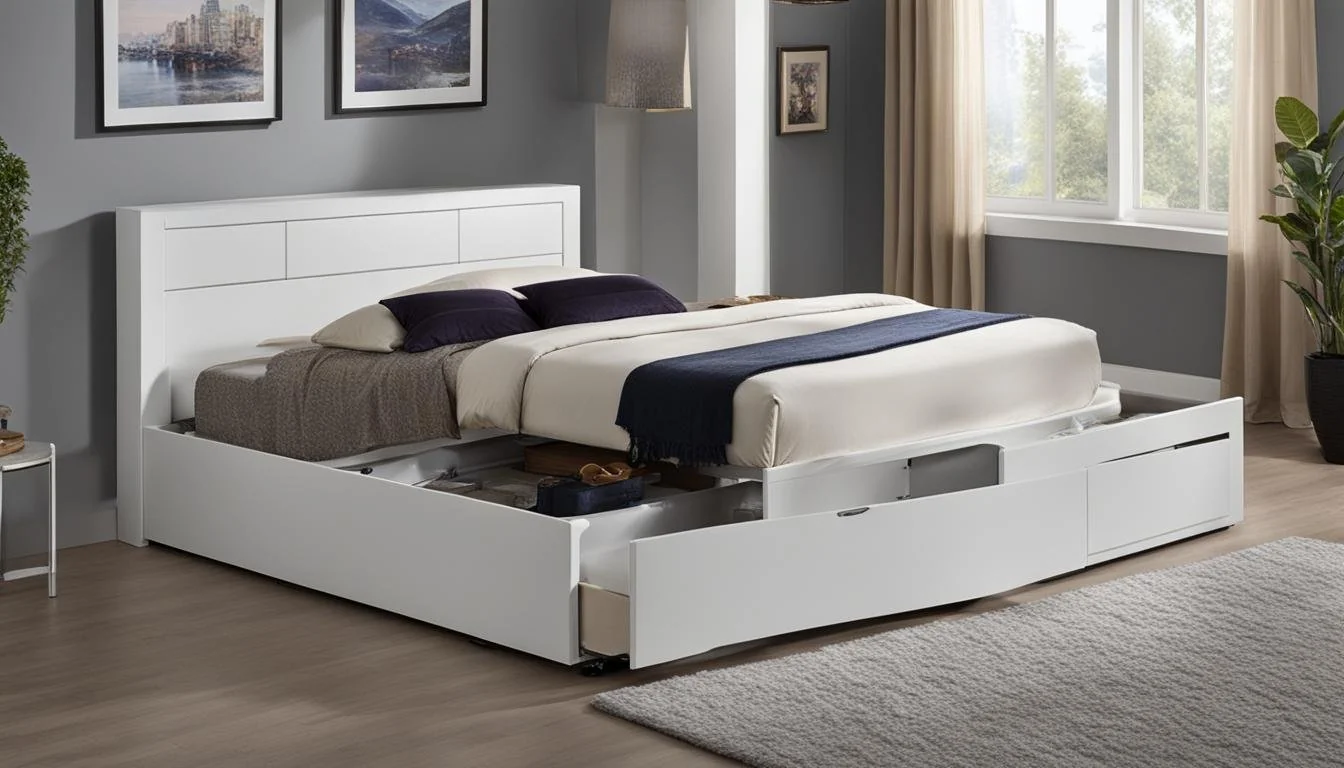
Your furniture sets the tone for the entire room. In modern spaces, opt for bedroom furniture sets that balance form and function. Platform beds with hidden storage, sleek dressers with soft-close drawers, and low-profile nightstands are trending right now.

When shopping, consider materials and finishes. Walnut, acacia, and ash woods offer a natural aesthetic, while lacquered or painted finishes add a touch of gloss for a luxe feel. Matching your furniture pieces helps create a cohesive, uncluttered look—a core principle of modern bedroom decor.

For expert ideas on pulling a modern room together with furniture, this article from Bassett Furniture is a must-read.

Space-Saving and Multi-Functional Pieces

Answer first: In smaller bedrooms, choose multi-taskers—Murphy beds, foldable desks, and modular shelving—to preserve floor space and keep the room feeling open.

Especially in urban homes or guest rooms, furniture that serves multiple purposes is a game-changer. Murphy beds, foldable desks, and modular shelving can help maximize space without sacrificing style. This is particularly useful when planning guest bedroom decor, where you want flexibility without compromising on comfort.

Must-Have Accessories to Complete the Look

Answer first: Layer lighting, texture, and tech: a striking fixture, tactile textiles, mirrors, and smart conveniences bring modern bedrooms to life.

Accessories are where your modern bedroom comes to life. While the furniture provides structure, accessories bring in warmth and personality. Here are a few essentials:

  • Statement lighting: Oversized pendant lights, sculptural lamps, or LED wall sconces offer a design-forward glow.
  • Textured textiles: Think chunky knit throws, layered rugs, or velvet cushions to contrast sleek furniture.
  • Mirrors: A well-placed mirror not only adds dimension but reflects light, making the room feel larger.
  • Smart tech: Incorporate modern conveniences like voice-activated lighting, wireless chargers, or an under-bed motion sensor nightlight.

Even details like bed skirts can subtly elevate your decor—check out these stylish bed skirt ideas for an often-overlooked accessory that makes a big difference.

Must-Have Accessories to Complete the Look - bedroom decor

Modern Guest Bedroom Decor Tips

Answer first: Create calm comfort with layered lighting, soft textures, and a few modern accents—plus practical touches like charging stations and luggage space.

When designing a guest room, aim for comfort and versatility. Use calming colors, provide layered lighting (ambient and task), and include thoughtful touches like a charging station or a luggage rack. A compact chair or bench adds a functional yet stylish element. Incorporating a few trendy pieces—like a contemporary accent chair or abstract wall art—elevates the guest experience.

Explore more guest-ready ideas here: Guest Bedroom Decor Ideas.

FAQ

What colors work best for modern bedroom decor?
Stick to soft neutrals (beige, greige, off-white) as a base. Add contrast with matte black or brass accents and bring warmth through wood tones and textured textiles.
How do I make a modern bedroom feel cozy?
Layer textures (linen, wool, velvet), add warm lighting, and incorporate natural elements like wood and plants. Keep surfaces tidy so the textures shine.
Do I need to buy matching furniture?
Matching bedroom furniture sets create cohesion, but you can mix compatible finishes and profiles. Aim for similar heights and clean lines to maintain a modern vibe.
Which accessories make the biggest impact?
Statement lighting, mirrors, and tactile textiles change the mood fast. Smart tech (dimmers, motion lights, wireless chargers) adds everyday convenience.
What’s a quick upgrade for a guest room?
Refresh bedding, add a bedside lamp with USB/USB‑C ports, and include a luggage rack or bench. Keep decor minimal but welcoming with one or two art pieces.

Final Thoughts

Whether you’re revamping your personal retreat or refreshing your guest suite, modern bedroom decor offers endless possibilities to combine beauty and practicality. Stick to clean lines, embrace natural materials, and accessorize with intention. With the right blend of timeless furniture and trendy accents, your bedroom will be both on-trend and uniquely yours.

Ashley Furniture Bedding Sets: A Complete Guide

Ashley Furniture bedding sets with neutral colors and modern bedroom accessories.

Ashley Furniture bedding sets — A Complete Guide

Ashley Furniture bedding sets deliver an easy, affordable upgrade: coordinated comforters, shams, and accents that refresh your room in one go. This guide gives you the standout picks, sizing notes, and styling tips so you can choose fast and love the result. Looking for inspiration? Start with our deep dive on bedding materials.

Key Takeaways on Ashley Furniture Bedding Sets

  • Fast refresh: Ashley Furniture bedding sets bundle pieces that match, saving time and money.
  • Right size first: Check bed dimensions and depth to ensure a proper fit from twin through king.
  • Style meets budget: Seasonal prints and textures let you update trends without overspending.
  • Layer to elevate: Add pillows, throws, and a dressing vanity table for a polished, cozy look.
  • Care made simple: Most sets are machine-washable—gentle cycle, mild detergent, low heat.

Ashley Furniture Bedding Sets: A Complete Guide

Ashley Furniture bedding sets are a top choice for anyone looking to upgrade their bedroom with style, comfort, and affordability. Whether you’re designing a cozy retreat or a luxe master suite, these all-in-one bedding solutions provide the perfect balance of design and function. In this guide, we’ll explore the features, styles, and tips for choosing the right bedding set, while highlighting how to pair it with bedroom accessories like a dressing vanity table to complete your space.

Ashley Furniture bedding sets styled with pillows and neutral accents in a modern bedroom.

Why Choose Ashley Furniture Bedding Sets?

Because they’re coordinated, affordable, and trend-forward—giving you a designer look in a single purchase.

Ashley Furniture is known for quality craftsmanship and trend-forward design, and their bedding sets are no exception. These sets typically include a comforter, pillow shams, and sometimes decorative pillows or bed skirts, offering a cohesive look without the hassle of shopping for individual items.

Whether you’re into minimalist neutrals, bold patterns, or classic textures, there’s a bedding set to match your aesthetic. Ashley Furniture bedding sets come in sizes from twin to king, accommodating all bed types and room styles.

Neutral-toned Ashley Furniture bedding sets styled with layered throws and decorative pillows.

Benefits of Ashley Furniture Bedding Sets

1. Style Variety

Find modern, classic, or farmhouse looks—seasonal collections keep your room feeling current.

From modern geometric prints to farmhouse florals, Ashley Furniture has bedding styles for everyone. Their seasonal collections stay ahead of trends, ensuring your room never feels outdated.

2. Budget-Friendly

Buying the set beats piecing items together—great for first homes, dorms, and budget refreshes.

Compared to buying each item separately, these bedding sets offer significant savings. They’re ideal for first-time homeowners, college students, or anyone redesigning on a budget.

3. Convenience

“Bed-in-a-bag” simplicity—everything arrives coordinated and ready to style.

Ashley’s “bed-in-a-bag” sets simplify shopping and decorating. Everything arrives together, designed to coordinate perfectly.

Floral Ashley Furniture bedding sets displayed in a cozy farmhouse-inspired bedroom.

How to Style Your Room with Ashley Furniture Bedding Sets

Complement with Bedroom Accessories

Layer texture and color—throws, pillows, and curtains add instant depth and coziness.

To elevate the look, pair your bedding set with thoughtful bedroom accessories like throw blankets, decorative pillows, or matching curtains. Choose complementary textures and colors to create a cozy, layered feel.

Add a Dressing Vanity Table

A vanity adds storage, function, and a focal point—match finishes for a cohesive look.

A dressing vanity table is both functional and stylish. It serves as a space for morning routines while adding elegance to your bedroom. Choose one with built-in drawers for extra storage and match the finish to other furniture pieces for a cohesive look.

Pro tip: Use a mirror with warm lighting above the vanity to reflect the soft textures and colors of your Ashley bedding set, amplifying the room’s ambiance.

Ashley Furniture bedding sets styled with a mirrored dressing vanity table and accent lighting.

Bestselling Ashley Furniture Bedding Sets

These popular choices balance style, comfort, and value—great starting points for most rooms.

  • Mayda 10-Piece Queen Comforter Set – Features an elegant damask pattern in soft neutral tones.
  • Ryter 3-Piece Comforter Set – Great for minimalist styles with its clean lines and modern palette.
  • Lannover 7-Piece Set – Includes decorative pillows and a rich, tufted look for added depth.

Explore the full collection on Ashley’s official bedding page, or get inspired by these bed makeover ideas.

Tips for Choosing the Right Bedding Set

Size, climate, and style should guide your pick—measure first, then match fabric weight and decor.

  • Measure your mattress to ensure a proper fit.
  • Consider climate and fabric—lightweight cotton for summer, plush microfiber for winter.
  • Pick a style that works with your existing decor or plan around the set if starting fresh.

For more personalized reviews and bedroom comfort tips, visit Cozy Bed Quarters.

Caring for Your Bedding Set

Most sets are easy-care: gentle cycle, mild detergent, and low heat help them last longer.

Most Ashley bedding sets are machine washable, but always check the label. To prolong their life:

  • Wash on a gentle cycle
  • Use mild detergent
  • Avoid high heat when drying

Tufted Ashley Furniture bedding sets beside a mirrored dressing vanity table.

FAQ

What comes in Ashley Furniture bedding sets?
Most sets include a comforter and pillow shams; some add decorative pillows or a bed skirt. Check each product’s listing for exact contents.
How do I choose the right size for my bed?
Measure mattress width, length, and depth. Use those dimensions to pick the correct size—from twin to king—and ensure proper drape on all sides.
Are Ashley Furniture bedding sets machine-washable?
Yes, many are. Follow the care label; in general, use a gentle cycle with mild detergent and low heat to preserve loft and color.
Do Ashley Furniture bedding sets work for different climates?
Yes. Opt for lightweight cotton or microfiber for warm seasons and thicker, tufted, or plush options for cooler months.

Final Thoughts

Ashley Furniture bedding sets make a designer look simple: pick a style, confirm the size, and layer accessories for a polished finish.

Ashley Furniture bedding sets offer the perfect combination of style, quality, and affordability. When paired with the right bedroom accessories and a dressing vanity table, they can transform your bedroom into a stylish sanctuary. Whether you’re doing a full bedroom makeover or just want to refresh your space, Ashley’s bedding sets make it easy to achieve a designer look without the designer price.

Related reading from Cozy Bed Quarters

Other reading we found popular

Ivory Night Stands: How to Choose the Right One for Your Room

Ivory night stand with books and lamp next to a luxury wooden bed frame


Ivory Night Stands: How to Pick the Perfect Style for Your Bedroom

Choosing the right ivory night stand can transform your bedroom from basic to beautiful. This guide explains how to find the perfect match for your bed, blend with your décor, and create a cohesive look.

Key Takeaways on Choosing Ivory Night Stands

  • Match the nightstand height with your bed — 24–28 inches is ideal.
  • Ivory pairs beautifully with most interior styles, from coastal to glam.
  • Choose functional designs with drawers or shelves based on your needs.
  • Coordinate with luxury wooden bed frames for a balanced look.
  • Decorate using mirrors, trays, and lighting to tie the space together.

Why an Ivory Night Stand Is a Smart Choice

An ivory night stand is the ultimate neutral — it’s classic, timeless, and seamlessly complements nearly any bedroom color palette. Unlike stark white, ivory adds warmth and softness, making your space feel more inviting.

Ivory works especially well in traditional, coastal, farmhouse, or even modern glam interiors. Its subtle hue blends with both dark and light wood tones, making it the ideal match for luxury wooden bed frames.

ivory night stand with decor

How to Choose the Right Ivory Night Stand

1. Consider Proportion and Size

Your ivory night stand should be level with or slightly below the top of your mattress. Standard height falls between 24–28 inches.

Measure the height of your bed, especially if you’re working with taller bed frames or adjustable bases. For width, 20–30 inches is usually ideal.

Explore this guide for more size and layout tips.

Browse nightstands for every budget to find affordable and stylish options.

ivory night stand size options

2. Match Style and Material with Existing Furniture

If your room features a statement bed, let the ivory night stand play a supporting role. For example:

  • A tufted headboard pairs with a vintage-style curved night stand.
  • Wooden frames match well with Scandinavian or modern nightstands.
  • Farmhouse or coastal themes shine with distressed ivory finishes.

Mixing ivory-painted wood with natural finishes adds contrast and depth.

Pottery Barn offers a curated range of ivory-toned nightstands in both modern and rustic styles.

ivory night stand in modern bedroom

3. Prioritize Storage and Functionality

If you like to keep books, chargers, or skincare nearby, opt for drawers or cabinets. Open shelving adds style but may not hide clutter as well.

Drawers with soft-close glides add convenience and a luxe touch.

For compact rooms, explore multi-functional nightstands for small bedrooms.

ivory night stand with storage drawers

Elevate Your Look with Bedroom Dresser Decor

After choosing your ivory night stand, enhance the room with bedroom dresser decor to unify your design.

  • Mirrors or artwork: Add warmth with a vintage mirror above the dresser.
  • Table lamps: Use coordinated lamps on both dresser and nightstand.
  • Trays and vessels: Stylish trays keep perfumes and accessories organized.

Best Pairings: Ivory Night Stand & Luxury Wooden Bed Frames

Ivory nightstands are versatile and can be paired with:

  • Walnut or cherry bed frames for rich contrast.
  • Oak or weathered wood for rustic elegance.
  • Black wood beds for modern, high-contrast appeal.

The light tone of ivory balances darker furniture, creating visual harmony.

Check out this Houzz guide for more ideas on coordinating nightstands with bedroom design.

FAQ

What height should an ivory night stand be?
Ideally, it should align with or be slightly below your mattress — typically 24–28 inches.
Can ivory nightstands work with dark furniture?
Yes, ivory provides balance and prevents dark furniture from overpowering the room.
Is ivory better than white for nightstands?
Ivory is warmer and more forgiving, blending well with multiple design styles.

Final Thoughts on Choosing an Ivory Night Stand

The right ivory night stand does more than hold your lamp — it tells a design story. By focusing on scale, coordination, and functionality, you create a room that feels curated and complete.

Whether styling around a bold bed or refreshing your dresser decor, ivory offers a timeless base for beautiful bedroom design.

Further Reading & Resources


Sleep Hacks That Help You Fall Asleep Faster Naturally

White noise and sleep sounds for falling asleep faster

Sleep Hacks That Help You Fall Asleep Faster

Falling asleep faster doesn’t have to be a struggle. With the right tools and sleep habits, you can quiet your mind, relax your body, and fall asleep faster—naturally and consistently. Discover science-backed sleep hacks that help you get the restful night you deserve.

Key Takeaways

  • Master the 4-7-8 breathing method to trigger your body’s natural sleep response
  • Optimize your bedroom temperature for deeper, uninterrupted sleep
  • Use progressive muscle relaxation to melt away stress and tension
  • Incorporate white noise and soothing sleep sounds to block distractions
  • Limit caffeine, alcohol, and blue light exposure to support your sleep cycle

1. Falling Asleep Faster with the 4-7-8 Breathing Technique

The 4-7-8 breathing technique is a simple, science-based exercise that calms your mind and body within minutes. Inhale deeply through your nose for 4 seconds, hold your breath for 7 seconds, then slowly exhale through your mouth for 8 seconds. Repeat this cycle four times, focusing on each breath. This practice activates the parasympathetic nervous system, reducing anxiety and helping you fall asleep faster. Try combining it with gentle music or essential oils for even greater relaxation.

4-7-8 breathing technique for falling asleep faster

According to the Sleep Foundation, controlled breathing techniques can lower your heart rate and quickly transition your body into sleep mode.

2. Falling Asleep Faster by Optimizing Your Room’s Temperature

Your core body temperature naturally drops as you drift off. For falling asleep faster, set your bedroom between 60–67°F (15–19°C). Use breathable bedding such as cotton or bamboo and consider a warm shower before bed—this signals to your body that it’s time to rest as you cool down. Don’t forget to keep your feet uncovered for optimal thermoregulation.

Optimizing bedroom temperature for falling asleep faster

A cooler room not only encourages melatonin production but also reduces night sweats and restless tossing, according to Sleep Cycle.

3. Falling Asleep Faster Using Progressive Muscle Relaxation (PMR)

Progressive Muscle Relaxation (PMR) is a guided practice that relieves physical and mental tension—both of which can keep you awake at night. To use PMR for falling asleep faster, tense and then relax each muscle group in your body, starting with your toes and working your way up to your face. This helps release stress and signals to your brain that it’s safe to let go.

Progressive muscle relaxation for falling asleep faster

PMR is recommended by clinicians and is often paired with deep breathing or guided meditations for even greater effect. For a step-by-step audio guide, see the emotional sleep processing resource on Cozy Bed Quarters.

4. Falling Asleep Faster with White Noise and Sleep Sounds

White noise, nature sounds, and calming audio tracks are excellent tools for falling asleep faster. These sounds mask disruptive noises and create a sleep-friendly environment. Try a white noise machine, a playlist of rain or ocean sounds, or pink noise (which studies suggest is particularly effective for deep sleep).

White noise and sleep sounds for falling asleep faster

A recent Sleep Foundation report shows that sleep sounds can help people fall asleep up to 38% faster by reducing nighttime awakenings and boosting overall sleep satisfaction.

5. Falling Asleep Faster with the 10-Minute Rule for Racing Thoughts

If your mind is busy, don’t force yourself to sleep. Instead, try the 10-minute rule: If you can’t sleep after 10–15 minutes, get up and do a calm, non-stimulating activity like reading or journaling in dim light. Only return to bed when you feel sleepy. This technique helps break the association between your bed and anxiety, ultimately helping you fall asleep faster in the long term.

For more strategies on sleep and emotional health, explore sleep and emotional processing guides.

6. Falling Asleep Faster by Limiting Caffeine & Alcohol

Both caffeine and alcohol disrupt your natural sleep cycle. For falling asleep faster, avoid caffeine at least 6 hours before bedtime and skip alcohol within 3 hours of going to sleep. Choose herbal teas like chamomile or valerian root, which naturally relax the nervous system. Watch out for hidden sources of caffeine such as chocolate or certain medications.

According to WebMD, even moderate evening alcohol consumption can decrease REM sleep and cause more frequent night wakings.

7. Falling Asleep Faster Using Paradoxical Intention

Paradoxical Intention is a surprising yet effective method: instead of trying to fall asleep, gently tell yourself to stay awake. This removes the anxiety and pressure around falling asleep faster, making it easier to relax. Multiple studies suggest that people who use this technique actually fall asleep more quickly than those who “try” to sleep.

Explore more science-backed methods in deep sleep hacks from Cozy Bed Quarters.

8. Falling Asleep Faster by Dimming the Lights & Avoiding Blue Light

Bright light—especially blue light from screens—blocks melatonin and makes falling asleep faster much harder. Turn off devices or use blue light filters at least 60 minutes before bedtime. Switch to dim, warm-toned lighting in the evening and consider wearing blue-light-blocking glasses. For night lighting, choose amber or red bulbs that don’t interfere with melatonin.

According to the Sleep Foundation, proper light management can boost melatonin by up to 50%, making it much easier to fall asleep quickly.

9. Falling Asleep Faster with a Consistent Sleep Schedule

Your body thrives on rhythm. Going to bed and waking up at the same time each day—even on weekends—trains your internal clock and supports falling asleep faster. Over time, this consistency helps you feel sleepy at your target bedtime and boosts the quality of your rest.

For step-by-step sleep schedule strategies, see how to reset your sleep clock.

10. Falling Asleep Faster with a Bedtime Routine

A relaxing bedtime routine signals to your brain that it’s time to wind down. Try a calming activity like reading, gentle stretching, sipping herbal tea, or taking a warm bath. Avoid screens and stimulating activities. The more consistent your routine, the more your mind associates it with falling asleep faster.

Get more actionable routines at cozy bedtime rituals.

Falling asleep faster is achievable for anyone. By practicing these evidence-based techniques—from optimizing your sleep environment to mastering relaxation methods—you can create a personalized toolkit for better sleep. Remember, even small changes add up. Experiment with these hacks, be patient with yourself, and enjoy the transformation as you start falling asleep faster and waking up truly refreshed.

FAQ

What is the fastest way to fall asleep?

The fastest way to fall asleep is to combine deep breathing, progressive muscle relaxation, and a cool, dark sleep environment. The 4-7-8 breathing method works for many people in under a minute.

Does blue light really affect falling asleep faster?

Yes. Blue light from screens suppresses melatonin, the hormone that signals your body to sleep. Avoid screens and use dim, warm lights in the hour before bed to help you fall asleep faster.

Are sleep supplements safe for falling asleep faster?

Melatonin and herbal supplements like valerian can help in the short term, but it’s best to consult your doctor before use. Natural sleep hygiene habits are the safest long-term strategy for falling asleep faster.

How can I calm my mind for falling asleep faster?

Mindfulness, journaling, and the 10-minute rule (getting out of bed if you can’t sleep) help calm racing thoughts, making falling asleep faster and easier.

Related reading from Cozy Bed Quarters

Other reading we found popular


Ultimate Sleep Guide: 10 Simple Hacks for Your Best Night’s Sleep Yet

Ultimate Sleep Guide: Understanding Sleep Cycles for Restorative Sleep

The Ultimate Sleep Guide for Better Rest

The Ultimate Sleep Guide reveals powerful techniques to improve your sleep quality, fall asleep faster, and wake up feeling refreshed and energized.

Key Takeaways

  • Discover 10 expert-backed sleep hacks to transform your nightly routine.
  • Learn how to optimize your sleep cycles for deeper, restorative rest.
  • Uncover practical tips for creating the perfect sleep-friendly environment.

Understanding Your Sleep Cycles

The Ultimate Sleep Guide emphasizes the importance of understanding your circadian rhythm and sleep cycles. Each cycle, lasting roughly 90 minutes, is divided into light sleep, deep sleep, and REM sleep. By aligning your bedtime with these natural cycles, you can wake up feeling more refreshed.
Learn more at Sleep Foundation – Healthy Sleep Tips.

Research shows that waking up in the middle of a deep sleep phase can lead to grogginess, also known as “sleep inertia.” To avoid this, aim for sleep durations like 6, 7.5, or 9 hours. Sleep tracking apps or smartwatches can help you find your ideal wake-up window. The Ultimate Sleep Guide also recommends maintaining a cool bedroom and ensuring minimal interruptions to protect your sleep cycles.

Ultimate Sleep Guide explaining sleep cycles

Falling Asleep Fast

Many people struggle with falling asleep quickly due to stress, overthinking, or poor evening habits. The Ultimate Sleep Guide recommends the 4-7-8 breathing method, progressive muscle relaxation, and the military sleep technique. These approaches calm the nervous system and ease your mind into restful sleep.
For advanced strategies, visit Mindfulness – Ultimate Sleep Guide.

One highly effective method is the “cognitive shuffle,” where you think of random, unrelated words or images to prevent overactive thoughts. Another technique is creating a soothing bedtime ritual—such as taking a warm shower or sipping herbal tea—that signals your body it’s time to rest. By incorporating these tricks, you can reduce sleep latency and enjoy better quality rest every night.

Ultimate Sleep Guide tips for falling asleep fast

Optimizing Your Sleep Environment

Creating a restful environment is crucial. The Ultimate Sleep Guide suggests using blackout curtains, maintaining a cool room temperature, and investing in a supportive mattress and pillow. A clutter-free space reduces stress and promotes better sleep quality.
Read about science-backed tips on Dr. Craig Best’s Guide to Sleep Hygiene.

Noise and light are two of the biggest sleep disruptors. Consider using white noise machines or earplugs to block out disturbances. Aromatherapy, especially with lavender or chamomile essential oils, can also enhance relaxation and improve your sleep onset time. Investing in high-quality bedding materials—like breathable cotton sheets or bamboo fiber—further promotes a comfortable, restorative environment.

Ultimate Sleep Guide for creating a sleep sanctuary

Cutting Down on Blue Light Exposure

Blue light from electronic devices disrupts melatonin production. The Ultimate Sleep Guide advises using blue-light-blocking glasses, enabling night mode on devices, and replacing screen time with relaxing activities like journaling or reading.

Studies show that even short exposure to blue light before bedtime can delay sleep onset. To combat this, schedule at least 30-60 minutes of screen-free time before going to bed. Swap scrolling on your phone for light stretches, meditation, or reading a physical book to allow your body’s natural melatonin production to kick in.

Ultimate Sleep Guide tips to reduce blue light exposure

Following a Consistent Sleep Schedule

Consistency is key. The Ultimate Sleep Guide highlights the benefits of going to bed and waking up at the same time daily, which stabilizes your internal clock and improves sleep quality.
For healthy lifestyle habits, see Mayo Clinic – Sleep Tips.

This habit trains your body to expect rest at a certain time, reducing insomnia and improving REM sleep cycles. Avoid staying up late or sleeping in excessively during weekends, as this can disrupt your rhythm and lead to what experts call “social jet lag.”

Using Melatonin Wisely

Melatonin supplements should be used sparingly. According to the Ultimate Sleep Guide, a low dose (0.5-3mg) is sufficient for occasional use. Long-term reliance can interfere with natural melatonin production.

To boost natural melatonin, avoid bright lights at night, expose yourself to morning sunlight, and create a pre-sleep ritual that helps your body transition from wakefulness to rest.

Managing Stress for Better Sleep

Stress is a major barrier to quality sleep. The Ultimate Sleep Guide recommends mindfulness, meditation, and pre-bed relaxation rituals to reduce anxiety and prepare the mind for rest.

Journaling your thoughts, practicing gratitude, or listening to calming music are all effective ways to lower stress levels. Yoga and breathing exercises before bed can also release muscle tension and prime your body for deep sleep.

Exercising for Better Sleep

Exercise improves sleep quality, but timing matters. The Ultimate Sleep Guide suggests avoiding vigorous workouts close to bedtime and instead incorporating morning or afternoon exercise for optimal results.

Regular exercise boosts slow-wave sleep, the deepest and most restorative phase. Even 30 minutes of moderate activity like walking or cycling can make a significant difference.

Ultimate Sleep Guide on exercise and better rest

By following the Ultimate Sleep Guide, you can fall asleep faster, enjoy deeper rest, and wake up feeling revitalized. Implement these 10 expert-backed hacks tonight to transform your sleep.

FAQ

What is the Ultimate Sleep Guide?
The Ultimate Sleep Guide is a comprehensive set of strategies to help you optimize your sleep cycles, environment, and nightly habits.
How can I fall asleep faster?
Techniques like the 4-7-8 breathing method, progressive muscle relaxation, and mental imagery can help you fall asleep quickly.
Does blue light affect sleep?
Yes, blue light suppresses melatonin, making it harder to fall asleep. The Ultimate Sleep Guide recommends reducing screen time before bed.

Learn more in deep sleep hacks and explore mattress selection tips to improve your rest. You can also read about sleep hygiene techniques for a holistic approach.

Deep Sleep Optimization: 10 Proven Hacks to Help You Sleep Like a Pro

"Deep Sleep Optimization: How Athletes Maximize Deep Sleep for Recovery and Performance."

This post may contain affiliate links. If you purchase through our links, we may earn a small commission at no extra cost to you. This helps support Cozy Bed Quarters at no additional charge to you. Thank you!


Proven Ways to Optimize Sleep for Deeper Rest

Deep Sleep Optimization is the secret to waking up energized, sharpening your mind, and supporting your long-term well-being.
By using proven hacks like a consistent schedule, optimized bedroom environment, and sleep-friendly nutrition, you can achieve deeper, more restorative sleep starting tonight.
If you often struggle to stay asleep, feel unrested, or wake up groggy, you’re missing out on the true power of deep sleep. This guide covers 10 proven hacks to help you fall asleep faster, sleep deeper, and wake up feeling genuinely refreshed.

Key Takeaways

  • Deep Sleep Optimization boosts morning energy, mental focus, and long-term health.
  • Consistent routines, a healthy sleep environment, and the right diet are essential.
  • Small changes—like reducing blue light and eating sleep-promoting foods—make a big impact.
  • Improving deep sleep supports immunity, weight management, and emotional health.
  • Everyone can benefit from these expert-backed sleep hacks—no fancy gadgets required.

1. Deep Sleep Optimization Starts with a Consistent Sleep Schedule

Your body’s circadian rhythm thrives on routine, making a steady sleep schedule the #1 foundation for Deep Sleep Optimization.
Irregular sleep patterns confuse your internal clock, making it much harder to achieve deep sleep consistently.
Science shows that people who go to bed and wake up at the same time each day experience better sleep quality and improved energy.

How to Fix Your Sleep Schedule for Deep Sleep Optimization:

  • Go to bed and wake up at the same time every day—even on weekends.
  • Avoid long naps, which can disrupt your natural rhythm.
  • Get sunlight exposure each morning to reset your circadian rhythm.
  • Wind down with a relaxing nighttime routine for easier deep sleep.

Learn more about healthy sleep routines in our guide to fixing your sleep schedule naturally.
For more tips, visit Sleep Foundation’s healthy sleep hygiene tips.

2. Deep Sleep Optimization and Sleep Hygiene: Creating a Sleep Sanctuary

Your bedroom environment directly impacts your sleep depth and quality.
Deep Sleep Optimization means transforming your room into a true sleep sanctuary.
A dark, cool, quiet, and tech-free bedroom helps your mind and body shift into deeper, more restorative sleep cycles.

Cozy dark bedroom with blackout curtains for Deep Sleep Optimization and restful nights
Blackout curtains and a cool, dark setup create the perfect sleep sanctuary

How to Optimize Your Sleep Environment:

  • Keep your bedroom temperature between 60–67°F (15–19°C).
  • Use blackout curtains to block light and help signal bedtime.
  • Invest in a quality mattress and pillow for proper support.
    Remove electronics to cut blue light exposure before bed.

Explore more in Deep Sleep Hacks for a Better Sleep Environment.

3. Deep Sleep Optimization with the Right Diet

Your evening nutrition plays a major role in Deep Sleep Optimization.
What you eat can affect melatonin production, blood sugar stability, and gut health—all crucial for restorative sleep.
Eating the right foods in the evening helps your body transition smoothly into deeper sleep stages.

Sleep-promoting foods like bananas, almonds, tart cherries for Deep Sleep Optimization
Sleep-friendly foods including bananas, nuts, and tart cherries support better rest

Best Foods for Deep Sleep Optimization:

  • Bananas: High in magnesium and potassium, which relax muscles.
  • Almonds & walnuts: Provide melatonin and healthy fats for steady blood sugar.
  • Tart cherries: A natural source of melatonin to promote sleep.

Learn more in How Gut Health Affects Deep Sleep & Overall Well-Being.
For additional science, see Sleep Foundation’s food and sleep guide.

4. Deep Sleep Optimization and Your Immune System

Deep Sleep Optimization is vital for keeping your immune system strong.
Poor sleep weakens your defenses, making you more susceptible to illness.
Prioritizing deep, uninterrupted sleep improves your body’s ability to fight off infections and recover faster.

Boost immune system through deep sleep infographic for restorative health
Deep sleep strengthens immunity—get 7-9 hours for better defense and recovery

How to Strengthen Immunity Through Deep Sleep Optimization:

  • Sleep at least 7–9 hours per night.
  • Reduce chronic stress with calming bedtime rituals.
  • Stick to a consistent deep sleep routine—even on weekends.

See our article The Link Between Deep Sleep and Immune Health for practical steps.
For more, check out NIH research on sleep and immunity.

5. Deep Sleep Optimization and Weight Loss

Did you know Deep Sleep Optimization helps regulate metabolism and support healthy weight loss?
Deep sleep influences hunger hormones, balances cortisol, and boosts fat metabolism, making it a silent partner in your weight loss journey.

How Deep Sleep Optimization Helps with Weight Loss:

  • Regulates hunger hormones (leptin & ghrelin) for better appetite control.
  • Lowers stress-related cortisol, reducing stubborn belly fat.
  • Improves fat metabolism and aids muscle recovery overnight.

Learn more in The Connection Between Deep Sleep and Weight Loss.

6. Deep Sleep Optimization and Emotional Processing

Your brain processes emotions, memories, and daily stress during deep sleep.
That’s why Deep Sleep Optimization leads to improved emotional regulation, resilience, and mental clarity.
Lack of deep sleep is strongly linked to anxiety, mood swings, and brain fog.

How to Improve Emotional Regulation with Deep Sleep Optimization:

  • Stick to consistent sleep patterns—even if your schedule changes.
  • Practice relaxation techniques, like meditation or gentle stretching, before bed.
  • Reduce screen time in the hour before sleep to prevent stress triggers.

Read more in How Deep Sleep Affects Emotional Health.

7. Deep Sleep Optimization and Dream Science

Dreams play a crucial role in cognitive health, and REM sleep is vital for memory retention.
Deep Sleep Optimization not only improves dream quality but also helps you wake up feeling clear-minded and emotionally balanced.
Better REM cycles mean sharper memory and faster learning.

Deep Sleep Optimization: 10 Proven Hacks to Help You Sleep Like a Pro
Deep sleep enhances REM cycles, improving dreams, memory, and emotional balance

How Deep Sleep Optimization Improves Dream Quality:

  • Prioritize healthy sleep habits to get enough REM sleep.
  • Avoid alcohol and late-night caffeine, which disrupt REM cycles.
  • Keep a dream journal to track patterns and boost self-awareness.

Discover more in The Science of Dreams & Their Link to Deep Sleep.
Explore research at WebMD’s REM sleep guide.

Final Thoughts: Unlock the Power of Deep Sleep Optimization

Deep Sleep Optimization unlocks better energy, sharper focus, and lifelong health benefits.
By fixing your sleep schedule, optimizing your bedroom, eating sleep-friendly foods, and managing stress,
you’ll maximize your deep sleep and transform your nights—starting tonight.
🌙 Try these proven hacks for Deep Sleep Optimization and see just how amazing you can feel.


For more resources, check out:

FAQ

What is Deep Sleep Optimization?
Deep Sleep Optimization is a set of science-backed strategies to improve the quality, depth, and restorative power of your sleep, so you wake up feeling refreshed, focused, and energized.
How can I increase deep sleep naturally?
To increase deep sleep naturally, maintain a consistent sleep schedule, keep your bedroom cool and dark, eat sleep-friendly foods, manage stress, and limit blue light exposure at night.
Does Deep Sleep Optimization help with mental health?
Yes, optimizing deep sleep improves mood, reduces anxiety, supports emotional regulation, and protects against long-term cognitive decline.
Can Deep Sleep Optimization boost my immune system?
Absolutely! Deep, restorative sleep is essential for a resilient immune system and faster recovery from illness.
Is Deep Sleep Optimization good for weight loss?
Yes—by regulating appetite hormones and metabolism, deep sleep makes weight management easier and more sustainable.

Discover more tips in our guide to sleep myths and facts, how to fall asleep fast, and bedroom setups for deeper sleep.

Related reading from Cozy Bed Quarters

Other reading we found popular

Overcoming Insomnia Tips for Falling Asleep Faster

Overcoming Insomnia: Military Sleep Method to Fall Asleep in 2 Minutes

Overcoming Insomnia Tips for Falling Asleep Faster

Overcoming insomnia starts with simple, science-backed habits. In this quick guide, you’ll learn exactly how to fall asleep faster, stay asleep longer, and wake up refreshed—without pills. Set a steady sleep schedule, cut late-day stimulants, eat sleep-friendly foods, use rapid relaxation methods, and fine‑tune your bedroom for deep, restorative rest.

Overcoming Insomnia With Proven Sleep Strategies

  • Keep a consistent bedtime and wake time (even weekends) to reset circadian rhythm.
  • Avoid caffeine, sugar, nicotine, and alcohol late in the day to protect melatonin and deep sleep.
  • Choose sleep-boosting foods (tart cherries, almonds/walnuts, oats, bananas) to support overnight stability.
  • Use the Military Sleep Method for rapid wind‑down when your mind won’t stop racing.
  • Optimize your sleep environment: cool (60–67°F), dark, quiet, and low blue light before bed.
  • Limit naps to 10–20 minutes, early in the day, to prevent insomnia from worsening at night.

Introduction

Overcoming insomnia can feel like a never-ending battle. Tossing and turning, checking the clock, and feeling exhausted the next day—it’s frustrating and draining. The good news? You don’t need sleeping pills to fix it!

With a few science-backed techniques, you can fall asleep faster, stay asleep longer, and wake up feeling refreshed. These 10 natural sleep secrets will help you reset your sleep patterns and finally get the deep, restorative rest your body craves.

💡 Learn more about insomnia treatments from the National Heart, Lung, and Blood Institute (NHLBI).


1. Fix Your Sleep Schedule for Overcoming Insomnia

Answer first: A consistent sleep‑wake window anchors your body clock so you can fall asleep naturally and wake up energized.

Your body thrives on routine. An irregular sleep schedule confuses your circadian rhythm, making it harder to fall asleep naturally.

How to Reset Your Sleep Schedule:

✅ Stick to a consistent bedtime and wake-up time (even on weekends).
Avoid long naps—they can disrupt your sleep cycle.
Get morning sunlight exposure within 30 minutes of waking up.
✅ Follow a wind-down routine before bed to prepare your body for sleep.

Read More: The Science of Sleep: 10 Proven Ways to Fall Asleep Faster & Wake Up Energized

"Overcoming Insomnia: Creating the Perfect Sleep Environment for Better Rest."


2. Overcoming Insomnia by Reducing Stimulants (Caffeine, Sugar & Alcohol)

Answer first: Cutting stimulants 6+ hours before bed preserves melatonin and helps you fall asleep faster and sleep deeper.

Caffeine, sugar, and alcohol disrupt melatonin production, keeping your brain wired long after consumption.

What to Avoid for Better Sleep:

Caffeine: Stop drinking coffee, tea, and soda at least 6 hours before bed.
Sugar: Causes energy spikes and crashes, leading to nighttime wakefulness.
Alcohol: Fragments sleep cycles, reducing deep sleep quality.
Nicotine: A stimulant that delays sleep onset.

Read More: How Blue Light Affects Sleep & How to Block It


3. Try Sleep-Boosting Foods for Overcoming Insomnia

Answer first: Prioritize foods rich in melatonin, magnesium, and tryptophan to calm your nervous system and support overnight stability.

Your diet plays a major role in sleep quality. Some foods promote relaxation, while others trigger restlessness.

Best Foods for Overcoming Insomnia & Better Sleep:

🍌 Bananas – Rich in magnesium and potassium to relax muscles.
🥜 Almonds & walnuts – Contain melatonin and healthy fats to stabilize blood sugar.
🍒 Tart cherries – One of the best natural melatonin sources.
🥣 Oatmeal – Helps increase serotonin levels for better sleep.
🦃 Turkey & warm milk – Contain tryptophan, which supports deep sleep.

🍏 Read More: Best Foods for Deep Sleep & Overcoming Insomnia

"Deep Sleep Optimization: Top Sleep-Boosting Foods to Improve Sleep Quality."


4. Use the Military Sleep Method for Overcoming Insomnia

Answer first: This two‑minute relaxation protocol helps release muscle tension and quiet mental chatter so you can drift off quickly.

The Military Sleep Method was designed to help soldiers fall asleep fast, even in stressful environments.

How to Do It:

Relax your face muscles, including your tongue and jaw.
Drop your shoulders and arms, letting them sink into the mattress.
Exhale deeply, relaxing your chest and legs.
Picture a calming scene like floating on a lake.
Repeat “Don’t think, don’t think” for 10 seconds to clear intrusive thoughts.

🛌 Read More: 10 Sleep Hacks That Actually Work – #7 Will Surprise You!


5. Optimize Your Sleep Environment for Overcoming Insomnia

Answer first: Cooler, darker, quieter bedrooms help you fall asleep faster and stay asleep longer.

Your bedroom should be cool, dark, and quiet to support deep, uninterrupted sleep.

How to Improve Your Sleep Environment:

Set the temperature between 60-67°F (15-19°C).
Use blackout curtains to block unwanted light.
Try white noise or nature sounds to drown out disruptions.
Remove electronics to avoid blue light exposure.

🏡 Read More: Create a Nighttime Routine to Overcome Insomnia


6. Overcoming Insomnia with Power Naps

Answer first: Short, early‑day power naps can lift energy without sabotaging nighttime sleep.

Short naps can boost alertness without making you groggy, but improper naps can worsen insomnia.

Best Nap Strategies:

Power naps (10-20 minutes) for quick energy boosts.
Avoid napping late in the day, as it disrupts nighttime sleep.

Read More: The Benefits of Power Naps & How to Nap Correctly


FAQ

How long does it take to overcome insomnia naturally?
Most people notice improvements within 1–2 weeks of consistent habits—especially a fixed sleep/wake time, morning light, and reduced late‑day stimulants.
What’s the best temperature for sleep?
Research generally supports a cool room—around 60–67°F (15–19°C)—to promote faster sleep onset and deeper sleep.
Can I drink coffee and still sleep well?
Yes, but stop caffeine at least 6 hours before bedtime (earlier if you’re sensitive) and avoid energy drinks late in the day.
Do naps make insomnia worse?
They can if they’re long or late. Keep naps to 10–20 minutes and schedule them early to avoid interfering with nighttime sleep.

Final Thoughts: Overcoming Insomnia for Better Sleep Tonight!

Insomnia doesn’t have to control your life! By following these 10 sleep secrets, you can train your body to fall asleep faster, sleep deeper, and wake up refreshed.

Start by adjusting your sleep schedule, avoiding stimulants, optimizing your environment, and using relaxation techniques for restful sleep.

🌙 Try these tips tonight and say goodbye to sleepless nights forever! 😴✨

Related reading from Cozy Bed Quarters

Other reading we found popular


Sleep Science Tips to Fall Asleep Faster and Refreshed

"Sleep Science & Technology: Understanding Sleep Cycles for Optimal Rest and Energy."


Sleep Science Tips to Fall Asleep Faster and Refreshed

Looking for a research-backed plan you can apply tonight? Sleep science shows that small habit shifts—timed light exposure, cycle-aware bedtimes, and a cooler room—help you fall asleep faster, improve deep sleep, and wake up refreshed. Use the steps below (with quick-start checklists) to lock in better sleep this week.

How Sleep Science and Technology Improve Rest

  • Plan sleep in 90-minute cycles and wake at the end of a cycle for easier mornings.
  • Morning sunlight and a screen-light curfew keep your circadian rhythm in sync.
  • Dim lights before bed; consider low-dose melatonin if needed.
  • Cool bedroom (60–67°F) and supportive bedding boost deep sleep.
  • Short, timed power naps lift energy without disrupting nighttime sleep.
  • Protect 7–9 hours: better immunity, focus, and productivity follow.

Introduction

Sleep science has proven that sleep is more than just rest—it’s an essential biological process that allows your body and brain to repair, regenerate, and function at peak performance. If you struggle to fall asleep, wake up groggy, or feel drained throughout the day, the answer may lie in scientifically-backed sleep techniques.

This guide reveals 10 sleep science-proven strategies to help you fall asleep faster, improve sleep quality, and wake up feeling refreshed. Let’s dive in!


1. Understand Your Sleep Cycles (The Foundation of Restful Sleep)

Your sleep follows 90-minute cycles, alternating between light sleep, deep sleep, and REM sleep. Each stage plays a critical role in restoring energy and cognitive function.

How to Work With Your Sleep Cycles:

Start by timing bedtime and wake-up to align with 90-minute blocks—this reduces morning grogginess.

✅ Plan your sleep in 90-minute intervals (e.g., 6 hours, 7.5 hours, or 9 hours).
✅ Avoid hitting snooze, as interrupted cycles lead to grogginess.
✅ Use a sleep tracker to monitor your sleep stages.
✅ Adjust your wake-up time by 15-minute increments until you find your optimal cycle.

💤 Read More: Sleep Like a Pro: 10 Proven Hacks for the Deepest Sleep of Your Life


2. Regulate Your Circadian Rhythm (Your Natural Sleep-Wake Cycle)

Your circadian rhythm is your internal body clock, regulating when you feel sleepy and alert. Disruptions can lead to insomnia, fatigue, and difficulty focusing.

How to Keep It in Sync:

Anchor your rhythm with light and consistent timing—your brain thrives on predictable cues.

✅ Expose yourself to morning sunlight to trigger wakefulness.
✅ Avoid blue light from screens at night.
✅ Stick to a consistent sleep schedule—even on weekends.
✅ Avoid eating too late, as it can delay melatonin production.

🌞 Read More: How Morning Sunlight Resets Your Circadian Rhythm for Better Sleep


3. The Role of Melatonin (Your Natural Sleep Hormone)

Melatonin is your body’s natural sleep hormone, but lifestyle habits can interfere with its production.

How to Boost Melatonin Naturally:

Create a low-light evening runway so your brain can release melatonin on schedule.

✅ Dim lights 1-2 hours before bed to support melatonin release.
✅ Avoid caffeine, alcohol, and nicotine late in the day.
✅ Take a low-dose melatonin supplement (0.5-3mg) if needed.
✅ Create a relaxing bedtime routine with meditation or reading.

🌙 Read More: Melatonin & Sleep: How Your Hormones Affect Sleep Quality


4. Deep Sleep Science: Why It’s Essential for Recovery

Deep sleep is the most restorative stage of sleep, helping with muscle recovery, immunity, and memory consolidation.

How to Get More Deep Sleep:

Cool, dark, and quiet environments cue the brain for slow-wave sleep.

✅ Keep your bedroom cool (60-67°F) for optimal rest.
✅ Avoid stimulants like caffeine and sugar at least 6 hours before bed.
✅ Try white noise or binaural beats to promote slow-wave sleep.
✅ Invest in a comfortable mattress and pillow for better spinal alignment.

🏡 Read More: Tired of Tossing & Turning? Try These 10 Genius Sleep Fixes!

sleep science technology: smart sleep tracking for better sleep optimization


5. Sleep & Brain Function (How Sleep Affects Learning & Memory)

A well-rested brain is faster, sharper, and more creative. Sleep is essential for memory consolidation and cognitive performance.

Ways to Boost Brain Function Through Sleep:

Prioritize enough sleep and strategic mini-rests to lock in learning.

✅ Get at least 7 hours of sleep per night for optimal performance.
✅ Take short naps (20 minutes) to improve focus and retention.
✅ Reduce stress levels before bed to prevent restless thinking.
✅ Avoid chronic sleep deprivation, as it slows problem-solving abilities.

🧠 Read More: How Sleep Affects Mental Health (And Vice Versa)


6. How Sleep Affects Your Immune System (The Link Between Sleep & Health)

Lack of sleep weakens immunity, making you more susceptible to illness.

How to Strengthen Your Immune System With Sleep:

Consistency is a powerful immune habit—protect your sleep window nightly.

✅ Aim for 7-9 hours of sleep per night.
✅ Stick to a consistent sleep schedule to regulate immune function.
✅ Reduce chronic stress, as it suppresses immune response.

🌿 Read More: The Impact of Sleep on Your Immune System


7. The Power of Naps (Boosting Energy & Performance Mid-Day)

Strategic napping can increase alertness and productivity without making you groggy.

Best Nap Strategies:

Use short, early-day naps to recharge without hurting nighttime sleep.

Power naps (10-20 minutes) for a quick energy boost.
REM naps (60-90 minutes) for deep cognitive restoration.
✅ Avoid napping too late, as it may interfere with nighttime sleep.

Read More: Nap Like a Pro: The Science of Power Naps


8. How Sleep Affects Productivity (The Link Between Sleep & Success)

Lack of sleep reduces productivity, focus, and decision-making.

How to Sleep Smarter for Peak Productivity:

Protect a firm sleep boundary and use focused work sprints to perform at your best.

✅ Prioritize quality sleep over working late hours.
✅ Take structured breaks to maintain mental clarity.
✅ Use the Pomodoro Technique (25-minute focus sessions + 5-minute breaks).
✅ Set an evening wind-down routine to separate work from sleep.

🚀 Read More: How Sleep Affects Productivity & Focus

sleep science: natural and blue light impact on circadian rhythm


FAQ

Quick answers to common questions about sleep science and better rest.

What’s the ideal bedroom temperature for deep sleep?
Most sleepers do best between 60–67°F; cooler temps support slow‑wave sleep.
How long before bed should I avoid screens?
Aim for a 60–90 minute screen curfew or use blue‑light filters and dim warm lighting.
Is melatonin safe to take nightly?
Low doses (0.5–3 mg) can help short-term. Always consult your healthcare provider for ongoing use.
Do naps ruin nighttime sleep?
Short 10–20 minute naps, taken early afternoon, typically improve energy without hurting nighttime sleep.
What if I wake up at 3 a.m.?
Keep lights low, avoid clocks, and try a calm activity (reading, breathing) until sleep pressure returns.

Final Thoughts: Unlock the Power of Science-Backed Sleep!

Sleep isn’t just about resting—it’s a science-backed process that affects your health, energy, and mental clarity.

By following these proven sleep science techniques, you can fall asleep faster, wake up energized, and perform at your best.

Start optimizing your sleep today and feel the difference tomorrow! 😴


Related reading from Cozy Bed Quarters

Other reading we found popular

Tired of Tossing & Turning? Try These 10 Genius Sleep Fixes!

Close-up of a hand pressing into a memory foam pillow, showing proper neck and spine support – an essential Genius Sleep Fixes for restful sleep.

Smart Sleep Fixes for Better Nightly Rest

Struggling to drift off or constantly waking up at night? These Genius Sleep Fixes are like little hacks for your bedtime—changing just a few simple habits can make a monumental difference. Let’s reclaim your nights and wake up feeling truly rested.

Before you continue, you might like our guide on bedtime rituals for improved sleep, packed with gentle routines to calm your mind.

Key Takeaways

  • Discover actionable tweaks—from light control to smart bedding—that act as true Genius Sleep Fixes.
  • Understand why each fix works, backed by insights and reputable sources like Sleep Foundation and The Spruce.
  • Compare simple options—ranging from tech tools to natural remedies—to pick what fits your lifestyle.

What Is Genius Sleep Fixes?

Genius Sleep Fixes isn’t a product—it’s a mindset. It refers to clever, science‑backed adjustments and habits that optimize the way you fall asleep, stay asleep, and wake up energized. Think of it as stacking small wins—dimming lights at the right time, building a bedtime ritual, or using gentle sound tools—in order to dramatically elevate your sleep quality.

People who adopt these fixes—regardless of age or sleep problems—often see noticeable improvement within just a few nights. They’re simple, customizable, and rely on everyday resources you probably already have at home.

In short, Genius Sleep Fixes combine what science confirms with what feels human, practical, and doable every single night.

Genius Sleep Fixes: person peacefully sleeping with cozy bedding at night

Top Benefits of Genius Sleep Fixes

1. Quicker Sleep Onset: Reset your bedtime cues by dimming lights and reducing screens

By resetting your biological clock—through regular bedtimes, dimming lights, and reducing screen exposure—you signal to your body it’s time to switch off.

Choose relaxing pre‑bed rituals (reading, gentle stretching, moisturizing) while avoiding screens for at least 30 minutes beforehand. That consistency retrains your brain over time.

bedside table with book and herbal tea as part of bedtime routine

2. Deeper Sleep: Cool, dark, quiet spaces support long REM and deep phases

When your bedroom is cooler, darker, and quieter, your body moves into deeper sleep stages more easily. Using blackout curtains, noise control, and the right bedding all contribute to longer periods of REM and deep sleep.

The result? You awaken less groggy and enjoy improved mood, daytime energy, and cognitive performance.

3. Wake Up Refreshed: Use smart tools that align with your sleep cycles

Aligning sleep with your natural cycles—like going to bed early to catch more cycles in the early morning—and using gentle tools like sunrise lights or vibrating alarms helps you wake during lighter sleep phases.

sunrise alarm clock glowing on bedside table for Genius Sleep Fixes

How to Choose the Right Genius Sleep Fixes

Select the ones that fit your lifestyle and needs. Here’s a friendly decision guide:

  1. Do you struggle to fall asleep? Focus on light control, screen timeout, and winding‑down routines.
  2. Do you wake frequently at night? Try cooler room setup, blackout curtains, and sound masking (white noise).
  3. Do you wake groggy? Explore smart wake tools like sunrise-alarm lights or phone apps monitoring sleep cycles.
  4. Prefer natural approaches? Consider bedtime aromatherapy (lavender or chamomile), herbal teas, or sleep-focused breathing exercises.
  5. Habit builder? Keep a small sleep journal or checklist to track fix consistency—this habit itself becomes a fix.

Need inspiration? Check out our posts on nighttime routine to sleep faster and soothing sounds like white noise and music here. You may also enjoy our article on best sleep lighting tips.

Best Options Compared

Here’s a comparison of three practical Genius Sleep Fixes you can try now:

FixHow to Use ItIdeal ForBenefits
Blue‑light Filtering Glasses or AppsWear glasses or install apps like f.lux after sunset to reduce blue light.Those who watch screens before bed.Shorter sleep latency, better melatonin release.
Blackout Curtains + Cool Room SetupInstall thick curtains, set thermostat to 65‑68 °F (18‑20 °C).Light sleepers or shift‑workers.Improved deep and REM sleep, fewer awakenings.
Sound Masking (White Noise or Gentle Music)Use a white noise machine or calm playlist at low volume throughout the night.Those living in noisy environments or with partners.Reduced sleep disturbances, deeper continuity.

white noise machine on nightstand to improve Genius Sleep Fixes quality

Quick Answer

Genius Sleep Fixes are small, actionable changes—like managing light exposure, syncing your bedtime, and customizing your sleep environment—that help you fall asleep faster, stay asleep longer, and wake up refreshed. These easy habits are backed by science and designed for lasting results.

Start tonight: dim your screens, create a simple ritual (like reading or gentle stretching), and set up a cooler, darker room. Track what you try, tweak what doesn’t feel good, and celebrate each restful night. These Genius Sleep Fixes can become your new normal—for more peaceful, restorative sleep.

FAQ

What if I can’t stop using my phone before bed?
Try blue‑light filtering apps or glasses, and set a reminder 30 minutes before bedtime to switch to offline activities. Even dimming your screen and using dark mode makes a difference.
Can I combine multiple fixes at once?
Absolutely—they often work better together. For instance, dimming lights, using white noise, and keeping a consistent schedule compound into more powerful effects.
How long until I see results?
Most people notice change within 3–7 nights. That said, significant improvement over several weeks is common—especially when multiple fixes are maintained consistently.
Are these fixes safe for children or elderly people?
Yes—but adjust light levels, bedding warmth, and volume accordingly. For children especially, tech use should be minimized earlier in the evening.
What is the “best” single fix if I pick just one?
Start with regular sleep–wake times. Fixing your schedule alone often yields the biggest overall benefit—other tweaks layer on from there.

Prefer more guides and cozy sleep tips? Subscribe to our newsletter at Cozy Bed Quarters for weekly inspiration and restful bliss.


Bed Skirt Styling Ideas for a Polished Bedroom Look

Bed Skirt Styling Ideas for a Polished Bedroom Look - Featured Image

Bed Skirt Styles That Add a Polished Bedroom Look

Bed skirts are a small yet powerful way to elevate your bedroom’s look while hiding storage and keeping things clean. Here’s how to style them perfectly and choose the right type for your space. Pillar read: [CBQ_LINK:bed-styling-guide]

How to style bed skirts for a polished bedroom look while hiding storage

Key Takeaways

  • Bed skirts hide clutter, complete the bed look, and support sleep hygiene.
  • Choose from styles like tailored, ruffled, and elasticized to suit your décor.
  • Fabrics and colors influence the vibe—go from casual cotton to luxe velvet.
  • Bed skirts add warmth, symmetry, and depth to any bedroom design.
  • Pro styling tips ensure a balanced, cohesive, and seasonal bedroom refresh—bed skirts are the secret finisher.

1. What Are Bed Skirts?

A bed skirt—sometimes called a dust ruffle—is a decorative piece of fabric that covers the box spring or bed foundation and hangs to the floor. It serves dual purposes: enhancing the visual appeal of your bedroom and concealing any items stored underneath your bed. This simple textile addition creates a polished, hotel-like look and provides a clean transition from the bed to the floor.

Think of it as the frame around a picture—it completes the whole image. For instance, in our bed styling guide, we suggest incorporating bed skirts for rooms aiming for cohesion and design flow: [CBQ_LINK:bed-styling-guide]

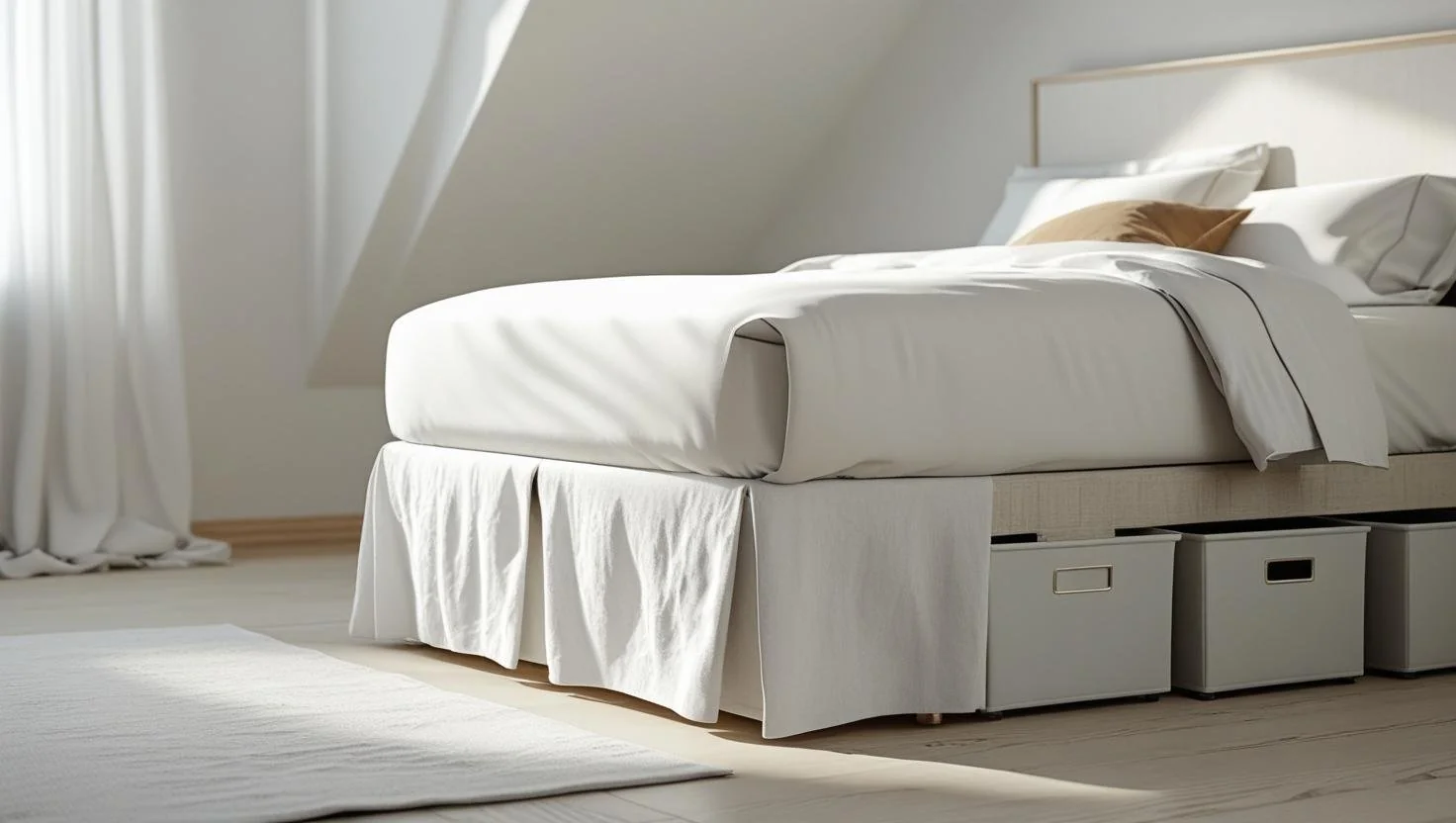
In my own bedroom, adding a crisp white tailored skirt instantly concealed storage bins while making the bed look “dressed up,” much like putting on a blazer over casual clothes. It felt neater and more intentional.

To sum up, bed skirts are practical and aesthetic game-changers, especially for those who value both form and function in bedroom design. According to the Sleep Foundation, a tidy and cohesive bedroom environment can promote better rest.
Bed skirts provide a stylish way to hide under-bed storage and enhance bedroom aesthetics

2. Types of Designs

The style of your bed skirt can either complement your existing decor or create an eye-catching statement. Understanding the different design types ensures your choice fits both your taste and the practical setup of your bed.

  • Tailored Bed Skirts: Crisp lines, minimal design, structured elegance.
  • Ruffled Bed Skirts: Soft and charming, perfect for vintage vibes.
  • Box-Pleated Skirts: Balance of structure and detail for transitional decor.
  • Elasticized Bed Skirts: Convenient and easy to install, ideal for busy homes.
  • Split-Corner Designs: Great for beds with posts or footboards, drapes cleanly.

For a deeper breakdown by bed frame and mattress type, see: [CBQ_LINK:bed-accessories-upgrade-sleep]

Layering more décor? Explore options in: [CBQ_LINK:bedding-accessories-cozy-stylish-bedroom]
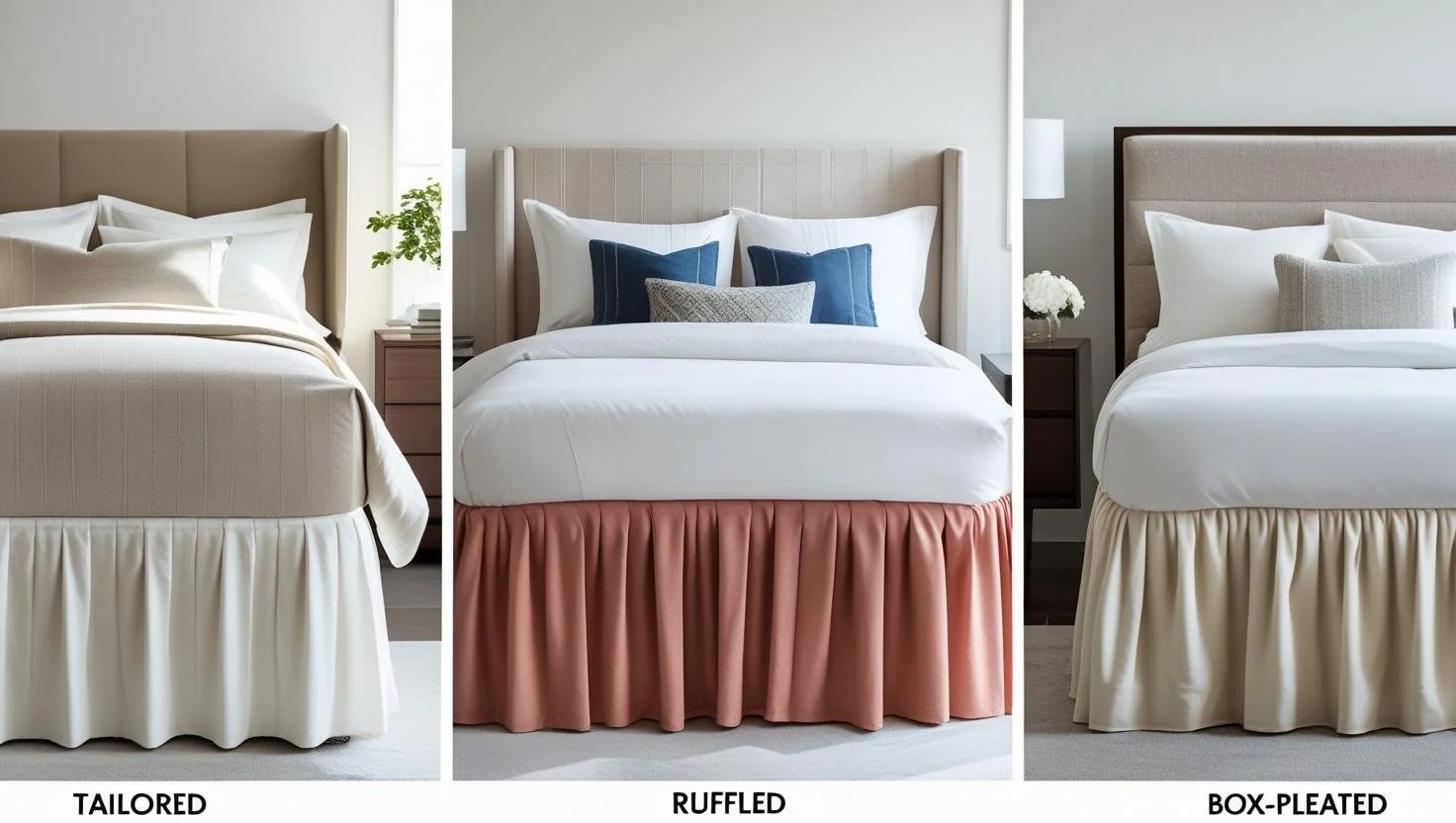
Bed skirts add softness or structure depending on the design you choose

3. Choosing Fabric and Color

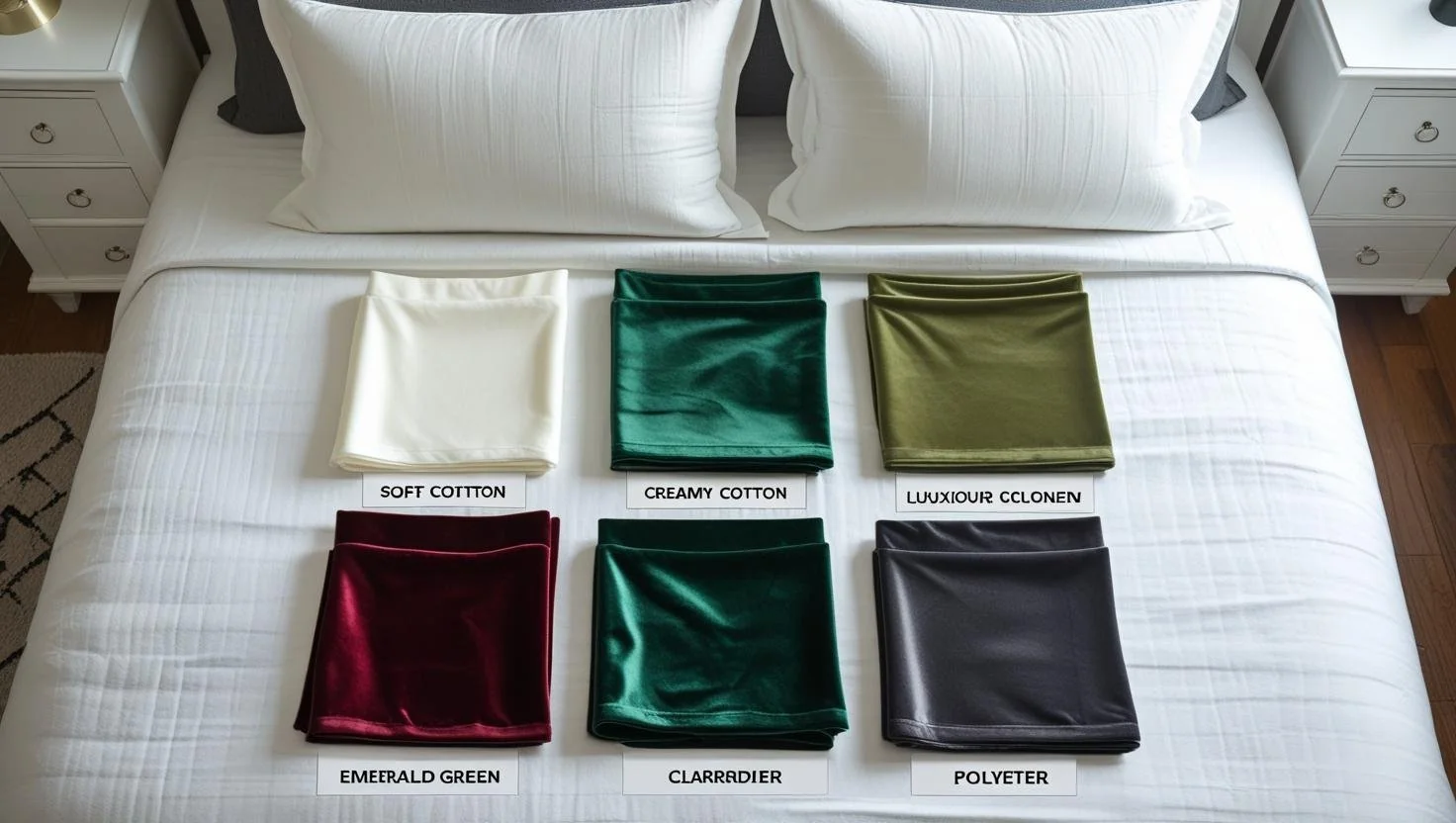
Fabric and color choices shape the look and performance of your bed skirt—think of them as your room’s “texture and tone.” Light, breathable cotton or linen reads casual and effortless; velvet or satin turns up the drama. Designers often start with texture to set the mood and then layer color and pattern. See guidance on layering from Architectural Digest and material pros/cons in Parachute’s fabric guide.

  • Cotton & Linen: Light, breathable, easy to maintain.
  • Polyester: Durable, cost-effective, great for kids’ rooms.
  • Velvet or Satin: Luxurious and dramatic for upscale decor.
  • Blends: Softer hand + strength; ideal for high-traffic rooms.
  • Neutrals: Timeless and flexible with any palette.
  • Bold Hues: Add contrast and personality.
  • Patterns/Reversible: Seasonal styling with quick flips.

Coordinating with your duvet and shams? Try: [CBQ_LINK:bedding-color-mix-and-match-guide]
Bed skirts are available in a variety of fabrics and colors to suit your bedroom design

4. Practical Benefits

Beyond aesthetics, bed skirts deliver handy perks: they hide bins and boxes, minimize dust bunnies, protect frames from scuffs, and can support better sleep hygiene when combined with good cleaning routines.

  • Conceal Storage: Especially useful in small spaces.
  • Block Dust: Easier upkeep and cleaner floors.
  • Prevent Damage: A barrier against scuffs and scratches.
  • Health Boost: Combine with air-quality habits; see the EPA’s guide to improving indoor air.

More on sensitivities: [CBQ_LINK:bedding-and-allergies-facts]

Keep everything fresh: [CBQ_LINK:how-often-wash-bedding]

Bed Skirt Styling Ideas for a Polished Bedroom Look

5. Styling Tips

These finishing moves take your setup from good to gorgeous. Start with the right drop, then unify color and texture across your bedding for a designer look—without going overboard. Bed skirts offer one of the easiest ways to switch up a bedroom’s mood, so don’t be afraid to experiment.

  • Match Your Bedding: Repeat tones across shams, duvet, and skirt for cohesion.
  • Get the Right Drop: Measure from top of box spring or platform to floor—your skirt should gently “kiss” the floor.
  • Play with Texture: Mix linen sheets, a quilted coverlet, and a smooth skirt for depth.
  • Change with Seasons: Swap in airy cotton for summer; richer velvet for winter.

Seasonal Looks

In warmer months, light bed skirts in cotton or linen add breezy freshness. Pair them with crisp percale sheets and pastel throws. For autumn, a deep-hued box-pleated skirt in flannel or tweed creates instant coziness. Winter calls for velvet or faux suede bed skirts—both add depth and warmth. Spring is the perfect time to try reversible designs or patterned dust ruffles that echo florals and greenery outside.

Common Mistakes to Avoid

A few missteps can make bed skirts look sloppy. The biggest mistake is choosing the wrong length: a skirt that pools on the floor looks messy, while one that hovers awkwardly above the floor feels unfinished. Another error is clashing fabrics—if your bedding is silky, a coarse skirt can break the flow. Finally, avoid neglecting seasonal care; dusty, wrinkled skirts detract from the whole room.

Budget vs Luxury Options

If you’re on a budget, elasticized bed skirts are affordable, easy to install, and often machine washable. They’re a great choice for kids’ rooms or rental apartments. On the other hand, luxury options—such as custom-made linen or velvet bed skirts—can be tailored to your exact bed height and finished with box pleats or piping for a designer feel. Mixing both approaches works too: invest in one timeless, high-quality skirt and rotate with budget-friendly styles for everyday use.

Bed skirts might seem like a small detail, but they pack a punch for style, storage, and cleanliness. By understanding types, fabrics, colors, and benefits, you can choose one that enhances your space in both form and function. Whether you’re aiming for a minimalist refresh or a cozy makeover, the right bed skirts help your bedroom feel complete and thoughtfully styled.

FAQ

What is the purpose of a bed skirt?
It conceals under-bed storage, protects the bed frame, and gives your setup a polished, cohesive finish. Many homeowners find bed skirts essential for balancing style with function.
Are bed skirts outdated?
No—modern, tailored dust ruffles and pleated skirts feel current and pair well with layered bedding. In fact, many designers use bed skirts as a secret tool to finish a high-end look.
How do I choose the right size bed skirt?
Measure the drop (top of foundation to floor) and choose a matching length for a neat drape. A properly sized bed skirt transforms a bed from casual to intentional.
Can I use a bed skirt on a platform bed?
Yes. Look for wrap-around or elastic styles; split corners also help with platform frames and footboards. These options ensure your bed skirts fit cleanly.
How do I wash a bed skirt?
Most are machine-washable on gentle—always check the label. For delicate fabrics like velvet, consider dry cleaning to maintain texture and drape.

Related Reading from Cozy Bed Quarters