Bedding Ceremonies: Role, Origins, and Cultural Legacy Explained

Bedding Ceremonies in Ancient Marriage Traditions - bedroom

Bedding Ceremonies in Ancient Marriage Traditions

The role of bedding ceremonies offers a fascinating glimpse into how ancient societies celebrated marriage, blending symbolism, tradition, and community into powerful matrimonial rites.

Key Takeaways

  • The role of bedding ceremonies in historical contexts provides insight into societal norms.
  • Bedding ceremonies marked the consummation and validation of ancient marriages.
  • They reflect communal involvement and cultural expectations in matrimonial life.
  • Fertility rituals, religious blessings, and witnesses were essential elements.
  • These customs influenced many modern wedding traditions and symbols.
  • Understanding the role of bedding ceremonies can enhance modern wedding practices.
  • The evolution from public to private ceremonies mirrors changing cultural values.

1. Origins of Bedding Ceremonies: Symbolism and Purpose

Bedding ceremonies originated as formal events that marked the official consummation of marriage, symbolizing the start of a shared life and the union’s public recognition.

Bedding ceremonies historically marked the official consummation of marriage, symbolizing the transition into marital life. They were deeply tied to communal validation, with witnesses present to ensure the union was recognized and celebrated.

Exploring Cultural Heritage: Bedding ceremonies reflect a deep cultural heritage that saw marriage as both a personal and a communal bond. The presence of witnesses and formalized rituals underscored the idea that marriage wasn’t just a private affair but a matter of social importance. For a broader perspective, explore how bedding ceremonies became a timeless tradition.
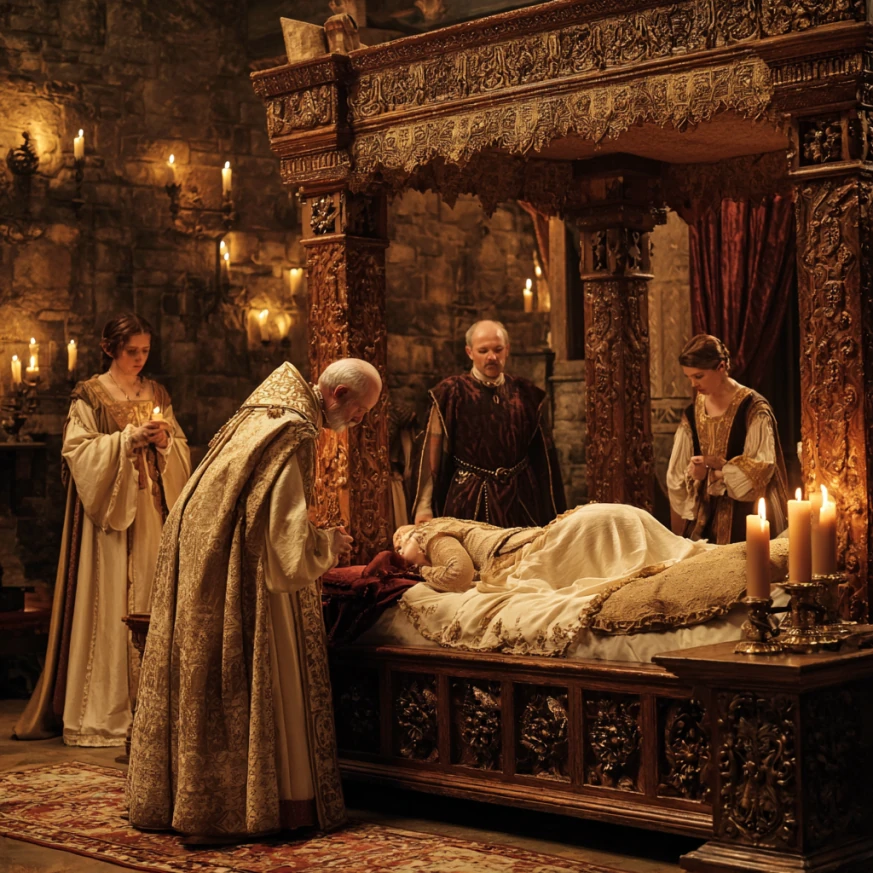
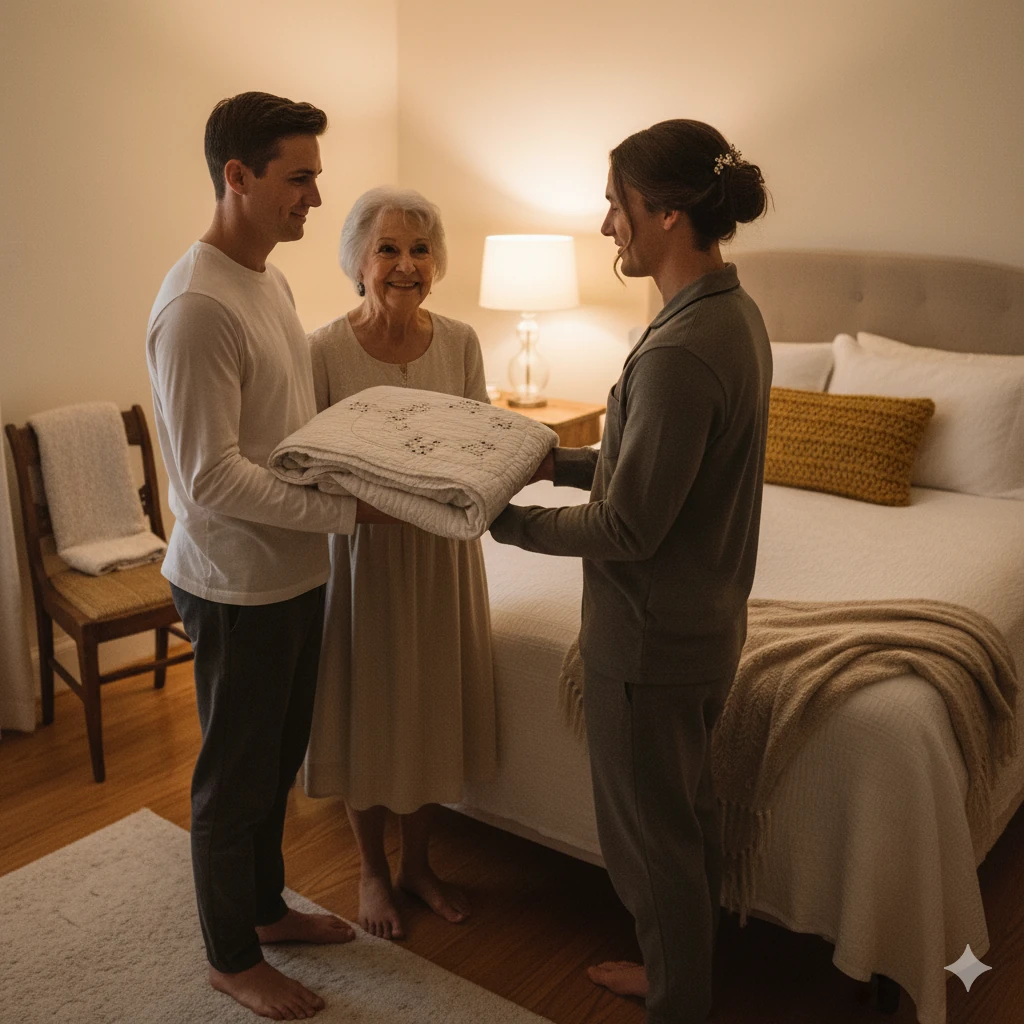
Communal witnesses at a marriage bed showing the history of bedding ceremonies in ancient unions

2. The Role of Fertility and Progeny in Matrimonial Rites

Fertility played a central role in bedding ceremonies, where rituals and symbols focused on ensuring procreation and the continuation of family lineage.

Fertility was a cornerstone of marriage in ancient cultures, with bedding ceremonies often designed to ensure and celebrate procreation. These rituals emphasized the importance of lineage and the continuation of family and community.

Exploring Cultural Heritage: Fertility rites within bedding ceremonies highlight the importance ancient cultures placed on family lineage and societal continuity. Even modern customs like throwing rice or flower petals at weddings are remnants of these age-old traditions. You can learn more in this exploration of nuptial bedding ceremonies.

3. Bedding Ceremonies in Ancient European Culture

In medieval Europe, bedding ceremonies were community-driven celebrations, often involving music, rituals, and blessings to ensure a successful marriage.

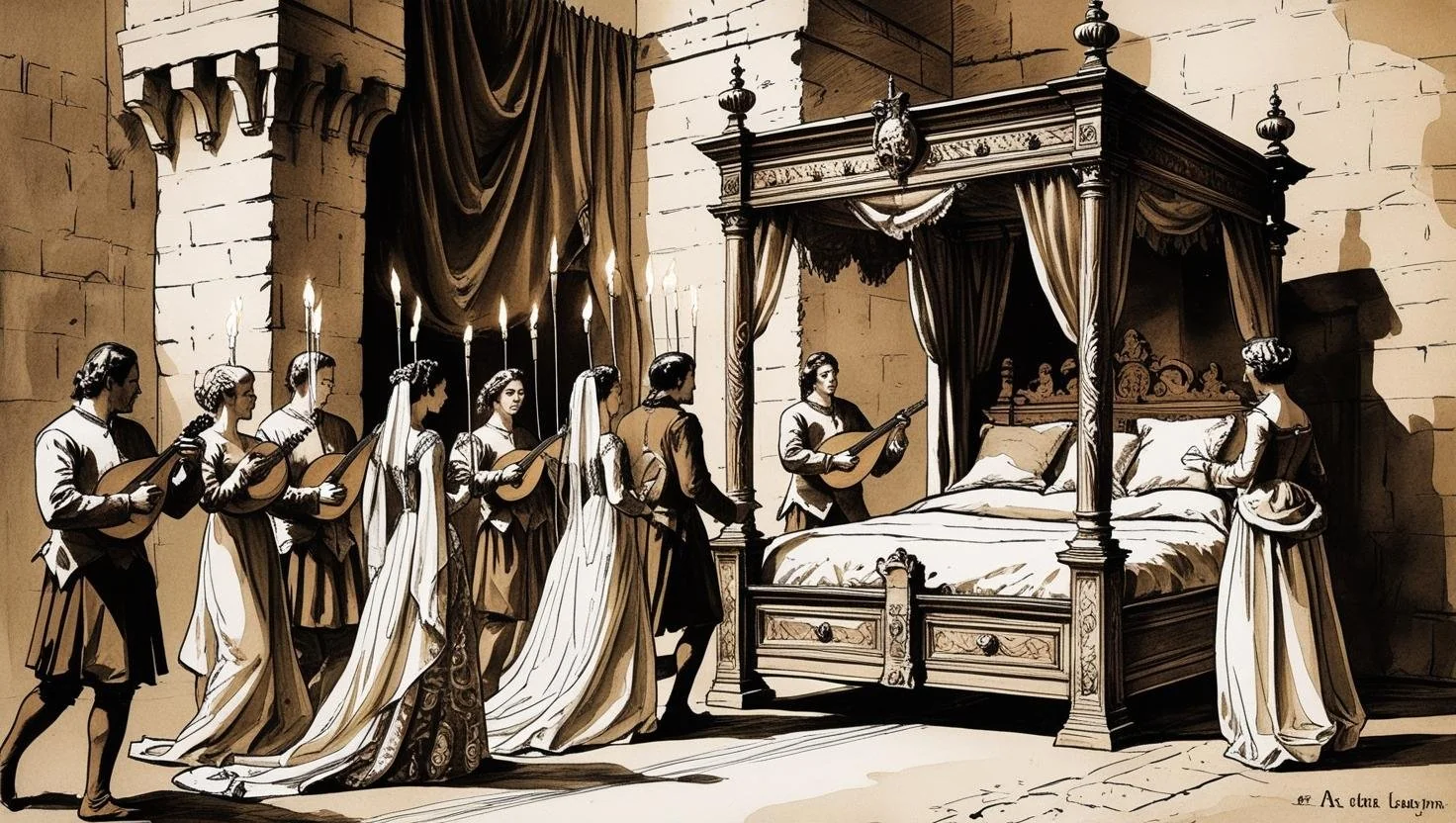
In medieval and Renaissance Europe, bedding ceremonies often involved elaborate public participation. Friends, family, and clergy escorted the couple to bed, singing songs or performing rituals that symbolized communal blessing.

Exploring Cultural Heritage: These ceremonies show how marriage functioned within a community network. Today’s wedding receptions and symbolic send-offs echo these traditions. See how this tradition continues in ancient matrimonial heritage.

the role of bedding ceremonies in medieval Europe with clergy and guests

4. The Impact of Religion on Bedding Ceremonies

Religious blessings and spiritual leaders often sanctified bedding ceremonies, reinforcing the sacred and divine nature of marriage.

Religion played a significant role in bedding ceremonies, with blessings from priests or spiritual leaders often marking the sacredness of the union. These rituals highlighted the divine approval of marriage.

Exploring Cultural Heritage: Religious elements in bedding ceremonies underscore the sacredness of marriage. This spiritual legacy endures today in wedding prayers and ceremonial blessings.

5. Witnesses and the Public Aspect of Matrimony

Witnesses confirmed the legality and validity of marriage, ensuring its recognition in both cultural and legal contexts.

Witnesses served as both legal and cultural affirmations of marriage. Their role was especially vital in aristocratic families, where legitimacy and inheritance were tied to public recognition of the union.

Exploring Cultural Heritage: The legal requirement of marriage witnesses today stems from these traditions. Discover more about how public customs became private in this look at ritual transitions.

6. Ancient Rituals and Their Influence on Modern Weddings

Many modern wedding traditions, such as receptions and symbolic send-offs, have roots in ancient bedding ceremonies.

Many modern wedding practices trace their roots to ancient bedding rituals. Processions, music, and symbolic gestures like toasts and honeymoons have evolved but remain connected to these historic ceremonies.

Exploring Cultural Heritage: Ancient bedding rituals still inspire customs today. For example, custom bed frame designs draw from ceremonial bed symbolism. For a modern contrast, read how bedding ceremonies faded from contemporary weddings.
symbolic representation of the role of bedding ceremonies in modern weddings

7. The Transition from Public to Private Ceremonies

Bedding ceremonies shifted from public displays to private moments as cultural values around intimacy evolved during later historical periods.

Bedding ceremonies shifted from communal events to private traditions as cultural views on intimacy evolved. By the Victorian era, the emphasis moved to privacy and personal connection between the couple.

Exploring Cultural Heritage: The honeymoon and private wedding nights mirror this shift. Learn more in our guide to Victorian bedroom decor or browse different types of beds used in ceremonial settings.
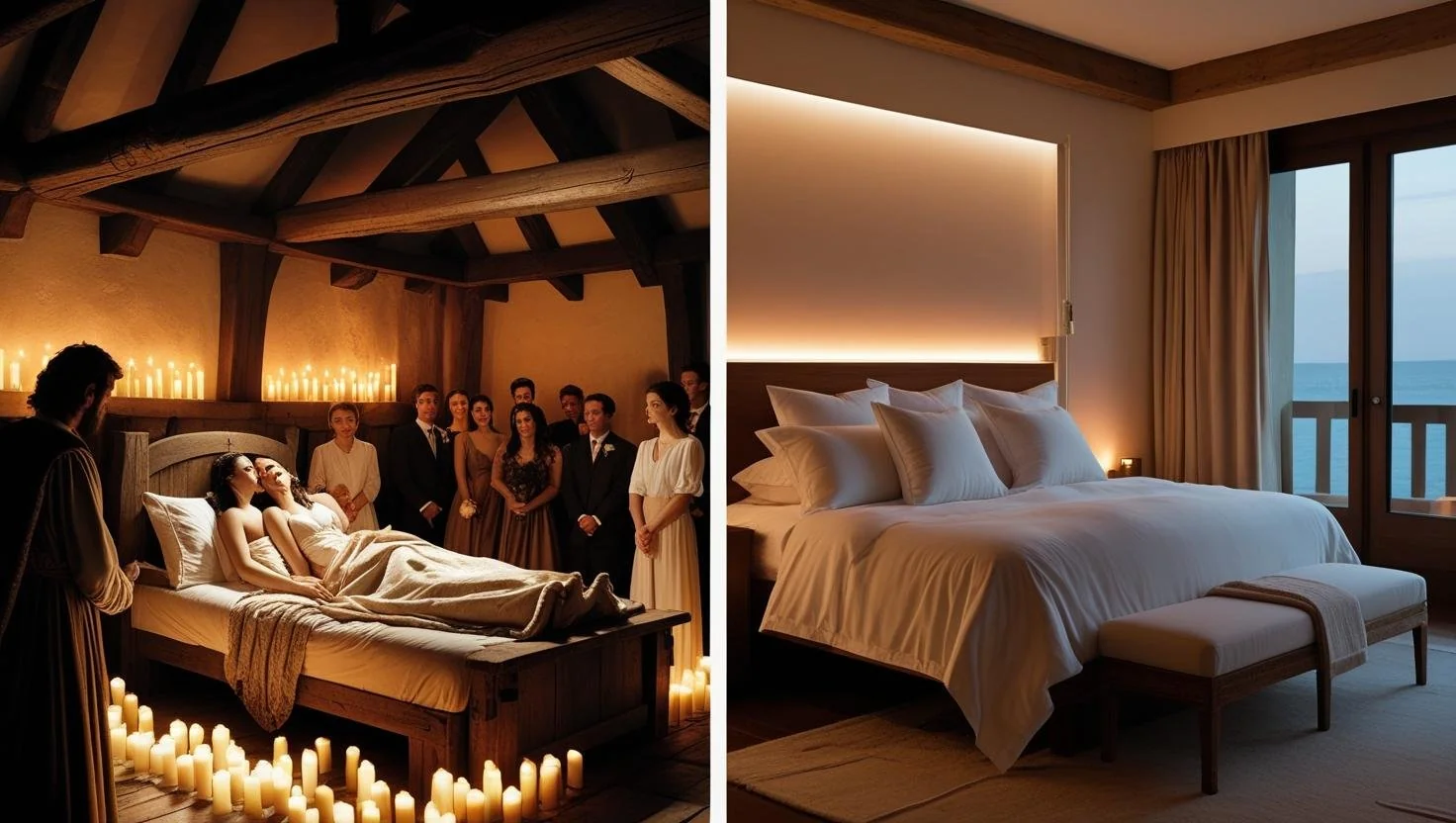
evolution of the role of bedding ceremonies from public to private rituals

Conclusion

The role of bedding ceremonies in ancient matrimonial rites reveals a rich cultural heritage that has shaped how we celebrate marriage today. These ceremonies symbolised union, social affirmation, and divine blessing—elements that endure in modern weddings. Understanding the role of bedding ceremonies can deepen our appreciation for these traditions.

Explore more from a historical lens via the Wikipedia entry on bedding ceremonies or compare with NIH research on marital and reproductive customs.

FAQ

What is the role of bedding ceremonies in history?
Bedding ceremonies validated marriage through symbolic and sometimes public acts, involving community support and religious blessings.
Why were witnesses important in bedding ceremonies?
They ensured the marriage’s legitimacy, especially in cultures where heirs affected legal and political rights.
How did religion influence these ceremonies?
Priests and blessings were common in many cultures, integrating sacred elements into matrimonial traditions.
Do modern weddings reflect these customs?
Yes, many practices like receptions, blessings, and honeymoons stem from ancient bedding traditions.
Where can I learn more about bedding ceremony customs?
Explore bed frame evolution and sleep customs worldwide.

Bedding Ceremonies in Renaissance Europe: Fact vs. Fiction

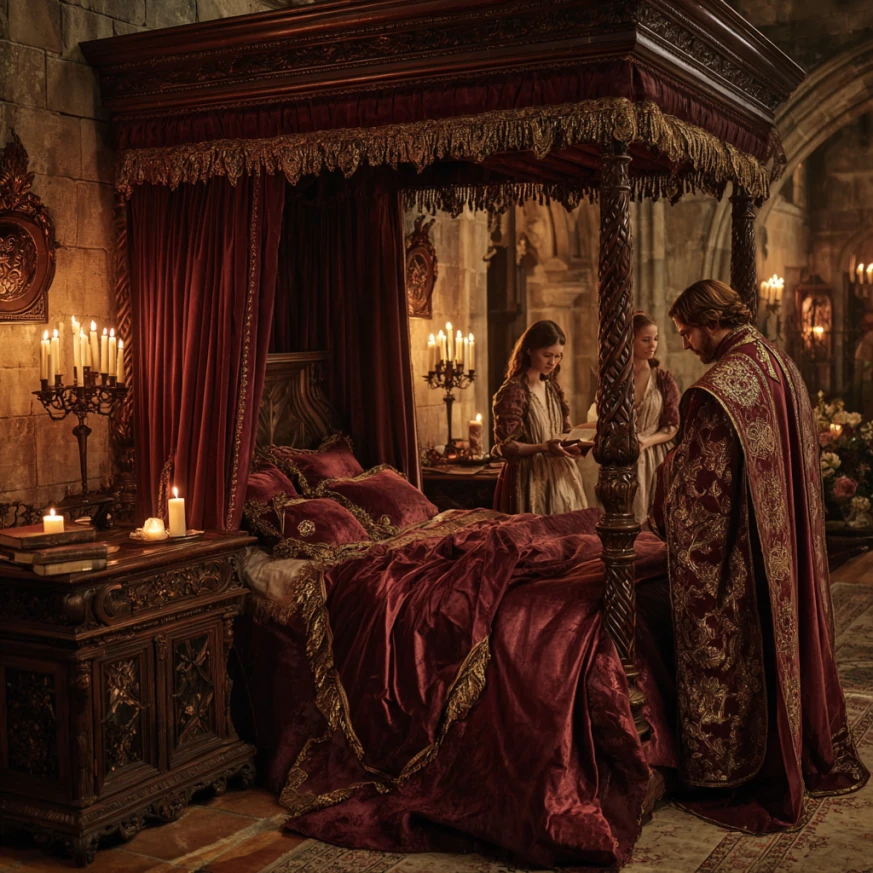
Noble family bedchamber prepared for bedding ceremonies in Renaissance Europe

A bedding ceremony was the wedding custom of escorting a newly married couple to their marriage bed in front of witnesses — usually family, friends and neighbours — as the public, remembered close of the wedding day. Its point was to establish that the marriage had been consummated, either by witnessing the couple together in bed or, far more often, symbolically, with the company leaving before anything happened. So the honest answer to the question everyone actually arrives with: witnesses generally saw a couple in bed, blessed and toasted them, and then withdrew.

What Period Are We Talking About?

This page uses “Renaissance Europe” to mean roughly the fifteenth and sixteenth centuries, with some spill into the early seventeenth. That matters, because the bedding ceremony is not a Renaissance invention: it carries straight over from medieval practice and keeps going into the early modern period, which is why you will see it called a medieval custom in one book and an early modern one in the next. If you want the earlier end of the story, see our companion piece on medieval wedding bedding ceremonies.

What Happened at a Bedding, Step by Step

The shape of the ritual was fairly consistent across regions, even where the details differed. In broad outline:

  • The wedding feast broke up and the guests escorted the couple to the bedchamber, often by candlelight and with a good deal of noise and joking.
  • A priest might bless the bed and the couple. A blessing of the marriage bed was part of the Catholic marriage liturgy in this period, and the shift away from it is one of the changes David Cressy traces in Birth, Marriage, and Death, his study of life-cycle ritual in Tudor and Stuart England.
  • The couple were put into the bed, usually in nightclothes or shifts rather than undressed in front of the room.
  • There was drinking, ribaldry and small customs of the “who marries next” kind — English accounts often mention a spiced drink and the tossing of stockings at the couple, though that detail gets repeated in popular retellings far more often than it gets sourced to a specific document.
  • The curtains were drawn and the company left.

Clergy blessing the marriage bed during a bedding ceremony in Renaissance Europe

Why Bother? The Legal Logic

Before parish registers and standardised paperwork, a marriage was proved by memory: who saw it, who would swear to it. A bedding gave a roomful of people a vivid, hard-to-forget thing to remember, which mattered if the marriage was later challenged — over inheritance, legitimacy of children, or a rival claim to a bride. Mental Floss notes that the requirements for marriage were codified only gradually, and that the ritual became common enough that some places expected a set number of witnesses for the marriage to be binding. One recent working paper goes further and reads bedding rituals as a rational institutional response to medieval property and guardianship arrangements — an argument worth knowing about, though as an unrefereed SSRN paper it should be treated as a hypothesis rather than settled history.

Think of it as the pre-modern version of a receipt. Not romantic. Extremely practical.

Fact vs. Fiction: The Game of Thrones Bedding Scene

Most people searching for this topic come from television. In the third season of Game of Thrones, at the wedding of Tyrion Lannister and Sansa Stark, King Joffrey calls for the traditional bedding ceremony and is refused. So how does that scene stack up?

What the show got right

  • The custom is real. Mental Floss puts it plainly: crude as the on-screen version was, the bedding was a genuine part of medieval weddings for nobility and commoners alike, with versions practised across Europe.
  • It was loud and communal. A procession of guests, jokes at the couple’s expense and a crowd at the chamber door are all in keeping with the historical accounts.
  • It carried weight. In the show the demand is a power play; historically, insisting on a bedding — or being denied one — really could be about proving or undermining a marriage.

What fiction exaggerates

  • The leering, stripping free-for-all. Fiction tends to stage the bedding as humiliation. The surviving descriptions point to something closer to a boisterous but structured ritual with a blessing at its centre, not a spectacle designed to degrade the bride.
  • Witnesses watching the consummation. This is the big one, and the answer is: normally no. The usual pattern was witnesses present up to the moment the couple were in bed, then withdrawal.
  • Uniformity. Westeros has one bedding custom. Europe had dozens, varying by region, class, confession and century.

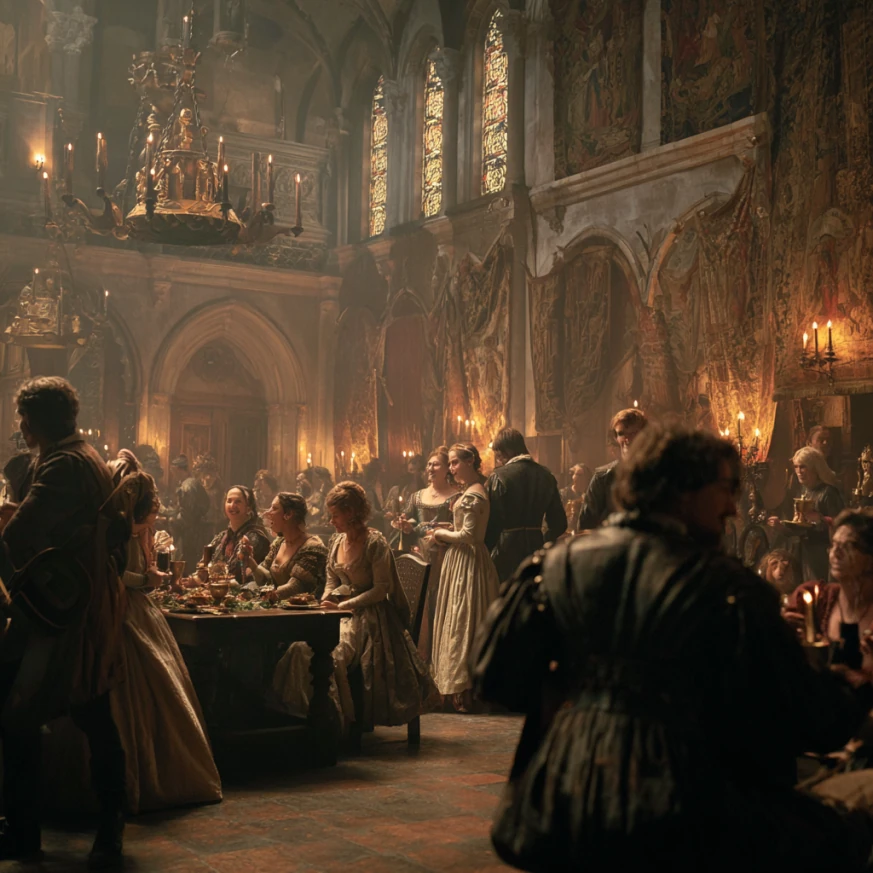
Transition from wedding celebration to bedding ceremonies in Renaissance Europe

Four Myths, Checked

Myth 1: “The whole village watched the consummation.”

Mostly false. Witnessing the act itself was the rare exception, not the rule — the encyclopaedic summary of the custom describes symbolic witnessing, with the company leaving beforehand, as the far more common practice. Where sex was genuinely witnessed or inspected, it was usually because something was already in dispute or at stake dynastically.

Myth 2: “A priest stayed in the room until it was done.”

No evidence for that. Clergy involvement was a blessing of the bed and couple, part of the marriage liturgy, and it ended when the blessing ended.

Myth 3: “It was only for royalty.”

False. The custom ran up and down the social scale; what changed was scale and audience — a handful of neighbours in a village house, a chamber full of courtiers at a royal wedding.

Myth 4: “Royal beddings were always about sex.”

Not always. In the German-speaking lands the Beilager was a formal, legally loaded ceremony in which consent was established before witnesses; fifteenth-century descriptions have the bride and groom placed in the symbolic marriage bed fully clothed, with anything further happening privately. It was, in effect, a public act of law performed on a mattress.

How Customs Varied by Class and Country

Setting Typical shape of the ritual
Village and town households Neighbours and kin escort the couple, drink, joke, and go home. Witnesses double as future proof of the marriage.
Gentry and merchant families More formality, better linen, a clergyman’s blessing, an audience chosen for standing as much as affection.
Royal and princely courts A staged state occasion. In German lands the Beilager combined the bedding with the formal establishment of consent and transfer of guardianship.

One caution about class claims: the humbler the household, the thinner the documentation. Most of what survives describes the weddings of people whose households kept records, so generalisations about “what commoners did” rest on much less evidence than the royal cases. Our overview of how nuptial bedding ceremonies changed across Europe goes into the regional differences in more depth.

Post-ceremony intimacy in bedding ceremonies in Renaissance Europe

The Bed as Stage Set

If a bed is going to hold a crowd, a blessing and a legal moment, it had better look the part. Renaissance beds in wealthy households were genuinely significant objects — curtained, carved, hung with the best textiles a family owned, and among the most valuable things in an inventory. It is fair to say the bed functioned as furniture and as display at once. It would be overreaching to claim the bedding ceremony caused the four-poster; the causation runs more plausibly the other way, with an existing status object pressed into ceremonial service.

Noble family bedchamber prepared for bedding ceremonies in Renaissance Europe

When Did Bedding Ceremonies End?

There is no clean end date, and anyone who gives you one is rounding. The custom faded at different speeds in different places as marriage record-keeping improved, religious practice changed after the Reformation, and elite ideas about privacy and decorum shifted. Popular accounts often put the end of English beddings in the later seventeenth century, but that figure circulates far more widely than it is sourced, and ceremonial beddings persisted at some courts after the custom had gone from ordinary households. We look at the timing question specifically in when bedding ceremonies ended, and at how the ritual softened into modern wedding-night symbolism in the symbolic meaning behind medieval bedding ceremonies.

How Strong Is the Evidence?

Good enough to say the custom existed widely and to describe its usual shape; not good enough for confident numbers, dates or typical-wedding reconstructions. Much of what circulates online — the stocking-throwing, the spiced posset, the precise witness counts — comes from nineteenth- and twentieth-century retellings rather than documents you can check. Where this article could not verify a detail, it says so rather than smoothing it over. If you want the “was any of this real at all” version of the question, we tackle it directly in were bedding ceremonies real in medieval times.

FAQ

Did witnesses stay for the consummation?

Normally not. The standard pattern was witnesses present until the couple were in bed, then withdrawal; actual witnessing of intercourse is described as the rare exception, typically tied to disputed or dynastically sensitive marriages.

Was the couple naked?

Generally no. Nightclothes or shifts were usual, and in the German Beilager the couple could be placed in the bed fully dressed.

Was the Game of Thrones bedding ceremony real?

The custom it is based on was real; the tone was not. The show plays it as coercive humiliation, while the historical ritual was a blessing-and-blessing-out procession, rowdy but bounded.

Who attended?

Family, friends and neighbours in ordinary households; courtiers, officials and sometimes lawyers at princely weddings, where consent and property arrangements were part of the proceedings.

Updated September 2026.

Bedding Ceremony: What Happened and Why It Mattered

Bedding Ceremonies Role in Wedding History Explained - Featured Image

Understanding the Meaning of Traditional Bedding Ceremonies

The role of bedding ceremonies in historic weddings reveals how they served as a powerful bridge between private vows and public affirmation—transforming an intimate moment into a communal ritual that signified legitimacy, unity, and the binding of not just two individuals, but entire families and social orders.

Key Takeaways

  • Bedding ceremonies symbolized the union of families and legitimacy of marriage.
  • The Catholic Church gave spiritual weight to these intimate rituals.
  • Modern wedding customs still echo these traditions subtly today.

The Public Spectacle of Medieval Weddings

In medieval Europe, weddings were grand, public affairs. Far from the private celebrations we know today, they often unfolded in front of entire communities. A highlight of these events was the bedding ceremony, where nobles and royalty gathered to ceremoniously escort the couple to bed. This public gesture wasn’t merely for show—it served as a powerful social and political statement. Witnesses, often of high rank, confirmed the legitimacy of the union, which was especially vital for alliances, lineage, and inheritance rights.

In some regions, the ceremony included music, toasts, and ritualistic practices like removing the bride’s garter or presenting nightwear. These actions symbolized a transition not just into marriage but into adulthood and family responsibility. The communal nature of these traditions reflected a time when marriage was as much a public alliance as a private relationship.

Learn how bedding ceremony myths differ from reality to better understand the cultural symbolism behind the ritual.


The Church’s Role in Wedding Rituals

The Catholic Church played an instrumental role in shaping medieval marriage customs, including bedding ceremonies. Priests often blessed the couple’s bed with prayers, holy water, and relics, invoking divine protection and fertility. This intertwining of religious belief and everyday life gave sacred context to what might otherwise be a mere contractual agreement. Scattering herbs like rosemary or lavender wasn’t just for fragrance—they symbolized fidelity, purity, and spiritual cleansing.

Religious officiation also served to regulate societal norms. Couples could only consummate their union after receiving the church’s approval, typically granted during a formal blessing. Church teachings emphasized procreation as the marriage’s primary purpose, so rituals reinforcing fertility were commonplace.

This spiritual oversight echoed the Church’s broader influence over personal life, from baptisms to funerals. By including symbolic rituals in a couple’s first night together, society reinforced both divine order and family expectations. For a wider understanding of religious roles in intimacy and marriage, see the Sleep Foundation on bedroom environment impacts.

Spiritual and Social Dimensions

These practices did more than sanctify the bedroom. They embedded marriage into the very fabric of faith and family. Parents and elders often joined in or observed the ceremony, lending social weight and spiritual blessing to the intimate union. In many ways, this bridged heaven and home, reinforcing that the marriage was not just between individuals but entire communities.

Clergy and family gathered around the marriage bed during a traditional bedding ceremony

Even today, we echo this sacred alignment with practices like lighting unity candles or sharing spiritual vows during weddings. They’re quiet remnants of a deeply intertwined past.

Aristocratic Traditions and Marriage Validation

For aristocratic families, bedding ceremonies were more than custom—they were legal documentation. High-stakes marriages involving land, titles, or alliances required indisputable proof of consummation. Witnesses, sometimes female attendants or male envoys, were tasked with verifying the union. While this may seem invasive by modern standards, it was essential in eras where heirs, inheritance, and legitimacy were constantly scrutinized.

Special linens or garments were often presented after the night, showing proof of virginity or consummation. These items sometimes became part of estate records, further emphasizing their legal significance. In cases of disputes, such evidence determined whether children born from the marriage would inherit property or titles.

Learn how squeaky bed frames reflect both utility and tradition in the evolution of intimate spaces.

Also see Good Housekeeping’s history of marriage for more on shifting norms.

aristocratic validation through traditional bedding ceremonies

The Fade of Formal Wedding Rituals

The 19th century ushered in new ideals—modesty, romance, and personal privacy. As Victorian values spread, public rituals like bedding ceremonies were replaced by quieter, emotionally driven wedding practices. The honeymoon emerged as a new ritual, allowing couples private time to begin their life together away from prying eyes.

These changes didn’t erase tradition entirely. Instead, they reimagined it. Carrying the bride over the threshold, tossing the bouquet, or sleeping in a beautifully made bed with embroidered linens still reflect the sentiment of ceremonial beginnings. The shift from public display to private ritual marked a cultural pivot in how intimacy was honored.

Discover how platform beds have become symbols of individualized comfort, echoing the evolution of shared but private space in modern relationships.

Modern Wedding Traditions with Historic Roots

While bedding ceremonies no longer unfold in public halls or castles, their influence lives on in today’s wedding traditions. The attention to creating a romantic, sacred space for the newlyweds echoes the ceremonial intentions of old. From rose petals on the bed to curated playlists and personalized vows, couples still mark this milestone with thoughtfulness and symbolism.

Modern bridal suites mirror the purpose of historical bedding chambers. They offer a moment of retreat, privacy, and celebration after the public festivity. Many couples also infuse cultural or religious rituals into this space—be it prayer, shared meals, or meaningful gifts. It’s no longer about spectatorship but significance.

Explore sleep hacks that support modern rituals as part of your post-wedding sanctuary with touches that blend modern comfort with time-honored tradition.

Bedding Ceremonies Role in Wedding History Explained

Conclusion

From grand public displays to private honeymoon suites, bedding ceremonies show how wedding rituals reflect evolving cultural values. These ceremonies wove intimacy and social structure into one, and their legacy continues to shape how we honor love and commitment today. Whether rooted in sacred blessings or symbolic gestures, they remind us that marking the start of a marriage has always mattered deeply.

FAQ

What was the purpose of bedding ceremonies?
They publicly validated marriages and united families, often reinforcing political or social alliances.
Did the Church support bedding ceremonies?
Yes, it often blessed the union, combining religious sanctity with cultural traditions.
Are there modern equivalents to bedding ceremonies?
Yes, elements like bridal suites, rose petals, and symbolic rituals echo these traditions today.
When did bedding ceremonies stop being common?
They gradually disappeared during the Victorian era as private and romantic ideals took precedence.
Were bedding ceremonies practiced outside of Europe?
While this article focuses on Europe, similar customs existed in other cultures with their own unique expressions.

Related reading from Cozy Bed Quarters

Other reading we found popular

Ceremonial Beddings: Wedding Traditions Across Cultures

Ceremonial Beddings: Wedding Traditions Across Cultures bedroom design


Ceremonial Beddings

From ancient civilizations to modern weddings, ceremonial beddings have symbolized love, family, and fertility. Across cultures, these bridal-bed traditions reveal that marriage is more than a private vow—it’s a public celebration and a rite of passage shaped by beliefs, materials, and community values.

Key Takeaways: Ceremonial Beddings

  • Ceremonial beddings publicly honored the couple, secured family alliances, and invited blessings for fertility and prosperity.
  • Symbols—colors, fabrics, herbs, and charms—signaled shared values like purity, joy, protection, and continuity.
  • Modern weddings echo the past with intimate customs, sustainable materials, and meaningful design details.
  • Choosing organic bedding, sustainable bedding, or eco-conscious sheets can align tradition with today’s values.

Ancient Mesopotamia: Fertility Altars and Divine Blessings

Answer first: In Mesopotamia, ceremonial beddings functioned as sacred altars, inviting the gods to bless the union and future lineage. The bed’s adornments made the couple’s hopes visible to their community.

Newlyweds slept on a bed sprinkled with symbolic grains and decorated with plants linked to love and abundance. Offerings and hymns to deities created a bridge between household and cosmos, anchoring the marriage in divine order.

Ceremonial Beddings: Wedding Traditions Across Cultures bedroom design

Ancient Greece: Community Processions and Mythic Protection

Answer first: Greek ceremonial beddings were public events—processions with music and torches presented the marital bed to the community, securing social recognition and mythic favor.

Olive branches, laurel wreaths, and invocations to Hera celebrated unity, victory, and protection. The lively procession balanced private intimacy with civic affirmation, showing that marriage strengthened the whole polis.

Medieval Europe: Witnesses, Legitimacy, and Lineage

Answer first: In medieval Europe, ceremonial beddings marked the legal and social confirmation of marriage, safeguarding inheritance and lineage.

Clergy or nobles might escort the couple to the bedchamber while witnesses affirmed the union’s legitimacy. Though formal by modern standards, the ritual underscored the transition from public ceremony to private consummation, binding families and estates.

Jewish Traditions: The Sacred Yichud of Togetherness

Answer first: The yichud room centers unity and privacy, echoing historical ceremonial beddings while focusing on sanctified togetherness rather than public display.

Immediately after the ceremony, the couple shares a private moment to reflect, eat, and begin their life as partners. This pause honors intimacy as a sacred value while maintaining communal celebration outside the door.

Chinese Weddings: Auspicious Red and Joyful Prosperity

Answer first: In Chinese tradition, ceremonial beddings glow with red—the color of joy, vitality, and luck—and invite prosperity for the new household.

Chambers feature the double-happiness character, auspicious phrases, and playful customs such as children bouncing on the bed to encourage fertility. Red bedding remains a beloved choice, blending cultural continuity with modern style.

Norse and Celtic Customs: Nature’s Protection and Blessing

Answer first: In Norse and Celtic contexts, ceremonial beddings used herbs, flowers, and charms to welcome blessings and ward off harm.

Freya, Brigid, and other deities were invoked while beds were crafted from meaningful woods or lined with symbolic textiles. Rosemary for remembrance, lavender for calm—nature became part of the marriage’s protective circle.

Colors and Fabrics: What They Signaled Across Cultures

Answer first: The materials and colors of ceremonial beddings communicated shared values—purity, joy, prosperity, and status—often as clearly as the vows themselves.

White linens pointed to new beginnings; red signified luck and fertility; gold embroidery conveyed wealth and lineage. Silk, cotton, wool, and linen were chosen for comfort and symbolism—silk for longevity and prestige, linen for durability and breathability, and cotton for softness and ease. Today, couples often blend meaning with wellness by considering organic bedding and sustainable bedding options that feel good and align with their values.

For creating a calming wedding-night space, explore our guide to building a serene bedroom sanctuary.

Curious about materials? Compare fibers and weaves in these helpful guides: best materials for bed sheets and percale vs. sateen vs. linen.

Modern Echoes: Intimacy, Meaning, and Sustainable Choices

Answer first: While formal rituals have faded, modern ceremonial beddings live on in intimate touches—petals, threshold carries, thoughtful lighting—and in the mindful selection of materials.

Couples today often favor eco-conscious sheets, natural fibers, and low-VOC bedroom elements. Selecting organic bedding and sustainable bedding unites tradition with health, comfort, and ethics—an elegant way to honor the past while sleeping well in the present.

  • Investing in quality bedding can make your first nights together truly restorative.
  • Design a harmonious space with feng shui bedroom elements and principled layouts.

Eco-Friendly vs. Conventional: A Simple Bedding Comparison

Answer first: When translating tradition into practice, choosing eco-friendly textiles for ceremonial beddings can reduce environmental impact without sacrificing comfort.

Eco-friendly options: Organic cotton, linen, TENCEL™ lyocell, and wool often require fewer harsh chemicals and can support resilient supply chains. These choices pair well with eco-conscious sheets and thoughtful bedroom ventilation. Conventional options: Blended synthetics may offer low upfront cost and wrinkle resistance, but can pill faster and trap heat.

To go deeper on material performance and care, review: linen vs. cotton sheets and satin vs. silk pillowcases.

Certifications & Quality Marks: A Quick Buyer’s Guide

Answer first: If you want your ceremonial beddings to be both meaningful and responsibly made, look for third-party labels that verify material safety and ethical sourcing.

Helpful signals to research when shopping:

  • Organic content & safety: Many shoppers seek independent verification for reduced chemical use and safe dyes.
  • Fiber & weave: Cotton percale vs. sateen, linen weight, and silk momme affect feel, drape, and temperature balance.
  • Thread count (for cotton): A wide quality range can be comfortable; focus on fiber grade and weave integrity rather than chasing the highest number. See: what thread count really means.
  • Care & longevity: Follow specific wash instructions to protect delicate fabrics and embroidery.

Real-World Examples: Materials that Feel Special

Answer first: You can capture the spirit of traditional ceremonial beddings with tactile, breathable materials that age beautifully and invite rest.

  • Linen: Naturally airy and strong; softens with each wash. Explore fabric pros and cons in this bed sheets guide.
  • Silk: Smooth feel and elegant drape; many love it for pillowcases and lightweight sheets. See silk pillowcase benefits for care and expectations.
  • Cotton Percale: Crisp, cool hand that’s ideal for warm sleepers. Learn more in the percale overview.

Want a soothing scent-scape? Pair natural fibers with sleep-friendly aromatherapy for calm and connection.

FAQ

What is the purpose of ceremonial beddings?
Ceremonial beddings symbolized fertility, societal approval, and the formal union of two families—turning private commitment into shared celebration.
Are bedding rituals still practiced today?
Public rituals are rare, but modern couples echo the spirit of ceremonial beddings with petals, threshold traditions, and intimate, eco-minded design choices.
Which cultures featured the most elaborate ceremonial beddings?
Ancient China and medieval Europe are often cited for ornate, socially significant practices—rich colors, embroidery, and highly formal customs.
What materials work well for ceremonial beddings now?
Linen, silk, and long-staple cotton blends balance beauty with comfort. Many couples choose organic bedding or sustainable bedding to align with wellness and values.

Final Thoughts

Ceremonial beddings show how love, family, and community converge in a single setting—the shared bed. Whether you honor the past with symbolic colors or modernize with eco-conscious sheets, the goal is the same: comfort, connection, and a restorative start. For more guidance on creating a meaningful, restful space, explore Cozy Bed Quarters resources below.

Related Reading

Feng Shui Bedroom Tips for Harmony and Better Sleep
Feng Shui Bedroom Layout: Where to Place the Bed
Temperature-Regulating Bedding: Sleep Cool and Comfortable
Sleep Foundation: Best Sheets Overview
Parachute Home: Know Your Bedding
Better Homes & Gardens: Peony Symbolism and Weddings

Changing Face of Nuptial Bedding Ceremonies in Europe

Nuptial Bedding Ceremonies


Changing Face of Nuptial Bedding Ceremonies in Europe

Nuptial bedding ceremonies were once public, witness-attended rituals that validated a marriage; over the centuries they transformed into private, intimate moments. This article traces how nuptial bedding ceremonies shifted from medieval social proofs to modern privacy, and what that reveals about changing views on love, community, religion, and legitimacy.

Key Takeaways on Nuptial Bedding Ceremonies

  • Public to private: nuptial bedding ceremonies moved from communal validation in the Middle Ages to private marital intimacy by the Victorian era.
  • Religious framing: Priestly blessings tied beds, heirs, and duty together—marriage was sacred and social.
  • Witnesses as proof: Presence of select observers safeguarded lineage, inheritance, and political alliances.
  • Renaissance pivot: Individuality and romantic love increased the value placed on privacy.
  • Modern echoes: Traditions like “carrying over the threshold” and honeymoons retain symbolic traces of the old rites.

Ever wondered what really happened on a wedding night centuries ago? Nuptial bedding ceremonies in medieval and early modern Europe were far more than a simple private moment—they were rich with symbolism, public spectacle, and deep cultural meaning. These traditions, which often saw the newlyweds paraded to their marriage bed in front of family, friends, and sometimes even clergy, served to publicly validate the union. But as the centuries rolled on, things started to change. The once highly public
ritual slowly transformed
into a more private affair, echoing shifts in how intimacy and marriage were viewed across Europe.

In this article, we’ll explore how nuptial bedding ceremonies evolved—from grand public displays to the private, intimate moments we recognize today—and what these changes tell us about love, community, and societal expectations.

1. Medieval Europe: The Public Spectacle of the Bedding Ceremony

Answer first: In medieval Europe, bedding the couple in public view acted as social proof that the union was real and binding.

Back in medieval times, especially among the nobility, marriage wasn’t just about love—it was a public event, often cementing alliances and political ties. The bedding ceremony was a highlight, marking the consummation of the marriage. Newlyweds were escorted to their bedchamber amid song, blessings, and even a bit of playful teasing. Family, close friends, and sometimes clergy were in attendance to witness this important rite.

Behind Closed Doors: The presence of witnesses might feel intrusive by today’s standards, but it was vital back then. For noble families, it wasn’t enough just to say you were married—you had to prove it. The bedding ceremony confirmed the union’s legitimacy, which was especially critical when inheritance and family lineage were on the line.


2. The Role of Religion in Nuptial Bedding Ceremonies

Answer first: Church blessings framed the bed as a sacred space where duty, fertility, and faith converged.

The Church played a central role in many medieval customs, and bedding ceremonies were no exception. A priest would often bless the marriage bed, asking for divine protection and fertility—because producing heirs wasn’t just a personal wish; it was a duty.

Behind Closed Doors: These blessings highlighted how marriage was viewed as both a sacred and social contract. While the public ritual was front and center, the private consummation—hidden away from view—was equally important. The mix of public and private elements shows a deep intertwining of faith, duty, and personal intimacy.

Priestly blessing and candles depicted in nuptial bedding ceremonies as sacred tradition.

3. Social Validation and the Role of Witnesses

Answer first: Select witnesses authenticated the marriage without violating the couple’s final privacy.

For noble and royal families, having witnesses during the bedding ceremony wasn’t optional—it was necessary. Close relatives or trusted friends would stay nearby as the couple settled into bed, ensuring everything was above board. This was especially key when political alliances or claims to estates were involved.

Behind Closed Doors: While it might seem shocking to us now, these witnesses weren’t there to intrude but to validate. Their role was mostly symbolic, reinforcing the marriage’s legitimacy without breaching the couple’s true privacy.

Gathered witnesses in nuptial bedding ceremonies ensuring legitimacy and lineage.

4. The Renaissance Shift: Privacy and the Emphasis on Romantic Love

Answer first: Renaissance ideas elevated personal choice and intimacy, nudging ceremonies behind closed doors.

Enter the Renaissance—a time when new ideas about individuality and romantic love began to flourish. Marriage started to be seen as a personal choice, and nuptial bedding ceremonies slowly moved away from being public spectacles. Families still played a role, but the focus started to shift to the couple’s relationship and private moments.

Behind Closed Doors: Privacy took on new importance during this period. The closed doors of the bedchamber became a symbol of the couple’s personal bond, reflecting a growing respect for intimacy and emotional connection in marriage.

5. The Victorian Era and the Disappearance of Public Bedding Ceremonies

Answer first: Victorian modesty and propriety made public bedding ceremonies socially untenable.

By the time the Victorian era rolled around, public bedding ceremonies had nearly disappeared. Victorian ideals of modesty and propriety didn’t mesh well with the old public rituals. Weddings remained grand, but the wedding night became a deeply private affair, reserved solely for the couple.

Behind Closed Doors: This shift mirrored a broader cultural change—marriage was now viewed more as a personal commitment than a public contract. The wedding night became a private milestone, reflecting Victorian values around modesty and intimacy.

6. Modern Reflections: Echoes of Nuptial Bedding Ceremonies Today

Answer first: Modern traditions preserve symbolic traces of the old public-to-private transition.

Although formal bedding ceremonies are a thing of the past, echoes of them linger in today’s wedding traditions. Think about carrying the bride over the threshold, or the symbolism of the honeymoon—these customs subtly nod to the transition from public celebration to private union.

Behind Closed Doors: Modern weddings continue to honor the shift from public to private, celebrating the couple’s journey together. It’s a beautiful reminder that while customs evolve, the essence of marking a new beginning remains timeless.

Modern echoes of nuptial bedding ceremonies shown in threshold and honeymoon symbolism.

7. The Cultural Legacy of Nuptial Bedding Ceremonies in European History

Answer first: The long arc—from spectacle to privacy—shows how societies renegotiated love, duty, and legitimacy.

The transformation of nuptial bedding ceremonies tells a bigger story about how marriage has changed over time. From public spectacles designed to validate alliances to deeply private rituals celebrating personal commitment, these shifts highlight how cultural values have evolved. Today’s private celebrations still carry the echoes of centuries-old traditions, reminding us that love and commitment are both timeless and ever-changing.

Behind Closed Doors: Exploring the history of these ceremonies gives us a window into the complex balance between community, tradition, and personal intimacy—a balance that continues to shape the way we celebrate love today.


FAQ

What were nuptial bedding ceremonies?
Publicly witnessed rituals that escorted newlyweds to bed, providing communal validation of the marriage—an early form of social and legal proof.
Why were witnesses important in nuptial bedding ceremonies?
Witnesses served as symbolic guarantors that the union was legitimate, protecting inheritance claims and political alliances.
Did the Church actually bless the bed?
Yes. Priestly blessings invoked protection and fertility, revealing how marriage functioned as both a sacred covenant and a social contract.
Do any elements of nuptial bedding ceremonies survive today?
Modern customs—like carrying a partner over the threshold or the honeymoon—echo the historical transition from public celebration to private union.

Conclusion

The journey of nuptial bedding ceremonies from public spectacles to private rituals mirrors Europe’s evolving views on marriage and intimacy. What was once a highly public affirmation of duty and alliance has become a private celebration of love and commitment. Though we may not hold formal bedding ceremonies today, their legacy lingers in the private moments we cherish after the wedding bells have rung.

Today, those intimate first moments belong to the couple alone—but the cultural history of nuptial bedding ceremonies reminds us that marriage has always been both a personal journey and a reflection of broader societal values.

Related reading from Cozy Bed Quarters

Other reading we found popular

More Expert Insights

The elaborate designs seen in historical sleeping arrangements often reflected the ceremonial importance of these rituals. Learn how squeaky bed frames reflect evolving craftsmanship rooted in practical and symbolic needs.

Religion played a central role in bedding ceremonies. In Catholic regions, clergy might bless the marriage bed with holy water and herbs to ensure fertility and sanctity. These rituals intertwined faith with practical concerns about lineage and inheritance. According to BBC History Extra, such blessings were integral to medieval wedding customs.

Furthermore, scholarly research, including a detailed analysis from the National Institutes of Health, shows how these customs influenced both societal health norms and legal structures.

These values are still reflected in how we decorate modern bedrooms and prioritize serenity. Consider practices like deep sleep optimization that echo this inward shift toward emotional comfort.

Contemporary sleep and intimacy customs continue to reflect these historic changes, as noted by the Sleep Foundation’s global sleep analysis.

Today’s personalized sleep environments also build on these long-standing traditions. Learn how to fall asleep faster using gentle, effective rituals rooted in centuries of sleep wisdom.

Nuptial bedding ceremonies in European history trace a fascinating journey from public spectacles to private rituals. These traditions mirror societal shifts in privacy, romance, and the influence of religion. Updated 2025, this guide explores their origins, transformations, and legacy. For a broader look at how intimate traditions shaped bedrooms, see our pillar guide on medieval rituals.

Local customs varied. In some regions, neighbors sang bawdy songs or played practical jokes, blending celebration with accountability. These traditions reinforced marriage as both personal and communal.

The rise of Christianity gave these rituals new meaning. Priests blessed marital beds, making consummation a sacred act. Over time, however, the Church encouraged modesty and privacy, reshaping once-public ceremonies into intimate practices.

Among the nobility, bedding ceremonies were political as much as personal. Royal couples in England, France, and Spain were escorted to their chamber amid music and laughter. Witnesses, including officials and family, stayed until the couple was in bed. These rituals reinforced alliances and secured dynastic futures.

Enlightenment values of freedom and modesty deepened these changes. By the Victorian era, privacy and morality were paramount. Public bedding rituals disappeared, replaced with discreet acknowledgment of consummation.

Certifications and standards like those outlined in Sleepopolis mattress certifications today reflect similar cultural concerns with purity, safety, and propriety in everyday life.

Though the practice declined, bedding ceremonies lived on in stories, plays, and literature. Dramas often exaggerated them for comedy or scandal. Today, films and novels revisit the tension between public display and private intimacy in historical marriages, while modern couples keep the spirit alive through small symbolic gestures.

The Church sanctified the rituals, then gradually pushed for privacy, reshaping them into private moments.

Explore our resources on sustainable bed frames and eco-friendly bed frame materials.

Wedding Bedding Ceremony: What Actually Happened That Night

Wedding Bedding Ceremonies

A wedding bedding ceremony was the last public act of a European wedding: once the feasting wound down, guests walked the newlyweds to the marital bed, saw them into it, blessed them, teased them, and then left. The point was witnesses — proof that the marriage had properly begun, which mattered for heirs, property and the family’s word against gossip. Almost always the crowd withdrew before anything private happened, and the curtains were pulled shut behind them.

This page is about the ritual itself — the walk to the chamber, who stood where, the stockings flying through the air, the drink by the bed. For the wider definition and background, see our complete guide to the bedding ceremony, and for dates and decline, read when bedding ceremonies ended.

What happened at a wedding bedding ceremony, step by step

No two nights were identical, but the English pattern described in most accounts runs roughly like this:

  1. The feast broke up. Guests took the couple’s departure as their cue, and the party moved with them.
  2. Bride and groom were undressed separately. Attendants — bridesmaids for her, groomsmen for him — took each of them to a different room and helped them out of their wedding clothes and into nightclothes.
  3. The procession. The couple were led to the bedchamber, often with music, torches and a running commentary of jokes that would not survive a modern toast.
  4. The bed was blessed. A priest said prayers over the bed and the room.
  5. A drink was shared. The newlyweds sat up in bed and drank a sweet, spiced wine.
  6. The stockings were thrown. Attendants sat on the edges of the bed and flung the couple’s stockings backwards over their shoulders.
  7. The curtains closed. Bed hangings were drawn around the bed and the company filed out, leaving the couple alone.

That sequence — blessing, spiced wine, stocking throwing, curtains drawn — is the version recorded in the standard summary of the bedding ceremony, and it’s the one most later retellings are built on.

Wedding guests carrying candles escort a newly married couple toward the bedchamber

Who came along, and where they stood

The crowd was bigger than most people picture. Family, friends and neighbours all had a part, and in village weddings the wider community joined in too. Attendants had the closest role: they dressed the couple, walked beside them, and were the ones perched on the bed frame throwing stockings while everyone else filled the doorway and the passage outside.


In grand households the guest list was a political document. At the marriage of Catherine of Aragon, historian Lucy Worsley has described the bride being led away from the wedding feast by her ladies-in-waiting while courtiers undressed the groom in the bedchamber, with the room still full of people right up to the last moment. The higher the rank, the more witnesses — because the more there was to prove.

Ordinary couples got a shorter, rowdier version with whoever happened to be at the wedding. Our piece on medieval bedding ceremonies and their rituals goes further into how noble and peasant weddings diverged.

A crowd of wedding guests gathered around a curtained bed as witnesses to the couple

The blessing of the bed

Blessing the marriage bed is older than the rowdy parts. Liturgical scholarship on north-western Europe between roughly 950 and 1200 traces set prayers for blessing the bedchamber — the Latin benedic Domine thalamum hoc, “bless this bedchamber, Lord” — appearing in early service books and being carried into wedding rites across the region (see this Studies in Church History article on the blessing of the wedding bedchamber). The same research notes that a priest might be summoned to a private house rather than the couple going to a church at all.

What did the priest ask for? Protection of the household, peace between the couple, and children. That last one carried real weight in families where an heir settled questions of land and title. The blessing also did something subtler: it marked the bed as a sanctioned place, which made the public escort feel like piety rather than prying.

A priest standing beside a canopied marriage bed giving a blessing by candlelight

Stockings, garters and the ancestors of the bouquet toss

The stocking-throwing game is the detail people remember. Groomsmen and bridesmaids took the stockings that had just come off the couple, sat at the foot or sides of the bed, and threw them backwards over their shoulders toward the pair sitting up in bed. A hit meant the thrower would be the next to marry.


It’s a direct ancestor of the bouquet and garter tosses still done at receptions — Mental Floss makes the same connection in its survey of the custom. Garters entered the picture because they were what held stockings up; once guests started grabbing at them, the couple began handing them over voluntarily, which is more or less where the modern version came from. The genealogy is well attested in outline, though the popular retellings with precise dates and colourful origin stories are folklore rather than documented history.

What they wore, what they drank, and how loud it got

Couples were generally put to bed in nightclothes or shifts, propped against the pillows so everyone could see them together — the visual proof was the point, not nudity. There are exceptions in the record: some Scandinavian accounts describe guests stripping the couple instead of dressing them for bed.

The drink was a warm, sweet, spiced wine — the kind of posset that shows up in seventeenth-century descriptions of wedding nights. It was shared in company, a toast more than a nightcap.

Noise was part of the design. Bawdy songs followed the procession down the corridor, and in some German accounts guests deliberately made a racket outside the chamber — partly celebration, partly a kindness, since a loud party masked whatever happened behind the door. Pranks around the bed itself (short-sheeting, hidden bells, objects under the mattress) belong to the same family of wedding-night mischief that later turned into tin cans tied to a car bumper.

Marriage bed dressed with herbs and flowers symbolising fertility and blessing

Did the guests actually watch?

Usually not. The ritual was nearly always symbolic: the couple were seen in bed together, then left alone. Accounts of guests staying to watch or listen for the consummation do exist, but the evidence that this happened often is thin — Mental Floss makes the same point in its review of the custom, noting the intrusive version is far rarer in the sources than in the retellings.

Where it did happen, it was about legal doubt rather than appetite: disputed successions, a much older or much younger spouse, a marriage someone might later try to annul. Proxy weddings show how formal the whole thing really was. When a bride married a stand-in for an absent prince, the bedding still took place, sometimes with a sword laid between the two people in the bed to signal that nothing was to occur. We separate more of the exaggerations from the record in bedding ceremony stories: myth versus reality.

The same ritual, very different nights

England Priest blesses the bed, spiced wine, stockings thrown by groomsmen and bridesmaids, bed curtains drawn. King Charles I is recorded as refusing to take part and barring his chamber door.
Scandinavia The most distinguished guest led the bride to bed in a festive procession. Guests brought dishes and ate quickly with the couple before leaving. Decorated wedding beds were sometimes borrowed from neighbours for the occasion, and the rite later shrank to the bride’s parents covering the pair with a blanket and uncovering them again.
Sweden, 1500s Friends and family eating and drinking wine with the newlyweds in the chamber — closer to a small supper party than a spectacle.
German-speaking lands The formal Beilager, a public bedding rite with sermons and set formalities at princely weddings; the related public Bettleite persisted around the Baltic into the nineteenth century.
Nobility vs. ordinary households Grand processions, musicians, clergy and named witnesses at the top; a toast, a crowd of neighbours and a quick exit further down — or nothing at all.

Legal weight varied just as much. In some places consummation completed the marriage and the bedding was the evidence of it; elsewhere it was custom with no standing in court. That patchwork is why “when did it end” has no single answer.

Ornate carved canopy bed with embroidered hangings in a noble bedchamber

What a modern couple might borrow

You don’t need an audience to keep the good parts. A few living traditions do the same work with far more dignity:

  • A private few minutes right after the ceremony. In Jewish weddings the couple go straight from the chuppah to the yichud room, escorted by their parents and witnessed at the door, then left alone for a short while — often the first food of a fasting day. Any couple can copy the idea: ten minutes, door shut, no photographer.
  • Dress the bed on purpose. The Chinese an chuang ceremony sets up the marital bed on an auspicious date before the wedding, with new linens and symbolic items like red dates, peanuts, longans and lotus seeds arranged by a relative considered lucky. Stripped to its bones, it’s a lovely habit: make the bed properly, with something meaningful on it, before the day begins.
  • Ask for a blessing of the room, not a performance. A short prayer or reading said in the home, with nobody following you upstairs, is the oldest layer of the whole tradition.
  • Keep the toss, lose the ambush. The bouquet and garter tosses already carry the stocking game’s DNA. Doing them at the reception is the polite descendant of doing them on the bed.
  • Make the send-off the ritual. The sparkler exit, the car horns, the crowd at the door — that’s the procession, minus the bedchamber.

For how other cultures handle the marriage bed, see our overview of ceremonial bedding traditions across cultures, and our look at whether the bedding ceremony is still practised today.

Newlywed couple stepping into a quiet candlelit bedroom alone after their wedding

Quick answers

How long did the bedding last?

Minutes, in most descriptions. Procession, blessing, a shared drink, the stockings, curtains — then out. The feast downstairs usually carried on without the couple.

Was the bride carried?

Escorted, more often than carried; in Scandinavia the most honoured guest did the leading. Carrying a bride over a threshold is a related but separate custom.

Did anyone refuse?

Yes. Charles I of England is the best-known holdout, reportedly bolting his chamber door against the crowd.

Is it the same as a bedding in fiction?

Fiction usually exaggerates the leering and skips the prayers. The real thing was closer to a formal, slightly drunken church-and-family procedure.

Updated September 2026.

King Bed Frames: Sturdy and Stylish Options for Your Bedroom

King Bed Frames: Sturdy and Stylish Options for Your Bedroom - Featured Image

King Bed Frames That Are Sturdy and Stylish

King bed frames offer the ultimate blend of spacious comfort and luxurious design, making them an ideal centerpiece for any bedroom makeover. Whether you’re seeking elegance, practicality, or both, a king frame lays the foundation for better sleep and a beautifully styled space.

Key Takeaways

  • King bed frames provide generous sleeping space, perfect for couples, families with kids or pets, or anyone who loves to stretch out in comfort.
  • You can choose from various styles including Standard, California, and Adjustable king beds to match your needs and room dimensions.
  • Modern king frames offer features like built-in storage, upholstered finishes, and extra-durable construction.
  • It’s essential to ensure mattress compatibility to maintain support and comfort—know your dimensions!
  • Proper assembly and ongoing maintenance extend the life and look of your frame, keeping your bedroom in top shape.

luxurious king bed frames in modern bedroom

Why Choose King Bed Frames?

Choosing king bed frames is like giving your sleep space a luxurious upgrade. The extra width—16 inches more than a queen—makes a world of difference, especially if you share your bed with a partner, pets, or little ones who sneak in for snuggles. Plus, the grand scale enhances the visual presence of your bedroom, creating a cozy-yet-elevated retreat.

Beyond size, king bed frames offer unmatched versatility. Whether you’re into rustic wood, sleek metal, or plush fabric finishes, there’s a king frame to complement your design style. Don’t miss our feature on modern vs traditional bed frames to help narrow down your options.

In summary, if your room can accommodate the footprint, a king bed frame can dramatically improve both comfort and aesthetics.

Popular Types of King Bed Frames

types of king bed frames shown side by side

  • Standard King Beds (Eastern King): Measuring 76″ x 80″, these are the most common type and offer abundant space for two sleepers. They’re great for larger bedrooms and master suites.
  • California King Beds: At 72″ x 84″, these provide more legroom and are ideal for taller individuals. The slightly narrower width makes them a better fit in long, narrow rooms.
  • Adjustable King Beds: These split-style frames offer independent head and foot adjustments for each sleeper. They’re a game-changer if you suffer from back pain or want personalized comfort. Read more on adjustable beds for customized sleep and their comfort benefits.

Understanding your space, sleep habits, and health needs can guide you toward the perfect fit. Remember: dimensions aren’t one-size-fits-all, but comfort should be.

Stylish and Functional Features

king bed frame with storage and elegant decor

Today’s king bed frames go beyond basic functionality. They blend smart features with aesthetic appeal, offering real value for homeowners who care about both style and practicality.

  • Durability: Look for materials like solid oak, pine, or reinforced steel. A good frame should last 10+ years without sagging or squeaking. Learn how to choose materials from this wood bed guide or this metal bed guide.
  • Storage Drawers: Integrated drawers or lift-up designs help maximize small spaces. Great for extra bedding, seasonal clothes, or even hiding holiday gifts.
  • Upholstered Designs: Fabric-covered frames offer softness and luxury. Try velvet or linen for that boutique hotel feel. Learn more in our upholstered frame guide.

Combining form with function ensures your bed frame supports your lifestyle while elevating your décor.

Matching Your Mattress

Not all king mattresses are created equal—and neither are bed frames. Always confirm dimensions to avoid issues with overhang, poor support, or awkward gaps. Standard king frames fit most king mattresses, but California kings need their own specific match. Split king adjustable bases require two twin XL mattresses instead.

When choosing your mattress, think about sleep habits, health conditions, and body type. Memory foam is excellent for pressure relief, innerspring provides bounce and airflow, and hybrid mattresses offer a best-of-both-worlds solution. Explore our guide to mattress types and our picks for the best mattresses for IBT setups.

Investing in a compatible mattress ensures that your beautiful king bed frame delivers on its promise of comfort and support.

Assembly Advice

Putting together a king bed frame doesn’t have to be intimidating. While the size can be unwieldy, the process is manageable with the right preparation and help.

  • Lay out all parts and read the instructions fully before beginning. It reduces surprises during assembly.
  • Use the correct tools—most frames include an Allen wrench, but a powered drill with the right bit can speed things up.
  • Have a friend or partner help hold and lift heavier components safely into place.

Some of our readers swear by watching an online video tutorial that matches their bed model. For more hacks, check out our assembly tips article.

With a few tools and some teamwork, your new king frame can be up and ready in under an hour.

Simple Maintenance Tips

clean and well-maintained king bed frames in bright room

To keep your king bed frame looking pristine and functioning smoothly, maintenance should become a monthly habit. These simple steps prevent wear and prolong its life:

  • Dust regularly: Use a microfiber cloth or vacuum attachment to keep buildup at bay—especially around joints and slats.
  • Tighten hardware: Every few months, check bolts and screws. A quick twist can eliminate future creaks or frame instability.
  • Clean the material properly: For wood, use furniture polish with a lint-free cloth. For fabric, spot clean or use an upholstery cleaner suitable for your material.

Explore our bedroom cleaning checklist for a more holistic approach to sleep space care. Or dive into circadian-friendly cleaning routines.

Consistent care ensures your king bed frame stays a centerpiece—not a chore.

Final Thoughts

A king bed frame is more than just furniture—it’s a lifestyle upgrade. Whether you crave space, luxury, or smart functionality, this investment pays off in nightly comfort and long-term style. Take the time to find the right size, features, and mattress pairing to build a bedroom that truly works for you. Curious about maximizing comfort even further? See if adjustable bases are worth it for your sleep needs.

FAQ

Are king bed frames worth the investment?
Yes, they offer unmatched space and luxury, ideal for couples and anyone who values comfort.
Can I use a king frame with a California king mattress?
No, they differ in dimensions. Always match the frame and mattress type.
What’s the best material for a king bed frame?
Solid wood and metal are durable choices; upholstered frames offer added style and comfort.
How much space do I need for a king bed frame?
Allow at least 12″–24″ of clearance around the frame for movement and other furniture.
Do king bed frames require a box spring?
It depends on the frame type—platform beds often don’t, but traditional frames might.


Hypoallergenic Mattress Guide: What Actually Helps Allergy Sufferers

Clean bedroom setup for allergy sufferers with hypoallergenic mattress

A hypoallergenic mattress won’t cure your allergies, but a dense, tightly built bed sealed inside a zippered allergen-barrier encasement does cut how much dust mite allergen you breathe for eight hours a night. Latex and high-density foam give mites far less fiber to burrow into than an old pillow-top full of loose batting. The biggest gains, though, come from the cover you zip over it, weekly hot washes, and keeping bedroom humidity under 50%.

What “hypoallergenic mattress” actually means

Less than the label suggests. The FDA has said plainly that there are no federal standards or definitions governing the term “hypoallergenic” — that guidance is aimed at cosmetics, and no mattress-specific rulebook has filled the gap. A brand can print the word on a box with zero testing behind it.

So treat “hypoallergenic” as a starting point, not proof. What matters is the actual build: what the materials are, how tightly they’re constructed, whether the cover seals, and whether any third party has tested the finished product.

What’s really triggering you in bed

Four culprits do most of the damage, and only one of them is about the foam itself.

  • Dust mites and their droppings. They’re microscopic — roughly a quarter to a third of a millimeter — and they feed on the skin flakes you shed all night. The Asthma and Allergy Foundation of America recommends allergen-barrier covers on mattresses and pillows plus weekly hot washing of sheets and blankets, because mites keep living in bedding even after you’ve covered the mattress.
  • Mold. Sweat plus a poorly ventilated room plus a mattress sitting flat on a solid platform is a recipe for damp underneath.
  • Pet dander. It clings to fabric and rides in on your clothes even if the dog never gets on the bed.
  • Chemical off-gassing. Not a true allergy, but new-foam VOCs give some people headaches and throat irritation for the first week or two.

If you wake up congested and clear by mid-morning, that pattern points at the bedroom, not pollen season.

The best hypoallergenic mattress materials, compared

Natural latex

Latex foam is dense and closed off — there’s no loose fiber for mites to settle into — and the pinholes that run through Dunlop and Talalay layers keep air moving, which helps the bed dry out instead of staying humid. It’s also the longest-lasting option here; a good latex core often outlives two foam beds.

Two catches. Natural latex contains rubber tree proteins, so if you have a diagnosed natural rubber latex allergy, ask your allergist before buying — even though the foam is encased in fabric. And “latex” on a spec sheet can mean a synthetic SBR blend or a thin 1-inch comfort layer over polyfoam. Look for stated thickness and a Dunlop or Talalay label, and check for GOLS certification if organic content matters to you.

Cutaway of a natural latex hypoallergenic mattress showing pinhole-ventilated foam layers

Memory foam and polyfoam

Solid foam has no internal cavities, so mites can’t colonize the core the way they do a fiber-filled quilted top. The weak point is the cover and quilting: a plush, thick, non-removable knit top is exactly the kind of surface that collects skin flakes. Foam also traps heat and sweat, and moisture is what mites need to survive.

If you sleep hot, a foam bed needs help — see our notes on bedding materials for hot sleepers before you layer on a heavy quilt.

Hybrids and innersprings

Coils breathe beautifully, which works in your favor for humidity. The trade-off is the comfort layer: a hybrid with thick fiber padding or a euro-top gives allergens more to hold onto than a smooth foam or latex surface. Hybrids with a latex or dense-foam comfort layer land in a good middle spot. If you’re weighing the two constructions, our memory foam vs. hybrid breakdown goes deeper on feel and support.

Wool and cotton layers

Wool manages moisture well and is often used as a natural flame barrier instead of chemical treatments. It’s not mite-proof, though — any fibrous layer can hold allergen. It just needs the same encasement everything else does.

Material Mite resistance Watch out for Best for
Natural latex High — dense, no fiber pockets Rubber protein allergy; blends sold as “natural” Long-term buyers who sleep warm
Memory foam High in the core Plush quilted tops, heat and sweat Pressure relief on a budget
Hybrid Medium to high Thick fiber euro-tops Airflow plus bounce
Traditional innerspring with pillow-top Lowest Loose batting, open coil cavity Only with a full encasement

New to the categories? Our overview of different types of mattresses explains how each one is built.

The encasement does most of the work

This is the part people skip, and it matters more than which foam you picked. A mattress pad covers the top. An encasement zips around all six sides and traps whatever’s already inside.

What to check before you buy:

  • Six-sided with a zipper, ideally with a flap or Velcro tab over the zipper pull so the gap at the end is sealed.
  • Stated pore size. Allergen-barrier fabrics are woven tight enough that pores measure in the single-digit microns — small enough to block mite droppings while still letting air through. If a listing won’t tell you, that’s a tell.
  • Depth. Measure your mattress from the seam at the bottom to the top of the quilting. Encasements are sold in ranges like 6–9″, 9–12″, and 12–18″. Too shallow won’t zip; too deep bunches and stresses the seams.
  • Washable at the temperature you actually use. Check the care tag before you commit.
  • Independent testing. The asthma & allergy friendly® Certification Program — run by AAFA with Allergy Standards Limited — publishes a list of certified mattress encasings and pads that passed barrier and durability testing.

Do the box spring or foundation too if you have one. It’s a fabric-covered box collecting the same debris.

The weekly routine that actually lowers allergen levels

  1. Wash sheets, pillowcases and pillow protectors weekly. Water at 130°F kills mites outright. Many home water heaters are set to 120°F to avoid scald risk — allergy practice guidance supports leaving it there and washing weekly anyway, since the wash itself flushes out most allergen. Follow with 15–20 minutes on high heat in the dryer to finish the job.
  2. Keep humidity in the 30–50% range. The EPA recommends that range indoors, and mites can’t survive long stretches below roughly 40–50% relative humidity because they absorb moisture from the air rather than drinking. A $15 hygrometer on the nightstand tells you where you stand; a dehumidifier or a bathroom fan that actually vents outside fixes most bedrooms.
  3. Vacuum the encasement with a HEPA machine every few weeks, edges and seams included. Strip the bed first.
  4. Let the bed breathe. Pull the covers back for 20 minutes each morning instead of making it immediately. Drying the surface out is the point.
  5. Cut the soft clutter. Stuffed animals, floor cushions and heavy curtains are all mite habitat. Anything that can’t be washed weekly can go in the dryer on high or in the freezer overnight.

Layer diagram of a hypoallergenic mattress with breathable cover and support core

Certifications worth looking for

  • asthma & allergy friendly® Certified — testing against set allergen-barrier standards, mainly on bedding and encasements.
  • GREENGUARD Gold — UL Solutions tests the finished product for chemical emissions, covering more than 360 VOCs, with compliance to the California Department of Public Health’s Section 01350 method. Useful if off-gassing bothers you.
  • CertiPUR-US® — applies to the polyurethane foam inside, not the whole mattress. Worth having, but it isn’t an allergy claim.
  • GOLS / GOTS — organic content verification for latex and for cotton or wool, respectively.

Also ask about the sleep trial length and the return process. If a new bed makes your symptoms worse, you want a real way out — a point we get into in our luxury mattress guide, where trial terms vary a lot.

Do mild allergy sufferers and kids need one?

You don’t need a diagnosis to benefit. Morning sniffles, a scratchy throat, or itchy eyes that fade once you leave the bedroom are worth taking seriously. For kids, start with the encasement and weekly washing on the bed they already have — it’s cheap, reversible, and tells you fast whether the mattress is part of the problem.

One caution for anyone with asthma: skip scented sprays and “allergen-killing” mists on bedding. Fragrance is an irritant for plenty of people, and it doesn’t address the allergen already in the mattress.

When to replace the mattress instead

Most mattresses are considered worn out around 7–10 years, though latex often runs longer and cheap polyfoam shorter. Replace sooner if you see visible sagging deeper than an inch, water or sweat staining that reached the core, or a musty smell that returns after airing it out. A stained, damp core is one situation an encasement can’t fix.

Zippered allergen-barrier encasement being fitted over a mattress for allergy protection

Hypoallergenic mattress FAQ

Is a hypoallergenic mattress worth it if I already use an encasement?

The encasement gives you most of the benefit. A new bed makes sense when the old one is sagging, stained, or so plush on top that nothing washes clean — otherwise put the money toward a certified encasement and pillow covers first.

Does a hypoallergenic mattress help with asthma?

It can reduce exposure to dust mite allergen, which is a common asthma trigger, but it’s one piece of a plan that includes bedding washes, humidity control, and whatever your doctor has prescribed. Don’t change medication based on new bedding.

Can I just steam clean my mattress?

Steam adds moisture to a material that can’t dry quickly, which risks mold in the core. Vacuum with HEPA and encase it instead.

Are latex mattresses safe if I’m allergic to latex gloves?

Talk to your allergist. Glove reactions involve natural rubber proteins, and foam latex contains those proteins too, though it’s sealed under layers of fabric. It’s an individual call, not a blanket yes or no.

How often should I replace pillows?

Every couple of years is the common recommendation, and use a zippered pillow encasement under the pillowcase in the meantime. If neck pain is also in the picture, our guide to pillows for neck pain covers loft and fill.

Updated September 2026.

Bamboo vs Cotton: A Friendly Review of Eco-Friendly Bedding Materials

Bamboo vs Cotton

Bamboo vs Cotton Sheets Compared for Comfort

Choosing between bamboo vs cotton bedding is more than just a matter of taste—your decision can impact your sleep, your health, and even the planet. In this warm, expert guide, we’ll answer all your key questions about bamboo vs cotton bedding so you can make the best choice for your comfort and the environment. For a broader fabric overview, start with our complete guide to bedding materials and benefits.

Key Takeaways

Bamboo vs cotton bedding comes down to balancing eco-friendliness, comfort, cost, and health benefits for your unique needs.

  • Bamboo bedding offers exceptional softness, moisture-wicking, and is often more eco-friendly.
  • Cotton bedding remains a timeless favorite for breathability and affordability—especially in organic options.
  • Bamboo vs cotton bedding is about balancing comfort, sustainability, and cost to match your unique needs.
  • Bamboo’s durability and resistance to allergens give it an edge for humid climates and allergy-prone sleepers.
  • Cotton’s wide range of qualities and price points means there’s an option for every budget and style.
  • Look for organic and certified materials to maximize eco-friendliness, whichever you choose.

Understanding Bamboo and Cotton Bedding

Summary: Bamboo vs cotton bedding starts at the source—bamboo is fast-growing and processed into smooth, breathable fabric, while cotton is a traditional favorite for softness and airflow. Certifications and processing methods influence sustainability and feel.

When comparing bamboo vs cotton bedding, it’s helpful to understand what sets these materials apart from the moment they’re grown. Bamboo bedding comes from the fast-growing bamboo plant—a grass that can shoot up over a meter per day, needing little water or pesticides. After harvesting, bamboo is processed into fibers, creating fabrics that are smooth, breathable, and naturally hypoallergenic.

Cotton, meanwhile, is a classic in the world of textiles. For generations, cotton bedding has been loved for its natural softness and breathability. But there’s a catch: conventional cotton farming is water-intensive and often relies on pesticides. Fortunately, organic cotton is becoming more available, grown without harmful chemicals and under strict eco-friendly standards.

Both bamboo and cotton are plant-based, renewable resources. However, how they’re processed and the certifications they carry make a big difference in their environmental impact and feel.

Side-by-side sheet swatches comparing bamboo vs cotton sheets for eco-conscious shoppers

Comfort and Feel: Bamboo vs Cotton

Summary: Bamboo feels silky, lightweight, and cool; cotton delivers familiar crispness and breathability. Hot sleepers often prefer bamboo, while cotton percale offers a cool, classic hand feel.

One of the first things you’ll notice when you slip into bamboo vs cotton bedding is the feel. Bamboo bedding is prized for its silky-smooth touch—often compared to cashmere or silk, but with added breathability. If you’re a hot sleeper or live in a humid area, bamboo sheets’ natural moisture-wicking properties keep you dry and cool all night. Many people with sensitive skin or allergies report fewer flare-ups with bamboo bedding, thanks to its hypoallergenic qualities.

Cotton sheets, especially those made from long-staple or organic cotton, are cozy and crisp—like slipping into your favorite soft T-shirt. Cotton allows excellent airflow, and higher thread counts can boost that luxurious feel. However, not all cotton is created equal; lower-quality or blended cotton might feel rougher or less breathable. If you’re deciding on weave, visit our quick primer on percale vs. sateen sheets.

Comfort comparison to help you choose bamboo vs cotton bedding if you’re a hot sleeper.

Durability and Maintenance

Summary: Both can be long-lasting with proper care. Bamboo resists wear and allergens; quality cotton holds up for years when washed gently and dried on low.

How long your bedding lasts—and how easy it is to care for—can make a big difference in your nightly comfort and your wallet. When comparing bamboo vs cotton bedding, bamboo bedding is surprisingly tough despite its softness. Thanks to strong fibers, bamboo sheets can handle frequent washing and hold their shape, softness, and vibrant color over time. Plus, bamboo’s natural resistance to bacteria, mold, and mildew makes it a smart pick for humid climates or anyone prone to allergies.

Cotton bedding can be very durable, especially in higher thread counts and weaves like percale or sateen. However, cotton can sometimes wear thin, pill, or fade if it’s lower quality or washed in hot water. Following care instructions is essential: both bamboo and cotton bedding should be washed in cool or warm water and dried on low to preserve their best qualities. For both, avoiding bleach and fabric softeners extends the life of your sheets.

If easy upkeep and lasting softness are priorities, bamboo may have a slight edge. Still, well-made cotton sheets can last years with proper care.

Practical care tips that extend the life of bamboo vs cotton bedding in real homes.

Eco-Friendliness and Sustainability

Summary: Bamboo is highly renewable and low-impact to grow; organic cotton is a greener alternative to conventional cotton. Certifications like GOTS and OEKO-TEX help you verify safer choices.

Eco-conscious shoppers often face the bamboo vs cotton bedding question for sustainability. Bamboo wins points for its rapid growth, minimal water use, and lack of pesticides during cultivation. Its dense root systems also prevent soil erosion and help store carbon, making bamboo an environmental superstar. When processed mechanically (rather than with harsh chemicals), bamboo sheets are among the most sustainable choices available.

Cotton, on the other hand, can be tough on the planet—especially conventional cotton, which uses significant water and often relies on pesticides. However, organic cotton bedding is a much greener alternative. Certified by standards like GOTS, organic cotton is grown without synthetic chemicals, protecting soil and water health.

To truly go green with bamboo or cotton, look for certifications (like OEKO-TEX or GOTS) and brands that are transparent about their sourcing and processing. For more sustainable bedding choices, check out our guide to eco-friendly bedding materials or our roundup of sustainable bedding brands.


Cost Considerations

Summary: Bamboo often costs more upfront; cotton spans a wide price range. Quality and certifications drive price for both, and longevity can offset initial cost.

Price matters, especially when investing in bedding that’s both comfortable and eco-conscious. In the bamboo vs cotton bedding debate, bamboo bedding usually costs a bit more upfront due to processing and material costs. However, many find that bamboo’s durability and long-lasting softness mean you buy new sheets less often—potentially saving money in the long run.

Cotton bedding is available in a wide range of prices. Budget-friendly options exist, but these are often made from blended or lower-grade cotton, which can wear out faster. Higher-quality organic cotton bedding may cost as much as bamboo, but for many, it’s worth it for the comfort and sustainability. Want to compare beyond just these two? Explore our bedding material benefits guide for a bigger picture view.

Budget tips to weigh the cost of bamboo vs cotton bedding for every household.

Health and Allergy Benefits

Summary: Both can be gentle on sensitive skin; bamboo is naturally moisture-wicking and antimicrobial, while organic cotton avoids harsh chemicals. Certifications reduce irritants.

For those with allergies or sensitive skin, the right bedding can make all the difference. Bamboo bedding is naturally hypoallergenic, with antimicrobial and moisture-wicking properties that help keep dust mites and mold at bay. Many sleepers notice fewer skin irritations and reduced allergy symptoms with bamboo sheets—especially compared to synthetic blends.

Cotton, particularly organic cotton, is also a safe bet for sensitive skin, as it’s breathable and contains no harsh chemicals. However, some people may be sensitive to residues from non-organic cotton farming or certain dyes. Always check for OEKO-TEX or GOTS certifications to ensure your bedding is free of irritants. For more tips, visit our guide to bedding and allergies and our best bedding for hot sleepers.

Health insights that show how bamboo vs cotton bedding supports sensitive skin and allergy relief.

Style, Colors, and Design Options

Summary: Both offer wide color and pattern ranges. Bamboo holds dye well for lasting color; cotton spans classic whites to bold prints for any aesthetic.

A beautiful bedroom is about more than just comfort—it’s about style and self-expression. Both bamboo and cotton sheets come in a wide range of colors, patterns, and finishes. Bamboo sheets tend to hold dye well, so colors stay vibrant wash after wash. You’ll often find them in soft, nature-inspired hues that fit any decor. Cotton bedding is incredibly versatile, from classic whites and cool blues to bold prints and textures.

Whether your style is minimalist, bohemian, or somewhere in between, there’s a bamboo or cotton set that matches your vision. And if you want to learn how to layer and style your bed like a pro, check out our layering and bedding materials guide for easy inspiration.

Design inspiration to style your bed with bamboo vs cotton bedding in modern bedrooms.

Real-Life Experiences: What Sleepers Say

Summary: Bamboo gets raves for coolness and easy care; cotton fans love the familiar crisp feel that softens with every wash.

Curious how bamboo vs cotton bedding compares in everyday use? Real-life reviews offer helpful insights. Many bamboo bedding fans rave about the cool, barely-there feel on hot nights and the ease of care. Parents often note how quickly bamboo sheets dry—handy for busy households. Meanwhile, cotton loyalists love the familiar, crisp sensation and how cotton bedding softens even more over time.

If you tend to overheat or struggle with allergies, bamboo bedding might be the hero you’ve been seeking. If you’re after that cozy, fresh-laundry feel and classic style, you can’t go wrong with high-quality cotton sheets.

What real users report when choosing bamboo vs cotton bedding for everyday sleep.

Conclusion

Ultimately, bamboo vs cotton bedding is about finding what works best for you—bamboo for silky sustainability, or cotton for classic, customizable comfort.

Deciding between bamboo vs cotton bedding comes down to what matters most to you: eco-friendliness, comfort, style, or budget. Bamboo offers a silky-smooth, hypoallergenic experience with standout sustainability, while cotton brings time-tested comfort and a world of design choices—especially in organic varieties. Both can help you create a healthier, cozier bedroom, so trust your priorities and enjoy the journey! For more fabric-by-fabric advice, browse our guide to bedding material choices.

FAQ

Is bamboo or cotton better for hot sleepers?
Bamboo vs cotton bedding for hot sleepers: Bamboo is cooler and more moisture-wicking, making it a top choice for hot sleepers, while cotton is breathable but some blends may retain heat. Percale weave organic cotton is also excellent for coolness.
Which is more sustainable: bamboo or cotton?
Bamboo vs cotton bedding in sustainability: Bamboo is usually more sustainable due to rapid growth and low water use, but organic cotton is also eco-friendly when certified. Always check for responsible processing with both.
Does bamboo bedding last as long as cotton?
Yes, both bamboo vs cotton bedding can be highly durable. Quality bamboo bedding resists wear and tear, while good cotton sheets can last years with gentle care.
Is bamboo bedding hypoallergenic?
Bamboo bedding is naturally hypoallergenic and antimicrobial, making it a great choice for allergy-prone sleepers. Organic cotton is also hypoallergenic if processed without chemicals.
How do I care for bamboo vs cotton sheets?
Bamboo vs cotton bedding care: Wash both in cold or warm water, dry on low, and avoid bleach or fabric softeners to keep sheets soft and long-lasting. Use gentle, eco-friendly detergents for best results.

Learn more in our deep dive into bamboo bedding, organic cotton buying tips, and bedding recommendations for hot sleepers.

Related reading from Cozy Bed Quarters

Other reading we found popular

Medieval Wedding Bedding Ceremonies Meaning and Rituals

ride in linen nightgown on medieval-inspired bed with sage throw and warm morning sunlight.

What Happened on a Medieval Wedding Night

On a medieval wedding night the couple was usually escorted to the bedchamber by guests and family, the bed and often the couple themselves were blessed by a priest, and then everyone withdrew and left the pair alone behind the bed curtains. The escort and the blessing are well documented in service books and household accounts; the idea that guests stayed to watch the consummation is not supported by the ordinary evidence, though witnesses did remain in or near the chamber in some royal and disputed cases. Almost all surviving detail comes from noble, royal and clerical sources, so what peasants did is largely guesswork.

The Sequence, Step by Step

  1. Vows and Mass earlier in the day. Consent and the ring came first, then a nuptial Mass; in the English Sarum use the couple prostrated at the altar step under a cloth held by four clerks, and bread and a blessed drink were shared after Mass.
  2. Feasting. Food, drink, music and, in wealthy households, dancing that ran late.
  3. The procession to the chamber. Guests walked the couple to the bed, frequently with candles or torches and instruments.
  4. Undressing, often in separate rooms. Bride and groom were changed into nightclothes and brought together in the bed.
  5. The blessing of the bed. A priest blessed the chamber, the bed, and sometimes the couple lying in it.
  6. Toasts, jokes and small rituals. Spiced wine, thrown stockings, flowers on the bed.
  7. Withdrawal. The curtains were closed and the party left — sometimes to keep celebrating loudly in the next room.

Where the Evidence Comes From

Four kinds of sources carry most of the weight: liturgical manuals that print the prayers, chronicles and heralds’ reports of royal weddings, church court records from disputed marriages, and antiquarian collections of folk custom written down centuries later. That mix matters, because the liturgies tell us what clergy were supposed to do, not what every village actually did — and the folklore collections were compiled long after the Middle Ages ended. Where this article is confident, it is because two of those source types agree.

The Blessing of the Bed Is the Best-Documented Part

Blessing the marriage bed is old and widespread. A scholarly survey of the practice in north-western Europe between about 950 and 1200 points to earlier roots: the Bobbio Missal, a late seventh- or early eighth-century book from south-western France, already contains the rubric Benedictio talami super nubentes, “blessing of the bedchamber of the couple,” and a narrative source has a bishop of Auxerre invited into the chamber to read prayers for a couple (see Studies in Church History, Cambridge University Press).

The medieval English rite is unusually explicit about the order of events. In the Sarum manual, on the night of the wedding the priest comes to bless first the chamber, then the bed, then the bride and groom in the bed, with three prayers. That single rubric answers the most common question about the ritual: yes, clergy were present in the bedroom, and no, their role went no further than prayers before leaving.

Priest blessing the couple in bed, part of medieval wedding night traditions in Europe

Who Witnessed It, and When They Left

The general pattern in descriptions of the rite is: bed blessed, sweet spiced wine drunk, attendants seated on the bed edges throwing the couple’s stockings at them for luck, curtains drawn, guests gone. A well-known royal example is the wedding of Catherine of Aragon and Arthur, Prince of Wales, on 14 November 1501. After the ceremony at St Paul’s, the bedding took place in a prepared chamber; Catherine was brought in first in her nightgown, Arthur was brought in by his gentlemen, and the company then withdrew and left them alone. Note the irony: much of what we know about that night comes from testimony given nearly thirty years later during Henry VIII’s annulment case, and the witnesses disagreed about what happened — which is exactly why the “who was in the room” question was contested in the first place.

So the old flat claim that couples were never observed is stronger than the evidence allows. Three honest qualifications:

  • Dynastic stakes changed behaviour. Where a succession or a treaty depended on consummation, attendants had reason to stay close, and household staff sleeping nearby were later treated as informed witnesses.
  • Church courts relied on intimate testimony. Non-consummation and impotence suits were heard in ecclesiastical courts, and witnesses mattered. In one 1370 York case, the court sent a group of “honest women” to examine the husband and report back (summarised on Medievalists.net from work by Frederick Pederson of the University of Aberdeen).
  • Observed consummation existed, but later and elsewhere. The French “trial by congress,” in which the act was attempted before witnesses, is documented roughly between 1550 and 1667 — early modern France, not the medieval norm, and controversial even then (Boston University Law Review, citing Pierre Darmon).

Our sister piece on separating bedding-ceremony myth from reality goes further into which stories hold up.

A threshold procession is shown as part of Medieval Wedding Bedding Ceremonies.

Adjacent Wedding-Night Customs

Noise, Music and Deliberate Racket

The bedding was rowdy. A study of bedding rituals notes that in sixteenth-century Germany newlyweds were put to bed to pipers and drums, that couples were often dressed for bed in separate rooms, and that after the party withdrew the family carried on celebrating loudly outside the chamber (Women’s History Network). Flowers on the bed and in the room appear in the same tradition.

Throwing the Stocking

Attendants pulled off and threw the couple’s stockings; whoever was struck was said to marry next. The custom is firmly attested in the sixteenth and seventeenth centuries. Claims that pin it precisely to the 1300s mostly circulate on wedding-industry sites without a source, so treat the early dating as unproven.

Charivari (Rough Music)

If the community disapproved of a match — typically a remarrying widower or a wide age gap — young men might gather outside with pans, horns and shouting. A description with musical notation survives in the Roman de Fauvel, made in Paris around 1317 (University of Exeter), and the practice is recorded across England, France, Italy, Spain, Sardinia and Geneva in the medieval and early modern periods.

The Morning Gift

In Germanic and Nordic law a husband gave his wife a Morgengabe or morning gift after the wedding night — money, jewellery, land or livestock — which functioned as her security rather than a romantic token; the amount was often fixed at the betrothal. The term survives in “morganatic marriage,” from medieval Latin matrimonium ad morganaticam (see this legal-history study of the morning gift).

Sheets, Shirts and “Proof” of Virginity

Displaying a stained sheet is often presented as a standard medieval European ritual. In the sources checked here, that is not how medieval Western Europe settled the question: courts used sworn testimony and physical examination instead. Treat the sheet story as unverified for medieval Europe.

Class and Region: What We Can and Cannot Say

Element Royal and noble Ordinary households
Procession Documented in heralds’ accounts, with torches, music and large retinues Likely simpler; mostly known from much later folklore records
Blessing Priest or bishop, set prayers from the manual Priest where available; otherwise family prayers — poorly documented
Witnesses Could matter legally; attendants sometimes stayed close Neighbours knew, but no formal record survives
Privacy Curtains drawn, company withdrew Harder in one-room houses; evidence is thin either way

The honest summary: the rite was real, the escort and the bed blessing were real, and the loudest claims about spectators come from fiction and from a handful of atypical high-politics cases. For the later chapters of the story, see our overviews of bedding ceremonies in Renaissance Europe and how the custom changed into the early modern period.

This illustration compares nobles and commoners within Medieval Wedding Bedding Ceremonies.

How and When It Faded

The rite did not stop at the end of the Middle Ages. Some couples simply refused it: Charles I of England, who reigned from 1625 to 1649, is said to have barred his bedroom door against the wedding party, and the custom nevertheless carried on for roughly another century across social ranks. Its long decline tracks rising expectations of privacy, changes in house plans that gave couples separate rooms, and a growing sense that the wedding night was nobody else’s business. Survivals persist in softened form — toasts, blessings, garter tosses, a decorated bed. We trace the endpoint in more detail in when bedding ceremonies ended.

Around the world, traditions mirror the symbolism found in Medieval Wedding Bedding Ceremonies.

FAQ

What was the bedding ceremony in medieval times?

The public escorting of a newly married couple to their bed, followed by prayers over the chamber and bed, small rituals such as a shared spiced drink, and the withdrawal of the guests.

Did guests watch the consummation?

Normally no — the descriptions we have end with the curtains closed and the room cleared. But witnesses stayed nearby in some royal and contested marriages, and church courts later collected testimony about what had or had not happened.

Was a priest required?

Not required for validity — consent made the marriage — but bed blessings were printed in medieval service books and clearly common where a priest was at hand.

Did peasants hold bedding ceremonies?

Probably in simplified form, though surviving accounts overwhelmingly describe wealthy households. Anyone claiming detailed peasant practice is going beyond the evidence.

What was the morning after like?

In parts of northern Europe the wife received her morning gift, a property settlement rather than a present. Otherwise, feasting often continued for another day or more.

Related Reading From Cozy Bed Quarters

Updated September 2026.