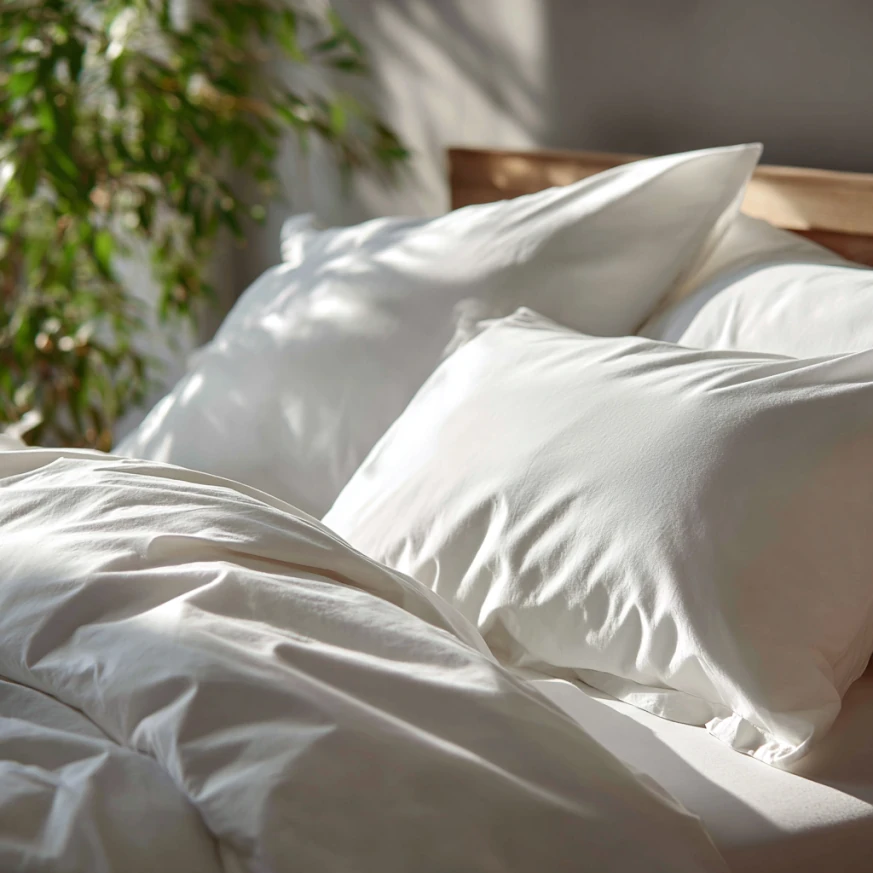
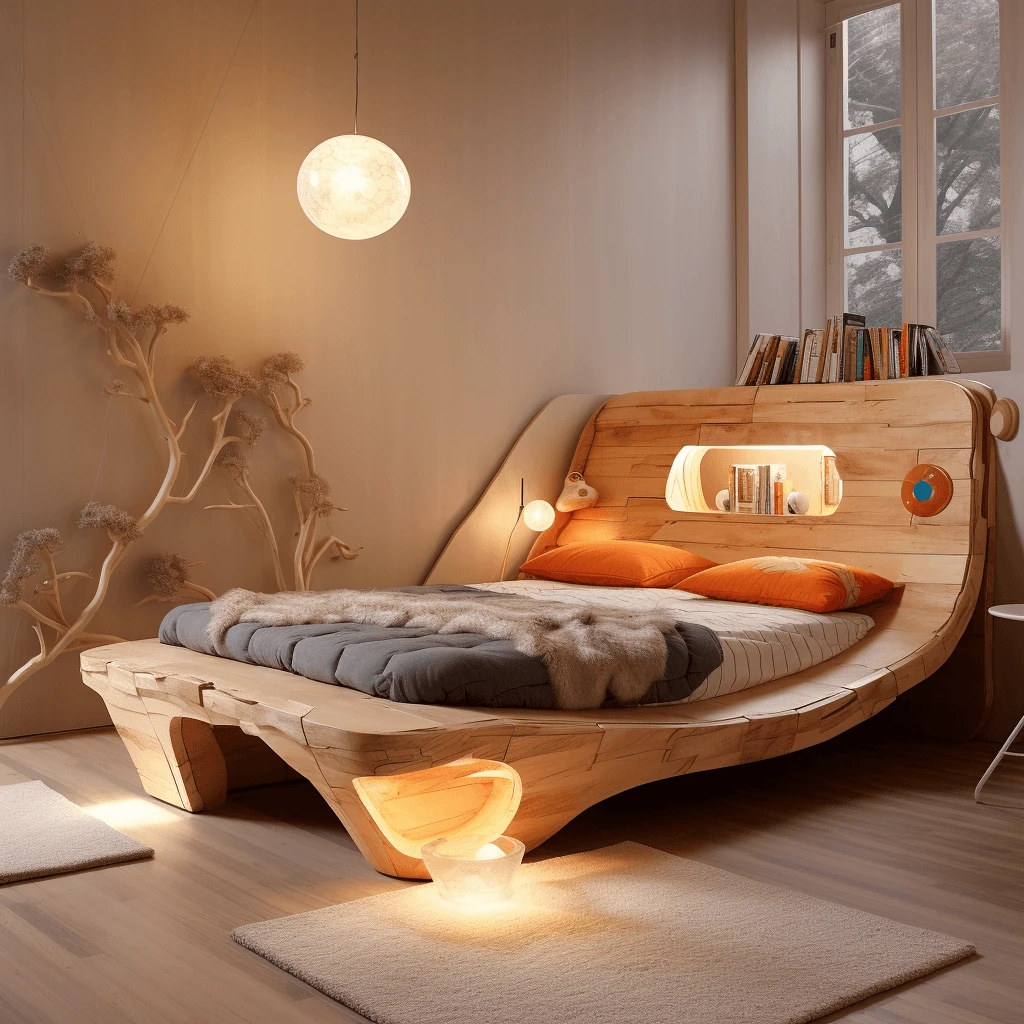
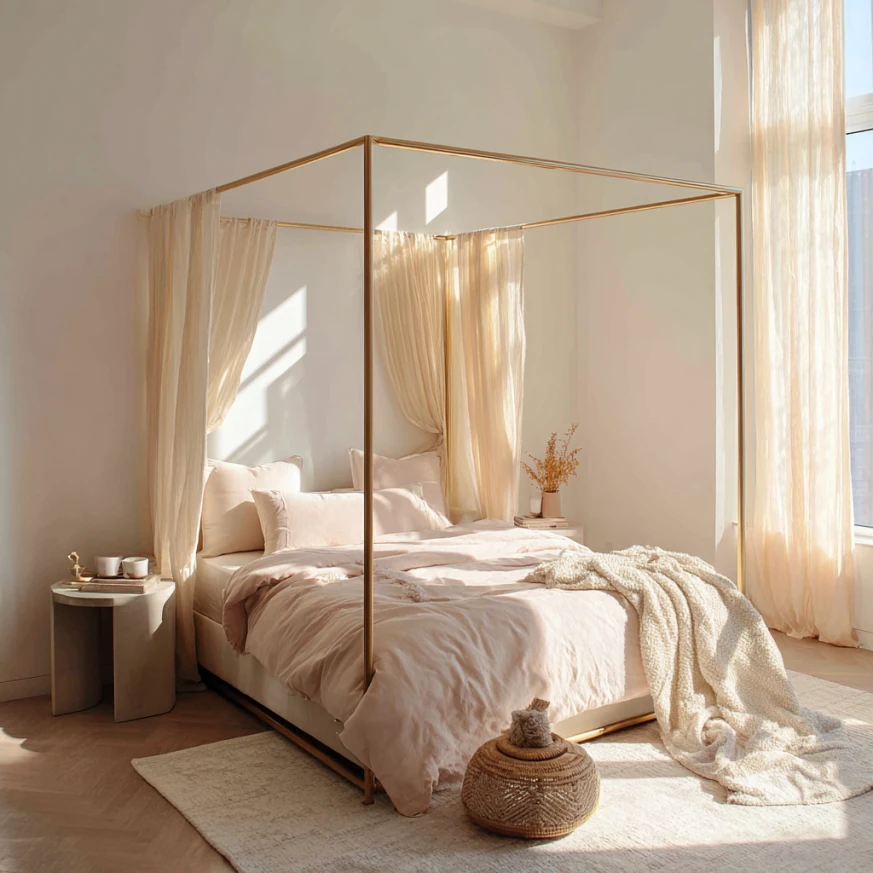
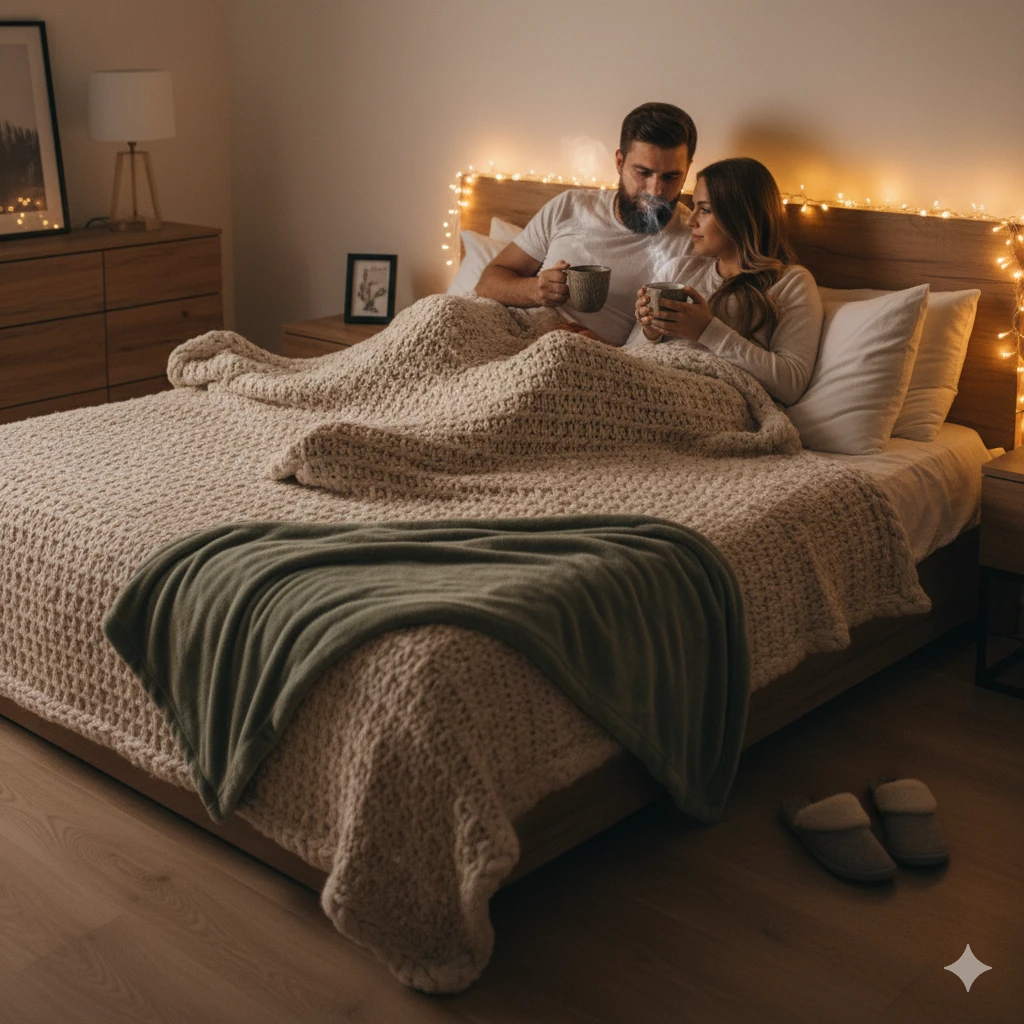
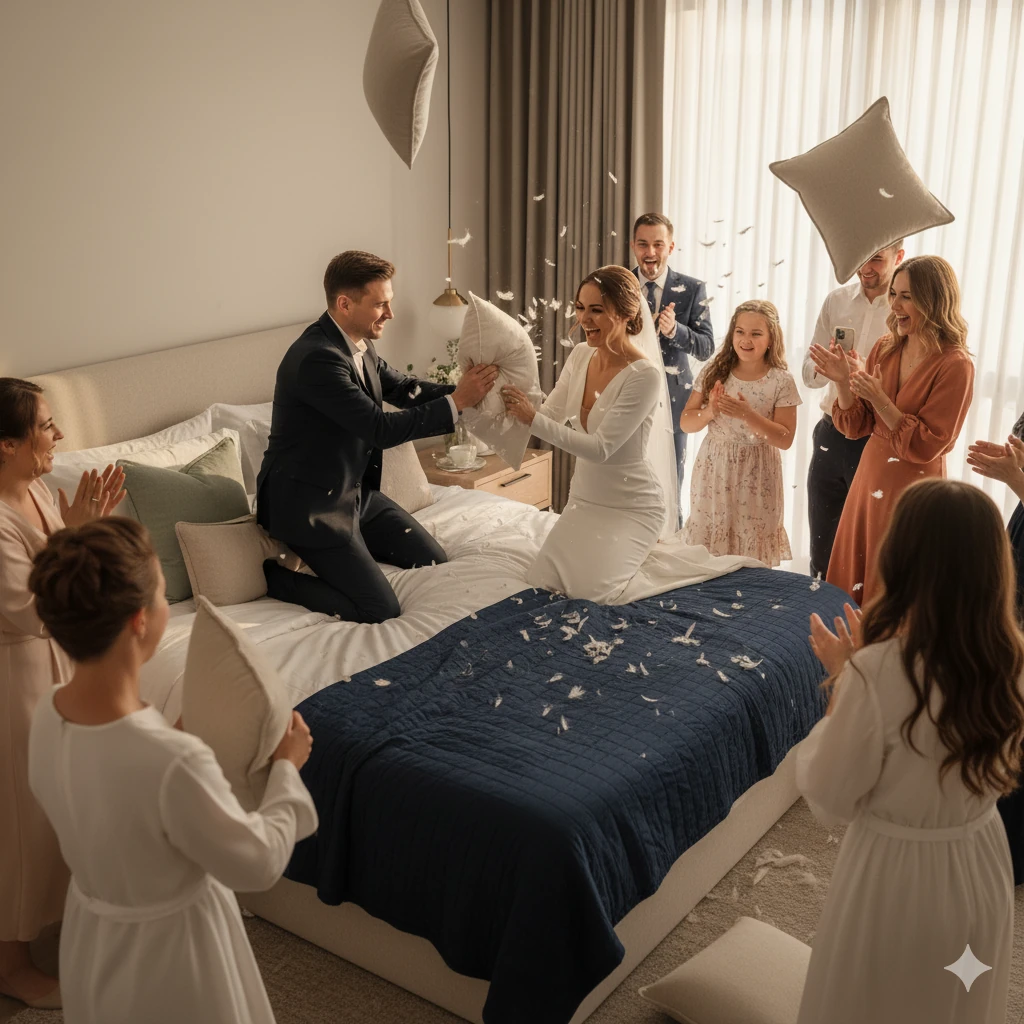
Cozy Bedding Materials for Sheets Blankets and Comfort

Cozy Bedding Materials for Sheets Blankets and Comfort - Featured Image

Cozy Bedding Materials: Best Fabrics for Every Season & Sleep Style

Looking for the best cozy bedding materials to transform your sleep? From breathable cotton to luxurious silk, the right fabrics make all the difference. This guide highlights sustainable, organic options so you can build an eco-conscious sanctuary with soft, breathable, and durable layers.

Key Takeaways: cozy bedding materials

  • Cotton and bamboo are breathable, soft, and dependable year-round.
  • Flannel and fleece deliver exceptional warmth during colder months.
  • Silk regulates temperature and is gentle on skin and hair.
  • Organic, hypoallergenic picks like bamboo and organic cotton support sensitive sleepers.
  • Layering different fabrics creates adaptable comfort for every season.

Importance of Choosing Cozy Bedding Materials

The foundation of restorative sleep lies in the cozy bedding materials you choose. Each fabric has distinct strengths—from cooling breathability to plush warmth—so matching materials to your sleep style prevents night sweats, chills, and discomfort.

Hot sleepers usually favor crisp cotton or silky bamboo for airflow. Cold sleepers often prefer flannel or fleece for gentle insulation without bulk. Knowing how each fabric behaves helps you customize comfort and wake up refreshed.

importance of cozy bedding materials for comfort and sleep quality

Cotton

Answer first: Cotton is the balanced default—soft, breathable, and durable—making it a top pick among cozy bedding materials.

Classic percale offers a cool, crisp hand feel, while sateen drapes smoothly with a subtle sheen. Long-staple varieties (Egyptian, Pima) resist pilling and maintain strength through frequent washing. For eco-conscious sheets, look for organically grown cotton and third-party certifications to limit chemicals and retain that clean, airy feel.

cozy bedding materials organic cotton sheets breathable and durable

Flannel

Answer first: Flannel traps heat while staying breathable, delivering that “toasty without overheating” sensation in winter.

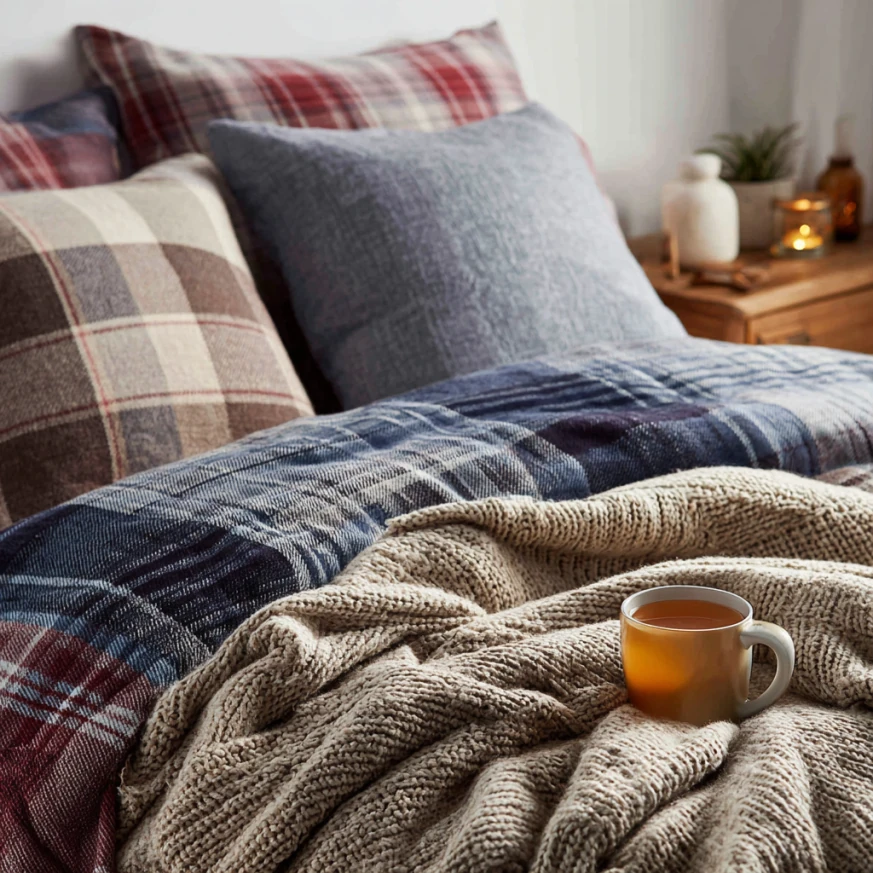
Made by brushing cotton to raise soft fibers, flannel’s fuzzy surface holds warmth close to the body. Choose midweight options to avoid bulk and seek tightly woven fabrics that resist linting. If sustainability matters, prioritize organic flannel and mindful care—wash on gentle and avoid high heat to preserve loft.

cozy bedding materials flannel sheets warm for winter

Fleece

Answer first: Fleece provides maximum softness and quick warmth, making it great for throws and top-layer blankets.

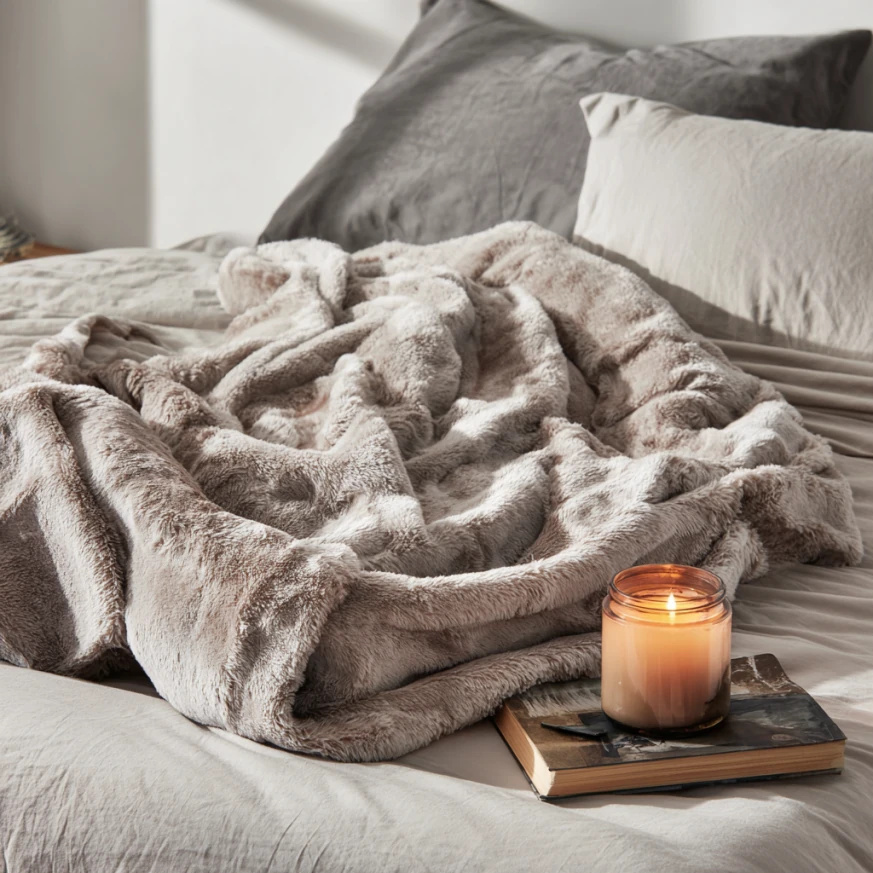
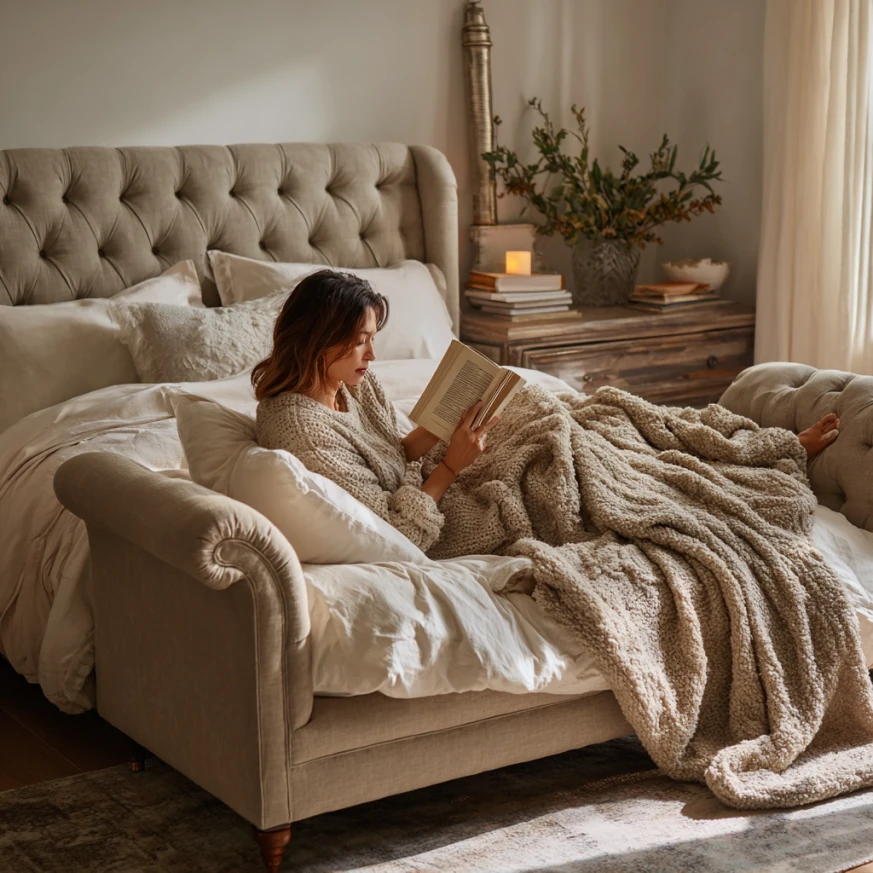
Modern fleece blankets feel plush, insulate well, and dry quickly—perfect for layering over lighter sheets when temperatures drop. For styling and extra snugness, add a fleece throw as a top layer at the foot of the bed.

fleece blanket cozy bedding materials for extra warmth

Exploring Luxurious Options: Bamboo and Silk

Bamboo

Answer first: Bamboo excels for hot sleepers—silky-soft, breathable, and moisture-wicking with a cool-to-the-touch feel.

Many bamboo fabrics drape beautifully and manage humidity to keep you comfortable through the night. They are naturally hypoallergenic and popular among fans of sustainable bedding. For a deeper overview of material pros and cons, explore the Sleep Foundation’s bedding materials guide.

Silk

Answer first: Silk is temperature-regulating and friction-reducing, helping protect hair and skin while keeping you comfy year-round.

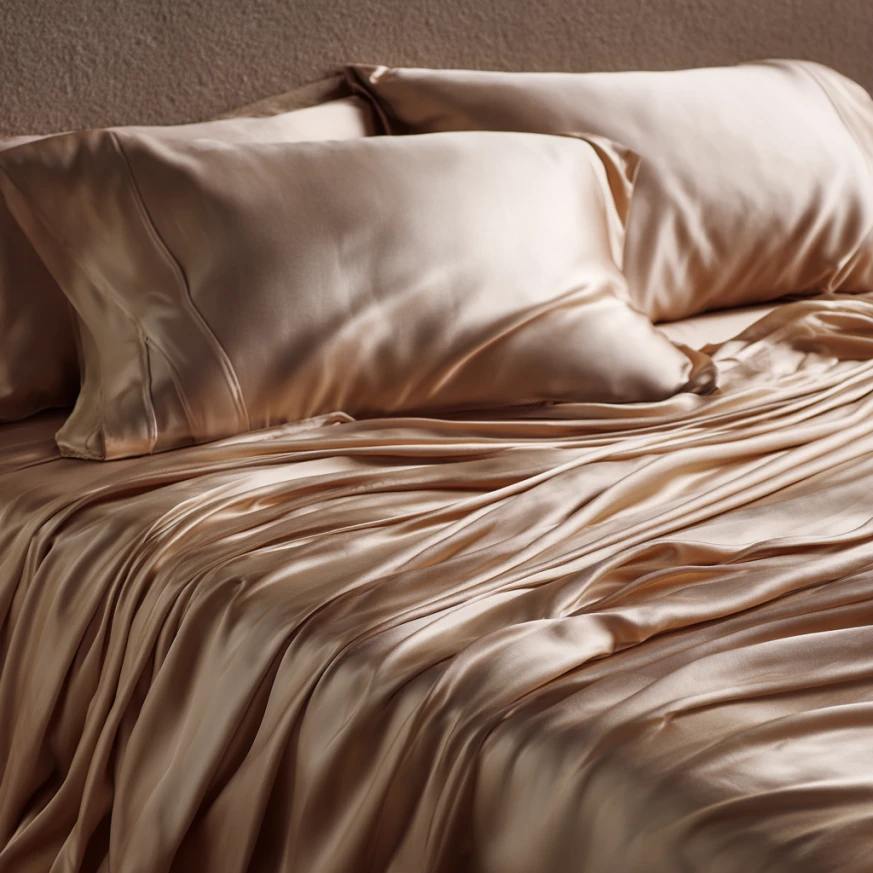
The smooth weave minimizes tugging on hair and reduces facial creasing. It feels light in summer yet cozy in winter. If you want a luxury upgrade with practical perks, a silk pillowcase or duvet cover is a smart way to sample this premium material.

bamboo and silk cozy bedding materials for luxury and breathability

Seasonal Adaptability with Cozy Bedding Materials

The best cozy bedding materials adapt to changing weather. In spring and summer, lightweight cotton or bamboo sheets keep airflow steady. In fall and winter, layer flannel or fleece for extra warmth without trapping excess heat.

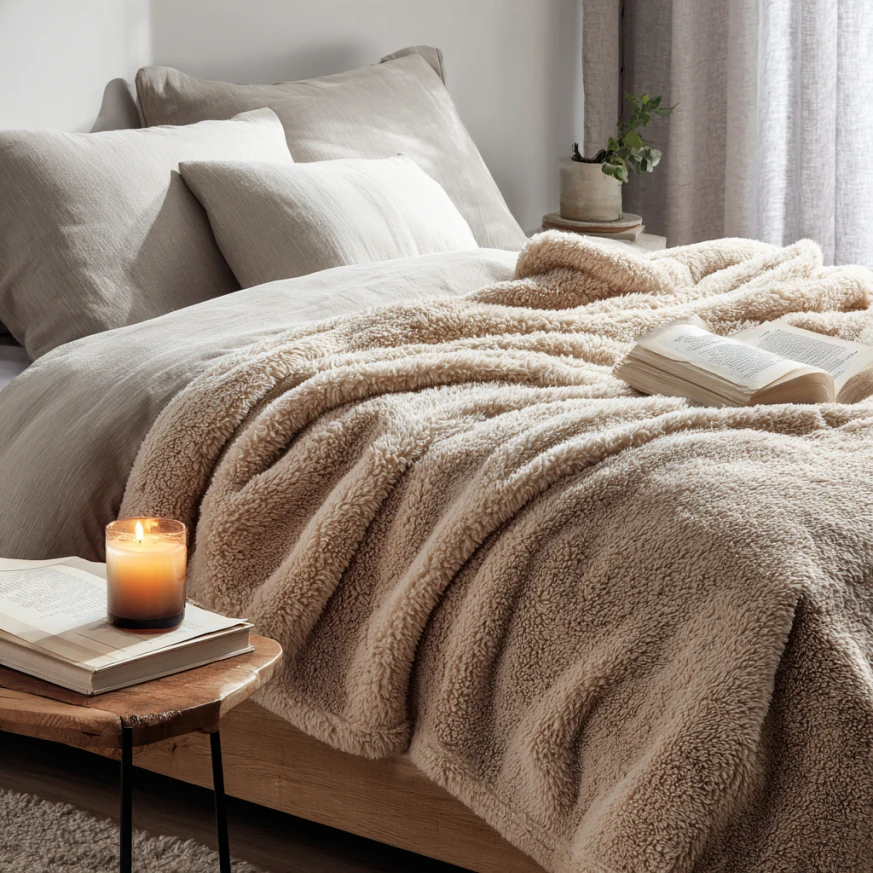
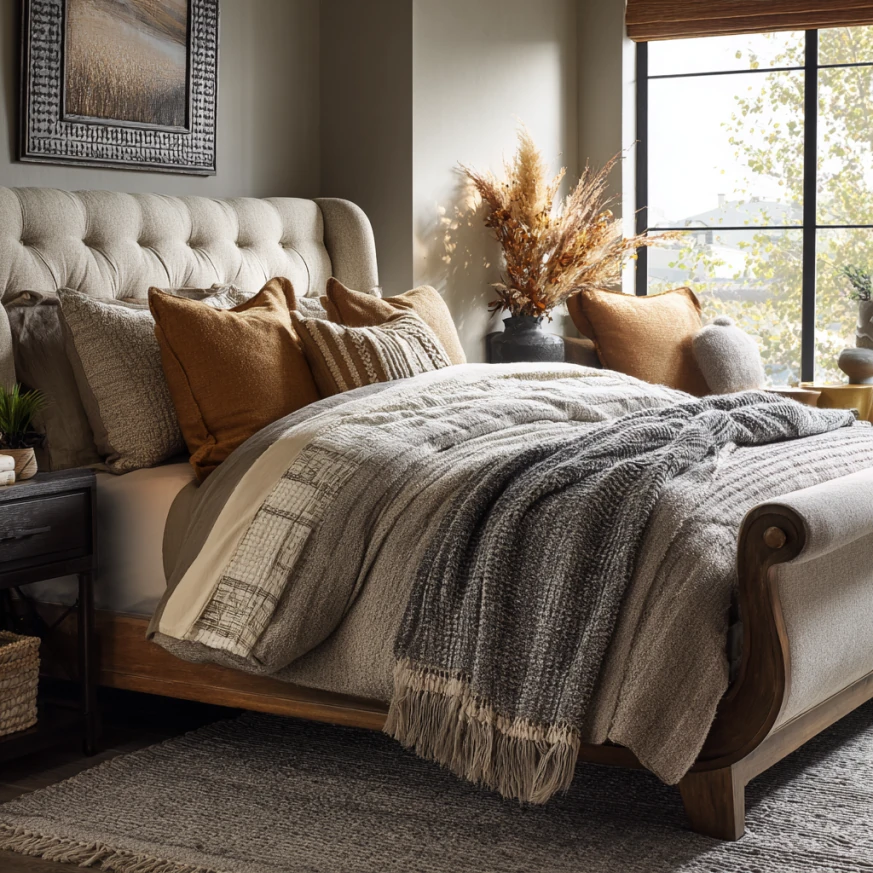
Try this simple formula: crisp cotton or bamboo sheets + a midweight duvet + a fleece or flannel throw. This flexible stack lets you dial warmth up or down by adding or removing the top layer.

seasonal layering with cozy bedding materials for adaptable comfort

Benefits of Hypoallergenic Cozy Bedding Materials

Sensitive sleepers thrive with hypoallergenic cozy bedding materials like organic cotton and bamboo. These choices reduce exposure to harsh finishes and are less likely to irritate skin.

To verify materials, look for third-party labels such as GOTS (organic fiber certification) and OEKO-TEX (testing for harmful substances). Certifications support eco-conscious sheets that are safer for you and the planet.

hypoallergenic cozy bedding materials organic cotton and bamboo

Practical Tips for Choosing the Best Cozy Bedding Materials

  • Match materials to your sleep habits: hot sleepers prefer bamboo or percale cotton; cold sleepers love flannel.
  • Feel the fabric when possible. Touch reveals breathability, drape, and softness better than spec sheets.
  • Check trusted labels: learn how GOTS and OEKO-TEX help ensure safer, sustainable bedding.
  • Layer strategically for seasonal flexibility and design balance.
  • Care matters: gentle washing preserves loft, reduces pilling, and extends lifespan.
  • Know your top layer: choose a duvet or comforter that works with your fabric choices and local climate.
  • Match bedding with mattress firmness for balanced comfort.

FAQ

What are the best cozy bedding materials for winter?
Flannel and fleece are ideal for winter. They retain heat, feel soft on skin, and layer easily with cotton or bamboo sheets.
Are bamboo sheets good for hot sleepers?
Yes. Bamboo is breathable and moisture-wicking, helping manage temperature and humidity for cooler nights.
Which cozy bedding materials are hypoallergenic?
Organic cotton and bamboo are naturally hypoallergenic, especially when certified by GOTS or OEKO-TEX.

Final Thoughts: Choosing the Right Cozy Bedding Materials

Selecting the right cozy bedding materials transforms both comfort and sleep quality. Start with breathable cotton or bamboo, add warmth with flannel or fleece as needed, and consider a touch of silk for luxury and skin benefits. For more guidance, explore Cozy Bed Quarters for expert tips, buying advice, and room-by-room comfort ideas.

Related Reading

Under Bed Shoe Storage: Clearance, Bin Sizes and a Setup That Lasts

Under-Bed Shoe Storage

Good under bed shoe storage comes down to one number: the clearance between your floor and the lowest part of your bed frame. Pick a container about an inch shorter than that measurement, fill it with the shoes you wear this season, and keep daily pairs somewhere easier to reach. The rest — dividers, labels, odor control — is fine-tuning.

Measure three things before you buy a single bin

Most under bed shoe storage fails for the same reason: it was bought by eyeball. Grab a tape measure and write down these numbers.

  • Clearance (height). Floor to the lowest point under the bed — usually the bottom edge of the side rail, but on some frames it’s a slat, a center support, or the box spring itself. Measure the lowest thing, not the prettiest.
  • Depth (front to back). From the side rail inward to the center support leg or the far rail. On a queen, the usable strip on each side is often 15–18 inches before you hit the center bar.
  • Width (side to side). The clear run between the corner legs. Two 33-inch bins need about 68 inches of unobstructed space, and plenty of frames don’t have it.

Then subtract a buffer. On hardwood or tile, leave at least 1 inch between the top of the bin and the frame. On carpet, leave 1.5 to 2 inches — the pile compresses under wheels and lifts the box higher than you think.

Tape measure showing floor-to-frame clearance before choosing under bed shoe storage

What fits in how much clearance

Shoes are taller than people expect. A men’s size 10 running shoe stands roughly 4.5 inches at the heel collar, a women’s flat around 3 inches, a 3-inch pump about 5 inches tip to heel when it sits upright, and a lace-up boot 7 inches or more.

  • 3 to 4 inches: flat fabric trays and thin sliding drawers. Flats, sandals, slides, espadrilles.
  • 5 to 6 inches: the sweet spot. Standard 6-inch bins swallow most sneakers, loafers, and low heels upright.
  • 7 to 9 inches: rolling boxes on casters, taller heels, ankle boots, kids’ and adult shoes mixed in one box.
  • 10 inches and up: two-tier organizers or wooden drawers. Tall boots still go on their sides.

Under bed shoe storage types, side by side

Type Clearance needed Roughly holds Trade-off
Zippered fabric bag with clear top 4–6 in 6–12 pairs, slim styles Low cost and softest on carpet, but sags and offers no crush protection
Rigid plastic bin with lid 6–8 in 4–8 pairs Best dust and spill protection; you must pull the whole box out to dig
Rolling box on casters 7–10 in 6–10 pairs Easiest daily access; small hard wheels stall on thick carpet
Wooden or rattan drawer on wheels 8–12 in 6–9 pairs Looks good with no bed skirt; heavy and pricier
Open flat tray or sliding shelf 3–5 in 4–6 pairs Grab-and-go for daily shoes; collects dust fast
Riser plus a low shoe rack 12 in+ 8–16 pairs Great for tall frames; visible unless you add a skirt

One rule worth repeating: whatever style of under bed shoe storage you choose, skip vacuum-compression bags for footwear. They crush toe boxes, flatten padding, and leave creases that never quite hang out.

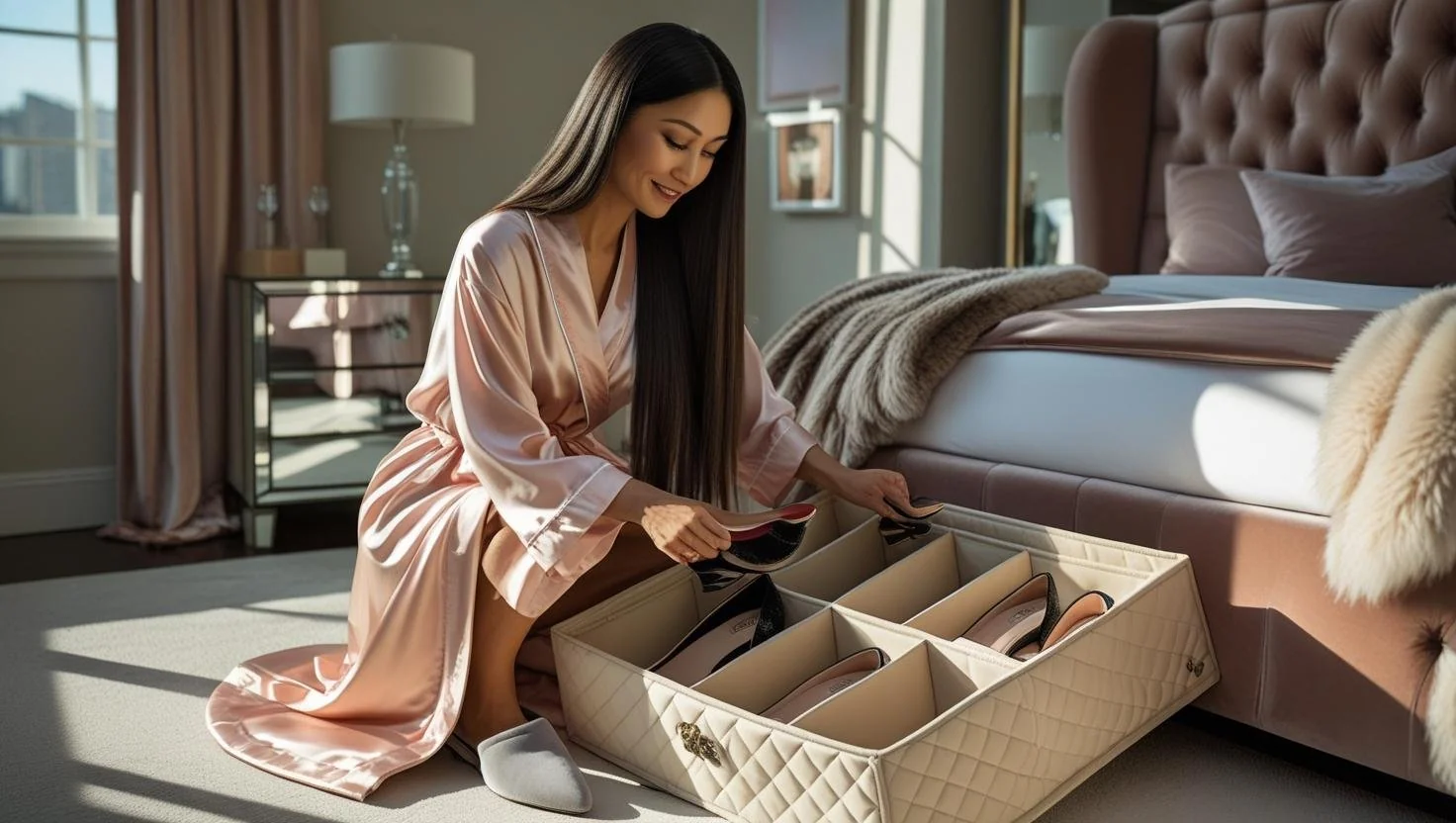
Rolling box, lidded bin and fabric bag options for under bed shoe storage

How many pairs will really fit?

Do the arithmetic instead of trusting the box copy. An adult shoe is about 11–12 inches long and 3.5–4 inches wide. In a typical 33 × 16-inch bin, you get one row lengthwise and roughly eight shoe-widths across — four pairs of men’s shoes, or six to eight pairs of smaller women’s styles if you nest them heel-to-toe.

Two of those bins under a queen bed put 8–14 pairs out of sight. That’s most people’s off-season collection. If you’re trying to fit 30 pairs under there, the problem isn’t the container.

Play the space smart

  • Nest shoes in opposite directions — toe next to heel — so the widest parts don’t collide. It gains you about one extra pair per bin.
  • Lay tall boots flat with the shafts alternating, and slide a rolled magazine or boot shaper inside to stop creasing at the ankle.
  • Keep one bin per category (work, sport, dressy) rather than one giant bin. Lighter boxes slide out with one hand.
  • Use adjustable dividers or stiff cardboard so shoes don’t tip and tangle laces every time you pull the box.
  • Tie a ribbon or fabric loop to lidless boxes if there’s no handle — much kinder to fingernails than gripping a plastic lip.

Prep shoes properly or you’ll regret it in spring

Anything headed into under bed shoe storage should be clean and bone dry. Damp shoes in a closed bin are how you end up with mildew spots on leather and a smell that survives two washes.

  1. Let worn shoes air out a full 24 hours before they go in. Sweat takes longer to leave a midsole than you’d guess.
  2. Brush grit off the outsoles and wipe the uppers. Trapped dirt holds moisture against the material.
  3. Pull out insoles on athletic shoes and let both parts dry separately.
  4. Stuff toe boxes with acid-free tissue or clean socks to hold shape — not newspaper, whose ink can transfer to pale linings.
  5. Add a silica gel pack or a cedar block per bin, and swap or dry out the silica each season.

Shoes cleaned, stuffed and sorted by season before going into storage bins

Humidity and odor: the part most guides skip

The air under a bed barely moves, so whatever humidity is in your room settles in and stays. The EPA advises keeping indoor relative humidity below 60 percent and ideally between 30 and 50 percent to discourage mold growth. A cheap hygrometer on the nightstand tells you where you stand.

If your room runs damp — basement bedroom, humid summer, no AC — use vented fabric bags rather than sealed plastic, or crack the lid on rigid bins so air can move. In a dry room, sealed bins are fine and keep dust off.

For smells, baking soda in a breathable pouch handles mild funk, and cedar handles both odor and moisture. Skip stuffing scented dryer sheets against leather for months at a stretch; airing the shoes out first fixes far more than masking does.

What shouldn’t go under the bed

Under bed shoe storage is a seasonal parking spot, not an everyday shoe rack. Daily pairs belong near the door or in a closet, because nobody kneels on the floor at 7:45 a.m. two days in a row.

A second reason to keep it tidy: pest control. University of Minnesota Extension notes plainly that storing things under the bed gives bed bugs more places to hide and makes an infestation harder to clear. Sealed, wipeable containers beat loose piles, and leaving a few inches of clear floor lets you vacuum and inspect.

Also think twice about storing anything under the bed if you’re sensitive to dust — that zone collects it, and open trays need wiping every couple of weeks.

Carpet, hardwood, and the sliding problem

Hard floors: almost anything glides, though bare plastic can scratch finished wood. Stick felt pads on the corners of rigid bins.

Carpet: small hard casters sink into the pile and fight you. Fabric bags with wide handles pull much more easily, or choose boxes with 2-inch-plus wheels. A thin plywood board or a cut-down rug pad laid smooth-side up under the bed also gives boxes a runway.

If your frame has a center support leg, you’ll be loading from both sides — plan bins for each side rather than one long box that only fits on paper.

Rolling shoe bin gliding on carpet beneath a bed frame

No clearance at all? Change the bed, not the bins

Low platform beds and frames that sit flush to the floor leave nothing to work with. Two fixes: add risers (typical sets lift a frame 3 to 8 inches, and you should check the weight rating and the leg diameter before buying), or switch to a frame built for storage.

Drawer bases and lift-up designs give you enclosed, dust-free space that’s easier on your back — worth comparing if you’re already shopping. Our guide to under bed storage frames covers drawer layouts, and platform and storage beds walks through hydraulic lift styles. In a tight room, space-saving bed frames and these small bedroom storage solutions are the next places to look.

Keep the system from collapsing

Under bed shoe storage only stays useful if you touch it twice a year. Roughly March and October, pull every bin out and do a 15-minute swap. Boots and closed shoes go under the bed in spring; sandals go under in fall. Wipe the floor while the boxes are out, check the silica packs, and be honest about the pairs you skipped all season.

A one-in, one-out rule keeps the bins from creeping past full. And label the short end of each box, not the top — that’s the side you’ll actually see.

FAQ

How much clearance do I need for under bed shoe storage?

At least 4 inches for flat trays, 6–7 inches for standard bins holding sneakers upright, and 8 inches or more for rolling boxes and heels. Always leave an inch of wiggle room above the container, or two on carpet.

How many pairs fit in one under-bed box?

Four to six pairs of adult shoes in a standard 33 × 16-inch bin, or six to eight pairs of smaller, slimmer styles. Slim fabric bags with individual compartments can hold 12, but only for flats and low sneakers.

Will storing shoes under the bed ruin them?

Not if they go in clean, dry, and shaped. Damage comes from damp shoes in sealed containers, crushing heavy boxes on top of soft uppers, and vacuum bags flattening toe boxes.

Are fabric bags or plastic bins better?

Fabric breathes and slides well on carpet, which suits humid rooms and low clearance. Rigid plastic blocks dust and protects shape, which suits dry rooms and heavier boots. Many people use both.

How do I stop shoes from smelling in storage?

Air them 24 hours first, remove insoles to dry, add silica gel or cedar, and don’t seal the lid if your room runs humid. Washing insoles and letting them dry fully solves most lingering odor.

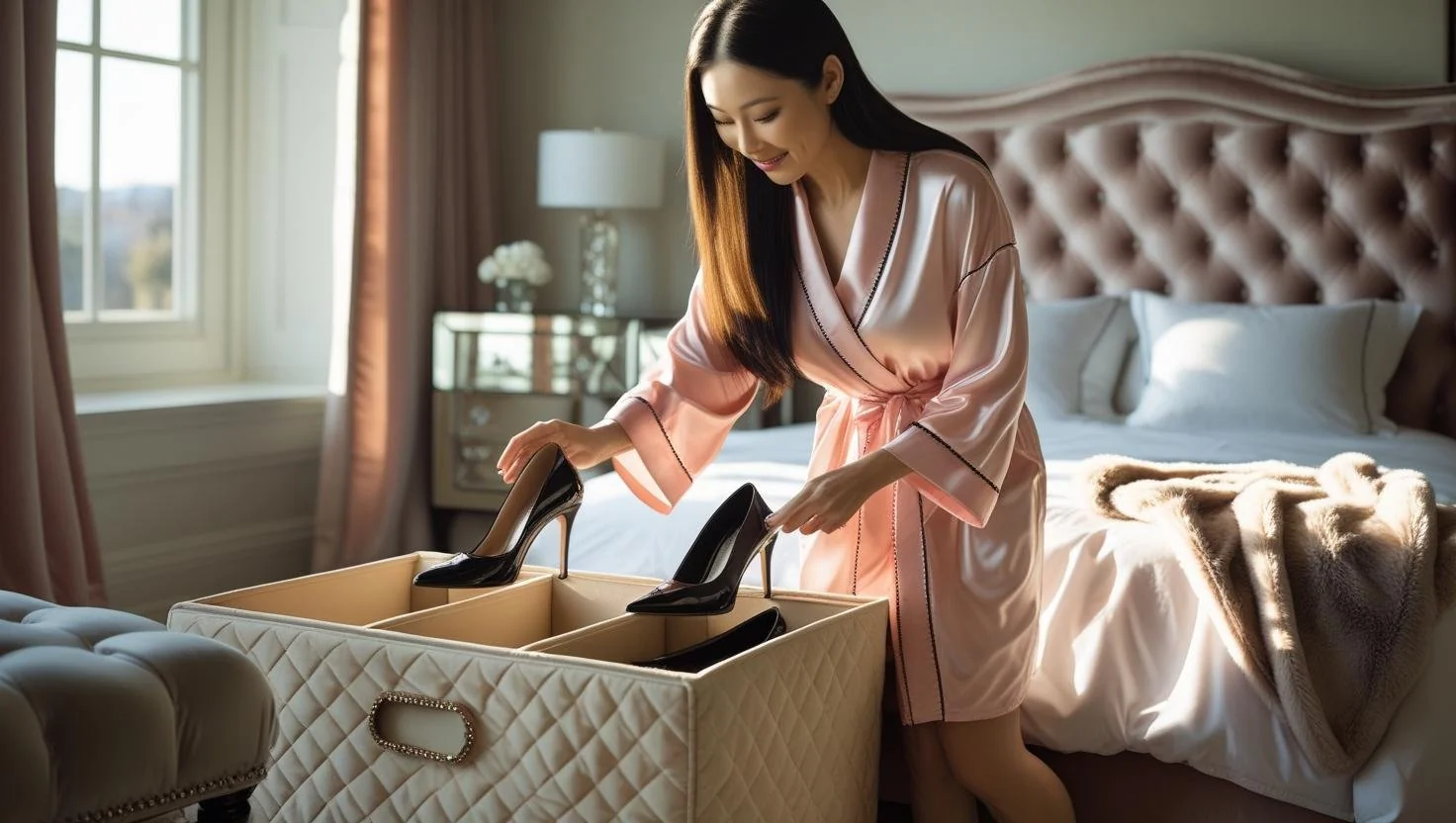
Tidy bedroom floor after setting up under bed shoe storage bins

Updated September 2026.

Unique Wood Beds: Styles, Woods and How to Choose

Unique Wood Bed Designs: Transform Your Bedroom with Style - Featured Image

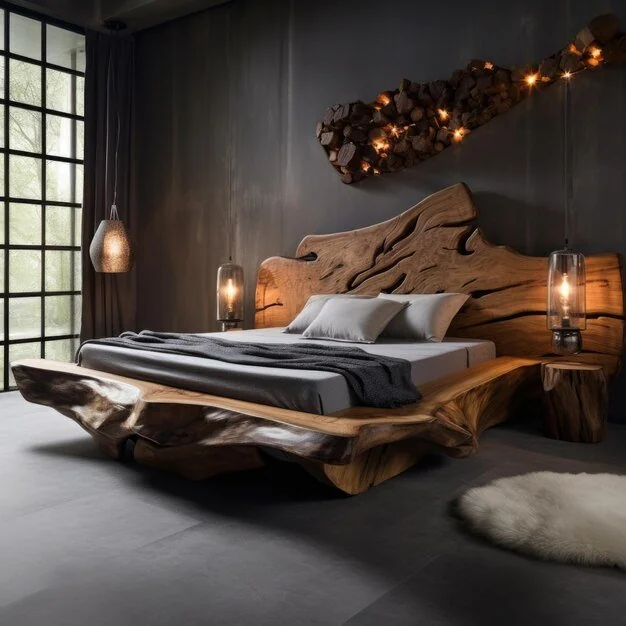
A unique wood bed is a solid frame with one distinctive move: a live-edge slab headboard, visible joinery, a canopy, hidden drawers, or a grain pattern you won’t see in a chain-store showroom. The best unique wood beds back that character with unglamorous fundamentals — hardwood construction, tight joints, slats close enough to support your mattress, and a finish you can repair. Here’s what the main styles look like, which woods hold up, and what to check before you hand over your money.

What actually makes unique wood beds unique

Three things, mostly. First, the material itself: no two boards share a grain pattern, and species like walnut, white oak and cherry each age differently. Second, the making — hand-cut joints, a shaped headboard, a chamfered post or a hand-rubbed oil finish all read as “someone thought about this.” Third, the form: canopies, platforms, lofts and storage bases change how a room feels, not just how the bed looks.

What does not make a bed unique is a marketing word. “Artisan,” “heirloom” and “hand-finished” are unregulated terms. Ask what the frame is made of, how it’s joined and whether the finish can be touched up — those answers tell you more than any product description.

Low-profile walnut-toned frame, one of the unique wood beds with a warm modern finish

Standout wood bed styles

Live-edge beds

A live-edge headboard keeps the natural outer contour of the tree, bark removed and edge sanded smooth. Every one is genuinely one-off, which is the appeal — and also the catch, since you’re buying a shape you can’t compare against a catalog photo. Slabs are heavy, so check that the headboard attaches to the frame with bolts rather than screws into end grain, and look for butterfly keys or epoxy fills across any checks in the slab. These sit happily in both rustic and stripped-back modern rooms.

Canopy and four-poster beds

Four tall posts, sometimes joined by a top frame, draw the eye upward and give a bedroom instant architecture. They need ceiling height and breathing room to work — a tall canopy in a low room feels cramped rather than grand. Wooden versions range from chunky reclaimed timber to slim square posts barely thicker than a broom handle. If you’re weighing proportions, our guide to canopy bed frames covers sizes and ceiling clearance in more detail.

Platform beds

A platform frame supports the mattress on a slatted or solid deck, so you skip the box spring entirely. That keeps the profile low and the lines clean, which helps a small room feel less crowded. Solid-wood platforms in oak, ash or walnut are the workhorse of modern bedrooms for a reason: fewer parts, fewer squeaks, less to go wrong.

Storage beds

Drawers in the base, a lift-up deck on gas struts, or shelving built into a thick headboard. Wood suits storage beds well because the frame is already substantial enough to carry drawer boxes without looking bulky. Measure your clearance first — side drawers need floor space to pull out, and a lift-up deck needs room to swing. If storage is the main reason you’re shopping, compare options in our roundup of king-size bed frames with storage.

Lofted and raised beds

Lifting the sleeping surface frees up the footprint underneath for a desk, drawers or a reading nook. Solid timber lofts feel far steadier than tubular metal ones, but height brings safety rules: guardrails on all open sides, a fixed ladder, and a ceiling gap that lets you sit up. Bunk-style and loft beds sold in the US fall under federal safety rules covering guardrails and openings, so check that any frame you buy — especially secondhand — still meets them. More small-room layouts here: the best beds for small rooms.

Minimalist wood platform bed with clean lines in a bright bedroom

Rustic and reclaimed-timber beds

Knots, saw marks, nail holes, weathered patina. Reclaimed beams and barn boards carry visible history, and the wood has usually spent decades acclimating, so it tends to be dimensionally settled. Ask the maker whether old paint was tested or fully removed — paint on pre-1978 US buildings may contain lead, and sanding it is the risky part. A sealed, clear-finished frame from a reputable builder is the safe version of this look.

Mid-century modern frames

Tapered legs, a low headboard, warm walnut or teak tones, minimal ornament. These frames are compact for their mattress size, which makes them useful in rooms where a heavy rustic bed would dominate. They also mix easily with other eras, since the shapes are quiet.

Carved and traditional beds

Turned posts, paneled headboards, molded rails, sometimes inlay. Traditional wooden beds have gone in and out of fashion for two centuries and keep coming back because the proportions are generous and the joinery on good examples is excellent. Secondhand is often the smart buy here.

Rustic reclaimed timber bed frame showing knots and visible grain

Choosing the wood

Species affects color, hardness, weight and price. Hardness is measured with the Janka test, which presses a steel ball into the wood and records the force needed; published Janka figures put sugar (hard) maple around 1,450 lbf and white oak around 1,360 lbf, while softwoods like pine sit far lower. For a bed, hardness matters less than it does for flooring — nobody walks on a headboard — but it does predict how easily rails and posts pick up dings.

Wood Look Good to know
White oak Pale gold, strong open grain Hard, stable, takes stain well; quarter-sawn shows ray flecks
Walnut Chocolate brown, sometimes purple undertones Softer than oak but very stable; lightens with sun exposure
Maple Creamy, tight and subtle grain Very hard; can look flat if you want visible character
Cherry Pinkish when new, deep red-brown later Darkens noticeably over the first year or two
Teak / acacia Warm, oily, golden brown Naturally durable; teak is costly, acacia is the budget cousin
Pine / fir Light, knotty, casual Affordable and easy to repaint, but dents easily
Mango / rubberwood Mid-brown, varied Fast-growing plantation species, common in mid-price frames

Solid wood, veneer or engineered panels?

Solid wood is not automatically better everywhere. Wide panels made from solid boards move with the seasons and can crack; a quality hardwood veneer over a stable core stays flatter and is what plenty of high-end furniture uses. What you want to avoid is a frame where the load-bearing rails and posts are thin engineered board dressed up with a printed wood-look foil.

If a frame uses plywood, MDF or particleboard, US-market products are required to be labelled as compliant with the EPA’s formaldehyde emission standards for composite wood products, which have applied to finished goods since March 2019. Look for that label, and air out a new frame for a few days before you sleep on it. For a wider comparison of frame materials, see wood vs metal vs upholstered bed frames.

What to check before you buy

  • Joinery. Mortise-and-tenon or dowelled joints at the posts beat staples and plastic corner blocks. Bolt-together rail hardware is fine and makes the bed movable.
  • Slat spacing and center support. Many mattress warranties specify a maximum gap between slats (commonly around 3 inches) and a center rail with legs on queen and larger sizes. Check your mattress paperwork rather than assuming — the requirements vary by brand, and an unsupported foam mattress will sag between wide slats.
  • Squeak risk. Wood-on-wood contact plus loose bolts equals noise. Felt pads between slats and rails, and a re-tighten every six months, fix most of it.
  • Weight and access. Solid hardwood beds are heavy. Confirm the frame disassembles and that the largest single piece fits through your doorway and up your stairs.
  • Finish type. Oil and wax finishes are easy to spot-repair but need refreshing. Lacquer and catalyzed finishes resist spills better but are harder to touch up invisibly.
  • Room fit. Leave roughly 24–30 inches of walking space on the sides you use, and remember that posts, sleigh curves and footboards add to the mattress footprint.

Sustainable and reclaimed options

If the environmental side matters to you, the clearest signal is third-party certification. The Forest Stewardship Council is a non-profit that certifies responsibly managed forests worldwide and runs a chain-of-custody system so a finished product can be traced back through the supply chain. An FSC label on a bed means that paper trail exists; a vague “sustainably sourced” claim on a product page means nothing in particular.

Reclaimed timber is the other route, and it’s a genuinely low-impact one since the wood already exists. Buy from a maker who can say where the material came from and how it was cleaned up. The honest caveat: reclaimed stock varies enormously, so judge the individual piece, not the category.

Reclaimed wood bed frame with a hand-finished headboard

Styling a wood bed so it reads as the centerpiece

  • Contrast your bedding. Warm-toned oak and teak sit well against white, oatmeal and sage; cool walnut takes deeper colors. Mixing linen with a chunkier woven throw stops the bed looking flat in photos and in person.
  • Ground it with a rug. A rug that runs past the foot and both sides softens hard frame edges. Sizing is the part people get wrong — our bedroom rug guide has the measurements.
  • Light it warmly. Warm bulbs on a dimmer bring out the red and amber in wood grain; cool white light flattens it. Wall sconces also free up your nightstands. See cozy bedroom lighting for layering ideas.
  • Don’t match everything. A bedroom where every piece is the same finish looks like a showroom set. One or two contrasting tones — painted nightstands, a cane dresser, black metal lamps — make the bed stand out more, not less.

Wood bed styled with layered neutral bedding and a large area rug

Caring for a wooden bed

Wood is hygroscopic: it takes on and gives up moisture as the air around it changes. Very dry indoor air makes furniture shrink, which is what loosens joints and opens cracks, so keeping indoor humidity in a moderate range — roughly 40–50% is the usual target for a home — does more for a bed frame than any polish. A humidifier in winter or a dehumidifier in a damp room is the practical fix.

  1. Dust with a dry or barely damp microfiber cloth. Skip silicone sprays, which build up and complicate future refinishing.
  2. Refresh oiled surfaces when the wood starts looking thirsty, typically once or twice a year. Lacquered frames just need cleaning.
  3. Keep it out of direct sun. UV fades stains and shifts natural color unevenly — cherry darkens, walnut lightens.
  4. Re-tighten the hardware every six months, and every time you move the bed.
  5. Inspect when you strip the bed. The EPA notes that bed bugs hide in cracks on the bed frame and headboard, so a quick look at joints and slat pockets is worth the thirty seconds.
  6. Lift, never drag. Dragging a loaded frame puts all the stress on the rail joints.

Pair the frame with nightstands that suit its scale rather than its exact finish — there are ideas in our nightstand guide.

FAQ

What’s the best wood for a bed frame?

Oak, maple, walnut, cherry and teak are the usual picks because they’re dense, stable and repairable. Pine costs less and looks great in a casual room, but expect dents.

Is reclaimed wood durable enough for a bed?

Generally yes. Old timber has had decades to reach equilibrium with indoor conditions, so it moves less than freshly kiln-dried stock. Quality depends on the individual boards and the maker’s prep work, not on the age alone.

Do I need a box spring with a wooden platform bed?

No. A platform deck or closely spaced slats supports the mattress directly. Confirm the slat gap meets your mattress manufacturer’s requirement before you buy.

Can I have a wood bed custom-made?

Yes, and it’s often the answer for odd room shapes, non-standard mattress sizes or built-in storage. Expect to discuss species, finish, headboard height and whether the frame breaks down for moving. Costs vary too widely by region and maker to quote a useful figure.

Are wooden beds noisier than metal ones?

Not inherently. Noise comes from loose fasteners and from parts rubbing, so it helps to know how to track down a squeak and silence it. A well-joined hardwood frame with felt-padded slats is usually quieter than a thin metal frame with bolted brackets.

Updated September 2026.

Adjustable Bed Mattress Compatibility Guide

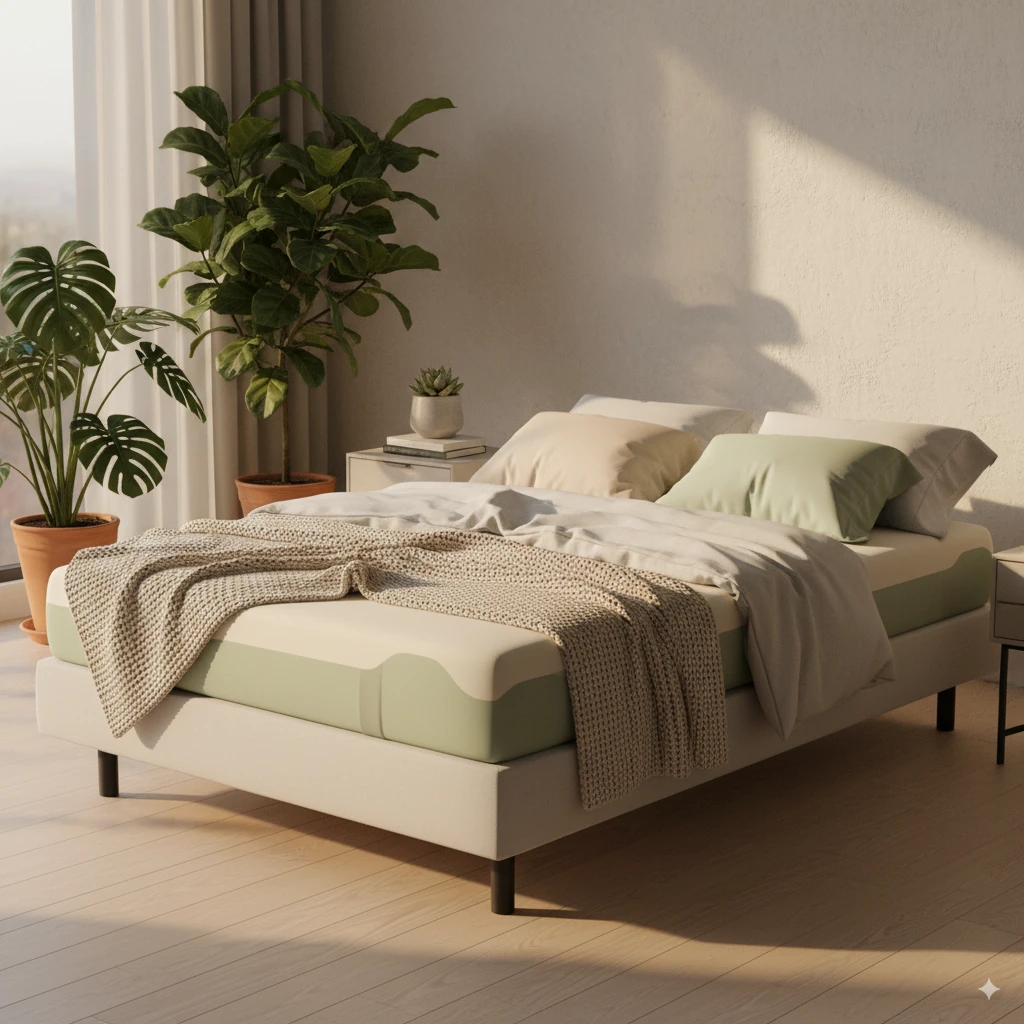
Foam mattress demonstrating adjustable bed mattress compatibility with smooth flexibility.

Adjustable Bed Mattress Fit Guide for 2025

Adjustable bed mattress compatibility isn’t just technical jargon—it’s the secret to a cozier, healthier night’s sleep. If you’ve ever wondered whether your mattress will work with an adjustable base or want to avoid buying the wrong bed, you’re in the right place. Below, we’ll show you which mattress types bend smoothly, what to avoid, and how to check specs (and warranties) before you buy.

Key Takeaways

  • Choosing the right adjustable bed mattress compatibility ensures smoother motion, better comfort, and longer mattress life.
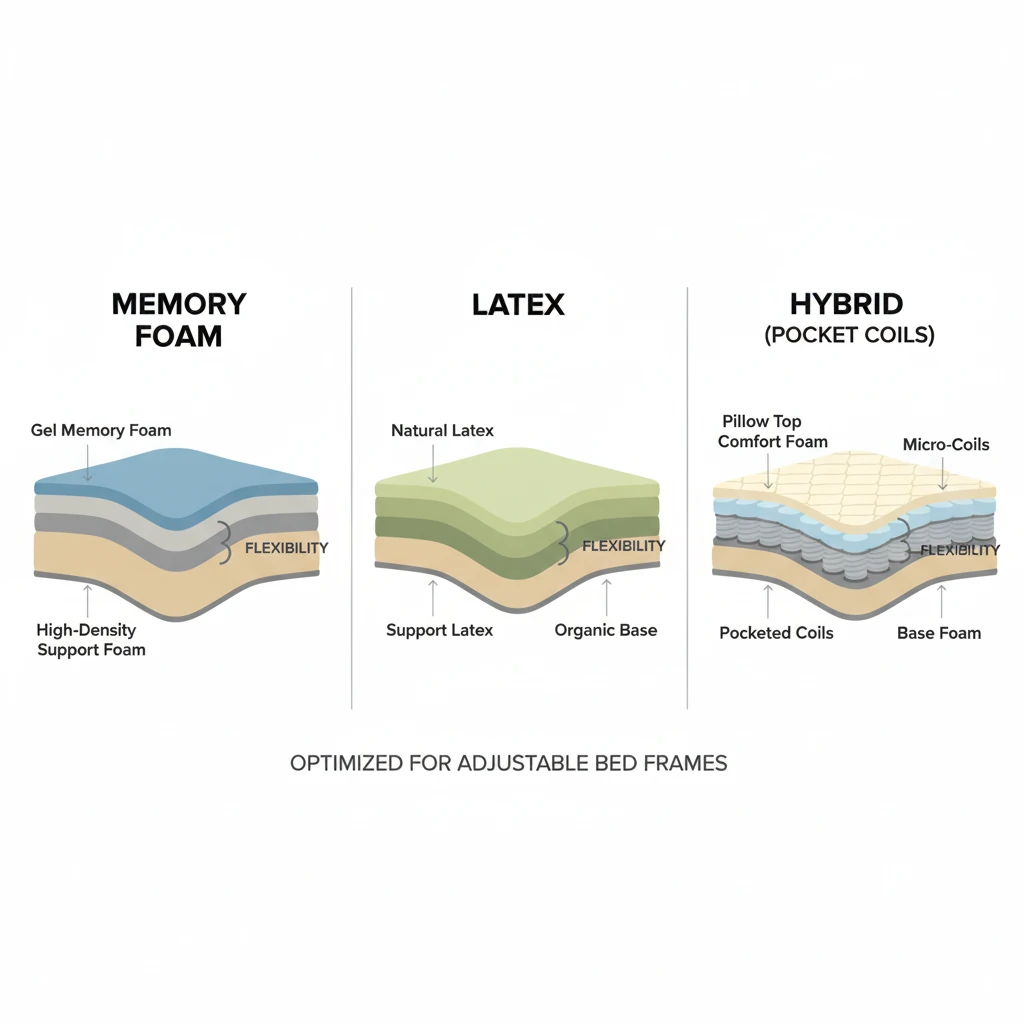
  • Memory foam, latex, and hybrid mattresses are typically the best options for adjustable bases.
  • Not every mattress is compatible—understanding the differences saves you time, money, and backaches.
  • Read labels and specs to confirm your mattress supports an adjustable base before buying.
  • Trying before you buy (with home trials) is the best way to find your perfect adjustable-friendly fit.

Why Adjustable Bed Mattress Compatibility Matters

A quick check on compatibility protects comfort, durability, and your warranty. The right match flexes cleanly with your base, so you get the full range of motion, targeted support, and pressure relief. Incompatible mattresses bunch, creak, or wear out early—and can even void coverage.
For deeper background, see the Sleep Foundation’s adjustable mattress guide.

Best Mattress Types for Adjustable Bed Mattress Compatibility

Not all mattresses play well with adjustable beds. Here’s how the main types stack up and what to look for when you shop.

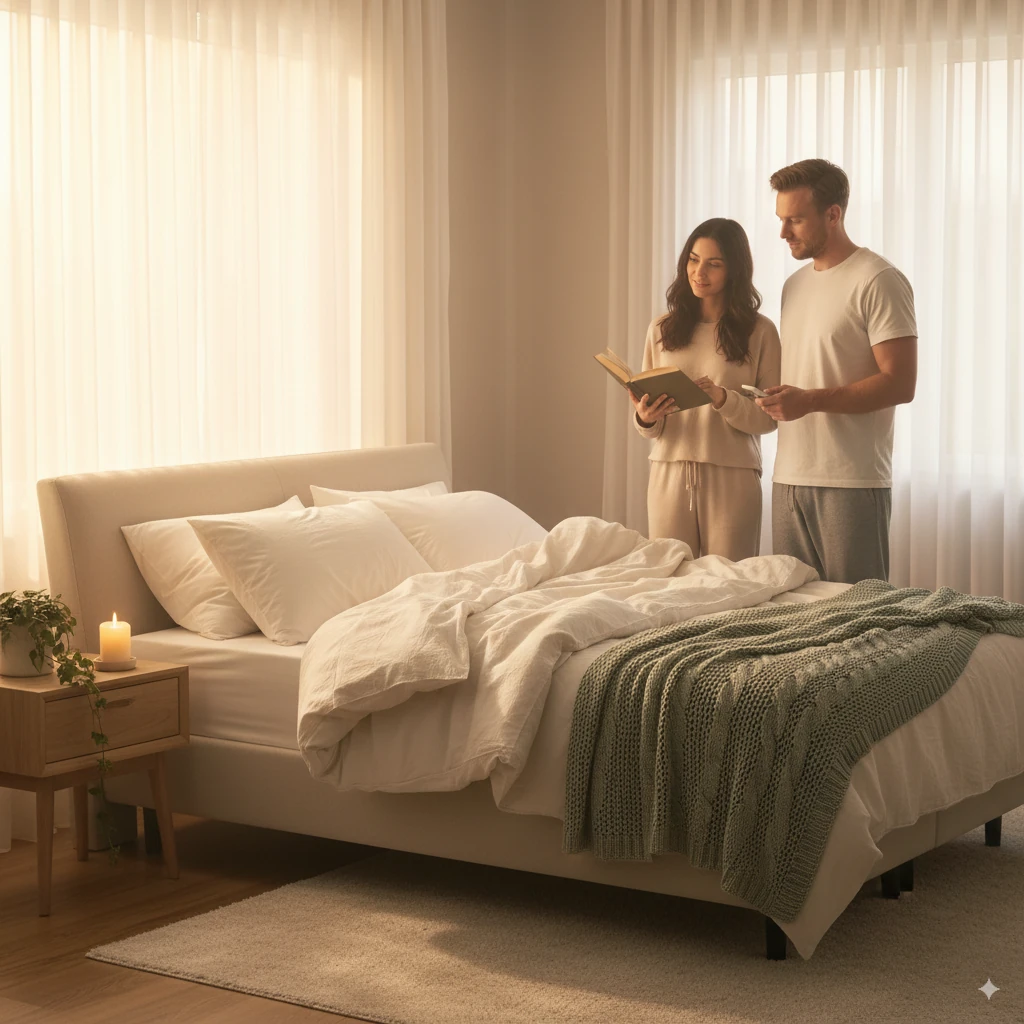
A split king setup shows adjustable bed mattress compatibility in action with dual firmness and smooth flex for couples.

Foam Mattresses: The Flexibility Champions

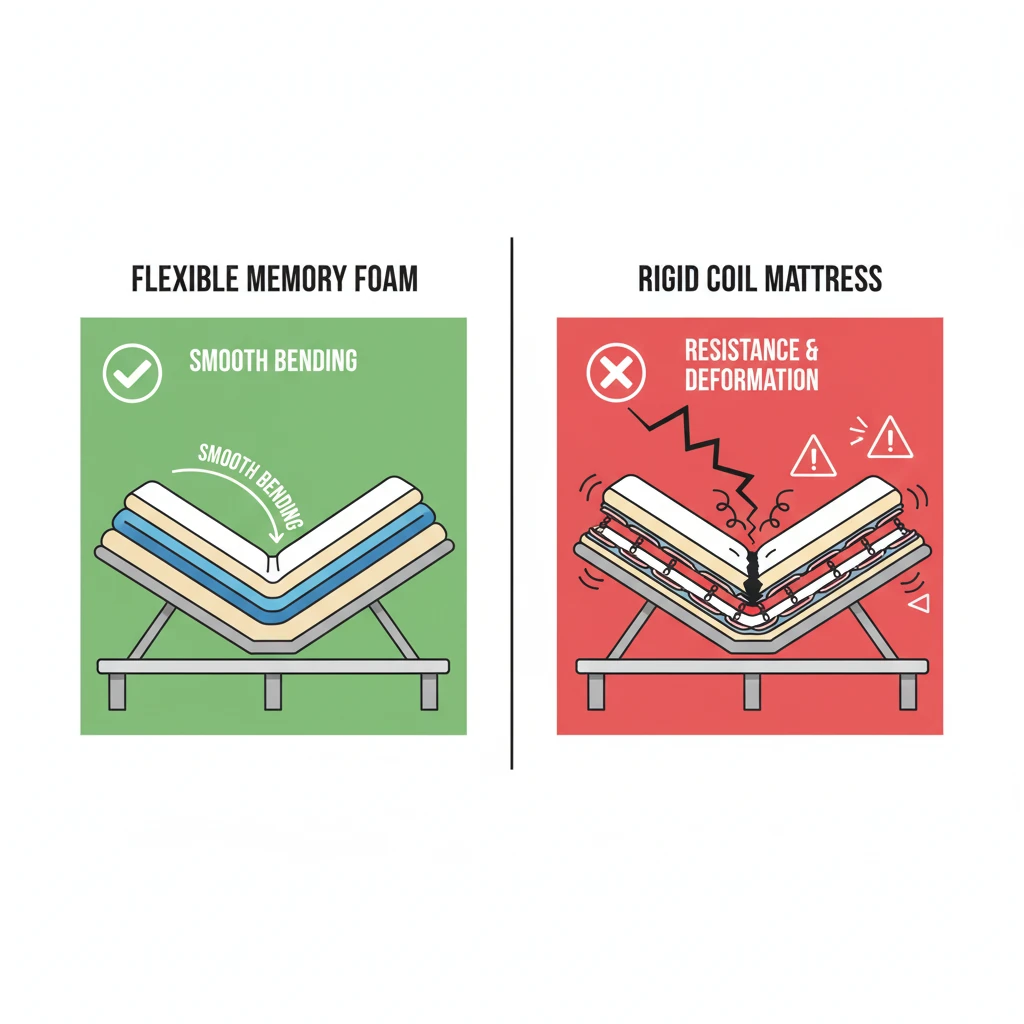
  • Memory Foam: Contours closely and bends without fighting the base—often the easiest win for adjustable frames.
  • Latex Foam: Naturally buoyant yet flexible; great if you prefer a cooler, more responsive feel.

Foam mattresses shine with adjustable beds because their layered construction curves smoothly as you raise your head or legs. If you’re comparing materials, this helpful
memory foam vs. latex comparison outlines comfort, durability, and motion response.

Foam mattress demonstrating adjustable bed mattress compatibility with smooth flexibility.

Hybrid Mattresses: Modern Flexibility (With a Caveat)

  • Hybrids: Look for pocketed coils and flexible foam layers; these typically move well on an adjustable base.
  • Traditional Innerspring: Unless specifically labeled “adjustable-base compatible,” many won’t bend cleanly.

Hybrids can feel balanced—supportive yet plush—if they use individually wrapped coils and quality foams. For shopping context and sizing fit, see our in-depth
mattress selection guide.

Hybrid mattress showing adjustable bed mattress compatibility with flexible coils and foam layers.

Innerspring and Air Beds: The Caution Zone

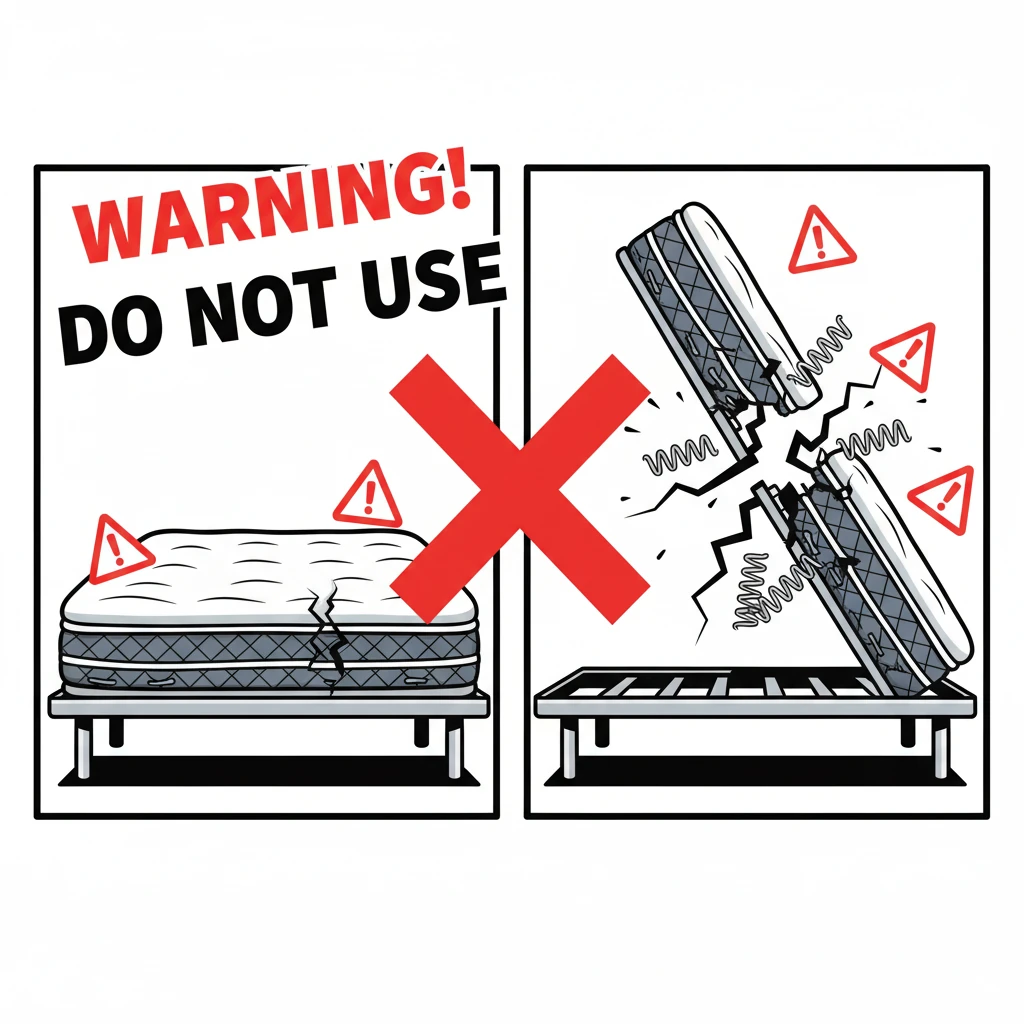
  • Traditional Innerspring: Stiff builds and interconnected coils can create gaps and pressure points.
  • Air Beds: Some models are designed for adjustable use—read specs carefully before committing.

When in doubt, buy only mattresses labeled “adjustable base compatible.” Overly firm or two-sided designs often resist flexing and may wear prematurely.

Traditional innerspring showing poor adjustable bed mattress compatibility due to stiffness.

Pros and Cons of Adjustable Bed Mattress Compatibility

Picking a compatible design pays you back every night—while the wrong choice can cause noise, sagging, and buyer’s remorse.


Pros of Compatible Mattresses

  • Smoother movement and quieter operation
  • Reduces pressure points—especially for side and back sleepers
  • Improves longevity of both mattress and adjustable base
  • Unlocks features like zero-gravity and anti-snore modes

Cons of Poor Compatibility

  • Premature wear, sagging, or “hinge” hot spots
  • Risk of voided mattress or base warranties
  • Limited range of motion and disrupted comfort
  • Potential noise or mechanical strain from forced flexing

Want a broader comfort tune-up? Explore ways to upgrade your sleep quality in our quick guide to
bedding science for better sleep.

Common Myths About Adjustable Bed Mattress Compatibility

Let’s clear up the biggest misconceptions so you can shop with confidence.

Debunking myths about adjustable bed mattress compatibility with practical examples.

“All mattresses work with adjustable beds.”

Not true. Traditional innersprings and extra-firm, two-sided designs often can’t bend properly. Always check for “adjustable base compatible” in the specs.

“You have to buy an expensive mattress.”

Plenty of budget-friendly memory foam and latex options work great. Focus on construction details and compatibility markers, not price alone. See our
mattress size and compatibility guide to avoid common pitfalls.

“Adjustable beds ruin mattresses.”

Not if you choose the right mattress. Compatible builds are made to flex for years—choose carefully and follow care instructions.

How to Check Adjustable Bed Mattress Compatibility

Before buying, confirm the label or product page states “adjustable base compatible.” Scan construction details (pocketed coils, pliable foams), check thickness (often 10–13″ is a sweet spot), and read warranty language for adjustable use. When possible, choose brands with 30–100 night home trials so you can confirm the feel on your base at home.
For sustainability-minded setups, see our eco-friendly bed frame guide.

Final Thoughts on Adjustable Bed Mattress Compatibility

The right pairing makes your adjustable base feel like a personal comfort remote. Keep this short list handy:

  • Best picks: Memory foam, latex, and adjustable-ready hybrids
  • Avoid: Stiff innerspring or two-sided mattresses not labeled as compatible
  • Always: Read specs, confirm warranty coverage, and consider a home trial
  • Explore: More adjustable-friendly options in our side-by-side mattress guide

Choose a mattress with true adjustable bed mattress compatibility and you’ll unlock comfort, pressure relief, and customized lounging—night after night.

FAQ

What mattresses are best for adjustable beds?
Memory foam, latex, and hybrids with pocket coils and flexible foams. They bend easily while maintaining support.
Can I use my old mattress on an adjustable bed?
Only if it’s labeled “adjustable base compatible.” Traditional innersprings and extra-firm designs may be damaged and can void warranties.
Will using an adjustable base ruin my mattress?
No—choose a compatible model. These are engineered to flex repeatedly without premature wear.
Are adjustable-friendly mattresses more expensive?
Not necessarily. Many affordable memory foam and latex options work beautifully with adjustable bases.
How can I test adjustable bed mattress compatibility?
Opt for a 30–100 night home trial and confirm comfort and motion on your actual base before you commit.

Learn more in our mattress selection guide, explore adjustable-friendly mattresses, find eco-friendly options for your base, and get our full mattress compatibility breakdown.

For trusted external advice, visit the Sleep Foundation’s adjustable mattress guide, practical bedroom layout ideas from Apartment Therapy, and material insights in this latex vs. memory foam comparison. For healthy sleep habits, see the Mayo Clinic’s sleep tips.

Related reading from Cozy Bed Quarters

Other reading we found popular


Dulane Upholstered Sleigh Bed: What to Know Before Buying

Dulane Upholstered Sleigh Bed: Elegant Comfort for Your Bedroom - Featured Image

The dulane upholstered sleigh bed is a low-profile, fabric-covered sleigh bed sold under Wayfair’s Willa Arlo Interiors label, with a scroll wingback headboard, deep diamond button tufting, and an engineered wood frame. It ships with wooden slats and center support legs, so you don’t need a box spring — just a mattress. If you want the curvy, old-world sleigh shape without heavy carved wood, this is the softer, more modern take on it.

Below is what the bed actually is, how the fabric choices differ, how much room it needs, and the honest limits of what anyone can tell you about it without having one in the house.

What the Dulane upholstered sleigh bed actually is

Strip away the marketing and the spec sheet is simple. The retailer’s listing describes an engineered wood frame wrapped in chenille or velvet upholstery, a curved wingback headboard filled with dense foam, and 12 wooden slats plus center support legs that make a box spring unnecessary. Neutral colorways — think cream, grey and black — are what you’ll usually see in stock.

Engineered wood matters here. It’s not solid oak or walnut; it’s a manufactured panel core under fabric. That keeps the price and the weight down, and it’s perfectly normal for upholstered beds in this range, but it also means the joints and bolts are doing real work. Snug hardware is what keeps this kind of frame quiet. If long-term rigidity is your top priority, read our guide on how to choose a sturdy bed frame before you commit.

Dulane upholstered sleigh bed with a curved velvet headboard and low footboard in a neutral bedroom

Why the sleigh shape still works

A sleigh bed is defined by its curved or scrolled headboard and footboard, a silhouette that came out of the French and American Empire period of the early 19th century and looks like the sled it’s named after. Traditionally that meant thick, dark, heavy wood — beautiful, but it can swallow a small room.

The Dulane keeps the curve and drops the bulk. The headboard scrolls outward into wingback sides, the footboard stays low, and the whole thing sits closer to the floor than a classic wooden sleigh. You get the shape and the sense of enclosure without a wall of timber at the foot of the bed. If you want the full background on the style and how it’s evolved, see what is a sleigh bed.

Low-profile sleigh bed with scrolled headboard and footboard styled in a calm, neutral bedroom

Chenille vs velvet: which fabric to pick

This bed is offered in more than one fabric, and the choice changes how the room feels and how much upkeep you sign up for. Neither is “better” — they age differently.

Fabric Looks like Living with it
Chenille Soft, matte, slightly nubby; reads casual and warm Cozy underhand and forgiving about light. The looped pile can snag on claws and zippers, so vacuum gently
Velvet Short dense pile with a sheen that shifts as you walk past; reads dressy Shows pile marks and pressure lines. Brushing the nap back into place is part of the deal

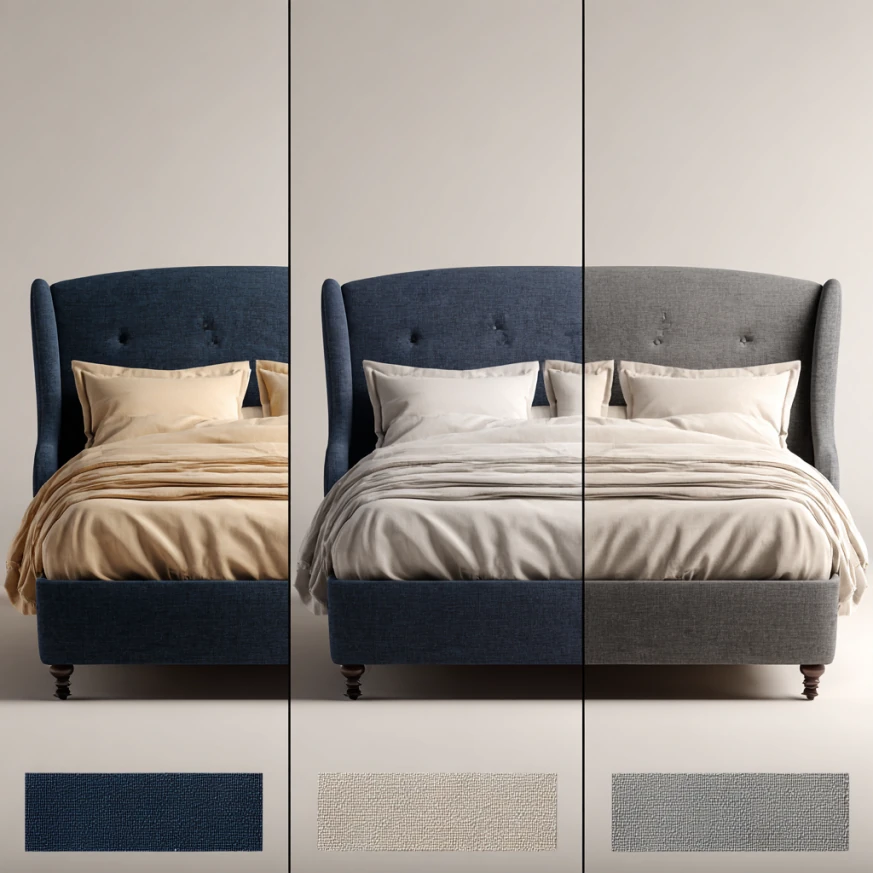
Colour does as much work as texture. Cream lifts a dark room but shows every scuff near the footboard. Charcoal or black grounds a bright room and hides marks, though it collects lint and pet hair in plain sight. Our comparison of velvet vs upholstered bed frames walks through the trade-offs in more detail.

Chenille and velvet upholstery swatches in cream, grey and navy for an upholstered sleigh bed

No box spring needed — and what that means for you

The slat-and-centre-leg system carries the mattress directly, so skip the box spring. A few practical knock-ons:

  • Your mattress height sets the look. A low-profile frame plus a thin mattress can sit lower than you expect. If you like sliding off the edge at hip height, choose a taller mattress.
  • Foam and hybrid mattresses are happy on slats as long as the gaps are close together. Twelve slats across a queen is a reasonable spread.
  • Adjustable bases are usually a no. Beds with attached side rails and a fixed slat deck rarely accept one unless the base is sized to drop inside the frame. Ask the seller before you assume it fits.
  • Under-bed storage is limited. Low profile plus centre legs means shallow bins at best. If you need real storage, a different frame style will serve you better.

Sizing and room fit

Size availability shifts with stock, so confirm on the listing rather than trusting any blog — queen is the size most commonly shown. Whatever size you land on, measure the room before you buy, not after delivery.

For a queen, planning references suggest about 30 inches of clearance around the bed, with 36 inches being more comfortable. Run painter’s tape on the floor at the bed’s full outer dimensions — remember the sleigh curves push the footprint past the mattress size — then open every door and drawer in the room and see what collides. If you’re weighing a bigger frame, our breakdown of king vs California king dimensions covers the extra floor space each one demands.

One more thing people forget: getting the headboard up a narrow staircase or around a tight landing. Check the box dimensions, not just the assembled ones.

Side profile of an upholstered sleigh bed showing the padded wingback headboard and curved rails

Comfort: the headboard does the heavy lifting

The reason people buy padded beds over wooden ones is the sit-up position. A foam-filled wingback headboard gives you something to lean back into for reading, laptop work or a late episode, and the wings block a little draught and light from the sides. Against a plain wooden headboard, it’s a genuine difference you feel every night.

The footboard is a different story. Sleigh footboards curve up and inward, so tall sleepers who like to stretch a foot over the end don’t get that option. If you’re over about six feet, sit on a sleigh bed in person before ordering one online.

Person reading against the padded tufted headboard of an upholstered sleigh bed

Styling it without making the room feel heavy

A tufted, curvy bed is already doing a lot visually. Let it lead and keep everything else calm.

  • Bedding: one texture contrast is plenty — crisp cotton percale against velvet, or a chunky knit throw over smooth chenille. If you’re deciding between a duvet setup and an all-in-one, our guide to duvets vs comforters lays out the differences.
  • Pillows: two sleeping pillows, two euro squares, one lumbar. More than that and you’re moving furniture every morning.
  • Nightstands: because the frame sits low, tall nightstands look off. Aim for a top roughly level with the mattress.
  • Rug: run it under the bed and out past the sides by 18 to 24 inches so the curves have room to breathe.
  • Seasonal swap: heavier quilts and warm tones in winter, light cotton or linen in summer. It’s the cheapest way to make the room feel new.

Layered bedding, throw and accent pillows styled on an upholstered sleigh bed

Keeping the fabric looking new

Upholstered frames need a bit more attention than wood or metal, but it’s five minutes of work, not a project.

  1. Find the care code first. Upholstery tags carry a letter: W means water-based cleaners are fine, S means solvent only, WS means either, and X means vacuum or brush only, no liquid. Using water on an S-code fabric can leave rings you can’t remove.
  2. Vacuum weekly with a soft brush attachment, paying attention to the tufted buttons and the crease where the headboard meets the mattress — dust and hair collect there.
  3. Blot spills, never rub. Rubbing pushes the stain deeper and roughs up the pile. Test any cleaner on a hidden spot near the base first.
  4. Keep it out of direct sun. Strong afternoon light fades dyed fabric unevenly, and you’ll notice it first on the headboard wing that faces the window.
  5. Retighten the bolts a few weeks after assembly and then once or twice a year. Almost every “my bed creaks” complaint about engineered wood frames starts with a loose fastener.
  6. Rotate the mattress. Guidance varies by mattress type — roughly every six months for most modern mattresses and more often for older innersprings. Follow your mattress maker’s instructions over any general rule.
  7. Use a mattress protector so spills stop at the mattress instead of soaking into the rails.

Close-up of the upholstered corner and wooden frame joint on a sleigh bed

Who it suits — and who should skip it

Good fit if you want a soft, traditional-leaning focal point, you read or work in bed, you’re furnishing a guest room or primary bedroom in a neutral palette, and you’d rather not buy a box spring.

Look elsewhere if you need serious under-bed storage, you want an adjustable base, you’re tall and hate a footboard, or you have a cat who treats fabric as a scratching post. In those cases a painted wooden sleigh frame is worth comparing — see choosing a painted sleigh bed for that route.

Honest caveat: we haven’t tested this bed in person, and the only feedback available is customer reviews on the seller’s own listing. Treat those as directional, not proof, and check the return window before ordering.

FAQ

Does the Dulane sleigh bed need a box spring?

No. It comes with 12 wooden slats and centre support legs, which take the mattress directly.

What sizes does it come in?

Availability changes over time. Queen is the size most consistently listed; confirm current options on the retailer’s page rather than relying on a third-party list.

What tools do I need to assemble it?

Flat-pack upholstered beds like this normally need only a screwdriver or the supplied Allen key, with hardware and instructions in the box. Two people make the headboard far easier to handle.

Is it pet-friendly?

Fabric beds and claws are an uneasy mix. Chenille in particular can pull into loops. A washable throw over your pet’s favourite corner is cheap insurance.

Can I reupholster it later?

It’s not designed for that. The fabric is fixed at the factory, so choose the colour you can live with for years.

What décor styles does it match?

The curved shape plus neutral fabric lands in transitional territory, so it sits comfortably with modern, classic, farmhouse or softly glam rooms. It fights hard-edged industrial and strict mid-century schemes.

Updated September 2026.

Gold Canopy Bed: Styles, Sizing, Styling and Care

Gold Canopy Bed: Elegant Luxury for Your Bedroom - Featured Image

A gold canopy bed is a four-post frame with a metallic gold finish and an open rectangular top rail, and it works as the single focal point of a bedroom — so the rest of the room can stay simple. Before you buy, measure two things: your ceiling height against the frame height, and your floor space against the mattress footprint plus walking room. After that, styling is mostly about picking a palette, deciding whether you want drapes, and keeping the finish dusted.

What you’re actually buying with a gold canopy bed

“Gold” on furniture almost never means gold. Most frames in this category are steel or iron with a brass-toned plating or a gold-colored powder coat. Some are wood with a gilded or gold-leaf finish, and a few are upholstered frames with gold-finished metal posts or trim. The difference matters for care and for how the bed reads in a room.

  • Powder-coated metal: the most common and the most forgiving. The color is baked on, so it doesn’t tarnish, though it can chip if you knock it hard.
  • Plated or polished brass-look metal: brighter and more reflective, and more likely to show fingerprints and dull over time in humid rooms.
  • Gilded or gold-painted wood: heavier, warmer, usually more ornate. Finish touch-ups are harder to match.
  • Mixed metal and upholstery: softer look, and the fabric absorbs a little sound. Worth a look if a bare metal frame feels too cold — see the case for upholstered canopy beds.

Ask sellers what the finish actually is. A listing that only says “gold” tells you nothing about whether you’re getting a durable coating or a thin plate over cheap tube steel. For a wider comparison of frame construction, our breakdown of wood vs metal vs upholstered frames covers the trade-offs in more detail.

Gold canopy bed with slim metal posts in a bright, softly styled bedroom

Will it fit? Measure before you fall in love

This is where canopy beds go wrong. The posts on a full-height canopy typically land somewhere in the 6.5 to 7.5 foot range, and the top rail needs breathing room above it or the bed feels like it’s pressing into the ceiling. The International Residential Code sets a 7-foot minimum ceiling height for habitable rooms, and plenty of older homes and finished basements sit close to that floor. An 8-foot ceiling is common in newer US construction, which usually leaves enough clearance for a standard canopy — but only if you check the listed frame height, not just the bed size.

A few practical checks:

  • Measure floor to ceiling in the exact spot the bed will go, and subtract the frame’s total height. Leave at least 6–12 inches of visual space above the rail.
  • Watch for ceiling fans, sloped ceilings and low light fixtures. A canopy under a fan is a problem you’ll notice every night.
  • Measure your doorway, stair turns and hallway. Canopy beds ship flat-packed, but long post sections still have to get into the room.
  • Plan walking room. Designers commonly aim for roughly 24–30 inches of clear floor on each side of the bed. That’s a comfort rule of thumb, not a code requirement, and a small room can work fine with less on one side.
Mattress size Mattress dimensions Room width that feels comfortable
Full 54 x 75 in About 9.5 ft with 30 in each side
Queen 60 x 80 in About 10 ft with 30 in each side
King 76 x 80 in About 11.5 ft with 30 in each side
California king 72 x 84 in About 11 ft wide, and 4 extra inches of length

Frames add an inch or two beyond the mattress on each side, so treat these as a starting point and check the manufacturer’s overall dimensions. If you’re shopping the largest sizes, our roundup of canopy bed frames for a king mattress is a useful next stop.

Styles that actually work

Modern and minimal

Thin, squared-off posts with no finial and no ornament. This version reads more like sculpture than antique, and it’s the safest choice for a small or low-ceilinged room because you see straight through it. Pair with white or oatmeal bedding, one piece of large-scale art, and very little else.

Minimalist gold canopy bed with slim square posts in a small modern bedroom

Polished gold canopy bed frame with clean lines and neutral bedding

Traditional and ornate

Scrollwork, turned posts, finials, sometimes a carved or upholstered headboard. It needs ceiling height and a bit of room to breathe, and it looks best with heavier textiles — velvet, damask, a real rug. If you like this direction, the history behind four-poster beds explains where the silhouette came from.

Ornate gold canopy bed with upholstered headboard in a traditional bedroom

Romantic and draped

Sheer panels tied at the posts, or fuller curtains you can actually close. Sheers soften the hard lines of a metal frame and make the bed feel like a room within a room. Skip the drapes entirely if you want the frame itself to be the graphic element. There are more layouts in our romantic canopy bed ideas.

Gold canopy bed draped with soft velvet curtains for a romantic bedroom look

Vintage and boho

An older brass-look frame, layered textiles, plants, mismatched pillows. Gold is forgiving here because the patina and slight unevenness read as character rather than damage.

Styling it without overdoing it

Gold is loud. The frame is doing most of the work, so the rest of the room should support it rather than compete.

  • Pick a lane with color. Jewel tones — emerald, sapphire, deep plum — make gold look rich and deliberate. Warm neutrals like cream, oatmeal and taupe make it look calm. Both work; mixing them tends to look muddy. Soft green with gold is a gentler middle path.
  • Repeat the metal, sparingly. Two or three small gold touches — a mirror frame, lamp base, drawer pulls — tie the bed into the room. More than that and it starts to feel like a showroom.
  • Mixing metals is fine. Choose one dominant metal (the bed) and one supporting metal (black, bronze or nickel), and spread the supporting one across at least two objects so it looks intentional.
  • Keep the rest of the furniture quiet. Plain nightstands and a simple dresser let the canopy stay the focal point.
  • Light it warmly. Warm-toned bulbs bring out the brass tones. Cool white light makes gold finishes look slightly green.

Gold canopy bed styled with layered textiles, warm lamps and jewel-tone accents

How a gold canopy bed affects sleep, honestly

The frame itself doesn’t make you sleep better — no bed finish does. What can help is the environment you build around it. The Sleep Foundation points to a dark, quiet and comfortably cool bedroom, with less clutter and calming colors, as the setup most likely to support consistent rest. Heavier canopy curtains can genuinely block light from a streetlamp or an early sunrise, and the enclosure makes some people feel more settled. That’s a real benefit, though it’s about the curtains and the room, not the gold.

The flip side is dust. Fabric above your head collects it, and if you have allergies that’s worth taking seriously. Mayo Clinic advises washing bedding weekly in water of at least 130 F and getting rid of dust-collecting items in the bedroom, including curtains that can’t be washed. So if you’re draping the frame, buy machine-washable panels and actually wash them. Or skip the fabric and enjoy the open frame.

The downsides nobody mentions

  • Assembly is a two-person job. Long posts and top rails are awkward to hold square while you tighten bolts.
  • Dust sits on the top rails. You’ll need a step stool or an extendable duster every few weeks.
  • Cheap plating chips. On budget frames, exposed edges and bolt points are where the gold wears off first.
  • It’s hard to move and hard to restyle. A canopy commits the room to one layout. More on that in our look at the hidden downsides of luxury bed frames.
  • Fingerprints on shiny finishes. Brushed and matte golds hide handling far better than mirror-polished ones.

If the footprint worries you but you still want the height and drama, compare the differences between canopy and four-poster beds — a four-poster without a top rail gives you some of the same presence with less visual weight.

Keeping the finish looking new

  • Dust weekly with a dry microfiber cloth, top rails included.
  • Clean gently. A barely damp cloth, then dry immediately. Skip abrasive pads, scouring powders and bleach-based cleaners — they scratch coatings and can discolor plating permanently.
  • Don’t use brass polish on a coated frame. Polish is designed to remove tarnish from bare metal and will cut straight through a lacquer or powder coat. If you’re not sure which you have, test in a hidden spot or ask the maker.
  • Retighten hardware twice a year. Tall frames develop a wobble as bolts loosen, and a wobbling canopy gets worse fast.
  • Wash canopy fabrics on a schedule and use felt pads under the feet so you don’t scrape the finish when the bed shifts.

Well-maintained gold canopy bed in an elegant master bedroom with neutral bedding

Gold canopy bed questions people ask

Will a gold canopy bed work in a small bedroom?

Usually yes, if you choose a slim, unornamented frame and skip the drapes or use sheers. The open structure lets your eye travel through it, which is why a canopy often feels lighter in a small room than a bulky upholstered headboard. Keep the walls light and the surrounding furniture low.

What ceiling height do I need?

Match it to the frame, not a rule. Check the listed overall height and leave several inches of clear space above the top rail. Under an 8-foot ceiling, look for lower-profile canopy frames rather than full-height ones.

Does the gold finish tarnish?

Powder-coated finishes don’t tarnish, though they can chip. Plated brass-look finishes can dull over time, especially in humid rooms, and polishing them risks removing the plating. Dusting and keeping moisture off does most of the work.

What bedding colors look best?

White, cream, blush and soft gray keep things calm and let the frame stand out. Emerald, navy and deep burgundy push it toward drama. Pure cool-toned grays and stark blue-whites can fight with warm gold.

Can I mix gold with silver or black?

Yes. Let gold dominate, add one secondary metal, and repeat that second metal at least twice in the room so it looks like a choice rather than an accident.

Do I have to hang curtains?

No. An undraped frame is a modern look in its own right, and it’s easier to keep clean. Add fabric only if you want light control, privacy or a softer feel.

Updated September 2026.

Why Bedding Ceremonies Disappeared from Modern Weddings

"Modern wedding reflecting the disappearance of bedding ceremonies and rise of private traditions"

Disappearance of Bedding Ceremonies: 7 Reasons They Vanished

The disappearance of bedding ceremonies tells a bigger story about how we love, celebrate, and protect our privacy today. Once a public marker of legitimacy, the bedding ceremony faded as couples chose intimacy over spectacle, faith over formality, and romance over ritual. This guide explores seven reasons behind the disappearance of bedding ceremonies, connects the dots to today’s wedding trends, and offers warm, practical ideas for honoring heritage in modern, meaningful ways.

Key Takeaways: Disappearance of Bedding Ceremonies

  • The disappearance of bedding ceremonies reflects a shift from public oversight to private intimacy.
  • Modern weddings prioritize autonomy, romance, and personal meaning over communal ritual.
  • Elements of the tradition live on in symbolic acts like threshold crossings and honeymoons.
  • Evolving religious, legal, and cultural norms reduced the need for public confirmation of marriage.
  • The exact phrase “disappearance of bedding ceremonies” captures a broader cultural transformation.

1) What Was the Bedding Ceremony?

In brief: a bedding ceremony publicly marked the start of married life. Friends, family, and sometimes clergy escorted the couple to a prepared bed, added blessings, and observed symbolic gestures to confirm the union. It served legal, social, and spiritual purposes at a time when lineage and property were intertwined with marriage.

Different regions added their own flavor—humorous songs in parts of Scandinavia, solemn witnesses among English nobility, and festive toasts across Europe. While those moments can feel invasive by modern standards, they helped communities acknowledge and support a new household. Today, couples seeking a calmer, more restorative environment often focus instead on the bedroom’s atmosphere—layout, lighting, and textiles—to nurture connection in private.

If you’re designing a restful couple’s space, our guides on flow and harmony can help:
Feng Shui Principles for Bedroom Layout and
Create a Serene Bedroom Sanctuary.

Historical illustration of witnesses at a marriage bed explaining why the bedding ceremony vanished

2) Why the Ceremony Mattered: Law, Lineage, and Social Proof

Short answer: it proved the marriage “counted” to the community. In eras when property, inheritance, and alliances hinged on marriage, the bedding ceremony’s public nature offered social proof. Blessings and symbolic acts spoke to fertility, prosperity, and continuity of family lines.

As recordkeeping improved and legal systems modernized, couples no longer needed a public rite to validate their union. Privacy gained value and the public spectacle lost its purpose. What grew in its place were softer traditions—romantic dinners, keepsake letters, and cozy first-night rituals. For setting the scene, see
Feng Shui Bedroom Elements for calming, balanced design that supports rest and closeness.

A modern couple’s quiet bedroom underscores the disappearance of bedding ceremonies by favoring privacy over public ritual.

3) Privacy Becomes the Priority

Bottom line: intimacy moved behind closed doors. Today’s couples define romance on their own terms—private getaways, curated bedroom ambiance, and gentle routines that feel personal rather than performative. Social media may broadcast the celebration, but the most tender moments remain off-camera.

Small design choices can make a big difference: breathable organic bedding, low lighting, uncluttered surfaces, and textures that invite relaxation. If you’re upgrading essentials, this quick primer helps you invest wisely:
7 Reasons to Invest in Quality Bedding.

A softly lit space shows how the disappearance of bedding ceremonies aligns with private, romantic bedroom design.

4) Changing Religious and Cultural Emphasis

In essence: faith moved from overseeing beds to blessing bonds. Modern ceremonies emphasize vows, partnership, and shared values. Even traditional communities now center personal spirituality and mutual respect over public rituals like the bedding ceremony.

Many couples express meaning through atmosphere—selecting textures, colors, and symbols that reflect their story. For practical styling ideas rooted in harmony and comfort, explore
Feng Shui Bedroom Tips for Harmony.

A calm, faith-inspired space illustrates how the disappearance of bedding ceremonies shifted focus to personal vows and meaning.

5) Romance Replaces Ritual

Quick take: love leads, ritual follows. Where bedding ceremonies once formalized unions, couples now personalize with unity candles, letters for future anniversaries, or curated keepsake boxes. The emotional core remains, just expressed with warmth and consent.

Thoughtful bedding choices enhance comfort and connection—think organic bedding, sustainable bedding fibers, and eco-conscious sheets that feel good and do good. Elevated basics make everyday life together more restful and restorative.

A couple’s intimate moment conveys how the disappearance of bedding ceremonies gave way to romance-first traditions.

6) Modern Traditions with Old Roots

The gist: pieces of the past still sparkle. Carrying a partner over the threshold, honeymoons, or weaving heirloom fabrics into décor all echo the old ritual—now practiced privately, not publicly. Couples may include blessings or songs in intimate, consent-forward ways.

If you’re blending heritage with modern comfort, consider sleep-positive layouts and textiles that support rest, connection, and personal meaning. These resources can help you plan a soothing, symbolism-rich space:
Serene Bedroom Sanctuary and
Bedroom Layout Principles.

7) How Literature and Media Keep the Image Alive

In short: fiction preserves a dramatic version of the past. From historical novels to TV epics, bedding ceremonies linger as storytelling devices—heightening stakes and revealing social norms. Real weddings, however, have moved toward personalization, privacy, and care-centered comfort.

When couples take inspiration from history, they tend to translate it into cozy, consent-centered details: soft lighting, heirloom textiles, and restful design that tells a quieter story. For calming fundamentals, review
Investing in Quality Bedding.

Buyer’s Guide: Materials, Certifications, and Comfort

One reason the disappearance of bedding ceremonies feels natural today is that couples craft comfort privately—choosing fabrics, weaves, and certifications that match values and skin feel. Here’s a quick, friendly primer:

  • Cotton (Percale vs. Sateen): Percale is crisp and breathable; sateen is smoother and drapier. Both shine when long-staple fibers are used.
  • Linen: Airy, textured, and temperature friendly. It softens over time and suits warm or mixed climates.
  • Bamboo Viscose / Modal: Often very soft with a cool hand; look for credible testing and clear care instructions.
  • Organic & Sustainable Cues: Prioritize organic bedding and eco-conscious sheets with reputable certifications and transparent sourcing.
  • Thread Count, Honestly: Higher isn’t always better—fiber quality and weave matter more than a big number on the label.

For deeper, trusted reading:
Sleep Foundation: Best Bedding Guides,
Sleep Foundation: Best Sheets, and
Sleep Foundation: What Is Thread Count?.

FAQ

What caused the disappearance of bedding ceremonies?
A cultural shift toward privacy, legal modernization, and romance-first values made the public ritual unnecessary.
Are there modern equivalents?
Yes—private threshold crossings, intimate blessings, honeymoon rituals, and heritage textiles nod to the past without the audience.
How can we honor tradition without reviving the ceremony?
Weave in symbolic items (ribbons, songs, heirloom linens) and create a restful bedroom with sustainable bedding that supports your shared life.

Final Thoughts

The disappearance of bedding ceremonies isn’t a loss of meaning—it’s a re-centering of love, consent, and comfort. As you build a life together, let your bedroom quietly reflect your story: peaceful, private, and restorative. If you’re ready to upgrade what touches your skin each night, start here:
Investing in Quality Bedding.

Related Reading


Nuptial Bedding Ceremonies: History, Ritual and Decline

Medieval nuptial bedding ceremony showing European marriage traditions

Nuptial bedding ceremonies were the old European custom of escorting a newly married couple to bed in front of family, friends and neighbours, so the community could vouch that the marriage had really begun. In most cases the guests blessed the bed, sang, joked and then withdrew before anything private happened — the point was public proof, not voyeurism. The ritual was widespread through the Middle Ages, thinned out across the 1600s and 1700s, and had largely disappeared from elite weddings by the early nineteenth century.

Key takeaways

  • The bedding rite turned a private act into a matter of public record, which mattered when inheritance and alliances hung on it.
  • Witnessing the couple into bed was normal; witnessing sex itself was rare and mostly reserved for high-stakes royal matches.
  • Clergy often blessed the bed, and food, drink and noise were part of the fun.
  • There is no single end date. The custom faded unevenly — earlier at court, later in rural communities.

What actually happened at a bedding

Strip away the television versions and the rite follows a fairly consistent shape. The wedding feast wound down, and the couple were led upstairs by a crowd — family, friends, servants, whoever had been eating and drinking all afternoon. Bride and groom were usually undressed in separate rooms and brought together in the marriage bed, which was often decorated with flowers. A priest might bless the bed. In England, the blessing was followed by a benediction posset, a cup of sweetened spiced wine shared by the couple, according to the reference entry on rituals of the marriage bed.

Then came the horseplay. In Shakespeare’s England, guests played “fling the stocking” — the bride threw a stocking into the crowd and whoever caught it was promised good luck, a clear ancestor of the bouquet toss. Historian Katie Barclay notes that in sixteenth-century Germany couples were put to bed to pipes, drums and deliberately rowdy noise, with the party carrying on loudly outside the chamber afterwards so nobody could hear what was happening inside. That detail says a lot: the racket was a courtesy as much as a joke.

Medieval noble couple escorted to the marriage bed by guests during a nuptial bedding ceremony

Finally the bed curtains were pulled shut and the guests filed out. Heavy hangings on a four-poster bed did real work here — they were the closest thing a crowded medieval household had to a bedroom door.

Why a bed ritual carried legal weight

Before the Catholic Church tightened its rules, a marriage could be made by the couple’s consent alone. Secret or “clandestine” marriages were disapproved of, but they were generally held to be valid, which left endless room for argument about who was married to whom. That changed with the decree Tametsi, issued by the Council of Trent in November 1563, which required a marriage to take place before the parish priest and two or three witnesses to be valid.

In that world, a room full of people who saw a couple put to bed was useful evidence. If a family later tried to wriggle out of an inconvenient match, or a cousin challenged a child’s legitimacy, witnesses could speak. Consummation was the other half of the equation: an unconsummated marriage was far easier to annul, so proving it had happened protected the bride’s position as much as anyone’s.

The most famous example is Katherine of Aragon. She married Arthur, Prince of Wales, at Old St Paul’s in November 1501 and was widowed five months later. Decades on, Henry VIII’s lawyers argued his own marriage to her was invalid because she had consummated her first one — a claim she denied to the end of her life. Whole dynasties turned on the question of what happened in a bedchamber, which is exactly why people wanted witnesses in the room.

Courtiers and guests standing as witnesses beside a canopied marriage bed at a bedding ceremony

Blessings, fertility and the things we can’t prove

Clergy involvement was real and well documented: in Catholic Europe a priest or bishop commonly blessed the bed and prayed over the couple, framing the wedding night as a sacred duty rather than a private indulgence. For noble houses hoping for an heir, that blessing was insurance as much as piety.

You will also read confident lists of herbs supposedly strewn on the sheets — lavender for calm, rosemary for remembrance, myrtle for love — plus charms tucked under pillows and white linens standing for purity. Herbs and flowers in bedding are genuinely old, and beds were decorated for weddings. But the tidy symbolic key you see repeated across the internet is mostly modern folklore reasoning rather than documented ritual practice. Treat it as atmosphere, not evidence.

Priest blessing a decorated nuptial bed as part of a wedding night ritual

How the custom varied across Europe

There was never one script. The rite bent to local humour, local law and local housing.

  • England: priestly blessing, the spiced posset, stocking throwing, and at court a heavy political overlay — a royal bedding announced that an alliance was sealed.
  • German-speaking lands: musicians, bawdy songs and noise outside the door, with the couple dressed for bed separately beforehand.
  • Scotland: Barclay’s work shows the bedding was common well beyond the nobility, with neighbours putting ordinary couples to bed as a sign of community approval.
  • France: the court version was pure protocol, while a rowdier village tradition of bringing the couple a drink in the small hours — jokes included — survived long after the formal rite died.

Our deeper regional breakdown lives in the changing face of nuptial bedding ceremonies in medieval and early modern Europe.

Torchlit procession of wedding guests escorting a bride and groom to the bedchamber

Versailles, 1770: the ritual at its most formal

The best-documented bedding of them all happened late in the tradition’s life. When the future Louis XVI married Marie Antoinette at Versailles on 16 May 1770, the Archbishop of Reims blessed the bed, the king handed his grandson his nightshirt, the Duchess of Chartres handed the dauphine hers, and the couple lay down in front of the assembled court to show they shared the same bed.

Two things stand out. First, this was theatre of state, not a peep show — the courtiers bowed and left. Second, it worked as ritual and failed as biology: the marriage famously went unconsummated for years, which is a decent reminder that the ceremony proved a couple had been put to bed, and nothing more.

When did nuptial bedding ceremonies end?

Gradually, and at different speeds for different people. Charles I of England reportedly barred his bedroom door against the wedding party, yet the custom carried on for roughly another century across social classes, royalty included. Several historians of English royal weddings place the death of the public royal bedding around the end of the 1600s, while the French court was still performing it in 1770. In rural communities, versions of neighbours putting a couple to bed lingered into the nineteenth century.

Three forces pushed it out:

  1. Paperwork replaced people. As parish registers, marriage licences and civil records became the proof of a valid marriage, eyewitnesses in the bedroom stopped being necessary.
  2. Houses changed. Corridors, separate bedrooms and the idea of personal privacy made a crowd in the bedchamber feel like an intrusion rather than a compliment.
  3. Manners changed. Enlightenment politeness and then Victorian propriety recast the wedding night as the couple’s own business. The wedding stayed public; the night went behind a closed door.

If you want the dates and the arguments laid out in full, see our guide to when bedding ceremonies ended.

Timeline illustration showing bedding ceremonies shifting from public ritual to private tradition

Myth versus record

Fantasy drama has done the bedding ceremony’s reputation no favours. The version where a jeering crowd carries the bride off and stays to watch is the exception, not the rule. Sources describing the rite across Europe agree that the witnessing was usually of the couple being placed in bed together, after which everyone left; actual observed consummation shows up in a handful of high-stakes dynastic cases, not in ordinary weddings.

A few other claims deserve a shrug. The idea that grooms carry brides over the threshold because of Roman or medieval bedding custom is repeated everywhere and pinned down almost nowhere; it may be genuinely old, but the chain of evidence is weak. Same with neat symbolic meanings assigned to bedding colours. We go through the shaky bits in were bedding ceremonies real.

Then and now

Element Then Now
Purpose Public proof the marriage had begun Private start to married life
Audience Family, neighbours, courtiers Nobody, by design
Proof of marriage Witnesses and consummation Signed register or licence
What’s at stake Inheritance, alliances, legitimacy The relationship itself
Ritual objects Blessed bed, spiced posset, flowers Fresh linens and a decorated room

What survives today

The closest living relative is the Jewish practice of yichud, when the couple withdraw alone to a private room immediately after the ceremony, with witnesses confirming the seclusion. In traditional law this publicly signals their new status as husband and wife — the same logic as the old bedding rite, minus the audience and the drinking songs.

Elsewhere the echoes are softer: the decorated honeymoon suite, guests seeing the couple off at the end of the night, the bouquet toss standing in for the flung stocking. Some couples have revived a gentle, consent-first version of the escort as a bit of wedding theatre, which we cover in is the bedding ceremony still practised today.

Historical painting of a European bedchamber scene linked to nuptial bedding ceremony traditions

Modern bedroom styled for a wedding night, echoing older bedding ceremony traditions

FAQ

Were nuptial bedding ceremonies real?

Yes. They are documented across medieval and early modern Europe, in royal accounts, church records and folklore collections, among ordinary families as well as the nobility.

Did guests really watch the couple have sex?

Almost never. The standard pattern was to see the couple into bed, bless them, tease them and leave. Observed consummation appears only in rare, politically loaded royal cases.

Was the ceremony legally required?

No single law demanded it, but it functioned as evidence. After the Council of Trent’s 1563 decree, a priest and witnesses were required for a valid Catholic marriage, and consummation made a union far harder to annul.

When did the tradition stop?

There is no clean end date. It faded from courts between the late 1600s and the late 1700s and survived in some rural communities into the 1800s.

Why did the custom disappear?

Written records replaced eyewitnesses, houses became more private, and social manners turned sharply toward modesty.

Updated September 2026.

Cardboard Bed Frame: Strength, Cost and Eco Pros & Cons

Cardboard Bed Frame Eco-Friendly: 7 Benefits of Sustainable Sleep - Featured Image

A cardboard bed frame is a flat-pack sleeping base made from layered corrugated or honeycomb board that supports a mattress without screws or tools. Engineered properly, it is genuinely strong — the recycled-cardboard frames used in the Tokyo 2020 Olympic Village were rated to hold about 200 kg (440 lb) — but it is also light, cheap and completely intolerant of moisture. It suits students, renters, guest rooms and temporary setups; it is not the frame to buy if your room is damp or you want furniture that lasts a decade.

What a cardboard bed frame actually is

Cardboard beds are built from thick corrugated panels, usually double-walled or stacked into a honeycomb core, then folded or slotted into interlocking boxes. The strength does not come from the paper itself but from the geometry: vertical flutes and closed cells carry compression along their edges, which is the same principle that lets a stack of shipping boxes hold a pallet load. Most commercial designs assemble in roughly 10–20 minutes with no hardware, and they flat-pack again when you move.

Some models add a water-resistant coating or a printed finish (white, kraft, or wood-grain). Plain uncoated board is the easiest to recycle at end of life; coatings, heavy tape and glue make that harder, so treat “100% recyclable” claims as conditional on how the frame was built and finished.
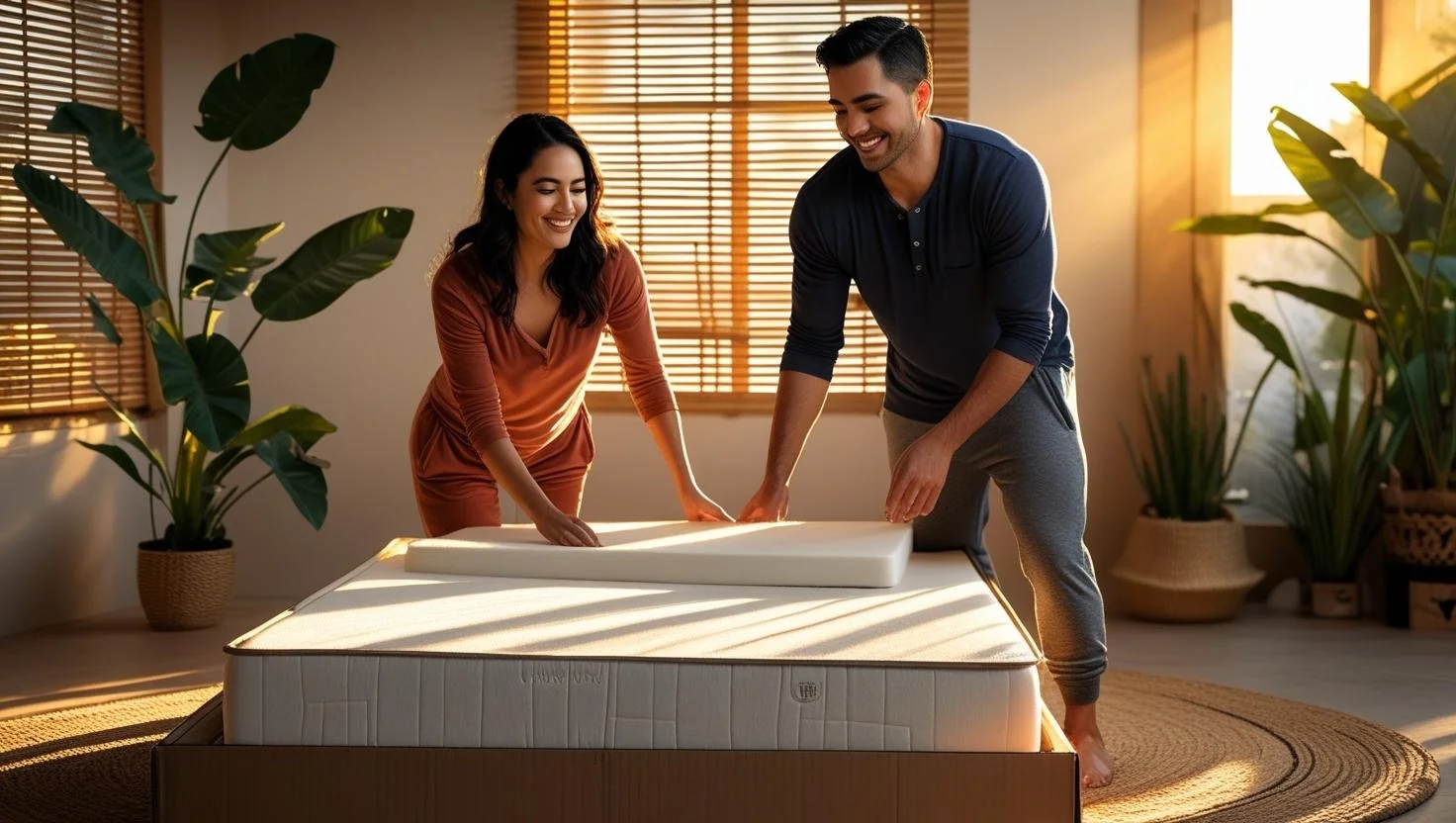
Cardboard bed frame eco-friendly design

How strong are they, really?

Strong enough for adult use, when the design is right. The clearest documented example is the Olympic Village: Japanese bedding maker Airweave supplied 18,000 recycled-cardboard bed frames for the Tokyo Games, designed to be extremely light and fast to assemble, and press coverage at the time reported a rated capacity of 200 kg (440 lb). Cardboard beds have also been used seriously in disaster response: architect Shigeru Ban developed a cardboard bed for evacuation centres whose shipping box doubles as under-bed storage.

Be sceptical of eye-catching load figures, though. Capacity claims vary widely between sellers, are rarely tied to a published test method, and apply only to the assembled frame in dry indoor conditions with the load spread across the whole base. Treat any number you see as a manufacturer claim rather than an independent test result, and check what it assumes about static versus dynamic (sitting, bouncing) loads.
Creative cardboard bed frame eco-friendly in a modern bedroom setup

A creative, lightweight frame pairs well with minimalist decor.

DIY cardboard bed frame eco-friendly project with layered structure

Cost, weight and portability

Cardboard is the cheapest category of bed frame you can realistically sleep on. Commercial flat-pack models are typically priced well below comparable solid-wood or steel frames, partly because a light box costs far less to ship. Prices move constantly, so check current listings rather than trusting any figure quoted in an article — including ours.

A DIY build can cost close to nothing if you collect clean, dry double-walled boxes from appliance or furniture retailers; your real spend is glue, tape and paint. The practical payoff is weight: one person can lift and reposition the frame, and dismantling for a move takes minutes instead of an afternoon with an Allen key. If portability is the main reason you are shopping, compare against a foldable bed frame, which packs down similarly but tolerates damp and rough handling far better.

Lightweight and easy to move cardboard bed frame

Sizes, height and mattress fit

Cardboard frames are sold and built to standard US mattress dimensions, so fit is a measuring exercise, not a compromise.

Size Mattress (inches) Notes
Twin 38 x 75 Easiest DIY build; least span to support
Twin XL 38 x 80 Common in dorms
Full 54 x 75 Needs a centre support line
Queen 60 x 80 Most popular size; centre support essential
King 76 x 80 Best as two linked modules, not one span

For room-planning clearances and bedding fit, our queen size bed dimensions guide covers the numbers in detail. Most cardboard designs sit somewhere around 12–18 inches tall, which usually leaves usable under-bed clearance — handy in small rooms, and the reason shelter designs put the packing box underneath as storage. Because the deck is a continuous flat surface rather than widely spaced slats, foam and hybrid mattresses sit evenly on it; check your mattress warranty, as some require slat gaps under a set width or a solid base.

The real limits: moisture, pests and heat

This is where honesty matters more than enthusiasm. Paperboard loses mechanical strength as it takes up moisture from the air: research on box compression shows substantial strength loss at high relative humidity — on the order of roughly a third at 80% RH — and the effect is continuous, not a cliff edge. In practice that means a cardboard frame belongs in a dry, heated, well-ventilated room. Basements, damp ground-floor rentals, humid climates without air conditioning and anywhere prone to condensation are poor candidates.

Two more caveats worth stating plainly:

  • Combustibility. Corrugated board burns readily. Keep the frame away from heaters, candles, and draped extension leads. We could not find a flammability standard written specifically for bed frames, so there is no test mark to look for here.
  • Pests and clutter. Corrugated board has voids that insects can shelter in, and it cannot be wiped or sprayed like metal. If you have had bed bug problems, a sealed metal or solid-wood frame is the easier surface to inspect and treat.

Cardboard also cannot be repaired the way wood can. A crushed corner stays crushed, so plan on replacing panels rather than fixing them.

How to build your own cardboard bed frame

A DIY build is a realistic weekend project with no carpentry experience, provided you respect the structure.

  1. Collect the right board. Double-walled boxes from appliance or furniture shops; clean, dry, uncrushed. Thin single-wall grocery boxes are not adequate for a sleeping load.
  2. Measure to your mattress. Build the deck to the mattress footprint, adding an inch or so of tolerance so bedding tucks without forcing the panels apart.
  3. Design in modules. Several linked boxes beat one large open span. For anything Full-size or wider, run a continuous support line down the centre.
  4. Orient the flutes vertically. In every support column, the corrugations should run top-to-bottom so load travels along the flutes. This single detail makes the largest difference to capacity.
  5. Build honeycomb or triangular cores. Rolled cardboard tubes, or interlocking cross-slotted panels, fill the load-bearing boxes. Triangles and closed cells resist racking; open rectangles do not.
  6. Glue, clamp, cure. Use a strong PVA-type adhesive across full faces rather than tape alone, weight the assembly while it dries, and leave it overnight before loading.
  7. Cap the deck. Finish with one or two full-width top sheets so point loads spread across all the supports underneath.

Making it last longer

  • Lift it off the floor. Feet, pads or thin blocks stop wicking from cold or occasionally wet floors.
  • Add a barrier layer. A breathable mat or thin foam sheet between mattress and deck reduces abrasion and condensation contact.
  • Seal exposed edges. Taped or coated cut edges resist fraying, which is where cardboard usually starts to fail.
  • Keep humidity moderate. Ventilate the room, and do not push the bed tight against an exterior wall that gets cold.
  • Do not sit on one edge. Concentrated loads on a rail crush the flutes. Sit toward the middle, over a support.
  • Inspect twice a year. Look for sagging deck panels, soft corners and separated glue lines; swap the panel before it collapses.

Reinforced cardboard bed frame eco-friendly design with moisture protection

Simple risers and sealed edges help your frame last longer.

Is the eco case solid?

Mostly, yes — with nuance. Corrugated packaging is among the most recycled materials in the waste stream: the US EPA has reported a recycling rate of 80.9% for paper and paperboard packaging in 2018, though later estimates using revised methods are lower, so the headline number depends on who is counting. A cardboard frame is light to ship, made largely from recovered fibre, and can re-enter that recycling stream at the end of its life — the Olympic frames, for instance, were donated and recycled rather than landfilled.

The honest counterpoint is lifespan. A frame that lasts two years and is replaced repeatedly is not automatically greener than a solid hardwood or steel frame that lasts twenty. Cardboard wins clearly for short-term needs — study years, sublets, guest rooms, staging a home — and for avoiding new hardwood and steel demand in those cases. For a permanent bedroom, compare it honestly against the options in our eco-friendly bed frame materials comparison, and see our sustainable bed frames guide for longer-lived picks.

Style without extra waste

Cardboard takes decoration well, which is half the appeal for DIY builders.

  • Staggered panels for a layered, sculptural edge profile.
  • Water-based, low-VOC paint — light coats only, since soaking the board weakens it.
  • Low-heat LED strips tucked under the deck lip for ambient light.
  • Cut-out cubbies in the plinth for books, shoes or bedding.
  • A slot-in headboard with geometric cut-outs, braced to the wall side rather than cantilevered.

If you like the low, clean look it produces, a platform bed or a Japanese futon setup achieves something similar with more durable materials. To extend the sustainability theme to the rest of the room, see our overview of sustainable sleep products for an eco-friendly bedroom.
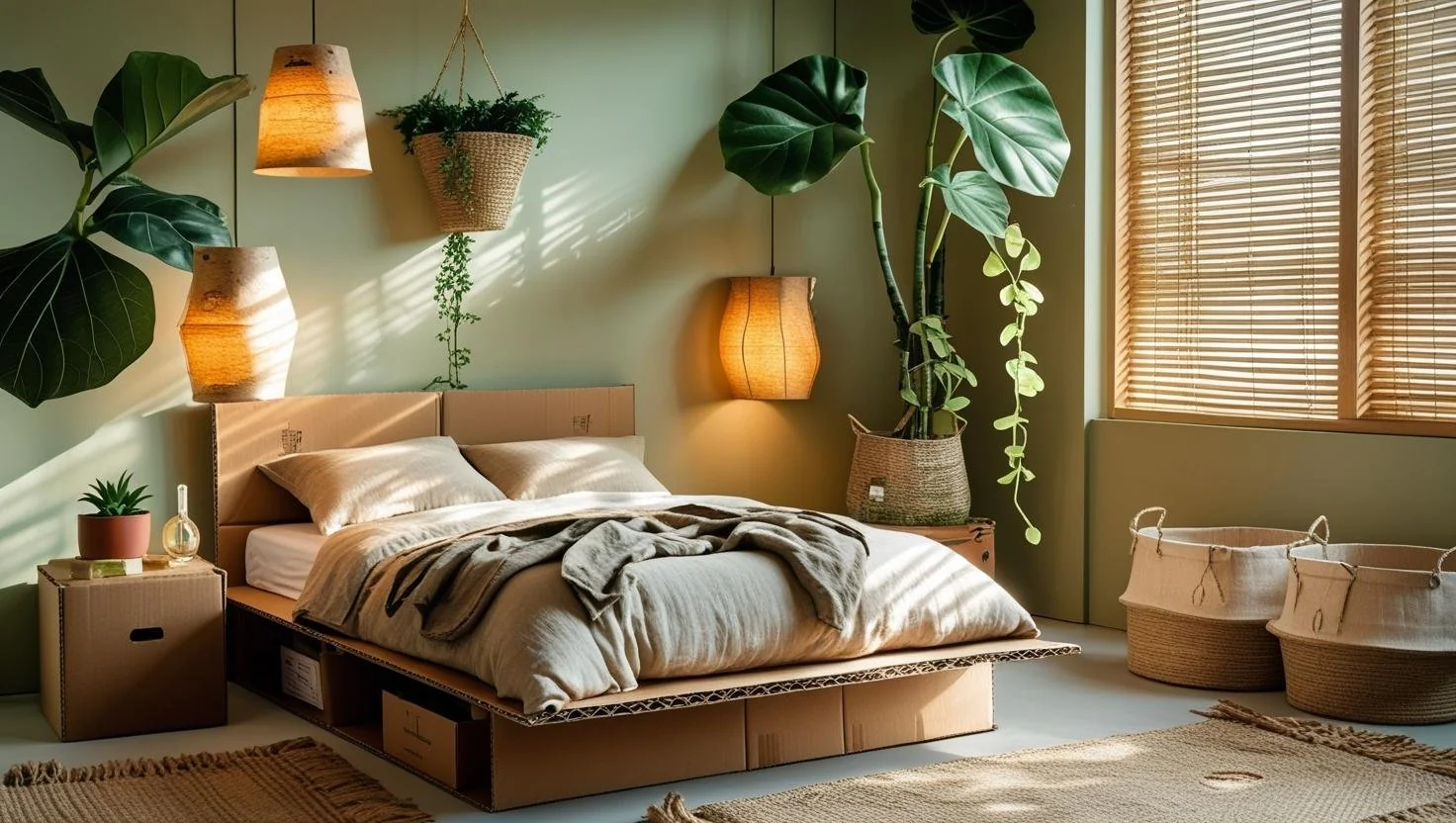
Decorated cardboard bed frame eco-friendly with artistic headboard design

Stencil art, LEDs, and storage cubbies add personality—without adding waste.

Who should buy one — and who shouldn’t

  • Good fit: students and dorms, short leases, guest rooms used occasionally, tiny homes, temporary or emergency accommodation, anyone who moves often.
  • Poor fit: damp or unheated rooms, heavy or very active sleepers who want generous margin, households with pets that chew or scratch, anyone wanting a single frame for the next decade.

If you land in the second group but still want a light, quiet, low-impact setup, a reinforced steel frame is a durable middle ground — our guide to quieting a metal bed frame covers the noise issue that usually puts people off them.

FAQ

Are cardboard bed frames strong enough for adults?

Yes, when the design uses vertically oriented flutes, honeycomb cores and a centre support. Documented examples include the Tokyo 2020 Olympic frames rated to around 440 lb. Homemade frames vary enormously, so build conservatively and test with weight before sleeping on one.

How long does a cardboard bed frame last?

There is no reliable published lifespan data. In a dry, heated room with a barrier layer and periodic inspection, owners commonly report a few years of service; in humid conditions it can be months. Expect to replace panels rather than the whole frame.

Can a cardboard frame get wet?

No. Moisture is the main failure mode — compression strength drops measurably as humidity rises. Wipe spills immediately, avoid damp rooms, and never let the base sit on a wet floor.

Do cardboard frames help with back pain?

Only indirectly. A flat, non-sagging base keeps a mattress performing as designed, which matters for comfort — but there is no evidence that cardboard does this better than wood or metal, and no frame treats back pain on its own.

Are they safe for children or guests?

For a stable, reinforced, dry frame at low height, yes for normal sleeping. They are not built for jumping or for bunk-style use, and children should not be left to climb on them.

Can I recycle it afterwards?

Usually, if the board is uncoated. Strip tape, remove glued-on plastic and check local kerbside rules; coated or heavily painted panels may need to go in general waste.

The bottom line

A cardboard bed frame is a legitimate, low-cost, low-impact way to get a mattress off the floor — proven at scale in Olympic villages and emergency shelters, and easy to build at home from free boxes. Judge it on the two things that actually decide success: honest load design and a dry room. Meet those, and it is one of the smartest temporary beds available; miss them, and no amount of tape will save it.

Updated September 2026.

Best Bedding Material for Hot Sleepers: 7 Cool Fabric Picks

Best Bedding Material for Hot Sleepers: 7 Cool Fabric Picks - Featured Image

Cooling Bedding Materials for Hot Sleepers

The best bedding material for hot sleepers keeps you cool, wicks away moisture, and promotes airflow for a more restful night’s sleep. Choosing the right fabric is crucial, as it affects temperature regulation, comfort, and overall sleep quality. Hot sleepers often struggle with night sweats and heat retention, and using the wrong bedding material can make this worse. Natural fibers like bamboo and cotton offer breathability and moisture-wicking properties, while advanced options like Tencel provide a smooth, eco-friendly alternative. Understanding the benefits of each material can help you build a sleep setup tailored to your needs, ensuring that you wake up refreshed instead of overheated.

Key Takeaways

  • Choose breathable materials like bamboo, linen, or organic cotton to regulate temperature and improve airflow.
  • Moisture-wicking fabrics help reduce night sweats and ensure a cooler sleeping surface throughout the night.
  • Pairing the right bedding with a cooling mattress or lightweight comforter enhances overall sleep quality and health.

Why Bedding Material Matters for Hot Sleepers

Finding the best bedding material for hot sleepers can make the difference between tossing and turning or sleeping soundly through the night.
Natural, breathable fabrics like cotton and bamboo are ideal because they allow air circulation and wick away moisture. Synthetic fabrics, on the other hand, can trap heat and cause discomfort.

Your body temperature naturally fluctuates throughout the night, and bedding that doesn’t allow heat to dissipate can cause overheating. Hot sleepers often benefit from bedding sets that balance softness with ventilation. For example, percale cotton sheets have a crisp weave that enhances airflow compared to sateen weaves, which tend to feel heavier and warmer. Bamboo bedding is another popular choice due to its natural cooling abilities and silky finish. Pairing these materials with lightweight, breathable comforters and pillowcases can further elevate your sleep experience.

best bedding material for hot sleepers cotton and bamboo

Top Cooling Bedding Materials

The following materials are highly recommended for hot sleepers due to their natural breathability, softness, and moisture control:

  • Bamboo: Naturally cool and hypoallergenic, bamboo sheets are known for their silky texture and temperature regulation. They also resist odors and remain soft after multiple washes.
  • Linen: Offers superior airflow and durability, making it perfect for warm climates. Linen also has a casual, airy feel and becomes softer over time.
  • Organic Cotton: Lightweight and breathable, cotton is a classic choice for hot sleepers. Organic cotton is free from harsh chemicals, making it skin-friendly.
  • Tencel (Lyocell): Made from wood pulp, Tencel has excellent moisture-wicking properties and a smooth, cool-to-the-touch finish.
  • Silk: Smooth and naturally temperature-regulating, though slightly less breathable than linen. It’s ideal for luxury sleepers seeking elegance.

Each material has unique strengths. Bamboo excels in moisture management, linen provides a rustic and ultra-cool feel, and Tencel is eco-friendly and ideal for sensitive skin. Silk, while luxurious, may require more delicate care, but its natural temperature control can still benefit hot sleepers.

cooling bedding materials for hot sleepers guide

Eco-Friendly vs Conventional Bedding

One of the most important considerations when choosing bedding is whether to opt for eco-friendly or conventional materials. For hot sleepers, the difference can be significant—not just for comfort, but also for health and sustainability.

  • Eco-Friendly Bedding: Includes bamboo, organic cotton, and Tencel. These fabrics are produced with fewer chemicals, have lower water footprints, and often carry certifications like OEKO-TEX or GOTS. They naturally regulate temperature and wick moisture, making them excellent for night sweat prevention.
  • Conventional Bedding: Typically made from standard cotton or synthetic blends like polyester. While affordable, they often trap heat, are less breathable, and may contain chemical treatments that irritate sensitive skin.

Eco-friendly bedding not only benefits the environment by reducing waste and emissions but also ensures a healthier sleep surface. For hot sleepers, sustainable options usually outperform conventional bedding when it comes to breathability and cooling comfort.


Best Bedding Sets for Hot Sleepers

Below are some of the top-rated bedding sets made from the best bedding materials for hot sleepers. These sets have been praised for their cooling properties, durability, and soft textures. They are designed to keep you comfortable, even during warm summer nights or if you live in a hot climate. Combining sheets, pillowcases, and duvet covers made from these fabrics creates a complete cooling environment for restful sleep.

best bedding sets using the best bedding material for hot sleepers

Bedding Material Pros Best For
Bamboo Soft, breathable, and moisture-wicking Hot sleepers prone to sweating
Linen Highly durable and naturally cooling Warm climates and summer months
Organic Cotton Lightweight and breathable Everyday comfort and versatility
Tencel (Lyocell) Eco-friendly and moisture-absorbent Environment-conscious hot sleepers
Silk Luxurious and temperature-regulating Luxury bedding for warm sleepers

Pro Tips for Staying Cool

Pairing the best bedding material for hot sleepers with the right sleep accessories can further enhance your comfort. Consider using a breathable mattress protector, cooling pillows, and a lightweight summer comforter to complete your setup. These additions work together with breathable bedding to reduce heat build-up and night sweats.

For expert recommendations, check:

Washing your bedding frequently can also make a difference. Natural fibers like cotton and bamboo retain freshness and softness after washes, unlike synthetic blends that may trap oils and odors. Consider rotating between two or three sets of breathable bedding so you can always enjoy a cool, fresh set on your bed.

cooling tips and the best bedding material for hot sleepers

How to Choose the Best Bedding Material for Hot Sleepers

When choosing bedding, focus on factors like thread count, fabric weave, and material blend. Lower thread counts in breathable fabrics (like 200–400 for cotton) allow better airflow, while percale weaves offer a crisp, cool feel. Avoid overly high thread counts, as they can trap heat and reduce airflow, making them less suitable for hot sleepers.

If you tend to sweat heavily, opt for moisture-wicking materials like bamboo or Tencel, which draw moisture away from the skin. Linen, while slightly rougher at first, softens over time and offers unmatched breathability. Additionally, consider investing in bedding that is OEKO-TEX certified to ensure it’s free from harmful chemicals, especially if you have sensitive skin or allergies.

how to choose the best bedding material for hot sleepers

Final Thoughts

Selecting the best bedding material for hot sleepers ensures cooler, more comfortable nights. Bamboo, linen, and organic cotton are excellent choices to enhance breathability and reduce night sweats. At Cozy Bed Quarters, we believe that investing in a high-quality set of cooling sheets is not just about comfort but also about improving overall sleep quality and well-being.

FAQ

What is the best bedding material for hot sleepers?
Bamboo and linen are top choices due to their breathability and moisture-wicking properties. Cotton is also excellent for everyday use.
Does thread count affect heat retention?
Yes, lower thread counts (200–400) allow better airflow and prevent heat trapping compared to higher thread counts.
Which bedding material is the most breathable?
Linen is considered the most breathable due to its loose weave and natural fibers, though bamboo is a close second with added softness.

Learn more in our mattress firmness guide for king beds and our best king mattress comfort & support overview.

bedroom styled with the best bedding material for hot sleepers

Related Reading