The Definitive Bedroom Rug Guide: Size, Placement & Style

bedroom rug guide - definitive bedroom rug

A Practical Guide to Choosing Bedroom Rugs

Updated: August 30, 2025

Bedroom rug guide: Ever notice how some rooms feel calm the second you walk in? The right textile underfoot fixes scale and style at the same time. This friendly bedroom rug guide gives you fast rules, mattress-by-mattress sizes, and small-space workarounds so you step onto softness every morning. For a full-room approach, also see our living room rug size rules.

Key Takeaways

  • Follow the two-foot rule: leave ~24″ of rug on the two long sides and the foot of the bed.
  • Queen = 8’x10’, King = 9’x12’; use 6’x9’ for tight queen rooms pulled slightly past the footboard.
  • Float living room pieces so at least front legs sit on the rug; extend dining rugs 24–36″ past the table.
  • Pick pile height for lifestyle: plush for comfort, low pile for easy cleaning and door clearance.
  • Measure first. A bedroom rug guide mindset prevents the “too small” look and saves returns.

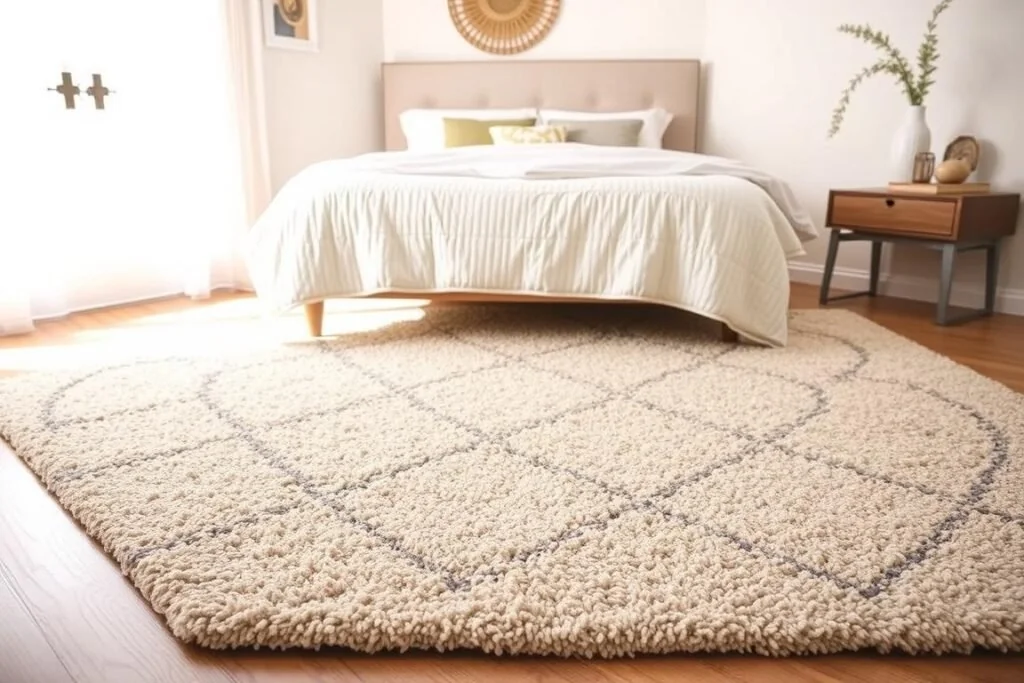
A bedroom rug guide showing an 8x10 rug under a queen bed with 24-inch featuring definitive bedroom rug

A quick visual: an 8’x10’ under a queen, leaving ~24″ around the sides and foot.

Bedroom Rug Guide at a Glance: Sizes That Always Work

You don’t need guesswork. Use these dependable dimensions and you’ll get balanced proportions in most bedrooms.

Quick bedroom rug guide: Twin 5’x8’, Full 6’x9’, Queen 8’x10’, King 9’x12’

Start here to shortlist options. These sizes anchor the bed and keep nightstands and benches reading as one composition.

The 2-foot rule: Leave about 24 inches on three sides of the bed

Plan for roughly 24″ of soft surface on the two long sides and at the foot. In a tight queen room, a 6’x9’ can still work if you pull it a quarter past the footboard.

  • Prioritize width so the rug extends slightly beyond nightstand edges.
  • Avoid matching rug width too closely to the mattress—it looks squished.
  • Planning an upgrade? Choose a size that can scale with a larger mattress later.

Quick tip: Note bed, nightstand, and room measurements before you shop. It turns buying into a one-step decision.

How to Place an Area Rug Under Your Bed for the Right Look

Placement changes how the whole room reads. Test these four layouts and pick what fits your space and habits best.
Four classic layouts from the bedroom rug guide showing rug placement under bed - definitive bedroom rug

Four classic placements: full coverage, two-thirds under, side accents, or a runner at the foot.

All the way under

Go hotel-plush: the bed, nightstands, and bench sit fully on the rug. The result is cohesive, quiet, and anchored.

Two-thirds under

Slide the rug so the top third stays in front of nightstands and pull it a bit past the footboard. You’ll see more pattern where it counts.

Side-by-side accents

In very tight rooms, use two 2’x3’ mats for soft landings on each side. Align their front edges with the nightstands for symmetry.

Runner at the foot

A runner warms the aisle without bulk on the sides. If possible, rest footboard legs on the runner for a finished edge. Layer a favorite small rug over a larger neutral base when you need extra scale.

  • Center the layout on the room’s main axis for cleaner sightlines.
  • Check doors and drawers—leave clearance so nothing scrapes the pile.
  • Mark edges with painter’s tape to preview coverage before committing.

According to the Sleep Foundation, a calming, well-designed sleep space supports rest—and soft rugs underfoot contribute to that restful environment.

Bed-By-Bed Rug Size Breakdown: Twin, Full, Queen, and King

This section of the bedroom rug guide matches real room constraints with sizes that feel right the moment you step out of bed.

Twin

A 5’x8’ usually provides generous side coverage in kids’ or guest rooms. In narrow layouts, try a long runner on one side or two shorter runners for targeted softness.

Full

For a full bed, 6’x9’ hits the sweet spot. If space is tight, flank with runners aligned to nightstand fronts so feet land on cushioned surfaces.

Queen

Choose an 8’x10’ for balanced proportions. If a 6’x9’ is all that fits, pull it down so at least a foot of rug shows at the end of the bed.

King

A 9’x12’ feels properly scaled. Keep ~8″ between rug edges and nightstands and aim for ~12″ beyond the foot so the setup reads finished.

  • Footboard detail: If your frame has feet, place them on the rug for an intentional look.
  • Low-profile platform frames can sometimes size down and still feel balanced.
  • Check vents and heater registers so nothing blocks airflow.

Materials That Feel Great Barefoot: Wool, Viscose, and Synthetics

Fiber choice changes the first step of your day. Pick what matches comfort, care, and budget.
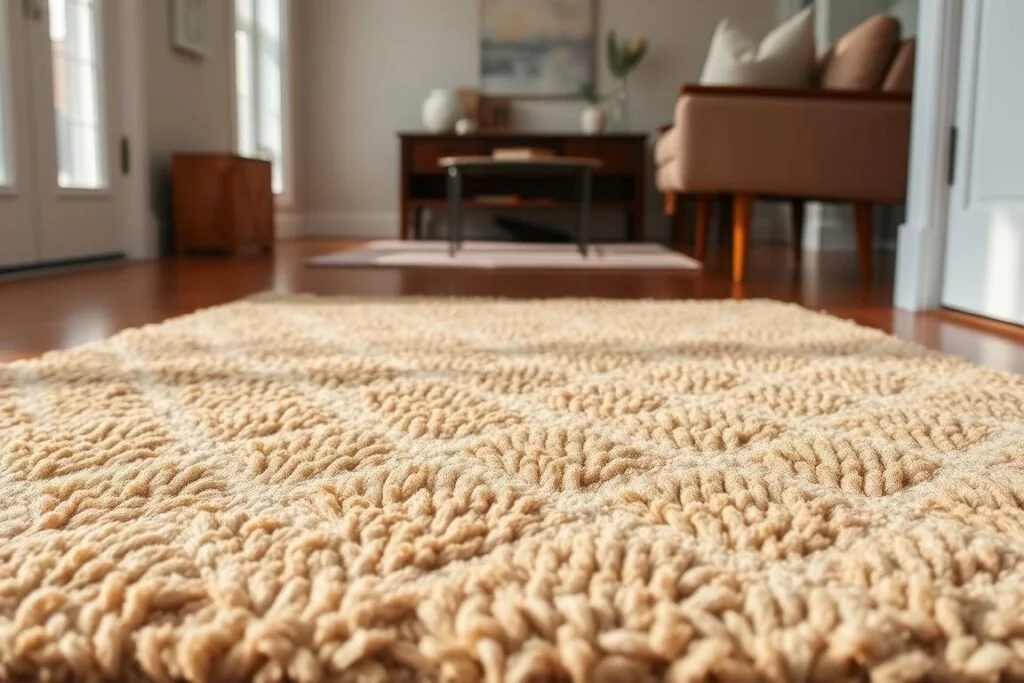
Different rug materials from the bedroom rug guide including wool, vis featuring definitive bedroom rug

Wool for cozy durability, viscose for sheen in low-traffic rooms, synthetics for value and easy care.

Wool: Naturally soft, insulating, and great at hiding footprints. A top pick for cozy bedrooms.

Viscose (silk blends): Velvety sheen and luxe look, but gentler care—best for low-traffic primary suites.

Synthetics (nylon, polyester, PET): Budget-friendly and easy to clean. PET resists stains and holds color well.

For responsible shopping, review textile standards with Ethical Bedding’s certification guide before you buy.

  • Tip: Check door clearance, rotate rugs for even fading, and filter by material when shopping to save time.

Color and Style: From Neutral Bedroom Rugs to Statement Patterns

Color sets the mood in seconds. Use this bedroom rug guide mindset: calm where you rest, character where you want energy.

Neutral tones for a calm, sophisticated look

Beige, gray, and ivory play nicely with changing bedding and paint. Wool adds warmth without shouting; viscose blends give a subtle, dressy sheen.

Bold colors and patterns that won’t overwhelm

Let the rug be the statement. In smaller rooms, pick tighter motifs or tone-on-tone patterns so the eye can rest. On hardwood, layer a flatweave under a patterned top piece for depth without bulk.

  • Echo a hue from the rug in pillows or art for cohesion.
  • Test swatches in daylight and lamplight—colors shift after dark.
  • Lighting matters. See our Bedroom Lighting Guide.

Small Bedrooms and Apartments: Smart Rug Layouts That Maximize Space

Small floor plans benefit from layered solutions that make the room read larger and calmer.
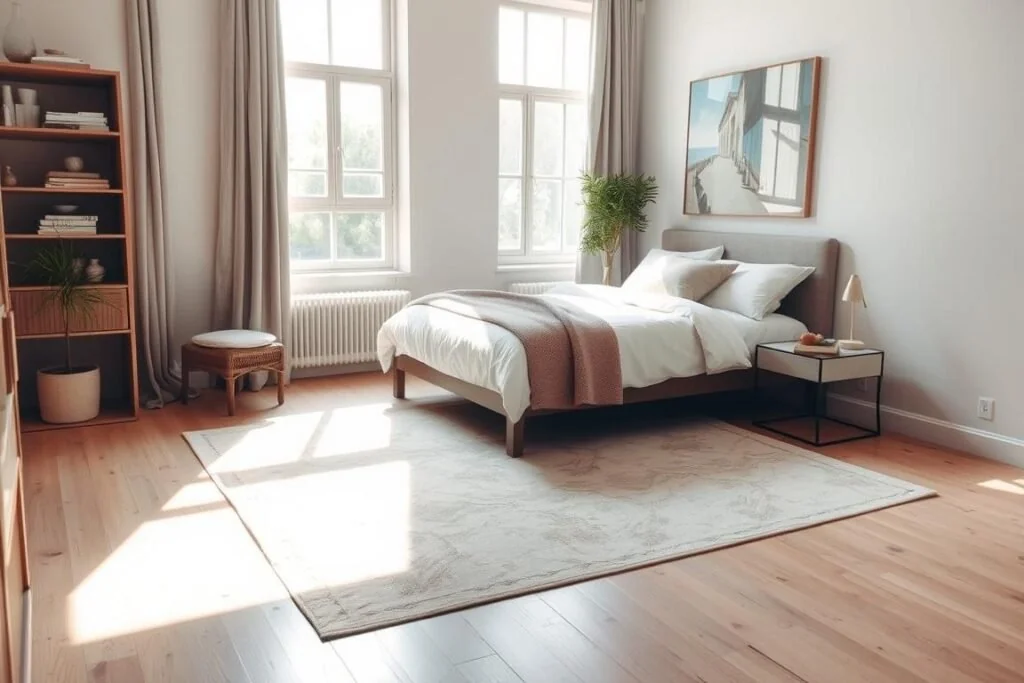
Bedroom rug guide example for small room rug layouts using layering - definitive bedroom rug

Layer a natural jute base, then center a smaller patterned rug for scale without overspending.

When smaller textiles work

If your bed sits against a wall, float a smaller rug in front to keep the footprint tidy. When furniture floats, size up so legs land on the rug and the floor reads as one field.

  • Keep 3–6 inches between rug edges and baseboards in very tight rooms.
  • Prefer light tones to expand visual space; avoid heavy borders that box the area.
  • Use low pile to clear doors and reduce trip edges.

Try these space-smart strategies:

  • Layered base + top: 9’x12’ jute with a smaller showpiece on top for scale.
  • Small float: A compact rug in front of a wall-anchored sofa or bed.
  • Upsized field: Choose the next standard dimension when furniture floats.

For whole-home flow, see our Dining Room Rug Size Guide.

Runners and Side Rugs: Cozy Alternatives to Full Area Rugs

Not every room needs a giant rug. Place softness exactly where you step and keep the center open and airy.

Two 2’x3’ accents for warm landings

Set a 2’x3’ on each side and align their front edges with your nightstands. It feels intentional from both sides of the bed.

2.5’x8’ runners for narrow layouts

Great in tight aisles or along a king. Pick low pile so doors and closet swings clear the surface.

  • Side mats give softness where you need it without crowding the room.
  • A long runner warms the path at the foot of the bed.
  • Leave ~3″ from baseboards to avoid curling and ease cleaning.
  • Use cushioned pads under runners for extra comfort and grip.
  • Match pieces from one collection to repeat pattern across the room.

Common Rug Mistakes to Avoid in the Bedroom

Small scale choices can make a good design feel piecemeal. Fixes are simple when you know what to look for. Prefer a video walk-through? Watch this concise explainer: How to choose the right rug size.

Buying too small: Why chopped-up rooms look accidental

Undersized pieces leave skinny strips on the sides of the bed. Aim for at least ~24″ on three sides so the bed ties to the floor.

Rug width too close to bed width: The “squished” effect

When widths match, the outline feels tight. If you love a smaller piece, layer it over a larger natural-fiber base for proper scale.

Legs on or off: Be consistent

Pick a lane—either all legs on or all off. Mixed legs look awkward and make zones feel incomplete.

Orient to the room, not just the bed

  • Run the rug with the room’s long axis in narrow spaces.
  • Maintain clear walkways to closets, baths, and doors.
  • Preview with painter’s tape; it catches scale issues fast.

Quick tip: In multi-use bedrooms, one larger rug usually beats several small ones for unity.

Beyond the Bedroom: A Quick Room-to-Room Rug Size Guide

Use these simple sizing rules to make every space feel intentional and easy to move through.

Living room essentials: Start with 8’x10’ or 9’x12’. Keep 30–36″ of walkway around major furniture and set at least front legs of seats on the rug. See our living room size rules.

Dining room math: Add 24–36″ beyond table edges so chairs stay on the rug when pulled out. Choose low pile for easy movement. Learn more in our dining room rug guide.

Hallways & entryways: Use runners with ~3″ wall clearance. Avoid seams at doorways on very long corridors.

Kitchen & bath: Place runners or 2’x3’ accents at sinks and vanities for traction and comfort.

Want fiber deep-dives? Try Rug Materials 101 next.

FAQ

What size rug works best under a queen bed?

An 8’x10’ is the most reliable pick. In tight rooms, a 6’x9’ can work if you pull it down so at least a foot of rug shows at the end.

Should nightstands sit on the rug?

It’s optional. For a plush, hotel feel, place them fully on. For flexibility, keep the top third of the rug in front of the nightstands.

Do I need a rug pad in the bedroom?

Yes. Pads add cushion, reduce slipping, and help rugs last longer—especially helpful on hardwood and with runners.

What if my rug is a bit too small?

Layer it over a larger jute or sisal base. You keep the pattern you love and gain the scale the room needs.

Conclusion

Wrap up your layout with sizes that fit how you live. This bedroom rug guide boils it down: Twin 5’x8’, Full 6’x9’, Queen 8’x10’, King 9’x12’, plus the ~24″ rule for comfy step-offs. Pick wool for warmth, viscose for low-traffic sheen, or PET for easy care. Anchor living and dining furniture (front legs on; chairs fully on), keep measurements handy, and you’ll build calm, cozy rooms that work every day. For more cozy, practical ideas, visit Cozy Bed Quarters.

Related reading from Cozy Bed Quarters

Other reading we found popular

The Best Cooling Mattresses for Hot Sleepers

Cooling Mattresses Hot Sleepers - Best Cooling Mattress

Cooling Mattresses That Support Restful Sleep

The best cooling mattress keeps airflow steady, wicks away heat, and prevents night sweats so hot sleepers can rest cool and comfortable all night long.

Overheating at night is one of the most common reasons for restless sleep. If you’ve ever tossed and turned while sweating, you know how much temperature impacts comfort. Fortunately, mattress technology has advanced, and cooling designs are now available at every budget. From breathable latex to hybrid beds with airflow coils, there’s a cooling solution for every sleeper.

Before making a choice, check our mattress buying guide for step-by-step selection tips and compare materials in memory foam vs spring mattress. Combination sleepers should also see our position-based mattress guide.

Key Takeaways

  • Gel foams, latex, and hybrids are the top cooling mattress materials.
  • Different sleeping positions need firmness + airflow balance.
  • Couples benefit from motion-isolating yet breathable designs.
  • Look for cooling covers, coils, and phase-change fabrics.
  • Search with the phrase best cooling mattress to find top picks.

Why cooling matters for hot sleepers

Temperature regulation is crucial for deep, restorative sleep. When mattresses trap heat, sleepers wake up more often, disrupting natural sleep cycles. Cooling mattresses use breathable covers, open-cell foams, coils, or latex to prevent overheating and keep your core temperature steadier through the night.

According to the CDC, adults need at least seven hours of sleep per night—staying cool can help you reach that target consistently.

Mini-scenario: If you wake up sweaty at 3 a.m., a hybrid with airflow coils can keep you cooler without sacrificing support.

The Best Cooling Mattresses for Hot Sleepers - cooling mattresses hot sleepers

Best cooling mattress materials

Materials drive temperature control and feel. Choose based on how much contouring you like and how hot you sleep—then match responsiveness to your movement at night.

  • Gel memory foam: Infused with cooling gel to reduce heat retention while offering deep contouring.
  • Latex: Naturally breathable, durable, and bouncy—great for combination sleepers who run warm.
  • Hybrid: Coils boost airflow while foams or latex provide comfort—often the most balanced choice for couples.
  • Innerspring: Classic coil beds maximize airflow; without plush foams they can feel bouncier and less contouring.

Mini-scenario: Love a “floating” feel? Latex keeps air moving and makes changing positions easy.

Best cooling mattress by sleep position

Your sleep position determines the ideal mix of firmness and airflow. Start with support, then refine using cooling materials and breathable fabrics.

Side sleepers

Side sleepers need contouring at shoulders and hips. Hybrids with gel foams or latex keep pressure relief while avoiding heat buildup. Aim for medium to medium-soft firmness.

Back sleepers

Back sleepers require lumbar support plus cooling. Latex and hybrid models with zoned coils are ideal. Medium to medium-firm options help maintain spinal alignment.

Stomach sleepers

Stomach sleepers benefit from firmer builds to prevent hips from sinking. A latex or firmer hybrid mattress keeps airflow open and reduces overheating.

The Best Cooling Mattresses for Hot Sleepers - cooling mattresses hot sleepers

Cooling features to look for

Small details add up. Prioritize materials and constructions that move heat away from your body and keep your microclimate stable.

  • Breathable covers: Fabrics like cotton, Tencel, and phase-change textiles wick heat and moisture.
  • Zoned coils: Promote airflow and adapt support under heavier areas.
  • Open-cell foams: Create ventilation channels within the mattress.
  • Graphite & copper infusions: Draw heat away from the body and may improve durability.

For safer materials, look for trusted third-party standards. A quick primer on mattress and bedding certifications can help you spot low-VOC foams and responsibly made fabrics. Eco shoppers may also appreciate this non-toxic mattress guide.

Mini-scenario: Hot sleeper sharing a bed? Zoned coils plus a cooling cover can tame both heat and motion transfer.

Buyer’s checklist: Finding the best cooling mattress

Keep the process simple: match firmness to your position, then confirm airflow features, policies, and budget before you buy.

  • ✅ Match firmness to your sleep position (soft for side, firm for stomach, medium for back).
  • ✅ Prioritize breathable fabrics and airflow designs.
  • ✅ Couples should choose motion-isolating hybrids or latex.
  • ✅ Confirm warranty (10+ years) and sleep trial (90–120 nights).
  • ✅ Set your budget range: $600–$3,000 depending on build quality.

Comparing brands? Our breakdown of popular designs in Casper vs Purple can help you weigh cooling covers, coil systems, and feel before you commit.

Mini-scenario: If you run hot and switch positions, shortlist two medium-firm latex hybrids, then choose the one with the cooler cover and longer trial.

Price and value of cooling mattresses

Cooling models exist at every price. As you move up, expect more durable foams, latex layers, advanced covers, and longer warranties.

  • Budget-friendly ($600–$900): Gel-infused foam and entry-level hybrids.
  • Mid-range ($1,000–$1,500): Advanced hybrids with cooling covers and zoned coils.
  • Luxury ($1,800–$3,000): Premium latex and hybrids with multiple cooling layers and phase-change fabrics.

For budget picks that still sleep cool, see our best affordable mattress guide.

The Best Cooling Mattresses for Hot Sleepers - cooling mattresses hot sleepers

For deeper research, see Sleep Foundation: Best Cooling Mattress or Healthline: Best Cooling Mattresses.

FAQ

What is the best cooling mattress material?

Latex and hybrids are generally the coolest, thanks to breathable foams and coil airflow. Gel memory foams work well for contour lovers.

Do cooling mattresses really work?

Yes. Breathable materials and cooling technology reduce night sweats compared to dense all-foam beds.

Are cooling mattresses worth it?

Absolutely—if overheating disrupts your sleep, a cooling mattress improves comfort, health, and rest quality.

Which cooling mattress is best for couples?

Hybrid mattresses with motion isolation and breathable coils are ideal. Latex also suits active sleepers who move around often.

How long do cooling mattresses last?

Most quality cooling mattresses last 7–10 years depending on material quality, coil construction, and care.

Do I need special sheets for a cooling mattress?

No, but breathable sheets like cotton, bamboo, or linen maximize the cooling effect.

What’s the difference between cooling mattress toppers and cooling mattresses?

Toppers add a layer of comfort and minor cooling. True cooling mattresses have airflow-focused cores, fabrics, and long-term heat regulation.

Conclusion

The best cooling mattress combines breathable fabrics, airflow-focused construction, and firmness tailored to your sleep style. Whether you choose latex, gel foam, or a hybrid, these beds help hot sleepers finally achieve restful, sweat-free nights. For more cozy solutions, visit Cozy Bed Quarters.

Related reading from Cozy Bed Quarters

Other reading we found popular

The Best Mattresses in a Box Under $1000

Mattresses Box Under in a cozy bedroom setting

Finding an Affordable Mattress Without Sacrifice

Updated: August 24, 2025

The best affordable mattress in a box under $1000 gives you cozy comfort, reliable support, and real value—without stretching your budget. Below, you’ll find our top picks and simple tips to help you choose confidently and sleep better for less.

Shopping is easier than ever with bed-in-a-box brands shipping straight to your door. Most offer generous trials and warranties so you can test at home. For background on materials and feel, compare our memory foam vs spring mattress guide, explore our best cooling mattress, and check our complete mattress buying guide.

Key Takeaways

  • The best affordable mattress in a box under $1000 blends comfort, support, and value.
  • Great choices span memory foam, hybrid, and even entry-level latex.
  • Sleep trials and clear warranties reduce risk and boost long-term value.
  • Side, back, and stomach sleepers can all find a budget-friendly match.

Why Choose an Affordable Mattress in a Box?

It’s simple, fast, and cost-effective. These beds arrive compressed, expand after unboxing, and usually include free shipping and easy returns. Many sub-$1,000 picks still offer cooling foams, zoned support, and durable covers. According to the CDC, most adults need at least seven hours of sleep nightly—so a supportive, comfortable bed matters. The American Academy of Sleep Medicine also emphasizes consistent, healthy sleep as a pillar of overall well-being.

Scenario: Order on Monday, unbox by Thursday, and sleep on your new bed the same night—no showrooms, no waiting.

Top Picks: Best Affordable Mattress in a Box Under $1000

We weighed comfort, cooling, motion isolation, trial length, warranty, and verified owner feedback. Choose by sleep position and feel, then confirm size-specific pricing to stay under $1,000.

1. Nectar Memory Foam Mattress

Deep contouring and pressure relief make Nectar a standout for side sleepers and couples who need motion control. The brand backs it with a 365-night trial and Forever Warranty. Expect a medium-firm feel with slow-moving foam that cradles shoulders and hips.

Nectar — best affordable mattress in a box under $1000 for pressure relief - mattresses box under

Nectar’s plush contouring helps side sleepers relax tense shoulders and hips.

2. Dreamfoam Essential by Brooklyn Bedding

Multiple firmness options and breathable foams make this a versatile pick for back, stomach, and combination sleepers. It’s a smart guest-room option with an approachable price and a 120-night trial. Pick firmer versions for stomach sleeping and softer versions for pressure relief.

Mattresses Box Under - Dreamfoam Essential affordable mattress in a box with multiple firmness options

Match firmness to your sleep style to stay comfortable without overspending.

3. Tuft & Needle Original

Responsive, breathable foam keeps you cooler than traditional memory foam and makes movement easy for combination sleepers. Policies are shopper-friendly with a 100-night trial and a 10-year limited warranty. Expect balanced support with gentle bounce for effortless position changes.

The Best Mattresses in a Box Under $1000 - mattresses box under

Breathable foam and balanced support help keep you cool and comfortable.

4. Allswell Hybrid

A value hybrid blending memory foam comfort with pocketed coils for airflow and support. It’s easy to recommend for couples seeking motion control on a budget, with a typical ~100-night trial and a 10-year warranty. The coil base adds edge support and helps the surface feel more temperature-neutral.

Mattresses Box Under - Allswell Hybrid affordable mattress in a box with pocketed coils for airflow

Coils boost airflow while foam layers cushion pressure points for comfort.

Comparison: Affordable Mattress Picks Under $1000

Use this snapshot to match a mattress to your sleep style and risk-free trial preferences.

  • Nectar Memory Foam: Best for side sleepers & couples | Trial: 365 nights | Warranty: Lifetime.
  • Dreamfoam Essential: Best for back & stomach sleepers | Trial: 120 nights | Warranty: 10 years.
  • Tuft & Needle Original: Best for combination sleepers | Trial: 100 nights | Warranty: 10 years.
  • Allswell Hybrid: Best for couples & hot sleepers | Trial: about 90–100 nights | Warranty: 10 years.

What to Look for in the Best Affordable Mattress

Even on a budget, prioritize materials and policies that protect your comfort and wallet. A well-built bed can prevent early sagging and costly replacements. If safer materials matter, review trusted labels in this bedding certifications guide.

  • Cooling features: Gel infusions, open-cell foams, and coils improve airflow for hot sleepers.
  • Edge support: Reinforced perimeters resist sagging and maximize usable space.
  • Firmness options: Match feel to your position; medium to medium-firm suits most people.
  • Trial & warranty: Longer trials and clear warranty terms reduce risk.

Example: If you’re a side sleeper who runs warm, a medium Nectar or a breathable hybrid like Allswell can balance pressure relief and temperature control.

Another scenario: If you share with a restless partner, favor memory foam for motion isolation or a hybrid with thicker comfort foam to soften bounce.

Who Should Buy an Affordable Mattress in a Box?

These value picks fit many sleepers and spaces, and the home trial makes testing low-pressure.

  • First-time buyers: An easy entry into quality sleep without overspending.
  • Students: Budget comfort for dorms and studio apartments.
  • Couples: Motion-isolating foams and stable hybrids under $1,000.
  • Guest rooms: A durable upgrade for occasional use.

Tip: If you share the bed, prioritize motion isolation and edge support; our side-sleepers guide has more pressure-relief picks if you prefer plush feels.

FAQ

Are affordable mattresses durable?

Yes. Most quality options last 7–10 years with proper support and occasional rotation.

Do affordable mattresses include trial periods?

Usually 100–365 nights so you can test comfort at home risk-free. Always read the brand’s return terms.

Can a budget mattress support all sleeping positions?

Absolutely. Choose firmness that matches your position: plusher for side sleepers, firmer for back and stomach.

Do affordable mattresses sleep hot?

Modern designs use cooling foams, breathable covers, and coil layers to limit heat build-up.

Conclusion

The best affordable mattress in a box under $1000 proves cozy, supportive sleep doesn’t require a luxury price. With brands like Nectar, Tuft & Needle, Dreamfoam, and Allswell, you’ll find lasting comfort, friendly policies, and standout value. For more cozy tips and curated guides, visit Cozy Bed Quarters.

Related reading from Cozy Bed Quarters

Other reading we found popular

How to Create the Perfect Guest Bedroom: A Host’s Checklist

Create Guest Bedroom in a cozy bedroom setting - create perfect guest

Practical Guest Bedroom Design Inspiration

If you’ve struggled to pull a space together, these guest bedroom ideas make it easy—follow this cozy, practical checklist to create a welcoming room (or corner!) that feels like a mini boutique stay.

Updated 2025 with new space-saving and comfort-boosting guest room ideas.

A calm, layered setup is the fastest path to happy guests and stress-free hosting. For broader inspiration, browse our small guest room ideas guide for flexible layouts.

Key Takeaways

  • Guest bedroom ideas work for a dedicated room, office-guest combo, or tiny nook.
  • Comfort first: breathable bedding, supportive pillows, and flexible lighting.
  • Space-savers—sofa beds, daybeds, and storage frames—keep rooms multifunctional.
  • Small luxuries (chargers, water carafe, toiletries) make a budget room feel five-star.
  • Use the quick checklist below to prep in minutes before every arrival.

Start with a cozy bed setup

A memorable stay begins with comfortable sleep. Add a supportive mattress or topper, cotton or linen sheets, and a medium-weight duvet so guests don’t overheat. Place two pillow types on the bed—one soft, one firmer—so everyone finds a favorite. A simple, washable blanket at the foot invites instant naps.

Imagine your sister arriving late from a flight: she pulls back crisp sheets, finds her perfect pillow, and drifts off easily. That first impression sets the tone for the entire visit. For fabric picks, layering formulas, and care tips, see the best bedding for a guest room. According to the CDC, most adults benefit from at least seven hours of sleep, and breathable fabrics help keep temperatures comfortable. Experts also recommend airy, natural fibers for sleep comfort (Sleep Foundation).

Choose furniture that fits your room

Let your square footage guide you. In a roomy setup, a platform or upholstered frame adds polish. In tight quarters—or a work/guest combo—a sofa bed or daybed keeps the space flexible without sacrificing comfort. If storage is tight, consider a drawer base or gas-lift frame to hide linens and extra pillows.

When shopping, look for materials and foams that meet trusted standards. For example, certified options (such as CertiPUR-US® or GREENGUARD) can add peace of mind for families and sensitive sleepers (bedding certifications guide).

Sofa bed vs daybed: quick comparison

  • Best for: Sofa bed—multi-purpose living areas; Daybed—guest nooks and offices.
  • Comfort feel: Sofa bed—pull-out mattress, often firmer; Daybed—standard twin mattress, easy to style.
  • Space needs: Sofa bed—requires pull-out clearance; Daybed—compact footprint, no unfolding.
  • Everyday look: Sofa bed—reads like a sofa; Daybed—reads like a lounge with pillows.

How to Create the Perfect Guest Bedroom: A Host’s Checklist - create guest bedroom

Layer lighting for comfort and calm

Lighting turns a plain room into a retreat. Combine a ceiling light with warm bedside lamps, then add a tiny nightlight for late-night navigation. Dimmable bulbs let guests wind down gradually and avoid harsh glare. Short on floor space? Use a compact wall shelf or a floating perch so a lamp, water glass, and phone have a home. Layered lighting also supports winding down before sleep (bedroom lighting ideas).

Not sure what to include on that shelf? Our guest room essentials checklist covers the lamp, charger, and other small comforts to set out before each stay.

Make storage easy and obvious

Even weekend visitors like to unpack. Offer a small dresser drawer, a few open hangers, and a luggage rack. If closets are busy, mount two sturdy hooks for coats and bags. In smaller rooms, use under-bed bins or a storage bed base to corral linens. Leave visible space so guests instantly see where their things belong.

Working with a truly tiny footprint? Explore small guest room ideas for layouts with trundles, gas-lift frames, and wall hooks that keep floors clear and mornings simple.

Stock the essentials guests always need

Think “mini hotel kit.” Place clean towels on the bed, add a water carafe and glasses, tuck a universal charger by the nightstand, and keep a small basket with travel-size toiletries (toothpaste, makeup wipes, cotton swabs). A spare throw blanket helps guests customize warmth. Add a printed Wi-Fi card and a discreet trash bin to remove guesswork.

For a ready-to-go packing list you can reuse, print the guest room essentials checklist. If you want luxe on a budget, check out these guest bedroom ideas on a budget for quick, high-impact swaps.

Quick Guest Bedroom Ideas Checklist

  • Fresh sheets, duvet, and two pillow types (soft + firm).
  • Bedside light with reachable switch; optional nightlight for late walks.
  • Universal chargers, visible outlet, and a Wi-Fi card.
  • Two bath towels + hand towel; spare blanket at the foot of the bed.
  • Water carafe and glasses; tissues and a small trash bin.
  • Closet space or hooks, five hangers, and a folding luggage rack.
  • Blackout solution (curtains, liner, or sleep mask on the nightstand).
  • Toiletry basket: toothpaste, shampoo/conditioner, lotion, cotton swabs.
  • Room refresh: quick vacuum, light room spray, window cracked for a minute.
  • Reading material or local guide; simple note with house tips and checkout time.
  • For tiny rooms: consider a sofa bed or daybed to stay flexible.
  • Use under-bed storage or a drawer for spare linens and an extra pillow.
  • Place a tray or small dish for keys, jewelry, and pocket items.
  • Keep an outlet-free zone near the pillow to avoid cable tangles at bedtime.
  • Do a five-minute “guest view” walk-through: lights, surfaces, and scents.

How to Create the Perfect Guest Bedroom: A Host’s Checklist - create guest bedroom

FAQ

What’s the most important part of a guest bedroom?

Comfortable sleep. Prioritize the bed, breathable bedding, and simple lighting so guests can wind down easily and sleep well.

How do I host in a tiny room or shared office?

Use flexible pieces—a sofa bed or daybed, wall shelves for nightstands, and a folding luggage rack. Our small guest room ideas guide shows layouts that flip from “work” to “welcome” in minutes.

What little extras feel the most thoughtful?

Chargers, Wi-Fi info, earplugs, a water carafe, and a spare throw. A small toiletry basket saves late-night pharmacy runs and makes guests feel cared for.

How can I refresh my space on a budget?

Paint touch-ups, fresh pillowcases, a cozy lamp, and one statement print can transform the mood. For more, browse budget-friendly guest bedroom ideas.

Do I need blackout curtains?

They help, especially in bright neighborhoods. If installation isn’t an option, add a sleep mask to the nightstand for an instant workaround.

Conclusion

With these guest bedroom ideas and an easy checklist, you’ll create a welcoming stay every time—whether you’re outfitting a spare room or converting a corner of your office. Start with comfort, add smart storage, and sprinkle in small luxuries. When you’re ready for more inspiration, explore Cozy Bed Quarters and build your best sleep-friendly space yet.

Related reading from Cozy Bed Quarters

Other reading we found popular


20 Guest Bedroom Ideas on a Budget That Look Expensive

Guest Bedroom Budget Look in a cozy bedroom setting - guest bedroom ideas

Budget-Friendly Guest Bedroom Setup Tips

If you’re building a guest bedroom on a budget, these stylish, practical tips will help you craft a cozy space that looks high-end—without the high price.

Updated 2025 with fresh thrift hacks, flexible furniture picks, and quick DIYs.

Layer breathable bedding, keep a calm palette, and add one standout accent—instant boutique vibes for less. For a full host’s roadmap, see our guest bedroom ideas checklist.

Key Takeaways

  • Guest bedroom on a budget is easy with smart swaps and secondhand finds.
  • Prioritize comfort first: breathable sheets, topper, and two pillow types.
  • Choose multi-purpose furniture and use under-bed storage to maximize space.
  • DIY decor and small luxuries deliver a five-star feel without overspending.
  • Link back to the full roadmap: guest bedroom ideas (the host’s checklist).

Guest Bedroom on a Budget: Affordable Bedding Upgrades

Start where your guests feel it most—sleep quality. These quick tweaks elevate comfort and style immediately.

Mini-scenario: Your best friend arrives late, pulls back crisp sheets, and finds a perfectly weighted duvet—no overheating, no scratchy fabric.

  1. Layer breathable sheets. Choose cotton or linen for comfort that still feels upscale. See our fabric tips in Best bedding for guest room and why breathable materials support better sleep (Sleep Foundation).
  2. Add a mattress topper. A mid-density foam or fiber topper refreshes an older bed for far less than replacing it.
  3. Mix pillow firmness. Offer one soft and one firm pillow per sleeper so everyone finds a match.
  4. Slipcover the duvet. A neutral, washable cover instantly upgrades the bed and hides mismatched comforters.

For eco-conscious hosts, look for trusted labels. Consider bedding and mattress certifications to ensure safer materials, and browse a plain-language overview in this non-toxic mattress guide.

Budget-Friendly Furniture Finds

Choose pieces that do more than one job. A flexible layout saves money and helps small rooms work harder.

Mini-scenario: Your office stays productive by day, then converts to a serene guest nook with a quick bedding layer and a rolling cart nightstand.

Platform Bed vs Box Spring (Budget Take)

  • Cost & simplicity: Platform beds skip the box spring—lower cost, fewer parts.
  • Look: Platforms read modern and tidy; add a headboard for polish.
  • Storage potential: Choose a raised frame to slide bins underneath.

Quick comparison (at a glance):

  • Upfront cost: Platform ≈ lower; Box spring set ≈ higher.
  • Setup: Platform = fewer pieces; Box spring = frame + foundation.
  • Style: Platform = modern/streamlined; Box spring = classic/traditional.
  • Storage: Platform = easier under-bed; Box spring = varies by frame height.
  • Best for: Platform = small spaces/budgets; Box spring = softer, springy feel.

Upholstered Bed Frame—Save Without Skimping

  • Pick a classic, squared headboard in durable, stain-resistant fabric.
  • Consider washable slipcovers for long-term refreshes.

Best Metal Bed Frame: What to Look For

  • Seek welded joints, center support, and quiet hardware.
  • Matte finishes feel more upscale than glossy black.
  1. Try a daybed or sofa bed. They double the function without buying an extra frame—browse our small guest room ideas for picks.
  2. Use a bench or thrifted chair as a luggage perch—cheaper than a rack, just as handy.
  3. Thrift nightstands and lamps, then refresh with new hardware or a cleaner shade profile.
  4. Choose one statement piece, like an oversized pillow or textured headboard, to elevate the whole room.

20 Guest Bedroom Ideas on a Budget That Look Expensive - guest bedroom budget look

Daybeds and sofa beds stretch small spaces without sacrificing daily functionality.

Thrifted nightstands refreshed with new pulls and a linen shade in a g featuring guest bedroom ideas

Secondhand wood nightstands shine after a quick clean, fresh pulls, and a crisp lamp shade.

DIY Decor That Looks Luxe

A few easy projects deliver a designer look on thrift-store prices.

Mini-scenario: In one afternoon, you frame downloadable art, update lamp shades, and mount a slim shelf—your space reads curated, not cobbled together.

  1. Frame downloadable art. Use simple frames with oversized mats for a gallery feel.
  2. Swap lamp shades. Drum or linen-look shades instantly modernize thrifted lamps.
  3. DIY a ledge shelf. A 3–4 inch wall shelf becomes a nightstand for tiny rooms.
  4. Elevate with textiles. Add a throw and two 24″ pillows in a single accent color for cohesion.

20 Guest Bedroom Ideas on a Budget That Look Expensive - guest bedroom budget look

Printable art and a slim ledge shelf add design presence for pocket change.

Storage Hacks That Save Money

Clutter makes any room feel cheap; smart storage makes it feel calm and intentional.

Mini-scenario: Your guest unzips a carry-on and instantly sees hangers, a hook for a coat, and a spot for shoes—no pileup on the chair.

  1. Under-bed bins or bags. Hide extra linens and seasonal pillows out of sight.
  2. Wall hooks and over-door racks. Add vertical storage when closets are busy.
  3. Multi-use carts. A rolling cart becomes a nightstand during visits and an office caddy the rest of the time—see more layouts in small guest room ideas.

Little Luxuries on a Shoestring

Small, thoughtful extras are the secret to a “wow, you thought of everything” moment.

Mini-scenario: Your cousin forgot toothpaste—no panic. She spots the toiletry basket, charges her phone bedside, and tucks in with a soft throw.

  1. Set a mini hotel kit. Toothpaste, cotton swabs, lotion, and tissues in a small basket—grab the full list in our Guest room essentials checklist.
  2. Add a water carafe and glasses. Looks luxe, costs little, and prevents nighttime kitchen treks.
  3. Print a Wi-Fi card and house tips. Clear info feels professional and puts guests at ease.

20 Guest Bedroom Ideas on a Budget That Look Expensive - guest bedroom budget look

A tiny basket of toiletries reads like a thoughtful, boutique-style welcome.

Quick Before-Guest Refresh

These last-minute rituals make everything feel fresh and five-star.

  1. Five-minute freshen. Crack a window, fluff pillows, smooth the duvet, and do a quick vacuum pass.
  2. Lighting check. Replace any dim bulbs and set bedside lamps to warm, low light to support wind-down (House Beautiful).

Want the full roadmap beyond a guest bedroom on a budget? Head back to our pillar guide, How to Create the Perfect Guest Bedroom: A Host’s Checklist, for layouts and a repeatable prep flow.

FAQ

How can I make my guest room feel expensive on a tiny budget?

Keep the palette simple, layer breathable bedding, swap in warm lamp shades, and add one statement element (large pillow or framed print). Start with comfort first.

Should I buy a new bed or upgrade what I have?

If the mattress is decent, try a topper and fresh sheets first. If you need flexible seating, consider a daybed or sofa bed—see options in our small guest room ideas.

What are the best budget nightstand alternatives?

Wall shelves, rolling carts, or a thrifted chair. They’re affordable, compact, and easy to restyle between visits.

How do I keep small rooms uncluttered?

Use under-bed bins, two sturdy wall hooks, and a simple tray for keys and jewelry. More tips live in our small guest room ideas.

Conclusion

Creating a guest bedroom on a budget is all about smart layers, flexible furniture, and little luxuries that feel thoughtful. Start with comfort, add a few savvy secondhand finds, and finish with a calm, cohesive palette. For more cozy inspiration and checklists, explore Cozy Bed Quarters and build a space your guests will love coming back to.

Related reading from Cozy Bed Quarters

Other reading we found popular

How to Set Up a Guest Room in a Small Space (Even an Office)

Set Guest Room Small in a cozy bedroom setting

Small Guest Room Ideas With Big Comfort

If you’re hunting for small guest room ideas, this warm, practical guide walks you through space-saving layouts, smart storage, and multipurpose furniture so your guests sleep well—without crowding your everyday life. According to the CDC and the National Sleep Foundation, consistent sleep supports energy and mood—so let’s set your visitors up for real rest, even in tight quarters.

Updated 2025 with fresh layouts, storage bed options, and small-space styling tips.

Key Takeaways

  • Small guest room ideas work best when you plan the sleeping zone first, then layer storage and lighting.
  • Choose multipurpose pieces (daybeds, sofa beds, storage beds) to double your room’s function.
  • Use vertical space—hooks, shelves, and tall dressers—to keep floors clear and calm.
  • Light, color, and textiles create the illusion of more space without major renovations.
  • Lean on a repeatable hosting checklist to prep fast before guests arrive.

Start with a flexible layout

Begin by deciding where sleep will happen, then build simple paths around it. In tight rooms, a daybed pushed long-ways opens walking space. In hybrid offices, keep the desk on a short wall and roll in a small cart as a nightstand only when guests stay.

Mini-scenario: Your laptop closes at 5 p.m., you pull a quilt from a basket, set a lamp on the rolling cart, and suddenly the “office” reads like a restful retreat.

For a bigger picture of hosting flow, visit the pillar guide: How to Create the Perfect Guest Bedroom: A Host’s Checklist.

Choose the right sleep solution for tiny footprints

Pick the bed style that fits your square footage and storage needs—then dress it simply so it doesn’t overwhelm the room. If materials matter, look for recognized labels; here’s a helpful overview of mattress & bedding certifications and a clear, buyer-friendly explainer on non-toxic mattress options.

Storage bed with drawers vs gas lift storage bed (queen)

  • Storage bed with drawers: Easy everyday access; best along a wall with at least 24–30″ of clearance on one side. Great for clothing, spare towels, and low-profile bins.
  • Gas lift storage bed (queen): The entire mattress lifts, revealing a large cavity—perfect when side clearance is tight. Ideal for bulky items like duvets, pillows, or out-of-season bedding.
  • Comfort & maintenance: Both feel like standard beds with good slats; add felt pads so drawers glide quietly and keep lift hardware lubricated to prevent squeaks.
  • Style tip: Choose a calm headboard shape and keep bedding light to avoid visual bulk.

How to Set Up a Guest Room in a Small Space (Even an Office) - set guest room small

Drawer bases are perfect when you have side clearance; lift bases shine when you don’t.

Small guest room ideas: quick compare

  • Best for tight sides: Gas lift base; access from above.
  • Best for daily access: Drawer base; quick open/close.
  • Best for bulky items: Gas lift base; one large compartment.
  • Quiet use tips: Felt pads on drawers; check lift pistons.

Daybed, trundle, or sofa bed?

  • Daybed: Slim profile; reads like seating by day. Add a trundle for occasional +1 guests.
  • Sofa bed: Looks like a sofa most of the time; confirm pull-out clearance before buying.
  • When to choose which: Daybeds excel in bedrooms and offices; sofa beds shine in living spaces. Explore picks in the best sofa beds and daybeds.

Mini-scenario: Most weeks it’s a comfy reading spot; when your sister visits, the trundle slides out and you’ve got instant twin sleep space.

How to Set Up a Guest Room in a Small Space (Even an Office) - set guest room small

Three smart sleep solutions—each suited to a different footprint and lifestyle.

Maximize storage without adding bulk

Clutter shrinks a room, so give every item a home—preferably off the floor. These ideas keep things handy but almost invisible.

  • Under-bed heroes: Low bins for spare sheets, a quilt, and an extra pillow.
  • Vertical wins: Two sturdy wall hooks replace a valet stand; add an over-door rack for bags.
  • Nightstand alternatives: Floating shelf, slim ledge, or a rolling cart that disappears when guests leave.
  • Tall over wide: A narrow, tall dresser frees floor space; dedicate one drawer for visitors.
  • Open wardrobe: A simple hanging rail and a small shoe mat beat cramming into a full closet.

Mini-scenario: Guests hang tomorrow’s outfit on a wall hook, tuck their tote on the over-door rack, and the floor stays blissfully clear.

How to Set Up a Guest Room in a Small Space (Even an Office) - set guest room small

Wall space does the heavy lifting so floors stay calm and walkable.

Light, color, and textiles that make rooms feel bigger

Soft light and a simple palette visually expand tight quarters. Layer one overhead source with warm bedside light, then add a tiny nightlight for late-night trips.

  • Color palette: Keep bedding light (oat, cream, soft sage) and add one accent tone for pillows or art.
  • Curtains: Hang them high and wide to fake taller windows; blackout liners help sleep without heavy drapes.
  • Texture play: Mix smooth sheets with a nubby throw—dimension without visual noise.
  • Mirror magic: One mid-size mirror opposite a window doubles daylight and makes the room feel airy.

Mini-scenario: Morning sun hits a mid-size mirror, the room brightens, and your guest can dress without turning on overheads.

How to Set Up a Guest Room in a Small Space (Even an Office) - set guest room small

Light layers and gentle textures keep small spaces soothing, not stark.

Multipurpose furniture that works double-duty

When square footage is precious, every piece should earn its keep. These ideas keep the room useful day-to-day and restful overnight.

  • Desk by day, vanity by night: Add a mirror panel and a small tray for jewelry.
  • Ottoman storage: Tuck throws and guest towels inside; use as a luggage perch.
  • Fold-flat extras: A collapsible luggage rack and a spare tray live in the closet between visits.
  • Cart as caddy: Roll in a cart with water, tissues, and a charger when guests arrive—see the full list in our guest room essentials checklist.
  • Budget boosters: For thrifty upgrades that still look luxe, browse guest bedroom on a budget.

Mini-scenario: You wheel in a slim cart with water, charger, and tissues—instant “nightstand” that tucks away after checkout.

Quick hosting checklist for tiny guest rooms

Use this repeatable list before every arrival so a tiny room still feels five-star.

  • Fresh sheets, a medium-weight duvet, and two pillow types.
  • Warm bedside lamp + tiny nightlight; check bulbs and outlets.
  • Visible Wi-Fi card, universal charger, and a simple water carafe.
  • Two wall hooks, five hangers, and a folding luggage rack.
  • Blackout solution: liner, mask, or clip-on light blocker.
  • Toiletry basket (toothpaste, wipes, cotton swabs) and a small trash bin.
  • Five-minute reset: crack a window, smooth bedding, quick vacuum pass.

Mini-scenario: Ten minutes before arrival, you do a quick reset and the room looks hotel-tidy—without a renovation.

How to Set Up a Guest Room in a Small Space (Even an Office) - set guest room small

A tiny pre-guest setup makes arrivals smooth and stress-free.

FAQ

What’s the best bed for a really tiny guest room?

A daybed with a trundle saves floor space and adds occasional capacity. If you need hidden storage, consider a gas lift storage bed (queen) so you don’t rely on side clearance.

How can I add a nightstand when there’s no room?

Use a floating shelf or slim ledge. A rolling cart also works—park it by the bed during visits and tuck it away afterward.

How do I keep the room from feeling cramped?

Stick to light bedding, one accent color, and hidden storage. Choose tall over wide furniture and keep walkways open.

Do I need blackout curtains in a small room?

They help sleep in bright neighborhoods. If you can’t install rods, add a liner or place a sleep mask on the shelf as a quick fix.

Conclusion

With these small guest room ideas, you can welcome visitors in any footprint. Start with a flexible layout, pick the right sleep solution, and layer light, storage, and soft textures. When you’re ready for more cozy inspo and checklists, explore Cozy Bed Quarters and build a tiny space that feels wonderfully big-hearted.

Related reading from Cozy Bed Quarters

Other reading we found popular

How to Choose the Best Bed Frame for Your Mattress & Style

Bed Frame Mattress Style in a cozy bedroom setting

Top Bed Frames for Comfort and Durability

The best bed frames don’t just hold your mattress—they set the tone for your bedroom, boost mattress performance, and keep your sleep setup solid for years. Below, we break down the top options, when to choose each, and quick tips to measure, assemble, and maintain your frame like a pro. Want to see how your bed fits into your sleep setup? Start with our guide to bedding, or browse best bedding for a guest room for a cohesive look.

A featured look at the best bed frames styles for 2025—modern, cozy, and built to last.

Key Takeaways

  • The best bed frames blend style, durability, and great mattress support.
  • Popular designs include upholstered, wood, metal, storage, and adjustable frames.
  • Platform bed vs. box spring comes down to mattress type and height preference.
  • Storage frames maximize small bedrooms by replacing extra dressers or bins.

7 Best Bed Frames for Comfort & Style

From modern minimalism to timeless durability, these are the best bed frames to consider for different rooms, mattresses, and budgets.

1. Platform Beds

Platform beds offer sturdy, even support without a box spring. Slats help airflow and a low profile creates a clean, modern look—great for foam and hybrid mattresses. Best for: sleepers who want a sleek design, steady support, and fewer components to buy.

How to Choose the Best Bed Frame for Your Mattress & Style - bed frame mattress style

Quick look: platform support versus a traditional box spring setup.

Example: If you love a minimalist room and sleep on memory foam, a platform frame keeps your profile low and support high.

2. Box Spring & Traditional Frames

Traditional metal or wood frames paired with a box spring add height and absorb bounce—especially helpful for classic innerspring mattresses. They’re less common now, but still a smart pick if you like a tall bed.

  • Platform: lower profile, better for foam/hybrid, fewer parts.
  • Box spring: taller feel, pairs well with innersprings, extra shock absorption.

Example: Prefer a traditional, hotel-like bed height? A box spring setup makes getting in and out easier.

3. Upholstered Bed Frames

Upholstered bed frames bring a soft, cozy vibe with padded headboards and fabric finishes. They’re comfortable for reading or streaming, and they instantly warm up the room. Plan on light upkeep—vacuuming and fabric protector help them last.

How to Choose the Best Bed Frame for Your Mattress & Style - bed frame mattress style

Soft curves and fabric textures add comfort without sacrificing support.

Example: If you read in bed every night, an upholstered headboard keeps things comfy against your back and shoulders.

4. Wooden Bed Frames

Wooden bed frames are sturdy, timeless, and easy to style—from rustic farmhouse to clean Scandinavian lines. Solid wood lasts, and many designs include center rails and slats for better support.

Example: Outfitting a guest room? A classic wood frame looks welcoming and stands up to years of visitors.

5. Metal Bed Frames

Minimalist and durable, metal frames are fast to assemble and typically the most budget-friendly. They suit industrial and modern spaces, though a quick tighten every few months helps prevent squeaks.

How to Choose the Best Bed Frame for Your Mattress & Style - bed frame mattress style

Metal frames shine in small spaces: strong, slim, and easy to move.

Example: Setting up a first apartment? A metal frame delivers value now and relocates easily later.

6. Storage Bed Frames

Storage frames hide drawers under the mattress or lift the platform to reveal a roomy compartment. They free up floor space and make decluttering simple—perfect for studio apartments and shared rooms.

Example: No closet space? Tuck off-season clothes and spare linens into under-bed drawers.

7. Adjustable Bed Frames

Adjustable bases let you raise your head or feet with a remote. They can ease snoring, help with back comfort, and make lounging or reading more comfortable. Many pair well with foam and hybrid mattresses.

Example: If you wake with a stuffy nose, elevating your head may help you breathe—and sleep—better.

How to Choose the Best Bed Frame for You

Match your frame to your mattress, room, and lifestyle. The best bed frames feel invisible when you sleep—and look great when you don’t.

  • Mattress type: Foam and hybrids thrive on platforms; innersprings often feel best with box springs (learn more in our memory foam vs spring mattress guide).
  • Room size: Storage or slim-profile frames make small rooms feel bigger.
  • Style goals: Upholstered for cozy luxe; wood for timeless warmth; metal for modern simplicity.
  • Support details: Look for sturdy center rails, closely spaced slats, and solid hardware.
  • Budget: Expect under $200 for basics and $1,000+ for premium, heirloom builds.

According to the CDC, most adults need at least seven hours of sleep nightly—your frame should help your mattress perform as designed so you actually get it. If you’re shopping for safer materials, consider options with recognized bedding certifications for added peace of mind.

Bed Frame Assembly & Maintenance

A little care goes a long way. Keep hardware tight, protect surfaces, and inspect supports yearly so the best bed frames stay quiet and sturdy.

  • Check and tighten screws and joints every few months.
  • Vacuum upholstered frames to remove dust; use fabric protector as needed.
  • Polish or condition wood to preserve finish and prevent dryness.
  • Inspect slats and center rails annually to prevent sagging.

How to Choose the Best Bed Frame for Your Mattress & Style - bed frame mattress style

Tip: Assemble on a rug or blanket to protect finishes and catch small hardware.

FAQ

What’s the best bed frame for memory foam mattresses?

Platform frames with strong slats or a solid base give foam the even support and airflow it needs.

Do I still need a box spring?

Not for most foam or hybrid mattresses. Box springs are mainly for traditional innerspring beds or if you prefer extra height.

Are upholstered bed frames durable?

Yes—especially with basic care. Regular vacuuming and fabric protector help prevent wear and stains.

Which is better: platform bed vs. box spring?

Platforms are modern and versatile; box springs add height and bounce for innersprings. Choose based on mattress type and the feel you prefer.

What’s the most affordable type of bed frame?

Metal frames are usually the most budget-friendly, while solid wood and upholstered designs cost more.

Conclusion

The best bed frames balance comfort, style, and durability—protecting your mattress and elevating your room. Whether you go modern platform, cozy upholstered, timeless wood, or clever storage, pick a frame that fits your sleep and space. For more inspiration, visit Cozy Bed Quarters.
Related reading from Cozy Bed Quarters

Other reading we found popular


More Expert Insights

Back pain is a common issue that affects many people. One of the most important factors in alleviating back pain is having the right bed. A bed that supports your spine and relieves pressure points can make a significant difference in your comfort and overall health. In this article, we’ll explore the best bed types for back pain relief, taking into account various types of beds and how they can help you sleep better.

Before diving into the best bed types, it’s important to understand how back pain and sleep are connected. When you sleep, your body needs to be properly aligned to avoid putting stress on your spine. A bed that is too soft or too firm can cause your spine to curve unnaturally, leading to discomfort and pain.

Sleep is a critical time for your body to heal and rejuvenate. Poor sleep due to back pain can lead to a cycle of discomfort, where the lack of quality rest exacerbates the pain, making it harder to find relief.

For additional expert insights, you can refer to Naturepedic’s guide to the best mattresses for back pain, which outlines how mattress materials and firmness impact spinal alignment. Another helpful resource is Mattress Direct’s article on mattress types for back pain, offering comparisons and sleep position advice.

When reviewing the best bed types for back pain, be sure to factor in not only comfort and support but also how your lifestyle, sleeping position, and health conditions affect your nightly rest.

When choosing the best bed type for back pain relief, it’s essential to consider your specific needs and preferences. Here are some tips to help you make the right choice:

No single solution fits everyone, but evaluating the best bed types for back pain based on your body type, sleep style, and health can make the difference between restless nights and restorative sleep.

Once you’ve found the right bed, it’s important to maintain it properly to ensure it continues to provide the support you need…

Finding the best bed types for back pain relief is essential for improving your sleep quality and overall well-being. By understanding the different types of beds available and considering your specific needs, you can choose a bed that provides the support and comfort necessary to alleviate back pain. At Cozy Bed Quarters, we believe that a good night’s sleep starts with the right bed. Explore our selection of beds and find the perfect fit for your needs today.

Looking for the best bed frames to boost sleep quality and upgrade your bedroom’s style? From cozy upholstered picks to space-saving storage beds, this guide has you covered.

Think of your bed frame like the foundation of a house. Without a solid base, even the fanciest mattress won’t deliver comfort. The best bed frames offer proper support, reduce motion transfer, and help your mattress last longer. Plus, they contribute to your room’s vibe—adding style while helping you sleep more soundly. According to the Sleep Foundation, a supportive base can enhance spinal alignment and minimize discomfort.

Platform beds are sleek, simple, and low to the ground—great for anyone who wants a clutter-free, modern look. They’re one of the best bed frames for memory foam or latex mattresses due to their firm, slatted support system.

Upholstered frames wrap your bed in fabric, making it feel plush and inviting. With padded headboards and a wide variety of textiles, they’re among the best bed frames for creating a warm, relaxing atmosphere.

Myth: All bed frames are pretty much the same.
Reality: The best bed frames vary in height, construction, support, and features. Choosing wisely can improve your sleep significantly.

Myth: If it isn’t broken, it’s fine.
Reality: A frame can appear okay but still disrupt sleep. Signs like wobbling, creaking, or poor support mean it’s time for a better frame.

Once you answer these, finding the best bed frame becomes simpler. Need inspiration? Browse this expert-reviewed list of the best bed frames in 2024 by Architectural Digest.

Choosing the best bed frame means creating the right foundation for peaceful sleep and stylish comfort. Whether you value function, design, or both, there’s a perfect frame out there for you.

Finding the best bed material can transform how you sleep, recover, and feel each morning. This guide compares today’s most popular mattress builds and shows how to match materials to your body, budget, and values.

Your mattress core dictates support, airflow, durability, and motion isolation. Memory foam excels at pressure relief, latex offers springy natural support, coils add breathability and edge strength, and hybrids combine them.

Choosing well can reduce nighttime wake-ups and improve alignment. If you lean eco-conscious, prioritize organic bedding and latex sourced from certified plantations. For background on how materials influence rest, see our guide on How Your Mattress Affects Sleep Quality.

Choose memory foam if you want deep contouring with minimal motion transfer. It molds to curves, easing pressure at shoulders and hips—ideal for side sleepers and couples.

Shopping tip Certifications: Look for CertiPUR-US foams and cooling features such as open-cell or gel infusions. See our Best Memory Foam Mattresses for Side Sleepers for curated picks.

Latex is ideal if you want responsive support and natural materials. It’s durable, springy, and resistant to dust mites and mold—helpful for allergy-prone sleepers.

Dunlop latex feels slightly denser and more supportive, while Talalay tends to feel airier and cushier. Many eco-buyers pair latex cores with eco-conscious sheets to reduce microplastics in their sleep environment.

Pick innerspring if you sleep hot or prefer a traditional, buoyant feel. Coil units promote airflow and strong edges, while pocketed coils add motion control and targeted zones.

Consider coil count, gauge, and zoning. Many models add a plush Euro top for surface relief while preserving the coil lift. For a deeper primer, see our Bedding Materials Guide.

Hybrids blend foam or latex comfort layers with a coil base, aiming for “just-right” balance. They suit combination sleepers and couples who need pressure relief without losing bounce.

Look for zoned coils, reinforced edges, and transition layers that prevent “bottoming out.” For more context, explore our Cozy Bedding Materials Guide.

Eco options: GOLS latex, GOTS cotton, responsibly sourced wool, and recycled steel coils.
Conventional options: polyurethane foams and polyester blends—affordable and widely available.

Learn how sustainable choices add comfort and cut allergens in Benefits of Eco-Friendly Bedding.

Beyond comfort, each best bed material affects the environment. Memory foam uses petrochemicals and may off-gas VOCs. Innerspring coils are energy-intensive to manufacture but recyclable. Latex has a larger water footprint but biodegrades naturally. Hybrids balance these effects, especially when made with recycled steel and organic fabrics.

Eco-friendly upgrades reduce landfill waste and cut microplastics. Choosing natural textiles, responsibly harvested latex, and recycled metals helps align sleep comfort with sustainability goals.

Seeing the best bed material in action helps narrow choices. Here are three trusted names often praised for balancing quality and sustainability:

The best bed material comes down to your comfort needs and eco values. Memory foam offers plush contouring, latex provides buoyant natural support, innerspring boosts airflow, and hybrids balance it all. If sustainability matters, prioritize organic bedding and eco-certified cores. At Cozy Bed Quarters, we believe your sleep environment should feel good for you and the planet.

Finding the best material for your bed frame is crucial to crafting a stylish and durable sleep environment. Let’s explore the 2026 options to discover the ideal bed frame material for your home.

Choosing the right material for your bed frame impacts both the look and function of your bedroom. Whether you’re aiming for a lasting investment or a budget-friendly find, understanding your options is crucial. At Cozy Bed Quarters, we recommend focusing on wood, metal, and upholstered bed frames. Each type helps you find the right material based on your personal style and needs.

Each material offers unique benefits in terms of aesthetics, structural integrity, and maintenance. Prioritize eco-friendliness, noise reduction, or design flexibility based on your lifestyle. Wooden frames, like The Bed by Thuma, offer classic craftsmanship with a natural finish. Metal frames, such as the Brooklyn Bedding High Rise, suit minimalists with their industrial vibe and easy portability. Upholstered frames, like the Puffy Sterling Bed Frame, prioritize comfort and customization.

Consider your lifestyle. Moving often? Opt for metal. Seeking a cozy nook? Upholstered may suit you. Prefer heirloom-quality furniture? Choose wood. Also, assess factors like cleaning ease, mattress compatibility, and space constraints before deciding. No matter your needs, a perfect bed frame material is waiting for you.

Wood bed frames are celebrated for their durability and timeless style. Options like The Bed by Thuma, crafted from repurposed solid wood, offer decades of use. Hardwoods such as oak and maple are long-lasting, while softwoods like pine are lighter yet reliable. The natural grains and tones of wood frames create a warm, inviting atmosphere, adding charm to any bedroom.

These frames are ideal for couples or heavier mattresses, with slatted designs promoting airflow for better temperature control. Typically quieter than metal, they minimize noise, which is great for light sleepers.

If you’re eco-conscious, look for FSC-certified or reclaimed wood options that blend style with sustainability. Many furniture makers now provide beds made from upcycled materials, reducing environmental impact.

Metal frames, such as the Brooklyn Bedding High Rise Platform Bed, are lightweight, budget-friendly, and perfect for modern or temporary spaces. They’re easy to assemble and relocate, ideal for apartments or dorm rooms. These frames often feature sleek black, white, or metallic finishes, complementing minimalist or industrial styles.

While metal frames lack the warmth of wood or fabric, they suit minimalist or industrial aesthetics. Powder-coated steel resists rust, though cheaper models may squeak over time. Higher-end versions often include reinforced joints or anti-slip features for added comfort and stability.

For allergy sufferers, metal frames are a good choice due to their non-porous surface, which doesn’t harbor dust mites or pet dander. They’re also compatible with under-bed storage solutions, maximizing small space utility. Many find metal an excellent choice for simplicity and affordability.

Upholstered bed frames offer softness and elegance. Options like the Puffy Sterling Bed Frame, featuring fabrics like velvet or linen, provide a cozy feel and custom styling from colors to tufting. This makes them popular for master and guest bedrooms, adding a touch of luxury to any sleep space.

They require regular vacuuming to prevent dust build-up. Some models include removable covers for easier cleaning, with newer options featuring stain-resistant fabrics ideal for families or pet owners.

Another perk is the padded headboard, perfect for readers or those who enjoy TV in bed. However, consider potential wear over time, especially in homes with pets or direct sunlight exposure that can fade fabrics.

Choosing the right material for your bed frame doesn’t have to be complex. Whether it’s timeless wood, practical metal, or plush upholstery—your choice should align with your sleep, style, and lifestyle goals. Consider aesthetics, maintenance, durability, and how your needs might evolve over time. A well-chosen bed frame isn’t just functional—it’s foundational to your sleep experience. Make sure you select the right material for your bed frame to ensure the best rest and design synergy.

Joseph Rett is the founder of Cozy Bed Quarters, a Phoenix-based sleep and bedding resource. With years of experience researching sleep science and bedding products, Joseph helps people create comfortable, sustainable sleep spaces. Living in Arizona’s desert climate has given him unique insights into temperature-regulating bedding and cooling sleep solutions.

The Most Comfortable Sofa Beds for Small Spaces & Guest Rooms

Comfortable Sofa Beds Small in a cozy bedroom setting

Compact Sofa Beds for Small Spaces

The best sofa beds for small spaces combine stylish seating with supportive sleep. Whether you’re outfitting a studio apartment, guest bedroom, or multi-use living room, these designs help you maximize comfort without sacrificing square footage.

Updated: August 25, 2025

According to the CDC, adults need at least seven hours of sleep each night—so the mattress inside your sleeper matters. If you want safer materials, look for trusted labels using this mattress certification guide and this non-toxic mattress overview.

In this guide, we highlight the most comfortable sofa beds for 2025—from compact futons and loveseat sleepers to sectional sofa beds with hidden storage. Each pick balances practicality, comfort, and style for modern homes. For more ideas, browse our Bedroom Decor Ideas.

Key Takeaways

  • The best sofa beds for small spaces use memory foam or hybrid mattresses for comfort.
  • Futons and loveseats fit tight layouts, while sectionals maximize seating and storage.
  • Performance fabrics like microfiber or linen blends make sofa beds durable and cozy.
  • Ideal for guest rooms, studios, and multipurpose living spaces.

Why Sofa Beds Are Perfect for Small Spaces

When every square foot matters, a sofa bed turns your living area into a guest room in seconds. Today’s models look like designer sofas, yet fold out smoothly and sleep surprisingly well.

Mini-scenario: In a 450-square-foot studio, a loveseat sleeper keeps movie night comfy and converts to a full bed for weekend guests. See more smart ideas in our small bedroom ideas.

Types of Sofa Beds for Small Spaces

Different layouts call for different mechanisms. Use the quick notes below to match a type to your room and hosting needs.

1. Futon Sofa Beds

Futons fold flat in seconds and are a timeless pick for apartments and guest rooms.

The Most Comfortable Sofa Beds for Small Spaces & Guest Rooms - comfortable sofa beds small

A slim futon keeps floors clear and opens wide for overnight guests.

  • Best for: studios, multipurpose rooms, and quick setups.
  • Comfort: many modern futons feature memory foam or pocket coils.
  • Tip: choose a futon with a hardwood or steel frame for durability.

2. Loveseat Sofa Beds

Loveseats are compact sofas that open into twin or full sleepers—perfect for tight guest rooms.

  • Best for: small bedrooms and offices.
  • Comfort: memory foam pull-outs deliver restful support.
  • Bonus: many include hidden storage compartments.

3. Pull-Out Sofa Beds

Traditional pull-outs balance everyday seating with strong sleep quality, especially with upgraded mattresses.

The Most Comfortable Sofa Beds for Small Spaces & Guest Rooms - comfortable sofa beds small

Choose gel memory foam or a hybrid mattress for cooler, deeper rest.

  • Best for: families who host guests often.
  • Comfort: upgrade to gel memory foam or hybrid mattresses for cooler rest.

4. Sectional Sofa Beds with Storage

Sectionals combine seating, storage, and a sleeper—ideal when you need a tidy, do-it-all centerpiece.

The Most Comfortable Sofa Beds for Small Spaces & Guest Rooms - comfortable sofa beds small

Many include storage chaises for bedding so you can stash pillows and blankets out of sight.

  • Best for: small apartments where storage is limited.
  • Features: look for storage chaises sized for linens.
  • Comfort: queen-size pull-outs offer plenty of sleeping space.

5. Convertible Sofa Beds

These innovative designs recline or fold into a bed without a pull-out mechanism for a clean, minimal look.

  • Best for: multipurpose rooms needing quick transformations.
  • Designs: click-clack futons, split-back sofas, and daybeds.

Quick comparison:

  • Futons: most compact; firmer feel; great for occasional guests.
  • Loveseats: twin/full sleepers fit tight rooms; easier to move.
  • Pull-outs: best sleep quality with memory foam/hybrid; needs clearance.
  • Sectionals: maximum seating + storage; larger footprint overall.
  • Convertible: fastest setup; no mechanism to service.

Materials & Upholstery

The best sofa beds for small spaces use fabrics that balance comfort, durability, and easy care—especially if you have kids or pets.

  • Microfiber: soft, stain-resistant, and family-friendly.
  • Linen & Cotton: breathable, casual look; slightly more delicate.
  • Performance fabrics: resist spills, pets, and daily wear.
  • Leather & Faux Leather: sleek, durable, and easy to wipe clean.

Shopping eco-conscious? Scan for certifications using this bedding certification checklist and browse this non-toxic mattress guide for safe picks.

How to Choose the Best Sofa Bed

Start with comfort, then confirm fit. Measure doorways and leave floor space for the full extension. Need help planning flow? See our tips on bedroom furniture layout.

  1. Check mattress comfort: memory foam or hybrid usually beats thin innerspring.
  2. Measure your space: allow room for the bed to open plus walking clearance.
  3. Match your needs: futons for occasional use; sectionals for families and frequent hosting.

Best Sofa Beds for Small Spaces (Guest Rooms)

Guest rooms deserve sleepers that don’t feel like a compromise. Prioritize supportive mattresses and hidden storage for linens—your guests will notice.

  • Queen-size sleepers with memory foam mattresses.
  • Loveseats that fit compact guest suites.
  • Sectionals with storage for extra pillows and blankets—see our guest bedroom ideas for styling tips.

FAQ

Quick answers to the most common sofa-bed questions so you can shop with confidence.

Which type is the most comfortable?

Memory foam pull-outs and sectional sleepers are widely considered the best sofa beds for small spaces when you want everyday comfort.

Are sofa beds good for everyday use?

Yes—choose sturdy frames and thicker foam or hybrid mattresses, and rotate bedding for freshness.

What’s the smallest sofa bed option?

Loveseat sofa beds and futons are compact picks for limited layouts.

How do I style a sofa bed in a small room?

Use wall-mounted lights, slim side tables, and storage ottomans to keep the space open.

Conclusion

The best sofa beds for small spaces prove that compact living doesn’t mean giving up comfort. From futons to sectional sleepers, today’s designs provide cozy seating by day and restful sleep at night. With the right mattress, upholstery, and layout, your sofa bed can be both stylish and practical.

For more inspiration, explore our Bedroom Decor Ideas for furniture ideas that make small spaces feel big and welcoming.

Related reading from Cozy Bed Quarters

Other reading we found popular

30 Bedroom Wall Decor Ideas to Elevate the Space Above Your Bed

Cozy bedroom with a gallery wall above the bed, layered pillows, and s featuring bedroom wall decor elevate

Wall Accessories That Add Personality to Bedrooms

If you’ve been wondering how to decorate that big blank space above your bed, bedroom wall accessories are the answer. With the right mix of style, scale, and personal touches, you can turn your room into a warm, inviting retreat (Updated 2025). Whether you lean modern, rustic, or cozy cottage, these 30 above-the-bed ideas will help you style your space beautifully. For broader inspiration, see our bedroom lighting guide for finishing touches.


30 Bedroom Wall Decor Ideas to Elevate the Space Above Your Bed - bedroom wall decor elevate

Bedroom wall accessories instantly bring style and warmth to a space that often feels bare.

Key Takeaways

  • Bedroom wall accessories add personality and warmth to any blank space.
  • Above-the-bed decor can be simple, bold, or layered depending on your style.
  • Large-scale pieces create a striking focal point without clutter.
  • Mix textures, colors, and personal touches for a cozy, collected look.

Statement Art for Above the Bed

Big art makes big impact. A single oversized piece centers your bed and sets the tone the moment you walk in.

Oversized Canvas

An oversized canvas creates drama with minimal effort. It shines in modern or minimalist rooms where clean lines matter.

30 Bedroom Wall Decor Ideas to Elevate the Space Above Your Bed - bedroom wall decor elevate

Try a calming landscape for serenity, or a bold abstract for energy. Example: In a neutral primary bedroom, a 48×36 canvas adds instant presence without a gallery wall.

Framed Prints

Prefer flexibility? Pair two or three coordinated prints for symmetry, or mix styles for a gallery feel you can tweak over time. Example: Black-and-white photos above a walnut headboard keep things crisp yet personal.

Cozy Textures and Soft Touches

Textile accents soften sharp lines and make the room feel welcoming. They add movement, depth, and a handcrafted vibe.

Woven Wall Hangings

Macramé and woven hangings suit boho and farmhouse looks. For a cohesive style, layer them with picks from our modern farmhouse bedroom guide.

30 Bedroom Wall Decor Ideas to Elevate the Space Above Your Bed - bedroom wall decor elevate

Mini-scenario: In a small apartment, a light, fringed hanging keeps things airy while adding texture over a low headboard.

Decorative Quilts

Hanging a quilt brings color, pattern, and cozy nostalgia. It’s great for rustic rooms or anywhere you want softness without bulk. Tip: Use a sleeve or rod so the fabric hangs evenly.

Mirrors That Brighten the Space

Mirrors bounce light and make small rooms feel open. They’re stylish and practical, especially near multi-use setups like a sofa bed.

Round Statement Mirror

A round mirror softens straight furniture lines and adds balance. Place it a few inches above the headboard for a tailored look.

30 Bedroom Wall Decor Ideas to Elevate the Space Above Your Bed - bedroom wall decor elevate

Example: In a narrow room, a 30- to 36-inch round mirror lifts the eye and spreads morning light across the bed wall.

Antique Frames

Love vintage? An ornate mirror adds instant character. Hunt flea markets for patina and detail, then secure it safely to studs.

Nature-Inspired Wall Decor

Nature cues calm. Greens, botanicals, and organic textures help your bedroom feel like a retreat. According to the CDC, adults need at least seven hours of sleep per night; creating a soothing environment supports that routine. If you’re shopping for safer materials, look for certified bedding labels for added peace of mind, and explore gentle palettes in our light green bedroom ideas.

Botanical Prints

Botanical art is timeless and easy to style. A trio above the bed adds symmetry and color without maintenance.

30 Bedroom Wall Decor Ideas to Elevate the Space Above Your Bed - bedroom wall decor elevate

Scenario: Mix two leafy prints with one floral to keep the look coordinated but not matchy-matchy.

Dried Flower Arrangements

Pressed florals, pampas, or dried stems bring organic texture that lasts. Keep compositions simple so they don’t compete with bedding patterns.

Creative and Personalized Options

Your bed wall is prime storytelling space. Blend sentimental pieces with art so the room feels personal and collected.

Gallery Wall

Combine family photos, art prints, and quotes with consistent spacing for a polished look. Tip: Tape paper templates first to test your layout before you hang.

Floating Shelves

Floating shelves are practical and pretty. Display candles, small plants, and travel mementos—and swap items seasonally for a refresh. For tight rooms, borrow ideas from small bedroom wall decor.

Large Bedroom Wall Accessories & Decor Ideas

High ceilings or wide walls need larger scale. Aim for pieces that span at least two-thirds of your bed’s width for balance and intention.

Oversized Headboard Art

Choose artwork that runs close to the bed’s width. It anchors the room and draws the eye upward for strong proportion.

Wall Murals

A mural turns your bed wall into a statement. Try soft landscapes for serenity or geometric patterns for modern edge.

  • Oversized Headboard Art — Best for wide rooms; anchors the bed and fixes scale.
  • Wall Murals — Best for feature walls; dramatic and highly personal.

Bonus tip: Soft, indirect lighting over art is a game-changer. See our bedroom lighting ideas to finish the look.

Healthy-sleep note: Gentle, low-glare lighting and calm imagery help routines recommended by the American Academy of Sleep Medicine.

FAQ

What should I put above my bed?

Pick pieces that fit your style and scale: oversized art for bold impact, mirrors for light, shelves for flexibility, or textiles for softness.

Is it safe to hang heavy decor above the bed?

Yes—if you mount securely. Use studs or proper anchors and verify weight limits. Prefer lightweight fabric art or decals for extra peace of mind.

How do I decorate a large empty wall in the bedroom?

Go big on scale. Try a wide canvas, a balanced gallery wall, or a mural to fill space without visual clutter.

Conclusion

Decorating with bedroom wall accessories is one of the easiest ways to add personality, warmth, and polish. From oversized canvases and woven hangings to mirrors and personalized galleries, these above-the-bed ideas can spark your next refresh. For more cozy inspiration, browse Cozy Bed Quarters.
Related reading from Cozy Bed Quarters

Other reading we found popular

A Designer’s Guide to Light Green and Gold Bedroom Ideas

Wide bedroom view, light green walls, gold-framed decor, woman sipping featuring designer guide light

Light Green and Gold Bedroom Design Inspiration

Updated 2025

If you’re dreaming of a calm, elevated retreat, light green bedroom with gold ideas offer a soothing palette with a luxe finish.

Imagine stepping into soft sage walls, a brushed gold lamp pooling warm light, and linen bedding that begs you to unwind. Don’t worry if your room is petite or rental-bound—smart color choices, textures, and lighting will still deliver that refined, cozy mood. For a broader roadmap, see our Bedroom Decor Ideas. According to the CDC, a calm, dim sleep environment helps you wind down—so this palette is stylish and sleep-smart.

Featured: a tranquil sage-and-gold setup that balances calm color with warm metallic highlights.

Key Takeaways

  • Light green bedroom with gold ideas blend nature-inspired calm with a gentle touch of luxury.
  • Choose a soft green (sage, mint, pistachio) and let gold act like jewelry—selective and purposeful.
  • Layer textures—linen, velvet, boucle, jute—to create depth and hotel-level coziness.
  • Warm, dimmable light (around 2700–3000K) flatters green tones and makes gold glow.


Why This Palette Feels Instantly Relaxing

This pairing works because it’s balanced: green reads refreshing and tranquil, while gold adds warmth and polish. The result is a room that looks considered without feeling fussy. If you’ve struggled hosting guests in a tiny apartment, this palette helps the eye flow—soft color on the walls, subtle brass repeats, and zero visual noise.

Mini-scenario: You dim your gold bedside lamp, and the light skims across sage paint and linen pillows. The room quiets down, and so do you.

Choose Your Shade: From Mint to Sage

Before layering decor, choose the right green for your light and layout. Test swatches on multiple walls and view them morning to night. This step sets up every other decision in a light green bedroom with gold ideas scheme.

Sage Green

Earthy and timeless, sage pairs beautifully with matte or brushed gold. It anchors larger rooms and flatters natural wood and stone.

Mint Green

Bright and airy, mint bounces light and is ideal for small rooms, dormers, or attic bedrooms. Pair with polished gold to keep it crisp.

Pistachio Green

Slightly warmer and playful, pistachio loves antique brass pulls and woven textures. It’s a great bridge between cool greens and cozy neutrals.

Exploring adjacent palettes too? Dip into our Dreamy Bedroom for more soft-color inspiration.

A Designer’s Guide to Light Green and Gold Bedroom Ideas - designer's featuring designer guide light

Palette play: audition greens beside the exact brass finish and your bedding fabric—undertones matter.

7 Luxe Tips for a Light Green Bedroom with Gold Ideas

Here’s a friendly, designer-backed checklist to help you style with confidence—no overthinking required.

1) Start with a Soft Green Base

Paint walls in sage, mint, or pistachio and keep ceilings warm white. A quiet backdrop lets gold accents shine without competing.

2) Treat Gold as Jewelry

Pick one focal piece (mirror, chandelier, or headboard trim), then echo gold lightly in hardware or a picture light. Repeating it 3–5 times feels cohesive.

3) Layer Cozy Textures

Mix linen sheets, a lightly quilted coverlet, and two velvet pillows. Add a boucle bench for tactile contrast that still reads calm.

4) Warm-Up the Lighting

Use warm-white bulbs and dimmers. Gold looks richest when the light isn’t harsh; opal glass shades diffuse beautifully.

5) Anchor with an Area Rug

A wool or jute rug grounds the bed and softens acoustics. Choose a natural tone so your green walls remain the star.

6) Edit the Nightstands

Keep surfaces peaceful: a brass tray, a linen-shade lamp, one book, and a stem in a ceramic bud vase. Calm surfaces = calm mind.

7) Add Organic Moments

Eucalyptus stems, an olive tree, or botanical art in thin gold frames ties the theme to nature and lifts the palette.

A Designer’s Guide to Light Green and Gold Bedroom Ideas - designer's featuring designer guide light

Lighting love: warm brass and opal glass create a flattering, soft glow over green walls.

Textures, Bedding, and Cozy Layers

Now that color and metal are set, add soul with touchable materials. In a light green bedroom with gold ideas, texture prevents the palette from feeling flat.

Bedding Mix

Combine breathable cotton or percale sheets with a linen duvet and a quilted layer for quiet pattern. Finish with two velvet pillows featuring subtle gold piping. If you’re shopping for a healthier mattress or linens, look for certified bedding labels for added safety and peace of mind.

Headboards & Benches

An upholstered headboard in light green or oatmeal softens the wall. A slim bench with brass-tipped legs brings a hint of shine at the foot of the bed.

Rugs & Curtains

Choose a nubby wool rug underfoot and linen sheers on windows. Gold curtain rods repeat the metal without shouting.

A Designer’s Guide to Light Green and Gold Bedroom Ideas - designer's featuring designer guide light

Layered bedding: linen, quilted texture, and just enough velvet to feel plush.

Layouts and Small-Space Solutions

Great flow makes the scheme shine. These ideas keep things airy even when square footage is tight.

Scale Smarts

Right-size the headboard and choose light-legged furniture. Swap a bulky nightstand for a brass floor lamp if space is tight.

Hidden Storage

Underbed drawers, wall shelves with picture lights, and lidded baskets corral clutter while keeping the look refined.

Renters’ Tricks

Lean a gold mirror, use removable wallpaper in pale green, and upgrade hardware. It’s a rental-friendly path to a light green bedroom with gold ideas look.

Want more space-savvy moves? Visit our Bedroom Furniture Space Saving Ideas for layouts that make every inch count.

Lighting and Hardware That Make Gold Glow

Lighting can skew green cool or warm. For most rooms, warm-white wins. Use three layers—ambient, task, and accent—so your gold never feels stark.

Lighting Plan

Try an opal-glass chandelier in soft brass for ambient light, dimmable bedside lamps for task light, and a slim picture light over art to repeat the metal tone.

Hardware & Details

Switch out knobs and pulls for warm brass, add a slim gold frame around a favorite print, and echo it once more with a tray or bookend.

Styling Finishes: Art, Pattern, Scent

This is where your personality lands. Keep patterns gentle so the palette stays restful, and choose scents that echo the freshness of green.

Art & Pattern Ideas

Botanical or landscape prints in thin gold frames feel right at home. Subtle stripes, herringbone, or micro-geometrics add quiet movement.

Greenery & Scent

A small olive tree, eucalyptus stems, or a citrus-herb diffuser ties the whole light green bedroom with gold ideas mood together.

FAQ

Is this palette good for small bedrooms?

Yes. Lighter greens reflect light, and slim gold accents add polish without bulk. Mirrors and airy curtains amplify the spacious feel.

What bedding colors work best?

White or cream sheets, a pale sage or beige duvet, and a textured throw. Add velvet or boucle pillows with gold piping for boutique vibes.

Can I mix black or silver with gold?

Absolutely—keep metals to two or three finishes. Black grounds airy greens; a whisper of silver adds cool contrast if your room runs warm.

How many gold accents should I use?

Three to five touches usually feels cohesive: a lamp, mirror frame, hardware, and a picture light can be plenty.

Will green walls affect sleep?

Soft, muted greens are generally calming. Pair them with warm, dimmable lighting to support a soothing nighttime routine. For more setup tips, see the National Sleep Foundation’s bedroom environment guide.

Conclusion

When you layer soothing color with warm metallics, light green bedroom with gold ideas deliver a restful, refined sanctuary that still feels personal. Start with the right green, treat gold like jewelry, and build texture thoughtfully. For more cozy inspiration—and to plan your next steps—browse our Bedroom Decor Ideas.

Related reading from Cozy Bed Quarters

Other reading we found popular