A duvet is a two-piece system: a filled insert that slips inside a removable, washable cover. A comforter is a single quilted piece with its fill sewn permanently inside the outer shell, so you use it as-is and wash the whole thing. Neither is automatically warmer or better made — warmth comes from the fill and loft, so the real decision is about laundry habits, how often you like to restyle your bed, and the look you want.
Duvet vs Comforter at a Glance
| |
Duvet (insert + cover) |
Comforter |
| Pieces |
Two: insert and removable cover |
One: shell and fill stitched together |
| Routine laundry |
Wash the cover with your sheets; insert occasionally |
Wash the whole piece, often needing a large machine |
| Restyling |
Swap covers; keep the same insert |
Replace the comforter or layer over it |
| Warmth control |
Change insert weight and cover fabric by season |
Fixed warmth unless you add or remove layers |
| Drape |
Usually sits closer to the mattress footprint |
Often cut with more side drop for a fuller look |
| Daily bed-making |
Fast — one layer, top sheet optional |
Fast — one layer, nothing to assemble |
What Is a Duvet?
A duvet (sometimes sold as a “duvet insert”) is a soft, flat, quilted bag filled with down, feathers, wool, cotton or synthetic down-alternative fibers. The insert itself is usually plain white or off-white because it isn’t meant to be seen — it lives inside a duvet cover that closes with buttons, ties or a zipper, much like an oversized pillowcase. Most covers and inserts have corner loops and ties so the fill stays aligned instead of sliding into one end.
That two-piece design is the whole point: the cover takes the daily wear and goes in the wash, while the insert stays protected. It also means you can change the entire look of the bed without buying new bedding — the same principle behind swapping in seasonal duvet covers for a few weeks a year. 
What Is a Comforter?
A comforter is a single quilted blanket: the fill is sewn between two layers of decorative outer fabric, held in place by box stitching or quilted channels. There’s no cover to buy or wrestle with, and comforters are commonly sold in coordinated sets with shams and sometimes sheets, so the bed looks finished the moment you unwrap it.
The trade-off is laundry and longevity. Because the shell is permanently attached, every wash puts the fill through the machine, and a queen or king comforter may not fit a standard home washer at all. 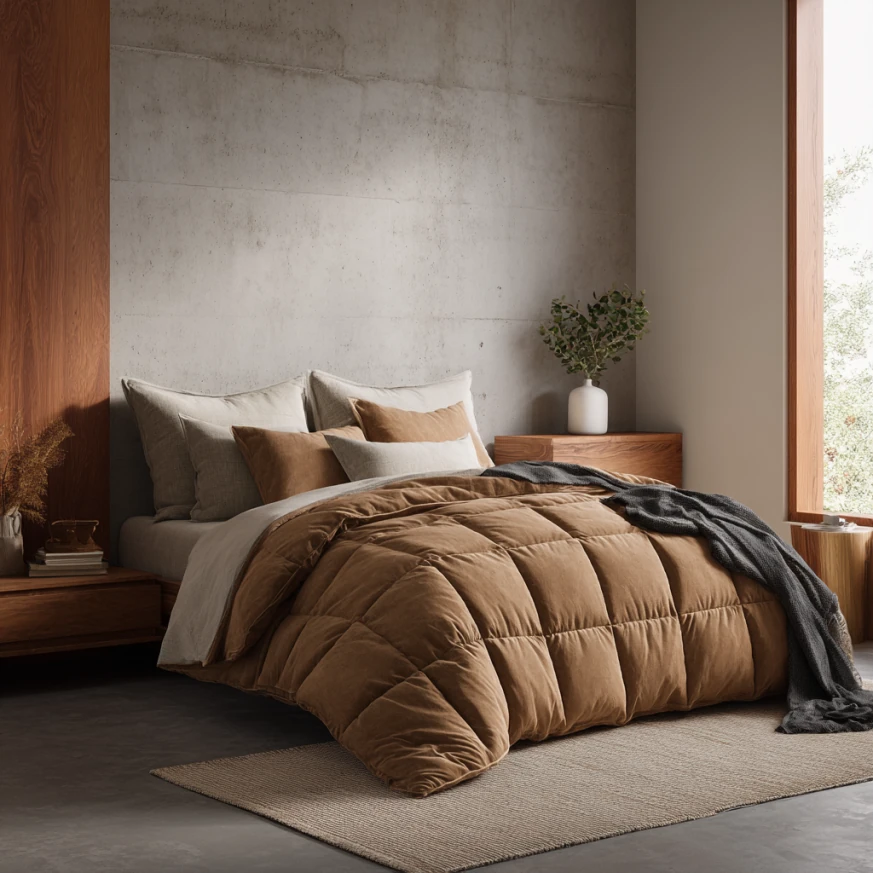
Where Quilts, Coverlets and Shams Fit In
Quilts and coverlets are thinner: batting stitched between two fabric layers, usually flatter than either a duvet or comforter and often reversible. They work as a light summer top layer or as texture folded at the foot of a duvet-covered bed. Shams are decorative pillow covers, not bed covers — if the terminology gets confusing, our breakdown of a sham versus a duvet cover sorts out which piece does what.
Warmth: It’s the Fill, Not the Format
People often ask which is warmer. The honest answer is that a duvet and a comforter of the same fill, fill weight and shell will feel about the same on the bed. Warmth is set by three things: what’s inside, how much of it there is, and how well the stitching keeps it spread out.
- Down and feather: the most loft for the least weight, and very good at trapping air. Down’s quality is described by fill power — a lab measure of how many cubic inches of loft one ounce of down produces — so a higher number means less down is needed for the same insulating loft. It is a quality indicator, not a direct temperature rating.
- Wool: insulates while moving moisture, which suits cool, damp rooms and sleepers who run hot and cold in the same night.
- Down alternative (polyester microfiber): mimics down’s loft at a lower price, dries faster and is usually machine washable — which is why it dominates comforters.
- Cotton and cotton blends: heavier and flatter, but breathable for warm climates.
Construction matters just as much. Baffle-box construction (fabric walls between compartments) lets fill expand to full loft; simple box stitching is flatter but keeps fill from migrating; channel quilting lets you shake fill toward or away from you. Any of these beats a thinly stitched piece that clumps after a few washes.
If you shop UK or European bedding, you’ll also see tog ratings, a measure of thermal resistance. Retailers generally position roughly 4.5 tog for summer, around 10.5 for all-year use and 13.5 or higher for winter. US bedding rarely lists tog and instead uses vague labels such as “lightweight,” “all-season” and “winter weight,” which vary a lot between brands — check the fill weight in ounces or grams if it’s published. 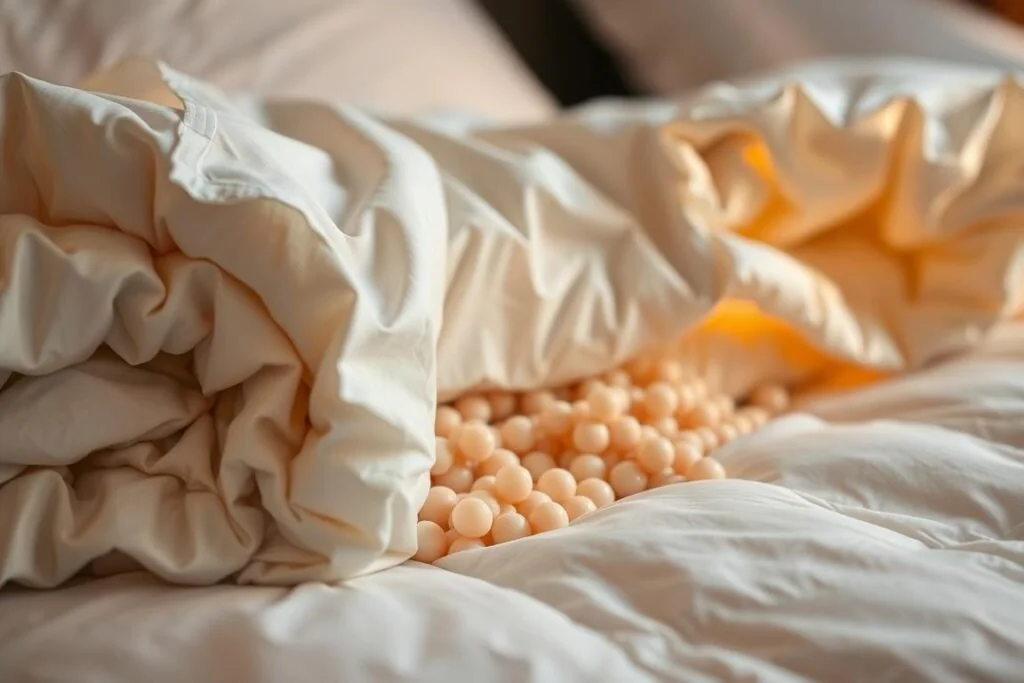
Hot Sleepers and Allergy Considerations
For hot sleepers, the duvet system has a practical edge: you can pair a low-loft insert with a breathable percale or linen cover and swap to something warmer in winter. A lightweight, breathable comforter can work just as well — you simply can’t adjust it. Bedding is only part of the picture, though; mattress and room temperature matter too, which is why our guide to cooling mattresses for hot sleepers is worth a look if you overheat every night regardless of the top layer.
On allergies, down-alternative fills are widely marketed as hypoallergenic and are easier to wash frequently, which helps with dust and dander. Tightly woven shells also limit what gets into the fill. If you have a diagnosed feather or down sensitivity, synthetic is the safer pick — but treat broad health claims on bedding packaging with caution and ask a doctor about persistent symptoms.
Size, Fit and Drape
Sizing is where most disappointment happens, and it’s more inconsistent than shoppers expect. Queen duvets and inserts are commonly cut somewhere in the 88–90 inches wide by 90–94 inches long range, with brands varying noticeably, and comforter “queen” labels differ from one brand to the next as well. Two rules help:
- Match the cover to the insert, not to the bed. Guidance from bedding size guides is that a duvet cover should be the same size as the insert or up to about four inches larger in each direction; too small and the fill bunches, too large and you get cold gaps at the corners.
- Size up for depth. Thick mattresses, toppers and tall platform beds eat side coverage. If you have a deep mattress or share with a cover-puller, going one size up is the simplest fix.
Stylistically, comforters are often cut with more overhang for a soft, draped look, while duvet-covered beds tend to read neater and more tailored within the mattress footprint. Either can look intentional — the mistake is a top layer that stops short of the mattress edge. 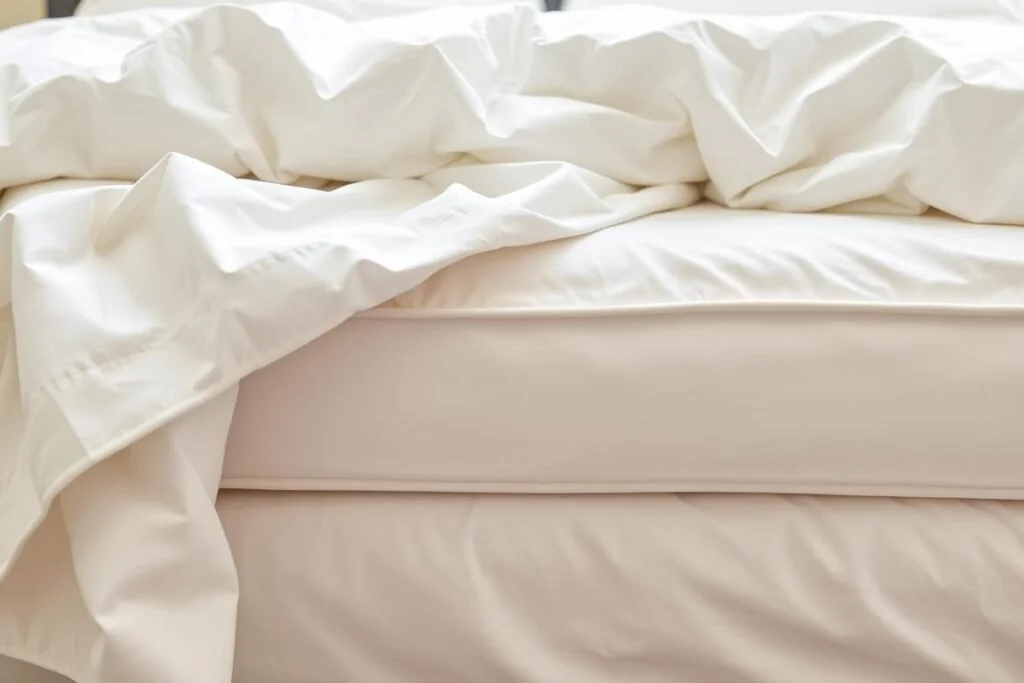
Care and Cleaning
This is the clearest practical difference. With a duvet, the cover absorbs skin oils, sweat and spills, and it washes like a sheet. With a comforter, the whole piece — fill included — has to go through the machine or to a laundromat or dry cleaner.
Published advice on frequency varies rather than converging on one rule. Duvet covers are generally washed on the same cycle as sheets, roughly every one to two weeks. For the filled layer, one home-and-garden guide reports bedding specialists suggesting washing a duvet insert about every three months and a comforter about every two months, while other bedding sources suggest a couple of times a year for inserts that always live inside a cover. Use those as brackets, wash sooner after spills or illness, and follow the care label above all.
- Wash filled pieces alone, on a gentle cycle in cool water, with a small amount of mild detergent added to the dispenser rather than poured on the fabric.
- Dry low and long, with dryer balls, and stop to break up damp clumps. Fill that isn’t bone dry can mildew inside the shell.
- Air the insert out regularly — draped over a chair or line — to release overnight moisture between washes.
- Tie the corner loops before stuffing a cover, then shake the whole thing out so the fill sits evenly.
- Using a top sheet adds a washable barrier and stretches the time between cover washes.
When a comforter or insert is past saving, don’t default to the trash — many textiles can be rehomed, and our guide to where to donate bedding covers who accepts what.
Cost and Long-Term Value
Prices move constantly and vary hugely by fill and brand, so treat any specific figure with suspicion — including ones you’ll see quoted in older articles. What’s reliable is the structure of the spending:
- Comforters and comforter sets are a single purchase and are usually the cheaper way to get a finished-looking bed today. Restyling means buying another comforter.
- Duvets cost more up front because you buy two things, but a new look later costs only a cover. A good insert can outlast several cover styles.
- Either way, spend on the shell and the stitching. Fill retention and seam quality are what you notice in year two, not the pattern you liked in the store.
Down is also the most expensive fill, which is worth knowing if you like the feel of it — the same trade-offs we cover in down versus memory foam pillows apply to bedding fills more broadly.
Style and Seasonal Flexibility
A duvet cover is the cheapest redecorating tool in a bedroom: crisp white percale in summer, brushed cotton or flannel when it gets cold, pattern for a few weeks around the holidays. Comforters lean the other way — the design is fixed, so seasonal change comes from layering quilts, throws and shams on top.
A useful middle path: keep a neutral comforter and put a duvet cover over it. This works as long as the sizes are close, and it gives a one-piece sleeper the washability and restyling of a duvet system without buying an insert. 
Which Should You Choose?
Choose a duvet if you want routine laundry to be easy, you like changing your bedroom’s look, you sleep hot in summer and cold in winter, or you’d rather buy one good insert and keep it for years. The downsides: two pieces to store and manage, and the occasional wrestling match with cover ties.
Choose a comforter if you want bedding that works straight out of the bag, you like matching sets, you’re furnishing a guest room or rental where simplicity wins, or you prefer a softer, draped bed. The downsides: bulky washing and no easy way to change warmth or style.
Edge cases are easy to solve. Hot climate year-round? A light comforter or a low-loft insert with a linen cover. Love a layered, textural bed? Comforter plus quilt. Want one piece but hate laundromat trips? Comforter inside a cover. 
FAQ
What’s the main difference between a duvet and a comforter?
A duvet is an insert used inside a removable cover; a comforter is one quilted piece with the fill sewn in. That single structural difference drives everything else: washing, restyling and how the layer drapes.
Is a duvet warmer than a comforter?
Not inherently. Compare fill type, fill weight and loft rather than the category name. Duvets do make warmth easier to adjust, since you can change inserts and cover fabrics by season.
Can I use a duvet without a cover?
You can, but it isn’t ideal. The insert then takes all the sweat and oils and needs washing far more often, which shortens its life. Inserts are also typically plain white.
Can I put a duvet cover on a comforter?
Yes, and it’s a good trick. Match the sizes closely and use the internal corner ties if either piece has them so the comforter doesn’t shift inside.
Do I need a top sheet with a duvet?
No. Many people skip it European-style because the cover is washable. A top sheet is still useful if you like the crisp feel or want to wash the cover less often.
What size duvet fits a queen bed?
Most queen inserts fall roughly in the 88–90 by 90–94 inch range, but labels vary by brand. Check the actual measurements, and size up if your mattress is deep or topped.
How often should I wash each part?
Wash the duvet cover with your sheets, about every one to two weeks. Wash the insert or a bare comforter a few times a year — more often if there’s no cover, if you sleep without a top sheet, or after a spill — always following the care label.
Updated September 2026.