Thuma Bed Frame Review: Real Specs, Real Costs, Honest Verdict

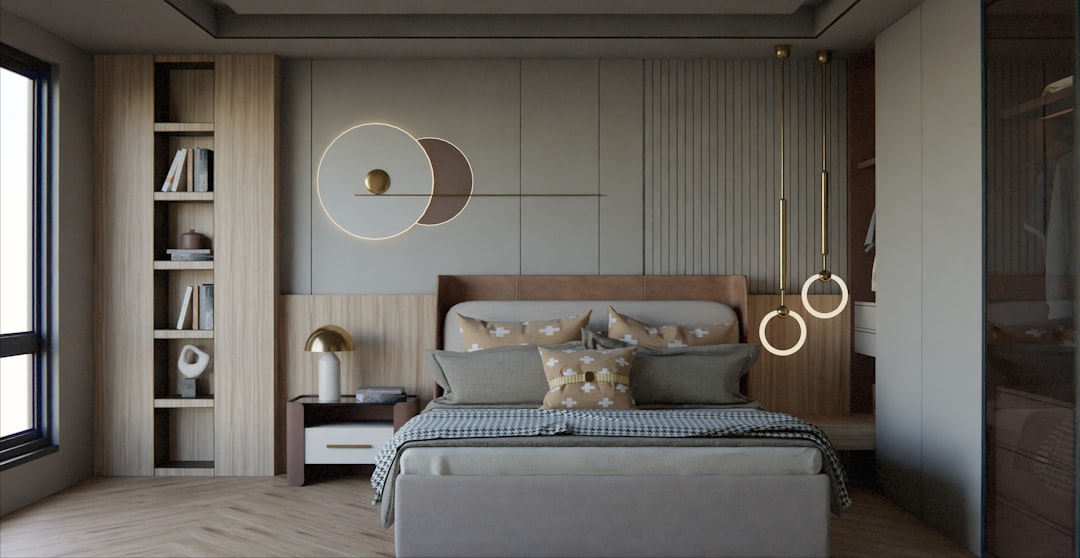
Full size Thuma bed frame in a warm, inviting guest bedroom setup

The short version of this thuma bed frame review: it is a quiet, tool-free solid-wood platform rated above 1,500 lb (680 kg) with 9 inches (22.9 cm) of space underneath, and it costs several times what a competent metal platform does. Buy it if silence, easy breakdown for moves and a low, clean wood look are what you care about. Skip it if you need built-in drawers, a tall bed or a frame under $500.

Thuma bed frame review: the two-minute verdict

Thuma sells three wood platform beds — the Classic, the Essential and the upholstered Signature — plus headboard options that swing the price hard. All share one idea: precision-cut upcycled rubberwood that slides together without tools, on felt-wrapped slats instead of metal-on-metal contact.

It is probably worth it if you:

  • Sleep light, or share a bed with someone restless, and squeak is what ruins your night.
  • Move every year or two and want a frame that breaks down in minutes without stripped bolts.
  • Want solid wood rather than veneered particleboard, and plan to keep the frame a decade or more.
  • Have a mattress that needs close slat support — Thuma’s slats sit just under 3 inches (7.6 cm) apart.

Buy something else if you:

  • Need storage drawers built in. Thuma sells an underbed drawer separately; the bed itself has none.
  • Have knee, hip or back trouble. The mattress deck sits about 12.25 inches (31.1 cm) off the floor before the mattress goes on.
  • Want a tall upholstered headboard for reading without paying for the top configuration.
  • Are furnishing a rental you will leave in two years.
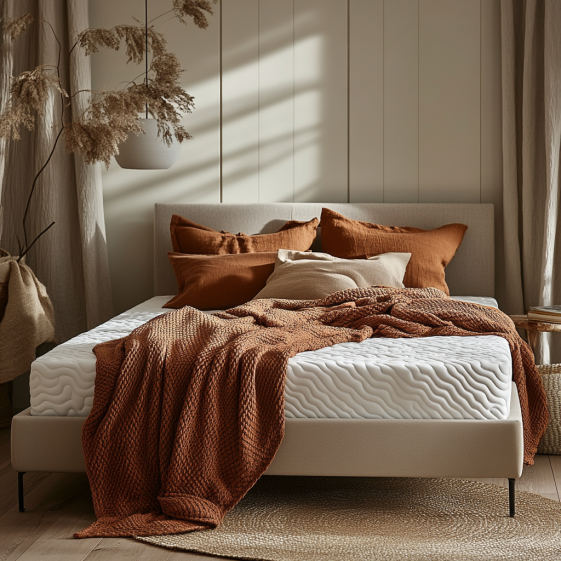
Walnut Thuma bed frame with white bedding in a minimalist bedroom, the main subject of this thuma bed frame review

What a Thuma bed actually costs once you add a headboard and delivery

No Thuma bed frame review can quote one flat price, which is why so many of them disagree. The total depends on three choices: the model (Classic, Essential or Signature), the size, and the top option — bare frame, PillowBoard, Headboard, or Headboard plus Cushion.

As of September 2026, Thuma’s product pages listed the Classic Bed at $1,995, the Signature at $2,195 and the Essential at $2,395 for the configurations shown on screen, while Mattress Clarity’s 2026 update puts a queen frame at around $1,100. Both can be true: the high figures reflect bigger sizes and the headboard-plus-cushion build, the low one a simpler queen. Configure your exact size and top option before you budget — the spread is roughly the price of a second bed.

The extras that people forget:

  • Shipping: free on orders over $1,000 at the time of writing, so most bed orders ship free. Smaller add-on orders may not.
  • White Glove delivery: listed at $295 for unlimited items — worth it only if stairs or a bad back make carrying flat cartons a problem.
  • Headboard or PillowBoard: a separate line item on top of the frame price.
  • Underbed drawer or felt bin: separate again, if you want that 9 inches of clearance to do real work.
  • Mattress: sold separately.

Run the cost-per-year math before you flinch. A $1,995 bed kept 12 years costs about $166 a year; a $350 metal frame replaced every four years costs about $88 a year. Cheaper, yes — but you handle the replacing, the hauling and the squeaks in between. The gap is narrower than the sticker suggests, and it only works in Thuma’s favour if you actually keep the bed.

Sizes, dimensions and clearance: what to measure first

The single most useful number in any thuma bed frame review is the footprint, because the frame is bigger than your mattress. A queen Thuma listed on resale sites measures about 65 inches wide by 85 inches deep by 13 inches high (165 × 216 × 33 cm) — roughly 5 inches (12.7 cm) of extra width and length around a standard 60 × 80 inch queen mattress. That surprise ruins tight alcove installs.

Size Mattress (in) Mattress (cm) Estimated frame footprint (in) Room width that feels comfortable
Twin 38 × 75 96.5 × 190.5 ~43 × 80 8 ft / 2.4 m
Twin XL 38 × 80 96.5 × 203 ~43 × 85 8 ft / 2.4 m
Full 54 × 75 137 × 190.5 ~59 × 80 10 ft / 3.0 m
Queen 60 × 80 152 × 203 65 × 85 (measured on a resale listing) 11 ft / 3.4 m
King 76 × 80 193 × 203 ~81 × 85 12.5 ft / 3.8 m
California King 72 × 84 183 × 213 ~77 × 89 12.5 ft / 3.8 m

Only the queen figure is from a real listing; the others add the same ~5 inches and should be confirmed on Thuma’s Materials and Dimensions tab before you order. Sizes run twin, twin XL, full, queen, king and California king.

Heights, in inches and cm

  • Top of the side rails: 13 in (33 cm).
  • Under-bed clearance: 9 in (22.9 cm) — enough for most flat storage bins, not enough for a standard suitcase on its side.
  • Mattress deck: about 12.25 in (31.1 cm) off the floor, because there is a 3/4 in (1.9 cm) lip and the mattress sits down inside it.
  • With the PillowBoard: 35 in (89 cm) from floor to top.
  • With the Headboard: 39 in (99 cm) from floor to top.

Measure these five things before you click buy

  1. Wall-to-wall width, minus the frame footprint. Leave at least 24 in (61 cm) on any side you walk down, 30 in (76 cm) to pass carrying laundry, 36 in (91 cm) if anyone uses a walker or wheelchair.
  2. Stair turns and door widths. The frame ships flat, but the side rails are as long as the bed — around 85 in (216 cm) on a queen. A tight 90-degree stair landing is the usual failure point, not the doorway.
  3. Baseboard or radiator depth. A full-length rail cannot tuck over a baseboard heater, so the bed sits further into the room than planned.
  4. Mattress height. On a 12.25 in (31.1 cm) deck, a 10 in (25 cm) mattress lands the sleep surface near 22 in (56 cm) — chair height. A 14 in (36 cm) mattress reaches about 26 in (66 cm), which most people stand up from more easily.
  5. Sloped ceiling clearance, if the 39 in (99 cm) headboard is going under a dormer.

Bedding that actually fits

Low frames change your bedding math. With the mattress sitting inside a 3/4 in lip about 12.25 in off the floor, a standard 14–15 in (36–38 cm) drop bed skirt pools on the carpet — and there is no box spring to drape one over anyway. Buy fitted sheets matched to your mattress depth, not oversized, and go generous on the comforter (queens typically run 86–90 in / 218–229 cm wide) so it covers the wood rail rather than stopping short of it.
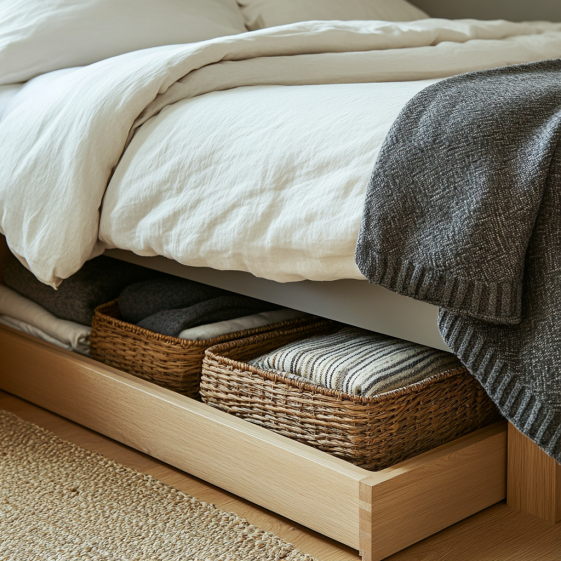
Low-profile Thuma platform bed showing nine inches of under-bed clearance in a modern room

Assembly and disassembly: how long it really takes

Assembly is the part every Thuma bed frame review praises, fairly. The Classic uses exposed Japanese joinery; the Essential hides it inside and adds hand screws. Neither needs a screwdriver, an Allen key or a partner reading instructions aloud. Reviewers who built one report about 15 minutes.

Practical notes for moving day:

  • Breakdown is setup in reverse and just as fast. Nothing is glued and there are no cam locks to wear out — the usual reason flat-pack frames feel loose by their second apartment.
  • Wood-on-wood joints do pick up small compression marks. Slide pieces apart instead of levering them and the fit stays tight.
  • Keep the cartons if you can. Rubberwood edges chip when they ride loose in a van.
  • The slats are joined by felt banding, so they roll up instead of travelling as loose boards.

Build quality: wood, joinery, slats and weight capacity

Materials are where a Thuma bed frame review earns its keep. Thuma builds with 100% upcycled rubberwood — trees that have finished their latex-producing life and would otherwise be discarded — and the beds are GREENGUARD Gold certified for low chemical emissions. That certification is about indoor air, not strength, but it is a real third-party test rather than a marketing word.

The structural numbers, from Thuma’s own specification pages:

  • Slats: 3/4 in (1.9 cm) thick, spaced just under 3 in (7.6 cm) apart, wrapped in eco-felt made from recycled plastic.
  • Weight capacity: 1,500 lb (680 kg) and up — far beyond two adults, a dog and a toddler on a Sunday morning.
  • Mattress compatibility: all types, including foam, hybrid and innerspring, with no box spring needed.

That sub-3-inch slat gap matters more than the headline capacity. Many foam and hybrid warranties require slats no more than about 3 inches apart, and cheap platforms routinely miss it. Check your own mattress warranty wording — this is one of the few places Thuma’s spec is objectively better, not just prettier.

Where the evidence is thin: rubberwood is mid-density, tougher than pine but softer than white oak, and no independent long-term abrasion or joint-fatigue testing on these frames appears to be published. Five-year durability claims from anyone, Thuma included, are projections rather than measurements. For the structural side of what you are paying for, our guide to bed frame material types breaks down how wood, metal and upholstered bases age differently.

Noise, wobble and squeak

Squeak is why most people land on a thuma bed frame review at all. The design attacks noise three ways: no metal fasteners in the main frame, felt-lined slats so wood never rubs bare wood, and a lip that keeps the mattress from sliding. Testers at Sleep Advisor described near-silence in use, and Thuma states the bed is designed not to squeak or creak — though with any frame it helps to know how to track down a squeak.

Honest caveats. A quiet frame on an unlevel floor still rocks, and what you hear is a leg tapping the boards, not the joint. Springy joists in older houses transmit movement whatever the bed is made of. Shim the legs with felt pads before you blame the joinery. If you are still fighting a noisy bed you already own, our fixes for a squeaking metal frame solve most of it for under $20 and may save you the whole purchase.
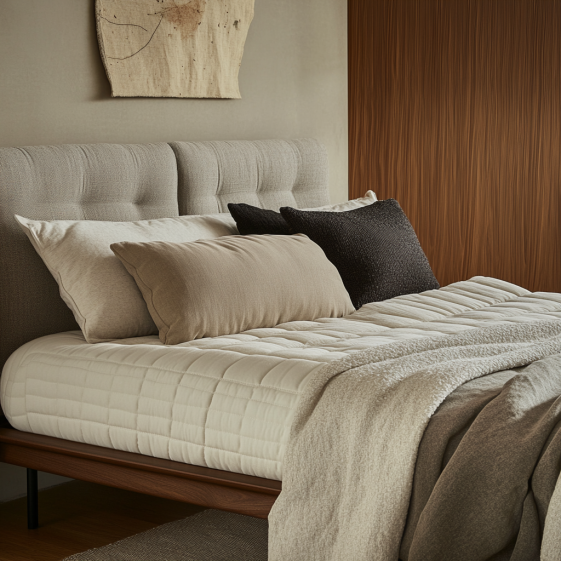
Thuma PillowBoard upholstered backrest leaning against the wall behind a low wood bed frame

PillowBoard vs Headboard: which upgrade is worth it

The PillowBoard is an upholstered cushion — CertiPUR-US foam under a pebbled linen-weave polyester — that sits between the wall and the mattress rather than bolting to the frame. Total height with it is 35 in (89 cm). The wood Headboard attaches to the frame and reaches 39 in (99 cm).

Pick the PillowBoard if you read in bed and want something soft at your back, or if you rent and dislike drilling. Pick the wood Headboard if you want the bed to read as one sculpted object and would rather not own fabric that needs cleaning. Pick the bare frame if a wall-hung headboard or nothing at all is your plan — it is the cheapest way into the line and you can add a board later.

One trade-off nobody mentions: the PillowBoard is a loose piece pinned between wall and mattress, so a thicker mattress hides more of it. Thuma photographs the bed with 10–11 in (25–28 cm) mattresses; a 14 in (36 cm) hybrid will cover more of the board than the product shots suggest.

Thuma vs cheaper Japanese-style platform beds

The Japanese-joinery look is everywhere now, from marketplace frames to US-made modular systems, and a fair Thuma bed frame review has to say where the extra money goes. Here is what actually differs.

Feature Thuma (Classic / Essential) Budget wood platform Modular direct-to-consumer (Floyd-style)
Frame material 100% upcycled rubberwood, solid Often pine, MDF or veneered particleboard Birch plywood with steel or aluminium hardware
Fasteners Tool-free joinery; Essential adds hand screws Bolts and cam locks — the usual squeak source Quick-release metal clamps or straps
Slat spacing Just under 3 in (7.6 cm), felt-wrapped Commonly 3–5 in (7.6–12.7 cm), bare wood Usually close-spaced plywood slats
Stated weight capacity 1,500 lb+ (680 kg+) Often 500–800 lb; many don’t publish a figure Usually published; confirm per model
Under-bed clearance 9 in (22.9 cm) Varies widely, 6–14 in Often taller, sometimes adjustable
Warranty Lifetime, as listed by the brand 1 year is common Multi-year, varies by brand
Rebuild after a move Minutes, no tools, nothing to strip Bolt holes loosen with each rebuild Fast; hardware is designed to be reused

The honest read: a budget platform bought for a guest room and assembled once will do fine for years. The case for Thuma strengthens the more you move, the lighter you sleep and the longer you plan to keep it. If the price is out of reach, compare alternatives in our roundup of queen bed frames for comfort and style, or read up on what platform beds do well in general before you decide the brand matters.

Returns, warranty and what to pressure-test before ordering

Thuma lists a 30-day trial with complimentary returns and a lifetime warranty on its beds. Thirty days is short by mattress standards but normal for furniture, and it is enough to learn two things: whether the height suits your body, and whether the frame fits your room the way you drew it.

What to check during that window:

  • Getting out of bed. Stand up from it ten times on day one. Low beds feel fine at 30, less fine with a bad knee.
  • Walkways. Live with the real footprint, not the tape outline — that extra 5 in (12.7 cm) of frame is where door swings go wrong.
  • Storage reality. Measure your bins against 9 in (22.9 cm) of clearance before you assume they slide under. If under-bed storage is the whole point, a dedicated storage bed gives you more for the money.
  • Finish and colour. Wood photographs warmer than it looks under LED bulbs. Judge it at night, in your room.
  • Noise with your own mattress. Plenty of squeak blamed on frames comes from an ageing innerspring.

The recurring criticisms across published reviews are consistent and fair: price, no integrated storage, low profile. Mattress Clarity’s reviewer calls it a good buy for fans of low modern beds and easy setup, and the wrong buy for anyone who wants something very cheap or needs under-bed storage. Those complaints match the spec sheet instead of contradicting it, which is a decent sign the marketing is honest.
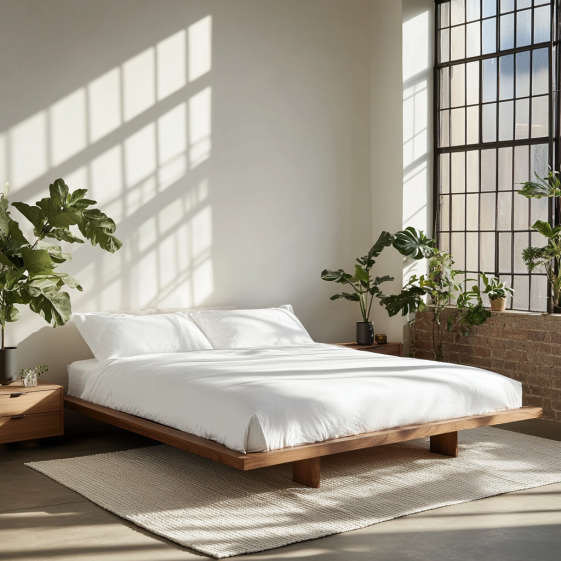
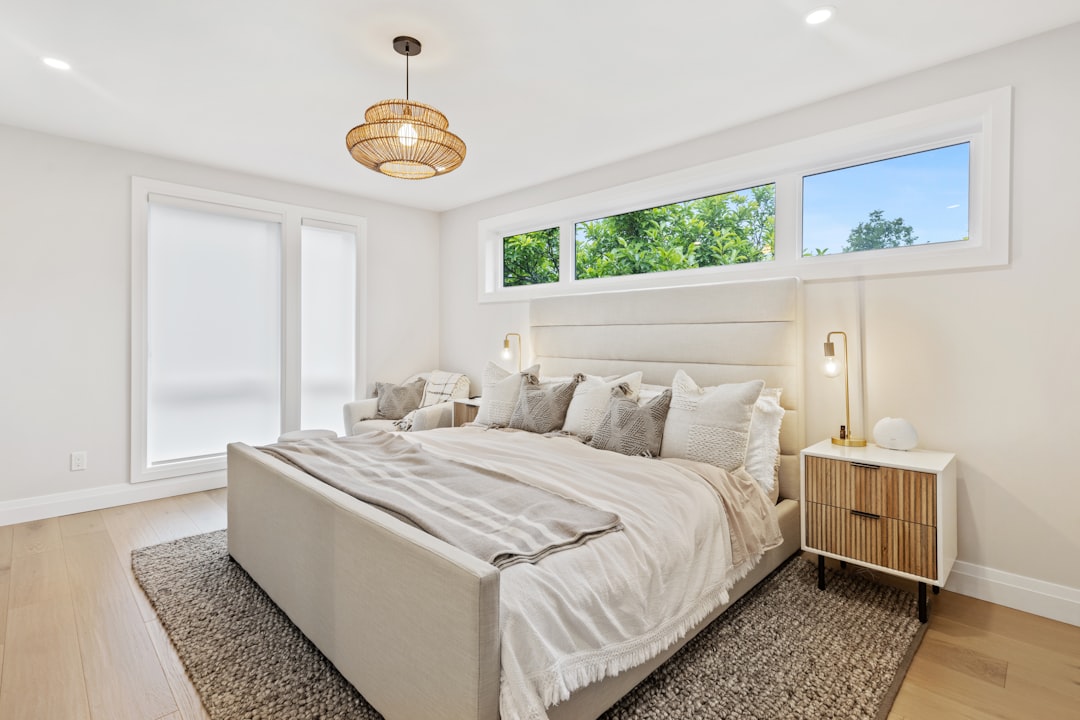
Wide view of a natural-finish Thuma platform bed frame anchoring a calm minimalist bedroom

Is a Thuma bed worth it? A straight answer by situation

  • Light sleeper with a restless partner: yes — the one case where the price argues for itself.
  • Frequent mover: yes, if your stair turns clear an 85 in (216 cm) rail.
  • Bedroom under 10 ft (3 m) wide: probably not. The oversized footprint eats walkway you cannot spare.
  • Storage-starved: no, unless you buy the underbed drawer and accept 9 in (22.9 cm) of height.
  • Mobility limits: usually no. Look at taller frames or an adjustable base instead.
  • Heavier sleepers: yes on paper — 1,500 lb (680 kg) is among the highest published capacities here.

Thuma bed FAQ

Does a Thuma bed need a box spring?

No. The mattress rests straight on the felt-wrapped slats, and a box spring would push the bed past its designed height while hiding the wood rail the look depends on. Platform beds generally do not need one, as the Sleep Foundation explains in its slats-versus-box-spring guide.

How long does a Thuma bed take to assemble and take apart?

Reviewers who built one report about 15 minutes, no tools, with disassembly running the same process backwards. There are no bolts to strip, which is why it handles repeated moves better than typical flat-pack frames.

What is the weight limit on a Thuma bed?

Thuma publishes a capacity of 1,500 lb (680 kg) or more. That covers two adults, bedding, pets and someone sitting hard on the edge with a lot of margin.

How much space is under a Thuma bed?

Nine inches (22.9 cm) of clearance, with the top of the rails at 13 in (33 cm). Flat storage bins and shallow drawers fit; upright suitcases and tall crates do not. Thuma sells its own underbed drawer and felt bin as paid add-ons.

Is the Thuma PillowBoard the same as a headboard?

Not quite. The PillowBoard is an upholstered cushion pinned between wall and mattress, bringing total height to 35 in (89 cm); the wood Headboard bolts to the frame and reaches 39 in (99 cm). One is softer to lean on, the other looks more like a traditional bed.

Where can I check the exact dimensions for my size?

Thuma publishes heights, clearances and slat spacing on its official FAQ and dimensions pages. Confirm the footprint for your size there before committing — every number in this thuma bed frame review comes from those published specs or from reviewers who built the bed.

Updated September 2026.

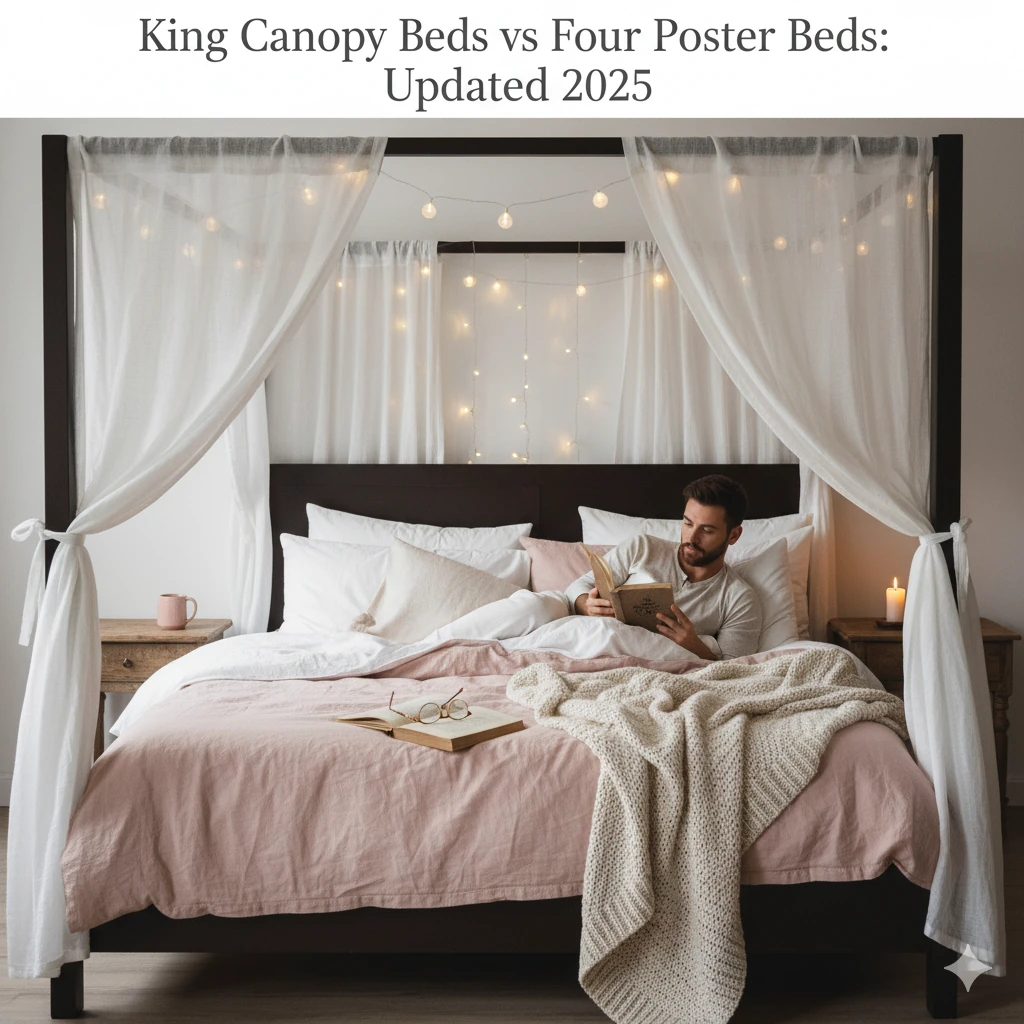
Canopy Bed vs Four-Poster Bed: Key Differences

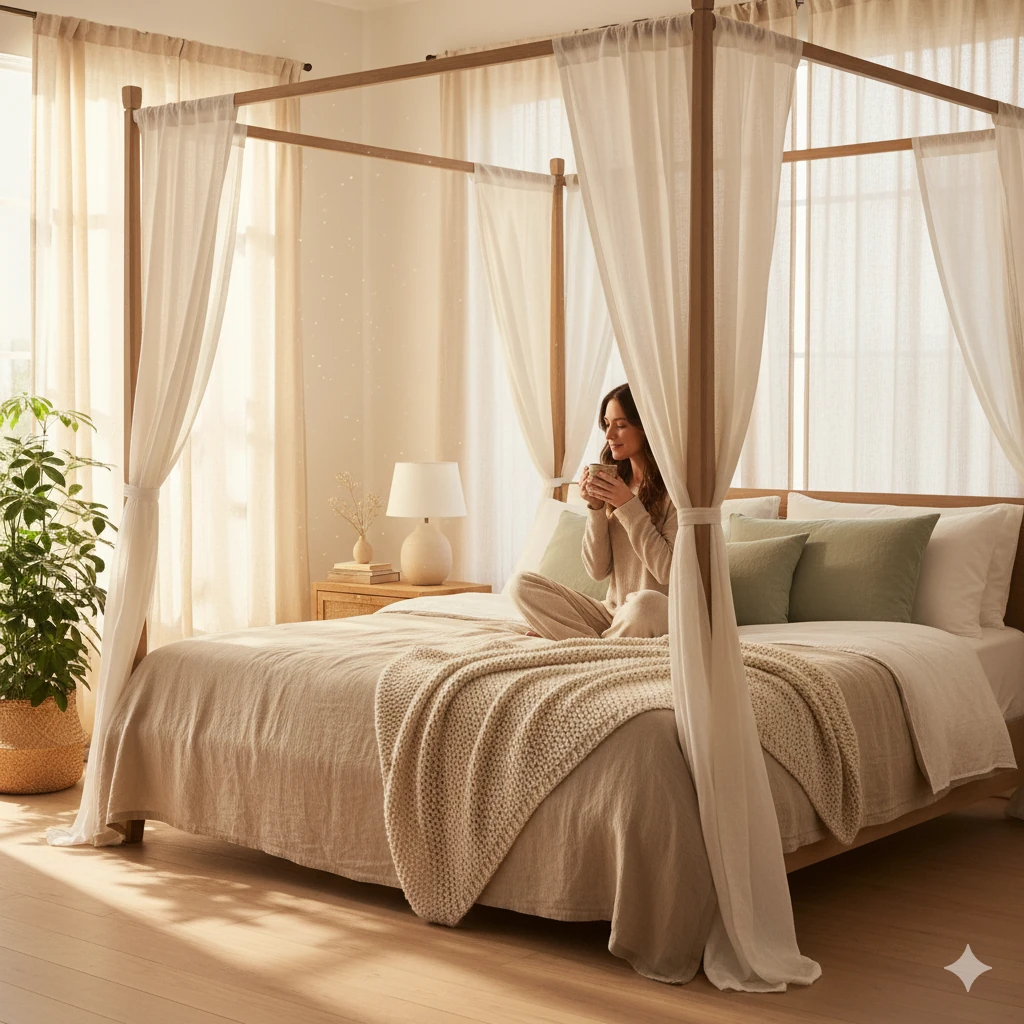
Wide bedroom view of a king canopy bed with layered linens, warm textures, and cozy morning light, featuring a woman enjoying tea.

Canopy Bed vs Four-Poster Bed: The Short Answer

In everyday furniture shopping, a canopy bed has four tall corner posts joined by horizontal rails overhead, so you can hang curtains, netting or lights from the frame. A four-poster bed has the same four tall posts but no connecting rails at the top, so it reads as open and architectural rather than enclosed. Historically the two overlap almost completely — the original four-poster was defined by the canopy frame it carried — which is why the labels are used loosely today.

Key Differences at a Glance

Feature Canopy bed Four-poster bed
Frame Four posts plus overhead rails (a “tester” frame) Four posts only, usually topped with finials
Visual effect Enclosed, cocooning, room-within-a-room Open, airy, vertical lines only
Drapes and netting Designed for them Possible only with added rails or a ceiling track
Ceiling height needed More — the top rail is the tallest point Less, and low-post versions are available
Upkeep Fabric washing plus dusting of top rails Dusting posts only
Typical cost Usually the higher of the two at a given quality level (more material and hardware) Usually less for a comparable frame

What Is a Canopy Bed?

A canopy bed is a posted bed whose posts are connected by a rectangular frame overhead. That frame is the whole point: it holds sheer linen panels, blackout curtains, mosquito netting, fairy lights or a fabric ceiling, turning the bed into a defined sleep zone. In a king size, the effect is substantial — the frame outlines roughly seven feet of bed length at eye level and above.

Variations worth knowing:

  • Full tester: rails on all four sides, the classic canopy silhouette.
  • Half-tester: a canopy over the head end only, supported from the headboard or back wall — a lighter option in rooms that a full canopy would swamp.
  • Minimalist “outline” canopy: slim metal rails, usually left undraped, used purely as a graphic frame.

Draped velvet curtains on a king bed comparing king canopy beds vs four poster beds
A classic king canopy bed creates instant drama and intimacy.

What Is a Four-Poster Bed?

A four-poster bed has four vertical posts, one at each corner, rising well above the mattress and finished with turned tops, finials or bed knobs. Nothing bridges the posts, so sightlines stay open and the bed feels tall without feeling closed in. Post height varies a lot: “low-post” designs stop not far above the headboard, while tall-post versions can approach ceiling height.

A Note on Terminology

Strictly speaking, the distinction is fuzzier than product listings suggest. In furniture history, a four-poster (or tester bed) is described as a bed with four columns supporting a tester — the upper panel or frame that carried the curtains — as set out in the reference description of the four-poster bed. Modern retailers split the family into “canopy” (rails present) and “four-poster” (rails absent), and that is the split most shoppers mean. When you are comparing two specific beds, ignore the label and look at whether there is a frame overhead.

Why Were Four-Poster Beds Invented?

The posts existed to carry curtains, and the curtains solved real problems. Early bedchambers were draughty and rarely private — households often slept several to a room, servants included — so enclosing the bed in fabric held warmth in and kept prying eyes, dust and insects out. Surviving examples are ornate and frequently made of oak, with many dating from the 16th century and earlier.

The best-known survivor shows how far the style could be pushed: the Great Bed of Ware, an enormous carved oak four-poster made around 1590–1600 and now in the Victoria and Albert Museum, became famous enough to be name-dropped in Elizabethan drama. Once central heating, glazed windows and private bedrooms became normal, the curtains stopped being necessary and the frame survived as decoration. For a fuller timeline, see our four-poster bed history guide.

Will It Fit? Ceiling Height and King-Size Measurements

This is where most canopy-versus-poster decisions are actually settled.

Ceiling height. Residential codes set a floor, not a comfortable target: the International Residential Code requires habitable rooms to have a ceiling height of not less than 7 feet, and 8 feet is the common standard in newer homes. Many king canopy frames stand somewhere between 6 and 8 feet tall, so measure your ceiling, subtract the frame height from the spec sheet, and check that what is left still looks like breathing room — not a squeeze. If the gap is under about 12 inches, a four-poster, a low-post bed or a half-tester will sit far better in the room.

Mattress footprint. A standard US king mattress measures 76 inches wide by 80 inches long. Posted frames add to that on every side, because the posts sit outside the rails, so the real floor footprint of a king canopy or four-poster is usually a few inches wider and longer than the mattress. Add walking clearance of roughly 24–30 inches on the sides you use, plus space for a door or wardrobe to swing. Our king size mattress dimensions guide has the full size chart if you are still deciding between king and California king.

Access. Long posts and canopy rails are awkward pieces. Check stair turns, doorway widths and, if the bed will be under a ceiling fan or pendant light, the clearance above the top rail before you buy.

Materials and Finishes

  • Solid hardwood (oak, ash, maple, walnut, mahogany): the traditional choice for four-posters. Heavy, stable, refinishable, and the most convincing at tall post heights.
  • Metal (powder-coated steel, iron, brass-finished tube): the usual pick for slim modern canopies, because thin rails can still be rigid. Visually the lightest option in a small room.
  • Upholstered: softens the frame and hides bulk; fabric posts and headboards need vacuuming and are harder to spot-clean.
  • Mixed: wood posts with metal rails, or a metal frame with an upholstered headboard, is common in hybrid designs.

If you are torn, our comparison of wood vs metal vs upholstered bed frames covers durability and noise trade-offs in more detail, and the best canopy bed frames for a king mattress roundup shows how the same silhouette reads in different materials.

This image shows canopy four-poster beds in modern and classic finishes, illustrating how canopy four-poster beds adapt to different aesthetics.

Pros and Cons

Canopy Beds

Pros

  • Curtains let you control light, draughts and sightlines — useful in studios, shared rooms and bright east-facing bedrooms.
  • Netting is a practical option where insects are an issue.
  • Seasonal fabric changes refresh the whole room without buying new furniture.
  • The strongest focal point you can put in a large bedroom.

Cons

  • Needs generous ceiling height to avoid looking cramped.
  • Fabric means laundering, dusting of top rails and more allergen-collecting surface.
  • More parts to assemble, usually with overhead work and a second pair of hands.
  • Can visually shrink a small room, especially in dark finishes.

Four-Poster Beds

Pros

  • Height and presence without enclosing the space.
  • Simpler assembly and less upkeep — no fabric to manage.
  • Works under standard 8-foot ceilings, and low-post versions fit lower ones.
  • Generally the cheaper of the two at a similar build quality.

Cons

  • No draping, so no light control or privacy benefit.
  • Tall posts still restrict where you can hang art or place a fan.
  • Less dramatic in a very large room, where the bed can look under-scaled.

What Actually Drives the Price

We do not publish price ranges we have not tested, and posted beds span everything from flat-pack metal to bench-made hardwood, so any single figure would mislead. What we can say plainly: for two beds of the same material and build standard, the canopy version tends to cost more, because it uses more material and more hardware. The bigger cost drivers are solid wood versus veneered composite, the quality of the corner brackets and centre support, and whether the frame includes a slat system rated for a king mattress. Our king bed frame buying guide walks through those checks.

Also budget for the extras a canopy invites: curtain panels wide enough for a king frame, rings or clips, and possibly a rug large enough to sit under the posts.

Styling by Room Size

  • Small bedrooms: choose slim metal in a light or matte-black finish, skip heavy drapes or use sheers only, and keep bedding and walls in a close tonal range. A low-post four-poster or half-tester keeps the vertical interest without the enclosure.
  • Average bedrooms (8-foot ceilings): a four-poster is the safer fit. If you want a canopy, look for frames with thin rails and leave them undraped or dress only the head end.
  • Large rooms and high ceilings: this is where a full canopy earns its keep. Floor-length panels, a rug that extends well past the posts, and scaled-up nightstands keep the proportions right. Metallic frames read as glamour rather than bulk — see our gold canopy bed styling ideas.

Comparison of King Canopy Bed with drapes and Four Poster Bed in a shared interior
A side-by-side look at canopy and poster styles.

Living With Drapes: Airflow, Cleaning and Allergies

Enclosing a bed in fabric has two honest downsides: airflow and dust. Breathable weaves such as linen and plain-weave cotton move more air than lined velvet, so if you sleep warm, keep heavy panels for the head and foot and leave the long sides open — or hang nothing at all and treat the frame as sculpture.

Dust matters more than most style articles admit. Allergy guidance is explicit that dust mites collect in curtains and other fabrics that are not washed regularly in hot water, and the Asthma and Allergy Foundation of America recommends getting rid of fabrics you cannot easily launder in a bedroom where someone has a dust-mite allergy. Practical translation for canopy owners:

  • Buy machine-washable panels and check the recommended wash temperature before you commit.
  • Dust the top rails on a schedule — they are out of sight and collect quickly.
  • Wash or vacuum panels seasonally; more often in a household with allergies or pets.
  • Re-tighten post and rail fasteners once or twice a year, since tall frames amplify any wobble.

On the sleep side, the case for either bed is aesthetic, not medical. What does have evidence behind it is total sleep time: the CDC advises adults to get at least 7 hours a night, and a large share of US adults fall short. A canopy’s curtains can help indirectly by cutting early-morning light; the frame itself does nothing for your mattress or support.

Which Should You Choose?

Choose a canopy bed if you have ceiling height to spare, want light and privacy control, like changing fabrics with the seasons, and don’t mind the laundry.

Choose a four-poster bed if you have a standard-height ceiling, want height and heritage character with minimal upkeep, or need the room to stay visually open.

Consider a hybrid or half-tester if you want the canopy outline without the enclosure — slim crossbars, a partial frame, or a canopy over the head end only.

Hybrid canopy and poster bed design blending both styles
A hybrid canopy-poster bed merges drama and elegance.

FAQ

Is a four-poster bed the same as a canopy bed?

Not in current usage. Both have four tall posts; only the canopy has rails joining them overhead. In furniture history the terms overlap, because the original four-poster carried a tester frame for curtains.

Can a four-poster bed be turned into a canopy bed?

Sometimes. Some manufacturers sell matching canopy rails or kits for their posted frames, and a ceiling-mounted track or corona is an alternative. Don’t improvise rails or hang heavy fabric on posts that were not designed for the load — check the maker’s guidance on attachment points and weight first.

What ceiling height do I need for a canopy bed?

There is no official rule. Work from the frame’s stated height and aim for a clear, comfortable gap above the top rail; under 8 feet, favour slim rails, a low-post four-poster or a half-tester.

Do canopy beds make a room feel smaller?

They can, especially in dark finishes with full-length drapes in a compact room. Slim frames, light fabrics and a tonal colour scheme reduce the effect.

Do canopy beds trap heat?

Closed heavy curtains will restrict airflow around the bed. Breathable linen or cotton and leaving the long sides open keep things comfortable; that’s a fabric choice, not a flaw in the frame.

Which is easier to assemble?

A four-poster, generally — no overhead rails to line up. King canopy frames usually need two people for the top assembly.

Do canopy beds need special bedding?

No. Standard king bedding fits a king canopy or four-poster. Curtain panels, netting and a canopy topper are separate purchases.

Are four-poster beds still in style?

Yes, and both silhouettes are widely produced in modern, minimalist versions alongside traditional ones — the reason the style survived heating and glazed windows is that the frame looks good.

Updated September 2026.

Wood vs Metal Bed Frames: 5 Essential Steps to the Best Choice

Wood vs Metal Bed Frames: 5 Essential Steps to the Best Choice - Featured Image

Wood vs Metal Bed Frame

Deciding between a wood vs metal bed frame in 2026? We break down the updated pros and cons to help you find the perfect match for your bedroom’s comfort, style, and function.

When choosing between wood vs metal bed frame options, consider the style that best complements your bedroom décor and aligns with current trends.

Key Takeaways

  • Metal frames offer durability, lightweight design, and sleek modern aesthetics but may rust or squeak over time.
  • Wooden frames provide customization, classic warmth, and are eco-friendly, though they can be heavy and require maintenance.
  • Consider aesthetics, room size, support needs, and lifestyle habits when deciding.
  • Hybrid wood-metal frames are trending for their balance of style and strength.

For additional insights, visit resources like
Sleep Foundation’s bed frame guide and
Architectural Digest’s best bed frames picks.

Advantages of Metal Bed Frames

Metal bed frames are popular in 2026 due to their robust construction and modern appeal. Crafted from steel, iron, or aluminum, they offer strength and resilience, supporting even the heaviest of hybrid mattresses up to 1200 lbs. Their longevity, typically 15-20+ years, makes them ideal for long-term use, resisting both warping and susceptibility to pests.

Comparing wood vs metal bed frame characteristics remains essential for making an informed decision.

The lightweight nature of metal frames simplifies moving and rearranging, a boon for city dwellers or frequent movers. Many models offer folding or easy disassembly features, enhancing portability and storage convenience. This flexibility is particularly beneficial for apartments, guest rooms, or children’s rooms where space optimization is key.

  • Durability: Built from tough metals that resist warping and wear
  • Lightweight: Easier to move and assemble
  • Adjustability: Many metal frames come with adjustable settings for height or mattress type
  • Under-bed Storage: Offers added space-saving for small rooms or studio living

Metal bed frames often suit minimalist and modern bedroom themes with gunmetal finishes currently trending. Their clean lines and sleek profiles add a contemporary feel to your room. For more decor ideas, see our minimalist bedroom guide.
Explore more in our guide on the pros and cons of a metal bed frame to help you decide if it suits your sleep style.

To sum up, metal bed frames are versatile and functional, making them a solid investment for practical-minded sleepers. They balance form and function, offering both strength and style with minimal effort.

Ultimately, the wood vs metal bed frame debate boils down to personal preference and practical needs.

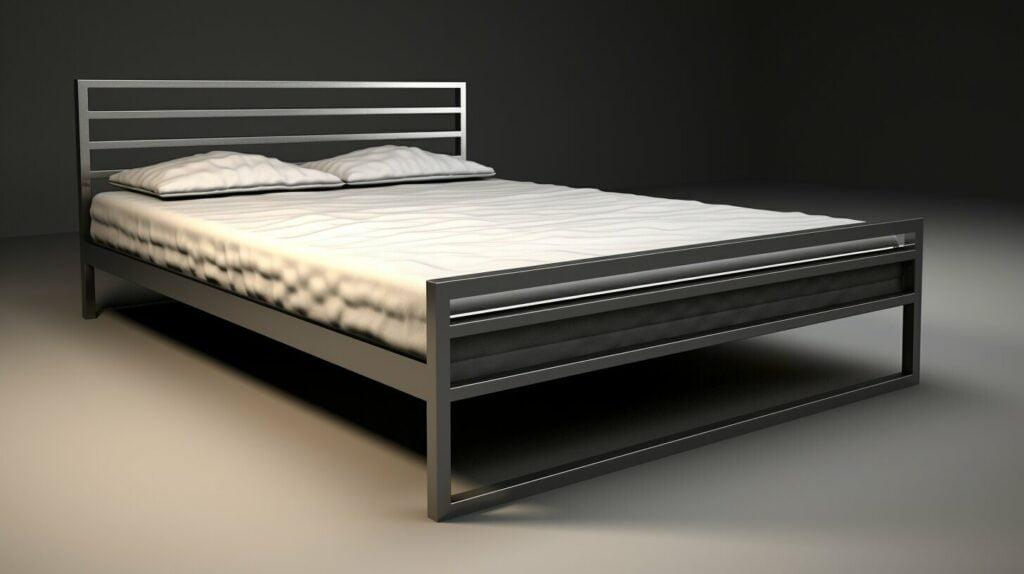
wood vs metal bed frame benefits

Disadvantages of Metal Bed Frames

Despite their many strengths, metal bed frames aren’t perfect. A primary concern is the potential for rust in humid environments, despite rust-resistant finishes. Regular maintenance is crucial for preserving their longevity.

Noise can also be a drawback. Over time, metal joints may loosen, causing squeaks or rattles that disturb sleep. This can be frustrating, especially for light sleepers. Some couples find metal frames amplify movement. Using anti-squeak washers or noise-dampening pads can help.

  • Rust Risk: Particularly in moist climates without proper coating
  • Noise: May creak or squeak with movement over time
  • Less Forgiving: Lacks natural cushioning and give found in wood
  • Potential for Allergies: Some people react to metals like nickel or chromium

Read more on metal bed frame issues at
Quagga Designs.

wood vs metal bed frame comparison

Advantages of Wooden Bed Frames

Wooden bed frames bring timeless charm and natural warmth that enhances the coziness of your bedroom. In 2026, these frames are typically made from hardwoods like oak, walnut, and teak, along with more affordable options like pine or engineered wood.

The choice between a wood vs metal bed frame can significantly impact your bedroom’s atmosphere.

Wood’s natural strength makes it highly supportive, especially when paired with thick slats or a platform base. High-quality wooden frames can last decades and are often seen as heirloom pieces.

  • Visual Appeal: Natural grain patterns offer beauty and variety
  • Customization: Easy to refinish, paint, or stain
  • Stability: Less prone to wobbling or movement
  • Eco-friendly Choices: Many brands offer sustainably sourced wood options

Wooden frames are also known for quieter performance—no squeaks or creaks, even with years of use.
For more eco-conscious options, check out our article on
eco-friendly bed frames.

For a full material breakdown, check out our comparison article on
bed frame materials and how to choose the best one.

wood vs metal bed frame wooden advantages

Disadvantages of Wooden Bed Frames

Although beautiful and strong, wooden bed frames have their drawbacks. They are significantly heavier than metal frames, making moving or rearranging furniture a hassle.

If you prefer a wood vs metal bed frame, weigh the aesthetic versus functional aspects carefully.

Additionally, wood is more susceptible to environmental damage. Changes in humidity can cause warping or cracking, and even minor spills or scratches can leave lasting marks.

  • Heavy and Bulky: Challenging to move
  • Requires Maintenance: Needs polishing and moisture control
  • Fire Risk: Being a combustible material
  • Potential for Damage: Can dent, scratch, or attract pests

Despite these cons, many still prefer the authenticity and warmth of wooden bed frames. Using furniture pads and placing beds away from moisture sources can mitigate many issues.

wood vs metal bed frame wood disadvantages

Aesthetic Appeal and Room Compatibility

The aesthetic impact of a bed frame can dramatically transform a bedroom’s vibe. Wood offers a warm, traditional look that works well in farmhouse, Scandinavian, or vintage-inspired designs.

Metal frames, meanwhile, often feature minimalist designs with sleek lines, making them ideal for industrial or modern aesthetics. They typically come in neutral tones like black or white.

  • Wood: Timeless charm, available in diverse tones
  • Metal: Clean, contemporary, space-efficient
  • Room Match: Choose based on decor style and room size

Wood vs Metal Bed Frame disadvantages of wooden bed frames

Proper Support and Mattress Compatibility

Support is one of the most important aspects of a bed frame, directly affecting your sleep quality and mattress longevity. Metal frames, especially with a grid or platform base, provide solid, even support.

Understanding the support levels in wood vs metal bed frame types is crucial for mattress longevity.

Wooden bed frames generally come with slats, a platform base, or a box spring requirement. Hardwood slats handle substantial weight and distribute pressure evenly across the mattress.

  • Metal Frames: Great for firm mattress support
  • Wood Frames: Excellent for all mattress types
  • Compatibility Tip: Match frame size and type with your mattress

Wood vs Metal Bed Frame mattress support comparison

Final Thoughts

Choosing the right bed frame can dramatically improve your sleep quality and bedroom aesthetics. Whether you’re drawn to the sleekness of metal or the natural beauty of wood, make sure to weigh durability, comfort, style, and maintenance. With the right pick, your bed will become the cozy centerpiece of your sanctuary.

In conclusion, whether you select a wood vs metal bed frame, ensure it aligns with your sleeping habits.

To explore the emotional side of bedroom design, read about bedding ceremonies and timeless traditions or reflect on the art of bedding rituals across history.

FAQ

Many people often ask about the updated differences between a wood vs metal bed frame and their respective benefits.

What are the pros and cons of metal bed frames?
Metal bed frames are durable, lightweight, and adjustable, but may rust or squeak over time and lack cushioning.
Are wooden bed frames better for support?
Yes, especially hardwood frames with slats—they offer strong, even support for most mattress types.
Which is better for a small bedroom—wood or metal?
Metal frames are better for small rooms as they are less bulky and give a more open visual feel.

For small spaces, a wood vs metal bed frame can dictate the room’s overall design feel.

Can I use any mattress with either type?
Yes, but check compatibility—memory foam needs solid support, while hybrid or spring mattresses work well with either.

Ultimately, the decision hinges on whether you favor a wood vs metal bed frame based on your lifestyle.


About the Author

Joseph Rett is the founder of Cozy Bed Quarters, a Phoenix-based sleep and bedding resource. With years of experience researching sleep science and bedding products, Joseph helps people create comfortable, sustainable sleep spaces. Living in Arizona’s desert climate has given him unique insights into temperature-regulating bedding and cooling sleep solutions.