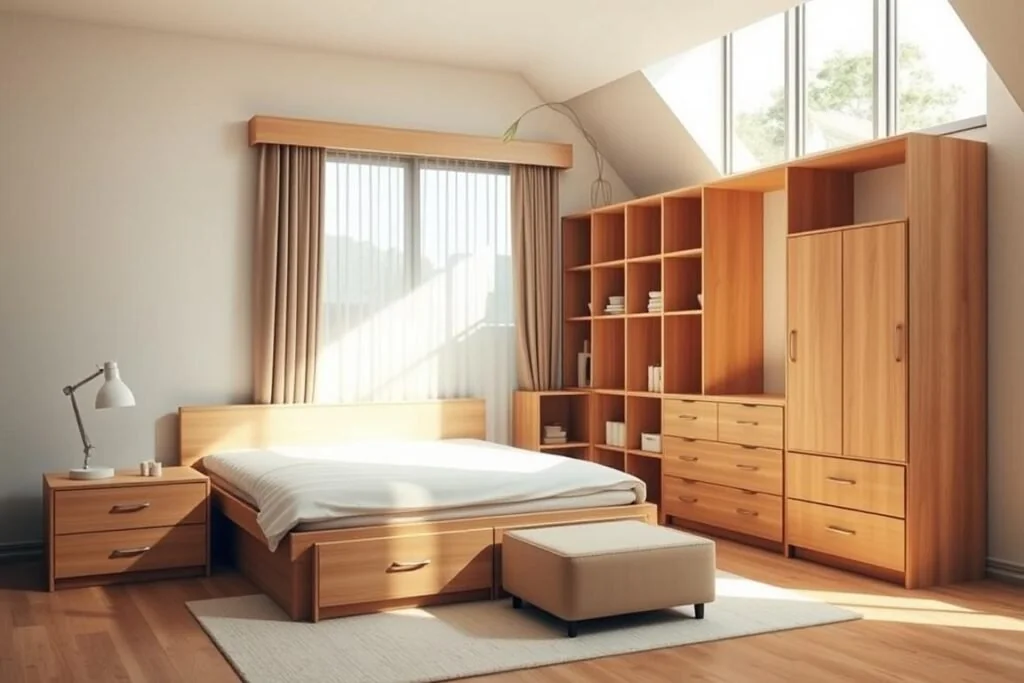
Space Saving Bedroom Furniture: Smart Picks for Small Rooms

bedroom furniture space saving ideas

The best space saving bedroom furniture does two jobs at once and keeps your walking paths open: a bed with drawers or a lift-up base, a tall shallow wardrobe, a floating nightstand, and wall storage instead of another floor-standing unit. Measure your clearances before you buy anything, because a drawer that can’t open is worse than no drawer at all. Below is how to choose each piece, what to measure, and the safety rules that actually matter.

Measure before you shop (this is the step people skip)

Grab a tape measure and painter’s tape. Outline the bed’s footprint on the floor, then mark how far the drawers or doors swing out. You’ll learn in five minutes what a return policy would otherwise teach you in two weeks.

Write down these numbers:

  • Bed length and width, including the headboard and any footboard.
  • Under-bed height from floor to the underside of the frame or slats.
  • Distance from the bed sides to walls, radiators and nightstands.
  • Door swing for the bedroom door, closet doors and the wardrobe you’re eyeing.
  • Ceiling height, if a loft bed, bunk or lift-up base is on your list.

Designers generally aim for roughly 30 to 36 inches of walking space beside a queen bed, more for a king. In a genuinely tiny room you may not get that on both sides, and that’s fine — pick one generous side for daily traffic and push the other side closer to the wall. If you go that route, a lift-up base beats side drawers, since side drawers need clear floor to open.

For a full walkthrough of fitting pieces into an awkward footprint, our bedroom furniture and layout guide covers floor plans in more detail.

Space saving bedroom furniture that earns its footprint

A piece deserves floor space if it stores something, supports something, or does both. Here’s the short list worth your money in a small room.

Storage beds and under-bed drawers

The area under your mattress is the cheapest storage in the house, and most people waste it. A bed with built-in drawers or a lift-up platform can replace a whole dresser, which is usually the bulkiest thing in a small bedroom.

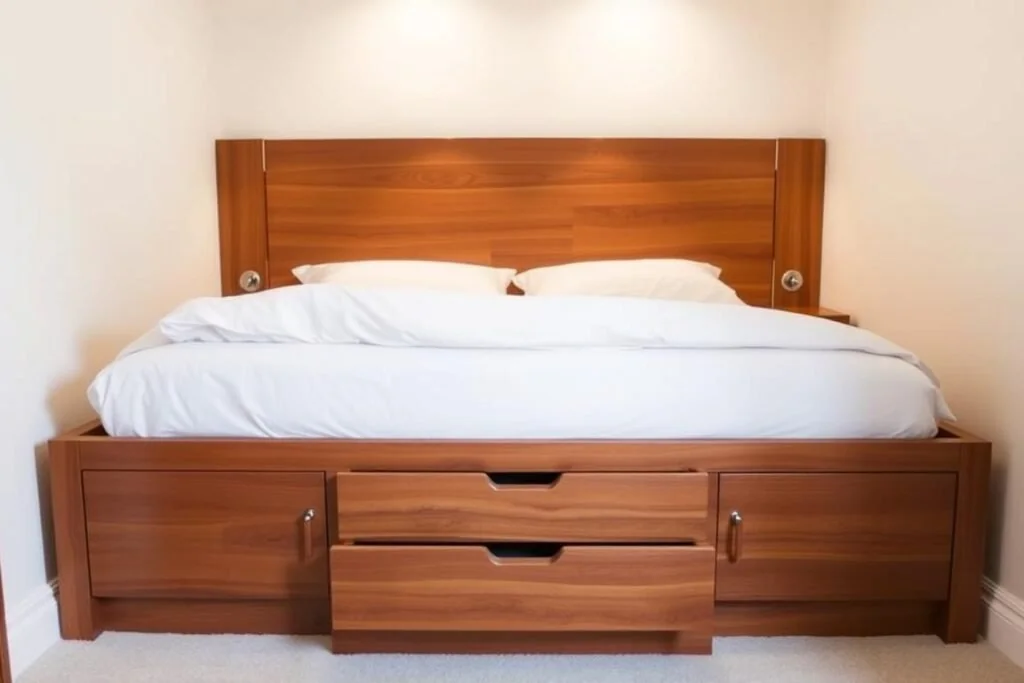
  • Built-in drawer beds: best for clothes you reach for daily. You need side clearance for the drawers to clear fully.
  • Lift-up (hinge-top) bases: the mattress platform raises on gas struts to reveal one big cavity. Ideal when the bed sits tight to a wall. Load it evenly and check that the lid clears any sloped ceiling, shelf or wall light when open.
  • Add-on drawer modules: rolling units that slide under a standard frame. Cheapest option, and you can move them.
  • Low-profile bins: if your frame sits close to the floor, split-lid or shallow bins still work. Measure the gap first and subtract an inch so nothing drags.

Match the container to how often you reach in. Hard drawers for daily wear, soft fabric bins for bulky quilts and off-season clothes. Skip storing anything fragile, liquid or moisture-sensitive down there; textiles do better in sealed bags, especially in a damp room.
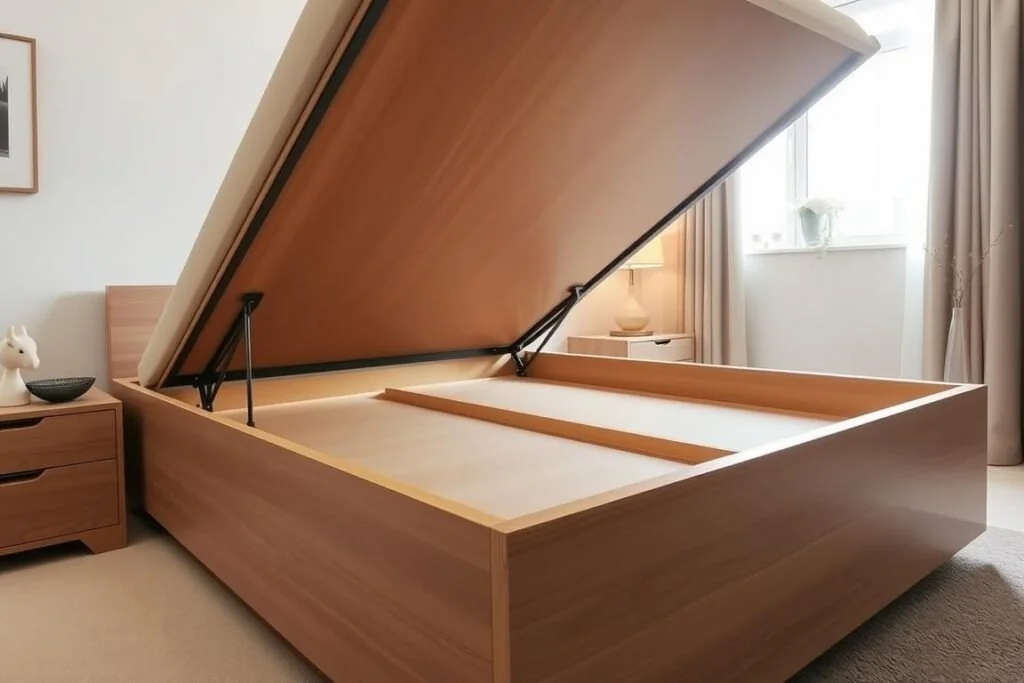
Hinge-top storage bed, space saving bedroom furniture with bedding tucked under the lifted mattress

Shopping for a frame? Compare styles in our roundups of platform and storage beds and space-saving bed frames.

Wall beds and loft beds

These free up the biggest chunk of floor area in the room, because the bed simply isn’t there during the day.

A wall bed with a desk turns a studio or spare room into a real workspace. Manual mechanisms cost less and hold up well; motorized ones cost more and mostly buy convenience. Either way, confirm the unit is fixed into studs, check the manufacturer’s mattress weight and thickness limits, and use the locking hardware every time.

A loft bed raises the mattress so a desk, dresser or small sofa fits underneath. Ceiling height decides whether it’s comfortable or claustrophobic. A common rule of thumb is around 30 inches between the top of the mattress and the ceiling so you can sit up without ducking — that’s guidance from furniture makers and universities rather than a federal requirement, so treat it as a comfort target and test it with a tape measure against your own ceiling.

If it’s a bunk rather than a loft, the safety rules are real. The U.S. Consumer Product Safety Commission defines a bunk bed as one whose mattress foundation sits more than 30 inches above the floor, and upper bunks need guardrails on both sides with the tops of the rails no less than 5 inches above the mattress. Lower bunks 30 inches or less from the floor don’t need them.
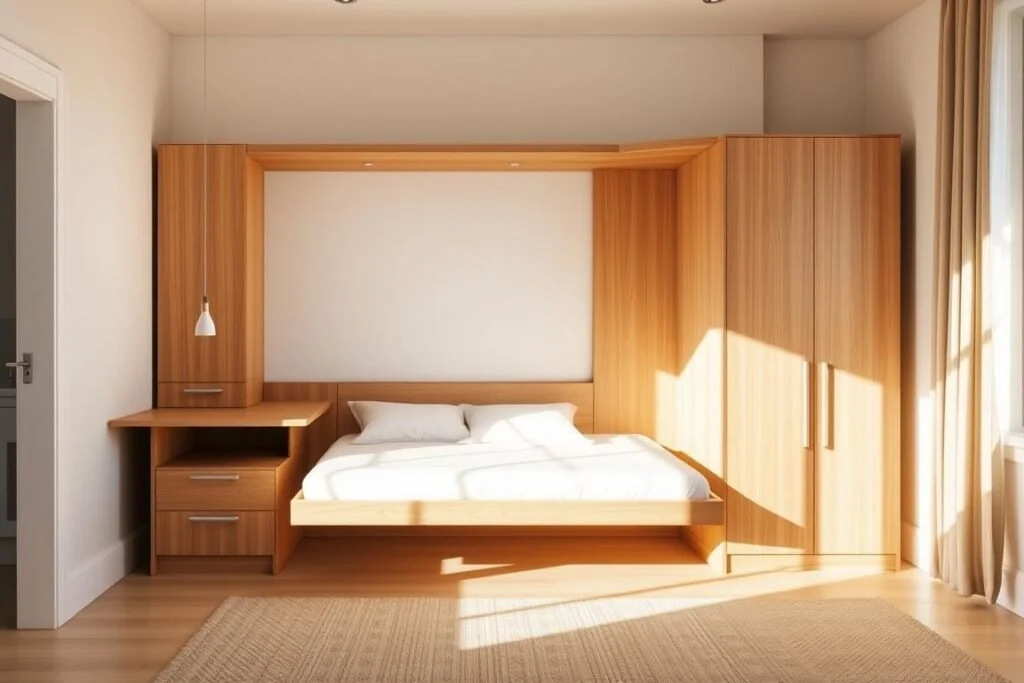
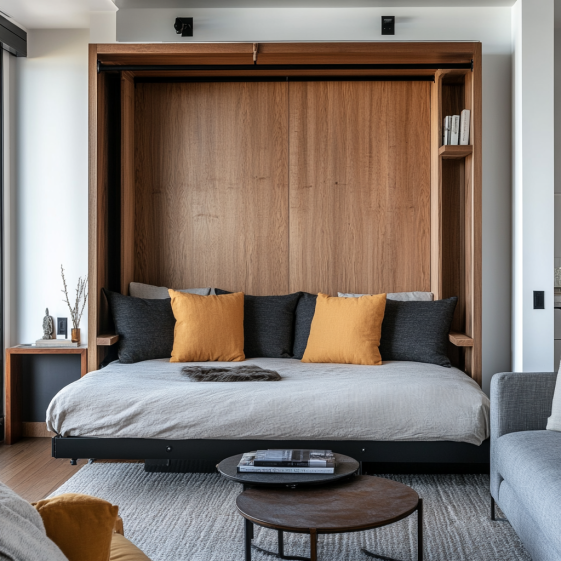
Fold-down wall bed beside a built-in desk showing how one unit serves as both office and bedroom

Not sure which bed type suits your room? Our guide to the best beds for small rooms compares Murphy beds, daybeds and low platforms side by side.

Slim wardrobes and smarter closet insides

Tall and shallow beats short and deep. A wardrobe that’s 20 to 24 inches deep holds hanging clothes fine and steals far less floor than a chunky armoire. Sliding doors remove the swing clearance problem entirely, which can be the difference between a wardrobe fitting and not fitting.

Inside, small changes add capacity fast:

  • Modular drawers — shallow for socks and underwear, deeper for folded tees.
  • Shelf dividers to stop stacks from toppling into each other.
  • A second hanging rail under shirts and jackets, since that lower half is usually dead air.
  • Labelled baskets on the top shelf for things you touch twice a year.

Nightstands, benches and desks that pull double duty

A floating nightstand or a wall-mounted cubby keeps the floor visible, which makes the room read as bigger. Set the top roughly level with your mattress so you can reach a glass of water without sitting up. If you’d rather have drawers, look at slim vertical designs — see our nightstand ideas for shapes that work in tight corners.

Other pieces worth the space:

  • Lift-top bench at the foot of the bed: seat, blanket storage, and a place to put a suitcase. Keep a clear path past it.
  • Fold-down wall desk: a real work surface that disappears at 6 p.m. Anchor it to studs.
  • C-table: slides over the mattress edge for a lamp and a book, then tucks away.
  • Storage stool or ottoman: seating plus a hidden box for chargers, hair tools or kids’ toys.

Go vertical: shelves, ledges and door-back storage

Walls are the storage you already own. Using them clears low surfaces and protects walking lanes.

  • Wall shelves: choose a shallow depth so nothing juts into the path beside the bed.
  • Picture ledges: current book, glasses, phone — no bulk.
  • Over-the-door racks: shoes, bags, hats, caught on the way out. Check the door still closes.
  • Pegboard: reconfigurable hooks and trays, good above a desk or inside a closet door.
  • Corner shelves: corners are almost always wasted and are fine for light storage or plants.
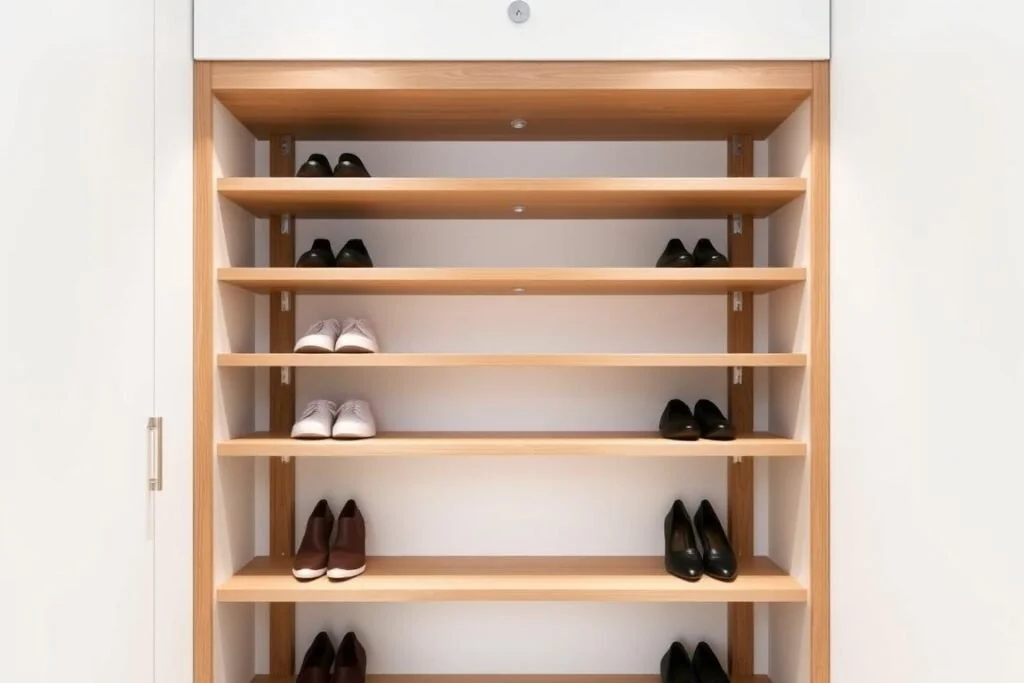
Slim wall-mounted shelving holding shoes and baskets, keeping the bedroom floor clear

If your room has no closet at all, our list of storage ideas for small bedrooms with no closets goes further on wall systems and freestanding rails.

Layout choices that make the room feel bigger

Furniture placement changes how big a room feels as much as the furniture itself does.

  • Keep one uninterrupted walking path from door to bed.
  • Put the tallest pieces against walls, ideally the wall you see last when you walk in.
  • Don’t block windows — daylight does more for perceived space than any paint colour.
  • Group by function: sleeping zone, work zone, storage zone. Fewer trips across the room.
  • Leave a little breathing room between pieces instead of lining them up wall to wall.
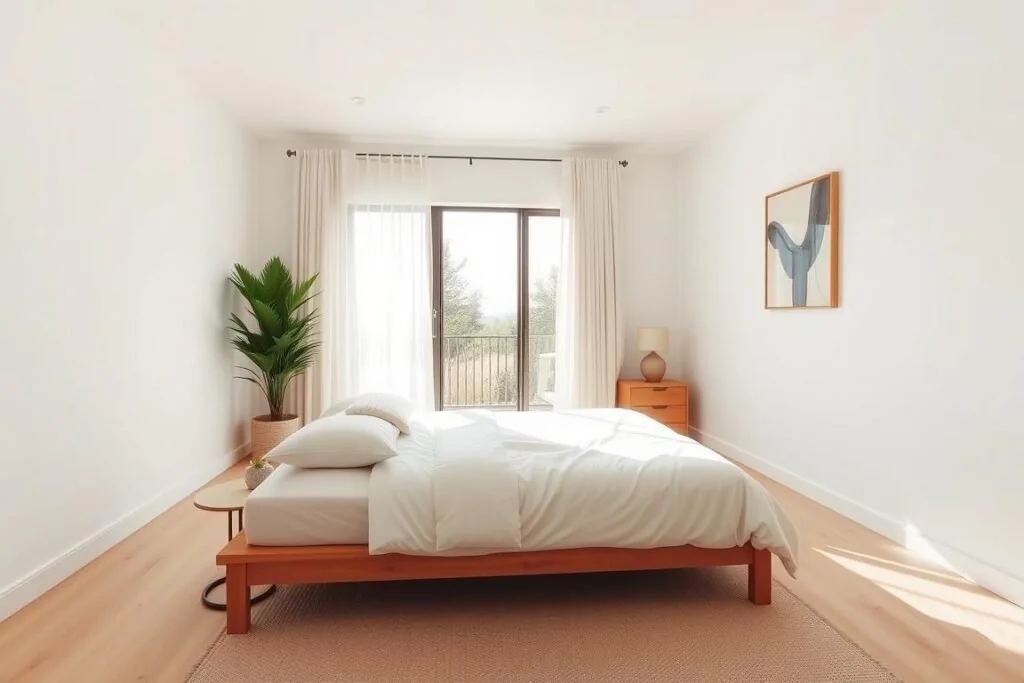
  • Lift things off the floor. Legs on a bed or dresser let you see floor underneath, and that reads as space.

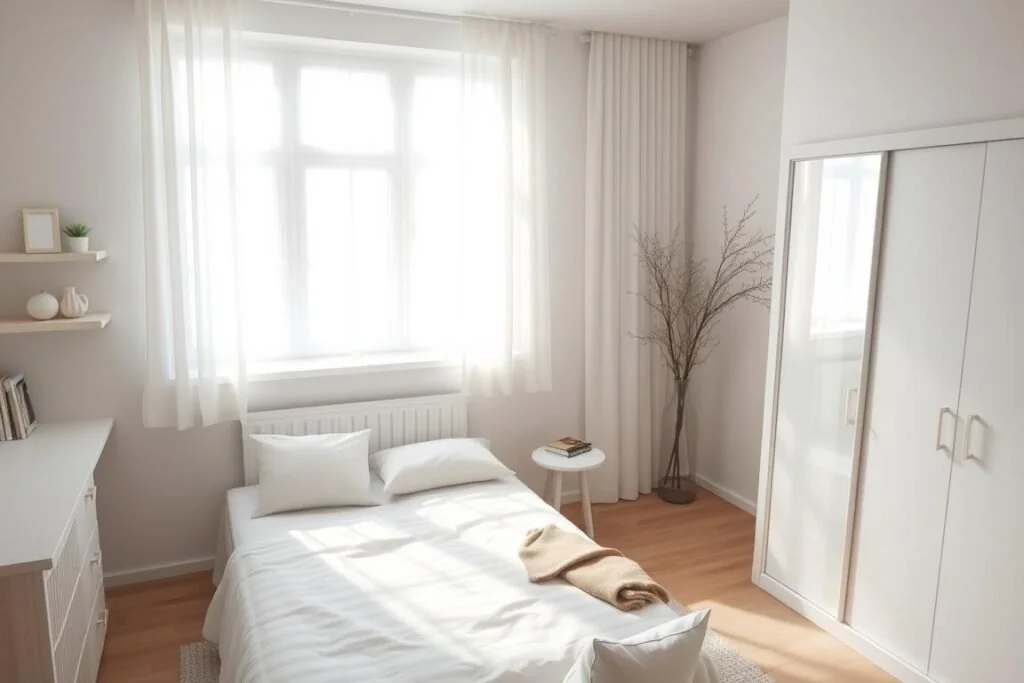
A tall mirror opposite or beside a window bounces light deeper into the room; a full-length mirror on the back of the door costs zero floor space. More of these visual tricks are in our post on decorating tricks to make a small bedroom look bigger.
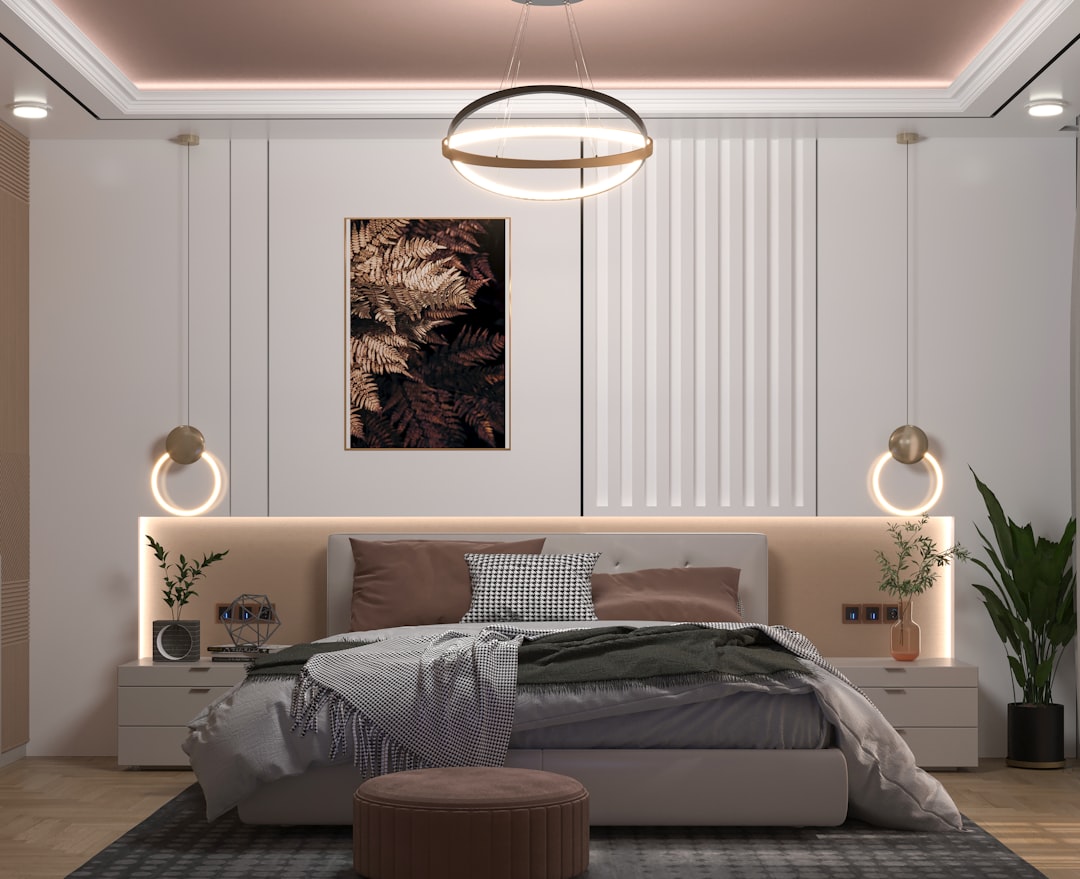
Small bedroom laid out with a low storage bed, floating nightstand and clear walking path to the door

Safety: anchor it, and check the labels

Tall storage in a small room means tip-over risk, especially with kids around. Anchoring is quick and cheap, and the CPSC’s Anchor It! campaign is blunt about it: anchor anything with drawers, doors or shelves to the wall.

Two things worth knowing before you buy a dresser or wardrobe:

Also check weight limits on wall shelves and floating nightstands, and use the fixings rated for your wall type — plasterboard, plaster-and-lath and masonry all behave differently.

Five changes you can make this week

  • Swap a bulky nightstand for a floating one so the bed drawers open fully and the floor stays visible.
  • Put flexible bins under the bed for off-season bedding, labelled by season so you don’t rummage.
  • Add hooks near the door for robes and bags, so the chair stops being a clothes pile.
  • Clip the cables along the bed frame or use a slim raceway. Visible cords make a room look messy for no reason.
  • Empty one drawer completely and re-sort with dividers. You’ll usually free up more room than you expected.

Small resets help more than they sound like they should. A room you can tidy in three minutes tends to stay tidy, and a calm room is easier to wind down in — useful given that adults aged 18 to 60 are advised to get at least seven hours of sleep a night.

Pros and cons at a glance

Piece Pros Cons
Storage bed with drawers Can replace a dresser; easy daily access Heavy to move; needs side clearance
Lift-up (hinge-top) base Huge single cavity; works tight to a wall Awkward for daily items; needs headroom to open
Loft bed Frees a whole desk or lounge zone below Needs ceiling height; climbing in and out
Wall bed with desk Two rooms in one footprint Higher cost; must be fixed to studs
Floating shelves and nightstands Clear floor, light look Weight limits; needs secure fixings
Slim sliding-door wardrobe No swing clearance; lots of vertical capacity Shallow depth; top shelf hard to reach
Over-the-door organizer Zero floor space used Can look cluttered; may block the door

FAQ

How much clearance do I need for an under-bed drawer?

At least the drawer’s height plus about an inch of breathing room underneath, and enough floor in front for the drawer to pull out fully. Watch for bed skirts and footboard rails that quietly eat the opening.

Are lift-up storage beds safe for everyday use?

Yes, when assembled to the instructions and used within the stated weight limit. Look for gas struts or counterbalance hardware, keep hands clear of the hinge line, and don’t let small children open or close the lid on their own.

Can I make a small bedroom feel bigger without buying anything?

Often, yes. Declutter, move the tallest piece against a wall, clear the window, and add a mirror you already own. Rearranging costs nothing and tells you what you actually need to buy.

Do I need a matching furniture set?

No. In a small room, sets usually include a piece that doesn’t fit. Buy a bed and one storage piece that suit the space, then match by colour or finish instead of by collection.

Drawers or rolling bins for a kid’s room?

Rolling bins are lighter and easier for young children to handle on their own; built-in drawers make cleanup faster once they’re bigger. Label the fronts either way.

What’s the single highest-impact swap?

For most small bedrooms, replacing a standard frame plus a dresser with one storage bed. It removes a large floor-standing object and keeps the same amount of storage.

Updated September 2026.

7 Decorating Tricks to Make a Small Bedroom Look Bigger

make a small room look bigger - decorating tricks make small

Make Small Rooms Look Bigger With Smart Design

Yes—simple design moves can make a small room look bigger without a remodel. Start by clearing clutter, unifying paint, and opening sightlines so your eye travels without hitting visual “speed bumps.” These fast, low-cost ideas help a tight bedroom feel open, calm, and airy this week. For more inspiration, explore our small bedroom ideas guide.

Key Takeaways

  • Declutter first to free floors and surfaces—instant visual calm.
  • Use tone-on-tone paint on walls, trim, and ceiling to erase visual breaks and make a small room look bigger.
  • Place mirrors opposite windows and pick low-profile or transparent furniture to lighten visual weight.
  • Keep sightlines clear from the doorway; push tall pieces to the perimeter and store small items out of view.
  • Layer natural and artificial light to brighten corners and stretch depth across the room.

11 Tricks That Immediately Open Up Tight Spaces

These quick wins rely on light, color, and scale. Each one is simple enough to try in an afternoon and together they can make a small room look bigger fast.

1) Declutter for breathing room

Edit surfaces and floors first. When edges disappear, the room reads as one continuous space. Use closed storage so chargers, toys, and papers stay out of sight.

2) Hide the everyday stuff

Store daily-use items in drawers, baskets inside closets, or lidded bins. Fewer visible objects reduce visual “noise.” See our guide to tidy storage for small rooms: small-bedroom storage ideas.

3) Paint walls, trim, and ceiling the same color

One continuous tone blurs edges and removes contrast lines that chop the view. Soft neutrals are forgiving; darker wraps can feel cocoon-like if used uniformly.

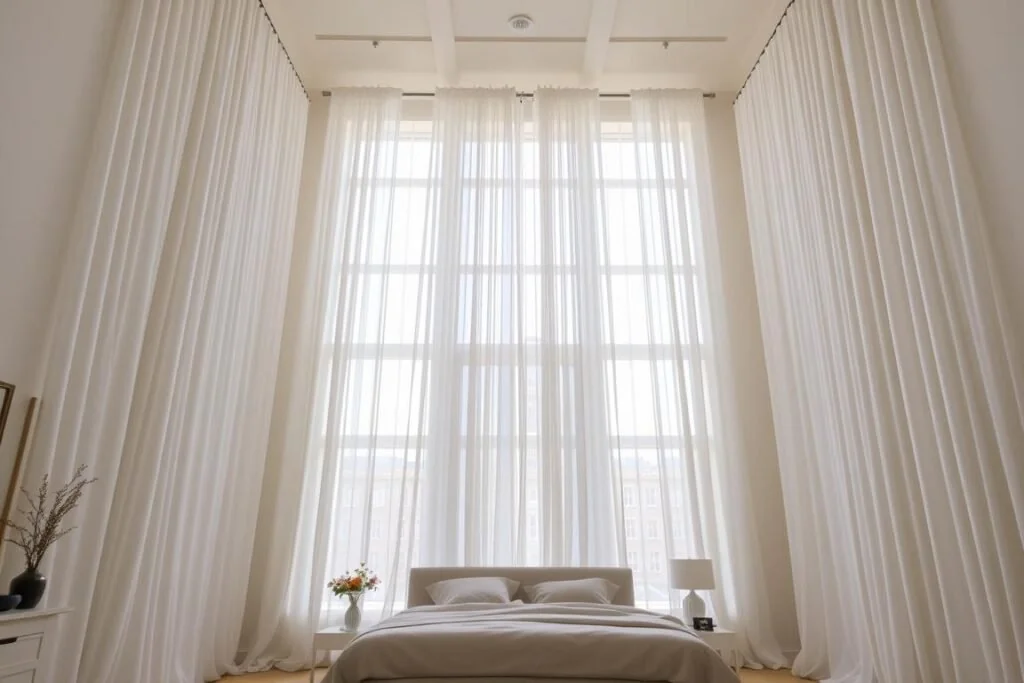
4) Hang curtains as high as possible

Mount rods near the ceiling and let panels kiss the floor to stretch wall height. If you love sheers, they pull in light while keeping privacy.

5) Use mirrors to double sightlines

Place a mirror opposite a window or a favorite view to bounce light and extend depth. One large mirror beats many small ones for a cleaner read. Explore placement ideas: mirror placement in bedrooms.

6) Choose low, leggy, or transparent furniture

Platform beds, open-base dressers, and clear acrylic tables lighten the footprint and reveal more floor—instantly making the layout feel larger.

7) Keep walkways open

Pull furniture out of traffic paths so you can see uninterrupted floor from the doorway. Fewer bumps = bigger feel.

8) Match major pieces to the wall color

When your bed frame, curtains, and wardrobe echo the wall tone, contrast drops and the room reads calmer and wider.

9) Add one oversized focal point

Choose one large artwork or a single statement headboard instead of many small accents. A single focus reduces visual clutter.

10) Maximize vertical storage

Go up, not out: tall bookcases, built-ins, and wall-to-wall shelves free floor area. Closed fronts keep the view serene.

11) Layer ambient, task, and accent lighting

Brighten corners and vary heights with ceiling lights, wall sconces, and a bedside task lamp. According to the CDC, a supportive sleep environment (quiet, dark when needed, and comfortable) helps you get enough rest—good lighting control makes winding down easier.

Curtains hung high near the ceiling to make a small bedroom look bigger and taller

A unified paint color and a single large mirror help the eye read longer, cleaner lines.

Smart Furniture, Layout, and Storage Moves

Place key pieces to preserve sightlines from the doorway to the far wall. Keep the center open, push tall items to the perimeter, and use storage that disappears.

Position the bed to stretch visible floor

When possible, center the bed on the wall opposite the door. If the door forces a side placement, choose the side that maintains a clear path. For frame ideas that reduce visual mass, see low-profile bed frames.

Use built-ins and lifted surfaces

Window seats, slim benches, and wall-mounted nightstands add storage and free floor space. Swap table lamps for wall sconces to keep tops clear.

Reduce the edge count

Choose fewer, well-scaled pieces instead of many small ones. Align furniture tops and keep ceiling lines as uninterrupted as possible.

Smart storage and layout choices help make a small room look bigger - decorating tricks make small

Keeping tall storage on the perimeter and the center open preserves long sightlines.

Light, Color, and Surface Choices That Stretch Space

Daylight sweeping across uninterrupted surfaces makes a compact room feel expansive. Use high-mounted panels or sheers so windows flood the area with light.

Tone-on-tone colors reduce visual breaks

Match major furnishings to wall color to lower contrast and make a small room look bigger. Prefer moody hues? Wrap the walls, trim, and ceiling in the same deep shade for a seamless envelope.

Reflective accents and clear tops

Mirrors, glass, and subtle gloss bounce light into corners. Keep dresser tops mostly clear so surfaces read as wide planes.

Healthy materials and certifications

If you are refreshing bedding or a mattress while you optimize the room, consider products with trusted certifications for peace of mind. Learn the labels here: bedding and mattress certification guide.

Want a visual walkthrough? Watch this quick overview and pick one tip to try today: how to make a small room look bigger.

Tone-on-tone paint and mirrors can make a small room look bigger - decorating tricks make small

Mounting curtain rods near the ceiling line visually lengthens the walls. A single large mirror opposite a window doubles daylight and extends depth.

FAQ

How do mirrors make a small room look bigger?

They reflect light and repeat views, which extends sightlines. Place one opposite a window or focal point for the strongest effect.

Should I go light or dark with paint?

Both can work. Light tones bounce more light. Dark wraps blur edges. The key is consistency: keep walls, trim, and ceiling the same color.

What size rug helps the room feel larger?

A bigger rug usually beats a small one. Aim to fit under the bed and reach the nightstands so the floor reads as one continuous field.

What furniture style makes a small room look bigger?

Low, leggy, or transparent pieces show more floor and reduce visual weight. Avoid bulky silhouettes that block sightlines.

Conclusion

To make a small room look bigger, clear clutter, keep sightlines open, and use tone-on-tone color so the eye glides across the space. Try one fast swap—hang curtains high, add a mirror opposite the window, or shift the bed to open the center—and build from there. For more small-space solutions, explore Cozy Bed Quarters. You’ve got this!

Related reading from Cozy Bed Quarters

Other reading we found popular


Best Bed for a Small Room: Murphy, Sofa Bed or Storage

Beds Small Rooms - best bed for small room

The best bed for small room layouts is the one that gives you back floor space during the day without costing you sleep at night. For most tight bedrooms that means a wall (Murphy) bed if the room does double duty, a storage platform bed if you’re short on drawers, a sofa bed or daybed in a guest room or office, and a loft or bunk in a kids’ room. Everything else is a measuring problem: get your walkways and door swings right first, then pick the style.

Pick Your Bed by How the Room Is Used

Start with what happens in the room between 8 a.m. and 10 p.m., not just how you sleep. A bed that vanishes is worth a lot in a studio and almost nothing in a bedroom you only walk into at bedtime.

Your situation Strongest option Why it works
Studio or one-room apartment Murphy / wall bed Clears the middle of the floor every morning for a table, a mat or a desk
Home office that hosts guests Sofa bed or daybed with trundle Seating all week, a real bed a few nights a month
Small primary bedroom, no closet space Storage platform bed (drawers or lift-up) Replaces a dresser, so you buy back a wall
Kids’ or shared room Bunk or loft Stacks sleeping and frees the footprint below for desk or play
Occasional overnight guests only Rollaway or folding frame Stores flat in a closet the other 360 nights

If you want the full rundown of mechanisms and shapes before you commit, our guide to space-saving bed types walks through each one side by side.

Measure the Room Before You Shop

This is the step that prevents returns. Measure wall to wall at floor level, then note baseboards, radiators, window sills, vents and the arc of every door — including closet doors, which are the usual casualty of a bed that’s one size too big.

  • Walkways: aim for roughly 24–30 inches on any side you actually use. It’s a rule of thumb, not a code, but less than about two feet starts to feel like squeezing past furniture.
  • Foot of the bed: leave room for the drawer or the lift-up lid to open, plus space to stand while you open it.
  • Ceiling height: matters for wall beds, lofts and bunks. Measure to the ceiling, then again to the lowest thing hanging from it (a fan or light fixture).
  • Delivery path: doorways, stair turns, elevator depth. Flat-pack solves most of this; a one-piece wall bed cabinet does not.

Then do the tape test. Put painter’s tape on the floor in the exact footprint of the bed you’re considering, and live with it for a day — walk in from the door, pretend to make it, pretend to open the drawers. If you keep clipping a corner, size down.

Don’t trade away sleep quality to win a few inches. The CDC notes that adults aged 18–60 are recommended to get at least seven hours of sleep a night, and a thin, undersized mattress on a clever frame is still a thin, undersized mattress.

Murphy and Wall Beds: The Biggest Daytime Win

A wall bed folds vertically or horizontally into a cabinet, so the room resets to empty floor every morning. In a small studio that single change can be the difference between a bedroom with a desk shoved in the corner and a proper living space.

Murphy bed folded into a cabinet, the best bed for a small room that doubles as living space

Two broad types:

  • Freestanding cabinet units. The whole assembly stands on the floor, so there’s little or no drilling into the wall. Easier for renters, easier to take with you.
  • Wall-mounted units. Slimmer and tidier, but they have to be anchored into studs or solid masonry. If you aren’t confident finding structure behind the drywall, pay for installation — this is not the corner to cut.

What to check before buying: the lift mechanism (gas piston or spring, and how heavy the pull-down feels), the maximum mattress thickness and weight, the wall width including trim, and how much the closed cabinet projects into the room — usually 16 to 20 inches, which eats real floor space even when it’s shut. Side cabinets, fold-out desks and integrated shelving are common add-ons, and modern units generally handle foam and hybrid mattresses within the stated limits. More detail in our guide to a bed that folds into the wall.

The honest downside: you have to strip or strap the bedding daily, and you’ll fold it up more than you expect to. If you know you won’t bother, a storage bed is the better buy.

Sofa Beds and Daybeds: A Couch Bed for a Small Room

If the room needs seating more than it needs a permanent bed, a convertible sofa or a daybed earns its footprint twice a day. A sofa bed hides the mattress inside the frame; a daybed is a twin mattress with a back and sides, dressed with bolsters so it reads as a sofa.

  • Sofa beds suit guest rooms and offices used by adults a few nights at a time. Check the open length — a sleeper needs far more clearance in front than the closed sofa suggests. Thicker foam or a hybrid insert hides the support bars better than a thin innerspring pad.
  • Daybeds are better for nightly sleeping, because you’re using an ordinary twin mattress. Add a trundle and you get a second bed that rolls out from underneath.
  • Fabric matters in a room that doubles as a living space. A tight-weave performance fabric survives daily sitting far better than loose velvet.

Sizing and mechanism comparisons live in our guide to sofa beds for small spaces.

Storage Beds: Drawers or Lift-Up Platform?

Under a standard bed sits 25 to 35 square feet of dead space. A storage bed claims it, and in a small room that often means you can skip the dresser entirely — which is both a space win and one less piece of furniture to worry about, since CPSC’s mandatory stability standard for dressers and other clothing storage units, backed by the STURDY Act, took effect in September 2023 and any dresser you keep should be anchored to the wall.

Platform storage bed with under-bed drawers in a small bedroom

Side drawers win for daily items — socks, tees, workout clothes. Look for full-extension glides and check which side they open on, because a drawer that needs 24 inches of pull-out space on the wall side is a drawer you’ll never use.

Lift-up (ottoman) platforms win for bulk: luggage, bedding, seasonal coats. The whole deck hinges up on gas struts. Confirm the struts are rated for your mattress weight, and leave clearance at the head or foot for the deck to swing.

Either way, the trade-off is the same: storage beds are heavy, harder to move, and you can’t sweep under them. If you’d rather keep a normal frame, bins on risers do a cheaper version of the same job. See our roundup of hidden storage beds for layouts that suit narrow rooms.

Lofts and Bunks: Build Upward

Stacking is the only way to truly double a floor plan. A loft puts a desk, dresser or reading nook under the mattress; a bunk puts a second sleeper there.

loft style space-saving bed frame with under-bed workstation

Safety rules here are not optional. Federal regulations require that a bunk bed provide at least two guardrails on the upper bunk, one on each side; lower bunks whose foundation sits 30 inches or less off the floor don’t need them. Bunk beds also carry a warning label about which children should use the top bunk — read it and follow it.

Practical clearances to plan for:

  • Enough headroom above the top mattress to sit up without hitting the ceiling. Manufacturers usually specify a minimum; check yours before you buy, and measure to the ceiling fan, not just the ceiling.
  • Roughly 34–36 inches of desk-sitting height under a loft, plus space for a chair to push back.
  • A ladder that’s fixed to the frame, not hooked on, with steps wide enough for bare feet.
  • Thicker mattresses reduce the guardrail height above the sleeping surface — stick to the maximum thickness printed on the label.

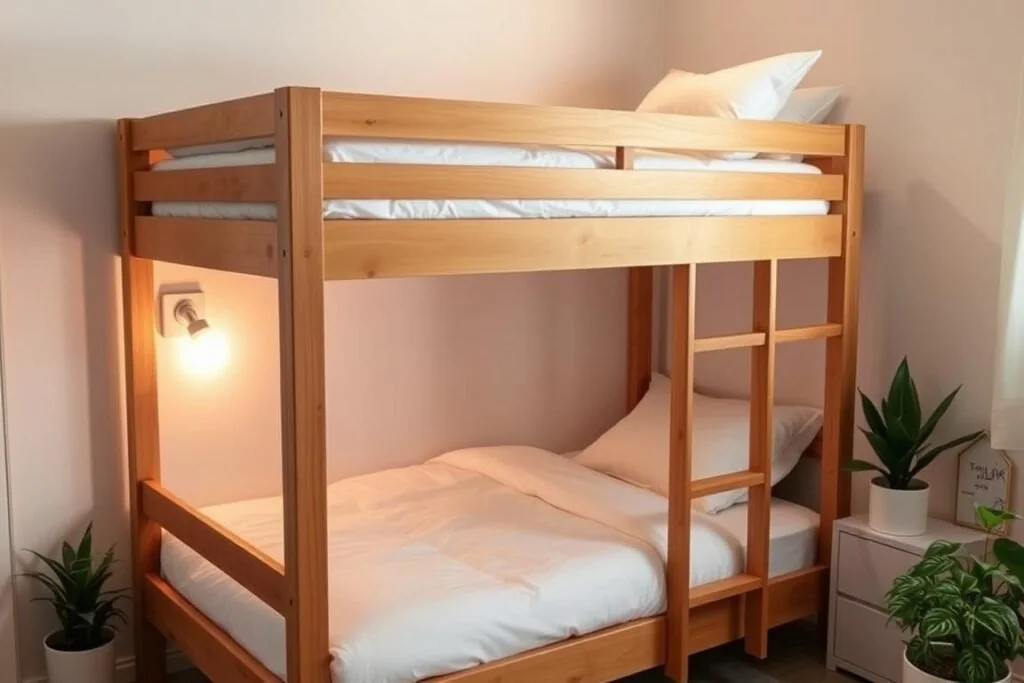
Twin-over-twin bunk bed with guardrails in a small shared kids room

Size and Frame Height: Fit First, Then Feel

US mattress sizes are standard: twin 38 by 75 inches, twin XL 38 by 80, full 54 by 75, queen 60 by 80. In a small room the jump from twin to full costs 16 inches of width — often exactly the walkway you were counting on.

  • Twin: narrowest footprint, easiest to place along a long wall, works as a daybed with bolsters.
  • Twin XL: same width, five more inches of length for taller sleepers.
  • Full: real shoulder room for one adult, tight for two. Check it against your room before you fall in love with it — our full size bed dimensions guide has layout diagrams.

Frame height changes how big the room feels. A low-profile platform frame with built-in slats skips the box spring, drops total height by several inches and keeps sightlines open. Just remember that lower frames leave less under-bed clearance for bins, so pick one or the other: low and airy, or higher with storage.

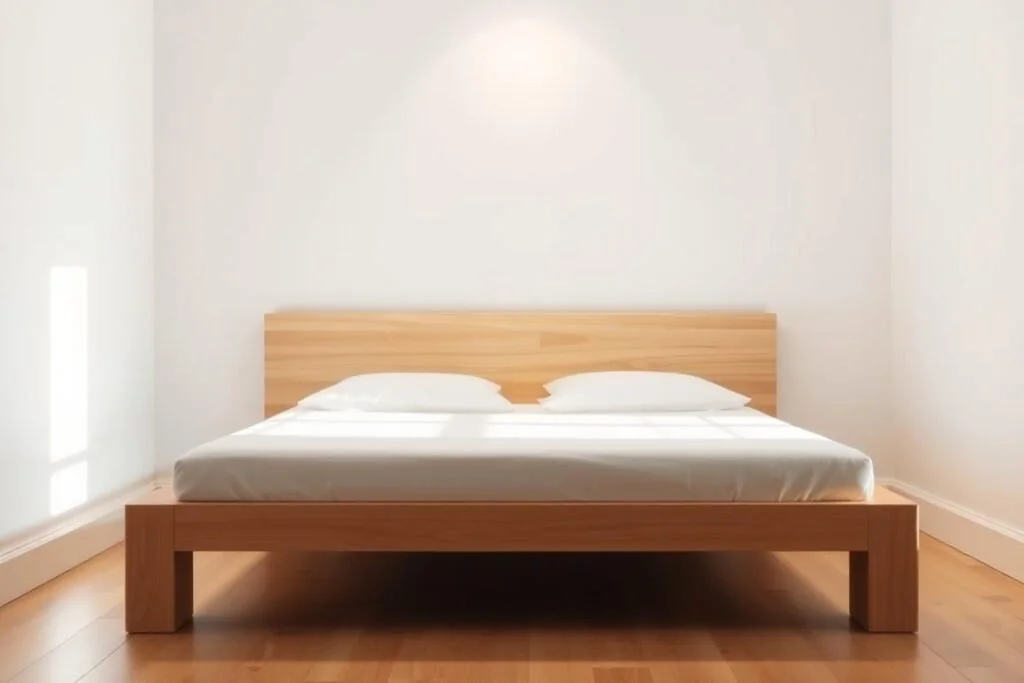
Low-profile platform bed frame in a compact bedroom with a clear walkway

Two more details worth checking on any frame: slat spacing (most foam mattress warranties want slats no more than about three inches apart) and a center support leg on anything full-size or larger. Those two things decide whether the bed squeaks in a year.

Materials and Air Quality in a Small Room

A tiny bedroom has less air in it, so off-gassing is more noticeable. Most budget storage beds and wall bed cabinets are built from particleboard or MDF. That’s fine — but since March 2019, composite wood products such as hardwood plywood, MDF and particleboard, along with finished goods made from them, must be labeled as TSCA Title VI compliant for formaldehyde emissions. Look for that label, air new furniture out for a few days with a window cracked, and vacuum out storage cavities before you fill them.

Beyond that, claims about “non-toxic” frames vary a lot in what they actually mean, and independent evidence comparing brands is thin. Judge what you can verify: the emissions label, solid joinery, and a finish that doesn’t smell strongly in the showroom.

Shopping Checklist

  • Room measurements, door swings, window and radiator positions.
  • Delivery path: doorway widths, stair turns, elevator depth.
  • Walkways of about 24–30 inches on the sides you use.
  • Daily access versus seasonal storage — drawers or lift-up.
  • Mattress thickness and weight limits for wall beds, sofa beds, bunks and lofts.
  • Slat spacing, center support, total frame height.
  • Assembly: who’s building it, and can it be taken apart when you move?

Once the bed is settled, the rest of the room follows. Light paint, one big mirror and wall-mounted lighting instead of table lamps will do more than any furniture swap — there’s a full list of tricks in our guide to making a small bedroom look bigger.

FAQ

What’s the single best bed for a small room?

There isn’t one. A wall bed gives the biggest daytime gain, a storage bed gives the biggest organisational gain, and a daybed or sofa bed is best in a room that needs seating. Pick by how the room is used, then check the bed leaves a 24–30 inch path where you walk.

Is a full-size bed too big for a tiny bedroom?

Not automatically. Tape out 54 by 75 inches on the floor. If you still have a walkway on one long side and the door and closet open freely, a full works. If the tape hits the closet door, drop to a twin XL.

Can you sleep on a daybed or sofa bed every night?

On a daybed, yes — it takes a regular twin mattress. On a sofa bed it depends on the mechanism; pull-out mattresses are usually thin, and a topper or a foam-mattress model makes a real difference for nightly use.

Do Murphy beds have to be attached to the wall?

Wall-mounted models do, into structural framing. Freestanding cabinet models are designed to stand on their own, though many still include an anti-tip anchor. Follow the manufacturer’s instructions exactly, and hire an installer if you’re unsure what’s behind your drywall.

Is a lift-up storage bed hard to open?

Not if the gas struts are matched to your mattress weight. A heavy hybrid on a frame rated for a light foam mattress is what makes these feel stiff, so check the rating against your mattress before you order.

Can a storage bed really replace a dresser?

Often, yes. Four deep drawers hold roughly what a small dresser does. Keep folded items in the bed and hang the rest, and you free up a whole wall.

Updated September 2026.
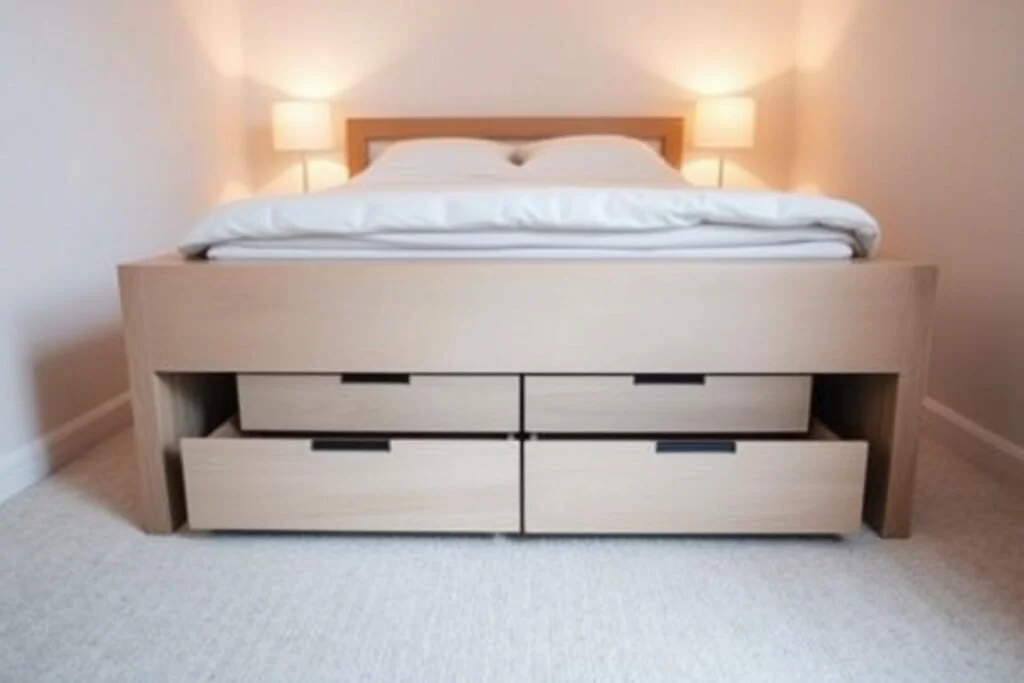
Small Bedroom Storage Ideas for Rooms With No Closet

small bedroom storage ideas - genius storage small bedrooms

The best small bedroom storage ideas for a room with no closet come down to three moves: build a wardrobe wall where a closet should be, turn the space under your bed into a second dresser, and push everything else up onto the walls and door backs. Do those three and you can usually skip the bulky chest of drawers entirely, which is what frees the floor. Everything below is sorted by how much space it gives you back, with renter-friendly options called out.

Small bedroom with mirrored wardrobes, wall sconces and an under-bed drawer keeping the floor clear

A compact room using mirrored wardrobes, wall sconces and an under-bed drawer so the floor stays clear.

Measure and zone the room before you buy anything

Storage that doesn’t fit is worse than no storage, so spend ten minutes with a tape measure first. Sketch the room and mark three zones: sleep, dress, and work or relax. Every piece you bring in should belong to one of them.

  • Measure wall-to-bed gaps, the ceiling height, and the clear depth under your bed frame (including any center rail that blocks a long bin).
  • Leave a walkway beside the bed you can actually use. Roughly two feet is the common design rule of thumb; less than that and you’ll shuffle sideways every night.
  • Check door and drawer swings. A dresser that can’t open fully is wasted money.
  • Keep daily items at arm’s reach and send rarely used things high or deep.
  • Photograph the wall you’re planning. Gaps show up in a photo that your eye skips over in person.

If you’re still choosing a frame, a low-profile or storage bed changes the whole plan. Our bedroom furniture and layout guide walks through floor plans for tight rooms.

Slim dresser for small bedrooms as part of small bedroom storage ideas - genius storage small bedrooms

Small bedroom storage ideas that free up floor space first

Floor area is the thing you’re short on, so the highest-value swaps are the ones that move storage off the ground or into space you already own.

  • Wall shelves above the bed and desk. A pair of shelves holds books, baskets and a lamp without eating a single square foot of floor. Find the studs before you drill. In most US homes they sit 16 inches apart on center, and a shelf that’s screwed into framing will hold far more than one hanging on drywall anchors alone.
  • A pegboard or rail system. Hooks, cups and small baskets on a grid handle jewelry, headphones, hats and hair tools. It’s the cheapest way to clear a dresser top.
  • Over-the-door organizers. The back of the bedroom door is usually the most wasted surface in the room. Shoe pockets, a hook rack, or a slim outfit pole for tomorrow’s clothes all work here.
  • Swing-arm sconces instead of table lamps. Losing the lamp base is often enough to make a tiny nightstand workable.
  • Corner shelves. Triangle shelves stack into a dead corner and don’t stick out into the walkway.

Small bedroom using wall shelving and compact furniture to keep clothes and books off the floor

Build a wardrobe wall when there’s no closet

This is the single biggest fix for a closet-free room. Line up two or three full-height wardrobes along one wall, push them tight together, and close the gap at the ceiling with a strip of simple molding or a painted filler panel. Paint the molding the wall color and the units read as built-ins rather than furniture.

  • Mix the insides: one hanging bar for shirts and jackets, adjustable shelves for folded knits, and labeled bins up top for luggage and off-season gear.
  • Shelf dividers keep sweater stacks from sliding into each other and stop bags toppling.
  • Mount a small reading light and a hanging basket on the wardrobe side that faces your bed. That’s your nightstand, and it costs zero floor space.
  • Run cords behind the units in a shallow channel and finish the edge with a scribe strip so nothing looks temporary.
  • Mirrored or glossy doors bounce daylight back into the room and make the wall feel less like a block.

Renting? Freestanding wardrobes work the same way; skip the molding and use removable anti-tip straps instead of screwed-in brackets where your lease allows.

Under-bed storage: the biggest space you already own

A queen bed sits on roughly 30 square feet of floor. Using that rectangle properly can replace a dresser outright.

  • Built-in drawers or a lift-up platform. Drawers suit daily clothes; a hydraulic lift-up base swallows bulky bedding but needs clearance to open, so don’t push it under a sloped ceiling.
  • Rolling bins. Wheels matter more than capacity. A bin you can pull out one-handed gets used; one you have to drag doesn’t.
  • Zone it. Daily clothes and shoes near the edge, archive boxes toward the wall.
  • Vacuum bags, with a caveat. They shrink synthetic duvets, puffer coats and spare blankets dramatically. Down and feather items are a different story: bedding makers generally advise breathable cotton bags instead, because long compression crushes the clusters that give down its loft. Treat that as manufacturer guidance rather than tested fact, but it’s consistent advice across the industry.
  • Bed risers add a few inches of clearance, and some models include outlets for bedside charging. Only use them if your frame’s legs sit flat and stable in the cup, and check the riser’s stated weight rating against the bed, mattress and sleepers combined.

Under-bed drawers and rolling bins storing folded clothes and shoes in a small bedroom

Under-bed drawers take over folded-clothes duty so a whole wall stays open.

More on both approaches in our guides to hidden storage beds and bed risers for storage.

Double-duty furniture and nightstand alternatives

In a small room, every piece should earn its footprint twice.

  • Desk as vanity. One narrow desk, a wall mirror above it, drawer dividers inside. Keep a lidded tray on top so you can lift the clutter off and reset the surface in seconds.
  • Storage ottoman or flip-top bench. Seating at the foot of the bed that holds blankets and spare pillows.
  • Fold-down desk or drop-leaf table. Out for work, flat against the wall the rest of the time.
  • Floating shelf nightstand. A shallow ledge at mattress height for your phone and glasses, plus a slightly deeper cubby below for books. No legs, no dust trap, no bumped shins.
  • Tall, narrow dressers. Same capacity as a wide one in half the wall length. Anchor it (more on that below).
  • Adhesive catchalls. A small acrylic holder stuck to the wall near your pillow keeps the remote and glasses off the bed.

For frames and case goods built around tight rooms, see our roundups of space-saving bedroom furniture and the best beds for small rooms.

Make a small closet hold more

If you do have a closet and it’s tiny, the rod is almost always underused.

  • Double-hang. Shirts and folded trousers only need about 40 inches of drop, so a second rod below the first roughly doubles hanging space. Keep one section full-height for dresses and coats.
  • Slim velvet hangers. They cut the width of a packed rod noticeably compared with chunky plastic.
  • Hanging fabric cubbies for shoes, gym clothes or bags, so the shelf stays clear.
  • One drawer stack on the floor plus a narrow shoe tower turns the bottom half into real storage instead of a pile.
  • Battery puck lights inside. You can’t wear what you can’t see.
  • Label the bins. Boring, but it’s the difference between a system and a graveyard.

Dead zones worth activating

Spot What to add Best for Renter-friendly
Back of the door Over-door rack, hooks, outfit pole Bags, hats, tomorrow’s clothes Yes
Under the bed Rolling bins, drawers, risers Off-season clothes, bedding, shoes Yes
Above the door Single high shelf Suitcases, storage boxes Needs drilling
Window nook Bench with hinged lid or bins below Blankets, books, seating Yes, if freestanding
Awkward corner Corner shelves or a narrow tower Plants, books, baskets Usually
Bed headboard wall Floating shelves, sconces Bedside items, decor Needs drilling

One small habit keeps all of it working: a nightly two-minute reset where everything goes back to its spot, plus a proper declutter each season. Storage only buys you time if you keep editing what goes into it.

Anchor anything tall before you load it

Tall wardrobes and narrow dressers are exactly the shape that tips. The US Consumer Product Safety Commission now enforces a mandatory stability standard for free-standing clothing storage units after the STURDY Act, adopting ASTM F2057-23 as a federal rule, and the agency’s tip-over data covers hundreds of deaths, most of them children. Use the anti-tip hardware in the box, screw it into a stud, and load heavy items in the bottom drawers. This matters most if kids or pets share the room.

The same logic applies to shelves over a bed. Keep heavy objects low, use hardware rated well above what you plan to store, and don’t hang a loaded shelf from drywall anchors alone.

Make the room feel bigger, not just hold more

Storage solves capacity. These moves solve the cramped feeling.

  • Hang a large mirror opposite or beside a window so it reflects daylight rather than a wall.
  • Keep the palette tight. Fewer colors across walls, bedding and storage reads calmer and less busy.
  • Choose legs over plinths where you can. Seeing floor under furniture makes a room feel deeper.
  • Style by subtraction: one tray, two objects, done.
  • Match storage baskets so open shelving looks intentional instead of accumulated.

There’s some evidence the payoff isn’t only visual. A study presented in the journal SLEEP found that de-cluttering habits predicted better self-reported sleep quality and fewer sleep problems, though the effects were small and based on survey data, not a controlled trial. Treat a tidy bedroom as a likely nudge in the right direction rather than a cure.

More on the visual side in our guides to making a small bedroom look bigger and bedroom mirror placement.

Cheap fixes that punch above their price

  • Over-the-door shoe organizer, repurposed for anything small
  • Removable adhesive hooks along a blank wall for bags and robes
  • Vacuum bags for synthetic bedding and winter coats
  • Drawer dividers cut from cardboard or cheap plastic trays
  • Uniform bins from one range, so mismatched containers stop looking like clutter
  • Slim velvet hangers to reclaim rod space

FAQ

How do I store clothes if I have no closet?

Pair a full-height wardrobe wall with under-bed drawers. Hang what wrinkles, fold what doesn’t, put daily clothes at arm’s reach and archive the rest up high or toward the wall under the bed.

What’s the best nightstand alternative in a tiny room?

A shallow floating shelf at mattress height with a wall-mounted sconce above it. Add a lower cubby if you read in bed.

Are bed risers safe on any frame?

No. They suit frames with flat, stable legs that sit fully inside the riser cup. Check the weight rating, avoid them on frames with casters or splayed legs, and push the bed to test for wobble before loading bins underneath.

Can I vacuum-seal everything?

Synthetic bedding, coats and cotton clothes compress fine. Down and feather duvets and wool are better stored loosely in a breathable cotton bag, since long compression can flatten the fill.

What works if I rent and can’t drill?

Freestanding wardrobes and shelving, over-door racks, removable adhesive hooks, under-bed bins and storage ottomans. Check your lease before adding anti-tip brackets, and ask, because most landlords prefer a small screw hole to a tipped wardrobe.

Should I buy a storage bed or a dresser?

If the room is under roughly 100 square feet, the storage bed usually wins, because the dresser needs both its own footprint and clear space in front of it for open drawers.

Updated September 2026.