How a Nighttime Routine Helps You Sleep Faster & Wake Up Refreshed

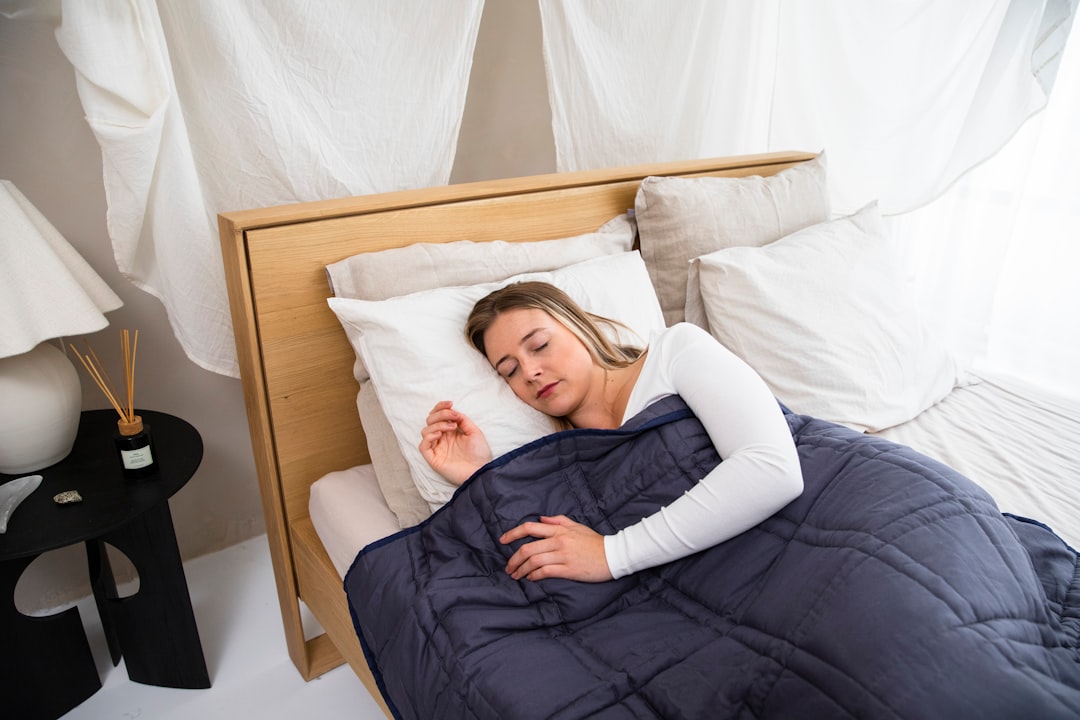
Nighttime routine with herbal tea and a book beside a softly lit bed


Nighttime Routine: How to Fall Asleep Faster & Wake Refreshed

Nighttime Routines That Help You Sleep Faster

A nighttime routine trains your body and brain to switch into sleep mode. Start with 3–5 simple steps (dim lights, unplug from screens, relax your body, and wind down with calm rituals) and you can fall asleep faster within days—often by the very first week.

Key Takeaways on Nighttime Routine

  • Keep a consistent nighttime routine to reinforce your circadian rhythm.
  • Dim lights and avoid blue light 60–90 minutes before bed to protect melatonin.
  • Use relaxation (breathing, stretching, warm bath) to lower cortisol and calm the mind.
  • Cool bedroom (60–67°F / 16–19°C) plus breathable bedding improves sleep quality.
  • Make it enjoyable: pair tea, journaling, or light reading to ease the transition.
  • Stick with it nightly for 2+ weeks for durable, effortless sleep.

Do you find yourself tossing and turning at night, unable to fall asleep quickly? A consistent nighttime routine might be the missing piece. Your body thrives on habit and rhythm, and a structured pre-bed routine trains your brain to recognize when it’s time to sleep.

In this guide, we’ll explore how a nighttime routine improves sleep, the best habits to include, and step-by-step strategies to help you fall asleep faster and wake up more refreshed.


Why a Nighttime Routine is Essential for Quality Sleep

Answer first: A consistent evening routine helps regulate your circadian rhythm by preparing your brain and body for sleep, so you fall asleep faster and wake fewer times overnight.

Your body has an internal clock (circadian rhythm) that signals when it’s time to be awake and when to wind down. A consistent evening routine helps regulate this rhythm by preparing your brain and body for sleep.

The Benefits of a Nighttime Routine:

✅ Reduces stress & anxiety – Helps calm racing thoughts before bed.
✅ Increases melatonin production – Supports a natural sleep cycle.
✅ Prevents sleep disruptions – Reduces nighttime wake-ups.
✅ Helps you fall asleep faster – Establishes a reliable signal for sleep.

⏳ Read More: The Ultimate Sleep Hack


The Best Nighttime Habits for Better Sleep

Answer first: Layer a few science-backed habits—light control, device curfew, body relaxation, and a cool bedroom—to get the biggest payoff with minimal effort.

1. Dim the Lights 60–90 Minutes Before Bed

💡 Why? Artificial light, especially blue light, suppresses melatonin and delays sleep.
💡 How? Use warm-toned lighting, candles, or Himalayan salt lamps to create a relaxing atmosphere.

2. Avoid Screens & Blue Light Exposure

📱 Why? Blue light from phones and TVs tricks your brain into thinking it’s still daytime.
📱 How? Use blue light filters, wear blue light-blocking glasses, or stop screen use 1 hour before bed.

🔵 Read More: How Sleep Science & Technology Can Help

3. Take a Warm Bath or Shower

🛁 Why? Helps lower your body temperature, signaling to your brain that it’s time for sleep.
🛁 How? Take a bath 90 minutes before bed to maximize relaxation benefits.

4. Practice Relaxation Techniques (Meditation, Deep Breathing, or Stretching)

🧘 Why? Reduces cortisol levels and promotes deep relaxation.
🧘 How? Try the 4-7-8 breathing technique, progressive muscle relaxation, or bedtime yoga.

🧘 Read More: Sleep Like a Pro

5. Read a Book (But Avoid Thrillers!)

📖 Why? Reading a physical book (not an e-book) helps your brain transition into sleep mode.
📖 How? Choose a light, enjoyable book rather than something too stimulating.

6. Drink a Sleep-Boosting Herbal Tea

🍵 Why? Herbal teas like chamomile, valerian root, and lemon balm promote relaxation.
🍵 How? Drink your tea 30 minutes before bed for best results.

🍵 Read More: 10 Sleep Hacks to Try Tonight

7. Keep a Gratitude or Sleep Journal

📓 Why? Writing down thoughts helps clear your mind and reduces bedtime anxiety.
📓 How? Write down three things you’re grateful for or a short reflection on your day.

8. Set Your Room to the Ideal Sleep Temperature

🌡️ Why? A cool room (60–67°F or 16–19°C) helps regulate melatonin and improve sleep quality.
🌡️ How? Use breathable bedding, a fan, or adjust your thermostat.

🌙 Read More: Genius Sleep Fixes


How to Create Your Personalized Nighttime Routine

Answer first: Build a 30–60 minute sequence of 3–5 steps you’ll actually stick with, then repeat it nightly at the same time.

A successful nighttime routine doesn’t have to be long or complicated. Start with a simple 3–5 step process that works for you.

Example Nighttime Routine (30–60 Minutes Before Bed)

🕰️ 9:00 PM – Dim the lights & reduce screen time.
🛁 9:15 PM – Take a warm shower or practice deep breathing.
📖 9:30 PM – Read a book or journal to clear your mind.
🍵 9:45 PM – Sip herbal tea while relaxing in bed.
😴 10:00 PM – Lights out, sleep time!

🔄 Read More: Why You Should Never Hit the Snooze Button


How Long Does It Take for a Nighttime Routine to Work?

Answer first: Many people feel improvements in a few nights, but consistency over 2–4 weeks locks in lasting results.

Most people see improvements in their sleep within a few nights of following a nighttime routine. However, for long-term benefits, consistency is key.

Timeline for Sleep Improvement:

📅 Week 1: You may still wake up at night but fall asleep faster.
📅 Week 2: Your sleep will feel deeper, and you’ll wake up more refreshed.
📅 Week 3–4: Your circadian rhythm fully adjusts, making sleep effortless.

⏳ Read More: Say Goodbye to Insomnia


FAQ

Quick answers to common questions about building a nighttime routine.

What is the best time to start a nighttime routine?
Begin 60–90 minutes before your target bedtime. Keeping this timing consistent helps your brain associate the sequence with sleep.
Can a nighttime routine help with insomnia?
Yes. While it’s not a cure for clinical insomnia, a predictable wind‑down reduces arousal, supports melatonin, and often shortens sleep onset latency.
Do I need to follow the same nighttime routine on weekends?
As closely as possible. A similar schedule on weekends prevents circadian drift and Monday “social jet lag.”
What if I can’t avoid screens before my nighttime routine?
Use blue-light reduction settings, enable dark modes, wear blue-light filtering glasses, and keep screens at the lowest brightness.

Final Thoughts: Stick to Your Nighttime Routine & Sleep Better Tonight

Creating a consistent nighttime routine is one of the best ways to fall asleep faster, reduce stress, and wake up feeling fully rested. Even small changes—like dimming the lights, avoiding screens, and practicing relaxation techniques—can make a big difference.

✅ Start with 3–5 simple steps that you enjoy.
✅ Stay consistent for at least two weeks to see results.
✅ Customize your routine to fit your lifestyle & needs.

🌙 Try it tonight and wake up feeling refreshed tomorrow! 😴✨


Related reading from Cozy Bed Quarters

Other reading we found popular

 

Folding Cot with Mattress: A Travel-Friendly Sleeping Option

comparison chart of folding cot with mattress options

Finding the perfect Folding Cot with Mattress means merging portability, support, and warmth into one cozy setup—even in tight spaces or during impromptu guest visits.

Internal link: Read more about versatile folding bed options in our pillar post on folding couch beds.

Folding Cots With Mattresses for Flexible Sleep Spaces

  • Comfortable & Portable: Folding cots with mattresses offer comfort close to a real bed, yet fold up easily for storage or travel.
  • Great for Small Spaces: Perfect for apartments, dorms, or as a guest bed in multi-use rooms.
  • Variety of Options: Available in different mattress types (memory foam, air cell, etc.), weight capacities, and frame designs to suit any need.

Whether you need a cozy camping setup or a reliable guest bed, these folding cots bring comfort and convenience together.

What Is a Folding Cot with Mattress?

A folding cot with mattress is a lightweight, collapsible sleep solution that blends the portability of a cot with the comfort of a mattress. Think of it as the Swiss Army knife of temporary beds—quick to set up, easy to store, and surprisingly comfy.

Instead of sleeping directly on a hard frame or noisy nylon surface like traditional cots, these models include a cushioned mattress—typically made of foam or air-cell technology—that softens the sleep surface. Many also feature locking legs for stability, breathable fabrics, and built-in headrests or pillow compartments for added support.

folding cot with mattress folded and stored in closet

They’re often used in:

  • Guest rooms when a permanent bed isn’t practical
  • Camping or road trips where comfort is still a priority
  • Small apartments or dorms needing space-smart solutions

One Amazon reviewer raved about their folding cot: “It’s like having a bed-in-a-box that vanishes when you don’t need it—perfect for surprise guests!”

So, whether you’re hosting Grandma or heading off the grid, a folding cot with a mattress can be your cozy MVP.

Top Benefits of a Folding Cot with Mattress

1. Portable Comfort That Doesn’t Feel Temporary

One of the best parts about a folding cot with mattress is that you can move it around easily—yet it doesn’t feel flimsy or disposable. A quality model offers firm support with just the right amount of cushion, so you’re not sacrificing a good night’s sleep just because you’re not in your own bed.

Some fold into a duffel-sized shape with handles, making them perfect for:

  • Overnight visits to family or friends’ homes
  • Travelers who Airbnb hop but prefer their own bedding
  • Outdoor getaways where comfort still matters

folding cot with mattress in outdoor camping setup

2. Versatility Across Every Lifestyle

These cots fit seamlessly into different lifestyles:

  • Parents who want a reliable sleep setup for sleepovers or sick days
  • Campers tired of waking up with sore backs from sleeping on the ground
  • Students looking for a spare bed that won’t crowd their dorm
  • Minimalists who appreciate multi-functional, low-profile furniture

For example, some models with memory foam mattresses mimic a regular bed so closely, your guests might forget they’re on a folding frame.

3. Major Space-Saving Potential

If you’re short on square footage, these beds are a lifesaver. Many fold down to just a few inches tall and can slide under a sofa, lean against a wall, or fit in a coat closet.

folding cot with mattress in compact living space

Some folding cots even come with storage bags, wheels, or rolling frames, making storage even easier. It’s especially handy for urban dwellers in studio apartments or those outfitting multi-purpose rooms like offices-turned-guestrooms.

Summary: From their impressive portability to their home-friendly footprint, folding cots with mattresses offer flexibility without compromising on comfort. They’re the perfect answer to the question: “Where will they sleep?”

How to Choose the Right Folding Cot with Mattress

  • Mattress Type: Memory foam offers contouring support; air-cell tech allows for adjustable pressure points—ideal for back or side sleepers.
  • Mattress Thickness: Look for at least 2.5–4 inches if you’ll use it regularly. Thinner versions are lighter but less forgiving for overnight stays.
  • Frame Material: Steel is sturdy and durable; aluminum is lighter but may feel less robust under higher weight loads.
  • Weight Limit: Always check the manufacturer’s specs. Standard is 200–300 lbs, but heavy-duty models can go higher.
  • Set-Up Simplicity: Look for snap-lock legs, pre-attached components, and one-motion fold mechanisms to avoid frustration.
  • Folded Size: Double-check dimensions to ensure it fits your closet or storage area. Bonus if it has wheels or a bag.
  • Washable Covers: Removable mattress covers are a huge plus for keeping things fresh, especially if it’s used for kids or pets.

Need more space-savvy bed options? Explore our top picks for folding queen beds and fold-up single beds.

Best Options Compared

comparison chart of folding cot with mattress options

Model Mattress Type Weight Limit Folded Size Best For
Classic Rollaway Cot 2″ foam 250 lb 40″ × 24″ × 6″ Guest room backup
Heavy-Duty Camping Cot 3″ memory foam 300 lb 45″ × 28″ × 7″ Outdoor sleeping
Aluminum Lightweight Cot 2.5″ air-cell 200 lb 42″ × 22″ × 5″ Tiny homes & dorm rooms

For more ideas, explore our reviews on fold-out couch beds and folding twin beds.

Quick Answer

If you’re looking for a comfy, compact, and practical sleep solution, a folding cot with mattress hits the sweet spot. Choose one with the right mattress type and thickness for your needs, and enjoy restful sleep wherever you are—no backache or hassle included.

Whether you’re welcoming houseguests, gearing up for a road trip, or just need a flexible sleep space in a small home, a folding cot with mattress checks all the boxes. It’s easy to set up, cozy to sleep on, and disappears neatly when you don’t need it—what’s not to love?

FAQ

Is a folding cot with mattress comfortable?
Absolutely! Models with memory foam or thicker padding can feel surprisingly close to a real bed, especially if paired with a plush blanket or topper.
How heavy are these cots?
Most weigh between 15 to 25 pounds. Aluminum-frame versions are lighter and easier to transport, while steel versions offer more support for heavier users.
Can two people fit?
Not usually. Folding cots are designed for solo sleepers, though there are foldable double beds or full-size alternatives if you need more space.
Are folding cots suitable for long-term use?
They’re fantastic for occasional use, but for nightly sleeping, a thicker mattress or hybrid folding bed might be more appropriate long term.
Can I fold and store them easily?
Yes! Most models fold in seconds and can be tucked away in closets, behind furniture, or even under your main bed for quick access.

Want more cozy living tips? Subscribe to our newsletter and join a community of comfort lovers!

Organic Bedding Materials for Better Sleep in 2025

Organic Bedding Materials for Better Sleep in 2025 - Featured Image

Organic Bedding Materials Guide for Sleepers

Looking for a healthier bed setup fast? Organic bedding materials like cotton, bamboo, linen, Tencel, wool, and hemp are free from harsh chemicals, breathable, and responsibly sourced—helping you sleep cooler, sneeze less, and shrink your environmental footprint in one upgrade.

Key Takeaways

  • Best all-rounder: Organic cotton for softness, breathability, and easy care.
  • Coolest feel: Bamboo or Tencel for moisture-wicking, silky comfort.
  • Most durable: Linen and hemp for long life and lived‑in texture.
  • Coziest warmth: Wool for temperature regulation year‑round.
  • Shop by standards: Look for GOTS, OEKO‑TEX® Standard 100, Fair Trade, and FSC.

In an era where sustainability is at the forefront of consumer choices, the bedding industry is experiencing a significant shift toward organic materials. More homeowners are prioritizing comfort without compromising the environment, opting for organic and sustainable bedding options that promote better sleep and a greener planet. If you’re looking to upgrade your bedroom with organic bedding materials, this guide will introduce you to the best materials, brands, and care tips to ensure your sleep is as sustainable as it is restful.


The Growing Demand for Organic Bedding

Summary first: Organic bedding is rising because people want safer, longer‑lasting fabrics without toxic finishes or heavy resource use.

With increased awareness of climate change and eco-conscious living, more people are making informed decisions about their home essentials. Bedding, which directly affects our health and well-being, is no exception. Organic bedding materials offer several benefits:

  • Non-toxic and chemical-free: Traditional bedding is often treated with harsh chemicals that can trigger allergies or respiratory issues.
  • Biodegradable and renewable: Natural fibers decompose faster and have a lower carbon footprint.
  • Durability and comfort: High-quality organic bedding lasts longer and provides superior breathability for a better night’s sleep.

For more insights on maintaining a sleep-friendly environment, check out our guide on
How to Keep Your Mattress Fresh and Allergen-Free.


Popular Organic Bedding Materials

Summary first: Choose by need—cotton for balance, bamboo/Tencel for coolness, linen/hemp for durability and texture, wool for cozy regulation.

1. Organic Cotton

Quick take: The safest “first step” into organic—soft, breathable, widely available.

One of the most widely used organic bedding materials, organic cotton is grown without synthetic pesticides or harmful chemicals. It is breathable, hypoallergenic, and soft, making it an excellent choice for all seasons.

Best for:

  • People with sensitive skin or allergies
  • Year-round comfort

Learn more about different bedding materials and their benefits. For deeper dives, see our guides on
Linen vs. Cotton Sheets and
Best Bedding for Hot Sleepers.

2. Bamboo Fabric

Quick take: Cool, drapey, and moisture‑wicking—great if you overheat at night.

Bamboo-derived fabrics, such as bamboo rayon and bamboo lyocell, are naturally antimicrobial, moisture-wicking, and ultra-soft. Bamboo is a fast-growing plant that requires minimal water, making it a highly sustainable option.

Best for:

  • Hot sleepers needing moisture-wicking properties
  • Those seeking a silky-smooth texture

Compare plant-based options in
Tencel vs. Bamboo Sheets and our
Bamboo Sheets: Pros & Cons.

3. Linen

Quick take: Airy, strong, and beautifully rumpled—improves with every wash.

Linen bedding, made from flax fibers, is naturally breathable and gets softer with every wash. It has a luxurious texture and excellent moisture-absorbing properties, keeping you cool in the summer and warm in the winter.

Best for:

  • Those who prefer a rustic, relaxed bedding look
  • Individuals living in humid climates

4. Eucalyptus-Derived Tencel (Lyocell)

Quick take: Smooth, cool, and made in a closed‑loop process—an elegant alternative to silk.

Tencel, made from eucalyptus trees, is an environmentally friendly alternative to synthetic fibers. It is produced using a closed-loop system that recycles water and solvents, reducing waste.

Best for:

  • People looking for a sustainable alternative to silk
  • Individuals with sensitive skin

5. Wool and Hemp

Quick take: Naturally regulates temperature (wool) and offers exceptional strength (hemp).

Wool is naturally temperature-regulating, making it ideal for all-season bedding. Hemp, on the other hand, is one of the most durable natural fibers and requires little water to grow. Both materials are biodegradable and provide excellent insulation.

Best for:

  • Cold sleepers who need extra warmth
  • Eco-conscious buyers looking for long-lasting bedding options

organic bedding materials in an eco-conscious bedroom: sustainable furniture, indoor plants, and neutral tones
Calm, chemical‑light spaces start with the right materials.

Eco-Friendly Certifications to Look For

Summary first: Trust labels—GOTS, OEKO‑TEX® Standard 100, Fair Trade, and FSC help verify safety and sourcing.

When shopping for organic bedding materials, look for the following certifications to ensure authenticity:

  • GOTS (Global Organic Textile Standard) – Ensures organic materials and fair labor practices.
  • OEKO-TEX® Standard 100 – Guarantees that the fabric is free from harmful substances.
  • Fair Trade Certified – Ensures ethical labor practices and sustainable sourcing.
  • Forest Stewardship Council (FSC) – Certifies responsibly sourced wood-based fibers (like Tencel).

Learn more about how to choose sustainable bedroom furniture and accessories in our
Sustainable Bedroom Ideas.


Best Brands Offering Organic Bedding in 2025

Summary first: Start with trusted names for quality and transparency across materials and price points.

  • Cozy Earth – Known for ultra-soft bamboo sheets and breathable fabrics.
  • Parachute Home – Offers high-quality organic cotton and linen bedding.
  • Buffy – Specializes in Tencel-based comforters and pillows.
  • Boll & Branch – Uses 100% organic cotton with Fair Trade certification.
  • Avocado Green – Provides eco-friendly mattresses, pillows, and bedding made from organic materials.

How to Care for Organic Bedding Materials

Summary first: Wash cool, use gentle detergents, dry low or line‑dry, and store in breathable spaces.

  • Use cold water washes – Reduces energy consumption and preserves fabric integrity.
  • Opt for natural detergents – Harsh chemicals can damage organic fibers.
  • Air dry when possible – Reduces carbon footprint and prevents shrinkage.
  • Store properly – Keep linens in a cool, dry place to prevent mildew.

For more tips, check out
our complete guide to mattress hygiene and cleaning.


FAQ

Summary first: Quick answers to common questions about organic bedding materials.

What are the safest organic bedding materials for sensitive skin?
Start with GOTS-certified organic cotton or Tencel. Both are smooth, breathable, and less likely to irritate skin than heavily finished synthetics.
Are bamboo and Tencel sheets really cooler?
Typically yes. Both fabrics wick moisture effectively and drape close to the body, which can help hot sleepers feel drier and cooler overnight.
How do I know if a product is truly organic?
Look for GOTS for organic content and OEKO‑TEX® Standard 100 for safety testing. Fair Trade and FSC add sourcing and labor transparency.
Will linen feel rough?
New linen can feel textured at first but softens significantly after a few washes while remaining durable and breathable.
Do organic sheets last longer?
Often yes—fewer harsh finishes mean fibers maintain integrity. Proper care (cool wash, gentle detergent, low heat or line‑dry) extends lifespan.

Conclusion

Summary first: Pick the material that fits your sleep style and verify with trusted certifications—then care gently to make it last.

Switching to organic bedding materials is a small but impactful step toward a more sustainable lifestyle. Not only does it benefit the environment, but it also improves sleep quality and overall well-being. With an array of sustainable materials and brands to choose from, making the switch to greener bedding has never been easier. Start your journey today by investing in bedding that’s good for you and the planet!


Did you find this guide helpful?

Share your thoughts in the comments below, and check out our recommended organic bedding picks for 2025!

Related reading from Cozy Bed Quarters

Other reading we found popular

 

Sustainable Bed Frames Guide: 7 Eco-Friendly Picks You’ll Love

Cozy bedroom corner with reclaimed wood sustainable bed frame and soft warm lighting

Complete Guide to Sustainable Bed Frame Choices

A sustainable bed frame is made from eco-friendly materials and built to last. In this sustainable bed frames guide, you’ll discover how to choose stylish, quiet, and planet-friendly options that support healthier sleep and greener living.

Key Takeaways

  • Sustainable bed frames use eco-friendly materials and non-toxic finishes
  • Durability and smart design reduce waste and increase longevity
  • Eco-conscious frames can be stylish, affordable, and easy to assemble

Why a Sustainable Bed Frames Guide Matters

Your bed should be a sanctuary. But if it’s built from questionable materials and coated in toxic finishes, it can silently disrupt your health. This guide to sustainable bed frames helps you choose options that support restful sleep and a cleaner planet. Beyond comfort, it’s about making choices that reflect your values—helping reduce pollution and promote better manufacturing practices for a brighter future.

Sustainable Bed Frames Guide

What Makes a Bed Frame Sustainable?

🌿 Eco-Friendly Materials

Look for FSC-certified wood, reclaimed timber, or recycled metals. Bamboo is a standout—fast-growing, strong, and sustainable. Visit World Bamboo to learn more about bamboo’s benefits. These materials not only reduce your carbon footprint but also support responsible sourcing and forest preservation efforts worldwide, promoting harmony between your home and the earth.


🛡️ Non-Toxic Finishes

Traditional frames may release VOCs, impacting indoor air quality. Sustainable options use zero-VOC finishes. See how the EPA explains VOC risks. Choosing non-toxic finishes means you’re breathing easier, avoiding harmful chemical exposure while creating a safe, nurturing space for rest and relaxation every night.

🛠️ Built to Last

Durability is essential. Brands like Thuma use repurposed rubberwood for frames that last years. Explore their design in our sleep hacks guide. A well-constructed bed frame won’t just save money over time—it reduces waste, minimizes resource consumption, and becomes a dependable foundation in your nightly routine.

Top Picks: Sustainable Bed Frames Guide Favorites

1. Avocado’s City Bed Frame

  • Materials: 100% FSC-certified timber
  • Features: Tool-free setup, GREENGUARD certified, non-toxic finishes
  • Why It Shines: Minimalist and mindful craftsmanship

This bed frame is a beautiful marriage of sustainability and style. Its clean lines and eco-conscious design make it ideal for those wanting to minimize their environmental impact without sacrificing aesthetics. It’s a top pick for anyone embracing simplicity and substance in their sleep sanctuary.

2. Thuma’s The Bed

  • Materials: Repurposed rubberwood
  • Features: Quiet, easy assembly, eco-fi felt
  • Why It Shines: Modern, sustainable, and super solid

Thuma’s design shines for its sleek silhouette and thoughtful construction. With noise-reducing touches and sustainable components, it’s built to support every stretch, snooze, and Sunday morning. Plus, the minimalist aesthetic means it fits effortlessly into any modern bedroom setup.

3. Silk & Snow’s Wooden Bed Frame

  • Materials: Acacia and rubberwood
  • Features: Tool-free Japanese joinery
  • Why It Shines: Clean lines and conscious design

Combining traditional joinery with sustainable materials, Silk & Snow offers a frame that’s easy to love and easier to assemble. It’s ideal for anyone looking to add elegance and eco-conscious integrity to their sleep space without the need for tools or frustration.

Busting a Bed Frame Myth

Myth: Sustainable bed frames are pricey luxuries.
Truth: Brands like Quagga Designs offer affordable, eco-conscious frames, showing that sustainability can be budget-friendly too. In fact, investing in a frame made to last and crafted responsibly can save you from frequent replacements—making it a smarter, long-term decision for your wallet and the world.

Sustainable Bed Frames Guide

Tips for Picking Your Perfect Sustainable Frame

  1. Certifications Matter: Look for FSC, GREENGUARD, OEKO-TEX labels. These certifications give peace of mind that your bed frame meets high environmental and safety standards, ensuring every night’s sleep is supported by clean, green values.
  2. Smart Materials: Choose solid wood, bamboo, recycled metals. These materials are not only environmentally responsible but also contribute to the strength and character of your furniture—adding beauty that lasts.
  3. Think Long-Term: A quality frame avoids frequent replacements. Fewer replacements mean fewer trees cut, less manufacturing energy used, and less landfill waste—big wins for your conscience and comfort.
  4. Simple Setup: Tool-free assembly = low stress and eco wins. Less hassle in setup usually means better design, easier moves, and a product that’s thoughtfully engineered for your convenience and sustainability goals.

Choosing a sustainable bed frame isn’t just about what’s under your mattress—it’s about aligning your sleep space with your values. With so many beautiful, durable, and eco-friendly options, it’s easier than ever to rest easy knowing your bed is part of a better future.

FAQ

What materials should I look for in a sustainable bed frame?
FSC-certified wood, bamboo, reclaimed timber, and recycled metals are all eco-conscious choices.
Are non-toxic finishes really that important?
Yes—non-toxic, zero-VOC finishes reduce your exposure to harmful chemicals and improve indoor air quality.
Do sustainable bed frames cost more?
Not necessarily. Many brands now offer affordable options that balance sustainability with budget-friendliness and durability.

How to Incline Your Bed: Safe Heights and Setups

"How to incline your bed using bed risers for a stable and uniform elevation, improving sleep posture and circulation."

The simplest answer to how to incline your bed is to raise the head end of the frame 6 to 8 inches with sturdy risers or solid wood blocks under the two top legs, so your whole body tilts as one piece. If you can’t lift the frame, a firm under-mattress wedge is the next best thing, and a wedge pillow works when you’re renting, travelling, or sharing a bed with someone who hates the tilt. Skip the stack of regular pillows — it bends your neck instead of lifting your torso, and it slides apart by 2 a.m.

Why people raise the head of the bed

Gravity does the work. When your chest and throat sit above your stomach, it’s harder for stomach contents to travel back up your esophagus while you’re lying flat for seven or eight hours.

That’s why head-of-bed elevation shows up in standard reflux advice. The National Institute of Diabetes and Digestive and Kidney Diseases lists elevating your head during sleep — using a foam wedge or extra support under your head and upper back to raise your head 6 to 8 inches — among the lifestyle changes for GER and GERD.

Other reasons people try it:

  • Night congestion and post-nasal drip. Sinus pressure tends to feel worse flat on your back, and plenty of people find a mild tilt easier to breathe through. The evidence here is thin — it’s comfort, not treatment.
  • Snoring. Some people snore less with the head raised. Results vary enormously from person to person.
  • Waking up coughing or with a sour taste. Classic silent-reflux pattern, and the one that responds best to a tilt.
  • Swollen legs or breathlessness lying flat. Get this checked rather than furnishing around it. Shortness of breath when you lie down is a symptom, not a bedding problem.

Be realistic about what a tilt can’t do. It won’t cure sleep apnea and it won’t replace medication your doctor prescribed. It’s a cheap adjustment that helps some people a lot and does nothing for others, which is why a two-week trial beats a big purchase.

What the evidence actually shows

The research is small-scale but consistent enough to be worth acting on. In the evidence review behind the American Society for Gastrointestinal Endoscopy’s GERD guideline, a cohort study of 63 patients found fewer reflux episodes with the head of the bed raised, and a small crossover trial found that sleeping on a 10-inch wedge cut the time the esophagus spent exposed to acid — though it didn’t reduce the number of reflux episodes.

For breathing, one study of 52 people with obstructive sleep apnea tested a mild 7.5-degree head-of-bed elevation and found that roughly six in ten were responders, with the rest showing no benefit. That’s a real effect for some sleepers, and a clear reminder that a tilt is not an apnea treatment.

Pairing the tilt with left-side sleeping is the highest-value combination for reflux. A systematic review and meta-analysis notes that the 2022 American College of Gastroenterology guidelines recommend the left lateral sleeping position as a lifestyle change for GERD.

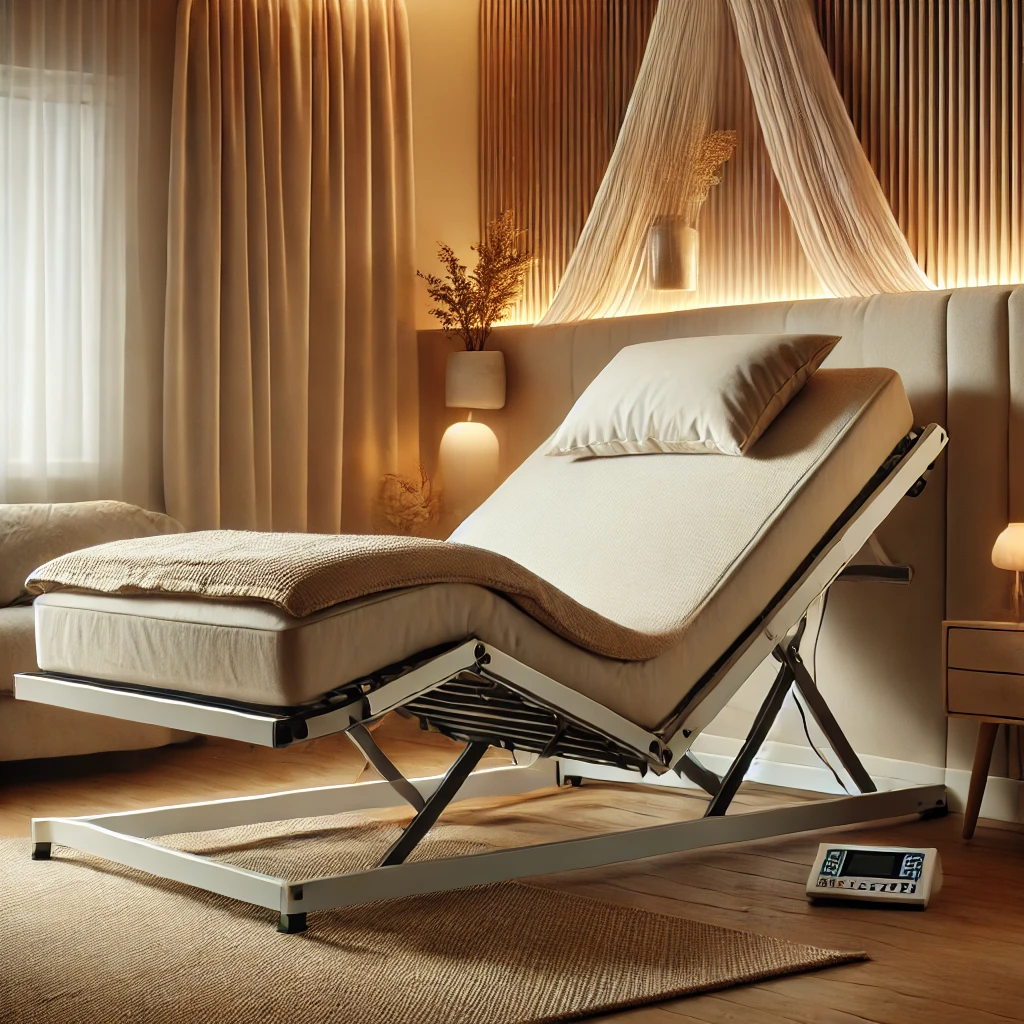
Bed with the head end gently elevated about six inches for a five to seven degree sleeping incline

How to incline your bed: four methods compared

Method Typical lift Best for Trade-off
Bed risers or wood blocks under the head legs 4–8 inches Whole-body tilt, nightly use, couples Needs a stable frame; you feel the slope when you sit on the edge
Under-mattress wedge (between mattress and base) 6–12 inches at the head, tapering Renters, platform beds, frames you can’t lift Bends the mattress slightly; can void some warranties
Wedge pillow 7–12 inches under your torso Travel, occasional reflux, one person in a shared bed You can roll off it; hips stay flat, so you may slide down
Adjustable base Adjustable through a wide range at the head Nightly reflux, reading in bed, limited mobility Costs the most, heavy, needs a mattress rated to flex

1. Risers or blocks under the frame

This is the method most reflux advice is built around, because your spine stays straight and you don’t fold at the waist.

  1. Measure your leg or post. Square legs, round legs and casters all need different riser shapes. Casters usually have to come off first.
  2. Check the weight rating. Add mattress, base and sleepers, then remember the two head-end risers carry most of that load. Look for a stated rating per riser and leave yourself margin.
  3. Check the frame before the risers. A sagging slat deck or a loose centre rail gets worse on a slope. Tighten everything first — our guide to reinforcing a metal bed frame covers the usual weak points.
  4. Start at 4 inches, not 8. Most people adapt better going up in steps over a week or two.
  5. Test for wobble. Push the headboard side to side. Any rocking means the riser cup is too big for the leg — shim it with a hardwood offcut, not cardboard.
  6. Push the bed against a wall if you can, and re-check that the slats sit tight in their brackets after a few nights.

Solid hardwood blocks with a routed recess work as well as plastic risers and often handle more weight. Don’t stack two risers on top of each other, skip bricks (they crack and scuff floors), and never use books.

2. Under-mattress wedge

A long foam wedge that sits under the mattress gives you a gentler, full-torso ramp without touching the frame. Look for at least 30 inches of length so the slope ends near your waist instead of your shoulder blades. Firm foam matters — a soft wedge flattens under a heavy mattress within weeks.

Check your mattress warranty before you do this. Some memory foam and hybrid warranties require a flat, fully supported base.

3. Wedge pillow

Fastest to try, easiest to return. Height is what you’re shopping for: 7 inches is mild, and 10 to 12 inches is where most people with reflux land. A gradual slope roughly 24 to 32 inches long beats a short, steep triangle that stops at your shoulders.

Side sleepers usually need a thin pillow on top to fill the neck gap — a fat pillow on a wedge kinks your neck forward. Our explainer on pillow loft covers matching height to sleeping position.

4. Adjustable base

The button-press option, and the one worth the money if reflux is nightly, you read in bed, or getting out of a flat bed is hard. Check four things before buying: whether the base fits inside your existing frame or replaces it, how loud the motor is, whether there’s a battery backup to lower the bed in a power cut, and whether your mattress is rated to flex. Split models let one person tilt while the other stays flat — our look at adjustable beds for couples goes through that trade-off.

How many inches — and how many degrees?

These two numbers get mixed up constantly, so here’s the plain math. Raising the head of a standard 80-inch bed by 6 inches gives you a tilt of roughly 4 degrees; 8 inches is about 6 degrees. That sounds like nothing, but it’s the range general reflux guidance points to, and it’s enough to put your throat measurably above your stomach.

A wedge pillow is a different animal. A 10-inch wedge over a 26-inch run puts your torso somewhere near 20 degrees, and an adjustable base can take you past 40. Steeper isn’t automatically better — past about 30 degrees, most people start sliding and waking with a sore lower back.

If you want to know your real angle, a spirit level or the level app on your phone laid along the mattress edge will tell you in seconds.

Practical starting points:

  • Mild reflux or congestion: 4–6 inches of frame lift.
  • Nightly heartburn: 6–8 inches, or a 10–12 inch wedge.
  • Back pain flare-ups: gentler tilt plus a pillow under the knees.

Stop sliding down the bed

Sliding is the number one reason people quit after three nights. Fixes, in the order worth trying:

  • Pillow under your knees. A bolster or folded blanket breaks the slide and takes pressure off your lower back. This alone solves it for most people.
  • Grippier sheets. Slick satin-finish microfiber is the worst offender. Cotton percale, linen and jersey all hold better.
  • Tighten the fitted sheet. Sheet straps or suspenders stop the whole sheet migrating down with you.
  • Back off the angle. Drop an inch. Comfortable and slightly too shallow beats perfect and abandoned.
  • A footboard or rolled towel at the foot. A light stop point helps some people, though it can feel confining.

There’s a second kind of sliding: the mattress itself creeping down the frame. A non-slip rug pad or rubber matting between mattress and base fixes it, and many frames accept a retainer bar at the foot end.

Mattress feel matters too. Soft mattresses make body sliding worse because you sink into a pocket and then creep out of it, and a sagging one cancels out the tilt entirely. A medium-firm surface holds an incline best — our mattress firmness scale explains where that sits.

Non-slip mattress pad under a mattress to stop it creeping down an inclined bed frame

Mistakes that ruin an inclined bed

  • Propping only your head. Loose pillows bend your neck and upper back rather than lifting your torso. Aim for one smooth slope from hips to shoulders.
  • Going too steep too fast. A big jump in angle usually shows up as hip or lower-back tension by morning.
  • Ignoring the frame. Wobbly risers, loose bolts and tired slats are a safety issue once the bed is on a slope.
  • Mismatched risers. Two different heights at the head end twists the frame.
  • Changing five things at once. New pillow, new angle, new bedtime — and you learn nothing about what helped.

When not to incline a bed

Never for babies. Infant sleep surfaces must be firm and flat. The Consumer Product Safety Commission banned infant sleepers with inclines greater than 10 degrees, and its safe sleep guidance is that babies sleep on their back on a firm, flat surface with nothing else in the crib. Propping a crib mattress or slipping a wedge under a baby with reflux isn’t a home fix — ask your pediatrician.

Check with your doctor first if you’re pregnant, recovering from spine or hip surgery, managing heart or lung conditions, using CPAP or oxygen, or at risk of falls. A tilted bed changes how you get in and out of it, which matters more than the angle itself for some people.

Claims that don’t hold up

A lot of “inclined bed therapy” material online promises improved circulation, lymphatic drainage, lower night-time blood pressure, brain detox and relief from varicose veins. Those claims aren’t supported by solid clinical evidence, and some of the statistics and studies circulating on the topic can’t be traced to a real journal. We’ve removed several from our own older posts for that reason.

Reflux and, for some people, snoring and stuffiness are the realistic reasons to try a tilt. And note the direction: if your issue is swollen ankles, raising the head of the bed is the wrong end — leg elevation is a separate thing to discuss with your doctor.

A two-week trial that tells you something

  1. Nights 1–3: 4 inches of lift or a 7-inch wedge. Note how you wake up and whether you slid.
  2. Nights 4–7: go to 6 inches if the first step felt fine. Add the knee pillow now, not later.
  3. Nights 8–14: hold at your best height and keep everything else identical — same bedtime, same last meal timing.
  4. Track two things only: night-time heartburn or coughing, and how many times you woke. Anything more detailed gets abandoned by day four.

Pair it with the boring stuff that moves the needle: finish eating about three hours before bed, sleep on your left side if reflux is the issue, and keep the room dark and cool. Our sleep hacks for deep sleep covers the rest of the routine.

Bed frame raised at the head with risers showing how to incline your bed by 6 to 8 inches

FAQ

Can I just stack pillows instead?

You can, but it bends your neck and upper back rather than lifting your whole torso, and the stack collapses once you move. A single firm wedge or a lifted frame holds its shape all night.

Do I raise the mattress or the whole frame?

The frame, if you have the option. Lifting the frame keeps the mattress flat and your spine straight. A wedge under the mattress works too, but check your mattress warranty first.

How high should the head of the bed be for acid reflux?

General guidance points to 6 to 8 inches at the head. Build up to it over a week or two rather than jumping straight to 8.

Will an inclined bed stop snoring?

Sometimes. Raising the head helps some people and does nothing for others. Loud snoring with gasping, pauses in breathing or daytime sleepiness needs a medical evaluation for sleep apnea, not a bedding tweak.

Can two people share an inclined bed?

Yes — frame risers tilt both sides equally. If only one of you wants the incline, a wedge pillow or a split adjustable base keeps the peace.

Is an incline bad for your back?

A gentle whole-body tilt usually isn’t. Trouble comes from steep wedges that fold you at the waist. A knee pillow and a shallower angle fix most of the ache; a supportive pillow that keeps your neck neutral handles the top end.

How long before I notice anything?

Reflux and coughing often change within a few nights. If two solid weeks at 6 to 8 inches does nothing, the tilt probably isn’t your answer.

Do bed risers damage floors or frames?

Rated risers on solid legs are fine. Risk comes from overloading cheap plastic, mismatched sizes, or a frame with weak centre support. Check slats and bolts after the first week.

Related reading

Foam wedge pillow on a bed raising the sleeper's torso for night-time reflux relief

Updated September 2026.

Best Mattresses for IBT: Sleep Smarter with the Right Support

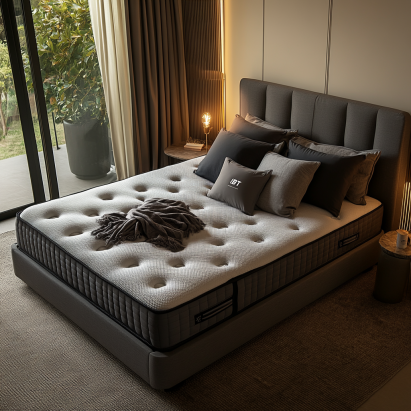
Comparing standard mattress to best mattresses for IBT

Best Mattresses for Inclined Bed Therapy

Best Mattresses for IBT help inclined sleepers reduce reflux, snoring, and pressure points. Below you’ll find quick takeaways, a buyer’s guide, and expert-backed tips to get your incline dialed in. Updated 2025. For more incline guidance, see our step-by-step incline setup guide.

Key Takeaways

  • Best Mattresses for IBT should flex easily on a gentle incline (4–8 inches) without buckling.
  • Memory foam, latex, and hybrids are the most incline-friendly options.
  • Look for zoned support and pressure relief to keep hips, shoulders, and lower back aligned.
  • Cooling features matter more on an incline—prioritize breathable covers and open-cell foams.
  • Pair your mattress with an adjustable base or stable risers for consistent angles.

What Is Inclined Bed Therapy (IBT)?

IBT means raising the head of your bed 4–8 inches to create a 5–7° slope. This gentle angle can reduce nighttime reflux and ease snoring for some people. A full-bed incline is more effective than stacking pillows because it keeps your body in one line. See the National Sleep Foundation’s overview of posture and breathing during sleep for context sleep posture and positions.


Why Your Mattress Choice Matters on an Incline

On a slope, rigid beds can bridge at the hips or shoulders and cause numbness. Flexible builds contour to the new angle so your spine stays neutral. For a quick sleep-tuning routine, try these sleep hacks for falling asleep faster.

Best Mattresses for IBT designed to align with elevation needs

Scenario: If you wake with tight shoulders, your mattress may be too stiff for your incline—switch to softer foam on top.

Top Features to Look For

1. Flexibility and Adjustable-Base Compatibility

Your mattress should bend smoothly without gaps or strain. Most all-foam and many latex beds excel here. If you prefer a base you can fine-tune nightly, see our guide to adjustable bed mattress compatibility.

2. Pressure Relief and Zoned Support

Inclines shift weight down the body. Zoned foams or coils help keep hips from sinking while cushioning shoulders. Hybrid builds can balance contour and lift—learn how hybrids work in our incline & heart-health explainer.

3. Breathability and Temperature Regulation

Heat can pool at the torso on a slope. Look for open-cell foam, perforated latex, and breathable covers. If you’re a hot sleeper, compare our picks in best cooling mattresses.

Best Mattresses for IBT made with breathable materials for better airflow

Scenario: If you toss and turn from heat, choose gel-infused foam or ventilated latex and pair with cooling sheets.

Best Mattress Types for IBT

Memory Foam: Contouring Comfort

Memory foam hugs curves and keeps the torso cradled on an incline. Choose medium to medium-firm with cooling additives or open-cell designs. See our in-depth roundup: best memory foam mattresses.

Latex: Responsive and Durable

Latex provides springy support and natural breathability. It bends well for IBT and resists body impressions—great for combo sleepers who adjust angles.

Hybrid: Foam + Coil Balance

Hybrids add coil lift beneath contour foams, which can help keep your hips from sliding downhill. Look for zoned coil cores if you use a steeper incline. For full incline setup tips, try our sleeping on an incline guide.

Best Mattresses for IBT in memory foam, latex, and hybrid options

Scenario: If your lower back feels strained, a hybrid with firmer mid-zone coils can keep your pelvis from dipping.

Chart: Flexibility, pressure relief, and cooling performance of the best mattresses for IBT by type.

Mattresses to Avoid for IBT

  • Innerspring-only beds: Limited flex; can bow at the mid-section on a slope.
  • Overly thick (14″+): Extra height reduces bend and can push your chin toward your chest.
  • Low-density foams: Compress fast and may hammock over time on an incline.

Will an Incline Damage My Mattress?

IBT won’t harm a mattress built for flexibility, but always check the warranty. Many brands specify compatible bases. The American Academy of Sleep Medicine also notes that head-of-bed elevation can reduce reflux symptoms for some people—talk with your clinician if you have GERD or apnea AASM sleep resources.

Accessories That Improve IBT

  • Adjustable bases: Fine-tune your angle nightly and add leg elevation for pressure relief.
  • Wedge support: Use knee or lumbar wedges to keep your body from sliding.
  • Cooling bedding: Combine breathable sheets with an airy duvet—compare picks in our temperature-regulating bedding guide.

Evidence & Certifications (Quick Proof Points)

FAQ

What incline is best for IBT?

Most people do well at 4–8 inches at the head of the bed (about 5–7°). Start lower and increase gradually.

Can I use my current mattress?

Yes if it flexes easily (all-foam, latex, many hybrids). Extra-thick or rigid beds may feel awkward on a slope.

Does IBT help with snoring?

Elevating your head can reduce airway collapse for some sleepers. If snoring persists, ask your clinician to screen for sleep apnea.

Will I slide down the bed?

If you feel “downhill drift,” try a slightly lower angle, add a knee pillow, or use a textured sheet to increase grip.

How long does it take to adjust?

Anywhere from a few nights to two weeks. Increase the angle slowly and keep your pillow low so your chin doesn’t tuck.

Conclusion

Best Mattresses for IBT are flexible, pressure-relieving, and breathable enough to keep you comfortable on a gentle incline. Choose memory foam, latex, or a zoned hybrid, pair it with a stable base, and adjust your angle gradually. For more sleep-optimizing ideas, explore Cozy Bed Quarters.

Related reading from Cozy Bed Quarters

Other reading we found popular


Changing Face of Nuptial Bedding Ceremonies in Europe

Nuptial Bedding Ceremonies


Changing Face of Nuptial Bedding Ceremonies in Europe

Nuptial bedding ceremonies were once public, witness-attended rituals that validated a marriage; over the centuries they transformed into private, intimate moments. This article traces how nuptial bedding ceremonies shifted from medieval social proofs to modern privacy, and what that reveals about changing views on love, community, religion, and legitimacy.

Key Takeaways on Nuptial Bedding Ceremonies

  • Public to private: nuptial bedding ceremonies moved from communal validation in the Middle Ages to private marital intimacy by the Victorian era.
  • Religious framing: Priestly blessings tied beds, heirs, and duty together—marriage was sacred and social.
  • Witnesses as proof: Presence of select observers safeguarded lineage, inheritance, and political alliances.
  • Renaissance pivot: Individuality and romantic love increased the value placed on privacy.
  • Modern echoes: Traditions like “carrying over the threshold” and honeymoons retain symbolic traces of the old rites.

Ever wondered what really happened on a wedding night centuries ago? Nuptial bedding ceremonies in medieval and early modern Europe were far more than a simple private moment—they were rich with symbolism, public spectacle, and deep cultural meaning. These traditions, which often saw the newlyweds paraded to their marriage bed in front of family, friends, and sometimes even clergy, served to publicly validate the union. But as the centuries rolled on, things started to change. The once highly public
ritual slowly transformed
into a more private affair, echoing shifts in how intimacy and marriage were viewed across Europe.

In this article, we’ll explore how nuptial bedding ceremonies evolved—from grand public displays to the private, intimate moments we recognize today—and what these changes tell us about love, community, and societal expectations.

1. Medieval Europe: The Public Spectacle of the Bedding Ceremony

Answer first: In medieval Europe, bedding the couple in public view acted as social proof that the union was real and binding.

Back in medieval times, especially among the nobility, marriage wasn’t just about love—it was a public event, often cementing alliances and political ties. The bedding ceremony was a highlight, marking the consummation of the marriage. Newlyweds were escorted to their bedchamber amid song, blessings, and even a bit of playful teasing. Family, close friends, and sometimes clergy were in attendance to witness this important rite.

Behind Closed Doors: The presence of witnesses might feel intrusive by today’s standards, but it was vital back then. For noble families, it wasn’t enough just to say you were married—you had to prove it. The bedding ceremony confirmed the union’s legitimacy, which was especially critical when inheritance and family lineage were on the line.


2. The Role of Religion in Nuptial Bedding Ceremonies

Answer first: Church blessings framed the bed as a sacred space where duty, fertility, and faith converged.

The Church played a central role in many medieval customs, and bedding ceremonies were no exception. A priest would often bless the marriage bed, asking for divine protection and fertility—because producing heirs wasn’t just a personal wish; it was a duty.

Behind Closed Doors: These blessings highlighted how marriage was viewed as both a sacred and social contract. While the public ritual was front and center, the private consummation—hidden away from view—was equally important. The mix of public and private elements shows a deep intertwining of faith, duty, and personal intimacy.

Priestly blessing and candles depicted in nuptial bedding ceremonies as sacred tradition.

3. Social Validation and the Role of Witnesses

Answer first: Select witnesses authenticated the marriage without violating the couple’s final privacy.

For noble and royal families, having witnesses during the bedding ceremony wasn’t optional—it was necessary. Close relatives or trusted friends would stay nearby as the couple settled into bed, ensuring everything was above board. This was especially key when political alliances or claims to estates were involved.

Behind Closed Doors: While it might seem shocking to us now, these witnesses weren’t there to intrude but to validate. Their role was mostly symbolic, reinforcing the marriage’s legitimacy without breaching the couple’s true privacy.

Gathered witnesses in nuptial bedding ceremonies ensuring legitimacy and lineage.

4. The Renaissance Shift: Privacy and the Emphasis on Romantic Love

Answer first: Renaissance ideas elevated personal choice and intimacy, nudging ceremonies behind closed doors.

Enter the Renaissance—a time when new ideas about individuality and romantic love began to flourish. Marriage started to be seen as a personal choice, and nuptial bedding ceremonies slowly moved away from being public spectacles. Families still played a role, but the focus started to shift to the couple’s relationship and private moments.

Behind Closed Doors: Privacy took on new importance during this period. The closed doors of the bedchamber became a symbol of the couple’s personal bond, reflecting a growing respect for intimacy and emotional connection in marriage.

5. The Victorian Era and the Disappearance of Public Bedding Ceremonies

Answer first: Victorian modesty and propriety made public bedding ceremonies socially untenable.

By the time the Victorian era rolled around, public bedding ceremonies had nearly disappeared. Victorian ideals of modesty and propriety didn’t mesh well with the old public rituals. Weddings remained grand, but the wedding night became a deeply private affair, reserved solely for the couple.

Behind Closed Doors: This shift mirrored a broader cultural change—marriage was now viewed more as a personal commitment than a public contract. The wedding night became a private milestone, reflecting Victorian values around modesty and intimacy.

6. Modern Reflections: Echoes of Nuptial Bedding Ceremonies Today

Answer first: Modern traditions preserve symbolic traces of the old public-to-private transition.

Although formal bedding ceremonies are a thing of the past, echoes of them linger in today’s wedding traditions. Think about carrying the bride over the threshold, or the symbolism of the honeymoon—these customs subtly nod to the transition from public celebration to private union.

Behind Closed Doors: Modern weddings continue to honor the shift from public to private, celebrating the couple’s journey together. It’s a beautiful reminder that while customs evolve, the essence of marking a new beginning remains timeless.

Modern echoes of nuptial bedding ceremonies shown in threshold and honeymoon symbolism.

7. The Cultural Legacy of Nuptial Bedding Ceremonies in European History

Answer first: The long arc—from spectacle to privacy—shows how societies renegotiated love, duty, and legitimacy.

The transformation of nuptial bedding ceremonies tells a bigger story about how marriage has changed over time. From public spectacles designed to validate alliances to deeply private rituals celebrating personal commitment, these shifts highlight how cultural values have evolved. Today’s private celebrations still carry the echoes of centuries-old traditions, reminding us that love and commitment are both timeless and ever-changing.

Behind Closed Doors: Exploring the history of these ceremonies gives us a window into the complex balance between community, tradition, and personal intimacy—a balance that continues to shape the way we celebrate love today.


FAQ

What were nuptial bedding ceremonies?
Publicly witnessed rituals that escorted newlyweds to bed, providing communal validation of the marriage—an early form of social and legal proof.
Why were witnesses important in nuptial bedding ceremonies?
Witnesses served as symbolic guarantors that the union was legitimate, protecting inheritance claims and political alliances.
Did the Church actually bless the bed?
Yes. Priestly blessings invoked protection and fertility, revealing how marriage functioned as both a sacred covenant and a social contract.
Do any elements of nuptial bedding ceremonies survive today?
Modern customs—like carrying a partner over the threshold or the honeymoon—echo the historical transition from public celebration to private union.

Conclusion

The journey of nuptial bedding ceremonies from public spectacles to private rituals mirrors Europe’s evolving views on marriage and intimacy. What was once a highly public affirmation of duty and alliance has become a private celebration of love and commitment. Though we may not hold formal bedding ceremonies today, their legacy lingers in the private moments we cherish after the wedding bells have rung.

Today, those intimate first moments belong to the couple alone—but the cultural history of nuptial bedding ceremonies reminds us that marriage has always been both a personal journey and a reflection of broader societal values.

Related reading from Cozy Bed Quarters

Other reading we found popular
More Expert Insights

The elaborate designs seen in historical sleeping arrangements often reflected the ceremonial importance of these rituals. Learn how squeaky bed frames reflect evolving craftsmanship rooted in practical and symbolic needs.

Religion played a central role in bedding ceremonies. In Catholic regions, clergy might bless the marriage bed with holy water and herbs to ensure fertility and sanctity. These rituals intertwined faith with practical concerns about lineage and inheritance. According to BBC History Extra, such blessings were integral to medieval wedding customs.

Furthermore, scholarly research, including a detailed analysis from the National Institutes of Health, shows how these customs influenced both societal health norms and legal structures.

These values are still reflected in how we decorate modern bedrooms and prioritize serenity. Consider practices like deep sleep optimization that echo this inward shift toward emotional comfort.

Contemporary sleep and intimacy customs continue to reflect these historic changes, as noted by the Sleep Foundation’s global sleep analysis.

Today’s personalized sleep environments also build on these long-standing traditions. Learn how to fall asleep faster using gentle, effective rituals rooted in centuries of sleep wisdom.

Nuptial bedding ceremonies in European history trace a fascinating journey from public spectacles to private rituals. These traditions mirror societal shifts in privacy, romance, and the influence of religion. Updated 2025, this guide explores their origins, transformations, and legacy. For a broader look at how intimate traditions shaped bedrooms, see our pillar guide on medieval rituals.

Local customs varied. In some regions, neighbors sang bawdy songs or played practical jokes, blending celebration with accountability. These traditions reinforced marriage as both personal and communal.

The rise of Christianity gave these rituals new meaning. Priests blessed marital beds, making consummation a sacred act. Over time, however, the Church encouraged modesty and privacy, reshaping once-public ceremonies into intimate practices.

Among the nobility, bedding ceremonies were political as much as personal. Royal couples in England, France, and Spain were escorted to their chamber amid music and laughter. Witnesses, including officials and family, stayed until the couple was in bed. These rituals reinforced alliances and secured dynastic futures.

Enlightenment values of freedom and modesty deepened these changes. By the Victorian era, privacy and morality were paramount. Public bedding rituals disappeared, replaced with discreet acknowledgment of consummation.

Certifications and standards like those outlined in Sleepopolis mattress certifications today reflect similar cultural concerns with purity, safety, and propriety in everyday life.

Though the practice declined, bedding ceremonies lived on in stories, plays, and literature. Dramas often exaggerated them for comedy or scandal. Today, films and novels revisit the tension between public display and private intimacy in historical marriages, while modern couples keep the spirit alive through small symbolic gestures.

The Church sanctified the rituals, then gradually pushed for privacy, reshaping them into private moments.

Explore our resources on sustainable bed frames and eco-friendly bed frame materials.