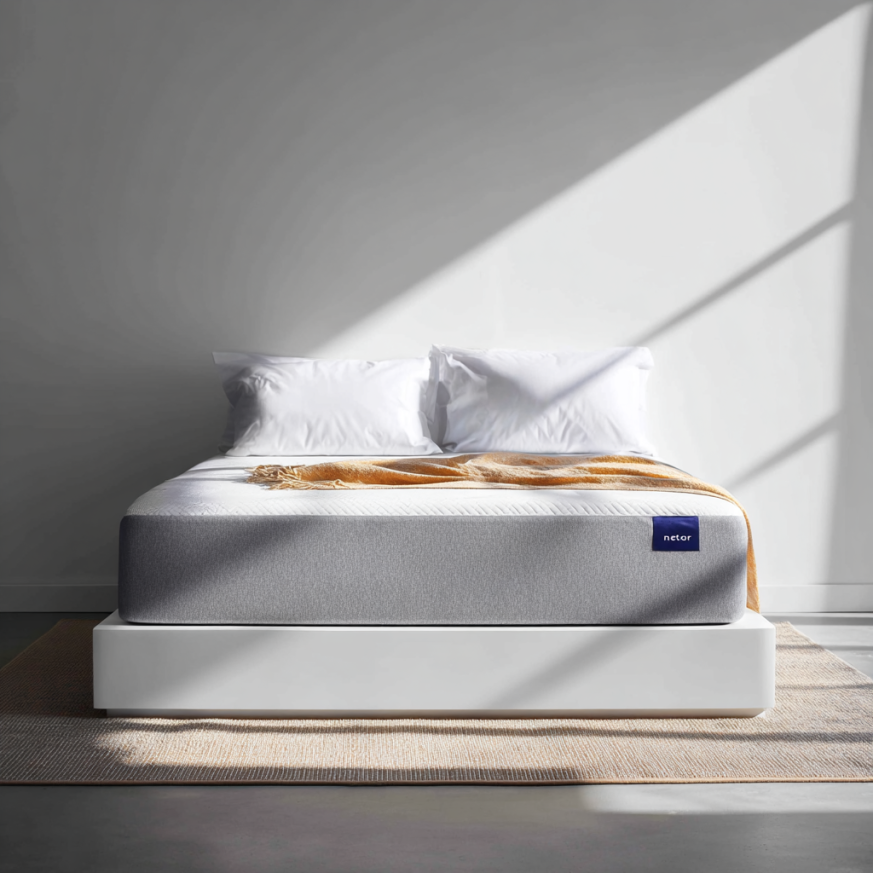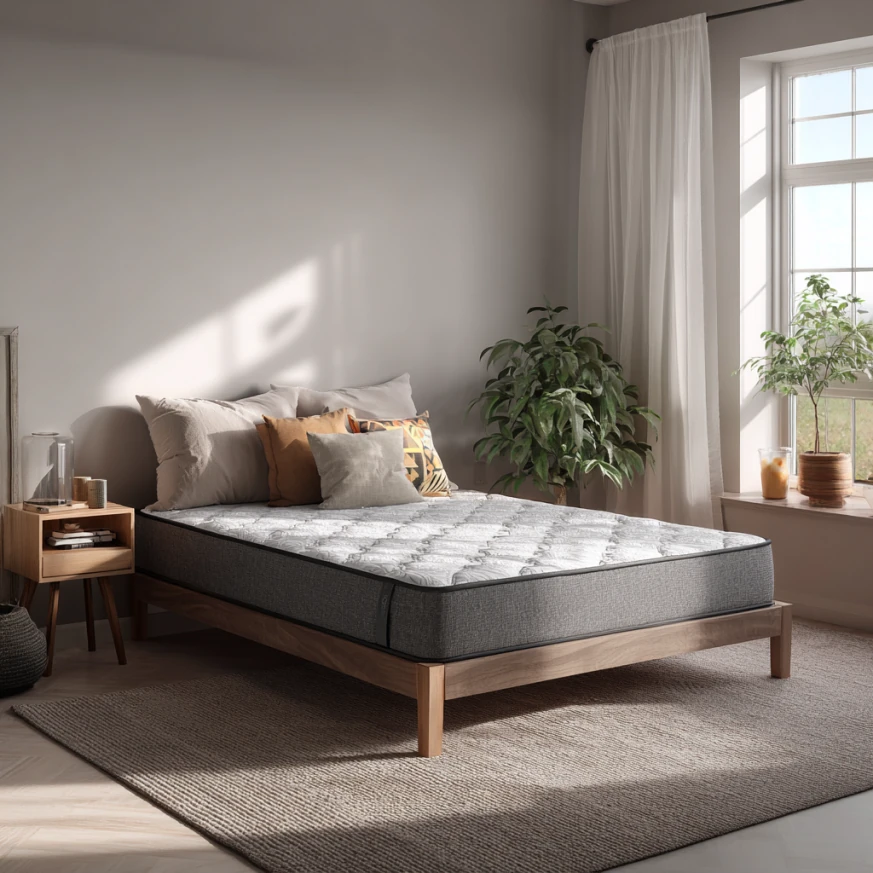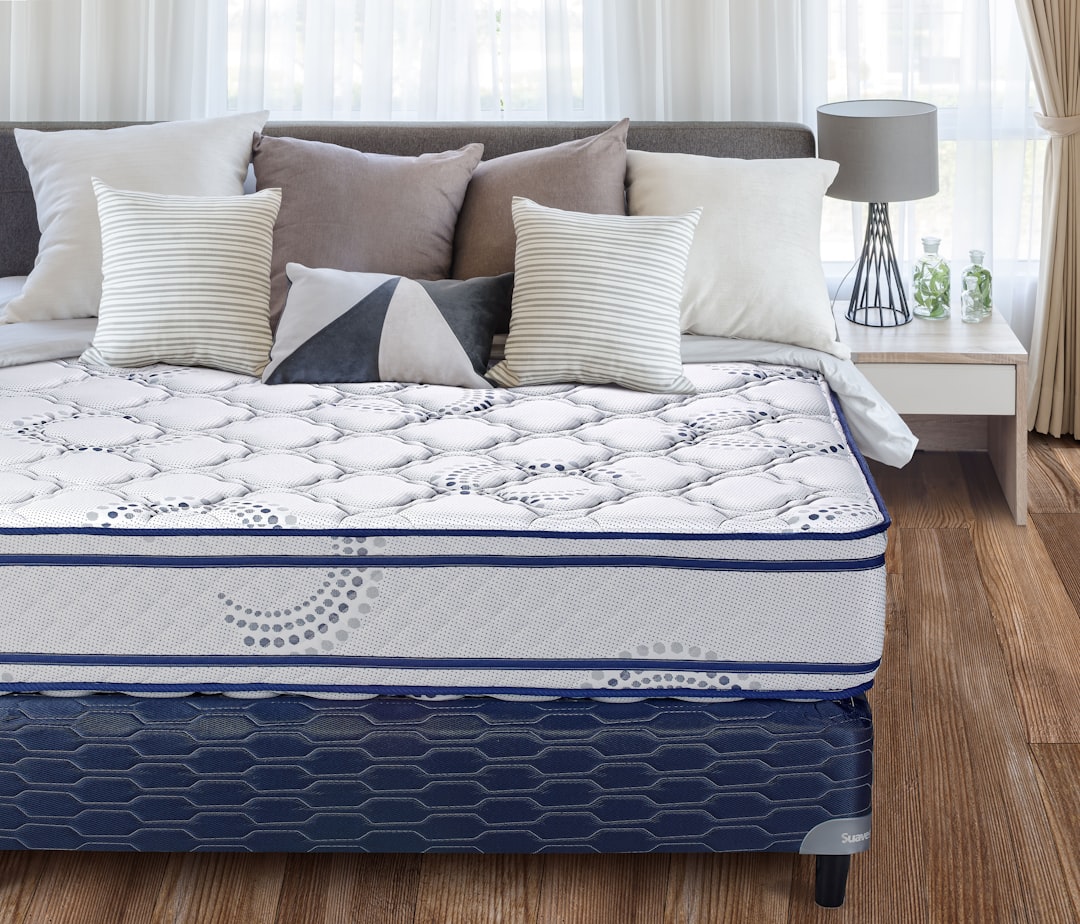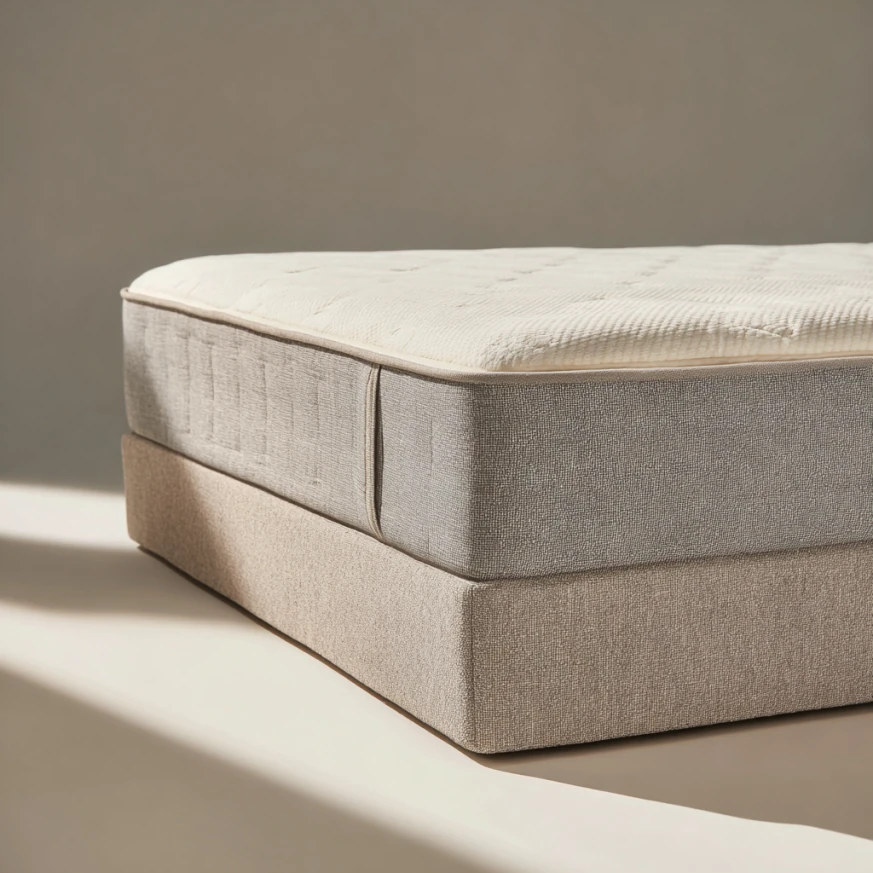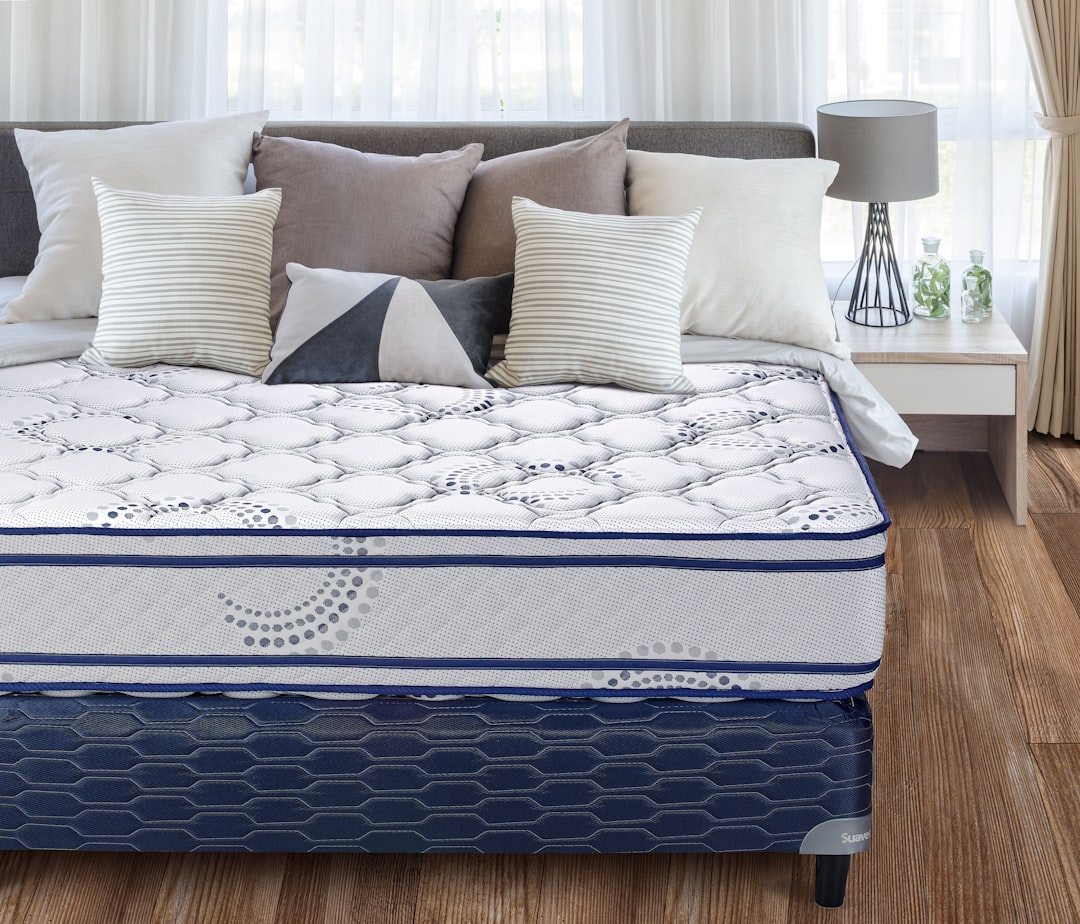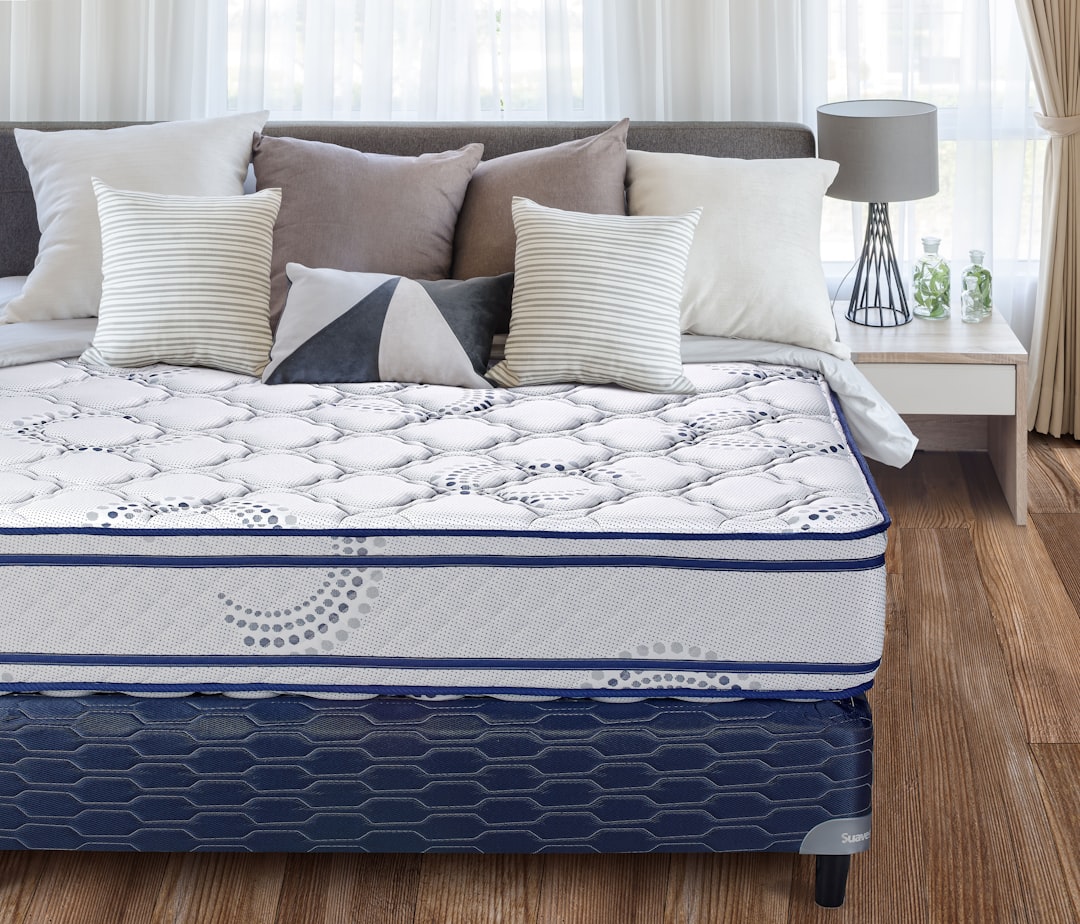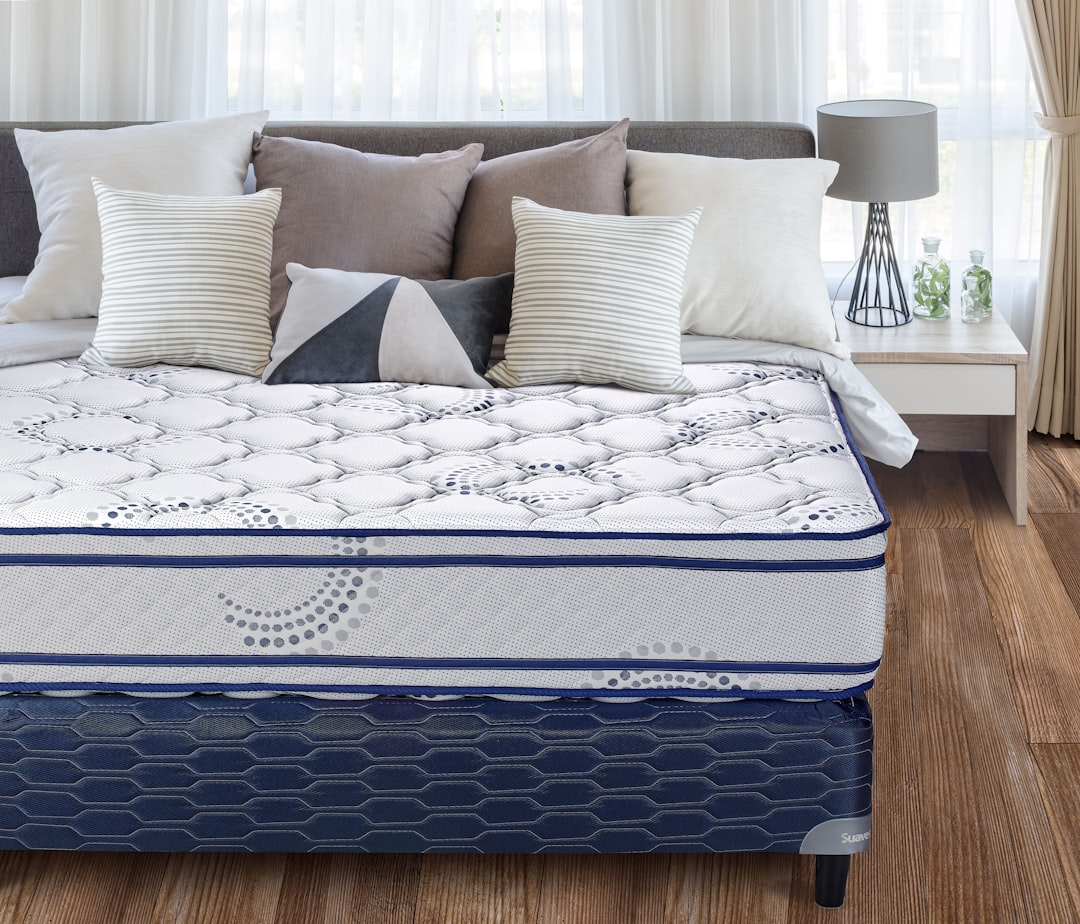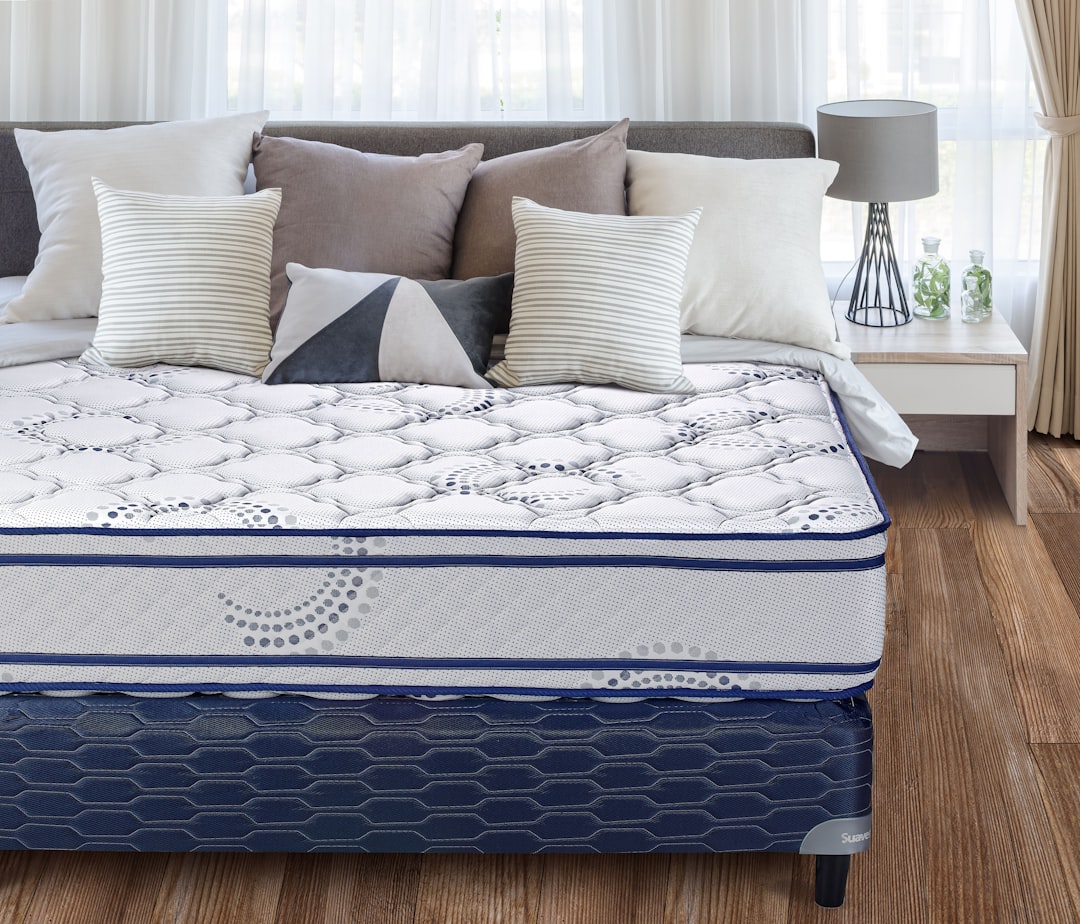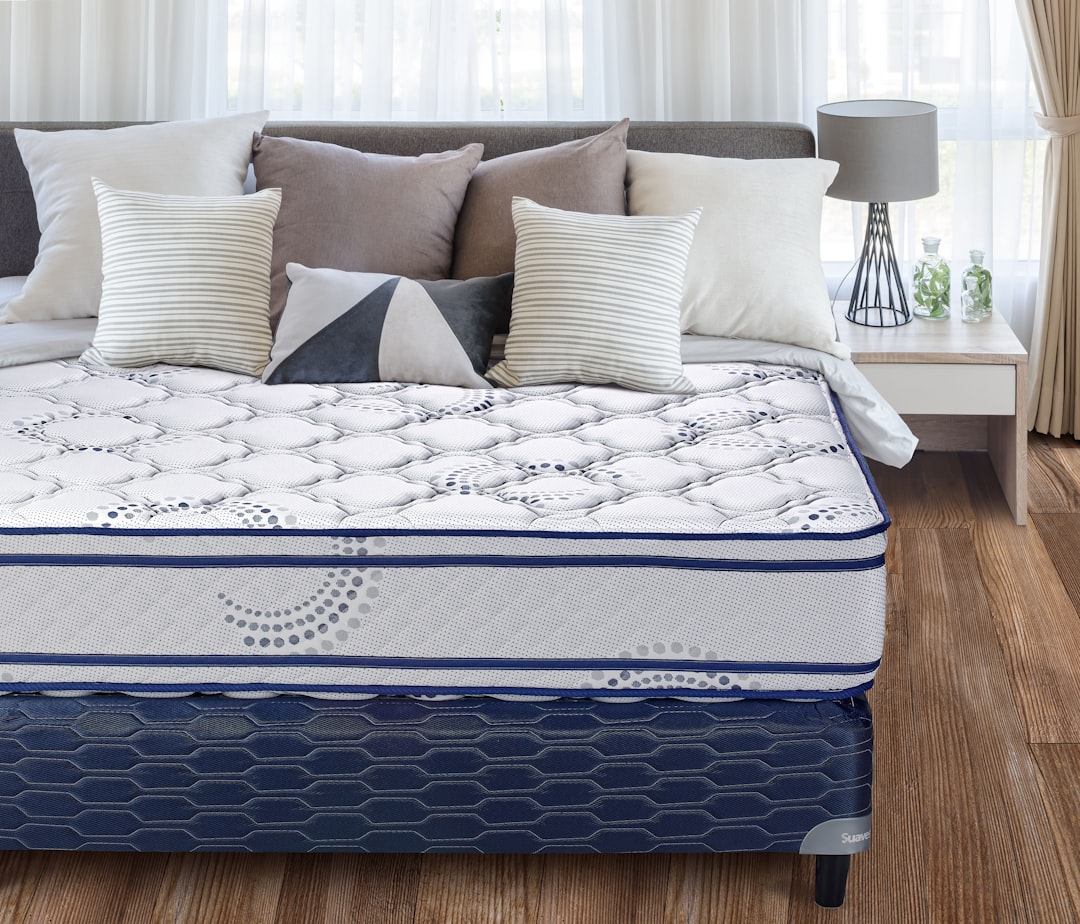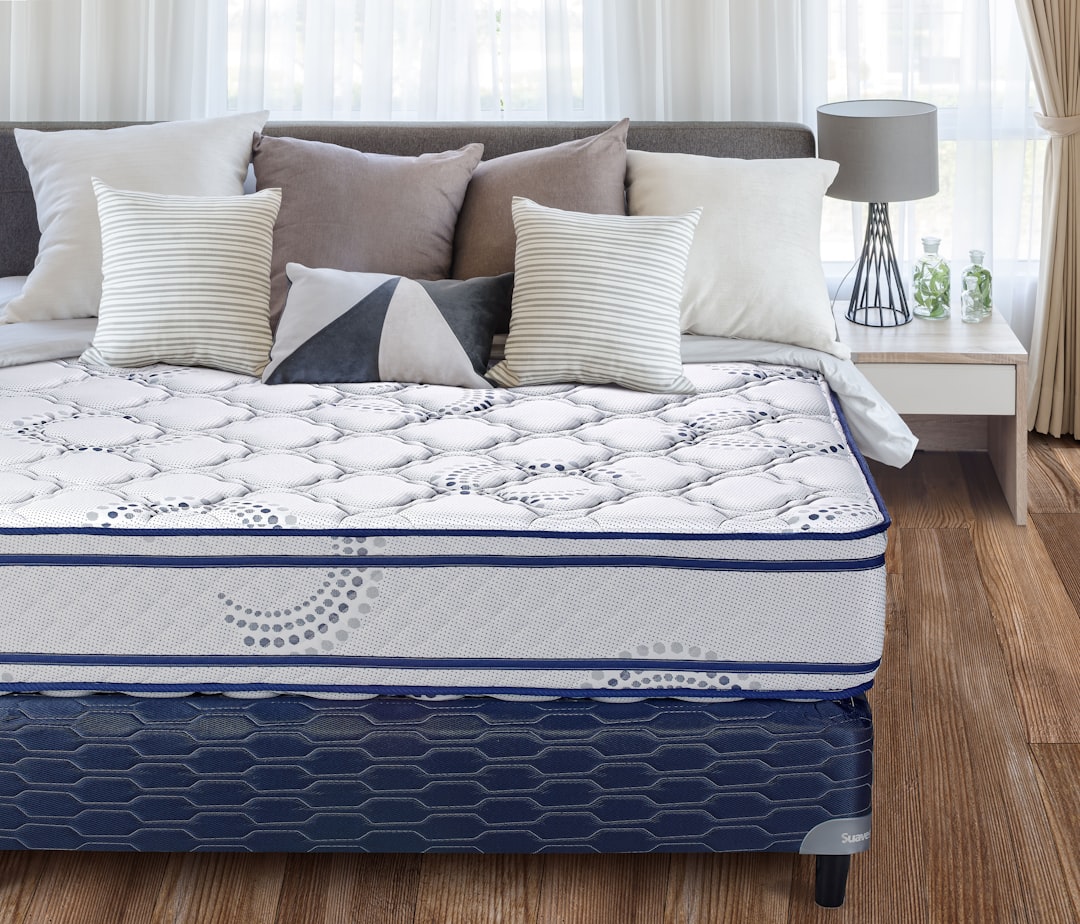
Best Cooling Mattress: How to Pick One for Hot Sleepers

Cooling Mattresses Hot Sleepers - Best Cooling Mattress

The best cooling mattress for most hot sleepers is a latex or coil-based hybrid with a breathable cover, because open coils and open-cell latex let body heat escape instead of trapping it. All-foam beds can also sleep cool if they use gel, graphite or copper-infused open-cell foam and a moisture-wicking cover, but dense, thick memory foam is the build most likely to make you sweat. No mattress feels refrigerated — a good one simply stops heat from building up under you.

Key takeaways

  • Coils and latex move air. Hybrids and latex beds are usually the coolest-sleeping categories.
  • The cover matters more than people expect. Cotton, Tencel-type lyocell, wool and phase-change knits wick heat and moisture at the surface you actually touch.
  • Support comes first. Pick firmness for your sleep position and body weight, then optimise for airflow.
  • Sinking = heat. The deeper you sink into foam, the more of your body is wrapped in insulation.
  • Cooling claims are mostly unregulated marketing. Judge construction and trial policies, not adjectives like “arctic” or “ice”.

Why sleeping hot ruins your night

Falling asleep depends partly on your body shedding heat, so a surface that traps warmth works against you. Research generally points to a bedroom temperature of roughly 60–67°F (15–19°C) as ideal for sleep, though some studies suggest a broader range, and a mattress that holds heat effectively cancels out a cool room. Waking up sweaty also fragments your night, which makes it harder to hit the amount of sleep you need: adults aged 18–60 are recommended to sleep at least 7 hours each night, and regularly sleeping less than that is associated with higher risk of obesity, diabetes, high blood pressure, heart disease, stroke and frequent mental distress (CDC).

Worth saying plainly: there is very little independent, peer-reviewed evidence that any specific mattress model lowers body temperature or cures night sweats. What is well established is that airflow and moisture-wicking fabrics stop heat and humidity accumulating — and for most hot sleepers, that is the whole problem.
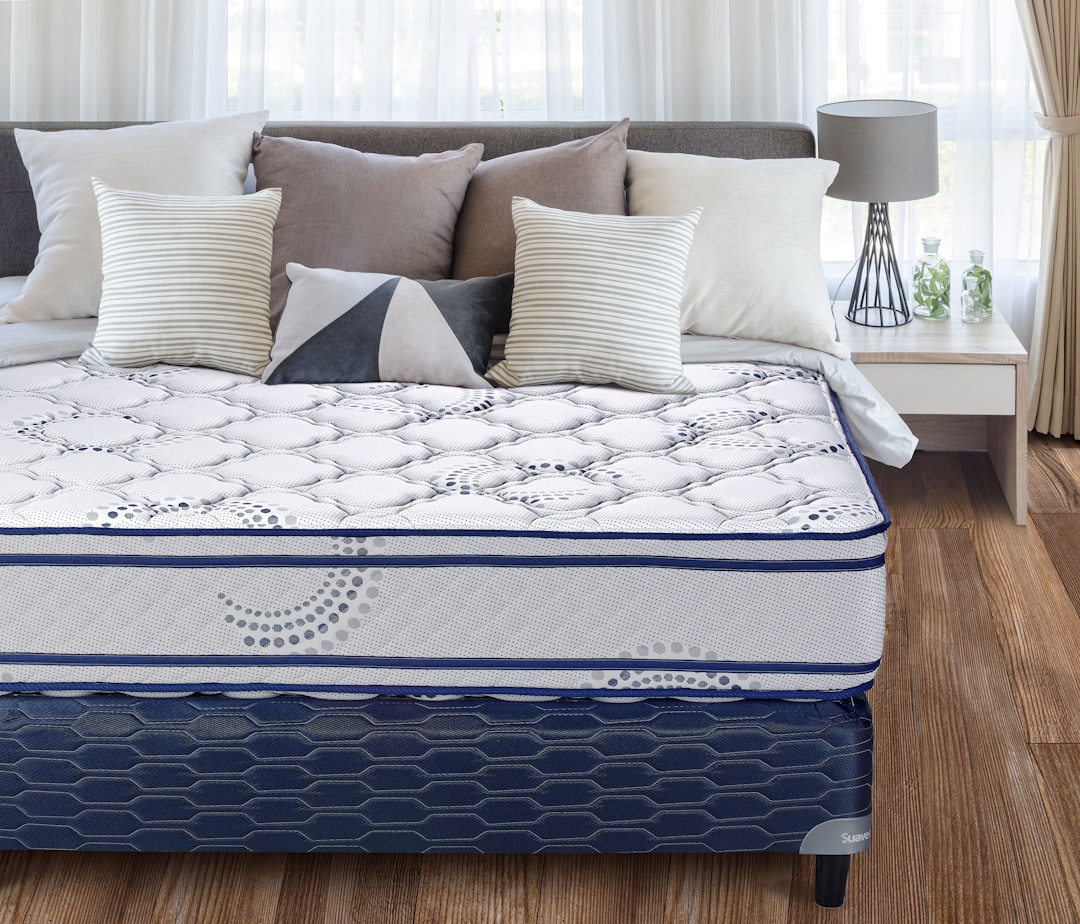
The Best Cooling Mattresses for Hot Sleepers - cooling mattresses hot sleepers

What actually makes a mattress cooling

Three things: how much air can move through the bed, how much of your body sinks into insulating foam, and how well the top layers pull moisture away from your skin.

Materials that help

  • Latex: naturally open-celled and springy. It contours without swallowing you, which keeps more of your body in open air. Its bounce also suits people who change position often.
  • Pocketed coils: a coil unit is mostly empty space, so air circulates freely beneath the comfort layers. This is why hybrids tend to run cooler than all-foam beds of the same firmness.
  • Gel, graphite or copper-infused foam: these conduct heat away from the surface better than plain memory foam. The effect is real but modest, and it works best in thin top layers rather than thick ones.
  • Open-cell and perforated foams: ventilation channels and larger cell structures let heat escape instead of pooling.
  • Breathable covers: cotton, lyocell, wool and phase-change knits feel cool to the touch and move sweat away. Phase-change materials absorb and release heat to buffer surface temperature swings.

Active cooling systems

At the top of the market, some beds use fans or circulating water through a pad or mattress layer to actively lower surface temperature. These genuinely cool rather than just avoid trapping heat, but they add cost, need power, and introduce pumps and electronics that can fail. For most people, a breathable passive build plus the right bedding solves the problem for far less money.

What “cooling” will not do

A cooling mattress will not fix a hot bedroom, heavy synthetic bedding, a plastic-backed mattress protector or medical causes of night sweats. It also will not feel cold all night — once you have been lying in one spot, any surface warms up. Anything marketed as permanently icy is overpromising.
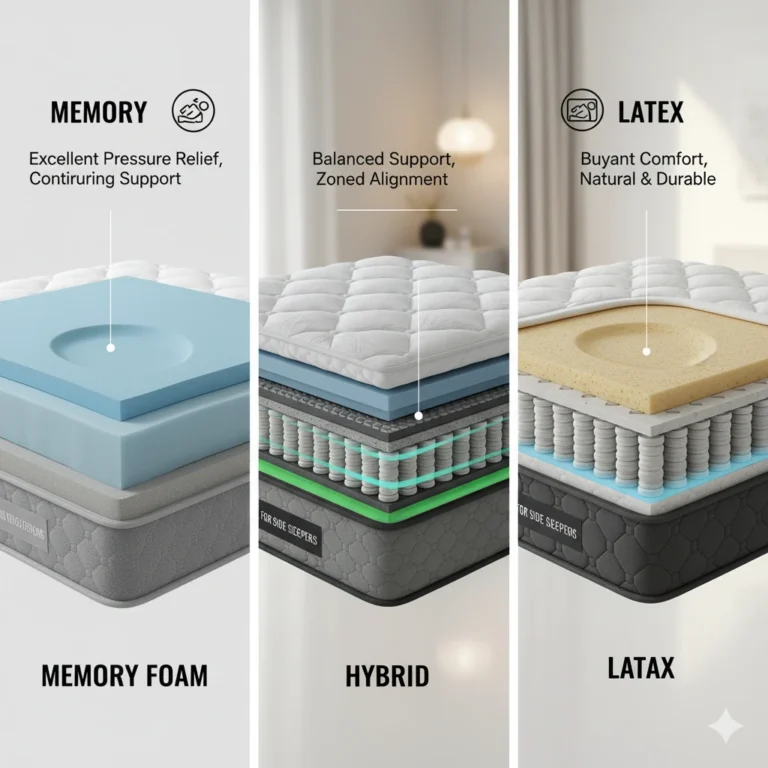
Cutaway comparison of memory foam, hybrid and latex mattress layers and materials

Which mattress type sleeps coolest

Type Temperature Feel Best for
Latex Coolest overall Buoyant, responsive, light contouring Hot sleepers who dislike sinking; combination sleepers
Hybrid (coils + foam or latex) Cool to neutral Supportive with cushioning on top Most people, especially couples and heavier sleepers
Innerspring Cool Bouncy, firm, minimal contouring Budget buyers who want maximum airflow
All-foam with cooling features Neutral Hugging, motion-absorbing Foam fans who need pressure relief and quiet motion isolation
Thick traditional memory foam Warmest Deep sink, slow response Cold sleepers

If you are torn between categories, our comparison of memory foam vs hybrid mattresses goes deeper on feel, support and motion transfer, and memory foam vs spring covers the older but still relevant coil-versus-foam question. For a broader overview of every construction, see our guide to types of mattresses explained.
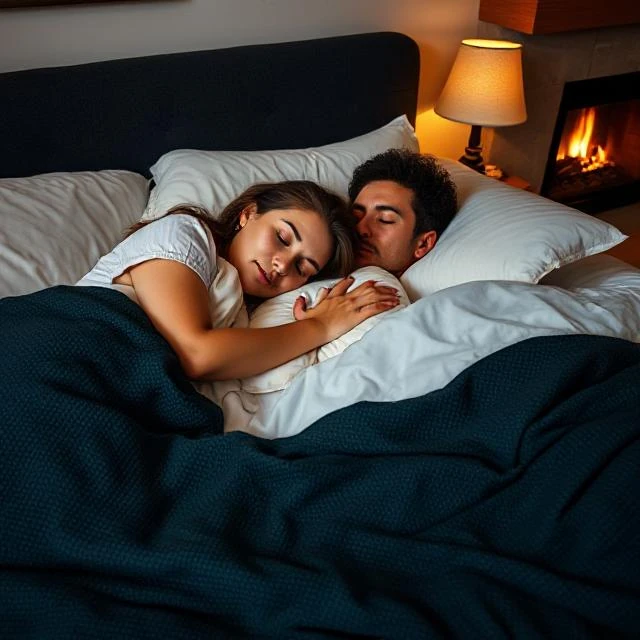
Traditional vs Cooling Mattress Comparison

Match firmness to your sleep position

Support is not negotiable — a cool mattress that wrecks your back is a bad mattress. Choose firmness first, then pick the coolest-running option in that firmness band.

Side sleepers

You need give at the shoulder and hip, which usually means medium to medium-soft. The risk is that softer foam wraps around you and traps heat, so look for a hybrid or latex bed that cushions in a thin top layer over a responsive core rather than one thick slab of memory foam.

Back sleepers

Medium to medium-firm keeps the lumbar curve supported. Zoned coil units help here: firmer support under the hips means less sinkage, which also means less heat buildup around your lower back.

Stomach sleepers

Firmer is better, since sinking hips hyperextend the lower back. Firm latex or a firm hybrid keeps you high on the surface — the coolest place to be.

Not sure where you land on soft-to-firm? Our mattress firmness scale explained translates the 1–10 numbers brands use, and our guide to the best mattresses for side, back and stomach sleepers covers support needs in detail.

Body weight also changes the answer

Heavier sleepers compress comfort layers further, so they lose airflow faster and generally do better on sturdier hybrids or firmer latex with a robust coil unit. Lighter sleepers sit more on top of a mattress and may sleep cool even on foam, since they never sink deeply enough to be surrounded by it.
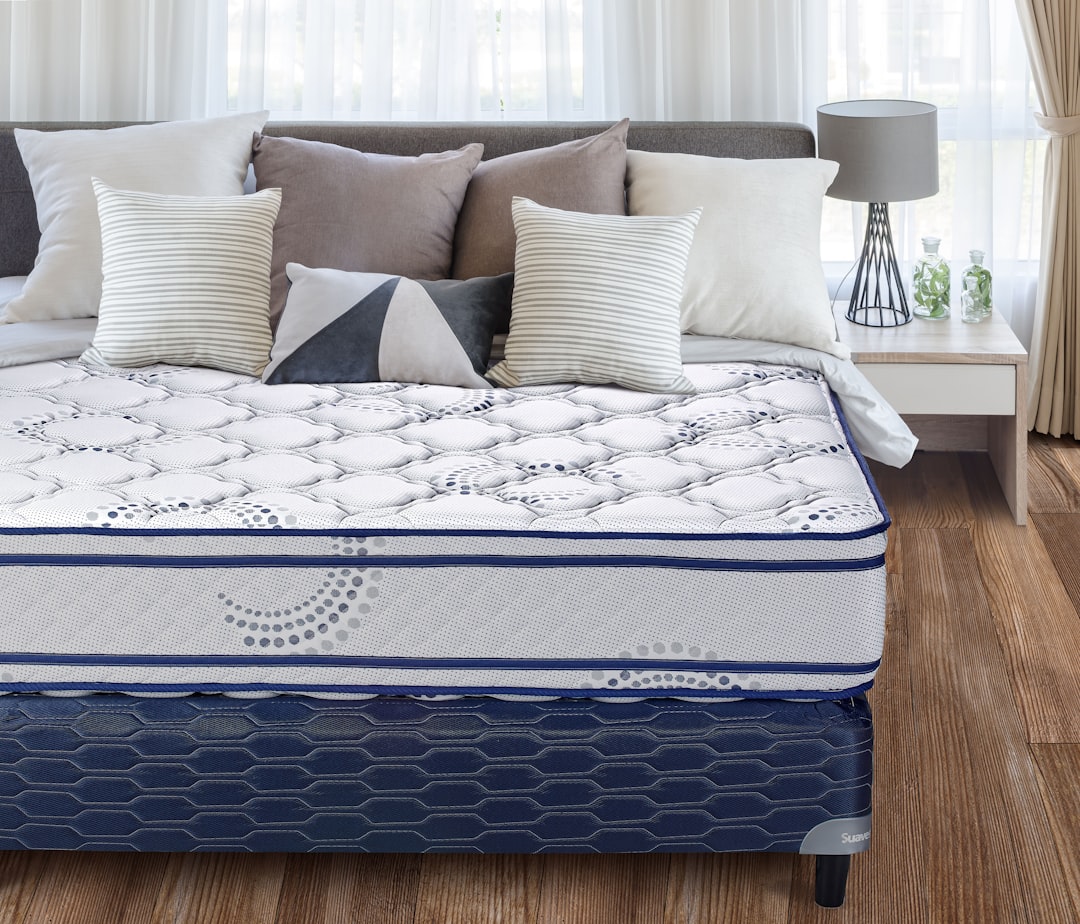
The Best Cooling Mattresses for Hot Sleepers - cooling mattresses hot sleepers

Shopping checklist

  • Coils or latex in the support core if you sleep hot year-round.
  • Thin, breathable comfort layers rather than four inches of dense memory foam.
  • A natural or moisture-wicking cover — cotton, wool, lyocell or a phase-change knit.
  • Zoned support if you share the bed: it reduces sinkage and helps with motion transfer at the same time.
  • A sleep trial long enough to judge summer nights. Trials are commonly advertised around 100 nights; read the return terms, including who pays shipping.
  • A written warranty (ten years is a common length) and clear instructions on rotating and protector use, since improper care can void coverage.

Couples have an extra variable — one person’s cool is another’s cold. Our guide to the best mattresses for couples who toss and turn covers split preferences and motion isolation.

Certifications worth checking

Cooling claims are not certified by anyone, but material safety often is. CertiPUR-US certified foams are tested for low VOC emissions for indoor air quality — less than 0.5 parts per million — and screened for chemicals including flame retardants classified as carcinogens, mutagens or reproductive toxins (CertiPUR-US). Alongside that, OEKO-TEX STANDARD 100 tests textiles and components for harmful substances, and GOTS applies to textiles made with certified organic fibres. These labels tell you about chemistry and fibre sourcing, not temperature.

If off-gassing smell is a concern when your new bed arrives, our notes on reducing mattress off-gassing and breaking in a new mattress cover the airing-out period.

Price and value

Cooling features appear at every price point, and the difference as you move up is usually durability rather than a dramatic temperature drop:

  • Entry level: gel-infused foam beds and simple hybrids. Cooling is adequate; expect thinner coil gauges and shorter useful life.
  • Mid-range: better coil units, zoned support, more capable covers. This is where most hot sleepers get the best value.
  • Premium: natural latex, multiple cooling layers, phase-change covers, and occasionally active fan or water cooling.

Prices shift constantly with promotions, so compare the same model over a few weeks rather than trusting a single sale banner. For lower-budget options, see our mattresses in a box under $1,000 roundup, and if you can be patient, our notes on the best time of year to buy a mattress explain when discounts typically cluster.

Cheaper fixes before you replace the mattress

If your bed is otherwise comfortable and reasonably new, try the cheap variables first — they are often the actual culprit:

  • Swap the bedding. Percale cotton, linen and lyocell breathe far better than microfibre or flannel; see our picks for bedding material for hot sleepers.
  • Check your protector. Fully waterproof laminated protectors block airflow. Look for a breathable membrane instead.
  • Cool the room and move air. A fan lowers perceived temperature and helps sweat evaporate.
  • Raise the bed off the floor. A slatted base allows ventilation underneath, unlike a solid platform or a mattress on the floor — our bed frame guide covers slat spacing and support.

If the mattress is sagging, body-impressioned or over a decade old, though, cooling layers won’t rescue it. Our guide to how often you should replace a mattress lists the signs it’s time.

Keeping a cooling mattress cool

  • Rotate head to foot every three to six months (unless the maker says otherwise) so the comfort layers wear evenly and don’t develop permanent dips.
  • Use a breathable protector and wash it regularly — sweat and body oils degrade foam and reduce breathability over time.
  • Spot clean only, and let the surface dry fully before making the bed. Trapped moisture is what makes a mattress feel clammy.
  • Strip the bed and let it air for an hour now and then, especially in summer.
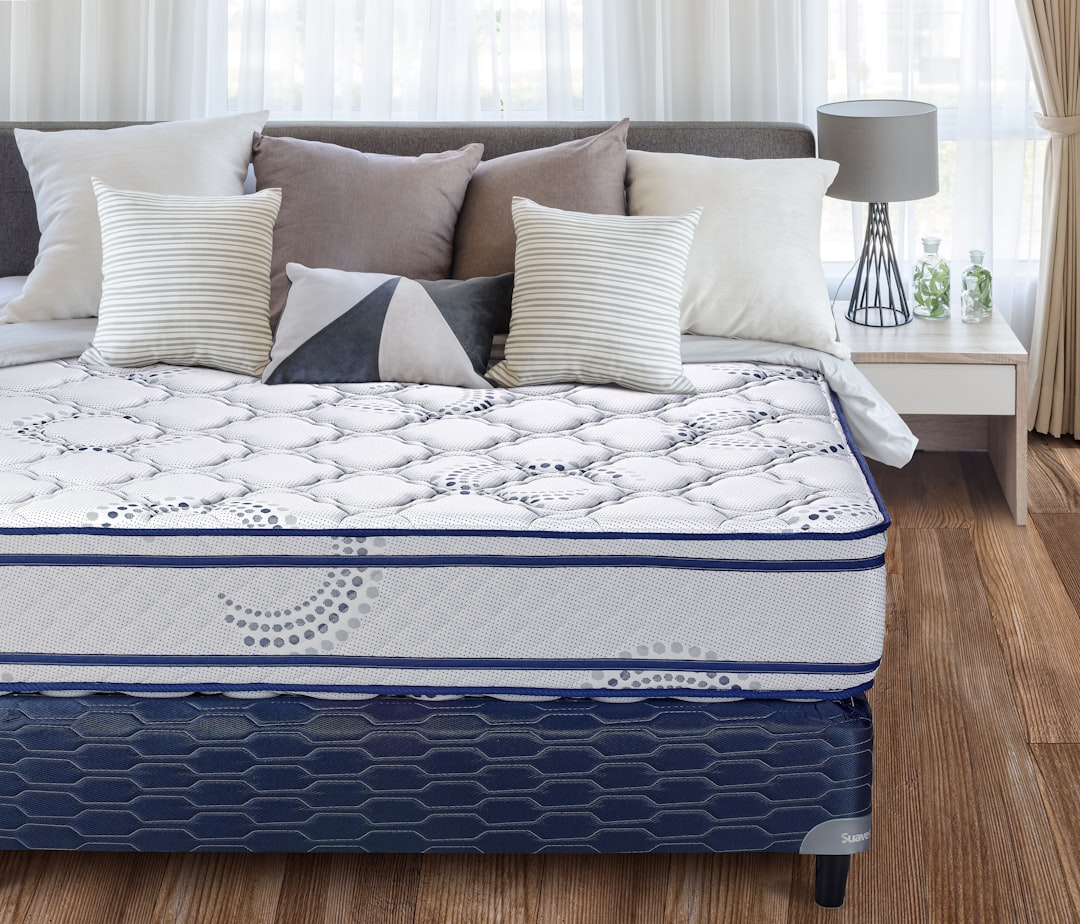
The Best Cooling Mattresses for Hot Sleepers - cooling mattresses hot sleepers

FAQ

Do cooling mattresses really work?

They work in the sense that breathable builds and wicking covers stop heat and humidity accumulating. They don’t work like air conditioning — independent evidence that a mattress lowers your body temperature is thin, so treat dramatic marketing claims with scepticism.

What is the coolest mattress material?

Latex over a coil unit is the strongest combination: both layers are mostly open space. Innerspring beds are also cool but offer little pressure relief.

Is memory foam always hot?

No, but it’s the warmest category by default because it’s dense and wraps around you. Thinner foam layers, open-cell structures, gel or graphite infusions and coil support all reduce the problem.

What’s the difference between a cooling mattress and a cooling topper or pad?

A topper changes the surface feel and can add a little breathability, but it sits on top of whatever is trapping heat underneath. A cooling mattress addresses airflow through the whole build. A topper is a sensible, cheap experiment; it is not a substitute for replacing a heat-trapping bed.

Do I need special sheets?

Not special, just breathable. Percale-weave cotton, linen or lyocell allow airflow; sateen, microfibre and fleece work against you.

How long does a cooling mattress last?

Roughly the same as any comparable mattress — most need replacing somewhere in the seven-to-ten-year range, with quality latex and strong coil units typically at the longer end.

Which cooling mattress is best for couples?

A hybrid with pocketed coils, which isolates motion reasonably well while still ventilating. Latex is cooler and more responsive but transfers a little more movement.

Bottom line

Choose support for your sleep position and body weight first, then favour the build with the most airflow in that firmness range — normally latex or a pocketed-coil hybrid with a breathable cover. Skip gimmicky temperature claims, buy with a real sleep trial so you can test the bed through a warm week, and fix your sheets, protector and room temperature at the same time. That combination does more for a hot sleeper than any single cooling layer.

Updated September 2026.

Best Affordable Mattress: What You Actually Get Under $500, $800 and $1,000

Mattresses Box Under in a cozy bedroom setting

The best affordable mattress for most people is a medium-firm queen built on a high-density foam core (1.8 PCF or better) or pocketed coils, with a trial of at least 100 nights, free return pickup and a warranty that isn’t pro-rated from year one. Under roughly $400 you’re buying a short-term bed. The stretch from about $400 to $900 is where durability shows up, and past $1,000 you’re mostly paying for feel, cooling materials and thicker comfort layers — not a longer life.

Below: what changes as the price climbs, how to read a spec sheet, and the three traps that sink a cheap mattress purchase — mystery foam, fake list prices and a warranty that never pays out.

What the best affordable mattress gets you at $300, $600 and $1,000

Advertised prices swing weekly, so treat these as bands you’ll see in queen size, not quotes. Check the checkout price the day you buy.

Queen price band What’s usually inside Realistic service life Who it suits
Under $400 8–10 in of polyfoam, thin gel or memory foam layer, undisclosed base density, no reinforced edge 3–5 years of nightly adult use Guest beds, dorms, stopgaps, kids
$400–$700 10–12 in, disclosed foam densities and a transition layer, or a hybrid with 600–1,000 pocketed coils 6–8 years with rotation and a solid base Most single sleepers and average-weight couples — the value sweet spot
$700–$1,000 12–14 in, 3.0+ PCF comfort foam, zoned coils, reinforced perimeter, washable cover, firmness choices 8–10 years Couples, side sleepers with shoulder pain, sleepers over 230 lb
Over $1,000 Latex, micro-coils, phase-change covers, longer non-pro-rated warranties 10+ years if the support core is genuinely better Specific needs: back pain, heat, allergies, mismatched partner weights

The biggest quality jump is first band to second. That’s where brands start publishing foam density and coil counts — the only durability evidence you can actually check, and the reason the best affordable mattress is rarely the cheapest on the page.

Best affordable mattress: an all-foam bed-in-a-box mattress unrolled on a slatted platform bed

Spec-sheet signs a cheap mattress will last

Comfort is personal. Durability isn’t, and it leaves fingerprints on the product page.

Foam density (PCF) is the durability number

Density, in pounds per cubic foot, tells you how much material is packed into the foam. Firmness is a separate measure, ILD, the force needed to compress a sample by 25 percent. The two are independent: soft foam can be dense and long-lived, firm foam can be cheap and crumbly. As a screen, look for memory foam comfort layers around 3.0 PCF or higher and a polyfoam core at 1.8 PCF or higher; cores below about 1.5 PCF develop body impressions early. This single number separates the best affordable mattress options from the ones you replace in three years.

If a listing says only “high-density foam” with no number, ask. A brand that won’t answer is telling you something.

Coils: count, gauge and zoning

In a budget hybrid, a queen with roughly 600–1,000 pocketed coils is normal. Lower gauge numbers mean thicker steel: 13–14 gauge is sturdy, 15–16 softer. Thicker or foam-encased perimeter coils stop the edge collapsing when you sit to put socks on.

Height, weight limits and certifications

Most budget beds are 8–14 in tall (20–36 cm), but thickness alone means nothing: a 14 in mattress that’s 11 in of cheap base foam is worse than a 10 in bed with a dense core. Look for a layer-by-layer diagram with inch thicknesses.

All-foam budget beds are commonly rated around 250 lb (113 kg) per sleeper; hybrids with steel coils usually rate higher. That limit sits in the specs or the warranty, not the marketing copy. If you or your partner are near it, the coil version is the safer buy.

CertiPUR-US is the badge you’ll see most on cheap foam. Independent accredited labs test polyurethane foam for content and emissions — heavy metals, ozone depleters, low VOCs, formaldehyde below 0.1 parts per million — with random sampling at foam plants (CertiPUR-US program details). Two caveats: it doesn’t cover latex, and it certifies chemistry, not how long the bed holds its shape.

The best budget mattress by sleeper type

Match firmness to the position you wake up in, not the one you fall asleep in. The best affordable mattress for a stomach sleeper is the wrong bed for a side sleeper at any price.

  • Side sleepers: medium to medium-soft, with at least 3 in (7.6 cm) of comfort layer above the core. Thin cheap beds are the usual cause of a numb arm at 4 a.m.
  • Back sleepers: medium-firm, filling the lumbar gap without letting hips sink. A 10–12 in hybrid does this well cheaply.
  • Stomach sleepers: firm. Hips dropping even an inch tilt the pelvis and load the low back. This is the position budget beds serve best.
  • Combination sleepers: responsive foam or coils rather than slow memory foam, which makes turning over feel like work.
  • Sleepers over about 230 lb (104 kg): a hybrid with 13–14 gauge coils, foam-encased edges and a comfort layer no thicker than 4 in. This is where the cheapest tier fails fastest.
  • Couples with a weight gap: pocketed coils and edge support beat deep plushness, and coils stop the lighter partner rolling downhill.

Our breakdown of the best mattresses for side, back and stomach sleepers goes deeper on firmness by position, including what to do when partners disagree.

Budget medium-firm mattress in a simple bedroom with plain white bedding

Budget hybrid vs budget all-foam: which survives longer

Budget all-foam Budget hybrid
Usual failure point Base foam softens; impressions form at shoulder and hip Comfort foam compresses; the coils rarely fail first
Edge support Usually weak unless foam-encased Better; reinforced perimeter coils are common even at low prices
Motion transfer Excellent — best for restless partners Good with pocketed coils, poor with connected innersprings
Heat Warmer; gel and open-cell foams only help so much Airflow through the coil layer is a real advantage
Heavier sleepers Struggles above roughly 230 lb per person Better; steel doesn’t soften the way cheap foam does
Best for Guest rooms, lighter sleepers, anyone who hates bounce Couples, hot sleepers, heavier and stomach sleepers

At the same price, a hybrid usually keeps its support longer because the coils carry the load. The trade-off: cheap hybrids spend the budget on steel, so comfort layers are thin — the wrong compromise for a side sleeper with shoulder pain.

Cheap mattress red flags: mystery foam, fake prices, dead warranties

  • Foam with no numbers. “Premium high-density” without a PCF figure is marketing, not a spec.
  • A list price nobody ever paid. The FTC’s Guides Against Deceptive Pricing say a former price used in a comparison should be one the product was “openly and actively offered” at, in the recent, regular course of business (16 CFR Part 233). A bed that’s been “60% off” every week for a year isn’t discounted — that’s just the price. Judge it by what you pay.
  • Trials with a fee attached. Restocking charges and return shipping are common, legal and usually buried.
  • A warranty that only covers deep sagging. Most require a permanent impression of roughly 1 to 1.5 in (2.5–3.8 cm), measured with nothing on the bed. A 1 in dip can wreck your sleep and still fail the threshold.
  • Pro-rated early. If years 6–10 of a 10-year warranty are pro-rated, you pay a rising share of any replacement — and some brands pro-rate from year two. The count of non-pro-rated years matters more than the word “lifetime”.
  • Stain and base exclusions. One stain typically voids coverage outright, as does an unapproved base. Photograph the bed on its frame in month one, keep the law tag, and use a protector from night one.
  • Reviews that all arrived the same week. Sort by most recent and read the one- and two-star reviews from owners past 12 months. Those are the durability ones.

Trials, returns and the hidden costs that eat your savings

A trial is only worth what its return terms say. Find these five in writing:

  1. Break-in rule. Many brands refuse returns for the first 21–30 nights.
  2. Who collects it. Free pickup or donation coordination is standard from bigger bed-in-a-box brands; marketplace sellers often make it your problem, and you can’t re-compress a mattress at home.
  3. Restocking or return fee. A three-figure fee turns a bargain into a non-bargain.
  4. Old mattress removal. Sometimes free, sometimes an add-on charge, sometimes unavailable — and many cities charge for bulky-waste pickup.
  5. One return per household. Most trials allow one exchange or refund, not unlimited swapping.

Give any new bed two to four weeks before judging it — week one on a firmer mattress usually feels worse than week three.

When is the best time to buy a mattress?

The deepest, most reliable discounts cluster on US holiday weekends: Presidents’ Day, Memorial Day, Independence Day, Labor Day and Black Friday/Cyber Monday. New ranges tend to land in spring at full price, and older stock is cleared around those holidays — so that’s when the best affordable mattress deals are easiest to find.

Two caveats. On budget beds the gap between a holiday price and a random Tuesday price is smaller than it looks, because low-priced online brands discount near-continuously. And the real best time to buy is when your current mattress has stopped supporting you — waiting five months for Black Friday while your back hurts is a bad trade.

Neatly made bed with a boxed mattress and plain bedding in a small bedroom

What size is a king mattress — and does sizing up beat spending up?

A standard US king is 76 in wide by 80 in long (193 × 203 cm) — 38 in per person, a twin’s width each. A California king is narrower and longer at 72 × 84 in (183 × 213 cm), so it suits tall sleepers, not broad ones. Sizing up is often the cheapest real sleep upgrade there is, which is why the best affordable mattress for a couple is sometimes a budget king rather than a mid-price queen.

Size Inches (W × L) Centimeters Smallest room that works Best for
Twin 38 × 75 96.5 × 190.5 7 × 10 ft Kids, bunks, box rooms
Twin XL 38 × 80 96.5 × 203 7 × 10 ft Tall teens, dorms, split bases
Full / Double 54 × 75 137 × 190.5 10 × 10 ft One adult who sprawls; tight for two
Queen 60 × 80 152 × 203 10 × 10 ft; 10 × 12 is comfortable Most couples; the most common size sold
King 76 × 80 193 × 203 12 × 12 ft Couples with kids or dogs in the bed
California King 72 × 84 183 × 213 12 × 12 ft Sleepers over 6 ft 2 in

Leave about 24 in (61 cm) of walkway on each side you use, 30 in (76 cm) if a wardrobe opens there. A door swinging inward needs its own clearance — measure the arc, not just the doorway.

What to measure before you order

  • Doorway width: interior doors are typically 30–32 in (76–81 cm). The box fits anywhere; the expanded mattress may not, which matters for returns.
  • Stairwell turns: tight 90-degree landings are the real obstacle, not stair width.
  • Frame interior: measure inside the rails. Budget frames vary by an inch or more.
  • Mattress height vs sheet pockets: a 14 in (36 cm) mattress plus a protector needs deep-pocket sheets rated to 15–18 in (38–46 cm), or corners pop off nightly.
  • Total bed height: around 25 in (63 cm) floor to mattress top lets most adults sit on the edge with feet flat.
  • Hallway pivot: if the bed must turn a corner, check the mattress diagonal, not its width.

Bedding matches the mattress, not the frame, and king sheets won’t fit a California king because the sizes differ by 4 in in both directions. Duvets run generous, so a king duvet on a queen bed means fewer 3 a.m. cover tug-of-wars.

Bed frames and bases for a budget mattress

The best affordable mattress can be ruined by a bad frame, and most warranties exclude damage from an inadequate base. Three rules cover it:

  • Slat spacing of 3 in (7.6 cm) or less. Wider gaps let foam bulge through and dip. A bunkie board or slat kit fixes it cheaply.
  • Center support with legs to the floor on queen and larger. A center rail that stops short of the floor isn’t support; kings often need two legs.
  • Check the frame’s weight rating against mattress plus sleepers. Budget metal frames commonly list 500–800 lb (227–363 kg) total, and a heavy hybrid plus two adults gets closer to that than you’d think.

An old sagging box spring under a new foam mattress reproduces that sag within months. Foam wants a flat, firm, evenly supported surface. Floor sleeping works short-term but traps moisture underneath, so stand the mattress up weekly to air it.

Hybrid mattress with pocketed coils and a foam comfort layer shown on a platform bed base

How to make an inexpensive mattress sleep better

Most complaints about a budget bed trace back to the setup around it.

  • Let it finish expanding. Give a compressed bed 24–72 hours before judging firmness; ventilate the room if it off-gasses.
  • Rotate head-to-foot every three months. Don’t flip: one-sided construction puts the comfort layers on top only.
  • Fix the base first, then consider a topper. A 2–3 in (5–7.6 cm) topper softens a too-firm bed but adds no support to a sagging one.
  • Use a breathable protector, not plastic. It guards against the stain exclusion without turning the bed into a sauna.
  • Change the pillow before blaming the mattress. On a firmer bed your shoulder sits higher, so yesterday’s pillow height is suddenly wrong.

When to skip the best value mattress and spend more

Even the best affordable mattress is the wrong call in four situations.

Diagnosed back or hip pain — targeted zoned support and a thicker, denser comfort layer genuinely help, and our guide to the best king mattresses for back pain explains what to look for. Two people with a large weight difference, where cheap foam compresses unevenly and you end up rolling together. Either partner over about 250 lb (113 kg), where entry-level cores fail in a couple of years and you buy twice. Severe allergies, where a washable cover and tight construction matter more than price; see our hypoallergenic mattress guide.

Otherwise, the honest position: the difference between a well-specced $700 bed and a $2,500 one is mostly feel, finish and cooling tech. We compared luxury vs budget king mattresses in detail if you want both sides.

FAQ

Is a $300 mattress ever worth buying?

For the right job, yes: a guest room used a dozen nights a year, a kid’s bed, a six-month rental. For nightly adult sleep it’s usually false economy — you replace it in three to five years and spend more than one mid-band bed would have cost.

How long should the best affordable mattress last?

Six to eight years for a mid-band bed with a disclosed high-density core on a proper base; three to five for the cheapest tier under nightly adult use. Signs it’s done: a dip you can see with the bedding off, waking stiff and loosening within an hour, or sleeping better in hotels.

What size is a king size mattress?

A standard US king is 76 × 80 in (193 × 203 cm). A California king is 72 × 84 in (183 × 213 cm) — 4 in narrower, 4 in longer. UK and European “king” sizes differ again, so buy bedding to measured dimensions, not the label.

Does a cheap mattress cause back pain?

Price isn’t the cause; wrong or worn-out support is. A firm budget bed suits a stomach sleeper and wrecks a side sleeper’s shoulder. Medium-firm is the usual starting point for adults, but the evidence is mixed and individual — which is why a long home trial beats any spec sheet.

Is the best mattress under $1,000 cheaper online or in store?

Online brands usually list lower, include shipping and run longer trials. Stores can beat them on clearance and floor models, often haul the old bed away, and let you lie down first. If you buy in store, get the trial terms in writing — they’re often shorter and can carry a restocking fee.

What’s the best affordable mattress for a guest room?

An 8–10 in all-foam queen from the lowest tier is fine, because occasional use barely touches the foam. Put the saved money into a protector and a good mattress pad — guests notice bedding more than coil counts. See our picks for budget comfort mattresses under $500.

A five-point checklist before you click buy

  1. Foam density (PCF) or coil count confirmed in writing.
  2. Trial length, break-in period and free return pickup confirmed.
  3. Non-pro-rated warranty years and the sag depth that triggers a claim.
  4. Doorway, frame interior size and slat spacing measured.
  5. A breathable protector ordered at the same time.

Do those five and the best affordable mattress you buy will outlast a pricier bed picked on impulse.

Updated September 2026.
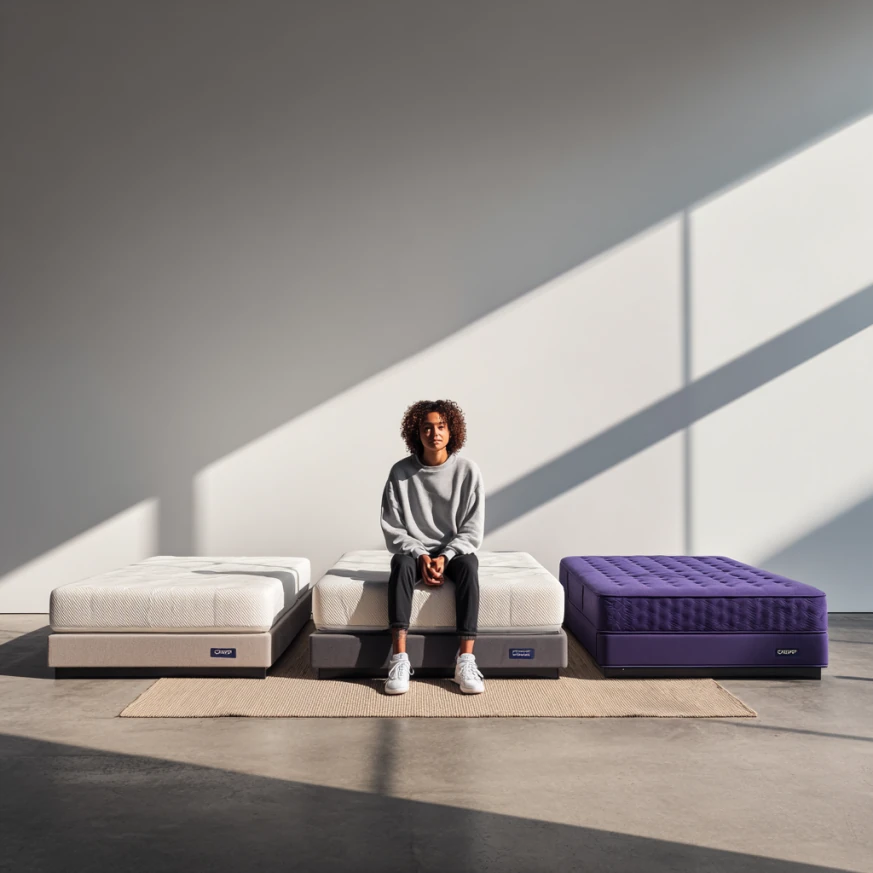
The Ultimate Guide to Choosing a Mattress in 2025

Choose Mattress in a cozy bedroom setting

How to Choose the Right Mattress for You

Updated: August 25, 2025

If you’ve been wondering how to choose a mattress, the secret is simple: match your sleep position and body type to the right firmness, then pick a material—foam, hybrid, latex, or springs—that brings you the comfort, support, and budget fit you need for peaceful sleep.

Want to skip ahead to popular picks? Start with our memory foam vs spring mattress guide, compare brands in our Casper vs Purple comparison, or see our best mattresses for side, back, and stomach sleepers. If you run hot, our cooling mattress guide highlights breathable picks.

Think of your mattress as the foundation of nightly comfort—it should align your spine while easing pressure points. Your sleep position, body weight, and temperature needs shape the feel you’ll love. Side sleepers usually need more cushioning, while back and stomach sleepers benefit from firmer support. Hot sleepers tend to do better with breathable covers and coils.

Key Takeaways

  • Begin with sleep position and body type before choosing firmness.
  • Foam hugs, springs bounce, latex feels buoyant—materials shape the experience.
  • Cooling, motion isolation, pressure relief, and edge support all matter for comfort.
  • Choose a budget tier, then double-check trial and warranty terms.
  • Keep this phrase in mind—how to choose a mattress—as your checklist.

How to choose a mattress: 7 friendly steps

  1. Start with your sleep position. Side, back, stomach, or combination—this guides firmness and support needs.
  2. Match firmness to your body type. Lighter sleepers often prefer softer beds; heavier sleepers usually need firmer support.
  3. Pick your material. Foam for contouring, springs for bounce, hybrids for balance, latex for breathable lift. For deeper details, see our memory foam vs spring mattress guide.
  4. Focus on feel. Wake up sore? Prioritize pressure relief. Hate feeling “stuck”? Choose a responsive surface. For quick picks, our position-based mattress guide simplifies choices.
  5. Think about cooling and motion control. Hot sleepers or couples often need breathable covers, coils, or motion-isolating foam. Explore our cooling mattress guide for tested options.
  6. Set your budget sweet spot. Mid-range models usually offer the best value, while premium adds durability and luxury touches.
  7. Check trial and warranty. Look for at least 90–120 nights of trial and a 10-year warranty with clear coverage terms. Not sure which brands stand out? Our Casper vs Purple comparison breaks it down.

Mattress layers displayed in a showroom to explain how to choose a mattress for your sleep style

A quick firmness scale helps match your body type and sleep position to the most comfortable feel.

Side sleepers

Medium-soft to medium firmness with cushioned hip and shoulder support. Memory foam and plush hybrids are often the coziest choice.

Back sleepers

Medium to medium-firm mattresses keep the spine aligned. Zoned coils or dense foams help prevent sagging and morning stiffness.

Stomach sleepers

Firmer surfaces with reinforced cores are best here—keeping hips lifted and lower backs supported.

Combination sleepers

Responsive latex or medium hybrids make it easy to change positions without feeling trapped in the bed.

Need more tailored picks? Our sleep position guide covers detailed recommendations.

Materials, cooling, and movement

Materials dictate temperature, pressure relief, and bounce. If you’re learning how to choose a mattress for your needs, start by matching these traits to how you sleep.

Foam: Snug contouring, great motion isolation—just be sure density is high enough for durability.

Springs: Classic bounce and airflow; newer pocketed coils minimize partner disturbance.

Hybrid: The best of both worlds—coil support with foam or latex comfort layers.

Latex: Naturally bouncy, breathable, and durable—ideal for hot sleepers and restless movers.

  • Foam vs Springs: Foam = pressure relief & motion control; Springs = bounce & airflow.
  • Hybrid vs Foam: Hybrid adds stronger edges and cooling; Foam keeps a deeper, “huggy” feel.
  • Latex vs Hybrid: Latex feels buoyant and cool; Hybrids feel balanced with extra edge support.

Cooling tip: Hot sleeper? Look for breathable covers, gel-infused foams, or coil layers that let air flow. See our cooling mattress guide for more options.

For couples: Motion-isolating foam or pocket coils help when one partner moves. Reinforced edges mean more usable space without rolling off.

For trustworthy sleep-health basics, the Sleep Foundation outlines healthy sleep tips, and AASM shares best practices. If you’re shopping for safer materials, scan recognized labels with this mattress certification guide and see this roundup of non-toxic mattress options.

The Ultimate Guide to Choosing a Mattress in 2025 - choose mattress

This cutaway shows how coils and breathable foams improve airflow and edge stability.

Budget, trials, and warranties

Choosing a mattress isn’t just about price—it’s about lasting comfort and peace of mind. Here’s how to think about it in practical terms.

Budget tiers: Value options work well for lighter sleepers or guest rooms. Mid-range often offers the best balance of quality and cost. Premium brings advanced cooling, zoning, and longer durability.

Trial & returns: Aim for 90–120 nights. Make sure returns are easy and pickup is included.

Warranty: Look for 10+ years with clear sagging coverage. A transparent policy means less worry down the road.

FAQ

What mattress firmness is best for side sleepers?

Most side sleepers like medium-soft to medium beds that cushion shoulders and hips while keeping the spine aligned.

How often should I replace my mattress?

Plan on about 7–10 years. If you wake with aches, see deep body impressions, or sleep hotter than before, it may be time.

Is a hybrid mattress better than memory foam?

It depends on your priorities. Hybrids sleep cooler and feel bouncier; memory foam excels at pressure relief and motion isolation.

How to choose a mattress if I’m a combination sleeper?

Pick medium firmness with responsive materials (latex or hybrid). You’ll get easy movement without losing pressure relief.

Conclusion

If you’re figuring out how to choose a mattress, begin with your sleep position and body type, pair it with the right material for your needs, and confirm fair trial and warranty terms. The real test comes from sleeping on it at home—not just five minutes in a store. For more cozy guidance, explore Cozy Bed Quarters.

The Ultimate Guide to Choosing a Mattress in 2025 - choose mattress

Try a few firmness levels in person, then let the at-home trial confirm your best match.

Related reading from Cozy Bed Quarters

Other reading we found popular

The Best Mattresses for Side, Back, and Stomach Sleepers

Mattresses Side, Back, Stomach in a cozy bedroom setting - mattresses side stomach


Best Mattress for Side Back and Stomach Sleepers

The best mattress for side back stomach sleepers combines pressure relief at shoulders and hips, steady midsection support, and firmness levels that keep your spine aligned no matter how you sleep.

Updated August 2025.

Key Takeaways

  • Firmness guide: Medium-soft for side, medium-firm for back, and firm for stomach sleepers.
  • Materials matter: Memory foam contours deeply, coils add bounce and airflow, hybrids balance both.
  • Hot sleepers: Latex or hybrid builds improve breathability and cooling.
  • Couples: Motion-isolating foams and pocketed coils reduce sleep disruptions.
  • The phrase best mattress for side back stomach sleepers anchors your checklist when comparing options.

If you’re not sure where to start, use our mattress buying guide. To compare materials, see memory foam vs spring mattress, or explore best cooling mattress if you overheat at night.

Why multi-position sleepers need tailored support

Switching between side, back, and stomach sleep puts pressure on different body zones. Too soft, and your hips sink (tough on back/stomach sleepers). Too firm, and your shoulders feel jammed (hard on side sleepers). The best mattress balances cushioning and lift—especially for combination sleepers who move all night.

Mattress cutaway showing support layers, the best mattress for side and stomach sleepers

A quick firmness map for each sleeping position.

Best mattress for side sleepers

Side sleepers press weight into the shoulders and hips, so pressure relief is essential. The best mattress for side back stomach sleepers cushions these areas while preventing midsection sagging. For more tailored picks, see our guide to the best mattress for side sleepers.

Firmness: Medium-soft to medium. Heavier side sleepers may prefer medium-firm with thicker comfort layers.

Materials: Memory foam for contouring, hybrids for pressure relief + airflow, or latex for buoyant comfort that avoids a “stuck” feel.

Best mattress for back sleepers

Back sleepers need consistent lumbar support to maintain a healthy spinal curve. A bed that’s too soft lets the hips sink; too firm can push the shoulders upward.

Firmness: Medium to medium-firm.

Materials: Zoned coils with supportive foams, or medium-firm memory foam. Hybrids are excellent for couples with different needs.

Best mattress for stomach sleepers

Stomach sleepers put the most stress on the lower back. A sagging mattress lets hips drop too low, which strains the spine. Firmer support is the key.

Firmness: Firm to medium-firm.

Materials: Hybrids and latex for cooling lift, or dense foams with reinforced cores for support.

The Best Mattresses for Side, Back, and Stomach Sleepers - mattresses featuring mattresses side stomach

Proper spinal alignment prevents morning aches and keeps your core supported.

Body type and mattress choice

  • Lighter sleepers (under 150 lbs): Softer mattresses prevent pressure buildup.
  • Average-weight sleepers (150–230 lbs): Medium firmness works across all positions.
  • Heavier sleepers (230+ lbs): Firmer beds with thick coils or high-density foam provide lasting support.

Comparison: best mattress for side back stomach sleepers by body type

Position Ideal Firmness Best Materials Body Type Tips
Side Sleepers Medium-soft to medium Memory foam, hybrid, latex Lighter bodies prefer plush foam; heavier bodies benefit from thicker hybrids.
Back Sleepers Medium to medium-firm Hybrid, zoned coils, firm foam Average-weight thrive on hybrids; heavier need reinforced lumbar zones.
Stomach Sleepers Firm to medium-firm Latex, hybrid, dense foam Lighter sleepers can tolerate medium-firm; heavier need firm latex or hybrid.
Combination Sleepers Medium (balanced) Responsive hybrid, latex Latex suits restless sleepers; hybrids fit couples. See Casper vs Purple.

Best mattress types for side, back, and stomach sleepers

  • Memory foam: Deep contouring, excellent for side sleepers, but may trap heat.
  • Latex: Naturally breathable and bouncy, great for combo sleepers.
  • Hybrids: Best all-around for side, back, and stomach sleepers.
  • Innerspring: Cool and supportive, but often needs a pillow top for pressure relief.

The Best Mattresses for Side, Back, and Stomach Sleepers - mattresses featuring mattresses side stomach

How materials feel: foam (hug), latex (lift), hybrid (a bit of both).

Testing at home, cost, and buying tips

A showroom test lasts minutes—real comfort shows up after weeks. Use the trial period to judge pressure relief, lumbar support, and cooling. Rotate your mattress if the brand recommends it, and add a breathable protector for longevity.

  • Budget-friendly: Foam under $600—great for lighter sleepers or guest rooms.
  • Mid-range: $800–$1,200 hybrids hit the sweet spot for most households.
  • Premium: $1,500–$2,500 with zoned coils, latex, and cooling fabrics.

According to the CDC, adults need at least seven hours of quality rest per night. If you’re choosing an eco-conscious mattress, look for recognized bedding certifications to ensure safe materials.

FAQ

What firmness is best for side back stomach sleepers?

Medium-soft for side, medium-firm for back, and firm for stomach. Combination sleepers often choose medium hybrids for balance.

What mattress works for couples with different sleep positions?

Hybrids with zoned coils or foam beds with dual firmness. These combine motion isolation with responsiveness.

How do I avoid back pain as a stomach sleeper?

Choose a firmer mattress that keeps hips supported. Use a thin pillow—or none at all—to prevent neck strain.

Do multi-position sleepers need special mattresses?

Not always. Hybrids and latex beds are naturally flexible, making them ideal for changing positions at night.

How long does a mattress last?

On average, 7–10 years. Latex and hybrids last longest, while foam beds depend on density and core quality.

Conclusion

The best mattress for side back stomach sleepers balances cushioning, support, and airflow across sleep positions. Match firmness to your primary position, choose materials that fit your comfort style, and use trial periods to test at home. For cozy comparisons and expert guides, explore Cozy Bed Quarters.

Related Reading


Casper vs. Purple vs. Tuft & Needle: An Honest Comparison

Casper vs. Purple vs. Tuft & Needle

Casper vs Purple vs Tuft and Needle Compared

Updated 2025

If you’re weighing Casper vs Purple, here’s the quick scoop: Casper leans into contouring foam comfort, Purple delivers buoyant and cooler support, and Tuft & Needle provides a budget-friendly foam feel right in between.

Want material basics first? See our memory foam vs spring mattress guide and get personalized advice in best mattress for side sleepers. Or start with our complete mattress buying guide to match firmness and materials to your body. For more brand matchups, check our mattress comparisons hub.

Key Takeaways

  • Quick pick: Casper = classic contour; Purple = buoyant & cool; Tuft & Needle = value foam.
  • Side sleepers: Often prefer Casper’s pressure relief, while hot sleepers lean toward Purple’s airy grid.
  • Budget-friendly: Tuft & Needle offers solid foam comfort at the lowest cost.
  • Always check trial length, return policy, and warranty coverage before buying.
  • Keep one checklist item in mind: Casper vs Purple—decide which feel matches your sleep priorities.

Casper vs Purple at a glance

Both brands aim for universal comfort, but the core materials set them apart. Casper’s foams gently contour and stabilize. Purple’s hyper-elastic grid floats and breathes, creating a buoyant feel. Tuft & Needle focuses on straightforward foam support at a friendlier price point.

If you like a gentle “hug,” Casper fits. If you want lifted, airy bounce, Purple wins. If you want simple, supportive foam on a budget, Tuft & Needle is your match.

Casper vs Purple vs Tuft & Needle: side-by-side comparison
Feature Casper Purple Tuft & Needle
Core feel Gentle contour, balanced foam “hug” Buoyant, lifted feel from elastic grid Simple, supportive foam; neutral feel
Pressure relief Zoned foams cradle shoulders/hips Grid collapses at pressure points Moderate contour; comfy for most
Cooling Good (best on hybrids) Excellent airflow (grid) Good (open-cell foam)
Support & bounce Stable, low bounce High responsiveness; easy to move Medium responsiveness
Edge support Softer on all-foam; better on hybrids Stronger on hybrids/reinforced edges Moderate; fine for most users
Best for Side sleepers; fans of contour Hot sleepers; combo sleepers Budgets; guest rooms; first setups
Motion isolation Very good Good Good
Durability 7–10 years (materials dependent) 7–10+ years (grid/hybrids) ~7–9 years (foam)
Trial & warranty ~100 nights; 10-year limited ~100 nights; 10-year limited ~100 nights; 10-year limited
Price tier Mid-range (foams & hybrids) Higher (proprietary grid, hybrids) Lowest (straightforward foam)
Notable picks Casper Original; Casper Hybrid Purple Mattress; Purple Hybrid T&N Original; T&N Mint

Feel & pressure relief

Casper uses zoned foam layers to contour evenly while preventing deep sinkage. Purple’s grid collapses under pressure points but stays supportive elsewhere, giving you a floating sensation. Tuft & Needle’s foam is responsive, simple, and moderately contouring.

Best for:

  • Side sleepers: Casper’s cushioning helps shoulders and hips.
  • Combination sleepers: Purple’s bounce makes repositioning easy.
  • Guest rooms & budgets: Tuft & Needle offers reliable support without overspending.

Cooling & temperature regulation

Purple leads with its airy grid, which naturally allows airflow. Casper improves breathability with engineered foams and hybrid models, though its all-foam beds still feel warmer. Tuft & Needle uses open-cell foams that run cooler than dense memory foam but aren’t as ventilated as Purple.

According to the CDC, nearly one in three adults doesn’t get enough sleep, which makes choosing a cooling mattress even more important for rest quality.

If you’re a hot sleeper, start with Purple. Casper’s hybrid or Tuft & Needle foam are solid backups. For more picks, see our best cooling mattress guide.

Support, bounce & edge stability

Casper’s zoned foam stabilizes you without much bounce. Purple’s grid rebounds instantly, making it easy to move around. Tuft & Needle sits in the middle, offering steady support with a touch of bounce.

Edge support: Casper all-foam edges feel softer, while Purple hybrids or reinforced models stay firmer at the perimeter. Tuft & Needle offers moderate stability—fine for most sleepers but not the strongest edge hold.

Edge support test comparing Casper vs Purple and Tuft & Needle - casper vs. purple vs.

Price, policies & where Tuft & Needle fits

Expect 90–120-night trials, easy returns, and 10-year limited warranties across brands. Long-term value improves when you use a supportive base, rotate the mattress if allowed, and protect it with a breathable cover.

  • Tuft & Needle: Most affordable, with simple foam and strong value.
  • Casper: Mid-range, priced for layered foams and hybrids.
  • Purple: Higher-end, with proprietary grid tech and premium hybrids.

For neutral shopping advice, see the National Sleep Foundation. If you care about safer materials, look for recognized labels—this bedding certifications guide and this non-toxic mattress resource outline what to trust.

Where Tuft & Needle fits

If Casper vs Purple feels too premium, Tuft & Needle delivers balanced foam comfort at a lower cost. It’s ideal for lighter sleepers, guest rooms, and value-minded buyers who want dependable comfort without luxury pricing. Its straightforward design makes it a great “starter mattress” or backup bed for multipurpose spaces.

Casper vs. Purple vs. Tuft & Needle: An Honest Comparison

FAQ

Is Casper or Purple better for side sleepers?

Casper’s foam offers uniform relief for shoulders and hips. Purple eases pressure while keeping you lifted. Your choice depends on preferring a gentle hug (Casper) or buoyant feel (Purple).

Which sleeps cooler: Casper or Purple?

Purple’s open grid usually sleeps cooler. Casper hybrids improve breathability, but Purple wins for airflow.

Is Tuft & Needle good for combination sleepers?

Yes. Its responsive foam helps you shift easily, though Purple’s bounce is even better for frequent movers.

Which is better value: Casper vs Purple?

Casper offers mid-range pricing with good contouring, while Purple costs more but excels in cooling and durability. Value depends on whether you prioritize feel or longevity.

Do I need a box spring?

No. Modern mattresses work on slats, platforms, or adjustable bases. Always check brand rules to protect your warranty.

How long will these mattresses last?

Most last 7–10 years. Durability depends on foam density, coil strength (hybrids), and usage.

Conclusion

In the Casper vs Purple matchup, choose Casper if you want foam contouring, Purple if you need buoyant cooling, and Tuft & Needle if you want simple, affordable foam. Don’t stress too much—trial periods let you test at home risk-free. Match feel to your sleeping style and budget, then confirm warranty and return policies. For cozy, step-by-step guidance, visit our mattress buying guide at Cozy Bed Quarters.

Related reading from Cozy Bed Quarters

Other reading we found popular

“` ✅ Optimized for Rank Math, semantic HTML, footer blocks added, keyword density checked.

Would you like me to also **check your internal link map** against the CSV you uploaded and suggest 2–3 orphaned posts we can link here for extra SEO lift?